“If it falls your lot to be a street sweeper, sweep streets like Michelangelo painted pictures, sweep streets like Beethoven composed music, sweep streets like Leontyne Price sings before the Metropolitan Opera. Sweep streets like Shakespeare wrote poetry. Sweep streets so well that all the hosts of heaven and earth will have to pause and say: Here lived a great street sweeper who swept his job well.
If you can’t be a pine at the top of the hill, be a shrub in the valley. Be the best little shrub on the side of the hill.
Be a bush if you can’t be a tree. If you can’t be a highway, just be a trail. If you can’t be a sun, be a star. For it isn’t by size that you win or fail. Be the best of whatever you are”.
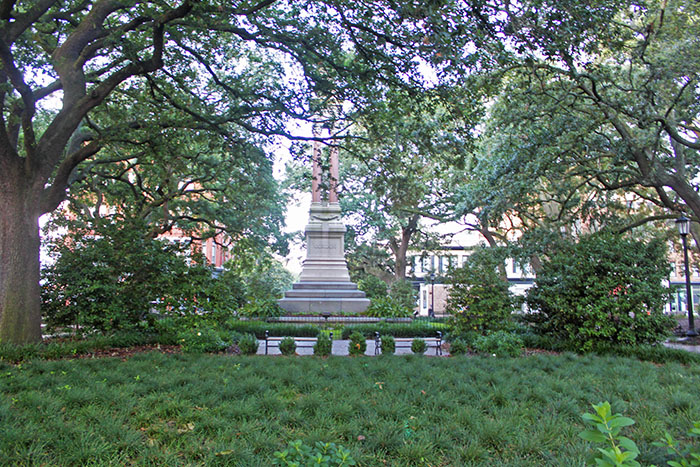
The “Anne” sailed from England in November 1732. On board were 114 colonists including General James Oglethorpe, intending to found the Colony of Georgia. The group headed south after a brief stay in Charleston, South Carolina. Landing at Yamacraw bluff, Oglethorpe’s party was greeted by Chief Tomochichi of the Yamacraws, along with two Indian traders, John and Mary Musgrove.
The Province of Georgia and its Colonial Capital of Savannah were founded on that date, February 12, 1733. The friendship which developed between Oglethorpe and Tomochichi kept the fledgling colony out of the Indian conflicts, marking the founding of most of the other colonies.
Oglethorpe was something of a Utopian, founding his capital around four wards, each containing eight blocks situated around its own central square. This was a place of religious freedom. 40 Sephardic Jews from Spain and Portugal arrived in July, the largest such group to-date to enter any of the colonies. It was a place of religious freedom for all but Catholics, that is. It was feared that Catholics would be sympathetic with Spanish authorities in control of Florida at that time, so they were prohibited.
There were four such prohibitions, the others being that there would be no spirituous liquors (that wouldn’t last long), no lawyers (do I need to explain?), and no slaves.
The experiment came to an end in 1754, when Georgia became a Royal Colony.
The low marshes of Savannah’s coastline are ideally suited as wild rice fields. Rice had originally come from its native Southeast Asia to West Africa, where the same strains were grown by European colonists. The rice industry failed in Africa, but the combination of English agricultural technology and African labor made the crop a mainstay of the early colonial economy.
In 1773, a slave named George Leile became the first black man to become a licensed Baptist preacher in Georgia. Leile’s master, himself a Baptist deacon, freed him before the Revolution and Leile preached to slaves on plantations along the Savannah River, from Georgia north into South Carolina.
Hundreds of blacks fled to occupied Savannah after the Revolution broke out, seeking safety behind British lines. Scores of them were transported to Nova Scotia or other colonies, and some to London. Leile and his family sailed with the British for freedom in Jamaica.
Andrew Bryan was the only one of the first three black Baptist preachers to stay, making his home in Savannah along with his wife, Hannah.
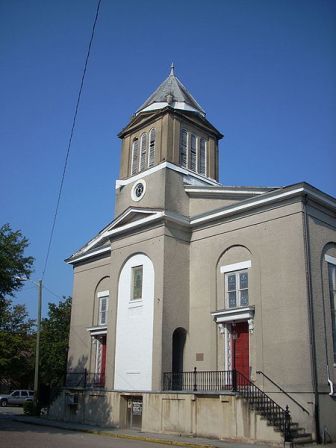
On January 20, 1788, Bryan brought official recognition to the First African Baptist Church and its 67 members, five years before the first “white” Baptist Church in Savannah. In 1802, Bryan founded the “Second Colored Baptist Church”, renamed the “Second African Baptist Church” in 1823.
General William Tecumseh Sherman read the Emancipation Proclamation to the citizens of Savannah from the steps of this church, promising “40 acres and a mule” to newly freed slaves.
The original church on Greene Square burned down in 1925. The church was completely rebuilt, and still contains its original pulpit, prayer benches and choir chairs.
“If it falls your lot to be a street sweeper, sweep streets like Michelangelo painted pictures, sweep streets like Beethoven composed music, sweep streets like Leontyne Price sings before the Metropolitan Opera. Sweep streets like Shakespeare wrote poetry. Sweep streets so well that all the hosts of heaven and earth will have to pause and say: Here lived a great street sweeper who swept his job well. If you can’t be a pine at the top of the hill, be a shrub in the valley. Be the best little shrub on the side of the hill.
Be a bush if you can’t be a tree. If you can’t be a highway, just be a trail. If you can’t be a sun, be a star. For it isn’t by size that you win or fail. Be the best of whatever you are”. – Martin Luther King, Jr.
In 1961, a guest preacher delivered a sermon at the Second African Baptist Church which he called “I have a Dream”. Two years later, the same speaker delivered his speech from the steps of the Lincoln memorial in Washington.
Reverend Martin Luther King, Jr’s 91st birthday came and went last week, a date now remembered with its own national holiday. This August, the country will mark the 59th anniversary of his speech on the Mall.
While a sorry collection of racial arsonists attempt to divide Americans against one another for their own political advantage, permit me this reminder of other words, spoken by Reverend King at a time when it took real courage to be a “civil rights” leader.
“In a real sense we must all live together as brothers, or we will all perish together as fools”.
Feature Image, top of page: Wright Square Savannah, final resting place of Tomochichi, leader of the Yamacraw
FBI.gov states on its “Famous Cases” website that, “As far as its propaganda value, Army analysis suggested that the program had no negative effect on troop morale and that it might even have raised it a bit. The Army’s sole concern about the broadcasts was that “Annie” appeared to have good intelligence on U.S. ship and troop movements”.
There’s an old cliché that, if you speak with someone convicted of a crime, they will always say they are innocent. It’s an untrue statement on the face of it, but only two possible conclusions are possible. Either all convicts are guilty as charged, or someone, at some time, has been wrongly convicted.
To agree with the former is to accept the premise that government is 100% correct, 100% of the time.
Iva Ikuko Toguri was born in Los Angeles on July 4, 1916, the daughter of Japanese immigrants. She attended schools in Calexico and San Diego, returning to Los Angeles where she enrolled at UCLA, graduating in January, 1940 with a degree in zoology.
In July of the following year, Iva sailed to Japan without an American passport. She variously described the purpose of the trip as the study of medicine, and going to see a sick aunt.
In September, Toguri appeared before the US Vice Consul in Japan to obtain a passport, explaining that she wished to return to permanent residence in the United States. Because she had left without a passport, her application was forwarded to the State Department for consideration. Imperial Japan attacked the American anchorage at Pearl Harbor fewer than three months later. Toguri’s paperwork was still on someone’s desk.
Iva later withdrew the application, saying she’d voluntarily remain in Japan, for the duration of the war. She enrolled in a Japanese language and culture school to improve her language skills, taking a typist job for the Domei News Agency. In August 1943, she began a second job as a typist for Radio Tokyo.That November, Toguri was asked to become a broadcaster for Radio Tokyo on the “Zero Hour” program, part of a Japanese psychological warfare campaign designed to lower the morale of US Armed Forces. The name “Tokyo Rose” was in common use by this time, applied to as many as 12 different women broadcasting Japanese propaganda in English.
Toguri DJ’d a program with American music punctuated by Japanese slanted news articles for 1¼ hours, six days a week, starting at 6:00pm Tokyo time. Altogether, her on-air speaking time averaged 15-20 minutes for most broadcasts.
She called herself “Orphan Annie,” earning 150 yen per month (about $7.00 US). She wasn’t a professional radio personality, but many of those who recalled hearing her enjoyed the program, especially the music.
Shortly before the end of the war, Toguri married Felipe d’Aquino, a Portuguese citizen of Japanese-Portuguese ancestry. The marriage was registered with the Portuguese Consulate though she didn’t renounce her US citizenship. Toguri’s Zero Hour broadcast continued until the end of the war.
After the war, a number of reporters were looking for the mythical “Tokyo Rose”. Two of them found Iva d’Aquino.
Henry Brundidge, reporting for Cosmopolitan magazine and Clark Lee, reporter for the International News Service, must have thought they found themselves a real “dragon lady”. The pair hid d’Aquino and her husband away in the Imperial Hotel, offering $2,000 for exclusive rights to her story.
$2,000 was not an insignificant sum in 1945, equivalent to $23,000 today. Toguri lied, “confessing” that she was the “one and only” Tokyo Rose. The money never materialized, but she had signed a contract giving the two rights to her story, and identifying herself as Tokyo Rose.
FBI.gov states on its “Famous Cases” website that, “As far as its propaganda value, Army analysis suggested that the program had no negative effect on troop morale and that it might even have raised it a bit. The Army’s sole concern about the broadcasts was that “Annie” appeared to have good intelligence on U.S. ship and troop movements”.
Henry Brundidge, Clark Lee
US Army authorities arrested her in September, while the FBI and Army Counterintelligence investigated her case. By the following October, authorities decided the evidence did not merit prosecution, and she was released.
Department of Justice likewise determined that prosecution was not warranted and matters may have ended there, except for the public outcry which accompanied d’Aquino’s return to the US. Several groups, along with the noted broadcaster Walter Winchell, were outraged that the woman they knew as “Tokyo Rose” wanted to return to this country, and demanded her arrest on treason charges.
The US Attorney in San Francisco convened a grand jury and d’Aquino was indicted in September, 1948. Once again quoting fbi.gov, “Problematically, Brundidge enticed a former contact of his to perjure himself in the matter”.
The trial began on July 5, 1949, lasting just short of three months. The jury found d’Aquino guilty on one of fifteen treason charges, ruling that “[O]n a day during October, 1944, the exact date being to the Grand Jurors unknown, said defendant, at Tokyo, Japan, in a broadcasting studio of the Broadcasting Corporation of Japan, did speak into a microphone concerning the loss of ships.”
d’Aquino was sentenced to ten years and fined $10,000 for the crime of treason, only the seventh person in US history so convicted. She was released from the Federal Reformatory for Women at Alderson, West Virginia in 1956, having served six years and two months of her sentence.
President Gerald Ford pardoned her on January 19, 1977, 21 years almost to the day after her release from prison. Iva Toguri d’Aquino passed away in 2006, at the age of 90. Neither perjury nor suborning charges were ever brought against Henry Brundidge, or his witness.
As a British officer, Arnold himself once asked an American prisoner “What will the Americans do with me if they catch me?” The reply though mostly forgotten, is one for the ages. “They will cut off the leg which was wounded when you were fighting so gloriously for the cause of liberty, and bury it with the honors of war, and hang the rest of your body on a gibbet.”
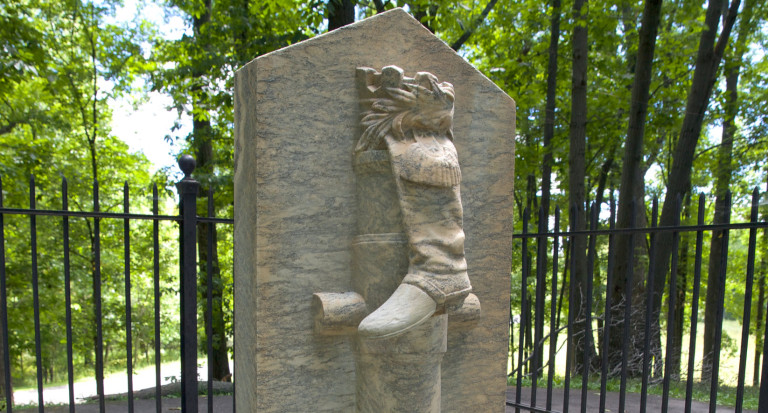
Three hours from the upstate New York village of Sleepy Hollow, in the woods of Schuylerville, there stands the statue of a leg. A boot, actually, a man’s riding boot, along with an epaulet and a cannon barrel pointing downward, denoting the death of a General. It seems the loneliest place on earth out there in the woods, with nothing but a footpath worn into the forest floor to lead you there.
The back of the stone bears these words. “In memory of the most brilliant soldier of the Continental Army“. A most brilliant soldier who, according to his own memorial, has no name.
Breymann’s RedoubtSaratoga Battlefield. H/T American Battlefield trust
In 1632, Reverend John Lothropp was an ordained minister of the Church of England. That was the year he renounced his orders, and joined the cause of religious independence. Lothropp was arrested and jailed for his apostasy, pardoned only on condition that he leave and never come back. He accepted the terms of his exile, arriving in Plymouth Massachusetts a short fourteen years after the original pilgrims.
John Lothropp is mostly forgotten today but his old house on Cape Cod, now houses the oldest public library in America. That, and a host of famous relatives, direct descendants including George Bush the elder and the younger, Franklin Roosevelt, Ulysses Grant, James Garfield and Millard Fillmore. Oh, and the guy who once wore that riding boot, up in Schuylerville. Benedict Arnold, born this day in 1741.
The year was 1777, October 7, the last day of the Battle of Saratoga. General Horatio Gates was in overall command of American forces, a position greatly exceeding his capabilities. Gates was cautious to the point of timidity, generally believing his men better off behind prepared fortifications, than taking the offensive.
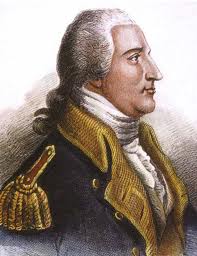
General Benedict Arnold
Gates’ subordinate, General Benedict Arnold, could not have been more different. Arnold was imaginative and daring, a risk taker possessed of physical courage bordering on thereckless. The pair had been personal friends once but that was time, long past. By this time the two men were constantly at odds.
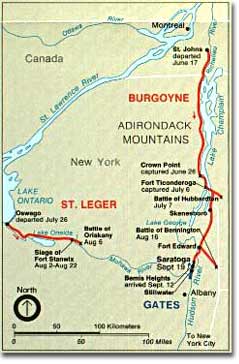
British General John “Gentleman Johnny” Burgoyne led a joint land and water invasion of 7,000 British and Hessian troops south along the New York side of Lake Champlain, down the Hudson River valley.
The invasion started out well for Burgoyne with the bloodless capture of Fort Ticonderoga, but Gentleman Johnny ran into a buzz saw outside of Bennington, Vermont, losing almost 1,000 men to General John Stark’s New Hampshire rebels and a militia unit headed by Ethan Allen, calling itself the “Green Mountain Boys”.
Burgoyne intended to continue south to Albany, linking up with forces under Sir William Howe and cutting the colonies in half. The 10,000 or so Colonial troops situated on the high ground near Saratoga, were all that stood in his way.
Patriot forces selected a site called Bemis Heights about 10 miles south of Saratoga, spending a week constructing defensive works with the help of Polish engineer Thaddeus Kosciusko. Theirs was a formidable position with mutually supporting cannon on overlapping ridges, with interlocking fields of fire.
Burgoyne had no choice but to stop and give battle at the American position, or be chopped to pieces trying to pass it by.
The Battle of Freeman’s Farm, the first of two battles for Saratoga, occurred on September 19. Technically a Patriot defeat in that the British held the ground at the end of the day, it was a costly victory. English casualties were almost two to one. Worse, the British column was out at the end of a long and tenuous supply line, while fresh men and supplies all but poured into the American position.
Freeman’s Farm could have been worse for the Patriot cause, but for Benedict Arnold’s anticipating British moves, and taking steps to block them in advance.
The personal animosity between Gates and Arnold boiled over in the days that followed. Gates’ report to Congress made no mention of Arnold’s contributions at Freeman’s Farm, though field commanders and the men involved with the day’s fighting, unanimously credited Arnold for the day’s successes. A shouting match between Gates and Arnold resulted in the latter being relieved of command, and replaced by General Benjamin Lincoln.
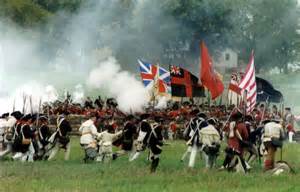
The second and decisive battle for Saratoga, the Battle of Bemis Heights, occurred on October 7, 1777.
Lieutenant Colonel Heinrich Christoph Breymann’s Hessian grenadier regiment formed the right anchor of Burgoyne’s line, manning a wooden fortification near the length of a football field and some 7-feet high. It was a strategically important position, with nothing between itself and the regiment’s main camp to the rear.
Though relieved of command Arnold was on the field, directing the battle on the American right. As the Hessian position began to collapse, General Arnold left his troops facing Balcarre’s Redoubt on the right, riding between the fire of both armies and joining the final attack on the rear of the German post. Arnold was shot through the left leg during the final moments of the action, shattering the same leg which had barely healed after the same injury at the Battle of Quebec City, only two years earlier. The same leg wounded in the defense of Ridgefield, only six months earlier.
It would have been better in the chest, he said, than to have received such a wound in that leg.
Burgoyne had no choice but to capitulate, surrendering his entire force on October 17. It was a devastating defeat for the British cause, and finally brought France in on the American side. A colonial Army had gone toe to toe with the most powerful military on the planet, and still stood.
One British officer described the battle: “The courage and obstinacy with which the Americans fought were the astonishment of everyone, and we now became fully convinced that they are not that contemptible enemy we had hitherto imagined them, incapable of standing a regular engagement, and that they would only fight behind strong and powerful works.”
One year earlier almost to the day, Benedict Arnold led a stick-built “Navy” literally constructed on the shores of lake Champlain, in a suicidal action by the shores of Valcour Island. Three years later, a man who would otherwise be remembered among the top tier of our founding fathers, betrayed the American fortifications at West Point to the British spy, John André.
The name of one of our top Revolution-era warriors, a General whom one of his own soldiers later described as “the very genius of war,” became that of Traitor. As a British officer, Arnold himself once asked an American prisoner “What will the Americans do with me if they catch me?” The reply though mostly forgotten, is one for the ages. “They will cut off the leg which was wounded when you were fighting so gloriously for the cause of liberty, and bury it with the honors of war, and hang the rest of your body on a gibbet.”
The forest has grown around it now. The only memorial on the Saratoga Battlefield, to an American Hero with no name.
So it is that there is the statue of a leg in the forest south of Saratoga, dedicated to a nameless Hero of the Revolution. On the back of the monument are inscribed these words:
“In memory of
the most brilliant soldier of the
Continental Army
who was desperately wounded
on this spot the sally port of
BURGOYNES GREAT WESTERN REDOUBT
7th October, 1777
winning for his countrymen
the decisive battle of the
American Revolution
and for himself the rank of
Major General.”
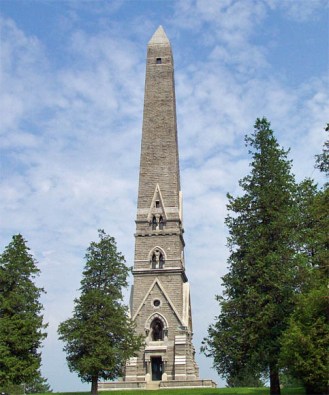
Today, the Saratoga battlefield and the site of Burgoyne’s surrender are preserved as the Saratoga National Historical Park. On the grounds of the park stands an obelisk, containing four niches.
Three of them hold statues of American heroes of the Battle. General Horatio Gates. General Philip John Schuyler. Colonel Daniel Morgan.
The fourth niche, where Benedict Arnold’s statue was intended to go, remains empty.
Fun Fact: “Few images embody the spirit of the American West as well as the trailblazing, sharpshooting, horseback-riding cowboy of American lore. And though African-American cowboys don’t play a part in the popular narrative, historians estimate that one in four cowboys were black”. – Smithsonian.com
In September 1867, Private John Randall of Troop G, US 10th Cavalry Regiment, was escorting two civilians on a hunting trip. The hunter became the hunted when a band of 70 Cheyenne warriors swept down on the trio. The two civilians were killed in the initial attack and Randall’s horse shot out from under him.
Cornered in a washout under some railroad tracks Randall held off the attack single handed with his revolver, despite a gunshot wound to his shoulder and no fewer than 11 lance wounds.
By the time help arrived, 13 Cheyenne warriors lay dead. Private Randall was still standing. Word spread among the Cheyenne about a new kind of soldier, “who had fought like a cornered buffalo; who like a buffalo had suffered wound after wound, yet had not died; and who like a buffalo had a thick and shaggy mane of hair.”
The US 10th Cavalry, formed on September 21, 1866 at Fort Leavenworth, Kansas, was the first unit of “Negro Cavalry”, an all-black unit which would soon be joined by the 9th, 24th and 25th Cavalry and come to be known as “Buffalo Soldiers”.
Fun Fact: “Few images embody the spirit of the American West as well as the trailblazing, sharpshooting, horseback-riding cowboy of American lore. And though African-American cowboys don’t play a part in the popular narrative, historians estimate that one in four cowboys were black”. – Smithsonian.com
Several all-black regiments were formed during the late Civil War including the 54th Massachusetts Volunteer Infantry depicted in the film, “Glory”. The “Buffalo Soldiers” were the first peacetime all-black regiments in the regular Army.
The original units fought in the American Indian Wars, the Spanish-American War, the Philippine-American War, the Border War and two World Wars, amassing 23 Medals of Honor by the end of 1918.
At one time, “Buffalo Soldier” was a catch-all term, used to describe American troops of African ancestry. Today the term is used as a badge of honor only by those units who trace their lineage to the 9th and 10th Cavalry regiments. Here, the 92nd Division (segregated) in the Argonne Forest of WW1. The 92nd’s insignia is a buffalo: a tribute to their predecessors.
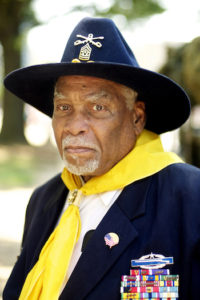
The old met the new during WWII when Mark Matthews, veteran of the Pancho Villa Expedition, WW1, WW2 and the Battle of Saipan, was sent to train with the Tuskeegee Airmen. In the end, Matthews proved too old to fly. A member of the Buffalo Soldiers Drum & Bugle Corps, Matthews would play taps at Arlington National Cemetery, always from the woods. Blacks of the era were not permitted at “white” funerals. 1st Sergeant Matthews retired shortly before the Buffalo Soldiers were disbanded, part of President Truman’s initiative to integrate United States’ armed forces.
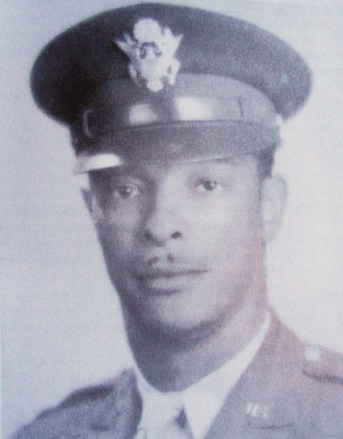
1st Lt. John Robert Fox
In December 1944, the segregated 366th Infantry Regiment of the 92nd Infantry Division was fighting in the vicinity of Sommocolonia, in northern Italy. German soldiers began to infiltrate the town on Christmas day, disguised as civilians.
A heavy artillery barrage began in the early morning hours of the 26th, followed by an overwhelming attack of enemy ground forces. Vastly outnumbered, American infantry were forced to conduct a fighting retreat.
First Lieutenant John R. Fox, forward observer for the 598th Field Artillery Battalion, volunteered to stay behind with a small Italian force, to help slow the enemy advance. From the second floor of a house, Lieutenant Fox directed American defensive fire by radio, adjusting each salvo closer to his own position. Warned that his final adjustment would bring artillery down on his own head, the soldier who received the message was stunned at the response.
1st Lieutenant John R. Fox’ last known words, were “Fire it.”
When American forces retook the town, Lieutenant Fox’ body was found with those of about 100 German soldiers.
The King James Bible teaches us, in John 15:13: “Greater love hath no man than this, that a man lay down his life for his friends“. After the war, Sommocolonia erected a Memorial. A tribute to nine brave soldiers who gave their lives that their brothers might live. Eight Italians and one American.
In a January 13, 1997 ceremony at the White House, President Bill Clinton awarded the Medal of Honor, posthumously, to the family of 1st Lieutenant John R. Fox.
1st Sergeant Mark Matthews, the last of the Buffalo Soldiers, died of pneumonia on September 6, 2005 at the age of 111. A man who forged papers in order to join at age fifteen and once had to play taps from the woods, Matthews was buried with full military honors at Arlington National Cemetery, section 69, grave #4215.
An American Hero.
The rank of General of the Armies is equivalent to that of a six-star general, the highest possible operational rank of the United States Armed Forces. The rank has been awarded only twice, once posthumously to George Washington, and once to an active-duty officer: John Joseph Pershing.
Then-1st Lieutenant Pershing served with the Buffalo Soldiers from October 1895 to May 1897 plus another six months in Cuba, and came to respect soldiers of African ancestry. These were “real soldiers”, in every way. As West Point instructor beginning in 1897, Pershing was looked down upon and insulted by white cadets and officers, aggrieved over Pershing’s strict and unyielding disciplinary policies.
The press sanitized the favored insult directed at Pershing to “Black Jack,” delivered, no doubt, behind the man’s back. That’s not actually what they called him but good enough for currently fashionable sensibilities.
Living Historians of the Pennington-Moye VFW Post 9251, Rochester NY
During WW1, General Pershing bowed to the segregationist policies of President Woodrow Wilson and Secretary of War Newton Baker. It seems Pershing understood what the Connecticut academic and the Ohio politician had failed to learn. A principle enunciated by the Reverend Martin Luther King Jr., some fifty years later:
“We must learn to live together as brothers or perish together as fools”.
“The woman who can create her own job is the woman who will win fame and fortune”. – Amelia Earhart
Amelia Earhart was born July 24, 1897 in Atchison, Kansas, the first surviving child of Samuel “Edwin” and Amelia “Amy” Otis Earhart. Amy didn’t believe in raising “nice little girls”, she allowed “Meeley” and her younger sister “Pidge” to live an outdoor, rough and tumble “tomboy” kind of childhood.
Ed seems to have had life-long problems with alcohol, often resulting in an inability to provide for his family. Amelia must have been a disciplined student despite it all, as she graduated with her high school class, on time, notwithstanding having attended six different schools.
Earhart was certainly independent, saying later in life “The woman who can create her own job is the woman who will win fame and fortune”.
Amelia and her sister saw their first airplane in 1908, at the Iowa State Fair in Des Moines. It was a rickety old biplane in which Edwin was trying to interest them in a ride. Earhart later described that biplane as “a thing of rusty wire and wood and not at all interesting.” At the time, the girls preferred the merry-go-round.
Meeley and Pidge worked as nurse’s aids in Toronto, in 1919. There she met several wounded aviators and developed a strong admiration for these people. Amelia would spend much of her free time watching the Royal Flying Corps practice at a nearby airfield.
Around that time, Earhart and a friend were visiting an air show in Toronto, when one of the pilots thought it would be funny to dive at the two women. “I am sure he said to himself, ‘Watch me make them scamper,’” she said, but Earhart held her ground. “I did not understand it at the time, but I believe that little red airplane said something to me as it swished by.”
A ten-minute ride at a Long Beach California air show in 1920 changed her life. From that time on, Amelia Earhart knew she wanted to fly.
Earhart worked at a variety of jobs from photographer to truck driver, earning money to take flying lessons from pioneer female aviator Anita “Neta” Snook.
She bought a second-hand Kinner Airster in 1921, a bright yellow biplane she called “The Canary”, flying it to 14,000’ the following year, a world altitude record for female pilots.
Neta Snook, Amelia Earhart, 1921
Short funds grounded her for a time, by 1927 she was flying out of the Dennison Airport in Quincy, Massachusetts. Earhart invested in the airport and worked as a salesman for Kinner airplanes in the Boston area while writing about flying in the local newspaper.
Charles Lindbergh’s New York to Paris Flight on May 20-21 of that year was the first solo, non-stop transatlantic crossing by airplane. Aviatrix Amy Phipps Guest wanted to be the first woman to make the flight, but later decided it was too dangerous. Instead she would sponsor the trip, provided that “another girl with the right image” was found.
“Lady Lindy”, Earhart became that first woman on May 21, 1932, five years to the day after Lindbergh.
On this day in 1935, Amelia Earhart became the first person of either sex to fly solo from Hawaii to California.
Two years later, Earhart and copilot/navigator Frederick J. Noonan attempted to fly around the world. The US Coast Guard cutter Itasca picked up radio messages that the aircraft was lost and low on fuel on July 2, 1937, and then it vanished.
The $4 million search and rescue effort covered 150,000 square miles and lasted for sixteen days, but to no avail.
Following the end of the official search, Earhart’s husband and promoter George Palmer Putnam financed private searches of the Phoenix Islands, Christmas (Kiritimati) Island, Fanning (Tabuaeran) Island, the Gilbert and the Marshall Islands, but no trace of the aircraft or its occupants was ever found.
Earhart was declared dead in absentia on January 5, 1939 at the age of 41, Noonan on June 20, 1938. He was 44.
For years, the prevailing theory was that Earhart’s Lockheed Model 10 Electra ran out of gas and plunged into the ocean.
“Amelia Earhart’s Lockheed Electra 10E. During its modification, the aircraft had most of the cabin windows blanked out and had specially fitted fuselage fuel tanks. The round RDF loop antenna can be seen above the cockpit. This image was taken at Luke Field on March 20, 1937; the plane would crash later that morning”.
The International Group for Historic Aircraft Recovery (TIGHAR) has been exploring a 1½ mile long, uninhabited tropical atoll once called Gardner Island, now Nikumaroro, in the southwestern Pacific Republic of Kiribati. After eleven visits to the atoll, TIGHAR sonar images revealed a straight, unbroken anomaly under the sand, remarkably consistent with the fuselage of a Lockheed Electra.
The traces of a long-dead campfire were discovered in 1940, along with animal bones, a box from a sextant, and thirteen human bones. A doctor judged them to have belonged to a male and American authorities were never notified.
Those bones were subsequently lost, but computerized re-evaluation of their measurements suggest that the skeleton was probably that of a white female of European ethnicity, standing roughly the same 5’8″ as Amelia Earhart.
A specially trained team of four border collies was brought to Nikumaroro to search for bones in June 2017. Thus far, the answer to one of the great mysteries of the 20th century, remains elusive.
Nikumaroro is no tropical island paradise. There is no fresh water and daytime temperatures exceed 100°F in July. The island’s only inhabitants are Birgus latro, commonly known as the coconut crab, The largest land-dwelling arthropod in the world, specimens weigh up to 9-pounds and measure over 3′ from leg tip to leg tip.
Gifted with a keen sense of smell, the adult coconut crab feeds on fruits, nuts, seeds, and the pith of fallen trees but will eat carrion or just about anything else if given the opportunity. Virtually any food source left unattended will be investigated and carried away, giving rise to the alternative name “Robber crab.”
It’s anyone’s guess how those two aviators spent the last hours of their lives, or who it was who lit that fire or left those bones. Looking at the size of the island’s only inhabitants, it’s not difficult to imagine why there were only 13.
George Orwell once pointed out. People sleep peacefully in their beds at night, only because rough men stand ready to do violence on their behalf.
As General in the American Revolution, George Washington once wrote that the “road to glory in a patriot army and a free country is…open to all”. European armies of the time bestowed honors, only on high-ranking officers who had achieved victory in battle.
There was no such honor for the common soldier.
The American military of the colonial era had precedent for such an award, but only under limited circumstances. Congressional medals were awarded to Washington himself on March 25, 1776, following the British evacuation of Boston, to General Horatio Gates in November 1777 in recognition of his victory over British General John Burgoyne at Saratoga, and to Major-General “Light-Horse Harry” Lee, father of Civil War-era Confederate general Robert E. Lee, in recognition of his 1779 attack on the British position at Paulus Hook, New Jersey.
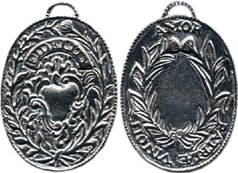
Fidelity Medallion
A “Fidelity Medallion” was awarded to three militia men in 1780, for the capture of John André, the British officer and spy whose capture uncovered the treachery of General Benedict Arnold.
The future 1st President’s general orders of August 7, 1782 established a “Badge of Military Merit” to recognize those members of the Continental Army who performed “any singular meritorious action”.
In time, General Washington’s Badge of Military Merit morphed into what we now know as the Purple Heart, but the precedent had been set. This was the first such honor available to any United States military service member, who had distinguished himself by act of valor.
Around the time of the Mexican-American war (1846 – ’48), Congress created the “Meritorious Service Citation Certificate”, a recognition for “any private soldier who had distinguished himself by gallantry performed in the presence of the enemy”. The award came in and out of use in the following decades, later becoming the Distinguished Service Medal, an award available to United States and foreign military service personnel and, in limited circumstances, civilians.
In the early days of the Civil War, General-in-chief of the army Winfield Scott argued against such an award, claiming it to be “too European”.
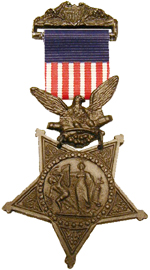
Secretary of the Navy Gideon Welles adopted the idea on behalf of the Navy, following Scott’s retirement in October 1861. President Abraham Lincoln signed “Public Resolution #82” on December 21, 1861, creating a Navy medal of honor.
An Army version of the medal was created the following July, first awarded to six Union soldiers for hijacking the Confederate locomotive, “The General”. Several were caught and hanged as Union spies including leader of the raid, James Andrews. He alone was Not awarded the Medal of Honor, as he was a civilian.
Medals of Honor are not awarded casually, reserved only for the bravest of the brave, and for well-documented acts of valor. Permit me to share a few examples, each from his own moment in history.
Few soldiers on the Civil War battlefield had a quicker route to death’s door, than the color bearer. National and regimental flags were all-important sources of inspiration and communication.
William Harvey Carney
Reverend W. Jamison Thomson of Hartford, CT described the importance of the battle flag: “It represents the cause, is the rallying point, while it is aloft proclaims that victory is still intended, is the center of all eyes, is the means of communication between soldiers, officers, and nation,” he said, “and after the engagement, and after many of them, is their marked memento so long as its identity can be preserved.”
William Harvey Carney was born a slave in Norfolk Virginia, in 1840. How the man made it to freedom is uncertain but, in 1863, Carney joined the Massachusetts 54th Infantry, with the rank of Sergeant.
During the ill-fated assault on Fort Wagner of July 1863, Carney took up the Regimental Color as the color guard fell, mortally wounded. Carney continued all the way to the parapet despite multiple serious wounds and struggled back across the battlefield, as the 54th retired under intense fire. At last handing the colors over to another survivor, Carney said “Boys, I only did my duty; the old flag never touched the ground!”
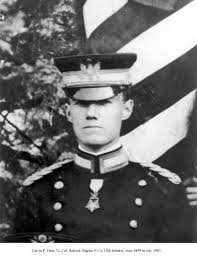
Calvin Pearl Titus
Sergeant Carney’s heroism of July 1863 was the earliest such action to result in a Medal of Honor given to an American of African Ancestry, though the medal itself was not awarded until 1900.
During the Boxer Rebellion of 1900, Chaplain’s assistant and regimental musician Calvin Pearl Titus of Vinton, Iowa volunteered to scale the 30-ft walls of Peking, raising the American flag over the outer walls of the city.
President Theodore Roosevelt awarded Titus the medal of Honor, for “Gallant and daring conduct in the presence of his colonel and other officers…”
President Roosevelt would one day become the only President awarded the Medal of Honor for actions performed on July 1, 1898, in Cuba. Titus himself is now remembered as the last American standard-bearer.
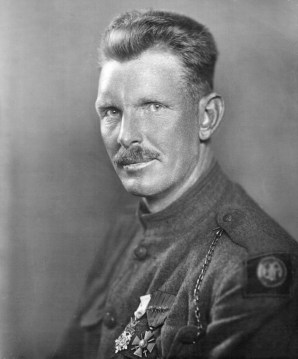
On October 8, 1918, Tennessee native Corporal Alvin Cullum York of the 82nd Division lead a group of seventeen against a numerically superior German force, dug in at Chatel-Chehery, France.
Let his citation tell the story: “…After his platoon had suffered heavy casualties and three other non-commissioned officers had become casualties, Cpl. York assumed command. Fearlessly leading seven men, he charged with great daring toward a machine gun nest, which was pouring deadly and incessant fire upon his platoon. In this heroic feat the machine gun nest was taken, together with four officers and 128 men and several guns.”
Kingston Texas 2nd Lieutenant Audie Murphyfound himself senior officer of a company of 18, whittled down from 235 by disease, wounds and casualties.
On January 26, 1945, Murphy’s small force found itself under assault by six German tanks and a large infantry force.
A man the Marine Corps had once turned down for being too small, Murphy climbed aboard a burning tank destroyer. Out in the open and exposed to German fire from three sides, the 19-year old single-handedly fought off the entire assault, killing or wounding fifty and causing the German tanks to withdraw.
Chaplain Emil Kapaun, the “Shepherd in Combat Boots” selflessly sacrificed himself on behalf of fellow prisoners in 1951, in the frozen hell of a North Korean prison camp.
President Barack Obama awarded Kapaun’s family the Medal of Honor during a ceremony in the east wing of the White House, on April 11, 2013.
Father Kapaun’s body lies in an unmarked mass grave, somewhere in Pyoktong county.
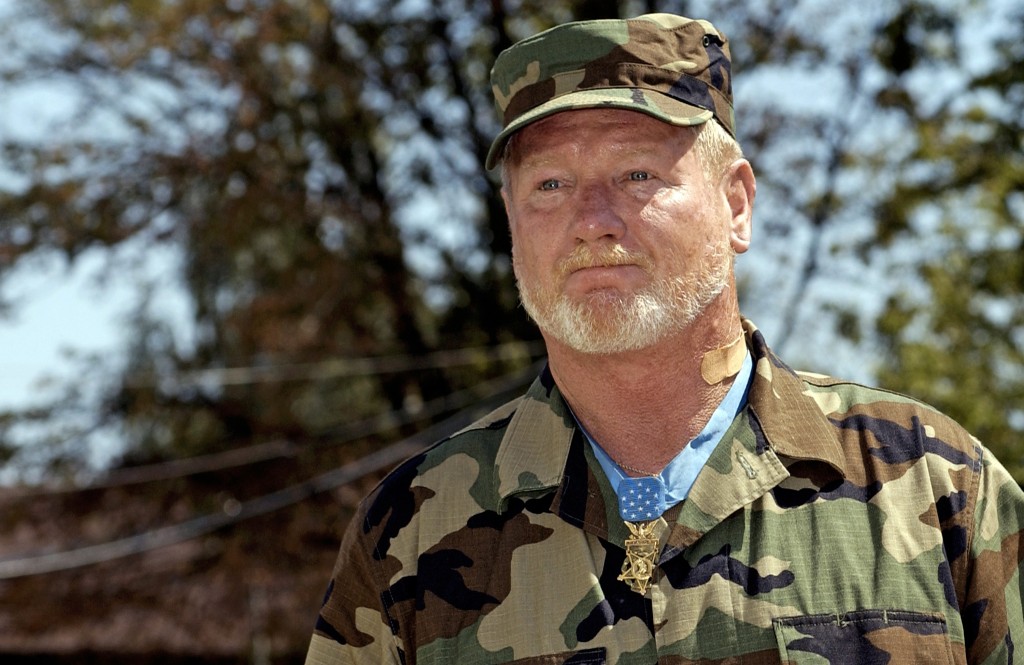
PFC Sammy Lee Davis distinguished himself during the small hours of November 18, 1967, when the 4th Artillery of 9th Infantry Division came under heavy attack west of Cai Lay, Republic of Vietnam.
Repeatedly knocked to the ground by enemy mortar fire and suffering multiple injuries, the Cannoneer from Dayton, Ohio fought back first with a heavily damaged, flaming howitzer, then with recoilless rifle and finally, a machine gun.
That’s his picture, at the top of this page.
Two Medals of honor were awarded posthumously, to Delta Force snipers Gary Gordon and Randy Shugart, for their hopeless defense of the crash site of a downed UH-60 Blackhawk helicopter against hundreds of fighters loyal to the Somali warlord Mohamed Farrah Aidid.
Corporal Jason Lee Dunham of Scio New York deliberately threw himself on an Iraqi grenade on April 14, 2004, saving the lives of fellow Marines at the sacrifice of his own life.
John 15:13 of the King James Bible teaches us: “Greater love hath no man than this, that a man lay down his life for his friends”.
Corporal Dunham was twenty-two years old.
Sergeant 1st class Jared Monti of Abington Massachusetts was killed in the mountains of Nuristan Province in Afghanistan, while attempting to rescue a wounded soldier from a hail of small arms and rocket-propelled grenade fire.
Sgt. Monti was the sixth person from the wars in Iraq and Afghanistan, to be awarded the Medal of Honor.
The Lee Brice song “I Drive your Truck“, voted Song of the Year at the 49th annual Academy of Country Music Awards, is his story.
The nation’s highest medal for military valor has been awarded 3,525 times since its inception in 1861, to 3,506 individual recipients. 624 were awarded posthumously. Nineteen men have received the Medal of Honor, twice.
Doctor Mary Edwards Walker received the Medal of Honor on November 11, 1865. The Army changed eligibility criteria in 1917 and revoked 911 such awards given to non-combatants, including Dr. Walker. Fifty years later, an Army board restored Walker’s Medal of Honor, praising her “distinguished gallantry, self-sacrifice, patriotism, dedication and unflinching loyalty to her country, despite the apparent discrimination because of her sex.” She is the only female so honored and only the second woman in American history, licensed as a Medical Doctor.The youngest Medal of Honor recipient was 11-year old drummer boy, Willie Johnston.
Possibly without exception, every one will tell you they are not heroes. They were doing a job and those who gave their lives, are the Real heroes.
If that’s not the very definition of heroism, I’m at a loss to understand what might be.
Fun Fact: Just last month, the Animals in War & Peace Medal of Braverywas instituted in the Unites States, to recognize the extraordinary contributions of animals in times of war and peace. Patterned after the Dickin Medalawarded in the United Kingdom, recipients include Cher Ami, a pigeon who served with the US Signal Corps in WW1, Chips, a Military Working Dog (MWD) who served in WW2 and Sergeant Reckless, the Mongolian Mare who served with the United Sates Marine Corps, during the Korean conflict.
Biologically, there seems little reason to believe that Hippo ranching couldn’t have worked along the Gulf coast. Colombian officials estimate that, within a few years, the hippo descendants of drug kingpin Pablo Escobar’s exotic animal menagerie will number 100 or more individuals.
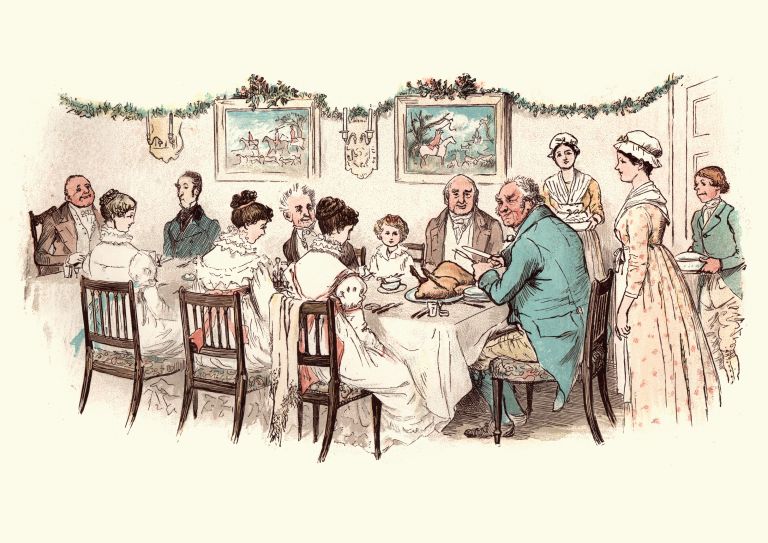
Short days from now, families across the nation will gather for the Christmas table. There will be moist and savory stuffing, and green bean casserole. Creamy mashed potatoes and orange cranberry sauce. And there, the centerpiece of the feast. Slow-roasted and steaming in its tray, golden brown and delicious, the roast hippopotamus.
Wait…What?
The story begins on December 16, 1884, the opening day for the World’s Fair, in New Orleans. Among the many wonders on display was the never-before seen, Eichornia crassipes, a gift of the Japanese delegation. The Water Hyacinth. Visitors marveled at this beautiful aquatic herb, its yellow spots accentuating the petals of beautiful delicate purple and blue flowers, floating across tranquil ponds on thick, dark green leaves.
Eichhornia crassipes
The seeds of Eichornia crassipes are spread by wind, flood, birds and humans, and remain viable for 30 years. Beautiful as it is to look at, the Water Hyacinth is an “alpha plant”, the aquatic equivalent to the Japanese invasive perennial Kudzu, the “vine that ate the south”. Impenetrable floating mats choke out native habitats and species, while thick roots impede the passage of vessels, large and small. The stuff is toxic if ingested by humans and most animals, and costs a fortune to remove.
This plant native from the Amazon basin quickly broke the bounds of the 1884 World’s Fair, spreading across the bayous and waterways of Louisiana, and beyond.
Left uncontrolled, water hyacinth quickly becomes a hazard to navigation
In the first decade of the 20th century, an exploding American population could barely keep up with its own need for food, especially, meat. The problem reached crisis proportions in 1910, with over grazing and a severe cattle shortage. Americans were seriously discussing the idea, of eating dogs.
Enter Louisiana member of the House of Representatives, New Iberia’s own Robert Foligny Broussard, with a solution to both problems. “Lake Bacon”.
The attorney from Louisiana’s 3rd Congressional district proposed the “American Hippo” bill, H.R. 23621, in 1910, with enthusiastic support from Theodore Roosevelt and the New York Times. One Agricultural official estimated that such a free-range hippo herd would produce up to a million tons of meat, per year.
Lippincott’s monthly magazine waxed rhapsodic about the idea: “This animal, homely as a steamroller, is the embodiment of salvation. Peace, plenty and contentment lie before us, and a new life with new experiences, new opportunities, new vigour, new romance, folded in that golden future, when the meadows and the bayous of our southern lands shall swarm with herds of hippopotami”.
With a name deriving from the Greek term “River Horse”, the common hippopotamus is the third largest land animal living today. Despite a physical resemblance to hogs and other even-toed ungulates, Hippopotamidae’s closest living relatives are cetaceans such as whales, dolphins and porpoises.
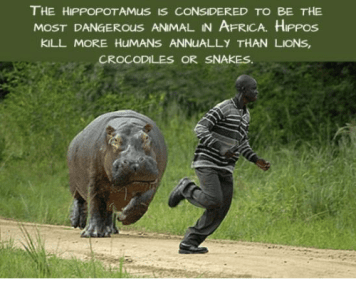
The problem is, these things are dangerous.
The adult bull hippopotamus is extremely aggressive, unpredictable and highly territorial. Heaven help anyone caught between a cow and her young. Hippos can gallop at short sprints of 19 mph, only a little slower than Sprinter Usain Bolt, “the fastest man who ever lived”.
Google the “10 most dangerous animals in Africa”. You’ll be rewarded with the knowledge that hippos are #1, responsible for more human fatalities, than any other large animal, in Africa.
Be that at it as it may, the animal is a voracious herbivore, spending daylight hours at the bottom of rivers & lakes, happily munching on vegetation.
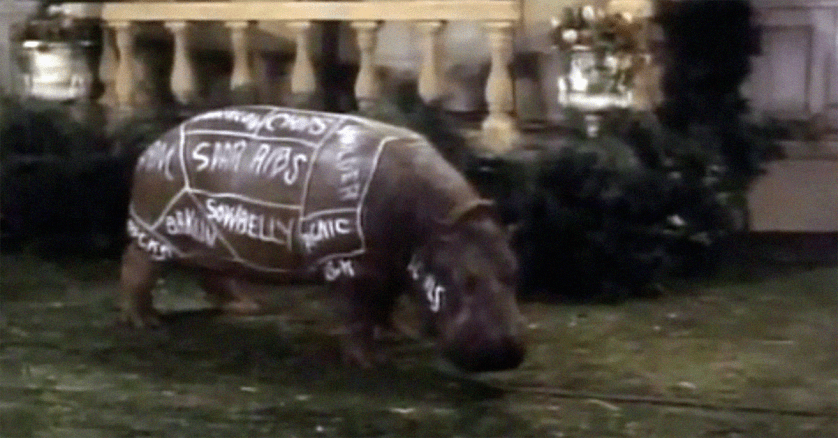
What could be better than taking care of two problems at once. Otherwise unproductive swamps and bayous from Florida to Louisiana would become home to great hordes of free-range hippos. The meat crisis would be solved, and America would become a nation of hippo ranchers.
As Broussard’s bill wended its way through Congress, the measure picked up steam with the enthusiastic support of two enemies who’d spent ten years in the African bush, trying to kill each other. No, really.
Frederick Russell Burnham had argued for the introduction African wildlife into the American food stream, some four years earlier. A freelance scout and American adventurer, Burnham was known for his service to the British South Africa company and to the British army in colonial Africa. The “King of Scouts’, commanding officers described Burnham as “half jackrabbit and half wolf”. A “man totally without fear.” One writer described Burnham’s life as “an endless chain of impossible achievements”, another “a man whose senses and abilities approached that of a wild predator”.
He was the inspiration for the Indiana Jones character and for the Boy Scouts. Frederick Burnham was the “most complete human being who ever lived “.
Frederick Russell Burnham
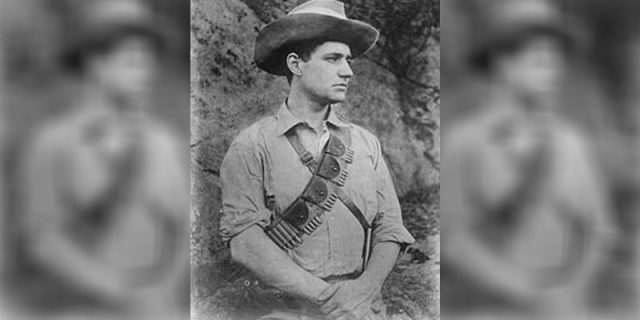
Frederick “Fritz” Joubert Duquesne was a Boer of French Huguenot ancestry, descended from Dutch settlers to South Africa. A smooth talking guerilla fighter, the self-styled “Black Panther” once described himself as every bit the wild African animal, as any creature of the veld. An incandescent tower of hate for all things British, Duqesne was a liar, a chameleon, a man of 1,000 aliases who once spent seven months feigning paralysis, so he could fool his jailers long enough to cut through his prison bars.
Destined to be a German spy and saboteur through two world wars, Frederick Burnham described his mortal adversary, thus: “He was one of the craftiest men I ever met. He had something of a genius of the Apache for avoiding a combat except in his own terms; yet he would be the last man I should choose to meet in a dark room for a finish fight armed only with knives“.
Frederick “Fritz” Joubert Duquesne
During the 2nd Boer war, the pair had sworn to kill each other. In 1910, these two men became partners in a mission to bring hippos, to America’s dinner table.
Biologically, there seems little reason to believe that Hippo ranching couldn’t have worked along the Gulf coast. Colombian officials estimate that, within a few years, the hippo descendants of drug kingpin Pablo Escobar’s exotic animal menagerie will number 100 or more individuals.
Broussard’s measure went down to defeat by one vote, but didn’t entirely go away. Always the political calculator, Representative and later-Senator Broussard died with the bill on his legislative agenda, waiting for the right moment to reintroduce the thing.
Over time, the solution to the meat question became a matter of doubling down on what we’re already doing, as factory farms and confinement operations took the place of free ranges, and massive use of antibiotics replaced the idea of balanced biological systems.
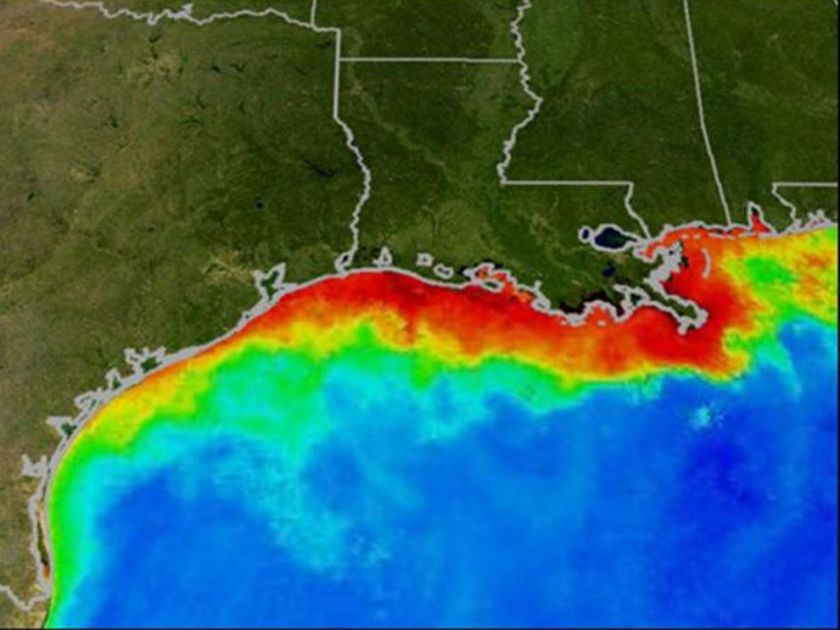
We may or may not have “traded up”. Today, we contend with ever more antibiotic-resistant strains of “Superbug”. Louisiana spends $2 million per year on herbicidal control of the water hyacinth. The effluent of factory farms from Montana to Pennsylvania works its way into the nation’s rivers and streams, washing out to the Mississippi Delta to a biological dead zone, the size of New Jersey.
That golden future of Lippincott’s hippo herds roam only in the meadows and bayous of the imagination. Who knows, it may be for the best. I don’t know if any of us could see each other across the table. Not with a roast hippopotamus.
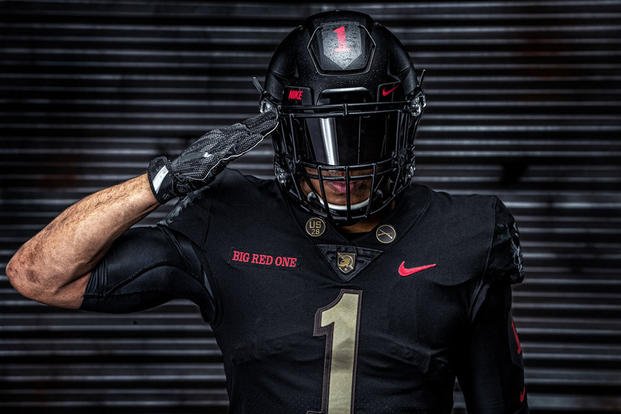
As the result of a friendly wager and Navy’s 10-17 loss in the 2018 game, acting SECNAV Thomas Modly announced this week, the planned construction of the Navy’s newest Destroyer. The “USS Jeff Monken” will be named after the 37th head coach, of the United States Army’s football program.
Sometime during the 1893 football season, a navy doctor told Midshipman Joseph Reeves that another kick to the head could result in “instant insanity”, even death.
Reeves commissioned an Annapolis-area shoemaker to build him a leather covering, thus making himself the father of the modern football helmet. Years later, this man of the battleship era became an ardent supporter of naval air power. Today, Admiral “Bull” Reeves is widely known as the “Father of Carrier Aviation”.
The naval academy’s football program is one of the oldest in the country, dating back to 1879. The canvas jersey of that year is believed to be the first college football uniform.
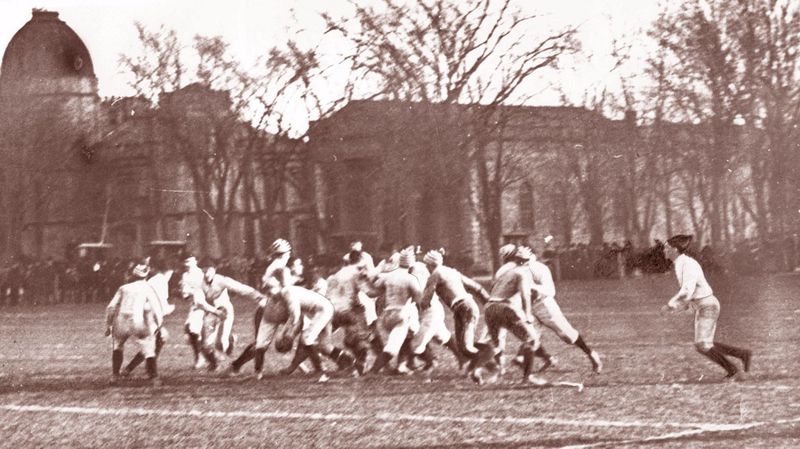
The First Army-Navy football game was played at West Point on Nov. 29, 1890, with the Navy squad achieving a 24-0 victory. (Baltimore Sun File Photo)
The Army got into the game the following year, when Navy challenged Army cadets in what was then a relatively new sport. 271 members of the corps of cadets pitched in 52¢ apiece to pay for half of Navy’s travel expenses, for that first game in 1890. That first game was played on November 29, ending in a humiliating loss for the cadets at West Point, 24-0.
The Black Knights had their revenge the following year, defeating Navy at Annapolis, 32-16. The two teams met some 30 times between 1890 and 1930, before the game became an annual event.
The two met in Chicago on November 27, 1926 in a National Dedication of Soldier Field, as a monument to American servicemen killed in the War to end all Wars.
More than just inter-service “bragging rights” are at stake. Only 17 schools can boast of having winners, of the prestigious Heisman Trophy. Army and Navy, combine for five.
West Point and Annapolis fielded some of the best teams in college football, during the first half of the 20th century. In 1944 and ’45 with the country at war, Army and Navy entered that final game of the season,with perfect records. Army finished both seasons, undefeated.
Fun Fact: “A 1973 episode of “M*A*S*H” referenced a fictional Army-Navy game that ended 42-36 Navy. To this day, no Army-Navy game has ended with that score. The radio announcer in the episode says the game is the 53rd Army-Navy game. That game was played in 1952; Navy won, 7-0″. H/T army.mil
Today, size and weight restrictions combine with a five-year military service commitment, while dreams of NFL careers draw some of the best football talent away from the service academies. Since 1963, only four seasons have seen both teams enter the Army-Navy game with winning records. Yet, the game remains a college football institution, receiving radio coverage every year since the late 1920s, and broadcast on national television, since 1945.
The first instant replay in American football history made its debut during the 1963 Army–Navy game.
The Army-Navy game may be the purest such event in all of college sports. These young men play for the love of the game, knowing the next few years will lead not to careers in business or sport, but to the United Sates military.
Five-year post-graduation military service commitments preclude the NFL career aspirations of most Army-Navy game veterans, but not all. Notable exceptions include Dallas Cowboys Quarterback Roger Staubach (Navy, 1965), New York Giants Wide Receiver and Return Specialist Phil McConkey (Navy, 1979), and (then) LA Raiders Running back Napoleon McCallum (Navy, 1985).
President Dwight Eisenhower earned the distinction of being the only future President in history to play the Army-Navy game in 1912, alongside future General of the Army, Chairman of the Joint Chiefs of Staff and teammate, Omar Bradley.
The 1912 squad at West Point included Dwight D. Eisenhower (3rd from left) and Omar Bradley (far right)
The only game ever played west of the Mississippi was the Rose Bowl of 1983, earning the DoD Wisconsin Senator William Proxmire’s not-so-coveted “Golden Fleece” award for blowing $100,000 to transport cadets, midshipmen and mascots, to Pasadena.
How I miss those days when government pretended to look out for our money.
With capacities of only 38,000 and 34,000 respectively, Army’s Michie Stadium and Navy’s Navy–Marine Corps Memorial Stadium are far too small, to hold the assembled crowd. Out of 117 games, only six have been played on either campus. Two of those (1942-’43), were due to WWII travel restrictions.
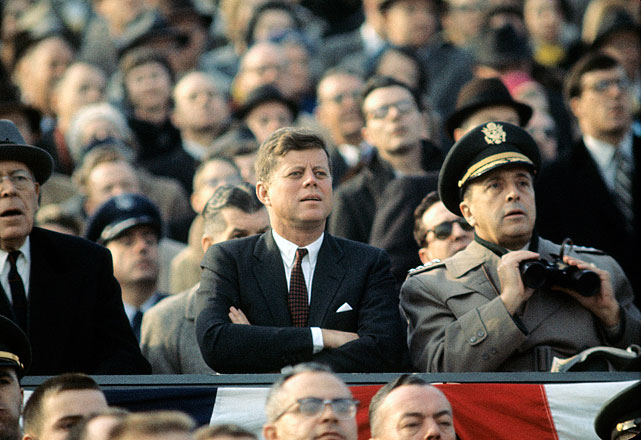
The Army-Navy game was canceled in 1963, part of a 30-day period of mourning, following the assassination of President John F. Kennedy. Knowing her husband to be a big fan, First Lady Jacqueline Kennedy requested the game go on. Quarterback Roger Staubach lead his #2 nationally ranked team to a 21-15 Navy victory.
For most seniors, the “First Classmen” of either academy, the Army-Navy game carries special meaning. Some may go on to play in a bowl game, but for most, this is the last regular season football game, each will ever play. In times of war, they and others like themselves will be among the first to go, in defense of the country. Some won’t come back alive.
The game is particularly emotional for this reason. Despite intense rivalry, it would be hard to find a duel in all of sports, where the two sides hold the other in higher regard.
The game is steeped in tradition. As opposites cheer them on, each side takes the field in a spectacle of precision drill, unmatched in any venue outside the military. After the game, teams assemble to sing the almae matres to the assembled students and fans of each institution, ‘On Brave Old Army Team’ and ‘Anchors Aweigh’.
The first such serenade is always performed for those of the losing academy, hence the coveted position of “singing second”, signifying the victor of this, the oldest sports rivalry in service academy history.
Respect and tradition is all well and good, but such rivalries do not come without a share of debauchery. During junior year, selected “Middies” and Cadets attend courses with the opposite military academy. On game day, each is restored in a “prisoner exchange”, returning from their semester in “enemy territory”.
Goats have a long history with all things maritime, having gone to sea since the age of sail and eating all manner of garbage and other undesirable food in exchange for which, she provided companionship, milk and butter. British explorer and naturalist Sir Joseph Bank’s nanny goat was the first creature two-legged or four, to circumnavigate the planet, twice.
A Navy goat and Army mule meet at the 1924 Army-Navy football game.Credit…U.S. Naval Institute
Navy had multiple mascots during the early years, including a gorilla, two cats, a bulldog, and a carrier pigeon. Legend has it a beloved goat once died aboard a Navy cruise. Two ensigns cavorted about wearing the skin during half-time, before making their way to the taxidermist.
Navy won that game. A live goat named “El Cid” (The Chief) appeared at the fourth Army-Navy game, in 1893. Navy won that game too, the third victory of those first four games. Small wonder that Billy goats have been the Navy mascot, since 1904.
The 2016 matchup was attended by “Bill” the Goat #XXXVI and his backup, Bill #XXXVII.
Small wonder too, why Army cadets will go to any length, to kidnap that goat. The first such kidnapping of the modern era, took place in 1953.
The pre-dawn raid of November 5, 1995 resulted in the ‘goatnapping’ of the entire stable, of Navy mascots. The Pentagon was notified, and the goats returned under a joint Army/Navy policy, prohibiting the “kidnapping of cadets, midshipmen or mascots”.
Cadets pulled off the caper in 2002, disguised in Grateful Dead T-shirts. “Operation Good Shepherd” launched in 2007, to kidnap Bill #XXXII, XXXIII, and XXXIV. The whole thing was posted, on You Tube.
Only the Army would mount a military operation, to kidnap a goat. Only the Navy would contact the Pentagon, to get him back.
The Philadelphia Quartermaster Depot decided in 1899, that Army needed a mascot. Army Mules have a long history going back to George Washington, “Father of the American Mule“. The first was a white mule, used to haul an ice wagon. Virginia pack mule “Mr. Jackson” (named for “Stonewall”) became the first “official” mascot, in 1936.
Mr. Jackson served twelve years, the first of seventeen Army mules. Only one, “Buckshot”, was a female. The “Mule Corps” currently consists of two Percheron crosses: “Ranger III” and his half-brother “Stryker” and a half-thoroughbred called “Paladin”.
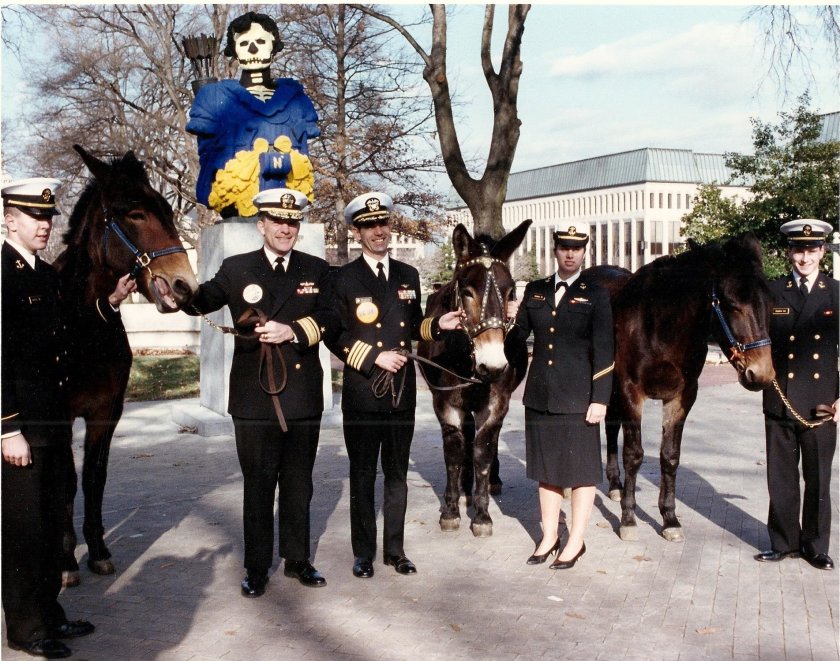
Senior commanders at the Naval Academy, including the superintendent, Rear Adm. Thomas Lynch, second from left, and the commandant of midshipmen, Capt. Michael Haskins, center, posed in 1991 with the Army mules that midshipmen had abducted from West Point. H/T New york Times
Always the last regular-season game in Division I-A football, the next two Army-Navy games are scheduled in Philadelphia. The game will then move to Metlife Stadium in East Rutherford New Jersey, to mark the twenty-year anniversary of the Islamist terror attacks on the World Trade Center. The 2022 game moves back to Philadelphia, marking the 91st time Army and Navy have played there.
To date, Navy leads Army in the series 60-49-7, with the Black Knights ending Navy’s 14-game winning streak in 2016. The 2019 edition is scheduled for December 14, at Lincoln Financial Field.
As the brother, son and grandson of Army veterans going back to the Revolution and beyond, have no doubt who I’ll be rooting for. ‘Beat Navy’.
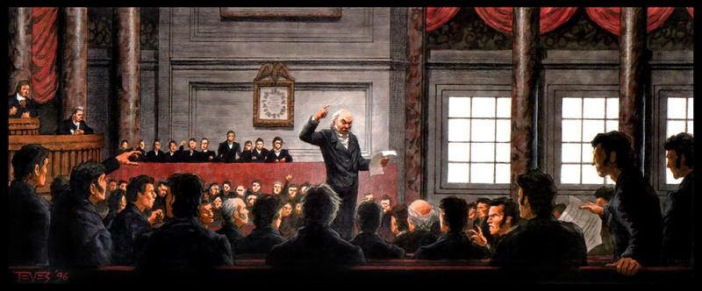
In arguing the case United States v. Schooner Amistad, former President John Quincy Adams took the position that no man, woman, or child in the United States could ever be sure of the “blessing of freedom”, if the President could hand over free men on the demand of a foreign government.
By 1839, the international slave trade was illegal in most countries while the “peculiar institution” of slavery, was not. In April of that year, five or six hundred Africans were illegally purchased by a Portuguese slave trader and shipped to Havana, aboard the slave ship Teçora.
Fifty-three members of the Mende people of West Africa, were sold to Joseph Ruiz and Pedro Montez, who planned to use them on their Cuban sugar plantation. The Mendians were given Spanish names and designated “black ladinos,” fraudulently documenting the 53 to have always lived as slaves, in Cuba. In June, Ruiz and Montez placed the Africans on board the schooner la Amistad, (“Friendship”), and set sail down the Cuban coast to Puerto del Principe.
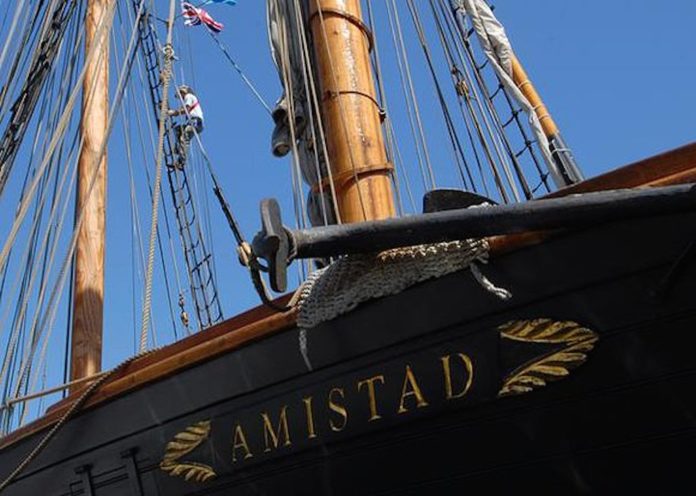
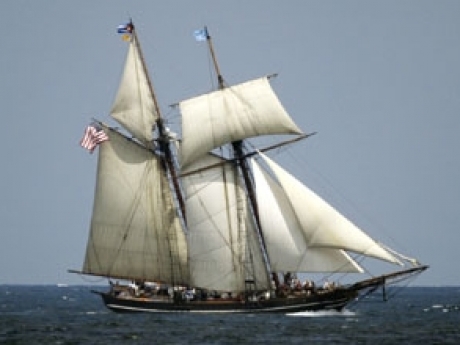
Replica of the slave ship, Amistad
The Africans were brought in chains to Teçora but chains were judged unnecessary for the short coastal trip, aboard Amistad. On the second day at sea, two Mendians were whipped for an unauthorized trip, to the water cask. One of them asked where they were being taken. The ship’s cook responded. They were to be killed, and eaten.
That mocking response would cost the cook, his life.
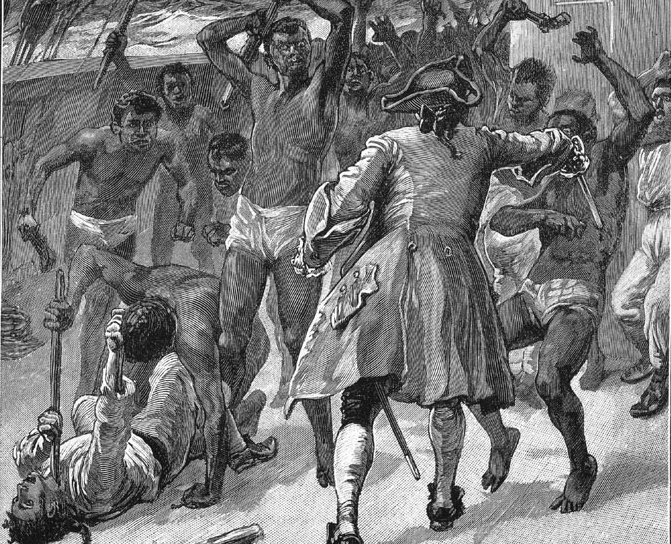
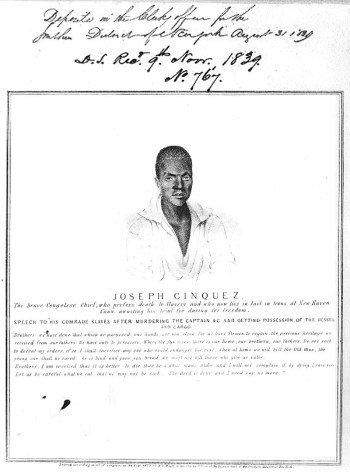
On the second night at sea, captives armed with cane knives seized control of the ship, led by Sengbe Pieh, also known as Joseph Cinqué. The Africans killed the ship’s Captain and the cook, losing two of their own, in the struggle. Montez was seriously injured while Ruiz and a cabin boy named Antonio, were captured and bound. The rest of the crew, escaped in a boat.
The mulatto cabin boy who really was a black ladino, would be used as translator.
Mendians forced the two to return to their homeland but the Africans, were betrayed. By day, the two would steer east, toward the African coast. By night when the position of the sun could mot be seen, the pair would turn north. Toward the United States.
After 60 days at sea, Amistad came aground off Montauk on Long Island Sound, when several Africans came ashore, for water. The ship was apprehended by a US Coastal Survey brig under the command of Thomas Gedney and Richard Meade. Meanwhile on shore, Henry Green and Pelatiah Fordham (the two had nothing to do with the Washington), captured the Africans who had come ashore.
This print depicting Joseph Cinqué appeared in The New York Sun newspaper, August 31, 1839
Amistad was piloted to New London Connecticut, still a slave state at that time. The Africans were placed under the custody of United States marshals.
Both the slave trade and slavery itself were legal according to Spanish law at this time, while the former was illegal, in the United States. The Spanish Ambassador demanded the return of Ruiz’ and Montez’ “property”, asserting the matter should be settled under Spanish law. American President Martin van Buren agreed but, by that time, the matter had fallen under court jurisdiction.
Gedney and Meade of the Washington sued under salvage laws for a portion of the Amistad’s cargo, as did Green and Fordham. Ruiz and Montez sued separately. The district court trial in Hartford determined the Mendians’ papers to be forged. These were now former slaves entitled to be returned, to Africa.
Antonio was ruled to have been a slave all along and ordered returned to the Cubans. He fled to New York with the help of white abolitionists and lived out the rest of his life, as a free man.
Fearing the loss of pro-slavery political support, President van Buren ordered government lawyers to appeal the case up to the United States Supreme Court. The government case depended on the anti-piracy provision of a treaty then in effect between the United States, and Spain.
A former President, son of a Founding Father and eloquent opponent of slavery, John Quincy Adams argued the case, in a trial beginning on George Washington’s birthday, 1841.
In United States v. Schooner Amistad, the Supreme Court upheld the decision of the lower court 8-1, ruling that the Africans had been detained illegally, and ordering them returned to their homeland.
John Tyler, a pro slavery Whig, was President by this time. Tyler refused to provide a ship or to fund the repatriation. Abolitionists and Christian missionaries did the work, 35 surviving Mendians departing for Sierra Leone on November 25, 1841 aboard the ship, Gentleman.
Back in Sierra Leone, some of the Africans helped establish a Christian mission. Most including Joseph Cinque himself, returned to homelands in the African interior. One survivor, a little girl when it all started by the name of Margru, returned to the United States where she studied at Ohio’s integrated Oberlin College, before returning to Sierra Leone as the Christian missionary, Sara Margru Kinson.
In arguing the case, President Adams took the position that no man, woman, or child in the United States could ever be sure of the “blessing of freedom”, if the President could hand over free men on the demand of a foreign government.
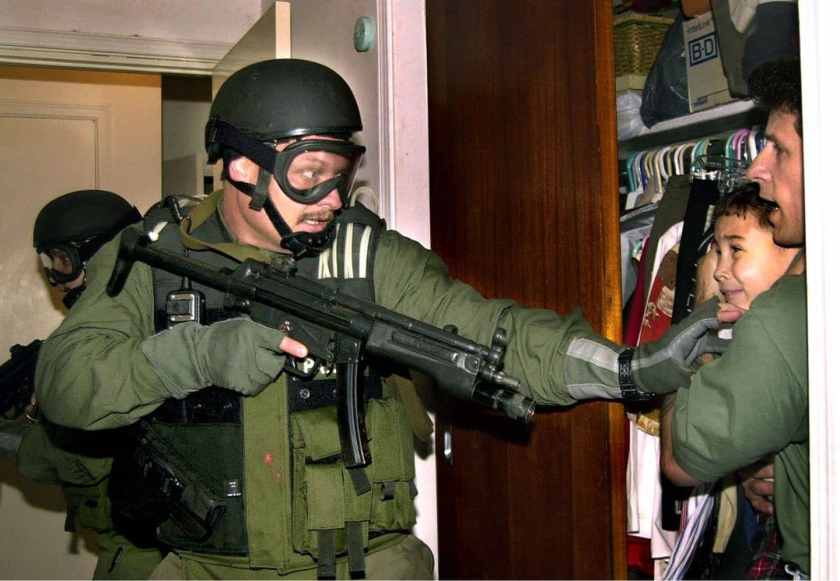
152 years later, President Bill Clinton, Deputy Attorney General Eric Holder and AG Janet Reno orchestrated the kidnap of six-year-old Elián González at gunpoint, returning him to Cuba over the body of the mother who drowned bringing the boy to freedom.
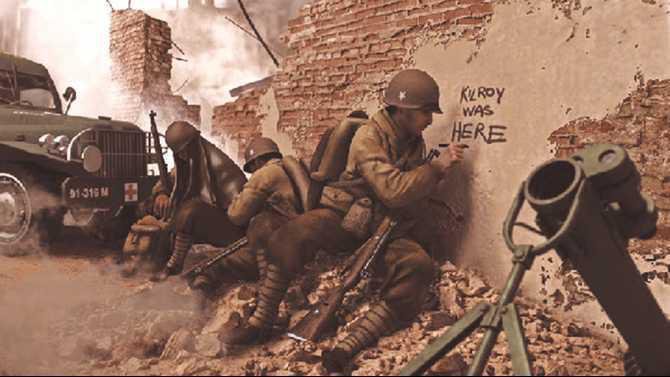
Kilroy was Here became a protective talisman, a good-luck symbol expected to provide good juju, for the American GI. Soldiers began to write the graffiti on newly captured areas and landings. Kilroy was the “Super GI”, showing up for every combat, training and occupation operation of the WW2 and Korean war era. The scribbled cartoon face was there before you arrived. He was still there when you left.
The Fore River Shipyard began operations in 1883 in Braintree, Massachusetts, moving to its current location on the Weymouth Fore River on Quincy Point, in 1901. The yard was purchased by Bethlehem Steel in 1913, and operated under the Bethlehem Shipbuilding Corporation.
Most of the ships built at Fore River were intended for the United States Navy, including early submarines built for Electric Boat, the Battleship USS Massachusetts, and the Navy’s first carrier, the USS Lexington. In the inter-war years, non-US Navy customers included the United States Merchant Marine, the Argentine Navy, the Royal Navy of Great Britain and the Imperial Japanese Navy.
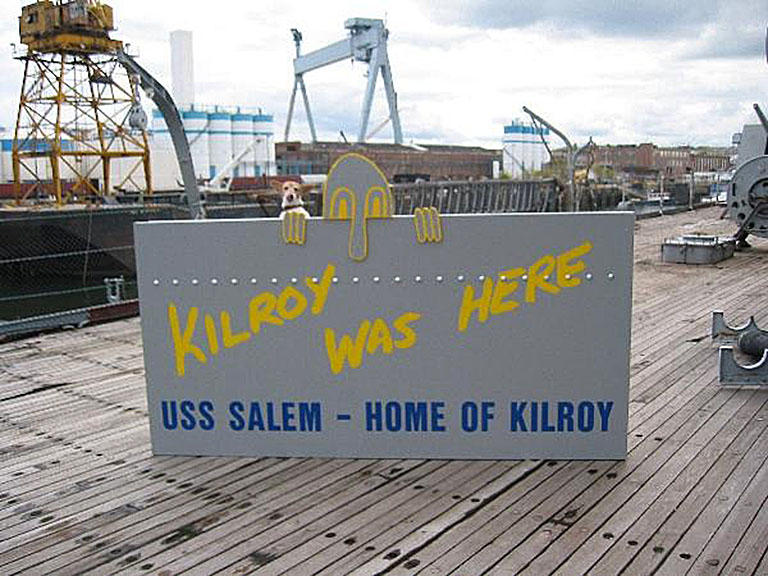
USS Salem CA-139 museum ship, Fore River Shipyard, Quincy
The Navy Act of 1938 mandated a 20% increase in American Naval strength. Much of that increase came through Fore River. The Shipyard employed 17,000 personnel the day Imperial Japan invaded the American Pacific anchorage at Pearl Harbor. That number increased to 32,000 by 1943 with a payroll equivalent to $9.69 Billion, in today’s dollars.
Necessity became the mother of invention, and the needs of war led to prodigious increases in speed. No sooner was USS Massachusetts launched, than the keel of USS Vincennes, began to be laid. By the end of the war, Fore River had completed ninety-two vessels of eleven different classes.
Builders at the yard were paid by the number of rivets installed. Riveters would mark the end of their shift with a chalk mark, but dishonest co-workers could erase their marks, marking a new spot a few places back on the same seam.
Shipyard inspector James Kilroy ended the practice, writing “Kilroy was Here”, next to each chalk mark.
With hulls leaving the yard so fast there was no time to paint the interiors, Kilroy’s name achieved mythic proportions. The man literally seemed to be everywhere, his name written in every cramped and sealed space in the United States Navy.
For the troops inside of those vessels, Kilroy always seemed to have “been there”, first. This was a symbol, an assurance that this particular troop ship, was well and truly sealed.
Kilroy was Here became a protective talisman, a good-luck symbol expected to provide good juju, for the American GI. Soldiers began to write the graffiti on newly captured areas and landings. Kilroy was the “Super GI”, showing up for every combat, training and occupation operation of the WW2 and Korean war era. The scribbled cartoon face was there before you arrived. He was still there when you left.
German Intelligence believed Kilroy to be some kind of “super spook”, able to go anywhere he pleased and to leave, without a trace.
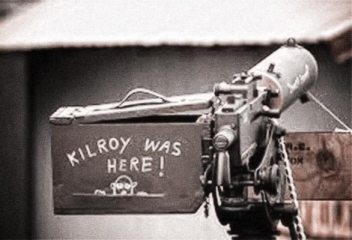
The challenge became, who could put the Kilroy graffiti in the most difficult and surprising place.
I’ve never been there, but I I understand there’s a Kilroy, at the top of Mt. Everest. The cartoon was scribbled in the dust of the moon. There’s one on the Statue of Liberty and another on the underside of the Arch of Triumph, in Paris. There’s on the great Wall, in China.
The World War 2 Memorial in Washington, DC could hardly have been complete without a Kilroy, engraved in granite. If you look closely enough, you’ll find two of them.
Under-water Demolition (UDT) teams, predecessors to the United States Navy SEALs, swam ashore on Japanese-held Pacific islands, preparing the way for amphibious invasions. More than once, UDT divers found that Kilroy had already been there, the silly cartoon nose scribbled on makeshift signs, and even enemy pillboxes.
When Truman, Stalin, and Churchill met at Potsdam, a VIP latrine was built for their exclusive use. Stalin was the first in, emerging from the outhouse and asking his aide, “Who is Kilroy?”
Ask a Brit and he will tell you “Mr. Chad” came first, cartoonist George Chatterton’s response to war rationing. “Wot, no tea”?
The cartoon appeared in every theater of the war, but few knew the mythical Kilroy’s true identity.
In 1946, the Transit Company of America held a contest, asking the “real” Kilroy to come forward.
Nearly forty guys showed up to claim the prize, a real trolley car. Doubtless they all felt they had legitimate claims, but James Kilroy brought a few riveters and some shipyard officials along, to vouch for his authenticity. That was it.
That Christmas the Kilroy kids, all nine of them, had the coolest playhouse in all of Massachusetts.
James Kilroy went on to serve as Boston City Councillor and member of the Massachusetts House of Representatives, from Halifax. Surely there is a doodle, somewhere in the “Great & General Court” up there in Boston, to inform the passer-by. Kilroy was here.
James Kilroy passed away on this day, November 24, 1962, at the age of sixty.

 south after a brief stay in Charleston, South Carolina. Landing at Yamacraw bluff, Oglethorpe’s party was greeted by Chief Tomochichi of the Yamacraws, along with two Indian traders, John and Mary Musgrove.
 originally come from its native Southeast Asia to West Africa, where the same strains were grown by European colonists. The rice industry failed in Africa, but the combination of English agricultural technology and African labor made the crop a mainstay of the early colonial economy.
 On January 20, 1788, Bryan brought official recognition to the First African Baptist Church and its 67 members, five years before the first “white” Baptist Church in Savannah. In 1802, Bryan founded the “Second Colored Baptist Church”, renamed the “Second African Baptist Church” in 1823.
 he called “I have a Dream”. Two years later, the same speaker delivered his speech from the steps of the Lincoln memorial in Washington.

 Iva Ikuko Toguri was born in Los Angeles on July 4, 1916, the daughter of Japanese immigrants. She attended schools in Calexico and San Diego, returning to Los Angeles where she enrolled at UCLA, graduating in January, 1940 with a degree in zoology.
 That November, Toguri was asked to become a broadcaster for Radio Tokyo on the “Zero Hour” program, part of a Japanese psychological warfare campaign designed to lower the morale of US Armed Forces. The name “Tokyo Rose” was in common use by this time, applied to as many as 12 different women broadcasting Japanese propaganda in English.
 She called herself “Orphan Annie,” earning 150 yen per month (about $7.00 US). She wasn’t a professional radio personality, but many of those who recalled hearing her enjoyed the program, especially the music.

 d’Aquino was sentenced to ten years and fined $10,000 for the crime of treason, only the seventh person in US history so convicted. She was released from the Federal Reformatory for Women at Alderson, West Virginia in 1956, having served six years and two months of her sentence.

 Patriot forces selected a site called Bemis Heights about 10 miles south of Saratoga, spending a week constructing defensive works with the help of Polish engineer Thaddeus Kosciusko. Theirs was a formidable position with mutually supporting cannon on overlapping ridges, with interlocking fields of fire.
 The second and decisive battle for Saratoga, the Battle of Bemis Heights, occurred on October 7, 1777.
 It would have been better in the chest, he said, than to have received such a wound in that leg.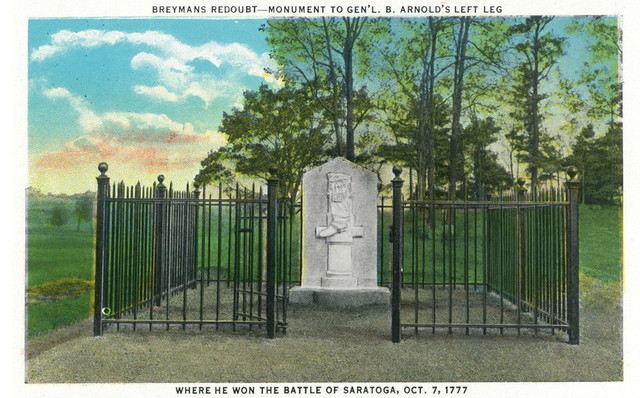
 “In memory of

 Cornered in a washout under some railroad tracks Randall held off the attack single handed with his revolver, despite a gunshot wound to his shoulder and no fewer than 11 lance wounds.
 The King James Bible teaches us, in John 15:13: “Greater love hath no man than this, that a man lay down his life for his friends“. After the war, Sommocolonia erected a Memorial. A tribute to nine brave soldiers who gave their lives that their brothers might live. Eight Italians and one American.
 1st Sergeant Mark Matthews, the last of the Buffalo Soldiers, died of pneumonia on September 6, 2005 at the age of 111. A man who forged papers in order to join at age fifteen and once had to play taps from the woods, Matthews was buried with full military honors at Arlington National Cemetery, section 69, grave #4215.


 Ed seems to have had life-long problems with alcohol, often resulting in an inability to provide for his family. Amelia must have been a disciplined student despite it all, as she graduated with her high school class, on time, notwithstanding having attended six different schools.
 Meeley and Pidge worked as nurse’s aids in Toronto, in 1919. There she met several wounded aviators and developed a strong admiration for these people. Amelia would spend much of her free time watching the Royal Flying Corps practice at a nearby airfield.

 Following the end of the official search, Earhart’s husband and promoter George Palmer Putnam financed private searches of the Phoenix Islands, Christmas (Kiritimati) Island, Fanning (Tabuaeran) Island, the Gilbert and the Marshall Islands, but no trace of the aircraft or its occupants was ever found.


 In the early days of the Civil War, General-in-chief of the army Winfield Scott argued against such an award, claiming it to be “too European”.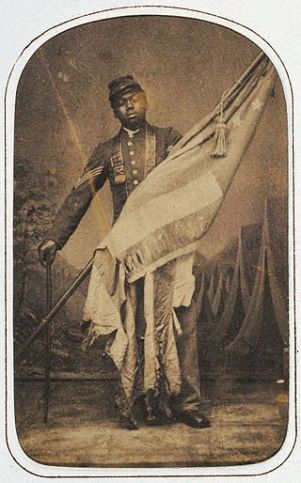
 On October 8, 1918, Tennessee native Corporal Alvin Cullum York of the 82nd Division lead a group of seventeen against a numerically superior German force, dug in at Chatel-Chehery, France.
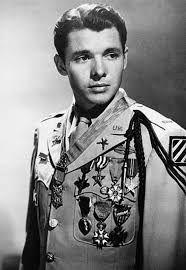 Kingston Texas 2nd Lieutenant
 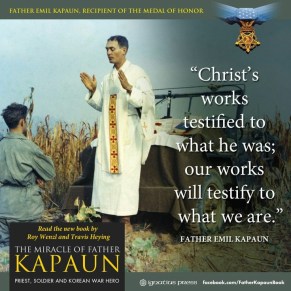 Chaplain Emil Kapaun, the “
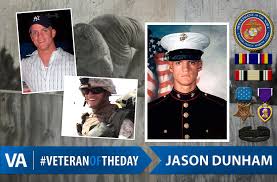 Corporal Jason Lee Dunham of Scio New York deliberately threw himself on an Iraqi grenade on April 14, 2004, saving the lives of fellow Marines at the sacrifice of his own life.
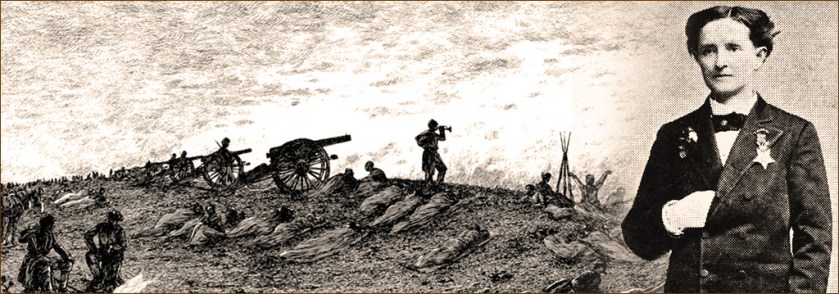 The youngest Medal of Honor recipient was 11-year old drummer boy, Willie Johnston.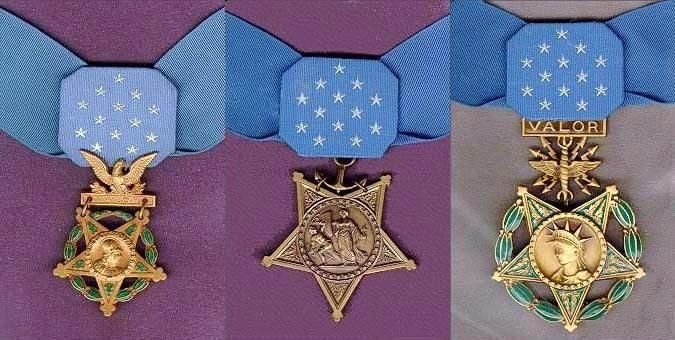

 Wait…What?

 Be that at it as it may, the animal is a voracious herbivore, spending daylight hours at the bottom of rivers & lakes, happily munching on vegetation.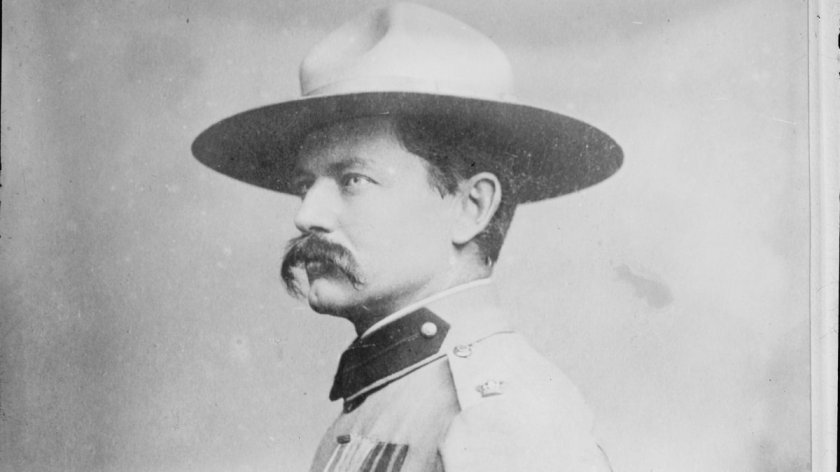
 That golden future of Lippincott’s hippo herds roam only in the meadows and bayous of the imagination. Who knows, it may be for the best. I don’t know if any of us could see each other across the table. Not with a roast hippopotamus.


 The two met in Chicago on November 27, 1926 in a National Dedication of Soldier Field, as a monument to American servicemen killed in the War to end all Wars.
 Five-year post-graduation military service commitments preclude the NFL career aspirations of most Army-Navy game veterans, but not all. Notable exceptions include Dallas Cowboys Quarterback Roger Staubach (Navy, 1965), New York Giants Wide Receiver and Return Specialist Phil McConkey (Navy, 1979), and (then) LA Raiders Running back Napoleon McCallum (Navy, 1985).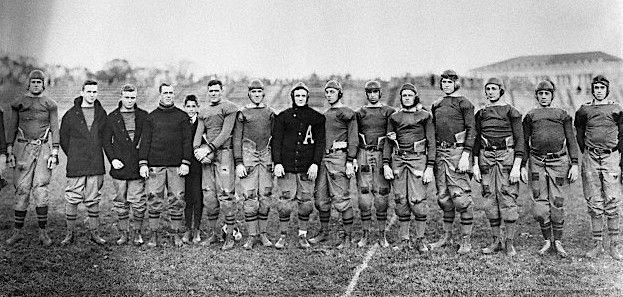

 As the brother, son and grandson of Army veterans going back to the Revolution and beyond, have no doubt who I’ll be rooting for. ‘Beat Navy’.

 Necessity became the mother of invention, and the needs of war led to prodigious increases in speed. No sooner was USS Massachusetts launched, than the keel of USS Vincennes, began to be laid. By the end of the war, Fore River had completed ninety-two vessels of eleven different classes.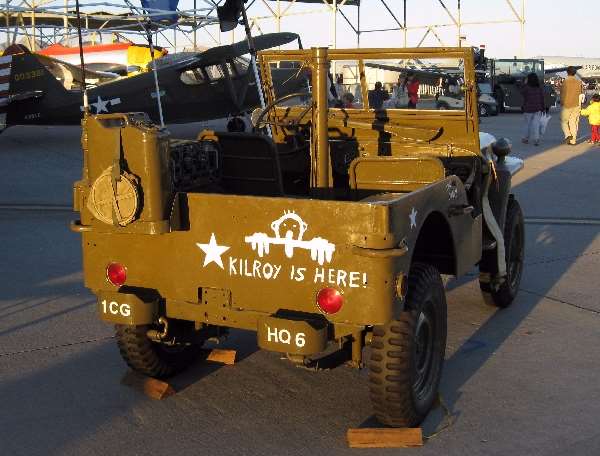


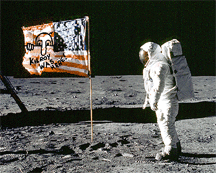 German Intelligence believed Kilroy to be some kind of “super spook”, able to go anywhere he pleased and to leave, without a trace.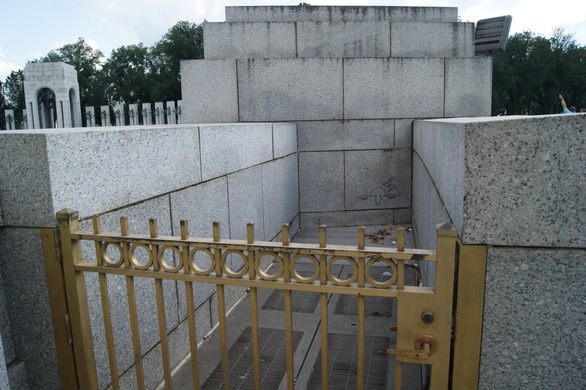
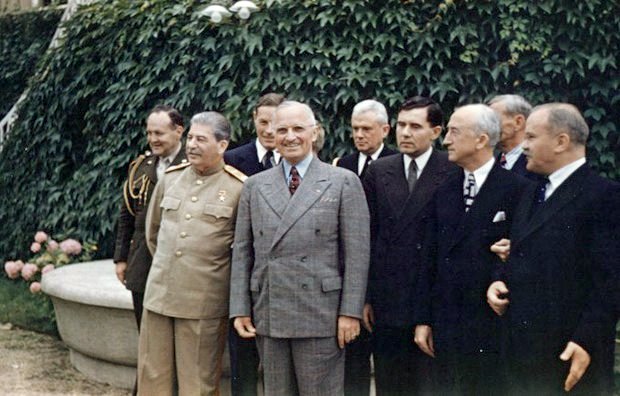
 The cartoon appeared in every theater of the war, but few knew the mythical Kilroy’s true identity.
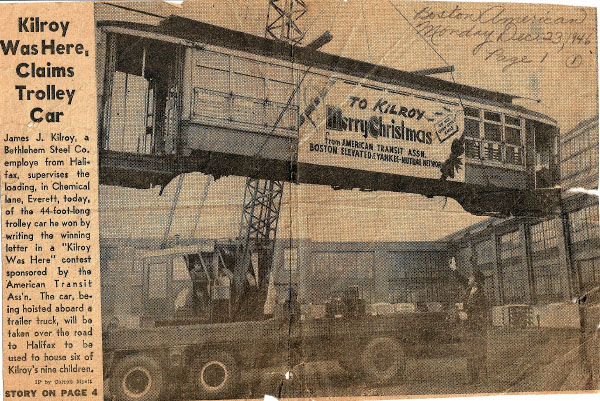 James Kilroy went on to serve as Boston City Councillor and member of the Massachusetts House of Representatives, from Halifax. Surely there is a doodle, somewhere in the “Great & General Court” up there in Boston, to inform the passer-by. Kilroy was here.
 Historical Easter Eggs - Today in History
You must be logged in to post a comment.