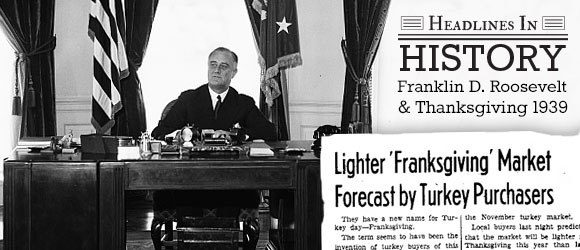
November 26, 1941, Franksgiving

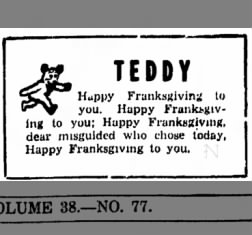
Popular comedians of the day got a laugh out of the Franksgiving ruckus including Burns & Allen, and Jack Benny. One 1940 Warner Brothers cartoon shows two Thanksgivings, one “for Democrats” and one a week later “for Republicans.”

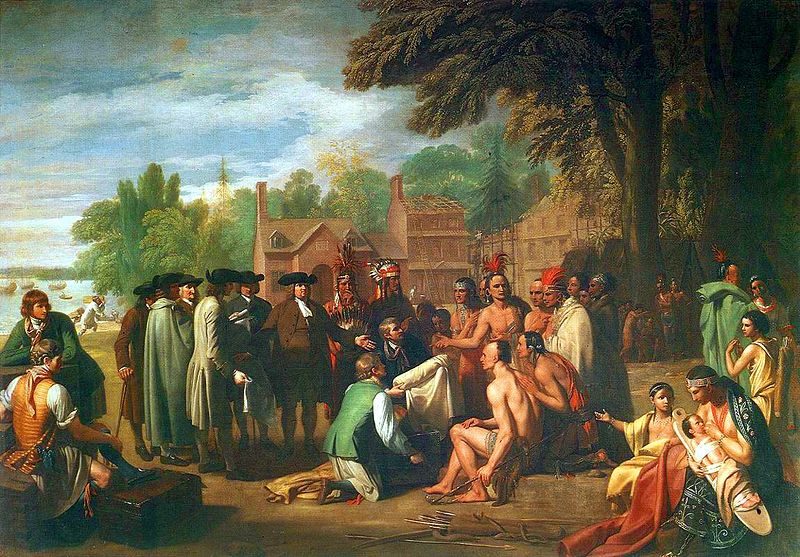
The first Autumn feast of Thanksgiving dates well before the European settlement of North America.

OldCrowafriendly

Historian Michael Gannon writes that the “real first Thanksgiving” in America took place in 1565, when Pedro Menéndez de Avilés landed in modern-day Florida, and “had the Indians fed and then dined himself.”

Likely, it was salt-pork stew with garbanzo beans. Yum.

According to the Library of Congress, the English colony of Popham in present-day Maine held a “harvest feast and prayer meeting” with the Abenaki people in 1607, twenty-four years before that “first Thanksgiving” at Plymouth.

George Washington proclaimed the first Presidential National day of Thanksgiving on November 26, 1783, “to recommend to the People of the United States a day of public thanksgiving and prayer to be observed by acknowledging with grateful hearts the many signal favors of Almighty God especially by affording them an opportunity peaceably to establish a form of government for their safety and happiness“.

So much for the “separation of Church and state”.

President Abraham Lincoln followed suit in 1863, declaring a general day of Thanksgiving to be observed on the last Thursday of November.  The date seemed to work out OK and the tradition stuck, until 1939.
Roughly two in every seven Novembers, contain an extra Thursday.  November 1939, was one of them.

franksgiving2

In those days, it was considered poor form for retailers to put up Christmas displays or run Christmas sales, before Thanksgiving.  Lew Hahn, General Manager of the Retail Dry Goods Association, was afraid that extra week was going to cut into Christmas sales.

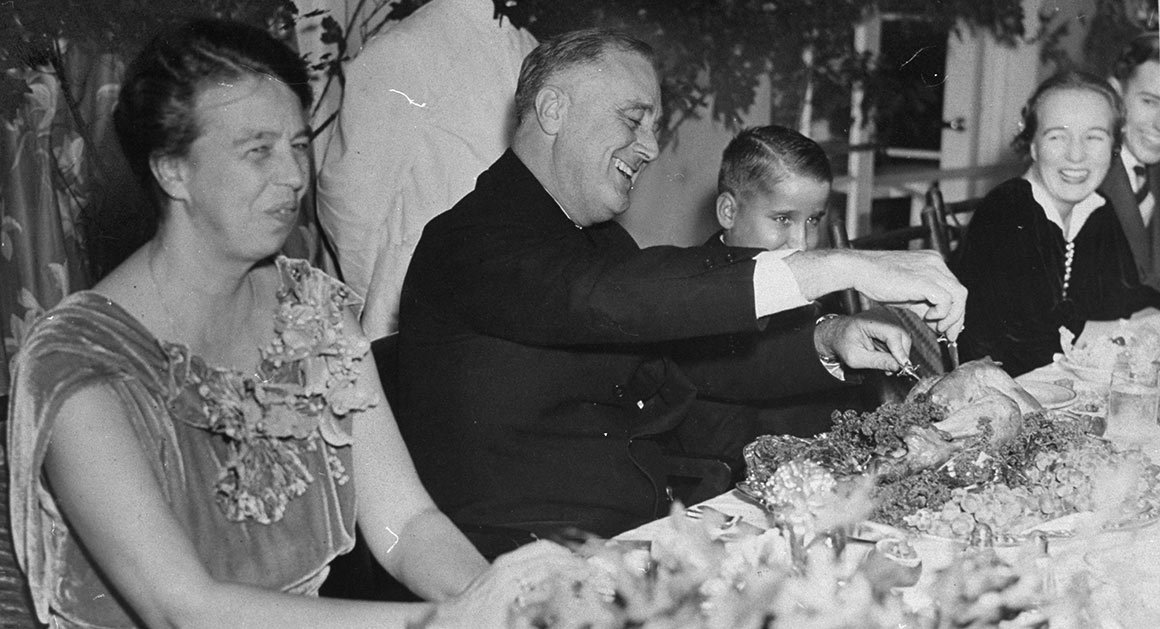
Ten years into the Great Depression with no end in sight, the Federal government was afraid of the same thing. By late August, President Franklin Delano Roosevelt decided to deviate from the customary last Thursday and declared the fourth Thursday, November 23, to be a national day of prayer and thanksgiving.

Opposition to the plan was quick to form.  Alf Landon, Roosevelt’s Republican challenger in the earlier election, complained of Roosevelt’s impulsiveness and resulting confusion.  “More time should have been taken working it out” Landon said, “instead of springing it upon an unprepared country with the omnipotence of a Hitler.”

252_84_738_450

In Plymouth Massachusetts, self-described home of the “first Thanksgiving”, Chairman of the Board of Selectmen James Frasier, “heartily disapproved”.

The short-notice change in schedule disrupted vacation plans for millions of Americans. Traditional Thanksgiving day football rivalries between school teams across the nation, were turned upside down.

Unsurprisingly, support for Roosevelt’s plan broke along ideological lines.  A late 1939 Gallup poll reported Democrats favoring the move by a 52% to 48% majority, with Republicans opposing the move, 79% to 21%.

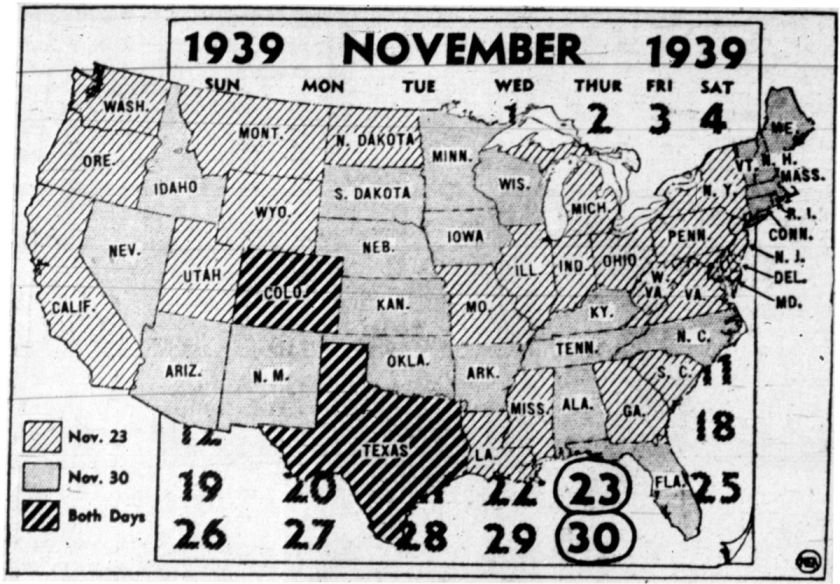
Such proclamations represent little more than the “’moral authority” of the Presidency. States are free to do as they please.  Twenty-three states and the District of Columbia observed Thanksgiving day on the non-traditional date, and twenty-two kept Thanksgiving on the 30th.  Colorado, Mississippi and Texas, did both.

The next two years, thirty-two states and the District of Columbia celebrated what came to be called “Franksgiving” on the third Thursday of the month, while the remainder observed a more traditional “Republican Thanksgiving” on the last.

Franksgiving calendar

In 1941, a Commerce Department survey demonstrated little difference in Christmas sales between those states observing Franksgiving, and those observing the more traditional date. A joint resolution of Congress declared the fourth Thursday beginning the following year to be a national day of Thanksgiving. President Roosevelt signed the measure into law on November 26.

Interestingly, the phrase “Thanksgiving Day” appeared only once in the 20th century prior to the 1941 resolution, that in President Calvin Coolidge’s first of six such proclamations.

Most state legislatures followed suit with the Federal fourth-Thursday approach, but not all.  In 1945, the next year with five November Thursdays, Arkansas, Florida, Georgia, Idaho, Nebraska, Tennessee, Texas, and Virginia reverted to the last Thursday.  Texas held out the longest, celebrating its fifth-Thursday Thanksgiving for the last time in 1956.

To this day, the years 1939, ’40 and ’41 remain the only outliers, outside the fourth-Thursday tradition.

Popular comedians of the day got a laugh out of the Franksgiving ruckus including Burns & Allen, and Jack Benny.  One 1940 Warner Brothers cartoon shows two Thanksgivings, one “for Democrats” and one a week later “for Republicans.”

The Three Stooges short film of the same year has Moe questioning Curly, why he put the fourth of July in October.  “You never can tell”, he replies.  “Look what they did to Thanksgiving!”

Joe Toye, the “Easy Company” character in the 2001 HBO miniseries “A Band of Brothers”, may have had the last word on Franksgiving.  Explaining his plan to get the war over quickly, the paratrooper quips “Hitler gets one of these [knives] right across the windpipe, Roosevelt changes Thanksgiving to Joe Toye Day, [and] pays me ten grand a year for the rest of my f*****g life.

Sounds like a plan.

November 24, 1917 Anarchy

The 1917 incident accounted for the largest single-incident loss of life in the history of United States law enforcement, a record which would stand until September 11, 2001.


On the morning of November 24, 1917, 10-year-old Josie Spicciatti found a package in a narrow passage next to St. Anne’s Italian Evangelical Church in Milwaukee. She was the daughter of the cleaning lady, and apparently recognized it as a bomb.  She brought it into the church anyway, and went to work.

Only that afternoon did she go looking for Maude Richter, a social worker at the church. At about 4:00, Maude dragged the 20-pound bomb into the church basement, banging it on the steps all the way down. She later told a reporter, “I saw the vial, which contained a brown fluid” (it was sulfuric acid), “and took it out. In the hole, where it had been placed, was a yellow substance like powder.”

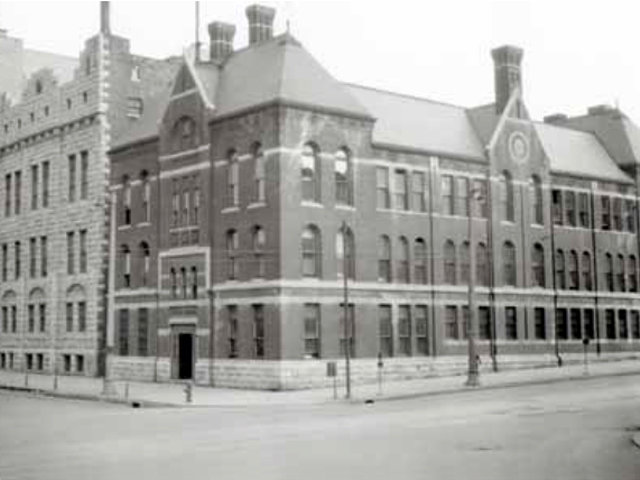
1917-police-station-bomb-anniversary_fullsize_story1

She then decided that things should be left as they’d been found, so she carefully reassembled the device and called Sam Mazzone, the janitor, to take the bomb to the police station. Mazzone explained to Desk Sergeant Henry Deckert that the bomb may be linked to a near riot which had erupted several months earlier, killing two parishioners and wounding 5, including two police officers.

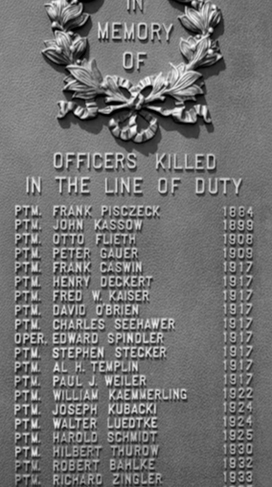
mpdmemorialvertical

Policemen on duty were told there was a bomb in the station, but it seems that few took it seriously. Captain of Detectives John Sullivan remarked “It looked like a big dinner pail and innocent enough.”

Sergeant Deckert took the bomb into the office of Lieutenant Robert Flood, saying, “Look at the new kind of bomb I’ve got.” “Get that thing out of here”, said Flood. “Don’t fool around with anything like that!” Deckert then brought the bomb into the squad assembly room, where a group of detectives gathered to examine the device.

That’s when the thing went off.

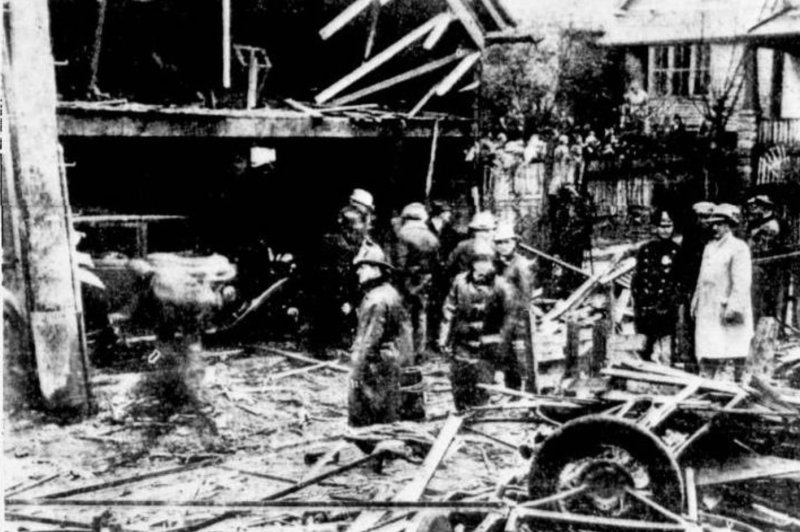
Eight officers were killed in a fraction of a second as was Catherine Walker, who had come to the station to file a complaint against her boyfriend. Operator Edward Spindler was working the switchboard on the second floor. Shrapnel blasted through the floor, entering his body at the waist and exiting through his head, killing him instantly.

One detective’s wedding band was blown from his finger. A shoe hung from the ceiling. A hat hung on a shard of glass.  One detective’s watch was found, face up on a windowsill, the hands had stopped at 7:33PM. Sergeant Deckert’s body was never found. He was identified only by the stripe of his uniform trousers leg.

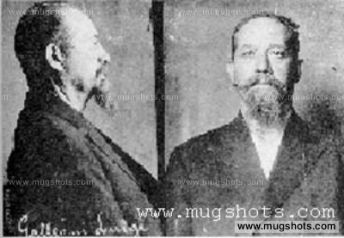
Luigi_Galleani_mugshot.400x800
Luigi Galleani

A group led by Italian Anarcho-Communist Luigi Galleani was suspected of placing the bomb, though no one was ever charged with the crime.

Many years later, interviews with surviving members of the anarchist organization indicated that Mario Buda, chief bomb maker for the Galleanists, may have constructed the Milwaukee device. The bomb had been intended for the small Italian church and its outspoken and patriotic pastor, Reverend August Giuliani.

The Milwaukee police station bombing accounted for the largest single-incident loss of life in the history of United States law enforcement, a record which would stand until September 11, 2001.

November 13, 1982 A Wall of Faces

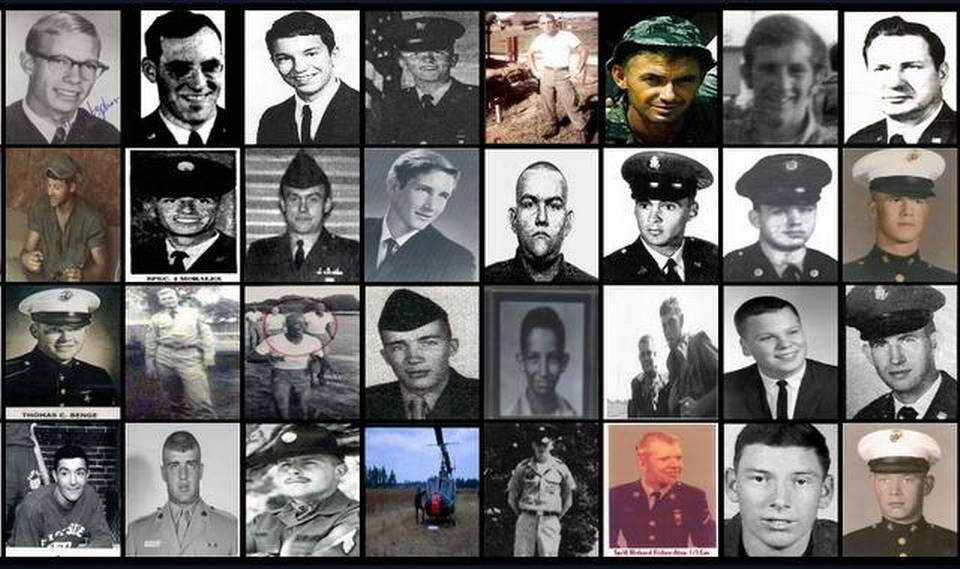
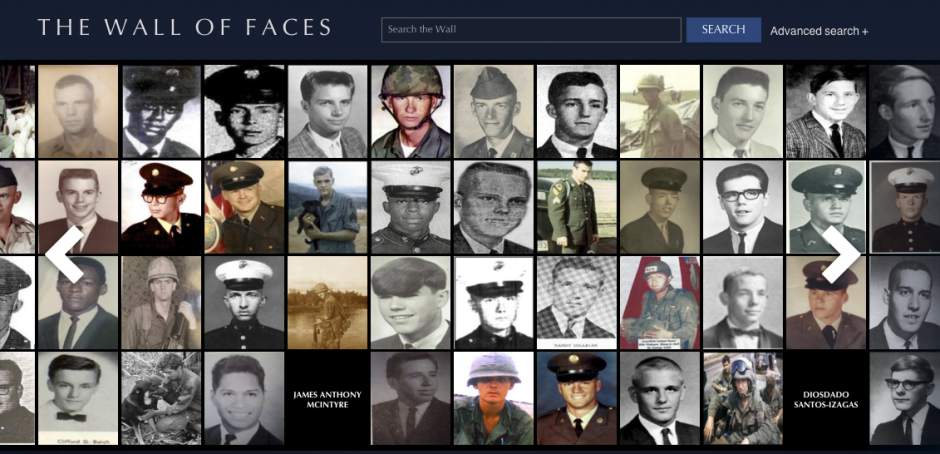
Ten years ago, the Vietnam Veterans Memorial Fund, www.vvmf.org began work on a virtual “Wall of Faces”, where each name is remembered with a picture, and a story to go with it.  In 2017, the organization was still looking for 6,000+ photographs. As I write this, only 230 remain to be found.

Check it out. Pass it around. You might be able to help.


Begun on November 1, 1955, the American war in Southeast Asia lasted 19 years, 5 months and a day. On March 29, 1973, two months after signing the Paris Peace accords, the last US combat troops left South Vietnam as Hanoi freed the remaining POWs held in North Vietnam.

It was the longest war in American history, until Afghanistan.

Jan Scruggs served in that war. Two tours, returning home with a Purple Heart and three army commendation medals as well as a medal for valor. Theirs was an unpopular war and like many, Scruggs found readjustment to civilian life, difficult.

AP_967246486244-840x1256

In 1979, he and Becky, his wife of five years, went to see a movie. The Deer Hunter. The film seemed to bring it all back. The RPG that had left him so grievously wounded. The accidental explosion of those mortar rounds that had killed his buddies. Twelve of them.

That night passed without sleep, a waking nightmare of flashbacks and alcohol. By dawn he’d envisioned a memorial. With names on it. Maybe an obelisk. On the Mall, in Washington DC. Becky feared he might be losing his mind.

Scruggs was working for the department of labor at that time when he took a week off, to pursue the project.

The idea received little support. The project was impractical it was said, and besides, the project would distract veterans organizations from more important work. Undaunted, Scruggs soon left his job to pursue the project, full time.

It was tough going. Becky was now the sole breadwinner. In two months the project raised a scant $144.50.

Always a sign of the contemptible times in which we live, the CBS Evening News ridiculed the project. Late night “comedians” joined in the mockery and yet, that CBS report attracted the attention of powerful allies. Thousands of dollars came in, mostly in $5 and $10 denominations.

Chuck Hagel, then deputy administrator for the United States Department of Veterans Affairs, took interest. Likewise John Wheeler, the fellow Vietnam vet – turned attorney who’d spearheaded the effort to erect the Southeast Asia Memorial on the military academy, at West Point.

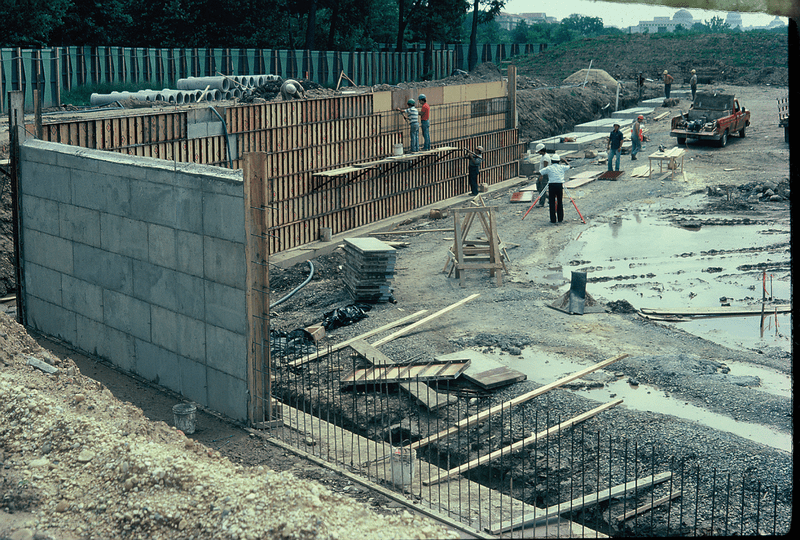
$8 million came in over the next two years and then came the competition. The actual design. There were 1,422 submissions, so many that selections were performed in an aircraft hangar.

Much to her surprise, the winner was 1st-generation American of Chinese ancestry Maya Lin, then an undergraduate studying architecture, at Yale University.

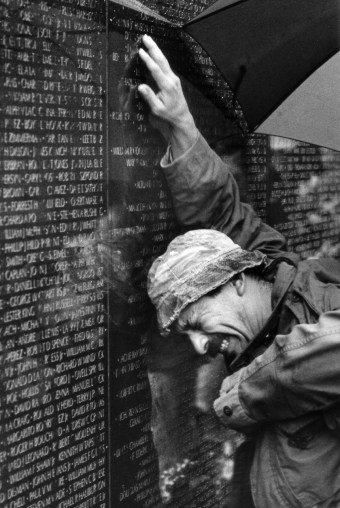
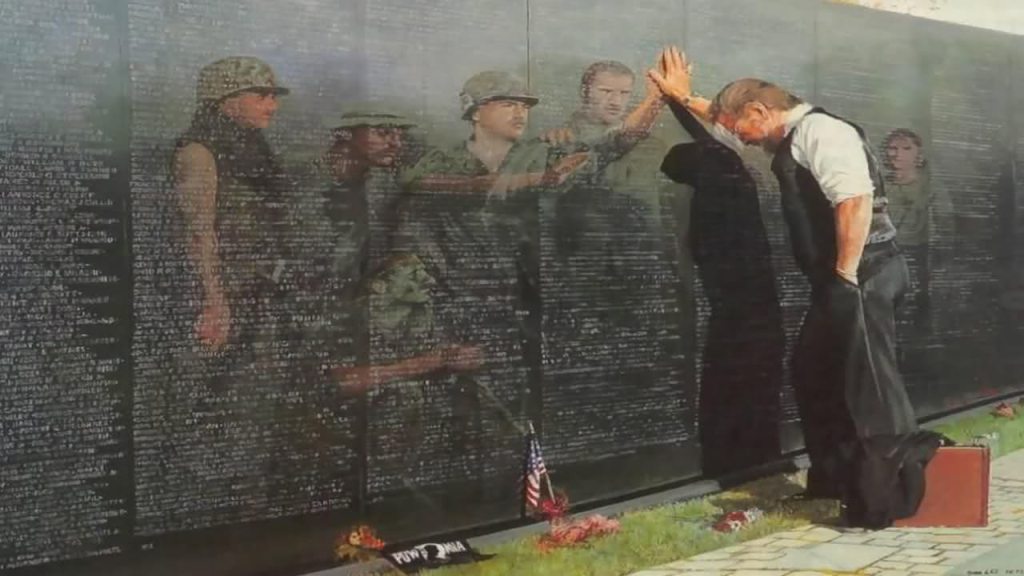
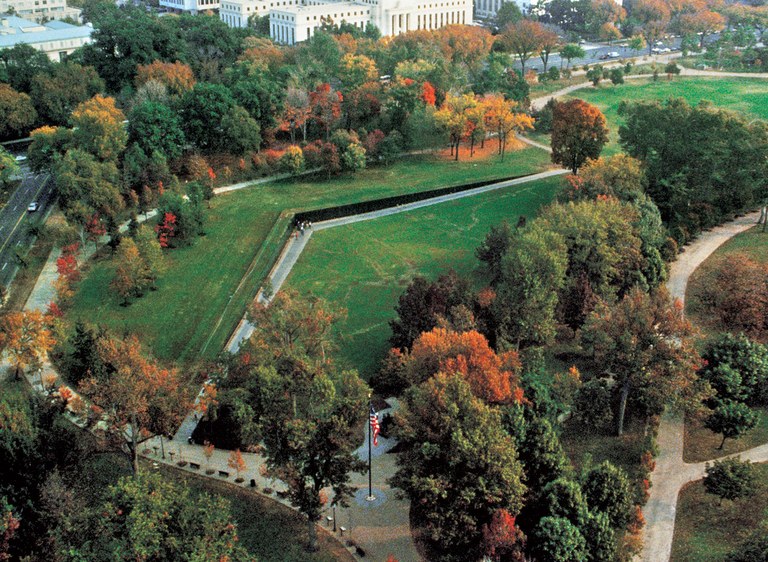
“The Wall” was dedicated on this day. November 13, 1982.

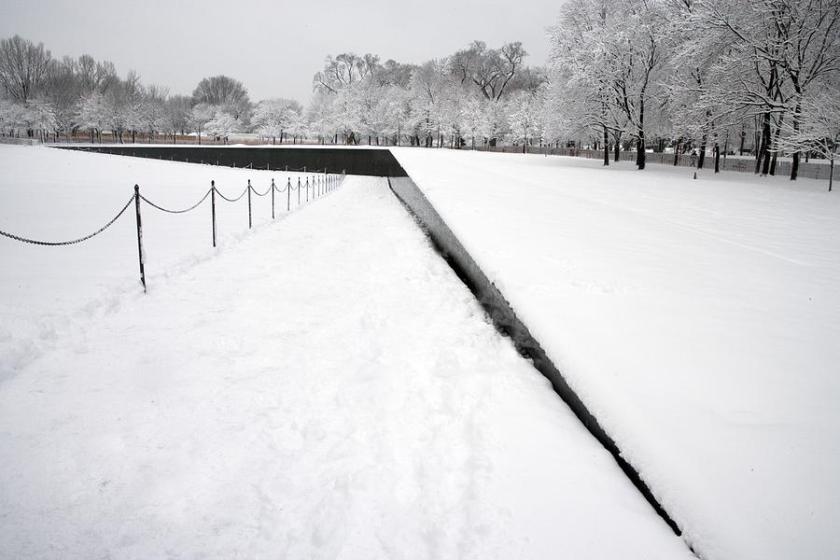
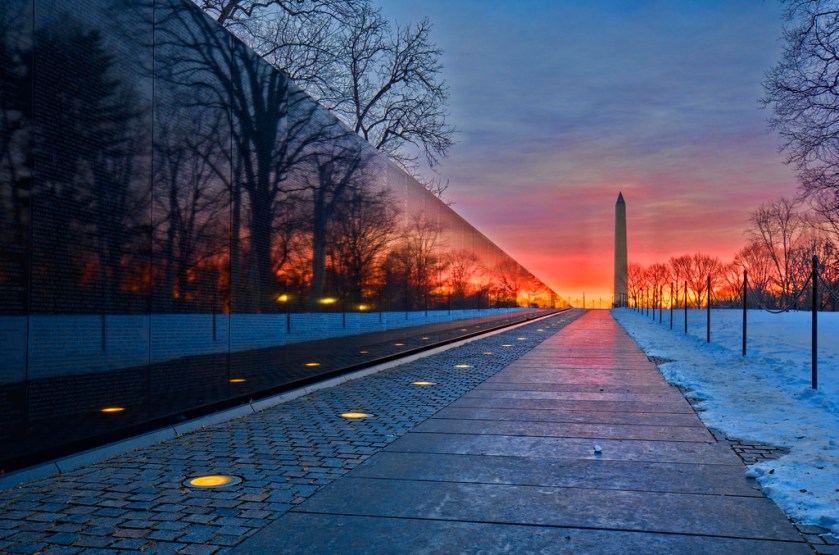
Lin’s design is a black granite wall, 493½-feet long and 10-feet, 3-inches high at its peak, laid out in a great wedge of stone which seems to rise from the earth and return to it. The name of every person lost in the war in Vietnam is sandblasted onto the stone, appearing in the order in which they were lost.

image (4)

Go to the highest point on the memorial, panel 1E, the very first name is that of Air Force Tech Sgt. Richard B. Fitzgibbon, Jr. of Stoneham, Massachusetts, killed on June 8, 1956. Some distance to his right you will find the name of Marine Corps Lance Cpl. Richard B. Fitzgibbon III, killed on Sept. 7, 1965. The Fitzgibbons are one of three Father/Son pairs, so memorialized.

The names begin at the center and move outward, the east wing ending on May 25, 1968. The same day continues at the far end of the west wing, moving back toward the center at panel 1W. The last name on the wall, the last person killed in the war, meets the first.  The circle is closed.

vietnam-veterans-memorial-wall-designed-everett

There, you will find the name of Kelton Rena Turner of Los Angeles, an 18-year old Marine, killed in action on May 15, 1975 during the “Mayaguez incident”, two weeks after the evacuation of Saigon.

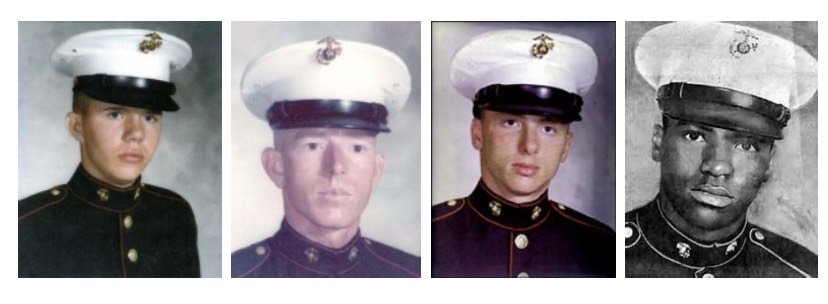
Most sources list Gary L. Hall, Joseph N. Hargrove and Danny G. Marshall as the last to die in Vietnam, though their fate remains, unknown. These three were United States Marines, an M-60 machine gun squad, mistakenly left behind while covering the evacuation of their comrades, from the beaches of Koh Tang Island. Their names appear along with Turner’s, on panel 1W, lines 130-131.

There were 57,939 names inscribed on the Memorial when it opened in 1982. 39,996 died at age 22 or younger.  8,283 were 19 years old. The 18-year-olds are the largest age group, with 33,103. Twelve of them were 17. Five were 16. There is one name on panel 23W, line 096, that of PFC Dan Bullock, United States Marine Corps.  He was 15 years old on June 7, 1969.  The day he died.

Left to right:  PFC Gary Hall, KIA age 19, LCPL Joseph Hargrove, KIA on his 24th birthday, Pvt Danny Marshall, KIA age 19, PFC Dan Bullock, KIA age 15

Eight names belong to women, killed while nursing the wounded. 997 soldiers were killed on their first day in Vietnam.   1,448 died on their last. There are 31 pairs of brothers on the Wall. 62 parents who had to endure the loss of two sons.

16722980372_b210acb1a3_b

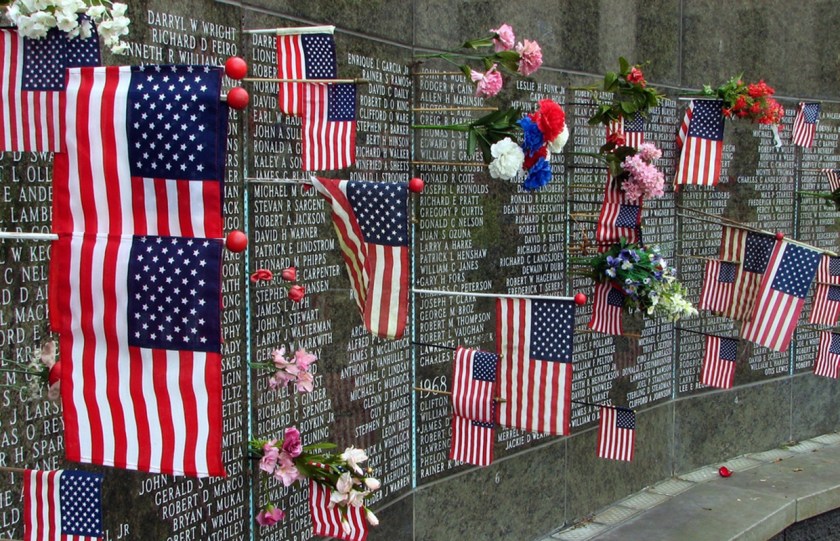
As of Memorial Day 2015, there are 58,307, as the names of military personnel who succumbed to wounds sustained during the war, were added to the wall.

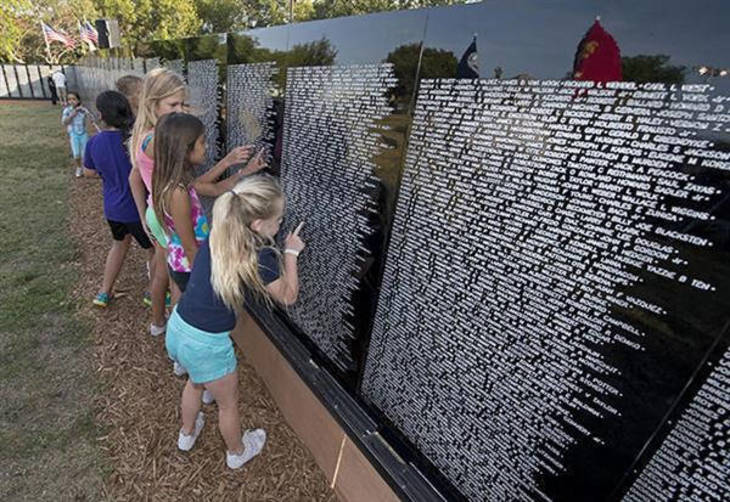
Over the years, the Wall has inspired a number of tributes, including a traveling 3/5ths scale model of the original and countless smaller ones, bringing the grandeur of Lin’s design to untold numbers without the means or the opportunity, to travel to the nation’s capital.

best_crop_ab22a934fd024b8b443c_unnamed-221@2x

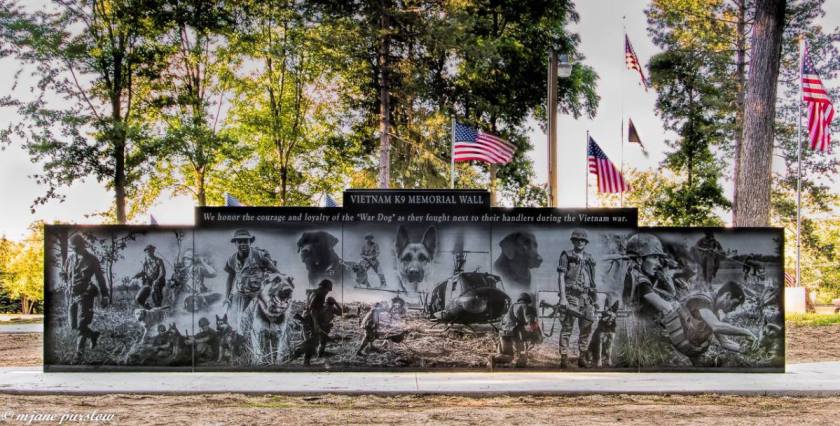
In South Lyons Michigan, the black marble Michigan War Dog Memorial pays tribute to the names and tattoo numbers of 4,234 “War Dogs” who served in Southeast Asia, the vast majority of whom were left behind as “surplus equipment”.

War dog wall

There is even a Vietnam Veterans Dog Tag Memorial, at the Harold Washington Library, in Chicago.

above-and-beyond-vietnam-dog-tag-910

Ten years ago, the Vietnam Veterans Memorial Fund, www.vvmf.org began work on a virtual “Wall of Faces”, where each name is remembered with a face, and a story to go with it.  In 2017, the organization was still looking for 6,000+ photographs. As I write this, there remains only 230 yet to be discovered.

Check it out. Pass it around. You might be able to help.

I was nine years old in May 1968, the single deadliest month of that war, with 2,415 killed. Fifty years later, I still remember the way so many disgraced themselves, by the way they treated those returning home from that place.

vietnam-memorial (1)

I can only hope that today, veterans of the war in Vietnam have some sense of the appreciation that is their due, the recognition too often denied them, those many years ago.  And I trust my countrymen to remember. If they ever have an issue with United States war policy, they need to take it up with a politician. Not the Armed Services member who is doing what his country asked him to do.

November 7, 1805 Corps of Discovery

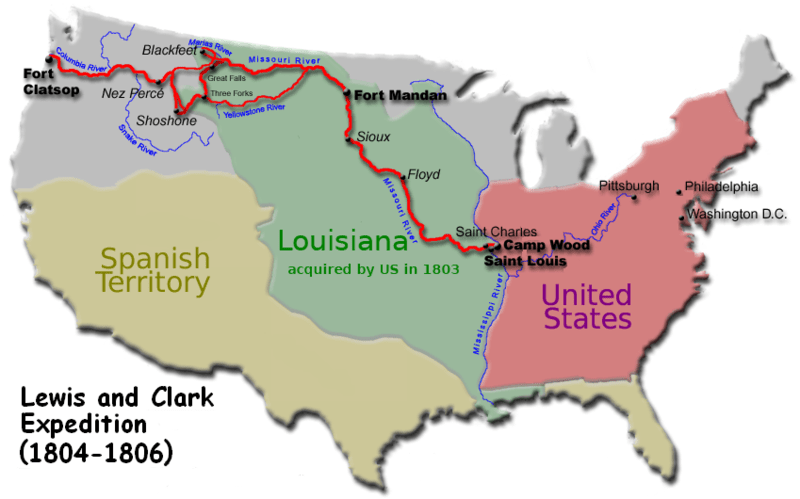
Over the course of the expedition, the tiny group was hunted by no fewer than four Spanish expeditions with as many as 600 soldiers, mercenaries and Comanche guides, each intending to make the Corps of Discovery vanish without a trace.

As early as the 1780s, minister to France and future President Thomas Jefferson began to express interest in an expedition to the Pacific Northwest.

As President, Jefferson asked Congress to fund an expedition to the Pacific, two years into his first term. He understood that the fledgling United States would have a better claim to the Pacific Northwest if the team gathered data on plants and animals, but Jefferson’s primary interest in the mission, was trade.

Carte_Lewis-Clark_Expedition-en

Today we take coast-to-coast travel for granted. It seems odd to think how strange and unknown at one time, were the more remote parts of our own nation.   Though extraordinarily well read and one of the brightest men of his generation, (Jefferson once cut out 901 bible verses from which he assembled his own “Jefferson Bible”, translating the volume into Greek, Latin, French and back to English “just for fun”), President Jefferson legitimately believed that herds of Wooly Mammoth may well yet roam the western reaches of the nation. 

Jefferson wanted to find an all-water route to the Pacific, for the conduct of business. The President commissioned the Corps of Discovery expedition in 1803, naming Army Captain Meriwether Lewis expedition leader.

The two men had known one another since Lewis was a boy, having long since developed a relationship of mentor and protégé.  At this time Lewis was working as personal secretary to the President.  Physically tough, intellectually gifted and resourceful, Lewis received a crash course in the natural sciences from the President himself, before being sent off to Philadelphia to brush up on medicine, botany and celestial navigation.

Lewis selected William Clark as his second in command, due to the man’s exceptional skills as a frontiersman. He would prove to be an excellent choice.

Lewis_and_clark, Seaman

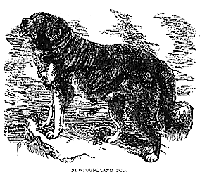
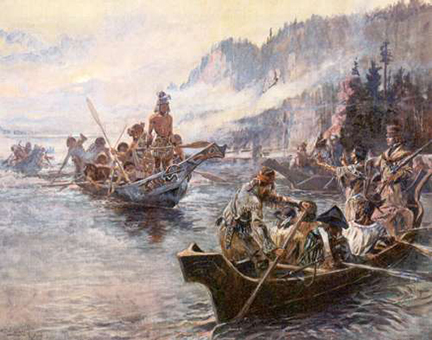
Most of 1803 was spent in planning and preparation, Lewis and Clark joining forces near Louisville that October. After wintering in the Indiana territory base camp in modern Illinois, the 33-man expedition departed on May 14, 1804 accompanied by “Seaman”, a “Dogg of the Newfoundland breed”.

Lewis and Clark set out to explore the Louisiana Territory, even as it became an official part of the United States. Borders were still hazy at the time, and Spanish authorities suspected that the expedition would encroach on their territory in the southwest. They had good reason to think so, Thomas Jefferson believed the same.

Lewis_and_clark-expedition

Corps of Discovery members couldn’t know that General James Wilkinson, one of the most duplicitous, avaricious, and corrupt individuals of the age, was reporting their every move to his paymaster, the Spanish King Charles IV.

Over the course of the expedition, the tiny group was hunted by no fewer than four Spanish expeditions with as many as 600 soldiers, mercenaries and Comanche guides, each intending to make the Corps of Discovery vanish without a trace.

Discovery established friendly relations with at least 24 indigenous tribes, without whose help they may have become lost or starved in the wilderness.  

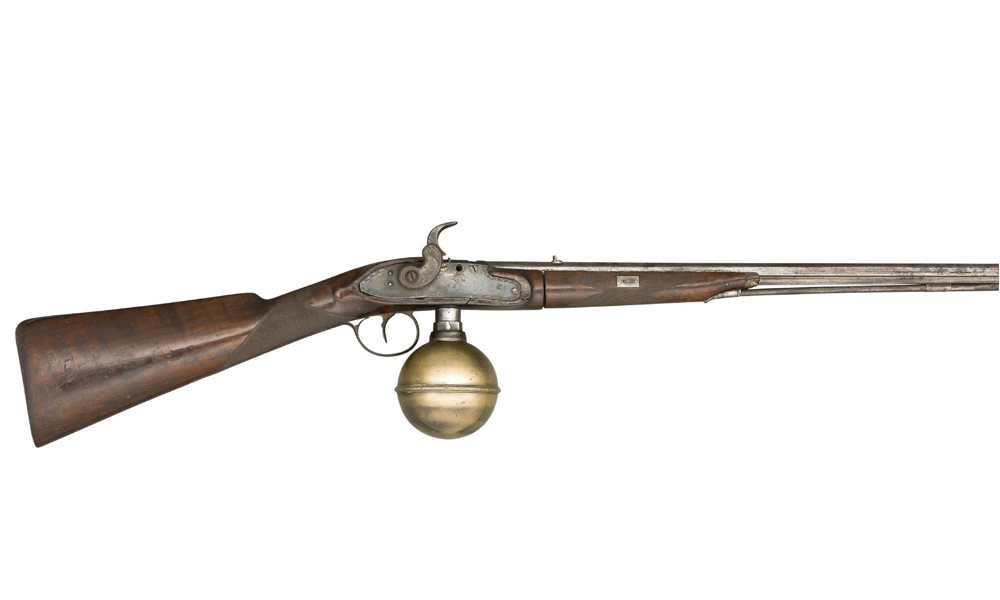
Most were highly impressed with Lewis’ state-of-the-art pneumatic rifle, which was always demonstrated with great fanfare not to mention great care, not to reveal that the expedition possessed, but one. Four-score years before Christopher Spencer’s repeating rifle, the single air powered repeater possessed by Lewis and Clark may have had more to do with their safe return, than any single factor. Designed by Italian inventor Bartolomeo Girardoni sometime around 1779, the Girardoni air rifle required some 1,500 strokes of a hand pump before discharging up to 30 .46 round balls, each with a combat lethality of nearly 150 yards.

The Girardoni air rifle was feared not only for its prodigious rate of fire but also for the near silence and absence of smoke, which made the weapon near impossible to detect.

Not all Indian tribes were friendly. There were several run-ins with a group called “Teton-wan Sioux”. These people were no joke. On one occasion, a group of four who had separated from the main expedition fled 100 miles in a single day to get away from them, before they felt it was safe to stop.

Lewis and Clark’s memoirs describe similar encounters with a large and especially ferocious species of bear, the Grizzly, an animal which more than once had expedition members climbing trees with a notable sense of urgency.

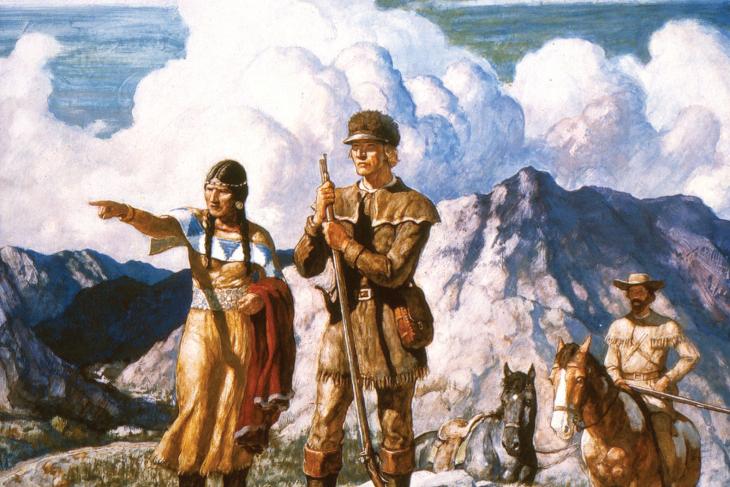
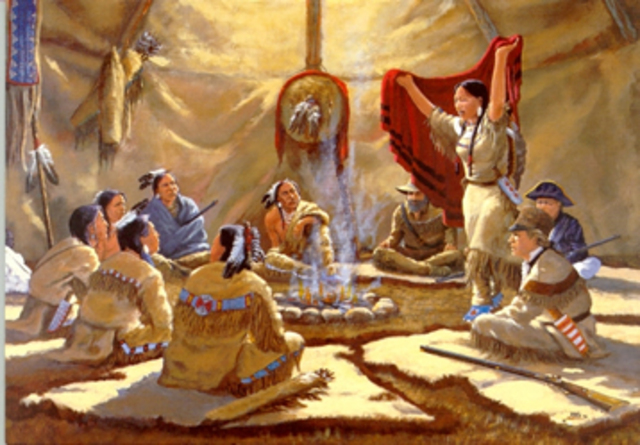
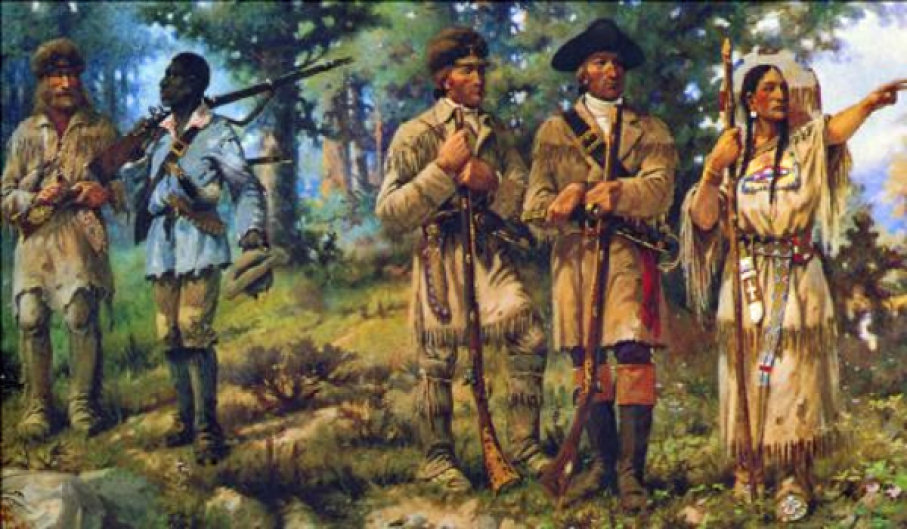
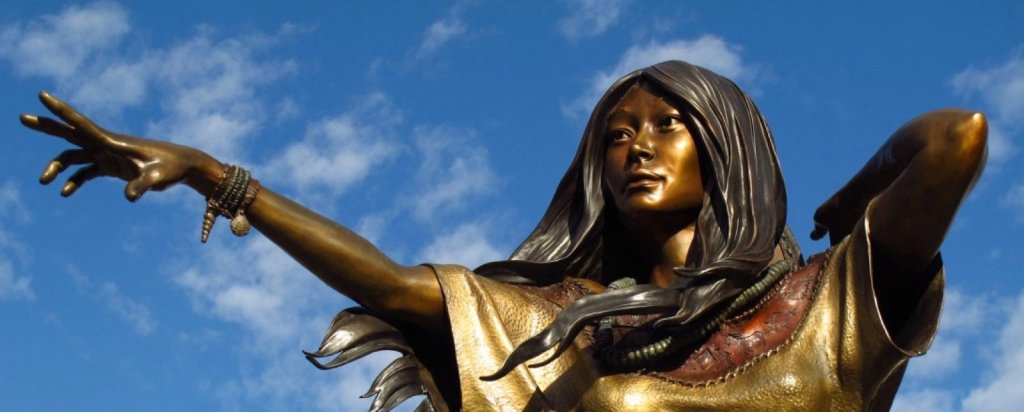
It was at the winter camp of 1804-5 that they met a French fur trapper Toussaint Charbonneau and his young wife (or slave – she might have been a bit of both), Sacagawea. Lewis and Clark seemed to have thought Charbonneau a shady character but they liked the young Indian girl, and her linguistic skills would prove useful. Sacagawea spoke Shoshone and Hidatsa while Charbonneau spoke Hidatsa and French. More than once Lewis and Clark found themselves negotiating for their lives with hostile tribes, as Discovery Corps member Francois Labiche translated English to French, Charbonneau French to Hidatsa, and Sacagawea speaking to the other side in Shoshone.

It was at this camp that Sacagawea gave birth to a son, whom she and Charbonneau named Jean Baptiste. The family stayed with the expedition, proving to be incredibly valuable to the group. They met many Indian bands along the way, whom Sacagawea’s presence quickly put at ease. War bands never traveled with women, especially not with one carrying an infant. One such band was a group of Shoshone led by Chief Cameahwait, who turned out to be none other than Sacagawea’s own brother. It must have been quite the reunion. The pair hadn’t seen one another since her kidnap by the Hidatsa, back in 1800.

Lewis_and_clark, first glimpse

On this day in 1805, the Corps of Discovery first sighted the Pacific Ocean, and set out their second winter camp in modern day Oregon.

They returned through a cut in the Rocky Mountains which Sacagawea remembered from her childhood, the present day Bozeman Pass, arriving at the Hidatsa-Mandan villages on August 14, 1806.   For Sacagawea, Charbonneau and Jean Baptiste, the trip had come to an end.

Lewis and Clark arrived in St. Louis on September 23, 1806, the Corps of Discovery having met their objectives. They had reached the western coast and returned, though they never did find a continuous water route to the Pacific. The expedition created maps along the way establishing legal claim to the land, while describing 178 previously unknown plants and 122 unknown animals, and establishing diplomatic and trade relations with at least two dozen indigenous nations.

Despite being heavily armed, most members were required to defend themselves only once, that in a running gun battle with a band of Blackfoot, on the way home.

The expedition suffered only one fatality when Sergeant Charles Floyd succumbed to what appears to have been appendicitis.  Though not seriously wounded, a humiliated Lewis had to spend several weeks face-down in a canoe, when one of the enlisted guys mistook his rump for that of an elk, and shot it.

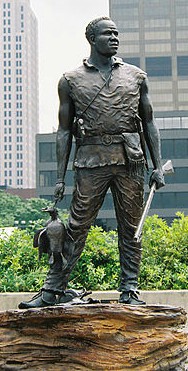
York_Statue
York

Among the two-dozen plus officers and enlisted men on Discovery was William Clark’s African slave “York”, who accompanied the expedition from beginning to end.  Though not an official member of the Corps of Discovery, York’s hunting skills made him a valuable member of the expedition.  Indigenous tribes were fascinated by the first black man any of them had ever seen.  The Arikara people of North Dakota believed him to hold spiritual powers, calling the tall man “Big Medicine”.

Though a slave, York seems to have earned a degree of respect from expedition members.  At least two geographic features were named after the man.   Both York and Sacagawea had a vote on the placement of the 1805-’06 winter camp, prompting historian Stephen E. Ambrose to speculate that this may be the first time in American history, that a black man and a woman exercised the power of the vote.

Accounts differ as to what became of him.  Some say Clark freed the man, others say that York was unwilling to return to a life of slavery, following 2½ years of liberty.  A black man who claimed to have been he was discovered ten or twelve years later, now a tribal elder living with four wives among the Crow, in north-central Wyoming.

Thomas Berger, author of the fictional Dances with Wolves, writes about a particularly dark skinned strain among the Indians, which many believe to have descended from York.

Sacagawea gave birth to a daughter named Lizette on December 22, 1812, and died a few months later at the age of 25. Eight months later, William Clark legally adopted her two children. Clark is recorded as having brought the boy up and educating him in St. Louis, before sending him to Europe with a German prince at the age of 18. I was unable to determine with any certainty, whether Lizette survived infancy.

Meriwether Lewis died from gunshot wounds to the chest and head on October 11, 1809.  Historians differ as to whether it was murder or suicide, though most believe it to have been the latter.  It would not have been his first such attempt.

What became of Seaman the dog is unknown. Having accompanied the Lewis & Clark expedition from the very beginning, the last journal reference to him was written in July, two months before the journey’s end.

October 20, 1937 The Swarm

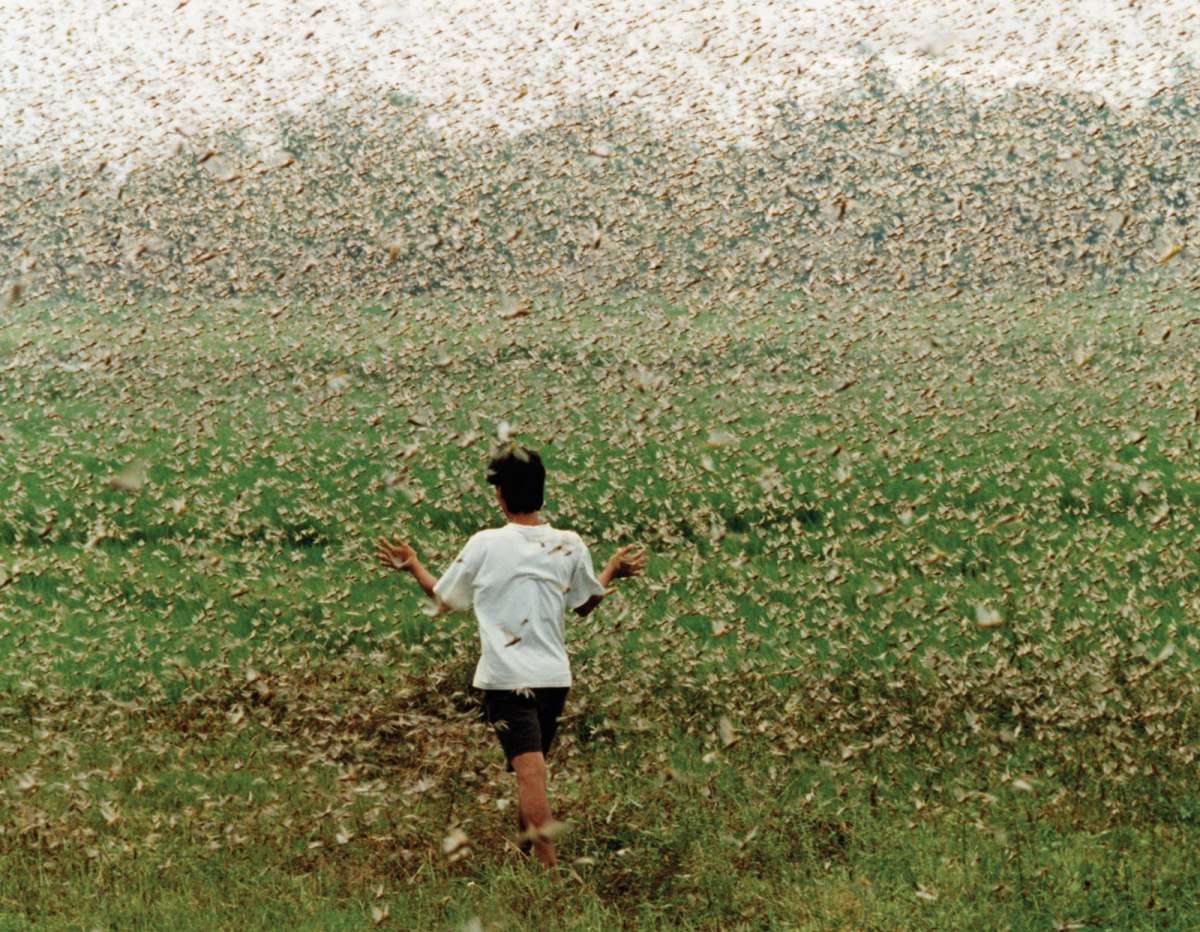
In 1875, Doctor Albert L. Child of the U.S. Signal Corps watched a mile-high swarm of locusts pass overhead, for five days straight. Together with telegraph reports from neighboring towns, Child estimated the swarm to be 110 miles wide and 1,800 miles long. 198,000 square miles, one-third the size of Alaska, or the combined landmass of our thirteen smallest states. It was a rolling tide, the size of California and Maine, put together.

In the decade following 1932, children’s author Laura Ingalls Wilder published a series of eight novels, a fictionalized autobiography based on the childhood experiences of a 19th century pioneer and settler family. Third in the series is the best known, Little House on the Prairie, the subject for a television series running from 1974 to ’83.

In her fourth book, Wilder tells a tale of grasshoppers, of a time when locusts wiped out a much-anticipated and badly needed wheat crop, laying so many eggs as to destroy all hope for the following year, as well.  On the Banks of Plum Creekpublished  this day in 1937, told the story of “Pa” having to walk three-hundred miles east to find work on farms, which had escaped the biblical plague.

There are something like 11,000 species of grasshoppers in the world, the familiar, plant munching insects of our summer fields.  They are vegetarian creatures with polyphagous feeding habits, meaning they’ll eat just about anything, given the need and the opportunity.

SA4.9 r132
Rocky Mountain locust, Melanoplus spretus, photographed in 1870s, Minnesota

Usually a solitary creature, only a few species will become locusts, the “gregarious” phase of the insect’s life cycle characterized by swarming, migration, and accompanied by explosive growth in population.

Such swarms have been reported since the time of the Pharaoh. The two years in Wilder’s story, 1874 – ’75, are among the worst swarms on record for the Rocky Mountain Locust, Melanoplus spretus.  

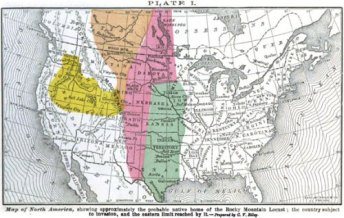
M. Spretus finds its home in the fertile valleys of the Rocky Mountains, but outbreaks of the insect have caused farm damage as far away as Maine during the period 1743–’56, and in Vermont during the administration of President George Washington.

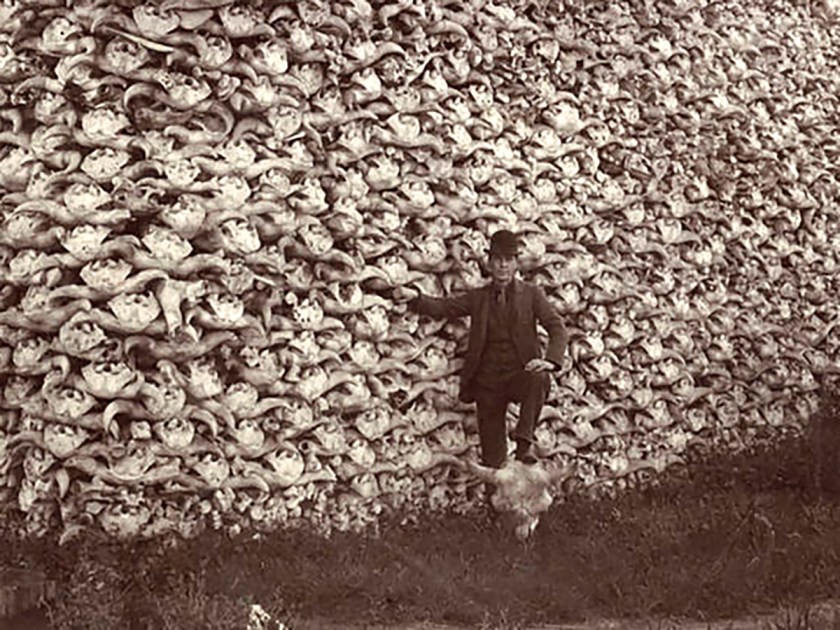
When President Thomas Jefferson sent Lewis & Clark off on the Corps of Discovery expedition, vast herds of American bison stretched from horizon to horizon, as far as the eye could see. Historians estimate 30 to 60 million of the creatures, each weighing up to 2,000 pounds and measuring twelve-feet long. A minimum of sixty billion pounds of biomass, needing something to eat.

The western artist George Catlin estimated that, by 1841, some two to three million of the creatures had been slaughtered for their hides. Bison populations came under increasing pressure as natives acquired horses and guns, but the real slaughter began with the Indian wars and “hunting by rail”, when every dead buffalo was seen as a dead Indian.  By the late 1880s, only a few hundred individuals remained alive, in Yellowstone National Park.

Mountain-of-American-Bison-Skulls-2
A mountain of bison skulls

With the bison gone and a new wave of vegetation, there arose a new and very different multitude, come to feed on it.

During the 19th century, farming expanded westward into the grasshopper’s favored habitat, triggering massive outbreaks in their numbers.  Locust populations exploded to varying degrees in 1828, ’38, ’46, and ’55, affecting areas throughout the West and upper mid-west. Plagues visited Minnesota in 1856–’57 and again during the last year of the Civil War.  Nebraska suffered repeated infestations between 1856 and ’74.

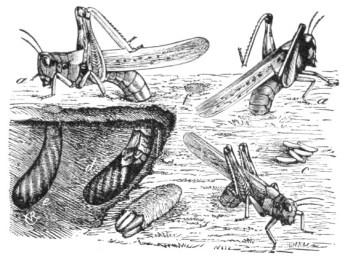
Rocky_Mountain_Locust_oviposition

NPR reports in a 2020 segment about locusts in Africa, that such a swarm measuring one square kilometer, about a third of a square mile, can consume as much in a day, as would have fed 35,000 people.

Population blooms of two years are typical, as eggs laid in year one tend not to thrive as well as their parents.  At its height, farmers reported finding up to 150 egg cases per square inch, each containing 100 eggs or more.

In 1875, Doctor Albert L. Child of the U.S. Signal Corps watched a mile-high swarm of locusts pass overhead, for five days straight. Together with telegraph reports from neighboring towns, Child estimated the swarm to be 110 miles wide and 1,800 miles long. 198,000 square miles, one-third the size of Alaska, or the combined landmass of our thirteen smallest states.  It was a rolling tide, the size of California and Maine, put together.

The numbers are so far outside of human experience, they are hard to get your head around. For a little perspective, a million seconds is about twelve days. A Billion seconds ago, Jimmy Carter was President of the United States. A Trillion seconds ago, the oldest known clay object was fired to ceramic in the earliest oven.  It was 29,000, B.C.

“Albert’s Swarm”, the largest such assembly of organisms in recorded history, is estimated at 12½ Trillion individuals.

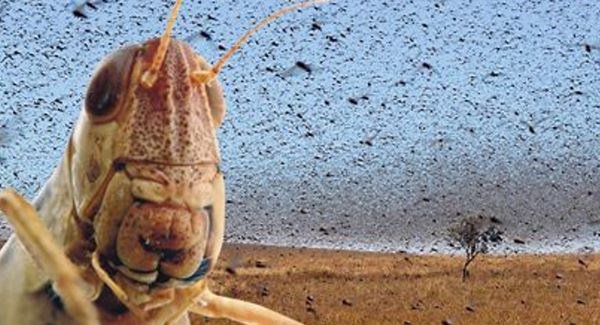
Exam29072013Locusts_large

It was a biological wildfire, a living blizzard that blotted out the sun, 12½ trillion insects each the size of a child’s finger, each driven to eat its own weight.  Every day.  All in, Albert’s Swarm is estimated to have weighed 27½ million tons.

As the continuous track of a bulldozer moves ever forward, the leading edge of the swarm would alight to rest and eat, only to pick up the rear, a few days later.  In this manner, the swarm would cover ten miles or so in a few weeks.

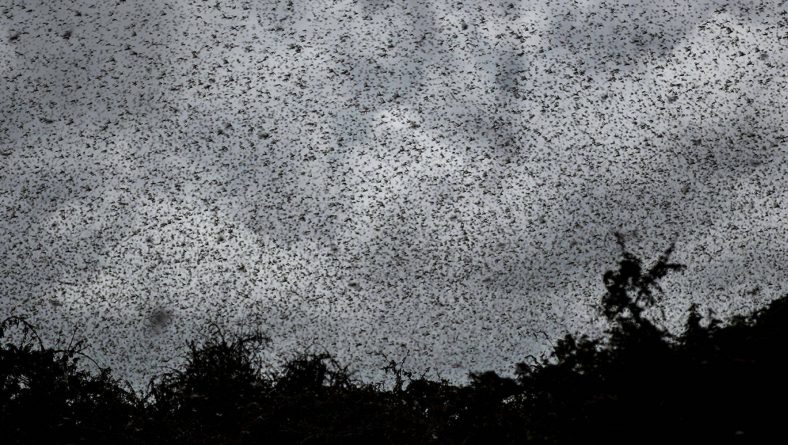
One farmer reported “a great white cloud, like a snowstorm, blocking out the sun like vapor“.  Even the sound was horrific, rising to a scream and rolling over the land like some evil tide, the whirring and rasping cacophony of billions of mandibles borne aloft to eat, almost literally, everything in sight. Native populations could and did, move.  For prairie settler and pioneer families, home was on the farm.

Check out what these things sound like. Video taken this year, in Ethiopia.

Imagine a world with no grocery stores, and watching your food, All of it, disintegrate, before your eyes. Standing crops were the first to go and then the root vegetables: potatoes, carrots and turnips. They were devoured, right out of the ground. Throw a blanket over your garden to protect even that little bit, and they would eat the blanket. Fence posts, saddles, nothing was off limits.  These creatures would eat the wool, right off of the sheep.  At its worst, the ravenous horde was known to eat the clothes, right off of people’s backs.

Trains were literally stopped in their tracks on uphill stretches of rail, unable to gain traction for the grease of millions of tiny bodies, ground beneath their wheels.

rocky-mountain-locust-1

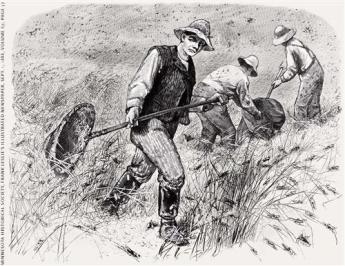
Farmers used gunpowder, fire and water, anything they could think of, to destroy what could only be seen as a plague of biblical proportion. They smeared them with “hopperdozers”, a plow-like device pulled behind horses, designed to knock jumping locusts into a pan of liquid poison or fuel, or even sucking them into vacuum cleaner-like contraptions.

It was like trying to turn the tide, with a shot glass.  

Missouri entomologist Charles Valentine Riley came up with a recipe to eat the damned things, seasoned with salt and pepper and pan-fried in butter. Some bought the recipe, but many felt they “would just as soon starve as eat those horrible creatures”.

In 1877, a Nebraska law required everyone between the ages of 16 and 60 to work at least two days eliminating locusts, or face a $10 fine. Missouri and other Great Plains states offered bounties: $1 a bushel for locusts gathered in March, 50¢ in April, 25¢ in May, and 10¢ in June.

map-from-the-locust-plague

And then the locust went away, and no one is entirely certain, why.  It is theorized that plowing, irrigation and harrowing destroyed up to 150 egg cases per square inch, in the years between swarms. Great Plains settlers, particularly those alongside the Mississippi river, appear to have disrupted the natural life cycle.  Winter crops, particularly wheat, enabled farmers to “beat them to the punch”, putting away stockpiles of food before the pestilence reached the swarming phase.

Today, the Rocky Mountain Locust is extinct.  Several grasshopper species swarm as locusts on every continent in the world, save for North America and Antarctica.   The last living specimen of the Rocky Mountain Locust was seen in Canada, in 1902.

July 29, 1967 Ghosts of the Forrestal

The port quarter of the Forrestal ceased to exist in the violence of the explosions, office furniture thrown to the floor as much as five decks below.  Huge holes were torn into the flight deck while a cataract of flaming jet fuel, some 40,000 US gallons of the stuff, poured through ventilation ducts and into living quarters below.

The Super Carrier USS Forrestal departed Norfolk in June 1967, with a crew of 552 officers and 4,988 enlisted men. Sailing around the horn of Africa, she stopped briefly at Leyte Pier in the Philippines, before sailing on to “Yankee Station” in the South China Sea, arriving on July 25.

Before the cruise, damage control firefighting teams were shown training films of Navy ordnance tests, demonstrating how a 1000-lb bomb could be directly exposed to a jet fuel fire for a full 10 minutes. Tests were conducted using the new Mark 83 bomb, featuring a thicker, heat resistant wall compared with older munitions, and “H6” explosive, designed to burn off at high temperatures, like an enormous sparkler.

Along with Mark 83s, ordnance resupply had included sixteen AN-M65A1 “Fat Boy” bombs, Korean war era surplus intended to be used on the second bombing runs of the 29th.  These were thinner skinned than the newer ordnance, armed with 10+ year-old “Composition B” explosive.  Already far more sensitive to heat and shock than the newer ordnance, composition B becomes more volatile as the explosive ages.  The stuff becomes more powerful as well, as much as 50%, by weight.

250px-Yankee_Station_Location_1These older bombs were way past their “sell-by” date, having spent the better part of the last ten years in the heat and humidity of Subic Bay depots.  Ordnance officers wanted nothing to do with the Fat Boys, with their rusting shells leaking paraffin, and rotted packaging.  Some had production date stamps as early as 1953.
Handlers feared the old bombs might spontaneously detonate from the shock of a catapult takeoff.

In 1967, the carrier bombing campaign was the longest and most intense such effort in US Naval history.   Over the preceding four days, Forrestal had already launched 150 sorties against targets in North Vietnam.  Combat operations were outpacing production, using Mark 35s faster than they could be replaced.

When Forrestal met the ammunition ship Diamond Head on the 28th, the choice was to take on the Fat Boys, or cancel the second wave of attacks scheduled for the following day.

220px-CVA-59_fire_aft_deck_planIn addition to the bombs, ground attack aircraft were armed with 5″ “Zuni” unguided rockets, carried four at a time in under-wing rocket packs.   Known for electrical malfunctions and accidental firing, standard Naval procedure required electrical pigtails to be connected, at the catapult.
Ordnance officers found this slowed the launch rate and deviated from standard procedure, connecting pigtails while aircraft were still, “in the pack”.  The table was set, for disaster.

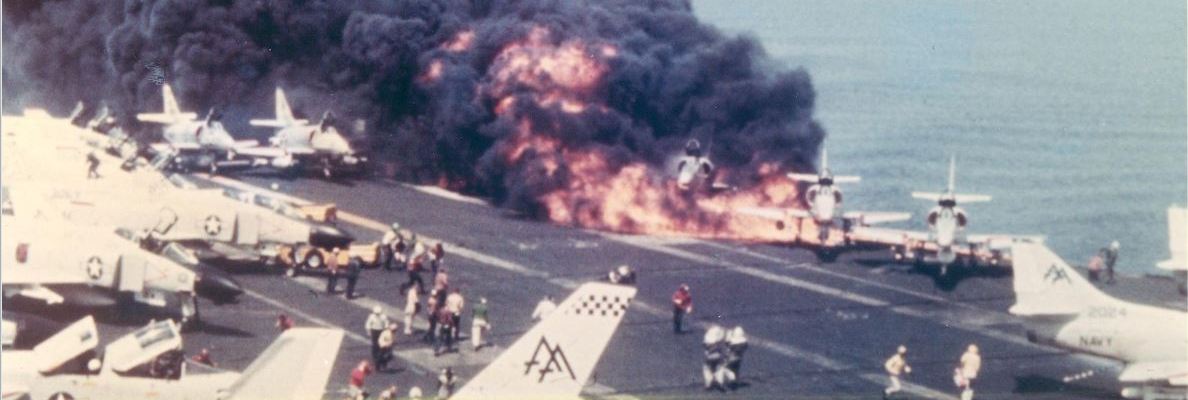
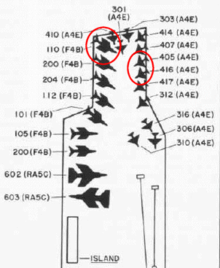
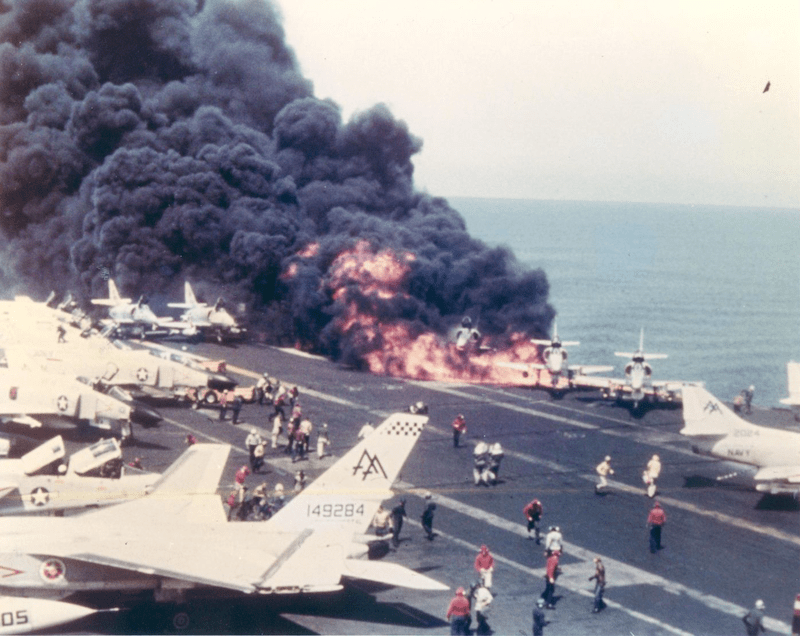
At 10:50-am local time, preparations were underway for the second strike of the day.  Twenty-seven aircraft were on deck, fully loaded with fuel, ammunition, bombs and rockets.  An electrical malfunction fired a Zuni rocket 100′ across the flight deck, severing the arm of one crew member and into the 400-gallon external fuel tank of an A-4E Skyhawk, awaiting launch.

The rocket’s safety mechanism prevented the weapon from exploding, but the A-4’s torn fuel tank was spewing flaming jet fuel onto the deck. Other tanks soon overheated and exploded, adding to the conflagration.

800px-USS_Forrestal_A-4_Skyhawk_burning.png

In WW2, virtually all American carrier crew were trained firefighters.  This changed over time and, by 1967, the United States Navy had adopted the Japanese method at Midway, relying instead on specialized and highly trained damage control and fire fighting teams.

Damage Control Team #8 came into action immediately, as Chief Gerald Farrier spotted one of the Fat Boy bombs turning cherry red in the flames.  Farrier  was working without benefit of protective clothing, there had been no time.  Farrier held his PKP fire extinguisher on the 1000-lb bomb, hoping to keep it cool enough to prevent its cooking off as his team brought the conflagration under control.

USS_Forrestal_fire_1_1967

Firefighters were confident that their ten-minute window would hold as they fought the flames, but the composition B explosives proved as unstable as the ordnance people had feared.  Farrier “simply disappeared” in the first of a dozen or more explosions, in the first few minutes of the fire.  By the third such explosion, Damage Control Team #8 had all but ceased to exist.

Future United States Senator John McCain managed to scramble out of his cockpit and down the fuel probe.  Lieutenant Commander Fred White made it out of his own aircraft a split-second later, but he was killed in that first explosion.

The port quarter of the Forrestal ceased to exist in the violence of the explosions, office furniture thrown to the floor as much as five decks below.  Huge holes were torn into the flight deck while a cataract of flaming jet fuel, some 40,000 US gallons of the stuff, poured through ventilation ducts and into living quarters below.

Ninety-one crew members were killed below decks, by explosion or fire.

800px-USS_Forrestal_explosion_29_July_1967

With trained firefighters now dead or incapacitated, sailors and marines fought heroically to bring the fire under control, though that sometimes made matters worse.  Without training or knowledge of fire fighting, hose teams sprayed seawater, some washing away retardant foam being used to smother the flames.

With the life of the carrier itself at stake, tales of incredible courage, were commonplace. Medical officers worked for hours in the most dangerous conditions imaginable. Explosive ordnance demolition officer LT(JG) Robert Cates “noticed that there was a 500-pound bomb and a 750-pound bomb in the middle of the flight deck… that were still smoking. They hadn’t detonated or anything; they were just setting there smoking. So I went up and defused them and had them jettisoned.” Sailors volunteered to be lowered through the flight decks into flaming and smoked-filled compartments, to defuse live bombs.

The destroyer USS George K. MacKenzie plucked men out of the water as the destroyer USS Rupertus maneuvered alongside for 90 minutes, directing on-board fire hoses at the burning flight and hangar decks.

800px-USS_Repertus_assists_USS_Forrestal

Throughout the afternoon, crew members rolled 250-pound and 500-pound bombs across the decks, and over the side.  The major fire on the flight deck was brought under control within four hours but fires burning below decks would not be declared out until 4:00am the following day.

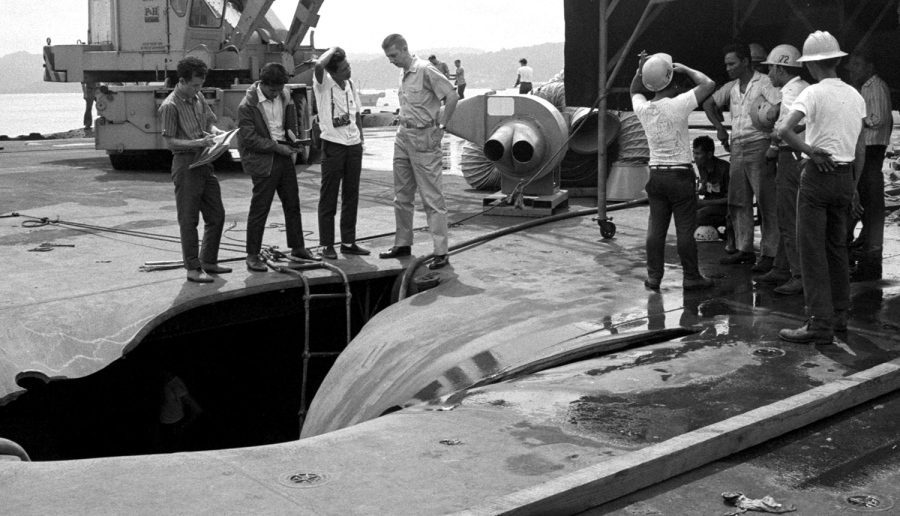
Panel 24E of the Vietnam Memorial records the names of 134 crewmen who died in the conflagration. Another 161 were seriously injured.  26 aircraft were destroyed and another 40, damaged.  Damage to the Forrestal itself exceeded $72 million, equivalent to over $415 million today.

image (13)Gary Childs of Paxton Massachusetts, my uncle,  was among the hundreds of sailors and marines who fought to bring the fire under control.  Gary was below decks when the fire broke out, leaving moments before his quarters were engulfed in flames. Only by that slimmest of margins did any number of sailors aboard the USS Forrestal, escape being #135.

June 15, 1864 A Living Memorial

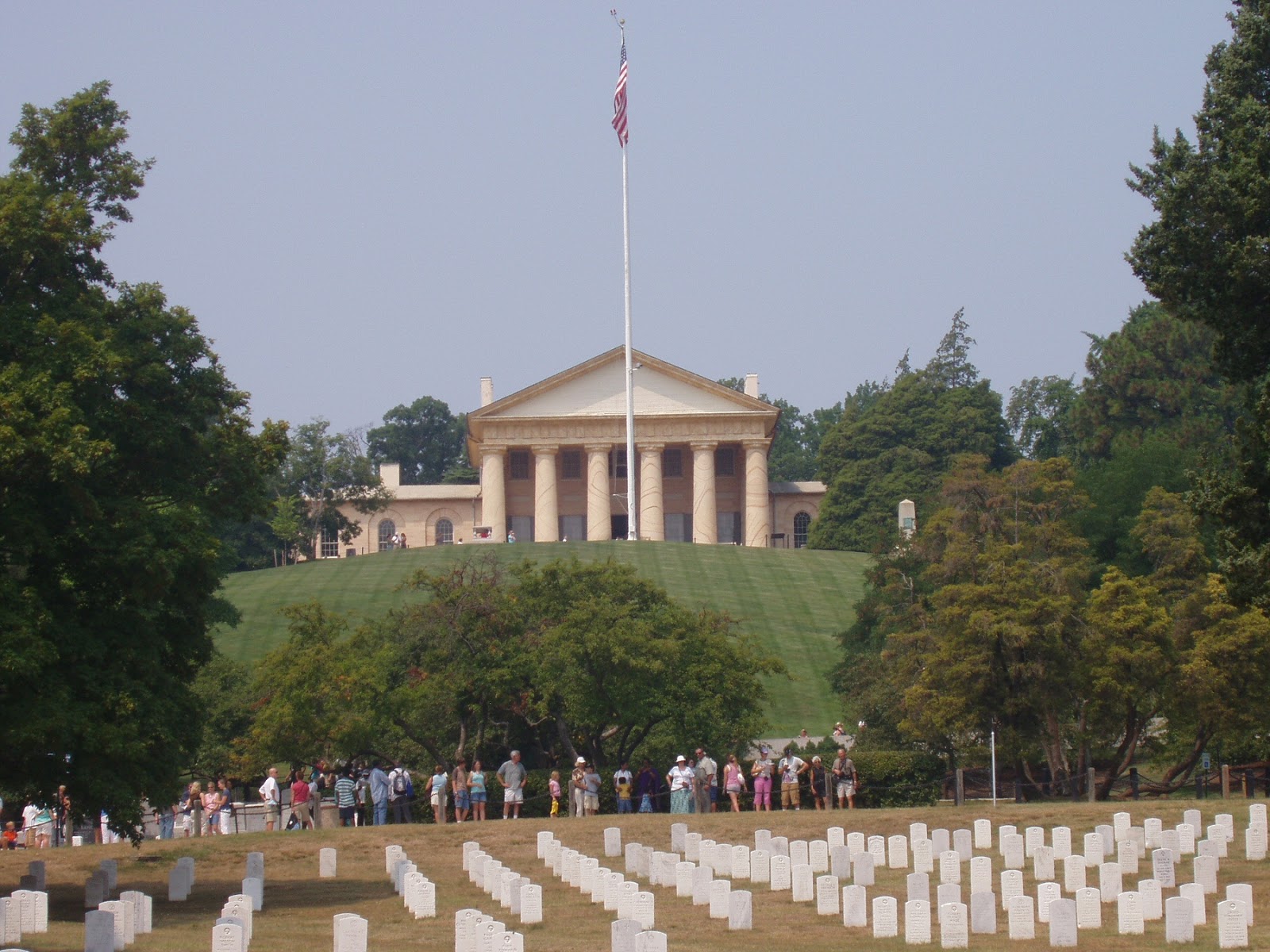
This is no lifeless “garden of stone”.  The final resting place for over 400,000 honored dead is itself a living memorial, combining tens of thousands of native and exotic plants in a unique blending of landscapes, combined with formal and informal gardens.

As the Civil War ground on to a fourth dreadful year, the church yards and burial plots of the formerly United states strained under the weight of carnage, produced by the cataclysm of war.

The 37th Congress declared the former home of Mary Anna Randolph Custis Lee and Robert Edward Lee forfeit for non-payment of tax, the Mansion on the hill and surrounding grounds auctioned to the Federal government.  P1010272_0003_003One day, the United States Supreme Court would rule the act an unlawful taking and compensate Lee family descendants, but that must be a story for another day. As 1863 drew to a close, the property was destined to become the nation’s most hallowed ground and known to posterity, as Arlington National Cemetery.
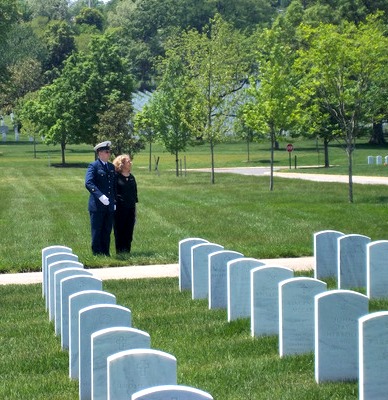
The first military interment on the Custis-Lee property was that of Private William Henry Christman of the 67th Pennsylvania Infantry, laid to rest on May 13, 1864.  On June 15, the War Department officially set aside 200 acres, for use as a cemetery.

CathyAnd yet, this is no lifeless “garden of stone”.  The final resting place for over 400,000 honored dead is itself a living memorial, combining tens of thousands of native and exotic plants in a unique blending of landscapes, combined with formal and informal gardens.

Every week, 80 to 100 military service members, veterans and their loved ones go to their final rest in Arlington National Cemetery.  Not one of them goes alone. Since 1948, a volunteer with the “Arlington Ladies” attends each and every one of them, 365 days a year, seven days a week.

Thousands of native and exotic trees representing 325 varieties and species fill the landscape with color.  The first and last impression of the visitor is that of beauty, and a sense of peace.

Birdseyeviewofcemetery_0Three of these trees are Virginia state champions and one is state co-champion, including the Royal Paulownia, (Paulownia tomentosa) at the top of this page.  State champion trees are those having the greatest height, crown spread and trunk circumference, for their species.

Take a single species of tree, for instance, the eastern Redbud (Cercis canadensis), of which 165 specimens live at Arlington. Each tree stands 10′ to 30′ tall, with pink and purple flowers emerging directly from bark and branches in early April. Five-inch wide, heart shaped leaves emerge later in the spring. At first a glossy purple, by summer they have turned to green and pods have begun to grow.  Like pea pods, they grow green to reddish during the early months, later turning to black before falling off. In late winter, there is no more striking contrast with a fresh fall of snow.eastern-redbud-spring-pink-mark-vandykeThe cemetery also has 24 Chinese Redbuds, a strain native to central China. These are only two of Arlington’s hundreds of varieties of flowering trees.
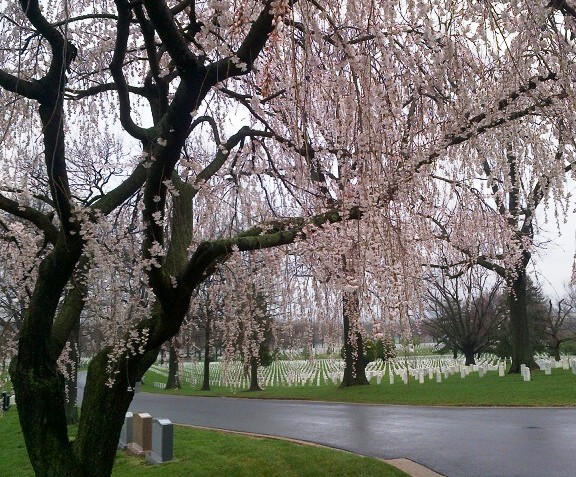
Some 8500 trees dot the 624 acres of Arlington 140 of which, are memorial trees.  Nearly 200 are removed every year and another 240, planted.  Every tree in the place will be pruned at least once, every four years.

Bring your walking shoes, and you’ll have to leave your pooch, behind.  In 2013, cemetery authorities permitted bicycles on a specified route between 8:00 a.m. and 6:45 p.m., from April 1 to September 30.  Today, be prepared to walk. Effective October 26, 2016, policy prohibits bicycles on Cemetery grounds, without a family pass.  “As there are no bike paths on the cemetery grounds, mixing cyclists with pedestrians and vehicles creates a safety hazard”.WeepingHiganCherryThe Cemetery’s horticulture division recently installed 297 tree labels, identifying many of the cemetery’s noteworthy specimens. Thirty-six of them form a right angle along Farragut & Wilson Drive, lending a sense of history as each is a direct descendant of a famous ancestor, each a living memorial to recipients of the Medal of Honor.
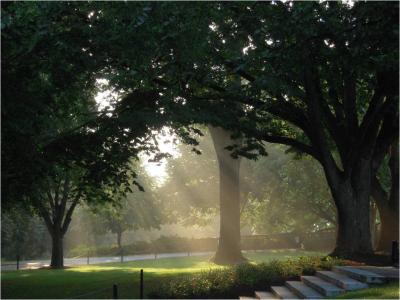
Picture2Ancestors of these “tree descendants” include the Cottonwood of Delta Colorado, which shaded the peace meetings between settlers and Ute tribes in 1879. The Sweetgum of the Westmoreland, Virginia home of four generations of the Lee family, including Richard Henry and Francis “Lightfoot” Lee.  The only brothers to have signed the Declaration of Independence. The great Charter Oak of Connecticut is represented there, a specimen sprouted sometime in the 12th or 13th century. There is the American Sycamore descended from a “witness tree” at Gettysburg. There is the Red Maple from Walden Woods, outside of Boston, and the Sycamore Maple, witness to George Washington’s crossing of the Delaware.
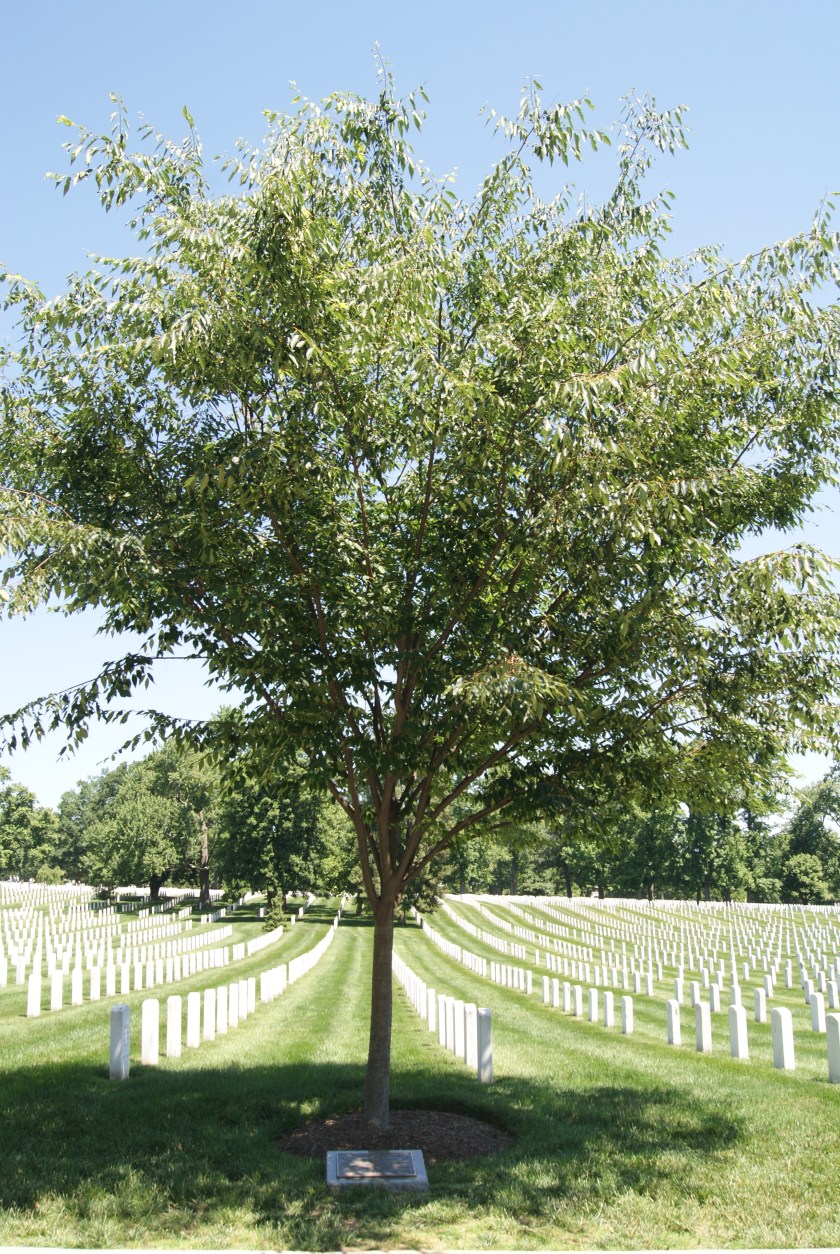
Other tree ancestors include the Water Oak next to the Brown Chapel African Methodist Church in Selma, where Reverend Martin Luther King, Jr. delivered his “We Shall Overcome” speech, before setting out on the 50-mile march to Montgomery.  The George Washington American Holly was grown from seeds gathered at Mount Vernon. Helen Keller climbed the 100-year-old Water Oak, as a child.  The Overcup Oak descends from a tree which shaded the birthplace of the 16th President of the United States, Abraham Lincoln.

The River Birch near the amphitheater and dedicated May 8, 1932, stands in silent tribute to the nameless mother of the unknown soldier.

For years, the 624-acre grounds at Arlington have been a living memorial.  Some of the most beautiful gardens you are ever going to see, the work is performed by a full-time staff of three Master Gardeners and a small army of contractors. In 2013, Arlington received official accreditation as a level II arboretum by the Morton Register of Arboreta.

A living memorial taking its place on the nation’s most comprehensive list of arboreta and public gardens and designated the Arlington National Cemetery Memorial Arboretum.

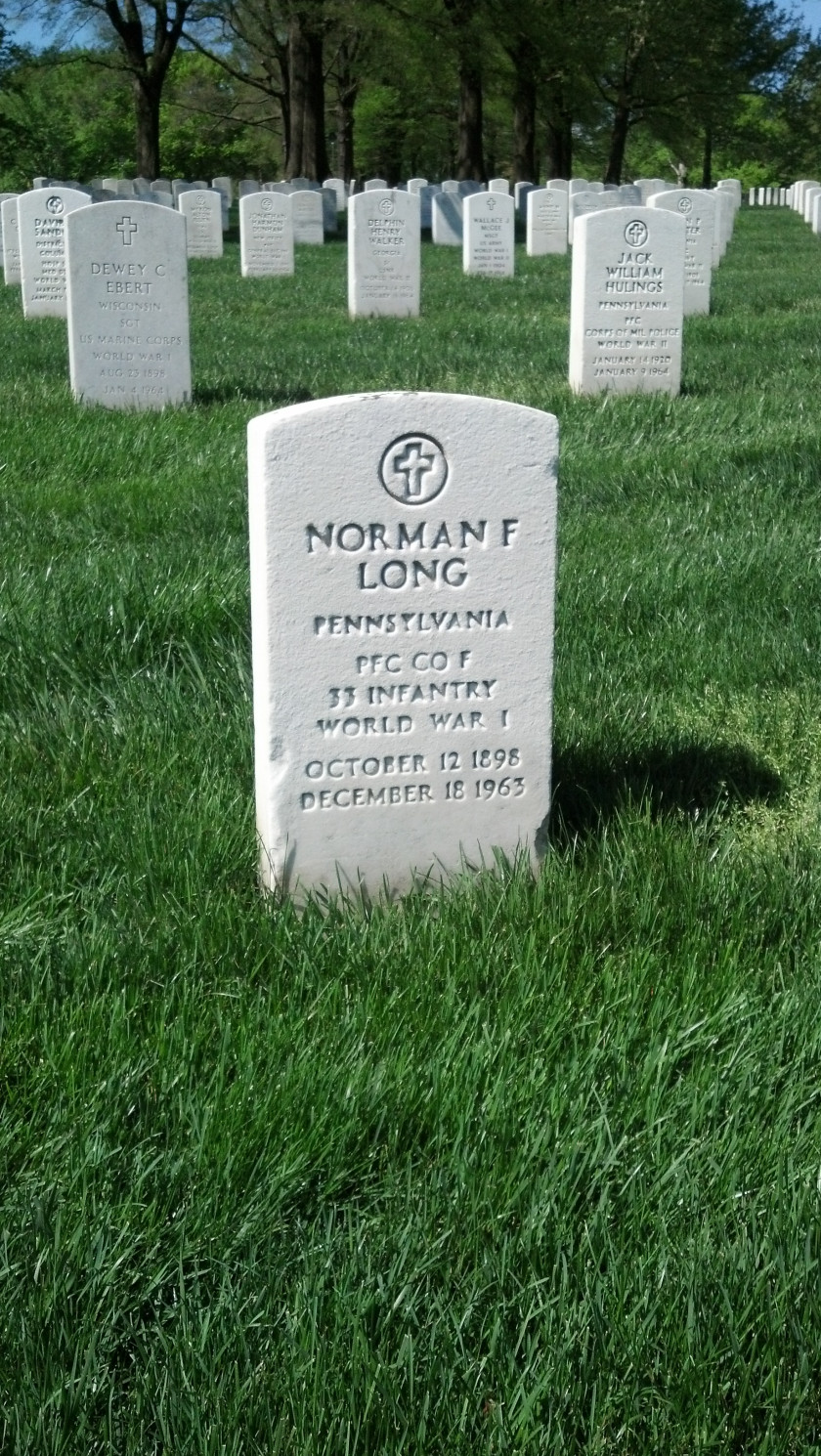
This story is dedicated to Norman Franklin Long, whose service in the “War to End All Wars” earned him eternal rest in our nation’s most hallowed ground.   A man who left us the night my brother and his namesake, was born.  A man for whom I will always be that little boy, fishing by his side.   Sleep sweet, Grampa.norman-franklin-long


May 17, 1934 A Most Perfect Aryan Baby

It must have been terrifying but secretly amusing, at the same time. To see this beautiful Jewish baby, depicted as the perfect “Aryan” child.

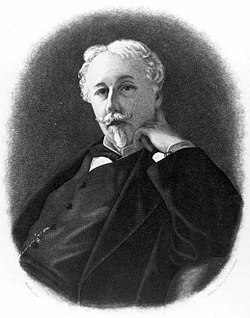
In the world of crackpot theories, none have had more lasting effect than the work of 19th century intellectuals.    The economic theories of Karl Heinrich Marx, which continue to plague us, to this day.  The French aristocrat Joseph-Arthur de Gobineau, whose work on “racial demography” renders him the intellectual father of Aryan “Master Race” theory.

250px-Arthur_de_Gobineau
Joseph-Arthur de Gobineau

De Gobineau’s work was lauded by white supremacist, pro-slavery Americans like Josiah Nott and Henry Hotze, who translated his book into English but somehow managed to leave out the hundreds of pages describing Americans themselves, as racial mongrels.

The book went on to fuel the late-19th and early 20th century movement in eugenics but nowhere did the work enjoy more enthusiastic support, than the Third Reich of Adolf Hitler.

With Hitler’s appointment as chancellor on January 30, 1933, the National Socialist Worker’s Party (Nationalsozialistische Deutsche Arbeiterpartei, or NSDAP) lost no time in consolidating power.  Interestingly, the former Austrian corporal did not call himself a “Nazi”. That term was an insult, coined a long time before the party’s rise to power.

Two days later, the 876-member democratically elected deliberative body, the “Reichstag”, was dissolved.

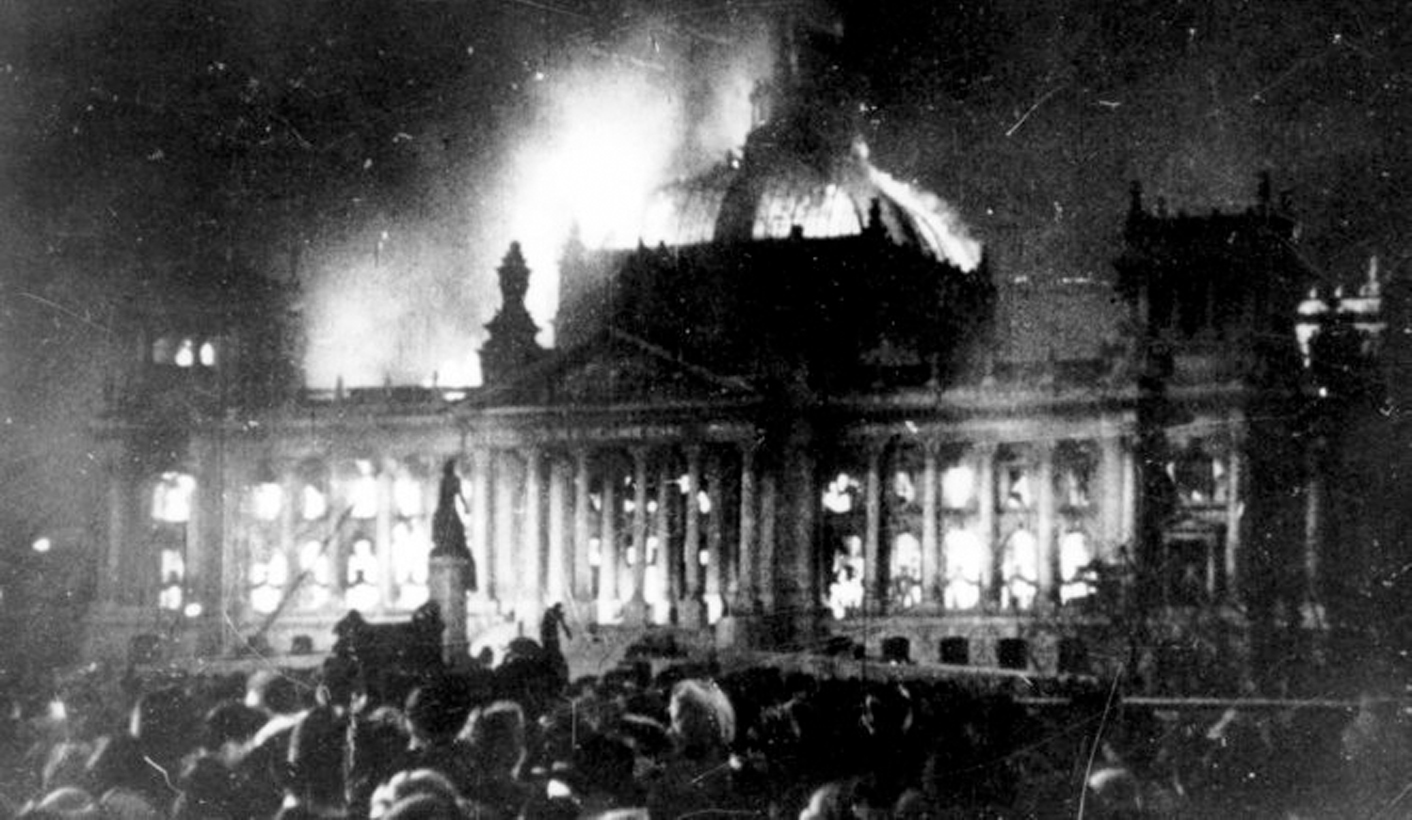
On February 27, an arson fire broke out in the German Parliament building. Hitler’s government blamed Dutch communist Marinus van der Lubbe for the fire, claiming the arson to have been the result of communist plots, against the Nazi government. Today, the term “Reichstag fire” is synonymous with a false flag operation, carried out by authorities to exact retribution on a political adversary. At the time, the “Reichstag Fire Trial” served to decimate political opposition and consolidate Nazi power.Reichstag-fire-IIMarch elections failed to produce a Nazi party majority. For the time being, Herr Hitler was forced to rely on his coalition partner the German National People’s Party (DNVP), to hold a majority in the new Reichstag.
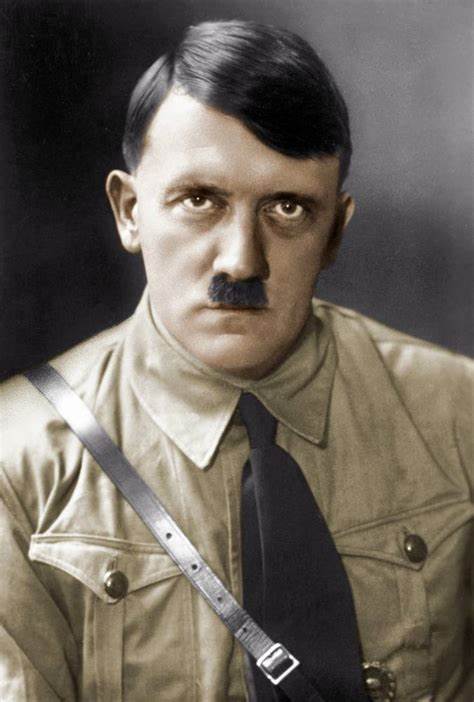
OIPKHAK42CDNazi propaganda was relentless.  Hitler himself had written back in 1924,  that propaganda’s “task is not to make an objective study of the truth, in so far as it favors the enemy, and then set it before the masses with academic fairness; its task is to serve our own right, always and unflinchingly.”
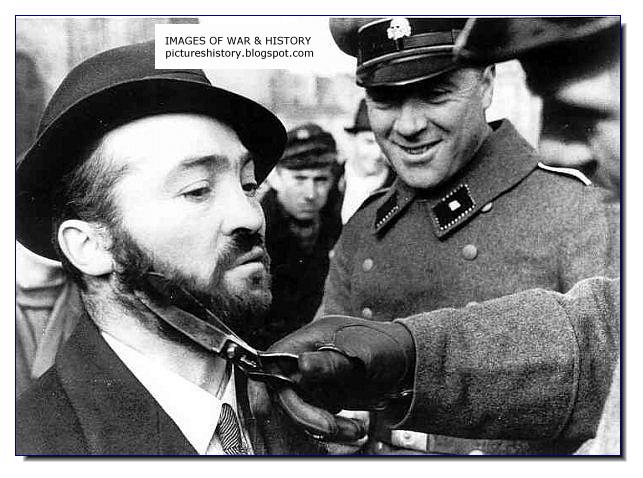
Nazi racial propaganda was everywhere, in art, in music, in theater, radio and educational materials.  Posters, leaflets, books and magazines proclaimed the perfect, “Aryan Master Race,” the Übermenschen of Friedrich Nietzsche, in contradistinction with the Üntermenschen:  the Roma, the “feeble-minded”, the Jew.

In the first six years after Hitler took power,  no fewer than 400 decrees and regulations were aimed specifically, at the Jews of Germany.

brutal-germans-holocaust-persecution-jews-001Jacob and Pauline Levinsons came to Berlin in 1928, a few years before Hitler came to power.  Both Latvian Jews, the couple gave birth to a beautiful baby girl on this day in 1934.  Later that year, the proud parents brought wide-eyed, curly haired, chubby little Hessy to photographer Hans Ballin of Berlin.
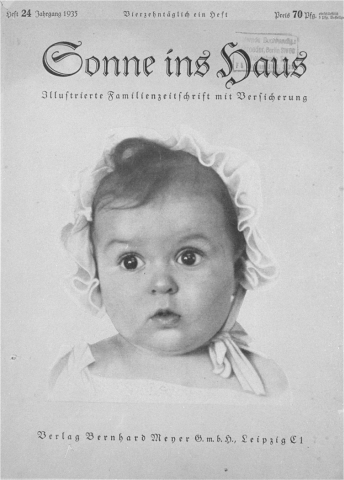
As required by law, the Levinsons informed the photographer they were both Jews.  Hessy was the perfect photographer’s subject, and Jacob and Pauline happily brought home a portrait, to keep on the shelf.

hessy_levinsons_taftAnd that’s where the story ends, except, no.  Unbeknownst to the Levinsons, the photographer submitted the portrait in a contest, a search for the perfect Aryan child.
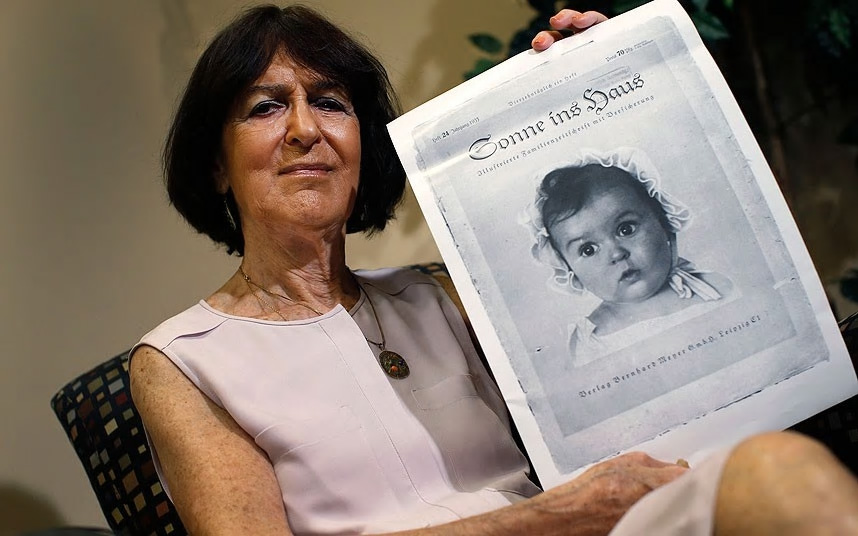
You know where this is going, right?  Ballin’s picture won.  Pauline was struck with terror, to find the image on the cover of a prominent Nazi magazine.  There were posters, billboards, the picture was…everywhere.

Near hysterical, she called the photographer.  You knew very well that we’re Jewish, how could you do this?  Ballin, no friend of the Nazis, replied “I wanted to allow myself the pleasure of this joke”, he said, I wanted to make the Nazis ridiculous”.  

The picture spread throughout the Reich.  It must have been terrifying but secretly amusing, at the same time.  For her first birthday, Hessy’s aunt gave her a birthday card, with her own image printed on the front.  To escape attention the little girl lived her childhood years, entirely indoors.  The Nazis never did figure out, who she was.

In 1938, Jacob Levinsons was arrested by the SS, but later released.  This was the year of the Kristallnacht and the family fled, first for Paris and later to Cuba before emigrating to the United States in 1949.

Hessy Levinsons went to Julia Richman High School in New York and later majored in chemistry at Barnard College, graduating in 1955. As a graduate student at Columbia University, Hessy met her future husband, mathematics professor Earl Taft.  The couple joined the faculty at Rutgers University before she interrupted her career to raise a family.

She was interviewed in 2014, by the German magazine Bild.  “I can laugh about it now, she said, “but if the Nazis had known who I really was, I wouldn’t be alive.”  Hessy Levinsons Taft, once the Jewish infant selected to represent the Most Perfect Aryan Baby, retired from academia in 2016.

Hessy Levinsons Taft

May 15, 1602 Cape Cod

A “cape” is a headland or promontory extending into a body of water, formed by glaciers, volcanoes or changes in sea level. A quick count reveals the existence of 67 capes around the world, (Cape Fear, Cape Canaveral, Cape Coral), yet we locals love to call our little bit of paradise on earth, “The Cape™”.

In the Elizabethan and Stuart ages, exploration and colonization was a private enterprise. The English Crown would grant exclusive rights to individuals and corporations to form and exploit colonies, in exchange for sovereignty and a portion of the proceeds. Such propositions were high risk/reward, profit-driven enterprises, of interest to a relative few explorers and investors.

mudQueen Elizabeth I of England granted Walter Raleigh a charter to establish a colony north of Spanish Florida in 1583, the area called “Virginia” in honor of the virgin Queen. At the time, the name applied to the entire coastal region from South Carolina to Maine and included Bermuda.
By the turn of the 17th century, Raleigh’s influence with the Queen was just about nil. Liz’ only interest seemed to be the revenue stream produced for the crown, and Raleigh was providing none after sinking £40,000 into the disastrous “Lost Colony of Roanoke”.

By the mid-1590s, a new colonial plan identified parts of northern Virginia where climate conditions better suited English sensibilities, than those of the more southerly latitudes. The area produced vast wealth from the cold-water fish prized by Europeans, providing the foothold and profits required to support the addition of settlers.

Early explorers to the area included Sir Humphrey Gilbert, Martin Pring and George Weymouth, who brought back an American Native named Squanto, who learned to speak English before returning to his homeland. Sir John Smith called the area “New England”.

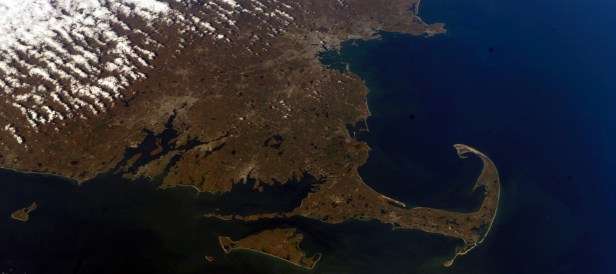
Bartholomew Gosnold departed Falmouth, Cornwall in 1602 with 32 onboard the barque “Concord”. Intending to establish a colony in New England, Gosnold sailed due west to the Azores, coming ashore at Cape Elizabeth Maine, on May 14.  He sailed into Provincetown Harbor the following day, naming the place “Cape Cod”.

Cape_Cod_ISS_croppedFollowing the coastline, Gosnold discovered an island covered with wild grapes. Naming it after his deceased daughter, he called the place Martha’s Vineyard. The expedition came ashore on Cuttyhunk in the Elizabethan island chain where they briefly ran a trading post, before heading back to England. Today, Gosnold is the smallest town in Massachusetts with a population of 75 with most of the land owned by the Forbes family.
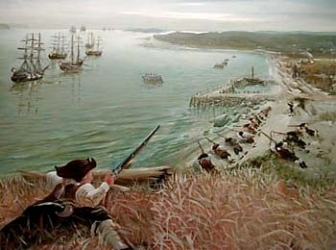
The title of “first European” may be a misnomer, as Vikings are believed to have explored the area as early as 1000AD. The land was fruitful for those first Viking explorers, but the indigenous peoples fought back ferociously, causing the Nordic interloper to withdraw to the more easily colonized areas of Greenland and Iceland.

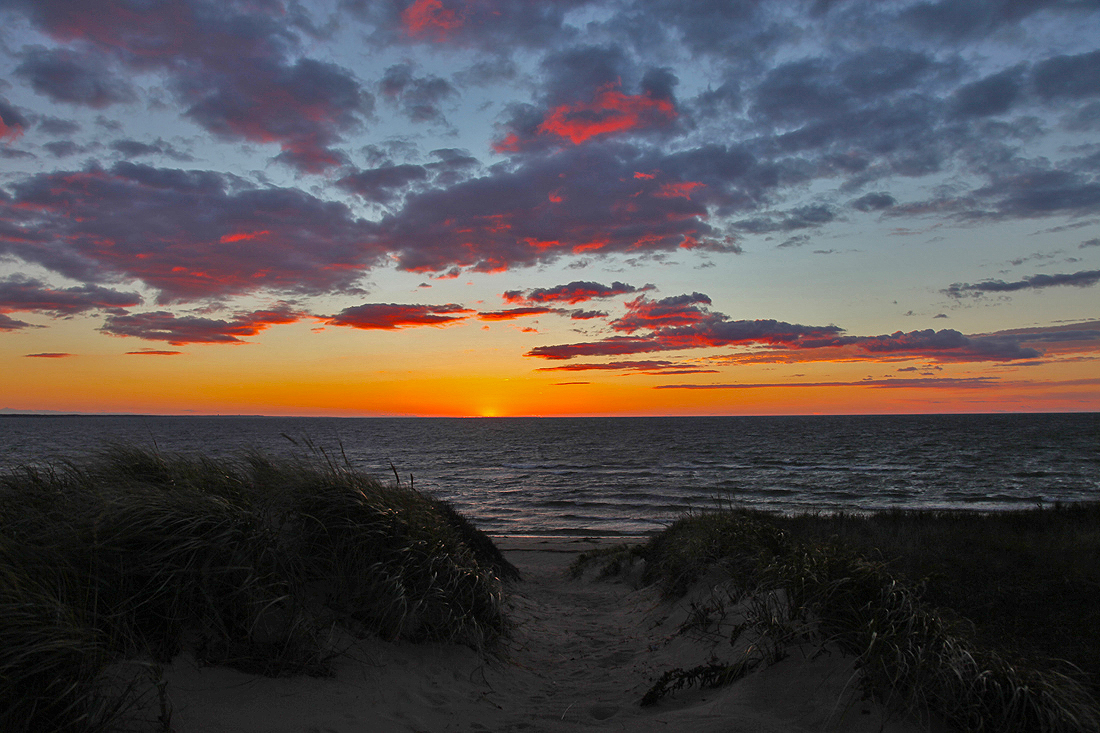
The first Puritans fetched up on the shores of Cape Cod in 1620, staying long enough to draw up the first written governing framework in the colonies, signing the Mayflower Compact off the shore of “P’town” on November 11. Today the sandy soil and scrubby vegetation of the Cape is a delight to tourists, but those first settlers weren’t feeling it. They had to eat. The only positive result from two exploratory trips ashore was the discovery of seed corn stashed by the natives.  A third trip ashore resulted in a hostile “first encounter” on the beaches of modern day Eastham, persuading the “Pilgrims” that this wasn’t their kind of place. They left the Cape for good on December 16, dropping anchor at Plymouth Harbor.

SK_Eastham-First-Encounter-Sunset_10.24.16-11
First Encounter beach, Eastham

The Pilgrims would later encounter the English-speaking natives Samoset and Squanto, who helped to conclude peace terms with Massasoit, Sachem of the Wampanoag.
Some 90% of the native population had been wiped out in the two years preceding, by an epidemic long thought to be smallpox but now believed to be Leptospirosis, a highly contagious pulmonary hemorrhagic syndrome. Things may have otherwise gone for the Pilgrims as they did for those Vikings of 600 years earlier, but that must be a tale for another day.

Militia from my own town of Falmouth and neighboring Sandwich poured onto the beaches on April 3, 1779, opposing a landing by 220 Regulars in the modern day area of Surf Drive. The invaders were repulsed but not before little Falmouth sustained a cannonade of ball shot and grape that lasted from eleven in the morning, until dark.

falmouth1779_350The British warship HMS Nimrod fired on my little town during the War of 1812. It’s closed now, but the building  formerly housing the Nimrod Restaurant, still sports a hole in the wall where the cannon ball came in.
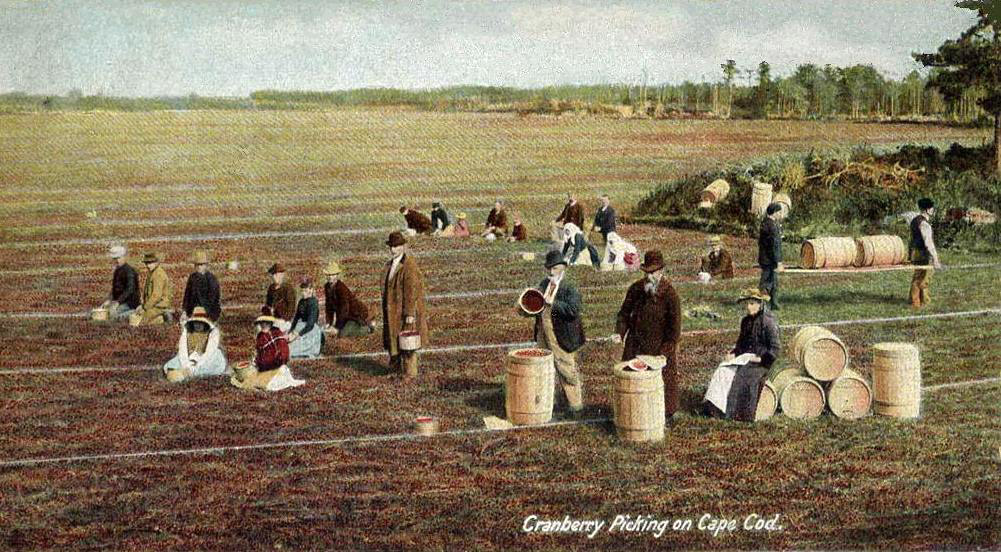
Cape Cod was among the first areas settled by the English in North America, the town of Sandwich established in 1637 followed by Barnstable and Yarmouth, in 1639. The thin soil was ill suited to agriculture, and intensive farming techniques eroded topsoil. Farmers grazed cattle on the grassy dunes of the shoreline, only to watch “in horror as the denuded sands ‘walked’ over richer lands, burying cultivated fields and fences.”

By 1800, Cape Cod was all but denuded of trees and firewood had to be transported by boat from Maine. Local agriculture was all but abandoned by 1860, save for better-suited, smaller scale crops such as cranberries and strawberries. By 1950, Cape Cod forests had recovered in a way not seen since the late 1700s.

cranberry-picking-around-cape-cod-1906
Picking cranberries, ca 1906

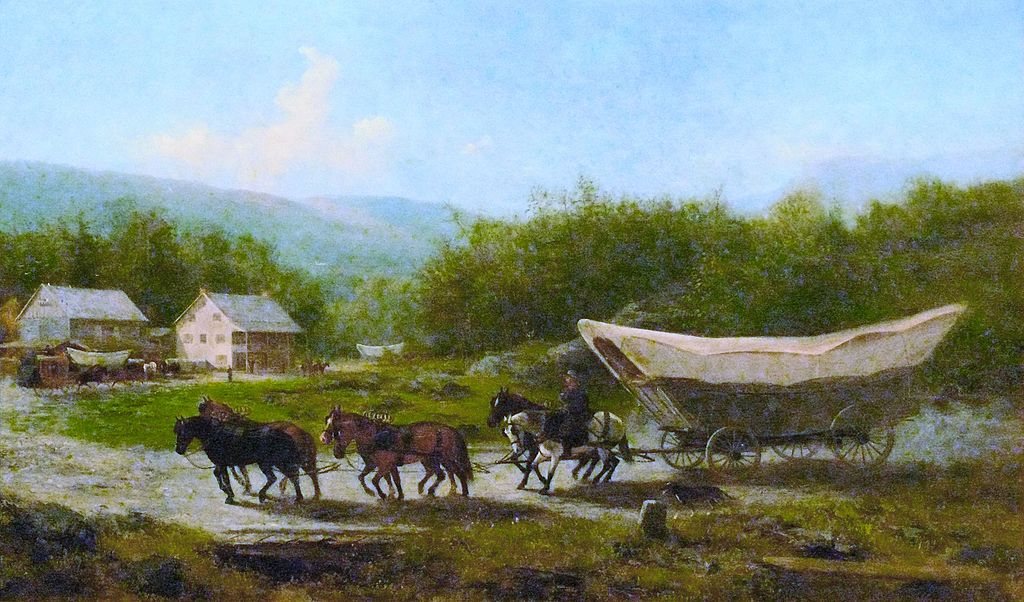
The early Industrial Revolution that built up Rhode Island and Massachusetts bypassed much of Cape Cod, but not entirely. Blacksmiths Isaac Keith and Ezekiel Ryder began building small buggies and sleighs in the Upper Cape town of Bourne, in 1828. Two years later Keith went off on his own.  By the Gold Rush of 1849, the Keith Car Works was a major builder of the Conestoga Wagons found throughout the United States and Canada, as well as its smaller, lighter cousin, the Prairie Schooner. Before the railroads, Conestoga wagons were heavily used in the transportation of shade tobacco grown in Connecticut, western Massachusetts and southern Vermont, even now some of the finest cigar binders and wrappers available.   To this day we still call cigars, “stogies”.

Conestoga_Wagon_1883The dredging of a canal connecting the Manomet and Scusset rivers and cutting 62 miles off the water route from Boston to New York had been talked about since the time of Miles Standish. Construction of a privately owned toll canal began on June 22, 1909. Giant boulders left by the glaciers and ghastly winter weather hampered construction, the canal finally opening on July 29, 1914 and charging a maximum of $16 per vessel. Navigation was difficult, due to a 5-plus mile-per-hour current combined with a maximum width of 100′ and a max. depth of 25-feet. Several accidents damaged the canal’s reputation and toll revenues failed to meet investors’ expectations.
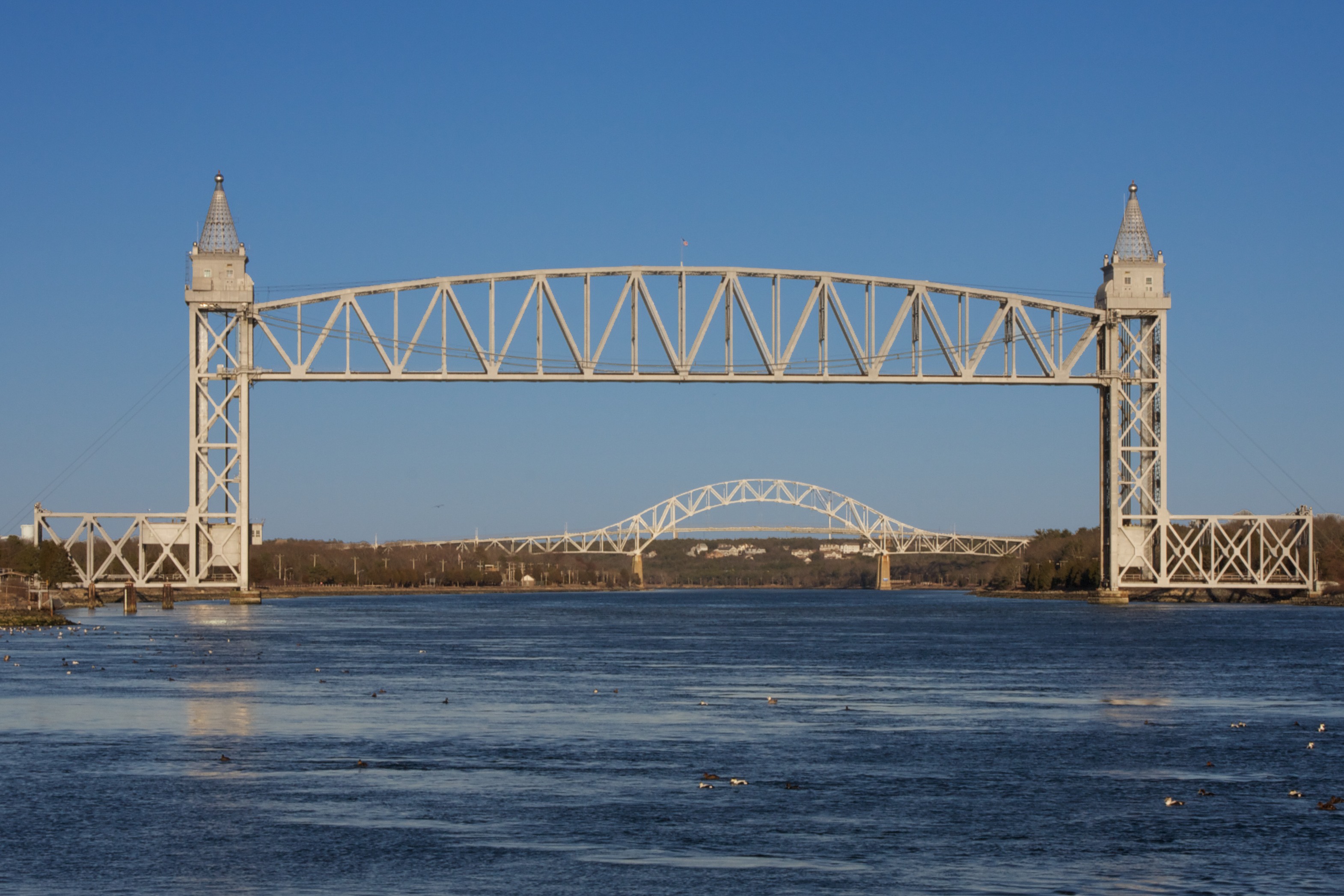
German submarine U-156 surfaced off Nauset beach in Orleans on July 21, 1918, shelling the tug Perth Amboy and its string of towed barges. The federal government took over the canal under a presidential proclamation within  four days, later placing it under the jurisdiction of the Army Corps of Engineers. The canal was re-dredged as part of President Roosevelt’s depression era Works Progress Administration to its current width of 480-feet and depth of 32-feet and connected to the mainland by the Sagamore, Bourne, and Cape Cod Canal Railroad Bridges.

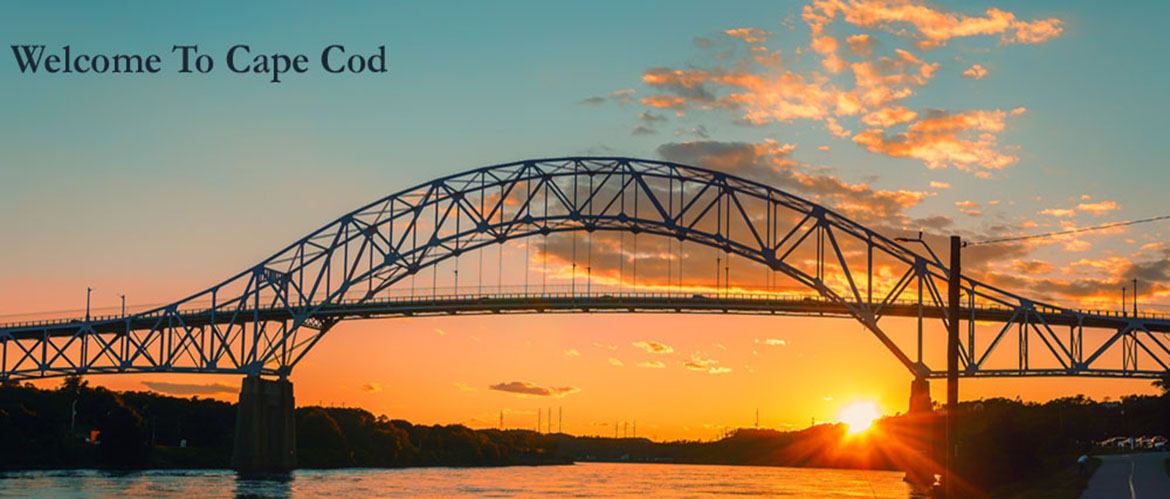
_MG_3896 - Version 4Despite the WuFlu, millions of tourists will wait countless hours this year in a sea of brake lights, to cross those two narrow roadways onto “the Cape” to enjoy that brief blessed moment of warmth hidden amidst our four seasons, known locally as “almost winter, winter, still winter and bridge construction”.

If anyone wonders why my buddy Carl calls me the “Cape Cod Curmudgeon”, I can only say in my own defense.  I’ve been commuting through that crap, for decades.

May 14, 1796 Revolution in the midst of Pandemic

Had the program begun a year earlier, the US/Canadian map might look quite different, than it does today.

VACCINATION_06Childhood memories of standing in line. Smiling. Trusting. And then…the Gun. That sound. Whack! The scream.  That feeling of betrayal…being shuffled along. Next!

Ask anyone of a certain age and they can show you the scar, round or oblong, jagged around the edges and just a little lower than the surrounding skin.

Between 1958 and 1977, the World Health Organization conducted a great campaign, a global effort to rid the world of the great scourge, of smallpox.

Child_with_Smallpox_Bangladesh
Young girl afflicted with smallpox, Bangladesh, 1973

Today we face a worldwide pandemic of the COVID19 virus, calculated to produce a crude mortality rate of .28% and an Infection Fatality Rate (IFR), of 1.4%.  Hat Tip worldometers.info

The four Variola virus types responsible for smallpox produce a death rate between one in ten at the low end and two – three out of four with an average of 30%.

The disease is as old as history, believed to have evolved from an African rodent virus, at least 16,000 years ago.  The Egyptian Pharaoh Ramses V died of smallpox in 1145, BC.

Survivors are left with severe scarring and often blinded.  Josef Stalin was famously pockmarked after acquiring the illness at age 7.    Other famous survivors include Abraham Lincoln, Queen Elizabeth I and Pocahontas.

image003And did you know?  The American Revolution was fought out, entirely in the midst of a smallpox pandemic.

How it all began, is uncertain.  By the fall and winter of 1775, the disease was raging through British-occupied Boston.

In the south, escaped slaves crossed over to British lines only to contract smallpox, and die.  The disease hit Texas in 1778.  New Orleans was particularly hard hit with its densely populated urban areas.  By 1780 it was everywhere from Mexico to the Great Plains to Alaska.

Native populations were particularly hard hit.  As many as 11,000 were killed in the west of modern-day Washington state, reducing populations from 37,000 to 26,000 in just seven years.53baa4eb65efbcef1e7377485bf1f97b.jpegThe idea of inoculation was not new.  Terrible outbreaks occurred in Colonial Boston  in 1640, 1660, 1677-1680, 1690, 1702, and 1721, killing hundreds, each time.  At the time, sickness was considered the act of an angry God.  Religious faith frowned on experimentation on the human body.

On June 26, 1721, Dr. Zabdiel Boylston in consultation with Reverend Cotton Mather, performed the first smallpox inoculations in America.  Two male slaves, an adult and and a two-year-old were inoculated, along with Dr. Boylston’s 6-year-old son.  All three became mildly ill but recovered, never again to be bothered by smallpox.inoculationColonists were chary of the procedure, deeply suspicious of how deliberately infecting a healthy person, could produce a desirable outcome.  John Adams submitted to the procedure in 1764 and gave the following account:

“Dr. Perkins demanded my left arm and Dr. Warren my brother’s [probably Peter Boylston Adams]. They took their Launcetts and with their Points divided the skin about a Quarter of an inch and just suffering the blood to appear, buried a thread (infected) about a Quarter of an inch long in the Channell. A little lint was then laid over the scratch and a Piece of Ragg pressed on, and then a Bandage bound over all, and I was bid go where and do what I pleased…Do not conclude from any Thing I have written that I think Inoculation a light matter — A long and total abstinence from everything in Nature that has any Taste; two long heavy Vomits, one heavy Cathartick, four and twenty Mercurial and Antimonial Pills, and, Three weeks of Close Confinement to an House, are, according to my Estimation, no small matters.”

tumblr_m79lms1miv1rwijh0o1_500As Supreme Commander, General Washington had a problem.  An inoculated soldier would be unfit for weeks before returning to duty.  Doing nothing and hoping for the best was to invite catastrophe but so was the inoculation route, as even mildly ill soldiers were contagious and could set off a major outbreak.

The northern army was especially hard hit in Quebec, with general Benedict Arnold reporting some 1,200 out of 3,200 Continentals sick in the Montreal area, most with smallpox.  It was “almost sufficient to excite the pity of Brutes” he said, “Large barns [being] filled with men at the very heighth of smallpox and not the least things, to make them comfortable and medicines being needed at both Fort George and Ticonderoga.”

Major General John Thomas, Commander of the Army in Quebec was dead of the disease.  John Adams complained “The smallpox is ten times more terrible than Britons, Canadians and Indians, together.”

By mid-1776, half the continentals in and around Montreal were infected.  The order was given to withdraw.  John Adams cited smallpox, as the cause.  Smallpox01In February 1777 while encamped in Morristown,  Washington became convinced that the benefits outweighed the risks.  Washington himself had survived the dreadful disease.  Martha Washington had undergone the procedure, known as variolation.    He ordered his medics to cut small incisions on the arms of his troops, and to rub the pus from infected soldiers, into the wounds.  Thus inoculated, soldiers were kept under strict quarantine and issued either new or “well washed, air’d and smoaked” clothing. 

The program had enthusiastic support from the likes of Jefferson, Franklin and Adams.  Nearly every continental soldier was inoculated before the end of the war.  Had the program begun a year earlier, the US/Canadian map might look quite different, than it does today.

In Washington’s day, the method used live virus, accounting for the long sick time and high mortality rate. In the 1790s, Doctor Edward Jenner of Berkeley, Gloucestershire, England observed milkmaids developing the signature pustules of smallpox on their hands, after touching infected udders. The Orthopoxvirus responsible for “Cowpox” is very similar to that which produces smallpox but results in far milder symptoms. history-smallpox-Google-SearchThe implications were stunning.  Orthopox could be administered in place of live Variola, virtually eliminating side effects and reducing the chance of smallpox outbreak, to zero.

On this day in 1796, Dr. Jenner administered the first modern smallpox vaccination.  The new vaccine was soon being used around the world.

18740597_1338905459526756_4752634614505034047_nSo it was on December 9, 1979, smallpox was officially described, as eradicated.  The only infectious disease ever so declared.

Few among us born after 1980, bear the scar their parents know so well.  Today, stockpiles of live Variola exist only in laboratories, and military bioweapon stockpiles.  Just in case of terrorism, or some rogue nation ever resorting to biological warfare.

Today we grapple with a virus, with a 98.6% recovery rate among those infected.  God help us all if that other stuff ever gets out of the lab.