

As 1778 drew to a close, British military planners could look back on five years of trying to suppress rebellion in the American colonies, with little to show for it. In March of that year, the British defeat at Saratoga had brought France into the war, on the side of the Rebels.
Two years of open warfare had centered mostly on the north. Now, a “southern strategy” was devised to conquer rebellious colonies in the south, while isolating those to the north. Key to the Southern Strategy was Georgia and the colonial capital at Savannah, the southernmost commercial port of the thirteen Colonies.
General sir Henry Clinton dispatched a force of some 3,100 from New York under Lieutenant Colonel Archibald Campbell, along with an unknown quantity of artillery. Campbell arrived outside Tybee Island on December 23.
Georgia was defended by two separate forces at this time, units of the Continental Army under the command of General Robert Howe, and state militia under the command of Governor John Houstoun. The two men had a history of squabbling for control and most of their troops, had yet to be tried.

The 850 under General Howe never really had a chance, against the battle hardened Regulars, Hessian auxiliaries and Loyalist militia, coming ashore on December 29. Defeat turned to rout when Howe’s forces threw down their weapons and ran. Campbell reported that “It was scarcely possible to come up with them, their retreat was rapid beyond conception.
Patriot forces suffered 83 killed, 11 wounded and 453 captured. Campbell suffered 7 killed and 17 wounded.
Howe was court-marshaled for the disaster, while Campbell bragged about being “the first British officer to [rend] a star and stripe from the flag of Congress“
Brigadier General Augustine Prevost arrived from St. Augustine Florida two weeks later, with a mixed force of Regulars and Creek and Cherokee allies. Campbell and a force of 1,000 would take the provisional capital at Augusta that February but soon retreated to Savannah, citing insufficient support among Loyalist and Native American populations.
American hopes soon fell back on their new-found alliance with France. During the following summer, French Admiral Count Charles-Hector Theodat d’Estaing captured St. Vincent and Grenada in the British West Indies, clearing the way to the Georgia coast. The powerful 47-ship French fleet arrived with 4,000 troops on September 1, surprising and capturing several British ships outside the mouth of the Savannah River.
 D’Estaing sent an ultimatum to British Commander Augustine Prevost on September 16, 1779. He was to surrender the city “To the arms of his Majesty the King of France”, or he would be personally answerable for what was about to happen. It could not have pleased General Benjamin Lincoln or his Patriot allies when d’Estaing added “I have not been able to refuse the army of the United States uniting itself with that of the King. The junction will probably be effected this day. If I have not an answer therefore immediately, you must confer with General Lincoln and me”.
“Bullet Head Prevost”, so called because of a circular scar on his temple, stalled for 24 hours, using the time in furiously building up his defenses and calling up 800 reinforcements from South Carolina.
Lincoln joined d’Estaing on September 23 with an army of 3,000 militia and Continental soldiers, laying siege to Savannah and the 2,500 British and Loyalist troops in occupation.
On October 1, a British relief column under one Captain French was coming to the city’s aid, camped on the banks of the Ogeechee River. Georgia Continental Colonel John White had two officers, a sergeant and three privates with him, when he tricked French into surrendering. These guys ran through the woods lighting so many fires that the British thought the entire continental Army was bivouacked around them. Captain French was unavailable for comment but, it must be a special feeling, knowing that you just surrendered 111 guys to six, without firing a shot.

Lack of horses and artillery carriages delayed the allies’ moving their cannon ashore, so French warships bombarded the city from the sea. At one point shortly after Midnight on October 3, with rum rations flowing far too freely, fire from French gunners became more dangerous to themselves than to the city itself.
For the Americans and their allies, the frontal assault of October 9 was one of the bloodiest engagements, of the Revolution. It could have been worse. As battered American and French soldiers fell back, 500 free men of color known as the Chasseurs Volontaires de Saint-Domingue stepped up, to cover their retreat.
Many of these Haitian soldiers went on to win their own war of independence, and credited their military experience, to Savannah.

The siege of Savannah inflicted untold misery among the population, but Patriot forces and their French allies, never did break the city’s defenses. The siege broke a short time later, amidst recriminations on both sides. D’Estaing returned to France, where he lost his head to the guillotine in 1794.
Savannah would remain in British hands until the end of the war, finally evacuated on July 11, 1782. A coquina marker in a small Savannah park; that soft, seashell limestone common throughout the Caribbean basin to Florida and beyond, bears a small brass plaque, darkened with the patina of age.
COMMEMORATIVE OF THE BRITISH EVACUATION OF SAVANNAH 1782
PRESENTED TO THE CITY OF SAVANNAH
BY THE
LACHLAN McINTOSH CHAPTER
DAUGHTERS OF THE AMERICAN REVOLUTION
1904


 In Mexico as well as Spain and most Latin countries, pranksters practice their craft not on April 1 but on December 28. The custom goes back to the biblical story of King Herod, who is said to have killed all the baby boys in Bethlehem, to rid himself of the future ‘King of the Jews. The “Massacre of the Innocents” is a sad story but the ‘joke’ was on Herod. Mary and Joseph had taken the baby Jesus away, to Egypt.
 For two-hundred years now, the citizens of Ibi, Alicante on the Spanish Mediterranean coast have celebrated December 28, with a giant food fight. The practice was suspended for a time following the Spanish Civil War but revived, in 1981. Now, it’s a big tourist attraction, and the event makes a ton of money, for charity.


 Marcus and Laura never had much money, but were both inveterate readers who instilled a lifelong love of books in their young son, Ambrose. At 15, Bierce left home to become a “printer’s devil”, fetching type and mixing ink, following in the footsteps of Benjamin Franklin, Thomas Jefferson, and his own contemporary, Mark Twain.
 Bierce worked for the Hearst Newspaper San Francisco Examiner in 1896, when he was sent to Washington to cover a railroad bill at that time, working its way through Congress.
 Bierce’s mocking definitions became so numerous that they were compiled and published in 1906 as “The Cynic’s Word Book”. It is still in print today as the “Devil’s Dictionary”.
 an ending to this story as any, as one hundred and five years ago today is as good a day as any on which to end it. The fact is that in that 105 years, there’s never been a trace of what became of him, and probably never will be.


 The American Revolution was on its last legs in December 1776. The year had started out well for the Patriot cause but turned into a string of disasters, beginning in August. Food, ammunition and equipment were in short supply by December. Men were deserting as the string of defeats brought morale to a new low. Most of those who remained, ended enlistments at the end of the year.


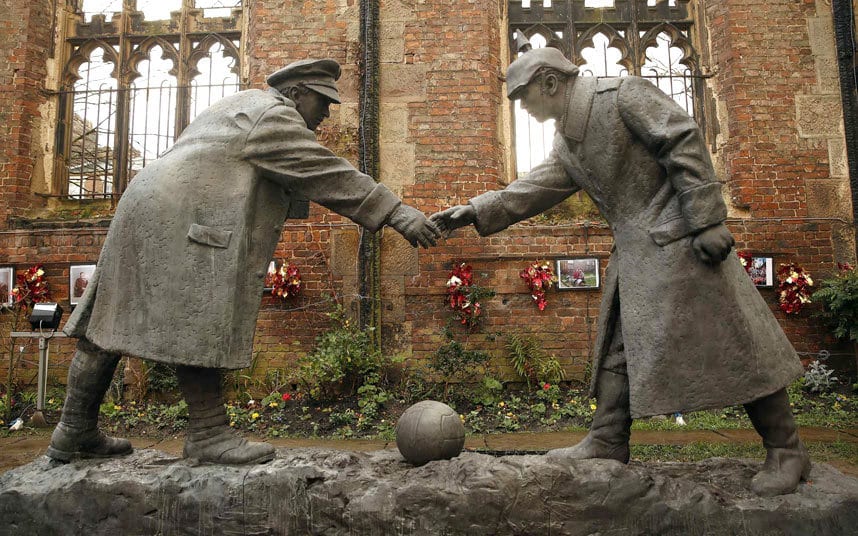

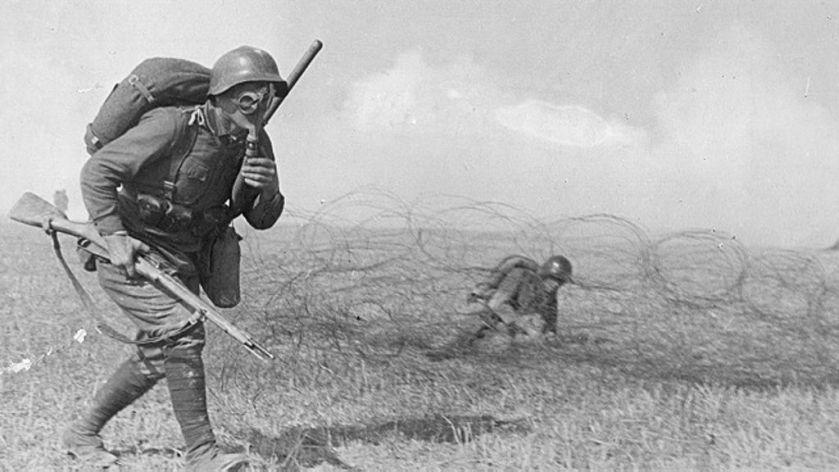
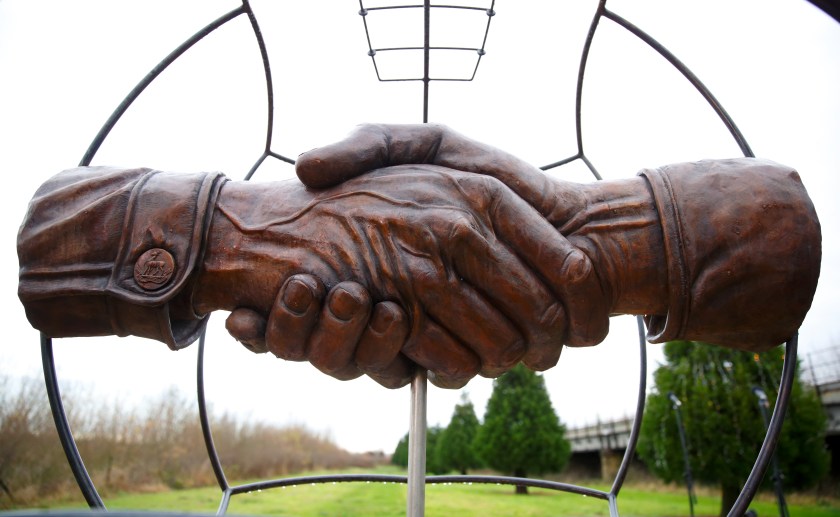
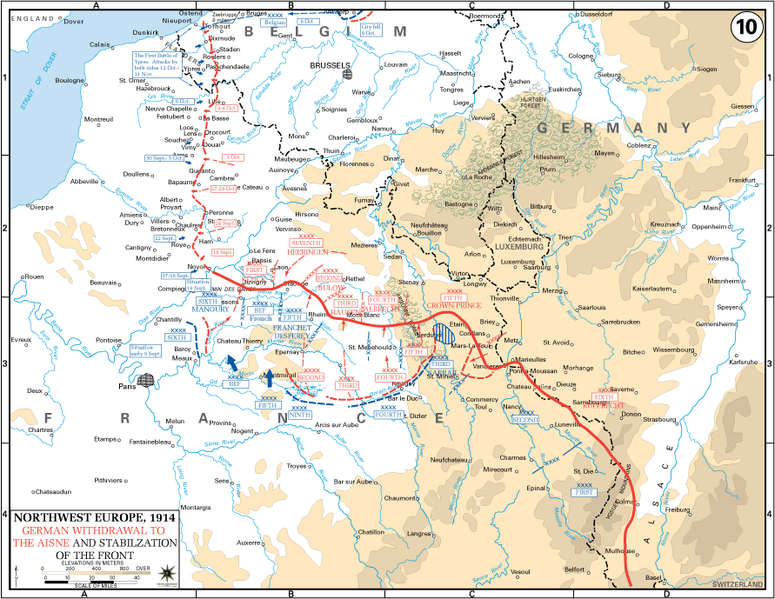 On the Western Front, it rained for much of November and December that first year. The no man’s land between British and German trenches was a wasteland of mud and barbed wire. Christmas Eve, 1914 dawned cold and clear. The frozen ground allowed men to move about for the first time in weeks. That evening, English soldiers heard singing. The low sound of a Christmas carol, drifting across no man’s land…Stille Nacht, heilige Nacht…Silent Night.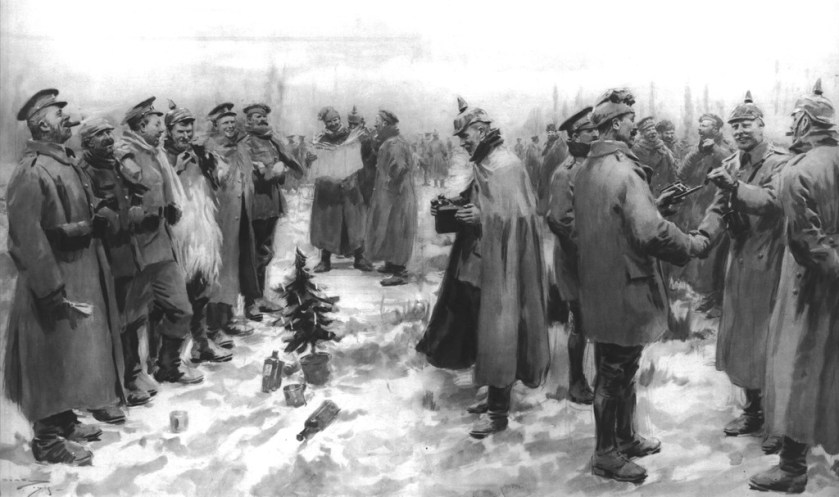
 Captain Sir Edward Hulse Bart reported a sing-song which “ended up with ‘Auld lang syne’ which we all, English, Scots, Irish, Prussians, Wurttenbergers, etc, joined in. It was absolutely astounding, and if I had seen it on a cinematograph film I should have sworn that it was faked!”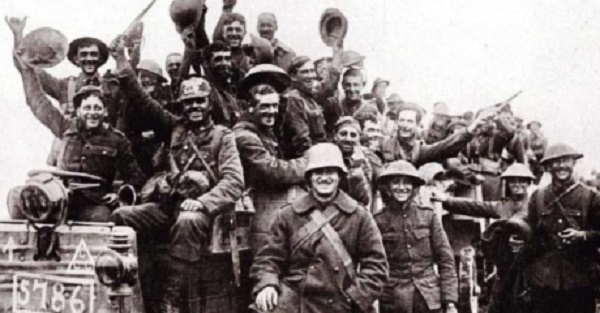

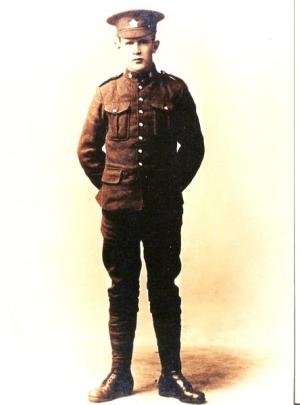

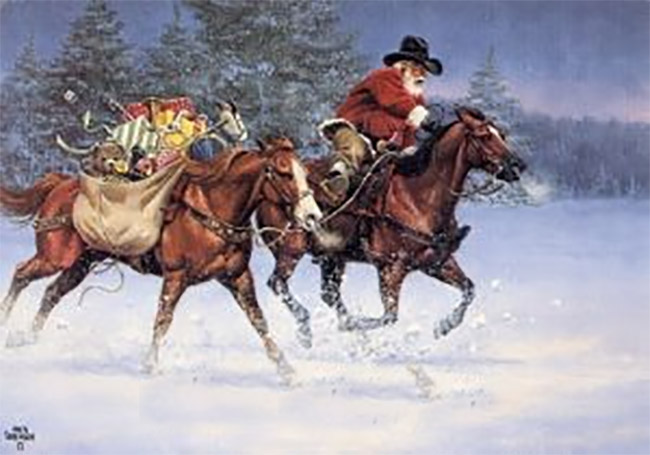
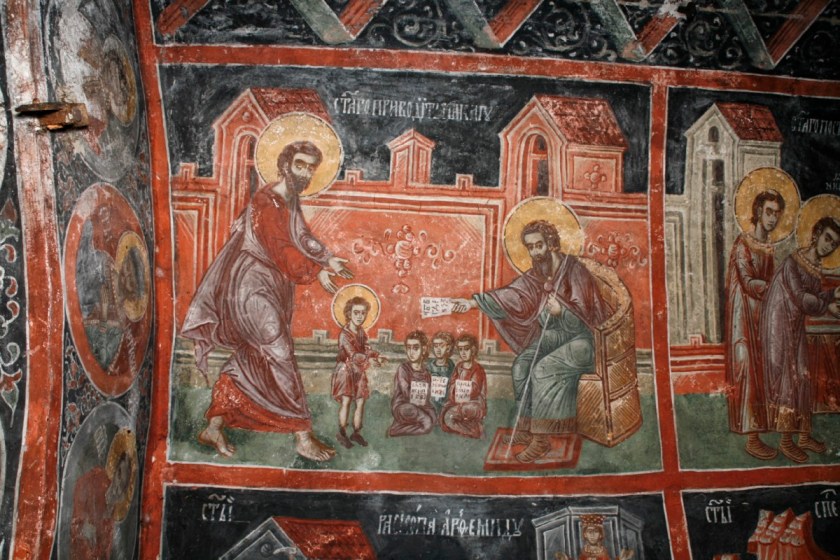
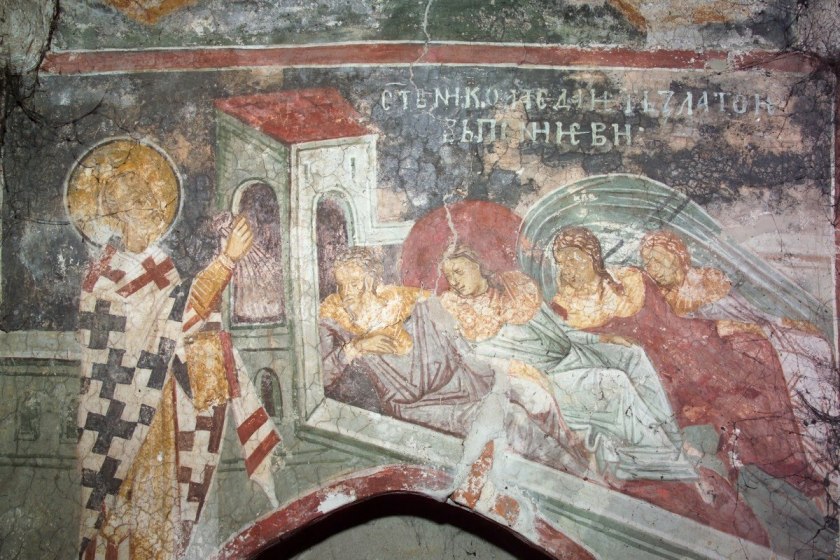
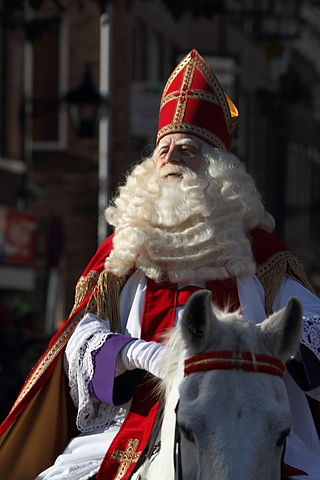
 The Feast of St. Nicholas took hold around the 6th of December. Children and other marginal groups such as old women and slaves could receive gifts, but only by demanding them. The secret giving of gifts appeared sometime around the year 1200.
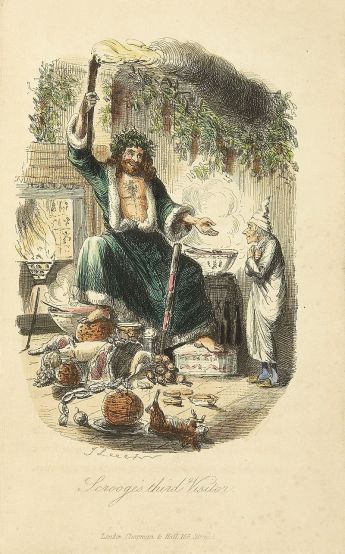
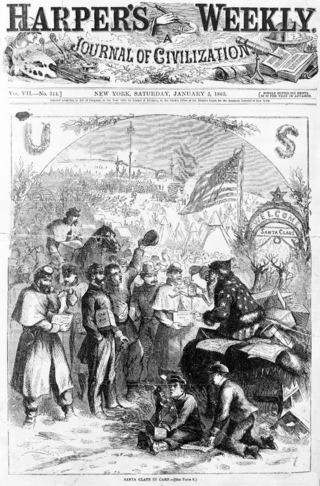
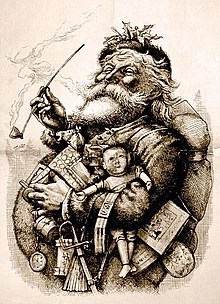 The unknown genius who published and illustrated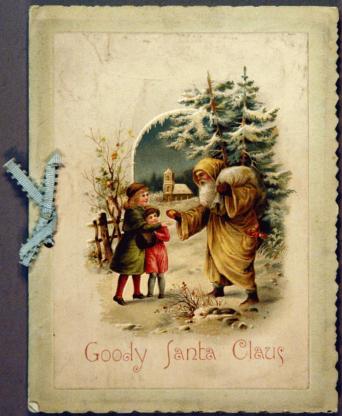
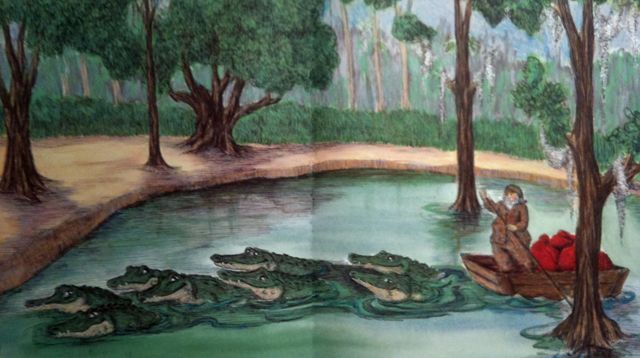

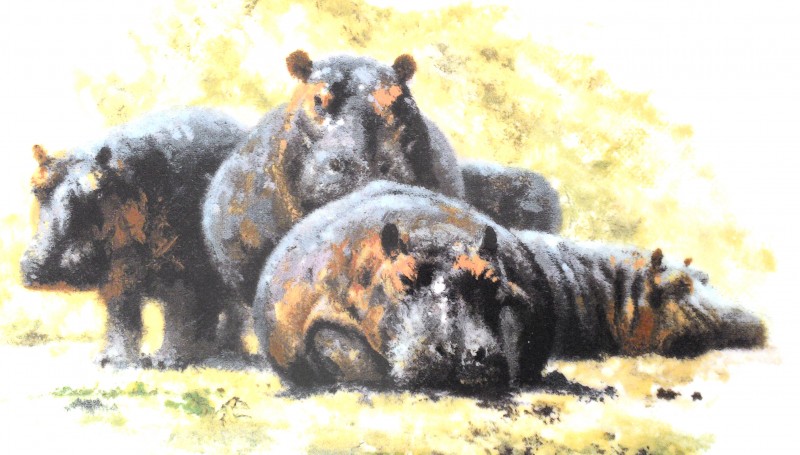


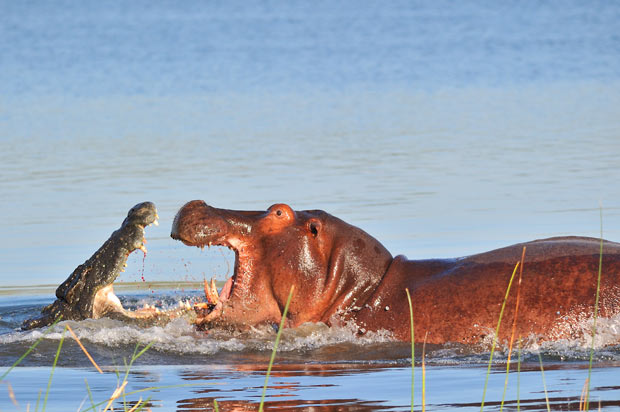
 Be that at it as it may, the animal is a voracious herbivore, spending daylight hours at the bottom of rivers & lakes, happily munching on vegetation.

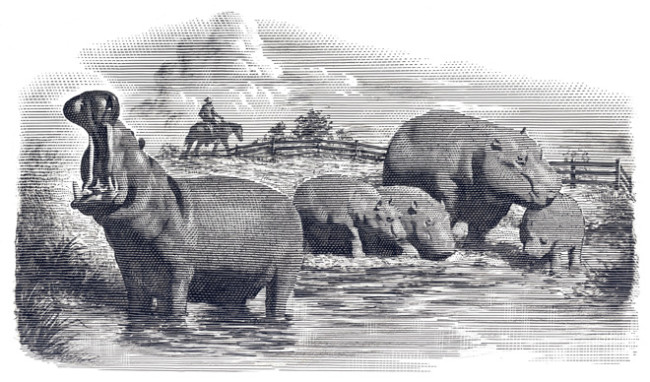 During the 2nd Boer war, the pair had sworn to kill each other. In 1910, these two men became partners in a mission to bring hippos, to America’s dinner table.



 The terrain was considered unsuitable for such an attack. The tactical surprise was complete, British and American forces separated and driven back, their positions forming an inward “bulge” on wartime battle maps.
 Historian Stephen Ambrose wrote “Band of Brothers” nearly fifty years later, a non-fiction account later broadcast as an HBO mini-series, of the same name. The story refers to a black nurse named Anna. There is a brief appearance and then she is gone. No one knew who Anna was, or even if she was real.
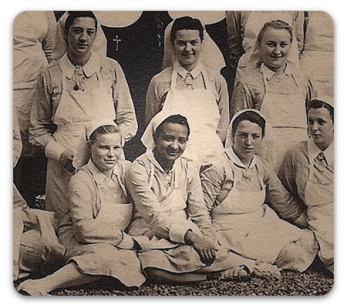 Augusta Chiwy came back to Belgium when she was nine, one of the luckier of thousands born to European fathers, and African mothers. Back to the doctor’s home in Bastogne, a small town of 9,000 where Augusta was loved and cared for by her father and his sister, whom the girl knew as “aunt Caroline”.

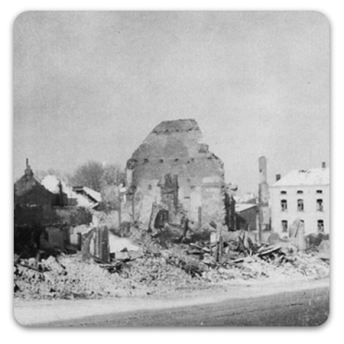 Augusta Chiwy was in a neighboring building at the time. The explosion blew the petite nurse through a wall but, unhurt, she picked herself up and went back to work. There were grisly injuries and many died due to inadequate medical facilities, but many lived, their families reunited thanks to the tireless work of Dr. Jack Prior, and nurse Augusta Chiwy.
 Augusta Chiwy suffered symptoms of post-traumatic stress disorder, a condition poorly understood at that time. She would go long periods without speaking, becoming quiet and withdrawn even years later. She married a Belgian soldier in 1959 and the couple had two children. It would be twenty years, before she resumed her nursing career. She almost never spoke of her experience in Bastogne.
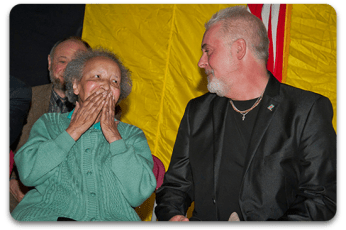 Albert II of Belgium. Six months later she received the U.S. Army’s Civilian Award for Humanitarian Service. And on March 21, 2014, Augusta was recognized by her hometown as a Bastogne Citizen of Honor”.


 Turns out that Mary Bateman, the bird’s owner and a serial fraudster, was writing these messages with some kind of “corrosive ink”, maybe an acid, and reinserting them into the poor chicken. The “Yorkshire Witch” met her end on a gibbet, hanged for the poisoned pudding she gave that couple to relieve their chest pain. But I digress.
 5,000 years ago, the Mayan civilization of modern-day Mexico and Central America developed a sophisticated calendar, working with a base numerical system of 20.


 On a lighter note, town government sold the jail once. To a sixteen-year-old kid. For a buck and a half and he sold it to a dummy, but now I’m getting ahead of the story.

 Historical Easter Eggs - Today in History
You must be logged in to post a comment.