"Tell me a factand I'll learn. Tell me a truth, and I'll believe. But tell me a story, and it will live in my heart forever." – Steve Sabol, NFL Films
Author: Cape Cod Curmudgeon
I'm not an academic "Historian". I'm a father, a son and a grandfather. A history geek and sometimes curmudgeon who still likes to learn new things. I make every effort to get my facts straight but I'm as good at being wrong as the next guy. I offer these stories hoping you'll enjoy them as much as I do. This is the history we all share. I'm glad you're here.
Rick Long, the “Cape Cod Curmudgeon”
There had been 8 killings to date in the Kansas Territory; Brown and his party had just murdered five in a single night. The massacre lit a powder keg of violence in the days that followed. Twenty-nine people died on both sides in the next three months alone.
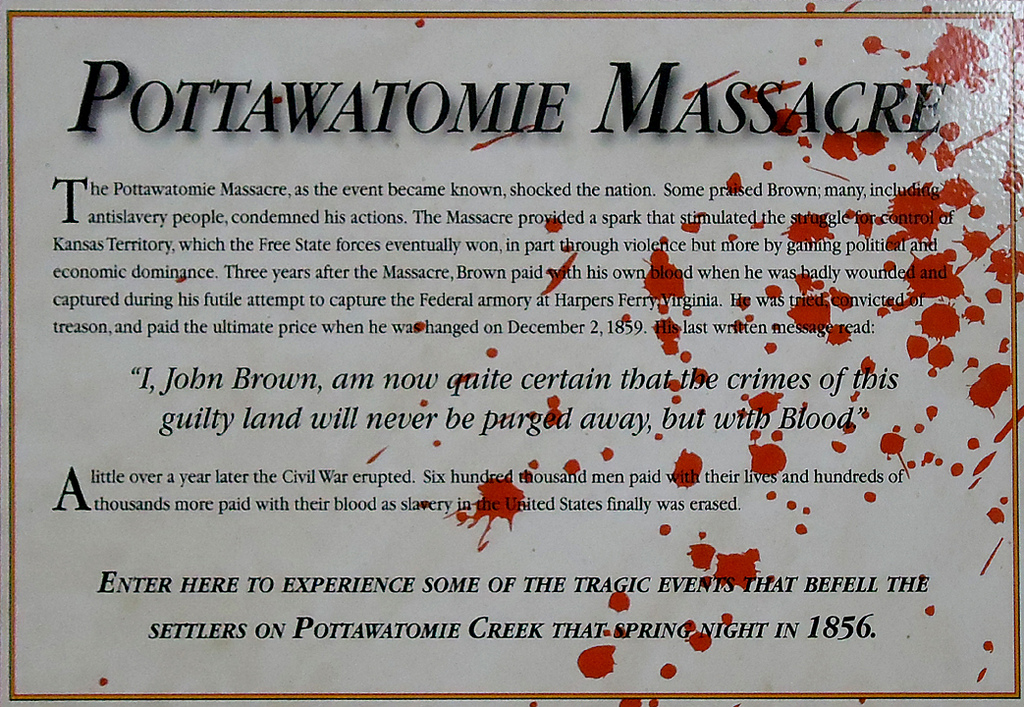
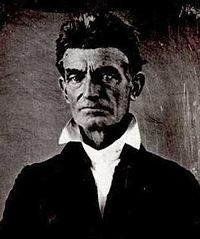
John Brown Sr. came to the Kansas Territory as a result of violence, sparked by the expansion of slavery into the Kansas-Nebraska territories between 1854 and 1861, a period known as “Bleeding Kansas”. To some, the man was a hero. To others he was a kook, the devil incarnate. A radical abolitionist and unwavering opponent of the “peculiar institution” of slavery, John Brown believed that armed confrontation was the only way to bring it to an end.
John Brown
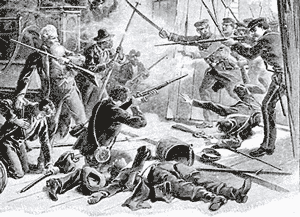
Brown and four of his sons: Frederick, Owen, Salmon, and Oliver, along with Thomas Weiner and James Townsley, set out on what they called a “secret expedition”, on May 23, 1856. The group camped between two deep ravines off the road that night, remaining in hiding until sometime after dark on the 24th. Late that night, they stopped at the house of James P. Doyle, ordering him and his two adult sons, William and Drury, to go with them as prisoners. Doyle’s wife pleaded for the life of her 16 year old son John, whom the Brown party left behind. The other three, all former slave catchers, were led into the darkness. Owen Brown and one of his brothers murdered the brothers with broadswords. John Brown, Sr. didn’t participate in the stabbing, it was he who fired a shot into James Doyle’s head, to ensure that he was dead.
The group went on to the house of Allen Wilkinson, where he too was brought out into the darkness and murdered with broadswords. Sometime after midnight, they forced their way into the cabin of James Harris. His two house guests were spared after interrogation by the group, but Wilkinson was led to the banks of Pottawatomie Creek where he too was slaughtered.
There had been 8 killings to date in the Kansas Territory; Brown and his party had just murdered five in a single night. The massacre lit a powder keg of violence in the days that followed. Twenty-nine people died on both sides in the next three months alone.
Brown would go on to participate in the Battle of Black Jack and the Battle of Osawatomie in the Kansas Territory. He would be hanged in 1859 after leading a group to the armory in Harper’s Ferry Virginia, in a hare brained scheme to capture the weapons it contained and trigger a slave revolt. The raid was ended by a US Army force under Colonel Robert E. Lee, and a young Army lieutenant named James Ewell Brown (JEB) Stuart.
Brown supporters blamed the 1856 massacre on everything from defending the honor of the Brown family women, to self defense, to a response to threats of violence from pro slavery forces. Free Stater and future Kansas Governor Charles Robinson may have had the last word when he said, “Had all men been killed in Kansas who indulged in such threats, there would have been none left to bury the dead.”
The airship’s control cabin hit the jagged ice seconds later, smashing open and spilling ten crew members and a Fox Terrier onto the ice.
The semi-rigid airship Italia departed from Milan on April 15, 1928, headed for the Arctic. Italia carried 20 personnel, a payload of 17,000 pounds of fuel and supplies, and the expedition mascot, a Fox Terrier named Titina.
Her mission was to explore the ice cap surrounding the North Pole, operating out of an expedition base in Ny-Ålesund, one of four permanent settlements on Spitsbergen Island in the Kingdom of Norway.
The first of five planned sorties began on May 11, before turning back only eight hours later in near blizzard conditions. The second trip took place in near perfect weather conditions and unlimited visibility, the craft covering 4,000 km (2,500 miles) and setting the stage for the third and final trip departing on May 23.
Strong tailwinds aided the passage as Italia traveled north along the Greenland coast, arriving at the north pole only 19 hours after departing Spitzbergen. Though wind conditions prevented them from dropping scientists onto the ice sheet, survival packs and the inflatable raft they brought along for the purpose would turn out to be providential.
Trouble started almost immediately, as the tailwinds that brought them to the pole were now strong headwinds as they headed south to King’s Bay. Fuel consumption was doubled as the airship struggled to make headway. After 24 hours, they were only halfway back.
A cascade of events took place on the morning of the 25th, causing Italia to be tail-heavy and falling at a rate of two feet per second. Captain Umberto Nobile ordered Chief technician Natale Cecion to dump ballast chain, but the steep deck angle made the task difficult. The airship’s control cabin hit the jagged ice seconds later, smashing open and spilling ten crew members and a Fox Terrier onto the ice.
Now relieved of the weight of the gondola, the envelope of the ship began to rise again with a gaping tear where the control cabin used to be.
What followed was a remarkable display of calm under pressure. As the airship’s envelope floated away, Chief Engineer Ettore Arduino started to throw everything he could get his hands on down to the men on the ice. These were the supplies intended for the descent to the pole, but they were now the only thing that stood between life and death. Arduino himself and the rest of the crew drifted away with the now helpless airship.
Nine survivors and one fatality were left stranded on the ice. They immediately began to go through their supplies. They found a radio and fashioned a mast from the debris, and set up a tent after coloring it red using the dye contained in several flares.
The tale of the Italia rescue is a story in itself, as would-be rescuers themselves became stranded or disappeared into the arctic circle, never to be seen again.
The famous polar explorer Raould Amundsen, the man who first reached the pole in 1926, disappeared on June 18 while flying on a rescue mission with Norwegian pilot Leif Dietrichson, French pilot René Guilbaud, and a three-man French crew.
Raould Amundsen
Rescue expeditions were launched from Denmark, Finland, France, Italy, Norway, Soviet Russia, Sweden, and the United States. Bureaucratic intransigence, equipment failure and a lack of coordination would hamper rescue efforts. It would be more than 49 days before the last of the crash survivors and stranded would-be rescuers would be found. The fate of the journalist, the three mechanics and the scientist who drifted away on the Airship Italia, is unknown.
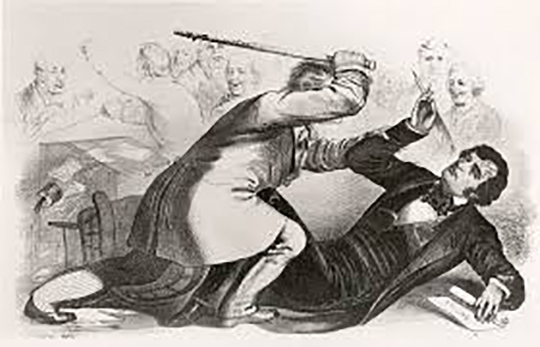
Senator Stephen A. Douglas, he of the later Lincoln-Douglas debates, was in the audience at the time, and said “this damn fool Sumner is going to get himself shot by some other damn fool”.
For the earliest European settlers in this country, massive amounts of labor would be required to carve a living out of the North American wilderness.
A system of indentured servitude began as early as 1607, where individuals paid for their passage to the new world with terms of labor.
The first Africans arrived in 1619 and at first, they too were given terms of indenture. Slave laws were soon passed however, Massachusetts in 1641 and Virginia twenty years later, as permanent bondage replaced temporary indenture in the lives of an increasing number of blacks.
The “peculiar institution” of slavery proved most economically feasible in large, labor intensive farm operations such as tobacco producers. By the end of the Revolution, it had proven to be unworkable in the colder climates.
Slavery may have withered in the south as well, but for the invention of the cotton gin (short for “engine”) by Massachusetts native Eli Whitney in 1792. The machine could do the work of ten men and the world’s appetite for American cotton seemed endless.
There were just over a million slaves in the US in 1805, worth about $300 million. On the eve of the Civil War 55 years later, their number had quadrupled while their value as “property” had increased tenfold. In the eleven states which eventually joined the Confederacy, four out of ten people were slaves by 1860, doing over half of the agricultural labor. It wasn’t limited to the “South” either, the census of that year counted some 92,500 slaves in the “Northern” states of Maryland and Delaware, and another 2,000 in Washington DC.
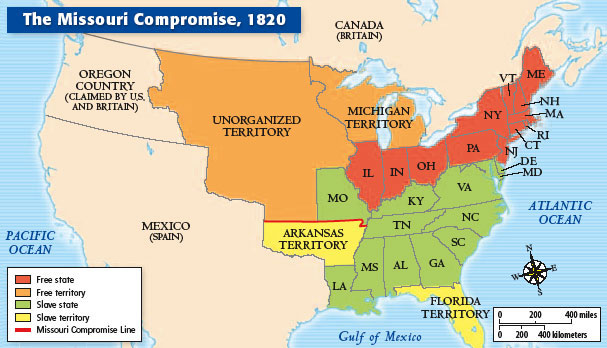
The “Missouri Compromise” of 1820 simultaneously carved Maine out of Massachusetts and added Missouri to the Union, attempting to preserve the balance of “Slave” vs “Free” states at 12 each. Both sides hated it, one for its acquiescence in the face of slavery, the other because of the precedent that Congress could limit it.
In the 1850s, a series of confrontations between anti-slavery “Free-Staters” and pro-slavery “Border Ruffians” took place in the Kansas Territory. The Kansas-Nebraska Act of 1854 intended to democratize slavery, allowing local elections on the issue. Instead, it further pitted the sides against one another in a period of violence known as “Bleeding Kansas”.
Massive amounts of cotton money flowed through the financial centers of New York City. 40% of every dollar that Europeans paid for Southern cotton stayed in New York, in the form of insurance, shipping, warehouse fees and profits.
When South Carolina seceded in December 1860, the world waited to see who would next call for secession. It was New York City, when Mayor Fernando Wood addressed that city’s governing body on January 7. Two days later Mississippi called for secession, the second of the cotton states to do so.
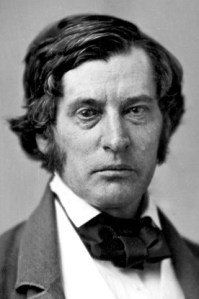
Charles Sumner
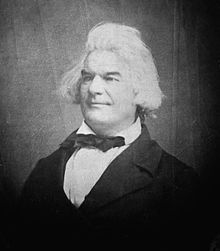
Into this morass comes Charles Sumner, Senator from Massachusetts. A powerful speaker, Sumner was an adamant opponent of slavery, and a leader of the Radical wing of the Republican Party. One of a handful of “hotheads” on both sides of the slavery issue, he could be so confrontational that even his fellow Republicans sometimes asked him to tone it down.
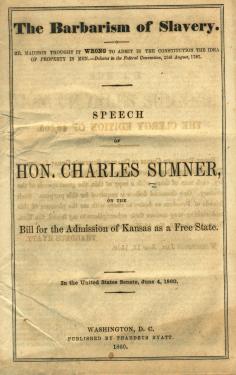
Charles Sumner took to the floor of the Senate on May 20, 1856, and denounced the Kansas-Nebraska Act in the harshest of terms, even for him. He attacked the measure’s sponsors Stephen A. Douglas of Illinois (he of the later Lincoln-Douglas debates), and Andrew Butler of South Carolina, by name, accusing the pair of “consorting with the harlot, slavery”. Douglas was in the audience at the time, and said “this damn fool Sumner is going to get himself shot by some other damn fool”.
Senator Andrew Pickens Butler
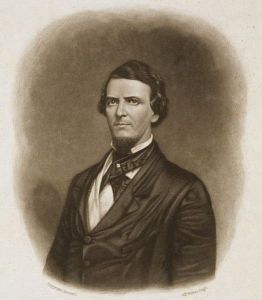
Senator Butler’s nephew, Preston Brooks, was a member of the House of Representatives from South Carolina. He was an inflexible proponent of slavery, believing that any restriction was an attack on the southern state’s right of self-determination and the social structure of the south.
Brooks was furious when he heard of the speech, and wanted to challenge Sumner to a duel. He discussed it with fellow South Carolina Democrat, Representative Laurence M. Keitt, who explained that dueling was for gentlemen of equal social standing. Sumner was no gentleman, he said, no better than a drunkard.
Brooks had been shot in a duel years earlier, and walked with a heavy cane. Resolved to publicly thrash Sumner, he entered the Senate building on May 22, in the company of Keitt and Virginia Democrat Representative Henry A. Edmundson.
Preston Brooks
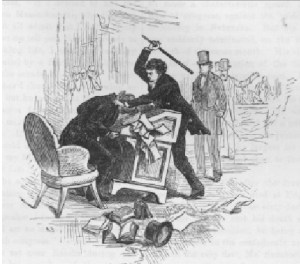
The trio approached Sumner, who was sitting at his desk writing letters. “Mr. Sumner”, Brooks said, “I have read your speech twice over carefully. It is a libel on South Carolina, and Mr. Butler, who is a relative of mine.”
Sumner’s desk was bolted to the floor. He never had a chance. He began to rise when Brooks brought the cane down on his head. Over and over the cane smashed down on Sumner’s head while Keitt brandished a pistol, telling onlookers to “let them be”. Blinded by his own blood, Sumner tore the desk from the floor in his struggle to escape, losing consciousness as he attempted to crawl away. Brooks rained down blows the entire time, even after the body lay motionless, until finally, the cane broke apart.
Reaction to the attack split along regional lines. Newspapers in the south applauded this upholding of family honor before a social inferior. Southern Senators made rings from broken pieces of the cane, while Northern Senators took to carrying knives to defend themselves. Newspapers said that national debate had been replaced by the bowie knife and the club.
Sumner’s fellow Massachusetts Republican Representative Anson Burlingame denounced Brooks as a coward on the floor of the House, earning him a challenge to a duel from Brooks, who appears to have been surprised by Burlingame’s eager acceptance. As the challenged party, Burlingame had the right to choose weapons, and he specified rifles on the Canadian side of Niagara Falls as the site. Knowing Burlingame to be an expert shot, Brooks declined the duel, objecting to unspecified risks to his safety if he was to cross “hostile country” to reach Canada. He would be mocked as a coward by Northerners for the rest of his life.
It was three years before Charles Sumner was able to resume his duties in the Senate, his colleagues keeping his seat vacant for the entire time: a reminder of the country’s political division. The nation would be plunged into Civil War five years later, almost to the day.
The first half of the 19th century was one of westward expansion in the United States, generating frequent and sharp conflicts between pro and anti-slavery factions.
Lines of conflict had existed since the time of the Revolution, between those supporting federal government leadership of the young nation, and those in favor of greater self-determination by the states. In the South, climate conditions led to dependence on agriculture, the rural economy of the southern states producing cotton, rice, sugar, indigo and tobacco. Colder states to the north tended to develop manufacturing economies, urban centers growing up in service to hubs of transportation and the production of manufactured goods.
In the first half of the 19th century, 90% of federal government revenue came from tariffs on foreign manufactured goods. Most of this revenue was collected in the South, with the region’s greater dependence on imported goods. Much of this federal largesse was spent in the North, with the construction of railroads, canals and other infrastructure.
This debate over economic issues and rights of self-determination, so-called ‘state’s rights’, grew and sharpened in 1828 with the threatened secession of South Carolina, and the “nullification crisis” of 1832-33, when South Carolina declared such tariffs unconstitutional, and therefore null and void within the state. The Encyclopedia Britannica entry in the subject includes a Cartoon from the time depicting “Northern domestic manufacturers getting fat at the expense of impoverishing the South under protective tariffs.”
Chattel slavery existed from the earliest days of the colonial era, from Canada to Mexico, and around the world. Moral objections to what was really a repugnant practice could be found throughout, but economic forces had as much to do with ending the practice, as any other. The “peculiar institution” died out first in the colder regions of the US and may have done so in warmer climes as well, but for Eli Whitney’s invention of a cotton engine (‘gin’) in 1792.
It takes ten man-hours to remove the seeds to produce a single pound of cotton. By comparison, a cotton gin can process about a thousand pounds a day, at comparatively little expense.
The year of Whitney’s invention, the South exported 138,000 pounds a year to Europe and the northern colonies. Sixty years later, Britain alone was importing 600 million pounds a year, from the American south. Cotton was King, and with good reason. The stuff is easily grown, is more easily transportable, and can be stored indefinitely, compared with food crops. The southern economy turned overwhelmingly to this one crop, and its need for plentiful, cheap labor. The issue of slavery had joined and become so intertwined with ideas of self-determination, as to be indistinguishable.
The first half of the 19th century was one of westward expansion in the United States, generating frequent and sharp conflicts between pro and anti-slavery factions. The Missouri compromise of 1820 was the first attempt to reconcile these factions, defining which territories would be slave states, and which would be “free”.
The short-lived “Wilmot Proviso” of 1846 sought to ban slavery in new territories, after which the Compromise of 1850 attempted to strike a balance. The Kansas Nebraska Act of 1854 created the territories of Kansas and Nebraska, basically repealing the Missouri Compromise and allowing settlers to determine their own way through popular sovereignty.
This attempt to democratize the issue instead had the effect of drawing up battle lines. Pro-slavery forces established a territorial capital in Lecompton, while “antis” set up an alternative government in Topeka.
In Washington, Republicans backed the anti-slavery forces, while Democrats generally supported their opponents. The standoff resulting was soon to escalate to violence. Upwards of a hundred or more would be killed between 1854 – 1861, in a period known as “Bleeding Kansas”.
The town of Lawrence, Kansas was established by anti-slavery settlers in 1854, and soon became the focal point of pro-slavery violence. Emotions were at the boiling point when Douglas County Sheriff Samuel Jones was shot trying to arrest free-state settlers on April 23, 1856. Jones was driven out of town but he would return.
On this day in 1856, a posse of 800 pro-slavery forces closed around the town, led by Sheriff Jones. Cannon was positioned to cover the town, and detachments of troops were posted to prevent escape. They commandeered the home of the first governor of Kansas, Charles L. Robinson, and used it as their headquarters.
The town’s two printing offices were sacked, the presses destroyed, and the type thrown into the river. The posse next set about to destroy the Free State Hotel, which they believed had been built to serve more as a fort than a hotel.
They may have been right, because it took the entire day with cannon shot, kegs of gunpowder and incendiary devices, before the hotel was finally reduced to a roofless, smoldering ruin.
There was looting and a few robberies as the men left town, burning Robinson’s home on the way out. There was only one fatality; a slavery proponent who was killed by falling masonry.
In the next few days, a group of unarmed men will be hacked to pieces by anti-slavery radicals. Four months of partisan violence and depredation ensued. Small armies formed up across eastern Kansas, clashing at Black Jack, Franklin, Fort Saunders, Hickory Point, Slough Creek, and Osawatomie
A United States Senator will be beaten nearly to death on the floor of the Senate, by a member of the House of Representatives. The 80-year-old nation would forge inexorably onward, to the Civil War that would kill more Americans than every war from the American Revolution to the War on Terror, combined.
The Viet Cong and NVA called Hathcock “du nich Lông Trắng,” “White Feather Sniper”, after the object he wore in his bush hat.
The world of the elite sniper is different from anything most of us will ever experience. Able marksmanship (“one shot, one kill”) is only the beginning. The sniper must be expert at camouflage, field craft, infiltration, reconnaissance, ex-filtration and observation. They must be skilled in urban, desert and/or jungle warfare. They must be able to bear heat and insects and rain and a thousand other torments, all while hiding in plain sight from people who want more than life itself, to kill them.
Carlos Norman Hathcock, born this day in Little Rock in 1942, was a Marine Corps Gunnery Sergeant and sniper with a record of 93 confirmed and greater than 300 unconfirmed kills in the US’ war in Vietnam. The Viet Cong and NVA called him “du kich Lông Trắng,” translating as “White Feather Sniper”, after the object he wore in his bush hat.
In some circles, a white feather is seen as a symbol of cowardice. Not with this guy. Hathcock once took four days and three nights to cross 1,500 yards of open ground, stalking and killing a North Vietnamese General before withdrawing without detection. He was almost stepped on by NVA soldiers who were frantically searching for him, and nearly bitten by a deadly Bamboo Viper. It was the only time he ever removed that white feather from his bush hat.
He took out one enemy soldier at a distance so great, the man couldn’t be seen with the naked eye. One shot, one kill.
The sniper’s choice of target could at times be intensely personal. One female Vietcong sniper, platoon leader and interrogator was called ‘Apache’, because she was so bloodthirsty. She’d torture Marines and ARVN soldiers until they bled to death. Her signature was to cut the eyelids off her victims. After one Marine was skinned alive and emasculated within earshot of his base, Hatchcock spent weeks hunting this one sniper.
One day he was tracking an NVA patrol, when he spotted her from the length of seven football fields. “We were in the midst of switching rifles,” he said. “We saw them. I saw a group coming, five of them. I saw her squat to pee, that’s how I knew it was her. They tried to get her to stop, but she didn’t stop. I stopped her. I put one extra in her for good measure.”
At a time when the typical NVA bounty for American snipers ranged from $8 to $2,000, the NVA set a $30,000 bounty on Hathcock’s head, so great was the damage he had done to their numbers. Whole platoons of counter snipers were sent to kill him. Marines in the area began to wear white feathers of their own, preferring to draw enemy fire on themselves rather than lose such a valuable asset.
The elite Vietcong sniper known as “The Cobra” had already taken the lives of several Marines, when he was sent specifically to kill Hathcock. The two stalked each other for days when the Marine fired on a glint of light in the jungle 300 yards away. They found the enemy sniper dead, the round having traveled up the man’s scope and into his eye. Such a shot is only possible if the two snipers were zeroed in on each other at the precise instant of the shot.
Here, the man tells his story in his own words.
Such a shot is supposed to have taken place during the siege of Stalingrad, between Russian sniper Vasily Zaytsev and the Wehrmacht sniper school director sent to kill him, Major Erwin König.
The story was adapted for the Hollywood movie “Enemy At The Gates,” but there is some controversy as to whether such a shot took place. It may be nothing more than Soviet propaganda.
A 2006 episode of Mythbusters “proved” that such a shot is impossible. I enthusiastically disagree. The War of the Rats’ (Rattenkrieg) through-the-scope shot at Stalingrad may be apocryphal, but the Hathcock shot is very believable. Adam Savage, Jamie Hyneman & Co. used a multiple lensed scope for their tests, while the Soviet made scope used by the Vietnamese sniper had only one or two internal lenses.
History.com and Marine Corps sniper Steve Reichert, USMC Retired, conducted a more realistic test, in my opinion settling the matter conclusively. The “through the scope” shot not only Can happen under the right conditions, but that it Did.
Hathcock’s sniper career came to a violent end on September 16, 1969, when he and seven other Marines were traveling along Route 1, north of landing zone “Baldy”. Striking an anti-tank mine and with their LVT-5 engulfed in flames, Hathcock assisted his fellow Marines out of the vehicle, sustaining second and third degree burns over most of his body.
Hathcock developed Multiple Sclerosis in his later years, and passed away on February 23, 1999. He was decorated with the Silver Star, the Purple Heart and Navy and Marine Corps Commendation Medal. The honor he would perhaps treasure most, was that of having a rifle named after him, a variant of the Springfield Armory M21 called the M25 “White Feather”.
Ernest Hemingway once wrote, “Certainly there is no hunting like the hunting of man, and those who have hunted armed men long enough and like it, never really care for anything else thereafter.” Carlos Hathcock copied the words onto a piece of paper. “He got that right,” he said. “It was the hunt, not the killing.” Hathcock himself later wrote: “I like shooting, and I love hunting. But I never did enjoy killing anybody. It’s my job. If I don’t get those bastards, then they’re gonna kill a lot of these kids dressed up like Marines. That’s the way I look at it.”
M25 White Feather
A subsequent Mythbusters re-do confirmed what the first experiment could not. The “myth” of the through-the-lens sniper shot, is 100%, “plausible”.
The youngest sister “Perla” spoke for the whole family, when she said: “I was saved by the grace of the devil”.
Shimson Eizik Ovitz was a Romanian rabbi, a WWI era entertainer, and someone afflicted with pseudoachondroplasia. He was a dwarf. Ovitz fathered 10 children by two normal sized wives, Brana Fruchter and Batia Bertha Husz. Three of them grew to normal height, the other seven were dwarves.
Batia gave the kids a piece of advice that stayed with them all their lives: “through thick and thin” she said, “never separate. Stick together, guard each other, and live for one another”.
The seven dwarves were talented musicians, performing throughout the 30s and early 40s as the “Lilliput Troupe”. They toured Romania, Hungary and Czechoslovakia with their normal height siblings serving as road crew, until being swept up by the Nazis and deported to Auschwitz.
The train arrived at around midnight on May 19th, 1944. Not even concentration camp guards could resist the irony of seven dwarves. They immediately woke Dr. Josef Mengele, the “Angel of Death”, knowing of his perverse fascination with what he called “blood” (family) experiments. Mengele was delighted, “I now have work for 20 years”.
The ten siblings were spared from the gas chamber that night, along with two more family members, a 15 month old boy and a 58 year old woman. Families of their handyman and a neighbor insisted that they were also close relatives, and were also spared. A total of 22 people. Though they were subjected to bizarre and freakish “experiments” and housed in horrific conditions, these were kept healthy for further use, and received better food and clothing than most camp inmates. Mengele even arranged to have special living quarters built for them.
The bizarre and hideous acts of cruelty that Mengele performed in the name of “science” are beyond the scope of this essay, but seven dwarves didn’t come along every day. The Angel of Death treated the Ovitz siblings differently than other camp inmates.
It was unusual for even two or three siblings to survive the Auschwitz death camp. The Ovitz family endured eight months at Auschwitz. This was the only instance in which an entire family survived the death camp, intact.
Auschwitz was liberated by the Soviet Red Army on January 27, 1945.
Perla Ovitz
The Ovitz family was transported from the camp by cart, a year later arriving at their Transylvanian home village of Rozavlea. The family found the place ruined, though they did find a stash of gold where they had left it, buried for safekeeping before the war.
There was no future for them in this place. Only 50 of the 650 Jewish inhabitants of the village ever returned. The family emigrated to Israel in May 1949, resuming their musical tour and performing until the group retired in 1955.
Josef Mengele never faced justice. He fled to South America, where he accidentally drowned in 1979.
The youngest and last of the Ovitz dwarves, Piroska, “Perla” to her friends, passed away two days before the terrorist attack on the World Trade Towers. She spoke for the whole family, when she said: “I was saved by the grace of the devil”.
The Smithsonian Channel produced a ¾-hour documentary on the Ovitz siblings. They call it “The Seven Dwarves of Auschwitz”.
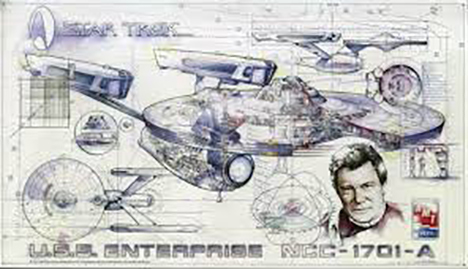
In his 1968 book “Making of Star Trek”, Gene Roddenberry says that James Kirk was born in a small town in Iowa. Full time Trekkie and part time Riverside Councilman Steve Miller thought “Why not Riverside”.
A boy was born on March 22, 2233 in Riverside, Iowa, destined to become the youngest captain in Star Fleet history. Before he could boldly go where no man has gone before, he had to have a name.
The WWII fighter pilot and veteran of 89 combat missions Gene Roddenberry made 16 name suggestions on this date in 1965, among them Hannibal, Timber, Flagg, and Raintree.
Roddenberry decided on James T. Kirk, based on a journal entry of the 18th century British explorer, Captain James Cook: “ambition leads me … farther than any other man has been before me”.
Kirk was killed in 2329 on the Enterprise (B), after the ship was eaten by a Nexus energy ribbon on its maiden voyage. Only he didn’t die, because Jean-Luc Picard found him alive in the timeless Nexus, negotiating hotel deals for Priceline.com. Or something like that.
In his 1968 book “Making of Star Trek”, Gene Roddenberry says that James Kirk was born in a small town in Iowa. Full time Trekkie and part time Riverside Councilman Steve Miller thought “Why not Riverside”. In 1985 Miller moved that Riverside declare itself the Future Birthplace of James T. Kirk. The motion passed unanimously. The town’s slogan was changed from “Where the best begins” to “Where the Trek begins,” and the annual summer festival changed from “River Fest” to “Trek Fest”.
The Riverside connection became Holy Writ, when the 2009 film Star Trek identified the place as Kirk’s home town. There is a granite monument in Riverside, population 963, declaring itself to be the “Future Birthplace of Captain James T. Kirk.
In case you were ever curious about what the “T” stands for…its Tiberius.
Frantic around the clock rescue efforts began almost immediately, to get at 461 sailors and Marines trapped within the hull of the Oklahoma.
It was literally “out of the blue”, when the first wave of enemy aircraft arrived at 7:48 local time, December 7, 1941. 353 Imperial Japanese warplanes approached in two waves out of the southeast, fighters, bombers, and torpedo planes, across Hickam Field and over the waters of Pearl Harbor. Tied in place and immobile, the eight vessels moored at “Battleship Row” were easy targets.
In the center of the Japanese flight path, sailors and Marines aboard the USS Oklahoma fought back furiously. She didn’t have a chance. Holes as wide as 40′ were torn into the hull in the first ten minutes of the fight. Eight torpedoes smashed into her port side, each striking higher on the hull as the Battleship began to roll.
HT John F DeVirgilio for this graphic
Bilge inspection plates had been removed for a scheduled inspection the following day, making counter-flooding to prevent capsize, impossible. Oklahoma rolled over and died as the ninth torpedo slammed home. Hundreds scrambled out across the rolling hull, jumped overboard into the oil covered, flaming waters of the harbor, or crawled out over mooring lines in the attempt to reach USS Maryland in the next berth.
The damage was catastrophic. Once the pride of the Pacific fleet, all eight battleships were damaged, four of them sunk. Nine cruisers, destroyers and other ships were damaged, and another two sunk. 347 aircraft were damaged, most caught while still on the ground. 159 of those, were destroyed altogether. 2,403 were dead or destined to die from the attack, another 1,178 wounded.
Nine Japanese torpedoes struck Oklahoma’s port side, in the first ten minutes.
Frantic around the clock rescue efforts began almost immediately, to get at 461 sailors and Marines trapped within the hull of the Oklahoma. Tapping could be heard as holes were drilled to get to those trapped inside. 32 of them were delivered from certain death. 14 Marines and 415 sailors aboard Oklahoma lost their lives immediately, or in the days and weeks to come. Bulkhead markings would later reveal that, at least some of the doomed would live for another seventeen days in the black, upside-down hulk of that ship. The last such mark was drawn by the last survivor on Christmas Eve.
Of the sixteen ships lost or damaged, thirteen would be repaired and returned to service. USS Arizona remains on the bottom, a monument to the event and to the 1,102-honored dead who remain entombed within her hull. The USS Utah defied salvage efforts. She too is a War Grave, 64 honored dead remaining within her hull, lying at the bottom not far from the Arizona. Repairs were prioritized and USS Oklahoma was beyond repair. She, and her dead, would have to wait.
The extraordinarily difficult salvage would not begin until March, 1943. 21 giant A-frames were fixed to the hull, 3″ cables connecting compound pulleys to 21 electric motors, each capable of pulling 429 tons. Two pull configurations were used over 74 days, first the configuration shown (above right), then direct connections once the hull had achieved 70°. In May the decks once again saw the light of day.
Fully righted, the ship was 10′ below water. Massive temporary wood and concrete structures called “cofferdams” closed the gaping wounds left by torpedoes, so the hull could be pumped out and re-floated. A problem even larger than those torpedo holes were the gaps between hull plates, caused by the initial capsize and righting operations. Divers stuffed kapok in the gaps as water was pumped out.
Individual divers spent 2-3 years on the Oklahoma salvage job. Underwater arc welding and hydraulic jet techniques were developed during this period, which remain in use to this day. 1,848 dives were performed for a total of 10,279 man hours under pressure. For all that, no military and only one civilian diver lost his life, when his air hose was severed.
Oklahoma prepared for drydock
Salvage workers entered the pressurized hull through airlocks wearing masks and protective suits. Bodies were in advanced stages of decomposition by this time and the oil and chemical-soaked interior was toxic to life. Most victims would never be identified.
Twenty 10,000 gallon per minute pumps operated for 11 hours straight, re-floating the battleship on November 3, 1943.
Oklahoma entered dry dock the following month, a total loss to the American war effort. She was stripped of guns and superstructure, sold for scrap on December 5, 1946 to the Moore Drydock Company of Oakland, California.
The battered hulk left Pearl Harbor for the last time in May 1947, headed for a scrapyard in San Francisco bay. She would never make it. Taken under tow by the ocean-going tugs Hercules and Monarch, the three vessels entered a storm 540 miles east of Hawaii. On May 17, disaster struck. Piercing the darkness, Hercules’ spotlight revealed that the former battleship was listing heavily. Naval base at Pearl Harbor instructed them to turn around, when these two giant tugs suddenly found themselves slowing to a stop. Despite her massive engines, Hercules was being dragged astern with no warning, hurtling past Monarch, herself swamped at the stern and being dragged backward at 17mph.
Fortunately for both tugs, skippers Kelly Sprague of Hercules and George Anderson of Monarch had both loosened the cable drums connecting 1,400-foot tow lines to Oklahoma. Monarch’s line played out and detached, but Hercules’ line didn’t do so until the last possible moment. With tow line straight down and sinking fast, Hercules finally detached directly over Oklahoma’s final resting place, the 409-ton tug bobbing to the surface like the float on a child’s fishing line.
Ordered in March 1911 and launched three years later, the 583’ Nevada-class battleship USS Oklahoma was designed to fight at the most extreme ranges expected by gunnery experts. Commanded by Charles B. McVay, Jr., father of the ill-fated skipper of the USS Indianapolis Charles Butler McVay III, Oklahoma’s role in WW1 was limited, due to the unavailability of oil in major theaters of operation. Notable among her exploits of the Great War, were the memorable fist fights that crew members got into with Sinn Féin members in Berehaven, and casualties sustained during the 1918-19 flu pandemic.
She was up-armored in a 1927 – ’29 refit, where additional anti-torpedo armor bulges were added, briefly making her the widest battleship in the United States fleet. Oklahoma was dispatched to Europe in 1936, to evacuate American civilians during the Spanish civil war. The only US warship ever named after the 46th state was destroyed in an enemy sneak attack, before she knew her nation was at war. The final resting place of the USS Oklahoma, (BB-37), is unknown.
Man and dog stepped off the ship in 1928 to a throng of reporters. There were flash bulbs, shouted questions and the din of traffic and honking horns that can only be New York City. Buddy never wavered.
Morris Frank lost the use of an eye in a childhood accident, losing his vision altogether when a boxing accident damaged the other when he was 16. Frank hired a boy to guide him around, but the young man was easily bored and sometimes wandered off leaving Frank to fend for himself.
German specialists had been working at this time, on the use of Alsatians (German Shepherds), to act as guide dogs for WWI veterans blinded by mustard gas. An American breeder living in Switzerland, Dorothy Harrison Eustis, wrote an article about the work in a 1927 issue of the Saturday Evening Post. When Frank’s father read him the article, he wrote to Eustis pleading with her to train a dog for himself. “Is what you say really true? If so, I want one of those dogs! And I am not alone. Thousands of blind like me abhor being dependent on others. Help me and I will help them. Train me and I will bring back my dog and show people here how a blind man can be absolutely on his own. We can then set up an instruction center in this country to give all those here who want it a chance at a new life.”
Dorothy Eustis called Frank in February 1928 and asked if he was willing to come to Switzerland. The response left little doubt: “Mrs. Eustis, to get my independence back, I’d go to hell”. She accepted the challenge and trained two dogs, leaving it to Frank to decide which was the more suitable. Morris came to Switzerland to work with the dogs, both female German Shepherds. He chose one named “Kiss” but, feeling that no 20-year-old man should have a dog named Kiss, he called her “Buddy”.
Man and dog stepped off the ship in 1928 to a throng of reporters. There were flash bulbs, shouted questions and the din of traffic and honking horns that can only be New York City. Buddy never wavered. At the end of that first day, Dorothy Eustis received a single word telegram: “Success”. Morris Frank was set on the path that would become his life’s mission: to get Seeing Eye Dogs accepted all over the country.
Frank and Eustis established the first guide dog training school in the US in Nashville, on January 29, 1929. Frank was true to his word, becoming a tireless advocate of public accessibility for the blind and their guide dogs. In 1928, he was routinely told that Buddy couldn’t ride in the passenger compartment with him. Seven years later, all railroads in the United States had adopted policies allowing guide dogs to remain with their owners while onboard. By 1956, every state in the Union had passed laws guaranteeing access to public spaces for blind people and their dogs.
Frank told a New York Times interviewer in 1936 that he had probably logged 50,000 miles with Buddy, by foot, train, subway, bus, and boat. He was constantly meeting with people, including two Presidents and over 300 ophthalmologists, demonstrating the life-changing qualities of owning a guide dog.
Buddy’s health was failing in the end, but the team had one more hurdle to cross. One more barrier to break. Frank wanted to fly in a commercial airplane with his guide dog. The pair did so on this day in 1938, flying from Chicago to Newark, Buddy curled up at Morris Frank’s feet. United Air Lines was the first to adopt the policy, granting “all Seeing Eye dogs the privilege of riding with their masters in the cabins of any of our regularly scheduled planes.”
Buddy was all business during the day, but, to the end of her life, she liked to end her work day with a roll on the floor with Mr. Frank. Buddy died seven days after that plane trip, but she had made her mark. By this time there were 250 seeing eye dogs working across the country, and their number was growing fast. Buddy’s replacement was also called Buddy, as was every seeing eye dog Frank would ever own, until he passed in 1980.
It’s estimated today that there are over 10,000 seeing eye dogs, currently working in the United States.
The trompe l’oeil painted bronze statue “The Way to Independence” was unveiled on April 29, 2005, on Morristown Green, Morristown NJ. Artist John Seward Johnson, II
A “cape” is a headland or promontory extending into a body of water, formed by glaciers, volcanoes or changes in sea level.. A quick count reveals at least 67 capes around the world, (Cape Fear, Cape Canaveral, Cape Coral), yet we locals love to call our little bit of paradise, “The Cape™”.
In the Elizabethan and Stuart ages, exploration and colonization was a private enterprise. The English Crown would grant exclusive rights to individuals and corporations to form and exploit colonies, in exchange for sovereignty and a portion of the proceeds. Such efforts were high risk/reward, profit-driven propositions, of interest to a relative few explorers and venture capitalists.
Queen Elizabeth I of England granted Walter Raleigh a charter to establish a colony north of Spanish Florida in 1583, the area called “Virginia”, in honor of the virgin Queen. At the time, the name applied to the entire coastal region from South Carolina to Maine, and included Bermuda.
By the turn of the 17th century, Raleigh’s influence with the Queen was just about nil. Her only interest seemed to be the revenue stream produced for the crown, and Raleigh was providing none after losing £40,000 in the disastrous “Lost Colony of Roanoke” episode.
By the mid-1590s, a new colonial plan identified parts of northern Virginia, where climate conditions better suited English sensibilities, than those of the more southerly latitudes. The area produced vast wealth from the cold-water fish prized by Europeans, providing the foothold and profits required to support the subsequent addition of settlers.
Early explorers to the area included Sir Humphrey Gilbert, Martin Pring, and George Weymouth, who brought back an American Native named Squanto, who learned English before returning to his homeland. Sir John Smith later called the area “New England”.
Bartholomew Gosnold departed Falmouth, Cornwall in 1602, with 32 onboard a barque named Concord. Intending to establish a colony in New England, Gosnold sailed due west to the Azores, coming ashore at Cape Elizabeth Maine, on May 14. He sailed into Provincetown Harbor the following day, naming the place “Cape Cod”.
Gosnold Town hall, Pop. 75
Following the coastline, Gosnold discovered an island covered with wild grape vines. Naming it after his deceased daughter, he called it Martha’s Vineyard. The expedition came ashore on Cuttyhunk in the Elizabethan island chain where they briefly ran a trading post, before heading back to England. Today, the town of Gosnold is the smallest in Massachusetts, with a population of 75 and most of the land owned by the Forbes family.
The title of first European may be a misnomer, as Vikings are believed to have explored the area as early as 1000AD. The land was fruitful for the first Viking explorers, but the indigenous peoples fought back ferociously, causing those “first” Europeans to withdraw to the more easily colonized areas of Greenland and Iceland.
First Encounter Beach, Eastham
The first of the Puritans fetched up on the shores of Cape Cod in 1620, staying long enough to draw up the first written government framework in the United States, signing the Mayflower Compact off the shore of Provincetown on November 11. Today the sandy soil and scrubby vegetation of the Cape is a delight to tourists, but those first settlers weren’t feeling it. They had to eat. The only positive result from two exploratory trips ashore was the discovery of seed corn stashed by the natives. A third trip ashore resulted in a hostile “first encounter” on the beaches of modern day Eastham, persuading the “Pilgrims” that this wasn’t their kind of place. They left the Cape for good on December 16, dropping anchor at Plymouth Harbor.
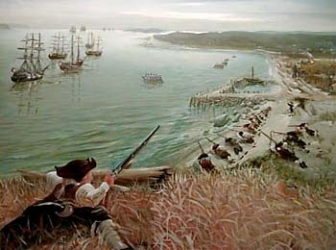
Falmouth Militia on the Beaches, April 3, 1779
The Pilgrims would later encounter the English-speaking natives Samoset and Squanto, who helped to conclude peace terms with Massasoit, Sachem of the Wampanoag.
Some 90% of the native population had been wiped out in the two years preceding, by an epidemic long thought to be smallpox, but now believed to be Leptospirosis, a highly contagious pulmonary hemorrhagic syndrome. Otherwise, things may have gone for the Pilgrims as they had for those first Vikings of 600 years earlier, but that’s a tale for another day.
Militia from my own town of Falmouth and neighboring Sandwich poured onto the beaches on April 3, 1779, opposing a landing by 220 Regulars in the modern day area of Surf Drive. The invaders were repulsed, but little Falmouth sustained a cannonade of ball, shot and grape that lasted from eleven in the morning until dark.
The British warship HMS Nimrod fired on my town during the War of 1812. It’s closed now, but the building that formerly housed the Nimrod Restaurant, still sports a hole in the wall where the cannon ball came in.
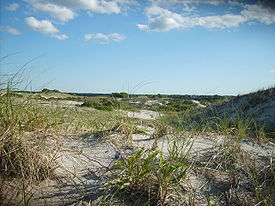
Cape Cod was among the first areas settled by the English in North America, the town of Sandwich established in 1637, followed by Barnstable and Yarmouth in 1639. The thin soil was ill suited to agriculture, and intensive farming techniques eroded topsoil. Farmers grazed cattle on the grassy dunes of the shoreline, only to watch “in horror as the denuded sands ‘walked’ over richer lands, burying cultivated fields and fences.”
By 1800, Cape Cod was all but denuded of trees and firewood had to be transported by boat from Maine. Local agriculture was all but abandoned by 1860, save for better-suited, smaller scale crops such as cranberries and strawberries. By 1950, Cape Cod forests had recovered in a way not seen since the late 1700s.
Cranberry picking in 1906
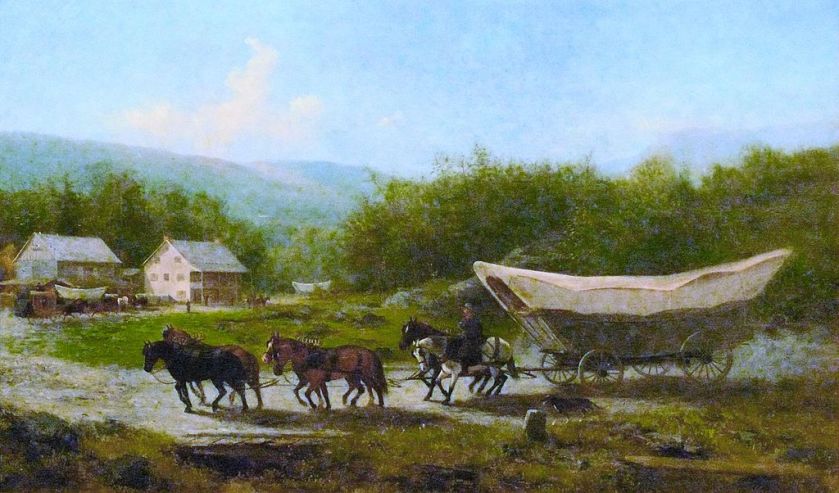
The early Industrial Revolution that built up Rhode Island and Massachusetts bypassed much of Cape Cod, but not entirely. Blacksmiths Isaac Keith and Ezekiel Ryder began building small buggies and sleighs in the Upper Cape town of Bourne, in 1828. Two years later Keith went off on his own By the Gold Rush of 1849, the Keith Car Works was a major builder of the Conestoga Wagons found throughout the United States and Canada, as well as their smaller, lighter cousin, the Prairie Schooner. Before the railroads, Conestoga wagons were heavily used in the transportation of shade tobacco grown in Connecticut, western Massachusetts and southern Vermont, even now some of the finest cigar binders and wrappers available. The story may or may not be true, but I’ve been told that’s why we call cigars, “stogies”.
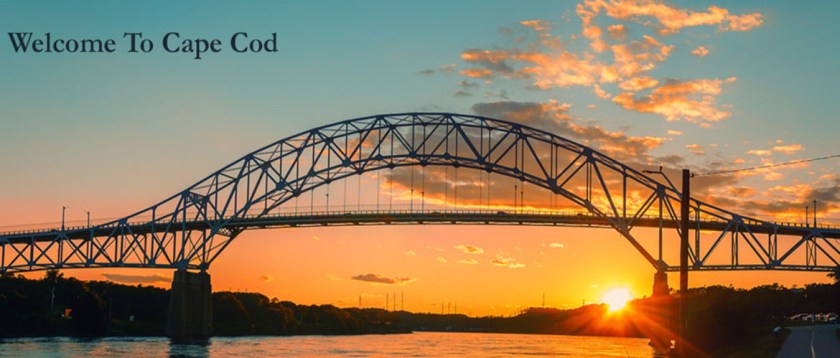
The dredging of a canal connecting the Manomet and Scusset rivers and cutting 62 miles off the water route from Boston to New York was discussed since the time of Miles Standish. Construction of a privately owned toll canal began on June 22, 1909. Giant boulders left in the wake of the glaciers and ghastly winter weather hampered construction, the canal finally opening on July 29, 1914, charging a maximum of $16 per vessel. Navigation was difficult, due to a 5+ mph current combined with a maximum width of 100′ and a max. depth of 25′. Several accidents damaged the canal’s reputation and toll revenues failed to meet investors’ expectations.
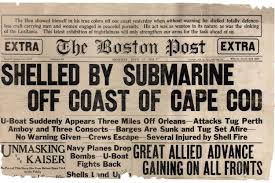
German submarine U-156 surfaced off Nauset beach in Orleans on July 21, 1918, shelling the tug Perth Amboy and its string of towed barges. The federal government took over the canal under a presidential proclamation four days later, later placing it under the jurisdiction of the Army Corps of Engineers. The canal was re-dredged as part of President Roosevelt’s depression era Works Progress Administration to its current width of 480′ and depth of 32′, and connected to the mainland by the Sagamore, Bourne, and Cape Cod Canal Railroad Bridges.
Cranberry picking in 1906
So it is that an estimated 5.23 million tourists will wait countless hours amidst seas of brake lights, to cross those two narrow roadways onto “the Cape”, to enjoy that brief blessed moment of warmth hidden amidst our four seasons, known locally as “almost winter, winter, still winter and bridge construction”.
If anyone wonders why my buddy Carl calls me the “Cape Cod Curmudgeon”, I can only say in my own defense. I’ve been commuting through that crap, for years.

 Brown would go on to participate in the Battle of Black Jack and the Battle of Osawatomie in the Kansas Territory. He would be hanged in 1859 after leading a group to the armory in Harper’s Ferry Virginia, in a hare brained scheme to capture the weapons it contained and trigger a slave revolt. The raid was ended by a US Army force under Colonel Robert E. Lee, and a young Army lieutenant named James Ewell Brown (JEB) Stuart.


 The first of five planned sorties began on May 11, before turning back only eight hours later in near blizzard conditions. The second trip took place in near perfect weather conditions and unlimited visibility, the craft covering 4,000 km (2,500 miles) and setting the stage for the third and final trip departing on May 23.
 envelope floated away, Chief Engineer Ettore Arduino started to throw everything he could get his hands on down to the men on the ice. These were the supplies intended for the descent to the pole, but they were now the only thing that stood between life and death. Arduino himself and the rest of the crew drifted away with the now helpless airship.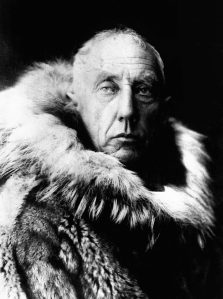



 In the next few days, a group of unarmed men will be hacked to pieces by anti-slavery radicals. Four months of partisan violence and depredation ensued. Small armies formed up across eastern Kansas, clashing at Black Jack, Franklin, Fort Saunders, Hickory Point, Slough Creek, and Osawatomie


 Hathcock developed Multiple Sclerosis in his later years, and passed away on February 23, 1999. He was decorated with the Silver Star, the Purple Heart and Navy and Marine Corps Commendation Medal. The honor he would perhaps treasure most, was that of having a rifle named after him, a variant of the Springfield Armory M21 called the M25 “White Feather”.


 The bizarre and hideous acts of cruelty that Mengele performed in the name of “science” are beyond the scope of this essay, but seven dwarves didn’t come along every day. The Angel of Death treated the Ovitz siblings differently than other camp inmates.


 Roddenberry decided on James T. Kirk, based on a journal entry of the 18th century British explorer, Captain James Cook: “ambition leads me … farther than any other man has been before me”.


 It was literally “out of the blue”, when the first wave of enemy aircraft arrived at 7:48 local time, December 7, 1941. 353 Imperial Japanese warplanes approached in two waves out of the southeast, fighters, bombers, and torpedo planes, across Hickam Field and over the waters of Pearl Harbor. Tied in place and immobile, the eight vessels moored at “Battleship Row” were easy targets.


 USS Oklahoma was designed to fight at the most extreme ranges expected by gunnery experts. Commanded by Charles B. McVay, Jr., father of the ill-fated skipper of the USS Indianapolis Charles Butler McVay III, Oklahoma’s role in WW1 was limited, due to the unavailability of oil in major theaters of operation. Notable among her exploits of the Great War, were the memorable fist fights that crew members got into with Sinn Féin members in Berehaven, and casualties sustained during the
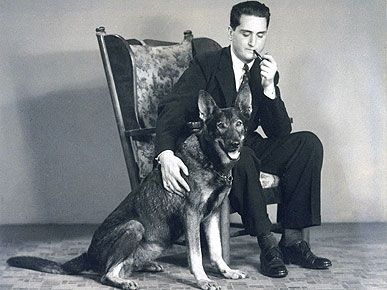
 Dorothy Eustis called Frank in February 1928 and asked if he was willing to come to Switzerland. The response left little doubt: “Mrs. Eustis, to get my independence back, I’d go to hell”. She accepted the challenge and trained two dogs, leaving it to Frank to decide which was the more suitable. Morris came to Switzerland to work with the dogs, both female German Shepherds. He chose one named “Kiss” but, feeling that no 20-year-old man should have a dog named Kiss, he called her “Buddy”.
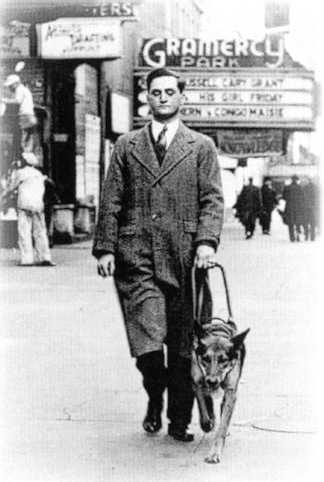 Frank told a New York Times interviewer in 1936 that he had probably logged 50,000 miles with Buddy, by foot, train, subway, bus, and boat. He was constantly meeting with people, including two Presidents and over 300 ophthalmologists, demonstrating the life-changing qualities of owning a guide dog.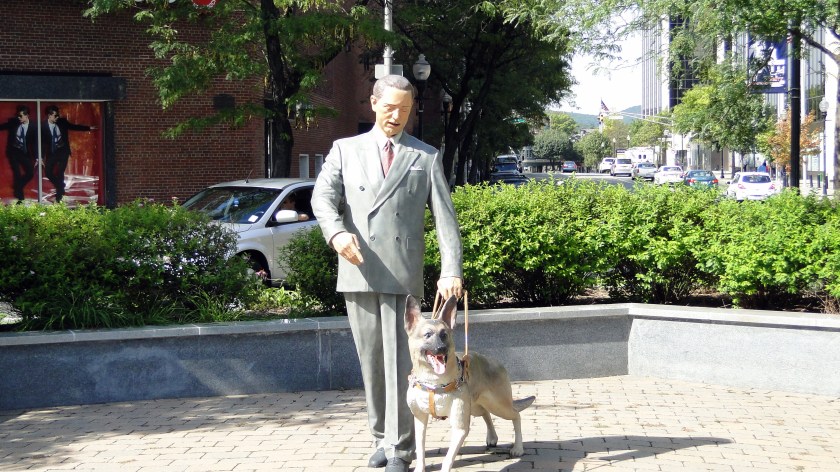

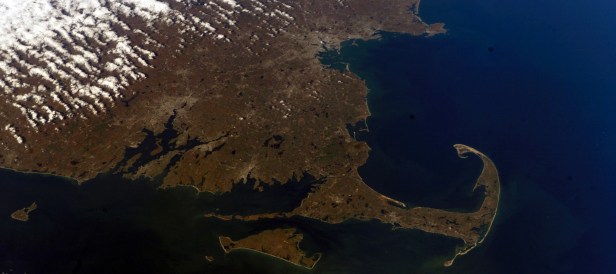
 Queen Elizabeth I of England granted Walter Raleigh a charter to establish a colony north of Spanish Florida in 1583, the area called “Virginia”, in honor of the virgin Queen. At the time, the name applied to the entire coastal region from South Carolina to Maine, and included Bermuda.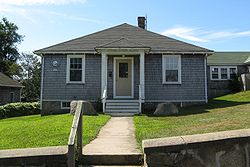

 Sandwich established in 1637, followed by Barnstable and Yarmouth in 1639. The thin soil was ill suited to agriculture, and intensive farming techniques eroded topsoil. Farmers grazed cattle on the grassy dunes of the shoreline, only to watch “in horror as the denuded sands ‘walked’ over richer lands, burying cultivated fields and fences.”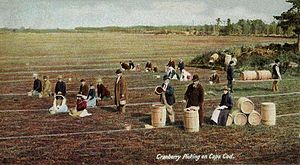

 Historical Easter Eggs - Today in History
You must be logged in to post a comment.