

The American Revolution began with the “Shot Heard Round the World” on the morning of April 19, 1775. Within days of the Battles at Lexington and Concord and the subsequent British withdrawal to Boston, over 20,000 men poured into Cambridge from all over New England. Abandoned Tory homes and the empty Christ Church became temporary barracks and field hospitals. Even Harvard College shut down, its buildings becoming quarters for at least 1,600 Patriots.
 The Continental Congress appointed George Washington General of this “Army” on June 15, two days before the British assault on Farmer Breed’s hill. An action which took its name from that of a neighboring farmer, going into history as the Battle of Bunker Hill.
Shortly after his arrival in July, General Washington discovered that his army had enough gunpowder for nine rounds per man, and then they’d be done.
At the time, Boston was a virtual island, connected to the mainland by a narrow strip of land. British forces were effectively penned up in Boston, by a force too weak to do anything about it.
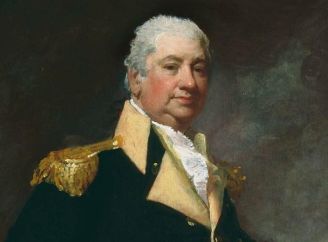
The stalemate dragged on for months, when a 25-year-old bookseller came to General Washington with a plan. His name was Henry Knox. His plan was a 300-mile, round trip slog into a New England winter, to retrieve the guns of Fort Ticonderoga.
Washington’s advisors derided the idea as hopeless, but the General approved. Henry Knox set out with a column of men on December 1.
Located on the New York banks of Lake Champlain, Fort Ticonderoga was captured by a small force led by Ethan Allen and Colonel Benedict Arnold, in May of that year. In it were brass and iron cannon, howitzers, and mortars, 59 pieces in all. Arriving on December 5, Knox and his men set about disassembling the artillery, making it ready for transport. A flotilla of flat bottom boats was scavenged from all over the countryside, the guns loaded and rowed the length of Lake George, arriving barely before the water began to freeze over.
Local farmers were enlisted to help and by December 17, Knox was able to report to General Washington “I have had made forty two exceedingly strong sleds & have provided eighty yoke of oxen to drag them as far as Springfield where I shall get fresh cattle to carry them to camp. . . . I hope in 16 or 17 days to be able to present your Excellency a noble train of artillery.”
Bare ground prevented the sleds from moving until Christmas morning, when a heavy snow fell and the column set out for Albany. Two attempts to cross the Hudson River on January 5 each resulted in cannon being lost to the river, but finally Knox was able to write “Went on the ice about 8 o’clock in the morning & proceeded so carefully that before night we got over 23 sleds & were so lucky as to get the Cannon out of the River, owing to the assistance the good people of the City of Albany gave.”
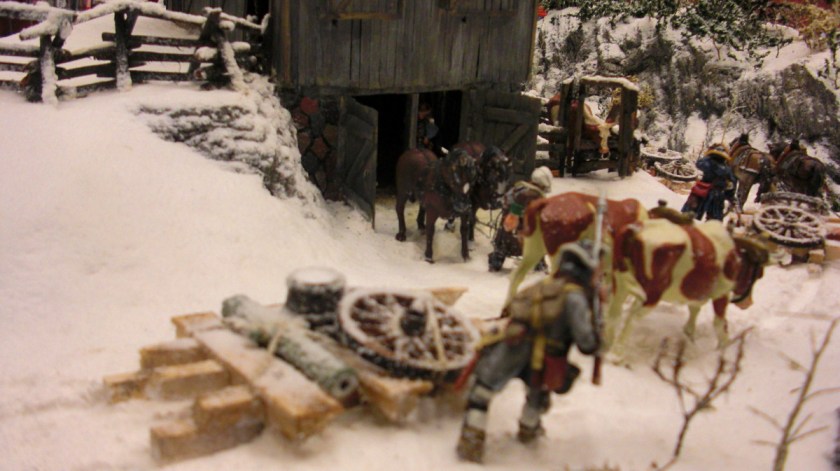
Continuing east, Knox and his men crossed into Massachusetts, over the Berkshires, and on to Springfield. With 80 fresh yoke of oxen, the 5,400lb sleds moved along much of what are modern-day Routes 9 and 20, passing through Brookfield, Spencer, Leicester, Worcester, Shrewsbury, Northborough, Marlborough, Southborough, Framingham, Wayland, Weston, Waltham, and Watertown.
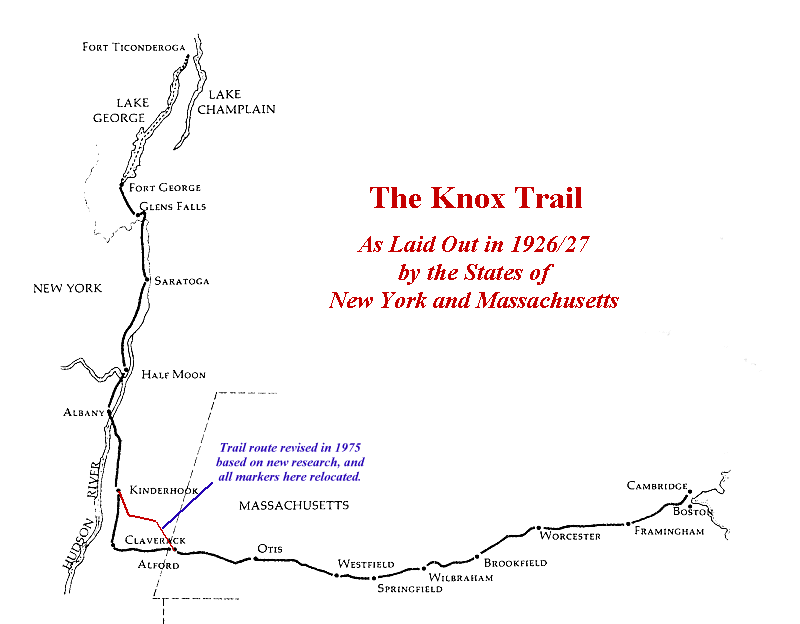
It must have been a sight when that noble train of artillery entered Cambridge on this day in 1776. By March, Henry Knox’ cannon would be manhandled to the top of Dorchester Heights, resulting in the British evacuation of Boston and a peculiar Massachusetts institution which exists to this day, known as “Evacuation Day”: March 17.
It is doubtful whether Washington possessed sufficient powder or shot for a sustained campaign, but British forces occupying Boston didn’t know that. The mere presence of those guns moved British General Howe to weigh anchor and sail for Nova Scotia, but that must be a story for another day.

 The first military burial, but not the first. When Private Christman went to his rest in our nation’s most hallowed ground, his grave joined that of Mary Randolph, buried some thirty-six years earlier.
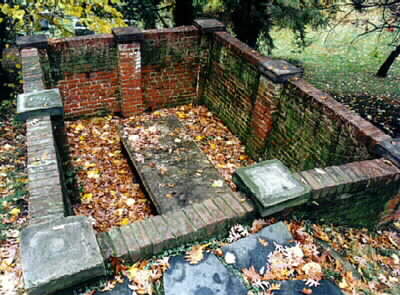 Mary Randolph, Pocahontas’ direct descendant and cousin to Thomas Jefferson, was the cousin of George Washington Parke Custis, adopted step-grandson of George Washington, and the godmother of Custis’ daughter, Mary Anna Randolph Custis, wife of Robert E. Lee.
 Mary Randolph is best known as the author of America’s first regional cookbook, “The Virginia Housewife”. The Virginia Culinary Thymes writes that “It is interesting to note that all the cookery at that time was done in kitchens that had changed little over the centuries. In Virginia, the kitchen was typically a separate building for reasons of safety, summer heat and the smells from the kitchen. The heart of the kitchen was a large fireplace where meat was roasted and cauldrons of water and broth simmered most of the day. Swinging cranes and various devices made to control temperature and the cooking processes were used. The Dutch oven and the chafing dish were found in most kitchens. The brick oven used for baking was located next to the fireplace. A salamander was used to move baked products around in the oven and it could also be heated and held over food for browning“.
 Mrs. Randolph was an early advocate of the now-common use of herbs, spices and wines in cooking. Her recipe for apple fritters calls for slices of apple marinated in a combination of brandy, white wine, sugar, cinnamon, and lemon rind.

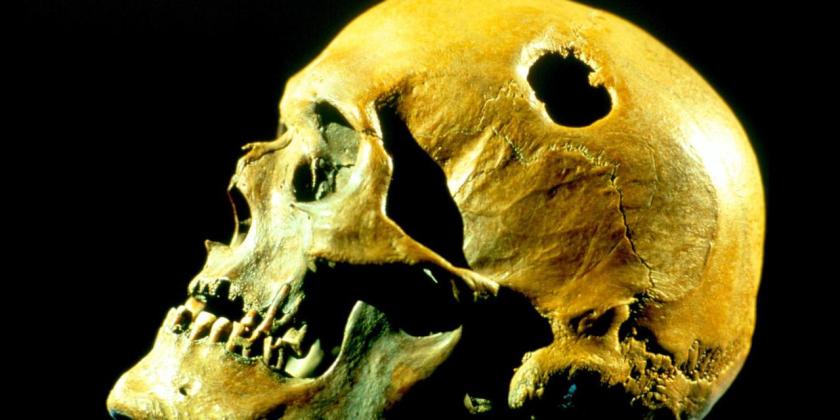
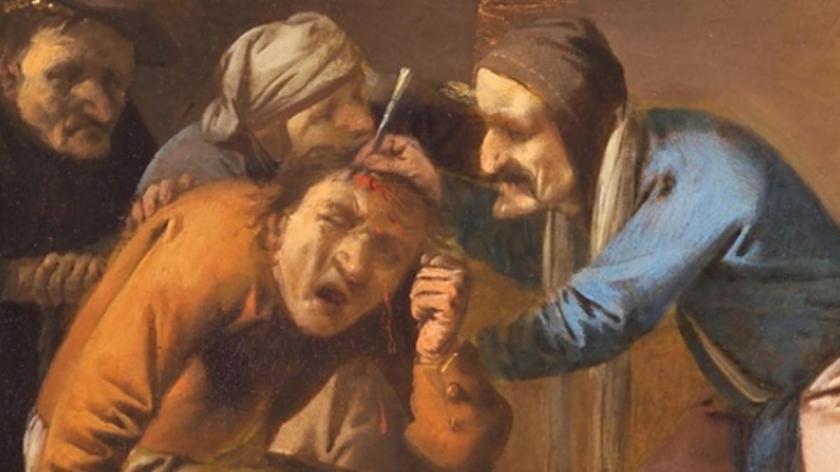
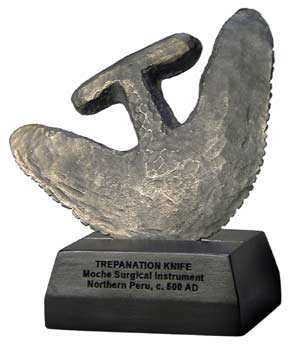 To prove the value of his ‘third eye’ theory, to his own satisfaction if to no one else, Hughes drilled a hole in his own skull in 1965, using a Black & Decker electric drill. He must have thought it proved the point, because he expanded on his theory with “Trepanation: A Cure for Psychosis”, followed by an autobiography, “The Book with the Hole”, published in 1972.
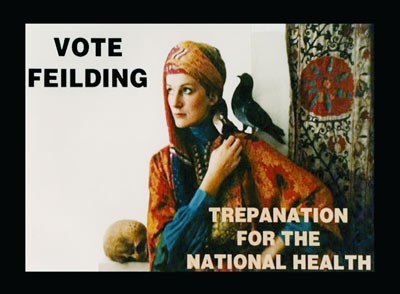 At age 27, Amanda Feilding brought an electric dentist’s drill to her London apartment, and drilled a hole in her skull. After four unsuccessful years trying to find a surgeon to do it for her, “I thought, ‘Well, I’m a sculptor, I may as well do it myself'”.
 At the time, the Iron County DA also considered charges against ABC News reporter Chris Cuomo, for aiding in the crime.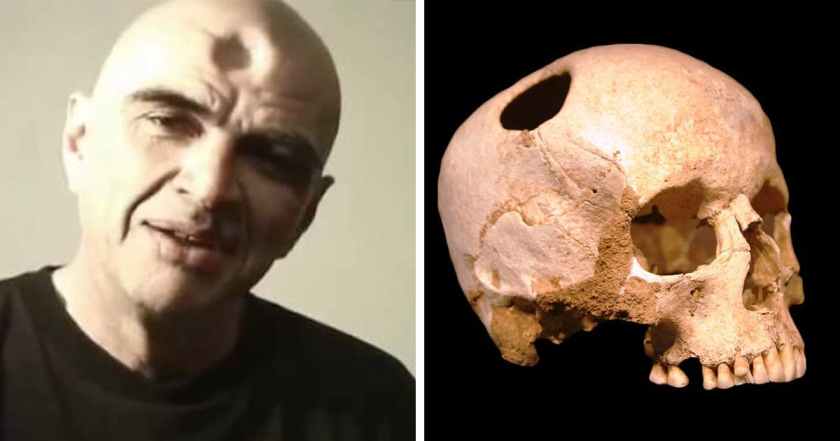


 On that July morning, no one had any idea of the years-long bloodbath that lay ahead. 35,000 Federal troops, 90-day recruits all, had arrived to crush a trifling force of rebels. Then on to Richmond, the Confederate capitol, and the end of the uprising.

 Jackson believed that slavery existed because the Creator willed it. His mission was to save their souls, by teaching them the Old Testament, the Ten Commandments, the Lord’s Prayer and the Apostle’s Creed.





 Iva Ikuko Toguri was born in Los Angeles on July 4, 1916, the daughter of Japanese immigrants. She attended schools in Calexico and San Diego, returning to Los Angeles where she enrolled at UCLA, graduating in January, 1940 with a degree in zoology.
 She called herself “Orphan Annie,” earning 150 yen per month (about $7.00 US). She wasn’t a professional radio personality, but many of those who recalled hearing her enjoyed the program, especially the music.

 d’Aquino was sentenced to ten years and fined $10,000 for the crime of treason, only the seventh person in US history to be so convicted. She was released from the Federal Reformatory for Women at Alderson, West Virginia in 1956, having served six years and two months of her sentence.


 The United States had been in World War II for two years in 1943, when Claude Wickard, head of the War Foods Administration as well as Secretary of Agriculture, had the hare brained idea of banning sliced bread.
 Article 1, Section 8 of the Constitution includes the “Commerce Clause”, permitting the Congress “To regulate Commerce with foreign Nations, and among the several States, and with the Indian Tribes”. That’s it and, not surprisingly, the Federal District Court sided with the farmer.
 The Supreme Court, apparently afraid of President Roosevelt and his aggressive and illegal “
 The stated reasons for the ban never did make sense. At various times, Wickard claimed that it was to conserve wax paper, wheat and steel, but one reason was goofier than the one before.


 The act served multiple purposes, among them the modernization of what was then a largely WWI vintage merchant marine fleet, serving as the basis for a naval auxiliary that could be activated in time of war or national emergency.


 Where there are government subsidies, there are strings. For SS America, those strings were pulled on May 28, 1941, while the ship was at port in Saint Thomas, in the US Virgin Islands. The ship had been called into service by the United States Navy, and ordered to return to Newport News.


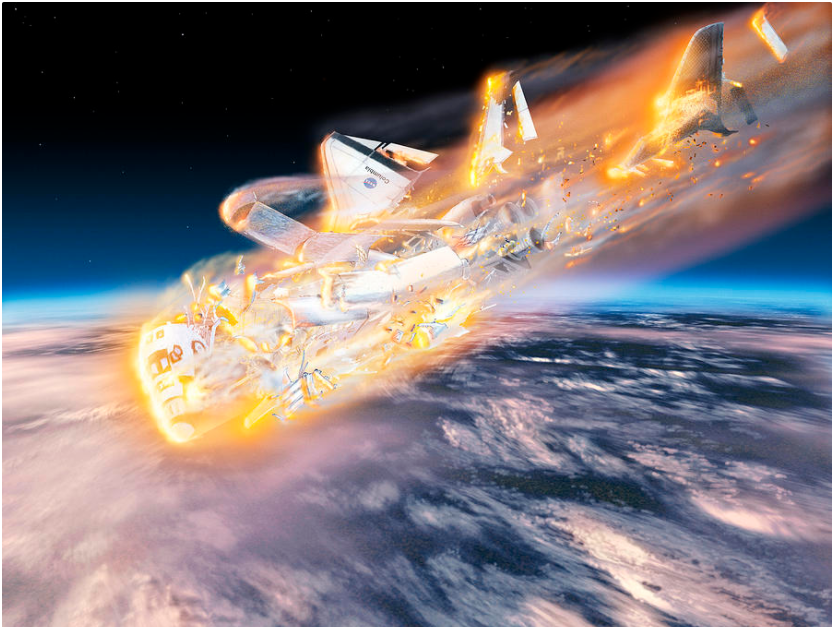
 STS-1, the first mission of the “Space Shuttle” program launched aboard “Columbia” from the Kennedy Space Center on Merritt Island, Florida. It was April 12, 1981, the 20th anniversary of the first human spaceflight, aboard the Russian Vostok 1. This was the first and, to-date only, manned maiden test flight of a new spacecraft system, in the US space program.
 STS-107 launched from the Kennedy Space Center aboard the Space Shuttle Columbia on January 16, 2003. Eighty seconds after launch, a piece of insulating foam the size of a briefcase broke away from the external fuel tank, striking the leading edge of Columbia’s left wing and leaving a hole in the carbon composite tiles.

 Payload Specialist Colonel Ilan Ramon, born Ilan Wolferman, was an Israeli fighter pilot, the first Israeli astronaut to join the NASA space program.


 Historical Easter Eggs - Today in History
You must be logged in to post a comment.