
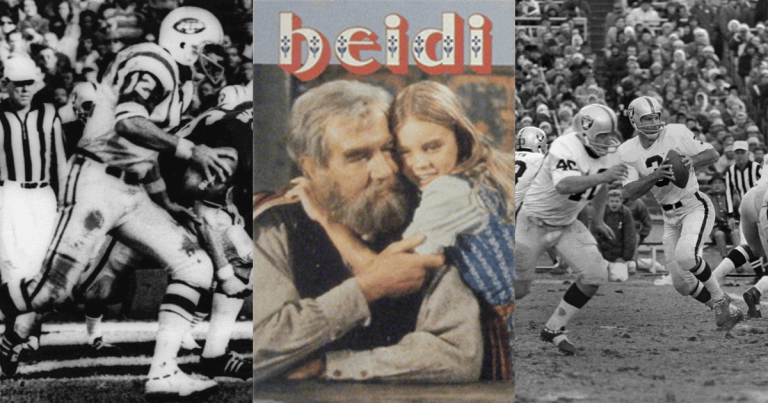
For football fans, November 17, 1968 was shaping up to be one hell of a game. The second-best team in the world Oakland Raiders if Super Bowl II was any indication, against the future AFL champion and Super Bowl III winner, New York Jets.
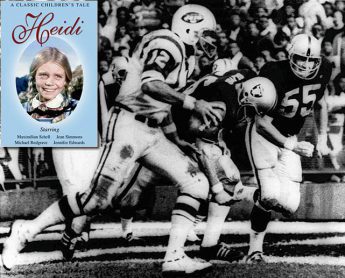
NBC executives were thrilled. The AFL was only eight years old in 1968. As yet unproven compared with the older league. The NFL-AFL merger was still two years in the future.
The game was expected to keep viewers in their seats, adding to an already large audience anticipated for the 7:00pm presentation of Heidi, a modern remake of the children’s classic from 1880.
In those days, pro football games tended to run 2½ hours. Network executives scheduled this one for three. The contract with Heidi prime sponsor Timex specified a 7:00pm start. The order went out to network affiliates across the fruited plain. There would be no delays.
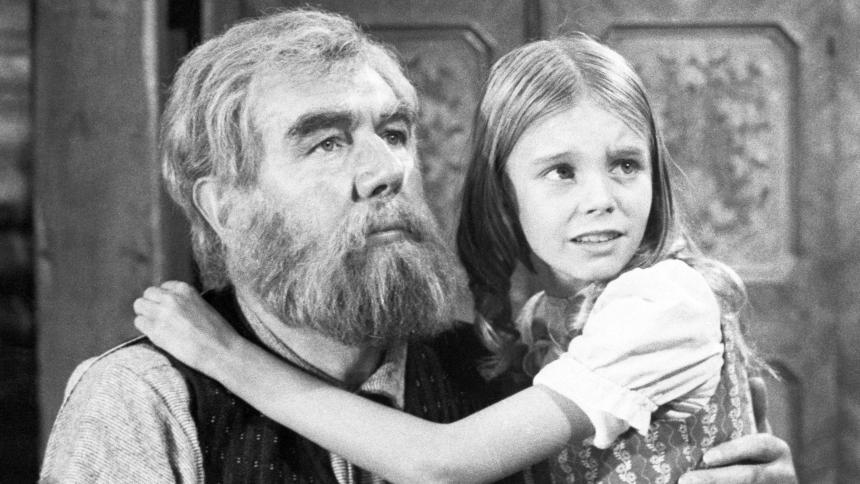
The game didn’t disappoint. The rivalry between the two clubs was intense. It was a high-scoring game where the lead changed no fewer than eight times. In 1997, the matchup was voted among the ten most memorable games in professional football history, and the most memorable regular season contest, ever.
As early as 6:20, network brass began to worry the game wouldn’t end on time. 7:00 arrived with a minute and five seconds left on the clock. The Jets were ahead 32-29.
Network and affiliate switchboards lit up with distraught fans, demanding to know if the game be broadcast in its entirety. Other callers wanted to know if Heidi would begin at 7.
NBC Sports executive producer Don “Scotty” Connal and network president Julian Goodman had by this time agreed to “slide the network”, to begin Heidi as soon as Curt Gowdy signed off from the game.
All well and good but by this time, phone switchboards were jammed solid. NBC’s telephone exchange blew twenty-six fuses in one hour. Even NYPD switchboards broke down. Broadcast Operations Control (BOC) supervisor Dick Cline nervously watched the clock as Connal frantically redialed but couldn’t get through.
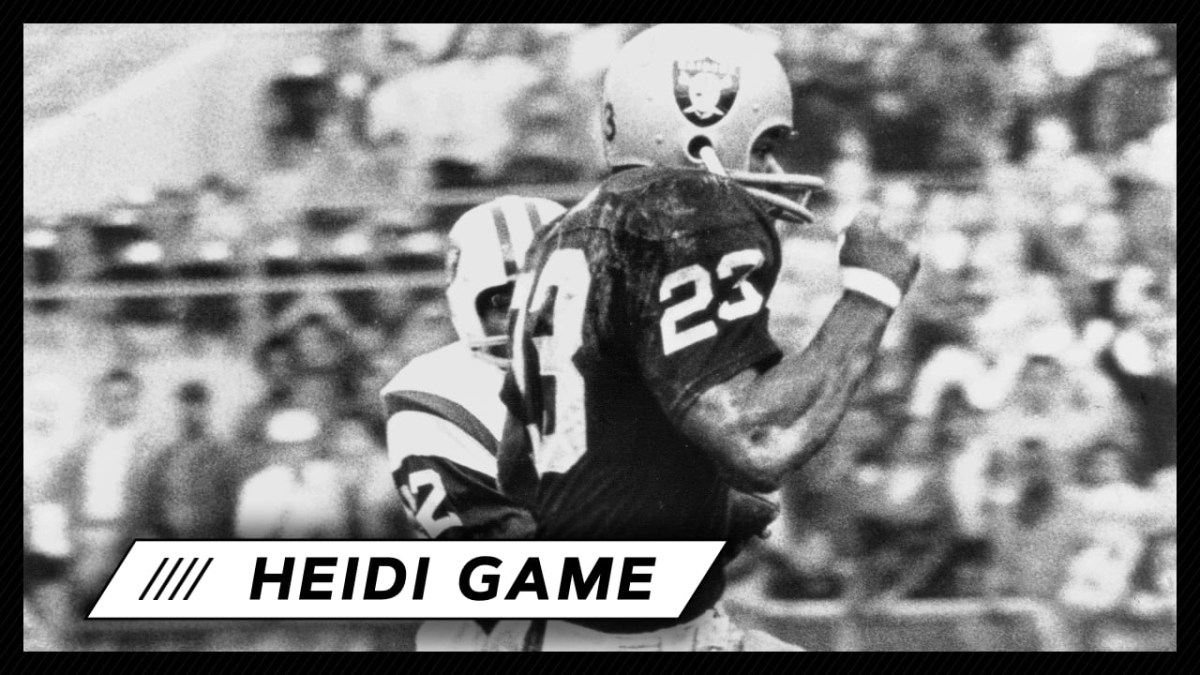
The television audience watched Oakland running back Charlie Smith return the kickoff from the end zone to the Oakland 22-yard line with 1:01 remaining on the clock. That’s when the feed ended.
Heads exploded across the nation as callers reached out to newspapers and television stations, even local police departments, to demand the score. And Loooord, did they bitch. Humorist Art Buchwald wrote “Men who wouldn’t get out of their chairs in an earthquake rushed to the phone to scream obscenities [at the network].”
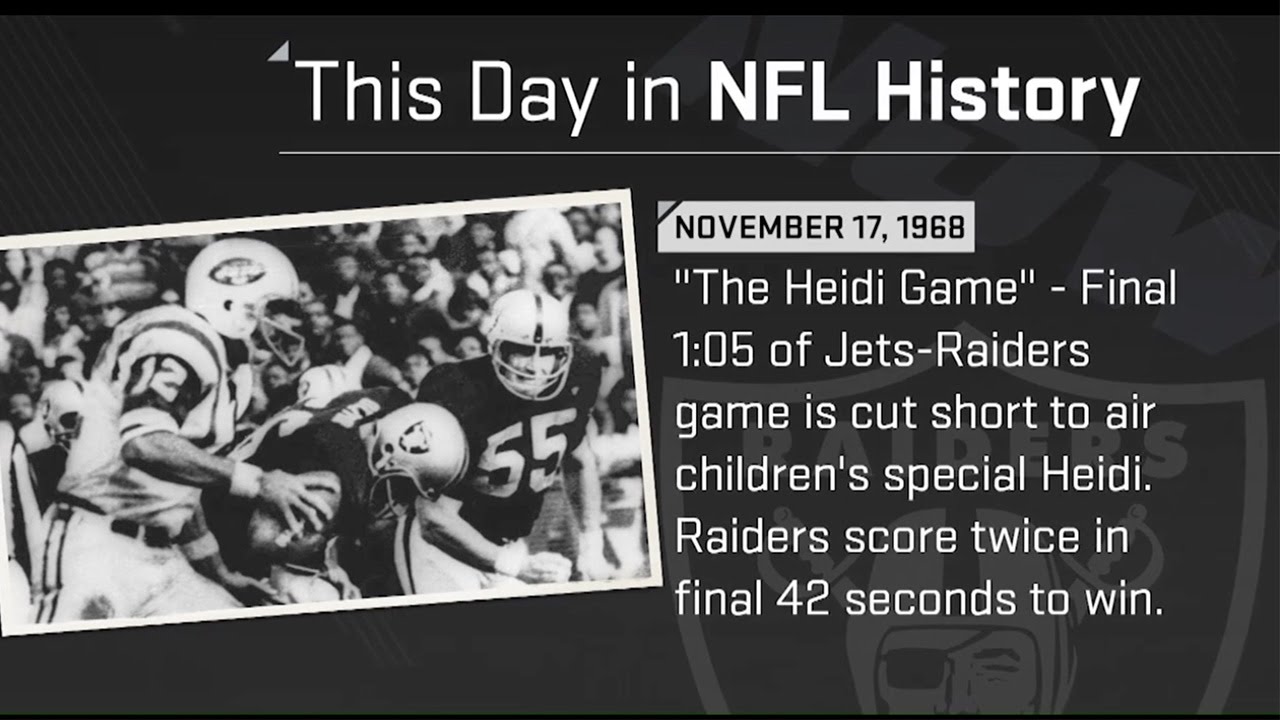
Meanwhile, the Oakland Raiders staged one of the most improbable last-minute rallies in professional football history, scoring two touchdowns in 42 seconds. Gamblers were apoplectic on learning the news. The Raiders had beat the 7½ point spread.
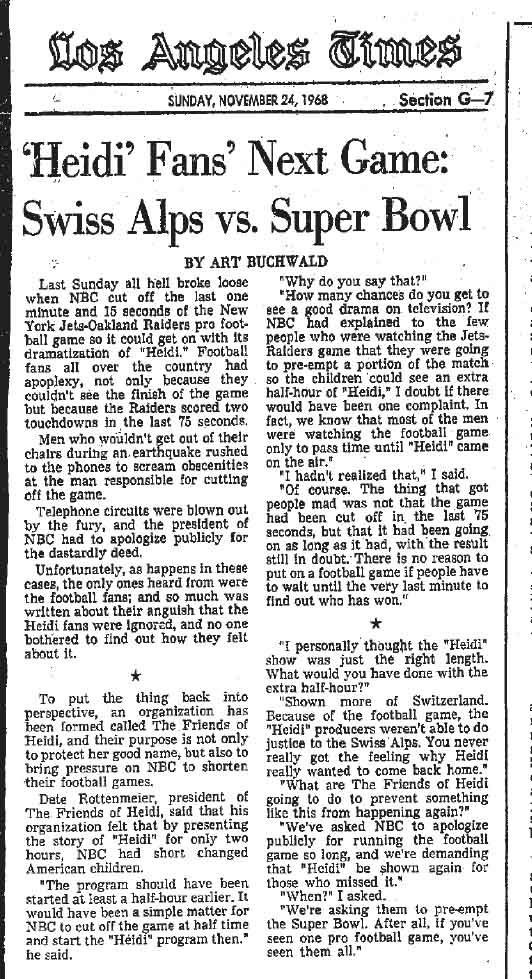
Meanwhile, the film proceeded to its most tear-jerking moment as Heidi’s paralyzed cousin Clara took her first halting steps.
And then: SPORTS BULLETIN: RAIDERS DEFEAT JETS 43-32”.
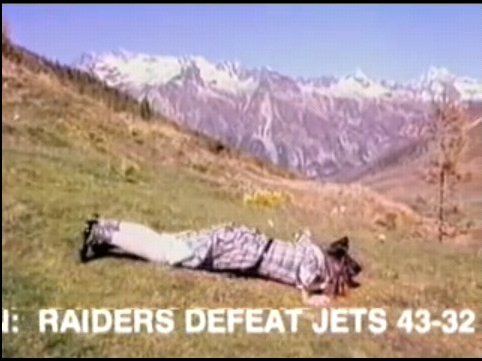
If half the nation hated NBC at this moment, now the other half did as well. Sportswriter Jack Clary quipped, “The football fans were indignant when they saw what they had missed. The Heidi audience was peeved at having an ambulatory football score intrude on one of the story’s more touching moments. Short of pre-empting Heidi for a skin flick, NBC could not have managed to alienate more viewers that evening.”
The “Heidi Bowl” was prime time news the following night on all three networks. NBC’s Huntley-Brinkley Report aired the last sixty seconds. ABC Evening News anchor Frank Reynolds read excerpts from the movie, with clips of the Raiders’ two touchdowns cut in. CBS Evening News’ Harry Reasoner announced the “results” of the game: “Heidi married the goat-herder“.
NBC had no option but self-mockery to redeem itself from the fiasco. One testimonial read “I didn’t get a chance to see it, but I hear it was great”. The statement was signed by Jets quarterback, Joe Namath.
A special “Heidi phone” was installed in the BOC to prevent such disasters in the future. In 2005, TV Guide listed the Heidi Bowl at #6 of the “100 Most Unexpected TV Moments” in television history.
Actress Jennifer Edwards in the title role of the film, may have the final word in this story: “My gravestone is gonna say, ‘She was a great moment in sports’”.


You must be logged in to post a comment.