

Perhaps it was a wolf, once, appearing at some long-dead campfire in hopes of a morsel. Or maybe someone took in a sick or injured puppy. Wolf packs may have shadowed human hunting parties, the two groups learning to work together for mutual advantage. The origin story is lost in the mists of time, but one thing is certain. The bond that exists between our kind and canis familiaris will be with us, until the end of days.
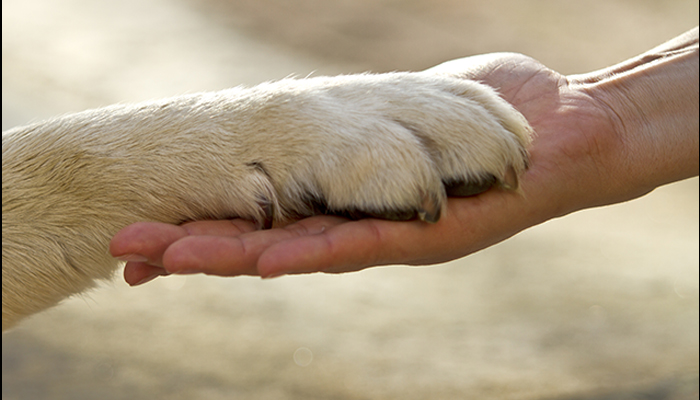
Is there a creature alive capable of the loyalty of a dog? Take, for example, Miguel Guzmán of Cordoba Argentina, who died in 2006. The family German Shepherd Capitán disappeared the following day. Mrs. Guzmán and the couple’s son searched far and wide until the dog arrived at the cemetery, forty-five minutes away.
No one knows how he got there. The family claims they didn’t bring him. Cemetery director Hector Baccega remembers when he first saw the dog: ‘He turned up here one day, all on his own, and started wandering all around the cemetery until he eventually found the tomb of his master”.
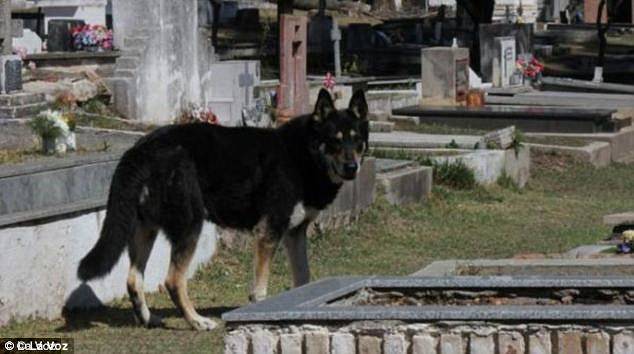
Capitán was brought home but he was back, the following day. Baccega describes what has since become, routine: “During the day he sometimes has a walk around the cemetery, but always rushes back to the grave. And every day, at six o’clock sharp, he lies down on top of the grave [and] stays there all night”.
Capitán lived to fifteen or sixteen, old for a large breed, and died in February 2018 in the cemetery which had become his home. He was crippled and mostly blind by that time when he went to join his human “Dad”. Who knows, I certainly don’t. Maybe they really are together again.
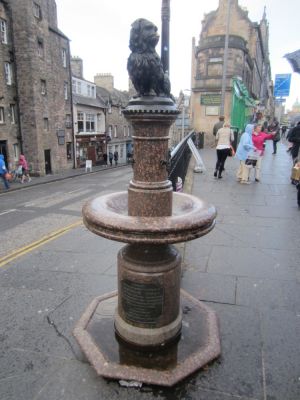
“Greyfriar’s Bobby” was a Skye Terrier in 19th-century Edinburgh, who waited 14 years by the grave of his owner, police nightwatchman John Gray. The dog died there in 1872 and was buried in the Greyfriars Kirkyard, not far from where his master lay.
Artist William Brodie created a life-sized likeness atop the Greyfriars Bobby Fountain in Edinburgh. Paid for by local aristocrat Baroness Burdett-Coutts, the memorial was dedicated November 15, 1873.
Hachikō, an Akita known to Japanese children as chūken Hachikō (“faithful dog Hachikō”), liked to tag along with his owner Hidesaburō Ueno, a professor of agriculture at Tokyo University. Ueno would commute to work and every evening, Hachikō would wait at the Shibuya Station for the professor’s return.
In May 1925, Professor Ueno suffered a cerebral hemorrhage while delivering a lecture. Hidesaburō Ueno never came home. Every day for the next nine years, nine months and fifteen days, the golden colored Akita appeared at Shibuya Station, precisely on time for the evening train.
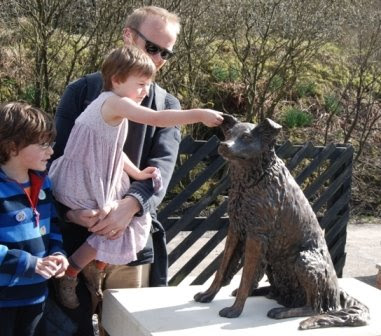
Ruswarp was a fourteen-year old Border Collie who went hiking with Graham Nuttall on January 20, 1990 in the Welsh Mountains near Llandrindod. On April 7, a hiker discovered Nuttall’s body near a mountain stream. For eleven weeks the dog had been standing guard.
Ruswarp was so weak he had to be carried off the mountain and died shortly thereafter. Today there’s a small monument in his memory on a platform, near the Garsdale railway station.
In the predawn hours of August 6, 2011, a CH-47 Chinook helicopter carrying American and Afghan forces was brought down by a rocket-propelled grenade in Afghanistan’s Kunar Province. All 38 people aboard were killed, including 30 American service members, 22 of them U.S. Navy SEALs. Among the dead were SEAL Team 6 handler John “Jet Li” Douangdara, his Military Working Dog Bart, and eight Afghan personnel.
To anyone around at that time, images of “Hawkeye” together for the last time with slain Navy SEAL Jon Tumilson, are hard to forget.
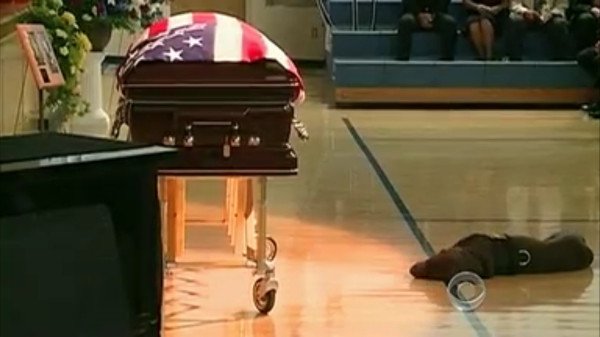
In 1936, a sheep handler whose name is lost to history tended his flock in the fields near Fort Benton, Montana. With him always was his four-legged partner and sheepdog, “Shep”.
The man fell ill and was taken to a local hospital. For over a week, Shep waited at the hospital for his master to return. On the 11th day, the man died, his casket taken to the local train station and placed in the cargo hold to be returned home for burial.
Shep was there throughout and watched the train chug away. He’d return to that hospital door where a kindly nun would feed him a scrap, but every time he heard that train whistle, there was a sheepdog waiting at the station.
In those days, there were four trains a day. For nearly six years, Shep returned to the station every time he heard that whistle. He even dug a den for himself near the track.
Passengers took the Havre to Great Falls rail line just to see the dog. Shep received so much fan mail the Great Northern Railroad assigned a secretary to write responses.
In time, the dog wasn’t quite so fast as he used to be, his hearing not so good. On January 12, 1942, “Forever Faithful” Shep was struck and killed on the tracks, waiting for a man who could never return.

There are enough stories like this to fill a book. I keep a sign at my home to remind me. It’s on the wall in the kitchen. “Lord, make me half the man my dog thinks I am“.

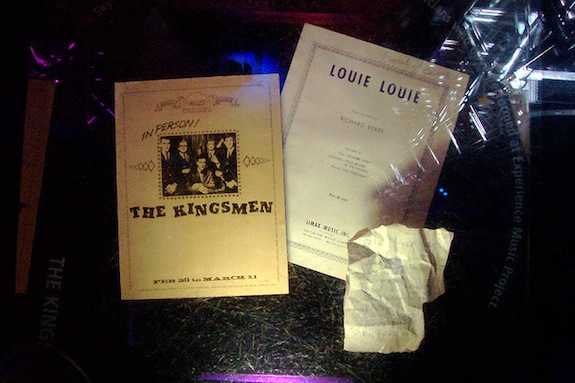
 It all went downhill from there. “Louie Louie, me gotta go,” became in the fevered imagination, “Louie Louie, grab her way down low.” Invented lyrics ranging from mildly raunchy to borderline pornographic were sribbled out on slips of paper and passed between teenagers. Interest in the song went wild. Record sales went through the roof.
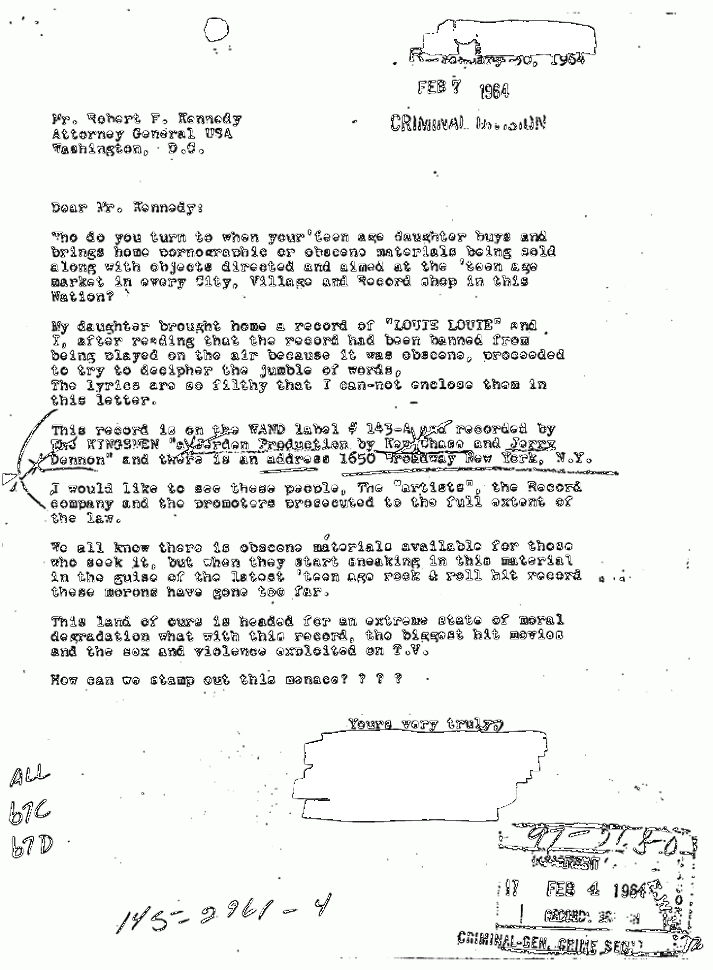 Dad might have taken a breath. The pop culture scene was not so steeped in filth as he imagined. The top television program of the time was the Beverly Hillbillies. The top movie the Disney animated production, “The Sword and the Stone”.


You must be logged in to post a comment.