

Traditionally, the line of succession to the Imperial Russian throne descended through the male line. By 1903 the Tsarina Alexandra had delivered four healthy babies, each of them girls. Olga, Tatiana, Maria and Anastasia. In 1904, the Tsarina labored to deliver her fifth.
That August, the country waited and hoped for an heir to the throne. All of Russia prayed for a boy.
The prayers of the nation were answered on August 12 (July 30 Old Style calendar), with the birth of a son. The Tsarevich Alexei Nikolayevich. The happy news was announced with a 301-gun salute from the cannons of the Peter and Paul fortress, and all of Russia rejoiced.
Those hopes would be dashed in less than a month, when the infant’s navel began to bleed. It continued to bleed for two days, and required all the doctors at the Tsar’s disposal, to stop it.

The child suffered from hemophilia, an hereditary condition passed down from his Grandmother British Queen Victoria. She’d already lost a son and a grandson to the disease, both at the age of three.
The early years of any small boy are punctuated by dents and dings and the Tsarevich was no exception. Bleeding episodes were often severe, despite the never-ending efforts of his parents, to protect him. Doctors’ remedies were frequently in vain, and Alexandra turned to a succession of quacks, mystics and “wise men”, for a cure.
Born on this day in 1869, Grigori Efimovich Rasputin was a strange man, a Siberian peasant wanderer and self-proclaimed “holy man”, a seer of the future claiming the power to heal. Rasputin would leave his home village of Pokrovskoye for months or even years at a time, wandering the countryside and visiting holy sites. It’s rumored that he once went as far Athos in Greece, at that time a center of monastic life in the Orthodox church.
 The precise circumstances are unknown, but the monk came into the royal orbit, sometime in 1905. “We had the good fortune”, Tsar Nicholas wrote to his diary , “to meet the man of God Grigori from the province of Tobolsk”.
Alexei suffered an internal hemorrhage in the spring of 1907, and Grigori was summoned to pray. The Tsarevich recovered the next morning. The royal family came to rely on the faith-healing powers of Rasputin. It seemed that he alone was able to stop the boy’s bleeding episodes.
The Tsarevich developed a serious hematoma in his groin and thigh in 1912, following a particularly jolting carriage ride. Severely in pain and suffering with high fever, the boy appeared to be close to death. Desperate, the Tsarina sent a telegram, asking the monk to pray for her son. Rasputin wrote back from Siberia, “God has seen your tears and heard your prayers. Do not grieve. The Little One will not die. Do not allow the doctors to bother him too much.” The bleeding stopped, within the next two days.
The British historian Harold Shukman wrote that Rasputin was “an indispensable member of the royal entourage”.

As the royal family became more attached to the monk Rasputin, scandals followed the peasant holy man like the chains of Jacob Marley. Rumors abounded of sexual peccadillos, involving society ladies and prostitutes alike. Gossip describing trysts between the “Mad Monk” and the Tsarina herself were almost certainly unfounded, but so widespread that pornographic postcards were openly circulated, depicting these liaisons.
What the Tsar and Tsarina saw as a pious and holy man, the Russian nobility saw as a foul smelling, sex-crazed peasant with far too much influence on decisions of State. Alexandra believed the man had the power to make her boy better. Those around her openly spoke of Rasputin ruining the Royal Family, and the Russian nation.

Influential people approached Nicholas and Alexandra with dire warnings, leaving dismayed by their refusal to listen. Rasputin was indispensable according to the Royal Couple. He was the only man who could save the Tsarevich.
 By 1916 it was clear to many in the Nobility. The only course was to kill Rasputin, before he destroyed the monarchy.
A group of five Nobles led by Prince Felix Yusupov lured Rasputin to the Moika Palace on December 16, 1916, using the possibility of a sexual encounter with Yusopov’s beautiful wife Irina, as bait. Pretending that she was upstairs with unexpected guests, the five “entertained” Rasputin in a basement dining room, feeding him arsenic laced pastries and washing them down with poisoned wine. None of it seemed to have any effect.
Panicked, Yusupov pulled a revolver and shot the monk. Rasputin went down, but soon got up and attacked his tormentors. He tried to run away, only to be shot twice more and have his head beaten bloody with a dumbbell. At last, with hands and feet bound, Grigory Efimovich Rasputin was thrown from a bridge into the icy Malaya Nevka River.
Police found the body two days later, with water in the lungs and hands outstretched. Poisoned, shot in the chest, back and head, with his head stove in, Rasputin was still alive when he hit the water.

In the end, the succession question turned out to be moot. A letter attributed to Rasputin, which he may or may not have written, contained a prophecy. “If I am killed by common assassins and especially by my brothers the Russian peasants, you, Tsar of Russia, have nothing to fear for your children, they will reign for hundreds of years in Russia…[I]f it was your relations who have wrought my death…none of your children or relations will remain alive for two years. They will be killed by the Russian people…”
The stresses and economic dislocations of the Great War proved too much to handle. The Imperial Russian state collapsed in 1917. Tsar Nicholas II abdicated the throne within three months of the death of Rasputin. Members of the Ural regional Soviet shot, bludgeoned and bayoneted the Russian Imperial family to death: Tsar Nicholas, his wife Tsarina Alexandra, all five children, the Grand Duchess Olga, the Romanov family physician, their footman, maid, and their dogs.
A coded telegram was sent to Lenin’s secretary, Nikolai Gorbunov. “Inform Sverdlov”, (Communist party administrator Yakov Sverdlov ) “The whole family have shared the same fate as the head. Officially the family will die at the evacuation”.




 Columbus had taken his idea of a westward trade route to the Portuguese King, to Genoa and to Venice, before he came to Ferdinand and Isabella in 1486. At that time the Spanish monarchs had a
  Columbus seems not to have been impressed, describing these mermaids as “not half as beautiful as they are painted.”

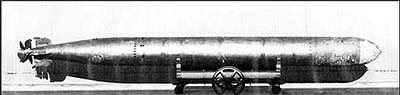 Among the Mark-XIV’s more pronounced deficiencies was a tendency to run about 10-ft. too deep, causing it to miss with depressing regularity. The magnetic exploder often caused premature firing of the warhead, and the contact exploder frequently failed altogether. There must be no worse sound to a submariner, than the metallic ‘clink’ of a dud torpedo bouncing off an enemy hull.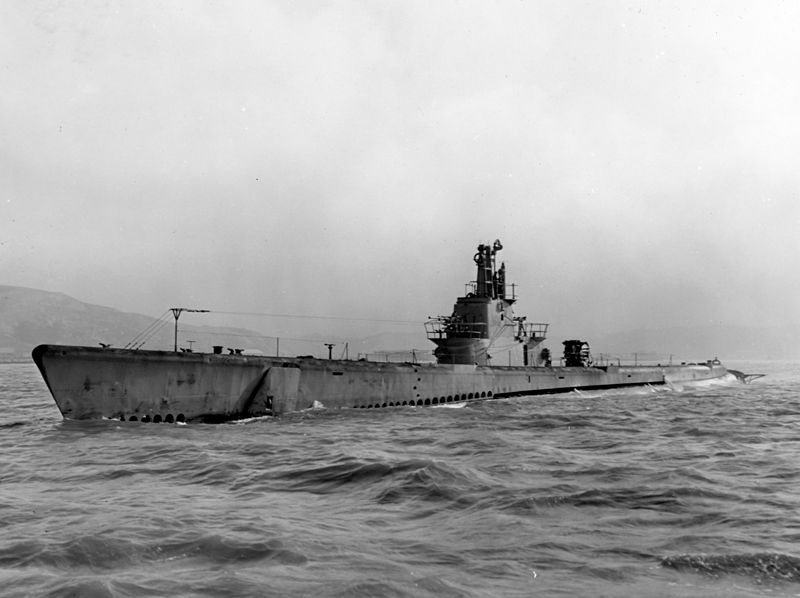
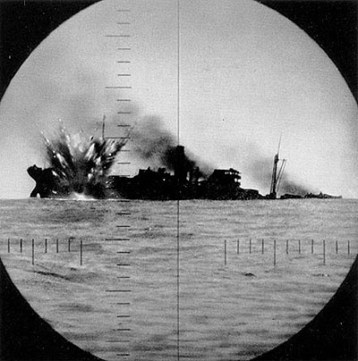 Sam Moses, writing for historynet’s “Hell and High Water,” writes, “In five war patrols between May 1944 and August 1945, the 1,500-ton Barb sank twenty-nine ships and destroyed numerous factories using shore bombardment and rockets launched from the foredeck”.
 Two weeks later, USS Barb spotted a 30-ship convoy, anchored in three parallel lines in Namkwan Harbor, on the China coast. Slipping past the Japanese escort guarding the harbor entrance under cover of darkness, the American submarine crept to within 3,000 yards.
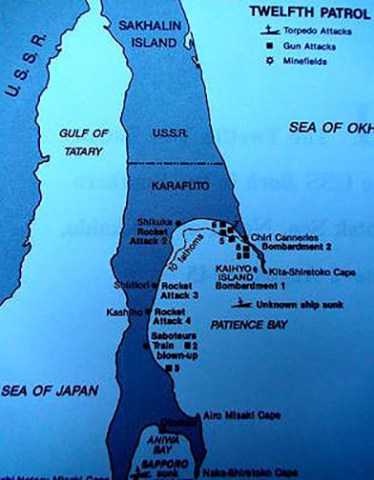 On completion of her 11th patrol, USS Barb underwent overhaul and alterations, including the installation of 5″ rocket launchers, setting out on her 12th and final patrol in early June.
 Working so close to a Japanese guard tower that they could almost hear the snoring of the sentry, the eight-man team dug into the space between two ties and buried the 55-pound scuttling charge. They then dug into the space between the next two ties, and placed the battery.


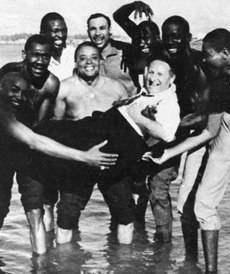 At least, that’s what the official team history says, except the Savoy didn’t open until 1927. We may have to just go with it.
 In 1941, Negro League 1st baseman Reece “Goose” Tatum caught Saperstein’s eye. A multi-sport athlete and teammate of Satchel Paige, Tatum would entertain crowds with comedic routines, whenever he put a runner out. 6’4″ with an 84″ wingspan and able to touch his knees without bending, Tatum is credited with inventing the hook shot, an early version of the “skyhook” that made Kareem Abdul-Jabbar famous, 30 years later
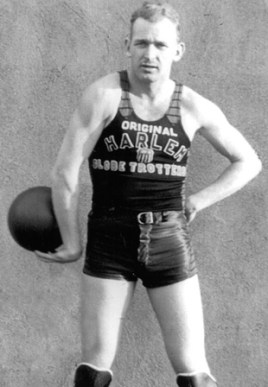 When Goose was drafted into the Army Air Corps in 1942, the Globetrotters signed their third caucasian, the first-ever white player to be offered a contract. Bob Karstens, the newest showman on the team, created the signature pregame “Magic Circle,” the behind-the-back shot, the “yo-yo” basketball and the “goofball,” a basketball filled with weights to give it a crazy bounce.
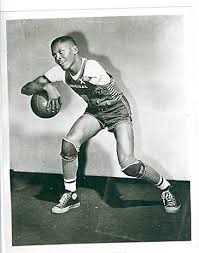 The Globetrotters were a serious basketball team in the early years, winning the World Professional Basketball Tournament as late as 1940. The club worked more gag routines into their game throughout the late 40s and 50s, as the newly founded NBA gained popularity. Finally, the team became better known for entertainment, than for sport.
 Abe Saperstein passed away in 1966, at the age of 63. The owner and founder of the Harlem Globetrotters, he was also founder and first Commissioner of the American Basketball League. Under Saperstein’s direction, the ABL was the first basketball league to institute the 3-point rule, in 1961. Saperstein was inducted into the Basketball of Fame in 1971, and the National Jewish Sports Hall of Fame, in 2005.
 Prior to a 2011 visit to Dallas, the Globetrotters emailed local media, challenging Globetrotter nation to a H.O.R.S.E. competition. If you’re not familiar, a player takes a shot. Any shot. You can spin around and bounce the ball off of your head if you like. If you sink the basket, the next player has to sink the same shot. Otherwise, they get an ‘H’.


 Sister Teresa was looking out from the train carrying her from Darjeeling to Calcutta on September 10, when she heard the call. “I was to leave the convent and help the poor while living among them. It was an order. To fail would have been to break the faith.”






 Breaks in cold weather inevitably marked the end of the frost fairs, sometimes all of a sudden. In January 1789, melting ice dragged a ship with it, while tied to a riverside tavern, in Rotherhite. Five people were killed when the building was pulled down on their heads.


 “Lockjaw” is such a sterile term, it doesn’t begin to describe the condition known as Tetanus. In the early stages, the anaerobic bacterium Clostridium Tetani produces tetanospasmin, a neurotoxin producing mild spasms in the jaw muscles. As the disease progresses, sudden and involuntary contractions effect most skeletal muscle groups, becoming so powerful that bones are fractured and the muscles tear themselves apart. These were the last days of John Roebling, the bridge engineer who would not live to see his most famous work.
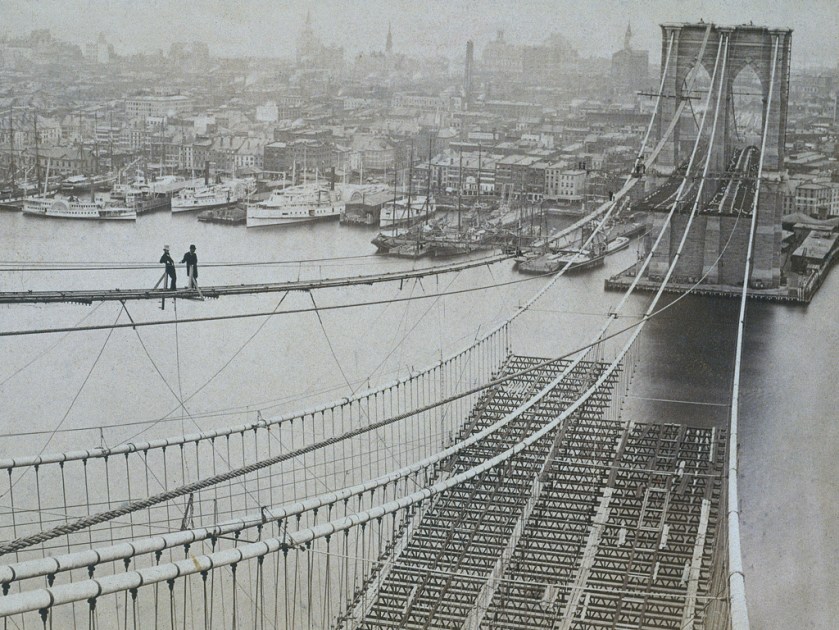
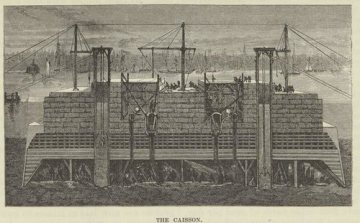 Roebling’s 32-year-old son Washington took over the project, beginning construction on January 3, 1870.
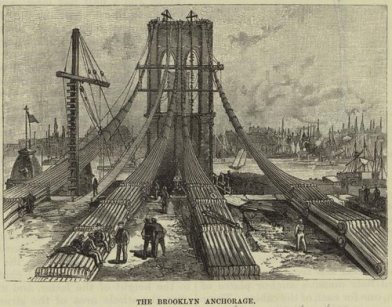 Roebling conducted the entire project looking out his apartment window, designing and redesigning details while his wife, Emily Warren Roebling, became the critical connection between her husband and the job site.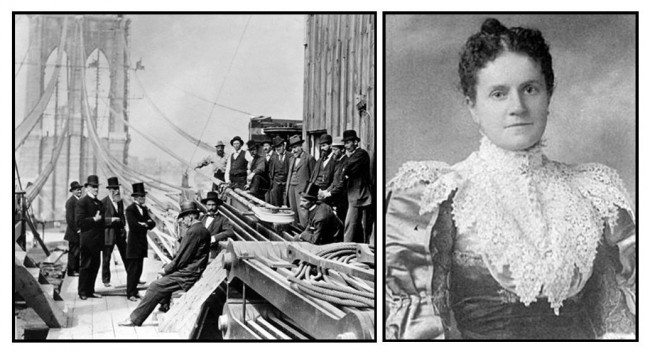






 As befitting a man who completely buys into Nazi ideas of racial superiority, the SS officer wrote “For the more advanced white race it offers outstanding possibilities for exploitation”, adding that the people who lived there “cannot be measured in civilised terms as we know them in Germany”.


 Once considered mythical but for the old sailor’s stories and the damage inflicted on ships themselves, the first scientific measurement of a rogue wave occurred in the North sea in 1984, when a 36′ wave was measured off the Gorm oil platform, in a relatively placid sea.

 In 1909, the 500-ft. cargo liner SS Waratah disappeared off Durban South Africa, with 211 passengers and crew.


 Historical Easter Eggs - Today in History
You must be logged in to post a comment.