
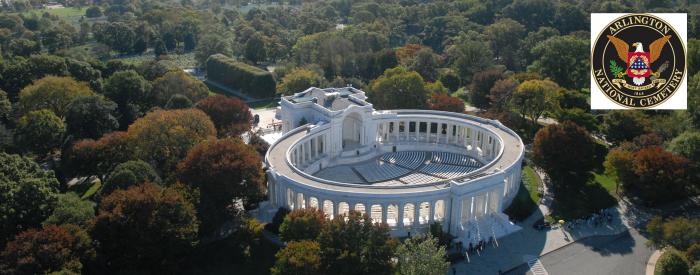
Think for a moment of an empty and lifeless stone mausoleum, and then forget it. That’s not what it’s like, at Arlington.
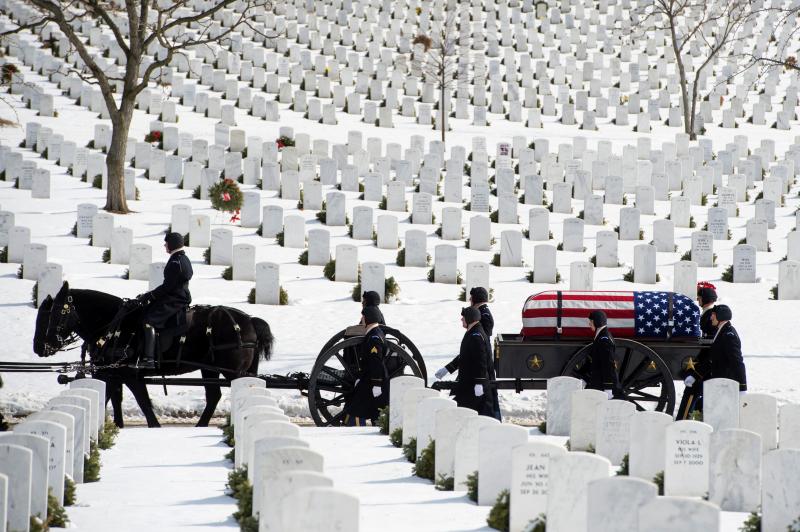
80 to 100 military service members, veterans and their loved ones go to their final rest in Arlington National Cemetery, every week. Not one of them goes alone. Since 1948, a volunteer with the “Arlington Ladies” attends each and every one of them, 365 days a year, seven days a week.
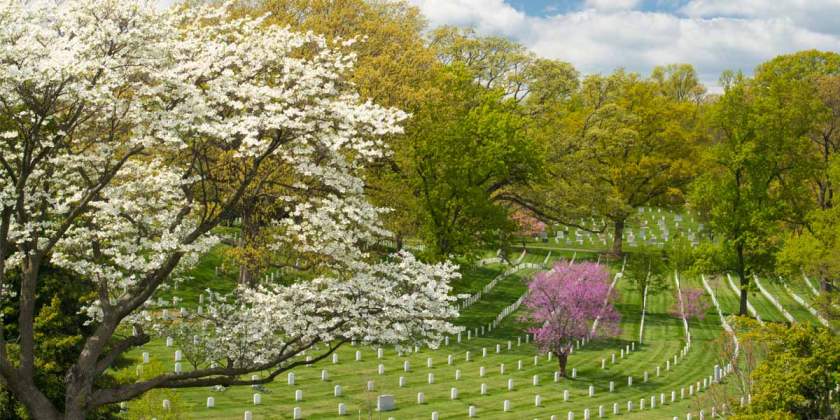
The final resting place of over 400,000 honored dead is a living memorial, combining tens of thousands of native and exotic plants in a unique blending of landscapes, combined with formal and informal gardens. More than 8,600 native and exotic trees representing 325 varieties and species fill the landscape with color. The first and last impression of the visitor is that of beauty and a sense of peace.
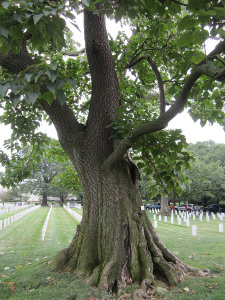
Three of these trees are Virginia state champions and one is state co-champion, including the Royal Paulownia, below. State champion trees are those having the greatest height, crown spread and trunk circumference, for their species.
Take a single species of tree, for instance, the eastern Redbud (Cercis canadensis), of which 165 specimens live at Arlington. Each tree stands 10′ to 30′ tall, with pink and purple flowers emerging directly from bark and branches in early April. Five-inch wide, heart shaped leaves emerge later in the spring. At first a glossy purple, by summer they have turned to green and pods have begun to grow. Like pea pods, they grow green to reddish during the early months, later turning to black before falling off. In late winter, there is no more striking contrast with a fresh fall of snow.
The cemetery also has 24 Chinese Redbuds, a strain native to central China. These are only two of Arlington’s hundreds of varieties of flowering trees.
About 200 trees are removed every year, and 240 planted. Every tree in the place will be pruned at least once, every four years.
Bring your walking shoes, and you’ll have to leave your pooch, behind. In 2013, cemetery authorities permitted bicycles on a specified route between 8:00 a.m. and 6:45 p.m., from April 1 to September 30. Today, be prepared to walk. Effective October 26, 2016, policy prohibits bicycles on Cemetery grounds, without a family pass. “As there are no bike paths on the cemetery grounds, mixing cyclists with pedestrians and vehicles creates a safety hazard”.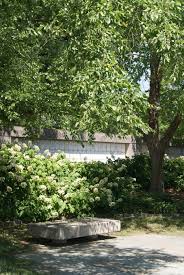
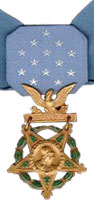
The Cemetery’s horticulture division recently installed 297 tree labels, identifying many of the cemetery’s noteworthy specimens. 36 of them form a right angle along Farragut & Wilson Drive, lending a sense of history as each is a direct descendant of a famous ancestor, each a living memorial to recipients of the Medal of Honor.
Ancestors of these “tree descendants” include the Cottonwood of Delta Colorado, which shaded the peace meetings between settlers and Ute tribes in 1879. The Sweetgum of the Westmoreland, Virginia home of four generations of the Lee family, including Richard Henry and Francis “Lightfoot” Lee. The only brothers to have signed the Declaration of Independence. The great Charter Oak of Connecticut is represented there, a specimen sprouted sometime in the 12th or 13th century. There is the American Sycamore descended from a “witness tree” at Gettysburg. There is the Red Maple from Walden Woods, outside of Boston, and the Sycamore Maple, witness to George Washington’s crossing of the Delaware.
 Other tree ancestors include the Water Oak next to the Brown Chapel African Methodist Church in Selma, where Reverend Martin Luther King, Jr. delivered his “We Shall Overcome” speech, before setting out on the 50-mile march to Montgomery. The George Washington American Holly was grown from seeds gathered at Mount Vernon. Helen Keller climbed the 100-year-old Water Oak, as a child. The Overcup Oak descends from a tree which shaded the birthplace of the 16th President of the United States, Abraham Lincoln.
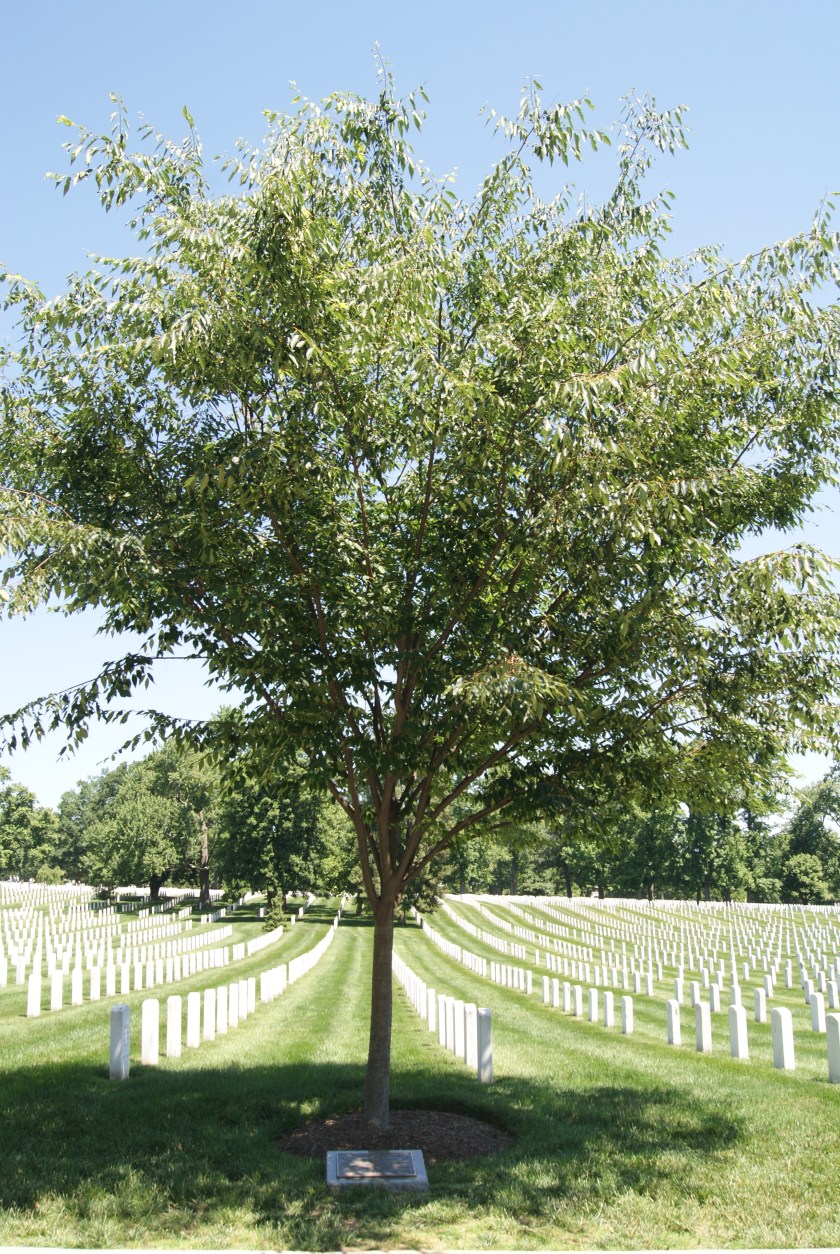
For years, the 624-acre grounds at Arlington have been a living memorial. Some of the most beautiful gardens you are ever going to see, the work is performed by a full-time staff of only three Master Gardeners, and an army of contractors. In 2013, the cemetery received official accreditation as a level II arboretum by the Morton Register of Arboreta. A living memorial taking its place on the nation’s most comprehensive list of arboreta and public gardens, designated the Arlington National Cemetery Memorial Arboretum.
This “Today in History” is dedicated to my paternal grandfather, Norman Francis Long, United States Army, who left us the night his namesake, my brother, came into the world. December 18, 1963. It was too soon. Arlington National Cemetery – Section 41, plot #2161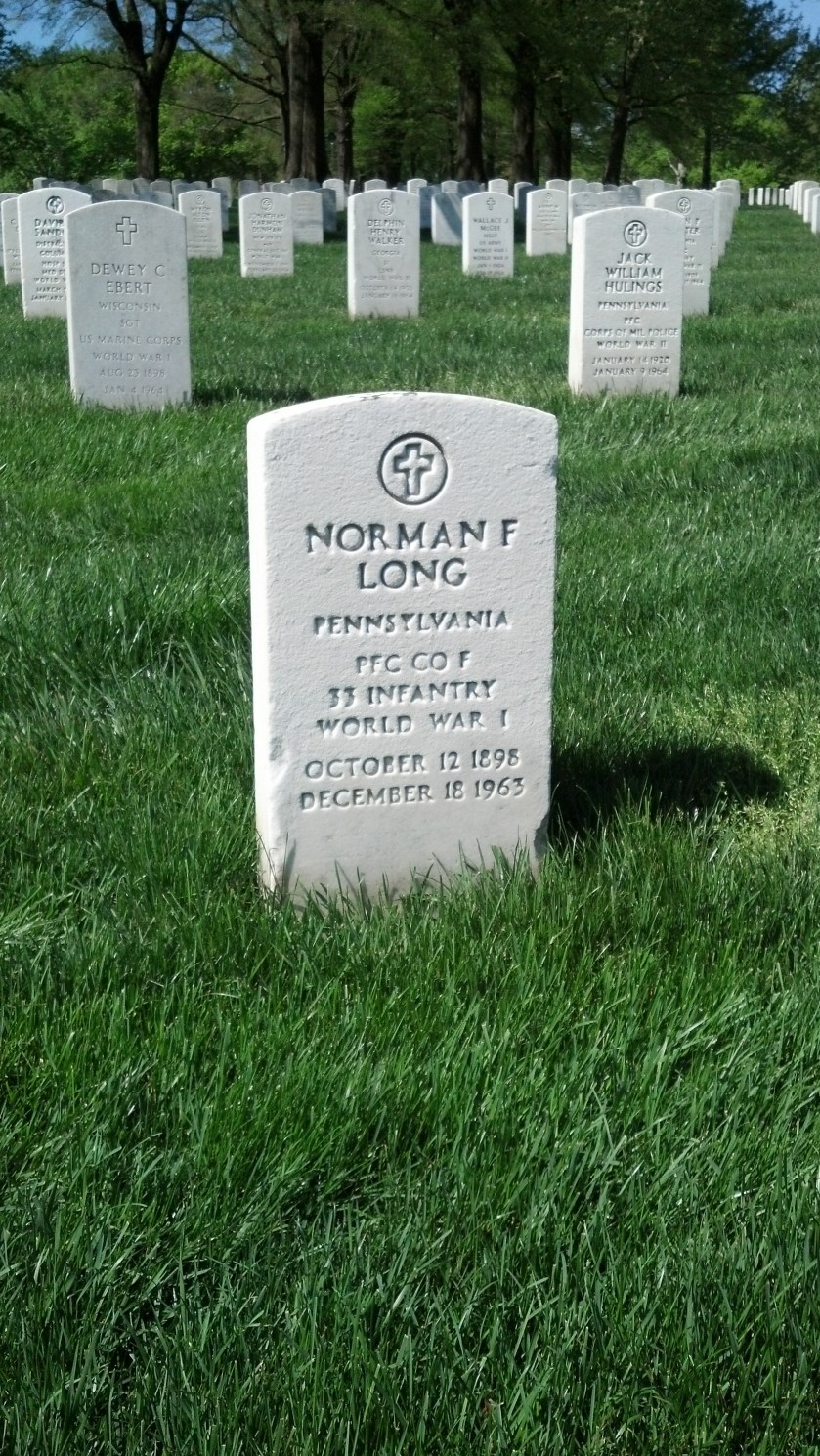




 Pitchers Eddie Cicotte and Claude “Lefty” Williams, along with outfielder Oscar “Hap” Felsch, and shortstop Charles “Swede” Risberg were all principally involved with fixing the series. Third baseman George “Buck” Weaver was at a meeting where the fix was discussed, but decided not to participate. Weaver handed in some of his best statistics of the year during the Series.
 Rumors were flying when the series started on October 2. So much money was on Cincinnati that the odds were flat. Gamblers complained that nothing was left on the table. Williams lost his three games in the best-out-of nine series, which I believe stands as a World Series record to this day. Cicotte became angry, thinking that gamblers were trying to renege, and he bore down, the White Sox winning game 7.
 Ironically, the 1919 scandal would lead to a White Sox crash in the 1921 season, beginning the “Curse of the Black Sox”. It was a World Series championship drought that lasted 88 years, ending only in 2005, with a sweep of the Houston Astros. Exactly one year after the Boston Red Sox ended their own 86-year drought, the “Curse of the Bambino”.


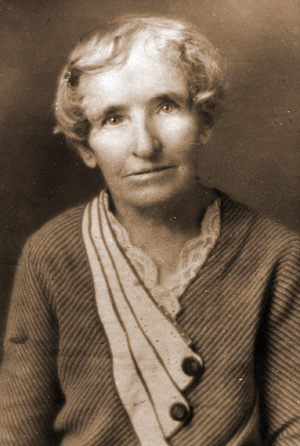


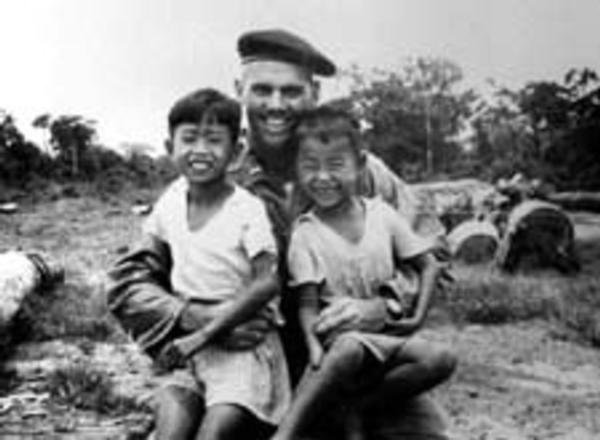

 In his spare time, this Green Beret, Army Ranger and Special Forces warrior would volunteer to work in the countless orphanages of South Vietnam.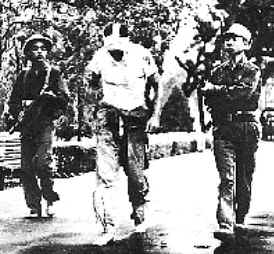
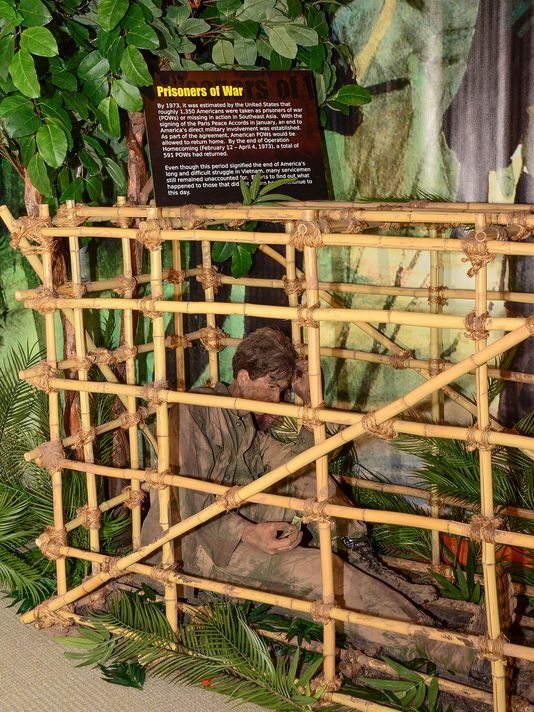
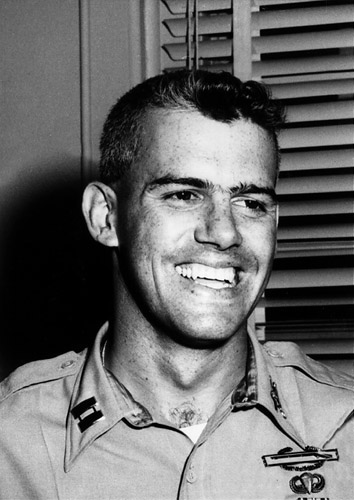 Rocky attempted to escape four times, despite leg wounds which left him no option but to crawl on his belly. Each such attempt earned him savage beatings, after which he’d only try harder.
 Rocky was murdered by his captors, his “execution” announced on North Vietnamese “Liberation Radio” on September 26, 1965. He was twenty-eight.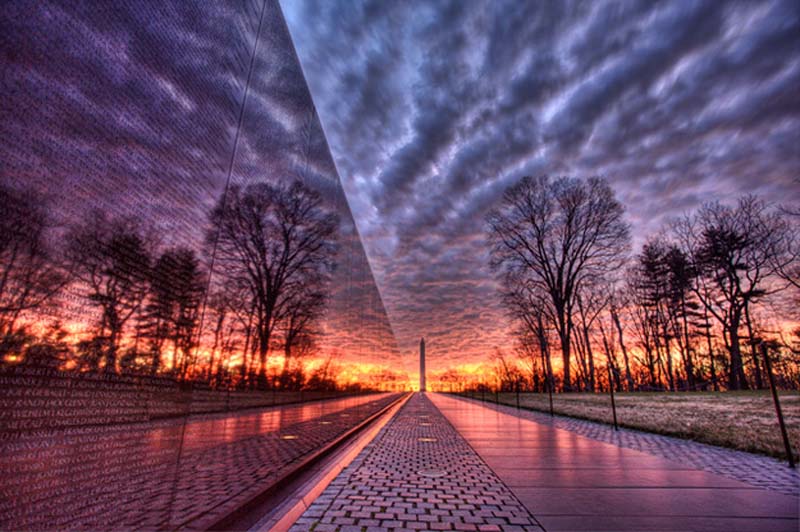


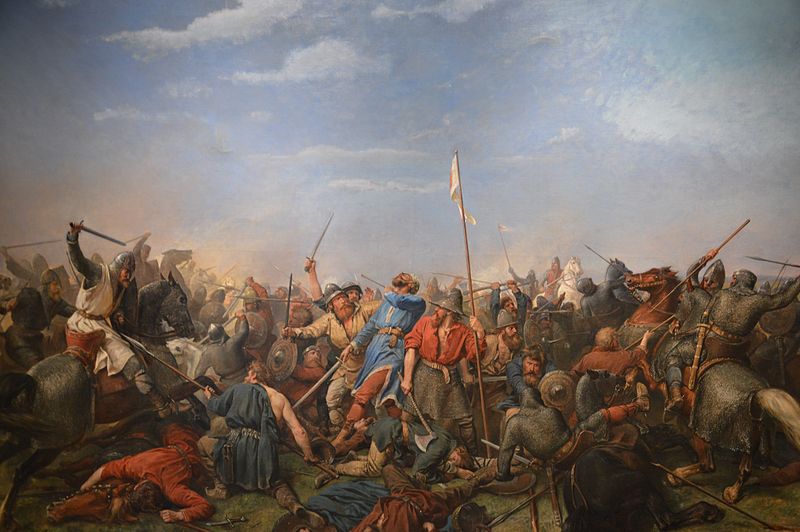
 Tostig sailed for England with King Harald and a mighty army of 10,000 Viking warriors, meeting the northern Earls Edwin and Morcar in battle at Fulford Gate, on September 20.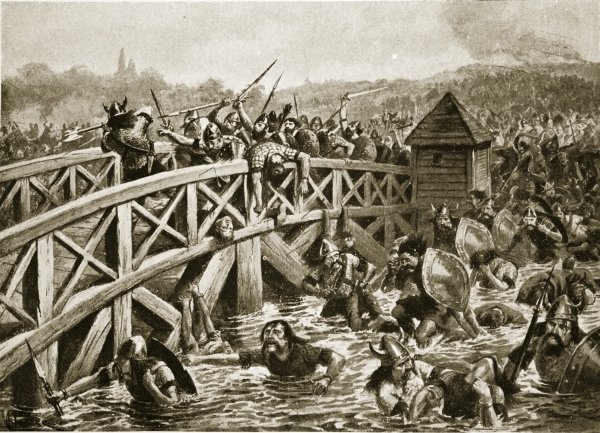
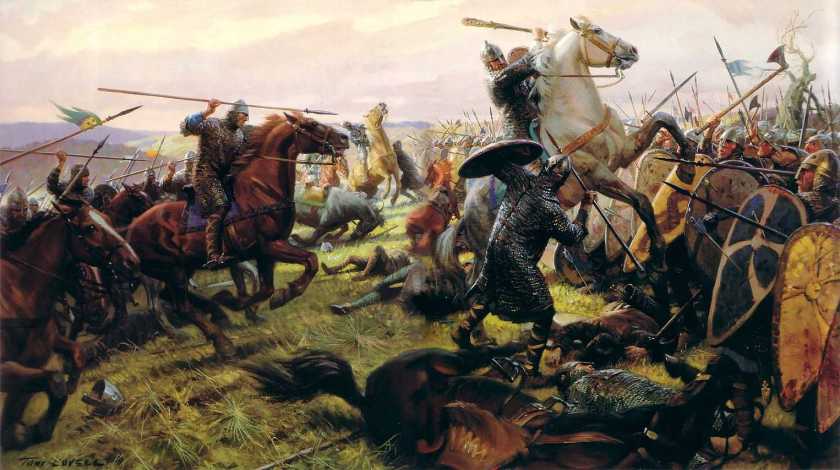


 The incoming Jefferson administration sought to block the appointments. Jefferson ordered then-Secretary of State James Madison to hold those commissions as yet undelivered, thus invalidating the appointments. One of the appointees, William Marbury, took the matter to Court.
 Intimidated by the Roosevelt administration’s aggressive and illegal “
 The framers gave us a Constitutional Republic with co-equal branches of government, with power diffused and limited by a comprehensive set of checks and balances.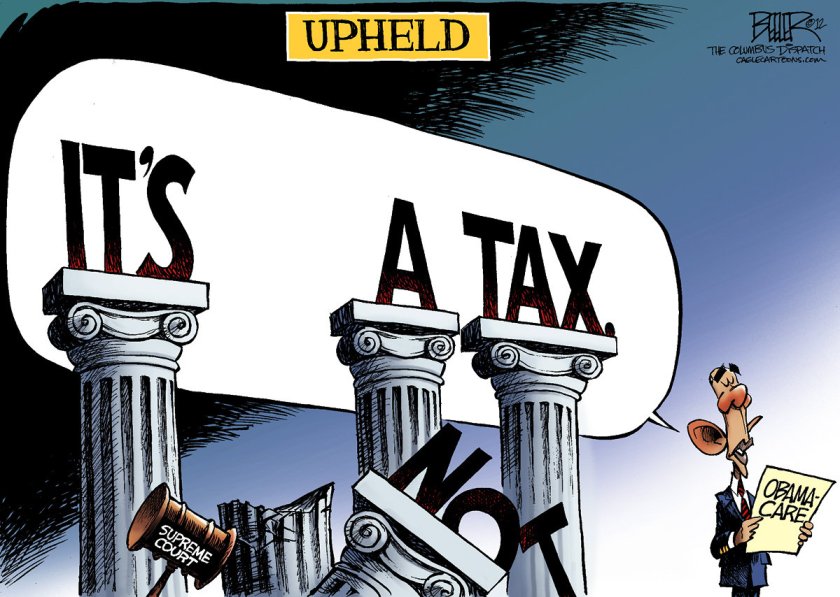


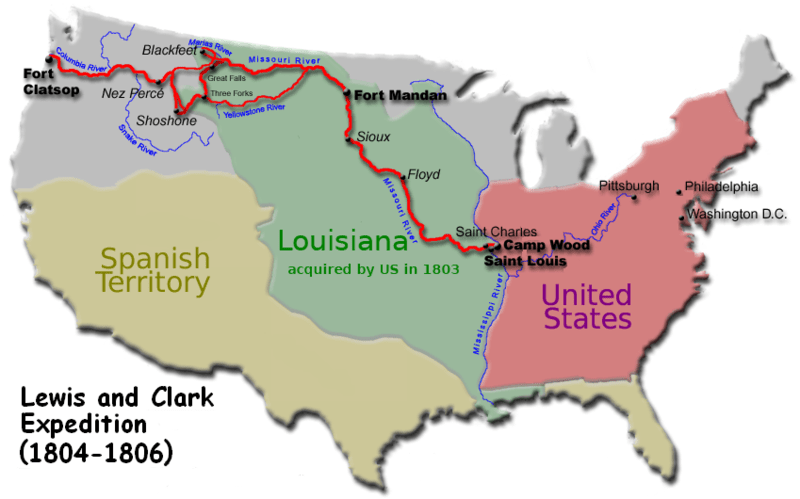
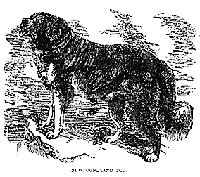 Most of 1803 was spent in planning and preparation, Lewis and Clark joining forces near Louisville that October. After wintering in the Indiana territory base camp in modern day Illinois, the 33-man expedition departed on May 14, 1804, accompanied by “Seaman”, a “Dogg of the Newfoundland breed”.
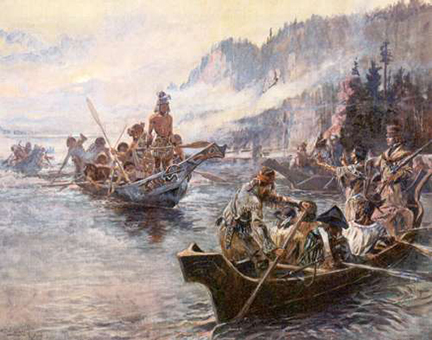 Discovery established friendly relations with at least 24 indigenous tribes, without whose help they may have become lost or starved in the wilderness. Most were more than impressed with Lewis’ state-of-the-art pneumatic rifle, which could silently fire up to 20 rounds after being pumped full of compressed air.
 The Corps of Discovery reached the Pacific Ocean in November 1805, and set out their second winter camp in modern-day Oregon.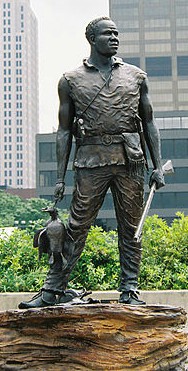


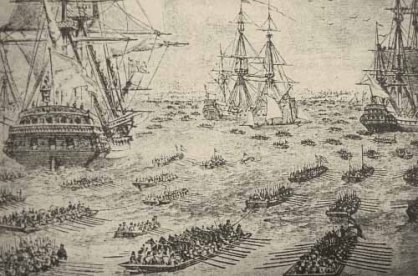
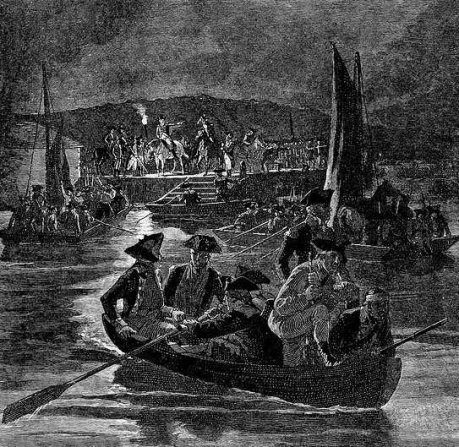
 Washington asked for volunteers for a dangerous mission, to go behind enemy lines, as a spy. Up stepped a volunteer. His name was Nathan Hale.
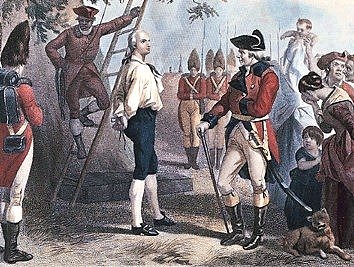 Hale took Rogers into his confidence, believing the two to be playing for the same side. Barkhamsted Connecticut shopkeeper Consider Tiffany, a British loyalist and himself a sergeant of the French and Indian War, recorded what happened next, in his journal: “The time being come, Captain Hale repaired to the place agreed on, where he met his pretended friend” (Rogers), “with three or four men of the same stamp, and after being refreshed, began [a]…conversation. But in the height of their conversation, a company of soldiers surrounded the house, and by orders from the commander, seized Captain Hale in an instant. But denying his name, and the business he came upon, he was ordered to New York. But before he was carried far, several persons knew him and called him by name; upon this he was hanged as a spy, some say, without being brought before a court martial.”
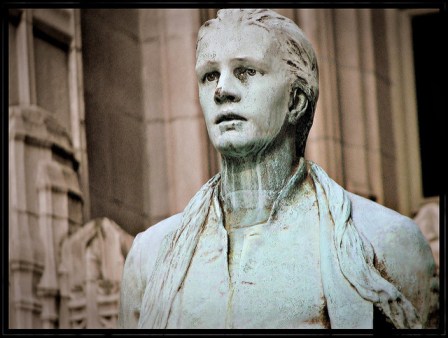 There is no official account of Nathan Hale’s final words, but we have an eyewitness statement from British Captain John Montresor, who was present at the hanging.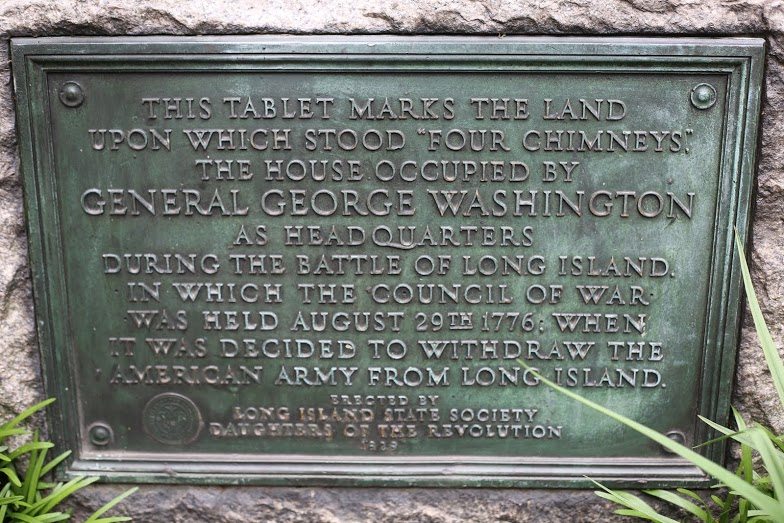




 Historical Easter Eggs - Today in History
You must be logged in to post a comment.