

Lines of conflict had existed since the time of the Revolution, between those supporting federal government leadership of the young nation, and those in favor of greater self-determination by the states. In the South, climate conditions led to dependence on agriculture, the rural economy of the southern states producing cotton, rice, sugar, indigo and tobacco. Colder states to the north tended to develop manufacturing economies, urban centers growing up in service to hubs of transportation and the production of manufactured goods.
In the first half of the 19th century, 90% of federal government revenue came from tariffs on foreign manufactured goods. Most of this revenue was collected in the South, with the region’s greater dependence on imported goods. Much of this federal largesse was spent in the North, with the construction of railroads, canals and other infrastructure.
This debate over economic issues and rights of self-determination, so-called ‘state’s rights’, grew and sharpened in 1828 with the threatened secession of South Carolina, and the “nullification crisis” of 1832-33, when South Carolina declared such tariffs unconstitutional, and therefore null and void within the state. The Encyclopedia Britannica entry in the subject includes a Cartoon from the time depicting “Northern domestic manufacturers getting fat at the expense of impoverishing the South under protective tariffs.”
Chattel slavery existed from the earliest days of the colonial era, from Canada to Mexico, and around the world. Moral objections to what was really a repugnant practice could be found throughout, but economic forces had as much to do with ending the practice, as any other. The “peculiar institution” died out first in the colder regions of the US and may have done so in warmer climes as well, but for Eli Whitney’s invention of a cotton engine (‘gin’) in 1792.
It takes ten man-hours to remove the seeds to produce a single pound of cotton. By comparison, a cotton gin can process about a thousand pounds a day, at comparatively little expense.
The year of Whitney’s invention, the South exported 138,000 pounds a year to Europe and the northern colonies. Sixty years later, Britain alone was importing 600 million pounds a year, from the American south. Cotton was King, and with good reason. The stuff is easily grown, is more easily transportable, and can be stored indefinitely, compared with food crops. The southern economy turned overwhelmingly to this one crop, and its need for plentiful, cheap labor. The issue of slavery had joined and become so intertwined with ideas of self-determination, as to be indistinguishable.
The first half of the 19th century was one of westward expansion in the United States, generating frequent and sharp conflicts between pro and anti-slavery factions. The Missouri compromise of 1820 was the first attempt to reconcile these factions, defining which territories would be slave states, and which would be “free”.
The short-lived “Wilmot Proviso” of 1846 sought to ban slavery in new territories, after which the Compromise of 1850 attempted to strike a balance. The Kansas Nebraska Act of 1854 created the territories of Kansas and Nebraska, basically repealing the Missouri Compromise and allowing settlers to determine their own way through popular sovereignty.
This attempt to democratize the issue instead had the effect of drawing up battle lines. Pro-slavery forces established a territorial capital in Lecompton, while “antis” set up an alternative government in Topeka. 
In Washington, Republicans backed the anti-slavery forces, while Democrats generally supported their opponents. The standoff resulting was soon to escalate to violence. Upwards of a hundred or more would be killed between 1854 – 1861, in a period known as “Bleeding Kansas”.
The town of Lawrence, Kansas was established by anti-slavery settlers in 1854, and soon became the focal point of pro-slavery violence. Emotions were at the boiling point when Douglas County Sheriff Samuel Jones was shot trying to arrest free-state settlers on April 23, 1856. Jones was driven out of town but he would return.
On this day in 1856, a posse of 800 pro-slavery forces closed around the town, led by Sheriff Jones. Cannon was positioned to cover the town, and detachments of troops were posted to prevent escape. They commandeered the home of the first governor of Kansas, Charles L. Robinson, and used it as their headquarters.
The town’s two printing offices were sacked, the presses destroyed, and the type thrown into the river. The posse next set about to destroy the Free State Hotel, which they believed had been built to serve more as a fort than a hotel.
They may have been right, because it took the entire day with cannon shot, kegs of gunpowder and incendiary devices, before the hotel was finally reduced to a roofless, smoldering ruin.
There was looting and a few robberies as the men left town, burning Robinson’s home on the way out. There was only one fatality; a slavery proponent who was killed by falling masonry.
 In the next few days, a group of unarmed men will be hacked to pieces by anti-slavery radicals. Four months of partisan violence and depredation ensued. Small armies formed up across eastern Kansas, clashing at Black Jack, Franklin, Fort Saunders, Hickory Point, Slough Creek, and Osawatomie
A United States Senator will be beaten nearly to death on the floor of the Senate, by a member of the House of Representatives. The 80-year-old nation would forge inexorably onward, to the Civil War that would kill more Americans than every war from the American Revolution to the War on Terror, combined.


 Hathcock developed Multiple Sclerosis in his later years, and passed away on February 23, 1999. He was decorated with the Silver Star, the Purple Heart and Navy and Marine Corps Commendation Medal. The honor he would perhaps treasure most, was that of having a rifle named after him, a variant of the Springfield Armory M21 called the M25 “White Feather”.


 The bizarre and hideous acts of cruelty that Mengele performed in the name of “science” are beyond the scope of this essay, but seven dwarves didn’t come along every day. The Angel of Death treated the Ovitz siblings differently than other camp inmates.


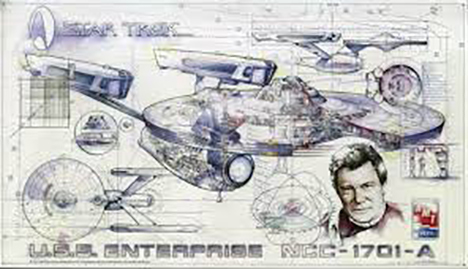
 Roddenberry decided on James T. Kirk, based on a journal entry of the 18th century British explorer, Captain James Cook: “ambition leads me … farther than any other man has been before me”.


 It was literally “out of the blue”, when the first wave of enemy aircraft arrived at 7:48 local time, December 7, 1941. 353 Imperial Japanese warplanes approached in two waves out of the southeast, fighters, bombers, and torpedo planes, across Hickam Field and over the waters of Pearl Harbor. Tied in place and immobile, the eight vessels moored at “Battleship Row” were easy targets.


 USS Oklahoma was designed to fight at the most extreme ranges expected by gunnery experts. Commanded by Charles B. McVay, Jr., father of the ill-fated skipper of the USS Indianapolis Charles Butler McVay III, Oklahoma’s role in WW1 was limited, due to the unavailability of oil in major theaters of operation. Notable among her exploits of the Great War, were the memorable fist fights that crew members got into with Sinn Féin members in Berehaven, and casualties sustained during the
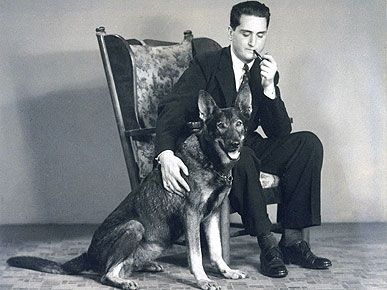
 Dorothy Eustis called Frank in February 1928 and asked if he was willing to come to Switzerland. The response left little doubt: “Mrs. Eustis, to get my independence back, I’d go to hell”. She accepted the challenge and trained two dogs, leaving it to Frank to decide which was the more suitable. Morris came to Switzerland to work with the dogs, both female German Shepherds. He chose one named “Kiss” but, feeling that no 20-year-old man should have a dog named Kiss, he called her “Buddy”.
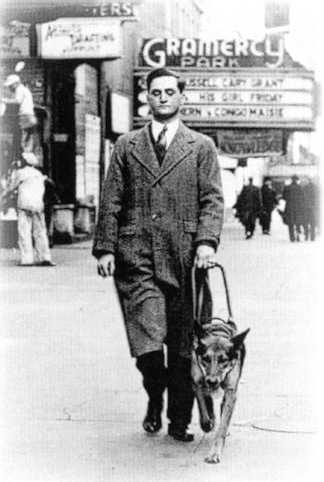 Frank told a New York Times interviewer in 1936 that he had probably logged 50,000 miles with Buddy, by foot, train, subway, bus, and boat. He was constantly meeting with people, including two Presidents and over 300 ophthalmologists, demonstrating the life-changing qualities of owning a guide dog.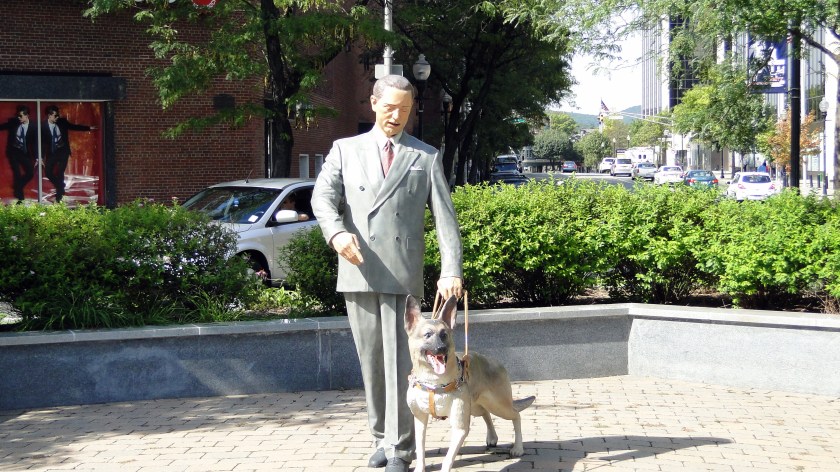

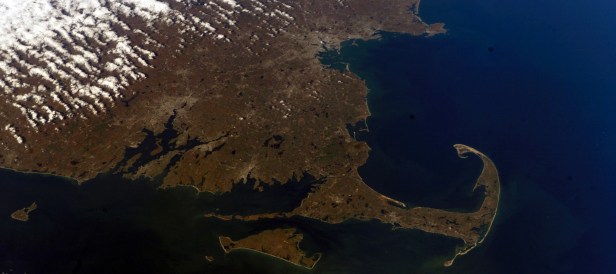
 Queen Elizabeth I of England granted Walter Raleigh a charter to establish a colony north of Spanish Florida in 1583, the area called “Virginia”, in honor of the virgin Queen. At the time, the name applied to the entire coastal region from South Carolina to Maine, and included Bermuda.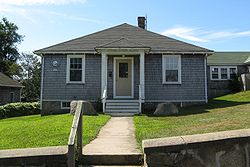

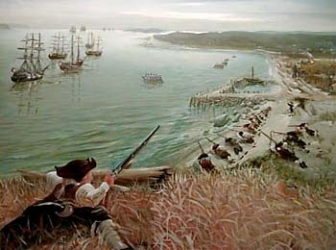
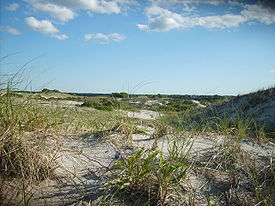 Sandwich established in 1637, followed by Barnstable and Yarmouth in 1639. The thin soil was ill suited to agriculture, and intensive farming techniques eroded topsoil. Farmers grazed cattle on the grassy dunes of the shoreline, only to watch “in horror as the denuded sands ‘walked’ over richer lands, burying cultivated fields and fences.”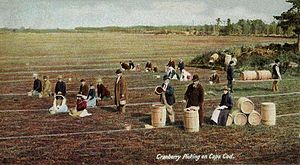
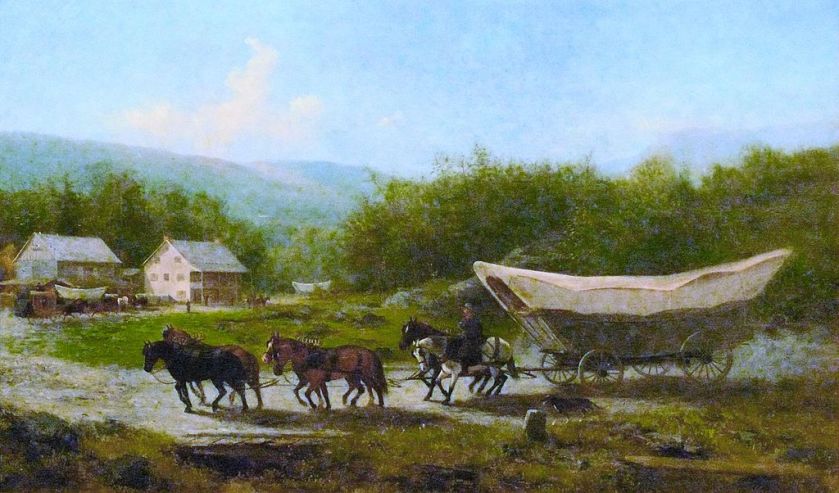

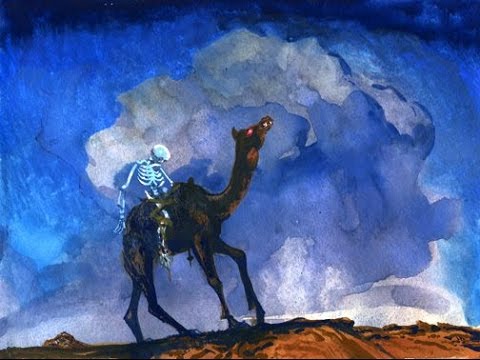


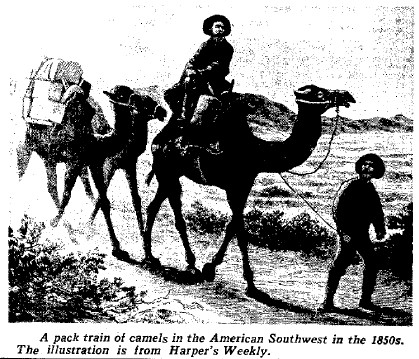
 Some of Camp Verde’s camels were sold off, one was pushed over a cliff by frustrated cavalrymen. Most were simply turned loose to fend for themselves. Their fates are mostly unknown, except for one who made his way to Mississippi in 1863, where he was taken into service with the 43rd Infantry Regiment. “Douglas the Confederate Camel” was a common sight throughout the siege of Vicksburg, until being shot and killed by a Union sharpshooter. Lieutenant Colonel Robert Bevier of the 5th Regiment, Missouri Confederate Infantry was furious, enlisting six of his best snipers to rain down hell on Douglas’ killer. Bevier later said of the Federal soldier “I refused to hear his name, and was rejoiced to learn that he had been severely wounded.”
 men to return. The pair returned that night and found the body of the other woman by the stream. She’d been trampled almost flat, with huge, cloven hoof prints in the mud around her body and a few red hairs in the brush.
 There were further incidents over the next year, mostly at prospector camps. A cowboy near Phoenix came upon the Red Ghost while eating grass in a corral. Cowboys seem to think they can rope anything with hair on it, and this guy was no exception. He lashed the rope onto the pommel of his saddle, and tossed it over the camel’s head. The angry beast turned and charged, knocking horse and rider to the ground. As the camel galloped off, the astonished cowboy could clearly see the skeletal remains of a man lashed to its back.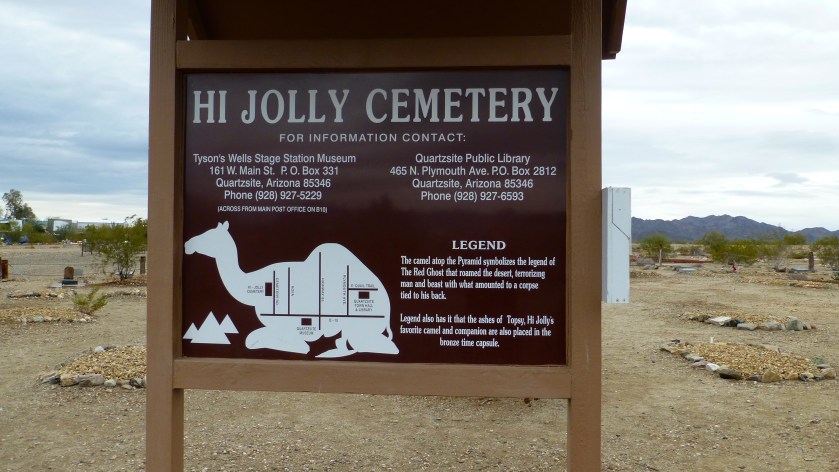


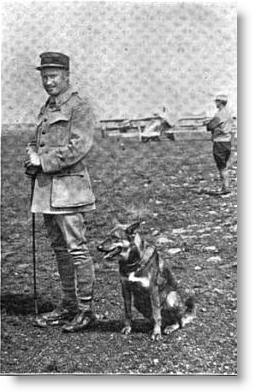
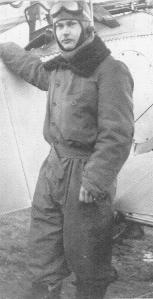
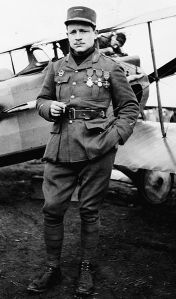
 Escadrille N.124 changed its name in December 1916, adopting that of a French hero of the American Revolution. Marie-Joseph Paul Yves Roch Gilbert du Motier, Marquis de Lafayette. Five French officers commanded a core group of 38 American volunteers, supported by all-French mechanics and ground crew. Rounding out the Escadrille were the unit mascots, the African lions Whiskey and Soda.



 The Nobel Prize for Peace was awarded on October 12 in Oslo, Norway, to the Intergovernmental Panel on Climate Change (IPCC) and Albert Arnold Gore Jr. “for their efforts to build up and disseminate greater knowledge about man-made climate change, and to lay the foundations for the measures that are needed to counteract such change”.
 Historical Easter Eggs - Today in History
You must be logged in to post a comment.