July 26, 1945 Blood in the Water

Naval Command had not the slightest idea of what happened to USS Indianapolis.  A random patrol aircraft discovered men floating in open ocean. The last survivor was plucked from the water well past half-dead following nearly five days in the water.


The Portland class heavy cruiser USS Indianapolis set out on her secret mission July 16, 1945, under the command of Captain Charles Butler McVay III.  What very few knew at that time, “Indie” was delivering “Little Boy” to the Pacific island of Tinian, the atomic bomb later dropped on Hiroshima.

USS Indianapolis (CA-35) underway September 27, 1939

Indianapolis made her delivery on July 26, arriving at Guam two days later and then heading for Leyte to take part in the planned invasion of Japan. She was expected to arrive on the 31st.

Indianapolis Sub
I-58

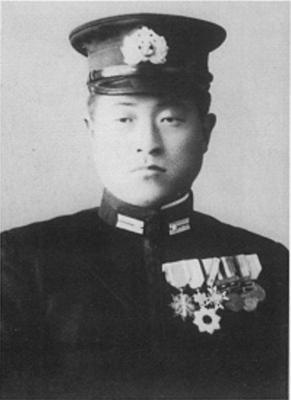
The Japanese submarine I-58, Captain Mochitsura Hashimoto commanding, fired a spread of six torpedoes at the cruiser, two striking Indianapolis’ starboard bow at fourteen minutes past midnight on Monday, July 30. The damage was massive.  Within 12 minutes, the 584-ft, 9,950-ton vessel had rolled over, gone straight up by the stern, and sunk beneath the waves.

Approximately 300 of Indianapolis’ 1,196-member crew were killed outright, leaving nearly 900 treading water. Many had no life jackets.  There had been no time, and there were few life boats.
indianapolis_2
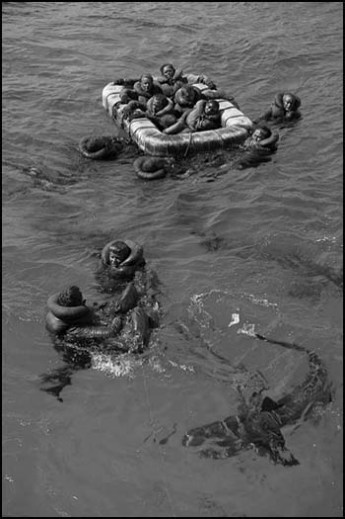
Caribbean Reef sharks circling the sailors in reenactment scene after USS Indianapolis had been sunk by Japanese submarine. As seen on OCEAN OF FEAR: WORST SHARK ATTACK EVER. H/T photographer: Tim Calver

The ordeal faced by the survivors, is beyond description.  Alone and stranded in open ocean, these guys treaded water for four days, hoping and praying for the rescue that did not come.

Shark attacks began on the first day, and never let up. Kapok-filled life vests became waterlogged and sank after 48 hours, becoming worse than useless. Exhaustion, hypothermia, and severe sunburn took their toll as the hours turned into days. Some men went insane and began to attack their shipmates, while others found the thirst so unbearable that they drank seawater, setting off a biological chain reaction which killed them within a few hours. Some simply swam away, following some spectral vision that only he could see. Through it all, random individuals would suddenly rise up screaming from the ocean, then to disappear forever, as the sharks claimed another victim.

Naval Command had not the slightest idea of what happened to Indianapolis, nor why she didn’t show up on the 31st.  A random patrol aircraft passing the area that Thursday afternoon, that finally discovered men floating in open ocean. The last Indianapolis survivor was plucked from the ocean Friday afternoon, well past half-dead after nearly five days in the water. Of the 900 or so who survived the sinking, only 316 remained alive at the end of the ordeal.
mochitsura-hashimoto
Mochitsura Hashimoto

The Navy had committed multiple errors, from denying McVay’s requested escort to informing him that his route was safe, even when the surface operations officer knew there were at least two Japanese submarines, operating in the area.

No captain in the history of the United States Navy was subjected to court-martial for losing a ship sunk by an act of war.  The United States Navy lost over 350 ships to combat operations during WW2.  It didn’t matter.  On this occasion, someone was going to pay.

A hastily convened court of inquiry was held in Guam on August 13, leading to McVay’s court-martial. There was evidence that the Navy itself had put the ship in harm’s way.  When prosecutors flew the I-58 commander in to testify, Hashimoto swore that zigzagging would have made no difference. The Japanese Commander even became part of a later effort to exonerate McVay, but to no avail. Charles Butler McVay III was convicted of “hazarding his ship by failing to zigzag“, his career ruined.
450729-charles-mcvay
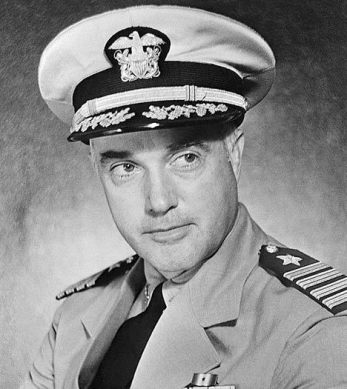
Charles Butler McVay, III

McVay had wide support among Indianapolis’ survivors, but opinion was by no means unanimous. Birthdays, anniversaries and holidays would come and go and there was always some piece of hate mail, blaming him for the death of a loved one. One Christmas missive read “Merry Christmas! Our family’s holiday would be a lot merrier if you hadn’t killed my son”.

McVay began to doubt himself.  By 1968 he must have felt the weight of Indianapolis’ dead, like a great stone upon his shoulders.

On November 6, 1968, Charles Butler McVay III sat down on his front porch in Litchfield Connecticut, took out his Navy revolver, and shot himself.  He was cremated, his ashes scattered at sea.

It would take more than 20 years for exonerating evidence to be declassified.

Afterward:
Hunter Alan Scott was eleven and living in Pensacola when he saw the movie “Jaws”, in 1996. The boy was fascinated by the movie’s brief mention of Indianapolis’ shark attacks. The following year, Scott created his 8th grade “National History Day” project on the USS Indianapolis sinking. The boy interviewed nearly 150 survivors and reviewed 800 documents.  The more he read, the more he became convinced that Captain McVay was innocent of the charges for which he’d been convicted.

Scott’s National History Day project went up to the state finals, but was rejected because he had used the wrong type of notebook to organize the material.

artb

He couldn’t let it end there. Scott began to attend Indianapolis survivors’ reunions, at their invitation, and helped to gain a commitment in 1997 from then-Representative Joe Scarborough that he would introduce a bill in Congress to exonerate McVay the following year.

Senator Bob Smith of NH joined Scarborough in a joint resolution.  Hunter Scott and several Indianapolis survivors were invited to testify before Senator John Warner and the Senate Armed Services committee on September 14, 1999.

Holding a dog tag in his hand, Scott testified “This is Captain McVay’s dog tag from when he was a cadet at the Naval Academy. As you can see, it has his thumbprint on the back. I carry this as a reminder of my mission in the memory of a man who ended his own life in 1968. I carry this dog tag to remind me that only in the United States can one person make a difference no matter what the age. I carry this dog tag to remind me of the privilege and responsibility that I have to carry forward the torch of honor passed to me by the men of the USS Indianapolis”.

The United States Congress passed a resolution in 2000, signed into law by President Bill Clinton on October 30, exonerating Charles Butler McVay III of the charges which had led to his court martial, humiliation and suicide.
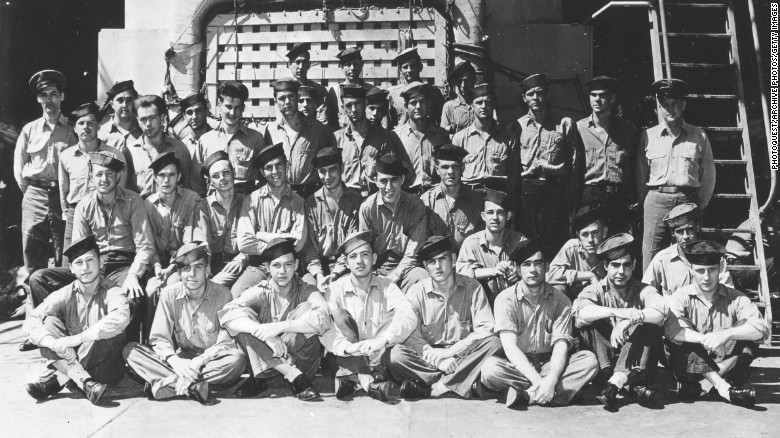
170819163129-02-uss-indianapolis-crew-restricted-exlarge-169
Some of Indianapolis’ crew, before her sinking.

The record cannot not be expunged.  Congress has rules against even considering bills altering military records, and there is no means by which to reverse a court-martial.  It’s never happened.  Yet Captain McVay was exonerated, something that the Indianapolis survivors had tried to accomplish without success.  Until the intervention of a 12-year-old boy.  Who said one person can’t make a difference?

Today, only 3 of  Indianapolis’ survivors remain alive.  The wreck of the “Indy” was discovered in August 2017, in 18,000-feet of water.  Leader of the civilian expedition which located the wreck, Microsoft co-founder Paul Allen commented ”To be able to honor the brave men of the USS Indianapolis and their families through the discovery of a ship that played such a significant role in ending World War II is truly humbling”.

July 25, 1944 Doodlebug

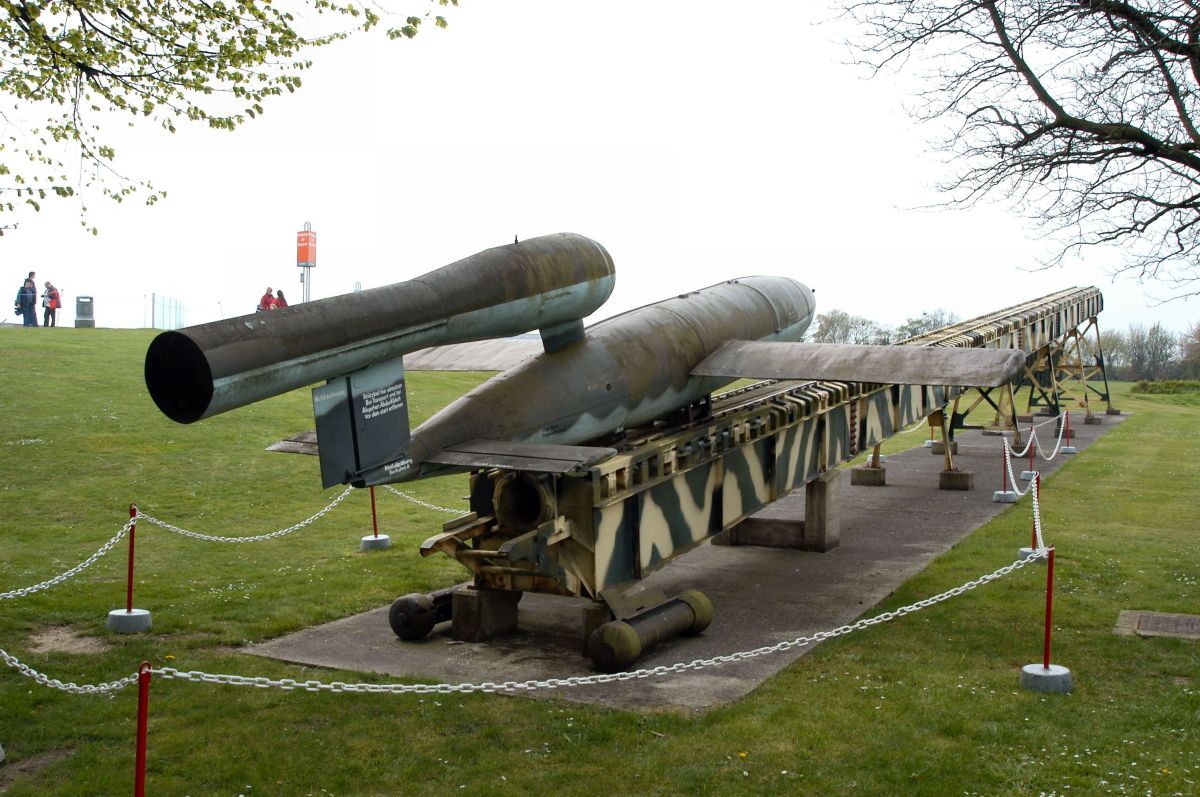
The Nazis called this new and terrifying weapon, “Vergeltungswaffe”, or “Vengeance weapon”. Finnish soldiers called the thing a flying torpedo. At over 27-feet long it was a flying bomb with a payload of nearly a ton of high explosive. Allies called this Nazi superweapon the “Buzz Bomb” or simply, “Doodlebug”.


In the early morning hours of June 13, 1944, a member of the Royal Observer Corps (ROC) spotted a bright yellow glow in the early morning darkness. The sentry was on the lookout for such a sight and immediately informed his superiors. The code word, “diver”.

The yellow glow went out within moments and plummeted to the earth, landing in the village of Swanscombe, some 20 miles east of the Tower of London. Other such devices were soon falling from the sky with terrible exclusive force. Cuckfield, West Sussex, London and Sevenoaks, in Kent. This time only six people died in a place called Bethnal Green. There would be more.

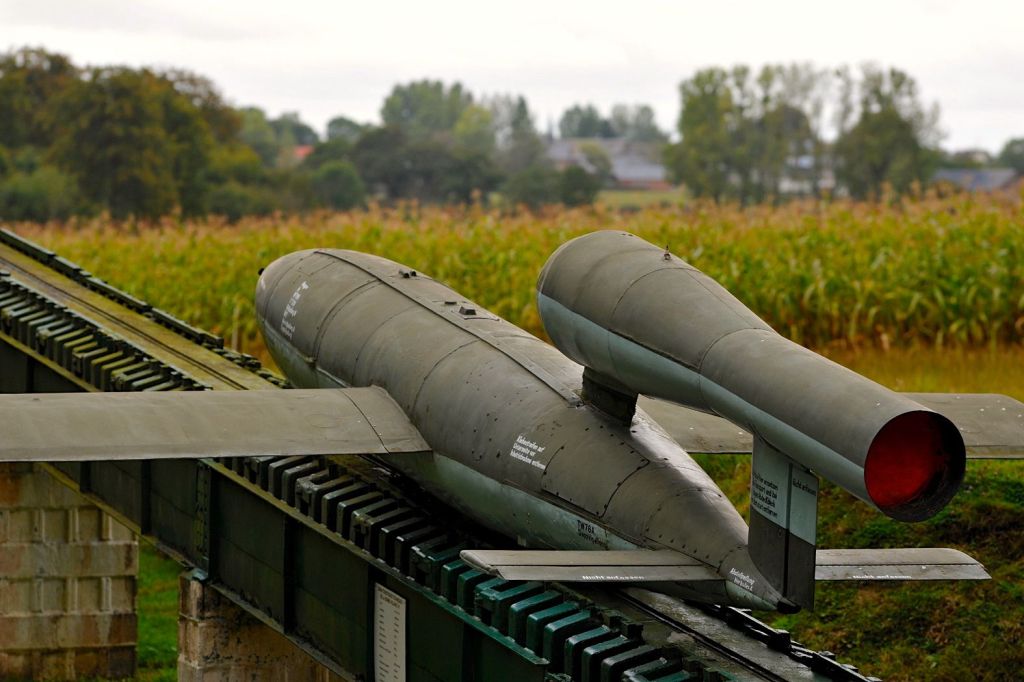
Most V1 rockets were launched from a simple rail system, others taken aloft attached to host aircraft

The Nazis called this new and terrifying weapon, “Vergeltungswaffe”, or “Vengeance weapon”. Finnish soldiers called the thing a flying torpedo. At over 27-feet long it was a flying bomb with a payload of nearly a ton of high explosive. Allies called this Nazi superweapon the “Buzz Bomb” or simply, “Doodlebug”.

Nazi Germany aimed as many as 10,492 of these Doodlebug rockets against England. Some 6,000 were killed in London alone, with another 18,000 serious injuries. The subsonic Doodlebug was an effective terror weapon but, bad as it was to be the target of one of these things, the “low and slow” trajectory and the weapon’s short range lacked the strategic punch Nazi Germany needed to win the war.

The next generation V2 missile was a different story.  The V2 ushered in the era of the ballistic missile and Nazi Germany was the first off the starting line.

The Peenemünde Aggregat A4 V2 was an early predecessor of the Cruise Missile, delivering a 2,148 pound payload at 5 times the speed of sound over a 236-mile range. While you could hear the V1 coming and seek shelter, victims of the V2 didn’t know they were under attack, until the weapon had exploded.

When Wernher von Braun showed Adolf Hitler the launch of the V2 on color film, Hitler jumped from his seat and shook Braun’s hand with excitement. “This is the decisive weapon of the war. Humanity will never be able to endure it,” Hitler said, “If I had this weapon in 1939 we would not be at war now.”

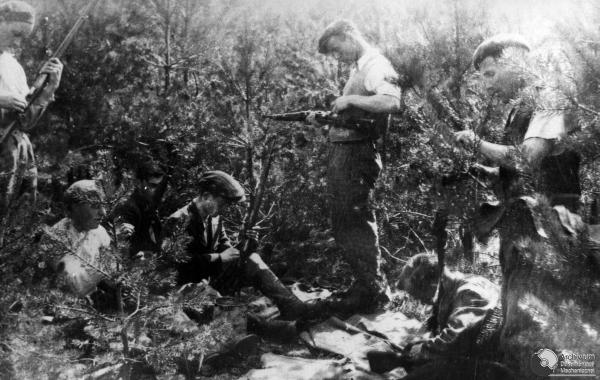
Allies were anxious to get their hands on this new secret weapon. In early 1944 they had their chance when a V2 crashed into a muddy bank of the Bug River in Nazi-occupied Poland, without exploding. The Polish underground was waiting for such an opportunity and quickly descended on the rocket, disguising it with brush. Desperate to retrieve the weapon, Germans conducted a week long aerial and ground search for the V2, but failed find it under all that camouflage.

Polish Partisans preparing for battle_WW2
Polish Partisans preparing for battle, WW2

The search came to an end after what must have seemed an eternity, when partisans returned to the site. This time they brought four Polish scientists who carefully disassembled the weapon, packing the pieces in barrels. The parts were then shipped to a barn in Holowczyce, just a few miles away.

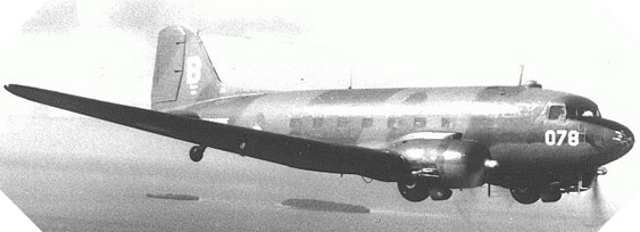
The allied effort to retrieve the stolen missile, code named “Most III”, got underway on this day in 1944, when Royal New Zealand Air Force 1st Lt Stanley George Culliford landed his Dakota C47 in the early morning darkness at a secret air strip near Tarnow.

1920px-Home_Army_intelligence_on_V1_and_V2
Home Army intelligence on V1 & V2

The V2 chassis and several technical experts were loaded on board, but it was all too much.  The overloaded C47 couldn’t move on the wet, muddy field – the port wheel stuck fast in the mud.  Everything had to be offloaded, Polish partisans working desperately to free the aircraft as dawn approached. They stuffed the wheel track with straw, and then laid boards in the trench.  Nothing worked.

Co-pilot Kazimierz “Paddy” Szrajer thought the parking brake must be stuck, so the hydraulic leads supplying the brake, were cut. That didn’t work, either. In the end, partisans were frantically digging trenches under the aircraft’s main wheel. Two attempts failed to get the aircraft off the ground, and Culliford was thinking about blowing up the plane and burning all the evidence.  There could only be one more attempt.

The aircraft lumbered off the ground on the third try.  The last of the partisans scattered into the night, even as the headlights of Nazi vehicles could be seen, approaching in the early morning darkness.

18lfbi20zpunyjpgThere would be 5 hours of unarmed, unescorted flight through Nazi-controlled air space and an emergency landing with no brakes, before those V2 rocket components finally made it to England.
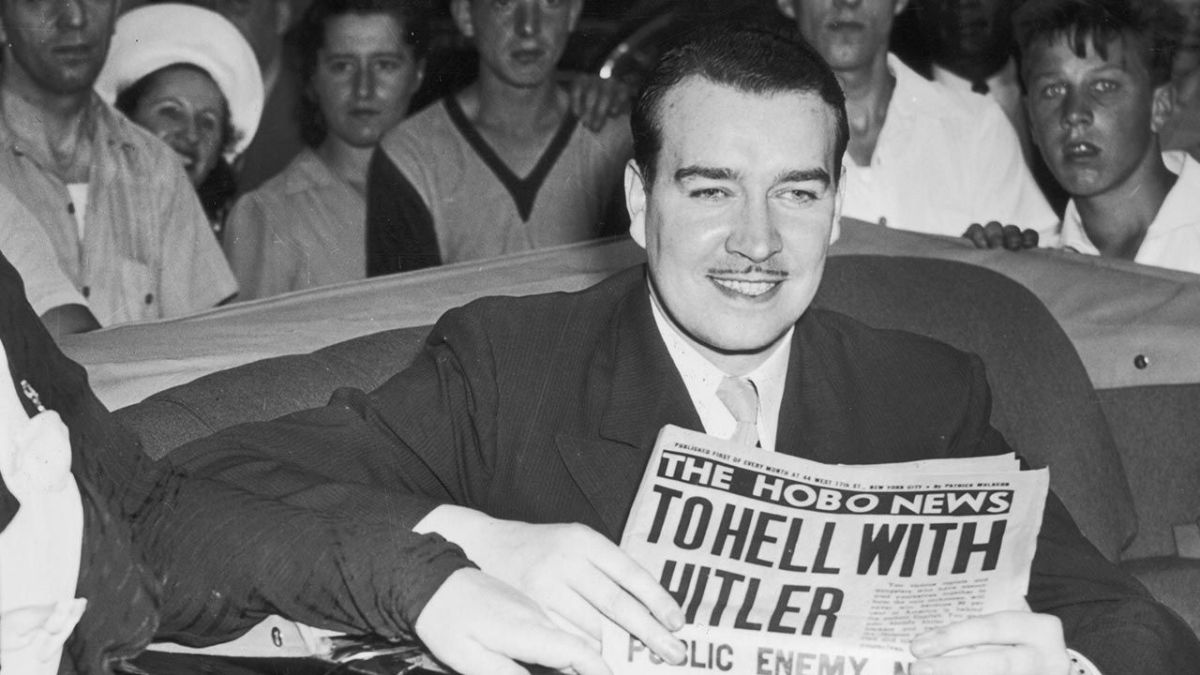
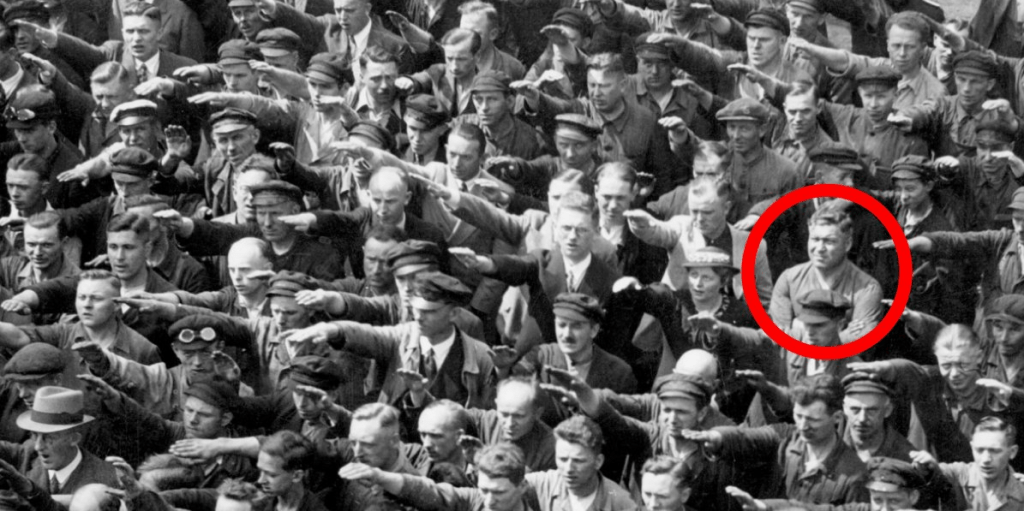
Today, few remember the names of these heroes, struggling in the dark to defeat the forces of Tyranny.  We are left only to imagine a world in which Nazis remained in sole possession of the game changing super weapons, of WWII

July 14, 1933 Willy Hitler, USN

Drafted into the Navy, the induction officer asked his name.  The reply came back, “Hitler”. “Glad to see you Hitler,” the officer replied, “My name’s Hess.”

Suppose for a moment that Gallup or Ipsos were to conduct a survey, naming the top ten bad guys in history. One name on the top of such a list, would be that of the Nazi party leader, Adolf Hitler.

Hitler himself wouldn’t have the term, “Nazi”. That was bitter insult, coined long before the rise of the Nazi party. Hitler himself used the term, Nationalsozialistische Deutsche Arbeiterpartei for the National Socialist German Workers ‘ Party or NSDAP for short.

Be this guy

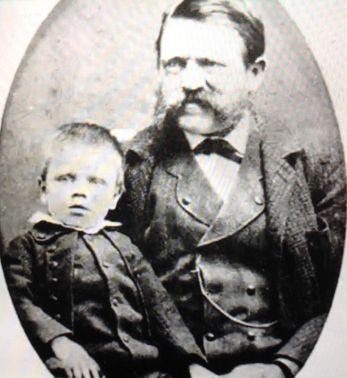
Alois Johann was born on June 7, 1837 to the 42-year-old unmarried peasant woman, Maria Schicklgruber.  The boy’s father was known to her, but the priest wrote “illegitimate” on the baptismal certificate. So it was the boy took the surname Schicklgruber, after his mother.

Johann Georg Hiedler married Maria when Alois was five.  By age ten, the boy was sent to live with Heidler’s brother, Johann Nepomuk Hiedler. Three years later, Alois  Schicklgruber moved to Vienna where he worked as a cobbler’s apprentice, finally becoming a low level civil servant in the Austrian Finance Ministry.

There are plenty of variations on the Hiedler family surname. ‘Hiedler’ apparently derives from an Austro-Bavarian dialect, meaning one who lives by a Hiedl, or underground spring. Other derivations come from the German Hutte (hut), as in “one who lives in a hut”.  Be that as it may, the variations appear to have been interchangeable.  Common variations included Hitler, Hiedler, Hüttler, Hytler, and Hittler.

5025565e94b0d956cd32e9326850bdf6

There are plenty of tales regarding the man’s paternity, but none are any more than that. Alois Schicklgruber ‘legitimized’ himself in 1877, adopting a variant on the name of his stepfather and calling himself ‘Hitler”.

Historian Alan Bullock has described Alois Hitler as “hard, unsympathetic and short-tempered”. He seems to have had a problem with marital fidelity, as well. Alois was thirty-six when he married Anna Glasl-Hörer, the 50-year-old, invalid daughter of a customs official. By age 43, he was carrying on with the 19-year-old servant girl, Franziska “Fanni” Matzelsberger, with whom he had an illegitimate son, Alois Jr.

Alois Sr. was for all intents and purposes ‘married’ to the Matzelsberger girl for the next two years, while his lawful wife Anna, sickened and died. Hitler, 45, married Matzelsberger, age 21 in May, 1883. The couple’s second child Angela, was born two months later.

Sixteen-year-old Klara Pölzl moved in years earlier as household servant, and no woman was going to do to the new Mrs. Hitler, that which she herself had done to another woman.  Frau Hitler demanded that the “servant girl” be sent away but Pölzl would return the following year, as she too sickened and died.

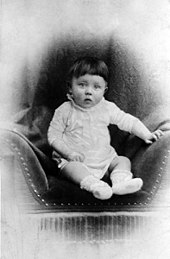
170px-Bundesarchiv_Bild_183-1989-0322-506,_Adolf_Hitler,_Kinderbild_retouched
Adolf Hitler as an infant

Pölzl was by this time pregnant with the first of the couple’s four children, but there was a problem. There are many candidates for Alois (Schicklgruber) Hitler’s biological father. If Hitler’s step-father was in fact his real sire as implied by the name change, that made Klara Pölzl his first cousin once removed, at least by law. The couple was too close to marry.

Alois petitioned the church for a humanitarian waiver. The waiver was granted and Klara Pölzl became the third Frau Hitler in January 1885. The couple welcomed little Gustav into the world, four months later.

The future leader of the National Socialist Party was born four years later, by that time the only child born to his mother Klara.  Her first three children Gustav, Ida and Otto, all died in childhood.

Alois Hitler, Sr. seems to have been a thoroughly unlikable man, lording it over neighbors and brutalizing his own family. Historian Robert Waite notes that, “Even one of his closest friends admitted that Alois was ‘awfully rough’ with his wife and ‘hardly ever spoke a word to her at home’.” The man would berate Klara and children alike and apparently beat them, on a regular basis.  Alois Jr. left home never to return, following a violent argument with his father. The elder Alois swore that he would never give the boy a single mark of inheritance, over what the law required. The youngest, Adolf, grew up a frail and sickly child, doted on by his mother and often at the center of violent rages by his father.

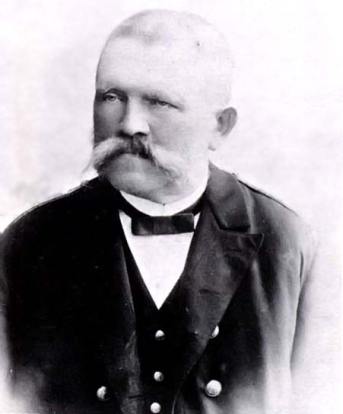
Alois-Hitler-2
Alois Hitler

Alois tried to browbeat his youngest into following him, into the civil service. The boy feared and detested his father, and wanted nothing to do with him.  Adolf Hitler would follow the path which would bring him to that list of the great monsters of the 20th century, as his brother Alois Jr., made his own way in the world.

Some apples don’t fall far from the tree. Alois Hitler Jr. went to Ireland, where he met Bridget Dowling at the Dublin Horse Show. Nothing more than a poor kitchen porter at the Shelbourne Hotel, Hitler managed to convince her that he was, in fact, a wealthy hotelier, touring Europe. The couple eloped to London in June 1910. Bridget’s father William threatened to bring Hitler up on charges of kidnapping, and only relented when Bridget pleaded with him to stop.

It was a decision she would come to regret.

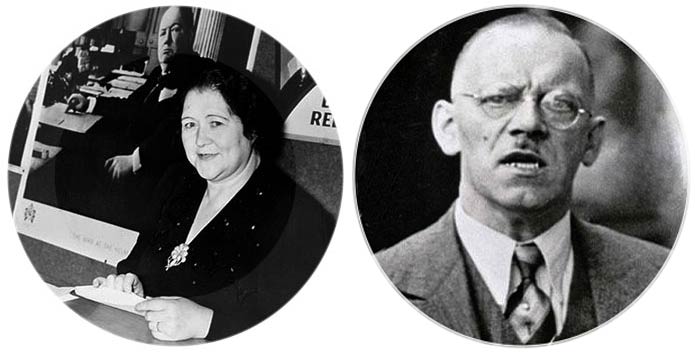
Dowling-Hitler
Dowling-Hitler

The couple had their only child in 1911, William Patrick Hitler. Alois left home in Liverpool in May 1914 to establish himself in the safety razor business.  He had become violent by this time and begun to beat the boy.  Bridget refused to go with William’s father and ended up, raising the boy alone.

War descended over Europe in 1914, when the elder Hitler met and (bigamously) married his second wife, Hedwig Heidemann.

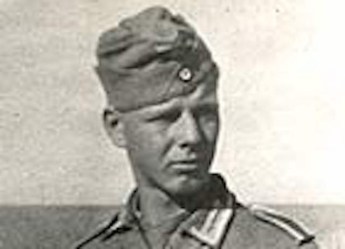
heinz-640x462
Heinz Hitler was captured by Soviet Forces in 1942, and tortured to death

Alois’ second marriage  produced a son, Heinz, who went on to become a committed Nazi. In 1933, William moved to Germany, in an effort to take advantage of his uncle’s rise to power.  He got a job at an Opel factory and later worked as a car salesman, but  badgered his uncle for a better job. At last, he threatened to sell embarrassing family stories to the newspapers, if Uncle Adolf didn’t do something to improve his “personal circumstances”.

Ironically, Nazi party regulations precluded Adolf Hitler himself from proving his own “Aryan Purity”, based on his father’s unknown paternity.  For years, Hitler was dogged by hushed speculation about “Jewish blood”.  Quiet rumor became front-page headline this day in 1933, when Austrian newspapers published reports that the German Chancellor, sworn enemy of all things Jewish was himself, a Jew.  That same day, July 14, all political parties but the Nazi party, were banned from Germany.

William-Patrick-Hitler
Pharmacists Mate William Patrick Hitler

Der Führer of the fledgling thousand-year Reich promised his nephew a “high ranking post” in 1938, in exchange for renunciation of his British citizenship. Suspecting a trap, the younger Hitler fled Germany, traveling to the United States in 1939. William Patrick Hitler petitioned President Roosevelt for permission to join the American side which he received, in 1944.

Drafted into the Navy, the induction officer asked his name.  The reply came back, “Hitler”. “Glad to see you Hitler,” the officer replied, “My name’s Hess.”

William Patrick Hitler served honorably for the duration of the war, holding the rank of Pharmacists Mate (a designation later changed to Hospital Corpsman) and earning a purple heart in the process.    The infamous dictator’s half-brother Heinz was captured by Soviet forces in 1942, and tortured to death. Their infamous uncle took his own life in 1945 and died, childless.

July 14, 1987 The Other Hitler

The younger Hitler’s childhood home in Liverpool was destroyed in the last air raid of the Liverpool Blitz, in 1942.Alexander

Wishing to live a life of anonymity, “Willy” Hitler changed his name to William Patrick  Stuart-Houston at the end of the war, and married fellow German emigre Phyllis Jean-Jacques in 1947.  The couple made a home in Patchogue, New York and raised four sons: Alexander Adolf (b. 1949), Louis (b. 1951), Howard Ronald (1957–1989), and Brian William (b. 1965).

William Patrick Stuart-Houston, nephew to one of the worst dictators in history, fought with honor on the side of his uncle’s mortal enemy and died July 14, 1987.

IMG_20170811_0005-300x207
Alexander

None of Willy and Phyllis’ four sons ever produced an heir. Much has been made of a pact to end the Hitler line. Alexander Adolf Stuart-Houston became an American social worker, and always dismissed such speculation. There was no such agreement among the last four boys in the family.  It’s just the way things turned out.

June 12, 1942 A Night at the Beach

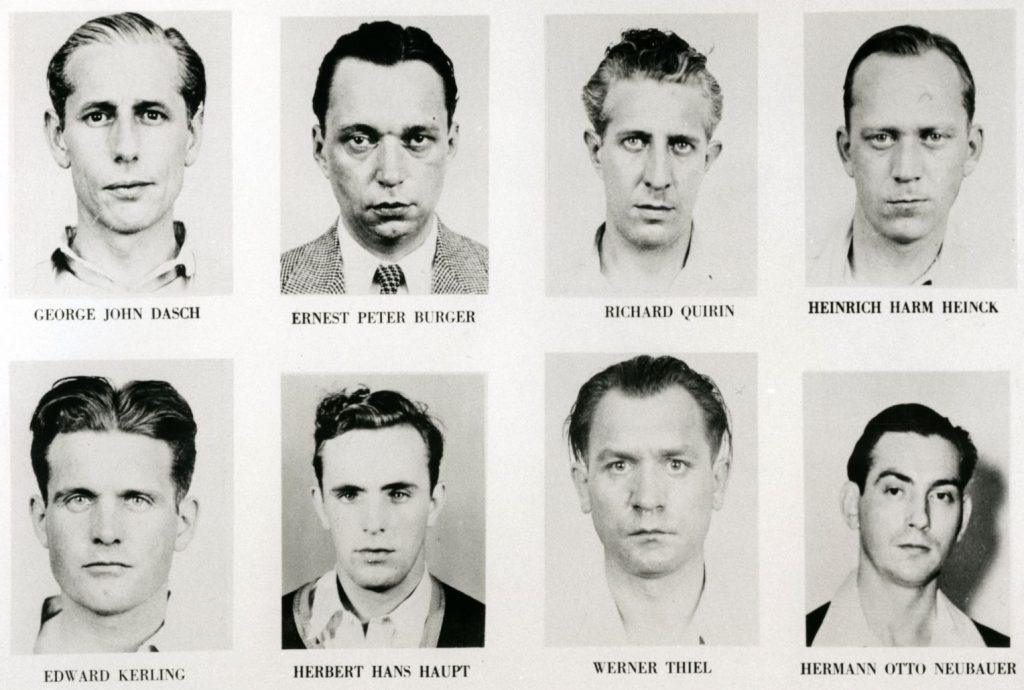
Much has been written about the eight central characters in this story. These individuals have been described by contemporary and subsequent sources alike, as Saboteurs, Nazis and Spies. Certainly to call them such, fed into the political expectations of the day. Yet their country had chosen them for this mission based on unique qualifications, separate and apart from whatever devotion they felt for the fatherland, or the Nazi party. It may be that these guys deserve every evil name that’s been heaped on them. Or maybe they were just eight guys who got caught up between two nations at war. It’s an interesting story. You decide.

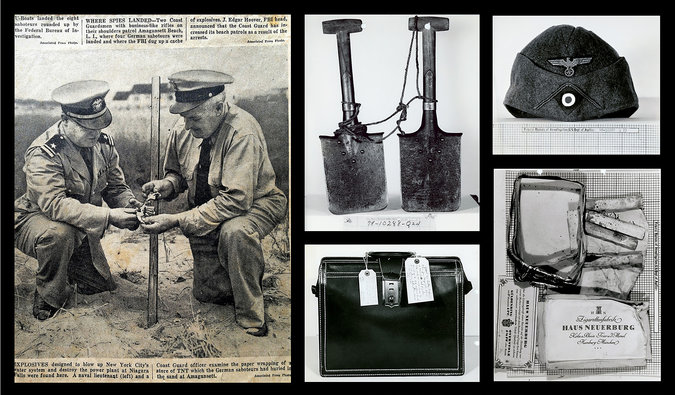
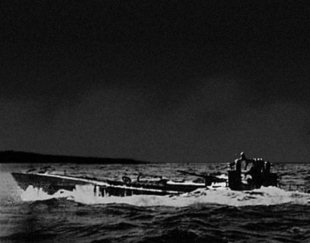
The German submarine U-202 commanded by Hans Linder came to the surface on the night of June 12 at Amagansett, New York, near Montauk Point. An inflatable emerged from the hatch and rowed to shore at what is now Atlantic Ave beach, in Long Island. Four figures stepped onto the beach wearing German military uniforms.  If they’d been captured at this point every one of them wanted to be treated as enemy combatants, instead of spies.

Pastorius

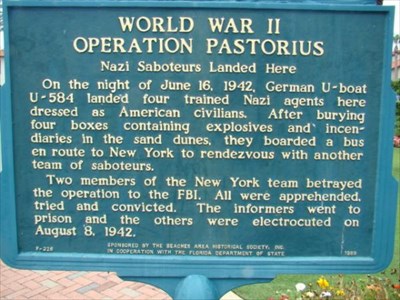
This was “Operation Pastorius”, a mission was to sabotage American economic targets and damage defense production. Targets included hydroelectric plants, train bridges and factories. The four had nearly $175,000 in cash, some good liquor and enough explosives to last them two years or more.

German plans began to unravel as they buried their uniforms and explosives in the sand.  21-year old Coast Guardsman John Cullen was a “sand pounder”.  Armed only with a flashlight and a flare gun, Cullen had the unglamorous duty of patrolling the beaches, looking for suspicious activity.

It was “so foggy that I couldn’t see my shoes” Cullen said, when a solitary figure came out of the dunes.  He was George John Davis he said, a fisherman run ashore.  But something seemed wrong and Cullen’s suspicions were heightened, when another figure came out of the darkness.  This one was shouting something in German, when “Davis” spun around and shouted, “You damn fool!  Go back to the others!”

With standing orders to kill anyone who confronted them during the landing, Davis hissed, “Do you have a mother? A father?  Well, I wouldn’t want to have to kill you.”

It was Cullen’s lucky day.  “Davis’” real name was Georg John Dasch.  He was no Nazi. He’d been a waiter and dishwasher before the war, who’d come to the attention of the German High Command because he had lived for a time, in the United States.   “Forget about this, take this money, and go have a good time” he said, handing over a wad of bills.   $260 richer, John Cullen sprinted two miles directly to the Coast guard station.

Cullen
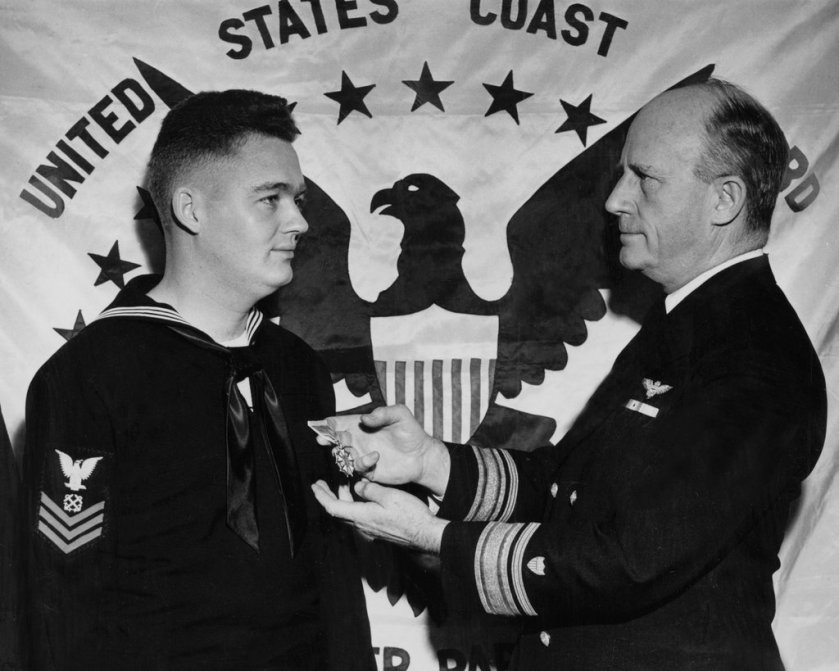
Seaman John Cullen, left, received the Legion of Merit from Rear Adm. Stanley V. Parker for his service in WW2

Before long the beach was swarming with Coast Guardsmen. A dawn broke it was easy to see something heavy had been dragged, across the sand. Within minutes boxes were found containing Nazi uniforms.

Four days later, U-584 deposited a second team of four at Ponte Vedra Beach, Florida, south of Jacksonville. As with the first, this second group had lived and worked in the United States, and were fluent in English.  Two of the eight were US citizens.

Georg Dasch had a secret.  He had no intention of carrying out his mission.  He summoned Ernst Peter Burger to an upper-level hotel room.  Gesturing toward an open window Dasch said  “You and I are going to have a talk, and if we disagree, only one of us will walk out that door—the other will fly out this window.”

Pastorius-Plaque

Burger turned out to be a naturalized US citizen who’d spent 17 months in a concentration camp.  He hated the Nazis as much as Dasch. Then and there, the two of them decided to defect.

Dasch tested the waters. Convinced the FBI was infiltrated with Nazi agents, he telephoned the New York field office.  Put on hold with the call transferred several times, Dasch was horrified to have the agent who finally listened to him, quietly hang up the phone.  Had he reached a German mole?  Had the call been traced?

Dasch had no way of knowing, he’d been transferred to the ‘nut desk’.  The FBI thought he was a clown.

Finally, Dasch went to the FBI office in Washington DC, only to be treated like a nut job.  Until he dumped $84,000 cash on Assistant Director D.M. Ladd’s desk, a sum equivalent to about a million dollars, today.  Dasch was interrogated for hours, and happily gave up everything he knew.  Targets, German war production, he spilled it all, even a handkerchief with the names of local contacts, written in invisible ink.  He couldn’t have been a very good spy, though.  He forgot how to reveal the names.

All eight were in custody, within two weeks.

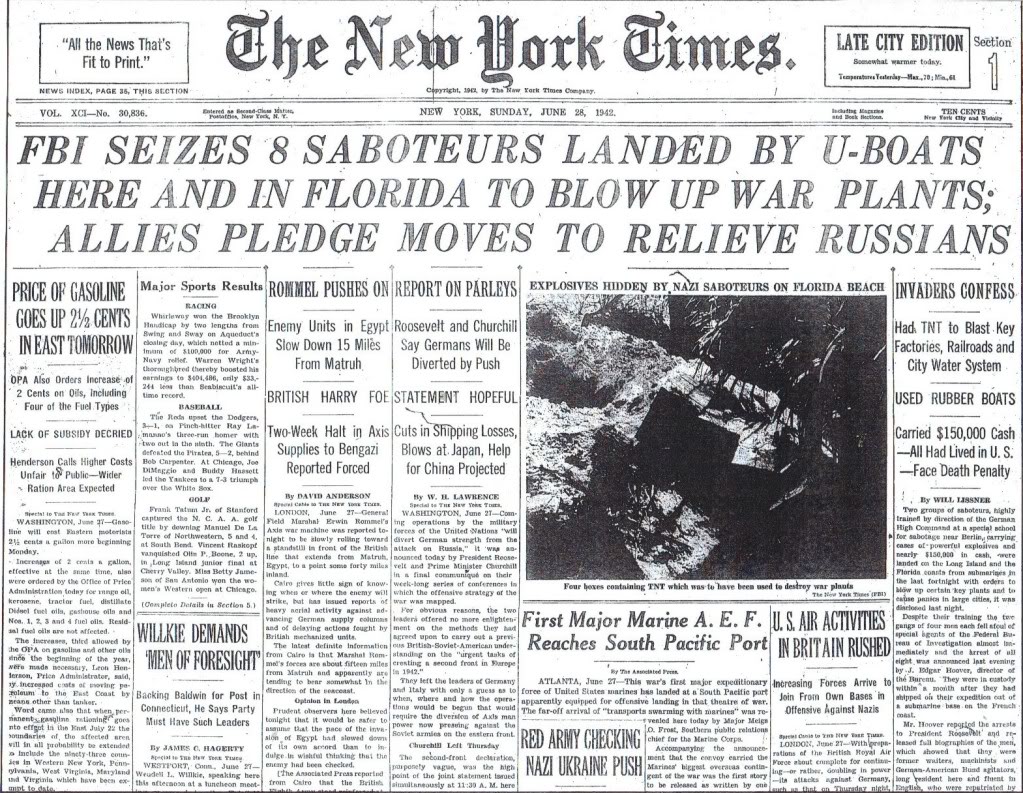
J. Edgar Hoover announced the German plot on June 27, but his version had little resemblance to that of Dasch and Burger.  As with the brief he had given President Roosevelt, Hoover praised the magnificent work of FBI detectives and the Sherlock Holmes-like powers of deduction which led Assistant Director Ladd to that $84,000.  Dasch and Burger’s role in the investigation was conveniently left out, as was the fact that the money had all but bounced Mr. Ladd off the head.

Neither Dasch nor Burger expected to be thrown in a cell, but agents assured them it was a formality.  Meanwhile, a credulous and adoring media speculated on how Hoover’s FBI had done it all.  Did America have spies inside the Gestapo?  German High Command?  Were they seriously that good?

Attorneys for the defense wanted a civilian trial, but President Roosevelt wrote to Attorney General Francis Biddle: “Surely they are as guilty as it is possible to be and it seems to me that the death penalty is almost obligatory”. The case went all the way to the Supreme Court, where the decision “Ex parte Quirin” became and remains precedent to this day, for the way unlawful combatants are tried.  All eight would appear before a military tribunal.

Whether any of the eight were the menace they were made out to be, remains unclear.  German High Command had selected all eight based on past connections with the United States, and ordering them to attack what they may have regarded as their adopted country.  Several were arrested in gambling establishments, others in houses of prostitution.  One had resumed a relationship with an old girlfriend and the pair was planning to marry.  Not the behavior patterns you might expect from “Nazi saboteurs”.

Pastorius-Sentinel

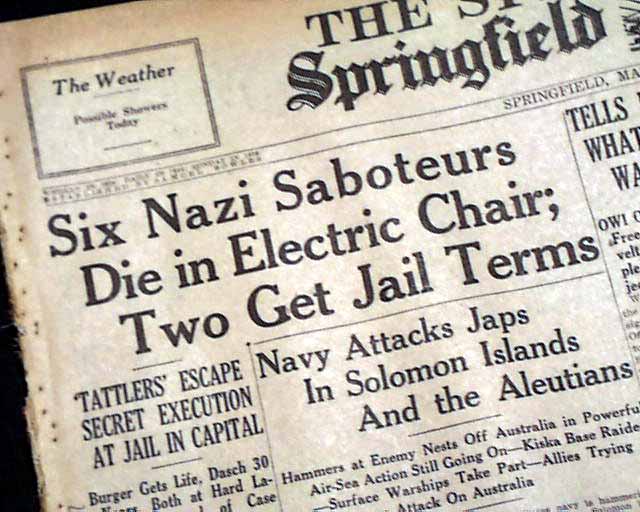
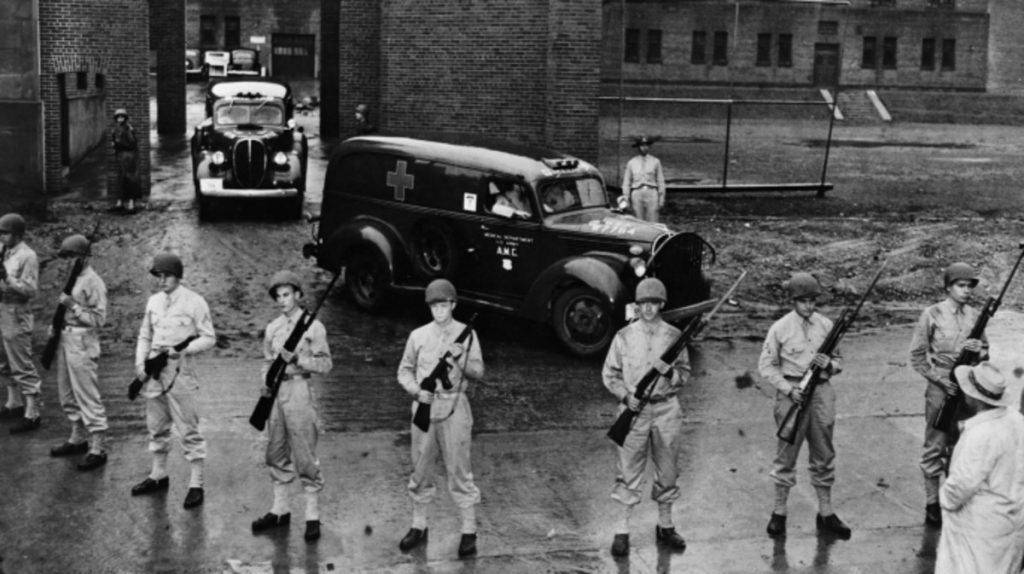
The trial was held before a closed-door military tribunal in the Department of Justice building in Washington, the first such trial since the Civil War. All eight defendants were found guilty and sentenced to death.  It was only on reading trial transcripts, that Roosevelt learned the rest of the story.  The President commuted Burger’s sentence to life and Dasch’s to 30 years, based on their cooperation with the prosecution. The other six were executed by electric chair on August 8, in alphabetical order.

Bodies of the six men executed are transported by ambulance, under armed guard.

After the war, Burger and Dasch’s trial transcripts were released to the public, over the strenuous objections of J. Edgar Hoover.  In 1948, President Harry S. Truman bowed to political pressure, granting the men executive clemency and deporting them both to the American zone of occupied Germany.  The pair found themselves men without a country hated as spies in America, and traitors in Germany.

The reader may decide, whether Hoover and Roosevelt operated from base and venal political motives, or whether the pair was playing 4-D chess.  Be that as it may, Hitler rebuked Admiral Canaris, and seems to have bought into Hoover’s version of FBI invincibility.  There would be no further missions of this type, save for one in November 1944, when two spies were landed on the coast of Maine to gather information on the Manhattan project.

Georg Dasch campaigned for the rest of his life, to be allowed to return to what he described as his adopted country.  Ernst Burger died in Germany in 1975, Dasch in 1992.  The pardon Hoover promised both men over a half-century earlier, never materialized.

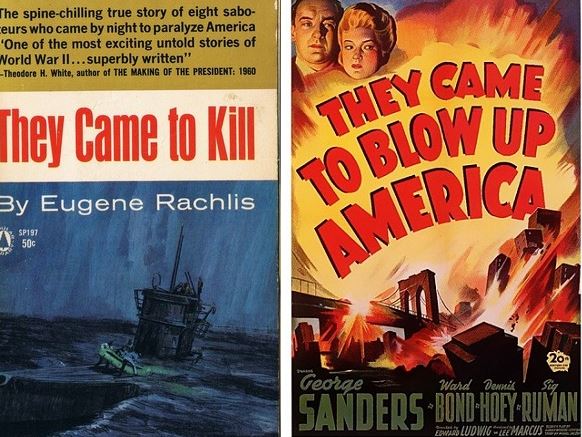
Neither Dasch nor Burger could have dreamed of what they would become, in the popular imagination.

June 10, 1944 Ghost Village

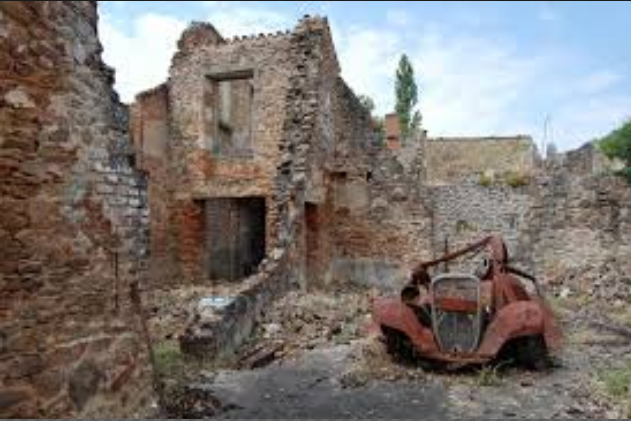
Down this road, on a summer day in 1944. . . The soldiers came. Nobody lives here now. They stayed only a few hours. When they had gone, the community which had lived for a thousand years. . . was dead”.

It was D+4 in the invasion of Normandy. The 2nd SS Panzer Division (“Das Reich”) had orders to stop the Allied advance. They were passing through the Limousin region in west central France when SS-Sturmbannführer Adolf Diekmann received word that Waffen-SS officer Helmut Kämpfe was being held captive, by French Resistance forces in the village of Oradour-sur-Vayres.

June 10, 1944 Oradour-sur-Glane

Forget for a moment the idiocy of our age and incontinent use of the term, “Nazi”. The people who committed the atrocity at Oradour-sur-Glane are like unto beasts and not to compared with anyone, from the modern world. May it come to pass that we never see their kind, again.

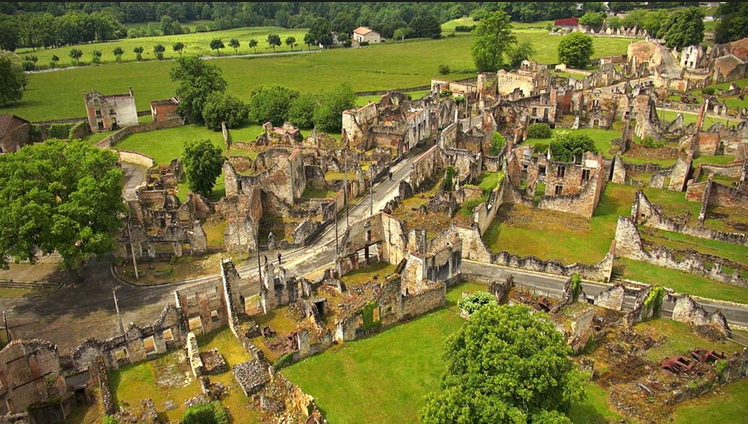
Oradour-sur-Glane-Streets

Diekmann’s battalion sealed off the nearby village of Oradour-sur-Glane, unaware they had confused the place with another village. Everyone in the town was ordered to assemble in the village square to have identity papers examined. The entire population of the village was there plus another 6, unfortunates caught riding their bicycles in the wrong place, at the wrong time.

Women and children were locked in a village church while German soldiers looted the town. The men were taken to a nearby barn where machine guns were already set up.

Oradour-sur-Glane.jpg 1

The Germans aimed for the legs when they opened fire, intending to inflict as much pain as possible. Five escaped in the confusion before the SS lit the barn on fire. 190 men were burned alive.

Oradour-sur-Glane-Church

Nazi soldiers then lit an incendiary device in the church and gunned down 247 women and 205 children, as they tried to escape.

Oradour-sur-Glane.jpg 4

642 inhabitants of Oradour-sur-Glane age one week to 90 years, were murdered in just a few hours. The village was razed to the ground.

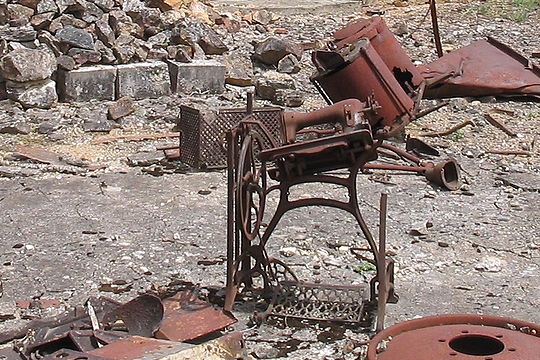
After the war a new village was built on a nearby location, and given the same name. President Charles de Gaulle ordered the original site to remain as is; a memorial to the cruelty of collective punishment and the savagery committed in countless places, by the Waffen-SS: the French towns of Tulle, Ascq, Maillé, Robert-Espagne, and Clermont-en-Argonne; the Polish villages Michniów, Wanaty and Krasowo-Częstki, Warsaw; the Soviet village of Kortelisy; the Lithuanian village of Pirčiupiai; the Czechoslovakian villages of Ležáky and Lidice; the Greek towns of Kalavryta and Distomo; the Dutch town of Putten; the Yugoslavian towns of Kragujevac and Kraljevo, and the village of Dražgoše, in what is now Slovenia; the Norwegian village of Telavåg; the Italian villages of Sant’Anna di Stazzema and Marzabotto. And on, and on, and on.

Oradour-sur-Glane-Hardware

In 1999, French President Jacques Chirac dedicated a memorial museum, the “Centre de la mémoire d’Oradour”. The village stands today as the Nazis left it, 78 years ago today.

It may be the most forlorn place on earth.

Oradour-sur-Glane.jpg 5

The story was featured in the 1974 British television series “The World at War”, narrated by Sir Laurence Olivier. The first and final episodes of the program began with these words:

Down this road, on a summer day in 1944. . . The soldiers came. Nobody lives here now. They stayed only a few hours. When they had gone, the community which had lived for a thousand years. . . was dead. This is Oradour-sur-Glane, in France. The day the soldiers came, the people were gathered together. The men were taken to garages and barns, the women and children were led down this road . . . and they were driven. . . into this church. Here, they heard the firing as their men were shot. Then. . . they were killed too. A few weeks later, many of those who had done the killing were themselves dead, in battle. They never rebuilt Oradour. Its ruins are a memorial. Its martyrdom stands for thousands upon thousands of other martyrdoms in Poland, in Russia, in Burma, in China, in a World at War”.

Oradour-sur-Glane.jpg 3

June 7, 1942 To Alaska

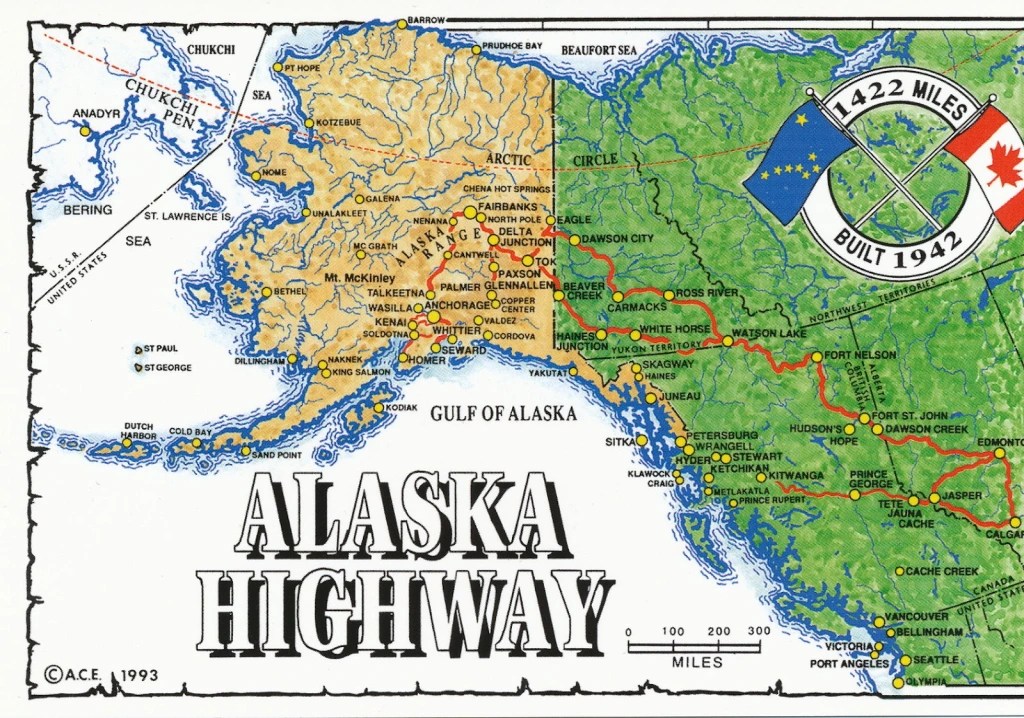
Construction began in March as trains moved hundreds of pieces of construction equipment to Dawson Creek, the last stop on the Northern Alberta Railway. At the other end, 10,670 American troops arrived in Alaska that spring to begin what officers called “the biggest and hardest job since the Panama Canal.”

In 1865, Western Union contemplated plans to install telegraph wires from the US to Siberia, sparking discussions of an road to the Alaskan interior. The proliferation of automobiles in the 1920s caused the idea to pick up steam but the project was a hard sell, for Canadian authorities. Such a road would necessarily pass through Canadian territory while the government believed the project would have little impact, benefiting no more than a few thousand people in the Yukon.

In the days following the surprise attack on Pearl Harbor, Guam and Wake Island fell to Imperial Japanese forces , making it clear that parts of the Pacific coast were vulnerable.

Priorities were changing for both the United States, and Canada.

The Alaska Territory was particularly exposed. Situated only 750 miles from the nearest Japanese base, the Aleutian Island chain had but 12 medium bombers, 20 pursuit planes, and fewer than 22,000 troops in the entire territory, an area four times the size of Texas.

Surviving-AK-blog-1

Colonel Simon Bolivar Buckner Jr., son of the Confederate commander who famously received Ulysses S. Grant’s “Unconditional Surrender” ultimatum at Fort Donelson (“I propose to move immediately, upon your works”), was in charge of the Alaska Defense Command.  Buckner made his made point, succinctly. “If the Japanese come here, I can’t defend Alaska. I don’t have the resources.”

The Army approved construction of the Alaska Highway in February 1942, the project receiving the blessings of Congress and President Roosevelt within the week. Canada agreed to allow the project, provided that the United States pay the full cost, and the roadway and other facilities be turned over to Canadian authorities at the end of the war.

Construction began in March as trains moved hundreds of pieces of construction equipment to Dawson Creek, the last stop on the Northern Alberta Railway. At the other end, 10,670 American troops arrived in Alaska that spring to begin what officers called “the biggest and hardest job since the Panama Canal.”

4517139905_887f3c484a_b
Dawson Creek, 1942

In-between lay over 1,500 miles of unmapped, hostile, wilderness.

The project received a new sense of urgency on June 7, when a Japanese force of 1,140 took control of Attu Island and murdering Charles Jones, a ham radio operator and weather reporter from Ohio. Japanese forces took 45 Aleuts into captivity along with Jones’ wife, Etta.  Adding to the urgency was the fact that the Alaskan winter permits no more than an eight-month construction window.  That period was already well underway.

Construction began at both ends and the middle at once, with nothing but the most rudimentary engineering sketches. A route through the Rocky Mountains had yet to be identified.

06162017_HighwayRadios of the age didn’t work across the Rockies, and the mail was erratic.  The only passenger service available was run by the Yukon Southern airline, a run which locals called the “Yukon Seldom”.  For construction battalions at Dawson Creek, Delta Junction and Whitehorse, it was faster to talk to each other through military officials in Washington, DC.

Moving men to assigned locations was one thing.  Transporting 11,000 pieces of heavy equipment, to say nothing of supplies needed by man and machine, was quite another.

alcan-hwyTent pegs were useless in the permafrost, while the body heat of sleeping soldiers meant waking up in mud. Partially thawed lakes meant that supply planes could use neither pontoon nor ski, as Black flies swarmed the troops by day.  Hungry bears raided camps at night, looking for food.

Engines had to run around the clock, as it was impossible to restart them in the cold. Engineers waded up to their chests building pontoons across freezing lakes, battling mosquitoes in the mud and the moss laden arctic bog. Ground which had been frozen for thousands of years was scraped bare and exposed to sunlight, creating a deadly layer of muddy quicksand in which bulldozers sank in what seemed like stable roadbed.

Alaska Highway Black Soldiers

That October, Refines Sims Jr. of Philadelphia, with the all-black 97th Engineers, was driving a bulldozer 20 miles east of the Alaska-Yukon line when the trees in front of him toppled to the ground. Sims slammed his machine into reverse as a second bulldozer came into view, driven by Kennedy, Texas Private Alfred Jalufka. North had met south, and the two men jumped off their machines, grinning. Their triumphant handshake was photographed by a fellow soldier and published in newspapers across the country, becoming an unintended first step toward desegregating the US military.

24SOLD-popup

A gathering at Soldier’s Summit on November 21, 1942 celebrated “completion” of the route, though the “highway” remained impassable for most vehicles, until 1943.

Alaska-Hwy-historyNPR ran an interview about this story back in the eighties, in which an Inupiaq elder was recounting his memories. He had grown up in a world as it existed for hundreds of years, without so much as an idea of internal combustion. He spoke of the day that he first heard the sound of an engine, and went out to see a giant bulldozer making its way over the permafrost. The bulldozer was being driven by a black operator, probably one of the 97th Engineers Battalion soldiers.  The old man’s comment, as best I can remember it, was a classic. “It turned out”, he said, “that the first white person I ever saw, was a black man”.

REBRANDSD2997_THC_MDRN_3703_HVG_000_2997_60_20160202_00_HD

A Trivial Matter: “There were many timber bridges built by civilian workers on the Alaska Highway, the Kiskatinaw Bridge is the only one still in use. It is also one of the most unusual, curving nine degrees along its 162.5 metre (534 foot) length”. Hat Tip http://www.alcanhighway.org

May 21, 1944 Hammerberg

Let the man’s Medal of Honor citation tell his story. He didn’t live long enough to read it for himself.

From June to November 1944, forces of the United States Marine Corps and US Army conducted an offensive intended to dislodge Japanese forces from the Mariana Islands and the island nation of Palau, with operations supported by elements of the US Navy and code named, Operation Forager.

Part of the island-hopping strategy employed to defeat the Japanese empire, Operation Forager followed the Gilbert and Marshall Islands campaign and had as its objective the neutralization of Japanese bases in the central Pacific, support for the Allied drive to retake the Philippines, and to provide bases for strategic bombing raids against the Japanese home islands.

LST_Sicily
LST in Sicily

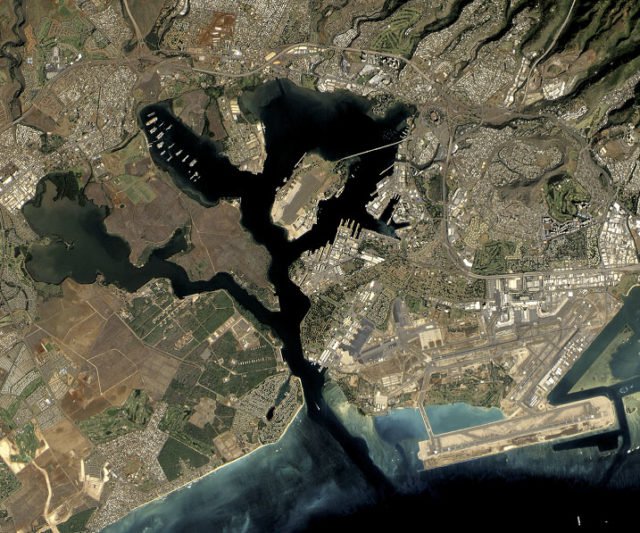
In May 1944, the naval anchorage at Pearl Harbor was a rush of activity, building up for the planned invasion.  78 years ago today, twenty-nine LSTs (Landing Ships, Tank) were tied beam-to-beam on six piers in the “West Loch” loading munitions, high octane gasoline and other equipment.

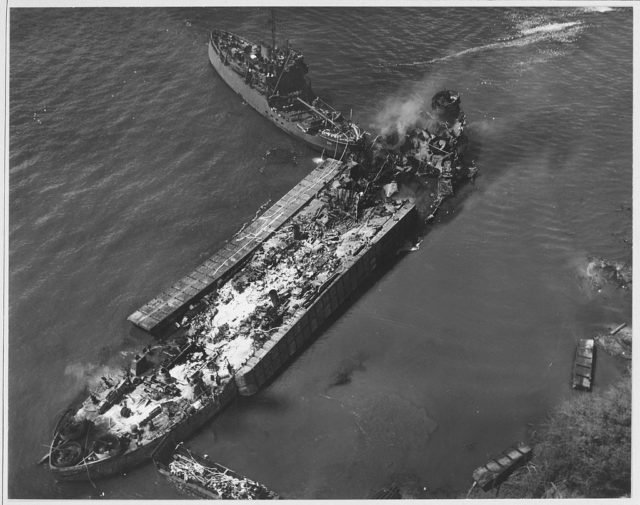
Shortly after 15:00 local time, LST-353 exploded causing a chain reaction down the line. Munitions exploded hurling men and equipment into the air. 200 men and more were hurled into the water in explosions powerful enough to knock over vehicles. On shore eleven buildings were destroyed altogether. Another nine were damaged.

Firefighting efforts were slow to get underway due to the heat and the inexperience of many of the crew. Some LSTs were able to move away under their own power or with the assistance of tugs. Others were left adrift and afire and slowly sinking, into the channel.

pearlharbor_sm-640x533
A NASA image of Pearl Harbor. The disaster occurred in West Loch which is to the left side of the photo, where the water is lighter in color.

Burning gasoline spread across the water and ignited other ships, left unharmed by the initial explosions. Fires burned for twenty-four hours as yet other vessels were intentionally sunk to contain the disaster.

Casualty figures are surprisingly inexact. Most sources report 163 personnel killed in the incident in West Loch and another 396, wounded. Some sources put the number of dead as high as 392.  Eleven tugboats were damaged while engaged in fire control efforts.  Six LSTs were sunk, two already carrying smaller, fully loaded Landing Craft Tanks (LCTs) lashed to their decks.  Several others were heavily damaged and/or run aground.

A press blackout was ordered immediately after the incident, and military personnel were ordered not to talk. A Naval Board of Inquiry was opened the following day. The disaster at West Loch was initially believed to be caused by Japanese submarines. The idea was dismissed due to the shallow depth of the harbor, and the presence of anti-submarine nets.

lst-480_following_west_loch_disaster-640x505
The wreckage of the LST 480 following the West Loch Disaster.

The precise cause of the accident remained elusive, as everyone near the initial explosion was dead. Army stevedores were unloading mortar ammunition at the time, using an elevator just fifteen feet from 80 drums of fuel. Some believe a mortar round was accidentally dropped and exploded. Others contend that fuel vapors were ignited by a cigarette, or welder’s torch.

Subsequent salvage and removal efforts on the West Loch brought up the remains of a Japanese midget submarine, now believed to be the fifth such sub used in the attack from two years prior.

Details of the West Loch disaster would remain classified until 1960, explaining why the incident is so little known about the incident, today.

1000w_q95

Less still is remembered about the men who came to clean up the mess. The last fatality from the disaster at West Loch occurred nine months later during salvage operations, for a sunken LST.

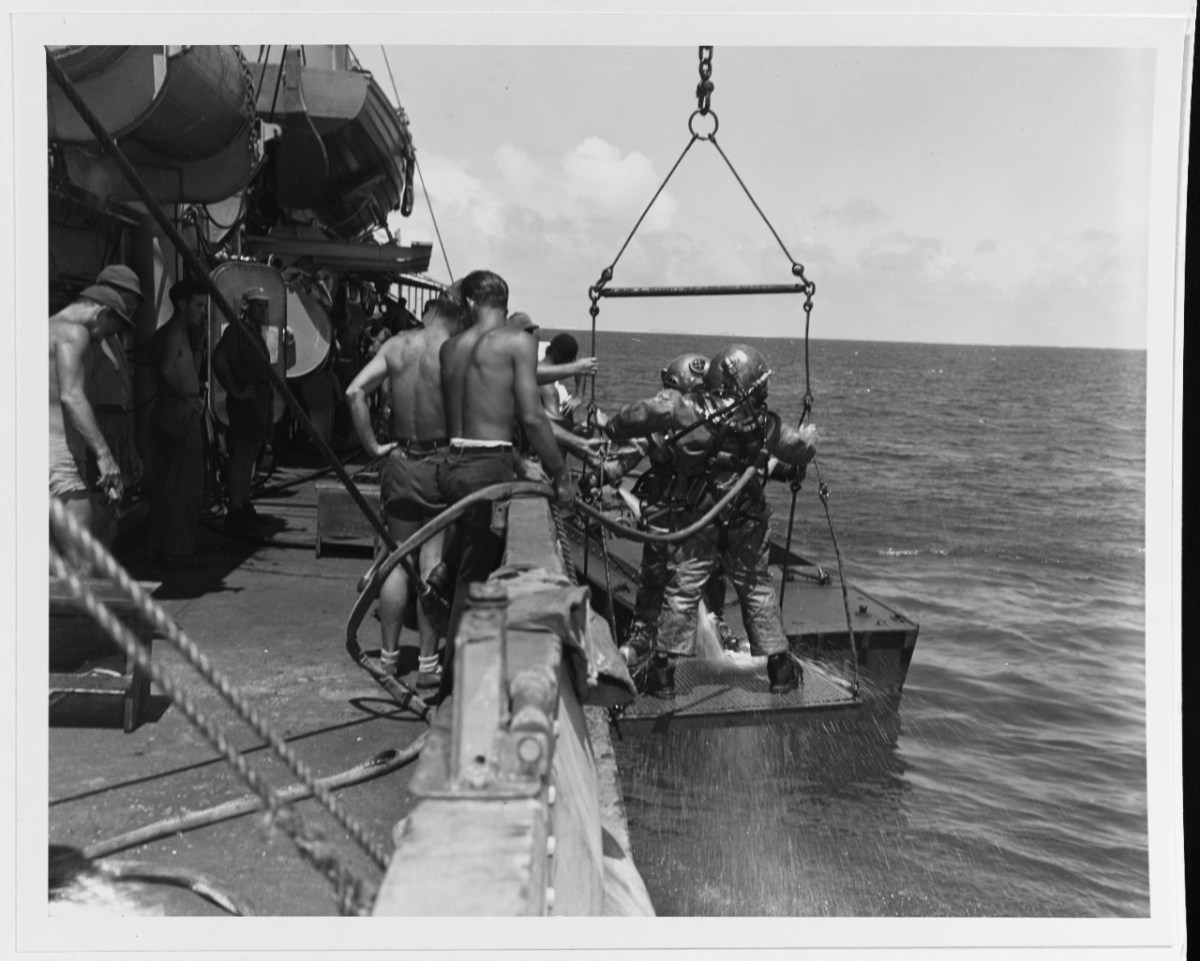
In February 1945, five teams of hardhat divers were brought in to raise these hulks and clear the channel. Working under the mud and the water of West Loch, four teams using jet nozzles successfully cleared tunnels under some of the wrecks, the first stage in refloating the sunken hulls.

Disaster struck as the fifth team labored to clear a tunnel under one sunken LST. We can only imagine the blackness down there in all that swirling mud as divers George Fuller and Earl Brown labored with jet nozzles, to clear the way. Suddenly steel wreckage overhead, caved in. Buried alive with lifelines and air hoses hopelessly tangled in jagged shards of steel, the pair was trapped under 40-feet of water and some 20-feet of muck. 

Other divers attempted t0 reach the pair but only stirred up more mud. A US Department of Defense website page describing the event relates that even a special dive team, declined to take further risk.

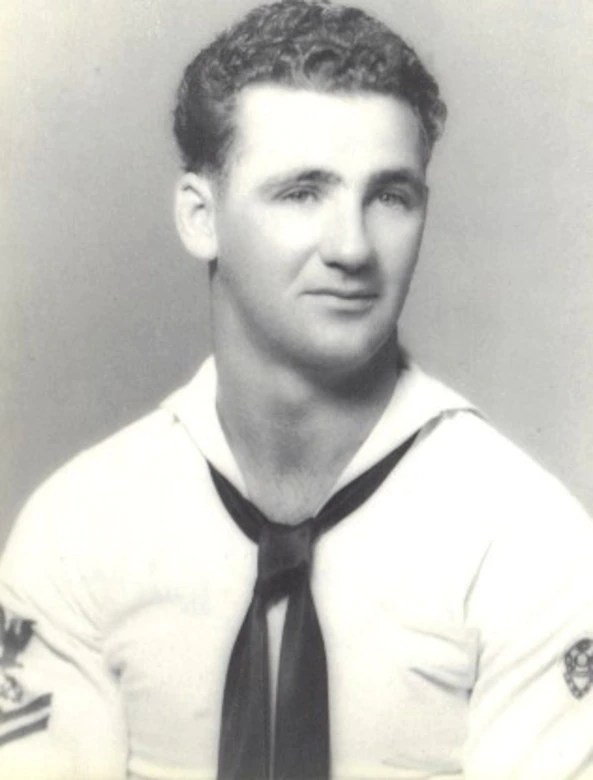
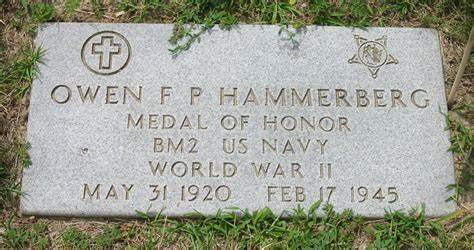
There seemed no chance for either man’s survival when fellow Navy diver Owen Francis Patrick Hammerberg slipped into the water.

Boatswain’s Mate 2nd Class Owen Francis Patrick Hammerberg

Owen Hammerberg had nothing to prove when it came to guts, and cold courage. Once stationed aboard the USS Advent Hammerberg dove into the water to free cables, snarled about a live mine. Imagine being down there, so close as to touch a mine powerful enough to blow himself to rags and atoms and sink the ship, on which he was stationed. And yet the man patiently labored until finally freeing the cable, without explosion.

Now working in the swirling mud and pitch blackness beneath the bottom of Pearl Harbor, the diver worked desperately to wash another tunnel under the sunken LST.  After five hours of exhausting labor Hammerberg was able to locate and free the first man, George Fuller. Following later inquiry congressional records state “Fuller, who had been pinned by a steel plate, shook Hammerberg’s hand underwater before heading to the surface for safety”.

Though physically tired Hammerberg labored on to reach Earl Brown, the second trapped diver. Eighteen grueling hours after the rescue began he finally found his man.

I do office work and I’m worn out after an eighteen hour day. What one man experienced after such a span of time down there, we will never know. Suddenly the whole mess caved in and a great piece of steel pinned Owen Hammerberg on top of Earl Brown.

Two days later a Filipino father and son team of divers at last rescued one of them and recovered the dead body, of the other. The cave-in had killed Owen Hammerberg even as his body protected that of the second man.

Navy diver and Boatswain’s Mate 2nd Class Owen Francis Patrick Hammerberg was the only service member in all of World War 2 and the last man ever to receive the Medal of Honor as the result of heroism performed outside of combat.

Let the man’s Medal of Honor citation tell his story. He didn’t live long enough to read it for himself.

Cmoh_army

“For conspicuous gallantry and intrepidity at the risk of his life above and beyond the call of duty as a diver engaged in rescue operations at West Loch, Pearl Harbor, 17 February 1945. Aware of the danger when 2 fellow divers were hopelessly trapped in a cave-in of steel wreckage while tunneling with jet nozzles under an LST sunk in 40 feet of water and 20 feet of mud. Hammerberg unhesitatingly went overboard in a valiant attempt to effect their rescue despite the certain hazard of additional cave-ins and the risk of fouling his lifeline on jagged pieces of steel imbedded in the shifting mud. Washing a passage through the original excavation, he reached the first of the trapped men, freed him from the wreckage and, working desperately in pitch-black darkness, finally effected his release from fouled lines, thereby enabling him to reach the surface. Wearied but undaunted after several hours of arduous labor, Hammerberg resolved to continue his struggle to wash through the oozing submarine, subterranean mud in a determined effort to save the second diver. Venturing still farther under the buried hulk, he held tenaciously to his purpose, reaching a place immediately above the other man just as another cave-in occurred and a heavy piece of steel pinned him crosswise over his shipmate in a position which protected the man beneath from further injury while placing the full brunt of terrific pressure on himself. Although he succumbed in agony 18 hours after he had gone to the aid of his fellow divers, Hammerberg, by his cool judgment, unfaltering professional skill and consistent disregard of all personal danger in the face of tremendous odds, had contributed effectively to the saving of his 2 comrades. His heroic spirit of self-sacrifice throughout enhanced and sustained the highest traditions of the U.S. Naval Service. He gallantly gave his life in the service of his country.”

Author’s note: I have searched without success for the names of the Filipino father and son divers who rescued Earl Brown and recovered the body of Owen Hammerberg. Kindly let me know if you find that information. They too have earned the right to be remembered.

Feature image top of page: “Divers are lowered into Bikini Lagoon during an Operation Crossroads survey in July 1947”. Hat tip Naval History and Heritage Command

May 7, 1945 Victory in Europe

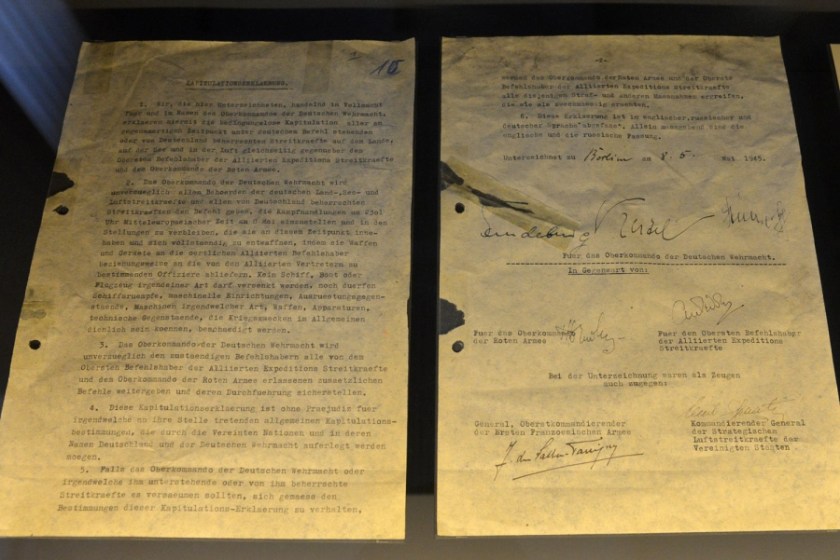
General Alfred Jodl came to Reims to sign the document including the phrase “All forces under German control to cease active operations at 2301 hours Central European time on 8 May 1945“.

Beginning on May 5, reporters from AP, Life magazine, and others began to sleep on the floor of Eisenhower’s red brick schoolhouse headquarters, for fear of stepping out and missing the moment. Adolf Hitler was dead by his own hand, the life of the German tyrant extinguished on April 30.

General Alfred Jodl came to Reims to sign the document including the phrase “All forces under German control to cease active operations at 2301 hours Central European time on 8 May 1945“.

Instruments of Surrender, ww2

The signing of the instruments of surrender ending the most destructive war in history took place on Monday, May 7, at 2:41am, local time.   In Europe, World War II had come to an end.The German government announced the end of hostilities right away to its own people, but most of the Allied governments, remained silent.   It was nearly midnight the following day when Field Marshal Wilhelm Keitel signed a second instrument of surrender, in the Berlin headquarters of Soviet General Georgy Zhukov.

Soviet Premier Josef Stalin had his own ideas about how he wanted to handle the matter while the rest of the world, waited.

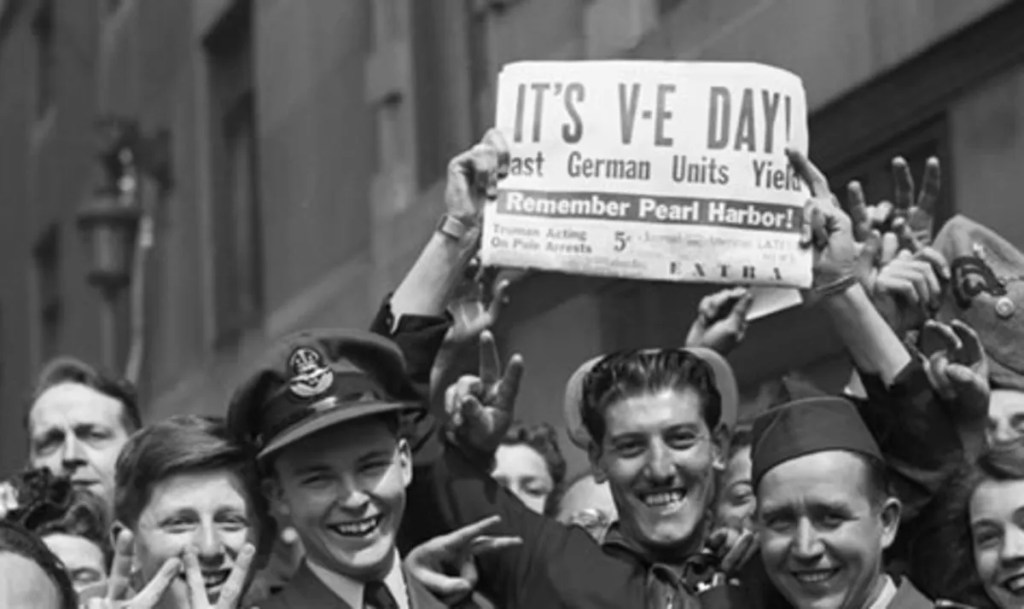
ve-day-picadilly-square-750-1200x0-c-default

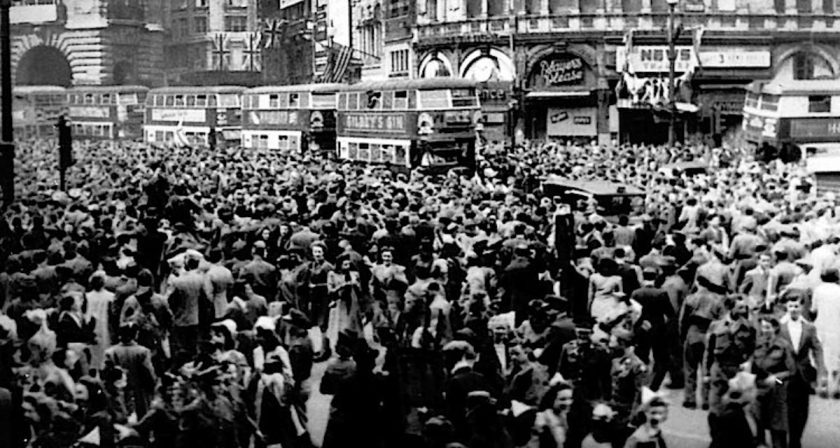
In England, May 7 dragged on with no public statement. Large crowds gathered outside of Buckingham Palace shouting “We want the King”. Bell ringers throughout the British Isles remained on silent standby, waiting for the announcement. The British Home Office issued a circular, instructing Britons how they could celebrate: “Bonfires will be allowed, but the government trusts that only material with no salvage value will be used.” And still, the world waited.

Prime Minister Winston Churchill finally lost patience in the early evening, saying he wasn’t going to give Stalin the satisfaction of holding up what everyone already knew. The Ministry of Information made this short announcement at 7:40pm: “In accordance with arrangements between the three great powers, tomorrow, Tuesday, will be treated as Victory in Europe Day and will be regarded as a holiday”.

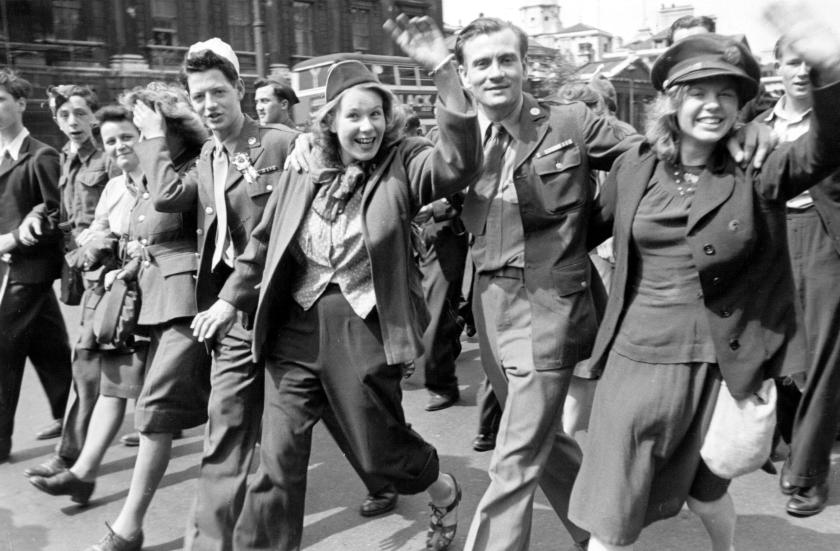
nintchdbpict000000727094

The news was greeted with reserve in the United States, where the first thought was that of the Pacific. Even now, many months of savage combat lay ahead. President Harry Truman broadcast his own address to the nation at 9:00am on May 8, thanking President Roosevelt and wishing he’d been there to share the moment.

Franklin Delano Roosevelt had died on April 12 in Warm Springs, Georgia. President Truman’s speech begins: “This is a solemn but a glorious hour. I only wish that Franklin D. Roosevelt had lived to witness this day. General Eisenhower informs me that the forces of Germany have surrendered to the United Nations. The flags of freedom fly over all Europe. For this victory, we join in offering our thanks to the Providence which has guided and sustained us through the dark days of adversity”.

So it is that most of the world celebrates May 8 as Victory in Europe, “VE Day”, the day of formal cessation of all hostilities, by Nazi Germany. And yet in some sectors, the fighting continued.

German military operations officially ceased on May 8, a day celebrated as VE Day in in the United States, Great Britain, Western Europe and Australia. VE Day occurs on May 9 in the former Soviet territories, and New Zealand.

Even so isolated pockets of resistance continued to surrender day through May 14-15. The “Georgian uprising” of some 400 German troops and 800 allied Georgian soldiers under German officers continued until May 20 on the Dutch island of Texel (pronounced “Tessel).

The last major battle in Europe concluded on May 25 between the Yugoslav Army and Croatian Armed Forces. One contingent of German soldiers lost radio communications in Spitsbergen in the Norwegian archipelago and surrendered to a group of seal hunters, on September 4. Two days after the formal surrender of Imperial Japan and the end of war, in the Pacific.

May 5, 1945 A Sunday School Picnic

Only once during all of World War 2 did death result from enemy action, in the 48 contiguous United States. That of a Sunday School class out for a picnic, on May 5, 1945.

Japanese_fire_balloon_shotdown_gun

Following the 1883 eruption of the Krakatoa volcano, weather watchers described an eastbound, upper atmospheric air current described as the “equatorial smoke stream”. 

In the 1920s, Japanese meteorologist Wasaburo Oishi tracked these upper level winds using pilot balloons from a site, near Mount Fuji. Oishi published his findings in Esperanto, dooming his work to international obscurity. Inside Japan there were those who took note, filing away this new-found knowledge of what we now call the “Jet Stream”.

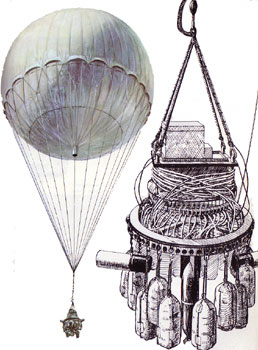
Japanese balloon bomb diagram

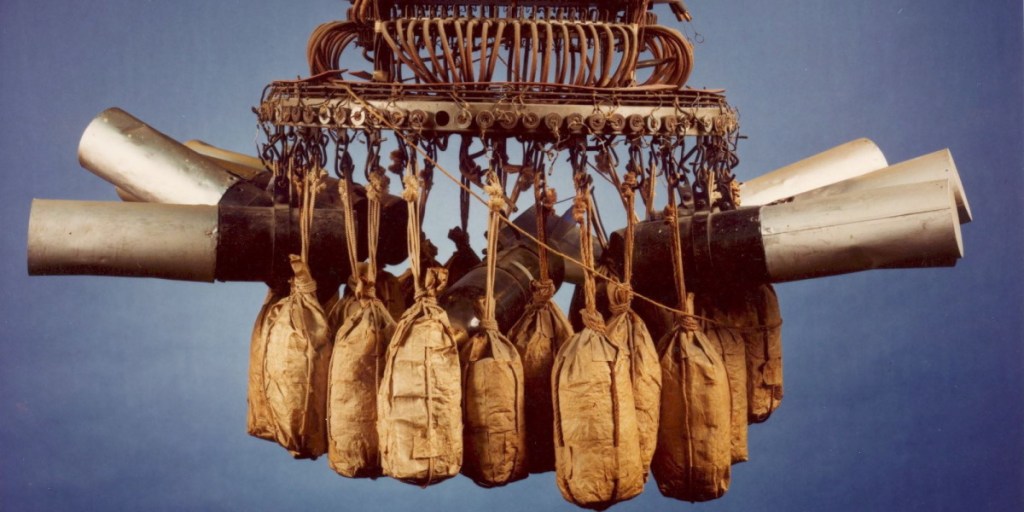
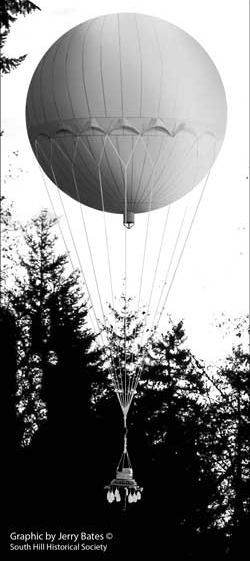
During the latter half of WWII, Japanese military thinkers conceived a fūsen bakudan or “fire balloon”, a hydrogen filled balloon device designed to ride the jet stream using sand ballast and a valve system, to navigate its way to the North American continent.

With sandbags, explosives, and the device which made the thing work, the total payload was about a thousand pounds at liftoff.  The first such device was released on November 3, 1944, beginning the crossing to the west coast of North America. 

Between late 1944 and April 1945 some 9,300 such balloons were released, with military payloads.

Today, inter-continental ballistic missiles are an everyday if frightening reality, of our time. Such a long range attack was unheard of during World war 2 and would not be duplicated until the Falklands War, in 1982.

In 1945, intercontinental weapons existed only in the realm of science fiction.  As these devices began to appear, American speculation ran wild. Authorities theorized that they originated with submarine-based beach assaults, German POW camps, even the internment camps into which the Roosevelt administration herded Japanese Americans.

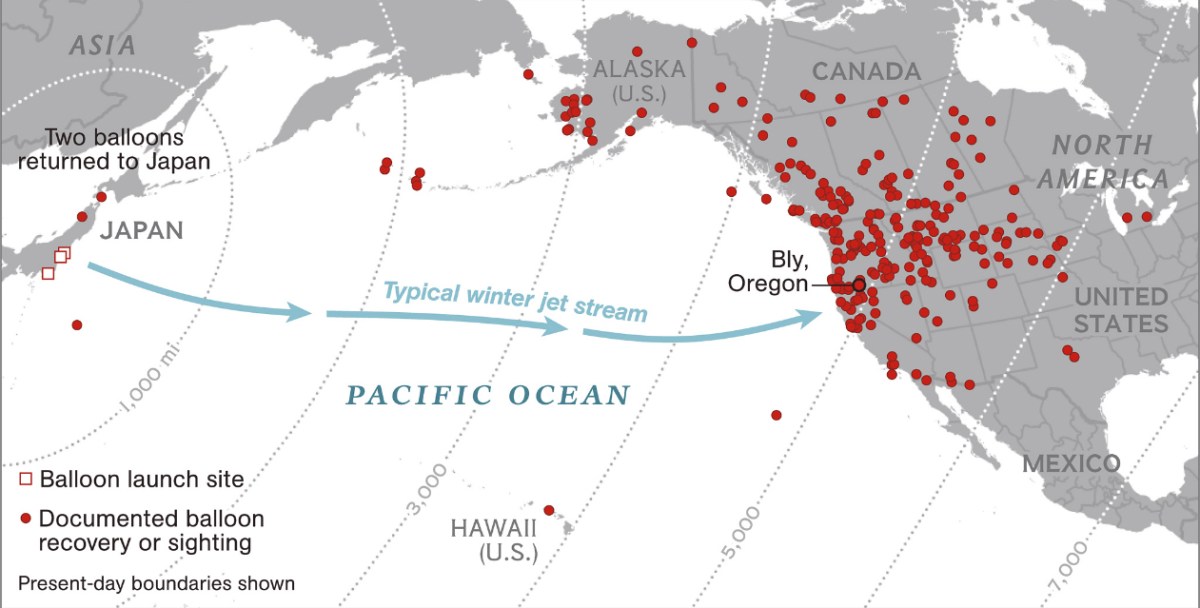
These “washi” paper balloons flew at high altitude and surprisingly quickly, completing the Pacific crossing in only three days. Balloons came down from Alaska to Northern Mexico and as far east, as Detroit.

A P-38 Lightning fighter shot one down near Santa Rosa, California, while Yerington, Nevada cowboys cut one up to make hay tarps. Pieces of balloon were found in the streets of Los Angeles. A prospector near Elko Nevada delivered one to local authorities, on the back of a donkey.

Among US units assigned to fight fire balloons was the 555th Parachute Infantry Battalion, which suffered one fatality and 22 injuries fighting fires.

One of the last balloons came down on March 10 near Hanford Washington, shorting out power lines supplying electricity for Manhattan Project nuclear reactor cooling pumps. The war in the Pacific could have ended very differently had not backup safety devices restored power, almost immediately.

Japanese Balloon Bomb

Colonel Sigmund Poole, head of the U.S. Geological Survey military geology unit, asked, “Where’d the damned sand come from?”  Microscopic analysis of sand ballast identified diatoms and other microscopic sea life.  This and the mineral content of the sand itself proved to be definitive.  The stuff could only have come from the home islands of Japan, more specifically, one or two beaches on the island of Honshu.

American authorities were alarmed.  Anti-personnel and incendiary bombs were relatively low grade threats.  Not so the biological weapons Japanese military authorities were known to be developing at the infamous Unit 731, in northern China.

284 of these weapons are known to have completed the Pacific crossing to the United States, Mexico and Canada.  Experts estimate as many as 1,000 may have made the crossing.  Sightings were reported in seventeen US states. Pilots were ordered to shoot them down on sight, but many escaped detection, altogether.

In an effort to deny valuable intelligence to their Japanese adversary, US military and government authorities did everything they could to keep these “Fire Bombs” out of the media.  Even while such secrecy put Americans at risk.

Japanese Authorities reported that the bombs were hitting key targets. Thousands were dead or injured they insisted, and American morale was low.

On the morning of May 5, 1945, Pastor Archie Mitchell and his wife Elsie took a Sunday school class of five on a picnic to a forest area near Bly, Oregon.  As Pastor Mitchell parked the car, Elsie and the kids came upon a large balloon with a strange looking device, attached. There was no way they could have known, what they had found was a Japanese weapon of war.  The device exploded killing all six, instantly.

Japanese balloon bomb shrapnel tree

Several such devices exploded, igniting wildfires in the forests of California, Oregon and Washington, but the site near Bly is the only one known to have resulted in American casualties.

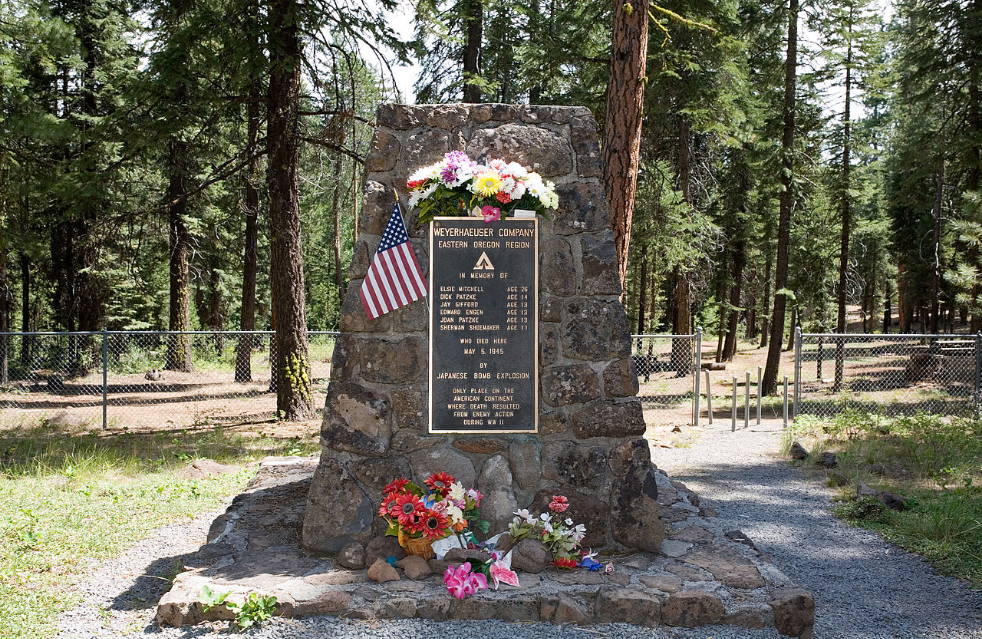
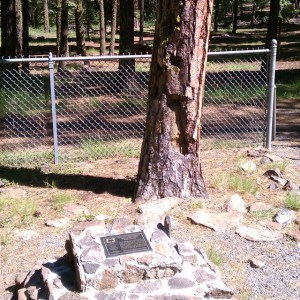
Today there is a small picnic area located in the Fremont-Winema National Forest in Lake County, Oregon.  It’s maintained by the US Forest Service, memorialized as the Mitchell Recreation Area and listed on the National Register of Historic Places.  A small stone marker points the way to a shrapnel scarred tree.

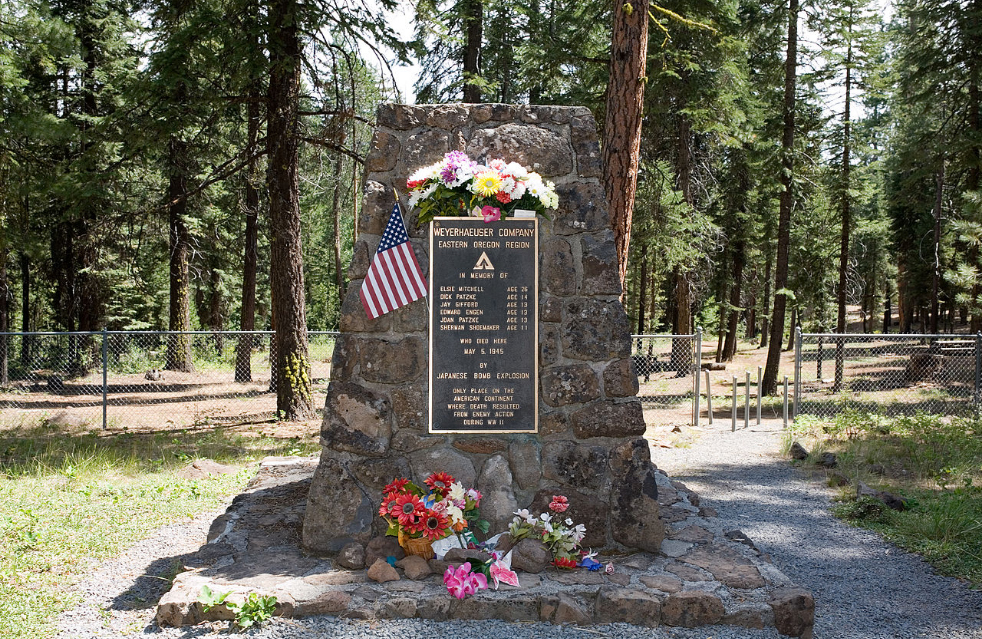
A second monument bears the words cast in bronze:  The “only place on the American continent where death resulted from enemy action during World War II”.  There are six names above those words, those of five children and their teacher:  Elsie Mitchell, age 26,  Edward Engen, 13,  Jay Gifford, 13,  Joan Patzke, 13,  Dick Patzke, 14 and  Sherman Shoemaker, age 11.

Elsie Mitchell was pregnant at the time of her death. Her unborn child was the 7th albeit nameless victim, of one of the most bizarre weapon systems of WW2.

Mitchell Monument

May 4, 1943 Counter Measures

Virtually anything that can be opened or closed, stepped on or moved in any way can be rigged to mutilate or kill, the unwary. Fiendish imagination alone, limits the possibilities.

In the Spanish language, the word “Bobo” translates as “stupid…daft…naive”. The slang form “bubie” describes a dummy. A dunce. The word came into English sometime around 1590 and spelled “booby”, meaning a slow or stupid person.

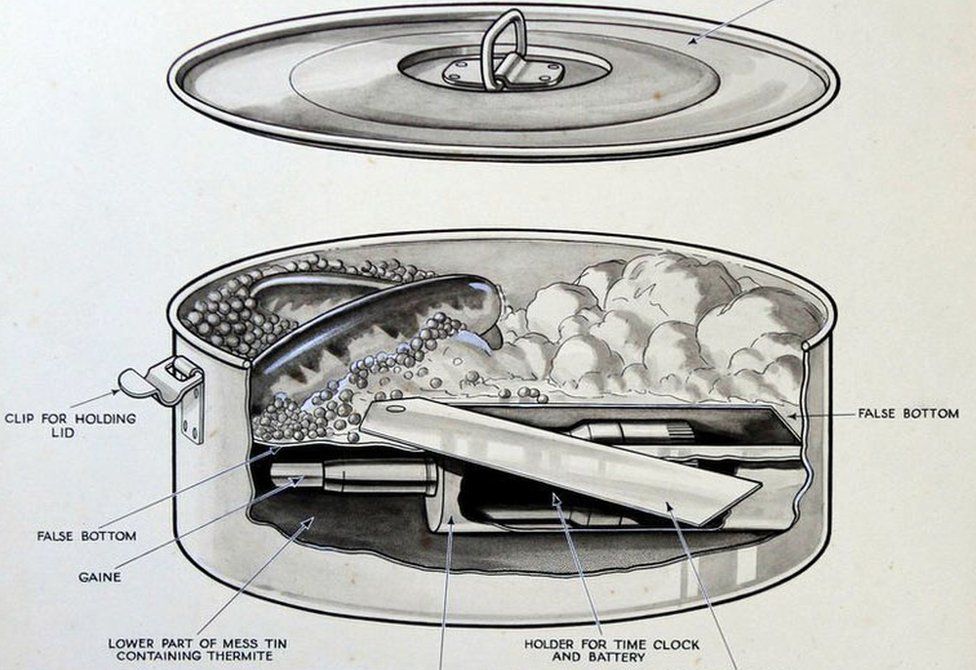
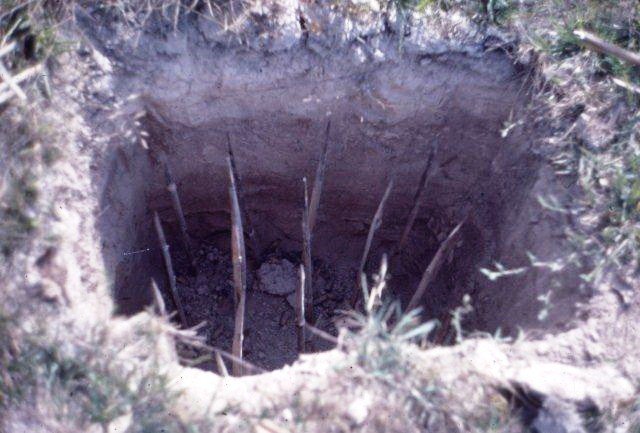
In a military context, a booby trap is designed to kill or maim the person who activates a trigger. Like the common mess tin at the top of this page, modified to mangle or kill the unsuspecting soldier. During the war in Vietnam, Bamboo pit vipers known as “three step snakes” (because that’s all you get) were tucked into backpacks, bamboo sticks or simply hung by their tails, a living trap for the unwary GI.

980x (3)
Punji stakes were often smeared with human excrement result in hideous infection for the unsuspecting GI

The soldier who goes to lower that VC flag might pull the halyard rope may hear distant snickering in the jungle…just before the fragmentation grenade goes off. Often, the first of his comrades running to the aid of his now shattered body hits the trip wire, setting off a secondary and far larger explosive.

Not to be outdone, the operation code-named “Project Eldest Son” involved CIA and American Green Berets sabotaging rifle and machine gun rounds, in such a way as to blow off the face the careless Vietcong shooter.

German forces were masters of the booby trap in the waning days of WW1 and WW2. A thin piece of fishing line connected the swing of a door with a hidden grenade, by your feet. A flushing toilet explodes and kills or maims everyone in the building. The wine bottle over in the corner may be perfectly harmless, but the chair you move over to get it, blows you to bits.

Virtually anything that can be opened or closed, stepped on or moved in any way can be rigged to mutilate or kill, the unwary. Fiendish imagination alone, limits the possibilities. Would the “Joe Squaddy” entering the room care if that painting on the wall was askew? Very possibly not but an “officer and a gentleman” may be moved to straighten the thing out at the cost of his hands, or maybe his life.

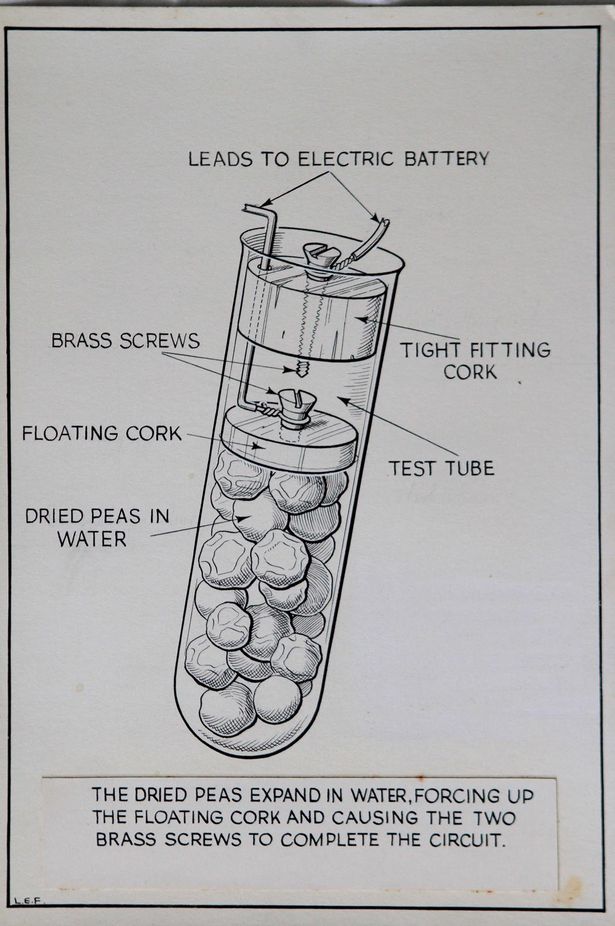
PAY-The-wartime-work-of-Laurence-Fish-Pea-Trigger
Exploding Peas, illustration by Laurence Fish

In the strange and malignant world of Adolf Hitler, the German and British people had much in common.  Are we not all “Anglo-Saxons”?  The two peoples need not make war the man believed, except for their wretched man, Winston Churchill.

Prime Minister Winston Churchill was a true leader of world-historical proportion during the darkest days, of the war.  Taking the man out just might cripple one of Hitler’s most potent adversaries.

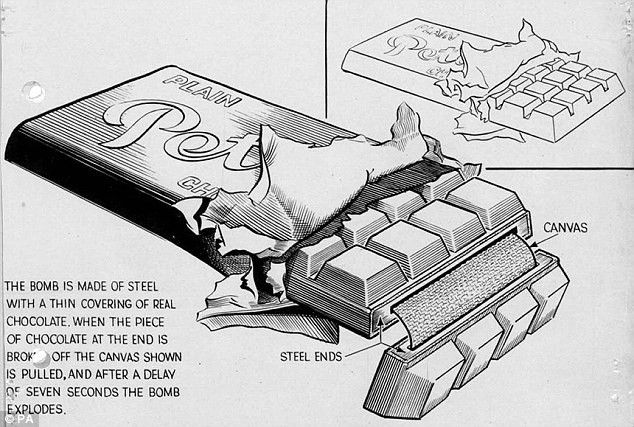
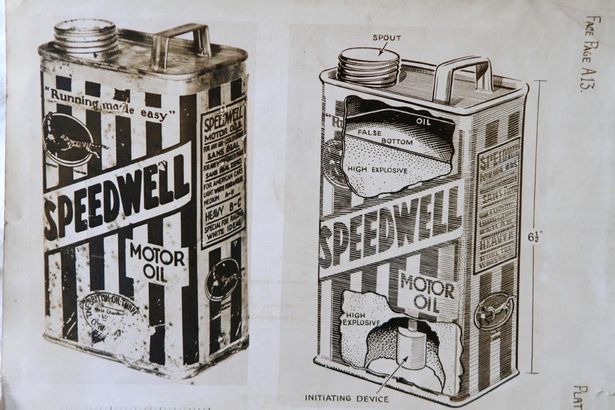
In 1943, Hitler’s bomb makers concocted an explosive coated in a thin layer of chocolate and wrapped in expensive black & gold foil labeled “Peter’s Chocolate”. When you break a piece off of this thing, you might wonder in the last nanoseconds of your life.  What the hell is this canvas doing in a chocolate bar?

2CECF3F600000578-3254580-image-a-38_1443606430476

Churchill was known to have a sweet tooth and so it was, that Nazi Germany planned to kill the British Prime Minister. A booby trapped chocolate bar placed in a war cabinet meeting room.

We rarely hear about the work of the spy or the saboteur in times of war. They are the heroes who work behind enemy lines, with little to protect them but their own guts and cleverness. Their work is performed out of sight, yet there were times when the lives of millions hung in the balance, and they never even knew it.

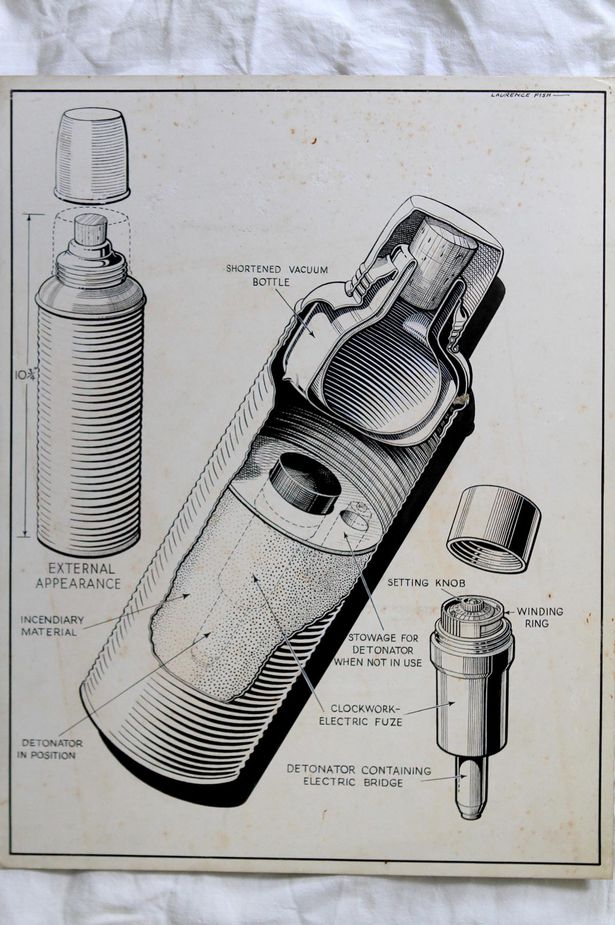
PAY-The-wartime-work-of-Laurence-Fish-Flask-bomb

The lives of millions, or perhaps only one.  German saboteurs were discovered operating inside the UK, the information sent to British Intelligence.

Lord Victor Rothschild was a trained biologist in peace and member of the Rothschild banking family. During WW2, British Intelligence recruited him to work for MI5, heading up a three-member explosives and counter-sabotage unit. Rothschild immediately grasped the importance of the information and the need to illustrate Nazi devices to communicate, with other intelligence officers. 

We live in an age when computers are commonplace but that wasn’t the case, in 1943. ENIAC, the first electronic computer wouldn’t come around yet, for another two years. Photoshop was definitely out of the picture and yet, high quality illustrations were needed and quickly, and they had to come from a trusted source. Donald Fish, one of Rothschild’s two colleagues, had just the man. His son.

On this day in 1943, Lord Rothschild typed a letter to illustrator, Laurence Fish.  The letter, marked “secret”, begins: “Dear Fish, I wonder if you could do a drawing for me of an explosive slab of chocolate…”

The letter went on to describe the mechanism and included a crude sketch, requesting the artist bring the thing, to life.

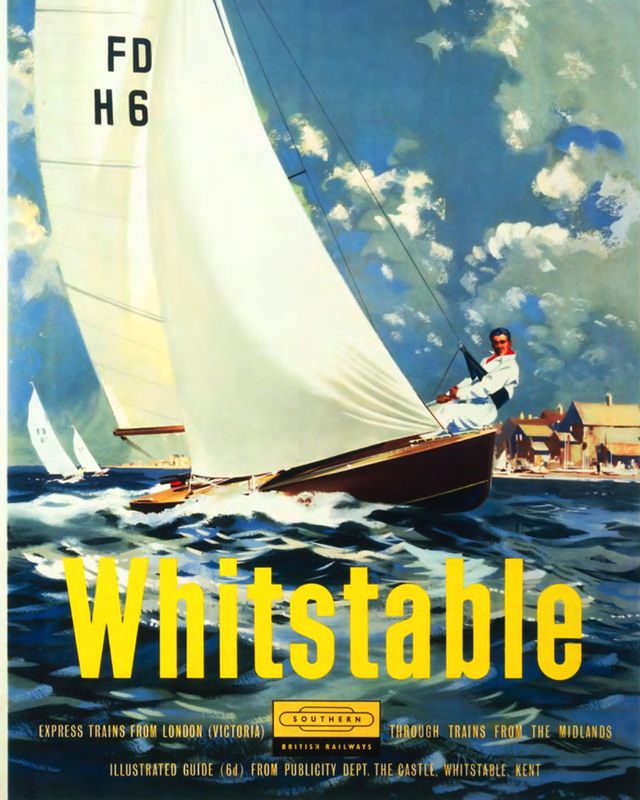
Laurence Fish would one day become a commercial artist and illustrator, best remembered for his travel posters of the 1950s and ’60s.  He always signed his work, “Laurence”. 

From the pen and ink technical drawings of the war years to the brightly colored travel posters of his post-war career, Laurence Fish was a gifted and versatile artist.

In 1943 that was all for some time in an unknown future, a time when dozens of wartime drawings were quietly left in a drawer and forgotten, for seventy years. For now a world had a war to win and Laurence Fish, played a part.

Hitler’s bomb makers devised all manner of havoc, from booby trapped mess tins to time-delay fuses meant to destroy shipping, at sea.   In 2015, members of the Rothschild family were cleaning out the house, and discovered a trove of Fish’s work.

PAY-The-wartime-work-of-Laurence-Fish-Device-photographs

The artist is gone now and his name all but forgotten but his work, lives on.  Fish’s illustrations are now in the hands of his widow Jean, an archivist and former journalist living in Winchcombe, Gloucestershire. Thanks to her we can see this forgotten piece of history in her husband’s work, last shown in an exhibition last year over the weekend of September 18 – 19.

And a good thing it is. The man has earned the right to be remembered.