With the exception of a few sled dogs in Alaska, the US was the only country to take part in World War I, with virtually no service dogs in its military.
By the last year of the Great War, the French, British and Belgians had at least 20,000 dogs on the battlefield. Imperial Germany had 30,000.
General Headquarters of the American Expeditionary Force recommended the use of dogs as sentries, messengers and draft animals in the spring of 1918. However, with the exception of a few sled dogs in Alaska, the US was the only country to take part in World War I, with virtually no service dogs in its military.
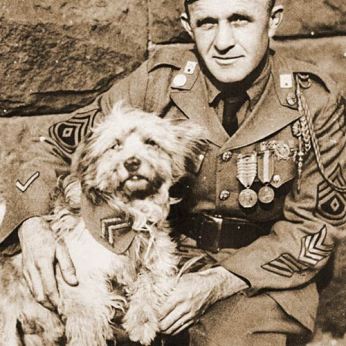
America’s first war dog, “Stubby”, got there by accident, and served 18 months ‘over there’, participating in seventeen battles on the Western Front.
He looked like a terrier of some kind, similar to a pit bull. Nobody knows anything more about him. He showed up as a stray at Yale Field in New Haven, Connecticut, while a group of soldiers were training. The dog hung around as the men drilled and one soldier, Corporal Robert Conroy, started taking care of him. Conroy hid Stubby on board the troop ship when the outfit shipped out in 1917.
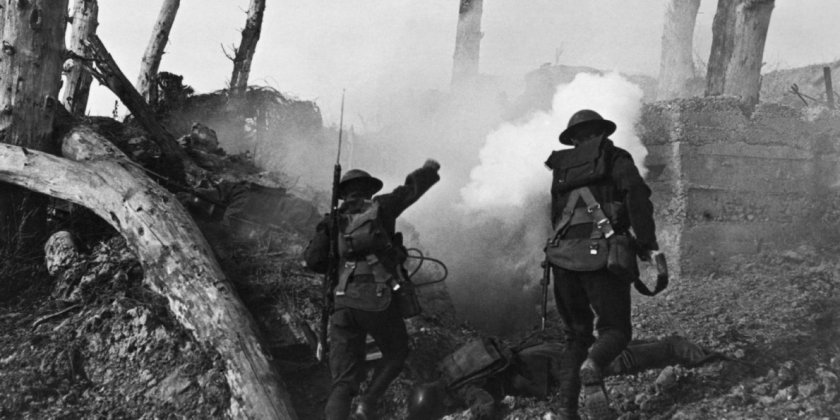
Stubby saved his regiment from surprise \gas attacks, located and comforted the wounded, and even once caught a German spy by the seat of his pants. The Hun, who’d been prowling behind allied lines at the time, was mapping trenches for artillery bombardment. He was found spinning in circles with a large, muscular terrier affixed to his behind. The Bosch was easily disarmed, but it took a considerable amount of coaxing before Stubby could be persuaded to let go of that German’s rear end.
Stubby saw his first action at Chemin des Dames. Since the boom of artillery fire didn’t faze him, he learned to follow the men’s example of ducking when the big ones came close. It became a great game to see who could hit the dugout, first. After a few days, the guys were watching him for a signal. Stubby was always the first to hear incoming fire. We can only guess how many lives were spared by his early warning.
Following the Armistice, Stubby returned home as a nationally acclaimed hero, and was eventually received by presidents Harding and Coolidge. Even General John “Black Jack” Pershing, who commanded the AEF during the war, presented Stubby with a gold medal made by the Humane Society, declaring him to be a “hero of the highest caliber.”
Stubby toured the country by invitation and probably led more parades than any dog in American history. He was promoted to honorary Sergeant by the Legion, becoming the highest ranking dog to ever serve in the Army.
Old age caught up with the small warrior on April 4th, 1926, as he took ill and died in his master’s arms.
Sergeant Stubby and a few of his contemporaries were instrumental in inspiring the creation of the US K-9 Corps. Just in time for World War ll.
A Trivial Matter
On returning home following service during WW2, only 4 of 592 Marine Corps dogs failed to adapt to civil life.
The Lion of Africa, the German officer and conquering hero of WW1, who once told the upstart Adolf Hitler to perform an anatomically improbable act.
Paul Emil von Lettow-Vorbeck was born into minor Prussian Nobility on this day in 1870. Joining the Corps of Cadets as a teenager, Lettow-Vorbeck worked his way up the German Imperial Army chain of command, becoming a general by 1914.
At the outset of the “Great War”, a map of Africa looked nothing like it does today. From the Belgian Congo to Italian Somaliland, most of the continent was carved into colonies of the various European powers. France, Britain, Germany, Italy, Portugal, Belgium and Spain. All administered parts of the African continent.
Stationed in German East Africa and knowing that his sector would be little more than a side show in the greater war effort, Lettow-Vorbeck determined to tie up as many of his adversaries as possible.
With a force never exceeding 14,000 (3,000 Germans and 11,000 Askari warriors), “Der Löwe von Afrika” tied up as many as 300,000 British, Belgian, and Portuguese troops, who wore themselves out in the pursuit.
Like the famous Lawrence of Arabia, Lettow-Vorbeck became a master of guerrilla warfare. He never lost a single battle, though it was not unheard of for combatants to break and flee a charging elephant or rhinoceros.
To his adversaries, disease and parasites were often more dangerous than enemy soldiers. In one month (July, 1916) Allied non-battle casualties ran 31 to 1 compared with combat-related injuries.
In 1956, Brazilian scientists attempted to cross African honey bees with indigenous varieties, to produce an insect better suited to the South American tropics. Today, we call the results of these failed experiments “Africanized” or “killer” bees.
At one point in the battle for Tanga (November 7-8, 1914), a British landing force and their Sepoy allies were routed and driven back to the sea by millions of African bees, disturbed by rifle and machine gun fire. There’s a story about a British radioman, I don’t know if it’s true. This guy held his station, directing the evacuation from the beach while being stung to death by thousands of angry bees. He would be posthumously awarded the Victoria Cross for “gallantry under aerial attack”.
Lettow-Vorbeck surrendering his forces to the British at Abercorn, as drawn by an African artist. H/T Wikipedia
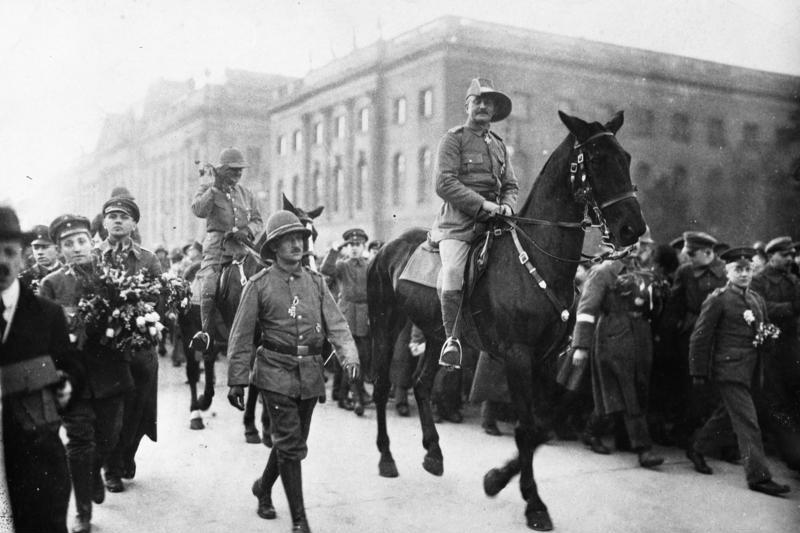
Returning home after the war, Vorbeck was greeted as a conquering hero. Of all German commanders in World War One, “der Löwe von Afrika” (the Lion of Africa) alone remained undefeated in the field. The only German commander to successfully invade imperial British soil during the Great War.
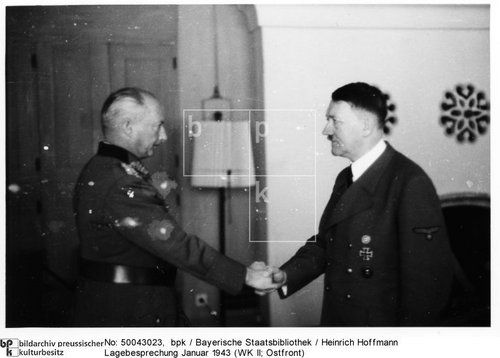
Lettow-Vorbeck developed a deep distrust of the upstart Adolf Hitler. When then-Chancellor Hitler offered him an ambassadorship to the Court of St. James in 1935, Lettow-Vorbeck told Hitler to go “f**k yourself.” Describing the interview afterward, Lettow’s nephew explained “That’s right, except that I don’t think he put it that politely.”
Following such a blunt refusal, Lettow-Vorbeck was kept under continual surveillance by the Nazi regime. His home and office were searched, his person subject to constant harassment. The Lion of Africa was destitute by the end of WWII. His two sons killed in service to the Wehrmacht, his home in Bremen destroyed by Allied bombs.
For a time, Vorbeck lived on food packages from British Intelligence Officer Richard Meinertzhagen and South African Field Marshal Jan Christiaan Smuts, two of his former adversaries in the East Africa campaign. It was a token of the respect these two had, for a man who had once been their enemy.
In 1964, the year Lettow-Vorbeck died, the Bundestag voted to give back pay to former African warriors who had fought with German forces in WWI. Some 350 elderly Ascaris showed up. A few could produce certificates given them back in 1918, some had scraps of old uniforms. Precious few could prove their former service to the German Empire.
The German banker who had brought the money had an idea. As each man stepped forward, he was handed a broom and ordered to perform the German manual of arms. Not one man failed the test.
Lettow-Vorbeck formed a lifelong friendship during his time in Africa, with the Danish author Karen Blixen, best known by her pen name Isak Dinesen, author of “Out of Africa”. Years later, Blixen recalled, “He belonged to the olden days, and I have never met another German who has given me so strong an impression of what Imperial Germany was and stood for”.
A Trivial Matter
Following years of colonial, military and diplomatic interaction, romantic relationships between Germans and Africans, were inevitable. Though rare as hen’s teeth, Adolf Hitler’s Reich included the children of such relationships. One such was Hans J. Massaquoi, a self-described “kinky-haired, brown-skinned, eight-year-old boy amid a sea of blonde and blue-eyed kids filled with patriotism”. Though prohibited from joining by racial “purity” laws, the eight-year-old Hans was entirely caught up in the excitement of the Hitler Youth.
Mr. Massaquoi tells his unusual and fascinating story in Destined to Witness: Growing Up Black in Nazi Germany.
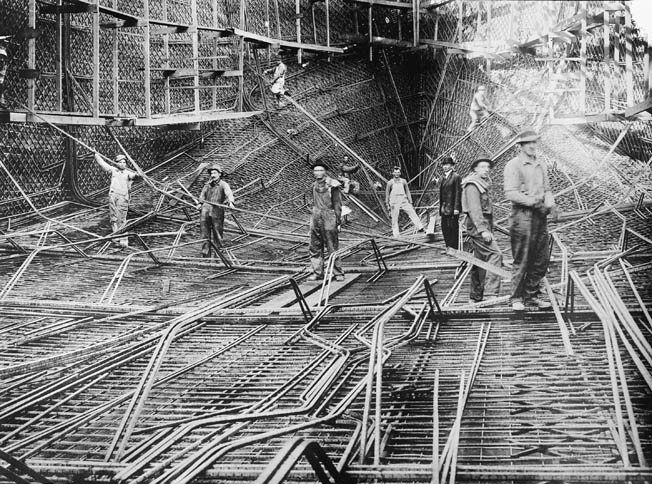
Steel was in critically short supply by the time the US entered the war in 1917, the need for new ships, higher than ever. Something had to be done. One answer, was concrete.
The final third of the nineteenth century was a period of unprecedented technological advancement, an industrial revolution of international proportion.
The war born of the second industrial revolution, would be like none before.
From the earliest days of the “War to end all Wars”, the Triple Entente powers imposed a surface blockade on the Central Powers of Germany, Austria-Hungary and the Ottoman Empire, throttling the maritime supply of goods and crippling the capacity to make war. One academic study from 1928 put the death toll by starvation at 424,000, in Germany alone.
The Kaiser responded with a blockade of his own, a submarine attack on the supply chain to the British home islands. It was a devastating incursion against an island adversary dependent on prodigious levels of imports.
Joseph Louis Lambot’s first prototype, built 1848
1915 saw the first German attacks on civilian shipping. Total losses for that year alone came to 370 vessels against a loss of only 16 U-Boats. Steel was in critically short supply by the time the US entered the war in 1917 with the need for new ships, higher than ever. Something had to be done. One answer, was concrete.
The idea of concrete boats was nothing new. In the south of France, Joseph Louis Lambot experimented with steel-reinforced “ferrocement”, building his first dinghy in 1848.
By the outbreak of WW1, Lambot’s creation had sunk to the bottom of a lake, where it remained for 100 years, buried deep in anaerobic mud. Today you may see the thing at the Museum of Brignoles, in the south of France.
Italian engineer Carlo Gabellini built barges and small ships of concrete in the 1890s. British boat builders experimented with the stuff, in the first decade of the 20th century. The Violette, built in Faversham in 1917, is now a mooring hulk in Kent, the oldest concrete vessel still afloat.
The Violette built in 1917, is the oldest concrete ship, still afloat.
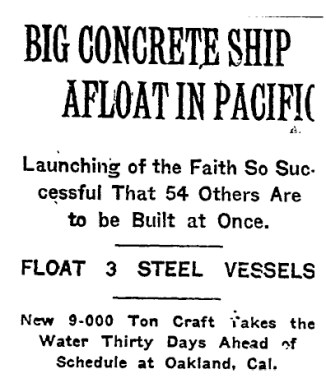
The American government contracted with Norwegian boat builder N.K. Fougner to create a prototype, the 84-foot Namsenfjord launched in August, 1917. The test was judged a success. President Woodrow Wilson approved a twenty-four ship fleet, consisting of steamers and tankers to aid the war effort. The first and largest of the concrete fleet, the SS Faith was launched on this day in 1918, thirty days ahead of schedule.
“Constructed by the San Francisco Shipbuilding Company in 1918, the SS Faith was the first concrete ship built in the United States”. – H/T warfarehistorynetwork.com
The New York Times was ecstatic:
‘”When the first steel vessels were built people said they would not float, or if they did they would be too heavy to be serviceable,” said W. Leslie Comyn, President of the concern which built the boat. “Now they say the same about concrete. But all the engineers we have taken over this boat, including many who said it was an impossible undertaking, now agree that it was a success”‘.
All that from a west coast meadow with two tool sheds, a production facility 1/20th the cost of a conventional steel shipyard.
The Great War ended eight months later with only half the concrete fleet, actually begun. None were completed. All were sold off to commercial shippers or for storage, or scrap.
For all its advantages as a building material, ferrocement has numerous drawbacks. Concrete is a porous material, and chunks tend to spall off from rusting steel reinforcements. We’ve all see that on bridge abutments. Worst of all, the stuff is brittle. On October 30, 1920, the SS Cape Fear collided with a cargo ship in Narragansett Bay Rhode Island and “shattered like a teacup”, killing 19 crewmen.
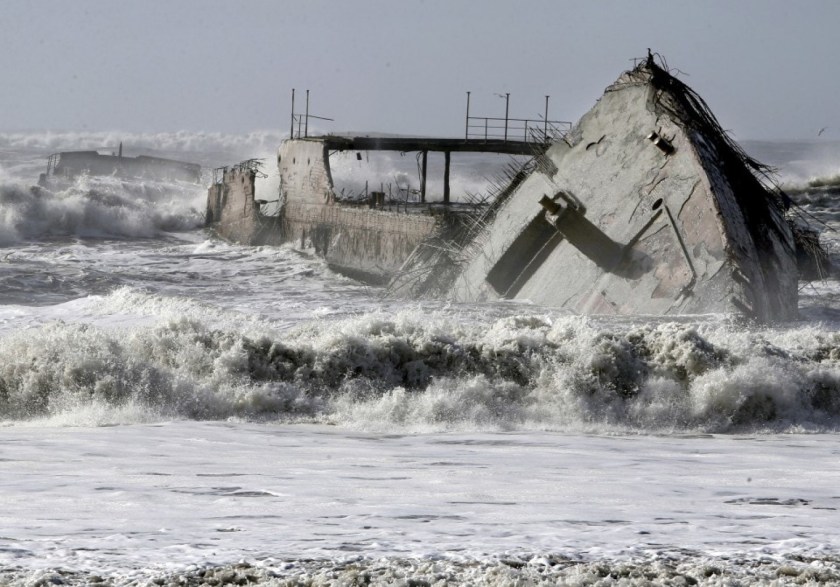
SS Palo Alto was a tanker-turned restaurant and dance club, before breaking up in heavy waves, in Monterey Bay.
SS Palo Alto
SS San Pasqual was damaged in a storm in 1921 and became a warehouse for the Old Times Molasses Company of Havana. She was converted to a coastal defense installation during WW2 and outfitted with machine guns and cannon, then becaming a prison, during the Cuban revolution. The wreck was later converted to a 10-room hotel before closing, for good. That was some swanky joint, I’m sure.
SS San Pasquale
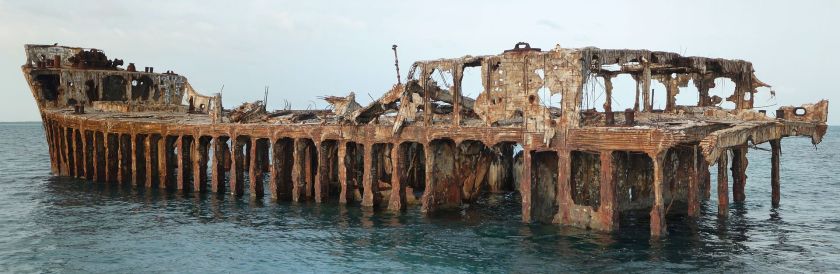
The steamer SS Sapona was sold for scrap and converted to a floating liquor warehouse during Prohibition, later grounding off the shore of Bimini during a hurricane. All the liquor, was lost.
SS Sapone as she looked, in 2009. H/T Compsciscubadive
The SS Atlantus was destined to be sunk in place as a ferry dock in Cape May New Jersey in 1926, until she broke free in a hurricane and ran aground, 150-feet from the beach. Several attempts were made to free the hulk, but none successful. At one time, the wreck bore a billboard. Advertising a marine insurance outfit, no less. Kids used to swim out and dive off, until one drowned. The wreck began to split up in the late 1950s. If you visit sunset beach today, you might see something like the image, at the top of this page.
SS Atlantus, Insurance billboard
In 1942, the world once again descended into war. With steel again in short supply, the Roosevelt administration contracted for another concrete fleet of 24 ships. The decades had come and gone since that earlier fleet. This time, the new vessels came off the production line at the astonishing rate of one a month featuring newer and stronger aggregates, lighter than those of years past. Like the earlier concrete fleet, most would be sold off after the war. Two of the WW2 concrete fleet actually saw combat service, the SS David O. Saylor and the SS Vitruvius.
In March 1944, an extraordinary naval convoy departed the port of Baltimore. including the concrete vessels, SS David O. Saylor and SS Vitruvius. It was the most decrepit procession to depart an American city since Ma and Pa Joad left Oklahoma, for California. A one-way voyage with Merchant Marines promised a return trip, aboard Queen Mary.
Merchant mariner Richard Powers , described the scene:
“We left Baltimore on March 5, and met our convoy just outside Charleston, South Carolina,” Powers recalled. “It wasn’t a pretty sight: 15 old ‘rustpots.’ There were World War I-era ‘Hog Islanders’ (named for the Hog Island shipyard in Philadelphia where these cargo and transport ships were built), damaged Liberty Ships.”
1,154 U-boats were commissioned into the German navy before and during WW2, some 245 of which were lost in 1944. The majority of those, in the North Atlantic. The allied crossing took a snail’s pace at 33 days and, despite the massive U-boat presence, passed unmolested into Liverpool. Powers figured, “The U-Boats were not stupid enough to waste their torpedoes on us.”
Herr Hitler’s Kriegsmarine should have paid more attention.
On June 1, Seaman Powers’ parade of misfit ships joined a procession of 100 British and American vessels. Old transports and battered warships, under tow or limping across the English channel at the stately pace of five knots. These were the old and the infirm, the combat damaged and obsolete. There were gaping holes from mine explosions, and the twisted and misshapen evidence of collisions at sea. Some had superstructures torn by some of the most vicious naval combat, of the European war. Decrepit as they were, each was bristling with anti-aircraft batteries, Merchant Mariners joined by battle hardened combat troops.
Their services would not be required. The allies had complete air supremacy over the English channel.
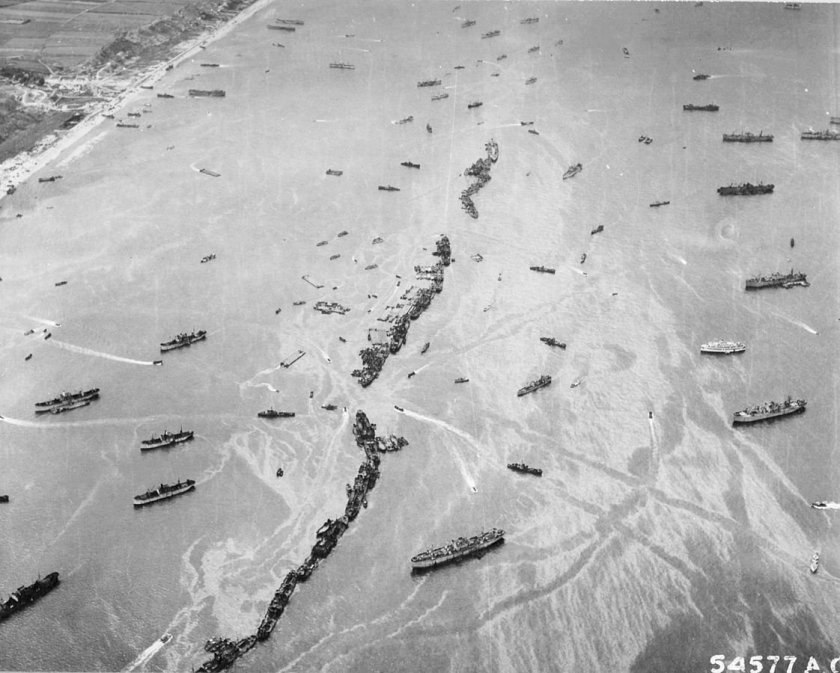
A line of U.S. Liberty ships deliberately sunk off the coast at Omaha beach to form a breakwater for the Mulberry harbor there.(U.S. Army) H/T wearethemighty.com
These were the “gooseberries” and “blockships”. Part of the artificial “Mulberry” harbors intended to form breakwaters and landing piers in support of the D-Day landing, charged with the difficult and dangerous task of scuttling under fire at five points along the Norman coast. Utah. Omaha. Gold. Juneau. Sword.
Later on, thousands more merchant vessels would arrive in support of the D-Day invasion. None more important than those hundred or so destined to advance and die, the living breakwater without which the retaking of continental Europe, would not have been possible.
A Trivial Matter
The British Army lost 19,240 killed on the first Day of the WW1 Battle of the Somme. French and German forces suffered a whopping 975,000 casualties on one single day of the ten-month Battle of Verdun. Imperial Russia lost five million soldiers, in the first two years of WW1. Many single day’s fighting of the great battles of 1916 produced more casualties than every European war of the previous 100 years. Combined.
“Antigenic Shift” occurs when two or more DNA strands combine, instantaneously forming a new virus sub-type. Like the dealer at some giant, cosmic poker table, this process may deal us a pair of twos. Occasionally, fate deals us aces & eights. The death hand.
In the world of virology, “Antigenic Drift” describes changes which happen slowly, the random mutation of virus DNA which takes place over months, or years. It’s why we get a new flu vaccine every year, even though there’s already some level of “herd immunity”.
“Antigenic Shift” occurs when two or more DNA strands combine, instantaneously forming a new virus sub-type. Like the dealer at some giant, cosmic poker table, this process may deal us a pair of twos. Occasionally, fate deals us aces & eights. The death hand.
When the “Great War” broke out in 1914, US Armed Forces were small compared with the mobilized forces of the European powers. The Selective Service Act, enacted May 18, 1917, authorized the federal government to raise an army for the United States’ entry into WWI. Two months after the American declaration of war against Imperial Germany, a mere 14,000 American soldiers had arrived “over there”. Eleven months later, that number stood at well over a million.
General “Black Jack” Pershing insisted that his forces be well trained before deployment. New recruits poured into training camps by the tens of thousands, while somewhere, some microscopic, chance recombination of surface proteins created a new virus, novel to nearly every immune system, in the world.
On the morning of March 11, 1918, most of the recruits at Fort Riley, Kansas, were turning out for breakfast. Private Albert Gitchell reported to the hospital, complaining of cold-like symptoms of sore throat, fever and headache. By noon, more than 100 more had reported sick with similar symptoms.
Camp Funston, Fort Riley, Kansas – 1918
Ordinary flu strains prey heavily on children, elderly, and those with compromised immune systems. Not this one. This flu would kick off a positive feedback loop between small proteins called cytokines, and white blood cells. This “cytokine storm” resulted in a death rate for 15-34 year olds 20 times higher in 1918, than in previous years. Perversely, it was their young and healthy immune systems that were most likely to kill them.
Physicians described the most viscous pneumonia they had ever seen, death often coming within hours of the first symptoms. There’s a story about four young, healthy women playing bridge well into the night. By morning, three were dead of influenza.
Over the next two years, this strain of flu infected one in every four people in the United States, killing an estimated 675,000 Americans. Eight million died in Spain alone, following an initial outbreak in May. Forever after, the pandemic would be known as the Spanish Flu.
In 1918, children skipped rope to a rhyme:
“I had a little bird, Its name was Enza. I opened the window, and in-flu-enza”.
In the trenches, the flu cut down combatants on every side. “Operation Michael”, the final, no holds barred German offensive which would determine the outcome of the war, launched from the Hindenburg line in March. Crown Prince Rupprecht wrote in August, “poor provisions, heavy losses, and the deepening influenza have deeply depressed the spirits of men in the 3rd Infantry Division”.
Some sources report as many as half the Americans killed in WWI, died of the flu.
The parades and parties following the cease fire of November 11 threw gas on the flames. Millions more contracted the flu and thousands more died. President Wilson himself fell ill, while participating in 1919 treaty negotiations in Versailles. From a public health point of view, the end of war was a disaster.
Around the planet, the Spanish flu infected half a Billion people. A third of the population of the entire world, at that time. Estimates run as high 50 to 100 million killed. For purposes of comparison, the “Black Death” of 1347-51 killed 20 million Europeans.
History has a way of swallowing some events whole, like they never happened. Today, the Spanish flu is all but overshadowed by the War to end all wars. Even though in the end, the flu pandemic of 1918-19 proved a far deadlier adversary, than the war itself.
A Trivial Matter
In the 17th century, it was cheaper to import some things from England, than to produce them here. The first bible printed in the future United States came off the press in 1661 in the Algonquin language, a tongue all but extinct in this country, today.
Neither knowing nor caring why they were there, the animals of the Great War suffered at prodigious rates.
Mitochondrial DNA analysis of Felis silvestris catus suggests two great waves of expansion, first with the dawn of agriculture, when grain stores attracted vermin. Genetic analysis of the common house cat suggests they all descend from one of five feline ancestors: the Sardinian, European, Central Asian, Subsaharan African or the Chinese desert cat.
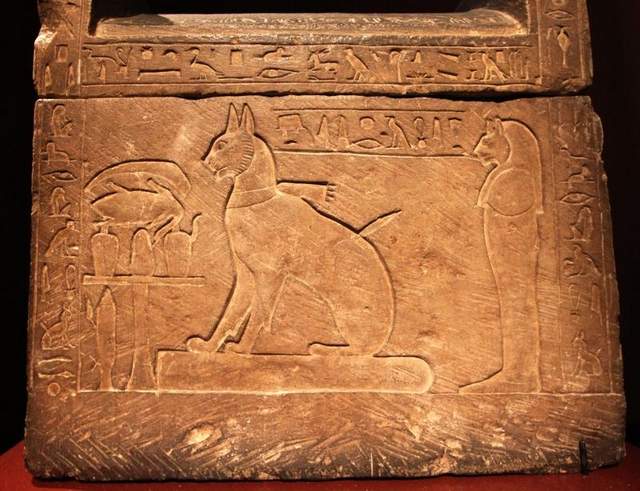
The second “cat-spansion” occurred later, as man took to water. From trade routes to diplomatic missions and military raids, men on ships needed food, and that meant rodents. The “ship’s cat” was a feature of life at sea from that day to this, first helping to control damage to food stores, ropes and woodwork and, in modern times, electrical wiring.
Fun fact: Who knew the Vikings had cats!
One Viking site in North Germany from ca 700-1000AD, contains one cat with Egyptian mitochondrial DNA. Once driven nearly to extinction, the Norwegian Forest cat (Norwegian: Norsk skogkatt) descends from Viking-era ship’s cats, brought to Norway from Great Britain sometime around 1000AD.
Not without reason, were cats seen as good luck. The power of cats to land upright is due to extraordinarily sensitive inner ears, capable of detecting even minor changes in barometric pressure. Sailors paid careful attention to the ship’s cat, often the harbinger of foul weather ahead.
Ship’s cat, HMS Queen Elizabeth, Gallipoli Peninsula, 1915
Togo, ships cat aboard the HMS Dreadnought
Ship’s cats “inspect” the breech of a 4-inch gun aboard an unidentified US ship
Left to right: 1. Ship’s cat, HMS Queen Elizabeth, Gallipoli Peninsula, 1915. 2. Togo, ships cat aboard the HMS Dreadnought, 3. Ship’s cats “inspect” the breech of a 4-inch gun aboard an unidentified US ship.
When the “Great War” arrived in 1914, animals of all kinds were dragged along. Cats performed the same functions in vermin infested trenches, as those at sea.
Gunner with the regimental cat in a trench in Cambrin, France, February 6th, 1918.
Officers of the U.S. 2nd Army Corps with a cat they discovered in the ruins of Le Cateau-Cambrésis
Trench cat, Gallipoli Peninsula, 1915
1. Gunner with the regimental cat in a trench in Cambrin, France, February 6th, 1918. 2. Officers of the U.S. 2nd Army Corps with a cat discovered in the ruins of Le Cateau-Cambrésis 3. Trench cat, Gallipoli Peninsula, 1915
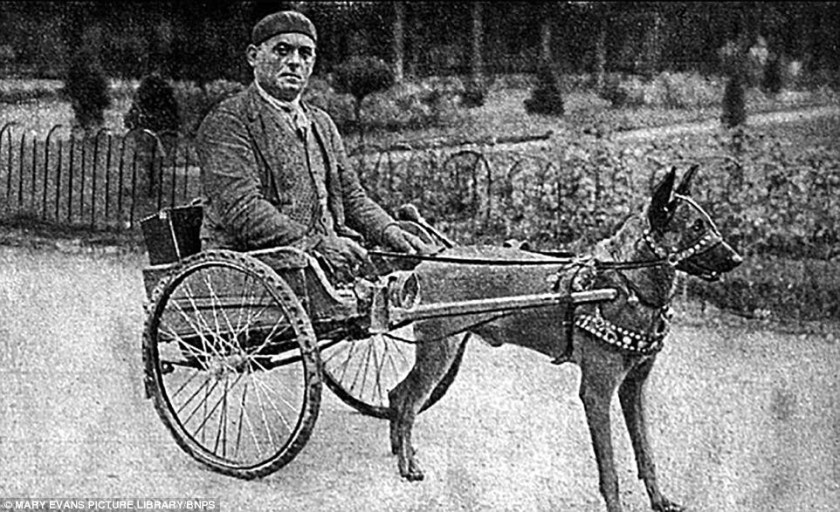
Tens of thousands of dogs performed a variety of roles, from ratters to sentries, scouts and runners. “Mercy” dogs were trained to seek out wounded on the battlefield, carrying medical supplies with which the stricken could treat themselves.
“A dog pulling the wheelchair of a wounded French soldier in the remarkable series of images featured in new book Images of War, Animals in the Great War” H/T Daily Mail
The French trained specialized “chiens sanitaire” to seek out the dead and wounded, and bring back bits of uniform. Often, dogs provided the comfort of another living soul, so the gravely wounded should not die alone.
“Messenger dogs pictured running the gauntlet of rifle fire during their training during the First World War” H/T Daily Mail
With the hell of no mans land all but impassable for human runners, dogs stepped up, as messengers. “First Division Rags” ran through a cataract of falling bombs and chemical weapons. Gassed and partially blinded with shrapnel injuries to a paw, eye and ear, Rags still got his message where it needed to be.
“First Division Rags”
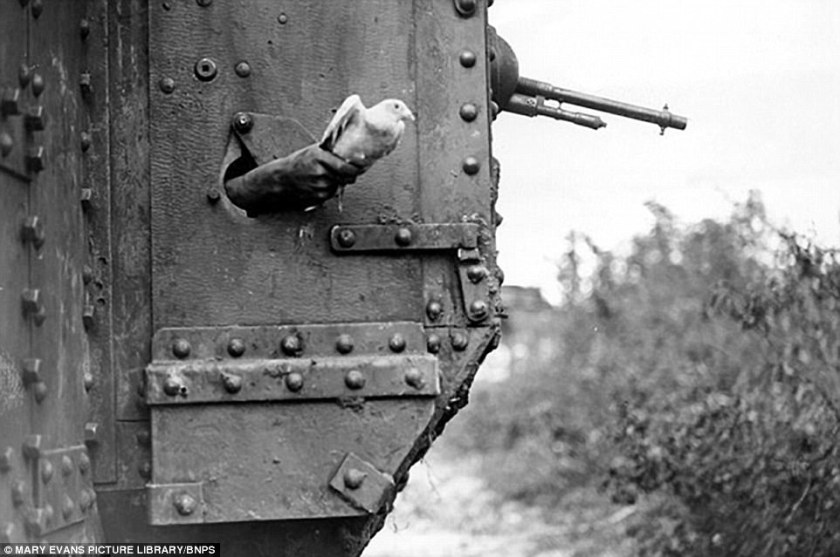
Other times, birds were the most effective means of communication. Carrier pigeons by the tens of thousands flew messages of life and death importance, for Allied and Central Powers, alike.
“A carrier pigeon held tight before release from the belly of a tank in 1918. Birds were often used to pass messages between troops” H/T Daily MailCher Ami
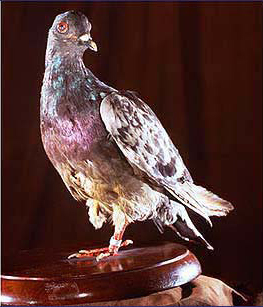
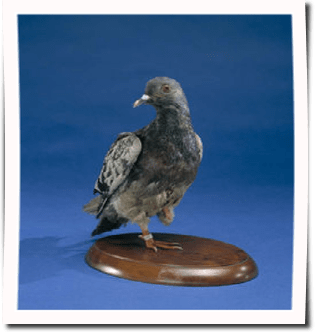
During the Meuse-Argonne offensive of 1918, Cher Amisaved 200 men of the “Lost Battalion”, arriving in her coop with a bullet through the breast, one eye shot out and a leg all but torn off, hanging by a single tendon.
Even the lowly garden slug pitched in. Extraordinarily sensitive to mustard gas, “slug brigades” provided the first gas warnings, allowing precious moments in which to “suit up”.
The keen senses of animals were often the only warning of impending attack.
Private Albert Marr’s Chacma baboon Jackiewould give early warning of enemy movement or impending attack with a series of sharp barks, or by pulling on Marr’s tunic.
One of many wrenching images of the Great war took place in April, 1918. The South African Brigade withdrew under heavy shelling through the West Flanders region of Belgium. Jackie was frantically building a stone wall around himself, when jagged splinters wounded his arm and all but tore off the animal’s leg. Jackie refused to be carried off by stretcher-bearers, hobbling about on his shattered limb, trying to finish his wall
Constituted on June 13 1917, British Aero Squadron #32 kept a red fox, as unit mascot.
H/T Daily Mail
The famous Lafayette Escadrillekept a pair of lion cubs, called Whiskey and Soda.
German soldiers in Hamburg, enlisted the labor of circus elephants in 1915.
H/T Daily Mail
The light cruiser Dresden was scuttled and sinking fast in 1914, leaving the only creature on board to swim for it. An hour later an Ensign aboard HMS Glasgow spotted a head, struggling in the waves. Two sailors dove in and saved him. They named him “Tirpitz”, after the German Admiral. Tirpitz the pig served out the rest of the war not in a frying pan, but as ship’s mascot aboard the HMS Glasgow.
“Tirpitz” the pig
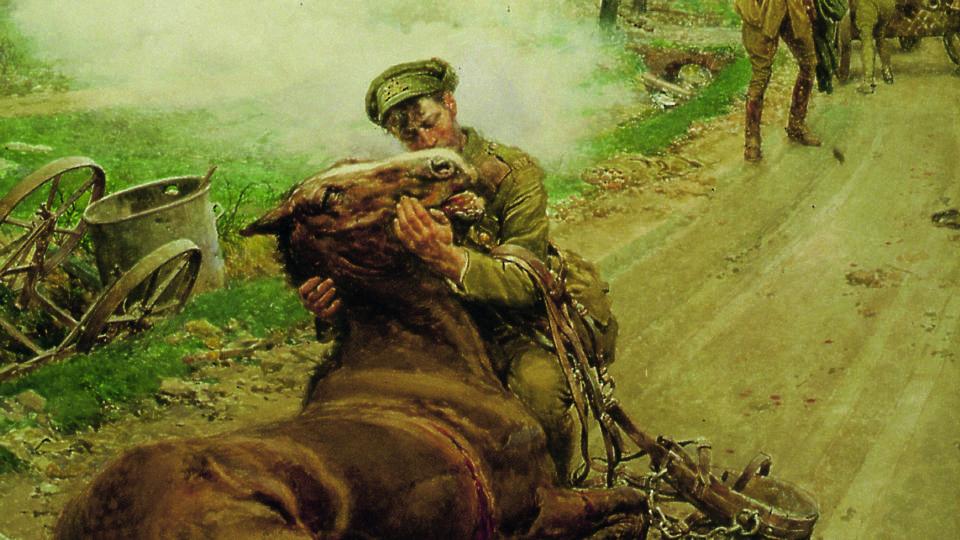
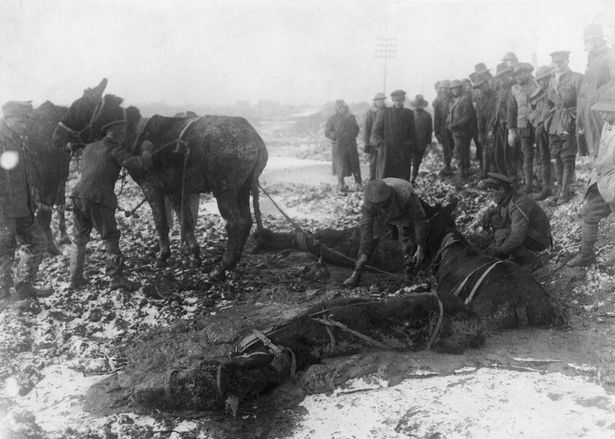
No beast who served in the Great war was as plentiful nor as ill used as the beast of burden, none so much as the horse. Horses were called up by the millions, along with 80,000 donkeys and mules, 50,000 camels and 11,000 oxen. The United States alone shipped a thousand horses between 1914 and 1917, every day.
Horsepower was indispensable throughout the war from cavalry and mounted infantry to reconnaissance and messenger service, as well as pulling artillery, ambulances, and supply wagons. With the value of horses to the war effort and difficulty in their replacement, the loss of a horse was a greater tactical problem in some areas, than the loss of a man.
Few ever returned. An estimated three quarters died of wretched working conditions. Exhaustion. The frozen, sucking mud of the western front. The mud-borne and respiratory diseases. The gas, artillery and small arms fire. An estimated eight million horses were killed on all sides, enough to line up in Boston and make it all the way to London four times, if such a thing were possible.
The United Kingdom entered the war with only eighty motorized vehicles, conscripting a million horses and mules, over the course of the war. Only one in sixteen, lived to come home.
Neither knowing nor caring why they were there, the animals of the Great War suffered at prodigious rates. Humane organizations stepped up, the British Royal Society for the Prevention of Cruelty to Animals (RSPCA) processing some 2.5 million animals through veterinary hospitals. 1,850,000 were horses and mules. 85% were treated and returned to the front.
The American Red Star Animal Relief Program sent medical supplies, bandages, and ambulances to the front lines in 1916, to care for horses injured at a rate of 68,000 per month.
The century before the Great War was a Golden age, mushrooming populations enjoying the greatest rise in living standards, in human history. The economy at home would be dashed to rags and atoms by the Great War. Trade and capital as a proportion of the global economy would not recover to 1913 levels, until 1993.
Unseen amidst the economic devastation of the home front, was the desperate plight of animals. Turn-of-the-century social reformer Maria Elizabeth “Mia” Dickin founded the People’s Dispensary for Sick Animals in 1917, working to lighten the dreadful state of animal health in Whitechapel, London. To this day, the PDSA is one of the largest veterinary charities in the United Kingdom, carrying out over a million free veterinary consultations, every year.
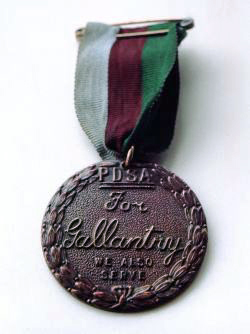
Dickin Medal
The “Dickin Medal” was instituted on December 2, 1943, honoring the work performed by animals, in WW2. The “animal’s Victoria Cross”, the highest British military honor equivalent to the American Medal of honor, is awarded in recognition of “conspicuous gallantry or devotion to duty while serving or associated with any branch of the Armed Forces or Civil Defence Units.”
The Dickin Medal has been awarded 71 times, recipients including 34 dogs, 32 pigeons, 4 horses and a cat. An honorary Dickin was awarded in 2014, in honor of all animals serving in the Great War.
Two Dickins were awarded on this day in 2007. the first to Royal Army Veterinary Corps explosives detection dog “Sadie”, a Labrador Retriever whose bomb detection skills saved the lives of untold soldiers and civilians in Kabul, in 2005. The second went to “Lucky”, a German Shepherd and RAF anti-terrorist tracker serving during the Malaya Emergency of 1949 – ’52. Part of a four-dog team including “Bobbie”, “Jasper” and “Lassie”, Lucky alone would survive the “unrelenting heat [of] an almost impregnable jungle“.
Handler Beval Austin Stapleton was on-hand to receive Lucky’s award. “Every minute of every day in the jungle” he said, “we trusted our lives to those four dogs, and they never let us down. Lucky was the only one of the team to survive our time in the Malayan jungle and I’m so proud of the old dog today. I owe my life to him.”
Ship’s cat, Her Majesty’s Australian Ship (HMAS) Encounter, World War I
The people he sought were over 101, one was 113. It could not have been easy, beginning with the phone call to next of kin. There is no delicate way to ask the question, “Is he still with us?” Most times, the answer was “no”.
The Forgotten World War
In 2003, author Richard Rubin set out to interview the last surviving veterans of the Great War, the “War to End All Wars”. World War One.
The people he sought were over 101, one was 113. It could not have been easy, beginning with the phone call to next of kin. There is no delicate way to ask the question, “Is he still with us?” Most times, the answer was “no”.
Sometimes, it was “yes”, and Rubin would ask for an interview. The memories his subjects sought to bring back were 80 years old and more. Some spoke haltingly, and with difficulty. Others were fountains of information, as clear and lucid as if the memories of which they spoke, were only yesterday.
Rubin writes “Quite a few of them told me that they were telling me things that they hadn’t talked about in 50, 60, 70 years. I asked a few of them why not, and the surprising response often was that nobody had asked.”
Anthony Pierro at 107
Anthony Pierro of Swampscott, Massachusetts, served in Battery E of the 320th Field Artillery and fought in several of the major battles of 1918, including Oise-Aisne, St. Mihiel, and Meuse-Argonne.
Pierro recalled his time in Bordeaux, as the best time of the war. “The girls used to say, ‘upstairs, two dollars.’” Pierro’s nephew Rick interrupted the interview. “But you didn’t go upstairs.” Although possibly unexpected, Uncle Anthony’s response was a classic. “I didn’t have the two dollars”.
Reuben Law of Carson City, Nevada remembered a troop convoy broken up by a German U-Boat, while his own transport was swept up in the murderous Flu pandemic of 1918.
Hildegarde Schan
They’re not all men, either. 107-year-old Hildegarde Schan of Plymouth, Massachusetts speaks of caring for the wounded.
Howard Ramsey started a new burial ground in France, we now know as theMeuse-Argonne American Cemetery.
“So I remember one night”, Ramsey said, “It was cold, and we had no blankets, or nothing like that. We had to sleep, we slept in the cemetery, because we could sleep between the two graves, and keep the wind off of us, see?”
Arthur Fiala of Kewaunee, Wisconsin remembered traveling across France in a boxcar marked “40-8″, (40 men or eight horses).
Arthur Fiala
There was J. Laurence Moffitt of Orleans, Massachusetts. Today, we see the “Yankee Division” on highway signs. At 106, this man was the last surviving member of his outfit, with a memory so clear that he could recall every number from every fighting unit of the 26th Division.
George Briant
George Briant was caught in an open field with his battery, as German planes dropped bombs from the sky. Briant thinks he was hit by every one of them, too. After several months in the hospital, he begged to go back to the front. On the last night of the war, November 10, 1918, Briant came upon the bodies of several men who had just been shelled.
“Such fine, handsome, healthy young men”, he said, “to be killed on the last night of the war. I cried for their parents. I mean it’s a terrible, terrible thing to lose anyone you love in a war, but imagine knowing precisely when that war ends, and then knowing that your loved one died just hours before that moment.”
Rubin interviewed dozens of these men, and a handful of women. Their stories are linked HERE if you care to watch. I highly recommend it. Their words are more powerful than anything I can offer.
The Last Doughboy
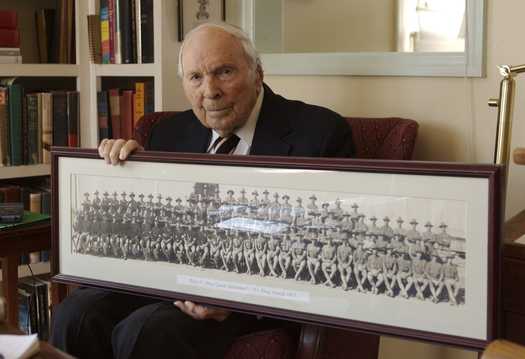
Frank Woodruff Buckles, born Wood Buckles, is one of them. Born this day in 1901, Buckles enlisted with the First Fort Riley Casualty Detachment, trained for trench casualty retrieval and ambulance operations. He was sixteen.
Frank Woodruff Buckles, S/N 15577
The unit set sail from Hoboken New jersey in December 1917 aboard HMS Carpathia, a vessel made famous by the Titanic rescue, five years earlier.
Woodruff never saw combat but he saw lots of Germans, with a Prisoner-of War escort company. Returning home in January 1920 aboard USS Pocahontas, Buckles was paid $143.90, including a $60 bonus.
Buckles was a civilian in 1940, working for the White Star Lines and WR Grace shipping companies. His work took him to the Philippines, where he remained after the outbreak of WWII. He was helping to resupply U.S. troops when captured by Japanese forces in January 1942, imprisoned for thirty-nine months as a civilian prisoner in the Santo Tomas and Los Baños prison camps. He was rescued by the 11th Airborne Division on February 23, 1945, on the day he was to be executed.
“I found out afterwards when I read up on my history that some of the things that I did were quite important”.
Buckles married Audrey Mayo of Pleasanton, California in 1946, and returned from whence he had come. Back to the land, back to the Gap View Farm near Charles Town, West Virginia in January 1954, to farm the land his ancestors worked, back in 1732.
Audrey Mayo Buckles lived to ninety-eight and passed away on June 7, 1999. Frank continued to work the farm until 106, and still drove his tractor. For the last four years of his life he lived with his daughter Susannah near Charles Town, West Virginia.
Once asked his secret to a long life, Buckles responded, “When you start to die, don’t”.
On December 3, 2009, Frank Buckles became the oldest person ever to testify before the United States Congress, where he campaigned for a memorial to honor the 4.7 million Americans who served in the War to End All Wars.
“We still do not have a national memorial in Washington, D.C. to honor the Americans who sacrificed with their lives during World War I. On this eve of Veterans Day, I call upon the American people and the world to help me in asking our elected officials to pass the law for a memorial to World War I in our nation’s capital. These are difficult times, and we are not asking for anything elaborate. What is fitting and right is a memorial that can take its place among those commemorating the other great conflicts of the past century. On this 92nd anniversary of the armistice, it is time to move forward with honor, gratitude, and resolve”.
The United States came late to the Great War, not fully trained, equipped and mobilized until well into the last year. Even so, fully 204,000 Americans were wounded in those last few months. 116,516 never came home from a war in which, for all intents and purposes, the US fought a bare five months.
Frank Woodruff Buckles passed away on February 27, 2011 at the age of 110, and went to his rest in Arlington National Cemetery. The last of the Doughboys, the only remaining American veteran of WWI, the last living memory of the war to end all wars, was gone.
Concurrent resolutions were proposed in the US House of Representatives and Senate for Buckles to lie in state, in the Capitol rotunda. For reasons still unclear, the plan was blocked by Speaker John Boehner and Senate Majority Leader Harry Reid. Neither Boehner nor Reid would elaborate, proposing instead a ceremony in the Amphitheater at Arlington National Cemetery. The President of the United States attended his funeral.
Reporter Paul Duggan of The Washington Post described the occasion:
“The hallowed ritual at grave No. 34-581 was not a farewell to one man alone. A reverent crowd of the powerful and the ordinary—President Obama and Vice President Biden, laborers and store clerks, heads bowed—came to salute Buckles’s deceased generation, the vanished millions of soldiers and sailors he came to symbolize in the end”.
Afterward
Sixteen million Americans joined with allies the world over to defeat the Axis Powers of WW2. They were the children of Frank Buckles’ generation, sent to complete what their parents had begun. Seventy years later, 939,332 remained alive. They’ve been called the “Greatest Generation”. Today, we lose them at a rate of 362, per day.
If Department of Veterans Affairs actuarial projections are any indication, the Frank Buckles of his generation, the last living veteran of WW2, can be expected to pass from among us in 2044.
That such an event should pass from living memory, is a loss beyond measure.
Feature image, top of page: Frank Buckles, age 107
If you enjoyed this “Today in History”, please feel free to re-blog, “like” & share on social media, so that others may find and enjoy it as well. Please click the “follow” button on the right, to receive email updates on new articles. Thank you for your interest, in the history we all share.
By 6:30pm, the fleet had formed a line some thirty miles long proceeding north at 20 knots, equivalent to 23MPH over the ground. It was full dark at this latitude with the Haar or “sea fog”, closing in. The fleet was effectively deaf and blind, and traveling fast. The table was set, for disaster.
Operation E.C.1 was a planned exercise for the British Grand Fleet, scheduled for February 1, 1918 out of the naval anchorage at Scapa Flow in the North Sea Orkney Islands.
Forty vessels of the British Royal Navy departed Rosyth in the Scottish fjord at the Firth of Forth on January 31, bound for Scapa flow. They were the 5th Battle squadron with destroyer escort, the 2nd Battlecruiser squadron and their destroyers, two cruisers and two flotillas of K-class submarines, each led by a light cruiser.
By 6:30pm, the fleet had formed a line some thirty miles long proceeding north at 20 knots, equivalent to 23MPH over the ground. It was full dark at this latitude with the Haar or “sea fog”, closing in. The fleet was effectively deaf and blind, and traveling fast.
While only an exercise, strict radio silence was observed, lest there be any Germans in the vicinity. Each vessel displayed a faint blue stern light, travelling 400-yards ahead of the next-in-line. Black-out shields restricted the lights’ visibility to one compass point left or right of the boats’ center line. The table was set for disaster.
Though large for WW1-vintage submarines at over 300-feet, K-class subs were low to the water and slow, compared with the much larger surface vessels. Compounding the problem, the unfortunately nicknamed”Kalamity Klass” was powered by steam, meaning that stacks had to be folded and closed, before the thing was ready to dive. Only eighteen K-class submarines were ever built, one of which caused damage to a German U-boat, in a ramming attack.
Seems the K-class was more dangerous to its own people, than anyone else.
A half-hour into the cruise, the flagship HMS Courageous passed a tiny speck on the map called May Island and picked up speed. A pair of lights appeared in the darkness as the 13th Submarine Flotilla passed, possibly a pair of mine sweeping trawlers. The flotilla turned hard to port to avoid collision when the helm of the third-in-line K-14 jammed, and veered out of line. Both K-14 and the boat behind her, K-12 turned on their navigation lights as K-22, the next submarine in line, lost sight of the flotilla and collided with K-14, severing the bow and killing two men. Two stricken submarines now struggled to pull themselves apart while an entire fleet sped through the darkness, unaware of what was about to happen.
The destroyer HMS Ithuriel received a coded signal and turned to lend aid, doubling back and followed by the remainder of the 13th submarine flotilla and thus putting themselves on collision course with the outgoing 12th flotilla.
Unaware of the mess lying in her path, 12th flotilla escort HMS Fearless was traveling way too fast to change the outcome. Fearless went “hard astern” on sighting K-17 but too late, her bow knifing through the smaller vessel, sinking the sub within minutes with the loss of 47 men. Meanwhile, outgoing submarine K-4 heard the siren and came to a stop but not the trailing K-3 which hit her sister sub broadside, nearly cutting the vessel in half.
K-4 sank in minutes, with the loss of 55 crew.
HMS Fearless
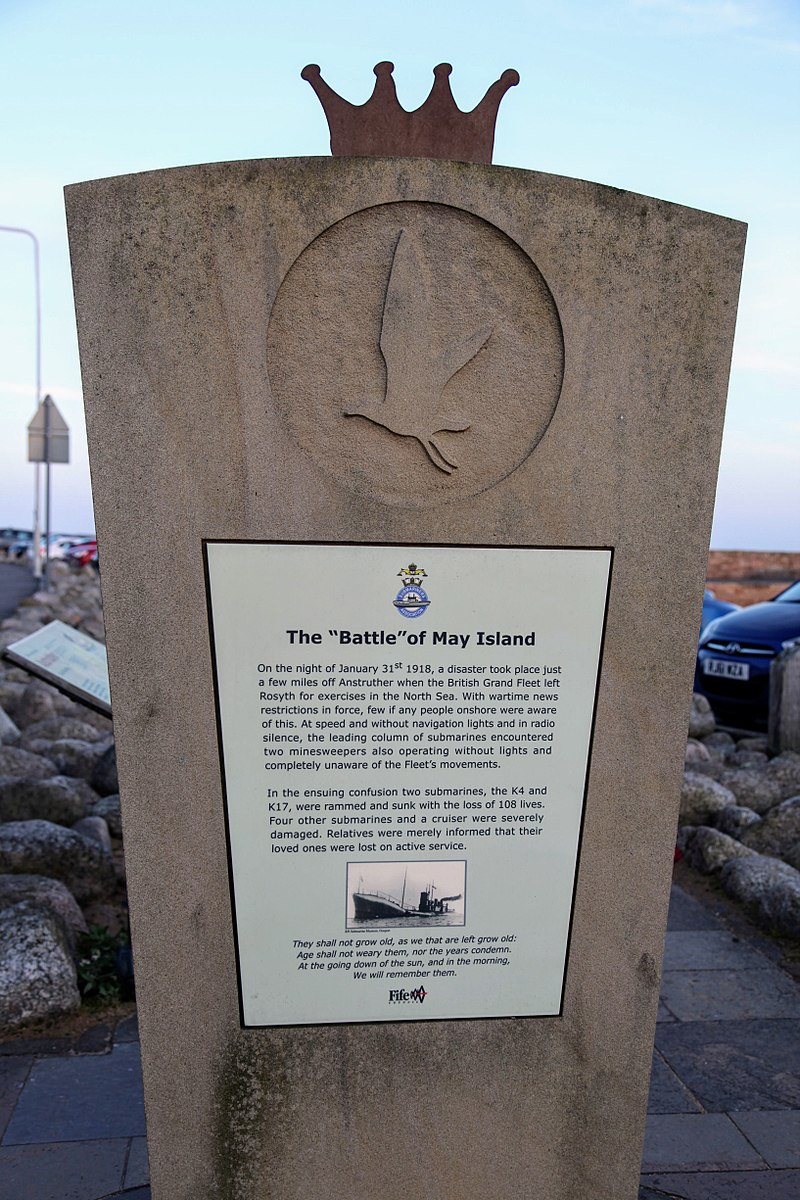
The number of near misses that night, can never be known. 104 men were dead before it was over, with the total loss of two K-class submarines. Four more sustained severe damage, along with the Scout Cruiser HMS Fearless.
A hastily arranged Board of inquiry began on February five and sat for five days, resulting in several courts martial for negligence. Those would be adjudicated, “unproved”.
The whole disaster and subsequent inquiry was kept quiet to avoid embarrassment, and deprive the German side of the propaganda bonanza. Full details were released only in 1994, long after the participants in this story, had passed away.
On January 31, 2002, a memorial cairn was erected in memory of the slain. As it had been eighty four years earlier, there wasn’t a German to be found. The “Battle of May Island” was no battle at all. Only the black forlorn humor, of men at war.
If you enjoyed this “Today in History”, please feel free to re-blog, “like” & share on social media, so that others may find and enjoy it as well. Please click the “follow” button on the right, to receive email updates on new articles. Thank you for your interest, in the history we all share.
I’ve long believed that we can’t be participating citizens of a self-governing Republic, we can’t know where we want our nation to go, if we don’t understand where it’s been. It’s one of the principle reasons for examining history. It’s why I think something wonderful happened five years ago, and I don’t think many of us heard about it.
November 11, nineteen short days ago, marked the one-hundred year anniversary of the end of World War One. Before they had numbers, this was “The Great War”. The “War to end all Wars”.
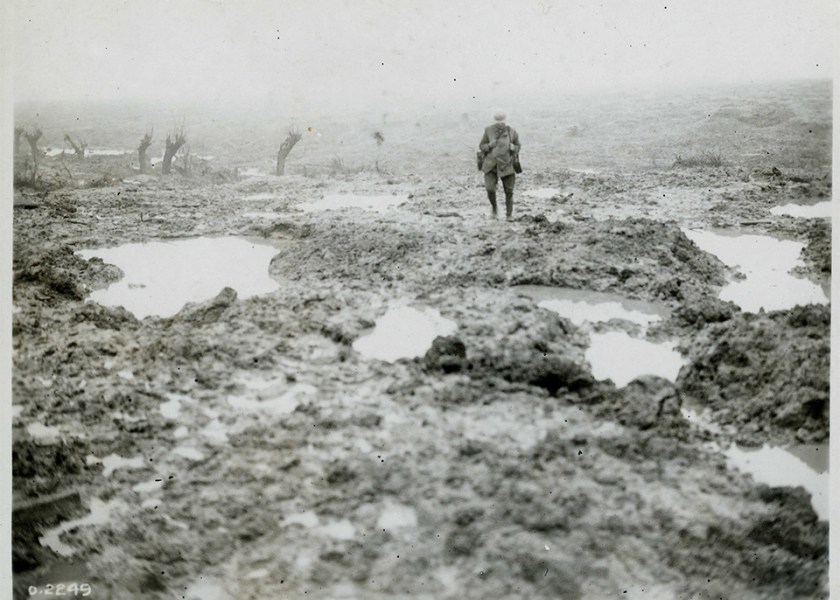
Passchendaele
There is barely a piece of 20th or 21st century history, which cannot be traced back to it.
International Communism was borne of the Great War, without which there would have been no cold war, no Korean War, no war in Vietnam. The killing fields of Cambodia would have remained mere rice fields. The spiritual descendants of Chiang Kai-shek’s brand of capitalism would be running all of China, instead of only Taiwan.
The current proportions of the Middle East arose from the Great War. While the region’s tribal alliances and religious strife is nothing new, those conditions would have taken a different form, had it not been for those boundaries.
World War II, an apocalypse which left more dead, wounded or missing than any conflict in world history, was little more than the Great War, part II. A Marshall of France, on reading the Versailles Treaty formally ending WWI, said “This isn’t peace. This is a cease-fire that will last for 20 years”. He was off, by about 36 days.
I’ve long believed that we can’t be participating citizens of a self-governing Republic, we can’t know where we want our nation to go, if we don’t understand where it’s been. It’s one of the principle reasons for examining history. It’s why I think something wonderful happened five years ago, and I don’t think many of us heard about it.
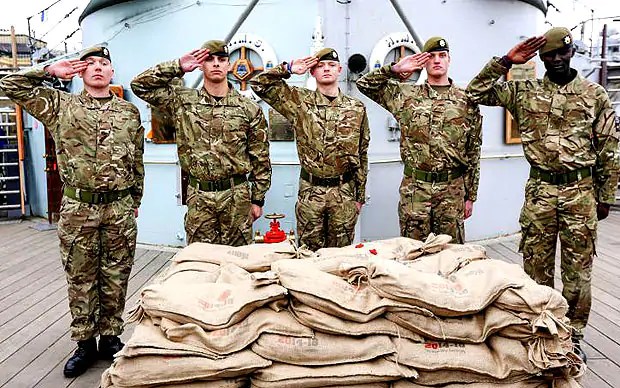
Over the summer of 2013, more than 1,000 British and Belgian schoolchildren visited seventy battlefields of the Great War. Ypres.Passchendaele. Verdun. The Somme. This was a singular event. Never before had the Commonwealth War Graves Commission permitted the excavation of these battlefields.
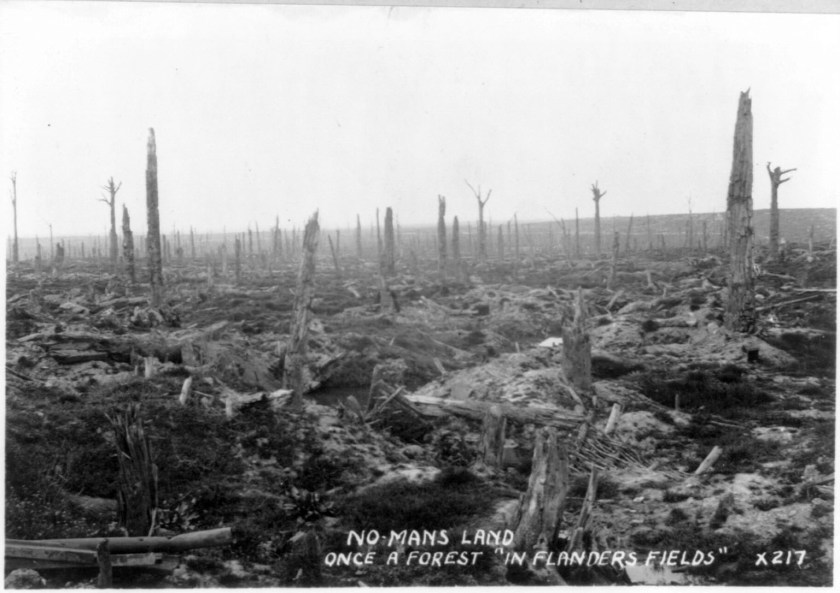
All over Northern France and Belgium, the region known as “Flanders”. There these children collected samples of the sacred soil of those fields of conflict.
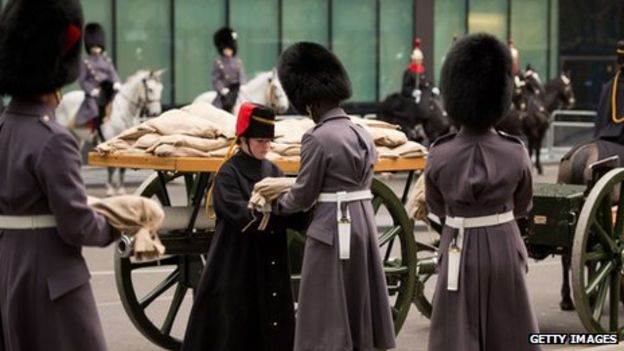
The soil from those battlefields was placed in 70 WWI-style burlap sandbags, each stenciled with a red poppy, where it came from, and the dates. Those sandbags began their journey with a solemn Armistice Day ceremony at the Menin Gate of Ypres, that memorial to the 56,395 British and Commonwealth soldiers who fought and died on the Ypres salient of the Great War, and whose bodies were never found or identified.
The sacred soil of Flanders Fields transported to London aboard the Belgian Navy frigate Louisa Marie, and installed with great care at Wellington Barracks, the central London home of the Grenadier Guards, Coldstream Guards and Scots Guards.
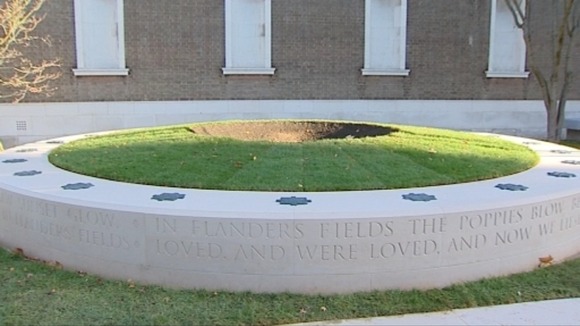
There the soil of the Great War would nourish and support a garden, inscribed with the words of Doctor John McCrae’s famous poem, “In Flanders Fields”. Ready for the following year, a solemn remembrance of the centenary of the War to end all Wars.
That day, December 1, 2013, was for the Flanders Fields Memorial Garden, the first full day of forever. I cannot think of anything more fitting than that it was children, our future and posterity, who retrieved the sacred soil of Flanders and installed it in that garden.
It is now for that posterity to keep our history alive, and never to let it fade, into some sepia-toned and forgotten past.
If you enjoyed this “Today in History”, please feel free to re-blog, “like” & share on social media, so that others may find and enjoy it as well. Please click the “follow” button on the right, to receive email updates on new articles. Thank you for your interest, in the history we all share.
The final surrender was signed at 5:10am on November 11, and back-timed to 5:00am Paris time, scheduled to go into effect later that morning. The 11th hour, of the 11th day, of the 11th month.
In an alternate history, the June 1914 assassinationof the heir-apparent to the Habsburg Empire could have led to nothing more than a regional squabble. A policing action, in the Balkans.
As it was, mutual distrust and entangling alliances combined with slavish obedience to mobilization timetables, to draw the Great Powers of Europe, into the vortex. On August 3, the “War to End All Wars” exploded across the European continent.
Many of the soldiers who went off to war in those days, viewed the conflict as some kind of grand adventure. Many of them singing patriotic songs, the young men and boys of Russia, Germany, Austria and France stole last kisses from wives and sweethearts, and boarded their ships and trains.
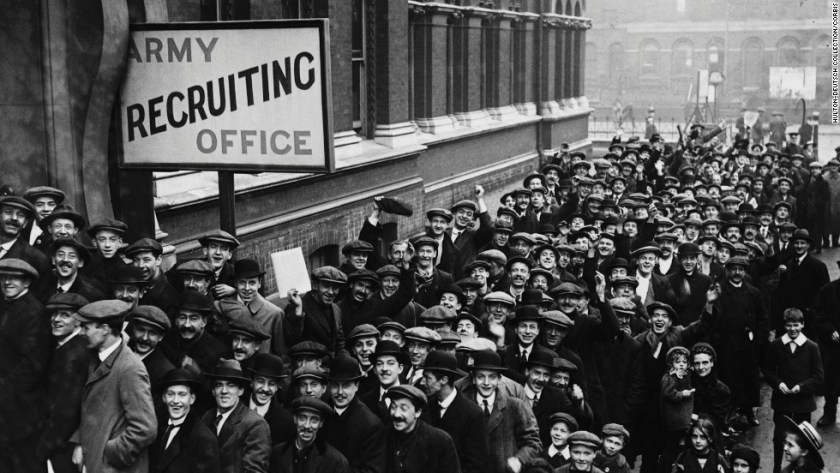
Believing overwhelming manpower to be the key to victory, British Secretary of State for War Lord Horatio Kitchener recruited friends and neighbors by the tens of thousands into “Pal’s Battalions”, to fight for King and country.
The signs could have been written in any number of languages, in the early phase of the war
Four years later, an entire generation had been chewed up and spit out, in pieces.
Any single day’s fighting during the great battles of 1916 produced more casualties than every European war of the preceding 100 years, civilian and military, combined.
6,503 Americans lost their lives during the savage, month-long battle for Iwo Jima, in 1945. The first day’s fighting during the 1916 Battle of the Somme, killed three times that number on the British and Commonwealth side, alone.
Over 1.5 million shells were fired in the days leading to the battle of the Somme
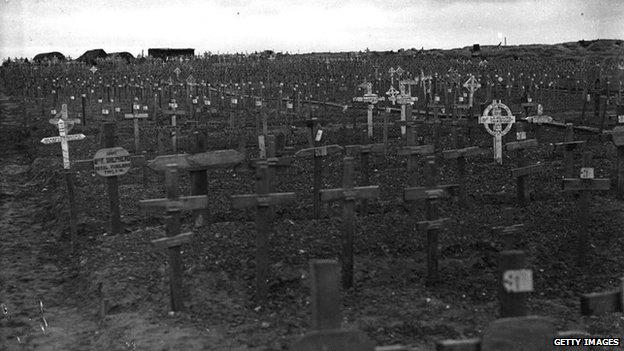
Over 16 million were killed and another 20 million wounded, while vast stretches of the European countryside were literally, torn to pieces. Tens of thousands remain missing, to this day.
Had you found yourself in the mud and the blood, the rats and the lice of the trenches during the New Year of 1917-’18, you could have heard a plaintive refrain drifting across the barbed wire and frozen wastes of no man’s land, sung to the tune of ‘Auld Lang Syne”.
We’re here, because we’re here, because we’re here, because we’re here, we’re here, because we’re here, because we’re here, because we’re here.
Cher Ami
Those who fought the “Great War”, were not always human. The carrier pigeon Cher Ami escaped a hail of bullets and returned twenty-five miles to her coop despite a sucking chest wound, the loss of an eye and a leg that hung on, by a single tendon. The message she’d been given to carry, saved the lives of 190 men.
“Warrior” was the thoroughbred mount to General “Galloper” Jack Seely, arriving in August 1914 and serving four years “over there”. “The horse the Germans can’t kill” survived snipers, poison gas and shellfire to be twice buried alive in great explosions, only to return home to the Isle of Wight, and live to the ripe old age of 33.
First division Rags
“First Division Rags” ran through a torrent of shells, gassed and blinded in one eye, a shell fragment damaging his front paw, yet still, he got his message through.
Jackiethe baboon lost a leg during heavy bombardment from German guns, while frantically building a protective rock wall around himself, and his comrades.
Tirpitz the German pig jumped clear of the sinking light cruiser SMS Dresden, to become mascot to the HMS Glasgow.
Sixteen million animals served on all sides and in all theaters of WW1: from cats to canaries, to pigeons and mules, camels, donkeys and dogs. As “dumb animals”, these were never given the choice to “volunteer”. And yet they served, some nine million of them making the supreme sacrifice.
British Army mules in the mud of the western front, 1918
In the end, starvation and malnutrition stalked the land at home as well as the front, with riots at home and mutiny in the trenches. The Russian Empire of the Czars had collapsed into a Bolshevik hellhole, never to return. Nearly every combatant saw the disintegration of its domestic economy, or teetering on the brink.
A strange bugle call came out of the night of November 7, 1918. French soldiers of the 171st Régiment d’Infanterie, stationed near Haudroy, advanced into the fog and the darkness, expecting that they were about to be attacked. Instead, they were shocked to see the apparitions of three sedans, their sides displaying the German Imperial Eagle.
Imperial Germany, its army disintegrating in the field and threatened with revolution at home had sent a peace delegation, headed by the 43-year-old German politician Matthias Erzberger.
The delegation was escorted to the Compiegne Forest near Paris, to a conference room fashioned out of a railroad dining car. There they were met by a delegation headed by Ferdinand Foch, Marshall of France.
Adolf Hitler would gleefully accept French surrender in the same rail car, some twenty-two years later.
The German delegation was shocked at the words that came out of Foch’s mouth. ‘Ask these gentlemen what they want,’ he said to his interpreter. Stunned, Erzberger responded. The German believed that they were there to discuss terms of an armistice. Foch dropped the hammer: “Tell these gentlemen that I have no proposals to make”.
Ferdinand Foch had seen his country destroyed by war, and had vowed “to pursue the Feldgrauen (Field Grays) with a sword at their backs”. He had no intention of letting up.
Marshall Foch now produced a list of thirty-four demands, each one a sledgehammer blow on the German delegation. Germany was to divest herself of all means of self-defense, from her high seas fleet to the last machine gun. She was to withdraw from all lands occupied since 1870. With the German population at home facing starvation, the allies were to confiscate 5,000 locomotives, 150,000 railroad cars, and 5,000 trucks.
By this time, 2,250 were dying every day on the Western Front. Foch informed Ertzberger that he had 72 hours in which to respond. “For God’s sake, Monsieur le Marechal”, responded the German, “do not wait for those 72 hours. Stop the hostilities this very day”. Even so, the plea fell on deaf ears. Fighting would continue until the last minute, of the last day.
The German King, Kaiser Wilhelm, abdicated on the 10th, as riots broke out in the streets of Germany. The final surrender was signed at 5:10am on November 11, and back-timed to 5:00am Paris time, scheduled to go into effect later that morning. The 11th hour, of the 11th day, of the 11th month.
The order went out to that effect. The war would be over in hours, but there were no other instructions.
Some field commanders ordered their men to stand down. Why fight and die over ground they could walk over, in a few hours?
The last six hours
Many continued the attack, believing that Germany had to be well and truly beaten. Others saw their last chance at glory or promotion. An artillery captain named Harry S Truman, kept his battery firing until only minutes before 11:00.
English teacher turned Major General Charles Summerall had a fondness for the turn of phrase. Ordering his subordinates across the Meuse River in those final hours, Summerall said “We are swinging the door by its hinges. It has got to move…Get into action and get across. I don’t expect to see any of you again…”
No fewer than 320 Americans were killed in those final six hours, another 3,240 seriously wounded.
Still smarting from the disastrous defeat at Mons back in 1914, British High Command was determined to take the place back, on the final day of the war. The British Empire lost more than 2,400 in those last 6 hours.
The French 80th Régiment d’Infanterie received two orders that morning – to launch an attack at 9:00, and cease-fire at 11:00. French losses for the final day amounted to 1,170. The already retreating Germans suffered 4,120.
One-hundred years ago today, all sides suffered over 11,000 dead, wounded, and missing in those final six hours. Some have estimated that more men died per hour after the signing of the armistice, than during the D-Day invasion, 26 years later.
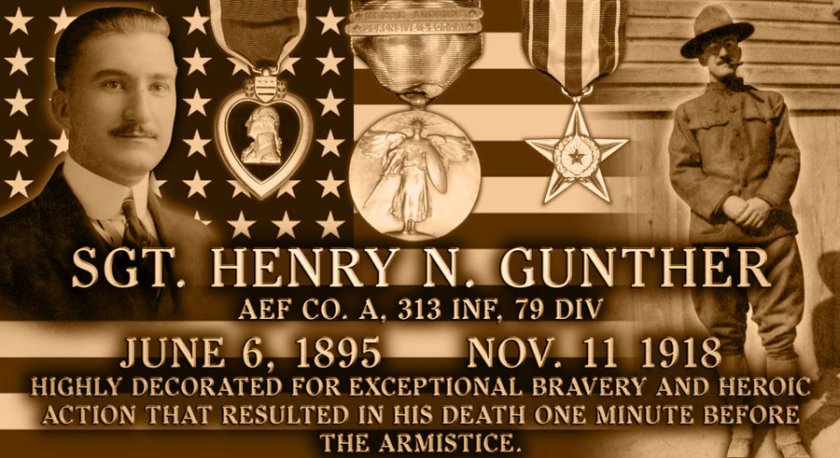
Over in the Meuse-Argonne sector, Henry Gunther was “visibly angry”. Perhaps this American grandson of German immigrants felt he had something to prove. Anti-German bias had not reached levels of the next war, when President Roosevelt interned Americans of Japanese descent. Yet, such bias was very real. Gunther’s fiancé had already broken up with him, and he’d recently been busted in rank, after writing home complaining about conditions at the front.
Bayonet fixed, Gunther charged the enemy machine gun position, as German soldiers frantically waved and yelled for him, to go back. He got off a “shot or two”, before the five round burst tore into his head. Henry Nicholas John Gunther of Baltimore Maryland, was the last man to die in combat, in the Great War. It was 10:59am. The war would be over, in sixty seconds.
After eight months on the front lines of France, Corporal Joe Rodier of Worcester Massachusetts, was jubilant. “Another day of days“. Rodier wrote in his diary. “Armistice signed with Germany to take effect at 11 a.m. this date. Great manifestations. Town lighted up at night. Everybody drunk, even to the dog. Moonlight, cool night & not a shot heard“.
Matthias Erzberger was assassinated in 1921, for his role in the surrender. The “Stab in the Back” mythology destined to become Nazi propaganda, had already begun.
AEF Commander General John “Black Jack” Pershing believed the armistice to be a grave error. He believed that Germany had been defeated but not beaten, and that failure to smash the German homeland meant that the war would have to be fought, all over again. Ferdinand Foch agreed. On reading the Versailles treaty in 1919, Foch said “This isn’t peace! This is a truce that will last for 20 years”.
The man got it wrong, by 36 days.
A personal note:
I am old enough at age sixty, to enjoy the memories of a five-year-old, fishing with his grandfather.
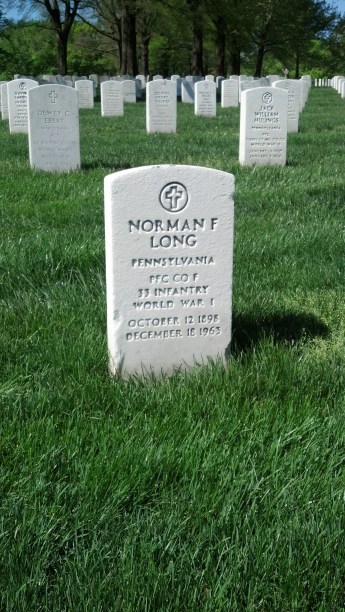
PFC Norman Francis Long was wounded during the Great War, a member of the United States Army, 33rd Pennsylvania Infantry. He left us on December 18, 1963, only hours before his namesake and my brother Norman, was born.
A 1977 fire in the national archives, left us without the means to learn the details of his service.
My father’s father went to his final rest on Christmas eve of 1963, in Arlington National Cemetery. Section 41, grave marker 2161.
Rest in peace, Grampa. You left us, too soon.
If you enjoyed this “Today in History”, please feel free to re-blog, “like” & share on social media, so that others may find and enjoy it as well. Please click the “follow” button on the right, to receive email updates on new articles. Thank you for your interest, in the history we all share.
My friend, you would not tell with such high zest
To children ardent for some desperate glory,
The old Lie: Dulce et decorum est
Pro patria mori.
Wilfred Edward Salter Owen was working as a private English tutor in Bordeaux, when the “Great War” broke out in 1914.
At first in no hurry to sign up, he even considered joining the French Army before returning home to England, to enlist in the Artists Rifles Training Corps, in October 1915.
Originally formed in 1859, the Artists Rifles was a British special forces regiment, raised in London and comprised of painters, musicians, actors and architects, and symbolized by the heads of the Roman gods Mars and Minerva.
It must have felt a natural place. Wilfred Owen was a poet, a talent first discovered about ten years earlier, at age ten or eleven.
Owen was commissioned Second Lieutenant after six-months training, and posted with the Manchester Regiment of line infantry. An application to the Royal Flying Corps was rejected in 1916 and he was shipped to France, joining the 2nd Manchester regiment near Beaumont Hamel, on the river Somme.
He was contemptuous of his men at first, considering them to be louts and barbarians. He wrote home to his mother Susan in 1917, describing his company as “expressionless lumps”. The war would soon beat that out of him.
Owen was close with his mother, his letters home telling a tale of mud and frostbite, of fifty hours spent under heavy bombardment, sheltered only by a muddy, flooded out dugout, of falling through shell-shattered earth into a cellar below, earning him a trip to the hospital. It would not be his last.
Owen was caught in an explosion during the bitter battle of St. Quentin, blown off of his feet and into a hole, there to spend days fading in and out of consciousness amidst the shattered remains of a fellow officer.
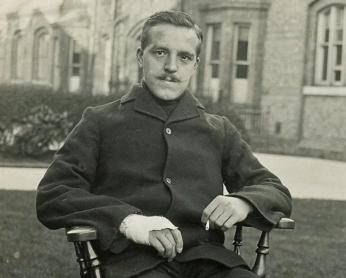
After this experience, soldiers reported him behaving strangely. Owen was diagnosed as suffering from neurasthenia or shell shock, what we now understand to be Post-Traumatic Stress Disorder, and sent to Craiglockhart War Hospital in Edinburgh, for treatment.
There, Dr. Arthur Brock encouraged Owen to work hard on his poetry, to overcome his shell shock. There he met another patient, the soldier and poet, Siegfried Sassoon. The chance meeting would elevate Wilfred Owen to one of the great war poets, of his generation.
Owen’s work was qualitatively different before this time, vaguely self important but never self pitying. Never a pacifist – he held those people to ridicule – Owen’s nightmares now brought forth a brutal honesty and a deep compassion for the burdens of the ordinary soldier. Tales of trench life: of gas, lice, mud and death, of Hell and returning to earth, steeped in contempt for the patriotic sentimentality of non-combatants and the slurs of cowardice, so lightly dispensed by the women of the “White Feather” movement.
Anthem for Doomed Youth, is a classic of the period:
What passing-bells for these who die as cattle? — Only the monstrous anger of the guns. Only the stuttering rifles’ rapid rattle Can patter out their hasty orisons. No mockeries now for them; no prayers nor bells; Nor any voice of mourning save the choirs,— The shrill, demented choirs of wailing shells; And bugles calling for them from sad shires.
What candles may be held to speed them all? Not in the hands of boys, but in their eyes Shall shine the holy glimmers of goodbyes. The pallor of girls’ brows shall be their pall; Their flowers the tenderness of patient minds, And each slow dusk a drawing-down of blinds.
Owen continued to write through his period of convalescence, his fame as author and poet growing through the late months of 1917 and into March of the following year. Supporters requested non-combat postings on his behalf, but such requests were turned down. It’s unlikely he would have accepted them, anyway. His letters reveal a deep sense of obligation, an intention to return to the front to be part of and to tell the story of the common man, thrust by his government into uncommon conditions.
Wilfred Owen well understood his special talent. He wanted a return to front line combat, made all the more urgent when Sassoon was once again wounded, and removed from the front.
He was back in France by September 1918, capturing a German machine gun position on the 29th, for which he would be awarded the Military Cross. Posthumously.
On October 31, Owen wrote home to his mother, from the cellar of the Forrester’s house, at Ors. It was to be the last such note she would ever receive, “Of this I am certain: you could not be surrounded by a band of friends half so fine as surround me here.”
The forty-four mile Sambre-Oise Canal flows through the Meuse river basin, a network of 38 locks directing the water’s flow and connecting the Netherlands and Belgium with the central waterways of France. Forces of the 2nd Battalion Royal Sussex forced the canal on November 4, in coordination with elements of the 2nd Manchester Regiment and the Lancashire Fusiliers. British forces were to cross surrounding fields lined with high hedges, then to cross the canal by portable foot bridges, or climbing across the lock gates, themselves.
The battle of the Sambre–Oise Canal was one of the last Allied victories of the Great War, and not without cost. Lock houses on the opposite side formed strong points for German defensive fire, from small arms and machine guns.
Wilfred Owen was at the head such a raiding party, when the bullets from the German machine gun tore into his body. He died a week nearly to the hour, from the armistice which would end the war. He was twenty-five.
The church bells of Shrewsbury rang out in celebration that day in 1918, as Owen’s parents Tom and Susan, received the telegram. The eleventh hour of the eleventh day of the eleventh month.
“Deeply regret to inform you, that…”
“Dulce et Decorum Est”
Bent double, like old beggars under sacks, Knock-kneed, coughing like hags, we cursed through sludge, Till on the haunting flares we turned our backs, And towards our distant rest began to trudge. Men marched asleep. Many had lost their boots, But limped on, blood-shod. All went lame; all blind; Drunk with fatigue; deaf even to the hoots Of gas-shells dropping softly behind.
Gas! GAS! Quick, boys!—An ecstasy of fumbling Fitting the clumsy helmets just in time, But someone still was yelling out and stumbling And flound’ring like a man in fire or lime.— Dim through the misty panes and thick green light, As under a green sea, I saw him drowning.
In all my dreams before my helpless sight, He plunges at me, guttering, choking, drowning.
If in some smothering dreams, you too could pace Behind the wagon that we flung him in, And watch the white eyes writhing in his face, His hanging face, like a devil’s sick of sin; If you could hear, at every jolt, the blood Come gargling from the froth-corrupted lungs, Obscene as cancer, bitter as the cud Of vile, incurable sores on innocent tongues,— My friend, you would not tell with such high zest To children ardent for some desperate glory, The old Lie: Dulce et decorum est Pro patria mori.

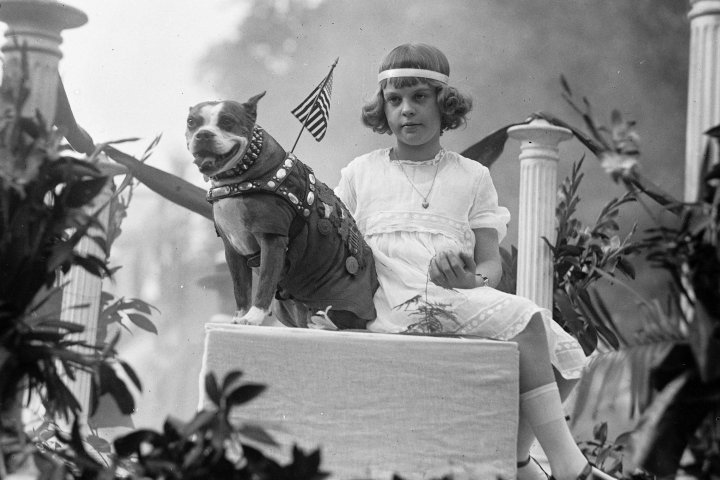
 By the last year of the Great War, the French, British and Belgians had at least 20,000 dogs on the battlefield. Imperial Germany had 30,000.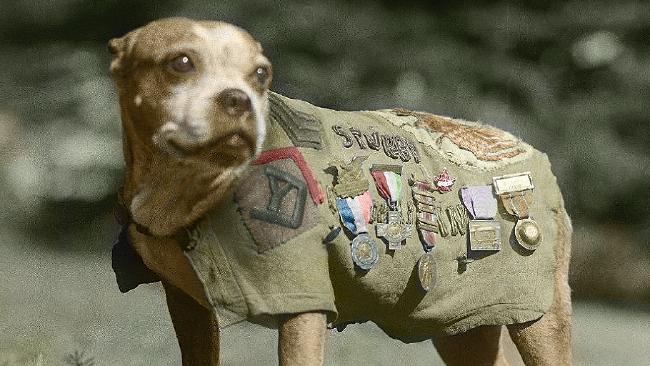
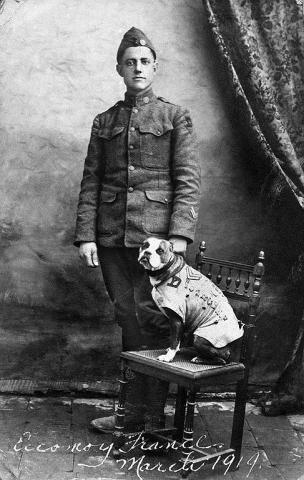 Stubby saw his first action at Chemin des Dames. Since the boom of artillery fire didn’t faze him, he learned to follow the men’s example of ducking when the big ones came close. It became a great game to see who could hit the dugout, first. After a few days, the guys were watching him for a signal. Stubby was always the first to hear incoming fire. We can only guess how many lives were spared by his early warning.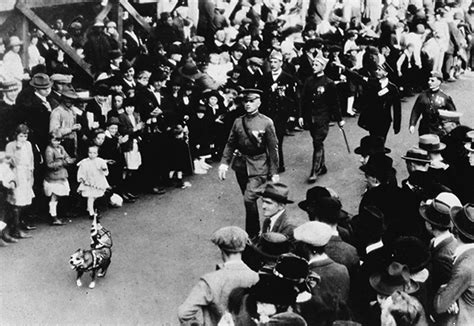


 At the outset of the “Great War”, a map of Africa looked nothing like it does today. From the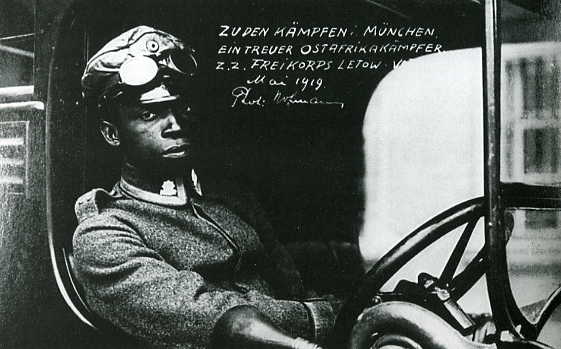
 At one point in the battle for Tanga (November 7-8, 1914), a British landing force and their Sepoy allies were routed and driven back to the sea by millions of
 In 1964, the year Lettow-Vorbeck died, the Bundestag voted to give back pay to former African warriors who had fought with German forces in WWI. Some 350 elderly Ascaris showed up. A few could produce certificates given them back in 1918, some had scraps of old uniforms. Precious few could prove their former service to the German Empire.
 A Trivial Matter





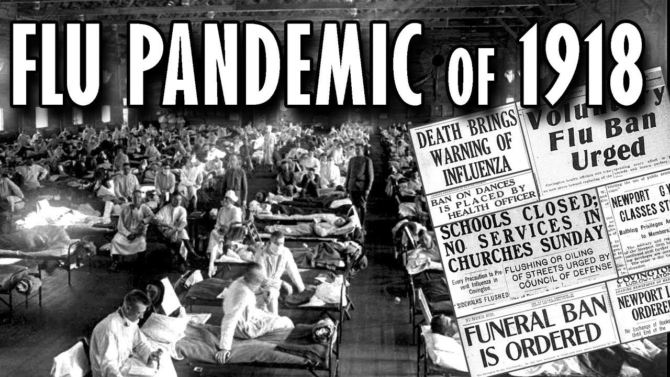
 When the “Great War” broke out in 1914, US Armed Forces were small compared with the mobilized forces of the European powers. The Selective Service Act, enacted May 18, 1917, authorized the federal government to raise an army for the United States’ entry into WWI. Two months after the American declaration of war against Imperial Germany, a mere 14,000 American soldiers had arrived “over there”. Eleven months later, that number stood at well over a million.
 On the morning of March 11, 1918, most of the recruits at Fort Riley, Kansas, were turning out for breakfast. Private Albert Gitchell reported to the hospital, complaining of cold-like symptoms of sore throat, fever and headache. By noon, more than 100 more had reported sick with similar symptoms.
 Over the next two years, this strain of flu infected one in every four people in the United States, killing an estimated 675,000 Americans. Eight million died in Spain alone, following an initial outbreak in May. Forever after, the pandemic would be known as the Spanish Flu.






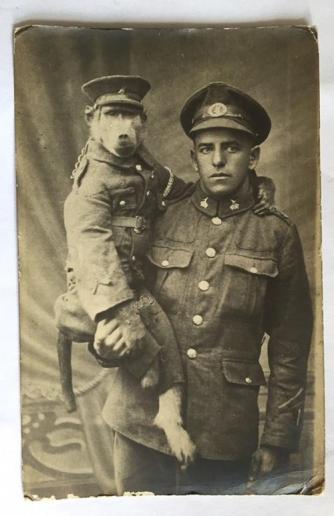 Private Albert Marr’s Chacma baboon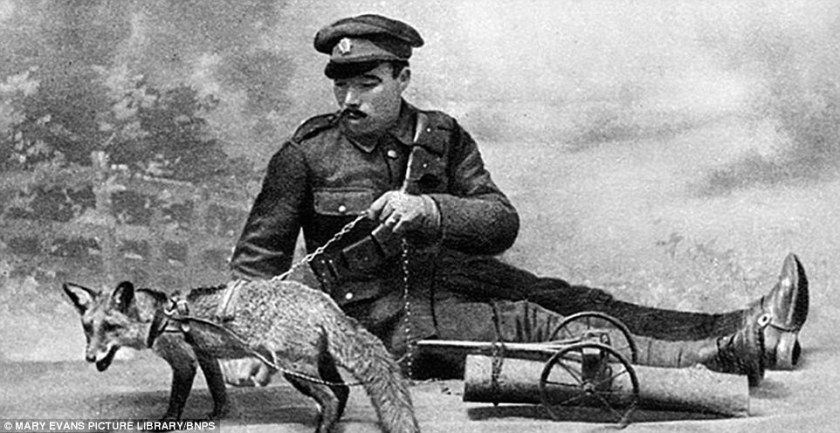


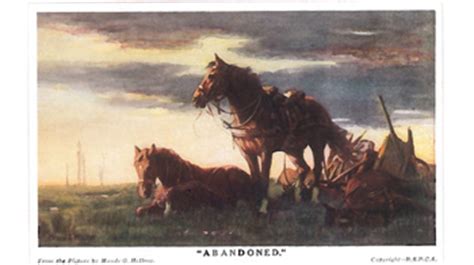 Horsepower was indispensable throughout the war from cavalry and mounted infantry to reconnaissance and messenger service, as well as pulling artillery, ambulances, and supply wagons. With the value of horses to the war effort and difficulty in their replacement, the loss of a horse was a greater tactical problem in some areas, than the loss of a man.
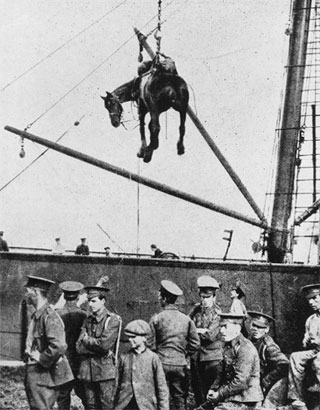 Few ever returned. An estimated three quarters died of wretched working conditions. Exhaustion. The frozen, sucking mud of the western front. The mud-borne and respiratory diseases. The gas, artillery and small arms fire. An estimated eight million horses were killed on all sides, enough to line up in Boston and make it all the way to London four times, if such a thing were possible.
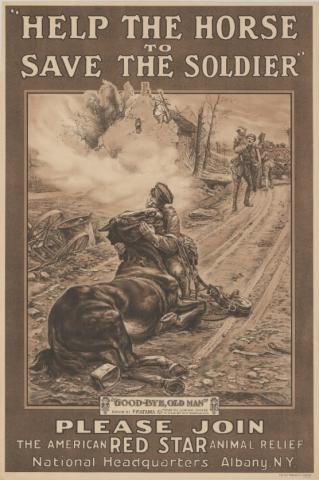


 The Forgotten World War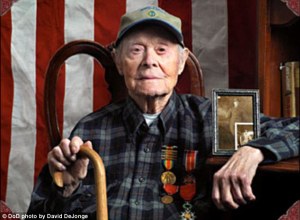




 Operation E.C.1 was a planned exercise for the British Grand Fleet, scheduled for February 1, 1918 out of the naval anchorage at Scapa Flow in the North Sea Orkney Islands.








 At first in no hurry to sign up, he even considered joining the French Army before returning home to England, to enlist in the Artists Rifles Training Corps, in October 1915.
 After this experience, soldiers reported him behaving strangely. Owen was diagnosed as suffering from neurasthenia or shell shock, what we now understand to be Post-Traumatic Stress Disorder, and sent to Craiglockhart War Hospital in Edinburgh, for treatment.
 Owen continued to write through his period of convalescence, his fame as author and poet growing through the late months of 1917 and into March of the following year. Supporters requested non-combat postings on his behalf, but such requests were turned down. It’s unlikely he would have accepted them, anyway. His letters reveal a deep sense of obligation, an intention to return to the front to be part of and to tell the story of the common man, thrust by his government into uncommon conditions.

 Historical Easter Eggs - Today in History
You must be logged in to post a comment.