

 It was literally “out of the blue”, when the first wave of enemy aircraft arrived at 7:48 local time, December 7, 1941. 353 Imperial Japanese warplanes approached in two waves out of the southeast, fighters, bombers, and torpedo planes, across Hickam Field and over the waters of Pearl Harbor. Tied in place and immobile, the eight vessels moored at “Battleship Row” were easy targets.
In the center of the Japanese flight path, sailors and Marines aboard the USS Oklahoma fought back furiously. She didn’t have a chance. Holes as wide as 40′ were torn into the hull in the first ten minutes of the fight. Eight torpedoes smashed into her port side, each striking higher on the hull as the Battleship began to roll.

Bilge inspection plates had been removed for a scheduled inspection the following day, making counter-flooding to prevent capsize, impossible. Oklahoma rolled over and died as the ninth torpedo slammed home. Hundreds scrambled out across the rolling hull, jumped overboard into the oil covered, flaming waters of the harbor, or crawled out over mooring lines in the attempt to reach USS Maryland in the next berth.
The damage was catastrophic. Once the pride of the Pacific fleet, all eight battleships were damaged, four of them sunk. Nine cruisers, destroyers and other ships were damaged, and another two sunk. 347 aircraft were damaged, most caught while still on the ground. 159 of those, were destroyed altogether. 2,403 were dead or destined to die from the attack, another 1,178 wounded.

Frantic around the clock rescue efforts began almost immediately, to get at 461 sailors and Marines trapped within the hull of the Oklahoma. Tapping could be heard as holes were drilled to get to those trapped inside. 32 of them were delivered from certain death. 14 Marines and 415 sailors aboard Oklahoma lost their lives immediately, or in the days and weeks to come. Bulkhead markings would later reveal that, at least some of the doomed would live for another seventeen days in the black, upside-down hulk of that ship. The last such mark was drawn by the last survivor on Christmas Eve.
Of the sixteen ships lost or damaged, thirteen would be repaired and returned to service. USS Arizona remains on the bottom, a monument to the event and to the 1,102-honored dead who remain entombed within her hull. The USS Utah defied salvage efforts. She too is a War Grave, 64 honored dead remaining within her hull, lying at the bottom not far from the Arizona. Repairs were prioritized and USS Oklahoma was beyond repair. She, and her dead, would have to wait.
The extraordinarily difficult salvage would not begin until March, 1943. 21 giant A-frames were fixed to the hull, 3″ cables connecting compound pulleys to 21 electric motors, each capable of pulling 429 tons. Two pull configurations were used over 74 days, first the configuration shown (above right), then direct connections once the hull had achieved 70°. In May the decks once again saw the light of day.
Fully righted, the ship was 10′ below water. Massive temporary wood and concrete structures called “cofferdams” closed the gaping wounds left by torpedoes, so the hull could be pumped out and re-floated. A problem even larger than those torpedo holes were the gaps between hull plates, caused by the initial capsize and righting operations. Divers stuffed kapok in the gaps as water was pumped out.
Individual divers spent 2-3 years on the Oklahoma salvage job. Underwater arc welding and hydraulic jet techniques were developed during this period, which remain in use to this day. 1,848 dives were performed for a total of 10,279 man hours under pressure. For all that, no military and only one civilian diver lost his life, when his air hose was severed.

Salvage workers entered the pressurized hull through airlocks wearing masks and protective suits. Bodies were in advanced stages of decomposition by this time and the oil and chemical-soaked interior was toxic to life. Most victims would never be identified.
Twenty 10,000 gallon per minute pumps operated for 11 hours straight, re-floating the battleship on November 3, 1943.
Oklahoma entered dry dock the following month, a total loss to the American war effort. She was stripped of guns and superstructure, sold for scrap on December 5, 1946 to the Moore Drydock Company of Oakland, California.

The battered hulk left Pearl Harbor for the last time in May 1947, headed for a scrapyard in San Francisco bay. She would never make it. Taken under tow by the ocean-going tugs Hercules and Monarch, the three vessels entered a storm 540 miles east of Hawaii. On May 17, disaster struck. Piercing the darkness, Hercules’ spotlight revealed that the former battleship was listing heavily. Naval base at Pearl Harbor instructed them to turn around, when these two giant tugs suddenly found themselves slowing to a stop. Despite her massive engines, Hercules was being dragged astern with no warning, hurtling past Monarch, herself swamped at the stern and being dragged backward at 17mph.
Fortunately for both tugs, skippers Kelly Sprague of Hercules and George Anderson of Monarch had both loosened the cable drums connecting 1,400-foot tow lines to Oklahoma. Monarch’s line played out and detached, but Hercules’ line didn’t do so until the last possible moment. With tow line straight down and sinking fast, Hercules finally detached directly over Oklahoma’s final resting place, the 409-ton tug bobbing to the surface like the float on a child’s fishing line.
Ordered in March 1911 and launched three years later, the 583’ Nevada-class battleship  USS Oklahoma was designed to fight at the most extreme ranges expected by gunnery experts. Commanded by Charles B. McVay, Jr., father of the ill-fated skipper of the USS Indianapolis Charles Butler McVay III, Oklahoma’s role in WW1 was limited, due to the unavailability of oil in major theaters of operation. Notable among her exploits of the Great War, were the memorable fist fights that crew members got into with Sinn Féin members in Berehaven, and casualties sustained during the 1918-19 flu pandemic.
She was up-armored in a 1927 – ’29 refit, where additional anti-torpedo armor bulges were added, briefly making her the widest battleship in the United States fleet. Oklahoma was dispatched to Europe in 1936, to evacuate American civilians during the Spanish civil war. The only US warship ever named after the 46th state was destroyed in an enemy sneak attack, before she knew her nation was at war. The final resting place of the USS Oklahoma, (BB-37), is unknown.

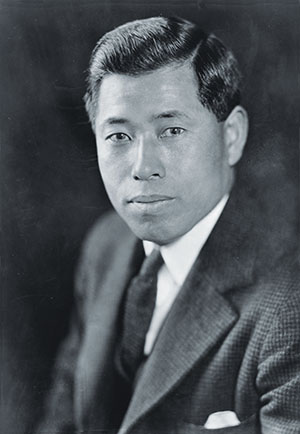 Isoroku Takano was born in Niigata, the son of a middle-ranked samurai of the Nagaoka Domain. His first name “Isoroku”, translating as “56”, refers to his father’s age at the birth of his son. At this time, it was common practice that samurai families without sons would “adopt” suitable young men, in order to carry on the family name, rank, and the income that came with it. The young man so adopted would carry the family name. So it was that Isoroku Takano became Isoroku Yamamoto in 1916, at the age of 32.
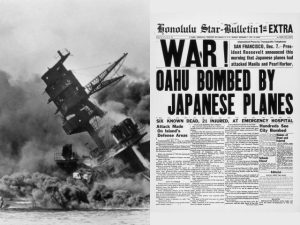 Many believed that Yamamoto’s career was finished when his old adversary Hideki Tōjō ascended to the Prime Ministership in 1941. Yet there was none better to run the combined fleet. When the pro-war faction took control of the Japanese government, he bowed to the will of his superiors. It was Isoroku Yamamoto who was tasked with planning the attack on Pearl Harbor.
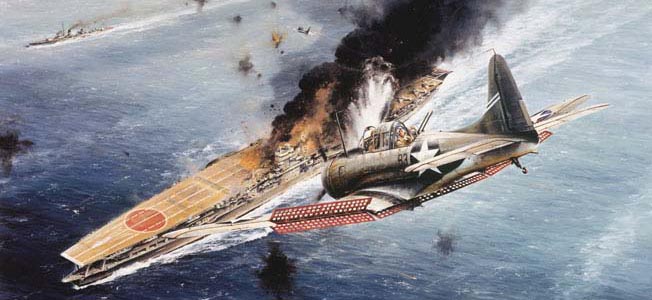 American carrier based Torpedo bombers were slaughtered in their attack, with 36 out of 42 shot down. Yet Japanese defenses had been caught off-guard, their carriers busy rearming and refueling planes when American dive-bombers arrived.
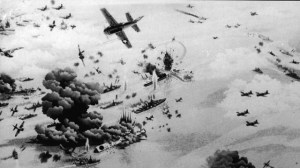 Midway was a disaster for the Imperial Japanese navy. The carriers Akagi, Kaga, Soryu and Hiryu, the entire strength of the task force, went to the bottom. The Japanese also lost the heavy cruiser Mikuma, along with 344 aircraft and 5,000 sailors. Much has been made of the loss of Japanese aircrews at Midway, but two-thirds of them survived. The greater long term disaster, may have been the loss of all those trained aircraft mechanics and ground crew who went down with their carriers.
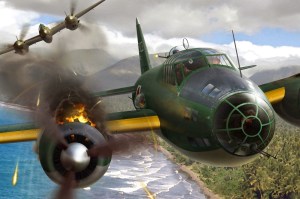 tour throughout the South Pacific. US naval intelligence intercepted and decoded his schedule. The order for “Operation Vengeance” went down the chain of command from President Roosevelt to Secretary of the Navy Frank Knox to Naval Operations Admiral Ernest King to Admiral Chester Nimitz at Pearl Harbor. Sixteen Lockheed P-38 Lightnings, the only fighters capable of the ranges involved, were dispatched from Guadalcanal on April 17 with the order: “Get Yamamoto”.
 intercepted over Rabaul on April 18, 1943. Knowing only that his target was “an important high value officer”, 1st Lieutenant Rex Barber opened up on the first Japanese transport until smoke billowed from its left engine. Yamamoto’s body was found in the wreckage the following day with a .50 caliber bullet wound in his shoulder, another in his head. He was dead before he hit the ground.

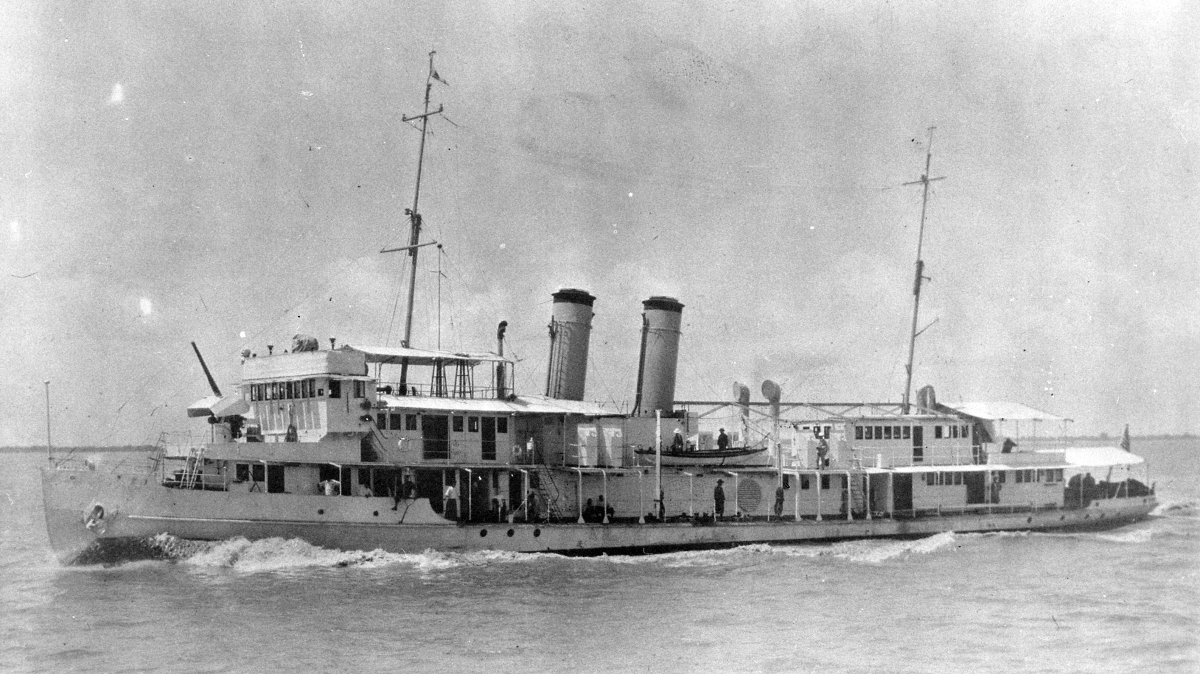
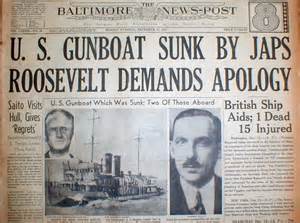 than old enough to remember how the sinking of the Maine in Havana Harbor brought the US into war with Spain in 1898. Grew hoped to avoid a similar outcome following the Panay sinking, though Japanese authorities were less than helpful. US cryptographers uncovered information shortly after the attack indicating that aircraft were operating under orders, while the Japanese government continued to insist that the attack had been accidental.
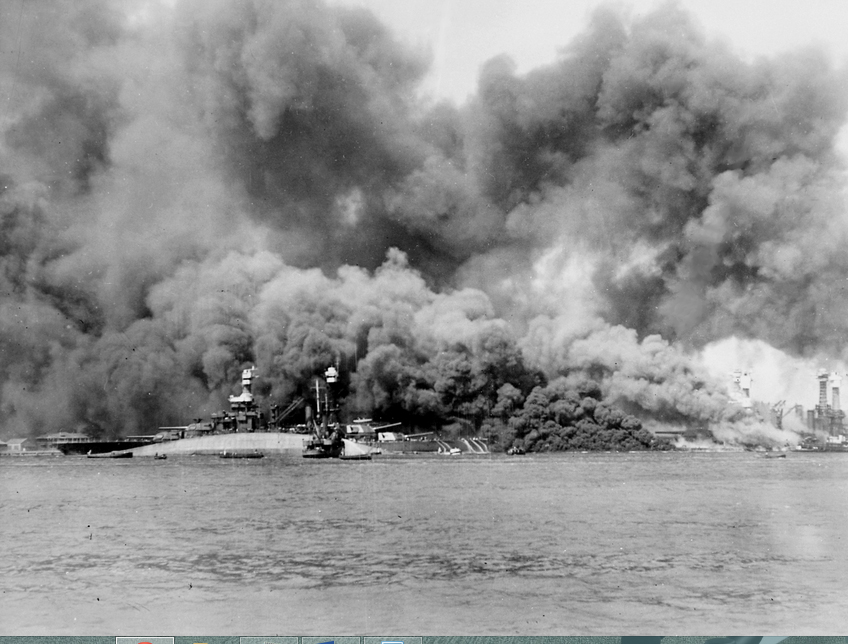
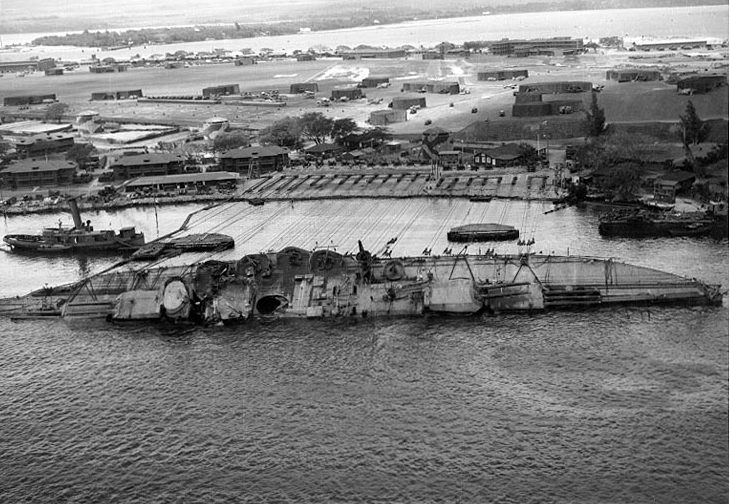 battleship USS Oklahoma was raised from the bottom, but was never repaired. In 1947 she would sink under tow to the mainland, very nearly taking two ocean going tugs to the bottom, with her.
 Historical Easter Eggs - Today in History
You must be logged in to post a comment.