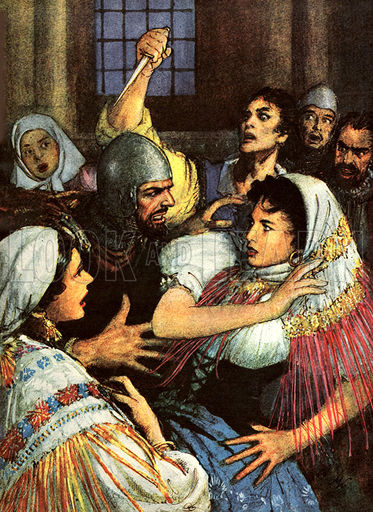
It was Easter Monday, March 30, 1282. The Church of the Holy Spirit outside Palermo was just letting out after evening vespers (prayers), when a French soldier thought he’d “inspect” a Sicilian woman for weapons.
Since the early 12th century, the southern Italian peninsula and the island of Sicily had been united as the Kingdom of Sicily. Until the invasion of the French King Charles I of Anjou, who ousted Sicilian King Manfred in 1266.
The Anjou King’s rule in Sicily was vicious and repressive, with the French King himself absent for long periods. Charles’ Sicilian subjects could not have hated him more.
It was Easter Monday, March 30, 1282. The Church of the Holy Spirit outside Palermo was just letting out after evening vespers (prayers), when a French soldier thought he’d “inspect” a Sicilian woman for weapons.
Accounts vary as to what happened, but there’s a good chance he was just looking for a feel, and that’s what he got. The lady’s modesty thusly offended, someone in the crowd avenged her honor, knifing the French guard.
At first merely agitated, this first taste of blood drove the mob to a frenzy. Spreading across the Capital and into the countryside, Sicilians killed every Frenchman they could get their hands on.
Revolutionaries devised a linguistic test, to see who was authentically Sicilian. Native French speakers can’t pronounce the word “ciciri”, even to save themselves. And that’s the way it worked out. God help you if you couldn’t say that word. Over four thousand Frenchmen would die over the next six weeks.
Meanwhile in Spain, Peter III King of Aragon, Peter I King of Valencia, and Peter II Count of Barcelona (these three are all the same guy), had a claim to the Sicilian throne through his wife, Constance.
The Italian physician John of Procida had been a loyal subject of Manfred’s, fleeing to Aragon after the Anjou invasion. John proceeded directly to Sicily where he spent several weeks stirring up Sicilian resentment against the French King. Sicily then appealed to the Spanish King to intervene, while John sailed for Constantinople to procure the help of Michael VIII Palaeologus.
History records what followed as the War of Sicilian Vespers. The Angevins were supported by the Papacy and his Italian supporters (Guelphs), while the Aragonese received help from Sicily itself, the Byzantine Emperor, and the Ghibellines, Italian supporters of the Holy Roman Emperor.
Several players changed sides over the course of the next twenty years. In the end, the son of the Spanish King took the Sicilian crown in 1302, becoming King Frederick II, beginning near 400 years of Spanish rule over the island.
And so it was that a French soldier molested an Italian woman, and lost the kingdom of Sicily, to Spain.
That March, the 31-year-old Hardwick, Massachusetts native was leaving Liverpool, returning to a job on the Gold Coast of British West Africa aboard the cargo-passenger ship RMS Falaba
102 years ago, the Great War was in its 8th month. The war of mobility of the early months was long gone, replaced by the lines of trench works which would characterize the rest of the war. Off the battlefield, the German and British governments each sought to choke the life out of the other’s economy. Great Britain held the upper hand, with the superior deep-water surface fleet. To the Kaiser’s way of thinking, parity would come in the form of a submarine.
Leon Chester Thrasher 1st American killed in WW!
Leon Chester Thrasher was an American mining engineer. That March, the 31-year-old Hardwick, Massachusetts native was leaving Liverpool, returning to a job on the Gold Coast of British West Africa aboard the cargo-passenger ship RMS Falaba.
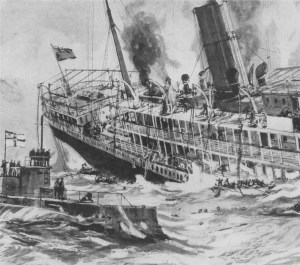
The German submarine U-28 stopped Falaba on this day in 1915, sinking the ship to the bottom with a single torpedo and killing 104, including Leon Thrasher. The first American killed in the “War to End all Wars”.
German policy varied over the course of the war, from unrestrained submarine warfare, to strict adherence with international law. U-28 Commander Freiherr Georg-Günther von Forstner claimed to have given Falaba 23 minutes to evacuate, cutting that short and firing his torpedo only in response to Falaba’s distress rockets and wireless messages for help. British authorities claim to have been given only 7 minutes’ warning.
The death of the first American in the European war set off a diplomatic row which threatened for a time to bring the Americans into the war. American newspapers called it the “Thrasher Incident”, denouncing the sinking as a “massacre”. An act of “piracy”.
The Germans claimed that subsequent explosions proved Falaba to be carrying contraband ammunition, intended to kill German boys on European battlefields. Eyewitness accounts failed to settle the matter, some even tended to support the German view.
President Woodrow Wilson stayed his hand, winning re-election the following year with the slogan, “He Kept Us Out of War”.
What remained of Leon Thrasher washed ashore on the coast of Ireland on July 11, 1915, after 106 days in the water. Authorities mistakenly believed him to be a victim of the RMS Lusitania sinking, designating him Body No. 248.
The U-boat U-20 had torpedoed the Cunard liner RMS Lusitania off the coast of Ireland 40 days earlier, killing 1,198, 124 of whom were Americans. The US came close to the brink of war that time too, but the last and final straw wouldn’t come for another two years. In the form of a German telegram, to the government of Mexico.
While the future President Taft labored in the Philippines, Helen Herron Taft took up residence in Japan, where she came to appreciate the beauty of the native cherry trees.
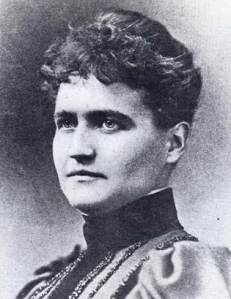
Eliza Ruhamah Scidmore
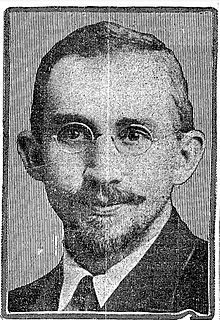
Eliza Scidmore was an American journalist, world traveler, author and socialite. The first female board member of the National Geographic Society, her brother was a career diplomat, who served 38 years in the Asian Pacific. Frequent visits led to a passionate interest in all things Japanese, most especially the ‘Sakura’, the Japanese blossoming cherry tree, which she called “the most beautiful thing in the world”.
In January 1900, Federal judge William Howard Taft was summoned to Washington, to meet with the President. He hoped it was to discuss a Supreme Court appointment, but it wasn’t meant to be. One day judge Taft would get his wish, becoming the only man in United States history to serve both as President, and as Chief Justice of the Supreme Court. For now, the American war in the Philippines was ongoing. Taft would head up the commission to organize civilian self-government in the island nation.
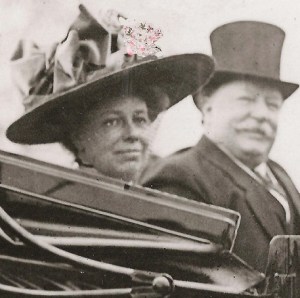
1st Lady & President Taft
While the future President Taft labored in the Philippines, Helen Herron Taft took up residence in Japan, where she came to appreciate the beauty of the native cherry trees.
Years later the Japanese Consul in New York learned of the First Lady’s interest in the Sakura, and suggested the city of Tokyo make a gift of Cherry trees, to the government of the United States.
For Eliza Scidmore, it was a dream 34 years in the making. It was she who raised the money to make it happen.
On March 27, 1912, the Viscountess Chinda, wife of the Japanese ambassador to the United States joined First Lady Helen Taft, in planting two Japanese Yoshina cherry trees on the bank of the Potomac River, near the Jefferson memorial. The two were planted in a formal ceremony, the first of 3,020 trees.
It was the second such effort. 2,000 trees had arrived from Japan two years earlier, in January 1910, but they had fallen prey to disease along their journey. A private Japanese citizen donated the funds to transport a new batch of trees. The 3,020 were taken from the bank of the Arakawa River in the Adachi Ward suburb of Tokyo, to be planted along the Potomac River Basin, East Potomac Park, and the White House grounds.
The blossoming trees were overwhelmingly popular with visitors to the Washington Mall. In 1934 city commissioners sponsored a three-day celebration of the late March blossoming cherry trees, which grew into the annual Cherry Blossom Festival.
During WWII, aerial bombardment laid waste to Tokyo and its surrounding suburbs. After the war, cuttings from the cherry trees of Washington were sent back to Japan, to restore the Tokyo collection.
It’s not clear to me, if the trees along the Arakawa River today are entirely from the Potomac collection, or some combination of American and native stock. After the conflagration that was the war in the Pacific, I’m not sure it matters. It may even be the whole point.
It wasn’t long before the entire Regiment adopted the bald eagle, calling themselves the “Eagle Regiment”, in honor of their new mascot. Much deliberation followed as to what to name him, before it was decided. He would be called “Old Abe”.
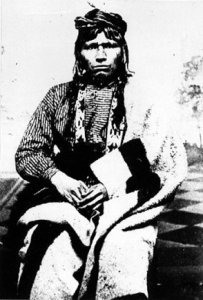
Ahgamahwegezhig
In 1861, leader of the Lac du Flambeau Ojibwe band Ahgamahwegezhig, or “Chief Big Sky”, captured an eaglet, and sold it for a bushel of corn to the McCann family of Chippewa County, Wisconsin. Captain John Perkins, Commanding Officer of the Eau Claire “Badgers”, bought the young bald eagle from Daniel McCann.
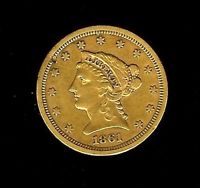
The asking price was $2.50. Militia members were asked to pitch in twenty-five cents, as was one civilian: tavern-keeper S.M. Jeffers. Jeffers’ refusal earned him “three lusty groans”, causing him to laugh and tell them to keep their quarters. Jeffers threw in a single quarter-eagle, a gold coin valued at 250¢, and that was that. From that moment onward, the militia unit called itself the Eau Claire “Eagles”.
Perkins’ Eagles entered Federal Service as Company C of the 8th Wisconsin Volunteer Infantry Regiment. It wasn’t long before the entire Regiment adopted the bald eagle, calling themselves the “Eagle Regiment”, in honor of their new mascot. Much deliberation followed as to what to name him, before it was decided. He would be called “Old Abe”.
Old Abe accompanied the regiment as it headed south, travelling all over the western theater and witness to 37 battles. David McLain wrote “I have frequently seen Generals Grant, Sherman, McPherson, Rosecrans, Blair, Logan, and others, when they were passing our regiment, raise their hats as they passed Old Abe, which always brought a cheer from the regiment and then the eagle would spread his wings”.
Abe became an inspirational symbol to the troops, like the battle flag carried with each regiment. Colonel Rufus Dawes of the Iron Brigade recalled, “Our eagle usually accompanied us on the bloody field, and I heard [Confederate] prisoners say they would have given more to capture the eagle of the Eighth Wisconsin, than to take a whole brigade of men.”
Confederate General Sterling Price spotted Old Abe on his perch during the battle of Corinth, Mississippi. “That bird must be captured or killed at all hazards”, Price remarked. “I would rather get that eagle than capture a whole brigade or a dozen battle flags”.
Old Abe was presented to the state of Wisconsin at the end of the war. He lived 15 years in the “Eagle Department”, a two-room apartment in the basement of the Capitol, complete with custom bathtub, and a caretaker. Photographs of Old Abe were sold to help veteran’s organizations. He was a national celebrity, traveling across the country and appearing at the 1876 Centennial Exposition in Philadelphia, the 1880 Grand Army of the Republic National Convention, and dozens of fundraising events.
Old Abe & caretaker George Gilles
A small fire broke out in a Capitol basement workshop, fed by cleaning solvents and shop rags. The fire was quickly extinguished thanks to the bald eagle’s cries of alarm, but not before Old Abe inhaled a whole lot of that thick, black smoke. Abe’s health began to decline, almost immediately. Veterinarians and doctors were called, but to no avail. Bald eagles have been known to live as long as 50 years in captivity. Old Abe died in the arms of caretaker George Gilles on March 26, 1881. He was 20.
His remains were stuffed and mounted. For the next 20 years his body remained on display in the Capitol building rotunda. On the night of February 26, 1904, a gas jet ignited a newly varnished ceiling, burning the Capitol building to the ground.
Since 1915, Old Abe’s replica has watched over the Wisconsin State Assembly Chamber of the new capitol building.
In 1921, the 101st infantry division was reconstituted in the Organized Reserves with headquarters in Milwaukee. It was here that the 101st first became associated with the “Screaming Eagle”. The Screaming Eagles of the 101st Airborne participated in the D-Day invasion, the Battle of the Bulge, Operation Market Garden, and Bastogne, becoming the basis of the HBO series “A Band of Brothers”.
After WWII, elements of the 101st Airborne were mobilized to Little Rock by President Eisenhower to protect the civil rights of the “Little Rock Nine”, a group of black students enrolled in Little Rock Central High School in September 1957, as the result of the US Supreme Court’s landmark ruling in the historic Brown v. Board of Education case.
For 104 years, Old Abe appeared in the trademark of the J.I. Case farm equipment company of Racine, Wisconsin.
Winston Churchill once said “A lie gets halfway around the world before the truth has a chance to get its pants on.” We all know how stories change with the retelling. Some stories take on a life of their own. Ambrose Armitage, serving with Company D of the 8th Wisconsin Infantry, wrote in his diary on September 14, 1861, that Company C had a “four month old female eagle with them”. Two years later, Armitage wrote, “The passing troops have been running in as they always do to see our eagle. She is a great wonder”.
Ten years after his death, a national controversy sprang up and lasted for decades, as to whether Old Abe was, in fact, a “she”. Suffragettes claimed that “he” had laid eggs in the Wisconsin capitol. Newspapers weighed in, including the Washington Post, Detroit Free Press, St. Louis Post Dispatch, Oakland Tribune, and others.
Bald eagles are not easily sex-differentiated, there are few clues available to the non-expert, outside of the contrasts of a mated pair. It’s unlikely that even those closest to Old Abe, had a clue as to the eagle’s sex.
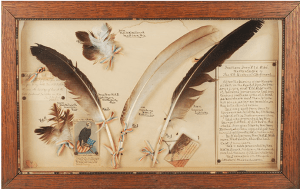
University of Wisconsin Biotechnology Center Sequencing Facility researchers had access to four feathers, collected during the early days at the Grand Army of the Republic Memorial Hall. In March of 2016, samples were taken from the hollow quill portion (calamus) of each feather, and examined for the the presence of two male sex chromosomes (ZZ) or both a male and female chromosome (ZW). After three months, the results were conclusive. All four samples showed the Z chromosome, none having a matching W. After 155 years, Old Abe could keep his name.
The fire started in a wicker scrap bin on the 8th floor, and spread quickly. A bookkeeper warned coworkers on the 10th by telephone, but there was no way to contact anyone on the 9th.
As the late 19th century gave way to the 20th, the increasing number of women in the workforce was driving a change in women’s fashion. Gone were the confinements of Victorian era bodices. The “shirtwaist” blouses of the Edwardian era were patterned on men’s shirts only looser, ranging from plain, “ready to wear” simplicity to the elaborate detail and stitching that transformed the plain shirtwaist to haute mode.
A September 16, 1906 article in the Pittsburgh Press said, “A very fashionable woman with a half a hundred waists boasts that there are no two alike.” Shirtwaist blouses were sold around the country, but most were made in Philadelphia and New York City.
At the turn of the century there were over 450 textile factories in Manhattan alone, employing something like 40,000 garment workers. Many of them were young, immigrant women of Jewish and Italian ethnicity, working nine hours a day on weekdays and seven on Saturdays. Wages were typically low: $7 to $12 per week, equivalent to $3.20 to $5.50 per hour, in 2016.
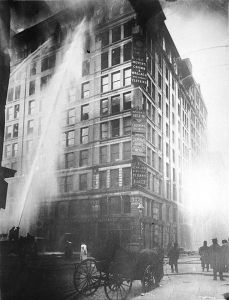
The Triangle Shirtwaist factory was located in the Asch Building in the Greenwich Village area of New York City, now known as the Brown Building and part of New York University. In 1911, the factory occupied the 8th – 10th floors, employing some 500 people.
The fire started in a wicker scrap bin on the 8th floor, and spread quickly. A bookkeeper warned coworkers on the 10th by telephone, but there was no way to contact anyone on the 9th floor. Survivor Yetta Lubitz said the first warning came about the same time as the flames themselves.
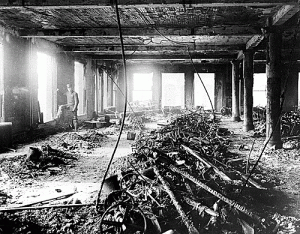
Every one of the fatalities that day, came from the 200 working on this one floor. The Washington Place stairwell was locked to prevent thefts & unauthorized breaks, and the foreman had fled with the keys. The Greene Street stairwell was packed solid in three minutes. The only survivors were those who fled to the roof.
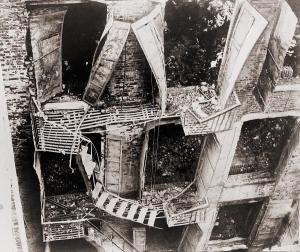
Terrified employees crowded onto a rickety fire escape, collapsing it under the weight and dropping 20 people some 100′ to their death. Fire companies were quick to arrive, but ladders only reached up to the 6th or 7th floors. A life net was unfurled, but ripped away when three women jumped for it, simultaneously. For the most part, fire companies could only look on helplessly, along with the crowd gathered on the street. 62 people, some already on fire, jumped or fell to the street below. As on 9/11, at least one couple stepped off together, holding hands as they fell.
With one exit on fire and the other locked, elevator operators Joseph Zito and Gaspar Mortillalo did everything they could to save lives. Mortillalo made three trips before being forced to give up when the rails of his elevator buckled under the heat. Desperate to get out, some victims pried open the other elevator door, hoping to slide down greasy cables, or just to jump into the shaft and hope for the best. The weight and impact of their bodies warped Zito’s elevator car, making another rescue attempt impossible.
Reporter William Gunn Shepard learned a sound that day, that many of us remember from those first hours of 9/11. Before the media censored itself. “I learned a new sound that day, a sound more horrible than description can picture — the thud of a speeding living body on a stone sidewalk”.
Louis Waldman, later to become a Socialist state assemblyman, described the scene: “Horrified and helpless, the crowds — I among them — looked up at the burning building, saw girl after girl appear at the reddened windows, pause for a terrified moment, and then leap to the pavement below, to land as mangled, bloody pulp”.
146 died that day, 123 women and 23 men.
The company’s owners, Max Blanck and Isaac Harris, survived by fleeing to the roof when the fire began. The pair had four suspicious factory fires between 1902 and 1910, but arson was not suspected in this case.
Blanck and Harris were indicted on charges of 1st and 2nd degree manslaughter, but the jury acquitted them both. Their attorney convinced the jury that witnesses may have been “coached”, since their stories didn’t change on cross examination.
They lost a subsequent civil suit in 1913 in which plaintiffs won compensation amounting to $75 per dead victim. The insurance company paid $60,000 more than the reported losses, for a profit of $336 per corpse.
The fire led to 64 new laws regulating the health and safety of New York’s factory workers, and helped spur the growth of the International Ladies’ Garment Workers’ Union (ILGWU). In 1913, Blanck was once again arrested for locking a factory door during working hours. He was fined $20.
The Triangle Shirtwaist conflagration led to the largest loss of life by fire, in New York history. The second largest would be the “Happy Land” night club fire in the Bronx. 79 years later, to the day.
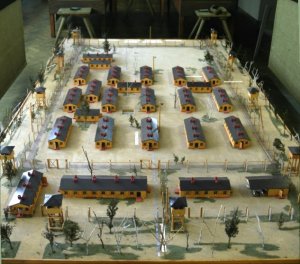
Barracks were built on pilings to discourage tunneling, creating 24” of open space beneath the buildings. Seismic listening devices were placed around the camp’s perimeter. In the German mind, the place was the next best thing, to airtight. “Kriegies” didn’t see it that way.
Stalag Luft III in the province of Lower Silesia was a German POW camp, built to house captured Allied airmen. The first “Kriegsgefangene” (POWs), arrived on March 21, 1942. The facility would grow to include 10,949 “kriegies”, comprising some 2,500 Royal Air force officers, 7,500 US Army Air officers, and about 900 from other Allied air forces.
Barracks were built on pilings to discourage tunneling, creating 24” of open space beneath the buildings. Seismic listening devices were placed around the camp’s perimeter. In the German mind, the place was the next best thing, to airtight.
Model of the set used to film the movie The Great Escape
Kriegies didn’t see it that way, three of whom concocted a gymnastic vaulting horse out of wood from Red Cross packages.
A Trojan horse was more like it. Every day, the horse would be lugged out to the perimeter. Above ground, prisoners’ gymnastic exercises masked the sound, while underground, kriegies dug with bowls into the sand, using the horse itself to hide diggers, excavated soil and tools alike. Iron rods were used to poke air holes to the surface. There was no shoring of the tunnel, except at the entrance.
Every evening for three months, plywood was placed back over the hole, and covered with the gray-brown dust of the prison yard.
On October 19, 1943, the three British officers made their escape. Lieutenant Michael Codner and Flight Lieutenant Eric Williams reached the port of Stettin in the West Pomeranian capital of Poland, where they stowed away on a Danish ship. Flight Lieutenant Oliver Philpot boarded a train to Danzig, and stowed away on a ship bound for neutral Sweden. Eventually, all three made it back to England.
RAF Squadron Leader Roger Bushell was shot down and forced to crash land on his first engagement in May 1940, but not before taking two Messerschmitt Bf 110 fighters with him. Taken to the Dulag Luft near Frankfurt, Bushell formed an escape committee along with Fleet Air Arm pilot Jimmy Buckley, and Wing Commander Harry Day.
For POWs of officer rank, escape was the first duty. Bushell escaped twice and almost made it, but each time his luck deserted him. By October, Roger Bushell found himself in the north compound of Stalag Luft III, where British officers were held.
By the following spring, Bushell had concocted the most audacious escape plot in WWII history. “Everyone here in this room is living on borrowed time”, he said. “By rights we should all be dead! The only reason that God allowed us this extra ration of life is so we can make life hell for the Hun… In North Compound we are concentrating our efforts on completing and escaping through one master tunnel. No private-enterprise tunnels allowed. Three bloody deep, bloody long tunnels will be dug – Tom, Dick and Harry. One will succeed!”
The effort was unprecedented. Previous escape attempts had never involved more than twenty. Bushell, soon to be known by the code name “Big X” was proposing to get out with 200.
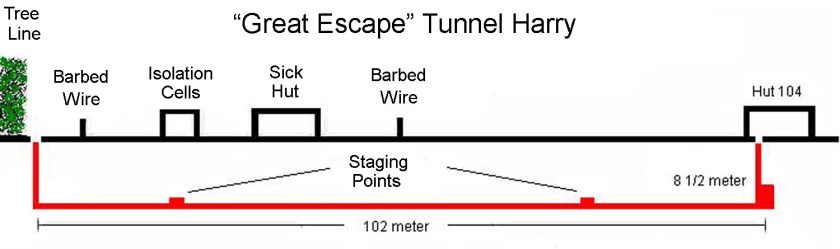
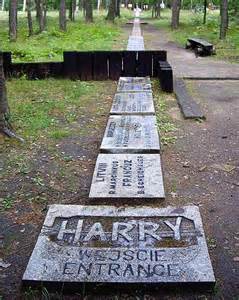
Civilian clothes had to be fashioned for every man. Identification and travel documents forged. “Tom” began in a darkened hallway corner. “Harry’s entrance was hidden under a stove, “Dick”‘s entrance was concealed in a drainage sump.
The Red Cross distributed high calorie, dehydrated whole-milk powder called “Klim” (“Spell it backwards”) throughout German POW camps. Klim tins were fashioned into tools, candle holders and vent stacks. Fat was skimmed off soups and molded into candles, using threads from old clothing for wicks.
Six hundred prisoners were involved in the construction. 200 with sacks sewn under greatcoats made 25,000 trips into the prison yard, disposing of soil as Tom, Dick and Harry were excavated. 30′ down and only 2 ft. square, the three tunnels extended outward for a football field and more.
These “penguins” were running out of places to put all that soil, around the time the camp was expanded to include “Dick’s” originally planned exit point. From that time forward, “Dick” was refilled from the other two. “Tom” was discovered in September 1943, the 98th tunnel in the camp to be found out.
The escape was planned for the good weather of summer, but a Gestapo visit changed the timetable. “Harry” was ready by March. The “Great Escape” was scheduled for the next moonless night. 73 years ago – March 24, 1944.
Contrary to the Hollywood movie, no Americans were involved in the escape. At that point none were left in camp.
The escape was doomed, almost from the start. First the door was frozen shut, then a partial collapse had to be repaired. The exit came up short of the tree line, further slowing the escape. It was over when guards spotted #77 coming out of the ground.
German authorities were apoplectic on learning the scope of the project. 90 complete bunk beds had disappeared, along with 635 mattresses. 52 twenty-man tables were missing, as were 4,000 bed boards and an endless list of other objects. For the rest of the war, each bed was issued with only nine boards, and those were counted, regularly.
Gestapo members executed German workers who had not reported the disappearance of electrical wire.
In the end, only three of the 76 made it to freedom: two Norwegian and one Dutch pilot. Hitler personally ordered the execution of the other 73, 50 of which were carried out.
General Arthur Nebe is believed to have personally selected the 50 for execution. He was later involved with the July 20 plot to assassinate Adolf Hitler, and executed on March 21, 1945. Roger “Big X” Bushell and his partner Bernard Scheidhauer were caught while waiting for a train at the Saarbrücken railway station. They were murdered by members of the Gestapo on March 29, who were themselves tried and executed for war crimes, after the war.
New camp Kommandant Oberst Franz Braune was horrified that so many escapees had been shot. Braune allowed those kriegies who remained to build a memorial, to which he personally contributed. Stalag Luft III is gone today, but that stone memorial to “The Fifty”, still stands.
Dick Churchill was an HP.52 bomber pilot and RAF Squadron Leader. One of the 76 who escaped, Churchill was recaptured three days later, hiding in a hay loft. In a 2014 interview, he said he was fairly certain he’d been passed over for execution, because his captors thought he might be related to Prime Minister Winston Churchill. Today, Dick Churchill, age 97, is the only man among those 76, still left alive.
The random and silly teenage fad of the era, went unrecorded. Dad doesn’t mention if the kid was eating goldfish, sagging his toga or doing a Chinese fire drill around the chariot. That particular silliness would wait for another day
Two thousand years before Romulus and Remus founded the Roman Republic, Nomadic bands of hunters and gatherers established the world’s oldest civilization in the fertile valleys of the Tigris and Euphrates Rivers. They called it “Sumeria”.
100 years ago, “Sumerologists” labored to learn the customs and ways of this ancient civilization. One such team pieced together a stone tablet and, through years of study, managed to decipher the cuneiform words contained thereon.
Turns out it was a father, 5,000 years ago, bitching about his son. The kid won’t work, he’s disrespectful, and he hangs out with the wrong kind of people. If he isn’t borrowing the chariot, all the kid wants to do is drink wine and lie around the house. These kids today.
The random and silly teenage fad of the era went unrecorded. Dad doesn’t mention if the kid was eating goldfish, sagging his toga or doing a Chinese fire drill around the chariot. That particular silliness would wait for another day, but one thing is certain. The random enthusiasms peculiar (though not exclusive) to youth, are as old as history itself.
In the 1830s, it was a favorite practice in younger, more educated (and probably bored) circles, to intentionally misspell words, and abbreviate them when talking to one another. As always, holding the key to the code meant the difference between being with the “in crowd”, and everyone else. As teenagers today have their own slang based on distortions of common words: “Awks” means that’s awkward, “YOLO” means You Only Live Once, and “BFF”, means Best friends forever, the in-crowd of the 1830s had a whole vocabulary of abbreviations.
On March 23, 1839, the initials “O.K.” were first published in The Boston Morning Post. This particular abbreviation stood for “Orl Korrekt.” All correct. Other popular slang of the era included “KY” for “No use” (“Know Yuse”), “KG” for “No Go” (“Know Go”), and “OW” for all right (“Oll Wright”).
The expression got a boost in the Presidential election of 1840, during the re-election campaign of democrat Martin van Buren, also known as “Old Kindherhook”, after the village of his birth.
The others dropped from use, probably around the same time that parents figured them out, but OK steadily made its way into the speech of ordinary Americans. I found myself texting it, just the other day.
There’s a lesson in here somewhere, IMHO, for anyone raising a teenager. And for the kid who thinks he/she’s the first in all recorded history, to ever (fill in the blank). LOL.
For the media, the business model depends on renting an audience to a sponsor. The “controversy” would be squeezed for all it was worth, but Bocephus would have the last word.
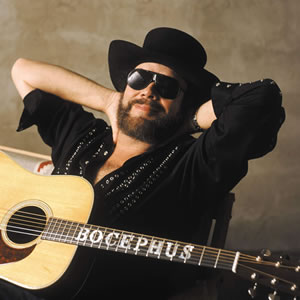
Randall Hank Williams was born May 26, 1949 in Shreveport, Louisiana, the son of country singer/songwriter, Hiram King “Hank” Williams. Surprisingly for a guy who could neither read nor notate music and died at the age of 29, the elder Williams has been described as “one of the most significant and influential American singers and songwriters of the 20th century”.
His father called the younger Williams “Bocephus” after the ventriloquist’s dummy used by Grand Ole Opry comedian Rod Brasfield.
A lifelong problem with drugs and alcohol ended the elder Williams’ life, way too early. All that police found in his Cadillac, were empty beer cans and handwritten, unfinished song lyrics.
The younger Williams was raised by his mother Audrey, after his father’s untimely death in 1953. The apple didn’t fall far from the musical tree. Audrey encouraged the boy to copy his father’s dress and musical style. “Hank Williams Jr.” made his stage debut in Swainsboro Georgia, on March 22, 1958, at the age of 8.
Some of the top musicians, singers and songwriters of the era came to visit the family: Johnny Cash, Fats Domino, Earl Scruggs, and Jerry Lee Lewis, to name a few. They all taught Bocephus a little of their musical instruments, and musical styles.
Bocephus was nearly killed in 1975, while climbing Ajax Peak in Montana. The snow collapsed beneath him, plunging him nearly 500 feet to the rocks below. There were multiple skull and facial fractures. Williams required several reconstructive surgeries, and had to learn to talk, and to sing, all over again. The signature look of beard, sunglasses and cowboy hat have all become part of his brand, but it all began to hide the scars from that mountain climbing accident.
Williams’ work in the 60s and 70s earned him a string of country music hits, but he wanted to be more than a “Hank Williams impersonator”. A prodigously talented musician in his own right, Williams’ repertoire includes guitar, bass guitar, upright bass, steel guitar, banjo, dobro, piano, keyboards, harmonica, fiddle, and drums.
The country music establishment was slow to accept the new sound, but Hank Williams Jr. would not be denied. Sometimes recording and releasing two albums a year, Williams released 21 albums between 1979 and 1990, all certified “gold” by the Recording Industry Association of America. There were 44 Top Ten singles on the Billboard Country charts, including 10 No. 1 singles over the course of his career. In 1982, Bocephus had nine albums on the Billboard Top Country Albums chart, simultaneously.
From 1989 to 2011, a version of Bocephus’ song “All My Rowdy Friends Are Coming Over Tonight” opened Monday Night Football broadcasts. In an October 3, 2011 interview with Fox News’ “Fox & Friends”, Williams described a June golf game between President Barack Obama and Speaker John Boehner as “one of the biggest political mistakes ever”. Asked to explain, Williams said, “Come on. That’d be like Hitler playing golf with Netanyahu … in the shape this country is in?”
Predictably, the media outrage machine came to life – this would not do. ESPN pulled the song from that night’s football game, the first of the season. Williams described his analogy as “extreme – but it was to make a point…I was simply trying to explain how stupid it seemed to me – how ludicrous that pairing was. They’re polar opposites, and it made no sense. They don’t see eye-to-eye and never will.” No matter. ESPN announced three days later that, after 22 years, Williams and his song were being pulled from all future broadcasts. ABC and the National Football League, were quick to follow suit.
For the media, the business model depends on renting an audience to a sponsor. The “controversy” would be squeezed for all it was worth, but Bocephus would have the last word. He responded with a song, criticizing President Obama, ESPN and Fox & Friends, calling it “Keep the Change”. As I write this, the song has had over 988,000 views on You Tube. Williams released the track on iTunes and via free download at his website, where it was downloaded over 180,000 times in just two days.
In the words of the song, Bocephus and all his rowdy friends were “outta there”. A demonstration that, in an age of suffocating and humorless political correctness, even then, “A Country Boy will Survive”.
Some 30 states had passed legislation by the height of the eugenics movement, legalizing the involuntary sterilization of individuals considered “unfit” for reproduction. All told, some 60,000 individuals were forcibly sterilized in state-sanctioned procedures.
In 380BC, Plato described a system of state-controlled human breeding in his Socratic dialogue “The Republic”, intended to create a “guardian class” over his ideal society.
In the 19th century, Francis Galton studied the theories of his cousin Charles Darwin on the evolution of species, applying them to a system of selective breeding intended to bring better human beings into the world. He called it his theory of “Eugenics”.
Eugenics gained worldwide respectability in the early 20th century, when countries from Brazil to Japan adopted policies regarding the involuntary sterilization of certain mental patients.
“Better Babies” competitions sprang up at state fairs across the United States, where babies were measured, weighed, and “judged”, like livestock. By the 20s, these events evolved into “Fitter Family” competitions.
One of the leaders of the eugenics movement was the pacifist and Stanford University professor, David Starr Jordan. After writing several books on the subject, Jordan became a founding member of the Eugenics Committee of the American Breeders Association. The upper class of America was being eroded by the lower class, he said. Careful, selective breeding would be required to preserve the nation’s “upper crust”.
Margaret Sanger
Margaret Higgins Sanger believed that birth control should be compulsory for “unfit” women who “recklessly perpetuated their damaged genetic stock by irresponsibly breeding more children in an already overpopulated world.”
An early advocate for birth control, Sanger has her supporters to this day, including former Presidential candidate Hillary Rodham Clinton. “I admire Margaret Sanger enormously”, Clinton said. “Her courage, her tenacity, her vision…” Time Magazine points out that “Sanger opened the first birth-control clinic in the United States”, describing her as “An advocate for women’s reproductive rights who was also a vocal eugenics enthusiast…”
Detractors have described Sanger as a “thoroughgoing racist”, citing her own words in What Every Girl Should Know, published in 1910:“In all fish and reptiles where there is no great brain development, there is also no conscious sexual control. The lower down in the scale of human development we go the less sexual control we find. It is said that the aboriginal Australian, the lowest known species of the human family, just a step higher than the chimpanzee in brain development, has so little sexual control that police authority alone prevents him from obtaining sexual satisfaction on the streets”.
Admire or detest the woman as you prefer, Sanger’s work established organizations that later evolved into the Planned Parenthood Federation of America.
Around the world, eugenics policies took the form of involuntarily terminated pregnancies, compulsory sterilization, euthanasia, and even mass extermination.
Madison Grant, the New York lawyer known for his work in developing the discipline of wildlife management, was a leader in the eugenics movement, once receiving an approving fan letter from none other than Adolf Hitler.
Public policy and academic types conducted three international eugenics conferences to advance their ideas. The first such conference was held in Great Britain in 1912, followed by two more in 1921 and again in 1932, both in New York City. Colleges and universities offered eugenics as an academic discipline, delving into the ethical and public policy considerations of eliminating the “degenerate” and “unfit”.
In Pennsylvania, 270 involuntary sterilizations were performed without benefit of law, between 1892 and 1931. On March 21, 1905, the Pennsylvania legislature passed “An Act for the Prevention of Idiocy”, requiring that every institution in the state entrusted with the care of “ idiots and imbecile children”, be staffed by at least one skilled surgeon, whose duty it was to perform surgical sterilization. The bill was vetoed by then-Governor Samuel Pennypacker, only to return in 1911, 1913, 1915, 1917, 1919, and in 1921.
By the height of the movement, some 30 states had passed eugenics legislation, legalizing the involuntary sterilization of individuals considered “unfit” for reproduction. All told, some 60,000 individuals were forcibly sterilized in state-sanctioned procedures.
California forced Charlie Follett to undergo a vasectomy in 1945 at the age of 15, when Follett found himself abandoned by alcoholic parents. He was only one of some 20,000 Californians forced to undergo such a procedure.
Vermont passed a sterilization law in 1931, aimed at what then-University of Vermont zoology professor Henry Perkins called the “rural degeneracy problem.” An untold number of “defectives” were forced to undergo involuntary sterilization, including Abenakis and French-Canadian immigrants.
Indiana passed the first eugenic sterilization law in 1907, but it was legally flawed. To remedy the situation, the Eugenics Record Office (ERO) of the Carnegie Institution of Washington’s Station for Experimental Evolution crafted a eugenics statute, adopted by the Commonwealth of Virginia as a state statute in 1924.
That September, Superintendent of the ‘Virginia State Colony for Epileptics and Feebleminded’ Dr. Albert Sidney Priddy, filed a petition to sterilize Carrie Buck, an 18-year-old patient at his institution whom he claimed to be “incorrigible”. A “genetic threat to society”. Buck’s 52 year old mother had a record of prostitution and immorality, Priddy claimed, and the child to whom Buck gave birth in the institution further proved the point.
Buck’s guardian brought her case to court, arguing that the law violated the equal protection clause of the 14th amendment. After losing in district court, the case was appealed to the Amherst County Circuit Court, the Virginia Supreme Court, and finally the United States Supreme Court.
Dr. Priddy died along the way, Dr. John Hendren Bell taking his place. SCOTUS decided the “Buck vs Bell” case on May 2, 1927, ruling in an 8–1 decision that Buck, her mother, and daughter Vivian, were all “feeble-minded” and “promiscuous.”
In the majority ruling, Justice Oliver Wendell Holmes, Jr., wrote: “”It is better for all the world, if instead of waiting to execute degenerate offspring for crime, or to let them starve for their imbecility, society can prevent those who are manifestly unfit from continuing their kind…. Three generations of imbeciles are enough.”
It was later revealed that Carrie Buck had been raped by a member of the Dobbs family, the foster family who had taken her in and later had her committed. To save their family “honor”. No matter. Buck was compelled to undergo tubal ligation, and later paroled to become a domestic worker with a family in Bland, Virginia. Buck’s daughter Vivian, was adopted by this same Dobbs family.
In a later examination of Vivian, ERO field worker Dr. Arthur Estabrook pronounced her “feeble minded” saying that she “showed backwardness”, supporting the “three generations” theory expressed in the SCOTUS opinion.
The child died from complications of measles in 1932, after only two years in school. Dr. Estabrook failed to explain in his report, how she seemed to do well for those two years, nor did he explain how she came to be listed on her school’s honor roll, in April 1931.
When then-Chancellor Hitler offered him an ambassadorship to the Court of St. James in 1935, von Lettow-Vorbeck told Hitler to go “f**k himself.” Describing the interview afterward, his nephew explained “That’s right, except that I don’t think he put it that politely.”
Paul Emil von Lettow-Vorbeck was born into minor Prussian Nobility on this day in 1870. Joining the Corps of Cadets as a teenager, Lettow-Vorbeck worked his way up the German Imperial Army chain of command, becoming a general by the time of WWI.
Stationed in German East Africa and knowing that his sector would be little more than a side show in the greater war effort, Lettow-Vorbeck determined to tie up as many of his adversaries as possible.
With a force which never exceeded 14,000 (3,000 Germans and 11,000 Askari warriors), the “Lion of Africa” tied up as many as 300,000 British, Belgian, and Portuguese troops, who wore themselves out in the pursuit.
Like the much better known Lawrence of Arabia, Lettow-Vorbeck became a master of guerilla warfare. He never lost a single battle, though it was not unheard of for combatants to break and flee a charging elephant or rhinoceros.
To his adversaries, disease and parasites were often more dangerous than enemy soldiers. In one month (July, 1916) Allied non-battle casualties ran 31 to 1 compared with battle casualties.
In 1956, Brazilian scientists attempted to cross African honey bees with indigenous varieties, in order to produce an insect better suited to the South American tropics. Today, we call the results of these failed experiments “Africanized” or “killer” bees.
At one point in the battle of Tanga (November 7-8, 1914), a British landing force and their Sepoy allies were routed and driven back to the sea by millions of African bees, disturbed by rifle and machine gun fire. There’s a story about one British radioman who held to his station, directing the evacuation from the beach while being stung to death by thousands of angry bees. He would be posthumously awarded the Victoria Cross for “gallantry under aerial attack”.
Of all German commanders in WWI, “der Löwe von Afrika” – the Lion of Africa alone remained undefeated in the field. The only German commander to successfully invade imperial British soil during the Great War.
Lettow-Vorbeck developed a deep distrust of the upstart Adolf Hitler. When then-Chancellor Hitler offered him an ambassadorship to the Court of St. James in 1935, Lettow-Vorbeck told Hitler to go “f**k himself.” Describing the interview afterward, his nephew explained “That’s right, except that I don’t think he put it that politely.”
After such a blunt refusal, Lettow-Vorbeck was kept under continual surveillance by the Nazi regime. His home and office were searched, his person subject to constant harassment. The Lion of Africa was destitute by the end of WWII. His sons both killed serving in the Wehrmacht, his home in Bremen destroyed by Allied bombs.
For a time, Vorbeck lived on food packages from British Intelligence Officer Richard Meinertzhagen and South African Field Marshal Jan Christiaan Smuts, two of his former adversaries in the East Africa campaign. It was a token of the respect these two had, for a man who had once been their enemy.
In 1964, the year Lettow-Vorbeck died, the Bundestag voted to give back pay to former African warriors who had fought with German forces in WWI. Some 350 elderly Ascaris showed up. A few could produce certificates given them back in 1918, some had scraps of old uniforms. Precious few could prove their former service to the German Empire.
The German banker who had brought the money had an idea. As each man stepped forward, he was handed a broom and ordered to perform the German manual of arms. Not one man failed the test.
Lettow-Vorbeck formed a lifelong friendship during his time in Africa, with the Danish author Karen Blixen, best known by her pen name Isak Dinesen, author of “Out of Africa”. Years later, Blixen recalled, “He belonged to the olden days, and I have never met another German who has given me so strong an impression of what Imperial Germany was and stood for”.


 It was Easter Monday, March 30, 1282. The Church of the Holy Spirit outside Palermo was just letting out after evening vespers (prayers), when a French soldier thought he’d “inspect” a Sicilian woman for weapons.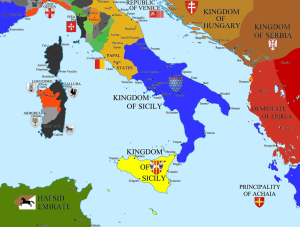





 1934 city commissioners sponsored a three-day celebration of the late March blossoming cherry trees, which grew into the annual Cherry Blossom Festival.


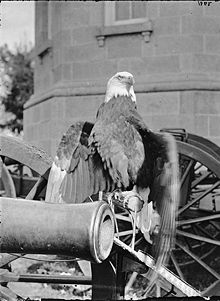 Abe became an inspirational symbol to the troops, like the battle flag carried with each regiment. Colonel Rufus Dawes of the Iron Brigade recalled, “Our eagle usually accompanied us on the bloody field, and I heard [Confederate] prisoners say they would have given more to capture the eagle of the Eighth Wisconsin, than to take a whole brigade of men.”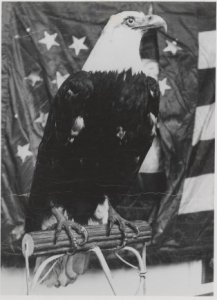


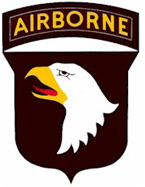 After WWII, elements of the 101st Airborne were mobilized to Little Rock by President Eisenhower to protect the civil rights of the “Little Rock Nine”, a group of black students enrolled in Little Rock Central High School in September 1957, as the result of the US Supreme Court’s landmark ruling in the historic Brown v. Board of Education case.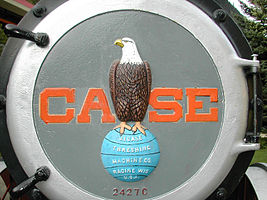


 At the turn of the century there were over 450 textile factories in Manhattan alone, employing something like 40,000 garment workers. Many of them were young, immigrant women of Jewish and Italian ethnicity, working nine hours a day on weekdays and seven on Saturdays. Wages were typically low: $7 to $12 per week, equivalent to $3.20 to $5.50 per hour, in 2016.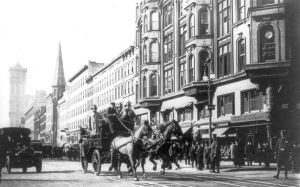




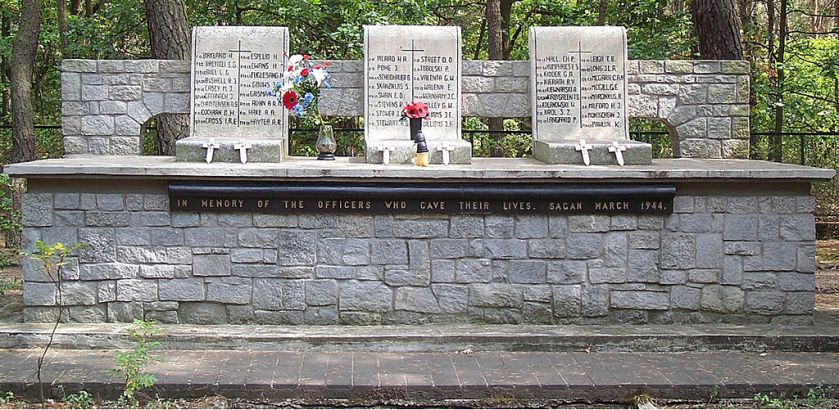


 100 years ago, “Sumerologists” labored to learn the customs and ways of this ancient civilization. One such team pieced together a stone tablet and, through years of study, managed to decipher the cuneiform words contained thereon.
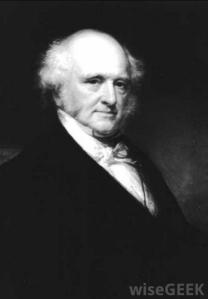


 Randall Hank Williams was born May 26, 1949 in Shreveport, Louisiana, the son of country singer/songwriter, Hiram King “Hank” Williams. Surprisingly for a guy who could neither read nor notate music and died at the age of 29, the elder Williams has been described as “one of the most significant and influential American singers and songwriters of the 20th century”.



 In a later examination of Vivian, ERO field worker Dr. Arthur Estabrook pronounced her “feeble minded” saying that she “showed backwardness”, supporting the “three generations” theory expressed in the SCOTUS opinion.

 Stationed in German East Africa and knowing that his sector would be little more than a side show in the greater war effort, Lettow-Vorbeck determined to tie up as many of his adversaries as possible.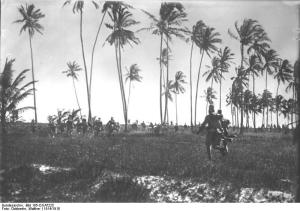
 In 1964, the year Lettow-Vorbeck died, the Bundestag voted to give back pay to former African warriors who had fought with German forces in WWI. Some 350 elderly Ascaris showed up. A few could produce certificates given them back in 1918, some had scraps of old uniforms. Precious few could prove their former service to the German Empire.
 Historical Easter Eggs - Today in History
You must be logged in to post a comment.