

The Fenian Brotherhood was founded in the US in 1858, based on the idea that Ireland should be free of English rule to become an independent, self-governing Republic. The Brotherhood traced its lineage back to 1758. By 1866, much if not most of the membership were battle hardened veterans of the Civil War, ended only a year earlier.
 Fenians invaded Canada no fewer than five times between 1866 and 1871. The idea was to bring pressure on Britain to withdraw from Ireland, so these attacks were directed toward British army forts, customs posts and other targets in Canada.
Irish Canadian Catholics were divided by the raids, with many feeling torn between loyalty to their new home and sympathy for the Fenians’ objectives. Canadian-Irish Protestants and French Catholics were generally loyal to the crown, and many took up arms against the raiders.
700 Fenians headed north to Campobello Island, New Brunswick in April 1866, intending to seize the island. The war party became discouraged and dispersed after a show of force by the British Navy at Passamaquoddy Bay, but they would be back.
Next, a group of 1,000 to 1,300 Fenians sabotaged the US Navy side-wheeler gunboat USS Michigan, and slipped across the Canadian border at the Niagara River on June 1. A Fenian ambush west of Ft. Erie led to the Battle of Ridgeway, in which 13 Canadian Militia were killed. 94 were wounded or incapacitated by disease.
Further fighting took place the following day, in which the Canadian Militia’s inexperience led to battlefield confusion. A number were taken prisoner. Realizing that they couldn’t hold their position, the Fenians released their prisoners and withdrew to Buffalo on the 3rd, but again they would be back.

This seems to have been the high water mark of the Fenian uprising. President Andrew Johnson began to crack down, dispatching Generals Ulysses Grant and George Meade to Buffalo to assess the situation. Their orders on the 7th of June were to arrest anyone who even looked like a Fenian.
The Fenian “army of liberation” may have had little effect on Irish Independence, but it served to fire up Canadian Nationalism. Canada was more properly called “British North America” in those days. It seems that the Fenian raids tipped many of the more reluctant votes toward the security of nationhood, particularly in the Maritime provinces. Historians will tell you that Ridgeway is “the battle that made Canada.” The Canadian Confederation was formed in 1867, uniting Nova Scotia, New Brunswick, Ontario and Quebec into one Dominion of Canada.
There would be several more Fenians raids in the years that followed, from Pigeon Hill and Mississquoi County in modern day Quebec, to the 1870 Pembina raid in the Dakota territory. 
US authorities ultimately arrested the men and confiscated their arms, but many felt that the government had turned a blind eye to the invasions, seeing them as payback for British assistance to the Confederacy during the late Civil War.
The Fenian Brotherhood was a nation within a nation, organized for the purpose of winning Irish independence by force. A member of the British House of Commons rightly called them “a new Irish nation on the other side of the Atlantic, recast in the mould of Democracy, watching for an opportunity to strike a blow at the heart of the British Empire.”
In modern times, scores of self-styled ‘Militia’ have adopted the use of military style drill in this country, from the far-left Los Macheteros and Black Panthers, to Posse Comitatus and the far-right militia units of the nineties. Yet, I believe it is accurate to say, the Fenian Brotherhood remains the only organization in United States history, to have publicly armed and drilled on this scale.
“We are the Fenian Brotherhood, skilled in the arts of war,
And we’re going to fight for Ireland, the land we adore,
Many battles we have won, along with the boys in blue,
And we’ll go and capture Canada, for we’ve nothing else to do”.
Fenian soldier’s song


 It was impossible to assemble the pieces of such a massive undertaking in secret, so an elaborate ruse called “Operation Fortitude” was launched to divert attention from the real objective. Fake field armies were assembled in Edinburgh, Scotland and the south coast of England, threatening attack on the coasts of Norway and the Pas de Calais. The real General George S. Patton was put in charge of the fake First US Army Group (FUSAG). The allied “Twenty Committee”, represented by its roman numerals “XX”, controlled a network of double agents, making the deception so complete that Hitler personally withheld critical reinforcements until long after they would have made a difference. It’s where we get the term “Double Cross”.


 Most of the political and military establishment lined up against Dreyfus, but the public outcry became furious after writer Émile Zola published his vehement open letter “J’accuse” (I accuse) in the Paris press in January 1898.


 So it was that a vacation cruise to freedom became the “Voyage of the Damned”. MS St. Louis returned to Europe. Captain Schröder negotiated and schemed to find safe haven for his 907 passengers. Anything but return them to Nazi Germany. At one point, Schröder contemplated intentionally running aground off the coast of England. In the end, they all found refuge in Europe. 288 passengers were admitted by Great Britain, and 224 by France. 214 were accepted into Belgium and another 181 by the Netherlands.

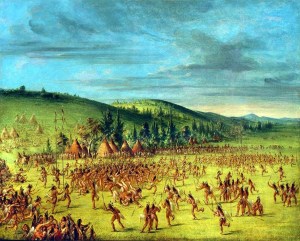 Native American stickball had many variations, but the object was to hit a stake or other object with a “ball”. The ball was a stone wrapped in leather, handled with one or sometimes two sticks. There could be up to several hundred contestants to a team, and the defenders could employ any means they could think of to get at the ball, including hacking, slashing or any form of physical assault they liked. Lacerations and broken bones were commonplace, and it wasn’t unheard of that stickball players died on the field. The defending team could likewise employ any method they liked to keep the opposing team off of the ball carrier, and they played the game on a field that could range from 500 yards to several miles.
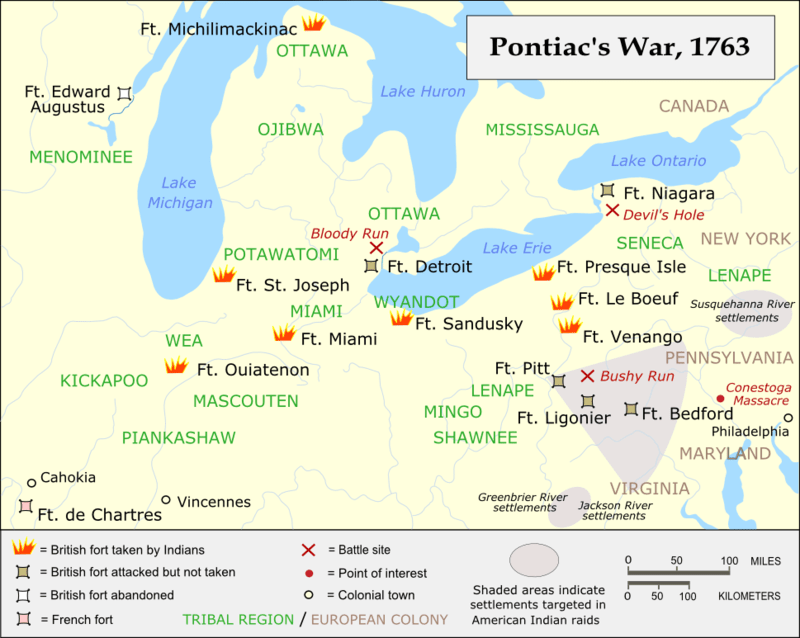
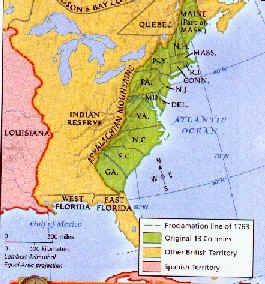 The British Royal Proclamation of October 7, 1763, drew a line between the British colonies and Indian lands, creating a vast Indian Reserve stretching from the Appalachians to the Mississippi River and from Florida to Newfoundland. For the Indian Nations, this was the first time that a multi-tribal effort had been launched against British expansion, the first time such an effort had not ended in defeat.


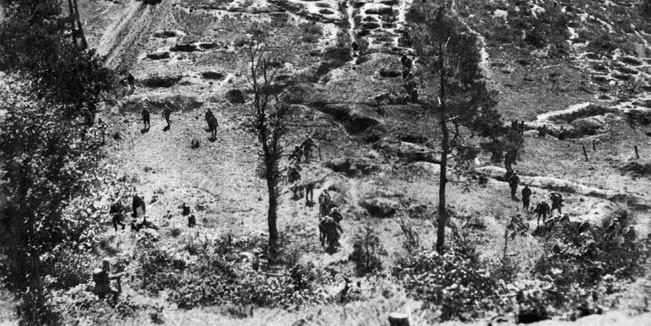
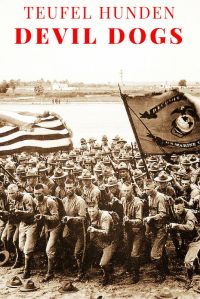
 The results of the Feuerwalze were devastating, if not predictable. Allied lines were smashed as German armies poured through, taking 19 kilometers in three days and reaching the Marne River, 50 miles from Paris. On May 31, a dogged defense by the US 3rd Infantry Division turned the German advance at Château-Thierry, and toward Belleau Wood.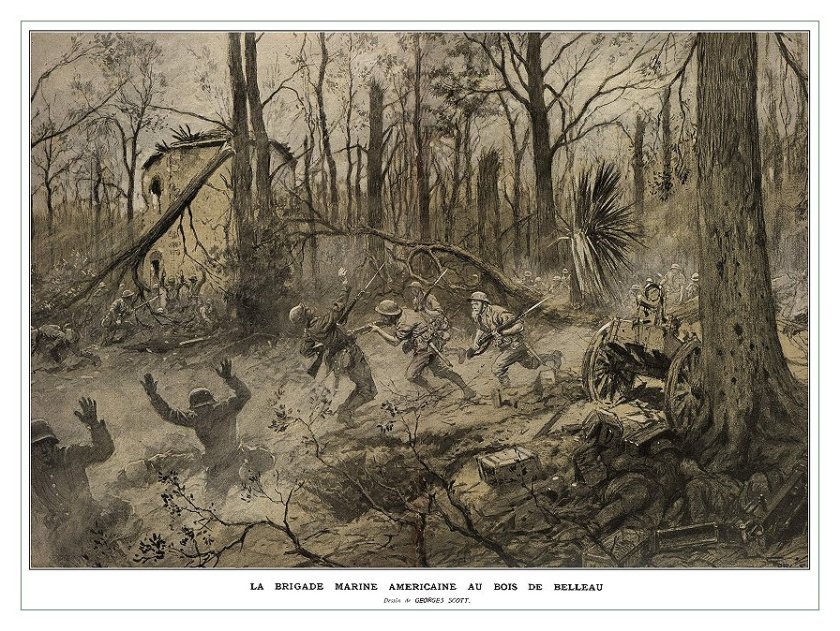


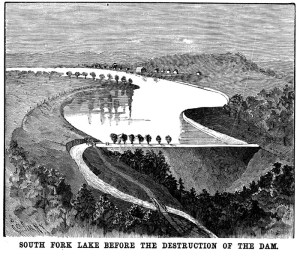

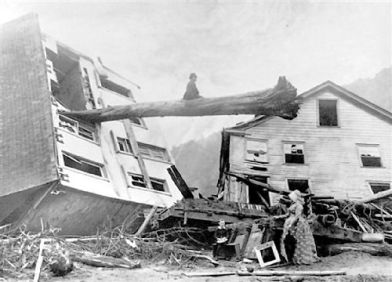
 Traveling at 40 miles per hour, the 60′ wall of water and debris hit Johnstown 57 minutes after the dam broke. Some residents had managed to scramble to high ground, but most were caught by surprise by the flood waters.
 When it was over, 2,209 were dead. 99 entire families had ceased to exist, including 396 children. 124 women and 198 men were widowed, 98 children orphaned. 777 people, over 1/3rd of the dead, were never identified. Their remains are buried in the “Plot of the Unknown” in Grandview Cemetery in Westmont.
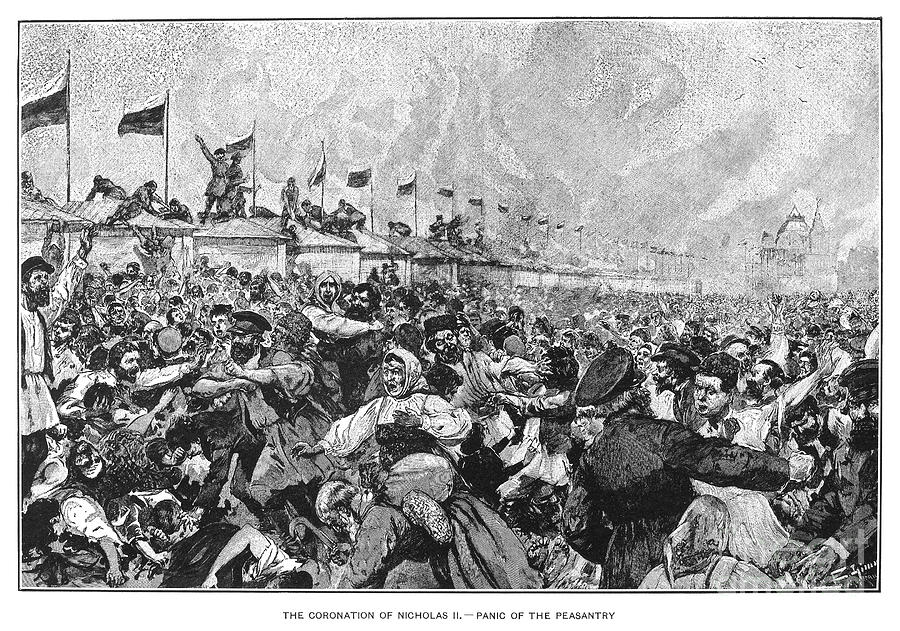
 People began to gather on the 29th. By 5:00am on the 30th, the crowd was estimated at half a million. A rumor began to spread among the crowd that there wasn’t enough beer or pretzels to go around. At that point the police force of 1,800 wasn’t enough to maintain order. The crush of the crowd and the resulting panic resulted in a human stampede. Before it was over 1,389 people were trampled to death, and another 1,300 injured.

 3,662,374 military service certificates were issued to qualifying veterans, bearing a face value equal to $1 per day of domestic service and $1.25 a day for overseas service, plus interest. Total face value of these certificates was $3.638 billion, equivalent to $43.7 billion in today’s dollars and coming to full maturity in 1945.
 This had happened before. Hundreds of Pennsylvania veterans of the Revolution had marched on Washington in 1783, after the Continental Army had been disbanded without pay.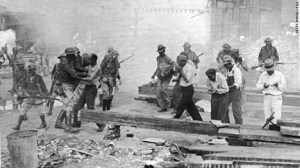
 Bonus marchers fled to their largest encampment across the Anacostia River, when President Hoover ordered the assault stopped. Feeling that the Bonus March was an attempt to overthrow the government, General MacArthur ignored the President and ordered a new attack, the army routing 10,000 and leaving their camps in flames. 1,017 were injured and 135 arrested. The wife of one veteran miscarried. 12 week old Bernard Myers died after being caught in the gas attack. A government investigation later claimed he died of inflammation of the small intestine, but a hospital employee said the tear gas “didn’t do it any good.”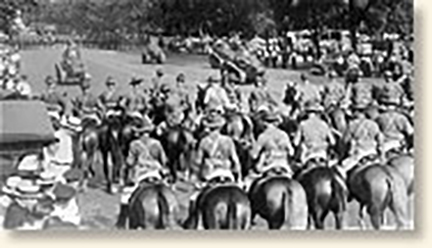


 Predicting a solar eclipse isn’t the same as predicting a lunar eclipse; the calculations are far more difficult. When the moon passes through the shadow of the sun, the event can be seen by half of the planet, the total eclipse phase lasting over an hour. In a solar eclipse, the shadow of the moon occupies only a narrow path, and the total eclipse phase is only about 7½ minutes at any given place.


You must be logged in to post a comment.