

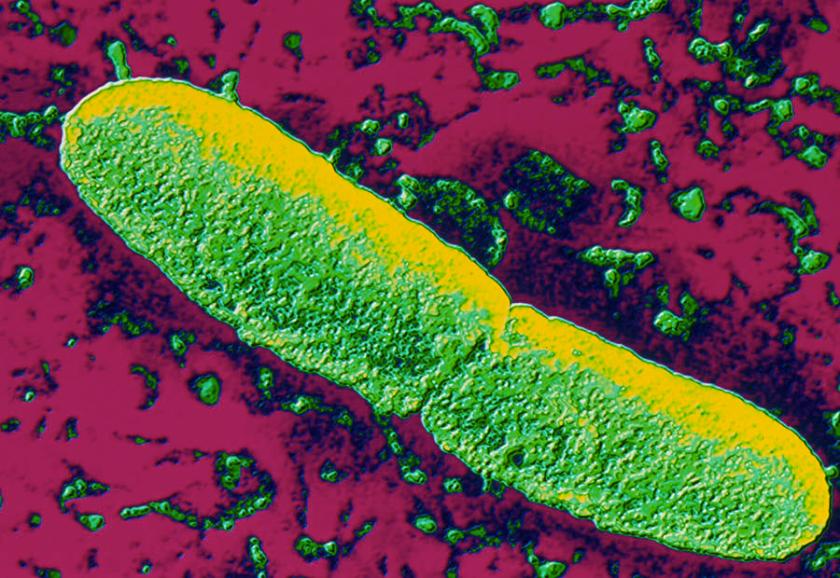
 In the early 1330s, a deadly plague broke out on the steppes of Mongolia. The gram-negative bacterium Yersinia Pestis preyed heavily on rodents, the fleas from which would transmit the disease to people, the infection then rapidly spreading to others.
High fever would precede the appearance of “buboes”, a painful swelling of the lymph glands, especially in the armpit, neck and groin. Spots appeared on the skin turning from red to black, often accompanied by necrosis and gangrene in the nose, lips, fingers and toes.
In some cases, Bubonic plague will progress from the lymphatic system to the lungs, resulting in Pneumonic plague. Y. Pestis can progress to the blood stream as well, a condition known as septicemic plague. In medieval times, septicemic mortality rates ran from 98% to 100%.
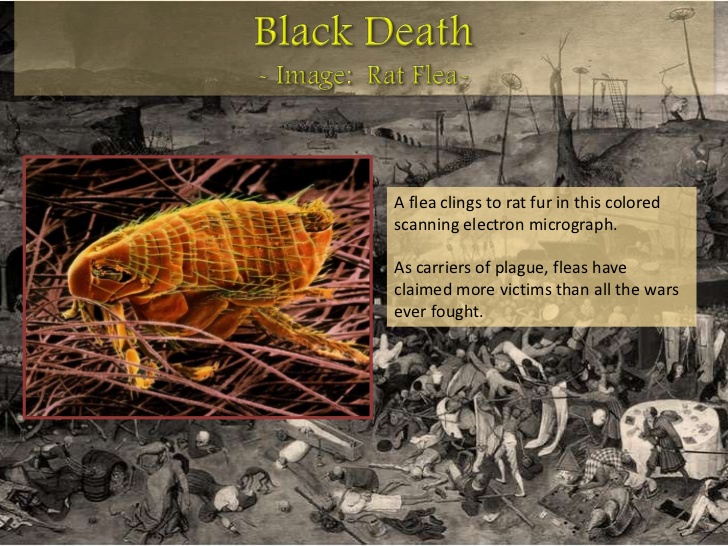
The disease process unfolded with horrifying rapidity. The Italian writer Giovanni Boccaccio wrote that plague victims often “ate lunch with their friends and dinner with their ancestors in paradise.”
Plague broke out among a besieging force of Mongols on the Black Sea city of Caffa, in 1346. Italian merchants fled with their ships in the Spring of 1347, carrying in their holds an untold number of rats and the fleas that came with them. One-third of the world’s population died in the five-year period which followed, equivalent to over two Billion today.
The Black Death of the 14th century is far and away the most famous, but it’s not the first. The Plague of Justinian, 541-542AD, centered mostly around the Eastern Roman (Byzantine) and Sassanid Empires, the disease resulting in the death of 25 million individuals. Roughly 13% of the world’s population, at that time.
 The Black death of 1346-’53 was a catastrophe unparalleled in human history, but it was by no means the last such outbreak. The Third Pandemic began in China in 1855, spreading to Hong Kong and on to British India. In China and India alone the disease killed 12 million people. It then spread to parts of Africa, Europe, Australia, and South America.
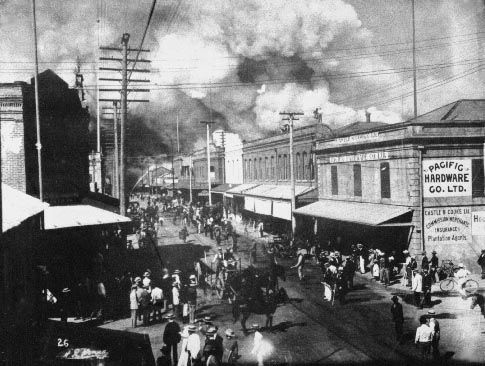
In the newly formed Territory of Hawaii, the first signs of the plague began to appear in Honolulu in December, 1899. Not sure how to control the outbreak, city health officials decided to burn infected houses. Changing winds soon fanned the flames out of control. On January 20, 1900, an inferno consumed nearly all of Chinatown, 38 acres, leaving 6,000 homeless.
In 1900, The ship Australia brought Yersinia Pestis with it from Hong Kong into San Francisco. The ship was immediately quarantined and, despite the escape of two stowaways confirmed to have the bacilli, there was no immediate outbreak. The quarantine seemed to work for a time, but there was no way to contain the rats on board. They are probably the reason that plague spread to the city.
 The body of an elderly Chinese man was discovered in a Chinatown basement. An autopsy found the man to have died of plague. There were more than 18,000 Chinese and another 2,000 Japanese living in the 14-block Chinatown section of the city. Many called for a quarantine of Chinatown, but Chinese citizens objected, as did then-Governor Henry Gage, who tried to sweep the whole outbreak under the carpet. Business interests likewise objected to the quarantine. Except for the Hearst Newspapers, not much was heard about it.
100 confirmed cases of plague were discovered by the end of 1902, but Governor Gage was still denying its existence. There were a total of 121 cases with 113 deaths by 1904, but the outbreak seemed to be contained.
 San Francisco was hit by a massive earthquake on April 18, 1906, followed by a great fire. Thousands of San Franciscans were crowded into refugee camps with an even higher number of rats. For the first time, the disease now jumped the boundaries of Chinatown.
On May 27, 1907, a San Francisco sailor was diagnosed with bubonic plague. The epidemic spread aggressively over that summer, the New York Times reporting in November that “the disease increased with such virulence that it looked for a time as if the city were to be decimated as were medieval Europe”.
The plague popped up one last time, but local, state, and federal health officials combined to all-but eradicate the rat population, and with it the disease. It was all over by 1909.

Or was it. Nothing could stop the fleas from infected rats from transferring to wild rodents, squirrels, and prairie dogs, and permanently establishing plague bacilli in the western United States.
In 2015, the CDC reported 15 cases of Bubonic plague in the United States, as of October. Four of them were fatal. The bacterium is treatable with modern antibiotics, but I can’t help thinking about the massive quantity of anti-microbials used in livestock production. Given the apparent increase in multiple-drug resistant “superbugs”, I hope that people far smarter than I am, are thinking about it too.










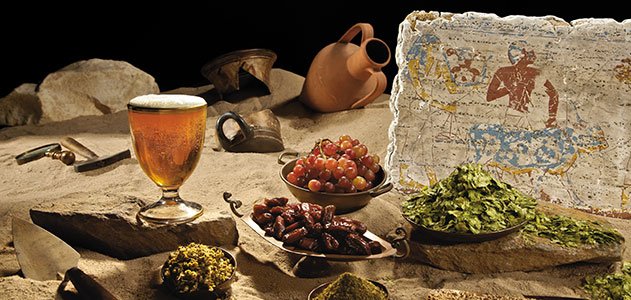
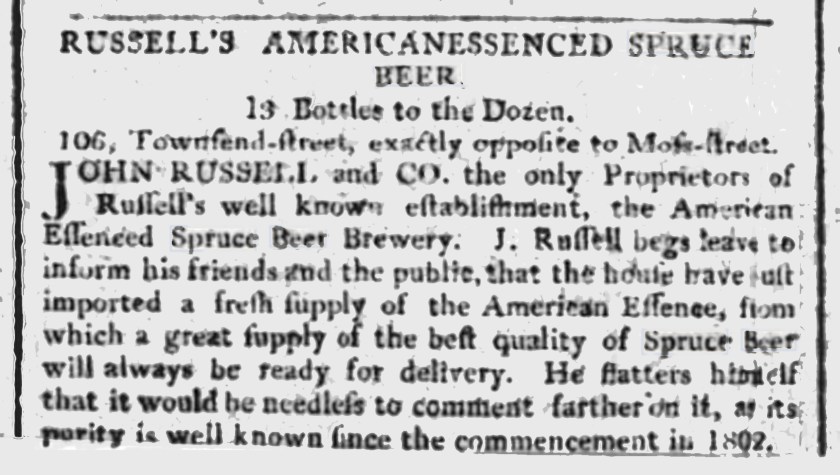

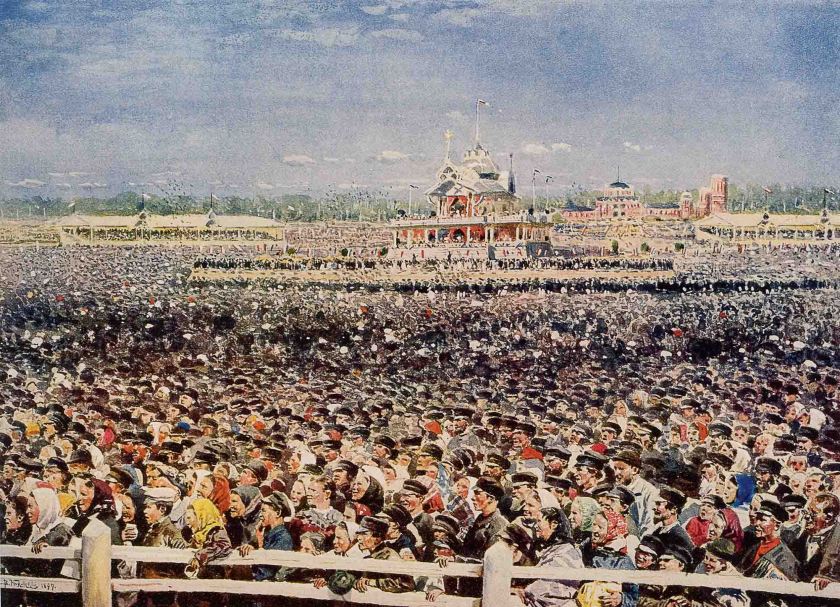
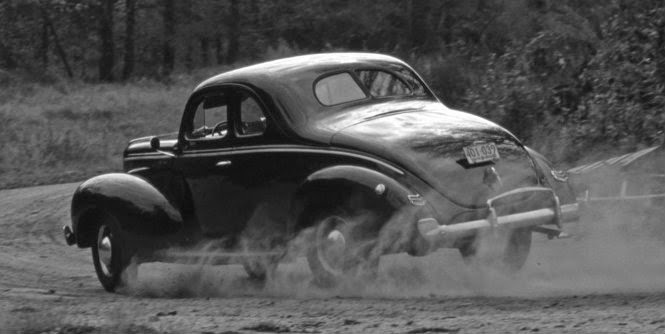
 Finally, even John D. Rockefeller, Jr., a lifelong teetotaler who contributed $350,000 to the Anti-Saloon League, had to announce his support for repeal.
 The night before Roosevelt’s law went into effect, April 6, 1933, beer lovers lined up at the doors of their favorite public houses, waiting for their first legal beer in thirteen years. A million and a half barrels of the stuff were consumed the following day, a date remembered today as “National Beer Day”.

 His two companions were killed. Smith himself was transported to the principle village of Werowocomoco, and brought before the Chief of the Powhatan. His head was forced onto a large stone as a warrior raised a club to smash out his brains. Pocahontas, favorite daughter of Wahunsonacock, rushed in and placed her head on top of his, stopping the execution. Whether it actually happened this way has been debated for centuries. One theory describes the event as an elaborate adoption ceremony, though Smith himself wouldn’t have known that at the time. Afterward, Powhatan told Smith he would “forever esteem him as his son Nantaquoud”.
 Pocahontas was a pet name, variously translated as “playful one” “my favorite daughter” or “little wanton”. Early in life, she bore the secret name “Matoaka”, meaning “Bright Stream Between the Hills”. Later she was known as “Amonute” which, to the best of my knowledge, has never been translated.
 Later descendants of the “Indian Princess” include Glenn Strange, the actor who played Frankenstein in three Universal films during the 1940s, and the character Sam Noonan, the popular bartender in the CBS series, “Gunsmoke”. Astronomer Percival Lowell is a direct descendant of Pocahontas, as is Las Vegas performer Wayne Newton, and former First Lady Edith Wilson, whom some describe as the first female President of the United States. But that must be a story for another day.
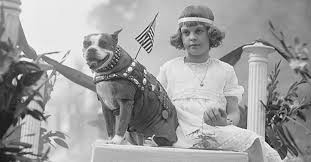
 America’s first war dog, “Stubby”, got there by accident, and served 18 months ‘over there’, participating in seventeen battles on the Western Front.
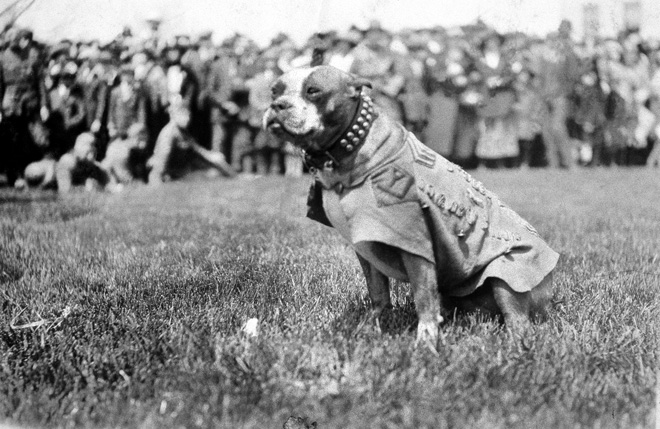 Stubby saw his first action at Chemin des Dames. Since the boom of artillery fire didn’t faze him, he learned to follow the example of ducking when the big ones came close. It became a great game to see who could hit the dugout, first. After a few days, the guys were watching him for a signal. Stubby was always the first to hear incoming fire. We can only guess how many lives were spared by his early warning.
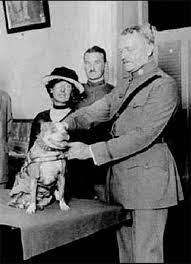 After the Armistice, Stubby returned home a nationally acclaimed hero, eventually received by both Presidents Harding and Coolidge. Even General John “Black Jack” Pershing, who commanded the AEF during the war, presented Stubby with a gold medal made by the Humane Society, declaring him to be a “hero of the highest caliber.”
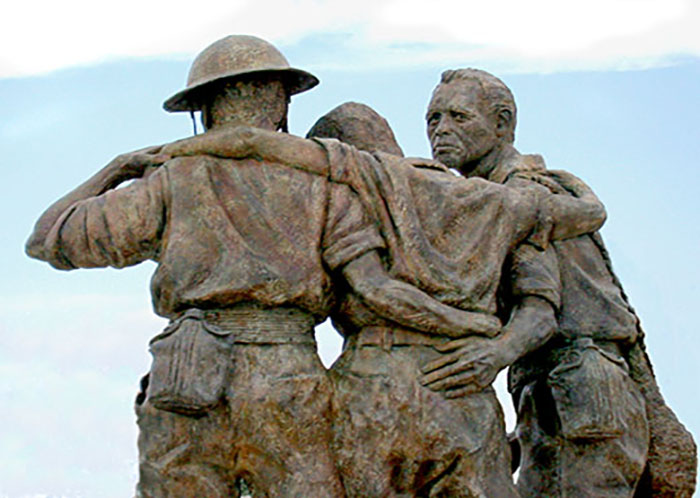
 After a year coaching at Providence College in 1939 and a year playing professional football for the Chicago Cardinals in 1940, Tonelli joined the Army in early 1941, assigned to the 200th Coast Artillery Regiment in Manila.
 Military forces of Imperial Japan appeared unstoppable in the early months of WWII, attacking first Thailand, then the British possessions of Malaya, Singapore, and Hong Kong, as well as US military bases in Hawaii, Wake Island, Guam and the Philippines.
 On April 9, 75,000 surrendered the Bataan peninsula, beginning a 65 mile, five-day slog into captivity through the heat of the Philippine jungle. Japanese guards were sadistic. They would beat the marchers and bayonet those too weak to walk. Japanese tanks swerved out of their way to run over anyone who had fallen and was too slow in getting up. Some were burned alive. Already crippled from tropical disease and starving from the long siege of Luzon, thousands perished in what came to be known as the Bataan Death March.
 Minutes later, a Japanese officer appeared, speaking perfect English. “Did one of my men take something from you?” “Yes”, Tonelli replied. “My school ring”. “Here,” said the officer, pressing the ring into his hand. “Hide it somewhere. You may not get it back next time”. Tonelli was speechless. “I was educated in America”, the officer said. “At the University of Southern California. I know a little about the famous Notre Dame football team. In fact, I watched you beat USC in 1937. I know how much this ring means to you, so I wanted to get it back to you”.
 The hellish 60-day journey aboard the filthy, cramped merchant vessel began in late 1944, destined for slave labor camps in mainland Japan. Tonelli was barely 100 pounds on arrival, his body ravaged by malaria and intestinal parasites. He was barely half the man who once played fullback at Notre Dame Stadium, Soldier Field and Comiskey Park.

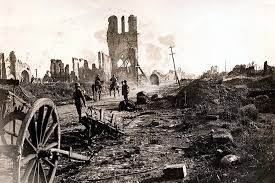 The coming cataclysm would lay waste to a generation, and to a continent.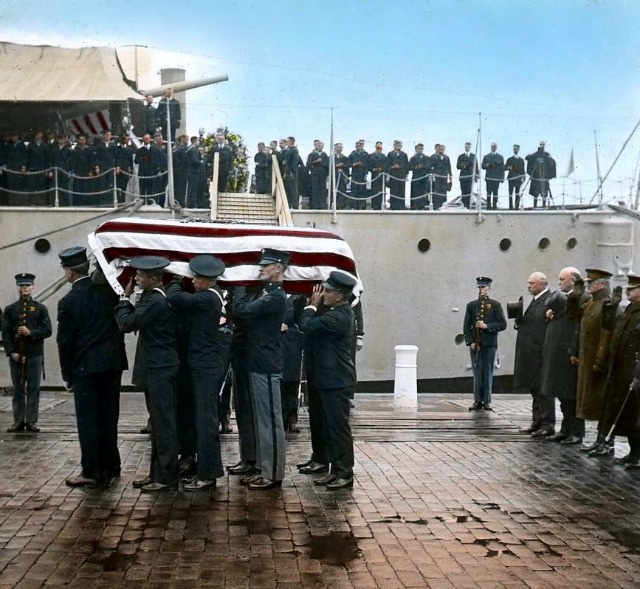

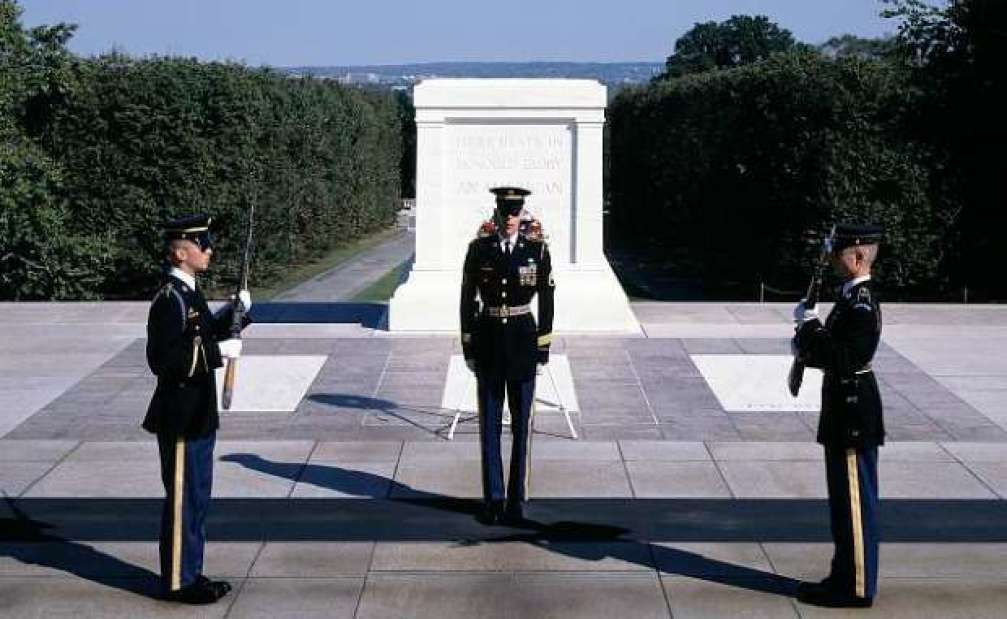
 On November 11, Armistice Day, the casket was removed from the Rotunda of the Capitol and escorted under military guard to the amphitheater at Arlington National Cemetery. In a simple ceremony, President Warren G. Harding bestowed on this unknown soldier the Medal of Honor, and the Distinguished Service Cross.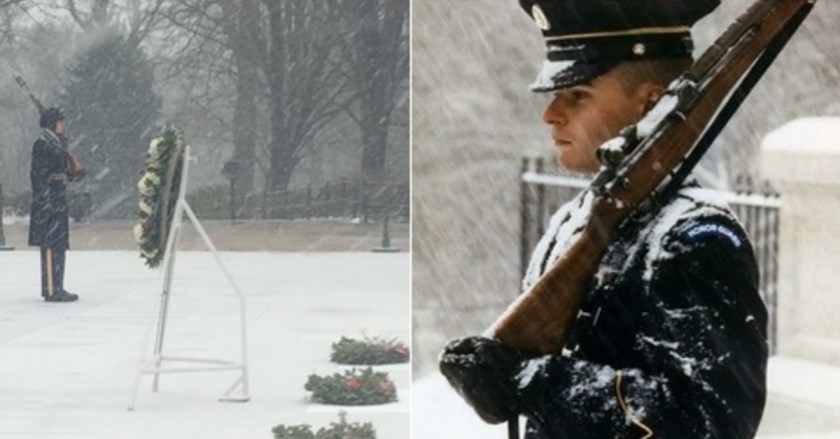


 Historical Easter Eggs - Today in History
You must be logged in to post a comment.