

In 1607, approximately 100 English colonists settled along the James River in Tidewater-area Virginia. They called it “Jamestown, the first permanent English settlement in the New World. One of the colonists, John Smith, was exploring the Chickahominy River in December, when he and two others were captured by Powhatan warriors. The Powhatan Confederacy of the Tsenacommacah comprised roughly 30 Algonquin speaking tribes, led by Paramount Chief Wahunsonacock.
 His two companions were killed. Smith himself was transported to the principle village of Werowocomoco, and brought before the Chief of the Powhatan. His head was forced onto a large stone as a warrior raised a club to smash out his brains. Pocahontas, favorite daughter of Wahunsonacock, rushed in and placed her head on top of his, stopping the execution. Whether it actually happened this way has been debated for centuries. One theory describes the event as an elaborate adoption ceremony, though Smith himself wouldn’t have known that at the time. Afterward, Powhatan told Smith he would “forever esteem him as his son Nantaquoud”.
The year of Pocahontas’ birth is uncertain. In the Spring of 1608, Smith described her as “a child of tenne years old”. At the time, Powhatans were commonly given multiple names, some secret and known only a select few. Names would change for important occasions, different names carrying different meanings depending on context.
 Pocahontas was a pet name, variously translated as “playful one” “my favorite daughter” or “little wanton”. Early in life, she bore the secret name “Matoaka”, meaning “Bright Stream Between the Hills”. Later she was known as “Amonute” which, to the best of my knowledge, has never been translated.
The “Starving Time”, the winter of 1609-1610, killed all but 60 of the 204 settlers then in Jamestown. Survivors were about to abandon the place when the Baron De La Warr, also known as Delaware, arrived in June with new supplies and new settlers. The settlement was rebuilt. One of the new arrivals, John Rolfe, became the first tobacco planter in the area.
Pocahontas was a frequent visitor at this time. English Captain Samuel Argall took her hostage in the spring of 1613, hoping it would help him negotiate a permanent peace with her father.
Pocahontas was treated as a guest rather than a prisoner and encouraged to learn English customs. She converted to Christianity and baptized Lady Rebecca. Powhatan eventually agreed to terms for her release, but by then she had fallen in love with John Rolfe. The two were married on April 5, 1614, with the blessing of Chief Powhatan and the governor of Virginia.

The marriage ensured peace between the Jamestown settlers and the Powhatan Confederacy for several years. Pocahontas gave birth to Thomas, the couple’s first child in 1615. The couple sailed to England the following year, where she proved popular with English gentry. The couple was preparing to sail back to Virginia in March 1617, when Pocahontas sickened and died, of unknown causes. She was twenty-one.
Some historians believe she suffered from an upper respiratory condition, such as pneumonia. Others believe she died from dysentery. She is buried at the parish church of St. George in Gravesend, in England.
John Rolfe returned to Virginia and died in an Indian attack, in 1622. Following his education in England, Thomas Rolfe returned to Virginia to become a prominent citizen. Some of the socially prominent and wealthy destined to become America’s own gentry, the “First Families of Virginia”, trace their lineage through Thomas Rolfe to Pocahontas.
 Later descendants of the “Indian Princess” include Glenn Strange, the actor who played Frankenstein in three Universal films during the 1940s, and the character Sam Noonan, the popular bartender in the CBS series, “Gunsmoke”. Astronomer Percival Lowell is a direct descendant of Pocahontas, as is Las Vegas performer Wayne Newton, and former First Lady Edith Wilson, whom some describe as the first female President of the United States. But that must be a story for another day.
At a recent event honoring Native American code talkers, President Donald Trump revived his nickname for Massachusetts Senator Elizabeth Warren, who has claimed Native American ancestry but has thus far declined to provide proof. Predictably, Washington Post editorialists, were incensed: “Trump’s repeated reference to “Pocahontas” is racist first of all because it’s intended as a pejorative. Trump does not like Warren. It’s also racist because it seizes on a stereotypical Native American name to refer to an entire race — like calling an Asian man “Jackie Chan” or a black man “Frederick Douglass” (one of the president’s favorites). Worse yet, Trump is mushing together his tribes: At an event to honor Navajo heroes, he used the name of a Powhatan woman to disparage a senator who claimed Cherokee ancestry“.
Matoaka, also known as Amonute, daughter of the Paramount Chieftain Powhatan of the Attanoughkomouck who called her “Pocahontas”, would be surprised, I imagine, to learn that the Washington Post regards her name as a racial slur.

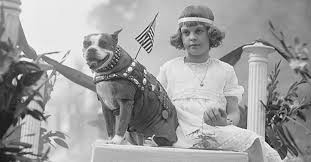
 America’s first war dog, “Stubby”, got there by accident, and served 18 months ‘over there’, participating in seventeen battles on the Western Front.
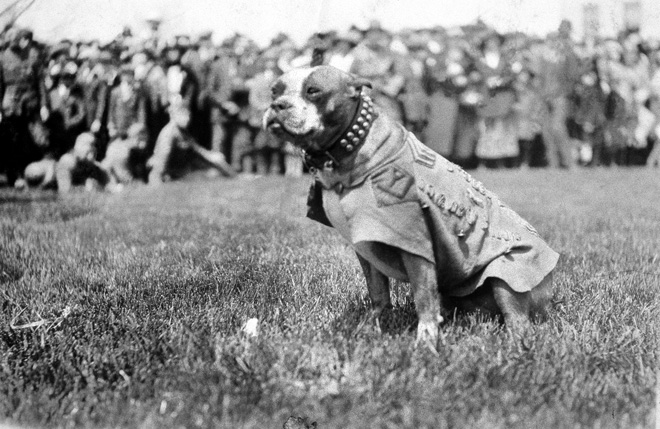 Stubby saw his first action at Chemin des Dames. Since the boom of artillery fire didn’t faze him, he learned to follow the example of ducking when the big ones came close. It became a great game to see who could hit the dugout, first. After a few days, the guys were watching him for a signal. Stubby was always the first to hear incoming fire. We can only guess how many lives were spared by his early warning.
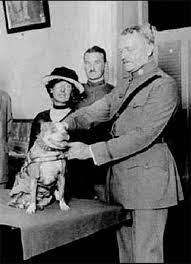 After the Armistice, Stubby returned home a nationally acclaimed hero, eventually received by both Presidents Harding and Coolidge. Even General John “Black Jack” Pershing, who commanded the AEF during the war, presented Stubby with a gold medal made by the Humane Society, declaring him to be a “hero of the highest caliber.”
 After a year coaching at Providence College in 1939 and a year playing professional football for the Chicago Cardinals in 1940, Tonelli joined the Army in early 1941, assigned to the 200th Coast Artillery Regiment in Manila.
 Military forces of Imperial Japan appeared unstoppable in the early months of WWII, attacking first Thailand, then the British possessions of Malaya, Singapore, and Hong Kong, as well as US military bases in Hawaii, Wake Island, Guam and the Philippines.
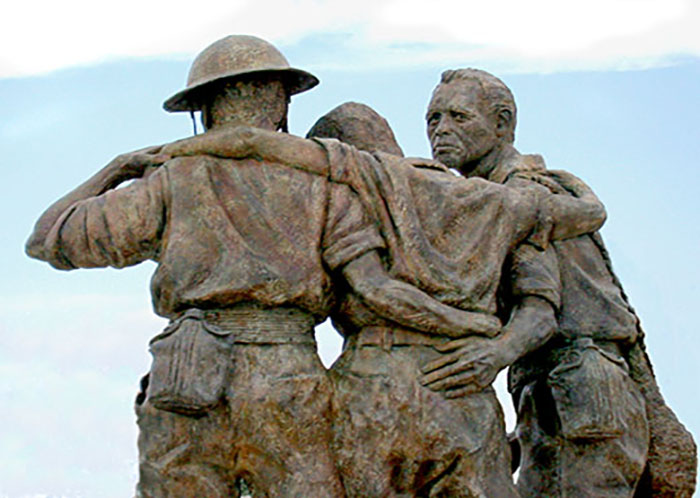
 On April 9, 75,000 surrendered the Bataan peninsula, beginning a 65 mile, five-day slog into captivity through the heat of the Philippine jungle. Japanese guards were sadistic. They would beat the marchers and bayonet those too weak to walk. Japanese tanks swerved out of their way to run over anyone who had fallen and was too slow in getting up. Some were burned alive. Already crippled from tropical disease and starving from the long siege of Luzon, thousands perished in what came to be known as the Bataan Death March.
 Minutes later, a Japanese officer appeared, speaking perfect English. “Did one of my men take something from you?” “Yes”, Tonelli replied. “My school ring”. “Here,” said the officer, pressing the ring into his hand. “Hide it somewhere. You may not get it back next time”. Tonelli was speechless. “I was educated in America”, the officer said. “At the University of Southern California. I know a little about the famous Notre Dame football team. In fact, I watched you beat USC in 1937. I know how much this ring means to you, so I wanted to get it back to you”.
 The hellish 60-day journey aboard the filthy, cramped merchant vessel began in late 1944, destined for slave labor camps in mainland Japan. Tonelli was barely 100 pounds on arrival, his body ravaged by malaria and intestinal parasites. He was barely half the man who once played fullback at Notre Dame Stadium, Soldier Field and Comiskey Park.

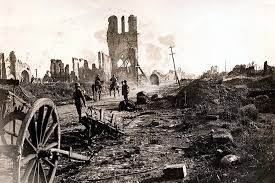 The coming cataclysm would lay waste to a generation, and to a continent.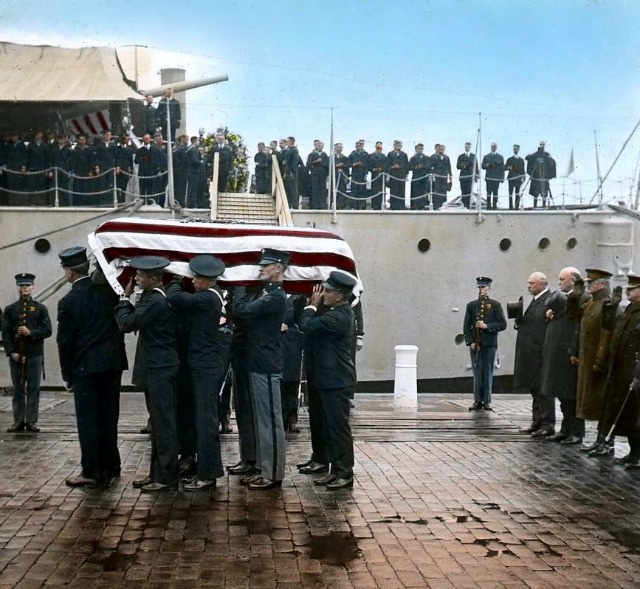

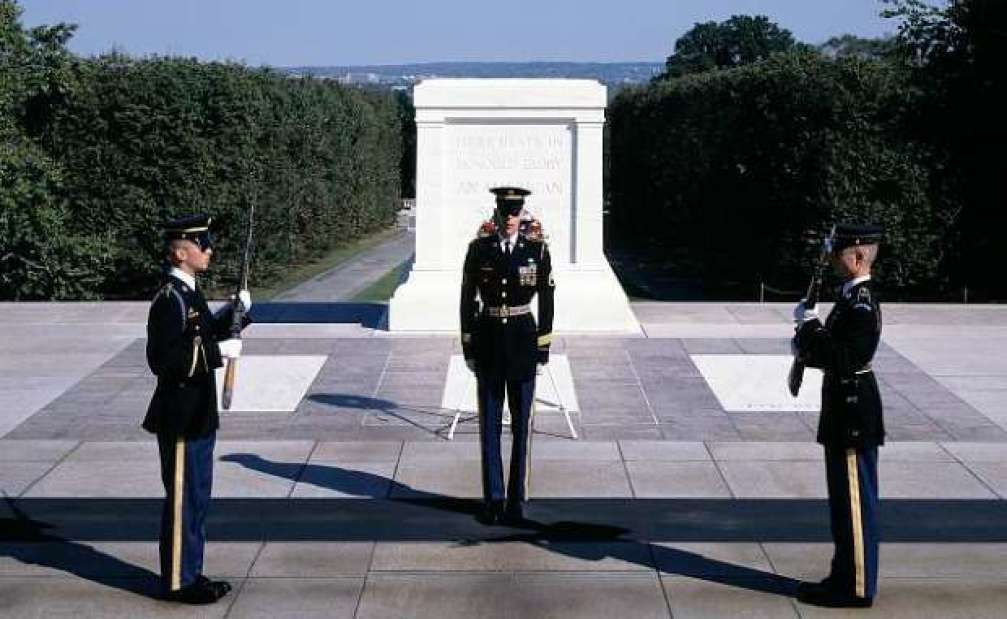
 On November 11, Armistice Day, the casket was removed from the Rotunda of the Capitol and escorted under military guard to the amphitheater at Arlington National Cemetery. In a simple ceremony, President Warren G. Harding bestowed on this unknown soldier the Medal of Honor, and the Distinguished Service Cross.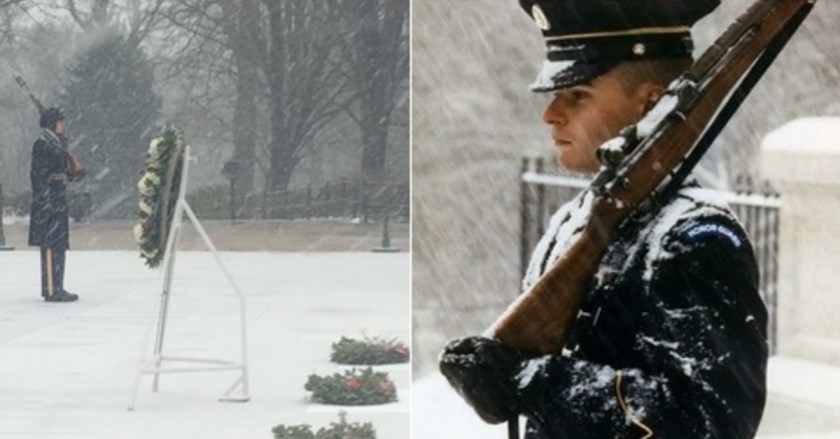


 Many of the secular symbols associated with Easter trace back to the pagan goddess of spring and the dawn, Ēostre or Ostara, from the Old English Ēastre. History fades into mythology in the pre-Christian usage and accounts differ, but this Teutonic deity was frequently depicted with eggs symbolizing the rebirth of Spring. And rabbits.
 The story involves no less a figure than Napoleon Bonaparte. In July 1807, Napoleon had just signed the Treaty of Tilsit, ending the war between the French Empire and Imperial Russia. Looking to celebrate, Napoleon suggested a rabbit hunt, and ordered his Chief of Staff Alexandre Berthier to make it happen.
 The hunt was supposed to start when all those cages opened up but, instead of scattering, a swarm of rabbits thought it was dinner time and pelted straight across the field.
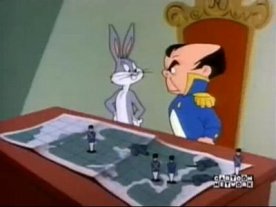 Napoleon retreated to his carriage, but still the attack continued. Historian David Chandler picks up the story. “With a finer understanding of Napoleonic strategy than most of his generals, the rabbit horde divided into two wings and poured around the flanks of the party and headed for the imperial coach.” The tide of bunnies continued. Some even got into the carriage. The assault finally ebbed away, only as the Royal Conveyance, drove out of sight.
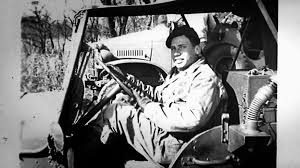
 The boy had a talent for music. He was taught by another kid from Williamsburg, named Buddy Rich. By 14 he was good enough to be playing drums for money.
 At one point, Kaminsky’s unit gathered along a River. The Americans were so close they could hear German soldiers singing a beer hall song, from the other side. Kaminsky grabbed a bullhorn and serenaded the Germans back, crooning out an old tune that Al Jolson used to perform, in black face: “Toot Toot Tootsie, Goodbye”. After he was done, polite applause could be heard, drifting across the river. I can’t imagine many Allied soldiers ever tried singing to their Nazi adversaries, during World War II. The ones who actually pulled it off, must number precisely, one.
 Brooks started doing stand-up, when the regular comedian at one of the clubs was too sick to perform. By ’49 he was “Tummler”, the master entertainer at Grossinger’s, one of the most famous resorts in the Borscht Belt.


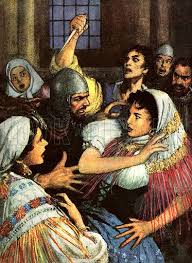 On Easter Monday, March 30, 1282, the Church of the Holy Spirit outside Palermo was just letting out after evening vespers (prayers), when a French soldier thought he’d “inspect” a Sicilian woman for weapons.
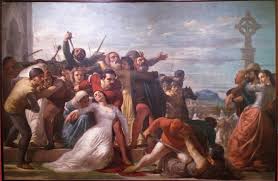 The Italian physician John of Procida had been a loyal subject of Manfred’s, fleeing to Aragon after the Anjou invasion. John proceeded directly to Sicily where he spent several weeks stirring up Sicilian resentment against the French King. Sicily then appealed to the Spanish King to intervene, while John sailed for Constantinople to procure the help of Michael VIII Palaeologus.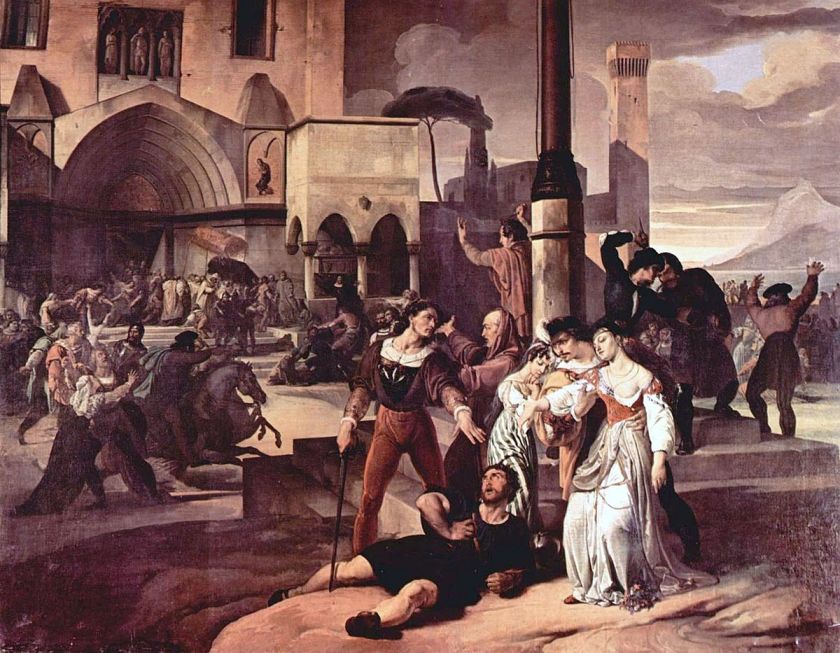


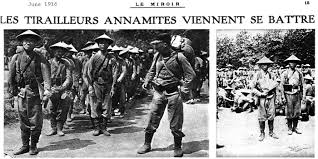 France re-occupied the region following the Japanese defeat ending WWII, but soon faced the same opposition from the army of Ho Chi Minh and Vo Nguyen Giap. What began as a low level rural insurgency, later became a full-scale modern war when Communist China entered the fray in 1949.
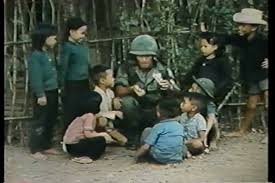 US policy makers feared a “domino” effect, and with good cause. The 15 core nations of the Soviet bloc were soon followed by Eastern Europe, as Poland, Bulgaria, Romania, Hungary and Czechoslovakia fell into the Soviet sphere of influence. Germany was partitioned into Communist and free-enterprise spheres after WWII, followed by China, North Korea and on across Southeast Asia.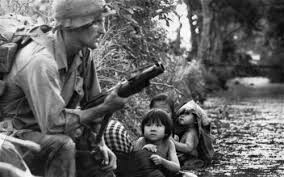
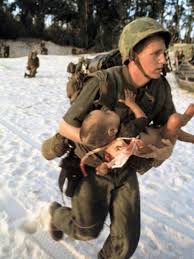 Even then it wasn’t over. Communist forces violated cease-fire agreements before they were signed. Some 7,000 US civilian Department of Defense employees stayed behind to aid South Vietnam in conducting an ongoing and ultimately futile war against communist North Vietnam.
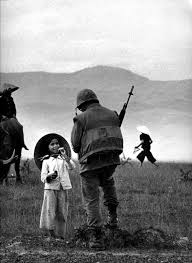 Imagine feeling so desperate, so fearful of this alien ideology invading your country, that you convert all your worldly possessions and those of your family to a single diamond, bite down on that stone so hard it embedded in your shattered teeth, and fled with your family to open ocean in a small boat. All in the faint and desperate hope, of getting out of that place. That is but one story among more than three million “boat people”. Three million from a combined population of 56 million, fleeing the Communist onslaught in hopes of temporary asylum in other countries in Southeast Asia or China.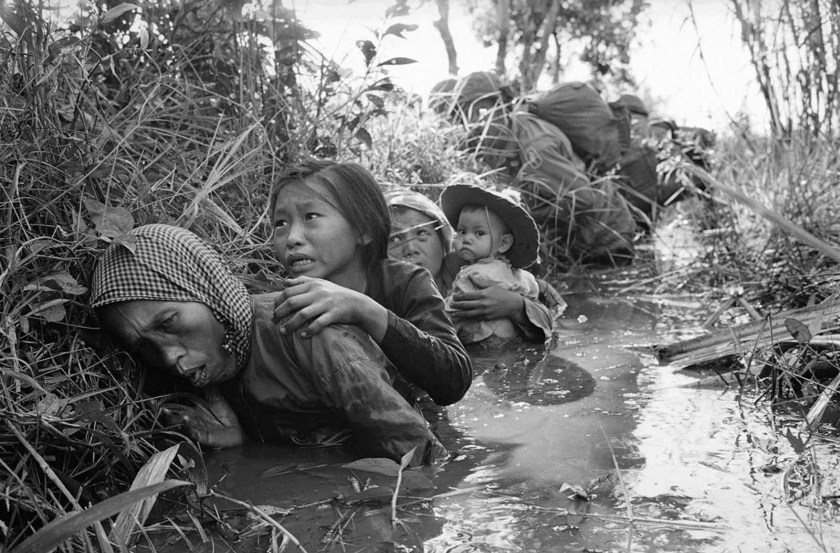


 themselves, and came to feel as I do to this day, that anyone who has a problem with our country’s war policy, needs to take it up with a politician. Not with a member of the Armed Services.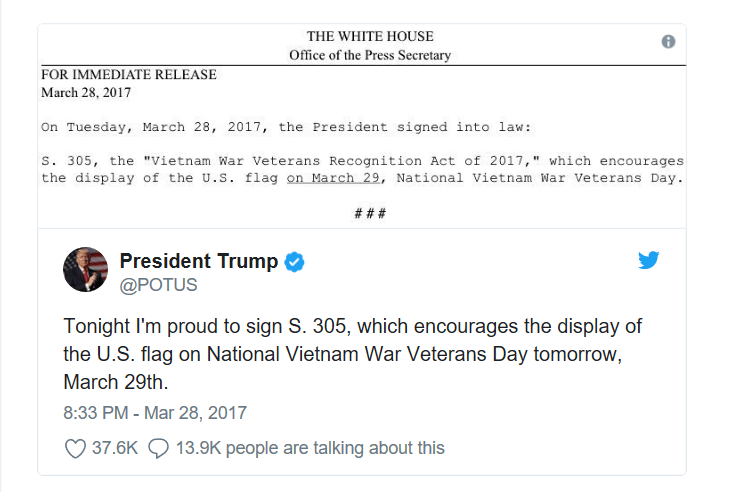


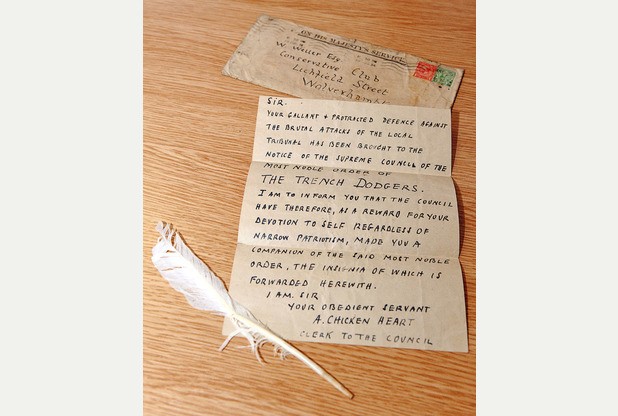

 Seaman George Samson received a white feather on the same day he was awarded the British Commonwealth’s highest military award for gallantry in combat, equivalent to the American Medal of Honor: the Victoria Cross.
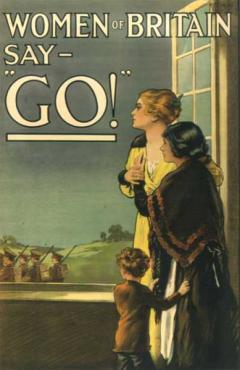 James Lovegrove was sixteen when he received his first white feather: “On my way to work one morning a group of women surrounded me. They started shouting and yelling at me, calling me all sorts of names for not being a soldier! Do you know what they did? They struck a white feather in my coat, meaning I was a coward. Oh, I did feel dreadful, so ashamed.” Lovegrove went straight to the recruiting office, who tried to send him home for being too young and too small: “You see, I was five foot six inches and only about eight and a half stone. This time he made me out to be about six feet tall and twelve stone, at least, that is what he wrote down. All lies of course – but I was in!”.
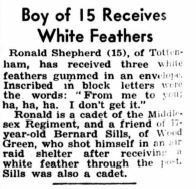 Some of these people were not to be put off. One man was confronted by an angry woman in a London park, who demanded to know why he wasn’t in uniform. “Because I’m German“, he said. She gave him a feather anyway.
 Private Norman Demuth was discharged from the British Army, after being wounded in 1916. A woman on a bus handed Demuth a feather, saying “Here’s a gift for a brave soldier.” Demuth was cooler than I might have been, under the circumstances: “Thank you very much – I wanted one of those.” He used the feather to clean his pipe, handing it back to her with the comment, “You know we didn’t get these in the trenches.”


You must be logged in to post a comment.