

If we talk about RocketMail, we’re usually speaking of one of the early free webmail services, up there with Hotmail and a few others. Not to be confused with the days, when the mail was delivered on Real rockets.
Sort of.
In the early 19th century, expanding western settlement meant that a letter sent to California took one of several routes, to get there. Earlier stagecoach passages were replaced by steamship routes traveling around South America, or by overland transfer 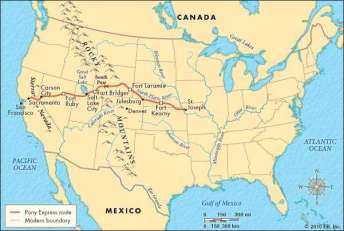 across the Isthmus of Panama or the Isthmus of Tehuantepec, in Mexico. The simmering tensions which would lead the nation to Civil War would prove such a system inadequate, as the rapid transfer of information became ever more important.
The Central Overland California & Pike’s Peak Express Company, better known as the Pony Express, was the short-lived effort to speed up the process. Between April 1860 and October ’61, continuous horse-and-rider relays carried letters the 2,000-mile distance from St. Joseph, Missouri to Sacramento, California.
Individual riders covered 75 – 100 miles at a time, on somewhere between five and ten horses. 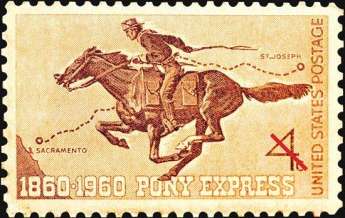 The Pony Express compressed the standard 24-day schedule for overland delivery to ten days, but the system was a financial disaster. Little more than an expensive stopgap before the first transcontinental telegraph system.
Throughout the “Reconstruction” era and on toward the turn of the century, individuals living in more remote precincts had to pick up the mail at sometimes-distant post offices, or pay private carriers.
The Post Office began experiments with Rural Free Delivery (RFD) as early as 1890, but the system was slow to catch on. Georgia Congressman Thomas Watson pushed RFD legislation through the Congress in 1893, making the practice mandatory. Implementation was slow and RFD wouldn’t be fully adopted until 1902, but elected officials were quick to implement this new way to reach out to voters.
 The first mail carried through the air arrived by hot air balloon on January 7, 1785, a letter written by Loyalist William Franklin to his son William Temple Franklin, at that time serving a diplomatic role in Paris with his grandfather, the United States’ one-time and first postmaster, Benjamin Franklin.
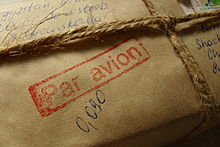
The first (unofficial) mail delivery by aircraft took place on February 17, 1911, when Fred Wiseman flew three letters between Petaluma and Santa Rosa, California. Comprehensive airmail rules were adopted by the Universal Postal Union in 1929. Since then, airmail was often marked “Par avion”: “By airplane”.
Section 92 of the 1873 Postal Laws and Regulations book states that carriers would deliver “as frequently as the public convenience may require.” What exactly constitutes “Public Convenience” was open to interpretation but, in some cities, business districts received between three and five daily deliveries and twice a day to residential areas.
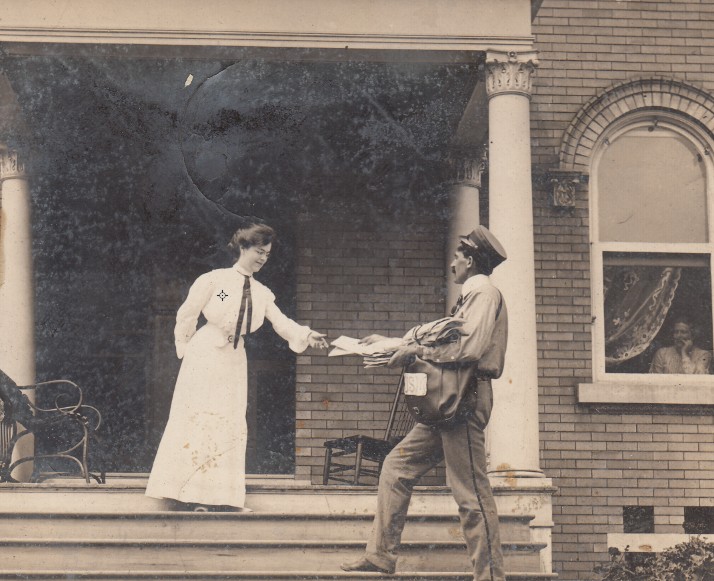
In 1950, the Postmaster General ordered residential deliveries reduced to once a day and, by the early 1990s, businesses had learned to live with the same. There was little to be improved upon, in this happy state of affairs. Unless of course you’re receiving your mail, by rocket.
The concept is older than you might think. German novelist Heinrich von Kleist (1777 – 1811) was the first to bring up the idea in 1810, calculating that a network of batteries could relay a letter from Berlin to Breslau, a distance of 180 miles, in half a day. Such a system was attempted using congreve rockets in 19th century Tonga, but proved unreliable. By 1929, American ambassador to Germany Jacob Gould Schurman was discussing the finer points of transatlantic rocket mail delivery, with a German reporter.
A 1936 experiment with rocket-powered mail delivery between New York and New Jersey ended with 50-lbs of mail, stranded on the ice of frozen Greenwood Lake.
From India to the United Kingdom, the 1930s were a time for experimentation with rocket-propelled mail delivery. 1,200 letters were packed into a rocket fuselage in July 1934, and fired between Harris Island in the Hebrides and Scarp island in Scotland, a distance of some 1,600 meters (1 mile). The first rocket blew up so they gathered all the letters they could find, and packed them into a second. That one exploded, too.
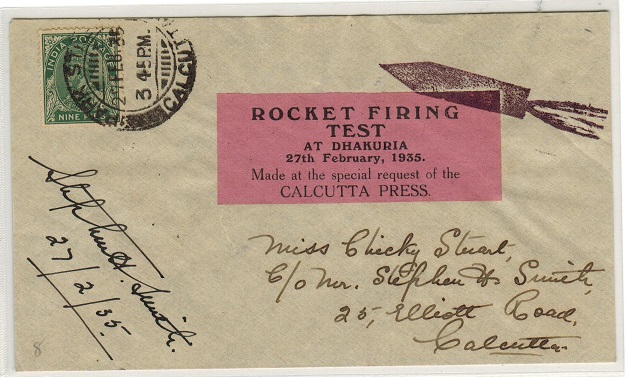
As a piece of technology, the rockets’ origins are both simple and ancient. A rocket, quite simply, is a vessel, powered by stored propellant such as gunpowder, kerosene, or liquid hydrogen & oxygen. A Missile is a vehicle propelled by rockets, whose purpose it is to deliver a payload.
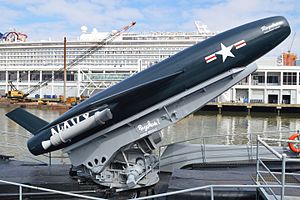
In 1959, the diesel-electric submarine USS Barbero was officially designated a branch location of the United States Post Office, for purposes of “delivering” mail to Naval Station Mayport, in Jacksonville, Florida. The nuclear warhead was removed from a Regulus Cruise missile and two Post Office-approved containers installed. 3,000 letters and postcards were inserted, addressed to President Eisenhower, Postmaster General Arthur Summerfield, and other dignitaries.
On June 8, the 13,685-pound, 32-foot cruise missile launched from the decks of the Barbero, two Aerojet-General 33,000 lbf solid-propellant boosters giving way to the turbojet engine which would guide the missile onto its target. Twenty-two minutes later the missile struck, the Regulus opened and the mail forwarded to the Jacksonville post office for sorting and routing.

Postmaster Summerfield was effusive, proclaiming the “historic significance to the peoples of the entire world”. “Before man reaches the moon”, he exclaimed, “mail will be delivered within hours from New York to California, to Britain, to India or Australia by guided missiles. We stand on the threshold of rocket mail.”

Arthur Summerfield’s golden future of missile mail, was never meant to be. Despite the postmaster’s enthusiasm, the system was Way too expensive. The Defense Department saw the first and only mail delivery by intercontinental ballistic missile in history, as more of a demonstration of the weapon system’s capabilities. In any case, aircraft were delivering airmail by this time, in less than a day.
 The Regulus was superseded by the Polaris missile in 1964, the year in which Barbero ended her nuclear strategic deterrent patrols. She was struck from the Naval Registry that July, and suffered the humiliating fate of the target ship, sunk off the coast of Pearl Harbor on October 7 by the nuclear submarine USS Swordfish.
So it is that a United States mail container may be discovered at the Submarine Force Museum in Groton Connecticut, fired from a Balao-class sub, fifty-nine years ago, today.
If you enjoyed this “Today in History”, please feel free to re-blog, “like” & share on social media, so that others may find and enjoy it as well. Please click the “follow” button on the right, to receive email updates on new articles. Thank you for your interest, in the history we all share.


 Radios of the age didn’t work across the Rockies, and the mail was erratic. The only passenger service available was run by the Yukon Southern airline, a run which locals called the “Yukon Seldom”. For construction battalions at Dawson Creek, Delta Junction and Whitehorse, it was faster to talk to each other through military officials in Washington, DC.
 Tent pegs were useless in the permafrost, while the body heat of sleeping soldiers meant waking up in mud. Partially thawed lakes meant that supply planes could use neither pontoon nor ski, as Black flies swarmed the troops by day. Hungry bears raided camps at night, looking for food.

 NPR ran an interview about this story back in the eighties, in which an Inupiaq elder was recounting his memories. He had grown up in a world as it existed for hundreds of years, without so much as an idea of internal combustion. He spoke of the day that he first heard the sound of an engine, and went out to see a giant bulldozer making its way over the permafrost. The bulldozer was being driven by a black operator, probably one of the 97th Engineers Battalion soldiers. The old man’s comment, as best I can remember it, was a classic. “It turned out”, he said, “that the first white person I ever saw, was a black man”.




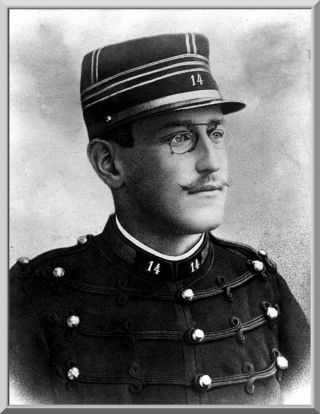 In the late 19th century, Europe was embarked on yet another of its depressingly regular paroxysms of anti-Semitism, when a French Captain of Jewish Alsatian extraction by the name of Alfred Dreyfus was arrested, for selling state secrets to Imperial Germany.
 Chief Inspector Lieutenant-Colonel Charles Armand Auguste Ferdinand Mercier du Paty de Clam, himself no handwriting expert, agreed with Bertillon. With no file to go on and despite the feebleness of the evidence, de Clam summoned Dreyfus for interrogation on October 13, 1894.
 Most of the political and military establishment lined up against Dreyfus. The public outcry became furious in January 1898 when author Émile Zola published a bitter denunciation in an open letter to the Paris press, entitled “J’accuse” (I Blame).


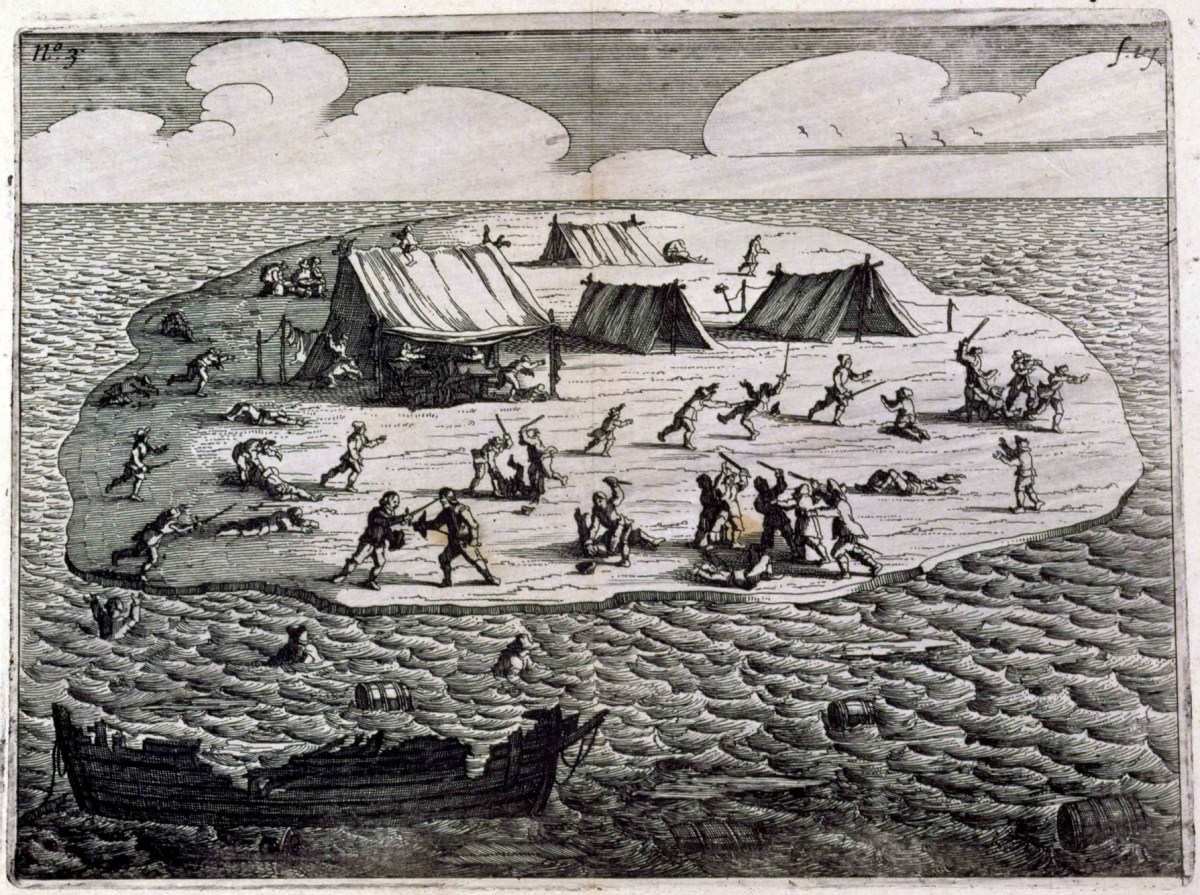


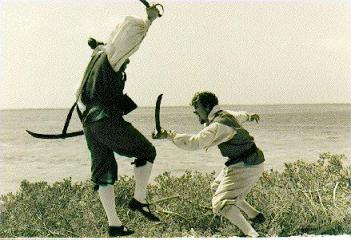 Perhaps the man was ill at the time but, be that as it may, the die was cast. The conspirators now needed only the right set of circumstances, to put their plans in motion.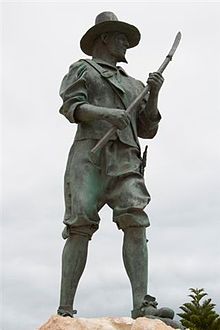


 Lay became a lumberjack, a jewelry salesman, and a peanut salesman, before going to work for the Atlanta based Barrett Potato Chip Company. He traveled the Southeast during the Great Depression in his Model A Ford, selling chips to grocery stores, gas stations and soda shops. When the company’s owner died, Lay raised $60,000 and bought the company’s plants in Atlanta and Memphis.
 Lay began buying up small regional competitors at the same time that another company specializing in corn chips, was doing the same. “Frito”, the Spanish word for “fried”, merged with Lay in 1961 to become – you got it – Frito-Lay. By 1965, Lay’s was the #1 potato chip brand sold in every state.
 The biggest threat that Frito-Lay would ever experience came from the Beer giant Anheuser-Busch, when the company introduced their “Eagle” line of salty snacks in the 1970s. It made perfect sense at the time, a marketing and distribution giant expanding into such a complementary product category, what could go wrong? Frito-Lay profits dropped by 16% by 1991 and PepsiCo laid off 1,800 employees, but Eagle Snacks never turned a profit in 16 years. Anheuser-Busch put the company up for sale in 1995.
 Tom Peters wrote about Frito-Lay in his 1982 book “In Search of Excellence”. The company will spend $150 to make a $30 delivery if that’s what they need to do. Their customer is counting on them. While a transaction like that doesn’t make economic sense, the company prides itself on a 99½% on-time delivery record. Frito-Lay has the highest profit margins in the industry and a 60% market share in an “undifferentiated commodity”, in which their closest competitor has 7%.


 Indigenous nations of the time divided more along ethnic and linguistic rather than political lines, so there was no monolithic policy among the tribes. At least one British fort was taken with profuse apologies by the Indians, who explained that it was the other nations making them do it.


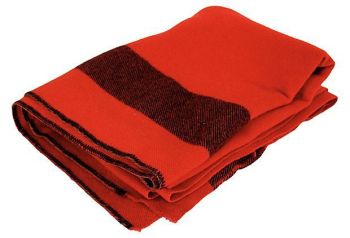 Some sixty to eighty Ohio valley Indians died of the disease following the Fort Pitt episode, but the outbreak appears isolated. Meanwhile, Indian warriors had looted clothing from some 2,000 outlying settlers they had killed or abducted.

 The British Royal Proclamation of October 7, 1763, drew a line between the British colonies and Indian lands, creating a vast Indian Reserve stretching from the Appalachians to the Mississippi River and from Florida to Newfoundland. For the Indian Nations, this was the first time that a multi-tribal effort had been launched against British expansion, the first time such an effort had not ended in defeat.

 It may be hard to imagine but, Canis lupus, the wolf, is the ancestor of the modern dog, Canis familiaris. Every one of them, from Newfoundlands to Chihuahuas.
 Sus scrofa (the pig) was domesticated around 6000 BC throughout the Middle East and China. Pigs were originally used as draft animals. There are stone engravings depicting teams of hogs hauling war chariots. I wonder what that sounded like.
 Early camelids spread across the Bering land bridge, moving the opposite direction from the Asian immigration to America, surviving in the Old World and eventually becoming domesticated and spreading globally by humans. The first “camelids” became domesticated about 4,500 years ago in Peru: The “New World Camels” the Llama and the Alpaca, and the “South American Camels”, the Guanaco and the Vicuña.


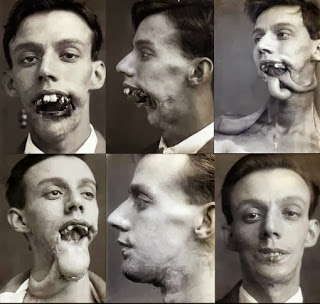
 “Plastic” Surgery, the term comes to us from the Greek Plastikos and first used by the 18th century French surgeon Pierre Desault, has been with us longer than you might expect. Evidence exists of Hindu surgeons performing primitive ‘nose jobs’, as early as BC800-600. The Renaissance-era surgeon Gaspare Tagliacozzi (1545-1599) developed new methods of reconstruction, using the patient’s own arm skin to replace noses slashed off in swordplay.
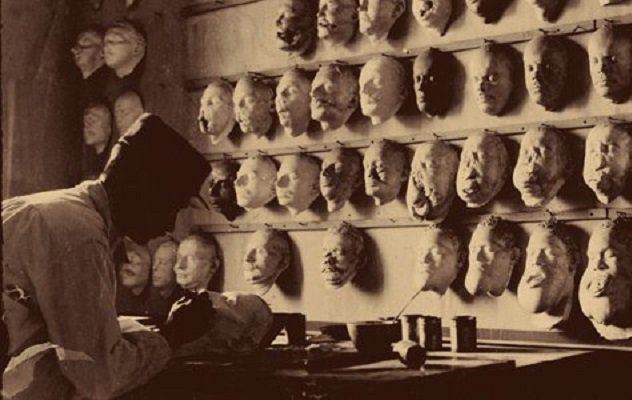 Ladd’s prostheses were uncomfortable to wear, but her services earned her the Légion d’Honneur Croix de Chevalier and the Serbian Order of Saint Sava.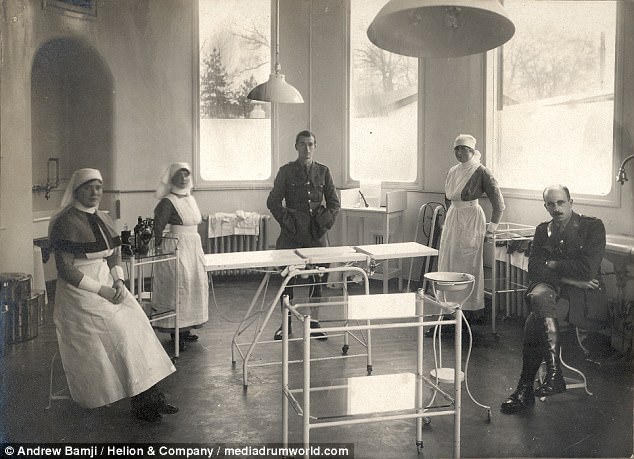


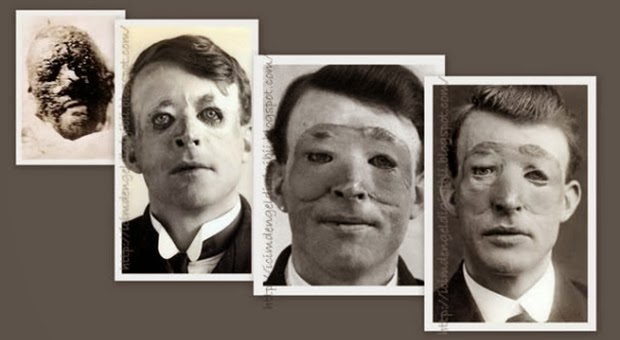
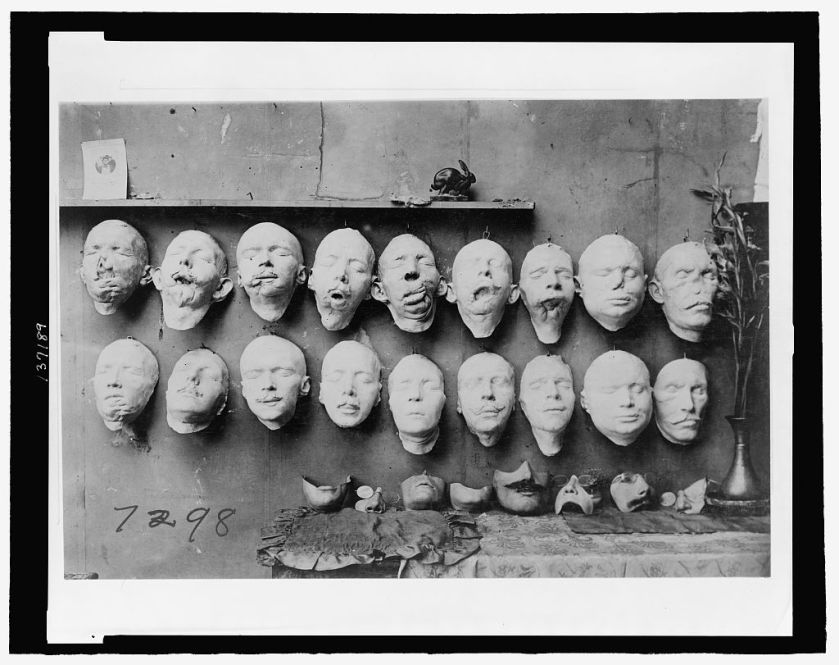
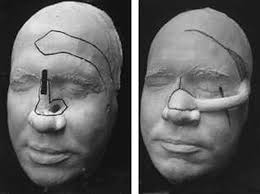 Dr. Gillies & Co. developed surgical methods in which rib cartilage is first implanted in foreheads, and then swung down to form the foundational structure of a new nose.


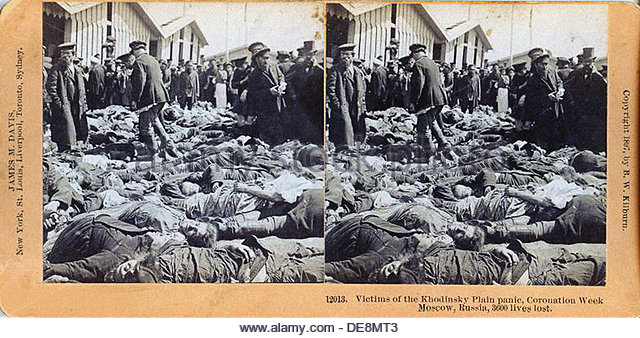
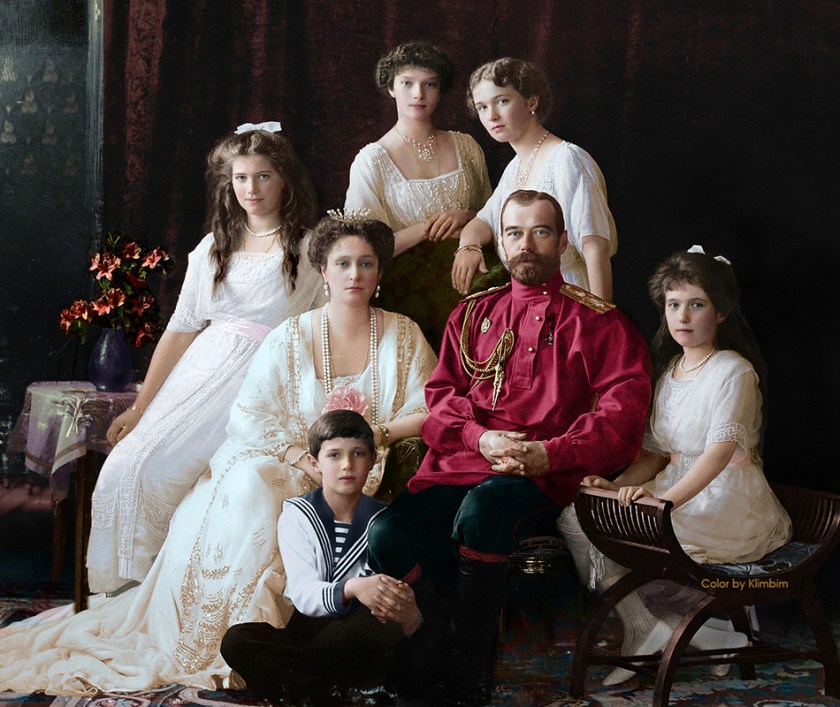
 It was customary that gifts be given to the guests of such a celebration. There were commemorative scarves and ornately decorated porcelain cups, bearing the ciphers of Nicholas and Alexandra opposite the double-headed symbol of the Imperial dynasty, the Romanov eagle.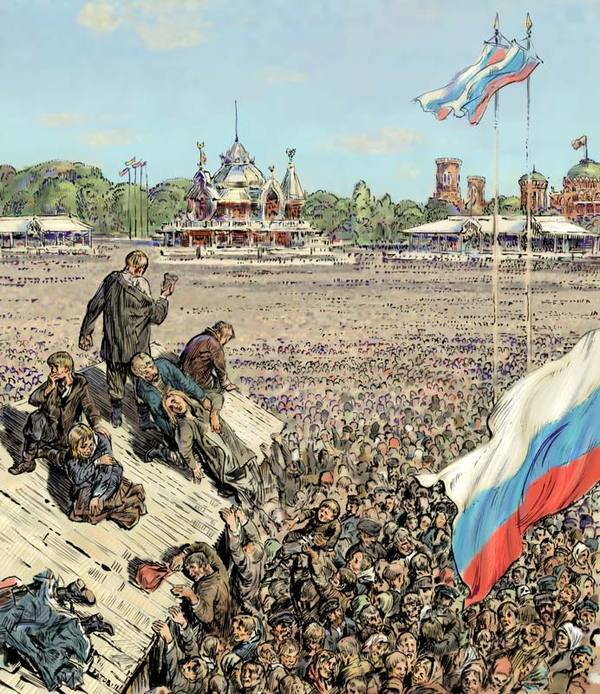
 podium was pocked and lined with trenches and pits.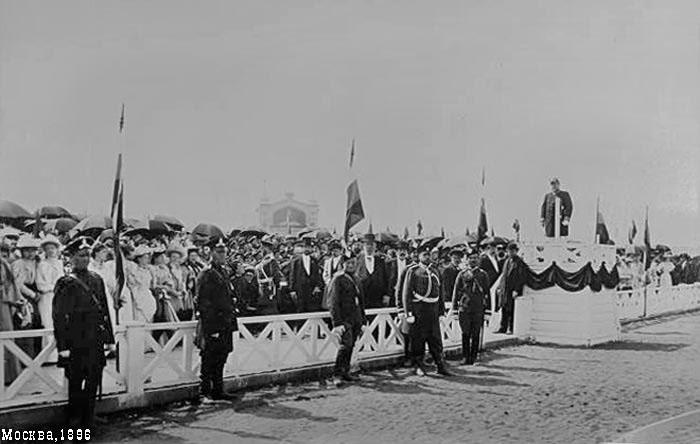


 Historical Easter Eggs - Today in History
You must be logged in to post a comment.