
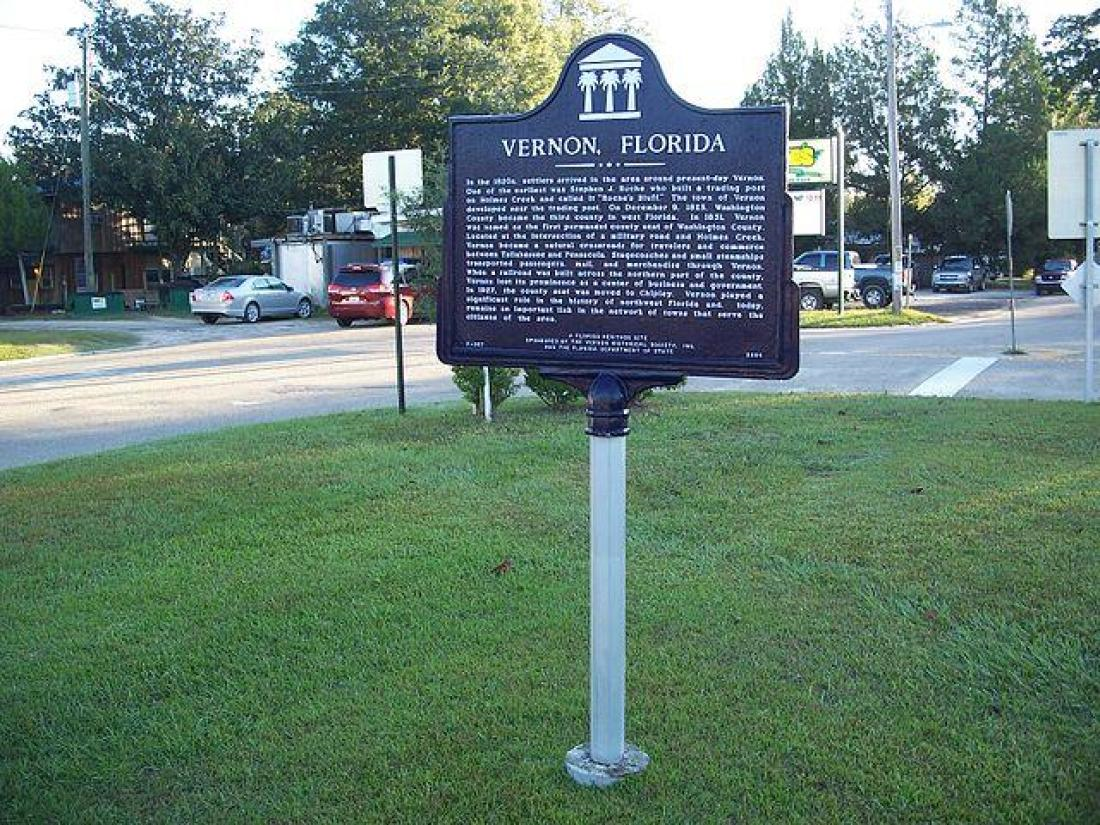
Midway between the Red Hills of Alabama and the Emerald Coast of Florida, the pioneer town of Vernon was once home to a major Indian settlement. Named for the Virginia home of the “Father of our Country”, the small town is located at the center of Washington County in the Florida panhandle.
Now a destination for canoe and kayak enthusiasts, nearby Holmes Creek was once a shipping route to Bonifay and other neighboring towns. The town was reasonably prosperous once, but then the steamboats stopped running, and the sawmill closed. The young ones went to college and never came back, or just up & moved away.
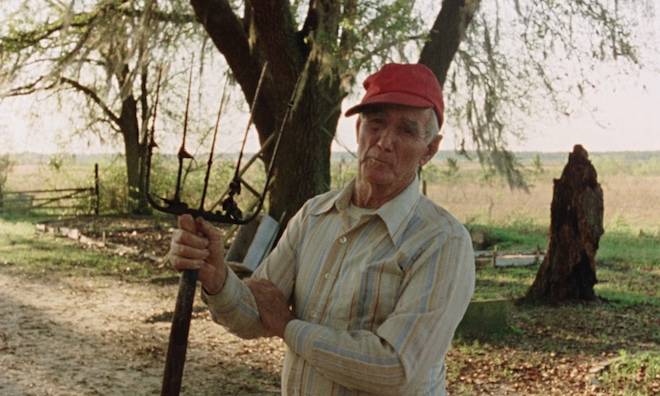
Forty years ago, documentary filmmaker Erroll Morris went to Vernon to make a picture, about insurance fraud in the Florida panhandle.
The film was released on this day in 1981, entitled “Vernon Florida”. Insurance companies called the place “Nub City”. That was supposed to be the name of the film. Except, folks who blow their own limbs off for insurance money, don’t appreciate being asked about it. Particularly not on camera.
 Umm. What?!
Morris described the problem, in a later interview:
“I knocked on the door of a double-amputee, who was missing an arm and a leg on opposite sides of the body—the preferred technique, so that you could use a crutch. His buff son-in-law, a Marine, beat me up. I decided whatever I was doing was really, really stupid and dangerous”.
Turns out that, in the late fifties and early sixties, two-thirds of all loss-of-limb accident claims to the American insurance industry, came from the Florida panhandle. At the center of all that, was a little town of 700. Vernon, Florida.
The founding member of the “nub club” may have joined by accident. Or maybe he looked at his hand at a time of faltering small-town economics, and wondered. How much will that thing earn, compared with an insurance policy. By the mid-sixties, no fewer than fifty Vernon residents had lost a hand or foot or both, in hunting or farming “accidents”.

Some would saw or hack off body parts, but most preferred the simplicity, of a shotgun blast. Insurance policies were often taken out in the days or even hours, before dismemberment.
You don’t know whether to laugh or cry, for people who would do such a thing. One guy maimed his foot while trying to protect his chickens. Another tried to shoot a hawk and took off his own hand. I’m still trying to figure out how that worked. One farmer “mistook” his own foot for a squirrel and, you guessed it. Some “accidents” involved both firearms and motor vehicles. One mishap involved a tractor and a loaded rifle. That one took off two body parts.
Many took out multiple policies. One guy bought so many that the premiums came to more than his income. Thomas Lake of the St. Petersburg Times, tells the story:
“There was another man who took out insurance with 28 or 38 companies,” said Murray Armstrong, an insurance official for Liberty National. “He was a farmer and ordinarily drove around the farm in his stick shift pickup. This day – the day of the accident – he drove his wife’s automatic transmission car and he lost his left foot. If he’d been driving his pickup, he’d have had to use that foot for the clutch. He also had a tourniquet in his pocket. We asked why he had it and he said, ‘Snakes. In case of snake bite.’ He’d taken out so much insurance he was paying premiums that cost more than his income. He wasn’t poor, either. Middle class. He collected more than $1 million from all the companies. It was hard to make a jury believe a man would shoot off his foot.”

Insurance companies were quick to get wise and took several claimants, to court. Juries refused to believe that anyone would do such a thing. Not one member of the nub club was ever convicted, of fraud. Insurance companies sent an investigator named John Healy to Vernon, to look around. The report he sent back came as a surprise, to precisely no one: “To sit in your car on a sweltering summer evening on the main street of Nub City,” he wrote, “watching anywhere from eight to a dozen cripples walking along the street, gives the place a ghoulish, eerie atmosphere.”
Skyrocketing premiums failed to put an end to the practice of self-mutilation. Eventually, companies just stopped writing such policies in the panhandle, and the decade-long string of “misfortunes”, came to an end.

Twenty years later, a blurb in the New Yorker sent film maker Errol Morris south to Vernon, to shoot a film about insurance fraud. What he ended up with, was a disjointed narrative tale, of small town eccentrics. Apparently, death threats did a lot to effect the film maker’s change in direction.

 Selim’s son and successor would become the tenth and longest-ruling Ottoman Sultan in 1520, until his death in 1566. He was “Süleiman the Magnificent”, a man who, at his height, ruled over some fifteen to twenty million, at a time when the entire world contained fewer than 500 million


 Yet, the suffering inflicted by the curse of the Black Sox and that of the Bambino, pales in comparison with the 108-year drought afflicting the Chicago Cubs since back-to-back championships in 1907/1908. And they say it’s the fault of a Billy goat.
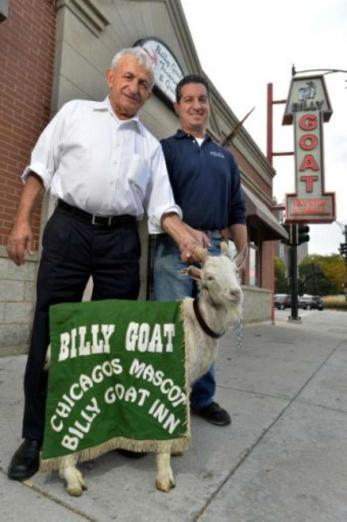 Billy Sianis himself is gone now, but they brought his nephew Sam onto the field with a goat in 1984, to help break the curse. They did it again in 1989, 1994 and 1998, and always the same result.
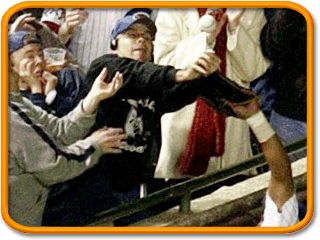 For fourteen years, Chicago mothers frightened wayward children into behaving, with the name of Steve Bartman.
 The cookies pictured above were baked in 2016, and that might’ve finally done it. That’s right. The Mother of all Droughts came to a halt in extra innings of game seven, following a 17-minute rain delay. At long last, Steve Bartman could emerge from Chicago’s most unforgiving doghouse, his way now lit by his own World Series ring. The ghost of Billy Sianis’ goat, may finally rest in peace.

 Elsbeth had to flee with her infant son in the harsh winter of 1945, as the oncoming Soviet Red Army destroyed all in its path. The two would escape the Iron Curtain once again in 1948, this time in a dangerous nighttime dash which the then-four year old remembers, to this day.
 By this time, Joachim Krauledat had taken to calling himself John Kay. The band added a couple new members in 1967, changing their name to a character from a Herman Hesse novel. “Steppenwolf”.
 Steppenwolf gave us 22 albums, and we all know them in one way or another. Yet, the lead singer’s escape from the horrors of the Iron Curtain, is all but unknown. That, as Paul Harvey used to say, is the Rest of the Story.
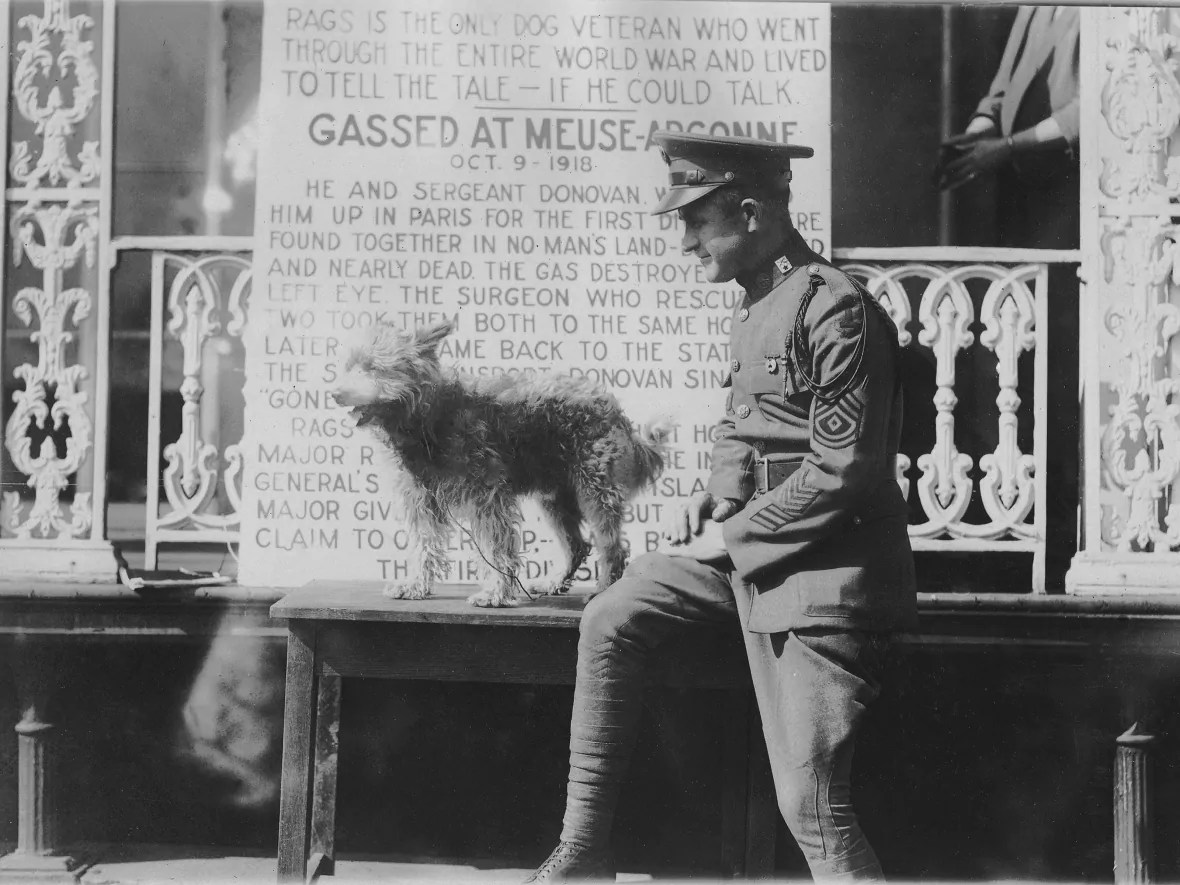


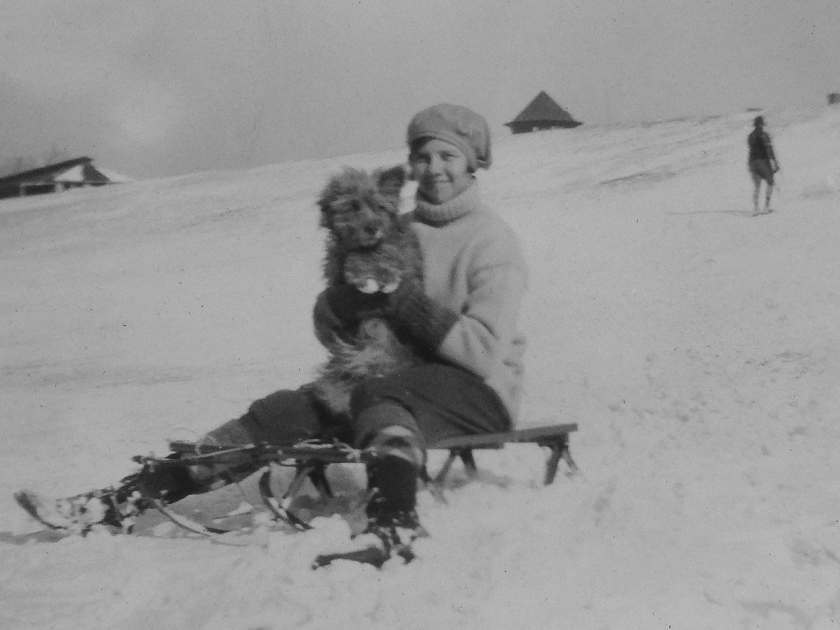


 The European allies and Imperial Germany had about 20,000 dogs working a variety of jobs in WWI. Though the United States didn’t have an official “War Dog” program in those days, a Staffordshire Terrier mix called “Sgt. Stubby” was smuggled “over there” with an AEF unit training out of New Haven, Connecticut.


 Smoky toured all over the world after the war, appearing in over 42 television programs and licking faces & performing tricks for thousands at veteran’s hospitals. In June 1945, Smoky toured the 120th General Hospital in Manila, visiting with wounded GIs from the Battle of Luzon. She’s been called “the first published post-traumatic stress canine”, and credited with expanding interest in what had hitherto been an obscure breed.
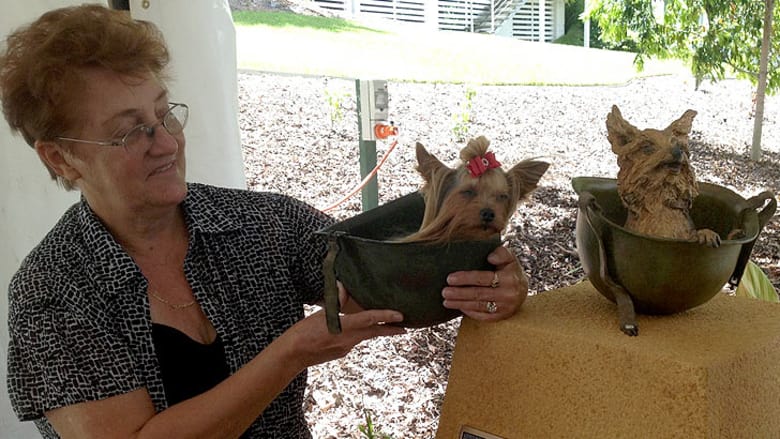 A memorial statue was unveiled on December 12 of that year, at the Australian War Memorial at the Queensland Wacol Animal Care Campus in Brisbane.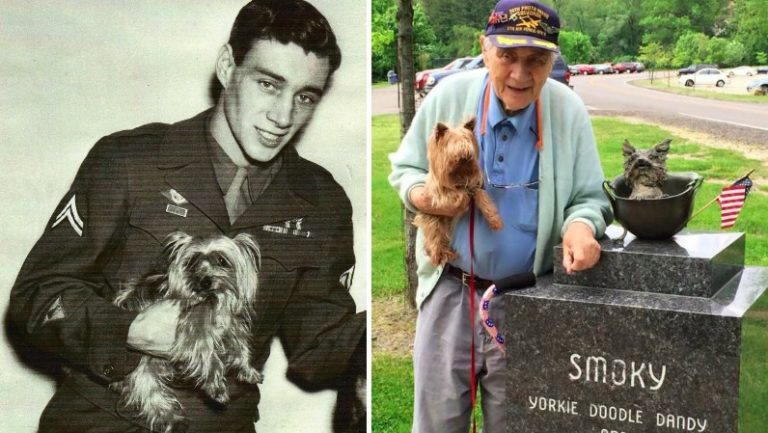





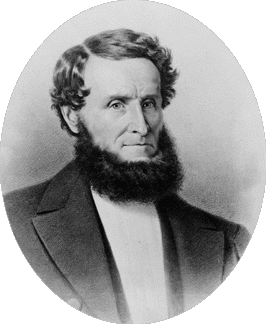 In 1825, Lick left Buenos Aires, for a year-long tour of Europe. This was the time of the Brazilian War for Independence, and Portuguese authorities captured his ship on its return.
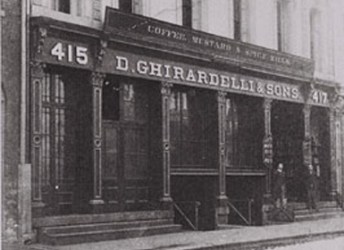 Gold was discovered at Sutter’s Mill, shortly after Lick’s arrival. He caught a little of the gold fever himself, but soon learned that he could make more money buying and selling land, rather than digging holes in it.










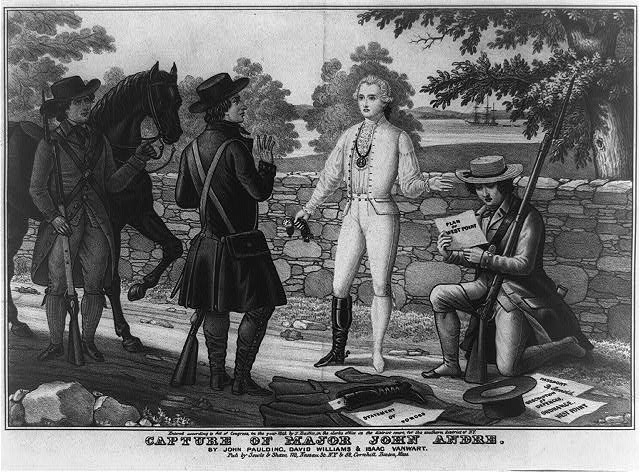
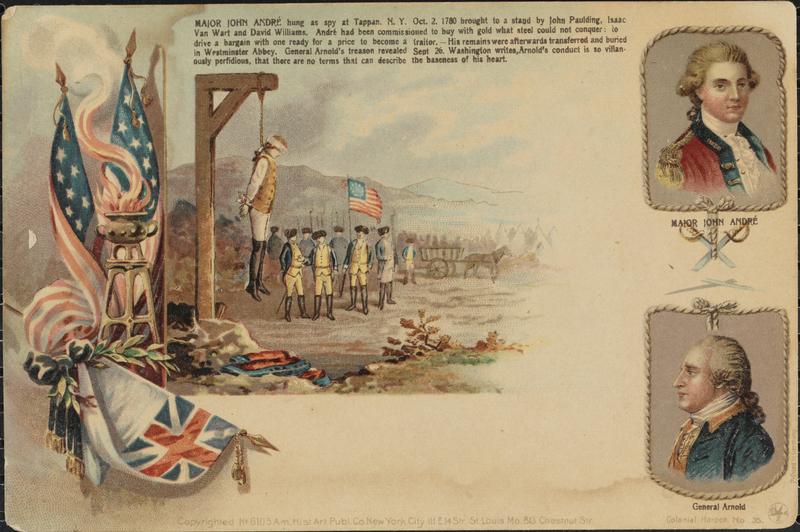
 Long afterward, in the early 20th century, the descendants of Major-General Lord Charles Grey returned the painting to the United States, indicating that André had probably looted Franklin’s home under orders from General Grey, himself. A Gentleman always, it would explain the man’s inability to defend his own actions. Today, that oil portrait of Benjamin Franklin hangs in the White House.
 Historical Easter Eggs - Today in History
You must be logged in to post a comment.