“Politics: A strife of interests masquerading as a contest of principles. The conduct of public affairs for private advantage”. – Ambrose Bierce
On this day in 1692, three residents of Salem Village in the Massachusetts Bay Colony were charged with the illegal practice of witchcraft. Twelve-year-old Abigail Williams and ten-year-old Elizabeth Parris were ill with some unknown sickness, and accused the trio of biting and pinching the girls, and poking them with knitting needles.
Massachusetts Governor William Phips established “Courts of Oyer and Terminer” (to hear and determine) to hear the charges. Sarah Goode, Sarah Osborne, and an Indian slave from Barbados named Tituba, being the first so accused. Five men and fourteen women were hanged as witches over the following seven months. As many as 17 more died in the tiny, freezing stone compartments which then passed for jail cells.
H/T The Crucible. Accused
According to the law of the time, the accused were required to enter a plea. Guilty or not guilty. Without such a plea, there could be no trial. On March 19, 72-year-old Martha Corey was arrested for witchcraft. Martha’s husband, 81-year-old Giles Cory, was so caught up in the hysteria as to join in the accusations against his wife. Until he himself was accused.
Martha Corey: “I, sir, am innocent to a witch. I know not what a witch is”. Judge Hathorne: “If you know not what a witch is, how do you know you are not one?” ~ The Crucible
Corey refused to plead, so he was subjected to the “peine forte et dure” (French: “hard and forceful punishment”). Stripped naked and placed under a board, Corey was tied spread-eagle on is back, his arms and legs secured, by cords. Stones of increasing size were heaped on top, to extract his plea. This torture went on for two days, the man given nothing but the “worst bread” on day one, and “standing” water, the following day.
Knowing his possessions would be forfeit to his tormentor in the event of conviction, Corey’s only response was “more weight”.
Giles Corey’s persecutor was Essex County High Sheriff George Corwin, he who signed warrants for the arrest and execution of those condemned of witchcraft. It was he who (conveniently) received the belongings, of those so condemned. In the end, Corwin himself was standing atop the pile of stones, shoving Corey’s tongue back into his mouth, with a cane.
The end came on Monday September 19, around noon. One witness remembered the old farmer’s last words: “Damn you. I curse you and Salem!” Martha Corey was hanged, three days later.
“Politics: A strife of interests masquerading as a contest of principles. The conduct of public affairs for private advantage”. – Ambrose Bierce
Even then, George Corwin came after Corey’s adult children, to extort money from the Corey farm. What a guy. In 1710, Corey’s daughter Elizabeth and her husband John Moulton filed a lawsuit, seeking damages. Elizabeth’s statement to the court said, “After our father’s death the sheriff threatened to seize our father’s estate and for fear we complied with him and paid him eleven pound six shillings in money.”
The hideous nature of Giles Corey’s death did much to cool the ardor, for the persecution of witches. Governor Phips dissolved the Courts of Oyer and Terminer a month later, around the time his own wife was accused of witchcraft.
Afterward
This George Corwin character must have been some 14-carat SOB but, he would get what he had coming, in the end. Four years after the witchcraft hysteria of 1692, the High Sheriff died of an apparent heart attack, at the age of 30. Salem resident Phillip English was accused in the earlier madness, when Corwin seized his property. English put a lien on the corpse and delayed its burial, until he could be reimbursed. The lien was eventually satisfied, and the debt paid back. How long George Corwin was left to rot, is unknown to this writer.
Sometime in the 1830s, the writer Nathaniel Hawthorne added the “W” to his name, distancing himself from his twice-great grandfather and Salem witch trial judge, John Hathorne. It didn’t do a lick of good for the poor collection of oddballs and outcasts who would not survive the witchcraft hysteria of 1692.
For three hundred years, nineteen innocents were believed to have been hanged on Gallows Hill. You can visit Gallows Hill Park if you like, in modern-day Salem. Today it’s more of a skate park, than historic site. In 2016, the Gallows Hill Projectof Salem State University determined the place to have been Proctor’s Ledge, not Gallows Hill. It’s an interesting story in itself, for those inclined to read more. Salem State’s story, is linked above.
If you enjoyed this “Today in History”, please feel free to re-blog, “like” & share on social media, so that others may find and enjoy it as well. Please click the “follow” button on the right, to receive email updates on new articles. Thank you for your interest, in the history we all share.
On this day in 2014, the Stockholm offices of the Swedish Public Employment Service erupted in chaos, as 61,000 people showed up for a job interview. The email was supposed to go out to a thousand select individuals. Instead, tens of thousands went out to registered job seekers, demonstrating the truth of the old adage: To err is human. To Really screw up, requires a Government.
In 1999, the NASA space probe Mars Climate Orbiter burned up in the Martian atmosphere and with it, three hundred million taxpayer dollars. Post-mortem examination revealed that NASA calculations used metric newton-seconds as a unit of measure, while prime contractor Lockheed Martin used pound-seconds. Oops.
That’s up there with the multi-billion dollar Hubble Space Telescope, needing “glasses”.
Images taken before and after “corrective lenses” were installed on the multi-billion dollar Hubble Space Telescope
Of all the powers citizens delegate to Government, few can be as fearsome as the power of arrest, the power to take our freedom, the power to take our lives. Such awesome power must be wielded by the wisest of heads and subjected to the strictest of checks and balances, but such is not always the case.
According to the government’s own website, vault.fbi.gov:
“The FBI began COINTELPRO—short for Counterintelligence Program—in 1956 to disrupt the activities of the Communist Party of the United States. In the 1960s, it was expanded to include a number of other domestic groups, such as the Ku Klux Klan, the Socialist Workers Party, and the Black Panther Party. All COINTELPRO operations were ended in 1971. Although limited in scope (about two-tenths of one percent of the FBI’s workload over a 15-year period), COINTELPRO was later rightfully criticized by Congress and the American people for abridging first amendment rights and for other reasons”.
FBI Director J. Edgar Hoover
“Rightfully criticized”? I should say so. COINTELPRO tactics included smearing individuals and groups using forged documents and false reports, planted in the media. There were instances of harassment, wrongful imprisonment and illegal violence, up to and including assassination. Director J. Edgar Hoover’s FBI harassed witnesses, withheld evidence, and publicly humiliated or falsely charged targets, with crimes. Washington Post journalist Carl Rowan insists the FBI sent at least one anonymous letter to Reverend Martin Luther King, Jr., urging the man to commit suicide.
The program was exposed when an activist group burgled an FBI field office in Media, Pennsylvania, stealing reams of information which were then exposed to news outlets. It was March 1971, the “fight of the century” between Joe Frazier and Muhammad Ali providing cover for the burglary. The irony is rich. Ali himself was a COINTELPRO target, based on associations with the Nation of Islam, and the anti-Vietnam war movement.
It was the perfect crime. No one was ever caught.
Decades later, long after the statute of limitations had run its course, Keith Forsyth identified himself as one of eight burglars. Knowing the office to be locked at night, one of the crooks wrote a polite note asking the door be left unlocked, and pinned it to the door.
It pays be nice I guess. The last to leave the office, courteously obliged. One burglar was so delighted, he proposed that a polite thank you note, be left on the door. Lucky for him, cooler heads prevailed.
Speaking of savvy Government personnel. On this day in 2014, the Stockholm offices of the Swedish Public Employment Service erupted in chaos, as 61,000 people showed up for a job interview. The email was supposed to go out to a thousand select individuals. Instead, tens of thousands went out to registered job seekers, demonstrating the truth of the old adage: To err is human. To Really screw up, requires a Government.
If you enjoyed this “Today in History”, please feel free to re-blog, “like” & share on social media, so that others may find and enjoy it as well. Please click the “follow” button on the right, to receive email updates on new articles. Thank you for your interest, in the history we all share.
Explanations have been offered from the mundane to the supernatural, but none was ever proven.
In the sport of mountaineering, climbers assign a grade to a boulder or climbing route, describing the degree of difficulty and danger, in the ascent. The group that assembled in January 1959 were experienced Grade II hikers, off on a winter trek which would earn them a Grade III certification, upon their return. They were ten in number, colleagues from the Ural Polytechnic Institute in Sverdlovsk (now Yekaterinburg) Russia, bent on conquering Mount Otorten, in the northern Ural Mountains.
The Northern Ural is a remote and frozen place, the Ural Mountains forming the barrier between the European and Asian continents, ending in an island chain, in the Arctic Ocean. Very few live there, mostly a small ethnic minority called the Mansi people. In the Mansi tongue, Otorten translates as “Don’t Go There”. No matter. This was going to be a grand adventure.
Northern Ural Mountains
Eight men and two women made it by truck as far as the tiny village of Vizhai, on the edge of the wilderness. There the group learned the ancient and not a little frightening tale of a group of Mansi hunters, mysteriously murdered on what came to be called “Dead Mountain”. Nothing like a good, scary mystery when you’re heading into the woods, right?
On January 28, Yuri Yefimovich Yudin became ill, and had to back out of the trek. The other nine agreed to carry on. None of them knew at the time. Yudin was to become the sole survivor of his own terrifying mystery.
The leader of the expedition, Igor Alekseyevich Dyatlov, left word that he expected to return, on February 12. The day came and went with no sign of the group but, no big deal. It was common enough to come back a few days late, from the frozen wilds of the Ural Mountains.
Friends and relatives of the nine became concerned by February 20. Something was wrong. Rescue expeditions were assembled, first from students and faculty of the Ural Polytechnic Institute, later by military and local police.
There were airplanes and helicopters, and skiers on the ground. On February 26, searchers found an abandoned tent on the flanks of Kholat Syakhl. Dead Mountain.
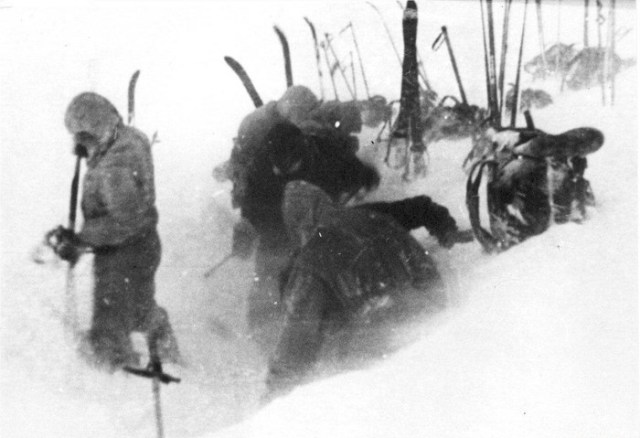
Mikhail Sharavin, the student who found the tent, described the scene: “the tent was half torn down and covered with snow. It was empty, and all the group’s belongings and shoes had been left behind.” The tent was cut up the back from the inside, eight or nine sets of footprints in the snow, leading away some 1,600 feet until disappearing, under a fresh fall of snow.
“A view of the tent as the rescuers found it on 26 February 1959: the tent had been cut open from inside, and most of the skiers had fled in socks or barefoot”. H/T Wikipedia
Despite winter temperatures of -13° to -30° Fahrenheit, most of these prints showed feet clad only in socks. Some were barefoot. One had a single shoe. Two bodies were found clad only in underwear, those of Yuri (Georgiy) Alexeyevich Krivonischenko and Yuri Nikolayevich Doroshenko, near the remains of a small fire. They were under a large Siberian Pine, broken branches up to thirty feet high suggesting that someone had climbed the thing, to look around. Or to get away?
Three more bodies were found leading back to the tent, frozen in postures suggesting they were trying to get back. Medical investigators examined the bodies. One, that of Rustem Vladimirovich Slobodin showed a small skull fracture, probably not enough to threaten his life. Cause of death was ruled, hypothermia.
It took two more months to find the last four bodies, buried under twelve feet of snow some 75-feet away. These were better dressed than the other five, indicating they were probably outside. There were unexplained traces of radiation on their clothes.
The condition of these last four, would change this whole story. Nikolai Vladimirovich Thibeaux-Brignolles suffered massive skull fractures, with no external injury. Lyudmila Alexandrovna Dubinina and Semyon (Alexander) Alekseevich Zolotaryov showed massive chest fractures, such as to be caused by a force, similar to a car crash. Again, with no external injury. Both were missing their eyes. Dubinina was missing her tongue, and part of her face.
With volumes of unanswered questions, the inquiry was closed in May 1959. Cause of death was ruled “A spontaneous force which the hikers were unable to overcome“. Dead Mountain was ruled off limits, the files marked confidential. Case closed.
Explanations have been offered from the mundane to the supernatural, but none was ever proven. Mansi hunters had killed them for encroaching on their territory. Except there were no other footprints. This was the work of a Menk, a mythical Siberian Yeti, or an avalanche, or a super-secret parachute mine exercise, carried out by the Soviet military. Some believe it was aliens. There were reports of orange glowing orbs, in the sky.
How nine experienced mountaineers got caught out and frozen to death remains a profound mystery, to say nothing of the massive internal injuries, suffered by three. The incident at what has come to be called Dyatlov Pass remains an enigma, to this day.
A tomb marks their final resting place, in Yekaterinburg. H/T thevintagenews.com
If you enjoyed this “Today in History”, please feel free to re-blog, “like” & share on social media, so that others may find and enjoy it as well. Please click the “follow” button on the right, to receive email updates on new articles. Thank you for your interest, in the history we all share.
If you’re ever in Edinburgh, stop and see his monument. Erected in honor of the “Soldier Bear” and his keeper. The orphaned brown bear who helped to win a World War.
The most destructive war in history began on September 1, 1939, with the Nazi invasion of Poland. German forces invaded from the north, south and west, following an SS-concocted false flag operation known as the Gleiwitz incident. The Soviet Union, then allied with Nazi Germany, invaded from the east on September 17, according to a secret provision of the Molotov–Ribbentrop Pact. Polish forces fought back with stunning bravery, horse cavalry riding to meet German tanks, but little Poland never had a chance. German and Soviet forces were in full control of Polish territory by October 6.
France and Great Britain declared war in support of their Polish ally on September 3, but effective relief came too little, too late. In the end, some 65,000 Polish troops were killed in the fighting, compared with 16,000 Germans. 420,000 became prisoners of the Reich and a quarter-million more, of the USSR. In April 1942, some 22,000 Polish officers were murdered in the forests of Katyń, an atrocity carried out by Soviet troops but blamed at the time, on German soldiers.
Scene from the 2007 Polish film, “Katyń”
Some 120,000 Polish troops escaped via neutral Romania, another 20,000 to Latvia and Lithuania. The second Polish Republic was dead, but Polish soldiers made some of the most heroic contributions to the allied war effort. Polish units fought from North Africa to Italy, to the north of Europe. Polish pilots and air crews made some of the largest contributions of any non-British nationality, to the Battle of Britain. As the first light of dawn broke over the age of the inter-continental ballistic missile, Polish partisans captured the first V2 rocket, that supersonic and potentially game-changing super weapon of the Third Reich.
The doors to the Soviet Gulags opened after June 22, 1941, following Hitler’s surprise invasion of his Soviet “Ally”. While tens of thousands of free Poles worked their way to the assistance of France and Great Britain, these former POWs became the core of the Polish II Corps, numbering some 100,000 soldiers by 1945.
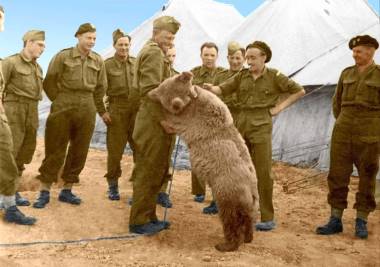
Around the time of the Katyń massacre, Polish troops of the newly formed “Anders Army” were passing through Hamedān Iran, in the company of thousands of civilians fleeing Soviet territory. A Kurdish boy was keeping a bear cub at that time, a Syrian brown bear whose mother had been shot, by hunters. Eighteen-year-old Irena Bokiewicz was smitten with the animal, prompting Lieutenant Anatol Tarnowiecki to buy him. The young bear spent three months in a Polish refugee camp before being handed over to the 2nd Transport Company, which later became the 22nd Artillery Supply Company. The soldiers called him Wojtek (“VOY-tek”), the diminutive form of “Wojciech”, meaning “Happy Warrior”.
Wojtek was small in the beginning, yet to be weaned from his mother’s milk and having trouble swallowing. Soldiers fed him condensed milk from an old vodka bottle, leading to honey or syrup and marmalade and whole fruit.
From Iraq through Syria and on to Palestine and Egypt, Wojtek moved with the 22nd Company. He loved to wrestle and learned by imitating, marching alongside on his hind legs, and learning to smoke. As he grew larger, soldiers rewarded Wojtek with a beer, which soon became his favorite libation.
With the Italian armistice of September 3, 1943, Allied planners hoped to occupy the Italian peninsula with minimal bloodshed. It wasn’t meant to be. The Italian campaign was embarked on its eighth month on this day in 1944, with another three months yet to go. No campaign in all the West of Europe, cost the lives of more infantry, on both sides.
I personally have an uncle among them, killed in the fighting around Anzio.
The shattered ruins of Monte Cassino cost the Allied side 55,000 casualties, to 20,000 Germans. H/T Life Magazine
The 22nd Artillery Supply Company joined a British transport out of Egypt, bound for the Italian peninsula. Regulations prohibited mascot animals from troop ships. So it was that Wojtek was officially enlisted as a soldier with his own serial number and paybook, and given the rank of Private.
Twenty divisions of Allied troops were engaged against the fortified strong points at Monte Cassino and the Gustav line, in terrain that would have challenged the talents of a mountain goat. On May 18, the Polish flag was raised over the shattered ruins, followed by the Union Jack. The former abbey had cost the Allies 55,000 casualties.
“Polish soldiers carry ammunition to the front lines just before the capture of the abbey”. H/T Wikipedia
The 22nd Artillery Supply Company helped provide ammunition during the battle for Monte Cassino, the men carrying 100-pound crates of shells and stacking them on trucks. Wojtek was quick to imitate and, though a mere stripling of a bear at 200-pounds, could carry a crate by himself, which would’ve taken four men. He never dropped a single one.
Wojtek’s actions earned him a promotion to the rank of Corporal, his image becoming the official emblem of the 22nd Company.
Wojtek was transported to Berwickshire, Scotland after the war, along with the 22nd Company. There he became a local celebrity, and honorary member of the Polish-Scottish association.
Following full demobilization in 1947, Wojtek was given over to the Edinburgh Zoo, where he spent the rest of his life. Journalists and former Polish soldiers would visit from time to time. Some would toss him a cigarette which he would eat, not having anyone to light it for him. At the time of his death in 1963, the former soldier bear weighed in at 490-lbs.
If you’re ever in Edinburgh, stop and see his monument. Erected in honor of the “Soldier Bear” and his keeper. The orphaned brown bear who helped to win a World War.
Monument to Wojtek in West Princes Street Gardens, Edinburgh
If you enjoyed this “Today in History”, please feel free to re-blog, “like” & share on social media, so that others may find and enjoy it as well. Please click the “follow” button on the right, to receive email updates on new articles. Thank you for your interest, in the history we all share.
In exhibition games, Soviet club teams went 5–3–1 against NHL clubs. The year before, the Soviet national team routed an NHL All-Star squad 6–0 to win the Challenge Cup. To all the world, the 1980 USA-USSR match was going to be a David vs Goliath contest.
In the world of sports, there is little to compare with the cakewalk cinch of the Olympic basketball team, sent to represent the United States in 1992. NBA professionals all, these guys were paid the GDP of developing nations, to play their game. Professional athletes ranged against amateurs, the “dream team” swept their series to the surprise of precisely nobody, averaging 44 points over opponents like Angola, Lithuania and Croatia. Yawn.
We didn’t always send professional athletes to the Olympics. There was a time when Olympic competitors’ amateur status was jealously guarded. Wa-Tho-Huk, that member of the Sac and Fox Nation better remembered as Jim Thorpe, may be the finest all-round athlete in American history. Thorpe was stripped of his 1912 gold medals in the decathlon and pentathlon, because he’d accepted small sums to play baseball during college summers. It was little consolation that the medals were reinstated, in 1983. By that time, the man had been gone for thirty years.
On February 24, 1980, the American hockey team defeated Finland to win the gold medal at the winter Olympics in Lake Placid, New York. The victory was almost anti-climactic. The real drama played out two days earlier, when a collection of American amateurs defeated the mighty Soviet squad.
Canadians dominated Olympic ice hockey in the early days of the event, winning six out of seven gold medals between 1920 and ’52. Team USA scored a surprise gold at Squaw Valley in 1960, after which the Soviet Union seemed unstoppable, winning gold in 1964, ’68, ’72 and ’76.
My fellow children of the cold war will remember. A favorite complaint of the era was the semi-professional status of Soviet bloc athletes. Particularly those from East Germany and the Union of Soviet Socialist Republics.
Between its first Olympic games in 1952 and the final appearance in 1988, the Soviet Union topped the combined medal count, with 1,204. Even now, extinct for nearly thirty years, the USSR is second only to the United States, a nation which has been in the game, for over twice as long.
The Soviet Union entered the Lake Placid games as heavy favorites, with a 27-1-1 record since that 1960 upset, outscoring opponents by a combined 175 to 44. The 1980 team had world class training facilities, having played together for years in a well-developed league. Vladislav Tretiak was widely regarded as the best goaltender in the world. Tretiak, defenseman Viacheslav Fetisov and forward Valeri Kharlamov would go on to be enshrined in the International Hockey, Hall of Fame.
In exhibition games, Soviet club teams went 5–3–1 against NHL clubs. The year before, the Soviet national team routed an NHL All-Star squad 6–0 to win the Challenge Cup. To all the world, this was going to be a David vs Goliath contest.
University of Minnesota coach Herb Brooks had assembled the youngest team in U.S. history to play in the Olympics, with an average age of only 21. Left wing Buzz Schneider was the only veteran, returning from the 1976 Olympic squad. Nine players had played under Coach Brooks. Another four came from arch-rival Boston University including goalie Jim Craig, and team captain Mike Eruzione.
Brooks puck
For some players, the hostility of that college rivalry carried over to their Olympic teammates.
The Soviet team had demolished earlier opponents by a combined score of 50-11. The US squad had squeaked out a series of upsets, 23-8. New York times sports reporter Dave Anderson wrote:
“Unless the ice melts, or unless the United States team or another team performs a miracle, as did the American squad in 1960, the Russians are expected to easily win the Olympic gold medal for the sixth time in the last seven tournaments.”
Team USSR took an early lead of 2-1 in the first period. Mark Johnson tied the score with one second left, leading Soviet coach Viktor Tikhonov to make the goofiest decision, in sports history. He pulled the best goalie in the world, and replaced him with backup goaltender Vladimir Myshkin. The move shocked players on both teams. Years later, Johnson and Fetisov were NHL teammates, and Johnson asked him about the decision. “Coach Crazy”, was all the Russian said.
Aleksandr Maltsev scored an unanswered goal on a power play, 2:18 into the second period. At the end of the second, the Soviet Union led, 3-2.
Mark Johnson scored his second goal of the game at 8:39 in the third, in the last seconds of a power play. For the American team, it was only the third shot on goal in the last 27 minutes. Vasili Pervukhin got in his goalie’s way with ten minutes to play, as Mike Eruzione fired one past Myshkin to put the Americans ahead, 4-3.
The Soviet attack was relentless, but Craig let nothing past. Team USSR took 39 shots on goal to the Americans’ 16, but the score held.
In the final moments, the crowd began the countdown. ABC Sportscaster Al Michaels called the game in a rising crescendo: “11 seconds, you’ve got 10 seconds, the countdown going on right now! Morrow, up to Silk. Five seconds left in the game. Do you believe in miracles!? YES!!”
David had slain Goliath. Rocky Balboa defeated Captain Ivan Drago. A hastily assembled bunch of college kids had just beaten the mighty Soviet Union, arguably the finest hockey team, in the world. Coach Brooks sprinted back to the locker room, and cried. Pandemonium reigned supreme, as Jim Craig circled the ice, wrapped in an American flag. ABC sportscaster Jim McKay compared the victory to a Canadian college football team defeating the Superbowl champion Pittsburgh Steelers. In the locker room, players spontaneously broke into a chorus of “God Bless America”.
The March 3, 1980 Sports Illustrated cover needed no caption. Everyone knew what happened.
In the gold medal round on the 24th, the Americans were behind at the end of the 2nd period, 2-1. The American team was in the locker room during the second intermission, when coach Brooks bore down. “If you lose this game, you’ll take it to your f***ing graves”.
Team USA defeated Finland for the gold medal, 4-2.
In his day, International Olympic Committee President Avery Brundage (1952-1972), was adamant about preserving the amateur status of Olympic athletes. Once he was gone, the floodgates began to open. Years later, sports reporter Ron Rapoport wrote “The pros are there for a reason… The pro athletes are pre-sold to the public, which means increased viewership.”
The Olympic games would never be the same.
Nineteen years later, Sports Illustrated called the Miracle on Ice “The top sports moment of the entire 20th century”.
The 1992 “Dream Team” crossed a line which can never be retaken, but that can never change the finest moments in sports history. For those of us who follow Boston sports, that includes the 2004 World Series, the final, heart-stopping two minutes and seventeen seconds of Superbowl LI in 2017, and the Miracle on Ice, of 1980.
If you enjoyed this “Today in History”, please feel free to re-blog, “like” & share on social media, so that others may find and enjoy it as well. Please click the “follow” button on the right, to receive email updates on new articles. Thank you for your interest, in the history we all share.
For thousands of homeless children, newspapers were all that stood in the way of an empty belly.
During the early colonial period, American newspapers were “wretched little” sheets in the words of America’s “1st newsboy”, Benjamin Franklin. Scarcely more than sidelines to keep presses occupied.
Newspapers were distributed by mail in the early years, thanks to generous subsidies from the Postal Act of 1792. In 1800, the United States could boast somewhere between 150 – 200 newspapers. Thirty-five years later, some 1,200 were competing for readership.
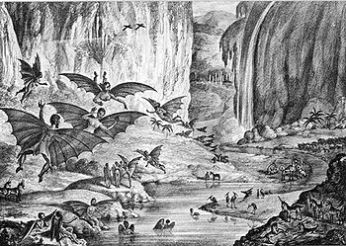
Lithograph from the “Great Moon Hoax” of 1835
Today we hear a lot about “fake news”, but that’s nothing new. In 1835, the New York Sun published a six-part series, about civilization on the moon. The “Great Moon Hoax”, ostensibly reprinted from the Edinburgh Courant, was falsely attributed to the work of Sir John Herschel, one of the best known astronomers of the time.
Whatever it took, to sell newspapers.
Two years earlier, Sun publisher Benjamin Day ran a Help-Wanted advertisement, looking for adults to help expand circulation. “To the unemployed — A number of steady men can find employment by vending this paper. A liberal discount is allowed to those who buy and sell again“. To Day’s surprise, his ad didn’t produce adult applicants as expected. Instead, the notice attracted children.
Today, kids make up a minimal part of the American workforce, but that wasn’t always so. Child labor played an integral part in the agricultural and handicraft economy, working on family farms or hiring out to other farmers. Boys customarily apprenticed to the trades, at 10 – 14. As late as 1900, fully 18% of the American workforce was under the age of sixteen.
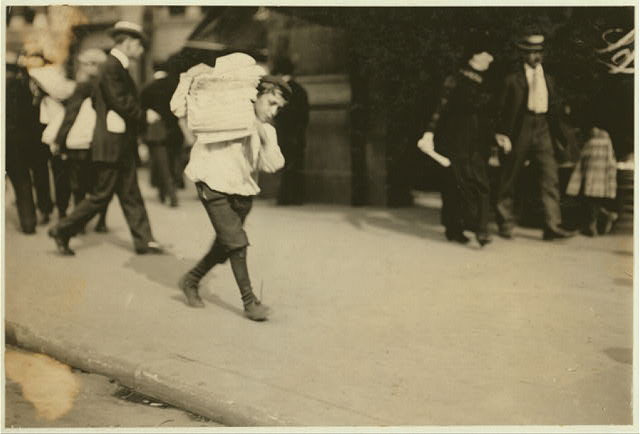
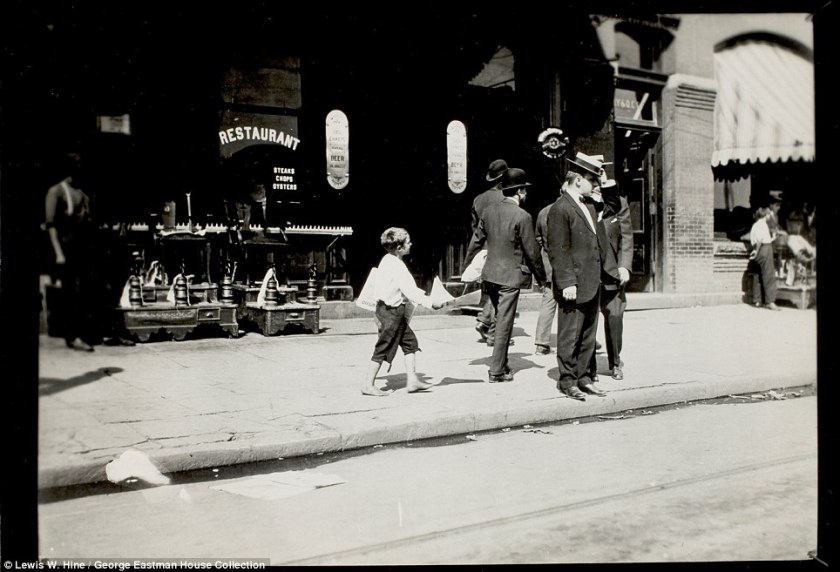
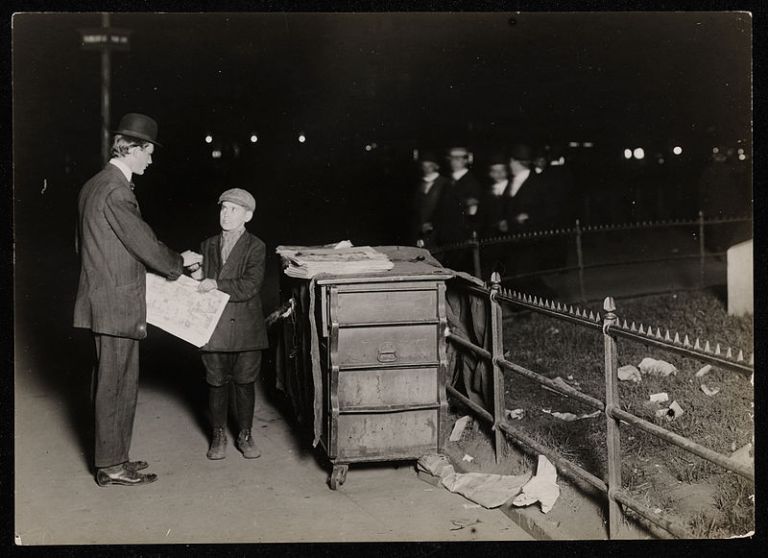
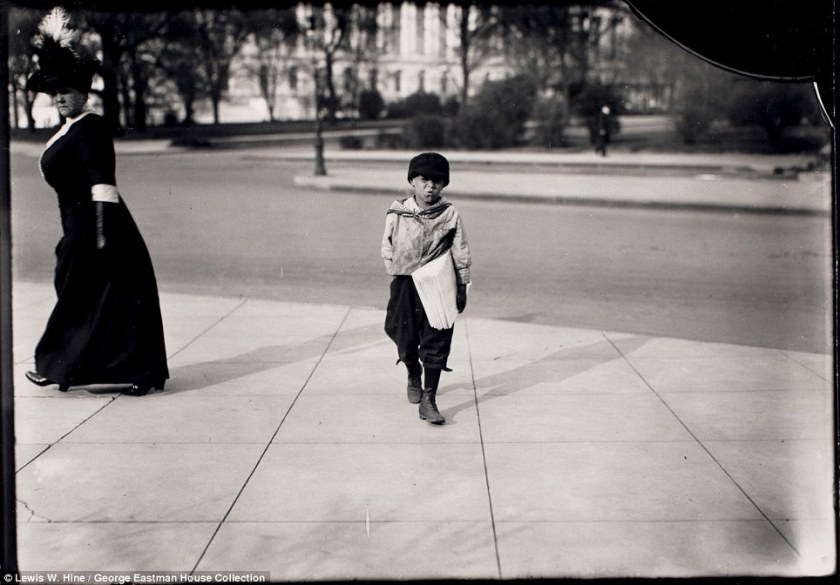
Brooklyn newsboy, ca. 1910 Photo by Lewis Hine (Library of Congress)
Benjamin Day’s first newspaper “hawker” was Bernard Flaherty, a ten-year-old Irish immigrant. The kid was good at it too, crying out lurid headlines, to passers-by: “Double Distilled Villainy!” “Cursed Effects of Drunkenness!” “Awful Occurrence!” “Infamous Affair!” “Extra! Extra! Read all about it!”
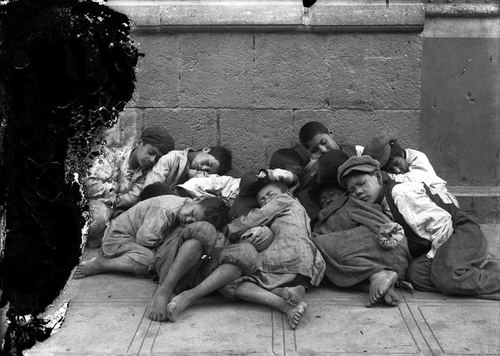
Hordes of street urchins swarmed the tenements and alleyways of American cities. During the 1870s, homeless children were estimated at 20,000 – 30,000 in New York alone, as much as 12% of school-age children in the city.
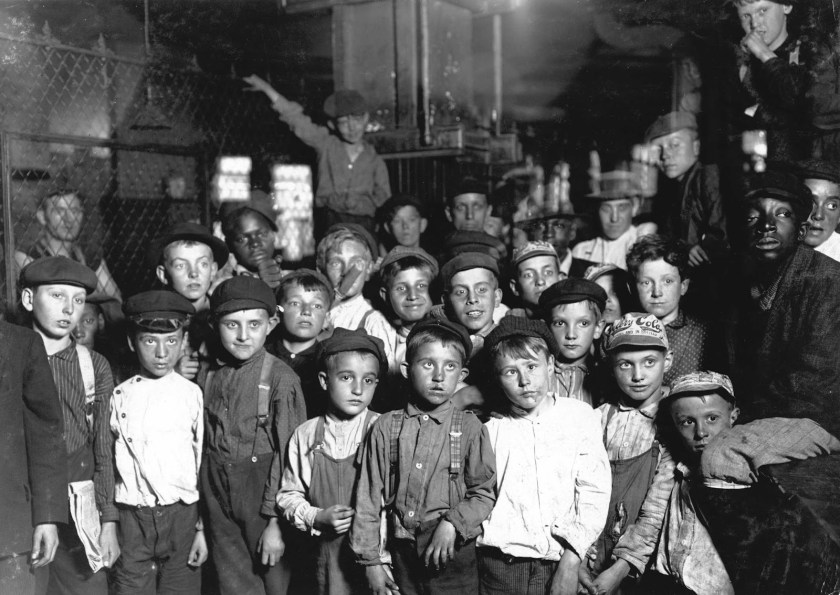
Indianapolis newsies, waiting for baseball edition
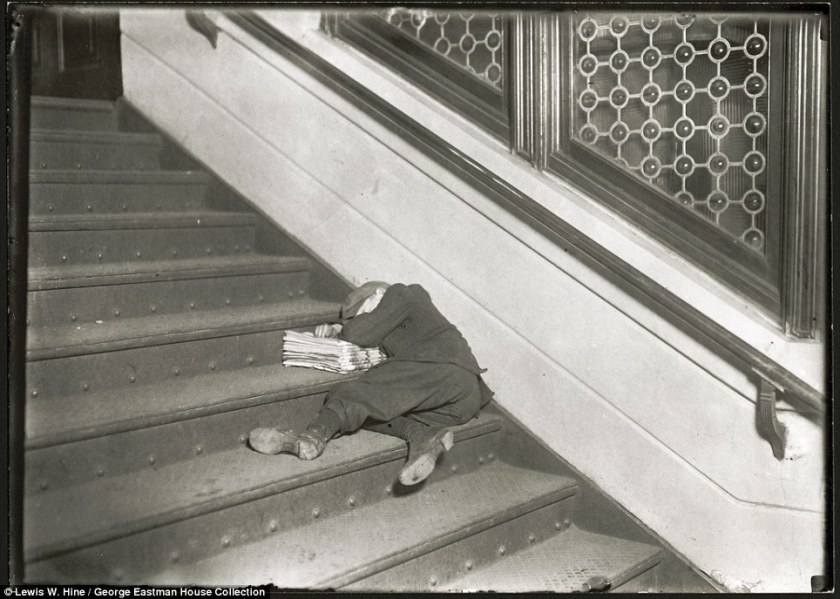
For thousands of them, newspapers were all that stood in the way of an empty belly.
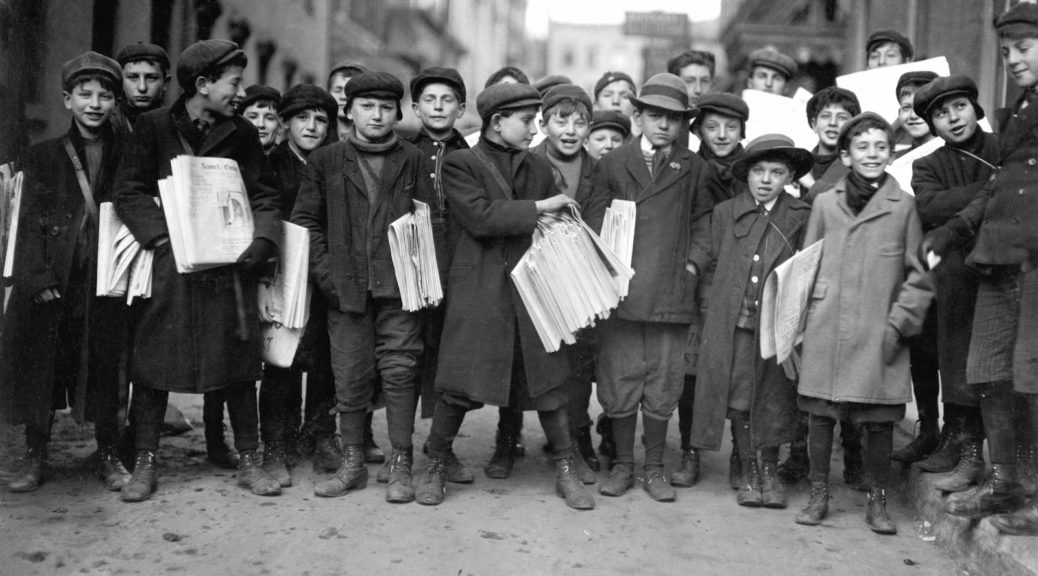
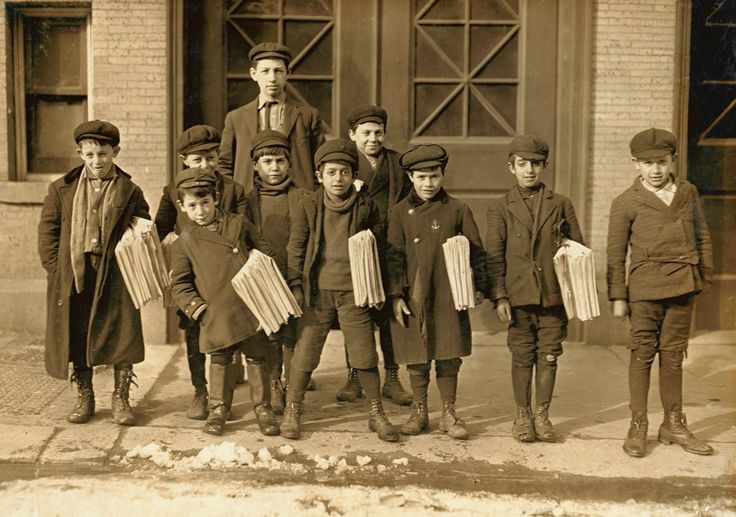
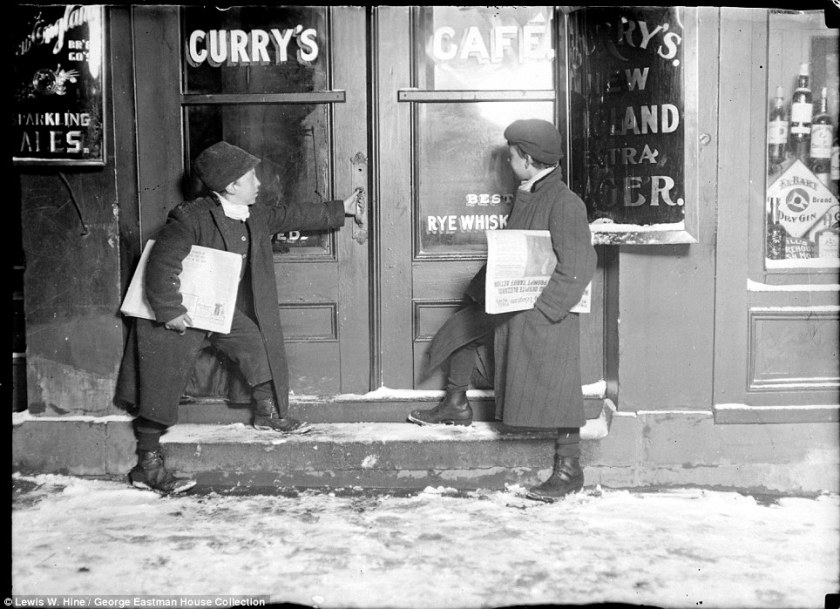
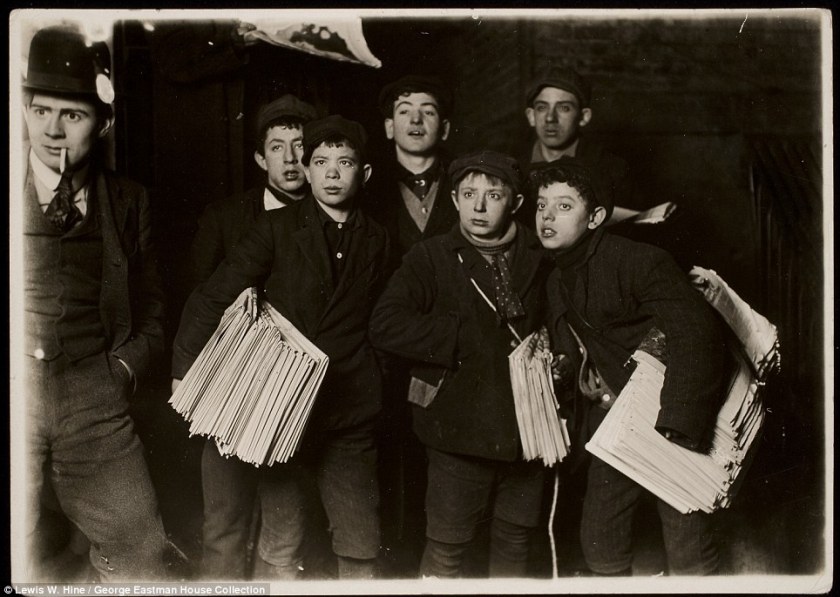
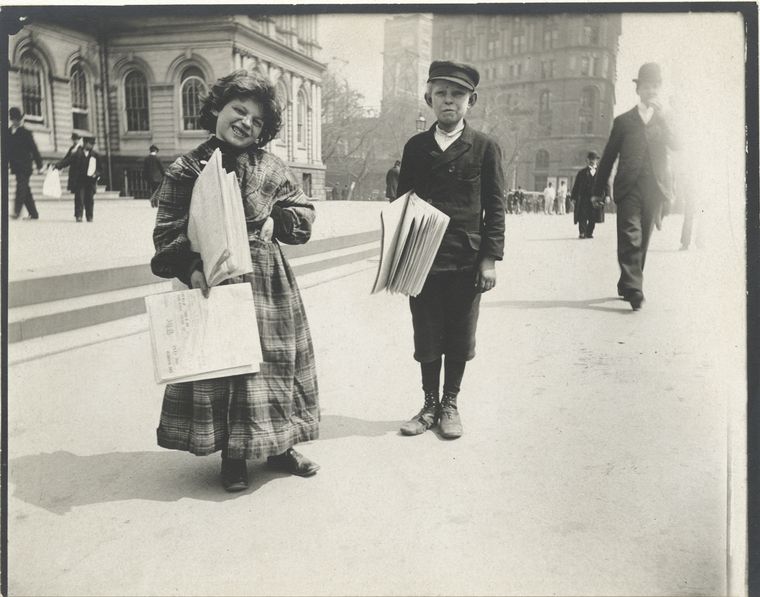
Adults had no interest in the minuscule income, and left the newsboys (and girls) to their own devices. “Newsies” bought papers at discounted prices and peddled them on the street. Others worked saloons and houses of prostitution. They weren’t allowed to return any left unsold, and worked well into the night to sell every paper.
For all that, newsies earned about 30¢ a day. Enough for a bite to eat, to afford enough papers to do it again the following day, and maybe a 5¢ bed in the newsboy’s home.
“Newsies” were not always, boys. These are Yedda Welled, 11 years old. Rebecca Cohen, 12. and, Rebecca Kirwin, 14. Hartford, Connecticut, 1909. H/T historyinphotos.blogspot.com
Competition was ferocious among hundreds of papers, and business practices were lamentable. In 1886, the Brooklyn Times tried a new idea. The city was expanding rapidly, swallowing up previously independent townships along the Long Island shore. The Times charged Western District newsboys a penny a paper, while Eastern District kids paid 1 1/5¢.
The plan was expected to “push sales vigorously in new directions.” It took about a hot minute for newsies to get wise, when hundreds descended on the Times’ offices with sticks and rocks. On March 29, several police officers and a driver’s bullwhip were needed to get the wagons out of the South 8th Street distribution offices. One of the trucks was overturned, later that day.
That time, the newsboy strike lasted a couple of days, enforced by roving gangs of street kids and “backed by a number of roughs”. In the end, the Times agreed to lower its price to a penny apiece, in all districts. Other such strikes would not be ended so quickly, or so easily.
New York, 1896 Alice Austen newsboys
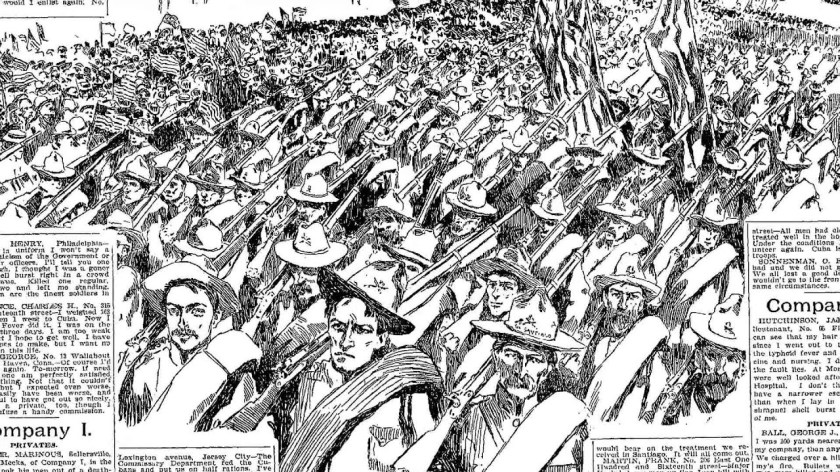
In those days, the Caribbean island of Cuba was ruled from Spain. After decades spent in the struggle for independence, many saw parallels between the “Cuba Libre” movement, and America’s own Revolution of the previous century. In 1897-’98, few wanted war with Spain over Cuban interests more than Assistant Naval Secretary Theodore Roosevelt, and New York publishers Joseph Pulitzer & William Randolph Hearst.
This was the height of the Yellow Journalismperiod, and newspapers clamored for war. Hearst illustrator Frederic Remington was sent to Cuba, to document “atrocities”. On finding none, Remington wired: “There will be no war. I wish to return”. Hearst wired back: “Please remain. You furnish the pictures, and I’ll furnish the war.” President McKinley urged calm, but agreed to send the armored cruiser USS Maine, to protect US “interests”.
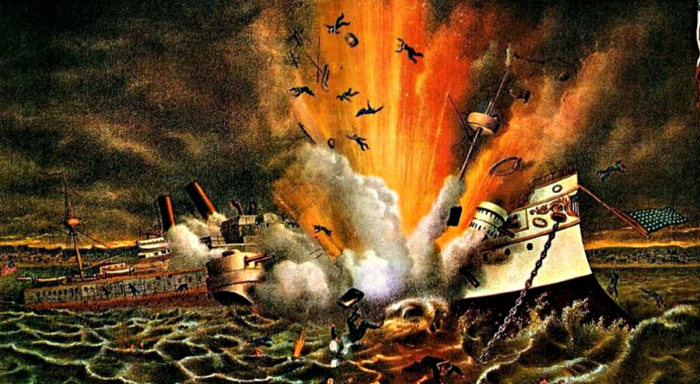
The explosion that sank the Maine on February 15 killing 268 Americans was almost certainly accidental, but that wouldn’t be known for decades. Events quickly spun out of control and, on April 21, 1898, the US blockaded the Caribbean island. Spain gave notice two days later, that it would declare war if US forces invaded its territory. Congress declared on April 25 that a state of war had existed between Spain and the United States, since the 21st. Soon, newsboys were shouting the headline: “How do you like the Journal’s war?
The Spanish-American War was over in 3 months, 3 weeks and 2 days, but circulation was great while it lasted. Publishers cashed in, raising the cost of newsboy bundles from 50¢ to 60¢ – the increase temporarily offset by higher sales. Publishers reverted to 50¢ per 100 after the war, with the notable exceptions of Joseph Pulitzer’s New York World, and William Randolph Hearst’s New York Journal.
Now, newsboys of the era weren’t the ambitious kids of a later age, hustling to make a buck after school. These were orphans and runaways, with little to count on but themselves. The half-cent profit on each paper was all each had to get through the day, with some held back to buy more papers.
Newsboys selling papers by the Brooklyn Bridge, February 23, 1908 H/T UK Guardian
50¢ to 60¢ for the same bundle was an insurmountable increase. On July 18, 1899, a group of Long Island newsboys overturned a distribution wagon, refusing to sell Hearst of Pulitzer newspapers until prices were returned to 50¢. Newsboys from Manhattan and Brooklyn joined the strike, the following day.
Louis Balletti,”Kid Blink”
Boys and men who tried to break the strike were mobbed and beaten, their papers destroyed.
Competing publishers such as the New York Tribune couldn’t get enough of the likes of strike “President” Dave Simmons, the boy “prize-fighter”, Barney “Peanuts”, “Crutch” Morris, and others.
The charismatic, one-eyed strike leader “Kid Blink”, was a favorite:
“Friens and feller workers. This is a time which tries de hearts of men. Dis is de time when we’se got to stick together like glue…. We know wot we wants and we’ll git it even if we is blind”.
The newsboy strike of 1899 lasted two weeks, in which Pulitzer’s New York World plummeted from 360,000 papers a day, to 125,000. Women and girls had more success as strike breakers than boys and men. As Kid Blink put it, “A feller can’t soak a lady.” In the end, it didn’t matter. Most news readers took the side of the strikers. Neither Hearst nor Pulitzer ever dropped their price, but both agreed to buy back unsold papers.
Some worked well after midnight, to sell every paper
The New York newsboys’ strike of 1899 inspired later strikes including Butte, Montana in 1914, and a 1920s strike in Louisville, Kentucky. In time, changing notions of urban child-welfare led to improvements in the newsboys’ quality of life. For now, street kids had precious few to look out for them, beyond themselves.
Brooklyn’s “Racetrack Newsie” “Dutch” Johnson caught cold, in 1905. The illness soon turned more serious. He was found unconscious on a pile of catalogs. Brought to Bellevue Hospital by the East River, the 16-year-old was informed it was pneumonia. This was before the age of antibiotics. There was no hope.
“It goes”, Dutch said, in a voice so soft as to be barely audible. “Only I ain’t got no money and I’d like to be put away decent”.
H/T http://newsieshistory.tumblr.com
Bookmaker “Con” Shannon offered to take up a collection for the burial. He could’ve easily produced hundreds from bookies and gamblers, but Dutch’s diminutive successor “Boston”, spoke up. “Naw”, he said “we’re on de job and nobody else”.
So it was that “Gimpy”, “Dusty”, and the other urchins of Sheepshead Bay pitched in with their pennies, their nickels and dimes. $53.40 bought a plot in the Linden Hill Cemetery, with a little stone marker. Dutch Johnson would be spared the plain black wagon and the nameless grave, in some anonymous Potter’s Field.
With eighteen in the plaintiffs dock and one small defendant. The judge asked Greenstein about the fight. “It wasn’t a fight” he said, “It was a pleasure”. The case was dismissed.
Yosselle “Joseph” Greenstein was born on January 2, 1893, the son of the poorest family in Suvalk, Poland. A small, sickly child with chronic asthma, doctors believed he suffered from the same tuberculosis, which had killed his father.
“Joe” tried sneaking into the Issakoff Brother’s Circus at fourteen, receiving a savage beating for his trouble, left bleeding and barely conscious in a muddy alley.
The circus’ strongman “Champion Volanko” saw the poor, scrawny kid trying to crawl home, and took pity. Volanko brought the boy into his trailer and, as the two talked, became impressed with his determination. This was an old-school strength athlete, capable of performing a military press with baskets full of women, in each hand. He offered to teach the boy his techniques. So it was that Joe Greenstein ran away with a traveling circus.
Eighteen months later, he was a changed man. Greenstein took up wrestling and married, while still a teenager.
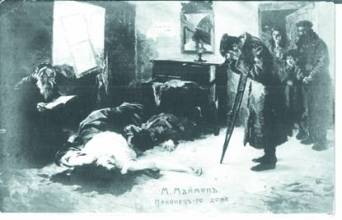
“Home at last by Moshe Maimon. The house’s occupants return when it is safe, to find the house thoroughly looted. A rabbi is saying Kaddish for a member of the household who was killed”. H/T Wikipedia
In those days, Poland was a nation in name only, a wholly owned subsidiary of the Russian Empire. Tsarist Russia was engulfed in a paroxysm of anti-Jewish violence in the pre-war years, riots resulting in death and injury, by the tens of thousands. The New York Times reported on one such “pogrom”, in 1903:
The anti-Jewish riots in Kishinev, Bessarabia [modern Moldova], are worse than the censor will permit to publish…The cry “Kill the Jews”, was taken up all over the city…Babies were literally torn to pieces by the frenzied and bloodthirsty mob. The local police made no attempt to check the reign of terror. At sunset the streets were piled with corpses and wounded. Those who could make their escape fled in terror, and the city is now practically deserted of Jews.
This place had nothing for a young Jewish family. Joseph and Leah Greenstein emigrated to the United States and made a home in Galveston Texas.
Jack Johnson
Joe worked on the docks and oil fields of Galveston, or laying railroad tracks and pounding spikes, by hand. He was wrestling professionally by this time under the name “Kid Greenstein”, and good at it, too. He met Jack Johnson who taught him some fighting techniques, the first black athlete to break the color barrier to become the heavyweight champion of the world, in 1908.
A local Texas man became obsessed with Leah Greenstein in 1914 and shot her husband, between the eyes. The bullet struck with enough force to flatten against his forehead, but did not penetrate. Joe left the hospital that same day, convinced his physical conditioning and mental discipline, had saved his life.
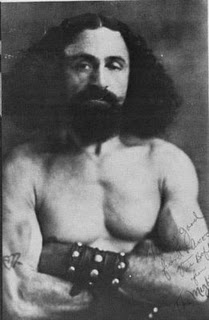
Joseph Greenstein, the Mighty Atom
Thus began the career of one of the greatest strongmen, in history. He was “The Mighty Atom”, able to break up to three chains, by expanding his chest. Only 5’4″-inches tall, he could bend horseshoes and drive nails with his bare hands. He could pull a fire truck with his hair, and change a tire with no tools. Not even a jack.
On September 29, 1928 the headlines read “The Mighty Atom – Super Strong Man Pits Brawn Against Plane, Wins!” He had held an aircraft on the ground with his hair – the feat was documented by Ripley’s “Believe it or Not”.
In 1936, a dispute with six dock workers, led to a brawl. The story ran in all the New York papers – “Little Giant Knocks Out Six’
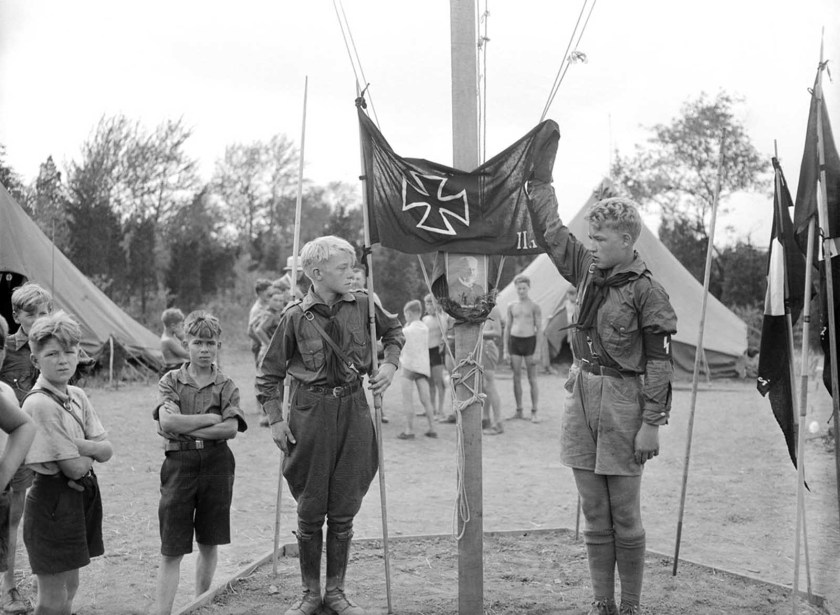
Following the rise of Adolf Hitler’s “National Socialist” party in 1933, some German Americans formed groups, patterned after the Nazi Party in Germany. These people had few connections to the “Thousand-Year Reich” and received little support from the broader German American community, yet they wore uniforms and toted swastikas and preached the same hate for the Jews, as the “National Socialist German Workers’ Party”. The most notorious of these, was the “German American Bund”.
“German American Bund Camp youth salute Hindenburg in Griggstown, New Jersey”. H/T rarehistoricphotos.com
Though the claim was believed to be exaggerated, Congressman Martin Dies, Jr. of the House Un-American Activities Committee (HUAC) estimated German-American Bund membership, at 430,000, in 1938.
The Mighty Atom was in New York that year when he passed a building, about to host a Nazi rally. One sign high on the wall read “No Jews or Dogs Allowed”. Yosselle Greenstein had left that garbage behind in the old country. He wasn’t about to tolerate it here.
He bought a ladder, and climbed up and tore the thing down. Twenty streamed out of the building, bent on beating the man into giblets. When it was over, eighteen had been sent to the hospital.
Pulling a fire truck, Mighty Atom style
A few weeks later, the combatants were in court. Eighteen in the plaintiffs dock, and one small defendant. The judge asked Greenstein about the fight. “It wasn’t a fight” he said, “It was a pleasure”. The case was dismissed.
War descended over Europe and with it the systematic extermination of the infirm. The Jew. The Roma. The “Untermenschen“.
The grotesque sham trials conducted by Judge-President Roland Feisler made short work of any who would oppose “Der Fuhrer”. Today, the “People’s Court” of Nazi Germany is best remembered in the wake of the July 20, 1944 plot to assassinate Hitler. In reality, this mockery of justice had been around for ten years, handing out death sentences, by the hundreds.
There were Germans throughout the war who objected to the murder of millions, but theirs was a forlorn hope. Clergymen Dietrich Bonhoeffer would state “the ultimate question for a responsible man to ask is not how he is to extricate himself heroically from the affair, but how the coming generation shall continue to live.” For his opposition to the Reich, Bonhoeffer would pay with his life.
This video give a good idea about “justice” in Roland Feisler’s court.
Helmuth James Graf von Moltke, great grand-nephew of the famous Helmut von Moltke would lead 28 dissidents of the “Kreisau Circle”, against this “outrage of the Christian conscience.” These too would pay with their lives.
The most successful opposition came from the universities of Munich, with connections in Berlin, Hamburg, Stuttgart and Vienna. These were a surprise to Nazi leaders, as Universities had been stalwart supporters of Nazi ideology. The “White Rose” would rise in the wake of the disastrous Battle of Stalingrad, producing leaflets, handbills and anti-Nazi graffiti from the earliest days of 1943.
These too were found out, Hans Scholl, Sophie Scholl, and Christoph Probst made to stand trial before judge Feisler’s Court on February 22, 1943. All were sentenced to death and guillotined the same day. The last member to be executed was Hans Conrad Leipelt on January 29, 1945.
Back at home, Joseph Greenstein performed for war bond drives, always without compensation. The Mighty Atom continued to perform feats of strength well into his eighties, and taught fighting techniques to the New York Police department, Israeli Defence Force and others.
During his last public performance given before a sell-out crowd at Madison Square Garden on May 11, 1977, the Mighty Atom wore a leather vest, emblazoned with a golden star of David.
When he was through, Greenstein took a moment to wish his great-grandchild a happy first birthday.
The man could still bend horseshoes and drive nails with his hands.
The mighty Atom succumbed to cancer on October 8, 1977.
The apple didn’t fall far from the tree. In 2014, Joe’s son Mike appeared on America’s Got Talent. pulling a 3500-pound car with his teeth and wearing a T-shirt promoting “Mighty Atom & Sons (1940). He was 93.
If you enjoyed this “Today in History”, please feel free to re-blog, “like” & share on social media, so that others may find and enjoy it as well. Please click the “follow” button on the right, to receive email updates on new articles. Thank you for your interest, in the history we all share.
History has a way of demonstrating the truth of Taylor Owen’s adage on the subject of leadership: “An army of donkeys led by a lion is better than an army of lions led by a donkey.”
The Hundred Years’ War began as a succession dispute over the French throne, pitting an alliance of Burgundians and English on one side, against a coalition of Royalists led by the Armagnacs, on the other.
Europe was not far removed from the latest outbreak of the Black Death at this time, as the scorched earth tactics employed by the English army laid waste to the countryside and devastated the French economy.
Charles, Dauphin and heir apparent to the French throne was up against a wall, when a teenage peasant girl approached him in 1429.
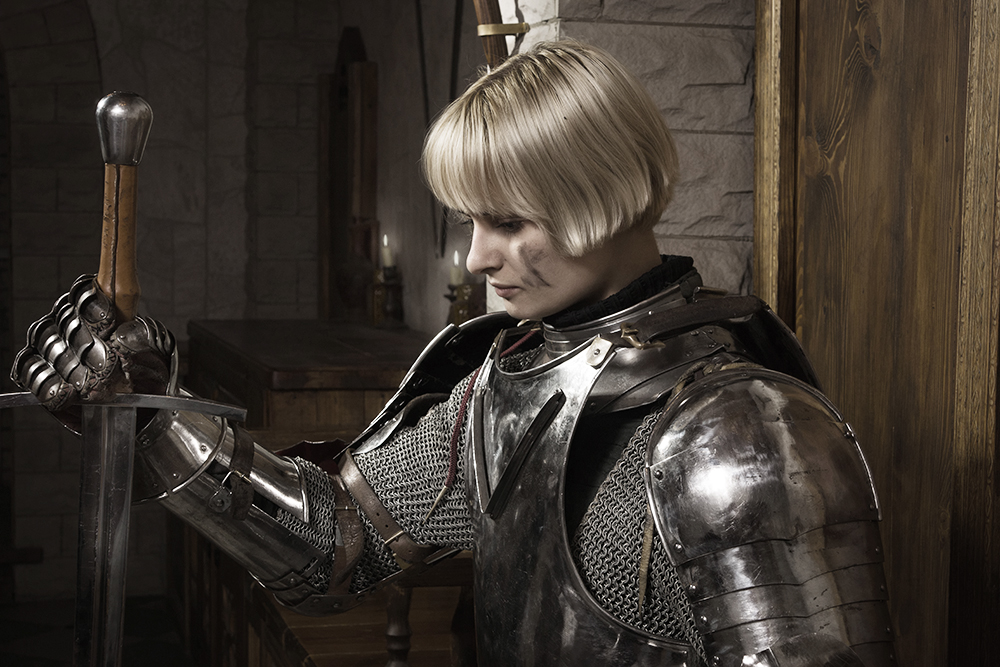
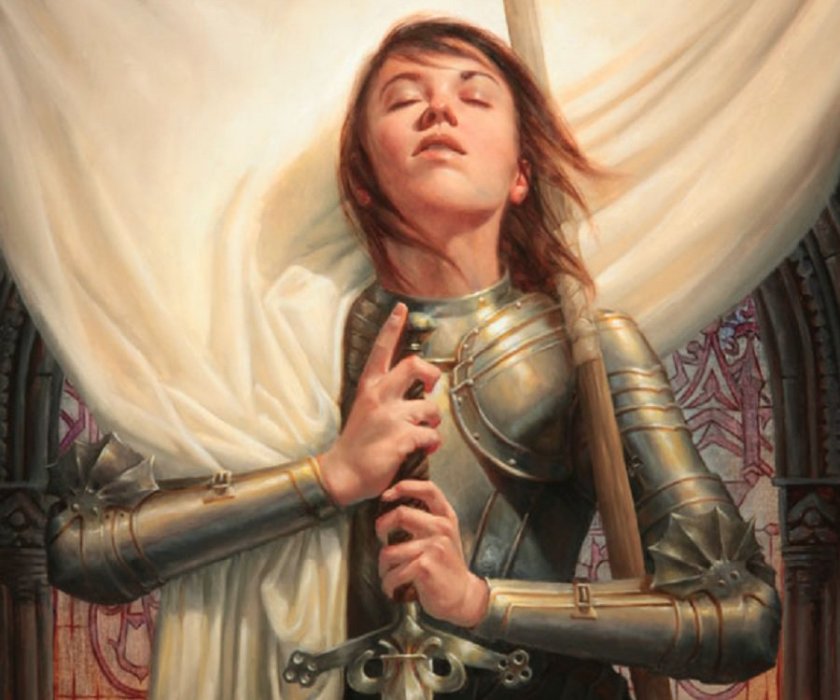
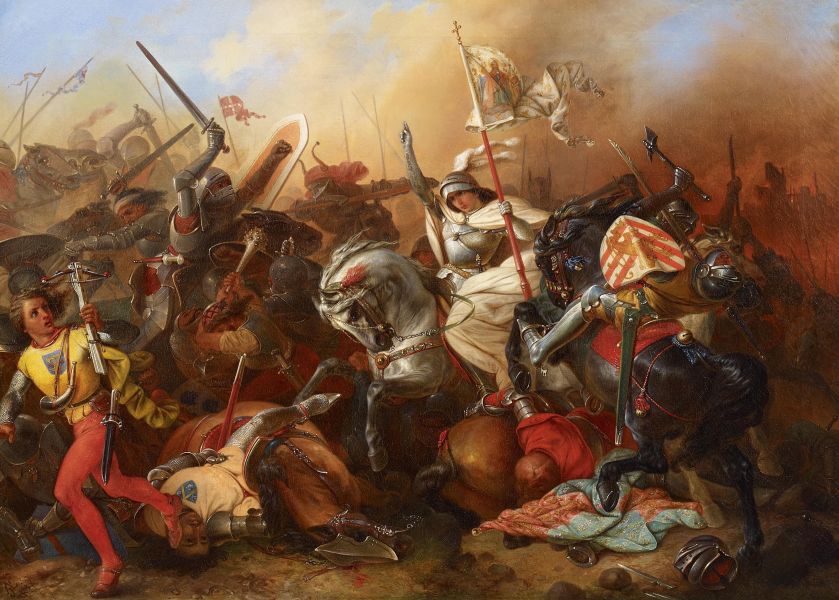
For the 14-year-old boy-king, even listening to her was an act of desperation, borne of years of humiliating defeats at the hands of the English army. Yet, this illiterate peasant girl had made some uncanny predictions concerning battlefield achievements. Now she claimed to have had visions from God and the Saints, commanding her to help Charles gain the throne. Her name was Jeanne d’Arc.
The siege of Orléans was six months old at this time, when the Dauphin decided it couldn’t hurt to let her take part. She dressed herself in borrowed armor and set out, arriving on the 29th of April, 1429.
History has a way of demonstrating the truth of Taylor Owen’s adage on the subject of leadership: “An army of donkeys led by a lion is better than an army of lions led by a donkey.” So it was in the days after Jeanne’s arrival at Orléans.
Time after time, Jeanne found herself excluded from war councils. Yet she managed to insert herself anyway, putting the French back on the offensive and achieving one victory after another.
Nine days after her arrival, Orléans turned into an unexpected victory for the French. Jeanne herself was shot through the neck and left shoulder by an English longbow, while holding a ladder at the siege of Tourelles. The Dauphin granted her co-command of the army with Duke John II of Alençon. The French army enjoyed a string of successes, recovering Jargeau on June 12, Meung-sur-Loire on the 15th and Beaugency two days later, leading to a humiliating English defeat at the battle at Patay on the 18th.
Several more Armagnac victories followed. On July 17, 1429, Charles was consecrated King Charles VII of France, fifth King of the House of Valois, with Jeanne at his side.
Despite her loyalty, Charles’ support began to falter. Court favorite Georges de La Trémoille convinced the King that Jeanne was becoming too powerful. An archer pulled her from her horse during the siege of Compiègne in May, 1430, and her allies failed to come to her aid.
The town gates closed, leaving Jeanne on the outside. She was captured and taken to the castle of Bouvreuil.
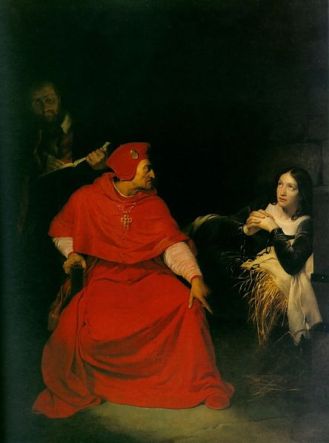
Some 70 charges were made against her by the pro-English Bishop of Beauvais, Pierre Cauchon, including witchcraft, heresy, and dressing like a man.
The judge’s representatives were dispatched to Jeanne’s home village of Domremy, to ascertain the prisoner’s virginity, character, habits and associations. Nicolas Bailly, the man responsible for collecting testimony, reported he “had found nothing concerning Joan that he would not have liked to find about his own sister”.
This Bishop Cauchon must have been some piece of work. The report so angered the man, he called Bailly “a traitor and a bad man” and refused to pay him for his work.
Jean Le Maistre, whose presence as Vice-Inquisitor for Rouen was required by canon law, objected to the proceedings and refused to appear, until the English threatened his life.
Interrogation of the prisoner began on February 21, 1431. The outcome was never in doubt. Transcripts were falsified and witnesses intimidated. Even then, trial records reveal this illiterate peasant girl to be brighter than all her inquisitors, combined.
Here’s an example from Jeanne’s third interrogation: “Do you know whether or not you are in God’s grace?” The question was a trap. Church doctrine stated that no one could be certain of being in God’s grace, yet a “no” answer would have been held against her. “If I am not”, she said, “may God put me there; and if I am, may God so keep me. I should be the saddest creature in the world if I knew I were not in His grace.”
After fifteen such interrogations, Jeanne’s inquisitors still had nothing on her, save for the wearing of soldier’s garb, and her visions. Yet, the outcome of her “trial” was already determined. She was found guilty of heresy, and sentenced to be burned at the stake. On May 24, Jeanne was taken to a scaffold. Threatened that she would be immediately burned alive if she didn’t disavow her visions and abjure the wearing of soldier’s clothing, Jeanne agreed to sign such an abjuration, but recanted four days later.
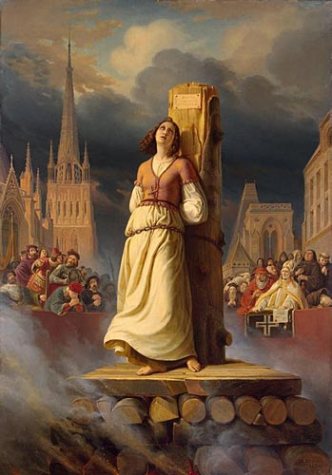
The death sentence was carried out on May 30, 1431, in the old marketplace at Rouen. She was 19.
When the fire died, the coals were raked back to expose her charred body. No one would be able to claim she’d escaped alive. Her body was then burned twice more, so no one could collect the relics. Her ashes were then cast into a river.
Guillaume Manchon, one of the court scribes, later recalled: “And she was then dressed in male clothing, and was complaining that she could not give it up, fearing lest in the night her guards would inflict some act of [sexual] outrage upon her; and she had complained once or twice to the Bishop of Beauvais, the Vice-Inquisitor, and Master Nicholas Loiseleur that one of the aforesaid guards had tried to rape her.”
Her executioner, Geoffroy Therage, later said he “Greatly feared to be damned”.
An inquisitorial court authorized by Pope Calixtus III re-examined the evidence, 25 years later. The court exonerated her of all charges, pronouncing her innocent on July 7, 1456, later declaring her a Christian martyr.
A National Heroine to the French, Joan of Arc was canonized a saint of the Roman Catholic Church, in 1920. It was small consolation for this child who had been set up for a fall by her enemies, and abandoned to be incinerated alive, by her friends.
If you enjoyed this “Today in History”, please feel free to re-blog, “like” & share on social media, so that others may find and enjoy it as well. Please click the “follow” button on the right, to receive email updates on new articles. Thank you for your interest, in the history we all share.
On one training jump, both parachutes failed. Somehow, Lucas fell 3,500-feet and sustained only minor injuries. According to his team leader, “Jack was the last one out of the plane and the first one on the ground”.
In the days and weeks following the Japanese attack on Pearl Harbor, enlistment and recruiting offices across the nation were flooded with volunteers. Birmingham Alabama saw 600 men in the first few hours, alone. In Boston, lines snaked out the door as men waited for hours, to volunteer.
But for his age, Jack Lucas would have been right there with them.
At 5’8″ and a muscular 180-pounds, Jacklyn Harrell “Jack” Lucas was big for his age. On August 8, 1942, Lucas forged his mother’s signature on parental consent papers and claimed to be seventeen, enlisting in the United States Marine Corps. He was fourteen years old.
A year later, a letter to a girlfriend from V Amphibious Corps at Pearl Harbor, revealed his true age of fifteen. Military censors had Lucas removed from his combat unit and nearly sent him home, but Jack was vehement. He was assigned to driving a truck, but this was a problem. Being in the “rear with the gear” was not his idea of military service. Lucas got into so many fights he was court-martialed, sentenced to five months of breaking rocks, given nothing but bread & water.
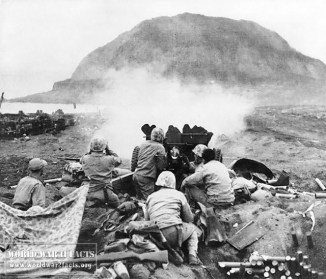
Iwo Jima
Lucas was released from the brig in January 1945, when he deserted his post, stowing away on the transport USS Deuel to get closer to the action. He turned himself in on February 8, volunteering to fight. Jack turned seventeen on February fourteen. Six days later, he got his wish.
February 20 was day two of the five-week battle for Iwo Jima, some of the bloodiest fighting of the Pacific war, in WW2. Advancing toward a Japanese airstrip under heavy fire, Lucas and three Marines took shelter in a trench, only to realize there were eleven Japanese soldiers, barely feet away. He managed to shoot two when his rifle jammed, looking down as that first grenade, came over the parapet.
Without a moment’s thought, Lucas dove over his fellow Marine and onto the grenade, as another fell by his side. Let his Medal of Honor citation, pick up the story:
“Quick to act when the lives of the small group were endangered by two grenades which landed directly in front of them, Private First Class Lucas unhesitatingly hurled himself over his comrades upon one grenade and pulled the other one under him, absorbing the whole blasting force of the explosions in his own body in order to shield his companions from the concussion and murderous flying fragments”.
Only when a second company moved through the area, did someone realize he was still alive.
Six days later, Jack Lucas’ deserter classification was removed from his record. In time, all seventeen of his military convictions were overturned. He’d endure twenty-one surgeries and even then, no fewer than two hundred pieces of metal remained in his body, some the size of .22-caliber bullets.
Jack Lucas was ruled unfit for duty and discharged on September 18, 1945. He was awarded the Medal of Honor by President Harry S Truman, on October 5, at seventeen the youngest recipient of the nation’s highest award for military valor, since the Civil War.
The man had more than earned the name “indestructible”, but wait. There’s more.
Lucas earned a business degree and returned to military service at age thirty-one, this time with the 82nd Airborne, of the United States Army. On one training jump, both parachutes failed. Somehow, Lucas fell 3,500-feet and sustained only minor injuries. According to his team leader, “Jack was the last one out of the plane and the first one on the ground“.
Two weeks later, he was back to jumping out of perfectly good aircraft.
Lucas was married several times in civil life, including to one woman, who attempted to have him killed. He later wrote his autobiography with help from writer D.K. Drum, appropriately entitled, “Indestructible”.
The USS Iwo Jima (LHD-7) is a Wasp-class amphibious assault vessel, commissioned in 2001. When her keel was laid, Jack Lucas placed his Medal of Honor citation inside her hull, where it remains, to this day.
On August 3, 2006, sixteen living Marine Corps Medal of Honor recipients including Jack Lucas were presented the Medal of Honor flag by Commandant of the Marine Corps General Michael Hagee, in front of over a thousand family, friends, and fellow Marines. Lucas commented, “To have these young men here in our presence — it just rejuvenates this old heart of mine. I love the Corps even more knowing that my country is defended by such fine young people.”
The Indestructible Jacklyn Lucas died of Leukemia on June 5, 2008. He was eighty years old. On September 18, 2016, Secretary of the Navy Ray Mabus announced plans to build a new Arleigh Burke-class destroyer. DDG-125 is expected to be commissioned in 2023, to be named in his honor, the USS Jack H. Lucas.
Artist’s depiction, USS Jack H Lucas
If you enjoyed this “Today in History”, please feel free to re-blog, “like” & share on social media, so that others may find and enjoy it as well. Please click the “follow” button on the right, to receive email updates on new articles. Thank you for your interest, in the history we all share.
Behind the scenes, the vice president secretly corresponded with the British and Spanish Ministers to the United States, offering in the first case to detach Louisiana from the Union and in the second, to orchestrate an overthrow, of Mexico. He himself would do nicely to found the new dynasty, thank you very much, for asking.
What would it be like to turn on CNN or Fox News, to learn that Former Secretary of the Treasury Jacob Lew had been party to a duel, and he was near death after being shot by Vice President Mike Pence.
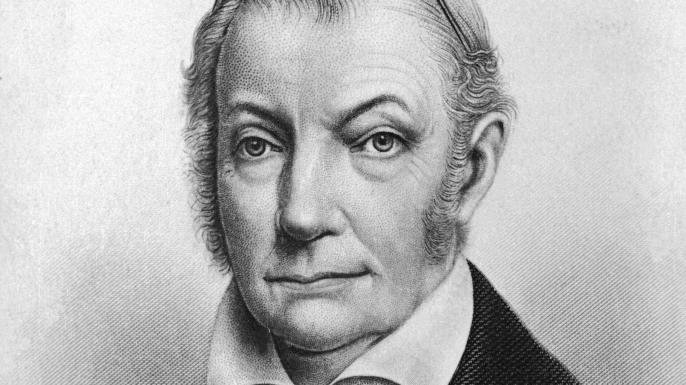
The year was 1804. President Thomas Jefferson’s Vice President Aaron Burr, had a long standing grudge against Alexander Hamilton, first Secretary of the Treasury under President George Washington.
Aaron Burr
The animosity between the two went back to the Senate election of 1791, and escalated during one of the ugliest election seasons in American history. It’s been called the “Revolution of 1800”, the election pitting Democratic-Republican candidate Thomas Jefferson, against one-term incumbent John Adams, of the Federalist party.
Both sides were convinced beyond doubt, that the other side would destroy the young nation. Federalists attacked Jefferson as an un-Christian deist, a populist whose sympathies with the French Revolution would bring about a similar cataclysm in the young American Republic. Democratic-Republicans criticized the alien and sedition acts, and the deficit spending the Adams administration employed to support Federal policy.
At the time, electors cast two votes, the first and second vote-getters becoming President and Vice President.
“The father of modern political campaigning”, Aaron Burr had long since enlisted help from New York’s Tammany Hall, transforming what was then a social club into a political machine. The election was a decisive victory for the Democratic-Republicans. Not so much for the candidates themselves.
The electoral vote tied at 73 between Jefferson and Burr, moving the selection to the House of Representatives. Hamilton exerted influence on behalf of Jefferson, who was elected on the 36th ballot. Aaron Burr was relegated to the vice-Presidency.
John Nance Garner served as 32nd vice president between 1931 – ’41. With precisely zero influence over Presidential authority, Garner described the position as “not worth a bucket of warm piss”. The sentiment is cleaned up and commonly retold as, “warm spit”.
A man with the towering ambition of Aaron Burr could certainly relate. Behind the scenes, the vice president secretly corresponded with the British and Spanish Ministers to the United States, offering in the first case to detach Louisiana from the Union and in the second, to orchestrate an overthrow, of Mexico. He himself would do nicely to found the new dynasty. Thank you very much, for asking.
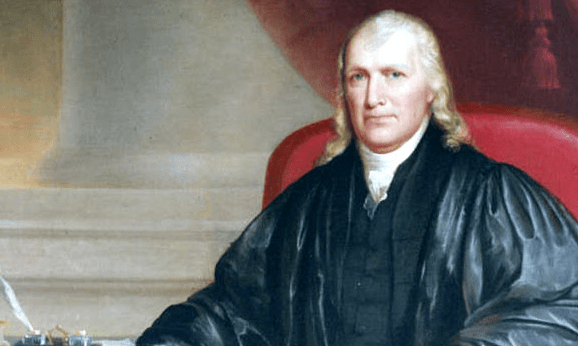
Justice Samuel Chase
We’re accustomed today to the idea of “Judicial Review”, the idea that Supreme Courtdecisions are final and inviolate, but that wasn’t always the case. The landmark Marbury v Madison decision established the principle in 1803, a usurpation of power so egregious to Democratic-Republicans, as to bring about the impeachment of Associate Justice Samuel Chase, a signer of the Declaration of Independence.
As VP, Burr presided over Chase’ impeachment. It was the high point of the only term he would ever serve.
Relations were toxic between Jefferson and Burr. The VP knew he wouldn’t be around for the 1804 re-election campaign, so he ran for Governor of New York, losing in a landslide to a virtual unknown, Morgan Lewis.
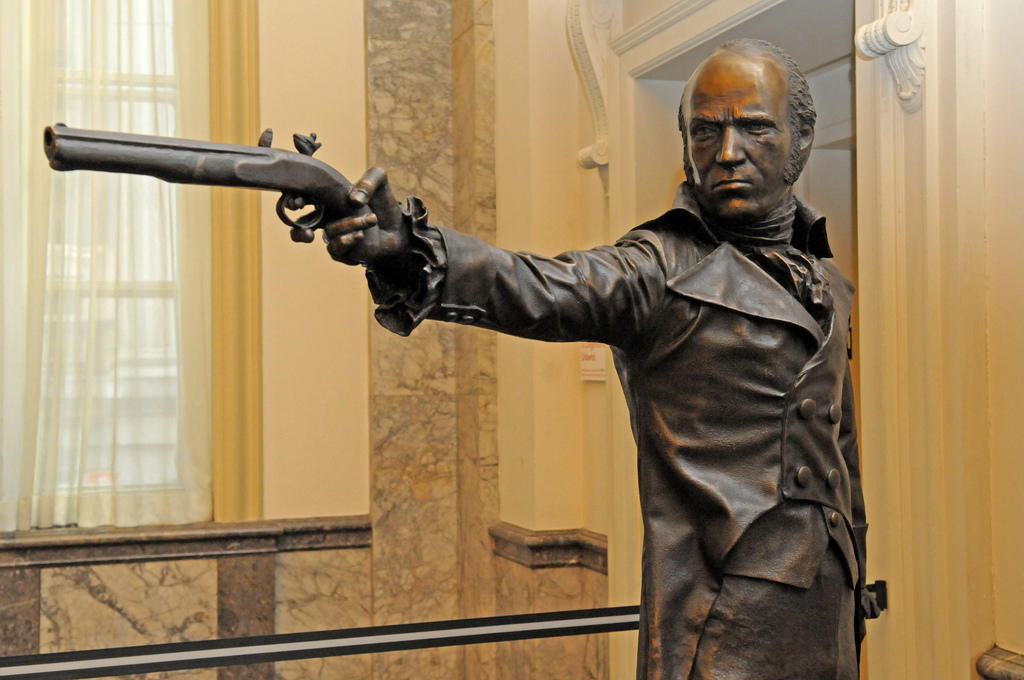
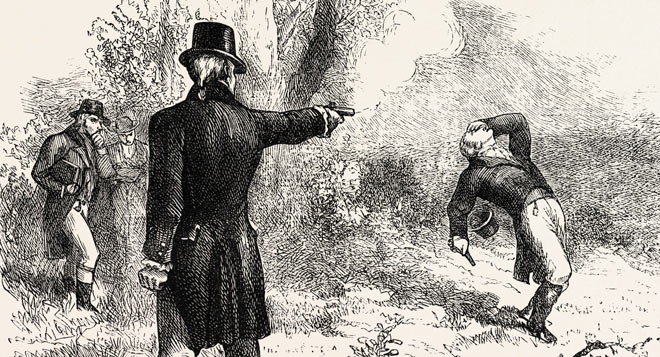
It was a humiliating defeat. Burr blamed Alexander Hamilton over comments made during the election, and challenged him to a duel. Dueling was illegal at this time but enforcement was lax in New Jersey. The pair rowed across the Hudson River with their “seconds”, meeting at the waterfront town of Weehawken. It was July 11, 1804. Hamilton “threw away” his shot, firing into the air. Aaron Burr shot to kill.
Murder charges were filed in both New York and New Jersey, but neither went to trial.
Aaron Burr went on to preside over Justice Chase’ impeachment, the high point of a career otherwise ended, the day he met Alexander Hamilton in Weehawken.
Burr headed for New Orleans where he got mixed up with one General James Wilkinson, one of the sleazier characters of the founding generation. At that time, Wilkinson was a paid agent for Spanish King Charles IV. 100 years later Theodore Roosevelt would say of Wilkinson, “In all our history, there is no more despicable character.”
Wilkinson took his payments in silver dollars, hidden in rum, sugar and coffee casks. All those clinking coins nearly undid him, when a messenger was caught and killed with 3,000 of them. The messenger’s five murderers were themselves Spaniards, who testified at trial the money belonged to the spy, James Wilkinson. Payment for services rendered to their King. Wilkinson’s luck held, as the killers spoke no English. Thomas Power, interpreter for the Magistrate, was another Spanish spy. He threw those guys so far under the bus, they’d never get out: ‘They just say they’re wicked murderers motivated by greed.’
The nature of Burr’s discussions with Wilkinson is unclear but, in 1806, Burr led a group of armed colonists toward New Orleans, with the apparent intention of snatching the territory and turning the place into an independent Republic. It’s probably safe to assume that Aaron Burr saw himself at the head of such a Republic.
Seeing no future in it and wanting to save his own skin, General Wilkinson turned on his former ally, sending dispatches to Washington accusing the former Vice President of treason. Burr was tracked down in Alabama on February 19, 1807, arrested for treason and sent to Richmond, Virginia, for trial.
The size and shape of the “Burr Conspiracy” remain unclear, to this day. Historians claim the Vice President intended to take parts of Texas and the Louisiana Purchase, forming his own independent Republic. Others claim he intended to conquer Mexico, That Aaron Burr had a following among prominent politicians and soldiers is beyond question, but estimates of their numbers range from forty, to over seven-thousand.
Burr himself claims only to have wanted the 40,000 acres in the Texas Territory, deeded him by the Spanish crown. On this there is no uncertainty. The lease still exists.
Burr was acquitted on September 1, on grounds he had not committed an “overt act” as specified in the Constitution. He was not guilty in the eyes of the law, but the court of public opinion would forever regard him as traitor. Aaron Burr spent the next several years in Europe before returning to New York, and resuming his law practice.
The Vice President who killed the man on our $10 bill, died in obscurity on September 14, 1836, at the age of 80.
If you enjoyed this “Today in History”, please feel free to re-blog, “like” & share on social media, so that others may find and enjoy it as well. Please click the “follow” button on the right, to receive email updates on new articles. Thank you for your interest, in the history we all share.


 Post journalist Carl Rowan insists the FBI sent at least one anonymous letter to Reverend Martin Luther King, Jr., urging the man to commit suicide.




 The doors to the Soviet Gulags opened after June 22, 1941, following Hitler’s surprise invasion of his Soviet “Ally”. While tens of thousands of free Poles worked their way to the assistance of France and Great Britain, these former POWs became the core of the Polish II Corps, numbering some 100,000 soldiers by 1945.
 Wojtek was small in the beginning, yet to be weaned from his mother’s milk and having trouble swallowing. Soldiers fed him condensed milk from an old vodka bottle, leading to honey or syrup and marmalade and whole fruit.


 My fellow children of the cold war will remember. A favorite complaint of the era was the semi-professional status of Soviet bloc athletes. Particularly those from East Germany and the Union of Soviet Socialist Republics.
 The Soviet attack was relentless, but Craig let nothing past. Team USSR took 39 shots on goal to the Americans’ 16, but the score held.


 Adults had no interest in the minuscule income, and left the newsboys (and girls) to their own devices. “Newsies” bought papers at discounted prices and peddled them on the street. Others worked saloons and houses of prostitution. They weren’t allowed to return any left unsold, and worked well into the night to sell every paper.
 For all that, newsies earned about 30¢ a day. Enough for a bite to eat, to afford enough papers to do it again the following day, and maybe a 5¢ bed in the newsboy’s home.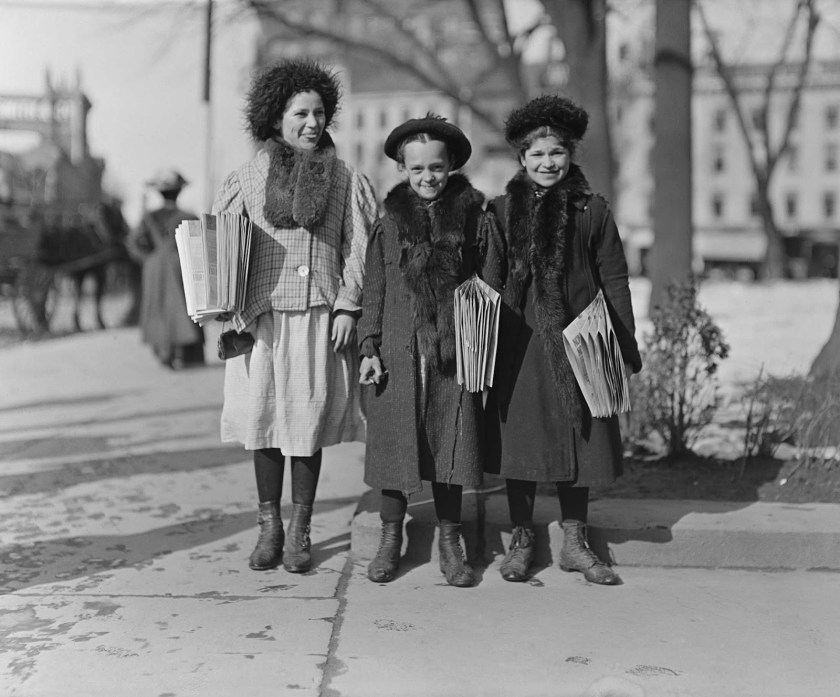







 During his last public performance given before a sell-out crowd at Madison Square Garden on May 11, 1977, the Mighty Atom wore a leather vest, emblazoned with a golden star of David.

 Jean Le Maistre, whose presence as Vice-Inquisitor for Rouen was required by canon law, objected to the proceedings and refused to appear, until the English threatened his life.
 The death sentence was carried out on May 30, 1431, in the old marketplace at Rouen. She was 19.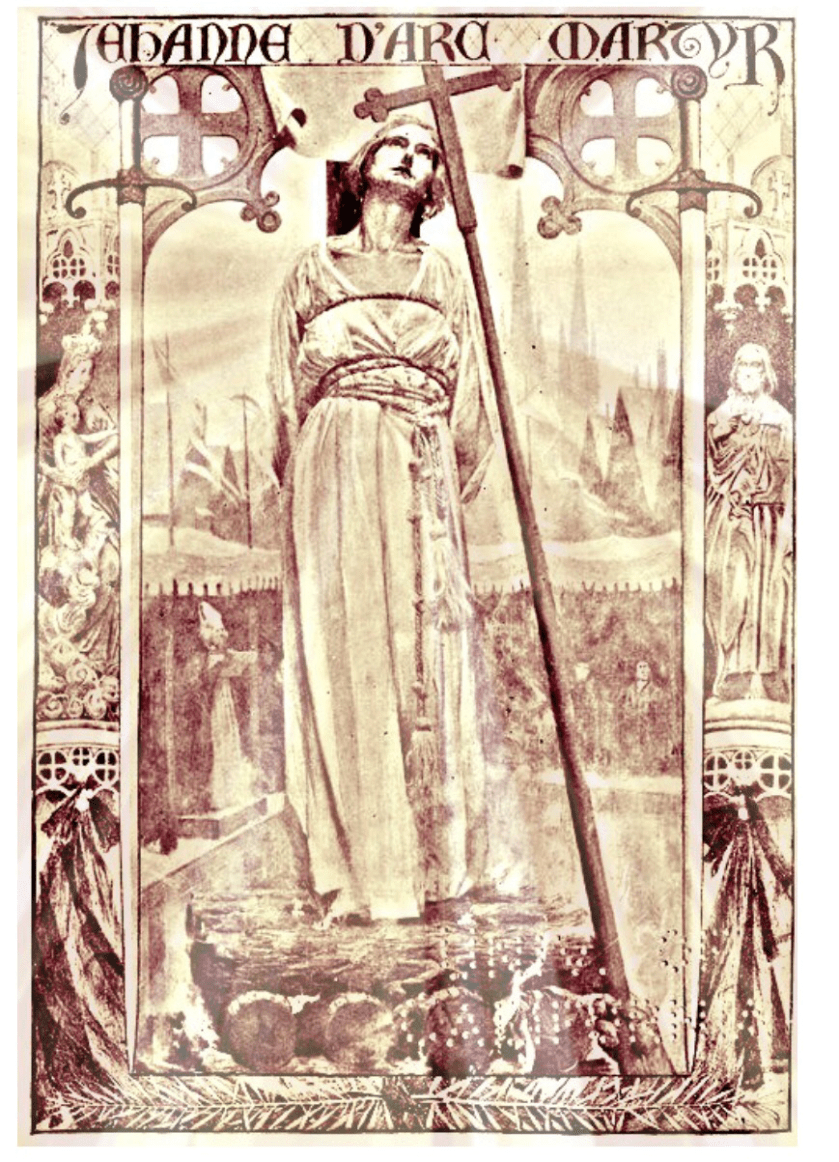


 “Quick to act when the lives of the small group were endangered by two grenades which landed directly in front of them, Private First Class Lucas unhesitatingly hurled himself over his comrades upon one grenade and pulled the other one under him, absorbing the whole blasting force of the explosions in his own body in order to shield his companions from the concussion and murderous flying fragments”.


 Murder charges were filed in both New York and New Jersey, but neither went to trial.



You must be logged in to post a comment.