


A story comes down to us from two thousand years. A tale of Emperor Nero, playing the fiddle while Rome burned.
Far be it for me to leap to the defense of a man who ordered the murder of his own wife and mother, except in the name of historical accuracy. The viol class of musical instruments to which the fiddle belongs, didn’t come along until the 11th century. If Nero played anything it was probably a Cithara, a heavy wooden instrument with four to seven strings.
No fewer than five versions come down to us about the Great Fire of 64AD, and the Emperor’s role in it. The Roman historian Tacitus tells us that Nero sang about the fall of Troy while the city burned, but admits to having no witnesses.
Cassius Dio and Suetonius ask us to believe, each in their turn, that Nero secretly sent guys out to burn the city, or, openly did so and watched from the tower of Maecenas while singing and playing the lyre, or, the fire was started by an obscure religious sect called “Christians”, or, Nero sent his guys out after all, but sang and played his lyre from a private stage or, the fire started by accident while Nero was away at Antium, rushing back 35 miles to help the now-homeless people of Rome. Be that as it may, three things are certain. First, The fire burned for six days, utterly destroying three of the 14 districts of Rome and severely damaging seven others. Second, Nero used the excuse of the fire to go after Christians, having many of them arrested and executed. Third, the Domus Aurea (“Golden Palace”) and surrounding “Pleasure Gardens” emperor Nero built on the ruins, would be the death of him.
Over the next three years, Emperor Nero built a vast palace complex over an area of more than 200 acres, linking existing buildings on the Palatine Hill with the Gardens of Maecenas and other imperial properties on the Esquiline hills and adding a grand colonnaded approach and vestibule surrounding an artificial lake.

One of the Great Wonders of antiquity, Nero’s “Golden house” was ruinously expensive, 300 rooms of dazzling white marble with pools in the floors and fountains splashing in corridors. There were jewel-encrusted walls and ivory clad columns. An enormous vaulted ceiling completing the dome of the main dining room. Slaves cranked an ingenious mechanism causing the ceiling to revolve like the heavens, as rose petals fluttered to the floor and atomized perfume spritzed on the assembled diners.
Suetonius described the complex as “ruinously prodigal”. Nero himself would say nothing further on the palace’s dedication, save to say that he “had at last begun to live like a human being”.

At the center of it all was the Colossus Neronis, the Colossus of Nero, a giant gilded bronze statue…of himself. Sources describe the thing as standing between 99′ and 121′ tall, roughly equivalent to the distance from the feet to the crown, of the Statue of Liberty.
With all of Italy “thoroughly exhausted by contributions of money” and “the provinces ruined”, the Emperor himself was universally hated. In June 68, a runner arrived to inform the emperor. He’d been tried in absentia and declared an enemy of the Roman people, sentenced to be returned to the Forum, and beaten to death.
Preparing himself for suicide, Nero paced up and down, muttering “Qualis artifex pereo”. “What an artist dies in me”. In the end, Nero was unable to take his own life. He forced his private secretary Epaphroditos, to do the deed.
Ironically, Nero’s demise may have been unnecessary. Notwithstanding the sentence of death, this was the end of Julio-Claudian dynasty. The Senate was reluctant to put an end to a deified bloodline, even in the form of such a reviled individual. Frantic negotiations were ongoing even as the emperor lay dying, to at least keep the man around, until he could produce an heir.
Nero’s days of being put out to stud, were never meant to be. For his successors, the profligate spending and outrageous lifestyle was a severe embarrassment. Within a decade, the palace and surrounding complex was stripped of its marble, jewels, and ivory embellishments. Within forty years, most of the grounds were filled with earth and built over, replaced by the Baths of Titus and the Temple of Venus and Rome. Vespasian drained the lake and built the Flavian Amphitheatre.
And still, the Colossus of Nero lived on.
In 69, Emperor Vespasian added a sun-ray crown and renamed the thing Colossus Solis, a dedication to the Roman sun god Sol Invictus (“Unconquered Sun”), patron of the legions and official Sun God of the late Roman Empire.
Around 128, Emperor Hadrian moved the statue from the Domus Aurea to just outside of the Colosseum, with a little help from the architect Decrianus and 24 elephants. Emperor Commodus removed the head and replaced it with a likeness of his own, but the head was restored after the death of Commodus, and so it remained. The Arch of Constantine, the last and largest of the Triumphal Arches of Rome and dedicated in AD315, was carefully positioned to align with Sol Invictus, so that the Colossus formed the dominant backdrop when approaching the Colosseum via the main arch.
Six years later, March 7, AD321, Constantine I “The Great” decreed Dies Solis – Day of the Sun or “Sun-day” – as the Roman day of rest (Codex Justinianus 3.12.2):
“On the venerable day of the Sun let the magistrates and people residing in cities rest, and let all workshops be closed. In the country however persons engaged in agriculture may freely and lawfully continue their pursuits because it often happens that another day is not suitable for grain-sowing or vine planting; lest by neglecting the proper moment for such operations the bounty of heaven should be lost”.\
Constantine’s day of rest remains all these 2,000 years later but the colossus of the Unconquered Sun, is gone. Where the thing went, nobody knows. The last known reference in antiquity dates back to the Calendar of 354, the earliest illuminated manuscript containing full page illustrations.

Nero’s Colossus may have been destroyed during the Sack of Rome, in 410. Perhaps it toppled in one of a series of 5th century earthquakes, the metal collected for scrap.
There is evidence that Sol Invictus outlived the western Roman Empire and survived into the early middle ages. Bede the Venerable, an English monk from the monastery of St. Peter in Northumbria, wrote sometime circa 672–735: “As long as the Colossus stands, Rome will stand, when the Colossus falls, Rome will also fall, when Rome falls, so falls the world“.
Nothing remains of the Colossus of Nero, save for the foundations of a pedestal at the second location, near the ruins of the Colosseum.


 Dr. Emerson died in 1842, leaving his estate to his wife Eliza, who continued to lease the Scotts out as hired slaves.


 The fifty gun HMS Romney arrived in May, 1769. Customs officials seized John Hancock’s merchant sloop “Liberty” the following month, on allegations the vessel was involved in smuggling. Already agitated over Romney’s impressment of local sailors, Bostonians began to riot. By October, the first of four regular British army regiments arrived in Boston.
 Edward Garrick was a wigmaker’s apprentice, who worked each day to grease and powder and curl the long hair of the soldier’s wigs.
 The two sides stopped for a few seconds to two minutes, depending on the witness. Then they all fired. A ragged, ill-disciplined volley. There was no order, just the flash and roar of gunpowder on the cold late afternoon streets of a Winter’s day. It was March 5. When the smoke cleared, three were dead. Two more lay mortally wounded and another six, seriously injured.


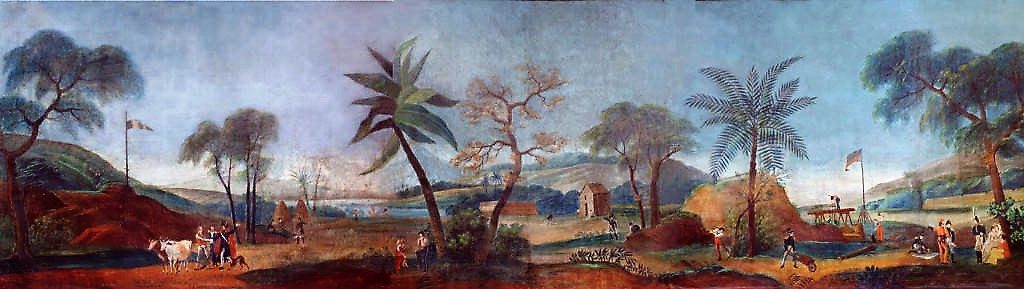
 Those first ten years of independence was a time of increasing unrest for the American’s French ally, of the late revolution. The famous
 Napoleon Bonaparte, crowned Emperor the following year, would fight (and win) more battles than Julius Caesar, Hannibal, Alexander the Great and Frederick the Great, combined.
 Jean-Simon Chaudron founded the Abeille Américaine in 1815 (The American Bee), Philadelphia’s leading French language newspaper. Himself a refugee of Santo Domingo (Saint-Domingue), Chaudron catered to French merchants, emigres and former military figures of the Napoleonic era and the Haitian revolution.
 In January 1817, the Society for the Vine and Olive selected a site near the Tombigbee and Black Warrior Rivers in west-central Alabama, on former Choctaw lands. On March 3, 1817, Congress passed an act “disposing of a tract of land to embrace four townships, on favorable terms to the emigrants, to enable them successfully to introduce the cultivation of the vine and olive.”
 General Charles Lallemand, who joined the French army in 1791, replaced Lefebvre-Desnouettes as President of the Colonial Society. A man better suited to the life of an adventurer than that of the plow, Lallemand was more interested in the wars of Latin American independence, than grapes and olives. By the fall of 1817, Lallemand and 69 loyalists had concocted a plan to sell the land they hadn’t yet paid for, to raise funds for the invasion of Texas.
 Little is left of the Vine and Olive Colony but the French Emperor lives on, in western Alabama. Marengo County commemorates Napoleon’s June 14, 1800 victory over Austrian forces at the Battle of Marengo. The county seat, also known as Marengo, was later renamed Linden. Shortened from the Napoleonic victory over Bavarian forces led by Archduke John of Austria, at the 1800 battle of Hohenlinden.


 Captain Henry Wirz, commandant of the stockade at Camp Sumter, was tried and executed after the war, only one of two men to be hanged for war crimes. Captain Wirz appeared at trial reclined on a couch, advanced gangrene preventing him from sitting up. To some, the man was a scapegoat. A victim of circumstances beyond his control. To others he is a demon, personally responsible for the hell of Andersonville prison.


 16th century Church doctrine taught that the Saints built a surplus of good works over a lifetime, sort of a moral bank account. Like “carbon credits” today, positive acts of faith and charity could expiate sin. Monetary contributions to the church could, so it was believed, “buy” the benefits of the saint’s good works, for the sinner.
 A popular story has Martin Luther nailing the document to the door of the Wittenberg Palace Church, but it may never have happened that way. Luther had no intention of confronting the Church at this time. This was an academic work, 95 topics offered for scholarly debate.
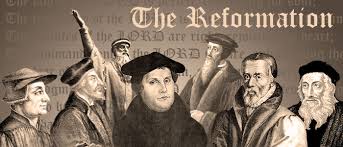 Luther stood on dangerous ground. Jan Hus had been burned at the stake for such heresy, back in 1415. On this day in 1420, Pope Martinus I called for a crusade against the followers of the Czech priest, the “Hussieten”.
 The papal bull had the effect of hardening Luther’s positions. He publicly burned it, on December 10. Twenty-four days later, Luther was excommunicated. A general assembly of the secular authorities of the Holy Roman Empire summoned Luther to appear before them in April, in the upper-Rhine city of Worms. The “Edict of Worms” of May 25, 1521, declared Luther an outlaw, stating “We want him to be apprehended and punished as a notorious heretic”. Anyone killing Luther was permitted to do so without legal consequence.

 The second month had 30 days back then, when Caesar renamed his birth month from Quintilis to “Julius”, in honor of himself. Rank hath its privileges. To this day, it’s why we have “July”. Not to be outdone, Caesar’s successor Caesar Augustus changed Sextilis to Augustus and, you got it, today we have August. The only thing was, that Augustus had only 29 days to Julius’ 31, and we can’t have that.
 There is an old legend that St. Bridget complained to St. Patrick back in the 5th century, that women had to wait too long for beaus to “pop the question”. Other versions of the story date back before English Law recognized the Gregorian calendar, meaning that the extra day had no legal status. Be that as it may, it is customary in many places for a woman to propose marriage on the 29th of February. According to legend, one old Scottish law of 1288 would fine the man who turned down such a proposal.
 “With great howling and lamentation” wrote Columbus’ son Ferdinand, “they came running from every direction to the ships, laden with provisions, praying the Admiral to intercede by all means with God on their behalf; that he might not visit his wrath upon them”.

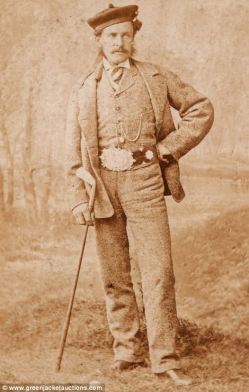


 The Father/Son team tee’d off in match against the brothers Willie and Mungo Park on September 11, 1875. With two holes to go, Young Tom received a telegram with upsetting news. His wife Margaret had gone into a difficult labor. The Morrises finished those last two holes winning the match, and hurried home by ship across the Firth of Forth and up the coast. Too late. Tom Morris Jr. got home to find that his young wife and newborn baby, had both died in childbirth.

 Established by act of Congress on July 9, 1918, the Silver Star is the third-highest decoration is the system of military honors, awarded to members of US armed services for valor in combat against an enemy of the United States. A search of public records reveals a long list of recipients of the Silver Star including the name “Ball, Harvey A. HQ, 45th Infantry Division, G.O. No. 281”.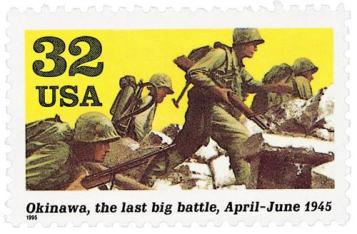



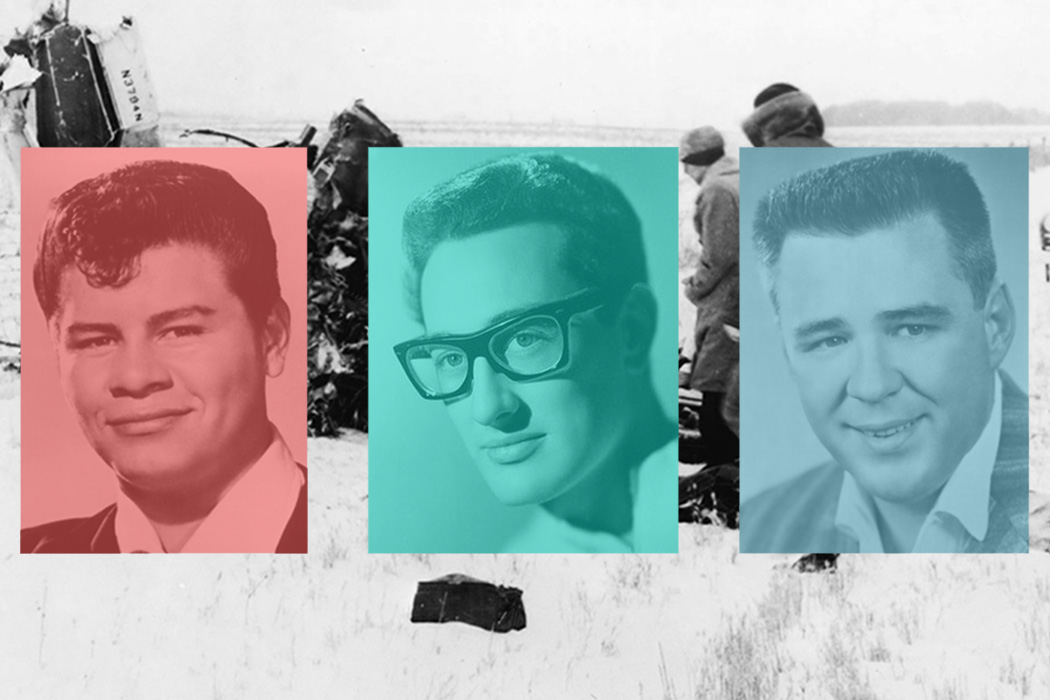
 58 years ago, his name changed as the result of a misspelling in a recording contract, Buddy Holly was headliner of the “The Winter Dance Party Tour”. Richardson, performing as the “Big Bopper” and Valenzuela, professionally known as Ritchie Valens, were on the tour, along with Dion and the Belmonts, Holly’s friend from Lubbock and fellow musician Waylon Jennings, and a young Owasso, Oklahoma Rockabilly musician and former “Crickets” band member, an enrolled member of the Cherokee Nation named Tommy Allsup.
 Holly was sick of it, and decided to charter a plane for himself and some of his guys. At least that would give them time to do laundry before the next performance.
 N3794N left the ground in a snowstorm, shortly after 1:00am on February 3. The pilot, Roger Peterson, may have been inexperienced with the instrumentation. He may have become disoriented in near-whiteout conditions. One wing hit the ground in a cornfield outside of Clear Lake and the aircraft corkscrewed into the ground, throwing the three musicians clear of the plane. There was no fire, barely a sound. Just a small aircraft swallowed whole, by a snow covered cornfield.
 A boy named Don McLean heard about the plane crash while doing his morning paper route. One day, the future singer/songwriter would pen the words “February made me shiver, with every paper I’d deliver”.


You must be logged in to post a comment.