The elegy has been set to music and featured in television series and movies the world over and even appears in the multi-player on-line game, World of Warcraft. Even so, the name and even nationality of the author, remained unknown.
For many among us, 2020 has been a time of grievous loss. My family is no exception.
During the 1930s, Mary Elizabeth Frye was a Baltimore housewife and amateur florist, the wife of clothing merchant, Claud Frye.
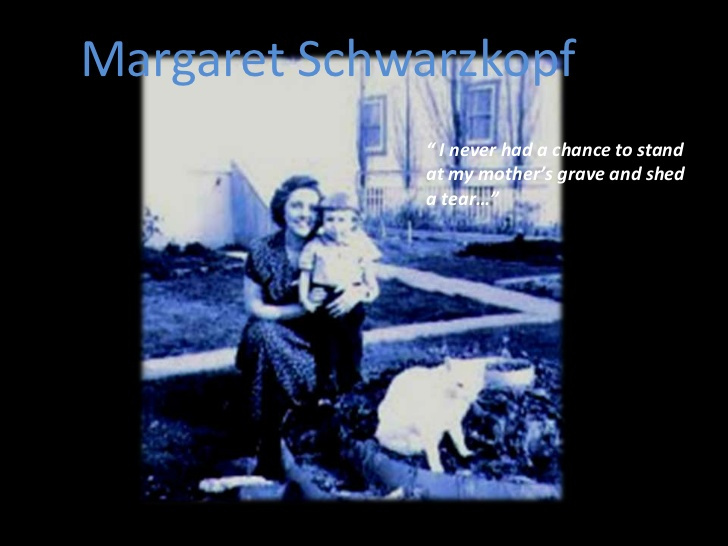
A young Jewish woman was living with the couple at this time, unable to visit her sick mother in Germany, due to anti-Semitic violence of the pre-war period. Her name was Margaret Schwarzkopf.
Margaret was bereft when her mother died, heartbroken that she could never “stand by my mother’s grave and shed a tear.” Mrs. Frye took up a brown paper shopping bag, and wrote out twelve lines. Eighty-seven words arranged in iambic tetrameter, save for two lines.
She didn’t title the poem, nor did she ever publish, or copyright the work. People heard about it and liked it. Frye would make copies and send them to those who asked, but that’s about it.
“Do not stand at my grave and weep…“
The short verse came to be read at funerals and similar occasions, the world over. The first four lines appear on the Chukpi Lhara, that cold and silent memorial to climbers who never returned, from the slopes of Everest. “Desperate Housewives” character Karen McClusky recited the verse as she spread the ashes of her best friend on a baseball field and yet, for three-score years and more, few knew from whence the elegy had come.
Chukpi Lhara
There were many claims to authorship, including attributions to traditional and Native American origins.
“I am not there. I do not sleep...“
The unknown poem has been translated into Danish, Dutch, French, German, Hebrew, Ilocano, Japanese, Korean, Russian, Spanish, Tagalog and other languages, appearing on countless bereavement cards and read over untold services.
In the United Kingdom, many heard it for the first time in 1995, when a grieving father read it over BBC radio in honor of his son, a soldier slain by a bomb in Northern Ireland. The son had left the poem with a few personal effects and marked the envelope ‘To all my loved ones’.
“I am a thousand winds that blow…“
For that year’s National Poetry Day, the British television program The Bookworm conducted a poll to learn the nation’s favorite poems. The top picks were published in book form, the preface describing the untitled work as “the unexpected poetry success of the year…despite it being outside the competition.”
The elegy has been set to music and featured in television series and movies and even appears in the multi-player on-line game, World of Warcraft.
Even so, the name, even nationality of the author, remained unknown.
“I am the diamond glints on snow…“
Abigail Van Buren, better known as “Dear Abby”, researched the history of the poem in 1998 and determined that Mrs. Frye was, after all, the author.
Mary Elizabeth Frye passed away in Baltimore Maryland on September 4, 2004. She was ninety-eight.
The Times of Great Britain published the work on November 5, as part of Frye’s obituary. ‘The verse demonstrated a remarkable power to soothe loss”, wrote the Times. “It became popular, crossing national boundaries for use on bereavement cards and at funerals regardless of race, religion or social status”.
And finally it came, the eleventh hour of the eleventh day of the eleventh month. The church bells rang out in celebration that day in 1918, even as his mother and father, opened the dread telegram. “Deeply regret to inform you, that…”
The words come down to us some 2,000 years from the Roman poet, Horace. Dulcē et decōrum est prō patriā mōrī. It is sweet and proper to die for one’s country.
When the “Great War” broke out in 1914, Wilfred Owen was working as a private English tutor, in Bordeaux. At first in no hurry to sign up, Owen considered joining the French Army before returning home, to England.
In October 1915, he enlisted in the Artists Rifles Training Corps. Originally formed in 1859, the Artists Rifles was a British special forces regiment, raised in London and comprised of painters, musicians, actors and architects, symbolized by the heads of the Roman gods Mars and Minerva.
It must have felt natural. Wilfred Owen was a poet, a talent first discovered about ten years earlier, at the age of ten or eleven.
Owen was commissioned Second Lieutenant after six-months training, and posted with the Manchester Regiment of line infantry. An application to the Royal Flying Corps was rejected in 1916 and he was shipped to France, joining the 2nd Manchester regiment near Beaumont Hamel, on the river Somme.
He was contemptuous of his men at first, considering them all to be louts and barbarians. He wrote home to his mother Susan in 1917, describing his company as “expressionless lumps”. The war was soon to beat that out of him.
Owen was close with his mother, his letters home telling a tale of mud and frostbite, of endless hours under heavy bombardment, sheltered only by a muddy, flooded dugout, of the fall through shell-shattered earth into the cellar below, that earned him a trip to the hospital. It would not be his last.
He was caught in an explosion during the bitter battle of St. Quentin, blown off his feet and into a hole, there to spend days fading in and out of consciousness amidst the mangled remains of a fellow officer.
Following this experience, soldiers reported Owen behaving strangely. He was diagnosed as suffering from neurasthenia or shell shock, what we now understand to be Post-Traumatic Stress Disorder, and sent to Craiglockhart War Hospital in Edinburgh, for treatment.
There, Dr. Arthur Brock encouraged Owen to work on his poetry, to overcome shell shock. There he met another patient, the war poet Siegfried Sassoon. The chance meeting would elevate Wilfred Owen to one of the great war poets, of his generation.
Owen’s work was different before this time, vaguely self important but never self pitying. Never the pacifist – he held those people in contempt – Owen’s nightmares now brought forth a savage honesty and bottomless compassion for the burdens of the ordinary soldier. Tales of trench life: of gas, of lice, of mud and death, of hell and returning to earth, steeped in contempt for the patriotic sentimentality of non-combatants and the slurs of cowardice, so lightly dispensed by the women of the “White Feather” movement.
Anthem for Doomed Youth gives a sense of this period:
What passing-bells for these who die as cattle? — Only the monstrous anger of the guns. Only the stuttering rifles’ rapid rattle Can patter out their hasty orisons.
Owen continued to write through his convalescence, his fame as author and poet growing with the late months of 1917 and into March of the following year. Supporters requested non-combat postings on his behalf, but such requests were turned down. It’s unlikely he would have accepted them, anyway. His letters reveal a deep sense of obligation, an intention to return to the front to be part of that life and to tell the story of the common man, thrust by his government into uncommon conditions.
Wilfred Owen well understood his special talent. He wanted to return to front line combat, made all the more urgent when Sassoon was once again wounded, and removed from the front.
Back in France, Owen captured a German machine gun position on September 29, for which he was awarded the Military Cross. Posthumously.
He wrote home to his mother on October 31, from the shelter of a cellar in a small wood called Bois l’Évêque, near the Sambre–Oise Canal. It was the last such note she would ever receive. “Of this I am certain” he wrote, ” you could not be surrounded by a band of friends half so fine as surround me here.”
Sambre-Oise Canal, now
The 44-mile Sambre-Oise Canal flows through the Meuse river basin, a network of 38 locks directing the water’s flow and connecting the Netherlands and Belgium with the central waterways of France. Forces of the 2nd Battalion Royal Sussex forced the canal on November 4 in coordination with elements of the 2nd Manchester Regiment and the Lancashire Fusiliers. British forces were to cross surrounding fields lined with high hedges, then to traverse the canal by portable foot bridges or climbing across lock gates.
The battle of the Sambre–Oise Canal was one of the last Allied victories of the Great War, but not without cost. Lock houses on the opposite side formed strong points for German defensive fire, from small arms and machine guns.
Wilfred Owen was leading a raiding party when the German machine gun barked and chattered to life, the bullets tearing into his body. The armistice ending the ‘War to End All Wars” was to come a week later, nearly to the hour.
Sambre-Oise Canal, then
The eleventh hour of the eleventh day of the eleventh month. The church bells of Shrewsbury rang out in celebration that day in 1918, even as Tom and Susan Owen, the 25-year-old’s mother and father, opened the dread telegram.
“Deeply regret to inform you, that…”
Wilfred March 18, 1893 – November 4, 1918
“Dulce et Decorum Est”
Bent double, like old beggars under sacks, Knock-kneed, coughing like hags, we cursed through sludge, Till on the haunting flares we turned our backs, And towards our distant rest began to trudge. Men marched asleep. Many had lost their boots, But limped on, blood-shod. All went lame; all blind; Drunk with fatigue; deaf even to the hoots Of gas-shells dropping softly behind.
Gas! GAS! Quick, boys!—An ecstasy of fumbling Fitting the clumsy helmets just in time, But someone still was yelling out and stumbling And flound’ring like a man in fire or lime.— Dim through the misty panes and thick green light, As under a green sea, I saw him drowning.
In all my dreams before my helpless sight, He plunges at me, guttering, choking, drowning.
If in some smothering dreams, you too could pace Behind the wagon that we flung him in, And watch the white eyes writhing in his face, His hanging face, like a devil’s sick of sin; If you could hear, at every jolt, the blood Come gargling from the froth-corrupted lungs, Obscene as cancer, bitter as the cud Of vile, incurable sores on innocent tongues,— My friend, you would not tell with such high zest To children ardent for some desperate glory, The old Lie: Dulce et decorum est Pro patria mori.
The atomic explosions at Hiroshima and Nagasaki were a short nine years in the past in 1954 when a ferocious, anti-nuclear sentiment began to build in Japan. In this context there arose a metaphor for the titanic destruction wrought by the atomic bombs. A Great Beast, literally rising from the sea, the product of the Japanese entertainment industry.
It was 6:45am local time on March 1, 1954, when a flash lit up the sky over the Pacific, like the sun itself. Then came the sound. An explosion outside the experience of all but the tiniest fraction among us, followed by the mushroom cloud, towering into the atmosphere. It was a test, the detonation of a TX-21 thermonuclear weapon with a predicted yield of 6 megatons with the unlikely codename, of “Shrimp”.
The 23 men of the fishing boat Daigo Fukuryū Maru (“Lucky Dragon No.5”) were working the grounds near the Marshall Islands that day, in the equatorial Pacific. For a full eight minutes, these twenty-three men watched the characteristic mushroom cloud rise above them. An hour and a half later came the fallout, the fine white dust, calcinated coral of the Bikini atoll, falling from the sky, like snow.
None among the twenty-three recognized the material as hazardous, and made no effort to avoid exposure. Some men even tasted the stuff.
Over the next three days, several fishermen developed acute radiation sickness. By the time they returned to Yaizu two weeks later, all 23 were suffering from nausea, headaches, bleeding from the gums and other symptoms. One was destined to die six months later from a liver disorder, brought on by radiation sickness. They had entered the ranks of that most exclusive of clubs that no one, Ever, wanted to join. They were “hibakusha”. The “explosion-affected people”.
The atomic explosions at Hiroshima and Nagasaki were a short nine years in the past in 1954 when a ferocious, anti-nuclear sentiment began to build in Japan. In this context there arose a metaphor for the titanic destruction wrought by the atomic bombs. A Great Beast, literally rising from the sea, the product of the Japanese entertainment industry. A monster, “Godzilla”, Ishirō Honda’s first film released by Toho Studios on this day, in 1954.
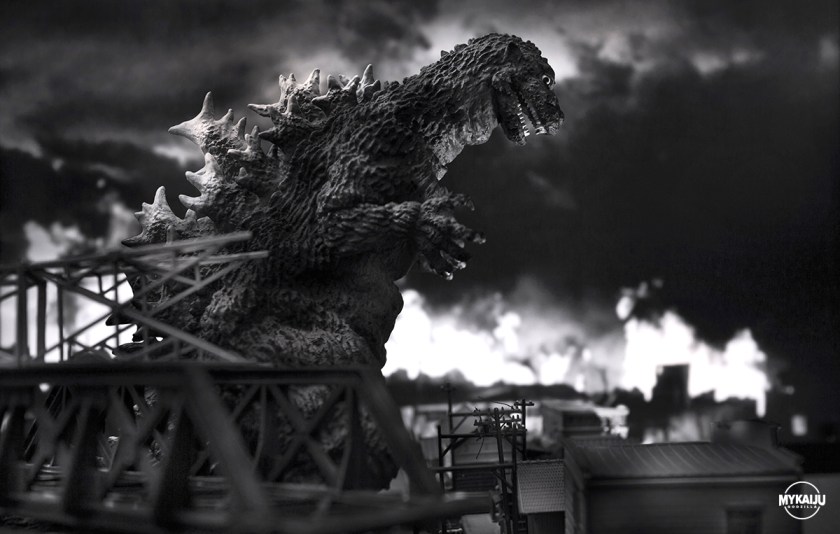
The name is a portmanteau, two words combined to form a third, of the Japanese word “gorira”, (gorilla), and “kujira”, meaning whale. Godzilla was the Gorilla Whale with the head of a Tyrannosaur, Stegasaur-like plates on his back and skin modeled after the hideous keloid scarring, of the hibakusha.
The original Godzilla (“ɡodʑiɽa”) was awakened by atomic testing and impervious to any but a nuclear weapon. Emerging from the depths with his atomic breath, havoc and destruction was always accompanied by the distinctive roar, a sound effect made by rubbing a resin glove down the strings of a bass violin and then changing the speed, at playback.
The actor who played Godzilla in the original films, Haruo Nakajima, was a black belt in Judo. His expertise was used to choreograph the monster’s movements, defining the standard for most of the Godzilla films, to follow.
Originally an “it”, Godzilla was usually depicted as a “he”, although that became a little complicated with the 1998 American remake when “Zilla” started laying eggs.
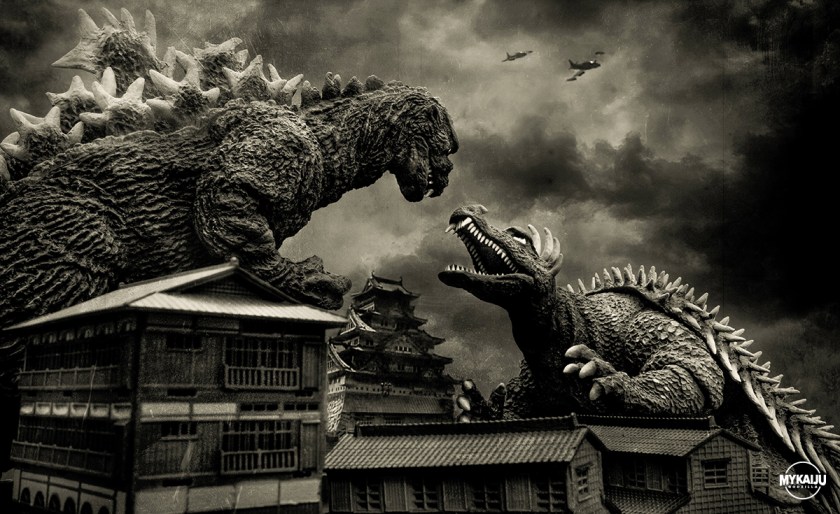
He was a Kaiju, a Japanese word meaning “strange creature”, more specifically a “daikaiju”, meaning a really, really big one. Godzilla is the best known but certainly not the only such creature of the Japanese entertainment industry. You may remember other kaiju including Gamera, Mothra, King Ghidorah, Mechagodzilla and Rodan.
Godzilla has appeared in 28 original films, with more in the works. Over the course of his existence he has been a hero, a villain, and a destructive but values-neutral force of nature.
Godzilla got his own star on the Hollywood “Walk of Fame” in 2004, timed to coincide with the release of the 29th film of the genre, “Godzilla: Final Wars.” Instead of nuclear weapons testing, this version was spawned by “environmental pollution”. It takes the superheroes of the “Earth Defense Organization” (but, of course) to freeze him back into the ice of the South Pole.
The film was a flop, grossing less than $12 million after a production budget over half again, as large.
The franchise came roaring back ten years later, when Godzilla was released in 2014, grossing $200 million domestically with $529.1 million in worldwide sales.
To this day, the man who played those original 12 films is considered the best “suit actor”, in franchise history. In 2018, asteroid 110408 Nakajima was named in his memory.
A film franchise 66 years in the making is still going strong and will continue to do so, for the foreseeable future. Godzilla: King of the Monsters released in 2019 with a Box Office of $386.6 million and a production budget, of less than $200 million. Godzilla vs. Kong, originally scheduled for release this year, went the way of so many things in 2020 and fell victim, to the Chinese Coronavirus. The 36th film in the series is complete and currently scheduled for release in May, 2021.
Much has been written of 1930’s Japan and the military officers, who brought the nation to war. How different the 20th century could have been, had those guys picked up baseball, instead.
Baseball as we know it was introduced to the country in 1872. To this day, the game remains the most popular sport in the nation for participants and spectators, alike. In 1907, Tsuneo Matsudaira commented: “the game spread, like a fire in a dry field, in summer, all over the country, and some months afterwards, even in children in primary schools in the country far away from Tōkyō were to be seen playing with bats and balls“.
Oh. Did I neglect to mention? The nation we’re talking about, is Japan.
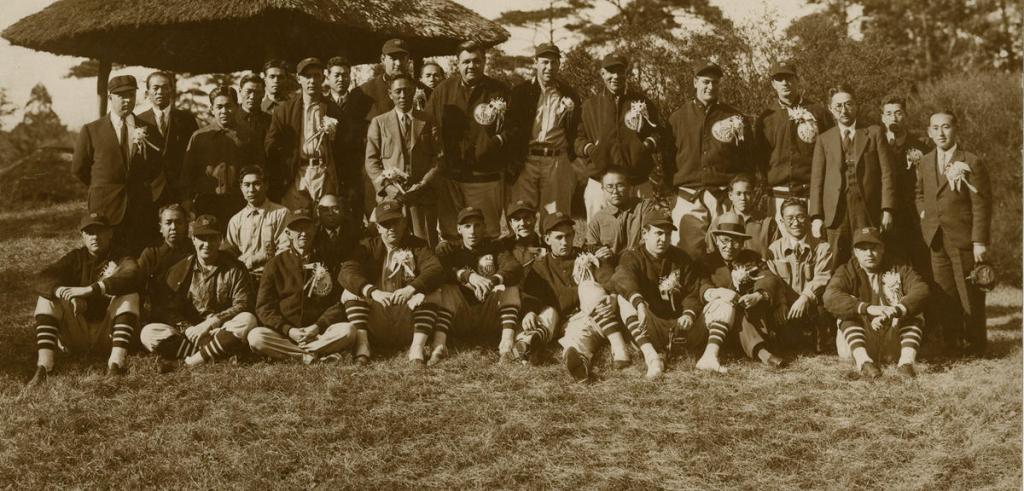
Professional baseball got off to a rocky start in 1920s Japan and continued to flounder, until 1934. That’s when media bigwig Matsutarō Shōriki pulled off a “goodwill tour” with an all-star American team including Babe Ruth, Jimmie Foxx, Lou Gehrig, Connie Mack and Charlie Gehringer. Even Moe Berg was part of that 1934 entourage, the Jewish catcher known as “the brainiest guy in baseball,” who went behind enemy lines during World War 2, to spy on Nazi Germany.
“The [1934] party included future Hall of Famers Earl Averill, Lou Gehrig, Charlie Gehringer, Lefty Gomez, Connie Mack, Foxx and Ruth, along with several other American Leaguers (asked to accompany the tour when the National League forbade its stars from coming along). Even Moe Berg, the big league catcher who would eventually work as a United States government spy, was a member of the ball playing entourage”. H/T baseballhall.org
Much has been written of 1930’s Japan and the military officers, who brought the nation to war. How different the 20th century could have been, had those guys picked up baseball, instead.
The first Japanese professional league was formed in 1936, becoming large enough to split into two leagues in 1950, the Central and Pacific.
Today, the Kansai region of Honshu is the 2nd largest metropolis, in all Japan. That’s where you’ll find the Hanshin Tigers, those perennial underdogs of Nippon Professional Baseball and arch-rival to the Yomiuri Giants of Tokyo, widely regarded as the kings of Japanese baseball.
As a life-long Red Sox fan, this story is beginning to sound familiar.
35 years ago today was a time of unbridled joy for delirious Tigers fans, following Hanshin’s 6-2 drubbing of the Seibu Lions to win the ultimate prize, the Japan series pennant of 1985.
Now you may not know this, but Japan is one of the largest markets in the world for Kentucky Fried Chicken, #3 behind the United States and China. Not bad for a fast food outfit that opened its first Japanese franchise, only fifteen years earlier.
The Boston baseball fan is well acquainted with the “Curse of the Bambino”, the 86-year World Series championship drought, second only to the “Curse of the Billy Goat” that denied victory to long-suffering Chicago fans, for 106 years.
Since 1985, Japanese mothers have scared wayward children into acting right, with the curse of Colonel Sanders.
The Hanshin club emerged victorious in 1985, due in large part to the efforts of American slugger, Randy Bass. Delirious after unexpected victory in game one and superstitious as baseball fans the world over, Hanshin supporters gathered at the Ebisu Bridge over the Dōtonbori river in Osaka, to partake in one of the most bizarre spectacles, in modern sports.
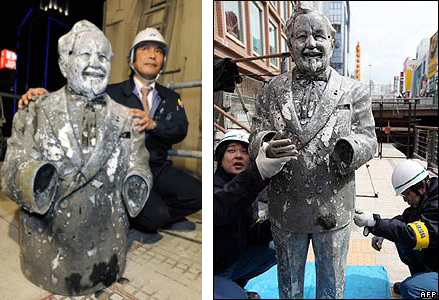
Fans would shout out the names of Tigers players and someone who resembled that player, even vaguely, would jump into the river. There being no Caucasians in attendance to represent Mr. Bass, the crowd took hold of a storefront statue of Harlan Sanders, and threw it into the River.
What the hell. They both had beards.
Thus began the curse of Colonel Sanders, a losing streak brought on by the ghost of a man who didn’t appreciate being thrown into a river. Brief rallies in 1992 and again in ’99 brought hope once again to the Hanshin faithful, (gosh, this story sounds Really familiar now), only to have cruel fate, block the way. Repeated efforts were made to retrieve the Colonel from the river, only to be met with failure. The curse, dragged on.
The joy of victory smiled upon the land of Hanshin once again in 2003, when Yomiuri Giants MVP Hideki Matsui was traded to the New York Yankees, clearing the way to a Central League pennant for Hanshin. Even so, final victory remained elusive. The Japan series went to the Fukuoka Daiei Hawks that year, in 7 games.
Celebration turned to tragedy that year, when thousands of Tigers fans jumped into the river. 24-year-old Masaya Shitababa, drowned. The Osaka city council ordered construction of a new bridge over the Dōtonbori beginning in 2004, making further such jumps, next to impossible.
Divers discovered the upper part of Harlan Sanders’ statue on March 10, 2009 and the lower piece, the following day. And yet the Colonel’s other hand and eyeglasses, were nowhere to be found.
Colonel Sanders’ left hand and spectacles remain missing to this day and the KFC where it all started, is closed and gone forever. So it is for long suffering fans of the Hanshin Tigers, the curse of Colonel Sanders, lives on.
“Dangerous! Do not dive into this river. Osaka Regional Development Bureau and Osaka-Minami Police station” sign at the new Ebisubashi bridge H/T Wikipedia
For NHL hockey, the face mask became standard equipment on this day, in 1959. I’m not sure if goalies are any prettier these days, but they have a lot more teeth.
In the Netherlands, modern ice hockey began sometime in the 16th century. North Americans have played the sport since 1855. For all that time, flying hockey pucks have collided with the faces of goaltenders. The results have not have been pretty.
The name of Montreal Canadien goal tender Jacques Plante is engraved five times on Lord Stanley’s cup, once for each of five consecutive championships between 1956, and ‘60.
For a lifelong Bruins fan, that isn’t easy to say.
Original caption: 11/1/1959-New York, NY- His face and shirt bloodied, Montreal Canadiens goalie Jacques Plante puts on a special plastic mask after being treated for a facial cut received in the opening period of the Rangers-Canadiens hockey game. Plante suffered a severe gash on the left side of his face when he was struck by a shot off the stick of Andy Bathgate of the New York Rangers. After donning the mask, which he had designed himself, Plante returned to the game. November 1, 1959 New York, New York, USA
Plante literally wrote the book on NHL goal tending. He was the first to take the position outside of the crease, making himself the third defenseman. He was the first to take the puck behind the net and the first to bring anything even vaguely resembling stick handling, to the position. Before Plante, a Goalie’s job was pretty much to deflect the puck and let the defenders take it from there.
On this day in 1959, Jacques Plante decided he’d had enough. It was three minutes into a game with the New York Rangers when he took a puck to the nose on a shot fired by Andy Bathgate. The puck broke his nose, opening a wound requiring seven stitches to close. When Plante returned to the ice, he was wearing a fiberglass mask.
Coach Toe Blake was furious. He had allowed the mask during practice, but this was regulation. Nobody wore a mask. Coaches believed they cut the goaltender’s field of vision, and, besides. These were supposed to be the “fearless” guys, who jumped in front of the puck.
Easy for him to say. It wasn’t his face. Plante was adamant, and Blake wasn’t about to bench the best goalie in the NHL. There would be one more game when Plante played without the mask, the only game the Canadiens lost in that series, and that was the end of it.
For Jacques Plante, the mask had now become standard equipment.
In 1966, Life Magazine published an image of Toronto Maple Leafs goalie Terry Sawchuk, “a face only a hockey puck could love“. “Re-created here, by a professional make-up artist and a doctor” read the accompanying article, “are some of the more than 400 stitches he had earned during 16 years in the National Hockey League. Terry Sawchuk’s face was bashed over and over, but not all at one time. His wounds healed. The scars weren’t easily seen – except for a few of them. The re-creation of his injuries was done to help show the extent of his injuries over a span of years”.
During a 1968-’69 season playoff game against the Boston Bruins, a puck fired by Phil Esposito hit Plante in the forehead, knocking him out, cold. He later said that the mask had saved his life. He’s probably right.
Gerry Cheevers, who played for the 1970-’72 Bruins, famously had his mask marked up with stitches. That started when a puck hit him in the face during practice. When Bruins coach Harry Sinden followed Cheevers to the dressing room, he found the goalie enjoying a beer and smoking a cigarette. Sinden sent Cheevers back out on the ice and John Forestall, the team trainer, painted stitches on his mask. Every time Cheevers was hit after that, he would have new stitches painted on. The mask became one of the most recognizable symbols of the era, and now hangs on the wall of his grandson’s bedroom.
Gerry Cheevers
Jacques Plante wasn’t the first NHL goaltender to wear a face mask. Montreal Maroons’ Clint Benedict wore a crude leather mask in 1929, to protect a broken nose.
Montreal Maroon’s goaltender Clint Benedict, 1930
It was Plante who introduced the face mask as everyday equipment, now a mandatory fixture for all goaltenders.
I’m not sure if NHL goalies are any prettier these days, but I bet they have a lot more teeth.
An historical ghost story, for your Halloween enjoyment. But there are no such things as ghosts…Right?
An historical ghost story, for your Halloween enjoyment. But there are no such things as ghosts…Right?
Albany, New York businessman Jared Rathbone passed away in 1845, leaving a considerable fortune to his widow Pauline, and their four children.
New York Supreme Court Justice Ira Harris, himself a widower, joined his household with hers when the couple married, in 1848. There were now eight kids. A regular 19th-century “Brady Bunch.”
Pauline’s son Henry and Ira’s daughter Clara became close friends and later, more. Much more. They were step-siblings, yes, but there was no “blood” between them. Such a relationship seems not to have been so ‘odd’ then, as it may seem, today.
With the incoming Lincoln administration, Ira Harris was elected to the United States Senate, replacing Senator William H. Seward who’d been picked to serve in the new administration.
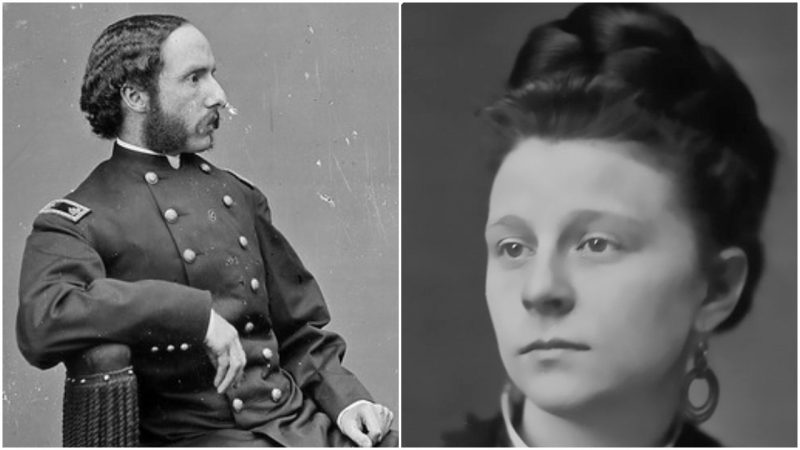
By the time of the War between the States, Clara Harris and Henry Rathbone were engaged to be married.
Rathbone served the Union army for the duration of the war, becoming Captain in the 12th Infantry Regiment and participating in the battles at Antietam and Fredericksburg. By the end of the war, Rathbone had attained the rank of Major.
Meanwhile, Senator Harris’ daughter Clara had conceived a friendship with the First Lady of the United States, Mary Todd Lincoln.
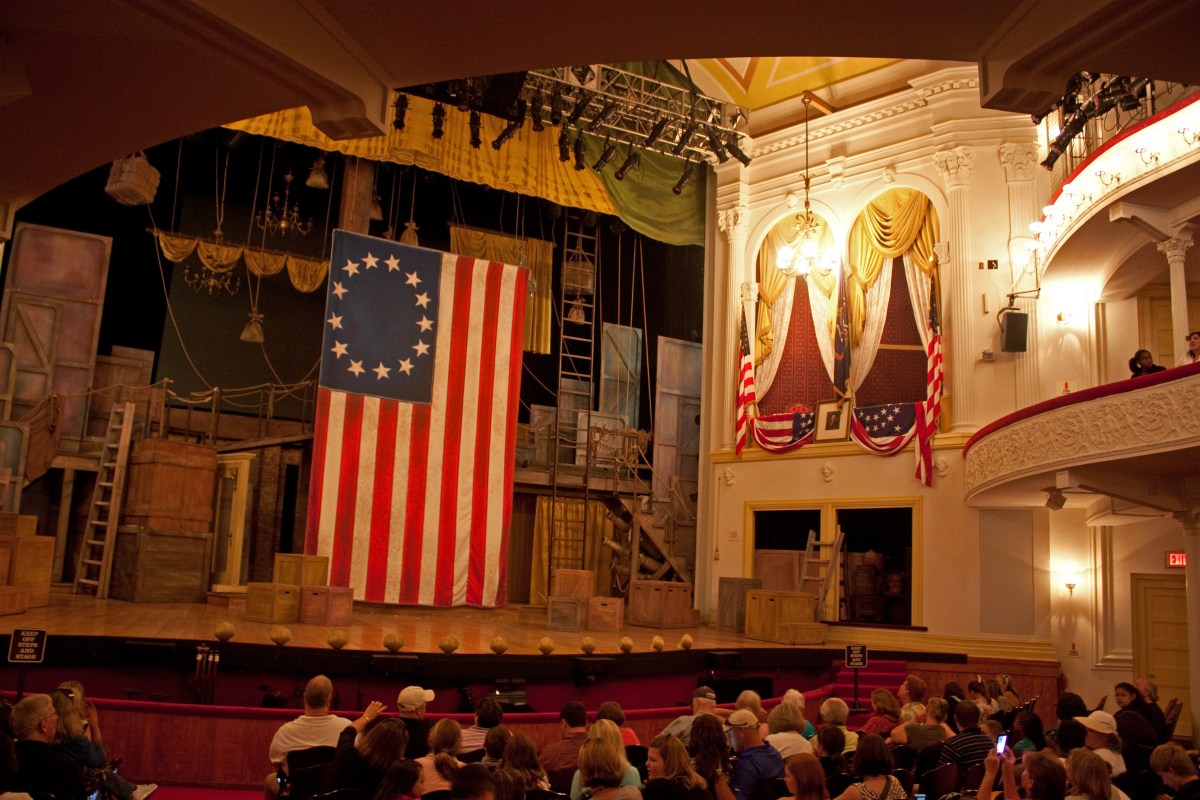
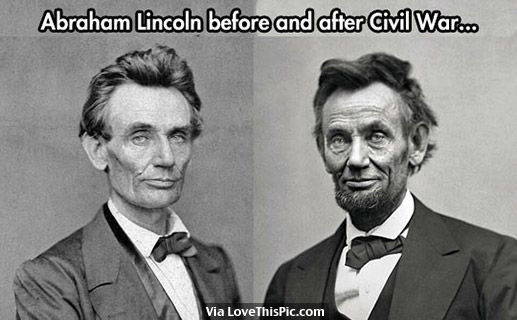
If a picture is worth a thousand words, before and after photographs tell of the burdens, born by the chief executive of a nation at war with itself. Making matters worse, the Lincolns had lost two of their four boys in childhood, by war’s end. In April 1865, a night out must have seemed like a welcome break. An evening at the theater. The play, a three-act farce by English playwright Tom Taylor. “Our American Cousin”.
The Lincoln’s companions for the evening were to be General Grant and his wife, Julia, but the General had other plans. It was probably convenient, because the ladies didn’t get along. Mary suggested her neighbor Clara Harris, of whom she was quite fond. And besides, didn’t her fiancée cut a dashing figure, in his blue uniform.
The story of that night is familiar, the assassin creeping up from behind. The mark of the coward.
John Wilkes Booth was himself one of the great actors of his day, with the actor’s impeccable sense of timing. The assassin chose his moment, carefully. Raucous laughter and applause could be expected to follow the line “Don’t know the manners of good society, eh? Well, I guess I know enough to turn you inside out, old gal — you sockdolagizing old man-trap!”
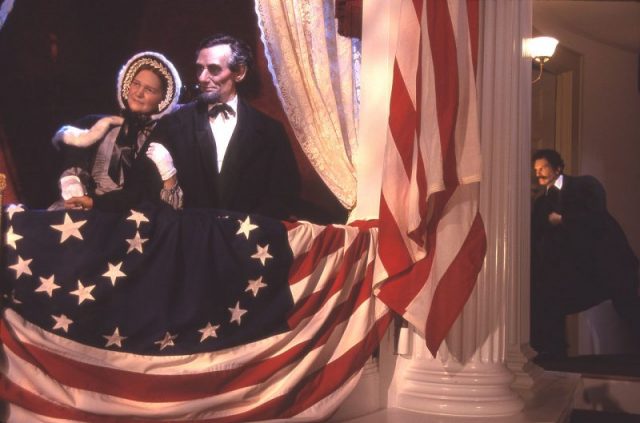
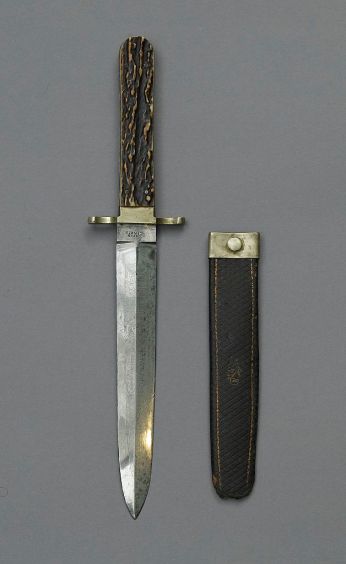
The bullet was fired at point-blank range, entering the President’s skull behind the left ear and coming to rest, behind the right eye. Rathbone sprang to the attack but the assassin was ready, the dagger slashing the major nearly bone-deep, from shoulder to elbow. Rathbone made one last lunge, knocking Booth off balance as he leapt to the stage, below. Witnesses remembered that he cried out “Sic Semper Tyrannis”. Thus always, to tyrants. And then, he was gone.
In the President’s box, all was chaos. The first lady was inconsolable, sobbing, apoplectic, shrieking like a wildcat. Rathbone was losing blood at a prodigious rate, a major artery severed in the fight.
John Wilkes Booth dagger, used to attack Rathbone
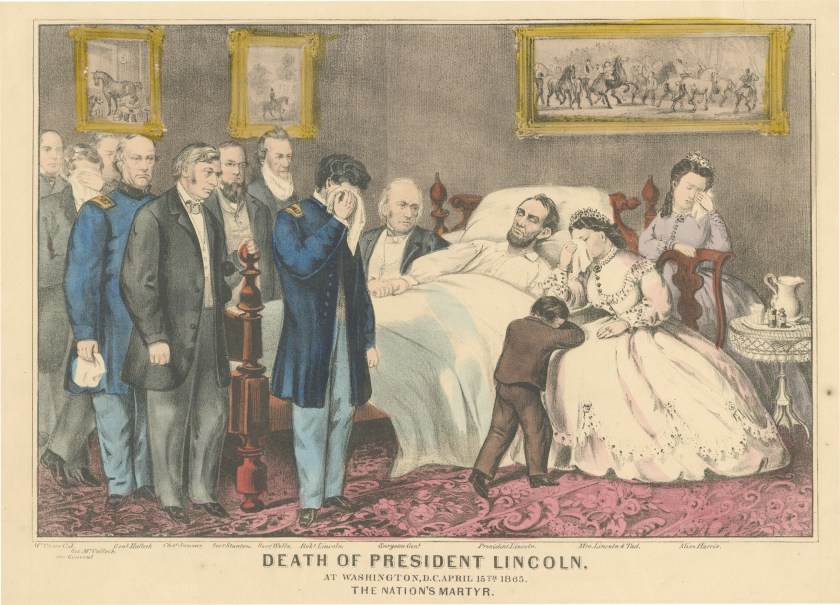
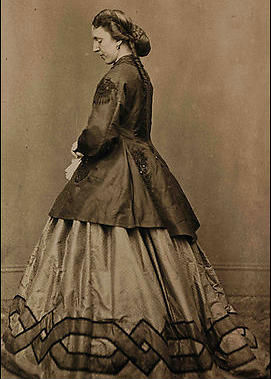
Clara’s new dress was drenched in the blood of her fiancée, her face splashed and clothing soaked through layers of petticoats to the skin, beneath. The small group was taken across the street to the Peterson house, the President laid out on a bed. Henry Rathbone faded in and out of consciousness due to blood loss, raving in his delirium how he should have caught the assassin, his head on Clara’s lap, her handkerchief stuffed into the void where the bicep used to be.
She didn’t even have time to wash her blood-spattered face. Mary Lincoln would just begin to calm down when she’d see Clara and fall apart, wailing “My husband’s blood!”. It wasn’t, but, no matter. Perception is reality, right?. The death vigil lasted this way, for nine hours. The 16th President of the United States passed away at 7:22 the following morning, April 15, 1865.
Major Rathbone would heal in time, but he never came to terms with his failure to protect the President. He was tormented, distraught with guilt, unable to understand what he could have done differently, but, What!? Surely there must have been…Something.
Clara Harris couldn’t bring herself to wash that dress, nor to burn it. She hung it in a guest room closet, blood and all, in the family’s vacation home in New York.
What demons afflicted the mind of Henry Rathbone can only be guessed at, as a mental illness which had no name, crept into his soul. He was possessed with that night. Was I not quick enough? Or brave enough? Or Strong enough? It was MY fault. A Better Man would have taken that bullet. Or Stopped that man. No he wouldn’t…yes he would…but…I…what, the, hell, is WRONG WITH ME???!!!
The dress
Washington DC was saturated with All Things Lincoln in April 1866, and Clara fled to the family home in Albany, to get away. There in that closet hung the bloody dress. On the anniversary of the assassination, she heard laughter, she knew she did, coming down the hall. Lincoln’s laughter.
Others reported the same thing in the following years. The sound of laughter. A single gun shot.
But there are no such things as ghosts…Right?
Major Rathbone and Clara Harris were married in July 1867 and the couple had three children, Henry rising to the rank of brevet Colonel, in 1870. That was the year he resigned from the army, but work was hard to come by, due to increasing mental instability.
Rathbone convinced himself that Clara was unfaithful, that she planned to take the kids away. He would fly into rages, with little or no provocation. She considered divorce but couldn’t bear the thought, nor the stigma.
Clara went so far as to have the closet bricked up with that dress inside, like Edgar Allen Poe’s Montresor bricked up Fortunato. That changed, precisely, nothing. The family traveled to Europe and back in search of a cure, but Rathbone’s condition only worsened.
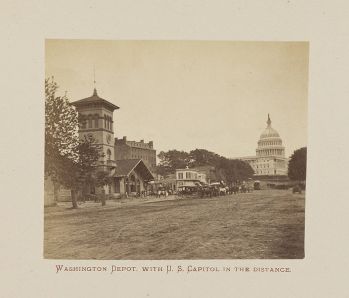
US Capitol as it looked, in 1872
Despite all this or possibly because of it, President Chester A. Arthur appointed Rathbone US Consul to the Province of Hannover in Germany, in 1882.
“Trick or Treating” had yet to take hold by this time, back in the United States. For most, October 31, 1883 passed pleasantly enough: Fall festivals, children bobbing for apples, young women consulting mirrors or tossing nuts into fires, to see whom they would marry. Not so, Henry Rathbone. He had Monsters in his head.
Two months later, December 23, Henry Rathbone shot his wife, and stabbed himself, in the chest. Six times. He lived. She died.
He said he was defending his wife, against an attacker.
The three children, Henry Riggs, Gerald Lawrence and Clara Pauline went to live with relatives. Henry Reed Rathbone was convicted of their mother’s murder and committed to an asylum for the criminally insane in Hildesheim, Germany, there to spend the next twenty-eight years.
Henry Reed Rathbone died on August 14, 1911 and was buried, next to Clara.
In 1922, Henry Riggs Rathbone would be elected to the United States House of Representatives. Twelve years earlier he unbricked his mother’s closet and burned the hated dress, the dress that had stolen his childhood, murdered his mother, and cursed his father.
But there are no such things as ghosts…Right?
“The modern day home where Union Army Officer Henry Rathbone and Clara Harris resided”. Hat tip, HISTORIAN’S OFFICE, TOWN OF COLONIE.
Afterward
Burial customs are different in Germany, than in the United States. Grave plots are generally leased for a period of 20 to 30 years, with an option to renew. In 1952, officials with the city cemetery at Hanover/Engesohde looked over visitation records and determined there was no further interest, in Clara Harris or Henry Rathbone. The couple was exhumed and their remains burned, and disposed of. Like they had never even lived.
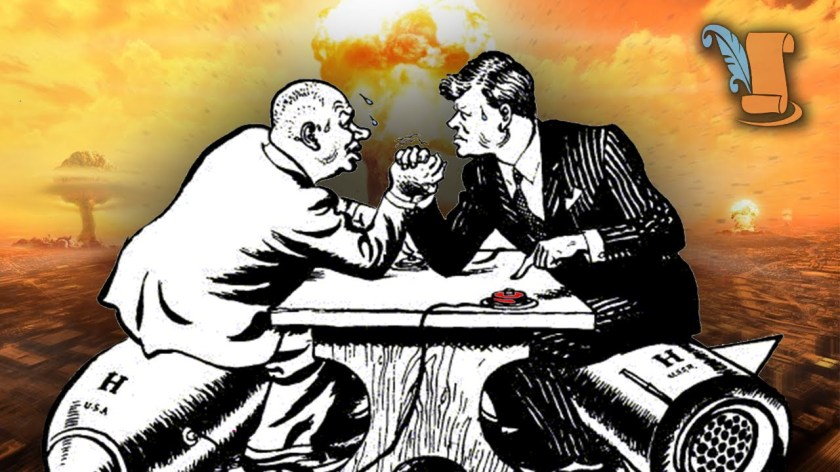
The Cuban Missile Crisis was never reflected on the doomsday clock. The deadlock broke before circumstances could be fully determined and the clock, reset. Even so, the events of October 1962 brought us closer to the brink than any other time in history, before or since. A scant handful of seconds is all that remained, before worldwide nuclear incineration.
In 1947, members of the Science and Security Board of the Bulletin of Atomic Scientists envisioned a “Doomsday Clock”, a symbolic clock face to dramatize the threat of global nuclear catastrophe. Initially set at seven minutes to midnight, the “time” has varied from seventeen minutes ’til with the 1995 collapse of the Soviet Union, to two minutes before midnight with “Operation Ivy”, the first American thermonuclear detonation, in 1952.
The Cuban Missile Crisis was never reflected on the doomsday clock. The deadlock broke before circumstances could be fully determined and the clock, reset. Even so, the events of October 1962 brought us closer to the brink than any other time in history, before or since. A scant handful of seconds is all that remained, before worldwide nuclear incineration.
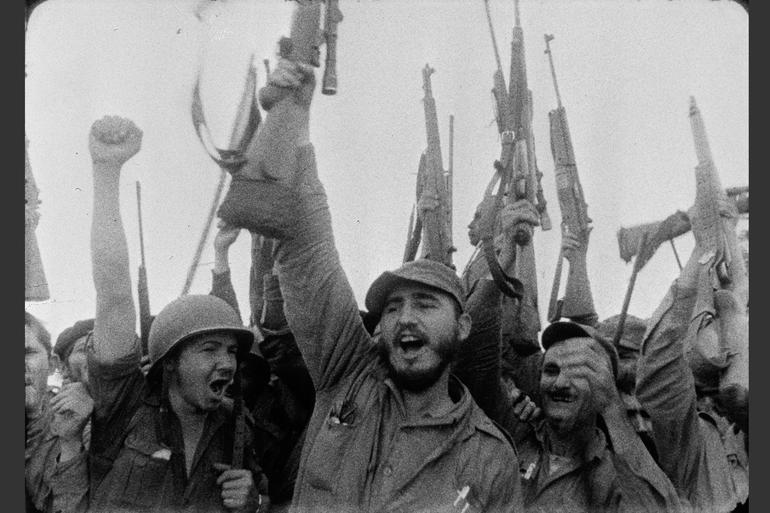
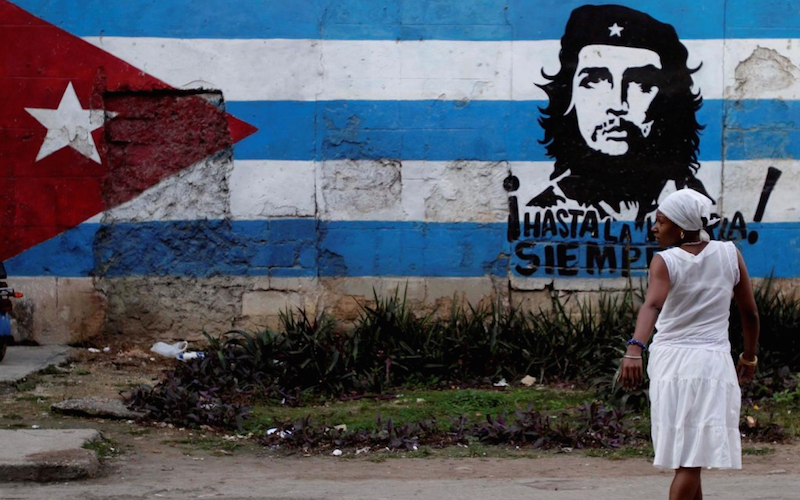
All that needs to be known about Cuban Dictator Fulgencio Batista, is that he fled office with $300,000,000 US, on December 31, 1958. The triumphant rebel columns streaming out of the Sierra Maestra Mountains, were quick to establish themselves in power. By February 1959, Fidel Castro had installed himself as Prime Minister.
Castro dismissed the need for elections, proclaiming his government to be a “direct democracy”. The Cuban people could assemble demonstrations and express their democratic will to him personally, he said. Who needs elections?
“Trials” were carried out across the country, some in sports arenas, in front of thousands of spectators. Hundreds of Batista supporters were executed or imprisoned as Castro’s “Revolutionary Socialist State” purged itself of the former regime. When Castro didn’t like the outcome, he’d personally order a retrial.
Earl Smith, former American Ambassador to Cuba, described the Ambassadorship as “the second most important man,” in Cuba. Now, the Castro administration distanced itself from the US, adopting an increasingly leftist posture and seizing US controlled oil installations, banks and sugar refineries. By October 1960 the government had “nationalized” 166 such businesses, including Coca Cola and Sears, Roebuck.
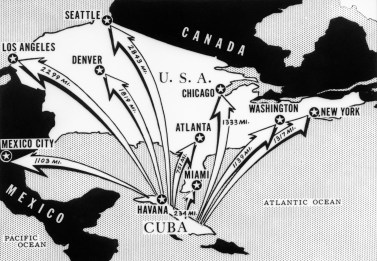
Since the Presidency of James Monroe, US foreign policy has opposed outside intervention in the American hemisphere. The government was not about to permit a communist state, 90 miles from Key West.
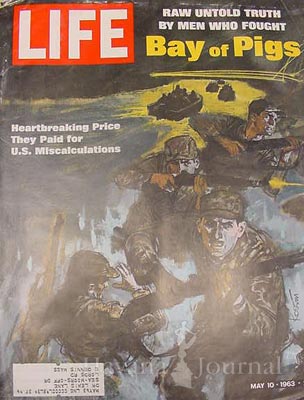
A secret operation to overthrow the Cuban government was conceived and initiated by the Eisenhower administration, and put into motion in April 1961. 1,400 CIA backed Cuban exiles landed on Cuba’s “Playa Girón“ (Bay of Pigs), intending to overthrow the communist government.
The effort was doomed to failure. The New York Times had been reporting on the “secret invasion”, for a month before it began.
Following the Bay of Pigs fiasco, the Kennedy administration sought other means of removing communists from power. “Operation Mongoose” sought to embarrass and discredit Castro personally, with tactics ranging from print & radio propaganda, to hallucinogenic chemical-laced cigars. Some dedicated public servant had the hare-brained idea of lining Castro’s shoes with thallium salts, to make his beard fall out.
The Communist government consolidated power, taking control of trade unions, jailing opponents, suppressing civil liberties and sharply limiting freedom of speech and the press. Secretary of State Christian Herter described Castro’s single-party political system as “following faithfully the Bolshevik pattern”.
Soviet Premier Nikita Khrushchev concluded from the Bay of Pigs fiasco, that the American President was impotent and indecisive. One Soviet adviser described Kennedy as “too young, intellectual, not prepared well for decision making in crisis situations… too intelligent and too weak.”
Cuban and Soviet officials reached a secret arms agreement in July, 1962. By late summer, American intelligence discovered Soviet Ilyushin Il-28 jet bombers in Cuba.
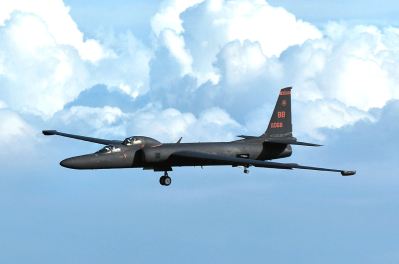
Worse yet, construction had begun on several missile sites. On October 14, ultra-high-altitude Lockheed U–2R reconnaissance aircraft photographs revealed the presence of medium and intermediate range ballistic nuclear missile sites, under construction in Cuba.
A redesigned version of the U-2, the U-2R, was used from the late 1960s through the 1990s
President Kennedy warned of the “gravest consequences” resulting from the introduction of Soviet offensive weapons in Cuba, while Foreign Minister Andrei Gromyko insisted that Soviet aid was purely defensive. U-2 photographs gave lie to Gromyko’s protestations. Images taken on the 17th revealed the presence of 16-32 missiles.
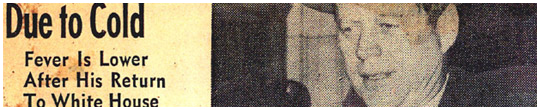
The administration went to great lengths to portray “business as usual”, while behind the scenes, policy makers wrangled over options from quarantine to tactical air strike to outright military invasion. President Kennedy himself suddenly departed a political event in Chicago, his aids concocting a “cold” diagnosis to explain his sudden absence.
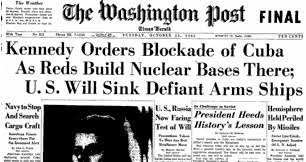
In a televised speech on October 22, Kennedy publicly revealed the presence of Soviet missiles in Cuba, and called for their removal. A naval quarantine would close off the island, Kennedy said, until Soviet leaders agreed dismantle missile sites, and to make certain that no additional missiles were shipped to Cuba.
From the Soviet perspective, Cuba was a small ally behind enemy lines, no different than the Americans toehold, in West Berlin. Beside that, the Americans already had missiles in Italy and Turkey.
Kruschev had gambled and lost, that he could “[I]nstall nuclear warheads in Cuba without letting the United States find out they were there until it was too late to do anything about them”.
The President warned “It shall be the policy of this nation to regard any nuclear missile launched from Cuba against any nation in the Western Hemisphere as an attack by the Soviet Union on the United States, requiring a full retaliatory response upon the Soviet Union.” There was no mistaking American intent.
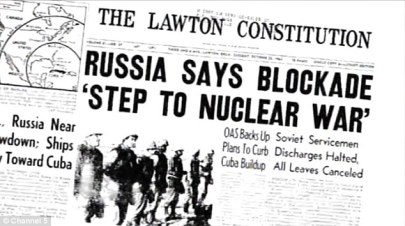
Kruschev replied, “I hope that the United States Government will display wisdom and renounce the actions pursued by you, which may lead to catastrophic consequences for world peace…”
Soviet nuclear submarines moved in response to the quarantine, as Cuban waters became the scene of a tense, naval standoff.
Kruschev responded on the 24th, describing the US blockade as an act of aggression. Castro urged the Soviet leader to initiate a nuclear first strike, should the Americans invade Cuban soil. The Joint Chiefs of Staff announced a “Defense Readiness Condition” status of DEFCON 3. The United States Air Force was now ready to mobilize in 15 minutes.
U-2 photographs of the 25th & 26th showed accelerated construction on the island, with several silos approaching operational readiness. US air forces were placed at DEFCON 2. War involving Strategic Air Command, was now “imminent”.
On day twelve of the standoff, October 27, an American U-2 was shot out of the sky by a Soviet surface-to-air missile. The pilot, Major Rudolph Anderson Jr, was posthumously awarded the first Air Force Cross in history, as well as the Air Force Distinguished Service Medal, the Purple Heart, and the Cheney Award.
Anderson’s was the only combat death of the Cuban Missile Crisis, but he wasn’t alone. Three reconnaissance-variant Stratojets crashed between September 27 and November 11, killing 11 airmen. Seven more died on October 23, when their C-135B Stratolifter stalled and crashed delivering ammunition to the Naval Base on Guantanamo Bay.
The most dangerous phase of the Cuban Missile Crisis came to an end on October 28, when Radio Moscow announced that Cuban missiles would be removed in exchange for an American pledge not to invade. In a secret “side deal”, the Kennedy administration also agreed to remove American “Jupiter” missiles, from Turkey.
The most dangerous thirteen days in world history, had come and gone. The American quarantine would continue until November 20, when the Soviets agreed to remove their bombers. The Americans removed Turkish missiles, the following April.
Throughout this period, a blizzard of communications both direct and indirect, were exchanged between Washington and Moscow. With little to go on but mutual distrust, Kennedy, Kruschev and both their aids each sought to discern the true intent of their adversary.
“If there is no intention,” wrote Kruschev, “to doom the world to the catastrophe of thermonuclear war, then let us not only relax the forces pulling on the ends of the rope, let us take measures to untie that knot. We are ready for this.”
In 1963, American and Soviet governments established the Washington-Moscow Direct Communications Link, from a mutual desire that we never again, get that close to the brink. Contrary to popular culture, this “hotline” has no “red phone”. Never did. The Moscow–Washington hotline was at first a dedicated teletype, replaced by direct-link fax machine in 1986. Since 2008, the Pentagon maintains a secure computer link with the Russian Federation, where messages are exchanged by email.
That soon to be famous “iron” hull would have been useless in a five to one fight. A common naval tactic of the day was to close to short range and fire at the masts and rigging of opposing vessels, disabling the ship’s “power plant”. A vessel thus disabled could be boarded at will and a bloody fight would ensue, with cutlass and pistol. Surely, those 5 British captains considered the American frigate to be a great prize. USS Constitution faced a race for survival. The stakes were life and death.
When the United States won independence from Britain in 1783, the young nation soon learned that freedom was not without disadvantages. America had just lost her protector at sea.
British and French vessels harassed American merchant shipping, kidnapping American sailors and forcing them to serve in their own navies, a practice known as impressment.
Barbary pirates were a problem for Mediterranean shipping, and throughout parts of the Atlantic. Predominantly North African Muslims with the occasional outcast European, the Barbary pirates operated with the blessing of the Ottoman Empire, the Barbary Coast states of Algiers, Tunis & Tripoli, and the independent Sultanate of Morocco.
The Barbary Corsairs had long since stripped the shorelines of Spain and Italy in search of loot and Christian slaves. Many villages would not be re-inhabited until the 19th century.
Between the 16th and 18th centuries, thousands of ships were captured and held for ransom. Somewhere between 800,000 and 1.25 million Europeans disappeared into the Arab slave markets of North Africa and the Middle East.
Barbary pirates began to harass American shipping as early as 1785. They captured 11 American vessels in 1793 alone, holding both ships and crew, for ransom.
Congress passed the Naval Act of 1794, appropriating funds to build a fleet of 6 three-masted, heavy frigates for the United States Navy. The act included a clause halting construction, in the event of a peace treaty with Algiers. No such treaty was ever concluded.
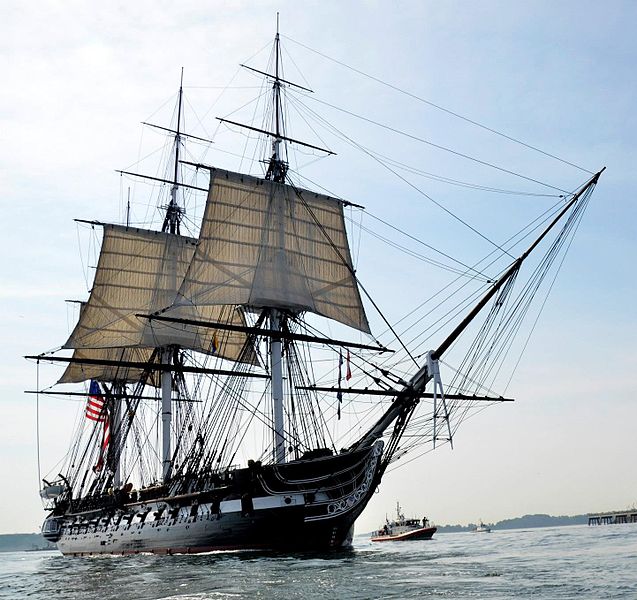
Launched this day in 1797 and named by George Washington himself, USS Constitution was one of those six. Her hull was made of the wood from 2,000 Georgia live oak trees, and built in the Edmund Hartt shipyard of Boston, Massachusetts.
Constitution’s first duties involved the “quasi-war” with France, but this was not the France which helped us win our independence. France had been swallowed up in a revolution of its own by this time. Leftists calling themselves “Jacobins” had long since sent their Bourbon King and his Queen Consort to the guillotine. Marie-Joseph Paul Yves Roch Gilbert du Motier, Marquis de Lafayette and Hero of the American Revolution, languished in an Austrian prison.
The French Monarchy would one day be restored, but not before a certain Corsican artillerist would rise to the rank of Emperor to meet his Waterloo, fighting (and winning) more battles than Julius Caesar, Frederick the Great, Alexander the Great, and Hannibal, combined. But I digress.
The Barbary pirates were paid “tribute” during this time to keep them quiet, but that ended in 1800. Yusuf Karamanli, Pasha of Tripoli, demanded $225,000 from the incoming Jefferson administration. Jefferson refused, and Constitution joined in the Barbary Wars in 1803, a conflict memorialized in a line from the Marine Corps Hymn “From the Halls of Montezuma to the Shores of Tripoli.”
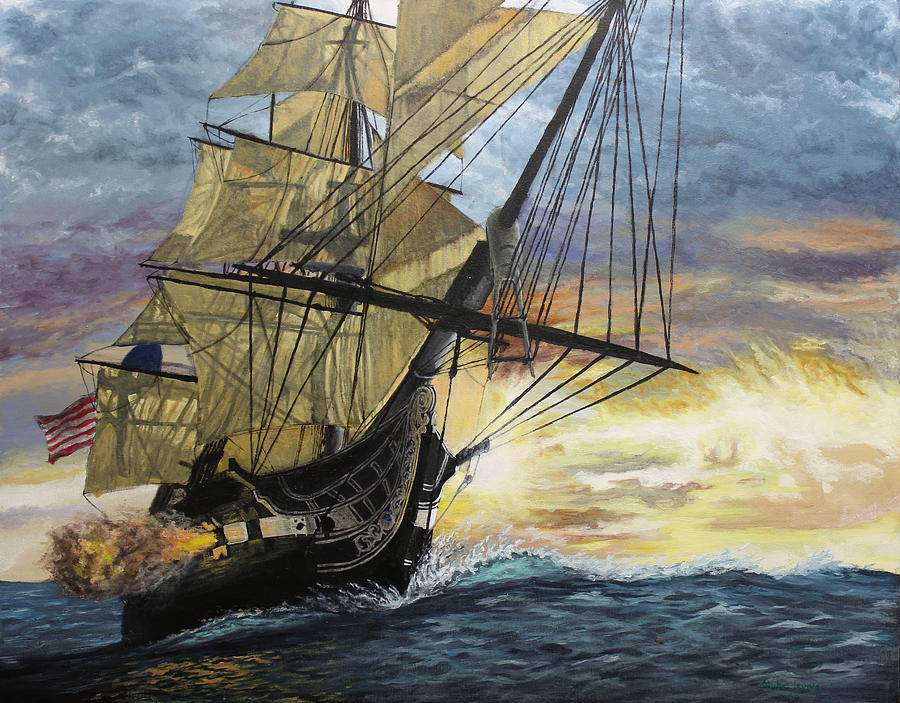
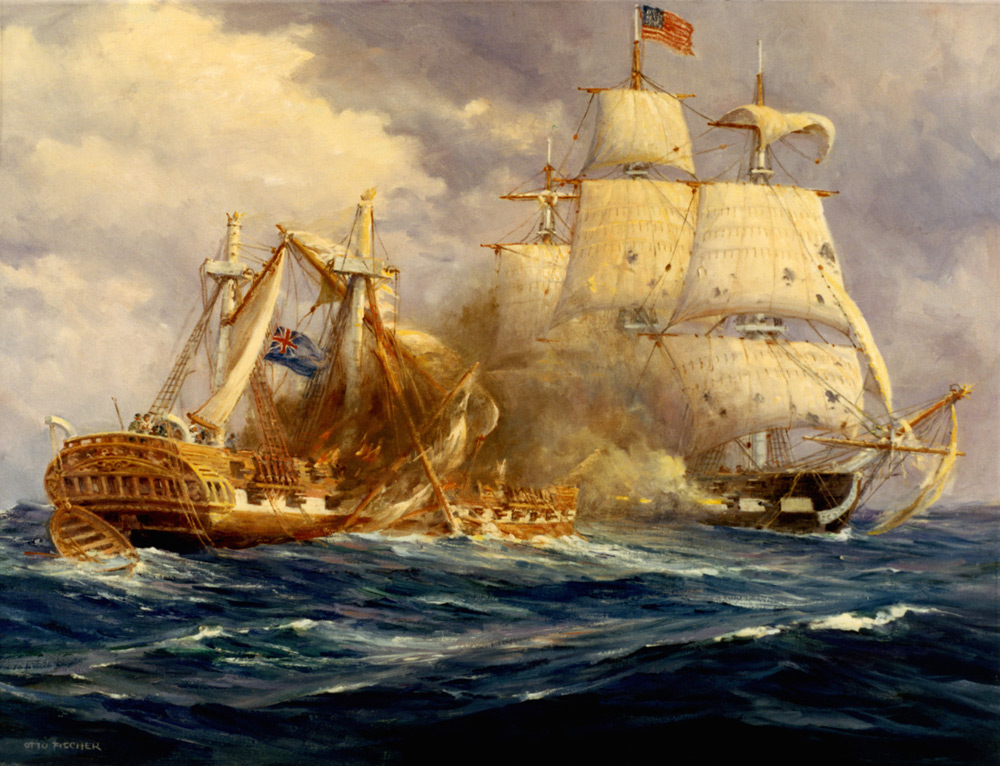
In the early months of the War of 1812, Constitution faced off with the 38-gun HMS Guerriere, about 400 miles off the coast of Halifax. Watching Guerriere’s shots bounce off Constitution’s 21-inch thick oak hull, one American sailor exclaimed “Huzzah! her sides are made of iron!” In twenty minutes, Guerriere was destroyed. All that remained was an unsalvageable hulk. The legend of “Old Ironsides” was born.
[http://www.stuartswanfurniture.com/ironsides.htm#Guerriere Stuart Swan]
USS Constitution vs. HMS Guerriere
19 August 1812
This painting by Anton Otto Fischer depicts the first victory at sea by the fledgling US Navy over the mighty Royal Navy.
One month earlier, Constitution had put to sea intending to join a five ship squadron off the coast of New Jersey. Spotting five sails and thinking they had found their rendezvous on July 17, Constitution was disabused of that notion when lookouts reported the next morning. These were 5 British warships, and they were giving chase.
That soon to be famous “iron” hull would have been useless in a five to one fight. A common naval tactic of the day was to close to short range and fire at the masts and rigging of opposing vessels, disabling the ship’s “power plant”. A vessel thus disabled could be boarded at will and a bloody fight would ensue, with cutlass and pistol. Surely, those 5 British captains considered the American frigate to be a great prize. USS Constitution faced a race for survival. The stakes were life and death.
Conditions were near dead calm as all six vessels wetted sail, trying to get the most out of light winds. In a process called “kedging“, Constitution’s boats were rowed out ahead of the ship, dropping small “kedge anchors”. Sailors would then haul the great ship up the anchor chain, hand over hand, repeating the process over and over. British warships soon imitated the tactic. What followed was an exhausting, slow motion race lasting 57 hours in the July heat.
Constitution’s crew dumped everything they could find overboard to lessen the weight, including 2,300 gallons of drinking water. Cannon fire was exchanged several times, though the shots fell short of their mark. By July 19, Constitution had pulled far enough ahead that British vessels abandoned the chase.
USS Constitution is still in service today. She goes into drydock every twenty years for below-the-waterline repair, most recently in May, 2015. Freshly restored and re-fitted, Old Ironsides took her first sail two years later, in July 2017. 220 years since her first launch, in honor of the 242nd birthday of the United States Navy.
A structural tour, below decks
Today, USS Constitution may be boarded at leisure at the Charleston Navy Yard, just north of Boston. To walk her decks is to go back in time. To experience first-hand, the oldest commissioned warship in the world, still afloat.
In 1875, Doctor Albert L. Child of the U.S. Signal Corps watched a mile-high swarm of locusts pass overhead, for five days straight. Together with telegraph reports from neighboring towns, Child estimated the swarm to be 110 miles wide and 1,800 miles long. 198,000 square miles, one-third the size of Alaska, or the combined landmass of our thirteen smallest states. It was a rolling tide, the size of California and Maine, put together.
In the decade following 1932, children’s author Laura Ingalls Wilder published a series of eight novels, a fictionalized autobiography based on the childhood experiences of a 19th century pioneer and settler family. Third in the series is the best known, Little House on the Prairie, the subject for a television series running from 1974 to ’83.
In her fourth book, Wilder tells a tale of grasshoppers, of a time when locusts wiped out a much-anticipated and badly needed wheat crop, laying so many eggs as to destroy all hope for the following year, as well. On the Banks of Plum Creek, published this day in 1937, told the story of “Pa” having to walk three-hundred miles east to find work on farms, which had escaped the biblical plague.
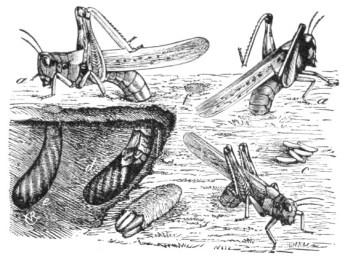
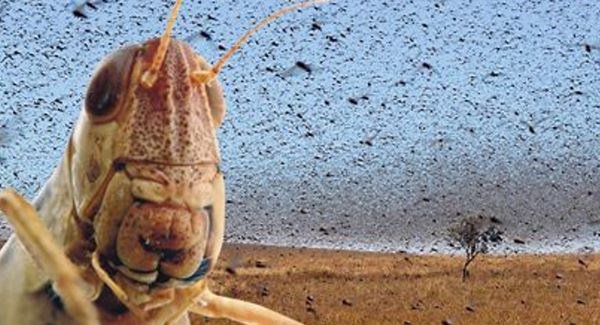
There are something like 11,000 species of grasshoppers in the world, the familiar, plant munching insects of our summer fields. They are vegetarian creatures with polyphagous feeding habits, meaning they’ll eat just about anything, given the need and the opportunity.
Rocky Mountain locust, Melanoplus spretus, photographed in 1870s, Minnesota
Usually a solitary creature, only a few species will become locusts, the “gregarious” phase of the insect’s life cycle characterized by swarming, migration, and accompanied by explosive growth in population.
Such swarms have been reported since the time of the Pharaoh. The two years in Wilder’s story, 1874 – ’75, are among the worst swarms on record for the Rocky Mountain Locust, Melanoplus spretus.
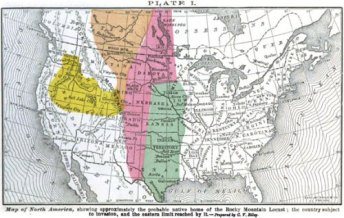
M. Spretus finds its home in the fertile valleys of the Rocky Mountains, but outbreaks of the insect have caused farm damage as far away as Maine during the period 1743–’56, and in Vermont during the administration of President George Washington.
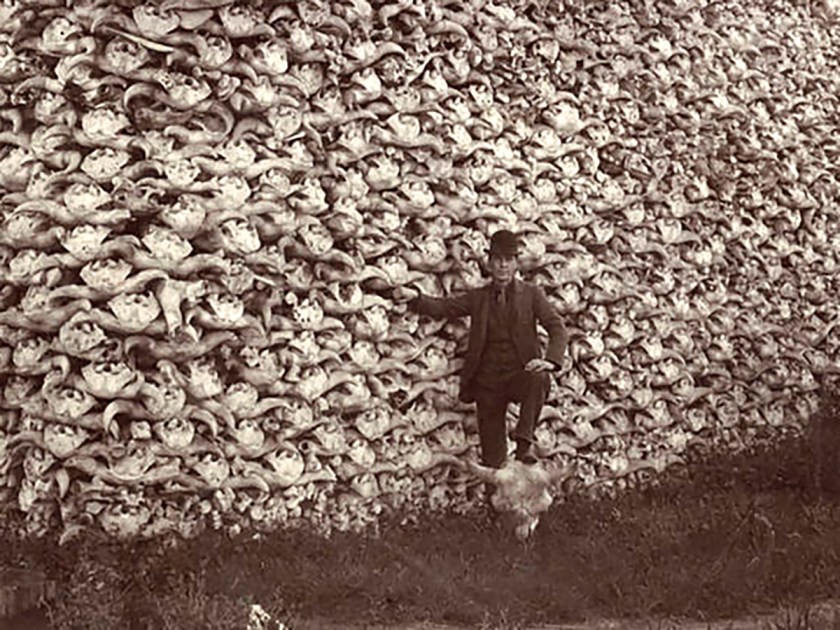
When President Thomas Jefferson sent Lewis & Clark off on the Corps of Discovery expedition, vast herds of American bison stretched from horizon to horizon, as far as the eye could see. Historians estimate 30 to 60 million of the creatures, each weighing up to 2,000 pounds and measuring twelve-feet long. A minimum of sixty billion pounds of biomass, needing something to eat.
The western artist George Catlin estimated that, by 1841, some two to three million of the creatures had been slaughtered for their hides. Bison populations came under increasing pressure as natives acquired horses and guns, but the real slaughter began with the Indian wars and “hunting by rail”, when every dead buffalo was seen as a dead Indian. By the late 1880s, only a few hundred individuals remained alive, in Yellowstone National Park.
A mountain of bison skulls
With the bison gone and a new wave of vegetation, there arose a new and very different multitude, come to feed on it.
During the 19th century, farming expanded westward into the grasshopper’s favored habitat, triggering massive outbreaks in their numbers. Locust populations exploded to varying degrees in 1828, ’38, ’46, and ’55, affecting areas throughout the West and upper mid-west. Plagues visited Minnesota in 1856–’57 and again during the last year of the Civil War. Nebraska suffered repeated infestations between 1856 and ’74.
NPR reports in a 2020 segment about locusts in Africa, that such a swarm measuring one square kilometer, about a third of a square mile, can consume as much in a day, as would have fed 35,000 people.
Population blooms of two years are typical, as eggs laid in year one tend not to thrive as well as their parents. At its height, farmers reported finding up to 150 egg cases per square inch, each containing 100 eggs or more.
In 1875, Doctor Albert L. Child of the U.S. Signal Corps watched a mile-high swarm of locusts pass overhead, for five days straight. Together with telegraph reports from neighboring towns, Child estimated the swarm to be 110 miles wide and 1,800 miles long. 198,000 square miles, one-third the size of Alaska, or the combined landmass of our thirteen smallest states. It was a rolling tide, the size of California and Maine, put together.
The numbers are so far outside of human experience, they are hard to get your head around. For a little perspective, a million seconds is about twelve days. A Billion seconds ago, Jimmy Carter was President of the United States. A Trillion seconds ago, the oldest known clay object was fired to ceramic in the earliest oven. It was 29,000, B.C.
“Albert’s Swarm”, the largest such assembly of organisms in recorded history, is estimated at 12½ Trillion individuals.
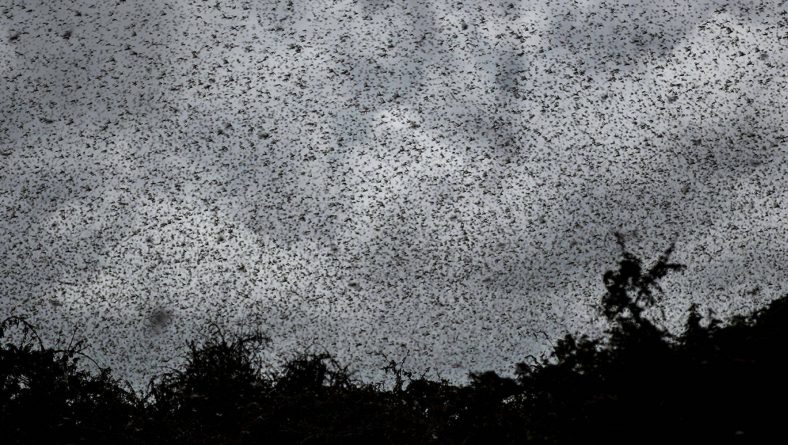
It was a biological wildfire, a living blizzard that blotted out the sun, 12½ trillion insects each the size of a child’s finger, each driven to eat its own weight. Every day. All in, Albert’s Swarm is estimated to have weighed 27½ million tons.
As the continuous track of a bulldozer moves ever forward, the leading edge of the swarm would alight to rest and eat, only to pick up the rear, a few days later. In this manner, the swarm would cover ten miles or so in a few weeks.
One farmer reported “a great white cloud, like a snowstorm, blocking out the sun like vapor“. Even the sound was horrific, rising to a scream and rolling over the land like some evil tide, the whirring and rasping cacophony of billions of mandibles borne aloft to eat, almost literally, everything in sight. Native populations could and did, move. For prairie settler and pioneer families, home was on the farm.
Check out what these things sound like. Video taken this year, in Ethiopia.
Imagine a world with no grocery stores, and watching your food, All of it, disintegrate, before your eyes. Standing crops were the first to go and then the root vegetables: potatoes, carrots and turnips. They were devoured, right out of the ground. Throw a blanket over your garden to protect even that little bit, and they would eat the blanket. Fence posts, saddles, nothing was off limits. These creatures would eat the wool, right off of the sheep. At its worst, the ravenous horde was known to eat the clothes, right off of people’s backs.
Trains were literally stopped in their tracks on uphill stretches of rail, unable to gain traction for the grease of millions of tiny bodies, ground beneath their wheels.
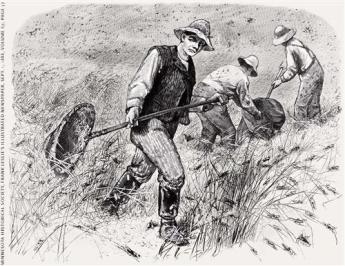
Farmers used gunpowder, fire and water, anything they could think of, to destroy what could only be seen as a plague of biblical proportion. They smeared them with “hopperdozers”, a plow-like device pulled behind horses, designed to knock jumping locusts into a pan of liquid poison or fuel, or even sucking them into vacuum cleaner-like contraptions.
It was like trying to turn the tide, with a shot glass.
Missouri entomologist Charles Valentine Riley came up with a recipe to eat the damned things, seasoned with salt and pepper and pan-fried in butter. Some bought the recipe, but many felt they “would just as soon starve as eat those horrible creatures”.
In 1877, a Nebraska law required everyone between the ages of 16 and 60 to work at least two days eliminating locusts, or face a $10 fine. Missouri and other Great Plains states offered bounties: $1 a bushel for locusts gathered in March, 50¢ in April, 25¢ in May, and 10¢ in June.
And then the locust went away, and no one is entirely certain, why. It is theorized that plowing, irrigation and harrowing destroyed up to 150 egg cases per square inch, in the years between swarms. Great Plains settlers, particularly those alongside the Mississippi river, appear to have disrupted the natural life cycle. Winter crops, particularly wheat, enabled farmers to “beat them to the punch”, putting away stockpiles of food before the pestilence reached the swarming phase.
Today, the Rocky Mountain Locust is extinct. Several grasshopper species swarm as locusts on every continent in the world, save for North America and Antarctica. The last living specimen of the Rocky Mountain Locust was seen in Canada, in 1902.
Toronto was a logical outpost for Confederate operations, a natural relay point with Great Britain and a base from which to foment rebellion, in the north. All this fomenting cost money, and lots of it. The Confederate States came south to Vermont, to make a withdrawal.
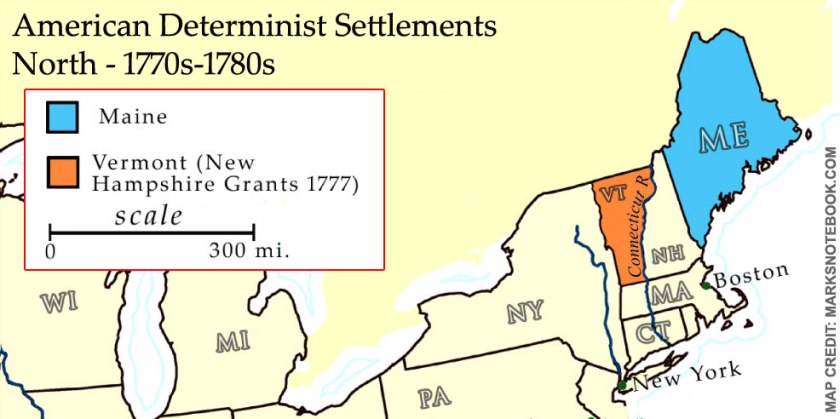
The name of Vermont conjures many things in the mind of the hearer, the forested landscapes, ski slopes, maple syrup and mountain trout brooks. The first state to be admitted into the union formed by the 13 former colonies, the 14th state existed for as many years as an independent Republic, a distinction shared with only three other states: Texas, Hawaii and California.
Fun Fact: For a time, western districts of Florida also formed their own sovereign state: the Republic of West Florida. If you ever want to get a Texan going, ask them about the First “Lone Star Republic“.
In the late 18th century, lands granted by the governor of New Hampshire led the colonial province into conflict with the neighboring province of New York. Conflict escalated over jurisdiction and appeals were made to the King, as the New York Supreme Court invalidated these “New Hampshire grants”.
Infuriated residents of the future Vermont Republic including Ethan Allen and his “Green Mountain Boys”, rose up in anger. On March 13, 1775, two Westminster Vermont natives were killed by British Colonial officials. Today, we remember the event as the “Westminster Massacre”.
The battles at Lexington and Concord broke out a month later, ushering in a Revolution and eclipsing events to the north. New York consented to admitting the “Republic of Vermont” into the union in 1790, ceding all claims on the New Hampshire land grants in exchange for a payment of $30,000. Vermont was admitted as the 14th state on March 4, 1791, the first state so admitted following adoption of the federal Constitution.
Organized in 1785, the city of St. Albans forms the county seat of Franklin County, Vermont. 15 miles from the Canadian border and situated on the eastern shore of Lake Champlain, it’s not the kind of place you’d expect for a Civil War story.
St. Albans Vermont, 1864
The Confederate States of America maintained government operations in Canada, from the earliest days of the Civil War. Toronto was a logical relay point for communications with Great Britain, from whom the Confederate government unsuccessfully sought to gain support.
Secondly, Canada provided a safe haven for prisoners of war, escaped from Union camps.
Former member of Congress and prominent Ohio “Peace Democrat” Clement Vallandigham fled the United States to Canada in 1863, proposing to detach the states of Illinois, Indiana and Ohio from the Union in exchange for sufficient numbers of Confederate troops, to enforce the separation. Vallandigham’s five-state “Northwestern Confederacy” would include Kentucky and Missouri, breaking the Union into three pieces. Surely that would compel Washington to sue for peace.
In April 1864, President Jefferson Davis dispatched former Secretary of the Interior Jacob Thompson, ex-Alabama Senator Clement Clay, and veteran Confederate spy Captain Thomas Henry Hines to Toronto, with the mission of raising hell in the North.
This was no small undertaking. A sizeable minority of Peace Democrats calling themselves “Copperheads” were already in vehement opposition to the war. So much so that General Ambrose Burnside declared in his General Order No. 38, that “The habit of declaring sympathy for the enemy will not be allowed in this” (Ohio) “department. Persons committing such offenses will be at once arrested with a view of being tried. . .or sent beyond our lines into the lines of their friends. It must be understood that treason, expressed or implied, will not be tolerated in this department“.
Hines and fellow Confederates worked closely with Copperhead organizations such as the Knights of the Golden Circle, the Order of the American Knights, and the Sons of Liberty, to foment uprisings in the upper Midwest.
In the late Spring and early Summer of 1864, residents of Maine may have noted an influx of “artists”, sketching the coastline. No fewer than fifty in number, these nature lovers were in fact Confederate topographers, sent to map the Maine coastline.
The Confederate invasion of Maine never materialized, thanks in large measure to counter-espionage efforts by Union agents.
J.Q. Howard, the U.S. Consul in St. John, New Brunswick, informed Governor Samuel Cony in July, of a Confederate party preparing to land on the Maine coast.
The invasion failed to materialize, but three men declaring themselves to be Confederates were captured on Main Street in Calais, preparing to rob a bank.
Disenchanted Rebel Francis Jones confessed to taking part in the Maine plot, revealing information leading to the capture of several Confederate weapons caches in the North, along with operatives in Maine, Massachusetts, New York, Pennsylvania, Maryland, Illinois, Kentucky, Tennessee and Ohio.
Captain Hines planned an early June uprising in the Northwest, timed to coincide with a raid planned by General John Hunt Morgan. Another uprising was planned for August 29, timed with the 1864 Democratic Convention in Chicago. The conspirators’ actions never lived up to the heat of their rhetoric, and both operations fizzled. A lot of these guys were more talk than action, yet Captain Hines continued to send enthusiastic predictions of success, back to his handlers in Richmond.
The Toronto operation tried political methods as well, supporting Democrat James Robinson’s campaign for governor of Illinois. If elected they believed, Robinson would turn over the state’s militia and arsenal to the Sons of Liberty. They would never know. Robinson lost the election.
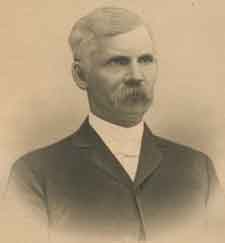
Bennett Henderson Young
All this fomenting cost money, and lots of it. In October 1864, the Toronto operation came south to St. Albans, to make a withdrawal.
Today, St. Albans is a quiet town of 6,918. In 1864 the town was quite wealthy, home to manufacturing and repair facilities for railroad locomotives. Located on a busy rail line, St. Albans was also home to four banks.
Nicholasville, Kentucky native Bennett Henderson Young was a member of the Confederate 8th Kentucky Cavalry, captured during Morgan’s 1863 raid into Ohio. By January, Young had escaped captivity and fled to Canada. On October 10, Bennett crossed the Canadian border with two others, taking a room at the Tremont House, in St. Albans. The trio said they had come for a “sporting vacation”.
Small groups filtered into St. Albans in the following days, quietly taking rooms across the town. There were 21 altogether, former POWs and cavalrymen, hand selected by Young for their daring and resourcefulness.
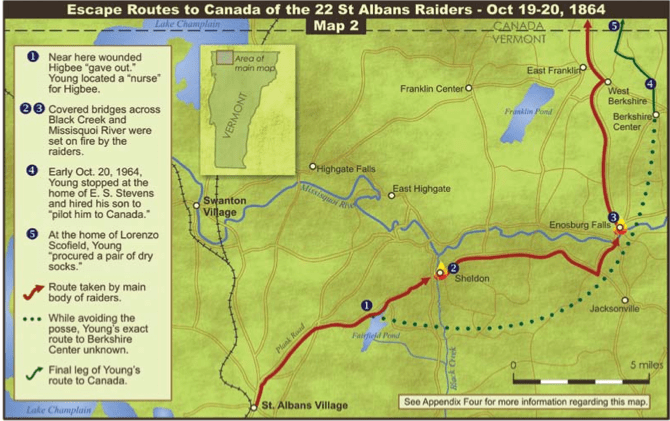
On this day in 1864, the group split up. Announcing themselves to be Confederate soldiers, groups simultaneously robbed three of St. Albans’ four banks while eight or nine held the townspeople at gunpoint, on the village green. One resident was killed before it was over and another wounded. Young ordered his troops to burn the town, but bottles of “Greek Fire” carried for the purpose, failed to ignite. Only one barn was burned down and the group got away with a total of $208,000, and all the horses they could muster. It was the northernmost Confederate action of the Civil War.
The group was arrested on returning to Canada and held in Montreal. The Lincoln administration sought extradition but Canadian courts decided otherwise, ruling that the raiders were under military orders at the time and neutral Canada could not extradite them to America. The $88,000 found with the raiders, was returned to Vermont.
The million dollars the Confederate government sunk into its Canadian office, probably did more harm than good. Those resources could have been put to better use, but we have the advantage of hindsight. Neither Captain Hines nor Jefferson Davis could know how their story would turn out. In the end, both men fell victim to that greatest of human weaknesses, of believing what they wanted to believe.




















 Constitution’s first duties involved the “quasi-war” with France, but this was not the France which helped us win our independence. France had been swallowed up in a revolution of its own by this time. Leftists calling themselves “Jacobins” had long since sent their Bourbon King and his Queen Consort to the guillotine. Marie-Joseph Paul Yves Roch Gilbert du Motier,













You must be logged in to post a comment.