The “Mukden incident” was entirely staged, a “false flag” operation and bald pretext to war, carried out by Japanese military personnel and identical in purpose to that carried out against Poland by Nazi aggressors some eight years later, nearly to the day.
As Japan emerged from the medieval period into the early modern age, the future Nippon Empire transformed from a period characterized by warring states, to the relative stability of the Tokugawa Shōgunate. Here, a feudal military government ruled from the Edo castle in the Chiyoda district of modern-day Tokyo, over some 250 provincial domains called han. The military and governing structure of the time was based on a rigid and inflexible caste system, placing the feudal lords or daimyō at the top, followed by a warrior-caste of samurai, and a lower caste of merchants and artisans. At the bottom of it all stood some 80% of the population, the peasant farmer forbidden to engage in non-agricultural activities, and expected to provide the income that made the whole system work.
Into this world stepped the “gunboat diplomats” of President Millard Filmore in the person of Commodore Matthew Calbraith Perry, determined to open the ports of Japan to trade with the west. By force, if necessary.
Gunboat Diplomacy, Commodore Perry
The system led to a series of peasant uprisings in the 18th and 19th centuries, and extreme dislocation within the warrior caste. In time, these internal Japanese issues and the growing pressure of western encroachment led to the end of the Tokugawa period and the restoration of the Meiji Emperor, in 1868.
Many concluded as did feudal Lord (daimyō) Shimazu Nariakira, that “if we take the initiative, we can dominate; if we do not, we will be dominated”. In the following decades, Japanese delegations and students traveled around the world to learn and assimilate Western arts, sciences and technologies. As the 19th century gave way to the 20th, Japan was transform from a feudal society into a modern industrial state.
The Korean peninsula remained backward and “uncivilized” during this period, little more than a tributary state to China, and easy prey for foreign domination. A strong and independent Korea would have represented little threat to Japanese security but, as it was, Korea was a “a dagger pointed at the heart of Japan” in the words of German military adviser to the Meiji government, Major Jacob Meckel.
The first Sino-Japanese war of July 1894 – April 1895, was primarily fought over control of the Korean peninsula. The outcome was never in doubt, with the Japanese army and navy by this time patterned after those of the strongest military forces of the day.
The Japanese 1st Army Corps was fully in possession of the Korean peninsula by October, and of the greater part of Manchuria, in the following weeks. The sight of the mutilated remains of Japanese soldiers in the port city of Lüshunkou (Port Arthur) drove their comrades to a frenzy of shooting and slashing. When it was over, numbers estimated from 1,000 to 20,000 were murdered in the Port Arthur Massacre. It was a sign of things to come.
An illustration of Japanese soldiers beheading 38 Chinese POWs as a warning to others by Utagawa Kokunimasa.
Russian desire for a warm-water port to the east brought the two into conflict in 1904 – ’05, the Russo Japanese War a virtual dress rehearsal for the “Great War” ten years later, complete with trench lines and fruitless infantry charges into interlocking fields of machine gun fire.
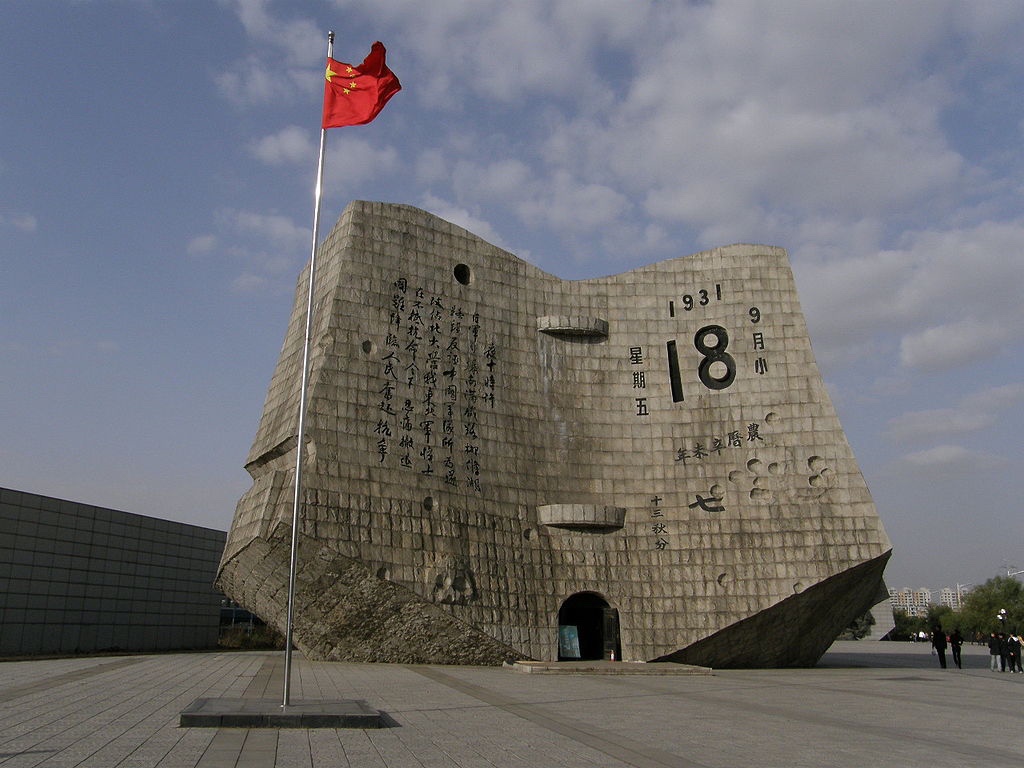
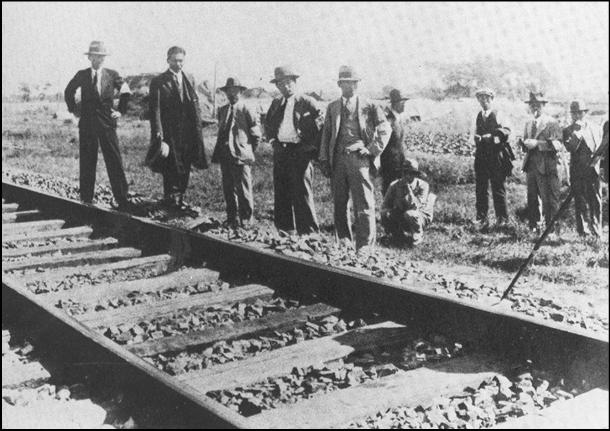
Subsequent treaties left Japanese forces in nominal control of Manchurian railroads when, on September 18, 1931, a minuscule dynamite charge was detonated by Japanese Lt. Kawamoto Suemori, near a railroad owned by Japan’s South Manchuria Railway near Mukden, in modern Shenyang, China. The explosion was so weak that it barely disturbed the tracks. A train passed harmlessly over the site just minutes later, yet, the script was already written.
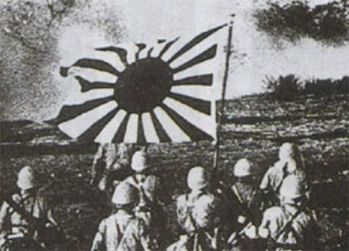
The Imperial Japanese Army accused Chinese dissidents of the incident, launching a full scale invasion and installing the puppet emperor Puyias Emporer Kangde of the occupied state of “Manchukuo”, one of the most brutal and genocidal occupations of the 20th century.
The “Mukden incident” was entirely staged, a “false flag” operation and bald pretext to war, carried out by Japanese military personnel and identical in purpose to that carried out against Poland by Nazi aggressors some eight years later, nearly to the day.
As Western historians tell the tale of WW2, the deadliest conflict in history began in September 1939, with the Nazi invasion of Poland. The United States joined the conflagration two years later, following the sneak attack on the American Naval anchorage at Pearl Harbor, by naval air forces of the Empire of Japan.
Eastern historians are more likely to point to a day eight years earlier, when this and subsequent invasions and the famine and civil wars which ensued, killed more people than the modern populations of Canada and Australia, combined.
From the Catania (Sicily) to the Salerno landings of 1943, Mad Jack could be seen stepping onto the beach, trademark broadsword at his belt, bagpipes under an arm and an English longbow and arrows, around his neck.
On this day in 1906 a child was born . John Malcolm Thorpe Fleming Churchill, the first son and grandson of British civil servants in the Ceylon Civil Service. The family lived in Hong Kong at the time, returning to England in 1917. “Jack” graduated from the Royal Military College at Sandhurst, serving with the Manchester Regiment in Burma where he rode the length and breadth of the nation, on a motorcycle.
It was around this time Churchill learned to play bagpipes, a bit of an eccentricity for an Englishman of his era. Mad Jack was nothing if not eccentric.
He taught himself to shoot a bow and arrow, and became quite good at it. Good enough to represent his nation in the 1939 world archery championship in Oslo scoring #26, in the men’s recurve. A remarkable feat considering his weapon of choice, was the longbow.
Churchill left the military ten years later and worked as a newspaper editor for a time in Nairobi Kenya, along with the occasional stint as male model and even appeared in two motion pictures, The Thief of Bagdad and A Yank At Oxford. From there he may have faded into obscurity unlike his fellow Englishman of no relation, with the same last name. Except, then came World War II and that transformation into the truly one-of-a-kind, “Mad Jack”.
Churchill resumed his military commission and rejoined the Manchester Regiment later that year, when Germany invaded Poland. Part of the British Expeditionary force to France in 1940, Churchill signaled an ambush on a German unit, by taking out the Feldwebel (staff sergeant) with a broadhead arrow. No one could have been more surprised than that German NCO who surely died wondering, “How the hell did I get an arrow in my chest?”
That one unfortunate German is, to my knowledge, the only combatant in all WWII to be felled by an English longbow.
Not long after, allied military forces were hurled from the beaches of Europe. The only way back in, was via those same beaches. We’ve all seen the D-Day style waterborne assault: invading forces pouring out of Higgins Boats and charging up the beaches. Amphibious landings were carried out from the earliest days of WWII, from Norway to North Africa, from the Indian Ocean to Italy. In all those landings, there’s likely no other soldier who stepped off a Higgins Boat, with a bow and arrows.
On December 27, 1941, #3 Commando raided the German garrison at Vågsøy, Norway. As the ramp dropped on the first landing craft, out jumped Mad Jack Churchill playing “March of the Cameron Men” on the bagpipes, before throwing a grenade and charging into battle. Mad Jack made several such landings, usually while playing his bagpipes, a Scottish broadsword at his belt.
“Mad Jack” Churchill, speaking at a landing exercise
Churchill was attached to that sword, a basket hilted “Claybeg”, a slightly smaller version of the Scottish Claymore. He said “Any officer who goes into action without his sword is improperly dressed.” From the Catania (Sicily) to the Salerno landings of 1943, Mad Jack could be seen stepping onto the beach, trademark broadsword at his belt, bagpipes under an arm and an English longbow and arrows, around his neck.
Churchill lost his sword in confused, hand to hand fighting around the town of Piegoletti, for which he received the Distinguished Service Order. Almost single-handed but for a corporal named Ruffell, Churchill captured 42 Germans including a mortar squad. “I always bring my prisoners back with their weapons”, he explained. “It weighs them down. I just took their rifle bolts out and put them in a sack, which one of the prisoners carried. [They] also carried the mortar and all the bombs they could carry and also pulled a farm cart with five wounded in it….I maintain that, as long as you tell a German loudly and clearly what to do, if you are senior to him he will cry ‘Jawohl’ and get on with it enthusiastically and efficiently whatever the … situation. That’s why they make such marvelous soldiers…” It looked, he said, like “an image from the Napoleonic Wars.”
Churchill later trudged back to town, to collect his sword. He encountered an American squad along the way, who seemed to have lost themselves and were headed toward German lines. When the NCO refused to turn around, Churchill informed him he was going to be on his way, and he “wouldn’t come back for a bloody third time”.
Archery historian Hugh Soar, pictured with four of “Mad Jack’s” English longbows
Mad Jack’s luck ran out in 1944 on the German-held, Yugoslavian island of Brac. He was leading a Commando raid at the time, in coordination with the partisans of Josip Broz Tito. Only Churchill and six others managed to reach the top of hill 622, when a mortar shell killed or wounded everyone but Churchill himself. He was knocked unconscious by a grenade and captured.
He’d been playing “Will Ye No Come Back Again?” on his pipes.
Hitler’s infamous ‘Commando Order” had long since taken effect, and Churchill and his surviving men escaped immediate execution at the hands of the Gestapo, thanks to the decency of one Wehrmacht Captain Thuener. “You are a soldier“, he said, “as I am. I refuse to allow these civilian butchers to deal with you. I shall say nothing of having received this order.” Churchill was able to pay Thuener back for his kindness after the war, keeping the man out of the merciless hands of the Red Army.
Churchill was flown to Berlin and interrogated on suspicion that he might be related to the more famous Churchill, before being sent off to Sachsenhausen concentration camp in Oranienburg, Germany. There, Mad Jack and Royal Air Force officer Bertram James escaped that September, slipping under the wire and crawling through an abandoned drain and walking all the way to the Baltic coast. They almost made it, too, but the pair was captured near the coastal city of Rostock, just a few miles from the coast.
Mad Jack was sent off to Burma, following the defeat of Nazi Germany. He was disappointed by the swift end to the war brought about by the American bombings at Hiroshima and Nagasaki. “If it wasn’t for those damn Yanks” he’d say, “we could have kept the war going another 10 years!”
As a Seaforth Highlander, Mad Jack was posted to the British Mandate in Palestine, in 1948. He was one of the first to the scene of the ambush and massacre of the Haddassah medical convoy that April, banging on a bus and offering evacuation in an armored personnel carrier. His offer was refused in the mistaken belief that Hadassah was mounting an organized rescue.
No such rescue ever arrived. Churchill and a team of 12 British Light Infantry were left to shoot it out with some 250 Arab insurgents, armed with everything from blunderbusses and old flintlocks, to Sten and Bren guns. Seventy-eight Jewish doctors, nurses, students, patients, faculty members and Haganah fighters were killed along with one British soldier. Dozens were burned beyond recognition and buried in mass graves. Churchill later coordinated the evacuation of some 700 Jewish patients and medical personnel from the Hadassah hospital at Hebrew University, in Jerusalem.
Churchill served as an instructor at the land-air warfare school in Australia, where he became passionately devoted to surfing. Returning to England upon his retirement, he became the first to surf the 5-foot tidal surge up the River Severn, on a board of his own design.
Surfing the Tidal Bore, up the Severn River
Once and always the eccentric, Mad Jack Churchill loved sailing radio-controlled model warships on the Thames. Little seemed to bring him more joy than the horror on the face of fellow train passengers, when he opened the window and hurled his briefcase into the darkness.
Not one of them suspected he was throwing the thing into his own back yard. It saved him the trouble of carrying it home from the station.
He scribbled a couplet once on a postcard, and mailed it to a friend. The face of the card bore the regimental colors.
On the back, Mad Jack Churchill had written these words.
“No Prince or Lord has tomb so proud / As he whose flag becomes his shroud.”
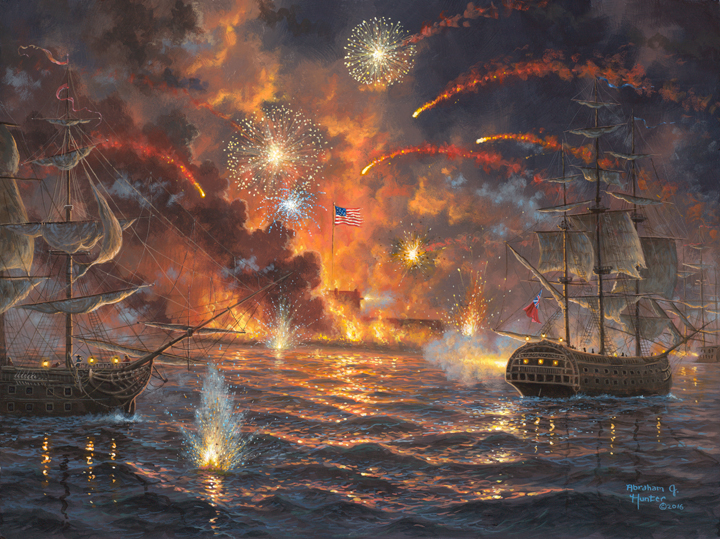
The naval bombardment taking place that night, is scarcely to be imagined. At first exchanging shot for shot with the garrison the warships soon pulled back, out of range of the fort’s guns. For 27 hours in a driving rain, nineteen warships pounded shot, shell and rocket by the thousands onto the 1,000-man garrison.
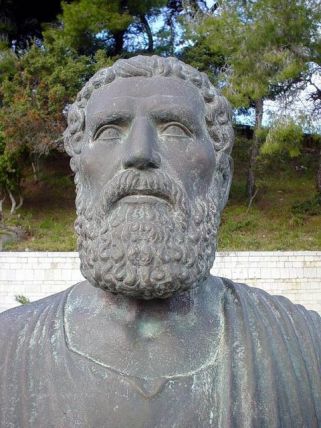
3,000 years ago, the Greek poet Anacreon composed lyric verse intended to be recited or sung to musical accompaniment, usually that of the lyre.
Anacreon. Marble. Roman copy of the 2nd century A.D. after a Greek original of the 5th century B.C. Inv. No. 491. Copenhagen, New Carlsberg Glyptotek.
Today, Anacreon himself is all but unknown, save for the efforts of the Anacreontic Society of 18th century, Great Britain.
The English composer and church organist John Stafford Smith founded the Anacreontic Society somewhere around 1766, the group meeting in various taverns before settling on the old coffee house on Ludgate Hill, in London. A gentlemen’s club of amateur musicians and professionals meeting monthly and dedicating themselves to “wit, harmony and the god of wine”, the society presented regular concerts, the high point of which came in January 1791 with the attendance the Austrian composer, Joseph Haydn.
The low point came somewhere in 1792 when the Duchess of Devonshire attended a meeting and found the entertainments, displeasing to the fairer sex. That October it was reported, “The Anacreontick Society meets no more; it has long been struggling with symptoms of internal decay“.
Success has many fathers but failure, is an orphan. Today the Anacreontic Society itself is all but forgotten but for the theme song written by society member and lyricist Ralph Tomlinson and put to music by John Smith, remembered by the first four words: “To Anacreon in Heaven“.
From the first signs of discontent in the American colonies to the dissolution of the Articles of Confederation and adoption of our own modern constitution, the life of the Anacreontic Society tracks with the British colonies in North America’s struggle for independence.
Within a decade of that constitution the rise of a certain Corsican corporal embroiled Great Britain in a series of international coalitions against the forces of Napoleon Bonaparte and his Grande Armée. The former American colonies benefited from the European conflict, remaining on the sidelines and doing business with (while earning the animosity of) both sides.
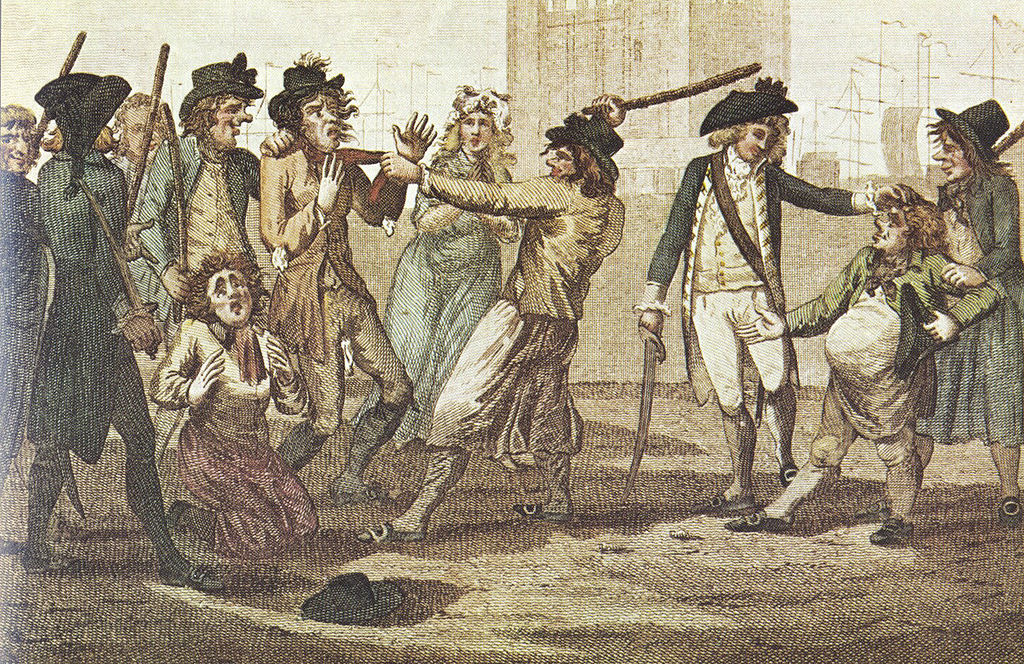
Anachronistic to that collection of agreements both written and unwritten which together comprise the Constitution of the United Kingdom, the practice of Impressment traces back to the time of Edward Longshanks the Hammer of the Scots, King of England between 1272 to 1307. Naval service imposed massive manpower requirements in the age of sail. Several European navies employed the use of “press gangs” to forcibly “impress” (read, kidnap) the unsuspecting into terms of service at sea though the dominance of the British navy largely associates the practice, with that of the United Kingdom.
1780 caricature of the Press Gang
Widely detested on both sides of the Atlantic, the practice nevertheless survived a number of court challenges. Impressment of American sailors appears in the Declaration of Independence, along with 26 other grievances against King George III. While not entirely the cause of the War of 1812, impressment remained one among a number, of casus belli.
Neither side was ready for it when war broke out between the United States and the United Kingdom in June, 1812. Most of the British war machine was busy with that “Little Corporal”, whose “Waterloo” remained, two years in the future. America had disbanded the National Bank by that time and had no means of paying for war, while private northeastern bankers were reluctant to provide financing.
Support for the War of 1812 was bitterly divided, between the Democratic-Republicans of President James Madison, and the Federalist strongholds of Connecticut, Massachusetts and Rhode Island. Of the six New England states, New Hampshire alone complied with President Madison’s requests for state militia.
New England may have actually seceded following the Hartford Convention of 1814 if not for future President Andrew Jackson’s overwhelming victory at the Battle of New Orleans. A battle I might add took place after the treaty of Ghent formally ending the war, but now I’m getting ahead of the story.
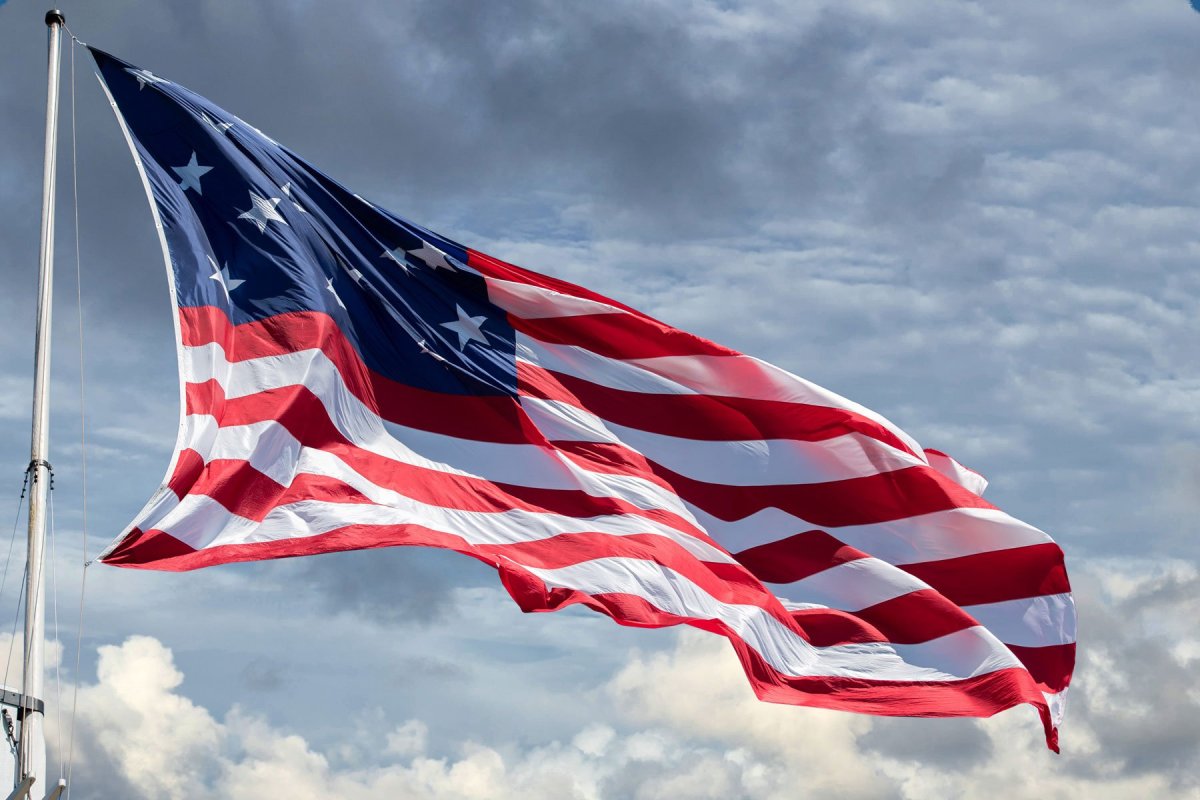
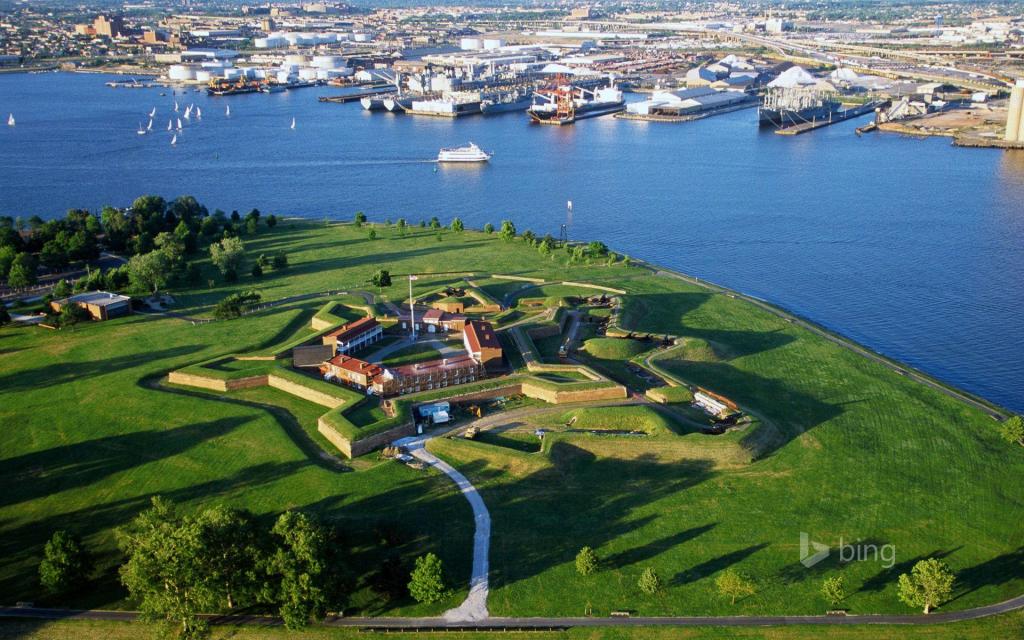
Like nearly everyone else in Baltimore, Fort McHenry commander Major George Armistead expected an attack, on the port city. Never one to run away from a fight Armistead wanted “a flag so large that the British will have no difficulty in seeing it from a distance.”
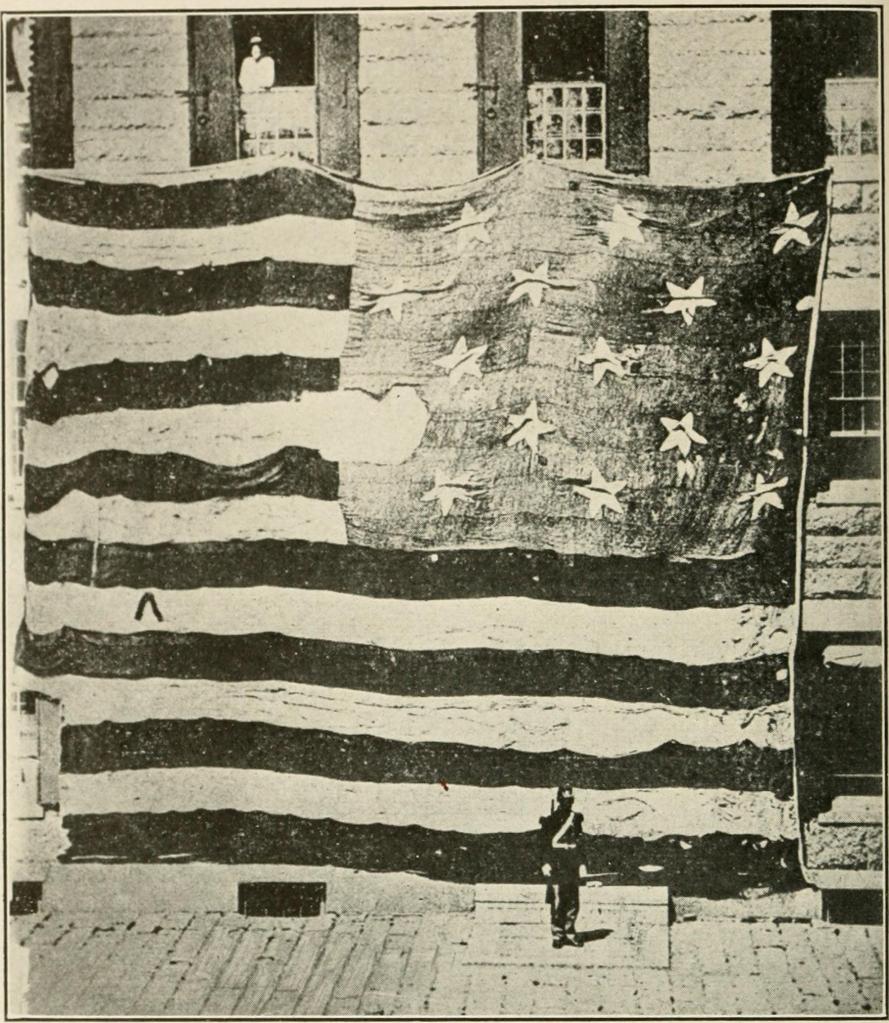
In July of 1813, Armistead ordered an enormous garrison flag measuring 30 x 42-feet and a smaller storm flag of 17 x 25 feet. The job went to a 37-year-old widow and seamstress named Mary Pickersgill.
Today the flag contains 50 stars, one for each state in the union and 13 stripes representing each of the original colonies. It was the practice in 1813 to add a star and a stripe for every state. In Mary’s time, there were 15 of each.
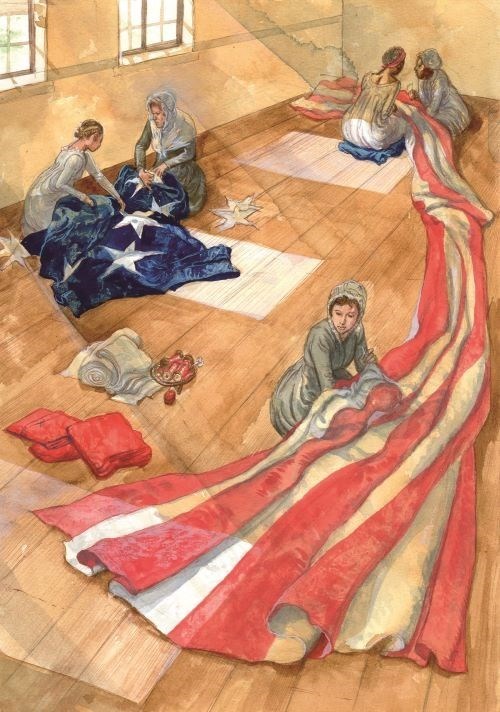
Using over 400 yards of hand-dyed fabric she fashioned white stars two feet across on a blue canton with stripes measuring two feet tall and assembled it all on the main floor, of a nearby brewery.
Such a project is beyond the abilities of a single seamstress. Mary enlisted the aid of her 13-year-old daughter Caroline, two nieces, 13-year-old Eliza Young and 15-year-old Margaret Young and a 13-year-old African-American girl named Grace Wisher indentured to her by her mother Jenny for a period of six years. Some sources report that Jenny Wisher, a free black woman, helped out.
Mary received $405.90 for the larger flag and $168.54 for the smaller. She was given 6 to 8 weeks in which to finish the commission, the largest one of her career. She completed the job in seven, delivering the two flags on August 19, 1813. Thirteen months later Mary Pickersgill, her flags and the team of women who helped her, took their place in American history.
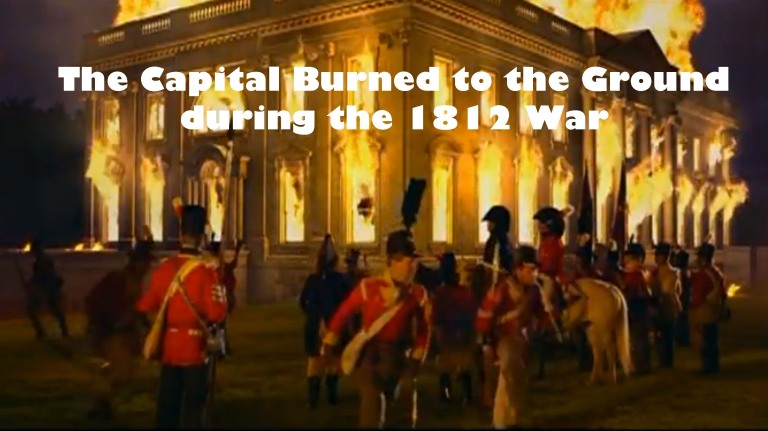
This most unpopular of wars became even more so, following the sack of Washington and burning of the United States Capitol and the White House, in August, 1814. Major General Robert Ross’ men were met on this occasion by an inexperienced and poorly equipped militia of some 6,000 American forces at Bladensburg, Maryland, whose comprehensive defeat and humiliating rout went into the history books as the “Bladensburg Races”.
A month later the force facing General Ross’ 4,700 troops landing at North Point were not that hastily assembled collection of Maryland and DC militia routed at Bladensburg, but a thoroughly prepared force led by Brigadier General John Stricker, dug in across a narrows bristling with small arms and a battery of six 4-pounder field guns and flanked by tidal creeks, all but nullifying the invaders’ numerical advantage.
General Ross himself was shot in the engagement and mortally wounded, leaving British forces in confusion as the Americans affected a strategic retreat. While a tactical victory for the British side, the delay bought the Americans precious time in which to strengthen the defense.
The following day British troops encountered a massive force of some 10,000 men and 100 cannon astride the Philadelphia Road blocking the advance, on Baltimore. Invading forces were at a two-to-one, disadvantage and in need of naval support to dislodge American ground forces. There would be no advance on Baltimore harbor while Fort McHenry, remained in American hands. Fort McHenry had to be taken.
A lawyer and amateur poet called Francis Scott Key was on-hand at the time, a prisoner exchange negotiator along with Colonel John Stuart Skinner, dining as guests aboard the HMS Tonnant. The two had an inside view of British naval capabilities in the harbor and were held, pending the outcome of the battle.
So it is this Baltimore lawyer had a front row seat, as that battered storm flag disappeared in the twilight’s last gleaming.
The naval bombardment taking place that night, is scarcely to be imagined. At first exchanging shot for shot with the garrison the warships soon pulled back, out of range of the fort’s guns. For 27 hours in a driving rain, nineteen warships pounded shot, shell and rocket by the thousands onto the 1,000-man garrison.
Sometime during the night that battered storm banner was taken down and replaced by the garrison flag. By the dawn’s early light of September 14 This was the banner, which now came into view. Nineteen warships had taken their best shot and yet, the garrison held. Key was so moved by the sight he dashed out a few lines on the back of an envelope. He called his poem, Defence of Fort M’Henry.
Without Fort McHenry in British hands there would be no occupation of Baltimore harbor, no assault upon the city. Colonel Arthur Brooke’s forces were withdrawn, by September 15. Vice Admiral Sir Alexander Cochrane sailed for New Orleans to regroup for the next, and last, battle of the War of 1812.
Over the years some 200 yards were removed in souvenir chunks from the “Great Garrison Flag reducing the banner from 30 x 42 to 30 x 34.
It was Key’s brother-in law Joseph H. Nicholson who first noticed the words fit nicely, with the popular melody of “The Anacreontic Song”. The Baltimore Patriot and The American printed the song on September 20 with the note “Tune: Anacreon in Heaven”. A short time later Thomas Carr of the Carr Music Store in Baltimore published words and music together under the title “The Star Spangled Banner”.
The song grew in popularity throughout the 19th century to be played at 4th of July celebrations, military ceremonies and other patriotic occasions. By World War 1 many of the more stridently anti-British verses had been removed from sheet music to avoid giving offense, to our British allies.
The anthem was played during the 7th inning stretch of game one of the 1918 World Series, believed to be the first time the song appeared, at a baseball game. Six legislative attempts came and went during the 1920s, to make Star Spangled Banner the national anthem of the United States. In the end a petition from the Veterans of Foreign Wars did the job. President Herbert Hoover signed the bill into law on March 4, 1931.
While all four verses are included according to United States code, the last three are all but unknown today and rarely sung, if at all.
Long may it wave.
O! say can you see, by the dawn’s early light, What so proudly we hail’d at the twilight’s last gleaming, Whose broad stripes and bright stars through the perilous fight, O’er the ramparts we watch’d, were so gallantly streaming? And the rockets’ red glare, the bombs bursting in air, Gave proof through the night that our flag was still there — O! say, does that star-spangled banner yet wave O’er the land of the free, and the home of the brave?
On the shore, dimly seen through the mists of the deep, Where the foe’s haughty host in dread silence reposes, What is that which the breeze o’er the towering steep, As it fitfully blows, half conceals, half discloses? Now it catches the gleam of the morning’s first beam, In full glory reflected now shines on the stream — ‘Tis the star-spangled banner, O! long may it wave O’er the land of the free, and the home of the brave.
And where is that band who so vauntingly swore That the havock of war and the battle’s confusion A home and a country should leave us no more? Their blood has wash’d out their foul foot-steps’ pollution, No refuge could save the hireling and slave, From the terror of flight or the gloom of the grave; And the star-spangled banner in triumph doth wave O’er the land of the free, and the home of the brave.
O! thus be it ever when freemen shall stand Between their lov’d home, and the war’s desolation, Blest with vict’ry and peace, may the heav’n-rescued land Praise the power that hath made and preserv’d us a nation! Then conquer we must, when our cause it is just, And this be our motto — “In God is our trust!” And the star-spangled banner in triumph shall wave O’er the land of the free, and the home of the brave.
The stakes are difficult to overstate. Arguably, the future of Western Civilization hung in the balance.
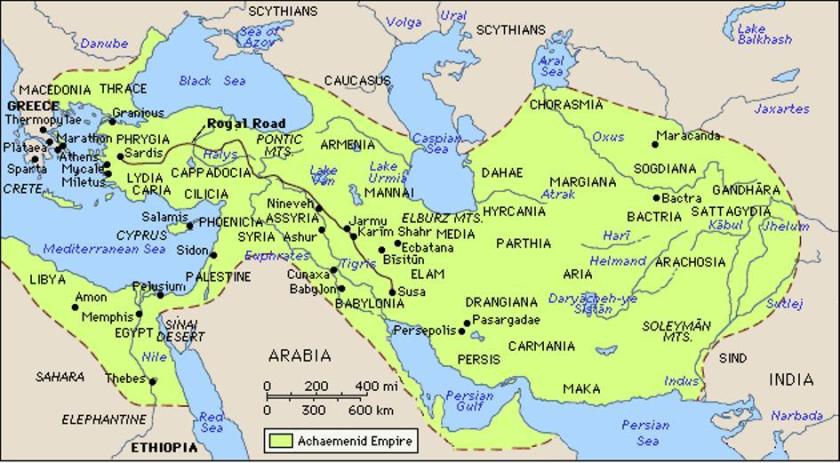
200 years before the classical age of Greece, King Darius I, third King of the Persian Achaemenid Empire, ruled over an area stretching from North Africa to the Indian sub-continent, from Kazakhstan to the Arabian Peninsula. Several Anatolian coastal polities rebelled in 499BC, with support and encouragement from the mainland city states of Athens and Eritrea.
Achaemenid Empire
This “Ionian Revolt” lasted until 493BC. Though ultimately unsuccessful, the Greeks had exposed themselves to the wrath of Darius. Herodotus records that, every night before dinner, Darius required one of his servants three times, to say to him “Master, remember the Athenians“.
Darius I
The Persian “King of Kings” sent emissaries to the Greek city states, demanding gifts of earth and water, signifying Darius’ dominion over all the land and sea. Most capitulated, but Athens put Darius’ emissaries on trial and executed them. Sparta didn’t bother with a trial. They threw Darius’ ambassadors down a well. “There is your earth”, they said. “There is your water”.
Athens and Sparta were now effectively at war with the Persian Empire.
2511 years ago, Darius sent an amphibious expedition to the Aegean, attacking Naxos and sacking Eritrea. A force of some 600 triremes commanded by the Persian General Datis and Darius’ own brother Artaphernes then sailed for Attica, fetching up in a small bay near the town of Marathon, about 25 miles from Athens.
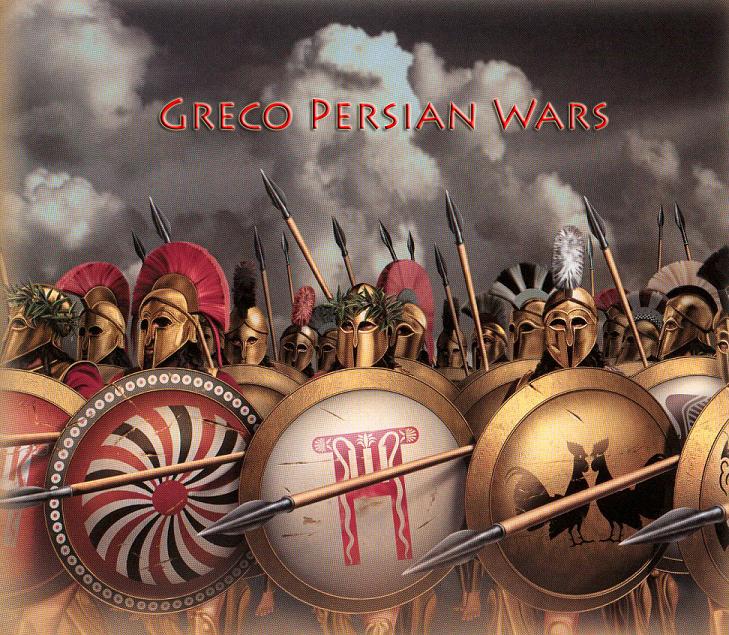
An army of 9,000-10,000 hoplites (armored infantry) marched out of Athens under the leadership of ten Athenian Strategoi (Generals), to face the 25,000 infantry and 1,000 cavalry of the Persians. The Athenian force was soon joined by a full muster of 1,000 Plataean hoplites, while Athens’ swiftest runner Pheidippides was dispatched to Lacedaemon, for help.
The festival of Carneia was underway at this time, a sacrosanct religious occasion during which the Lacedaemonian (Spartan) army would not fight, under any circumstance. Sparta would be unavailable until the next full moon, on September 9. With 136 miles to Marathon, Spartan reinforcement was unlikely to arrive for the next week or more.
The Athenian force arrived at the Plain of Marathon around September 7, blocking the Persian route into the interior.
Facing a force more than twice as large their own, Greek Generals split 5 to 5 whether to risk battle.
A “Polemarch” is an Athenian civil dignitary, with full voting rights in military matters. General Miltiades, who enjoyed a degree of deference due to his experience fighting Persians, went to the Polemarch Callimachus, for the deciding vote.
The stakes are difficult to overstate. Arguably, the future of Western Civilization hung in the balance.
With Athens behind them now defenseless, its every warrior here on the plain of Marathon, Miltiades spoke. ‘With you it rests, Callimachus, either to bring Athens to slavery, or, by securing her freedom, to be remembered by all future generations…We generals are ten in number, and our votes are divided. Half of us wish to engage, half to avoid a combat. Now, if we do not fight, I look to see a great disturbance at Athens which will shake men’s resolutions, and then I fear they will submit themselves. But, if we fight the battle…we are well able to overcome the enemy.’
With less than a mile between them, the two armies had faced one another for five days and five nights. On September 12, 490BC, the order went down the Athenian line. “At them!”
Advertisementshttps://c0.pubmine.com/sf/0.0.3/html/safeframe.htmlREPORT THIS AD
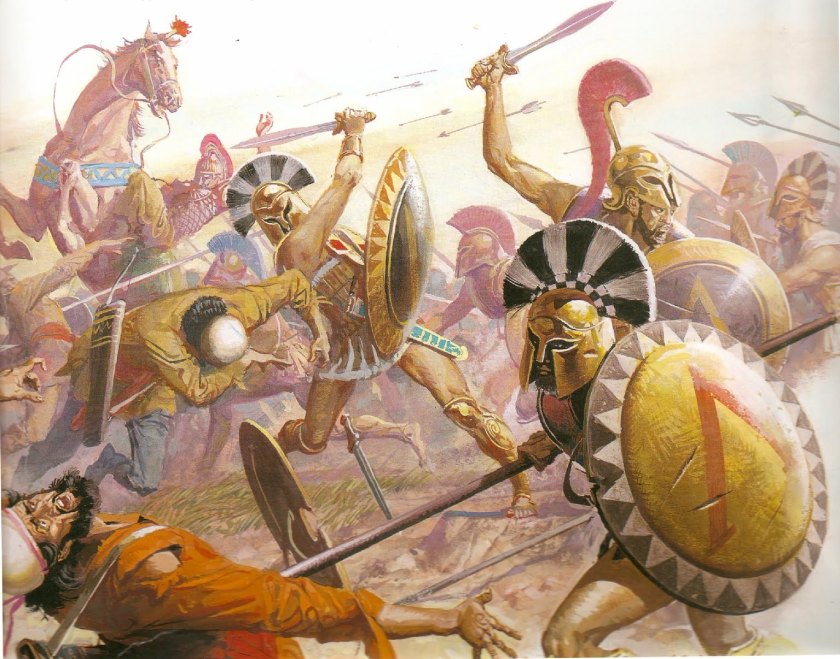
Weighed down with 70lbs per man of bronze and leather armor, the Greek line likely marched out to 200 yards, the effective range of Persian archers. Greek heavy infantry closed the last 200 meters at a dead run, the first time a Greek army had fought that way.
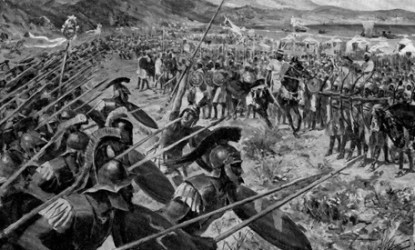
Persian shafts flew by the thousands, yet the heavy armor and wooden shields of the hoplite formation, held. Bristling with arrows yet seemingly unhurt, the Greek phalanx smashed into the Persian adversary, like an NFL front line into an ‘Antifa” demonstration.
Tom Holland, author of Persian Fire, describes the impact. “The enemy directly in their path … realized to their horror that [the Athenians], far from providing the easy pickings for their bowmen, as they had first imagined, were not going to be halted … The impact was devastating. The Athenians had honed their style of fighting in combat with other phalanxes, wooden shields smashing against wooden shields, iron spear tips clattering against breastplates of bronze … in those first terrible seconds of collision, there was nothing but a pulverizing crash of metal into flesh and bone; then the rolling of the Athenian tide over men wearing, at most, quilted jerkins for protection, and armed, perhaps, with nothing more than bows or slings. The hoplites’ ash spears, rather than shivering … could instead stab and stab again, and those of the enemy who avoided their fearful jabbing might easily be crushed to death beneath the sheer weight of the advancing men of bronze“.
Advertisementshttps://c0.pubmine.com/sf/0.0.3/html/safeframe.htmlREPORT THIS AD
Darius’ force was routed, driven across the beach and onto waiting boats. 6,400 Persians lay dead in the sand, an unknown number were chased into coastal swamps, and drowned. Athens lost 192 men that day, Plataea, 11.
In the popular telling of this story, Pheidippides ran the 25 miles to Athens and announced the victory with the single word “Nenikēkamen!” (We’ve won!”), and dropped dead.
That version first appeared in the writings of Plutarch, some 500 years later. It made for a good story for the first Olympic promoters, too, back in 1896, but that’s not the way it happened.
Herodotus of Halicarnassus, described by no less a figure than Cicero as the “Father of History”, tells us that Pheidippides was already spent. No wonder. The man had run 140 miles from Athens to Lacedaemon, to ask for Spartan assistance.
Despite the exhaustion of battle and the weight of all that armor, the Athenian host marched the 25 miles back home, arriving in time to head off the Persian fleet. The Spartans arrived at Marathon the following day, having covered 136 miles in three days.
Though a great victory for the Greeks, Darius’ loss at Marathon barely put a dent in the vast resources of the Achaemenid Empire. The Persian King, would return.
It’s a new perspective on a now-familiar story, to think of the shock and the grief of those refugees from the killing fields of Pol Pot, on hearing the news that their friend and benefactor had been hijacked and murdered, his aircraft flown into a New York skyscraper.
At the turn of the 20th century, a great wave of immigrants came to the United States, 20 million Europeans and more making the long journey to become Americans.
Among those multitudes came the Ogonowski family, emigrating from Poland and making a new home in the Merrimack Valley of Massachusetts, along the New Hampshire line.
Those early members of the Ogonowski family received invaluable assistance from Yankee farmers, well accustomed to growing conditions in the harsh New England climate. Generations later, the family still tilled the soil of the 150-acre “White Gate Farm” in Dracut, Massachusetts.
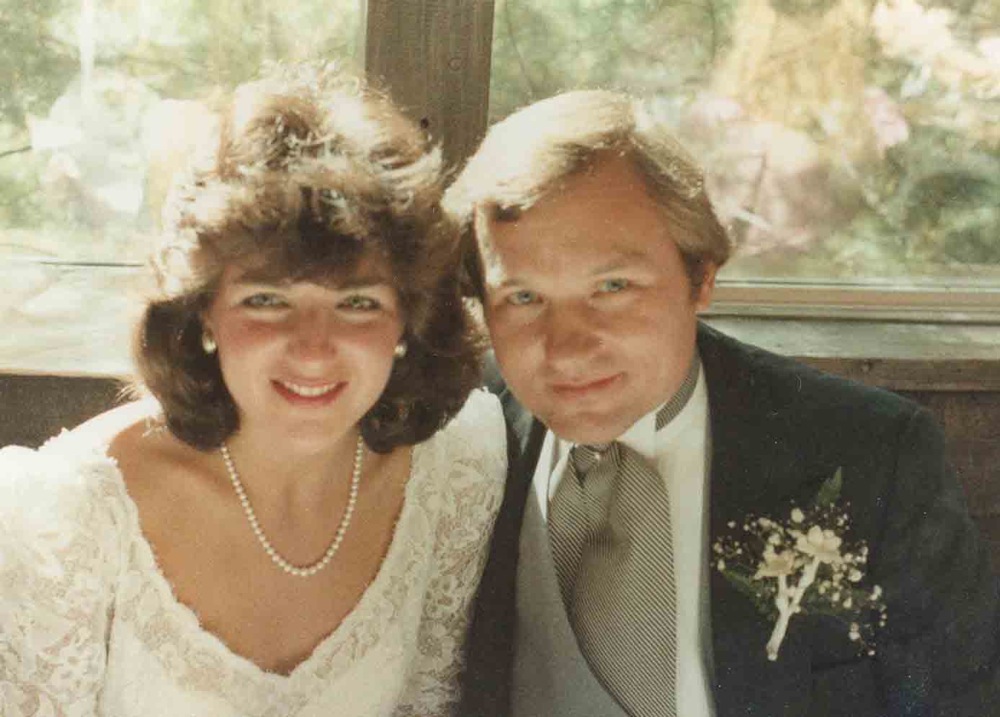
Graduating from UMass Lowell in 1972 with a degree in nuclear engineering, John Alexander Ogonowski joined the United States Air Force. During the war in Vietnam, this farmer-turned military pilot would ferry equipment from Charleston, South Carolina to Southeast Asia, often returning with the bodies of the fallen aboard that giant, C-141 transport aircraft.
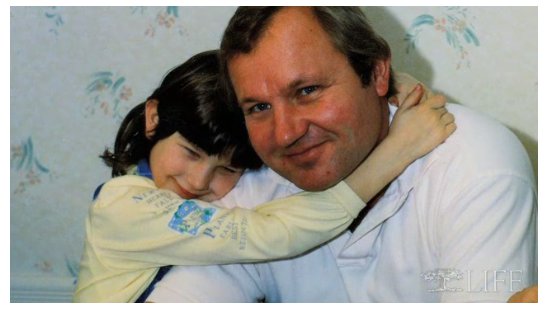
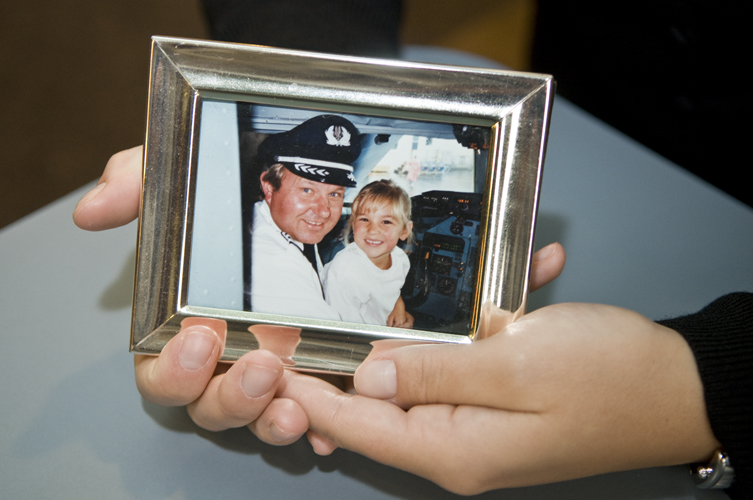
Ogonowski left the Air Force with the rank of Captain, becoming a commercial pilot and joining American Airlines in 1978. There he met Margaret, a flight attendant, “Peggy” to friends and family. The two would later marry and raise a family of three daughters, Laura, Caroline, and Mary Catherine.
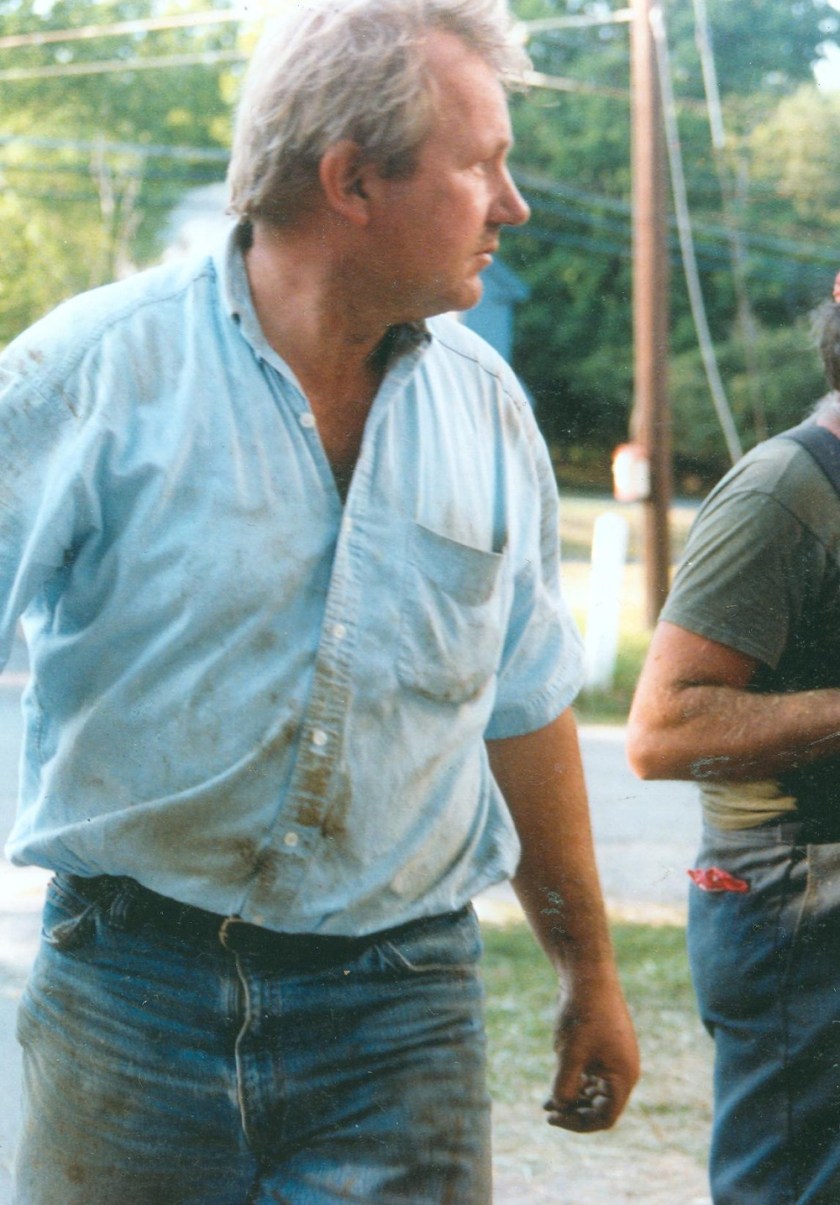
Twelve days a month, Ogonowski would leave the farm in his Captain’s uniform, flying jumbo jets out of Logan Airport. When he was finished , he would always return to the land he loved.
Family farming is not what it used to be, as suburban development and subdivisions creep into formerly open spaces. “When you plant a building on a field”, John would say, “it’s the last crop that will ever grow there”.
John Ogonowski helped to create the Dracut Land Trust in 1998, working to conserve the growing town’s agricultural heritage. He worked to bring more people into farming, as well. The bumper sticker on his truck read “There is no farming without farmers”.
That was the year the farm Service Agency in Westford came looking for open agricultural land, for Cambodian immigrants from Lowell.
“This is what he was all about. He flew airplanes, he loved flying, and that provided all the money, but this is what he lived for. He was a very lucky man, he had both a vocation and an avocation and he loved them both”. – Margaret “Peggy” Ogonowski
It was a natural fit. Ogonowski felt a connection with these people, based on his time in Southeast Asia. He would help them, here putting up a shed, there getting a greenhouse in order or putting up irrigation. He would help these immigrants, just as those Yankee farmers of long ago, had helped his ancestors.
Cambodian farmers learned to grow their native vegetables in an unfamiliar climate. They would lease small plots growing water spinach, lemon grass, pigweed, Asian basil, and Asian squash. They raised taro and Laotian mint, coconut amaranth, pickling spices, pea tendrils and more. It was the food they grew up with, the food they knew. They would sell their produce into nearby immigrant communities, and to the high-end restaurants of Boston.
The program was a great success. Ogonowski told The Boston Globe in 1999, “These guys are putting more care and attention into their one acre than most Yankee farmers put into their entire 100 acres.”
So it was that, with the fall harvest of 2001, Cambodian immigrants found themselves among the pumpkins and the hay of a New England farm, putting on a special lunch spread for visiting agricultural officials from Washington, DC. It was September 11.
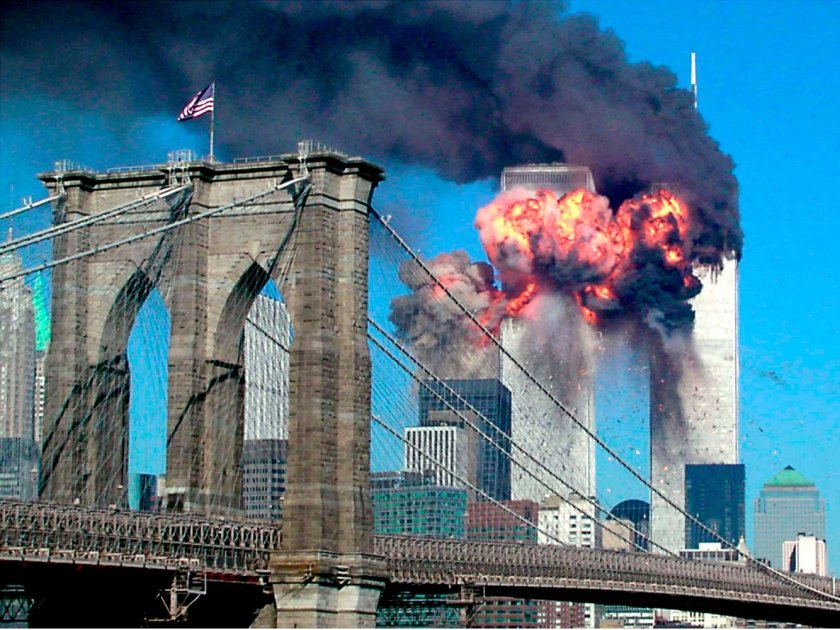
By now you know that John Ogonowski was flying that day, Senior Captain on American Airlines flight 11. He may have been the first to die, attacked from behind and murdered in his cockpit by terrorist savages.
It’s a new perspective on a now-familiar story, to think of the shock and the grief of those refugees from the killing fields of Pol Pot, on hearing the news that their friend and benefactor had been hijacked and murdered, his aircraft flown into a New York skyscraper.
The White Gate Farm was closed for a week, but the Ogonowski family was determined. John’s dream would not die. Peg said it best: “This is what he was all about. He flew airplanes, he loved flying, and that provided all the money, but this is what he lived for. He was a very lucky man, he had both a vocation and an avocation and he loved them both.”
John Ogonowski was working with the Land Trust at the time of his death, in an effort to raise $760,000 to purchase a 34-acre farm in Dracut, slated for development. Federal funds were raised with help from two members of Congress. The “Captain John Ogonowski Memorial Preservation Farmland” project was dedicated in 2003. A living memorial to one day that changed the world. And to John Alexander Ogonowski. Pilot. Farmer. Fallen angel.
Loyalty
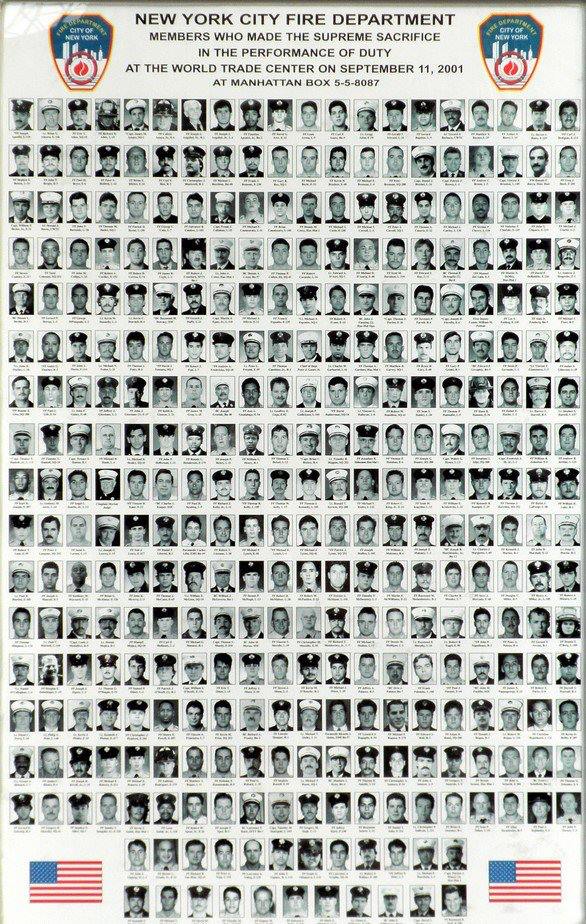
Another tale to emerge from that awful day concerns one of the many first responders who rushed to the inferno, and never returned. This was one of the lucky ones, in a way. This firefighters family had a body to mourn over.
The night before the funeral, the firefighters wife and his buddies “stole“ the body, casket and all, with the connivance of the folks at the funeral home. They brought him to the beach where they spent that last night with a case of beer, laughing together, crying and sharing stories. The next morning, they brought him back to the funeral home as promised, and their loved one was buried with honors.
I don’t know the name of this man or that if his wife, but that part matters more to those precious few. For the rest of us, this is a story of a short life well lived, a story of love and friendship and loyalty. May we all be so fortunate, as to be blessed with friends such as these.
“Each day in the sacred Maya calendar has a meaning. It tells us about the relationship among all things, including the animals, the land, humans, and everything in the cosmos.” —Hermelinda Sapon Pu, K’iche’ Maya, Day Keeper
One of the sillier bits of pop culture nonsense served up to us in the recent past, may be the world coming to an end on 12/21/12, according to the Mayan calendar. The calendar itself isn’t silly, it’s actually a sophisticated mathematical construct but the end of the world part, certainly was.
The Mayans were skilled mathematicians and it shows in their calendar, the first to recognize the concept of zero, and working extensively in a base 20 number system.
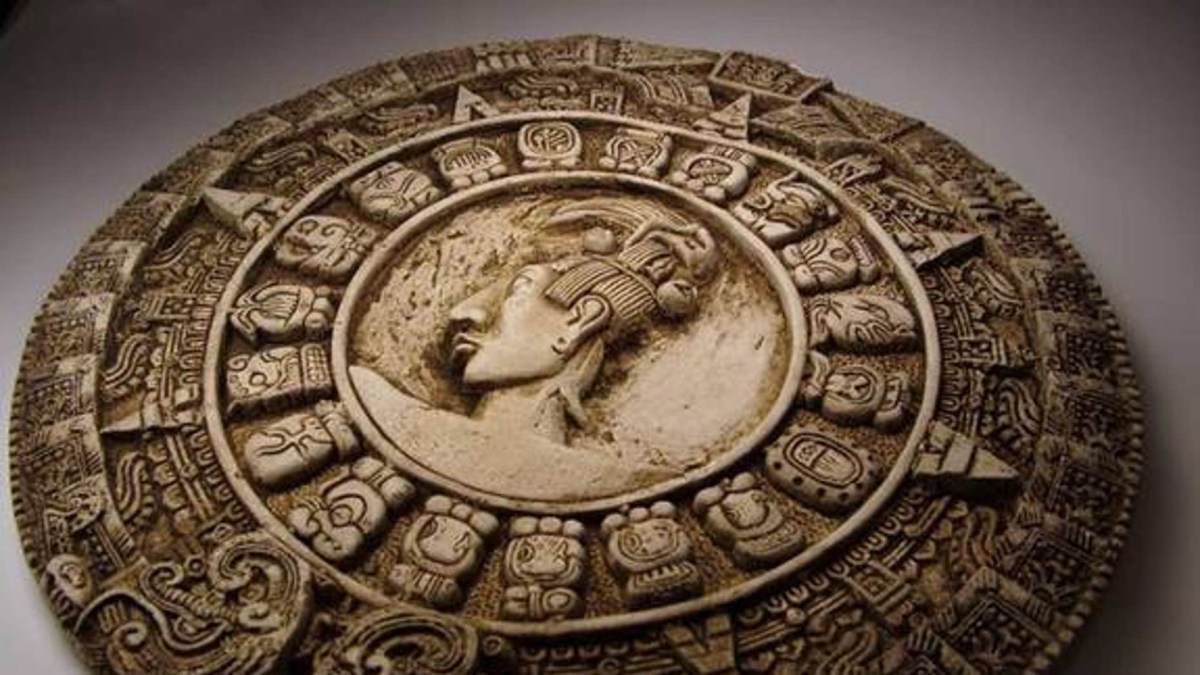
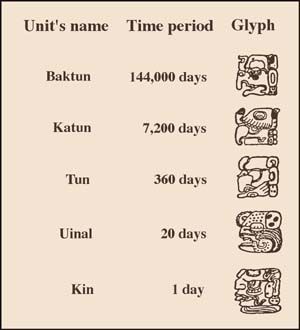
The Mayans used three separate calendars, each period represented by its own glyph. The Long Count was mainly used for historical purposes. The Maya/Mesoamerican long count, begun this day in 3114BC (corresponding to the Julian Calendar).was able to specify any date within a 2,880,000 day cycle.
The Haab was a civil calendar consisting of 18 months of 20 days, and one 5-day Uayeb, a nameless period rounding out the 365-day year.
The Tzolk’in was the “divine” calendar, used mainly for ceremonial and religious purposes. Consisting of 20 periods of 13 days, the Tzolk’in goes through a complete cycle every 260 days. The significance of this cycle is unknown, though it may be connected with the 263 day orbit of Venus. There is no year in the Haab or Tzolk’in calendars, though a Haab and Tzolk’in date may be combined to specify a particular day within a 52-year cycle.
National Geographic explains that 12/21/12 brings to a close not the end of time, but the end of the 12th Bak’tun, an almost 400-year period in the Mayan Long Count calendar. The world doesn’t end, according to this explanation, it “rolls over” to the year zero and starts over, kind of like old cars used to do, when the odometer reached 100,000 miles.
It doesn’t really roll over to “zero”, either. The base 20 numerical system means that 12/22/12 begins the next 400 year (actually 394.3 years) period to begin the 13th Bak’tun. It will reset to zero at the end of the 20th Bak’tun, about 3,000 years from now. Please let me know how that turns out.
The Mayan calendar system became extinct in most areas after the Spanish conquests of the 16th century, though it continues in use in many modern communities in highland Guatemala and in Veracruz, Oaxaca and Chiapas, Mexico.
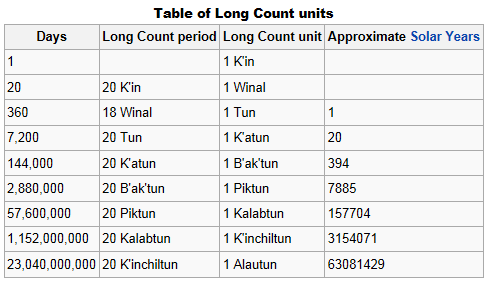
The table of Long Count units below illustrates the Mayan units of measure.
A day is a K’in, there are 20 K’ins in a Winal, and so on.
Today’s date then, according to the Mayan calendar, is Long Count Date 13.0.8.15.1, or: 13 baktun (13 X 144,000 days = 1,872,000 days) 0 katun (0 X 7,200 days = 0 days) 8 tun (8 X 360 days = 2,880 days) 15 uinal (15 X 20 days = 300 days) 1 k’in (1 X 1 day = 1 days) Tzolk’in Date: 13 Imix’ Haab Date: 19 Mol Lord of the Night
Represented graphically it all looks like this:
Hat tip to the Smithsonian National Museum of the American Indian, for that one.
Perhaps we’re all capable of more than we realize, or less, but we may never know which. Not until we have been tested. For Neerja Bhanot the test came on September 5, 1986.
Is a hero born that way, or do circumstances bring out something that was in there, all along? What are we ourselves capable of, should circumstances require? Perhaps we’re all capable of more than we realize, or less, but we may never know which. Not until we have been tested.
For Neerja Bhanot the test came on September 5, 1986.
Neerja was born in Chandigarh, India and raised in Bombay, now Mumbai. The only daughter of Punjabi Hindu parents Hareesh and Rama Bhanot, she was the ‘laado’ of this family of five: the youngest, and most pampered.
Gifted with exceptional good looks it was all but foreordained that she would enter a career in modeling. She was a natural in front of a camera. It was hard to turn on a TV in mid-1980s India without a glimpse of this smiling spokeswoman, equally at home pitching cold cream, savings banks or the latest in saree fashion.
An arranged marriage proved abusive in early 1985 and Neerja left two months later, to move back with Rama and Hareesh.
It was barely a blip on the screen of a stellar modeling career and soon, Neerja decided on another. Her friend Naomi was interviewing, to become a flight attendant. Neerja helped her with her make-up and spontaneously decided to interview, herself. So it is Neerja Bhanot became a flight attendant with Pan Am. And why not? She was young and the whole world, lay before her. There was no reason she couldn’t handle two careers.
Neerja traveled to Miami Florida for training with the airline and returned, a purser. At 22 she was not only air hostess but now responsible for cash receipts, taken in-flight.
On September 5, 1986, Neerja donned the crisp blue uniform for the last time and boarded Pan Am Flight 73. She was senior flight purser for this trip, a route flying from Mumbai to the United States via Karachi, Pakistan and Frankfurt, Germany.
A vile, alien ideology enters this story on the stopover, in Pakistan. Four armed men in a van disguised as airport security, members of the Palestinian terrorist Abu Nidal Organization. The four crossed the tarmac passing the pushback tug and catering trucks to enter the aircraft in pairs, two via the front stairs and two up the back.
Firing their weapons in the air and into the floor at their feet the militants ordered all doors, closed and locked. Unseen in the moment Neerja signaled the code for ‘Hijack’ and flight attendant Sherene Pavan phoned the cockpit. Fellow air hostess Sunshine Vesuwala watched as one now grabbed hold of Neerja with a gun, to her head. 393 passengers and crew were now captives, of four armed terrorists.
Pilot, co-pilot and flight engineer were able to flee via an overhead hatch. Many would criticize these three for fleeing in the days to come but flight steward Dilip Bidichandani, takes the opposite view. At least three lives were now saved and the situation was safer on the ground, than in the air. The terrorists themselves later claimed an intent to fly the aircraft into a building, a tactic unheard of, in 1986.
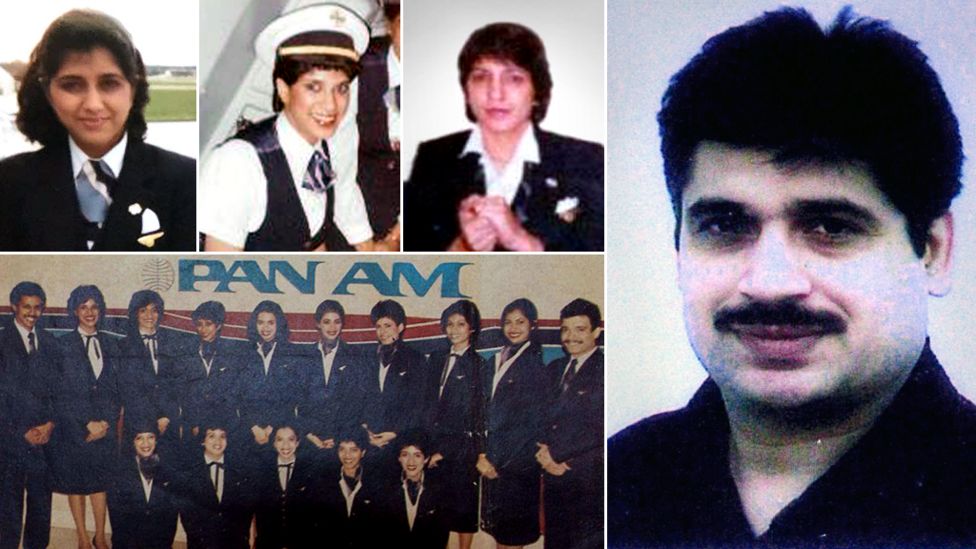
(From top left): Nupoor, Sunshine, Sherene, Dilip. (In group shot – far left): Massey. (Credits: Solo shots – individuals’ own; group shot: Pan Am crew Facebook page) H/T BBC
Twelve flight attendants were now in charge of the hijacked aircraft, none older than their early to mid-twenties.
Karachi flight director Viraf Doroga took up a megaphone and attempted to negotiate as security personnel took positions, around the aircraft. The four wanted to fly to Cyprus and on to Israel where some of their cohorts, were held in prison. They demanded a pilot and, when none materialized, 29-year-old American passenger Rajesh Kumar was dragged from his seat, driven to his knees before an open door and shot in the head, his lifeless body kicked onto the tarmac, below.
In the face of such bestiality, ordinary people rose to new levels of common decency, and courage. Nupoor Abrol told BBC News, “My first instinct was to open the wing exit and slip out with as many passengers as I could, but I realized that this would leave the rest of the passengers vulnerable.”
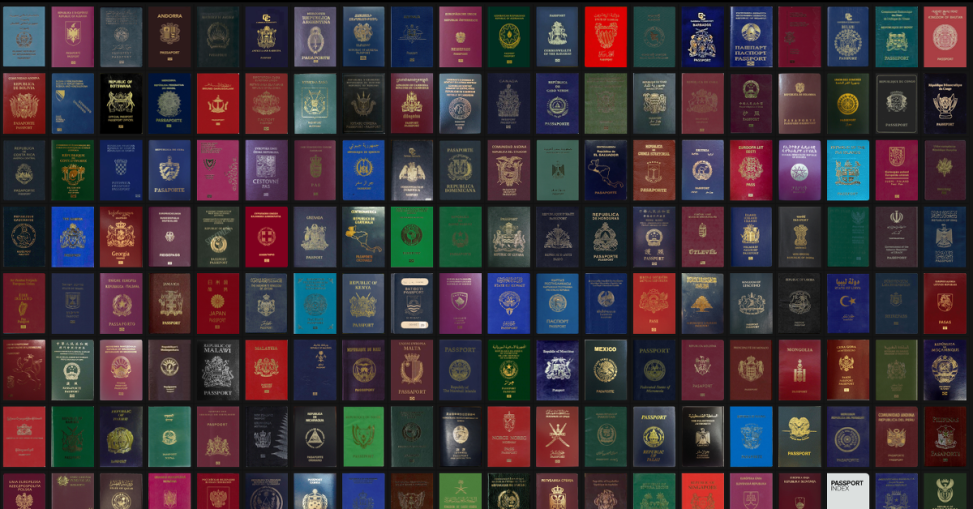
The terrorists made it known they were after Americans. They instructed flight attendants to collect passports so they could identify, which were Americans. Sunshine, Madhvi Bahuguna and Neerja began to collected passports. In they came in shades of green and burgundy, of black and blue. The unique navy blue of the American passport, chosen in 1976 to match that of the stars and strips was missing, quietly omitted or tucked under seats or secreted, in flight attendant’s uniforms.
Infuriated at the inability to find an American the terrorists now chose a Brit, Mike Thexton, who was forced to sit on the floor with his hands crossed, over his head. Thexton received a vicious kick to the side for his efforts but he would survive the ordeal. Twenty-two of his fellow captives, would not.
Mike Thexton
The stalemate dragged on for seventeen grueling hours until the aircraft ran out of power and the savages, ran out of patience. As the hijackers became visibly more agitated Neerja and others communicated means of deploying emergency exit ramps, to passengers seated by the exits.
Pandemonium broke out on the aircraft as four terrorists, now opened fire. Neerja was directing passengers out one exit as one of them grabbed her by the ponytail. She wasn’t just shot in the crossfire she was murdered, point blank. According to one eyewitness her last act was an attempt to shelter, three children.
Her 23rd birthday came and went, two days later.
Twenty two passengers and crew were killed that day with another 120, wounded. The nation of India awarded Neerja Bhanot the Ashoka Chakra Award, India’s highest award for bravery in the face of an enemy, during peacetime. She is the youngest recipient of such an award and the first, female.
Five terrorists were subsequently caught and tried by Pakistani authorities. They were all released against the express wish of American authorities and deported, to Palestine. The terrorist leader, to hell with his name, was extradited to the United States where is serving a 160-year sentence.
One of the children Neerja Bhanot sheltered with her body was seven years old, that day. The boy was inspired by the selfless courage of the woman who had saved his life and grew to become a pilot, with a major airline.
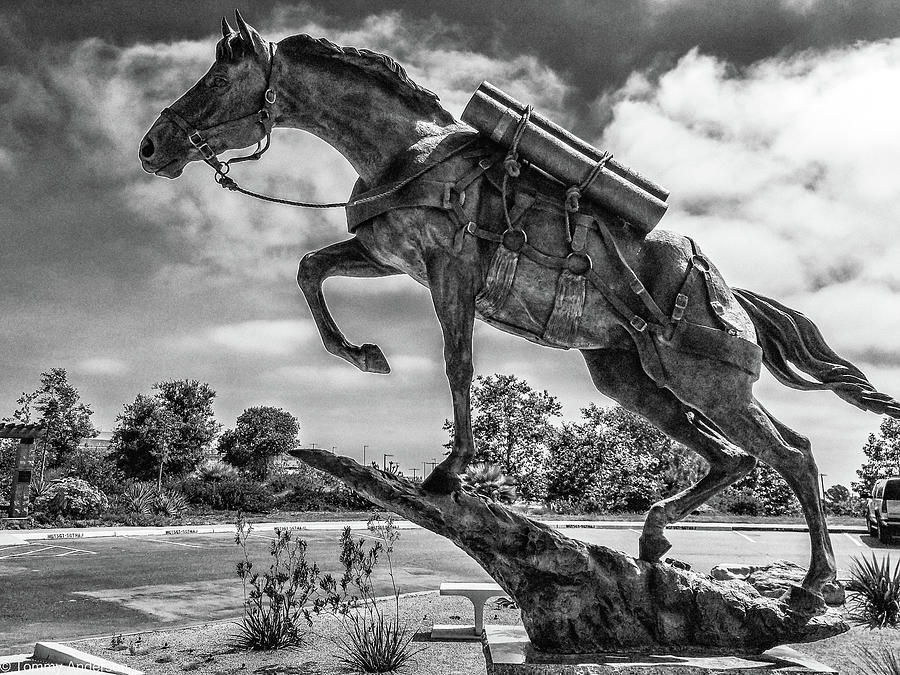
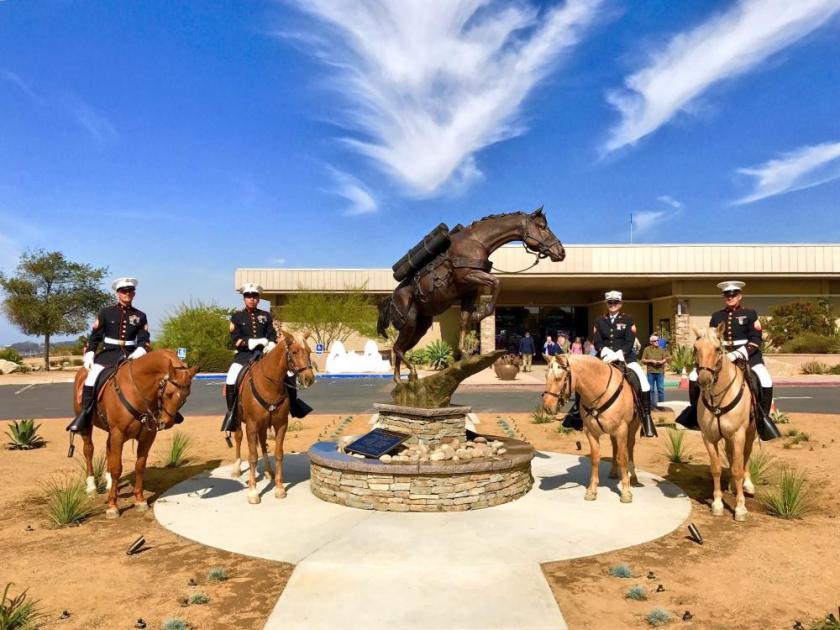
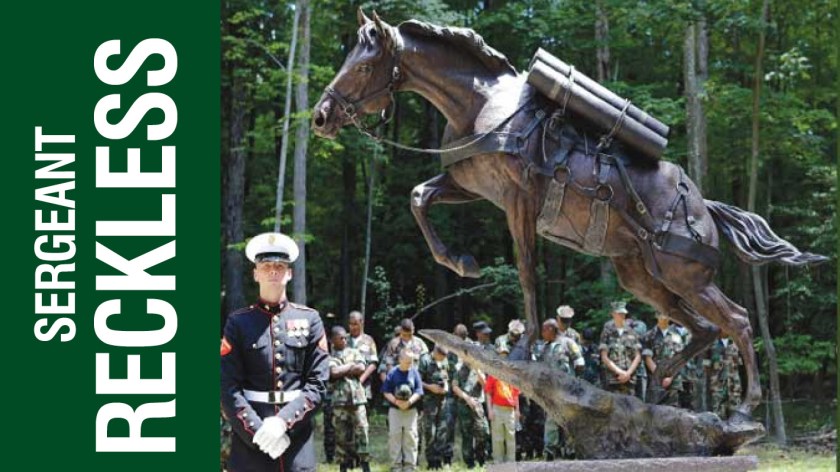
Reckless was the first horse in Marine Corps history to participate in an amphibious landing. She was wounded twice, and later awarded two Purple Hearts and a Marine Corps Good Conduct Medal. Her name appears on Presidential Unit citations both from the United States and the Republic of Korea.
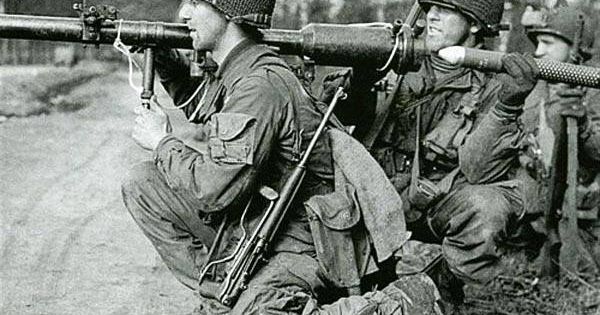
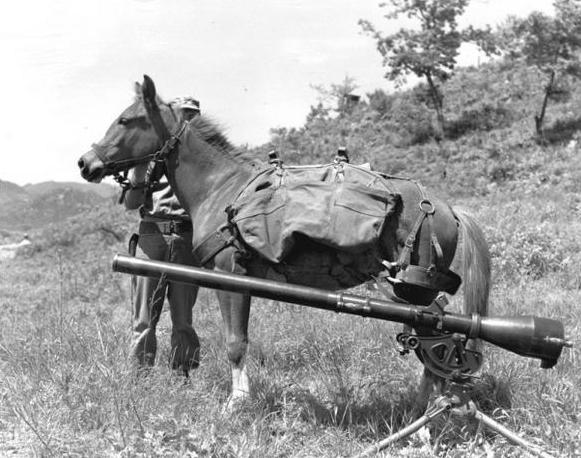
A Recoilless Rifle is a type of lightweight tube artillery. Think of a portable cannon. Kind of a bazooka, really, only the Recoilless fires modified shells rather than rockets. The back blast of the shell compensates for the mule’s kick which would otherwise be expected from such a weapon, making the rifle “recoilless”.
While it reduces projectile range, reduced gas pressures permit a thinner-walled barrel, resulting in a weapon light enough to be served by a 2 to 3-man crew and shoulder fired by a single infantryman.
The “RCLR” weapon system has provided the punch of artillery to mobile troop formations since the early days of WWII including Airborne, Special Forces and Mountain units.
The problem arises when combat operations consume ammunition faster than the supply chain can replace it. Mountainous terrain makes the situation worse. Over the last 20 years in the more mountainous regions of Afghanistan, there were times when the best solution for the problem, is horsepower.
Ah Chim-hai was a chestnut mare of mixed Mongolian and Thoroughbred lineage, a race horse at the track in Seoul, South Korea. Her name translated as “Flame of the Morning”.
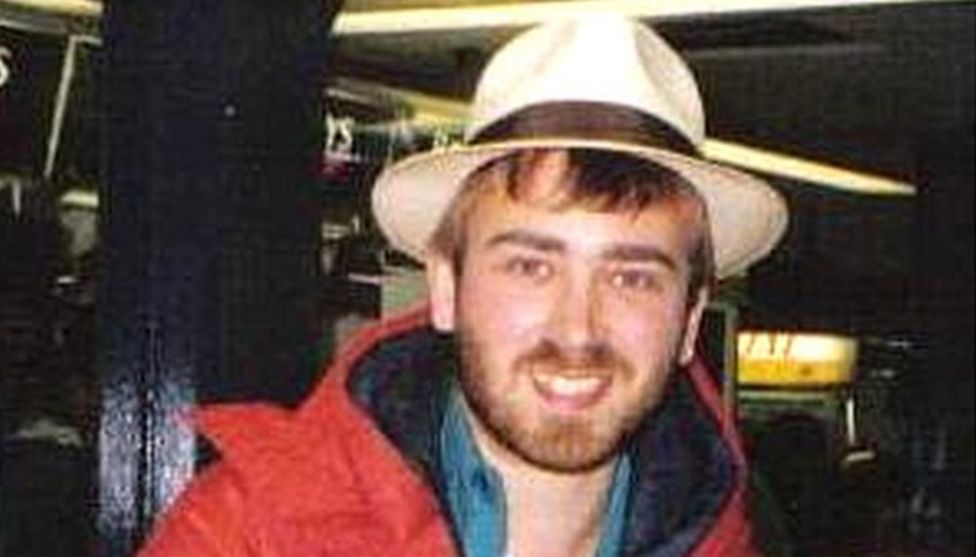
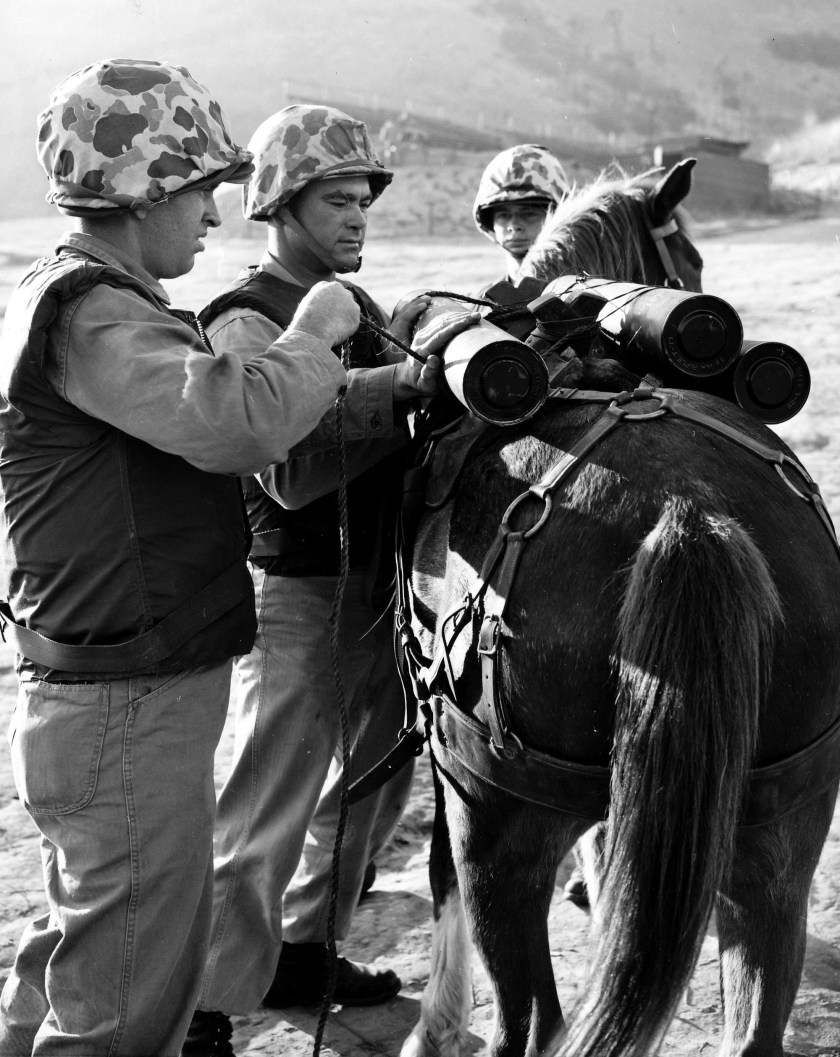
Lieutenant Eric Pedersen of the recoilless rifle platoon, anti-tank company of the 5th Marine Regiment, needed a pack animal to carry the weapon’s 24-pound shells up Korean mountain passes. In October 1952, Pederson received permission from regimental commander Colonel Eustace P. Smoak, to buy a horse for his platoon.
Lt. Pederson and stable boy Kim Huk-moon agreed on a price of $250, and Pederson paid with his own money. Kim cried on watching his “Flame” leave the stable, but the sale had a higher purpose. The boy’s sister had stepped on a land mine, and badly needed a prosthetic leg.
The Marines called the new recruit “Reckless” – a nod to the weapon system she was meant to serve, and to the fighting spirit of the 5th Marines.
Pederson wrote to his wife in California to send a pack saddle, while Gunnery Sergeant Joseph Latham and Private First Class Monroe Coleman provided for her care and training.
Navy Hospitalman First Class George “Doc” Mitchell provided most of Reckless’ medical care, Latham taught her battlefield skills: how to step over communication wires, when to lie down under fire, how to avoid becoming entangled in barbed wire. She learned to run for cover at the cry “Incoming!”
The platoon built her a bunker and fenced off a pasture, but soon Reckless was allowed to roam freely throughout the camp. She’d enter tents at will, sometimes spending the night if it was cold.
She’d eat anything: bacon, mashed potatoes, shredded wheat. She loved scrambled eggs and just about anything else a Marine wasn’t watching closely enough. Reckless even ate her own horse blanket once, and she loved a to have a beer. Mitchell had to warn his fellow Marines against giving her more than two Cokes a day, which she’d drink out of a helmet. One time, Reckless ate $30 worth of winning poker chips.
General Randolph McCall Pate, a veteran of Guadalcanal, Iwo Jima and Korea, served as the 21st Commandant of the Marine Corps from 1956 – ’59. Pate wrote: “I was surprised at her beauty and intelligence, and believe it or not, her esprit de corps. Like any other Marine, she was enjoying a bottle of beer with her comrades. She was constantly the center of attraction and was fully aware of her importance. If she failed to receive the attention she felt her due, she would deliberately walk into a group of Marines and, in effect, enter the conversation. It was obvious the Marines loved her.” Reckless was a Marine.
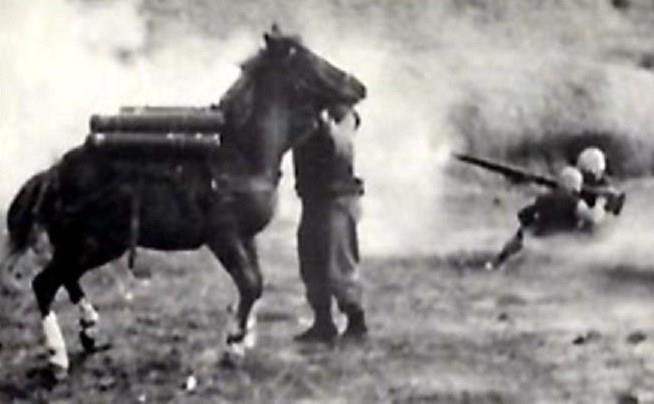
Reckless “went straight up” the first time she heard an RCLR go off, despite being loaded down with six shells. All four feet left the ground and she came down trembling with fear, but Coleman was able to soothe her. The second time she snorted. By the fourth she didn’t do much as bother to look up, happily munching on a discarded helmet liner.
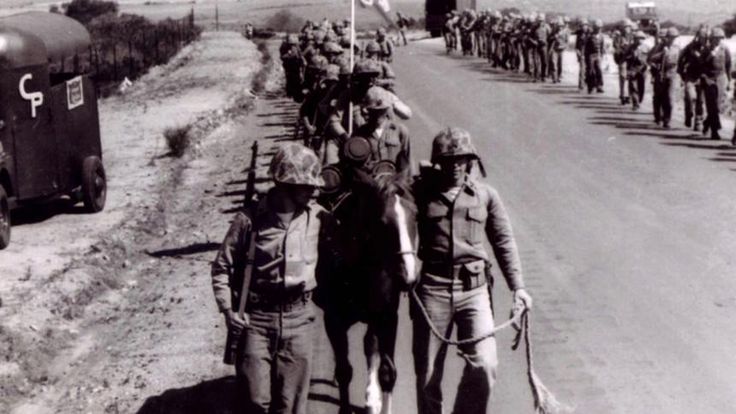
Recoilless rifle tactics call for fire teams to expend four or five rounds, and then relocate before the enemy can shoot back. Reckless usually learned the route after one or two trips, often traveling alone to deliver supplies on the way up, and evacuate wounded on the way down.
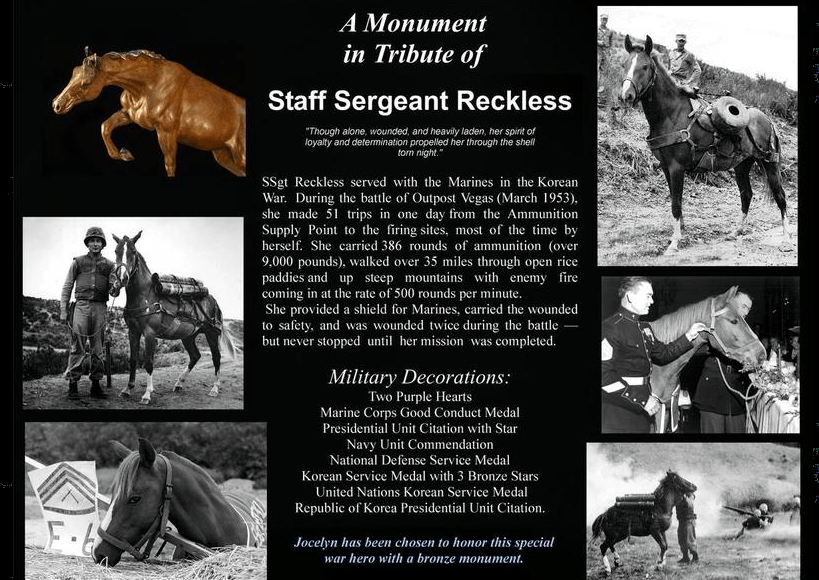
In February 1953, Captain Dick Kurth and his Fox Company were fighting for a hill called “Detroit”. Reckless made 24 trips by herself, carrying a total 3,500-pounds of ammunition over 20 miles. She made 51 solo trips that March, during the battle for Outpost Vegas. Reckless carried 9,000lbs of ammunition in a single day, over 35 miles of open rice paddies and steep hills. At times, artillery exploded around her at the rate of 500 rounds per minute. That night, she was too exhausted to do anything but hang her head while they rubbed her down.
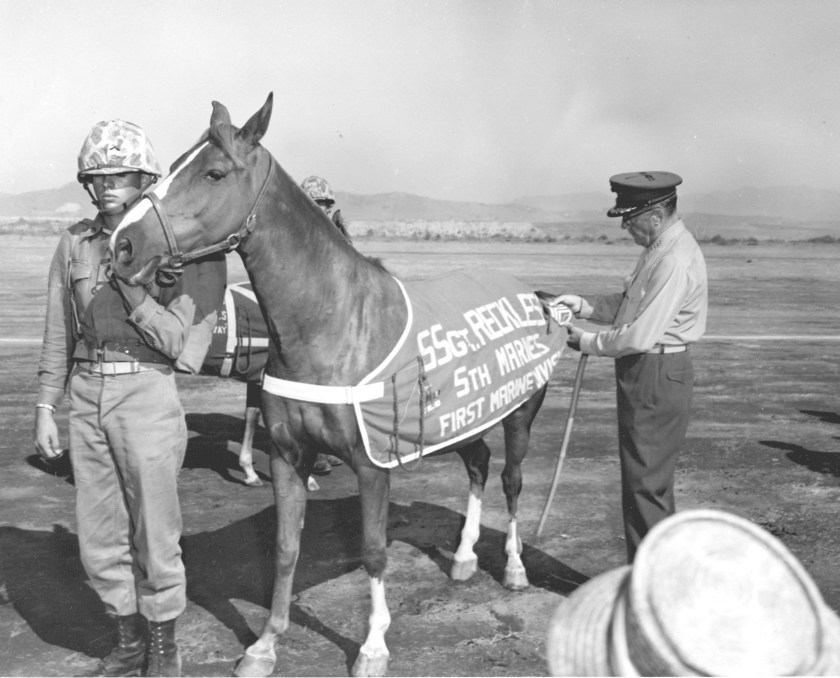
Reckless was the first horse in Marine Corps history to participate in an amphibious landing. She was wounded twice, and later awarded two Purple Hearts and a Marine Corps Good Conduct Medal. Her name appears on Presidential Unit citations both from the United States and the Republic of Korea.
On August 31, 1959, Reckless was promoted to Staff Sergeant in a ceremony at Camp Pendleton. 1,900 of her 5th Marine comrades attended, as did two of her sons, “Fearless” and “Dauntless”. A third, “Chesty”, was unavailable to attend.
General Pate wrote: “In my career I have seen many animals that have been adopted by Marines, but never in all my experience have I seen one which won the hearts of so many as did. . .Reckless.”
Life Magazine published a collector’s edition in 1997, listing 100 heroes from American history. Alongside the names of George Washington and Thomas Jefferson, Sally Ride and Abraham Lincoln, was that of a small Mongolian horse. Sergeant Reckless.
The astonishing part of this story is it all took place in the midst of a plague vastly more deadly than the COVID-19 pandemic, of our own age.
When George Washington raised his swordunder the branches of that ancient elm on Cambridge commons, by that act did the General take command of an “army” equipped with an average of nine rounds, per man.
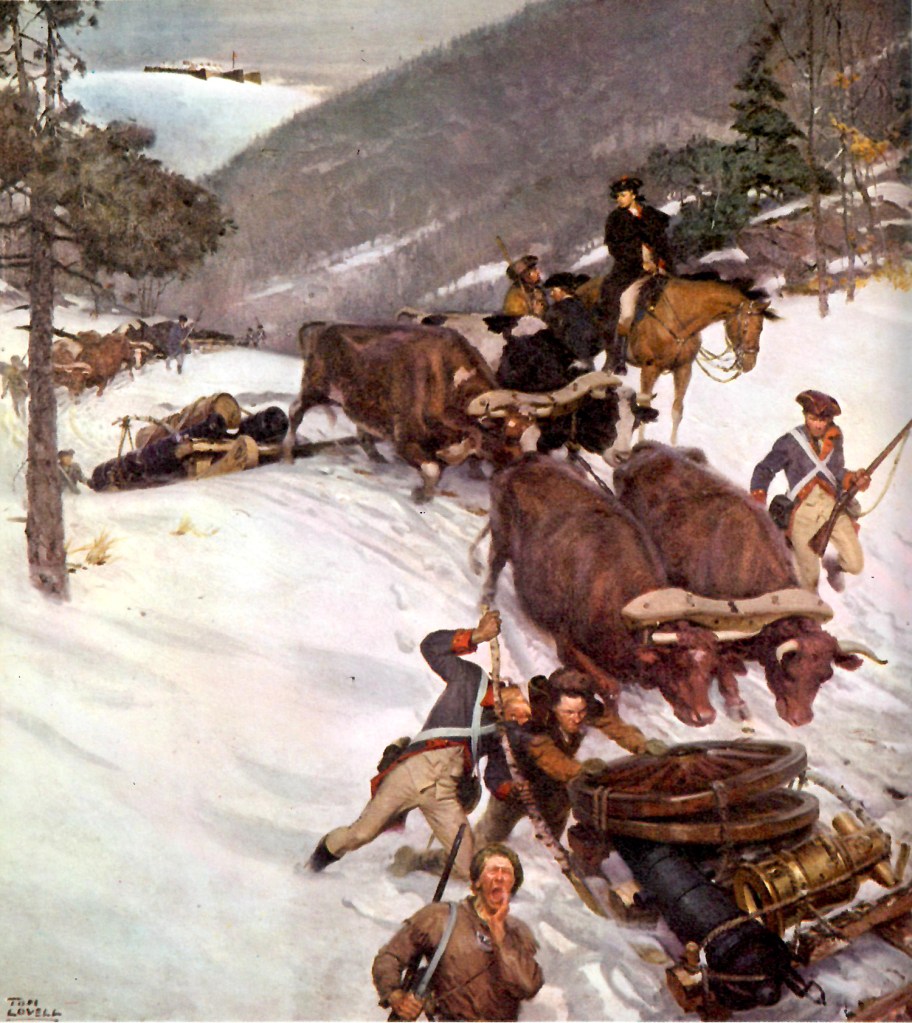
1776 started out well for the cause of American independence, when the twenty-six-year-old bookseller Henry Knox emerged from a six week slog through a New England winter, at the head of a “Noble train of artillery’. Manhandled all the way from the wilds of upstate New York, the guns of Fort Ticonderoga were wrestled to the top of Dorchester Heights, overlooking the British fleet anchored in Boston Harbor. General sir William Howe now faced the prospect of another Bunker Hill, a British victory which had come at a cost he could ill afford, to pay again.
The eleven-month siege of Boston came to an end on March 17 when Howe’s fleet evacuatedBoston Harbor and removed, to Nova Scotia. Three months later, a force of some 400 South Carolina patriots fought a day-long battle with the nine warships of Admiral Sir Peter Parker, before the heavily damaged fleet was forced to withdraw. The British eventually captured Fort Moultrie and Charleston Harbor with it but, for now, 1776 was shaping up to be a very good year.
Tory and Patriot alike understood the strategic importance of New York, as the center of communication between the upper and lower colonies. Beginning that April, Washington moved his forces from Boston to New York placing his troops along the west end of Long Island, in anticipation of the British return.
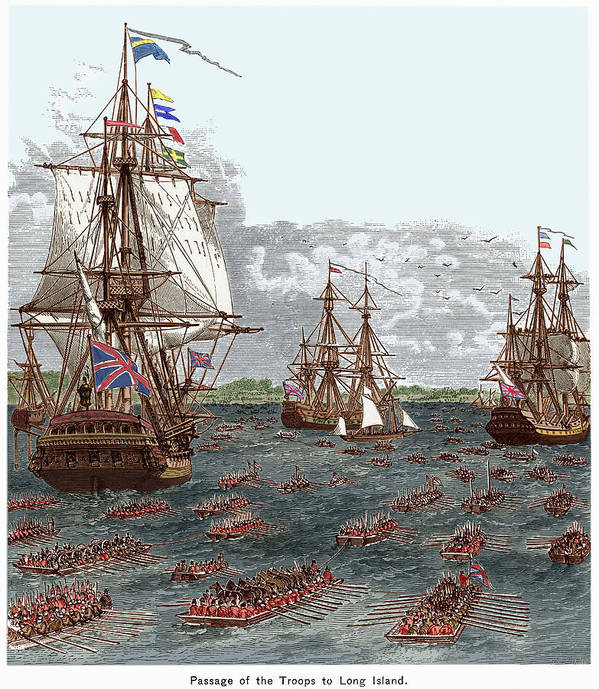
The fleet was not long in coming, the first arrivals dropping anchor by the end of June. Within the week, 130 ships were anchored off Staten Island under the command of Admiral sir Richard Howe, the General’s brother.
The Howe brothers attempted to negotiate on July 14 with a letter to General Washington, addressed: “Georg Washington, Esq.” The letter was returned unopened by Washington’s aide Joseph Reed who explained there’s nobody over here, by that address. Again the letter came back addressed to “George Washington, Esq., etc.,” the etc. meaning… “and any other relevant titles.” That letter too came back unopened but this time, with a message. The general would meet with one of Howe’s subordinates. The meeting took place on July 20 when Howe’s representative offered pardon, for the American side. General Washington responded as they had done nothing wrong his side had no need, of any pardons. But thanks anyway.
By August 12 the British force numbered some 400 vessels with 73 warships and a force of 32,000 camped on Staten island.
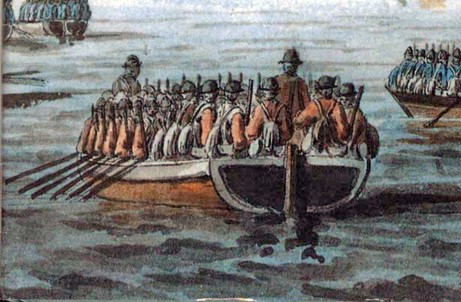
“British troops in the type of flat-bottomed boat used for the invasion of Long Island. Hessians in their blue uniforms are in the two boats that are only partly visible”. H/T Wikipedia
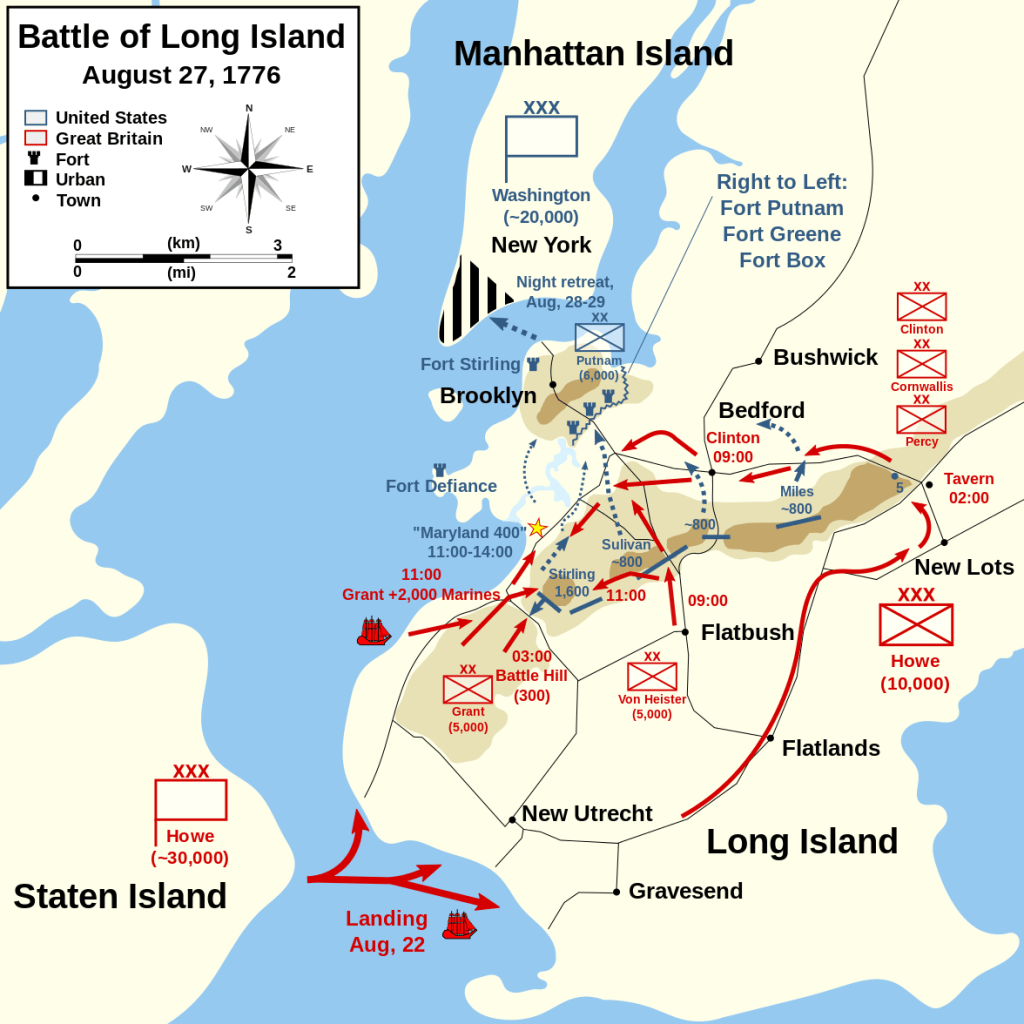
Patriot forces were badly defeated at the Battle of Brooklyn, fought on August 27, 1776. In terms of number of troops deployed and actual combat it was the largest battle, of the Revolution. The British dug in for a siege, confident their adversary was cornered and waiting only to be destroyed at their convenience while the main Patriot army retreated to Brooklyn Heights.
Cornered on land with the British-controlled East River to their backs, it may have been all over for the Patriot cause, but for one of the great tactical feats of all military history. The surprise was complete for the British side, on waking for the morning of August 30 to discover the 9,000-strong Patriot army, had vanished. The silent evacuation over the night of August 29-30 had averted disaster, a feat made possible only through the nautical skills of the merchants and rum traders, the sailors and the fishermen of Colonel John Glover’s Marblehead Massachusetts militia, the “Amphibious Regiment”.
Following evacuation, the Patriot army found itself isolated on Manhattan island, virtually surrounded. Only the thoroughly disagreeable current conditions of the Throg’s Neck-Hell’s Gate segment of the East River, prevented Admiral Sir Richard Howe from enveloping Washington’s position, altogether.
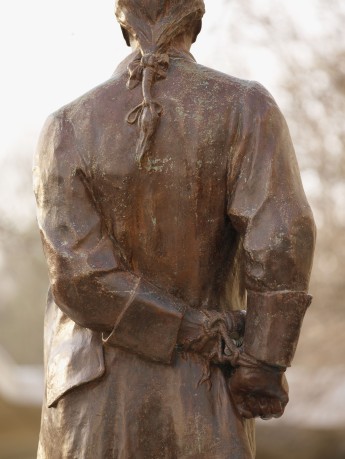
Desperate for information about the attack he was sure would come Washington dispatched a 22-year old Connecticut schoolteacher named Nathan Hale on September 10, to keep an eye on British movements. Disguised as a Dutch schoolteacher, Hale naïvely placed his trust, where it didn’t belong. He was betrayed in just over a week.
As expected, Howe landed a force at Kip’s Bay on September 15 and the Redcoats quickly occupied the city. Patriots delivered an unexpected check the following day at Harlem Heights against an overconfident force of British light troops. It was to be the only such bright spot for the Americans who were now driven out of New York and into New Jersey and finally, to Pennsylvania.
A great fire broke out on the 21st that destroyed as much as a quarter of all the buildings on Manhattan Island. Both sides pointed the finger of blame at the other but the cause, was never determined. Nathan Hale was hanged for a spy the following day with the words, ‘I only regret, that I have but one life to lose for my country‘.
That October, the defeat of General Benedict Arnold’s home-grown “Navy” on the waters near Valcour Island in Vermont, cost the British fleet dearly enough that it had to turn back, buying another year for the Patriot cause.
Reduced to a mere 4,707 fit for duty, Washington faced the decimation of his army by the New Year, with the end of enlistment for fully two-thirds of an already puny force. With nowhere to go but the offense, Washington crossed the Delaware river in the teeth of a straight-up gale over the night of December 25 and defeated a Hessian garrison at Trentonin a surprise attack on the morning of December 26.
While minor skirmishes by British standards, the January 2-3 American victories at Assunpink Creek and Princeton demonstrated an American willingness, to stand up to the most powerful military of the age. Cornwallis suffered three defeats in a ten day period and withdrew his forces from the south of New Jersey. American morale soared as enlistments, came flooding in.
The American war for independence had years to go. Before it was over, more Americans would die in the fetid holds of British prison ships than in every battle of the Revolution, combined. Yet, that first year had come and gone and the former colonies, were still in the fight.
The astonishing part of this story is it all took place in the midst of a plague vastly more deadly than the COVID-19 pandemic, of our own age. Of 2,780,369 counted by the 1770 census* in this country no fewer than 130,000 died in the smallpox pandemic of 1775-1782. That works out to 4,815 per 100,000. Contrast that with a Coronavirus death rate of 194.14 per 100,000 according to Johns Hopkins University a death rate, of less than .2% *This figure does not include Native Americans who were not counted in the US census, until 1860.
A generation later and an ocean away, Lord Arthur Wellesley described the final defeat of a certain Corsican corporal at a place called Waterloo. Wellesley might have been talking about the whole year of 1776 in describing that day in 1815, when he said “It was a damn close run thing”.
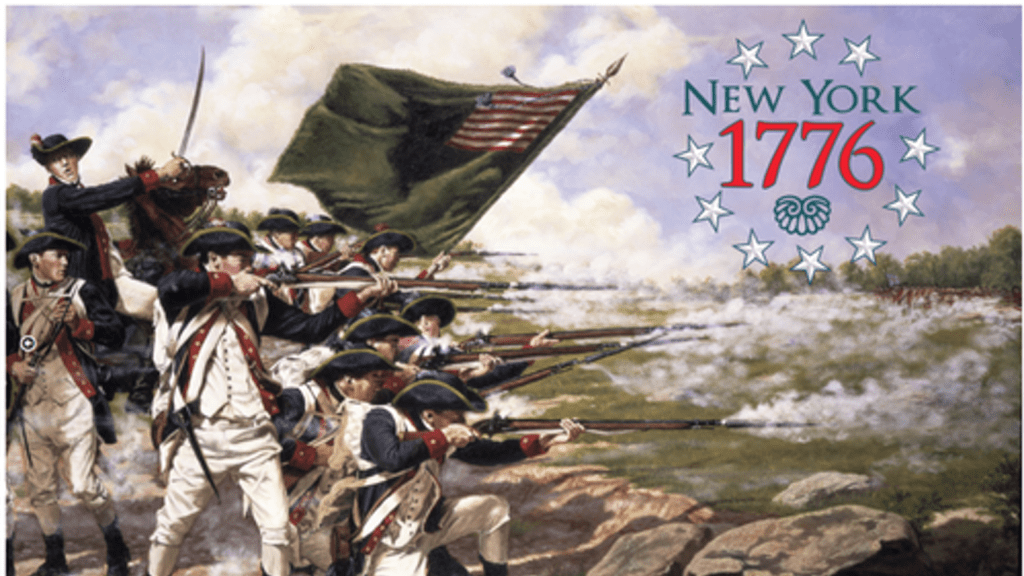
Feature image, top of page: Battle of Long Island, by Alonzo Chappel.
Once hopelessly caught in arctic ice the British vessel HMS Resolute was returned to her majesty Queen Victoria’s government and now serves as a desk for virtually every US President from Rutherford B. Hayes, to Joseph R. Biden.
Since the time of Columbus, European explorers have searched for a navigable shortcut by open water, from Europe to Asia. The “Corps of Discovery“ better known as the Lewis and Clark expedition, departed the Indiana Territory in 1804 with, among other purposes, the intention of finding a water route to the Pacific.
Forty years later, Captain sir John Franklin departed England aboard two ships, HMS Erebus and HMS Terror, to discover the mythical Northwest Passage.
The two vessels became icebound in Victoria Strait near King William Island, in the Canadian Arctic.
Prodded by Lady Jane Franklin, the hunt for her husband’s expedition would continue for years, at one time involving as any as eleven British and two American ships. Clues were found including notes and isolated graves, telling the story of a long and fruitless effort to stay alive in a hostile climate. The wreck of HMS Erebus would not be discovered until 2014, her sister ship, two years later.
In 1848, the British Admiralty possessed few hulls suitable for arctic service. Two civilian steamships were purchased and converted to exploration vessels: HMS Pioneer and HMS Intrepid, along with four seagoing sailing vessels, Resolute, Assistance, Enterprise and Investigator.
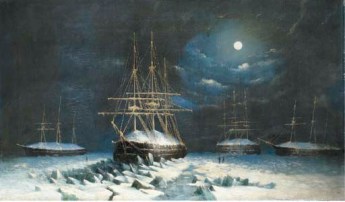
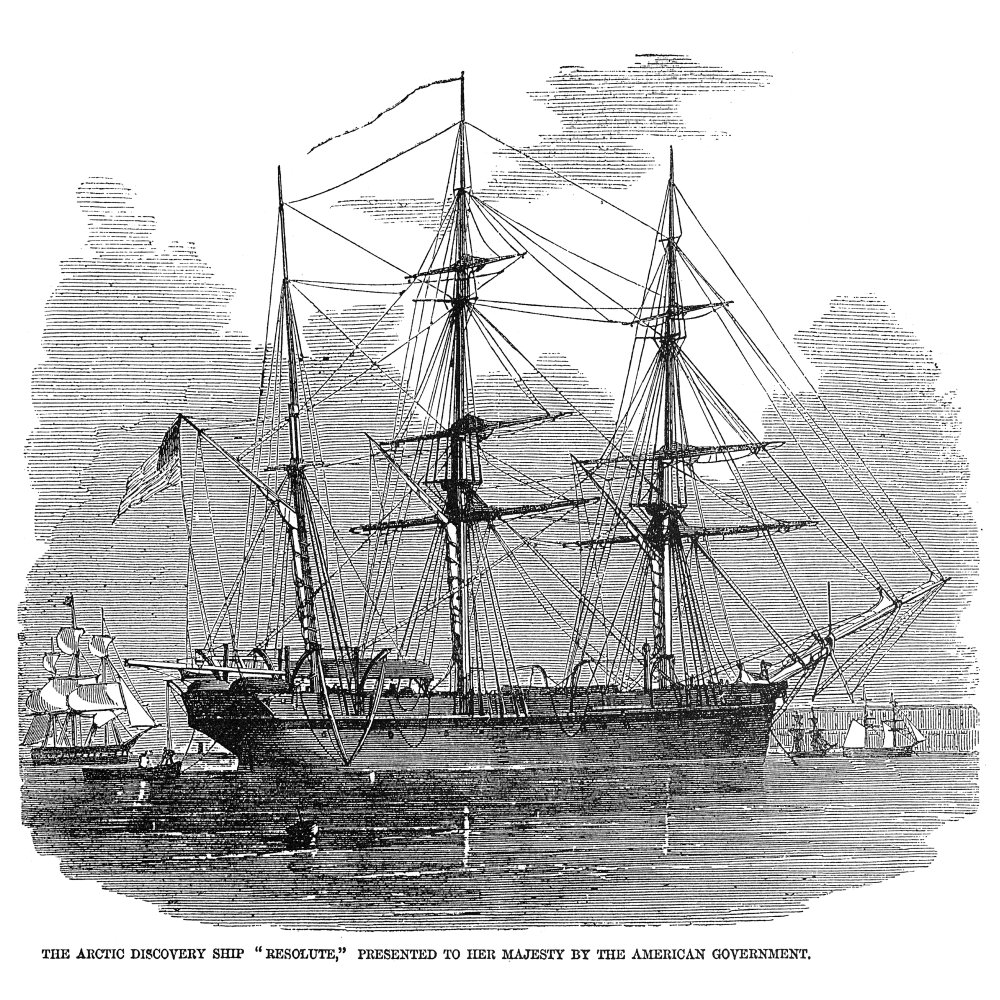
HMS Resolute was a Barque rigged merchant ship, purchased in 1850 as the Ptarmigan and refitted for Arctic exploration. Renamed Resolute, the vessel became part of a five ship squadron leaving England in April 1852, sailing into the Canadian arctic in search of the doomed Franklin expedition.
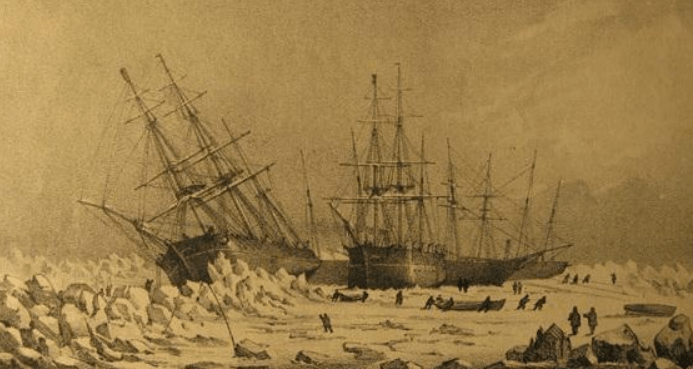
Neither Franklin nor any of his 128 officers and men would ever return alive. What HMS Resolute Did find was the long suffering crew of the HMS Investigator, hopelessly encased in ice where, three years earlier, she too had been searching for the lost expedition.
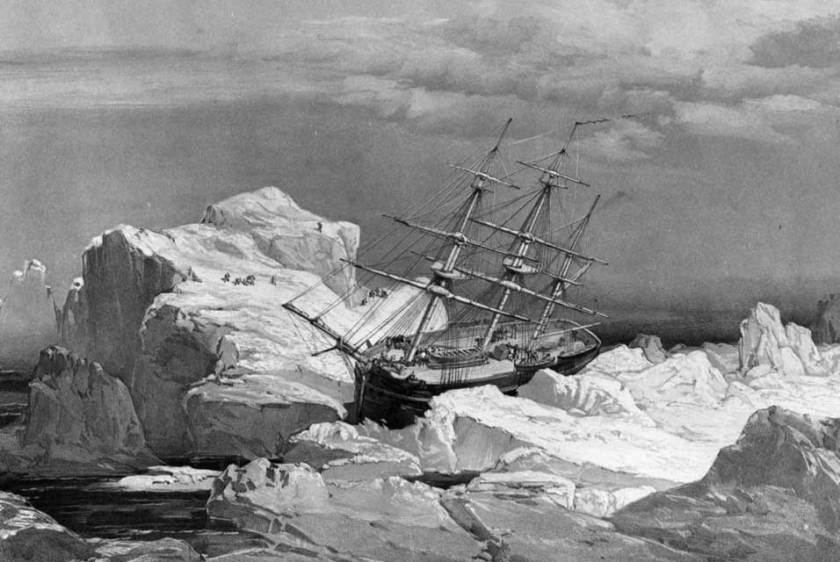
Three of the Resolute expedition’s ships themselves became trapped in floe ice in August 1853 including Resolute, herself. There was no choice but to abandon ship, striking out across the ice pack in search of their supply ships. Most of them made it despite egregious hardship, straggling into Beechey Island in the Canadian Arctic Archipelago, between May and August, of the following year.
The expedition’s survivors left Beechey Island on August 29, 1854, never to return. Meanwhile Resolute, alone and abandoned among the ice floes, continued to drift eastward at a rate of 1½ nautical miles per day.
The American whale ship George Henry discovered the drifting Resolute on September 10, 1855, 1,200 miles from her last known position. Captain James Buddington split his crew, half of them now manning the abandoned ship. Fourteen of them sailed Resolute back to their base in Groton CT, arriving on Christmas eve.
The so-called ‘Pig and Potato War” of 1859 was resolved between the British and American governments with the loss of no more than a single hog, yet a number of border disputes made the late 1850s a difficult time, for American-British relations. Senator James Mason of Virginia presented a bill in Congress to fix up the Resolute and give her back to her Majesty Queen Victoria’s government, as a token of friendship between the two nations.
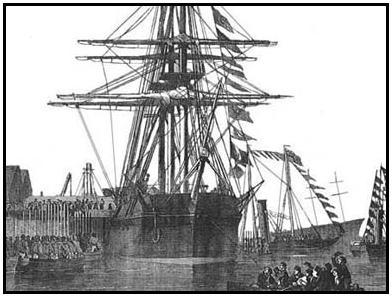
$40,000 were spent on the refit. Resolute sailed for England later that year. Commander Henry J. Hartstene presented the vessel to Queen Victoria on December 13. HMS Resolute served in the British navy until being retired and broken up in 1879. The British government ordered two desks to be fashioned from the English oak of the ship’s timbers, the work being done by the skilled cabinet makers of the Chatham dockyards.
In 1880, the British government presented President Rutherford B. Hayes the gift, of a large partner’s desk. A token of gratitude for the return of the HMS Resolute, 24 years earlier.
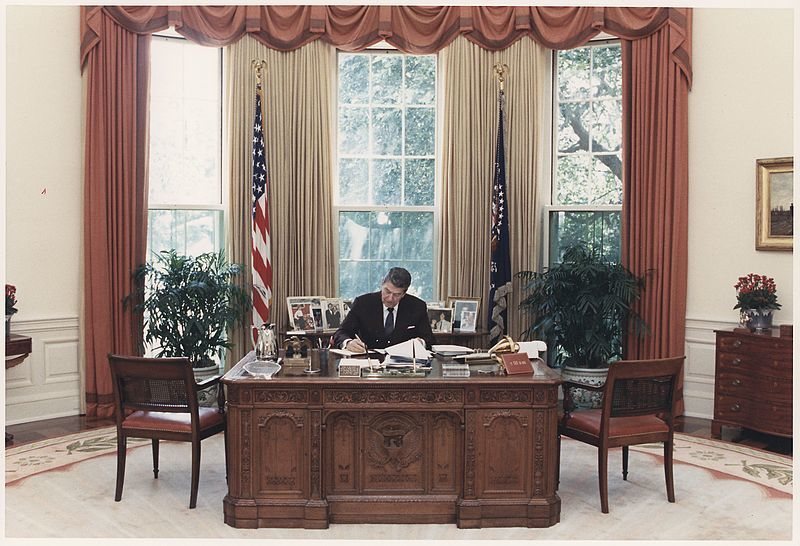
The desk, known as the Resolute Desk, has been used by nearly every American President from that day, to this. Every president from Hayes through Hoover used the desk either in the White House Green Room, the president’s study or working office. FDR moved the desk into the oval office where he had a panel installed in the opening, as he was self conscious about his leg braces.
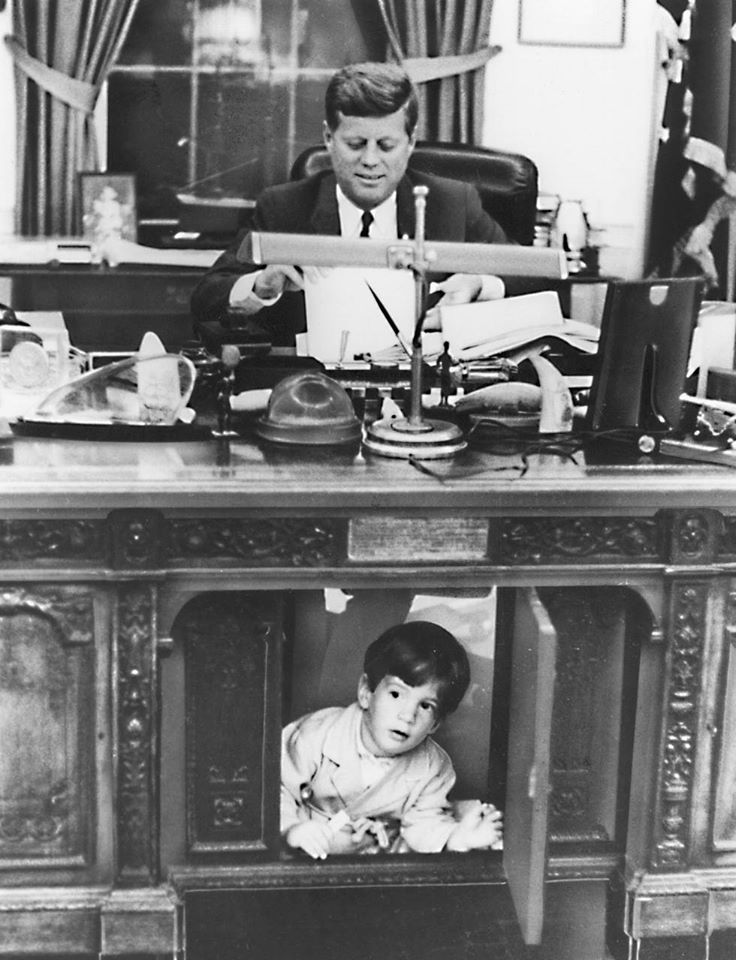
There was a brief period of climate controlled storage during the Truman era as the White House went through major renovation. It was Jackie Kennedy who brought the desk back, into the Oval Office. There are pictures of JFK working at the desk while a young JFK, Jr., played underneath.
Stanley Tretick’s October 2, 1963 photo of John F. Kennedy Jr. playing in the kneehole of the Resolute desk
Presidents Johnson, Nixon and Ford were the only ones not to use the Resolute desk, as LBJ allowed it to leave the White House following the Kennedy assassination.
The Resolute Desk spent several years in the Kennedy Library and later the Smithsonian Institute, the only other time the desk has been out of the White House.
Jimmy Carter returned the desk to the Oval Office where it has remained through the Presidencies of Ronald Reagan, George H.W. Bush, Bill Clinton, George W. Bush, Barack Obama, Donald J. Trump and, as of this article, Joe Biden.



























You must be logged in to post a comment.