

The amphibious invasion which began this day on the beaches of Normandy, was the culmination of the largest single endeavor in human history.

3,200 reconnaissance missions were launched leading up to the invasion, to photograph vital locations. Other landing sites were considered, in fact Adolf Hitler expected the invasion to take place at Calais. Normandy was chosen because defenses were lighter, and because advancing troops would have fewer rivers and canals to cross.
“Exercise Tiger”, an earlier practice landing on the beaches of Slapton, killed more Americans than many full-scale battles.
Five landing zones were selected along a 50-mile stretch of beach. Americans would attack at two points code named Utah and Omaha, British troops at Gold and Sword, and Canadian troops at Juno.

On the eve of the invasion Eisenhower told his troops: “You are about to embark upon a great crusade, toward which we have striven these many months. The eyes of the world are upon you.” Conscious of his own role in the disastrous landings at Gallipoli of the earlier war, a nervous Winston Churchill said to his wife, Clementine, “Do you realize that by the time you wake up in the morning 20,000 men may have been killed?”
The invasion began in the early morning hours with 1,200 planes delivering gliders and parachute troops of the 82nd and 101st Airborne Infantry. Eight different navies made up the invasion fleet, the sun rising that morning on 6,939 vessels along the coast of France.
160,000 US, UK, Canadian and Free French troops landed on the first day. Later invasion phases included forces from Australia, Greece, New Zealand, Netherlands and Norway, combined with the free forces of Nazi occupied Poland, Belgium and Czechoslovakia.

There were the “Mulberries”, the great steel structures built to form temporary harbors for landing vehicles and equipment, and floated across the 25 miles of the English Channel. By July 4, over a million men, 148,000 vehicles, and 570,000 tons of supplies had passed over them to the beaches.
 It was impossible to assemble the pieces of such a massive undertaking in secret, so an elaborate ruse called “Operation Fortitude” was launched to divert attention from the real objective. Fake field armies were assembled in Edinburgh, Scotland and the south coast of England, threatening attack on the coasts of Norway and the Pas de Calais. The real General George S. Patton was put in charge of the fake First US Army Group (FUSAG). The allied “Twenty Committee”, represented by its roman numerals “XX”, controlled a network of double agents, making the deception so complete that Hitler personally withheld critical reinforcements until long after they would have made a difference. It’s where we get the term “Double Cross”.
What had seemed like an inexorable Nazi tide had begun to slow with the reversal of the German armies in Soviet Russia and North Africa. The allies had gained their first European toehold with a successful landing in Italy nine months earlier. It had been 5 years since the beginning of World War II, 4 years almost to the day, since the National Socialist regime of Adolf Hitler had hurled the English and French armies from the beaches of Dunkirk. The Soviet Union had joined the side of the Allies 3 years earlier, and the United States 2½. The entire European subcontinent was either neutral or under Nazi domination. The Allies needed to break down the door to get back in.
Supreme Headquarters Allied Expeditionary Force (SHAEF) commander Dwight D Eisenhower had planned to launch the invasion on the 5th, but the weather was working against it. The invasion couldn’t be held for long, it had to be launched or turned back.
Allied troop convoys were at sea on the 4th, and the full moon which would bring high tides would soon be over. There was finally a break in the forecast, and the invasion began shortly after midnight.
Eisenhower had written two letters. Only one would be delivered to his superior in Washington, DC, Army Chief of Staff, General George C. Marshall. The first announced the success of the invasion, the second taking personal responsibility for its failure. “Our landings in the Cherbourg-Havre area have failed to gain a satisfactory foothold and I have withdrawn the troops. My decision to attack at this time and place was based upon the best information available. The troops, the air and the Navy did all that bravery and devotion to duty could do. If any blame or fault attaches to the attempt it is mine alone.” Eisenhower dated the letter July 5 instead of June 5, a small indication of the enormous pressure the man was under.

Over 9,000 Allied soldiers were killed or wounded on that first day. Almost a year of hard fighting remained before VE Day: Victory in Europe. On this day, General Eisenhower would be able to keep that second message, in his pocket.


 Most of the political and military establishment lined up against Dreyfus, but the public outcry became furious after writer Émile Zola published his vehement open letter “J’accuse” (I accuse) in the Paris press in January 1898.


 So it was that a vacation cruise to freedom became the “Voyage of the Damned”. MS St. Louis returned to Europe. Captain Schröder negotiated and schemed to find safe haven for his 907 passengers. Anything but return them to Nazi Germany. At one point, Schröder contemplated intentionally running aground off the coast of England. In the end, they all found refuge in Europe. 288 passengers were admitted by Great Britain, and 224 by France. 214 were accepted into Belgium and another 181 by the Netherlands.

 As the story goes, it was 1853, at an upscale resort in Saratoga Springs New York. A wealthy and somewhat unpleasant customer sent his fried potatoes back to the kitchen, complaining that they were too soggy, and they didn’t have enough salt. George Crum, back in the kitchen, doesn’t seem to have been a very nice guy, himself. Crum thought he’d fix this guy, so he sliced some potatoes wafer-thin, fried them up and doused the hell out of them, with salt. Sending them out to the table and fully expecting the customer to choke on them, Crum was astonished to learn that the guy loved them. He ordered more, and George Crum decided to add “Saratoga Chips” to the menu. The potato chip was born.
 Lay began buying up small regional competitors at the same time that another company specializing in corn chips was doing the same. “Frito”, the Spanish word for “fried”, merged with Lay in 1961 to become – you got it – Frito-Lay. By 1965, the year Frito-Lay merged with Pepsi-Cola to become PepsiCo, Lay’s was the #1 potato chip brand in every state in America.


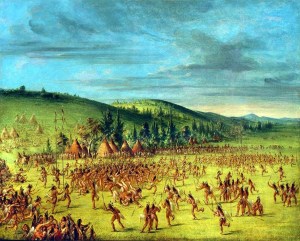 Native American stickball had many variations, but the object was to hit a stake or other object with a “ball”. The ball was a stone wrapped in leather, handled with one or sometimes two sticks. There could be up to several hundred contestants to a team, and the defenders could employ any means they could think of to get at the ball, including hacking, slashing or any form of physical assault they liked. Lacerations and broken bones were commonplace, and it wasn’t unheard of that stickball players died on the field. The defending team could likewise employ any method they liked to keep the opposing team off of the ball carrier, and they played the game on a field that could range from 500 yards to several miles.
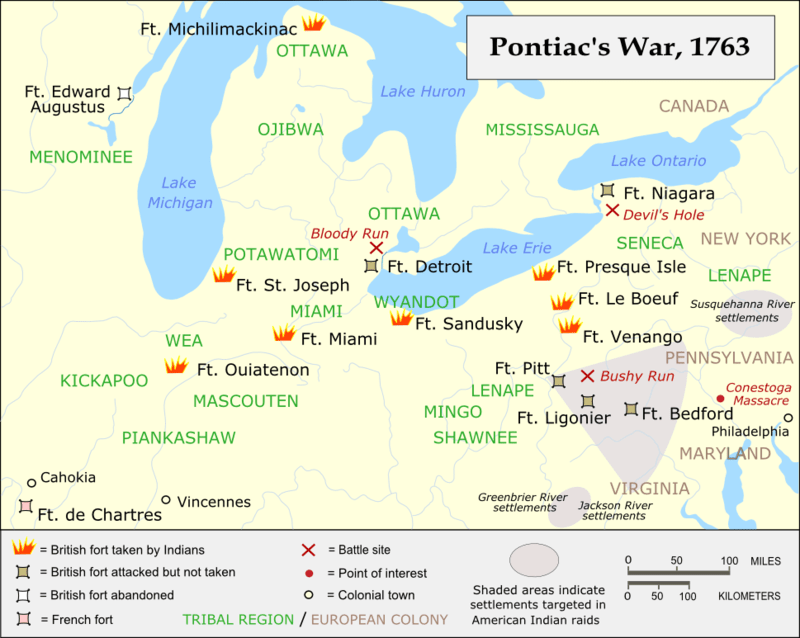
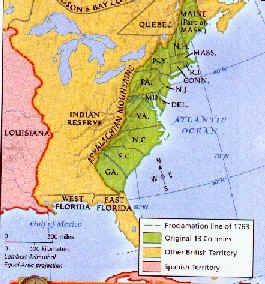 The British Royal Proclamation of October 7, 1763, drew a line between the British colonies and Indian lands, creating a vast Indian Reserve stretching from the Appalachians to the Mississippi River and from Florida to Newfoundland. For the Indian Nations, this was the first time that a multi-tribal effort had been launched against British expansion, the first time such an effort had not ended in defeat.


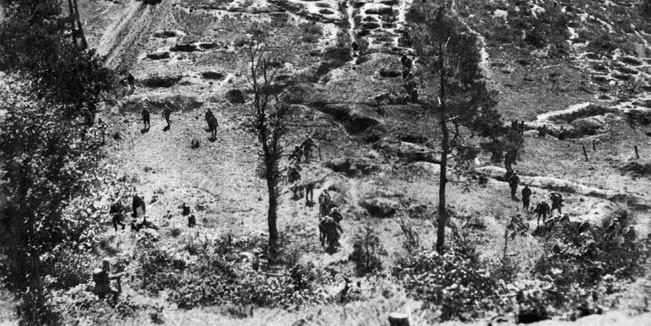
 The results of the Feuerwalze were devastating, if not predictable. Allied lines were smashed as German armies poured through, taking 19 kilometers in three days and reaching the Marne River, 50 miles from Paris. On May 31, a dogged defense by the US 3rd Infantry Division turned the German advance at Château-Thierry, and toward Belleau Wood.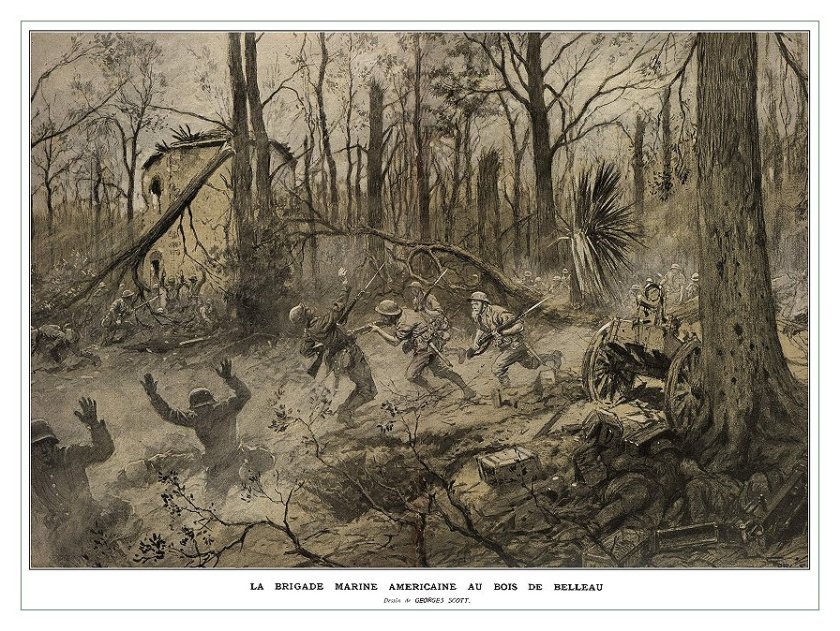


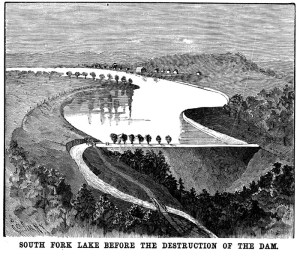

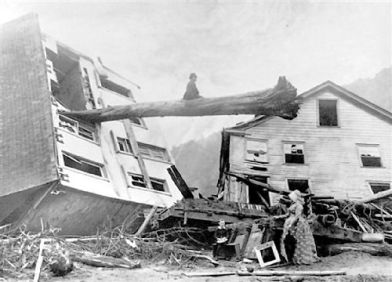
 Traveling at 40 miles per hour, the 60′ wall of water and debris hit Johnstown 57 minutes after the dam broke. Some residents had managed to scramble to high ground, but most were caught by surprise by the flood waters.
 When it was over, 2,209 were dead. 99 entire families had ceased to exist, including 396 children. 124 women and 198 men were widowed, 98 children orphaned. 777 people, over 1/3rd of the dead, were never identified. Their remains are buried in the “Plot of the Unknown” in Grandview Cemetery in Westmont.
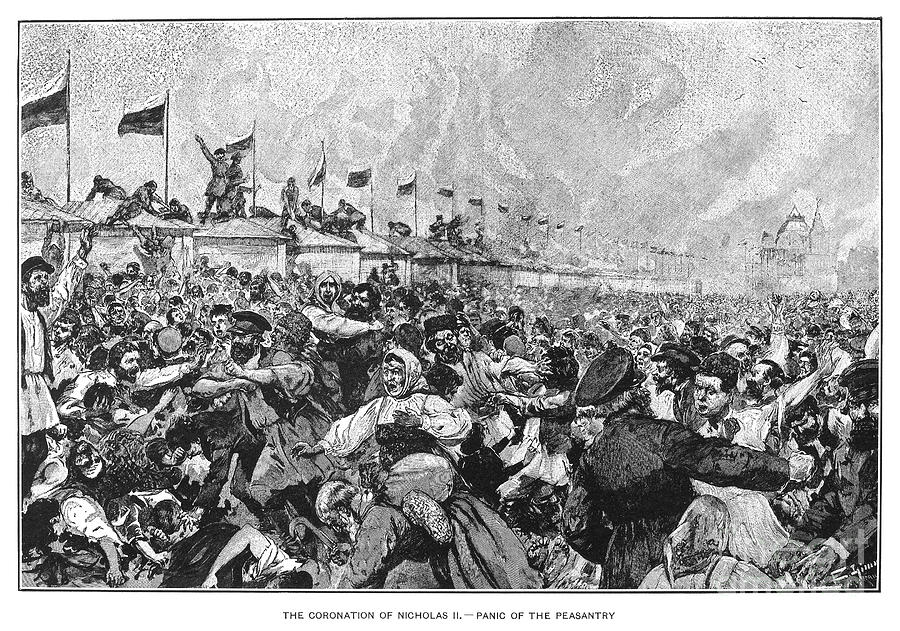
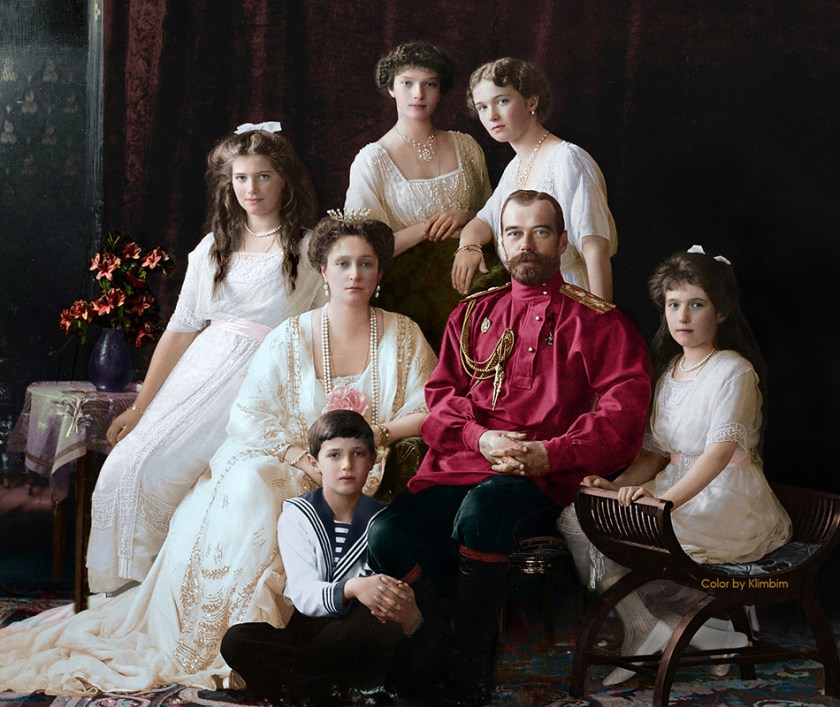
 People began to gather on the 29th. By 5:00am on the 30th, the crowd was estimated at half a million. A rumor began to spread among the crowd that there wasn’t enough beer or pretzels to go around. At that point the police force of 1,800 wasn’t enough to maintain order. The crush of the crowd and the resulting panic resulted in a human stampede. Before it was over 1,389 people were trampled to death, and another 1,300 injured.

 3,662,374 military service certificates were issued to qualifying veterans, bearing a face value equal to $1 per day of domestic service and $1.25 a day for overseas service, plus interest. Total face value of these certificates was $3.638 billion, equivalent to $43.7 billion in today’s dollars and coming to full maturity in 1945.
 This had happened before. Hundreds of Pennsylvania veterans of the Revolution had marched on Washington in 1783, after the Continental Army had been disbanded without pay.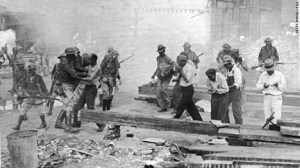
 Bonus marchers fled to their largest encampment across the Anacostia River, when President Hoover ordered the assault stopped. Feeling that the Bonus March was an attempt to overthrow the government, General MacArthur ignored the President and ordered a new attack, the army routing 10,000 and leaving their camps in flames. 1,017 were injured and 135 arrested. The wife of one veteran miscarried. 12 week old Bernard Myers died after being caught in the gas attack. A government investigation later claimed he died of inflammation of the small intestine, but a hospital employee said the tear gas “didn’t do it any good.”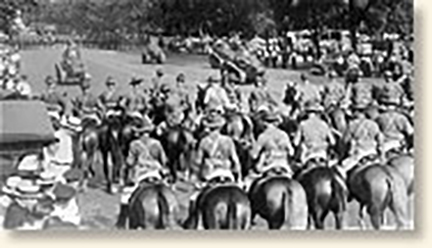


 Predicting a solar eclipse isn’t the same as predicting a lunar eclipse; the calculations are far more difficult. When the moon passes through the shadow of the sun, the event can be seen by half of the planet, the total eclipse phase lasting over an hour. In a solar eclipse, the shadow of the moon occupies only a narrow path, and the total eclipse phase is only about 7½ minutes at any given place.
 Historical Easter Eggs - Today in History
You must be logged in to post a comment.