No free citizen of a self-governing Republic, should ever forget where we come from. Or the prices paid by our forebears, to get us here.
John McCrae was a physician and amateur poet from Guelph, Ontario. Following the outbreak of WWI, McCrae enlisted in the Canadian Expeditionary Force at the age of 41. He had the option of joining the medical corps based on his training and his age, but volunteered instead to join a fighting unit as gunner and medical officer. McCrae had previously served in the Boer War, this would be his second tour of duty in the Canadian military.
McCrae fought in one of the most horrendous battles of WWI, the second battle of Ypres, in the Flanders region of Belgium. Imperial Germany launched one of the first chemical attacks in history, attacking the Canadian position with chlorine gas on April 22, 1915. The Canadian line was broken but quickly reformed, in near-constant fighting that lasted for over two weeks.
Dr. McCrae later wrote to his mother, describing the nightmare. “For seventeen days and seventeen nights”, he wrote, “none of us have had our clothes off, nor our boots even, except occasionally. In all that time while I was awake, gunfire and rifle fire never ceased for sixty seconds … and behind it all was the constant background of the sights of the dead, the wounded, the maimed, and a terrible anxiety lest the line should give way”.
On May 3, Dr. McCrae presided over the funeral of his friend and fellow soldier Alexis Helmer, who had died in the battle. He performed the burial service himself, when he noted how quickly the red poppies grew on the graves of the fallen. He composed this poem the next day, while sitting in the back of an ambulance.
Moina Michael was browsing through the Ladies Home Journal when she came across McCrae’s poem. It was Saturday morning, November 9, 1918, two days before the armistice. She was so moved that she made a personal pledge to “keep the faith”, vowing always to wear a red poppy as a sign of remembrance of the dead. She scribbled down a response on the back of a used envelope, calling her poem “We Shall Keep the Faith“.
The vivid red flower blooming on the battlefields of Belgium, France and Gallipoli came to symbolize the staggering loss of life in that war. Since then, the red poppy has become an internationally recognized symbol of remembrance of the lives lost in all wars. I keep a red poppy pinned to my briefcase and another on the visor of my car. A reminder that no free citizen of a self-governing Republic, should ever forget where we come from. Or the prices paid by our forebears, to get us here.
My favorite among the classified ads has to be the “Flammenwerfer” – Flame Thrower. “Guaranteed absolutely harmless.” “Instructive – Amusing”.
As chief of the Imperial German general staff from 1891-1905, German Field Marshal Alfred von Schlieffen devised the strategic roadmap by which Germany prosecuted the first world war. The “Schlieffen Plan” could be likened to a bar fight, where a fighter (Germany) had to take out one guy fast (France), before turning and facing his buddy (Imperial Russia). Of infinite importance to Schlieffen’s plan was the westward sweep through France, rolling the country into a ball on a timetable before his armies could turn east to face the “Russian Steamroller”. “When you march into France”, Schlieffen had said, “let the last man on the right brush the Channel with his sleeve.”
Field Marshall Helmuth von Moltke once said “No battle plan ever survives contact with the enemy”. So it was in the tiny Belgian city where German plans were broken, on the road to Dunkirk. Native Dutch speakers called it Leper, today we know it as Ypres (Ee-press), since the battle maps of the time were drawn up in French. The Tommys of the British Expeditionary Force (BEF), called the place “Wipers”.
What had hitherto been a war of movement ground to a halt in the apocalyptic fighting around Ypres, in October-November, 1914. 104,920 on all sides were killed, wounded or missing, around a city roughly the size of my little town of Falmouth, on Cape Cod.
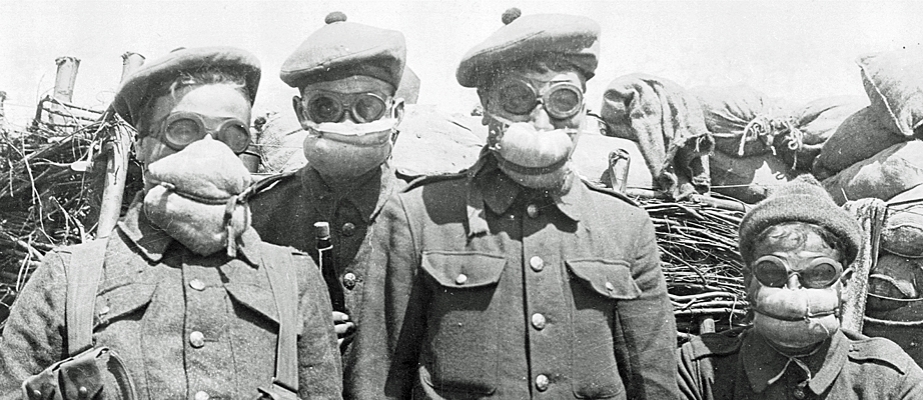
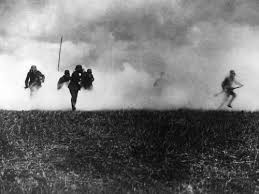
The second Battle of Ypres began with a new and terrifying weapon, on April 22, 1915. German troops placed 5,730 gas cylinders weighing 90 pounds apiece, along a four mile front. Allied troops must have looked on in wonder, as that vast yellow-green carpet crept toward their lines. Chlorine gas forms hypochlorous acid when combined with water, destroying the moist tissues of the lungs and eyes. Heavier than air, the stuff crept along the ground and poured into the trenches, forcing troops out into heavy German fire. 6,000 casualties were sustained in the gas attack alone, opening a four mile gap in the allied line. Thousands retched and coughed out their last breath, as others tossed their equipment and ran in terror.
After the war, German losses were estimated at 34,933 between April 21 and May 30, BEF casualties numbered 59,275. The French recorded about 18,000 on April 22 alone, with another 3,973 by the 29th of April. All told, 2nd Ypres cost allied forces 87,223 killed, wounded or missing.
The third Battle of Ypres would begin in July of 1917, lasting almost until the end of the war. 3rd Ypres would result in 570,000 losses on all sides, but in early 1916, that was all part of some unknown and terrible future.
It’s hard to imagine anything remotely humorous coming out of the horrors of Ypres, but such a thing became possible in the early months of 1916.
The “Sherwood Foresters” were line infantry Regiments of the British Army, stationed at the front lines of the Ypres salient. Coming across a printing press, a sergeant who had been a printer in peacetime got the thing going. They began to print a trench magazine, the first published on February 12. The paper included poems and reflections, “adverts” and plenty of dark humor. Written for fellow soldiers, not civilians, some in-jokes are so obscure that their meaning is lost to the modern reader. Others are clearly understandable, even 101 years into their future.
Richly typeset advertisements for “Music Hall Extravaganzas” include “Tickling Fritz” by the P.B.I. (Poor Bloody Infantry) Film Co. of the United Kingdom and Canada, advising the enthusiast to “Book Early”. There were Real Estate ads for property in no-man’s land. “BUILD THAT HOUSE ON HILL 60. BRIGHT-BREEZY-&-INVIGORATING. COMMANDS AN EXCELLENT VIEW OF HISTORIC TOWN OF YPRES”. Another one read “FOR SALE, THE SALIENT ESTATE – COMPLETE IN EVERY DETAIL! UNDERGROUND RESIDENCES READY FOR HABITATION. Splendid Motoring Estate! Shooting Perfect !! Fishing Good!!!”
There were news features, this one of a bungled trench raid: “”…They climbed into the trench and surprised the sentry, but unfortunately the revolver which was held to his head missed fire. Attempts were made to throttle him quietly, but he succeeded in raising the alarm, and had to be killed.” editor’s note, “This we consider real bad luck for the sentry after the previous heroic efforts to keep him alive””.
There were weather reports, laying odds on the forecast. “5 to 1 Mist, 11 to 2 East Wind or Frost, 8 to 1 Chlorine”. My favorite among the classified ads has to be the “Flammenwerfer” – Flame Thrower. “Guaranteed absolutely harmless.” “Instructive – Amusing”.
It turns out that units of all sizes, from individual companies to army corps, lightened their load with some kind of unit journal in WWI.
The Wipers Times ran through the end of the war, with the exception of the “Operation Michael” period, the last gasp German Western Front offensive of 1918. The final edition, titled “The Better Times”, was published in December 1918, just short of two months after the armistice. The banner read “Xmas, Peace and Final Number.”
By way of comparison, the highest scoring Allied ace of the Great War was Frenchman René Fonck, with 75 confirmed victories. The highest scoring fighter pilot from the British Empire was Canadian Billy Bishop, who was officially credited with 72. The Red Baron had 80.
Early in the “Great War”, Manfred Freiherr von Richtofen was a cavalry scout, serving with the 1st Regiment of Uhlans Kaiser Alexander III in the Verdun sector. Cavalry quickly became obsolete, as the war of movement ended and armies dug in. Leutnant Richtofen served as a messenger over the winter of 1914-15, but there was no glory in crawling through the mud of shell holes and trenches. He applied to the fledgling Air Corps, writing to his superiors that “I have not gone to war in order to collect cheese and eggs, but for another purpose.”
Following four months of training, Richtofen began his flying career as an observer, taking photographs of Russian troop positions on the eastern front.
After transferring to Belgium and becoming bombardier, Manfred’s first air-to-air kill occurred in late 1915, while acting as observer and rear gunner on a two seat reconnaissance plane. The French pusher bi-plane went down over unfriendly territory and couldn’t be confirmed, so the victory was never counted. Neither was his second kill, when Richtofen shot down a French Nieuport fighter from an Albatross C.III bomber. This one too went down over enemy territory, and couldn’t be confirmed.
Richtofen had his first official victory on September 17, 1916, after being transferred to a fighter squadron. Manfred ordered a silver cup to mark the occasion, engraved with the date and make of the aircraft he had shot down, a British F.E. 2B. Richtofen would add many more silver cups to his collection, before he was through.
Manfred got his 5th kill to become an ace on October 16, 1916, and the coveted “Blue Max” medal for his 16th, the following January. He shot down 22 enemy planes in April alone, four of those in a single day. Richtofen was Germany’s leading living ace, fast becoming the most famous pilot of his day, as German propagandists spread the rumor that the Allies were going to award the Victoria Cross to the man who shot him down.
Ever aware of his own celebrity, von Richtofen took to painting the wings of his aircraft a brilliant shade of red, after the colors of his old Uhlan regiment. It was only later that he had the whole thing painted. Friend and foe alike knew him as “the Red Knight”, “the Red Devil”, “’Le Petit Rouge’” and the name that finally stuck, “the Red Baron”.
Like Ted Williams, who was said to be able to count the stitches on a fastball, Richtofen was blessed with exceptional eyesight. Gifted with lightning fast reflexes, he became the top ace of the war. In an age when it was exceptional to score even a few air combat victories, Richtofen accumulated sixty engraved silver cups before the metal became unavailable in war ravaged Germany. Even then he was far from done.
Despite the popular link between Richthofen and his Fokker Dr.I, he only scored his last 19 kills while flying his famous red triplane. Three quarters of his victories were won in different makes of the Albatross and Halberstadt D.II.
By way of comparison, the highest scoring Allied ace of the Great War was Frenchman René Fonck, with 75 confirmed victories. The highest scoring fighter pilot from the British Empire was Canadian Billy Bishop, who was officially credited with 72. The Red Baron had 80.
Richthofen sustained a serious head wound on July 6 1917, causing severe disorientation and temporary partial blindness. He returned to duty after October 23, but many believed his injury caused lasting damage, leading to his eventual death.
Richthofen chased the rookie Canadian pilot Wilfred “Wop” May behind the lines on April 21, 1918, when he found himself under attack. With a squadron of Sopwith Camels firing from above and anti-aircraft gunners on the ground, he was shot once through the chest with a .303 round, managing to land in a beet field before dying several minutes later. He was still wearing his pajamas, under his flight suit.
The RAF credited Canadian Pilot Captain Roy Brown with shooting the Red Baron down, but the angle of the wound suggests that the bullet was fired from the ground. A 2003 PBS documentary demonstrated that Sergeant Cedric Popkin was the person most likely to have killed Richthofen, while a 2002 Discovery Channel documentary suggests that it was Gunner W. J. “Snowy” Evans, a Lewis machine gunner with the 53rd Battery, 14th Field Artillery Brigade, Royal Australian Artillery. It may never be known with absolute certainty, who killed the Red Baron.
British Third Squadron officers served as pallbearers and other ranks from the squadron acted as a guard of honor for the Red Baron’s funeral on April 22, 1918. Allied squadrons stationed nearby presented memorial wreaths, one of which was inscribed with the words, “To Our Gallant and Worthy Foe”.
The Kaiser calculated that all he had to do was “kick the door in”, the Russian Republic would collapse, and they would be out of the war. He was right.
The “War to End all Wars” entered its third year in 1917, seeming as though it would go on forever. Neither side seemed able to gain strategic advantage on the front. The great battles of 1916 seemed only yesterday, in which any single day’s fighting produced more casualties than every European war of the preceding 100 years, combined. At home, the social fabric of the combatant nations was unraveling.
By 1916 it was generally understood in Germany, that the war effort was “shackled to a corpse”, referring to Germany’s Austro-Hungarian ally. Italy, the third member of the “Triple Alliance”, was little better. On the Triple Entente side, the French countryside was literally torn to pieces, the English economy close to breaking. The Russian Empire, the largest nation on the planet, was on the edge of the precipice.
The United States had declared its intention to enter the war barely ten days earlier. While no American forces had arrived as of yet, both sides understood that the balance was about to shift. For Kaiser Wilhelm’s Germany, it was time to throw a knockout punch.
Imperial Russia had seen the first of what would be two revolutions back in February, when food riots led to the overthrow and exile of the Imperial family. Full scale civil war broke out in 1918, resulting in the Bolshevik murder of the Czar and Czarina, together with their children, servants and dogs.
The Kaiser calculated that all he had to do was “kick the door in”, the Russian Republic would collapse, and they would be out of the war. He was right.
After the overthrow of the Romanov dynasty, the more moderate Menshevik “Whites” vowed to continue the war effort. The split which had begun with the failed revolution of 1905 was more pronounced by this time with the more radical Bolsheviks (“Reds”) taking the more extreme road. While Reds and Whites both wanted to bring socialism to the Russian people, the Mensheviks argued for predominantly legal methods and trade union work, while Bolsheviks favored armed violence.
In a small town in the northeast of Sweden, there is a train station. A bronze plaque on a blue tile wall, proclaims: “Here Lenin passed through Haparanda on April 15, 1917, on his way from exile in Switzerland to Petrograd in Russia”.
Lenin was in exile, and Imperial Germany was at war with Russia at this time. British historian Edward Crankshaw writes, the German government saw “in this obscure fanatic one more bacillus to let loose in tottering and exhausted Russia to spread infection”.
Not far from food riots of his own and loathe to inflict such a bacillus on his own homeland, a “Sealed Train” carrying Vladimir Ilyich Lenin and 31 dissidents departed from exile in Switzerland on April 9, complements of the Kaiser. Leaving Zurich Station amid the jeers and the insults of 100 or so assembled Russians shouting “Spies!” “Traitors!” “Pigs!” “Provocateurs!”, Lenin turned to a friend. “Either we’ll be swinging from the gallows in three months, or we shall be in power.”
North through Germany and across the Baltic Sea, the group traveled the length of Sweden, crossing at the border village of Haparanda into Russian-Occupied Finland. The group arrived at Finlandsky Vokzal (Finland Station) in Petrograd on the evening of April 16, 1917. Like the handful of termites that brought down the mighty oak, that small faction inserted into the picture that April, would help to radicalize the population, and consolidate power on the Bolshevik’s side.
Lenin’s Journey from Zurich to St. Petersburg, April 1917
By October, Russia would experience its second revolution in a year. The Kaiser’s Germany could breathe easier. The “Russian Steamroller”, was out of the war. Chief of the General Staff Paul von Hindenburg and his deputy Erich Ludendorff could move their divisions westward, in time to face the American’s arrival.
Since the end of the Soviet era, Russian historians have come to believe that Vladimir Ilyich (Ulyanov) Lenin personally ordered the murder of the czar and his family, and that the Lenin era was every bit as bloody, as that of his successor Josef Stalin.
Lenin called for “Mass Terror” during the civil war of 1918, resulting in executions in the tens of thousands. Historian Alexander Margolis had the last word on the subject if not the understatement of the century, when he said: “If they had arrested Lenin at the Finland Station, it would have saved everyone a lot of trouble”.
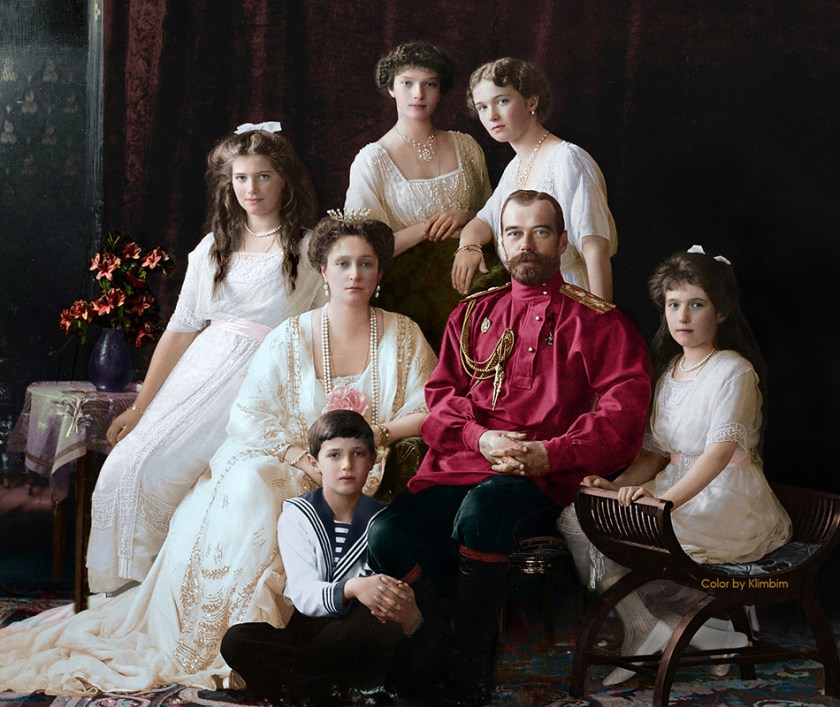
Czar Nicholas II & family, colorized by the Russian artist Olga Shirnina, also known as ‘klimbim’
In 1916, German policy vacillated between strict adherence to prize rules and unrestricted submarine warfare. The first put their people and vessels at extreme risk, the second threatened to bring the United States into the war.
In the early days of WWI, Imperial Germany attempted to comply with standards of maritime warfare, as established by the Hague Conventions of 1899 and 1907.
Desperate to find an effective countermeasure to the German “Unterseeboot”, Great Britain introduced heavily armed merchant ships with concealed weaponry in 1915, phony merchantmen designed to lure submarines into making surface attacks. Britain called these secret countermeasures “Q-ships”, after their home base in Queenstown, in Ireland. German sailors called them U-Boot-Fälle. “U-boat traps”.
The “unprovoked” sinking of noncombatant vessels, including the famous Lusitania, in which 1,198 passengers lost their lives, became a primary justification for war. The German Empire, for her part, insisted that many of these vessels carried munitions intended to kill Germans on European battlefields.
Underwater, the submarines of WWI were slow and blind, on the surface, vulnerable to attack. In 1916, German policy vacillated between strict adherence to prize rules and unrestricted submarine warfare. The first put their people and vessels at extreme risk, the second threatened to bring the United States into the war.
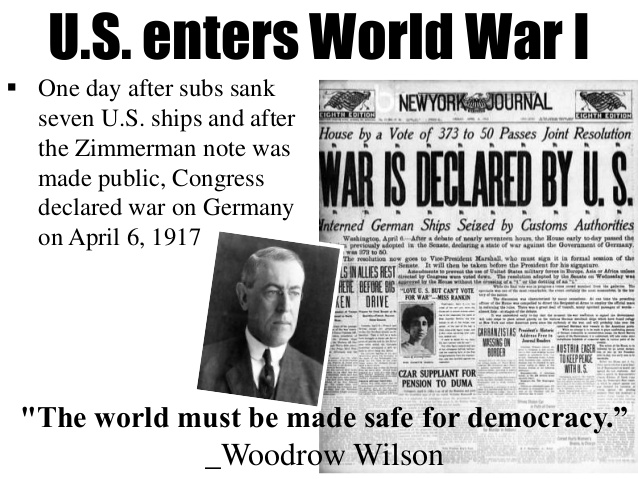
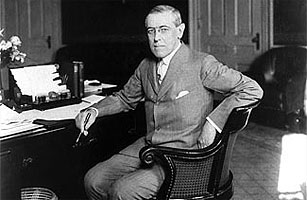
In 1916, President Woodrow Wilson won re-election with the slogan “He kept us out of war”, a conflict begun in Europe, two years earlier.
In a January 31, 1917 memorandum from German Ambassador Count Johann von Bernstorff to US Secretary of State Robert Lansing, the Ambassador stated that “sea traffic will be stopped with every available weapon and without further notice”, effective the following day. The German government was about to resume unrestricted submarine warfare.
Anticipating this resumption and expecting the decision to draw the United States into the war, German Foreign Secretary Arthur Zimmermann delivered a message to the German ambassador in Mexico, Heinrich von Eckardt. The telegram instructed Ambassador Eckardt that, if the United States seemed likely to enter the war, he was to approach the Mexican Government with a proposal for military alliance, promising “lost territory” in Texas, New Mexico, and Arizona in exchange for a Mexican declaration of war against the United States.
The “Zimmermann Telegram” was intercepted and decoded by British intelligence and revealed to the American government on February 24. The contents of the message outraged American public opinion and helped generate support for the United States’ declaration of war.
In the end, the German response to anticipated US action, brought about the very action it was trying to avoid.
President Woodrow Wilson delivered his war message to a joint session of Congress on April 2, saying that a declaration of war on Imperial Germany would make the world “safe for democracy”. Congress voted to support American entry into the war on April 6, 1917. The “Great War”, the “War to end all Wars”, had become a world war.
At the time, a secondary explosion within the hull of the Lusitania, caused many to believe the liner had been struck by a second torpedo. In 1968, American businessman Gregg Bemis purchased the wreck of the Lusitania for $2,400, from the Liverpool & London War Risks Insurance Association. In 2007 the Irish government granted Bemis a five-year license to conduct limited excavations at the site.
Twelve miles off the Irish coast and 300’ down, a dive was conducted on the wreck in 2008. Remote submersible operators discovered some 4,000,000 rounds of Remington .303 ammunition in the hold, proof of the German claim that Lusitania was, in fact, a legitimate target under international rules of war. The UK Daily Mail quoted Bemis: “There were literally tons and tons of stuff stored in unrefrigerated cargo holds that were dubiously marked cheese, butter and oysters’”.
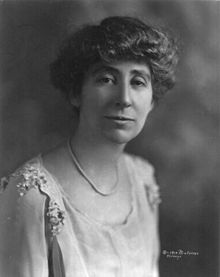
Jeannette Rankin
American historian, author and journalist Wade Hampton Sides accompanied the expedition. “They are bullets that were expressly manufactured to kill Germans in World War I” he said, “bullets that British officials in Whitehall, and American officials in Washington, have long denied were aboard the Lusitania.'”
Montana Republican Jeannette Pickering Rankin, a life-long pacifist and the first woman elected to the United States Congress, would be one of only fifty votes against entering WWI. She would be elected to her second (non-contiguous) term in 1940, in time to be the only vote against entering WWII, following the Japanese attack on the United States’ Pacific anchorage at Pearl Harbor.
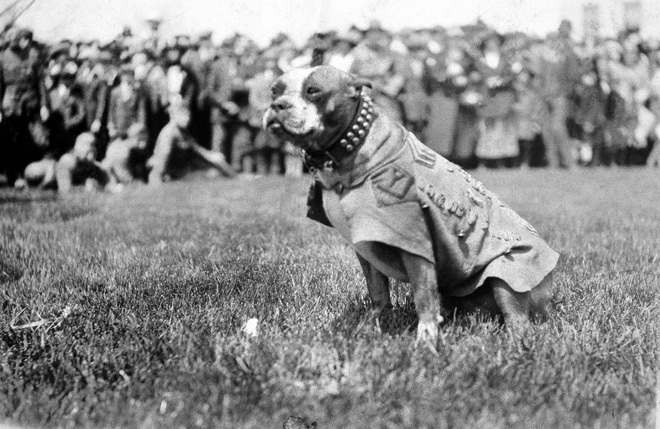
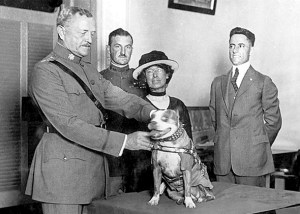
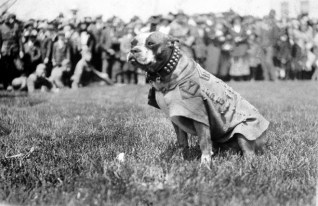
America’s first war dog, Stubby, got there by accident, and served 18 months ‘over there’
By the last year of WW1, the French, British and Belgians had at least 20,000 dogs on the battlefield, the Germans 30,000. General Headquarters of the American Expeditionary Forces recommended the use of dogs as sentries, messengers and draft animals in the spring of 1918. However, with the exception of a few sled dogs in Alaska, the US was the only country to take part in World War I with virtually no service dogs in its military.
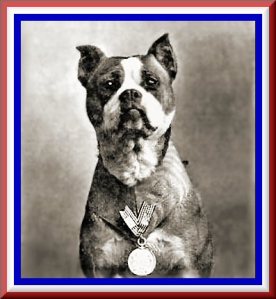
America’s first war dog, “Stubby”, got there by accident, and served 18 months ‘over there’, participating in seventeen battles on the Western Front.
He looked like a terrier of some kind, similar to a pit bull. Nobody knows anything more about him. He showed up as a stray at Yale Field in New Haven, Connecticut, while a group of soldiers were training. The dog hung around as the men drilled and one soldier, Corporal Robert Conroy, started taking care of him. Conroy hid Stubby on board the troop ship when the outfit shipped out in 1917.
Stubby saved his regiment from surprise mustard gas attacks, located and comforted the wounded, and even once caught a German spy by the seat of his pants. The Hun, who’d been prowling behind allied lines at the time, was mapping trenches for artillery bombardment. He was found spinning in circles with a large, muscular terrier affixed to his behind. The Bosch was easily disarmed, but it took a considerable amount of coaxing before Stubby could be persuaded to let go of that German’s rear end.
Stubby saw his first action at Chemin des Dames. Since the boom of artillery fire didn’t faze him, he learned to follow the men’s example of ducking when the big ones came close. It became a great game to see who could hit the dugout, first. After a few days, the guys were watching him for a signal. Stubby was always the first to hear incoming fire. We can only guess how many lives were spared by his early warning.
After the Armistice, Stubby returned home as a nationally acclaimed hero, and was eventually received by presidents Harding and Coolidge. Even General John “Black Jack” Pershing, who commanded the AEF during the war, presented Stubby with a gold medal made by the Humane Society, declaring him to be a “hero of the highest caliber.”
Stubby toured the country by invitation and probably led more parades than any dog in American history: he was promoted to honorary Sergeant by the Legion, becoming the highest ranking dog to ever serve in the Army.
Old age finally caught up with the small warrior on April 4th, 1926, as he took ill and died in his master’s arms.
Sergeant Stubby and a few of his contemporaries were instrumental in inspiring the creation of the US K-9 Corps, just in time for World War ll.
That March, the 31-year-old Hardwick, Massachusetts native was leaving Liverpool, returning to a job on the Gold Coast of British West Africa aboard the cargo-passenger ship RMS Falaba
102 years ago, the Great War was in its 8th month. The war of mobility of the early months was long gone, replaced by the lines of trench works which would characterize the rest of the war. Off the battlefield, the German and British governments each sought to choke the life out of the other’s economy. Great Britain held the upper hand, with the superior deep-water surface fleet. To the Kaiser’s way of thinking, parity would come in the form of a submarine.
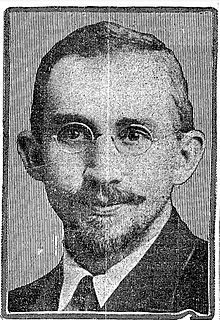
Leon Chester Thrasher 1st American killed in WW!
Leon Chester Thrasher was an American mining engineer. That March, the 31-year-old Hardwick, Massachusetts native was leaving Liverpool, returning to a job on the Gold Coast of British West Africa aboard the cargo-passenger ship RMS Falaba.
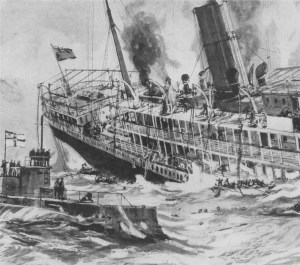
The German submarine U-28 stopped Falaba on this day in 1915, sinking the ship to the bottom with a single torpedo and killing 104, including Leon Thrasher. The first American killed in the “War to End all Wars”.
German policy varied over the course of the war, from unrestrained submarine warfare, to strict adherence with international law. U-28 Commander Freiherr Georg-Günther von Forstner claimed to have given Falaba 23 minutes to evacuate, cutting that short and firing his torpedo only in response to Falaba’s distress rockets and wireless messages for help. British authorities claim to have been given only 7 minutes’ warning.
The death of the first American in the European war set off a diplomatic row which threatened for a time to bring the Americans into the war. American newspapers called it the “Thrasher Incident”, denouncing the sinking as a “massacre”. An act of “piracy”.
The Germans claimed that subsequent explosions proved Falaba to be carrying contraband ammunition, intended to kill German boys on European battlefields. Eyewitness accounts failed to settle the matter, some even tended to support the German view.
President Woodrow Wilson stayed his hand, winning re-election the following year with the slogan, “He Kept Us Out of War”.
What remained of Leon Thrasher washed ashore on the coast of Ireland on July 11, 1915, after 106 days in the water. Authorities mistakenly believed him to be a victim of the RMS Lusitania sinking, designating him Body No. 248.
The U-boat U-20 had torpedoed the Cunard liner RMS Lusitania off the coast of Ireland 40 days earlier, killing 1,198, 124 of whom were Americans. The US came close to the brink of war that time too, but the last and final straw wouldn’t come for another two years. In the form of a German telegram, to the government of Mexico.
When then-Chancellor Hitler offered him an ambassadorship to the Court of St. James in 1935, von Lettow-Vorbeck told Hitler to go “f**k himself.” Describing the interview afterward, his nephew explained “That’s right, except that I don’t think he put it that politely.”
Paul Emil von Lettow-Vorbeck was born into minor Prussian Nobility on this day in 1870. Joining the Corps of Cadets as a teenager, Lettow-Vorbeck worked his way up the German Imperial Army chain of command, becoming a general by the time of WWI.
Stationed in German East Africa and knowing that his sector would be little more than a side show in the greater war effort, Lettow-Vorbeck determined to tie up as many of his adversaries as possible.
With a force which never exceeded 14,000 (3,000 Germans and 11,000 Askari warriors), the “Lion of Africa” tied up as many as 300,000 British, Belgian, and Portuguese troops, who wore themselves out in the pursuit.
Like the much better known Lawrence of Arabia, Lettow-Vorbeck became a master of guerilla warfare. He never lost a single battle, though it was not unheard of for combatants to break and flee a charging elephant or rhinoceros.
To his adversaries, disease and parasites were often more dangerous than enemy soldiers. In one month (July, 1916) Allied non-battle casualties ran 31 to 1 compared with battle casualties.
In 1956, Brazilian scientists attempted to cross African honey bees with indigenous varieties, in order to produce an insect better suited to the South American tropics. Today, we call the results of these failed experiments “Africanized” or “killer” bees.
At one point in the battle of Tanga (November 7-8, 1914), a British landing force and their Sepoy allies were routed and driven back to the sea by millions of African bees, disturbed by rifle and machine gun fire. There’s a story about one British radioman who held to his station, directing the evacuation from the beach while being stung to death by thousands of angry bees. He would be posthumously awarded the Victoria Cross for “gallantry under aerial attack”.
Of all German commanders in WWI, “der Löwe von Afrika” – the Lion of Africa alone remained undefeated in the field. The only German commander to successfully invade imperial British soil during the Great War.
Lettow-Vorbeck developed a deep distrust of the upstart Adolf Hitler. When then-Chancellor Hitler offered him an ambassadorship to the Court of St. James in 1935, Lettow-Vorbeck told Hitler to go “f**k himself.” Describing the interview afterward, his nephew explained “That’s right, except that I don’t think he put it that politely.”
After such a blunt refusal, Lettow-Vorbeck was kept under continual surveillance by the Nazi regime. His home and office were searched, his person subject to constant harassment. The Lion of Africa was destitute by the end of WWII. His sons both killed serving in the Wehrmacht, his home in Bremen destroyed by Allied bombs.
For a time, Vorbeck lived on food packages from British Intelligence Officer Richard Meinertzhagen and South African Field Marshal Jan Christiaan Smuts, two of his former adversaries in the East Africa campaign. It was a token of the respect these two had, for a man who had once been their enemy.
In 1964, the year Lettow-Vorbeck died, the Bundestag voted to give back pay to former African warriors who had fought with German forces in WWI. Some 350 elderly Ascaris showed up. A few could produce certificates given them back in 1918, some had scraps of old uniforms. Precious few could prove their former service to the German Empire.
The German banker who had brought the money had an idea. As each man stepped forward, he was handed a broom and ordered to perform the German manual of arms. Not one man failed the test.
Lettow-Vorbeck formed a lifelong friendship during his time in Africa, with the Danish author Karen Blixen, best known by her pen name Isak Dinesen, author of “Out of Africa”. Years later, Blixen recalled, “He belonged to the olden days, and I have never met another German who has given me so strong an impression of what Imperial Germany was and stood for”.
Most of France was riveted by the Caillaux affair in July 1914, ignorant of the European crisis barreling down on them like the four horsemen of the apocalypse.
We heard a lot this past election year, about “Left” and “Right”, “Liberal” and “Conservative”.
The terms have been with us a long time, originating in the early days of the French Revolution. In those days, National Assembly members supportive of the Monarchy sat on the President’s right. Those favoring the Revolution, on the left. The right side of the seating arrangement began to thin out and disappeared altogether during the “Reign of Terror”, but re-formed with the restoration of the Monarchy, in 1814-1815. By this time, it wasn’t just the “Party of Order” on the right and the “Party of Movement” on the left. Now the terms began to describe nuances in political philosophy, as well.
200 years later, differences between the French left and right of the period, would be recognizable to American political observers of today.
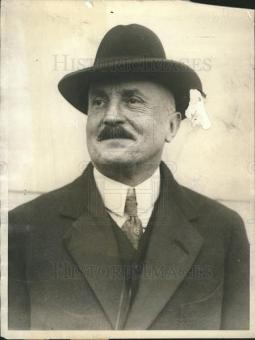
Joseph Cailloux
Joseph Cailloux (rhymes with “bayou”) was a left wing politician, appointed prime minister of France in 1911. The man was indiscreet in his love life, even for a French politician. Back in 1907, Cailloux had paraded about with a succession of mistresses, finally carrying on with one Henriette Raynouard, while both were married to someone else. They were both divorced by 1911 and that October, Henriette Raynouard became the second Mrs Cailloux.
The right considered Cailloux to be far too accommodating with Germany, with whom many felt war to be all but inevitable. While serving under the administration of President Raymond Poincare in 1913, Cailloux became a vocal opponent of a bill to increase the length of mandatory military service from two years to three, intended to offset the French population disadvantage between France’ 40 million and Germany’s 70 million.
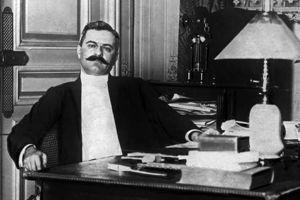
Gaston Calmette
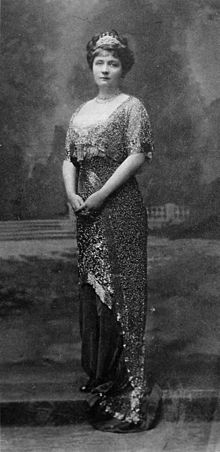
Gaston Calmette, editor of the leading Conservative newspaper Le Figaro, threatened to publicize love letters between the former Prime Minister and his second wife, written while both were still married for the first time. Henriette Cailloux was not amused.
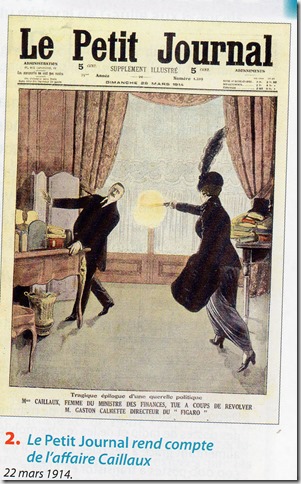
On March 16, 1914, Madame Cailloux took a taxi to the offices of Le Figaro. After being shown into Calmette’s office, the pair spoke only briefly, before Henriette withdrew the Browning .32 automatic, and fired six rounds at the editor. Two missed, but four were more than enough to do the job. Gaston Calmette was dead within six hours.
Henriette Cailloux
German Chancellor Otto von Bismarck once said the next great European war would start with “some damn fool thing in the Balkans”. Though no one realized it at the time, Bismarck got his damn fool thing on June 28, when a Serbian Nationalist assassinated the heir apparent to the Austro-Hungarian throne.
The July Crisis of 1914 was a series of diplomatic maneuverings, culminating in the ultimatum from Austria-Hungary to the Kingdom of Serbia. Vienna, with tacit support from Berlin, made plans to punish Serbia for her role in the assassination, while Russia mobilized armies in support of her Slavic ally.
Meanwhile, England and France looked the other way. In Great Britain, officialdom was focused on yet another home rule crisis concerning Ireland, while all of France was distracted by the “Trial of the Century”.
Think of the OJ trial, only in this case the killer was a former First Lady. This one had everything: Left vs. Right, the fall of the powerful, and all the salacious details anyone could ask for. Most of France was riveted by the Caillaux affair in July 1914, ignorant of the European crisis barreling down on them like the four horsemen of the apocalypse. Madame Caillaux’s trial for the murder of Gaston Calmette began on July 20.
She was acquitted on July 28, the jury ruling the murder to be a “crime passionnel”. A crime of passion. That same day, Austria-Hungary declared war on Serbia.
In the days that followed, the Czar would begin the mobilization of men and machines that would place Imperial Russia on a war footing. Imperial Germany invaded Belgium, in pursuit of the one-two punch strategy by which they sought first to defeat France, before turning to face the “Russian Steamroller”. England declared war in support of a 75 year old commitment to protect Belgian neutrality, a treaty obligation that German diplomats had dismissed as a “scrap of paper”.
Eleven million military service members and seven million civilians who were alive in July of 1914, would not live to see November 11, 1918.
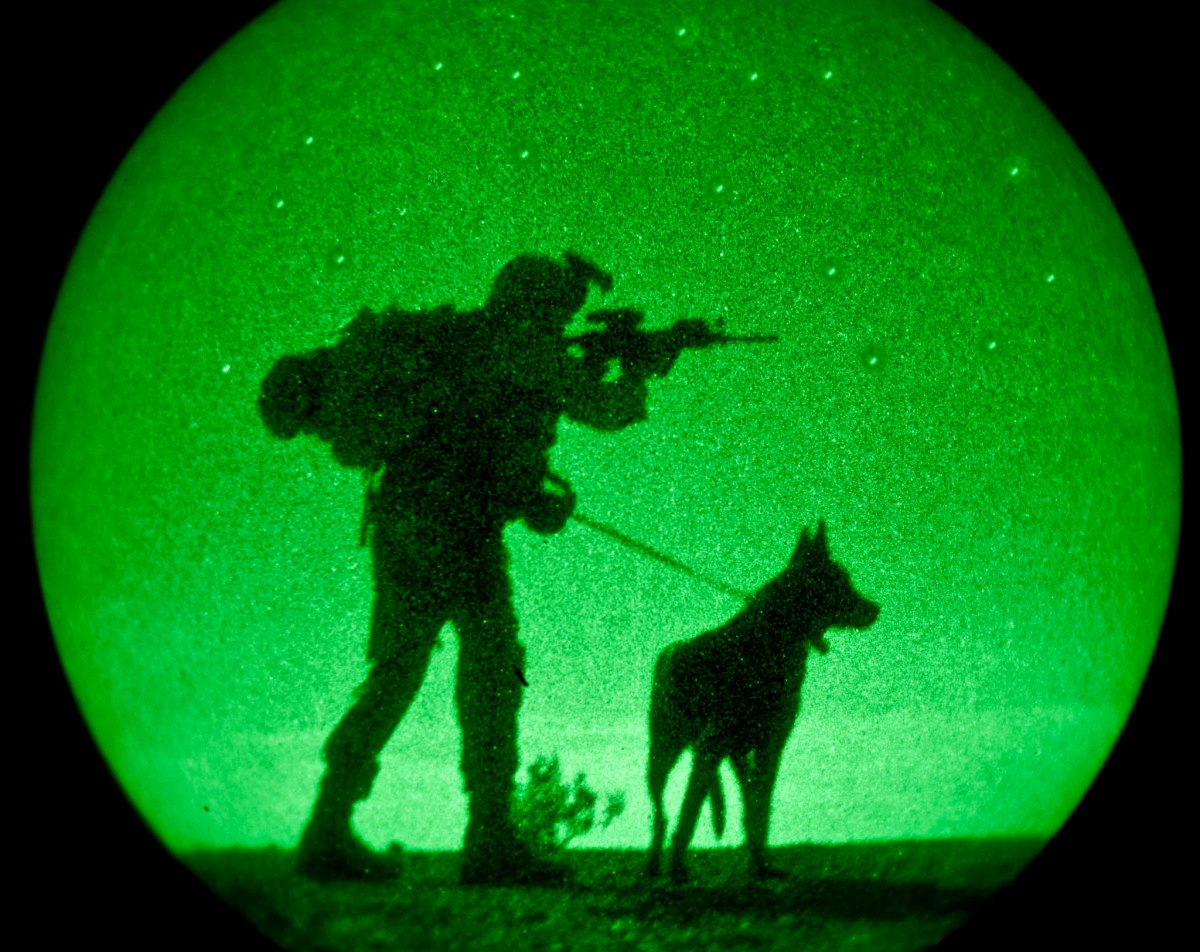
It’s K-9 Veteran’s Day. March 13, 2017. I could tell you no other story today, half as fitting as this.
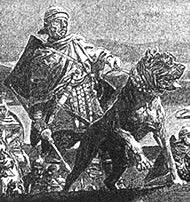
The history of war dogs is as old as history itself. The dogs of King Alyattes of Lydia killed some of his Cimmerian adversaries and routed the rest around 600BC, permanently driving the invader from Asia Minor in the earliest known use of war dogs in battle.
King Molossus of Epirus, grandson of the mighty Achilles, used a large, powerfully built breed specifically trained for battle. Today, “molosser” describes a body type more than any specific breed. Modern molossers include the Mastiff, Bernese Mountain Dog, Newfoundland and Saint Bernard.
Ancient Greeks, Romans and Egyptians often used dogs as sentries or on patrol. In late antiquity, Xerxes I, the Persian King who faced the Spartan King Leonidas across the pass at Thermopylae, was accompanied by a pack of Indian hounds.
Attila the Hun went to war with a pack of hounds, as did the Spanish Conquistadors of the 1500s.
Sallie’s likeness rests at the foot of a statue in Gettysburg, looking out for the spirits of “her boys” for all eternity
A Staffordshire Bull Terrier named Sallie “joined up” in 1861, serving the rest of the Civil War with the 11th Pennsylvania Volunteer Infantry. At Cedar Mountain, Antietam, Fredericksburg, Chancellorsville, and Spotsylvania, Sallie would take her position alongside the colors, barking ferociously at the adversary.
Abraham Lincoln spotted Sallie from a reviewing stand in 1863, and tipped his hat.
Sallie was killed at Hatcher’s Run in February 1865. Several of “her” men laid down their arms then and there to bury her, despite being under Confederate fire.
WWI Messenger Dog
Dogs performed a variety of roles in WWI, from ratters in the trenches, to sentries, scouts and runners. “Mercy” dogs were trained to seek out the wounded on the battlefield, carrying medical supplies with which the stricken could treat themselves.
Sometimes, these dogs simply provided the comfort of another living soul, so that the gravely wounded should not die alone.
By the end of the “Great War”, France, Great Britain and Belgium had at least 20,000 dogs on the battlefield, Imperial Germany over 30,000. Some sources report that over a million dogs served over the course of the war.
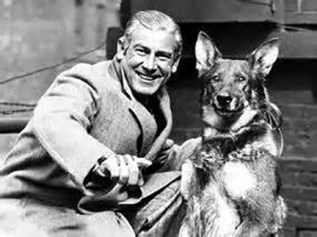
Lee Duncan & Rin Tin Tin
The famous Rin Tin Tin canine movie star of the 1920s was rescued as a puppy, from the bombed out remains of a German Army kennel, in 1917. (Read more about him, Here).
GHQ of the American Expeditionary Force recommended using dogs as sentries, messengers and draft animals in the spring of 1918, however the war was over before US forces put together any kind of a War Dog program.
America’s first war dog, “Sgt. Stubby”, went “Over There” by accident, serving 18 months on the Western Front before coming home to a well-earned retirement.
Sgt. Stubby
On March 13, 1942, the Quartermaster Corps began training dogs for the US Army “K-9 Corps.” In the beginning, the owners of healthy dogs were encouraged to “loan” their dogs to the Quartermaster Corps, where they were trained for service with the Army, Navy, Marine Corps and Coast Guard.
The program initially accepted over 30 breeds of dog, but the list soon narrowed to German Shepherds, Belgian Sheep Dogs, Doberman Pinschers, Collies, Siberian Huskies, Malamutes and Eskimo Dogs.
WWII-era Military Working Dogs (MWDs) served on sentry, scout and patrol missions, in addition to performing messenger and mine-detection work. The keen senses of scout dogs saved countless lives, by alerting to the approach of enemy forces, incoming fire, and hidden booby traps & mines.
The most famous MWD of WWII was “Chips”, a German Shepherd assigned to the 3rd Infantry Division in Italy. Trained as a sentry dog, Chips broke away from his handler and attacked an enemy machine gun nest. Wounded in the process, his singed fur demonstrated the point-blank fire with which the enemy fought back. To no avail. Chips single-handedly forced the surrender of the entire gun crew.
Chips was awarded the Distinguished Service Cross, Silver Star and Purple Heart, the honors later revoked due to an Army policy against the commendation of animals. It makes me wonder if the author of such a policy ever saw service beyond his own desk.
Of the 549 dogs who returned from service in WWII, all but four were able to return to civilian life.
Over 500 dogs died on the battlefields of Vietnam, of injuries, illnesses, and combat wounds. 10,000 servicemen served as dog handlers during the war, with an estimated 4,000 Military Working Dogs. 261 handlers paid the ultimate price. K9 units are estimated to have saved over 10,000 human lives.
War dog memorial, University of Tennessee
It’s only a guess, but, having an MWD handler in the family, I believe I’m right: hell would freeze before any handler walked away from his dog. The military bureaucracy, is another matter. The vast majority of MWDs were left behind during the Vietnam era. Only about 200 dogs survived the war to be assigned to other bases. The remaining dogs were either euthanized or left behind as “surplus equipment”.
In 2011, a Belgian Malinois named “Cairo” accompanied the Navy SEAL “Neptune Spear” operation that took out Osama bin Laden.
Today there are about 2,500 dogs in active service. Approximately 700 deployed overseas. The American Humane Association estimates that each MWD saves an average 150-200 human lives over the course of its career.
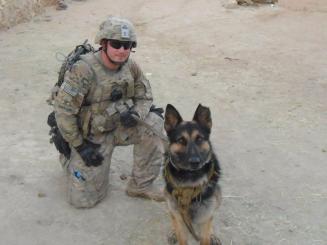
Nate & Zino
NPR’s “Here & Now” broadcast an excellent segment out of their Boston affiliate WBUR in 2014, when our son-in-law Nate was reunited with “Zino”, the Tactical Explosives Detection Dog (TEDD) with whom he served in Afghanistan.
Their story ends well, but that isn’t always the case. Many have been left behind, no longer qualified to travel on military transport after being “retired” on foreign soil.
In 2015, Congressman Frank LoBiondo (R-NJ) and Senator Claire McCaskill (D-MO) introduced language in their respective bodies, mandating that MWDs be returned to American soil upon retirement, and that their handlers and/or handlers’ families be given first right of adoption.
LoBiondo’s & McCaskill’s language became law on November 25, when the President signed the 2016 National Defense Authorization Act (NDAA). It’s a small step in recognizing what we owe to those who have stepped up in defense of our nation, both two legged and four.
Boston’s NPR Station WBUR broadcast a segment on Nate & Zino’s reunion, if you’re interested in listening to it. It’s a great story.


 McCrae fought in one of the most horrendous battles of WWI, the second battle of Ypres, in the Flanders region of Belgium. Imperial Germany launched one of the first chemical attacks in history, attacking the Canadian position with chlorine gas on April 22, 1915. The Canadian line was broken but quickly reformed, in near-constant fighting that lasted for over two weeks.


 The vivid red flower blooming on the battlefields of Belgium, France and Gallipoli came to symbolize the staggering loss of life in that war. Since then, the red poppy has become an internationally recognized symbol of remembrance of the lives lost in all wars. I keep a red poppy pinned to my briefcase and another on the visor of my car. A reminder that no free citizen of a self-governing Republic, should ever forget where we come from. Or the prices paid by our forebears, to get us here.

 As chief of the Imperial German general staff from 1891-1905, German Field Marshal Alfred von Schlieffen devised the strategic roadmap by which Germany prosecuted the first world war. The “Schlieffen Plan” could be likened to a bar fight, where a fighter (Germany) had to take out one guy fast (France), before turning and facing his buddy (Imperial Russia). Of infinite importance to Schlieffen’s plan was the westward sweep through France, rolling the country into a ball on a timetable before his armies could turn east to face the “Russian Steamroller”. “When you march into France”, Schlieffen had said, “let the last man on the right brush the Channel with his sleeve.”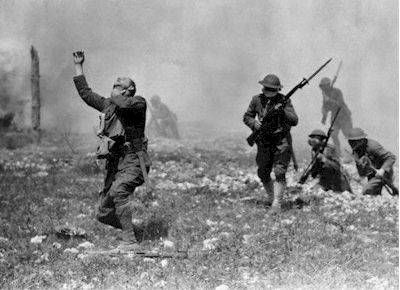
 The second Battle of Ypres began with a new and terrifying weapon, on April 22, 1915. German troops placed 5,730 gas cylinders weighing 90 pounds apiece, along a four mile front. Allied troops must have looked on in wonder, as that vast yellow-green carpet crept toward their lines. Chlorine gas forms hypochlorous acid when combined with water, destroying the moist tissues of the lungs and eyes. Heavier than air, the stuff crept along the ground and poured into the trenches, forcing troops out into heavy German fire. 6,000 casualties were sustained in the gas attack alone, opening a four mile gap in the allied line. Thousands retched and coughed out their last breath, as others tossed their equipment and ran in terror.
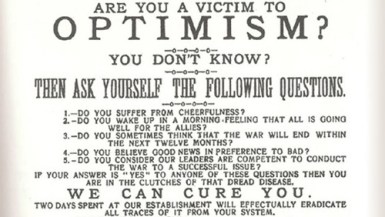 Richly typeset advertisements for “Music Hall Extravaganzas” include “Tickling Fritz” by the P.B.I. (Poor Bloody Infantry) Film Co. of the United Kingdom and Canada, advising the enthusiast to “Book Early”. There were Real Estate ads for property in no-man’s land. “BUILD THAT HOUSE ON HILL 60. BRIGHT-BREEZY-&-INVIGORATING. COMMANDS AN EXCELLENT VIEW OF HISTORIC TOWN OF YPRES”. Another one read “FOR SALE, THE SALIENT ESTATE – COMPLETE IN EVERY DETAIL! UNDERGROUND RESIDENCES READY FOR HABITATION. Splendid Motoring Estate! Shooting Perfect !! Fishing Good!!!”


 Richthofen chased the rookie Canadian pilot Wilfred “Wop” May behind the lines on April 21, 1918, when he found himself under attack. With a squadron of Sopwith Camels firing from above and anti-aircraft gunners on the ground, he was shot once through the chest with a .303 round, managing to land in a beet field before dying several minutes later. He was still wearing his pajamas, under his flight suit.


 By 1916 it was generally understood in Germany, that the war effort was “shackled to a corpse”, referring to Germany’s Austro-Hungarian ally. Italy, the third member of the “Triple Alliance”, was little better. On the Triple Entente side, the French countryside was literally torn to pieces, the English economy close to breaking. The Russian Empire, the largest nation on the planet, was on the edge of the precipice.
 the more extreme road. While Reds and Whites both wanted to bring socialism to the Russian people, the Mensheviks argued for predominantly legal methods and trade union work, while Bolsheviks favored armed violence.

 In the early days of WWI, Imperial Germany attempted to comply with standards of maritime warfare, as established by the Hague Conventions of 1899 and 1907.
 The “Zimmermann Telegram” was intercepted and decoded by British intelligence and revealed to the American government on February 24. The contents of the message outraged American public opinion and helped generate support for the United States’ declaration of war.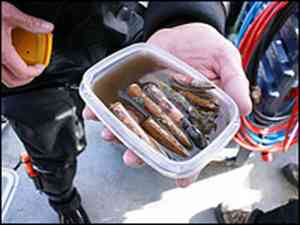

 By the last year of WW1, the French, British and Belgians had at least 20,000 dogs on the battlefield, the Germans 30,000. General Headquarters of the American Expeditionary Forces recommended the use of dogs as sentries, messengers and draft animals in the spring of 1918. However, with the exception of a few sled dogs in Alaska, the US was the only country to take part in World War I with virtually no service dogs in its military.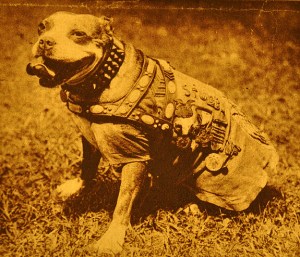
 Stubby saw his first action at Chemin des Dames. Since the boom of artillery fire didn’t faze him, he learned to follow the men’s example of ducking when the big ones came close. It became a great game to see who could hit the dugout, first. After a few days, the guys were watching him for a signal. Stubby was always the first to hear incoming fire. We can only guess how many lives were spared by his early warning.




 Stationed in German East Africa and knowing that his sector would be little more than a side show in the greater war effort, Lettow-Vorbeck determined to tie up as many of his adversaries as possible.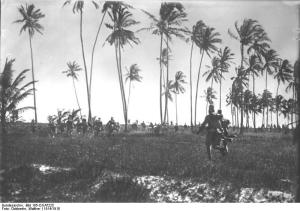
 In 1964, the year Lettow-Vorbeck died, the Bundestag voted to give back pay to former African warriors who had fought with German forces in WWI. Some 350 elderly Ascaris showed up. A few could produce certificates given them back in 1918, some had scraps of old uniforms. Precious few could prove their former service to the German Empire.

 Right, the fall of the powerful, and all the salacious details anyone could ask for. Most of France was riveted by the Caillaux affair in July 1914, ignorant of the European crisis barreling down on them like the four horsemen of the apocalypse. Madame Caillaux’s trial for the murder of Gaston Calmette began on July 20.
 dogs of King Alyattes of Lydia killed some of his Cimmerian adversaries and routed the rest around 600BC, permanently driving the invader from Asia Minor in the earliest known use of war dogs in battle.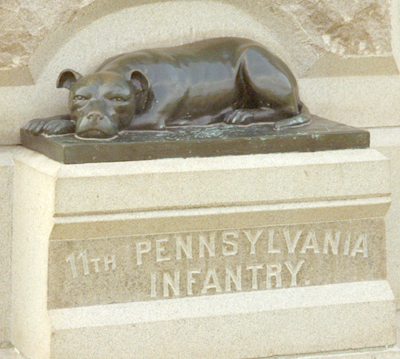

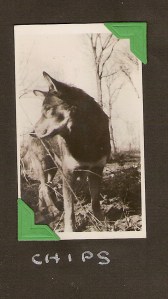 The most famous MWD of WWII was “Chips”, a German Shepherd assigned to the 3rd Infantry Division in Italy. Trained as a sentry dog, Chips broke away from his handler and attacked an enemy machine gun nest. Wounded in the process, his singed fur demonstrated the point-blank fire with which the enemy fought back. To no avail. Chips single-handedly forced the surrender of the entire gun crew.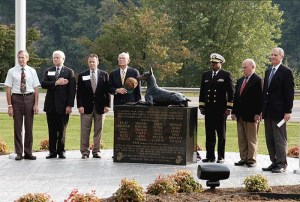

 Historical Easter Eggs - Today in History
You must be logged in to post a comment.