

Navajo Code Talkers were part of all six Marine divisions in the Pacific theater of WWII. Guadalcanal, Tarawa, Peleliu, Iwo Jima: Code Talkers took part in every assault the Marines conducted from 1942 to ‘45.
Theirs was a language with no alphabet or symbols, a language with such complex syntax and tonal qualities as to be unintelligible to the non-speaker. The military code based on such a language proved unbreakable in WWII. Japanese code breakers never got close.
The history of the Navajo Code Talkers of WWII is relatively well known. A number of books have been written about the subject. Less well known is the history of code talking in WWI, based on the language of the Choctaw.
The government of the Choctaw Nation will tell you that they were the first native code talkers who ever served in the United States military.
 Late in 1917, Colonel A. W. Bloor was serving in France with the 142nd Infantry Regiment. They were a Texas outfit, constituted in May of that year and including a number of Oklahoma Choctaws.
The Allies had already learned the hard way, that many of their German adversaries spoke excellent English. They had already intercepted and broken several English based codes. Bloor heard two of his Choctaw soldiers talking to each other, and realized he didn’t have the foggiest notion of what they were saying. If he didn’t understand their conversation, the Germans wouldn’t have a clue.
The first test under combat conditions took place on October 26, 1918, as two companies of the 2nd Battalion performed a “delicate” withdrawal from Chufilly to Chardeny, in the Champagne sector. A captured German officer later confirmed the Choctaw code to have been a complete success. We were “completely confused by the Indian language”, he said, “and gained no benefit whatsoever” from wiretaps.
Choctaw soldiers were placed in multiple companies of infantry. Messages were transmitted via telephone, radio and by runner, many of whom were themselves Native Americans.
The Choctaw would improvise when their language lacked the proper word or phrase. When describing artillery, they used the words for “big gun”. Machine guns were “little gun shoot fast”.
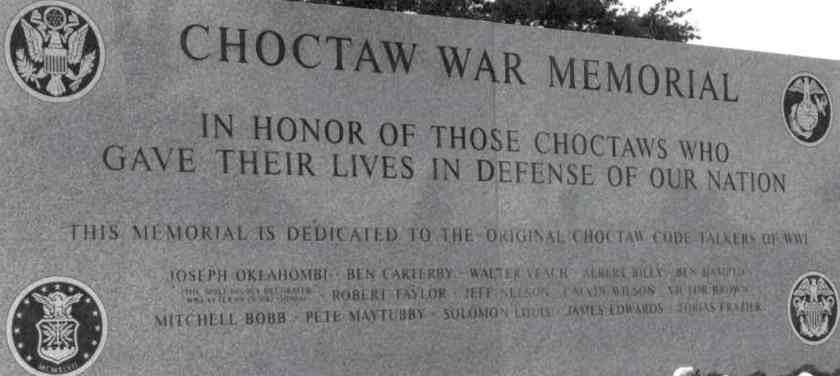
The Choctaw themselves didn’t use the term “Code Talker”, that wouldn’t come along until WWII. At least one member of the group, Tobias W. Frazier, described what they did as, “talking on the radio”. Of the 19 who served in WWI, 18 were native Choctaw from southeast Oklahoma. The last was a native Chickasaw. The youngest was Benjamin Franklin Colbert, Jr., the son of Benjamin Colbert Sr., one of Teddy Roosevelt’s “Rough Riders” of the Spanish American War. Born September 15, 1900 in the Durant Indian Territory, he was 16 on the day he enlisted.
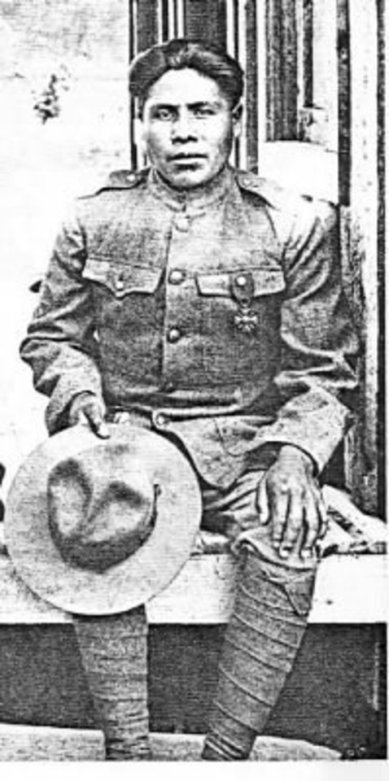
Another was Choctaw Joseph Oklahombi, whose name means “man killer” in the Choctaw language. Six days before Sergeant York’s famous capture of 132 in the Argonne Forest, Joseph Oklahombi charged a strongly held German position, single-handed. Oklahombi’s Croix de Guerre citation, personally awarded by French Marshall Philippe Pétain, tells the story: “Under a violent barrage, [Pvt. Oklahombi] dashed to the attack of an enemy position, covering about 210 yards through barbed-wire entanglements. He rushed on machine-gun nests, capturing 171 prisoners. He stormed a strongly held position containing more than 50 machine guns, and a number of trench mortars. Turned the captured guns on the enemy, and held the position for four days, in spite of a constant barrage of large projectiles and of gas shells. Crossed no man’s land many times to get information concerning the enemy, and to assist his wounded comrades“.
Unconfirmed eyewitness accounts report that 250 Germans occupied the position, and that Oklahombi killed 79 before their comrades decided it was wiser to surrender. Some guys are not to be trifled with.


 Despite problems at home, the Dutch mail order bride found herself moving among the upper classes. She immersed herself in Indonesian culture and traditions, even joining a local dance company. It was around this time that she revealed her “artistic” name in letters home: “Mata Hari”, Indonesian for “sun” (literally, “eye of the day”), in Sanskrit.
 British reporter Henry Wales described the execution, based on an eyewitness account. Unbound and refusing a blindfold, Mata Hari stood alone to face her firing squad. After the shots rang out, Wales reported that “Slowly, inertly, she settled to her knees, her head up always, and without the slightest change of expression on her face. For the fraction of a second it seemed she tottered there, on her knees, gazing directly at those who had taken her life. Then she fell backward, bending at the waist, with her legs doubled up beneath her.”


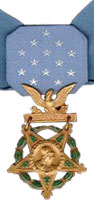 Major Whittlesey, Captain George McMurtry, and Captain Nelson Holderman, all received the Medal of Honor for their actions atop hill 198. Whittlesey was accorded the rare honor of being a pallbearer at the interment ceremony for the Unknown Soldier, but it seems his experience weighed heavily on him. Charles Whittlesey disappeared from a ship in 1921, in what is believed to have been a suicide.

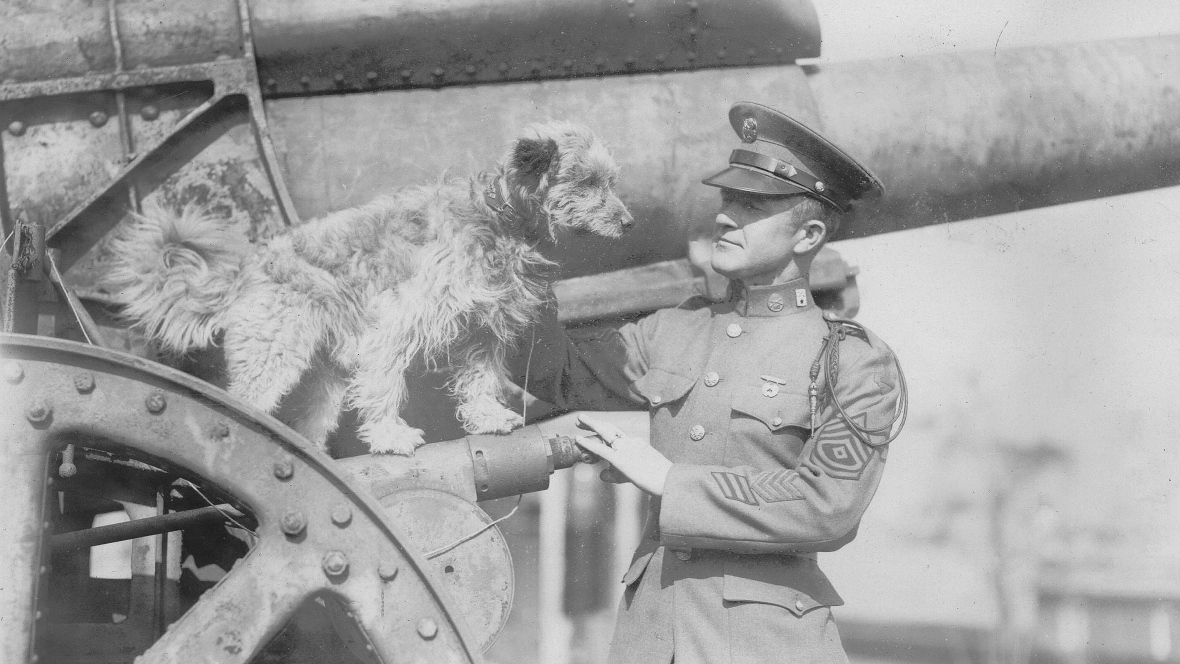
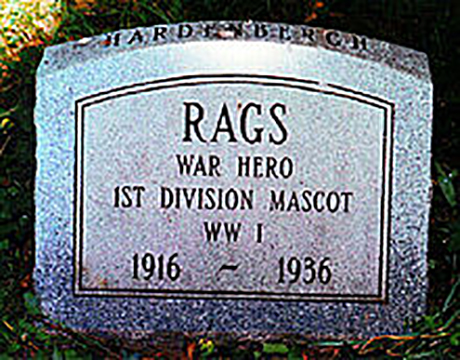
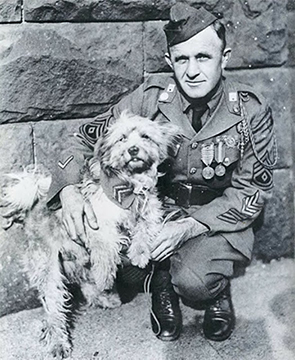 It was a small dog, possibly a Cairn Terrier mix. He looked like a pile of rags, and that’s what they called him. The dog had gotten Donovan out of a jam, now he would become the division mascot for real. Rags was now part of the US 1st Infantry Division, the Big Red One.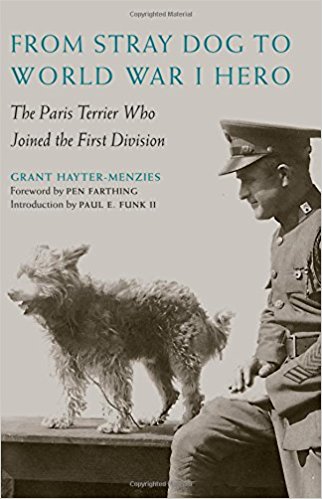


 TE, as Lawrence preferred to be called, was reading books and newspapers by the age of four. He first went to the Middle East as an archaeology student in 1909, walking 1,100 miles across Syria, Palestine, and parts of Turkey, surveying the castles of the Crusaders for his thesis. During this time he was shot at, robbed and severely beaten. Despite all of it, TE Lawrence developed an affinity for the Middle East and its people, which would last a lifetime.
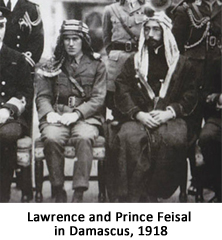 Dressing himself in the flowing Arab Thawb, Lawrence joined the forces of Ali’s son, Feisal.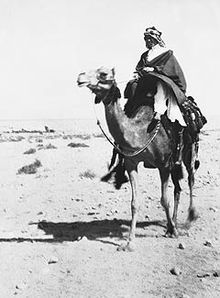
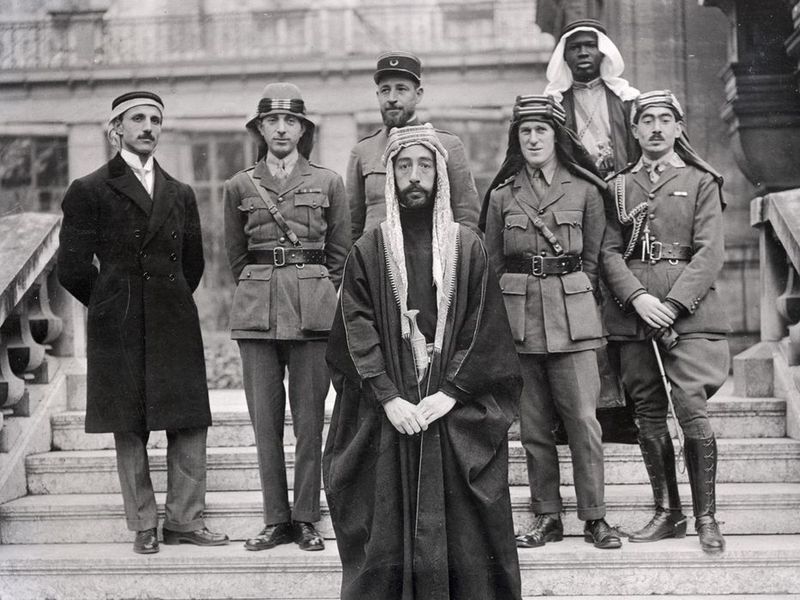
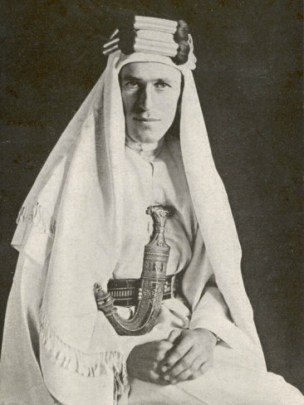
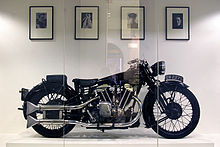
 To most of us, the desert is an inscrutable place, as is the mind, culture and history of the Middle East. Few westerners would ever get to know this part of the world like TE Lawrence.

 Leonardo da Vinci drew sketches of a man-powered, wheeled vehicle encased in armor and bristling with cannon, as early as the 15th century. The design was limited, since no human crew could generate enough power to move it for long, and the use of animals in such confined spaces was fraught with problems..


 With no suspension, the bone jarring ride on one of these monsters was just the beginning of what crews were forced to endure.




 Bullard was assigned to the 93d Spad Squadron on August 17, 1917, flying Spad V11s and Nieuports with a mascot, a pet Rhesus Monkey he called “Jimmy”. He said, “I was treated with respect and friendship – even by those from America. Then I knew at last that there are good and bad white men just as there are good and bad black men.”


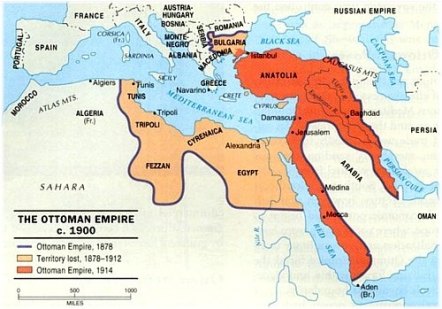
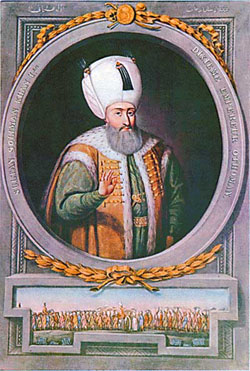 The Ottoman Empire reached the height of its power during the 16th and 17th centuries, under the reign of Suleiman the Magnificent. One of the most powerful states in the world and ruling over 39 million subjects, the Ottoman Empire controlled a territory spanning three continents: over two million square miles.


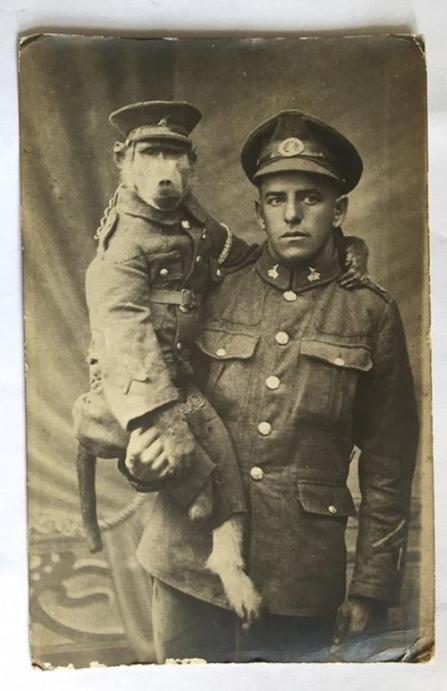 Private Marr asked for and received permission to bring Jackie along with him. It wasn’t long before the monkey became the official Regimental Mascot.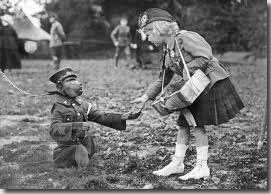
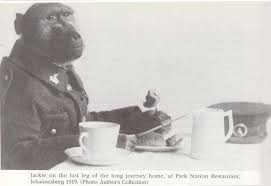


 Historical Easter Eggs - Today in History
You must be logged in to post a comment.