February 1, 1901 The Last Doughboy

The people the author sought were over 101. One was 113. The search could not have been easy, beginning with the phone call to next of kin. There is no delicate way to ask the question. “Is he still with us?” Most times, the answer was “no”.

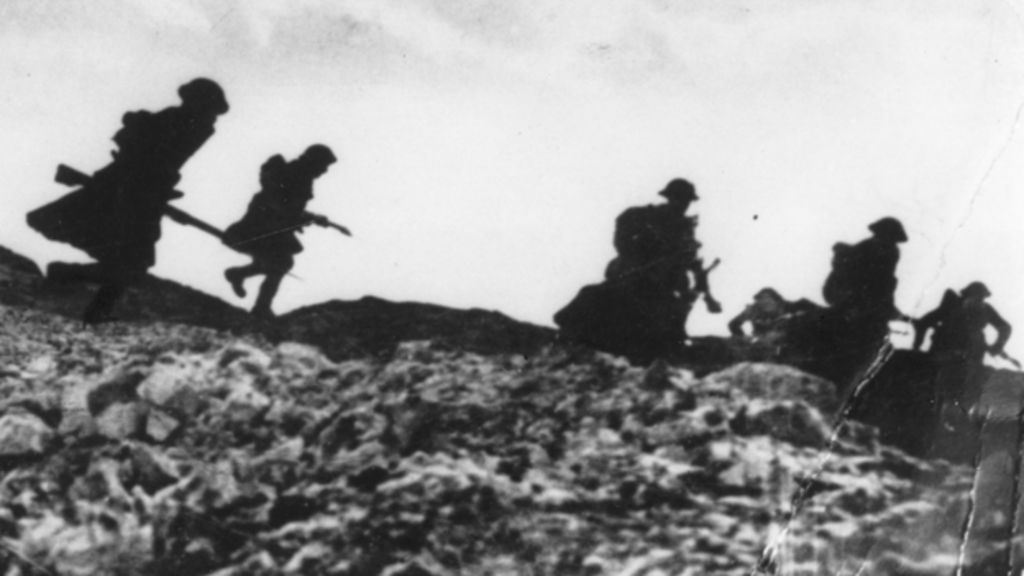
In 2003, author Richard Rubin set out to interview the last surviving veterans of the Great War, the “War to End All Wars”.  World War One.

The people the author sought were all over 101. One was 113. It could not have been easy, beginning with the phone call to next of kin. There is no delicate way to ask the question. “Is he still with us?” Most times the answer was “no”.

Sometimes it was “yes”, and Rubin would ask for an interview. The memories his subjects sought to bring back were 80 years old and more.  Some spoke haltingly, and with difficulty.  Others were fountains of information, as clear and lucid as if the memories of which they spoke were made only  yesterday.

Rubin writes “Quite a few of them told me that they were telling me things that they hadn’t talked about in 50, 60, 70 years. I asked a few of them why not, and the surprising response often was that nobody had asked.”

Anthony Pierro of Swampscott, Massachusetts, served in Battery E of the 320th Field Artillery and fought in several of the major battles of 1918, including Oise-Aisne, St. Mihiel, and Meuse-Argonne.

Pierro recalled his time in Bordeaux as the best time of the war. “The girls used to say, ‘upstairs, two dollars.’” Pierro’s nephew Rick interrupted the interview. “But you didn’t go upstairs.”  Although possibly unexpected, Uncle Anthony’s response was a classic.  “I didn’t have the two dollars”.

Reuben Law of Carson City, Nevada remembered a troop convoy broken up by a German U-Boat while his own transport was swept up in the murderous Flu pandemic of 1918.

The people Rubin spoke with weren’t all men. 107-year-old Hildegarde Schan of Plymouth, Massachusetts spoke of caring for the wounded.
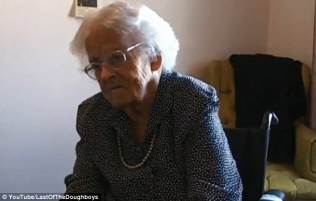
Howard Ramsey helped start an American burial ground in France, 150 miles north of Paris. Today, the 130½ acres of the Meuse-Argonne American Cemetery serves as the final resting place for the largest number of US military dead in Europe.

“So I remember one night”, Ramsey said, “It was cold, and we had no blankets, or nothing like that. We had to sleep, we slept in the cemetery, because we could sleep between the two graves, and keep the wind off of us, see?”

Arthur Fiala of Kewaunee, Wisconsin remembered traveling across France in a boxcar marked “40-8″. Room enough for 40 men, or eight horses.
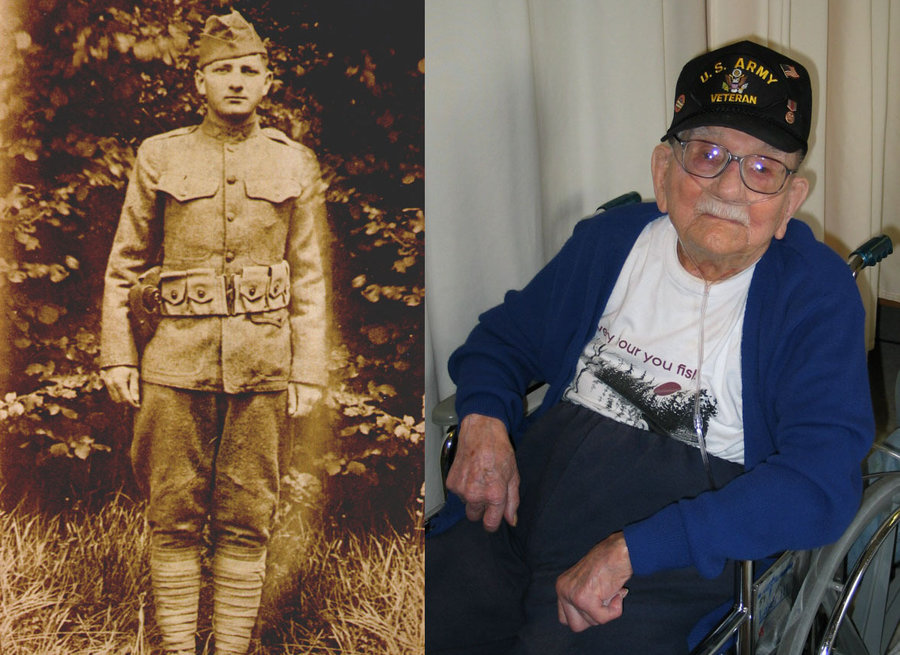
Arthur Fiala

There was J. Laurence Moffitt of Orleans, Massachusetts. Today, we see the “Yankee Division” only on highway signs. At 106, this man was the last surviving member of his outfit, with a memory so clear he could recall every number from every fighting unit of the 26th Division.

George Briant was caught in an open field with his battery, as German planes dropped bombs from the sky.  Briant felt as if he was hit by every one of them, spending several months in the hospital. When it was through, he begged to go back to the front.  
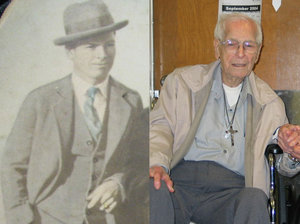
On the last night of the war, November 10, 1918, Briant came upon the bodies of several men who had just been shelled.

“Such fine, handsome, healthy young men”, he said, “to be killed on the last night of the war.  I cried for their parents. I mean it’s a terrible, terrible thing to lose anyone you love in a war, but imagine knowing precisely when that war ends, and then knowing that your loved one died just hours before that moment.

Rubin interviewed dozens of men and a handful of women, a tiny and ever diminishing living repository for memory of the War to End All Wars. Their stories are told in their own words and linked HERE, if you care to learn more.  I highly recommend it.  The words of these women and men are far more powerful than anything I can offer.

Frank Woodruff Buckles, born Wood Buckles, is one. Born on February 1, 1901, Buckles enlisted with the First Fort Riley Casualty Detachment at the age of sixteen, training for trench casualty retrieval and ambulance operations.
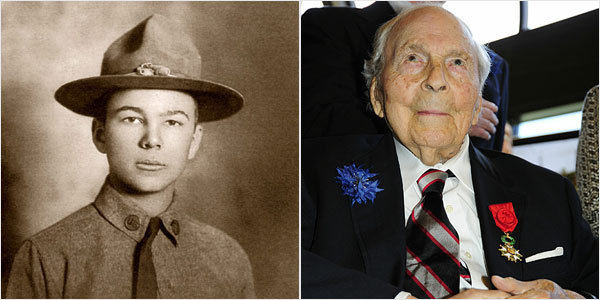
Frank Woodruff Buckles, S/N 15577

Buckles’ unit set sail from Hoboken New jersey in December 1917 aboard HMS Carpathia, a vessel made famous by the Titanic rescue, five years earlier.

Frank never saw combat but he did see a lot of Germans, with a Prisoner-of War escort company.  Returning home in January 1920 aboard USS Pocahontas, Buckles was paid $143.90, including a $60 bonus.

Buckles was a civilian in 1940, working for the White Star Lines and WR Grace shipping companies. His work took him to the Philippines, where he remained after the outbreak of WWII. He was helping to resupply U.S. troops when captured by Japanese forces in January 1942, imprisoned for thirty-nine months as a civilian prisoner in the Santo Tomas and Los Baños prison camps. 

He was rescued by the 11th Airborne Division on February 23, 1945. The day he was scheduled to be executed.
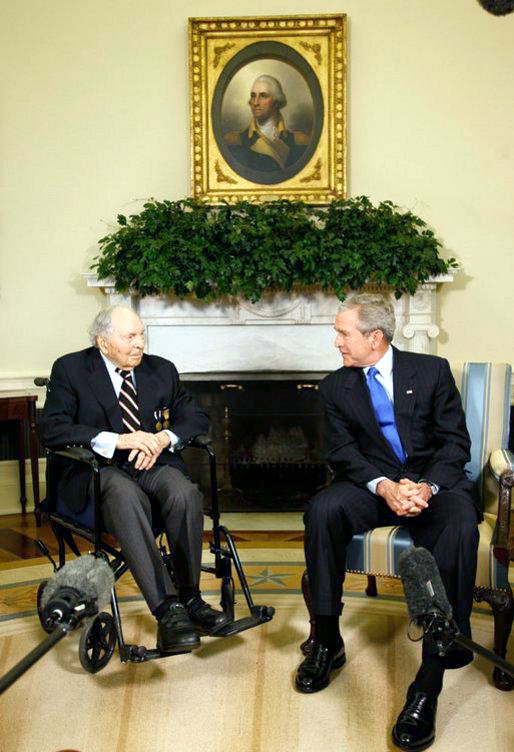
Buckles married Audrey Mayo of Pleasanton, California in 1946, and returned from whence he had come.  Back to the land, back to the Gap View Farm near Charles Town, West Virginia in January 1954, to farm the land his ancestors worked back in 1732.

Audrey Mayo Buckles lived to ninety-eight and passed away on June 7, 1999.  Frank continued to work the farm until 106, and still drove his tractor.  For the last four years of his life he lived with his daughter Susannah near Charles Town, West Virginia.

Once asked his secret to a long life, Buckles responded, “When you start to die, don’t”.

On December 3, 2009, Frank Buckles became the oldest person ever to testify before the United States Congress, where he campaigned for a memorial to honor the 4.7 million Americans who served in World War 1.

“We still do not have a national memorial in Washington, D.C. to honor the Americans who sacrificed with their lives during World War I. On this eve of Veterans Day, I call upon the American people and the world to help me in asking our elected officials to pass the law for a memorial to World War I in our nation’s capital. These are difficult times, and we are not asking for anything elaborate. What is fitting and right is a memorial that can take its place among those commemorating the other great conflicts of the past century. On this 92nd anniversary of the armistice, it is time to move forward with honor, gratitude, and resolve”.

The United States came late to the Great War, not fully trained, equipped or mobilized until well into the last year.  Even so, fully 204,000 Americans were wounded in those last few months.  116,516 never came home from a war in which, for all intents and purposes, the US fought for a bare five months.

Frank Woodruff Buckles passed away on February 27, 2011 at the age of 110, and went to his rest in Arlington National Cemetery.  The last of the Doughboys, the only remaining American veteran of WWI, the last living memory of the war to end all wars, was gone.

The United States House of Representatives and Senate proposed concurrent resolutions for Buckles to lie in state, in the Capitol rotunda. For reasons still unclear, the plan was blocked by Speaker John Boehner and Senate Majority Leader Harry Reid.  Neither Boehner nor Reid would elaborate, proposing instead a ceremony in the Amphitheater at Arlington National Cemetery.  The President of the United States personally attended the funeral.

Washington Post reporter Reporter Paul Duggan described the occasion:

“The hallowed ritual at grave No. 34-581 was not a farewell to one man alone. A reverent crowd of the powerful and the ordinary—President Obama and Vice President Biden, laborers and store clerks, heads bowed—came to salute Buckles’s deceased generation, the vanished millions of soldiers and sailors he came to symbolize in the end”.
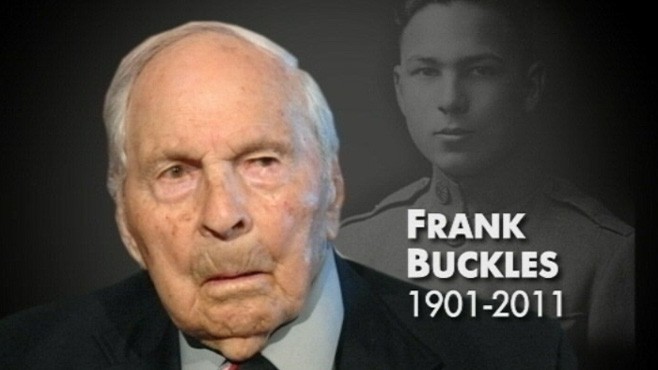
Frank Woodruff Buckles, the last living American veteran of WW1 was survived by the British Women’s Royal Air Force (WRAF) servicewoman Florence Beatrice (Patterson) Green who died on February 4, 2012, at the age of 110.

Afterward

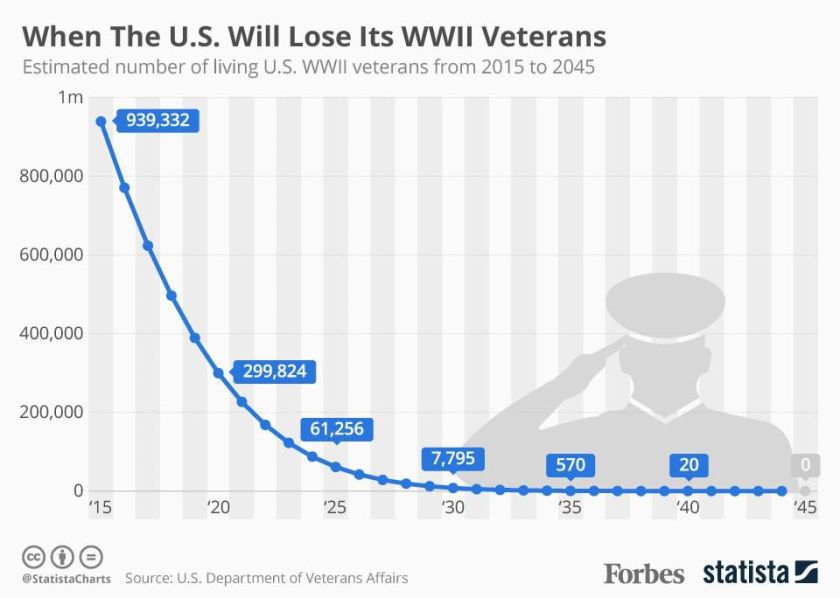
Sixteen million Americans joined with allies the world over to defeat the Axis Powers of World War 2.  They were the children of Frank Buckles’ and Florence Green’s generation, sent to complete what their parents had begun.  According to the Department of Veterans Affairs some 66,000 remained alive in 2024.

If actuarial projections are any indication, the Frank Buckles of his generation, the last living veteran of WW2, can be expected to pass from among us sometime around 2044.

That such an event should pass from living memory is a loss beyond measure.
November 11, 1918  If ye Break Faith

In an alternate history, the June 1914 assassination of the heir-apparent to the Habsburg Empire may have led to nothing more, than a regional squabble.  Wiser heads could have prevailed, the diplomatic crisis of July resulting in nothing more than a policing action in the Balkans.

As it was, mutual distrust and entangling alliances combined with slavish obedience to mobilization timetables, to draw the Great Powers of Europe into the vortex.  On August 3, the “War to End All Wars” exploded across the European continent.

Many of the soldiers who went off to war in those days, viewed the conflict as some kind of grand adventure. Many of them sang patriotic songs as the young men and boys of Russia, Germany, Austria and France stole last kisses from wives and sweethearts, and boarded their ships and trains.
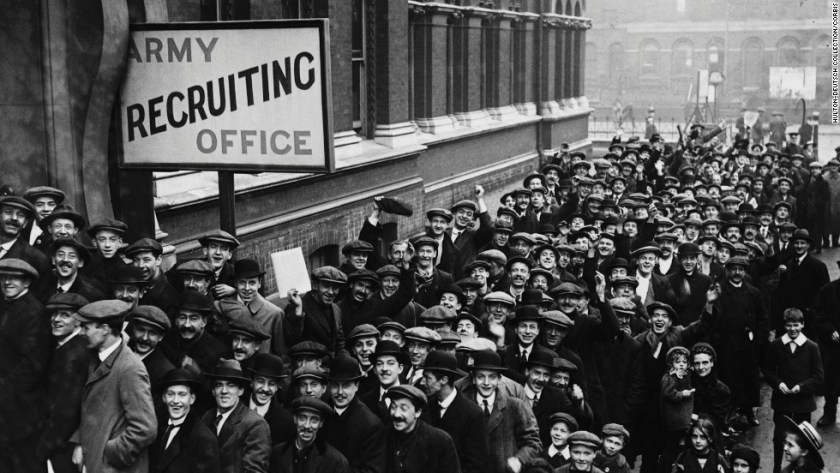
Believing overwhelming manpower to be the key to victory, British Secretary of State for War Lord Horatio Kitchener recruited friends and neighbors by the tens of thousands into “Pal’s Battalions”, to fight for King and country.

140604153439-19-wwi-main-timeline-0604-restricted-horizontal-large-gallery
The signs could have been written in any number of languages, in the early phase of the war

Over the next four years a generation would be chewed up and spit out, in pieces.

Many single day’s fighting of the great battles of 1916 produced more casualties than every European war of the preceding 100 years, civilian and military, combined.

6,503 Americans lost their lives during the savage, month-long battle for Iwo Jima, in 1945. The first day’s fighting during the 1916 Battle of the Somme killed three times that number on the British and Commonwealth side, alone.

battle_of_the_somme_in_pictures_1
Over 1.5 million shells were fired in the days leading to the battle of the Somme

Over 16 million were killed and another 20 million wounded while vast stretches of the European countryside were literally, torn to pieces. Tens of thousands remain missing, to this day.

Had you found yourself in the mud and the blood, the rats and the lice of the trenches during the New Year of 1917-’18, you could have heard a plaintive refrain drifting across the barbed wire and frozen wastes of no man’s land, sung to the tune of “Auld Lang Syne”.

We’re here, because we’re here,
because we’re here, because we’re here,
we’re here, because we’re here,
because we’re here, because we’re here.
cher-ami
Cher Ami

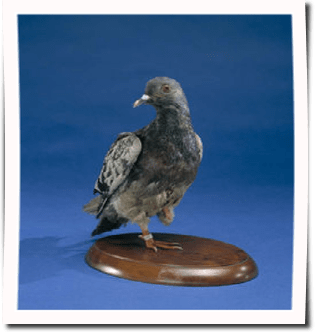
Those who fought the “Great War”, were not always human.  The carrier pigeon Cher Ami escaped a hail of bullets and returned twenty-five miles to her coop despite a sucking chest wound, the loss of an eye and a leg that hung on, by a single tendon.  The message she’d been given to carry, saved the lives of 190 men.

“Warrior” was the thoroughbred mount to General “Galloper” Jack Seely, arriving in August 1914 and serving four years “over there”. “The horse the Germans can’t kill” survived snipers, poison gas and shellfire to be twice buried alive in great explosions, only to return home to the Isle of Wight, and live to the ripe old age of 33.

18-03-23-thumb
First division Rags

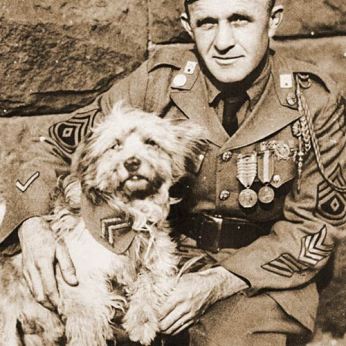
First Division Rags” ran through a torrent of shells, gassed and blinded in one eye, a shell fragment damaging his front paw, yet still, he got his message through.

Jackie the baboon lost a leg during heavy bombardment from German guns while frantically building a protective rock wall to shelter himself from what the German soldier Ernst Jünger later called, the “Storm of Steel”.

Tirpitz the German pig jumped clear of the sinking light cruiser SMS Dresden and would serve out the war not in a frying pan but as mascot to the HMS Glasgow.

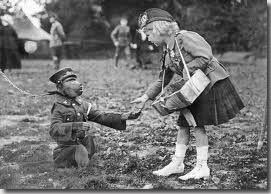
Sixteen million animals served on all sides and in all theaters of WW1:  from cats to canaries, to pigeons and mules, camels, donkeys and dogs.  As “dumb animals”, none were given the choice to “volunteer”.  And yet serve they did, some nine million animals making the supreme sacrifice.

WW1-animals
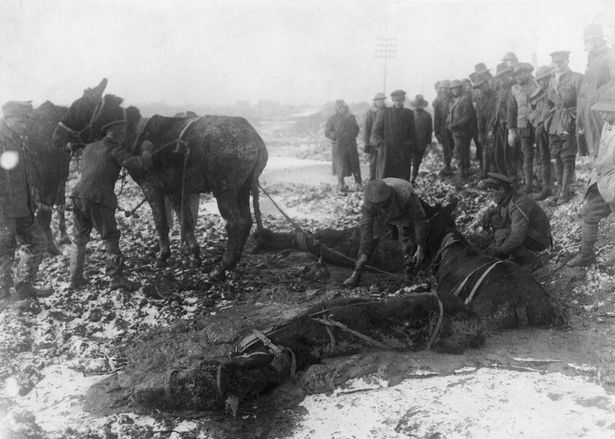
British Army mules in the mud of the western front, 1918

In the end, starvation and malnutrition stalked the land at home as well as the front with riots at home and mutiny, in the trenches. The Russian Empire of the Czars had collapsed into a Bolshevik hellhole, never to return.  Nearly every combatant saw the disintegration of its domestic economy, or teetering on the brink.
A strange bugle call came out of the night of November 7, 1918. French soldiers of the 171st Régiment d’Infanterie, stationed near Haudroy, advanced into the fog and the darkness, expecting that they were about to be attacked. Instead, they were shocked to see the apparitions of three sedans, their sides displaying the German Imperial Eagle.

Imperial Germany, its army disintegrating in the field and threatened with revolution at home had sent a peace delegation, headed by the 43-year-old politician Matthias Erzberger.

The delegation was escorted to the Compiegne Forest near Paris, to a conference room fashioned from a railroad dining car. There they were met by a delegation headed by Ferdinand Foch, Marshall of France.

Adolf Hitler would gleefully accept French surrender in the same rail car, some twenty-two years later.

original-french-postcard-showing-the-wagon-in-which-the-ww1-armistice-M1B0DJ

The German delegation was shocked at the words that came out of Foch’s mouth. ‘Ask these gentlemen what they want,’ he said to his interpreter. Stunned, Erzberger responded. The Germans believed they were there to discuss terms of an armistice. Foch dropped the hammer: “Tell these gentlemen that I have no proposals to make”.

Ferdinand Foch had seen his country destroyed by war. He had vowed “to pursue the Feldgrauen (Field Grays) with a sword at their backs”. He had no intention of letting up.

Marshall Foch now produced a list of thirty-four demands, each one a sledgehammer blow on the German delegation. Germany was to divest herself of all means of self-defense, from her high seas fleet to the last machine gun. She was to withdraw from all lands occupied since 1870. With the German population at home facing starvation, the allies were to confiscate 5,000 locomotives, 150,000 rail cars and 5,000 trucks.

1200px-Waffenstillstand_gr

With 2,250 dying every day on the Western Front, Foch informed Erzberger he had 72 hours in which to respond. “For God’s sake, Monsieur le Marechal”, responded the German, “do not wait for those 72 hours. Stop the hostilities this very day”.  Even so, the plea fell on deaf ears. Fighting would continue until the last minute, of the last day.

The German King, Kaiser Wilhelm, abdicated on the 10th as riots broke out in the streets of Germany. The final surrender was signed at 5:10am on November 11 and back-timed to 5:00am Paris time, scheduled to go into effect later that morning. The 11th hour, of the 11th day, of the 11th month.

The order went out to that effect. The war would be over in hours, but there were no other instructions.

Some field commanders ordered their men to stand down. Why fight and die over ground they could walk over in just a few hours?

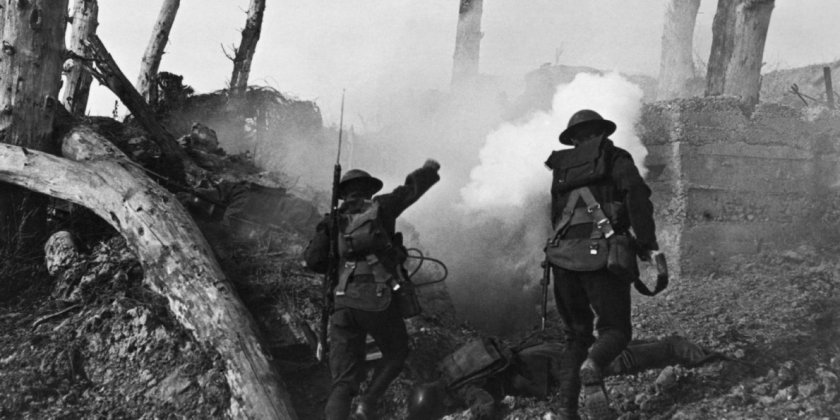
the-last-soldier-killed-in-wwi-died-one-minute-before-the-war-ended
The last six hours

Many continued the attack, believing that Germany had to be well and truly beaten. Others saw their last chance at glory or promotion. An artillery captain named Harry S Truman, kept his battery firing until only minutes before 11:00.

English teacher turned Major General Charles Summerall had a fondness for the turn of phrase. Ordering his subordinates across the Meuse River in those final hours, Summerall said “We are swinging the door by its hinges. It has got to move…Get into action and get across. I don’t expect to see any of you again…

No fewer than 320 Americans were killed in those final six hours, another 3,240 seriously wounded.

7fe16b6c9f770b107480c9ca6c28e87c

Still smarting from the disastrous defeat at Mons back in 1914, British High Command was determined to take the place back, on the final day of the war. The British Empire lost more than 2,400 in those last 6 hours.

The French 80th Régiment d’Infanterie received two orders that morning – to launch an attack at 9:00, and cease-fire at 11:00. French losses for the final day amounted to 1,170. The already retreating Germans suffered 4,120.

One-hundred-five years ago today, all sides suffered over 11,000 dead, wounded, and missing in those final six hours. Some have estimated that more men died per hour after the signing of the armistice, than during the D-Day invasion, 26 years later.

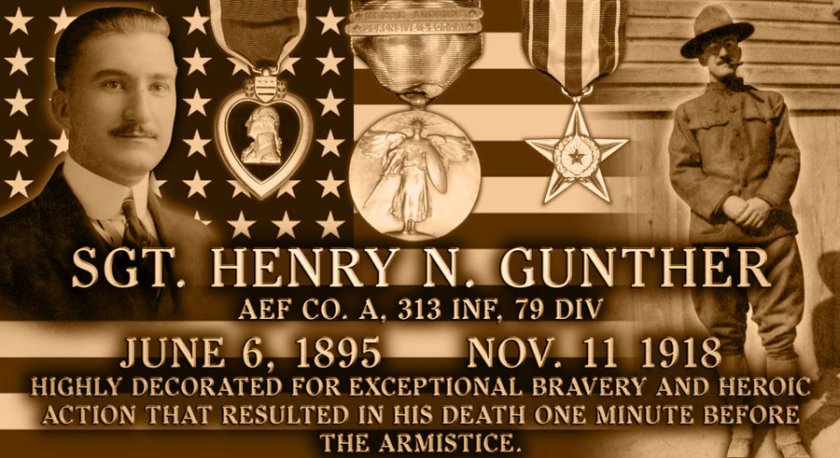
Over in the Meuse-Argonne sector, Henry Gunther was “visibly angry”.   Perhaps this American grandson of German immigrants felt he had something to prove.  Anti-German bias had not reached levels of the next war, when President Roosevelt interned Americans of Japanese descent.  Yet, such bias was very real.  Gunther’s fiancé had already broken up with him. He’d recently been busted in rank, after writing home complaining about conditions at the front.

Bayonet fixed, Gunther charged the enemy machine gun position, as German soldiers frantically waved and yelled for him, to go back. He got off a “shot or two”, before the five round burst tore into his head. Henry Nicholas John Gunther of Baltimore Maryland was the last man to die in combat, in the Great War.  It was 10:59am.  The war would be over, in sixty seconds.

Sargeant-Henry-Gunther

After eight months on the front lines Corporal Joe Rodier of Worcester Massachusetts, was jubilant.   “Another day of days“.   Rodier wrote in his diary.  “Armistice signed with Germany to take effect at 11 a.m. this date. Great manifestations. Town lighted up at night. Everybody drunk, even to the dog. Moonlight, cool night & not a shot heard“.

Matthias Erzberger was assassinated in 1921, for his role in the surrender. The “Stab in the Back” mythology destined to become Nazi propaganda, had already begun.

AEF Commander General John “Black Jack” Pershing believed the armistice to be a grave error. He believed that Germany had been defeated but not beaten, and that failure to smash the German homeland meant that the war would have to be fought, all over again. Ferdinand Foch agreed. On reading the Versailles treaty in 1919, Foch remarked “This isn’t peace! This is a truce that will last for 20 years”.

The man got it wrong, by 36 days.

Afterward

800px-Lieut.-Col._John_McCrae,_M.D.
Dr. John McCrae

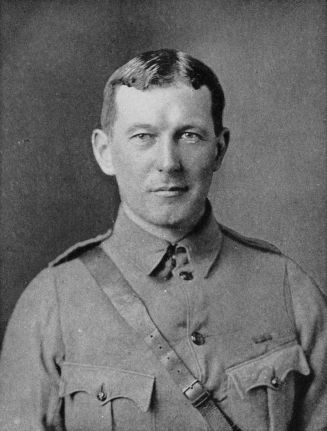
John McCrae was a physician and amateur poet from Guelph, Ontario. Following the outbreak of the “Great War” in 1914, he enlisted in the Canadian Expeditionary Force at the age of 41.

Based on his age and training, Dr. McCrae could have joined the medical corps, but volunteered instead to join a fighting unit as gunner and medical officer.

McCrae had previously served in the Boer War.  This was to be his second tour of duty in the Canadian military.

Dr. McCrae fought in one of the most horrendous battles of the Great War, the second battle of Ypres, in the Flanders region of Belgium. Imperial Germany launched the first mass chemical attack in history at Ypres, attacking the Canadian position with chlorine gas on April 22, 1915. The Canadian line was broken but quickly reformed in an apocalyptic bloodletting lasting more than two full weeks.

Dr. McCrae later described the ordeal, in a letter to his mother:

“For seventeen days and seventeen nights”, he wrote, “none of us have had our clothes off, nor our boots even, except occasionally. In all that time while I was awake, gunfire and rifle fire never ceased for sixty seconds … and behind it all was the constant background of the sights of the dead, the wounded, the maimed, and a terrible anxiety lest the line should give way”.

ypres (1)
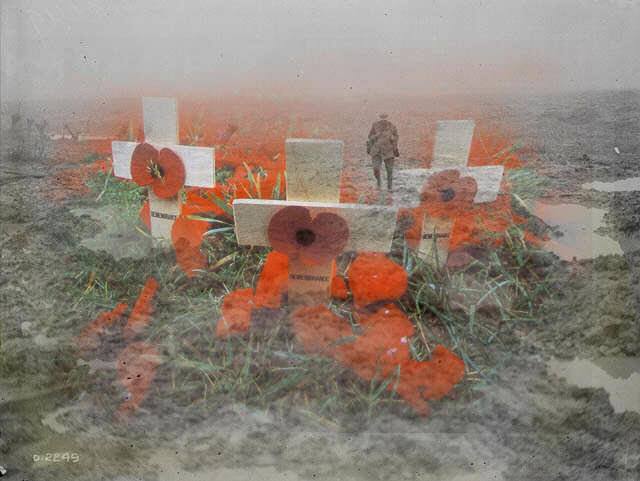
Stop and imagine for a moment please, what this looked like, what this horror smelled like, in color.

Dr. McCrae presided over the funeral of friend on May 3, fellow soldier Alexis Helmer, who had died in the battle. McCrae performed the burial service himself when he noted how quickly the red poppies grew on the graves of the fallen. Sitting in the back of a medical field ambulance just north of Ypres, he composed this poem, the following day.  He called the verse, “We Shall Not Sleep”. 

Today we remember Dr. McCrae’s work as:

In Flanders Fields

In Flanders fields the poppies blow
Between the crosses, row on row,
That mark our place; and in the sky
The larks, still bravely singing, fly
Scarce heard amid the guns below.

We are the Dead. Short days ago
We lived, felt dawn, saw sunset glow,
Loved and were loved, and now we lie
In Flanders fields.

Take up our quarrel with the foe:
To you from failing hands we throw
The torch; be yours to hold it high.
If ye break faith with us who die
We shall not sleep, though poppies grow
In Flanders fields.

Moina Michael

Moina Belle Michael was born August 15, 1869 near Good Hope Georgia, about an hour’s drive east of Atlanta. She began teaching at age fifteen. Over a long career Michael worked in nearly every part of the Peach State’s education system.

In 1918 she was working at the YMCA Overseas War Secretaries headquarters, in New York.  Browsing through the November Ladies Home Journal Moina came across Dr. McCrae’s poem. It was Saturday morning, November 9, 1918. 

Two days before the armistice.

John McCrae lay in his own grave by this time, having succumbed to pneumonia while serving in the No. 3 Canadian General Hospital, in Boulogne.  He was buried with full military honors at the Wimereux cemetery where his gravestone lies flat, due to the sandy, unstable soil.

49a1160c9141869ce025a820a599ef56--flanders-field-lest-we-forget

Michael had seen McCrae’s poem before but it got to her this time, especially that last part:

  “If ye break faith with us who die
We shall not sleep, though poppies grow
      In Flanders fields”

Michael was so moved she made a personal pledge to “keep the faith”, vowing always to wear a red poppy, in honor of the dead. She scribbled a response, an act of remembrance on the back of a used envelope.  She called this:

We Shall Keep the Faith

Oh! you who sleep in Flanders Fields,
Sleep sweet – to rise anew!
We caught the torch you threw
And holding high, we keep the Faith
With All who died.

We cherish, too, the poppy red
That grows on fields where valor led;
It seems to signal to the skies
That blood of heroes never dies,
But lends a luster to the red
Of the flower that blooms above the dead
In Flanders Fields.

And now the Torch and Poppy Red
We wear in honor of our dead.
Fear not that ye have died for naught;
We’ll teach the lesson that ye wrought
In Flanders Fields.

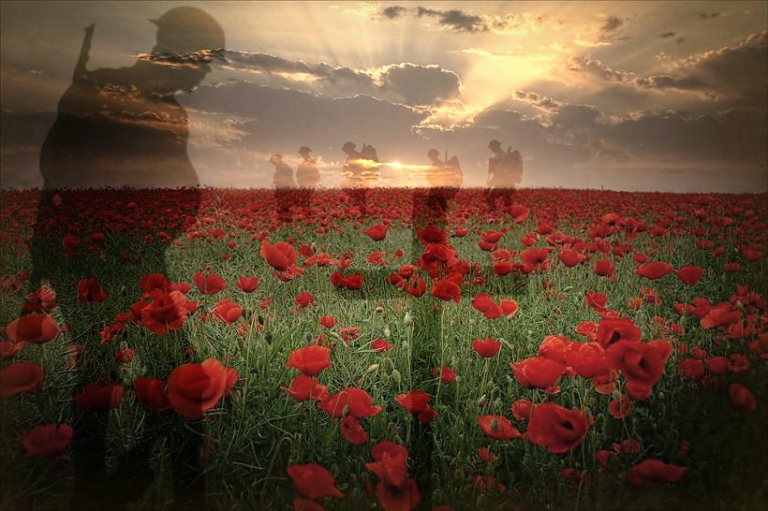
The vivid red flower blooming on the battlefields of Belgium, France and Gallipoli came to symbolize the staggering loss of life brought about by the Great War, the “War to End all Wars”. Before they had numbers, this was a war where the death toll from many single day’s fighting exceeded that of every war of the preceding century, military and civilian, combined.

ubbkvmk (1)

A century and more has come and gone since the events related in this story. The red poppy is now an internationally recognized symbol of remembrance, lest we neglect to remember the lives lost in All wars. I keep one Always, pinned to the visor in my car. A reminder of where we come from, the prices paid to bring us to this place and to always keep the faith, with those who have come before.

July 28, 1914  The Lamps are going Out

Few could imagine a war in which many single days’ fighting produced more casualties than every war of the last century, combined. 

In 1869, Germany had yet to come into its own as a sovereign nation. Forty-five years later, she was one of the Great Powers of all Europe.

Great Powers, 1914

Alarmed by the aggressive growth of her historic adversary, the French government increased compulsory military service from two years to three, to offset the advantage conferred by a German population of some 70 million, contrasted with a French population of 40 million.

Joseph Caillaux was a left wing politician, once Prime Minister of France and, by 1913, a cabinet minister under the more conservative administration of President Raymond Poincare.

Never too discreet with his personal conduct, Caillaux paraded through public life with a succession of women, who were not Mrs Caillaux. One of them was Henriette Raynouard. 

In 1911, Madame Raynouard became the second Mrs Caillaux.

A relative pacifist, many on the French right considered Caillaux too “soft” on Germany. One of them was Gaston Calmette, editor of the leading right-wing newspaper Le Figaro, who regularly excoriated the politician.

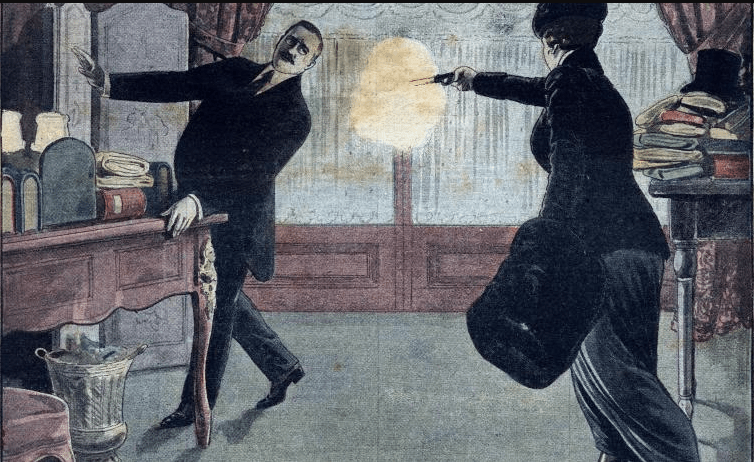
On March 16, 1914, Madame Caillaux took a taxi to the offices of Le Figaro. She waited for a full hour to see the newspaper’s editor before walking into his office and shooting him at his desk. Four out of six rounds hit the mark.  Gaston Calmette was dead before the night was over.

Cailloux Affair

It was the crime of the century.  This one had everything: left vs. right, the fall of the powerful and all the salacious details anyone could ask for. It was the OJ trial, version 1.0, and the French public was transfixed.

The British public was similarly distracted by the latest in a series of Irish Home Rule crises.

The Austro-Hungarian Empire, a sprawling amalgamation of 17 nations, 20 Parliamentary groups and 27 political parties, desperately needed to bring the Balkan peninsula into line, following the June 28 assassination of the heir apparent to the dual monarchy.

That individual Serbians were complicit in the assassination is beyond doubt, but so many government records of the era have since disappeared it’s impossible to determine official Serbian complicity.

Be that as it may, Serbia had to be brought to heel.

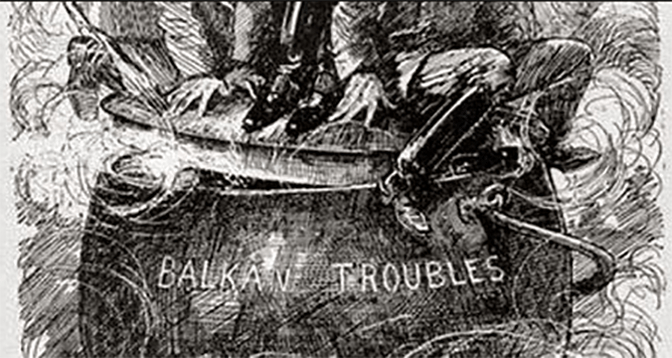
Balkan Troubles

Having given Austria his personal assurance of support in the event of war with Serbia, even if Russia entered in support of her Slavic ally, Kaiser Wilhelm of Germany left on a summer cruise in the Norwegian fjords.

The Kaiser’s being out of touch for those critical days in July has been called the most expensive maritime disaster in naval history.

The Austro-Hungarian Empire produced a deliberately unacceptable ultimatum delivered to Serbia on the 23rd. It was little more than a bald pretext for war.  Czar Nicholas wired Vienna as late as July 27, proposing an international conference concerning Serbia. To no avail. Austria responded that same day.  It was too late for such a proposal.

The Austro-Hungarian Empire declared war on Serbia on July 28. Madame Caillaux was acquitted on the same day, on the grounds that hers was a “crime of passion”.

Russia mobilized in support of Serbia.  Imperial Germany feared little more than a two-front war with the “Russian Steamroller” to the east and the French Republic to the west. 

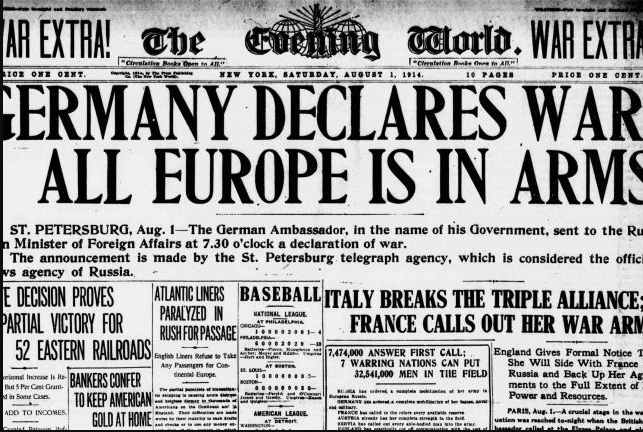
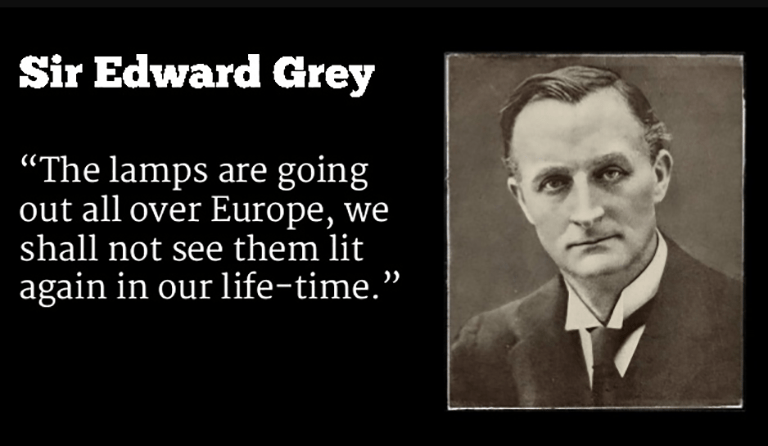
On August 3, British Foreign Secretary Sir Edward Grey announced before Parliament, his government’s intention to defend Belgian neutrality, in accordance with the Treaty of London, signed decades earlier.

German diplomats dismissed the 1839 commitment as a “scrap of paper”.

Germany invaded neutral Belgium on August 4 in pursuit of the one-two punch strategy by which she sought first to defeat France before turning to face the larger and presumably slower Russian adversary.

True to her commitments, the United Kingdom declared war on Germany the same day.

russ-mob

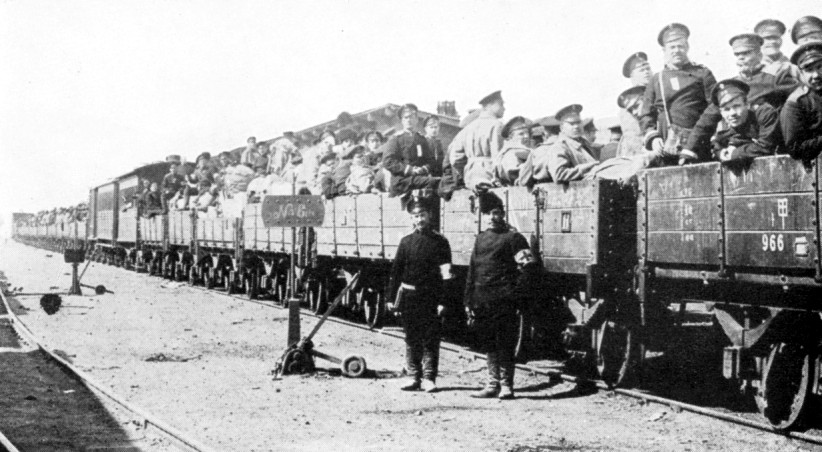
Meticulously prepared timetables took over where the diplomatic bungling of the “July crisis” left off. France alone had some 3,781,000 military men under orders before the middle of August, arriving at the western front on trains arriving as often as every eight minutes.

Declaration

This time there would be no “Phoney War”, no “Sitzkreig”, as wags were wont to call the early days of WWII.   

Few could imagine a cataclysm to rock a century and beyond, a war in which many single day’s fighting produced casualties equal to that of every war of the preceding 100 years, combined. 

Sir Edward Grey

Fewer still understood on this date, one-hundred and nine years ago, today.  The four horsemen of the Apocalypse, had come.

If you enjoyed this “Today in History”, please feel free to re-blog, “like” & share on social media so others may find and enjoy it as well. Please click the “follow” button to receive email updates on new articles.  Thank you for your interest in the history we all share.

June 1, 1917 Retreat, Hell. We Just Got Here.

The United States came late to World War 1, the first 14,000 Americans arriving ‘over there’ in June 1917.

After three years of hard fighting, the Great War seemed like two great prize fighters, evenly matched, exhausted, unable to deal the killing blow and yet, scarcely able to withstand the blows of his opponent.

WW1

Great swaths of the European countryside were literally torn to pieces.  Every economy on the continent tottered on the edge of destruction, or close to it.  The Austro-Hungarian and Ottoman Empire were on the verge of extinction.  The Russian Empire was dying.

No fewer than 1.7 million Russian troops lay dead at the dawn of 1917, while food shortages plagued the population at home.  By that February, the last of the 300-year Romanov dynasty was forced to abdicate. The largest belligerent of the Great War descended into civil war.  The following month, Imperial Russia was all but out of the war.

Before the had numbers, this was the War to End Wars, a conflict destined to destroy the lives of more Wuropeans, civilian and military, than every war of the preceding 100 years…combined.

The United States came late to World War 1, the first 14,000 Americans arriving ‘over there’ in June 1917.  General John ‘Black Jack’ Pershing wanted his troops to be well trained and equipped before entering combat, and refused to disperse them piecemeal.  Desperately wanting the Americans to fill in gaps in his own lines, British Field Marshal Douglas Haig called Pershing ‘Obstinate and Stupid.  Ridiculous’.  French Marshall Ferdinand Foch was apoplectic, but Pershing refused to use his troops as cannon fodder.

The first small-scale American action occurred that October, near the trenches of Nancy.  Meanwhile, a mighty force was building at the French harbors of Bordeaux, La Pallice, Saint Nazaire and Brest.  Passenger liners, seized German vessels and borrowed Allied ships poured out of New York, New Jersey, and Newport News, as American engineers built 82 new ship berths, nearly 1,000 miles of railroad track and 100,000 miles of telephone and telegraph lines across the French countryside.

By May 1918, those initial 14,000 had grown to over a million, ‘over there’.

It was imperative at this stage for the German war effort, to throw a knockout punch before the Americans entered in force.  With close to 50 divisions freed up from duty in the east following the Russian surrender, Spring of 1918 set the stage for the ‘King’s Battle’.  The Kaiserschlacht.

belleau-wood

Operation Michael, the first of four German offensives exploded against the British 3rd and 5th Armies at 4:40am on March 21.  In the space of five hours, 1,100,000 shells crashed into an area of only 150 miles square.  This “Storm of Steel” was followed by storm troopers, fast, elite German infantry armed with flame throwers and small arms, following a moving curtain of fire known as the ‘Feuerwalze’. The Swath of fire. Crown Prince Rupprecht was succinct. “We chop a hole. The rest follows.”

At first, Michael was so successful that German troops outran their own supply lines.  The German advance began to falter as exhausted forces faced waves of fresh British and Australian troops.  The western front had returned to stalemate by April 5 at the cost of 255,000 British, British Empire and French troops.  239,000 were lost to the German side.

Operation Georgette‘, the Battle of Lys, opened after preliminary bombardment on April 9.  The main attack all but destroyed the Portuguese Expeditionary Corps, the British 2nd Division and elements of the British 40th Division.  Field Marshal Sir Douglas Haig described the situation with his “Order of the Day” of April 11: “With our backs to the wall and believing in the justice of our cause, each one of us must fight on to the end.”

Technically a German victory insofar as they held the ground when the shooting stopped, Georgette too was a pyrrhic victory.  Killed, wounded and missing stood at roughly 220,000, split evenly between both sides.

M-Belleau-12-HT-Jun08-1

Operation Blücher–Yorck, known to history as the Third Battle of the Aisne, began with a German attack on May 27, toward Rheims.  The sector was nominally held by six British divisions, badly depleted and basically ‘resting’, following the mauling suffered in earlier fighting.  Making matters worse, French General Denis Auguste Duchêne was openly contemptuous of Marshall Philippe Petain’s order to maintain defense in depth, insubordinately massing his troops in forward trenches.

Marines-battle-of-belleau-wood

The results of the Feuerwalze were devastating, if not predictable.  Allied lines were smashed as German armies poured through, taking 19 kilometers in three days and reaching the Marne River, 50 miles from Paris.  On May 31, a dogged defense by the US 3rd Infantry Division turned the German advance at Château-Thierry, and toward Belleau Wood.

This and the following week’s fighting earned for the 3rd I.D. the nickname “The Rock of the Marne”.  To this day, the unit out of Ft. Stewart, Georgia, is known as the “Marne Division”.

On June 1, German Forces penetrated French lines to the left the US Reserve.  The US Army 23rd Infantry Regiment, the 1st Battalion, 5th Marines, and an element of the Marine Corps 6th Machine Gun Battalion conducted a forced march overnight, covering over 6 miles to plug the gap and oppose the German line.Scott_Belleau_Wood

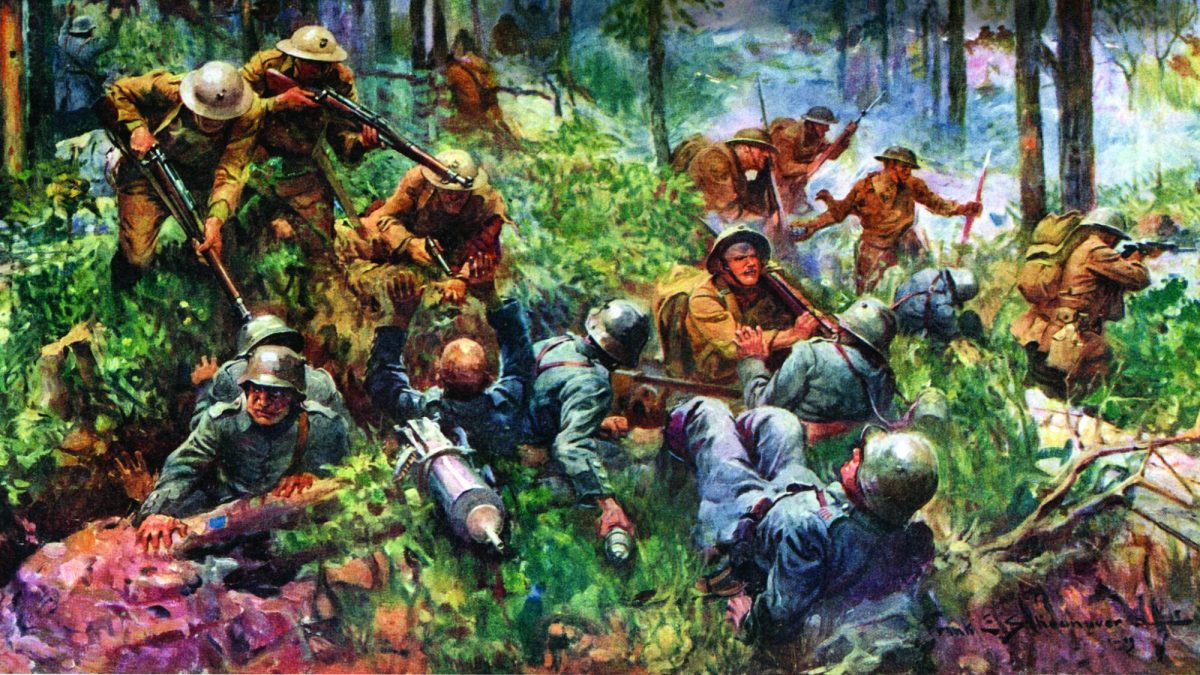
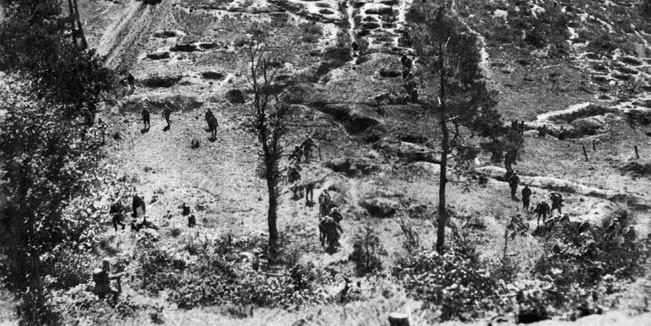
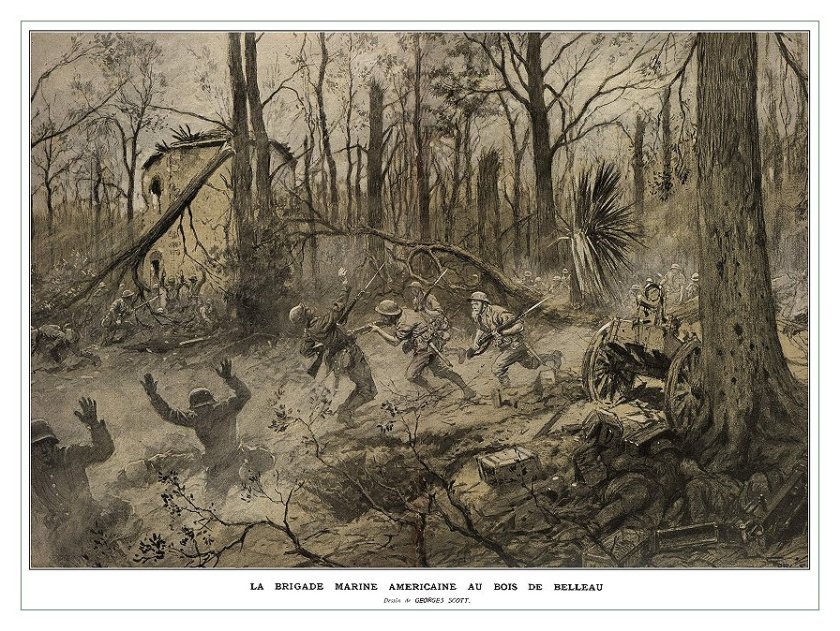
Arriving to find French forces retreating, Marines were urged to turn back.  2nd Battalion, 5th Marines Captain Lloyd Williams’ response would go down in Marine Corps History.  “Retreat? Hell, we just got here”.  Belleau Wood was one of the bloodiest battles US forces would fight in WW1.  Six times over the following days, 5th & 6th Battalion Marines attacked the better part of five German divisions in Belleau Wood.  The once-beautiful hunting preserve was reduced to a wasteland of blood and shattered timber.

Teufel Hunden

An overwhelmingly superior German force threw everything it had at these two brigades of Marines, a few hundred soldiers and a handful of Navy corpsmen. Mustard gas rained down amid interlocking and mutually supporting fields of machine gun fire.  Fighting became hand to hand with rifle, bayonet and even fists. And still they came.

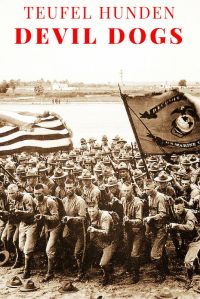
At Belleau Wood, Marines first heard the name “Höllenhunde” (“hellhound”), and an appellation which goes down in Marine Corps lore, to this day.  “Teufelshunde”. “Devil Dogs.”  In one attack on June 11, only 1 of the 10 Marine officers and 16 out of 250 enlisted men survived, or came out unscathed.

On June 26, Major Maurice Shearer was able to report, “Woods now U.S. Marine Corps entirely,”  Belleau Wood was the first major engagement for American forces in WW1.  They came out of it with nothing left to prove.

On June 30, the French 6th Army Commanding General Jean Degoutte officially renamed Belleau Wood as “Bois de la Brigade de Marine” – Wood of the Marine Brigade.

A German private, one of only 30 men left out of 120, may have made the understatement of the war when he wrote “We have Americans opposite us who are terribly reckless fellows.”

February 24, 1917 The Zimmermann Note

What the German foreign secretary hoped Americans would see as mere contingency, US public opinion saw as an unforgivable affront to American neutrality.

In an alternate history, the June 1914 assassination of the heir-apparent to the Habsburg Empire may have led to nothing more than a regional squabble. A policing action in the Balkans.

July 1914 was a time of diplomatic bungling and escalating states of military readiness remembered today, as the July crisis. As it was, mutual distrust and entangling alliances drew the Great Powers of Europe into the vortex. On August 3, the “War to End Wars” exploded across the European continent.

The united States came late to the Great War remaining neutral, until April 1917. On May 10, 1915, President Woodrow Wilson gave what came to be known as his “Too Proud to Fight Speech”:

 “The example of America must be the example not merely of peace because it will not fight, but of peace because peace is the healing and elevating influence of the world and strife is not. There is such a thing as a man being so right it does not need to convince others by force that it is right”.

Woodrow Wilson
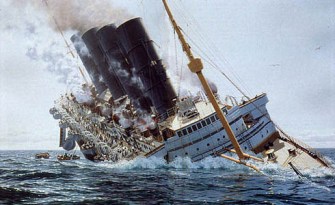
Lusitania sinking

While he failed to mention it directly, HMS Lusitania was torpedoed only three days before with the loss of 1,198 lives, 128 of them, were Americans. 94 of the dead were children.

No one doubted that the attack on the civilian liner was foremost on the President’s mind.  In February, Imperial Germany had declared a naval blockade against Great Britain, warning that “On and after February 18th every enemy merchant vessel found in this region will be destroyed, without its always being possible to warn the crews or passengers of the dangers threatening“.  “Neutral ships” the announcement continued, “will also incur danger in the war region“.

The reaction to the Lusitania sinking was immediate and vehement, portraying the attack as the act of barbarians and huns and demanding a German return to “prize rules”, requiring submarines to surface and search merchantmen while placing crews and passengers in “a place of safety”.

Lusitania warning

Imperial Germany protested that Lusitania was fair game, as she was illegally transporting munitions intended to kill German boys on European battlefields. Furthermore the embassy pointed out, ads had been taken out in the New York Times and other newspapers, specifically warning that the liner was subject to attack.

Nevertheless, the German policy of unrestricted submarine warfare was suspended for a time, for fear of bringing the US into the war against Germany.

President Wilson was elected back in 1912, talking about the sort of agrarian utopia favored by Thomas Jefferson.  In 1916, the election was about war and peace.  Wilson won re-election on the slogan “He kept us out of war”. It had not been easy.  In Europe, WWI was in its second year while, to the US’ south, Mexico was going through a full-blown revolution.  Public opinion had shifted in favor of England and France by this time.  The German resumption of unrestricted submarine warfare therefore, threatened to tip the balance.

With Great Britain holding naval superiority on the surface, Germany had to do something to starve the British war effort.  In early 1917, chief of the Admiralty Staff Admiral Henning von Holtzendorff argued successfully for the resumption of unrestricted submarine warfare. The change in policy took effect on February 1.

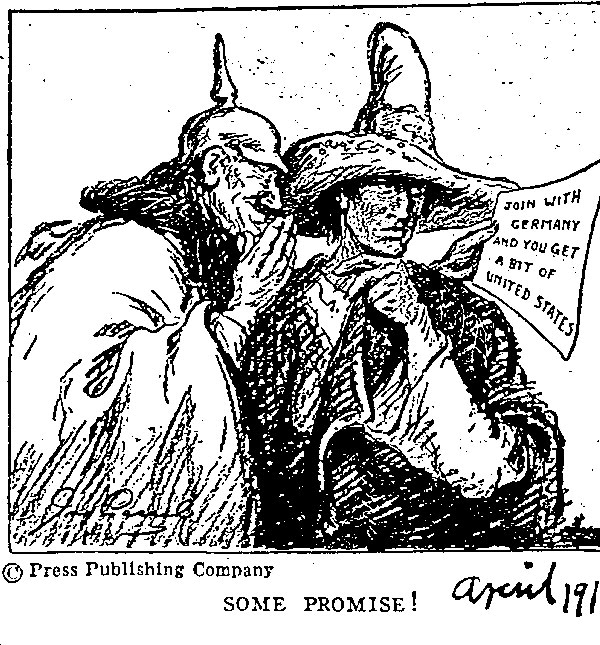
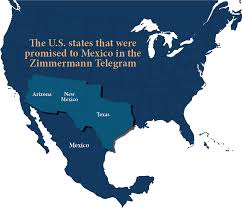
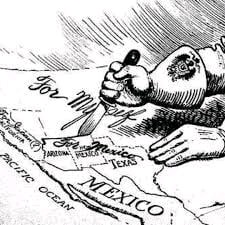
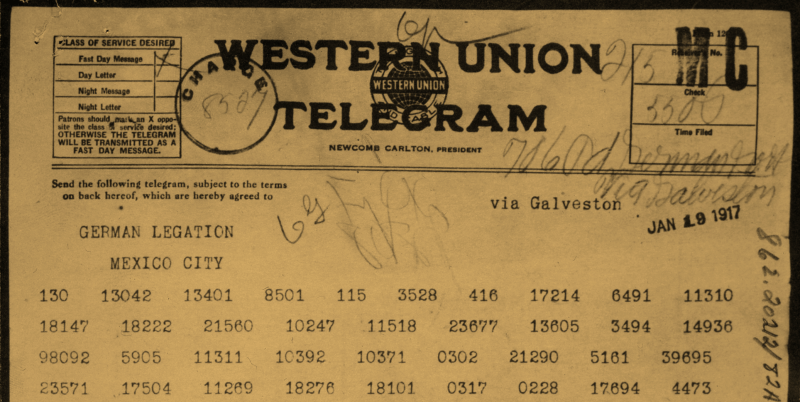
Anticipating the results of such a move, German Foreign Secretary Arthur Zimmermann dispatched a telegram to German ambassador to Mexico Heinrich von Eckardt on January 19, authorizing the ambassador to propose a military alliance with Mexico, in the event of American entry into the war.  

“We intend to begin on the first of February unrestricted submarine warfare. We shall endeavor in spite of this to keep the United States of America neutral. In the event of this not succeeding, we make Mexico a proposal of alliance on the following basis: make war together, make peace together, generous financial support and an understanding on our part that Mexico is to reconquer the lost territory in Texas, New Mexico, and Arizona”.

Arthur Zimmermann

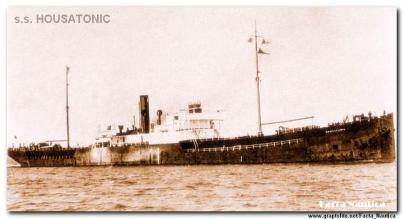
The American cargo vessel SS Housatonic was stopped off the southwest coast of England that February, and boarded by German submarine U-53.  Captain Thomas Ensor was interviewed by Kapitänleutnant Hans Rose, who explained he was sorry, but Housatonic was “carrying food supplies to the enemy of my country”.  She would have to be destroyed. 

housatonic-4-facta-nautica-1000x544

The American Captain and crew were allowed to launch lifeboats and abandon ship, while German sailors raided the American’s soap supplies.  Apparently, WWI-vintage German subs were short on soap.

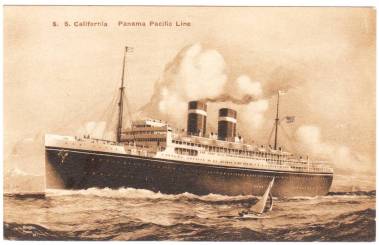
SS_California

Housatonic was sunk with a single torpedo, the U-Boat towing the now-stranded Americans toward the English coast.  Sighting the trawler Salvator, Rose fired his deck guns to be sure they’d been spotted, and then slipped away.  It was February 3, 1917.

President Wilson retaliated, breaking off diplomatic relations with Germany the following day. Three days later, a German U-boat fired two torpedoes at the SS California, off the Irish coast. One missed, but the second tore into the port side of the 470-foot, 9,000-ton steamer. California sank in nine minutes, killing 43 of her 205 passengers and crew.

images (22)

In Mexico, a military commission convened by President Venustiano Carranza quickly concluded that the German proposal was unviable, but the damage was done.  British code breakers intercepted the Zimmermann telegram and divulged its contents to the American government, on February 24.

On March 1, the contents of Zimmermann’s note were published in the American press.  Even then, there was considerable antipathy toward the British side, particularly among Americans of German and Irish ethnicity.  “Who says this thing is genuine, anyway”, they might have said.  “Maybe it’s a British forgery”.

The media itself cast a skeptical eye until Zimmermann himself put an end to such speculation, telling an American journalist two days later, “I cannot deny it. It is true.”

What the German foreign secretary hoped Americans would see as mere contingency, US public opinion saw as an unforgivable affront to American neutrality.

Given the confluence of events the Ambassador’s note, was the last straw.  Wilson’s War Cabinet voted unanimously for a declaration of war on March 20.  The President delivered his war address before a joint session of Congress, two weeks later.  The United States Congress declared war on Imperial Germany, on April 6.

Afterward

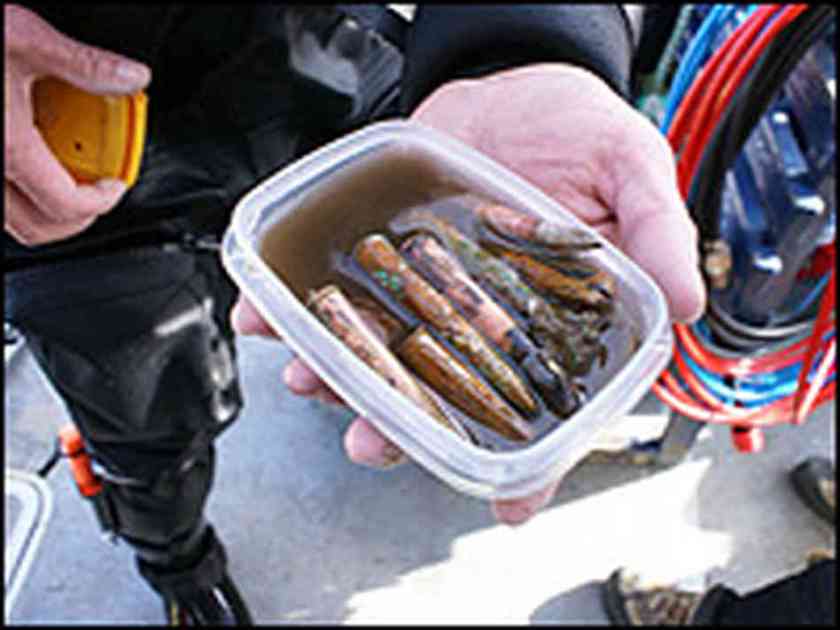
At the time, Germany claimed the Lusitania carried contraband munitions. The story seemed to be supported by survivors’ reports of secondary explosions, within the stricken liner’s hall. In 2008, the UK Daily Mail reported that dive teams had reached the wreck, lying at a depth of 300 feet. Divers reported finding tons of US manufactured Remington .303 ammunition, about 4 million rounds, stored in unrefrigerated cargo holds in cases marked “cheese,” “butter” and “oysters”.

Lusitania, ammunition

December 2, 1943 The Surprising Origins of Chemotherapy

In the 12th century, Bernard of Chartres described a process of finding truth, in building on the earlier discoveries of others. The concept is encapsulated in the words of Isaac Newton, in 1675: “If I have seen further it is by standing on the shoulders of Giants”.

In ancient Greek mythology, Hercules poisoned arrows with the venom of the Hydra. Both sides in the battle for Troy used poisoned arrows, according to the Iliad and the Odyssey of Homer.   Alexander the great encountered poison arrows and fire weapons in the Indus valley of India, in the fourth century, BC.  Chinese chronicles describe an arsenic laden “soul-hunting fog” produced by the burning of toxic vegetation, used to disperse a peasant revolt in AD178.

“Soul-hunting fog”.

Yikes

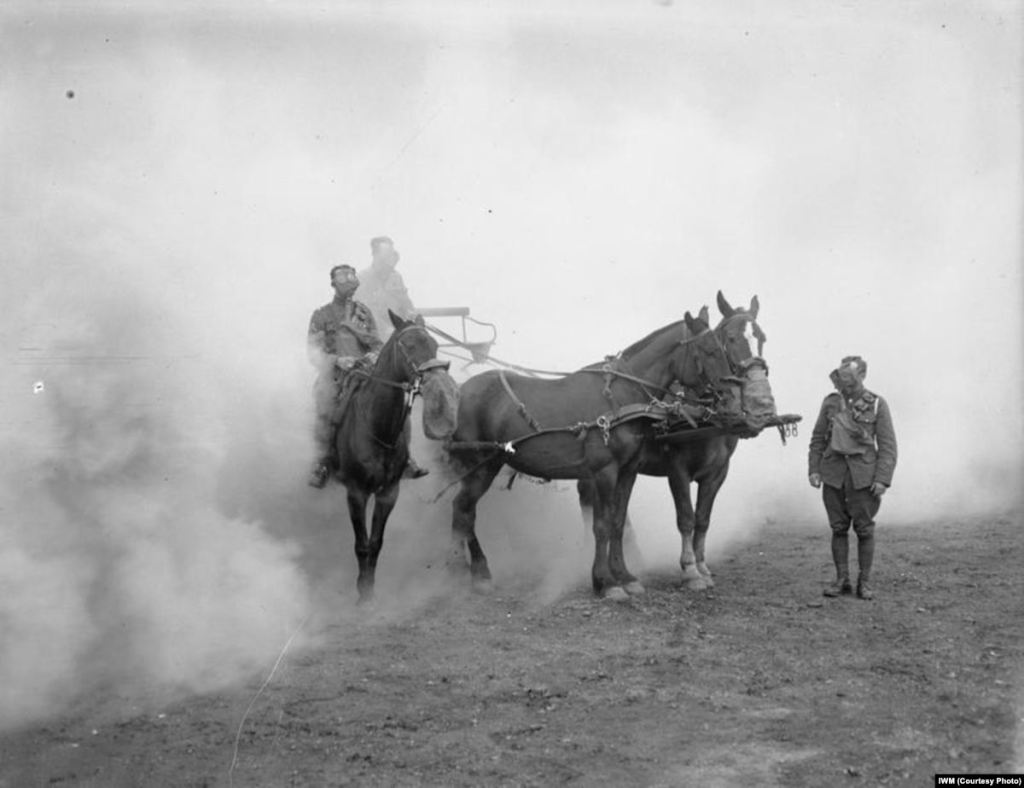
The French were the first to use poison weapons in the modern era in August 1914, when tear gas grenades containing xylil bromide were used against German forces in the first month, of the Great War.

Imperial Germany was first to give serious study to chemical weapons of war, early experiments with irritants taking place at the battle of Neuve-Chapelle in October 1914, and with tear gas at Bolimów on January 31, 1915 and again at Nieuport, that March.

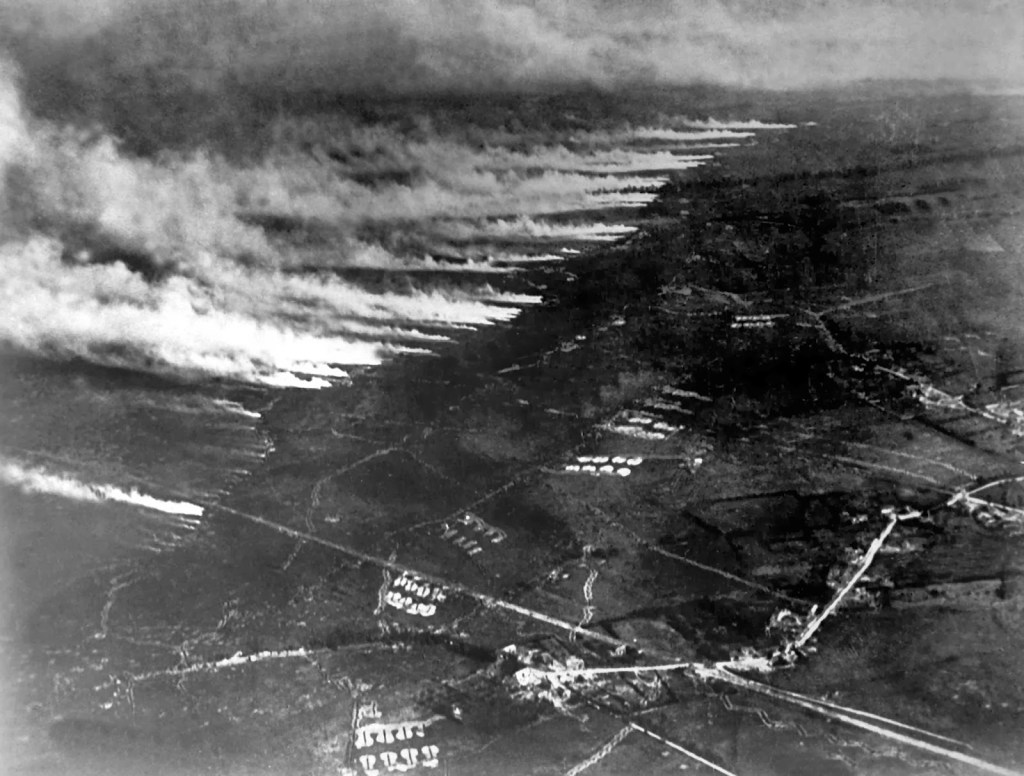
The first widespread use of poison gas, in this case chlorine, came on April 22, 1915, at the second battle of Ypres.

The story of gas warfare is inextricably linked with that of World War 1.  124,000 tons of the stuff was produced by all sides by the end of the war, accounting for 1,240,853 casualties, including the agonizing death of 91,198.

WW1 gas attack in Flanders

Had the war continued into 1919, technological advances promised new and fresh hell, unimaginable to the modern reader.

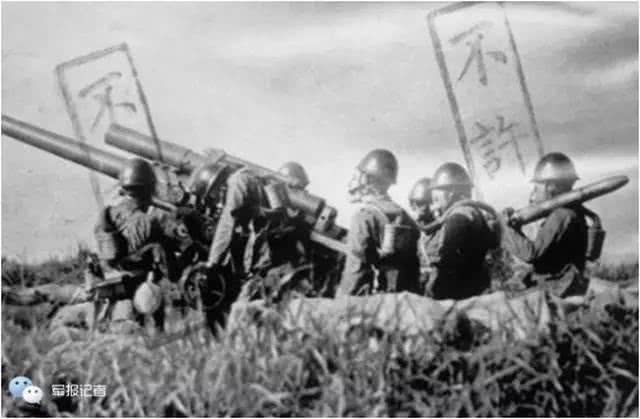
Today we think of chemical agents in WW2 as being limited to the death camps of the Nazis, but such weapons were far more widespread.  The Imperial Japanese military frequently used vesicant (blister) agents such as lewisite and mustard gas against Chinese military and civilians, and in the hideous “medical experiments” conducted on live prisoners at Unit 731 and Unit 516.  Emperor Hirohito personally authorized the use of toxic gas during the 1938 Battle of Wuhan, on no fewer than 375 occasions.

Japanese, Gas Artillery

The Italian military destroyed every living creature in its path during the 1936 Colonial war with Ethiopia, in what Emperor Haile Selassie called “a fine, death-dealing rain”.

Nazi Germany possessed some 45,000 tons of blister and nerve agents, though such weapons were rarely used against western adversaries.  The “Ostfront” – the battle on the eastern front – was a different story.  Russian resistance fighters and Red Army soldiers were attacked, most notably during the assault on the catacombs of Odessa in 1941, the 1942 siege of Sebastopol, and the nearby caves and tunnels of the Adzhimuskai quarry, where “poison gas was released into the tunnels, killing all but a few score of the (3,000+) Soviet defenders”.

russian-soldier-in-a-rubber-gas-mask-on-the-eastern-front-russia-during-K07NJ9

None of the western allies resorted to chemical warfare in WW2, despite having accumulated over twice the chemical stockpile as that of Nazi Germany.  The policy seems to have been one of “mutually assured destruction” where no one wanted to be first to go there, but all sides reserved the option.  Great Britain possessed massive quantities of mustard, chlorine, Lewisite, Phosgene and Paris Green, awaiting retaliatory strike should Nazi Germany resort to such weapons on the beaches of Normandy. 

General Alan Brooke, Commander-in-Chief of the Home Forces, said he “[H]ad every intention of using sprayed mustard gas on the beaches” in the event of a German landing on the British home islands.

The official American policy toward chemical weapons was enunciated in 1937, by President Franklin Roosevelt: “I am doing everything in my power to discourage the use of gases and other chemicals in any war between nations. While, unfortunately, the defensive necessities of the United States call for study of the use of chemicals in warfare, I do not want the Government of the United States to do anything to aggrandize or make permanent any special bureau of the Army or the Navy engaged in these studies. I hope the time will come when the Chemical Warfare Service can be entirely abolished”.

The Geneva Protocols of 1925 banned the use of chemical weapons, but not their manufacture, or transport.  By 1942, the U.S. Chemical Corps employed some 60,000 soldiers and civilians and controlled a $1 Billion budget.

In August 1943, Roosevelt authorized the delivery of chemical munitions containing mustard gas, to the Mediterranean theater. Italy surrendered in early September, changing sides with the signing of the armistice of Cassibile.

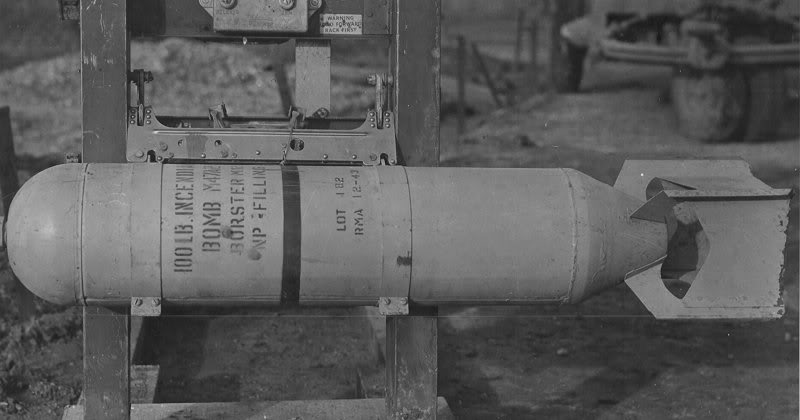
The liberty ship SS John Harvey arrived at the southern Italian port of Bari in November, carrying 2000 M47A1 mustard gas bombs, each containing 60 to 70-pounds of sulfur mustard.

Bari was packed at the time, with ships waiting to be unloaded.  It would be days before stevedores could get to her. Captain John Knowles wanted to inform port authorities of his deadly cargo and request that she be unloaded immediately, but secrecy prevented him from doing so. As it was, John Harvey was still waiting to be unloaded, on December 2.

For Luftwaffe Generalfeldmarschall Albert Kesselring, the traffic jam at Bari was an opportunity to slow the advance of the British 8th army on the Italian peninsula.

gettyimages-3276829-612x612
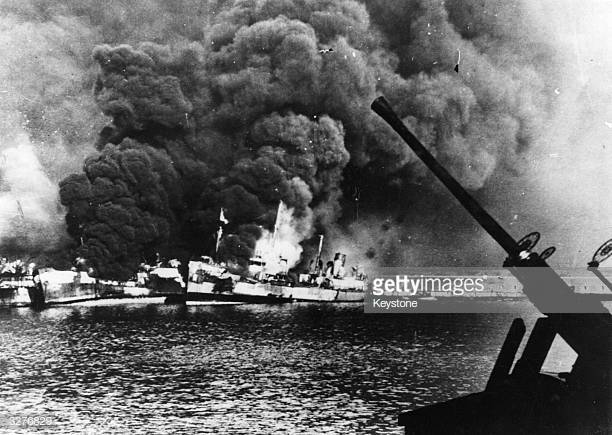
Air raid on Bari, December 2, 1943

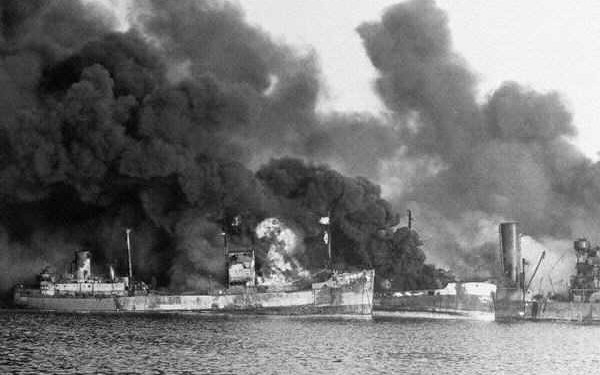
The “Little Pearl Harbor” began at 7:25PM when 105 Junkers JU-88 bombers came out of the East.   The tactical surprise was complete, and German pilots were able to bomb the harbor with great accuracy. Two ammunition ships were first to explode, shattering windows some 7 miles away. A bulk gasoline pipeline was severed as a sheet of burning fuel spread across the harbor, igniting those ships left undamaged.

43 ships were sunk, damaged or destroyed including John Harvey, which erupted in a massive explosion.  Liquid sulfur mustard spilled into the water, as a cloud of toxic vapor blew across the port and into the city.

bari_burning-ships

Mustard gas is a cytotoxic agent, capable of entering the system via skin, eyes and respiratory tract and attacking every cell type with which it comes into contact. First comes a garlic odor as the yellow-brown, heavier-than-air cloud creeps along the ground.  Contact results in redness and itching at first, resulting 12-24 hours later in excruciating, untreatable blisters on exposed areas of the skin.  Sufferers are literally burned inside and out as mucous membranes are stripped away from the eyes, nose and respiratory tract.

Death comes in days or weeks.  Survivors are likely to develop chronic respiratory disease and infections. DNA is permanently altered, often resulting in cancer and birth defects. To this day there is no antidote.

A thousand or more died outright in the bombing of December 2, 1943.  643 military service personnel were hospitalized for gas symptoms.  83 of them were dead, by the end of the month.  The number of civilian casualties is unknown.  The whole episode was shrouded in secrecy and remains to this day, one of the lesser-known chapters of World War 2.

At the time, the chemical disaster at Bari was of uncertain nature.  Everyone with any knowledge of John Harvey’s secret cargo had been killed in the explosion.  Lieutenant-Colonel Stewart Francis Alexander, an American physician from New Jersey, was sent by the Deputy Surgeon General of the US Army to find out what happened.

800px-Sidney_Farber_nci-vol-1926-300

It was Dr. Alexander who figured out the responsible agent was mustard, and where the stuff had come from.   In the process of testing, Dr. Alexander noticed the unknown agent went most heavily after rapidly dividing cells, such as white blood cells.

Alexander wondered if it might be useful in going after other types of rapidly dividing cells.

Like cancer.

Based on Dr. Alexander’s field work, Yale pharmacologists Louis Goodman and Alfred Gilman developed the first anti-cancer chemotherapy drug, in the treatment of lymphoma. 

In the 12th century, Bernard of Chartres described a process of finding truth, based on previous discoveries. The concept is remembered in the words of Sir Isaac Newton, in 1675: “If I have seen further it is by standing on the shoulders of Giants”.

Dr. Sidney Farber of Boston built on this earlier work, producing remission in children with acute Leukemia using Aminopterin, an early precursor to Methotrexate, a chemotherapy drug still in use, today.

To some, the SS John Harvey a “savior of millions”, due to the vessel’s role in the pioneering era of modern chemotherapy drugs.

The claim may be a bit of an exaggeration, but not much.  Once a virtual death sentence, the American Cancer Society today estimates that one in 30 alive today are currently undergoing treatment or have done so, in the past.

November 11, 1918 The 11th Hour

Many of the soldiers who went off to war in those days, viewed the conflict as some kind of grand adventure. Many of them singing patriotic songs, the young men and boys of Russia, Germany, Austria and France stole last kisses from wives and sweethearts, and boarded their ships and trains.

The final surrender was signed at 5:10am on November 11, and back-timed to 5:00am Paris time, scheduled to go into effect later that morning. The 11th hour, of the 11th day, of the 11th month.

In an alternate history, the June 1914 assassination of the heir-apparent to the Habsburg Empire could have led to nothing more than a regional squabble.  A policing action, in the Balkans.

As it was, mutual distrust and entangling alliances combined with slavish obedience to mobilization timetables, to draw the Great Powers of Europe, into the vortex.  On August 3, the “War to End All Wars” exploded across the European continent.

Many of the soldiers who went off to war in those days, viewed the conflict as some kind of grand adventure. Many of them singing patriotic songs, the young men and boys of Russia, Germany, Austria and France stole last kisses from wives and sweethearts, and boarded their ships and trains.

140604153439-19-wwi-main-timeline-0604-restricted-horizontal-large-gallery

Believing overwhelming manpower to be the key to victory, British Secretary of State for War Lord Horatio Kitchener recruited friends and neighbors by the tens of thousands into “Pal’s Battalions”, to fight for King and country.The signs could have been written in any number of languages, in the early phase of the war

Four years later, an entire generation had been chewed up and spit out, in pieces.

Many single day’s fighting during the great battles of 1916 produced more casualties than every European war of the preceding 100 years, civilian and military, combined.

6,503 Americans lost their lives during the savage, month-long battle for Iwo Jima, in 1945. The first day’s fighting during the 1916 Battle of the Somme, killed three times that number on the British and Commonwealth side, alone.Over 1.5 million shells were fired in the days leading to the battle of the Somme

Over 16 million were killed and another 20 million wounded, while vast stretches of the European countryside were literally, torn to pieces. Tens of thousands remain missing, to this day.

battle_of_the_somme_in_pictures_1

Had you found yourself in the mud and the blood, the rats and the lice of the trenches during the New Year of 1917-’18, you may have heard a plaintive refrain drifting across the barbed wire and frozen wastes of no man’s land, sung to the tune of ‘Auld Lang Syne”.

We’re here, because we’re here,
because we’re here, because we’re here,
we’re here, because we’re here,
because we’re here, because we’re here.

cher-ami

Those who fought the “Great War”, were not always human.  The carrier pigeon Cher Ami escaped a hail of bullets and returned twenty-five miles to her coop despite a sucking chest wound, the loss of an eye and a leg that hung on, by a single tendon.  The message she’d been given to carry, saved the lives of 190 men.

“Warrior” was the thoroughbred mount to General “Galloper” Jack Seely, arriving in August 1914 and serving four years “over there”. “The horse the Germans can’t kill” survived snipers, poison gas and shellfire to be twice buried alive in great explosions, only to return home to the Isle of Wight, and live to the ripe old age of 33.First division Rags

18-03-23-thumb

First Division Rags” ran through a torrent of shells, gassed and blinded in one eye, a shell fragment damaging his front paw, yet still, he got his message through.

Jackie the baboon lost a leg during heavy bombardment from German guns, while frantically building a protective rock wall around himself, and his comrades.

Tirpitz the German pig jumped clear of the sinking light cruiser SMS Dresden, to become mascot to the HMS Glasgow.

Sixteen million animals served on all sides and in all theaters of WW1:  from cats to canaries, to pigeons and mules, camels, donkeys and dogs.  As “dumb animals”, these were never given the choice to “volunteer”.  And yet they served, some nine million making the supreme sacrifice by decision, other than their own.

In the end, starvation and malnutrition stalked the land at home as well as the front, with riots at home and mutiny in the trenches. The Russian Empire of the Czars had collapsed into a Bolshevik hellhole, never to return.  Nearly every combatant saw the disintegration of its domestic economy, or teetering on the brink.

WW1-animals

A strange bugle call came out of the night of November 7, 1918. French soldiers of the 171st Régiment d’Infanterie, stationed near Haudroy, advanced into the fog and the darkness, expecting that they were about to be attacked. Instead, they were shocked to see the apparitions of three sedans, their sides displaying the German Imperial Eagle.

Imperial Germany, its army disintegrating in the field and threatened with revolution at home had sent a peace delegation, headed by the 43-year-old German politician Matthias Erzberger.

the-last-soldier-killed-in-wwi-died-one-minute-before-the-war-ended

The delegation was escorted to the Compiegne Forest near Paris, to a conference room fashioned out of a railroad dining car. There they were met by a delegation headed by Ferdinand Foch, Marshall of France.

Adolf Hitler would gleefully accept French surrender in the same rail car, some twenty-two years later.

The German delegation was shocked at the words that came out of Foch’s mouth. ‘Ask these gentlemen what they want,’ he said to his interpreter. Stunned, Erzberger responded. The German believed that they were there to discuss terms of an armistice. Foch dropped the hammer: “Tell these gentlemen that I have no proposals to make”.

original-french-postcard-showing-the-wagon-in-which-the-ww1-armistice-M1B0DJ

Ferdinand Foch had seen his country destroyed by war, and had vowed “to pursue the Feldgrauen (Field Grays) with a sword at their backs”. He had no intention of letting up.

Marshall Foch now produced a list of thirty-four demands, each one a sledgehammer blow on the German delegation. Germany was to divest herself of all means of self-defense, from her high seas fleet to the last machine gun. She was to withdraw from all lands occupied since 1870. With the German population at home facing starvation, the allies were to confiscate 5,000 locomotives, 150,000 railroad cars, and 5,000 trucks.

1200px-Waffenstillstand_gr

By this time, 2,250 were dying every day on the Western Front.  Foch informed Ertzberger that he had 72 hours in which to respond. “For God’s sake, Monsieur le Marechal”, responded the German, “do not wait for those 72 hours. Stop the hostilities this very day”.  Even so, the plea fell on deaf ears. Fighting would continue until the last minute, of the last day.

The German King, Kaiser Wilhelm, abdicated on the 10th, as riots broke out in the streets of Germany. The final surrender was signed at 5:10am on November 11, and back-timed to 5:00am Paris time, scheduled to go into effect later that morning. The 11th hour, of the 11th day, of the 11th month.

The order went out to that effect. The war would be over in hours, but there were no other instructions.

Some field commanders ordered their men to stand down. Why fight and die over ground they could walk over, in a few hours?The last six hours

Many continued the attack, believing that Germany had to be well and truly beaten. Others saw their last chance at glory or promotion. An artillery captain named Harry S Truman, kept his battery firing until only minutes before 11:00.

English teacher turned Major General Charles Summerall had a fondness for the turn of phrase. Ordering his subordinates across the Meuse River in those final hours, Summerall said “We are swinging the door by its hinges. It has got to move…Get into action and get across. I don’t expect to see any of you again…

No fewer than 320 Americans were killed in those final six hours, another 3,240 seriously wounded.

7fe16b6c9f770b107480c9ca6c28e87c

Still smarting from the disastrous defeat at Mons back in 1914, British High Command was determined to take the place back, on the final day of the war. The British Empire lost more than 2,400 in those last 6 hours.

The French 80th Régiment d’Infanterie received two orders that morning – to launch an attack at 9:00, and cease-fire at 11:00. French losses for the final day amounted to 1,170. The already retreating Germans suffered 4,120.

One-hundred years ago today, all sides suffered over 11,000 dead, wounded, and missing in those final six hours. Some have estimated that more men died per hour after the signing of the armistice, than during the D-Day invasion, 26 years later.

Over in the Meuse-Argonne sector, Henry Gunther was “visibly angry”.   Perhaps this American grandson of German immigrants felt he had something to prove.  Anti-German bias had not reached levels of the next war, when President Roosevelt interned Americans of Japanese descent.  Yet, such bias was very real.  Gunther’s fiancé had already broken up with him, and he’d recently been busted in rank, after writing home complaining about conditions at the front.

Bayonet fixed, Gunther charged the enemy machine gun position, as German soldiers frantically waved and yelled for him, to go back. He got off a “shot or two”, before the five round burst tore into his head. Henry Nicholas John Gunther of Baltimore Maryland, was the last man to die in combat, in the Great War.  It was 10:59am.  The war would be over, in sixty seconds.

Sargeant-Henry-Gunther

After eight months on the front lines of France, Corporal Joe Rodier of Worcester Massachusetts, was jubilant.   “Another day of days“.   Rodier wrote in his diary.  “Armistice signed with Germany to take effect at 11 a.m. this date. Great manifestations. Town lighted up at night. Everybody drunk, even to the dog. Moonlight, cool night & not a shot heard“.

Matthias Erzberger was assassinated in 1921, for his role in the surrender. The “Stab in the Back” mythology destined to become Nazi propaganda, had already begun.

AEF Commander General John “Black Jack” Pershing believed the armistice to be a grave error. He believed that Germany had been defeated but not beaten, and that failure to smash the German homeland meant that the war would have to be fought, all over again. Ferdinand Foch agreed. On reading the Versailles treaty in 1919, Foch said “This isn’t peace! This is a truce that will last for 20 years”.

The man got it wrong, by 36 days.

A personal note:

PFC Norman Franklin Long was wounded during the Great War, a member of the United States Army, 33rd Pennsylvania Infantry.  He left us on December 18, 1963, only hours before his namesake and my brother Norm, was born.

My father’s father went to his final rest on Christmas eve of 1963, in Arlington National Cemetery. 

Lt. Col. Richard B “Rick” Long Sr. served during the Vietnam era and earned his eternal rest at the Sandhills Veteran’s Cemetery, in North Carolina.

Rest in peace Grampa, Dad, you left us too soon.

Norm and my other brother Dave went on to serve over 50 years between them and both retired with the rank of Lieutenant Colonel.

Respect and gratitude for your service, gentlemen.

October 26, 1918 Speaking in Code

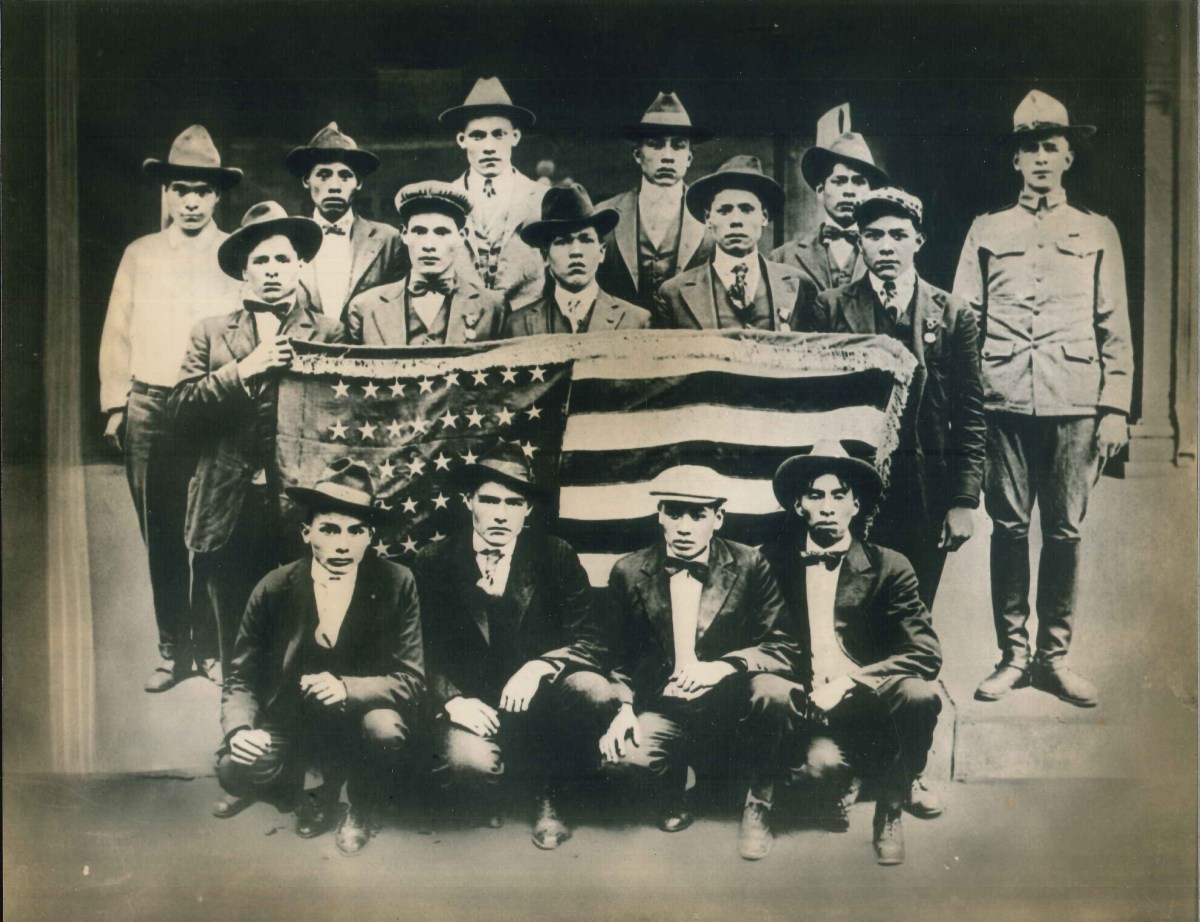
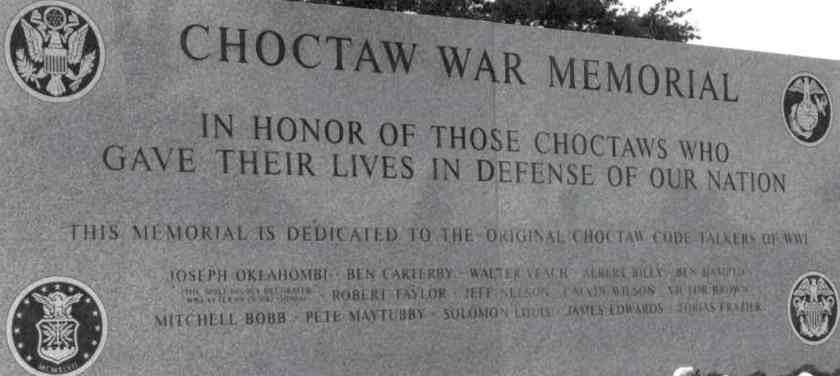
The history of the Navajo Code Talkers of WWII is relatively well known.  A number of books have been written about the subject.  Less well known is the code talk emerging from World War 1, based on the language of the Choctaw.

Between 1942 and 1945, “code talkers” of the Navajo Nation took part in every assault conducted by the United States Marine Corps. From Guadalcanal to Tarawa, Peleliu to Iwo Jima, Navajo code talkers served with all six Marine divisions in the Pacific theater, of World War 2.

Theirs was a language with no alphabet or symbols, a language with such complex syntax and tonal qualities as to be unintelligible to the non-speaker.  The military code based on such a language proved unbreakable in WWII.  Japanese code breakers never got close.

The history of the Navajo Code Talkers of WWII is relatively well known.  A number of books have been written about the subject.  Less well known is the code talk emerging from World War 1, based on the language of the Choctaw.

The government of the Choctaw Nation will tell you that they were the first native code talkers who ever served in the United States military.

Late in 1917, Colonel A. W. Bloor was serving in France with the 142nd Infantry Regiment.  This was a Texas outfit, constituted in May of that year and including a number of Oklahoma Choctaws.

Choctaw code talkers

By now the Allies had learned the hard way, that many among the German adversary spoke excellent English.  German code breakers had intercepted and broken several English-based codes. 

Bloor heard two of his Choctaw soldiers talking to each other, and realized he didn’t have the foggiest notion of what they were saying.  If he didn’t understand their conversation he thought, no German could possibly have a clue.

The first test under combat conditions took place on October 26, 1918, as two companies of the 2nd Battalion performed a “delicate” withdrawal from Chufilly to Chardeny, in the Champagne sector.  One captured German officer avowed the Choctaw code to have been a complete success.  We were “completely confused by the Indian language”, he said, “and gained no benefit whatsoever” from wiretaps.

Choctaw soldiers were placed in multiple companies of infantry.  Messages were transmitted via telephone, radio and runner, many of whom were themselves Native Americans.

The Choctaw would improvise when their language lacked the proper word or phrase.  When describing artillery, they used the words for “big gun”.  Machine guns were “little gun shoot fast”.

The Choctaw themselves didn’t use the term “Code Talker”, that wouldn’t come along until WWII.  At least one member of the group, Tobias W. Frazier, described what he did as, “talking on the radio”.  Of the 19 who served in WWI, 18 were native Choctaw from southeast Oklahoma.  The last was a native Chickasaw. 

Youngest of the group was Benjamin Franklin Colbert, Jr., the son of Benjamin Colbert Sr., one of Teddy Roosevelt’s “Rough Riders” of the Spanish American War.  Born September 15, 1900 in the Durant Indian Territory, he was 16 the day he enlisted.

Joseph Oklahombi
Joseph Oklahombi

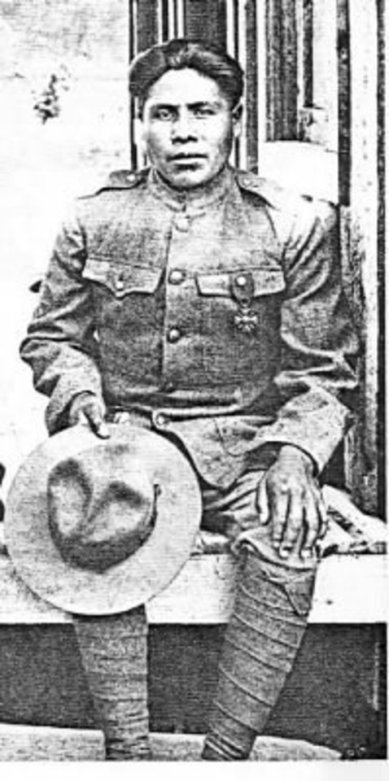
Another was Choctaw Joseph Oklahombi, whose name means “man killer” in the Choctaw language.    

Six days before Sergeant York’s famous capture of 132 in the Argonne Forest, Joseph Oklahombi charged a strongly held German position, single-handed.  Oklahombi’s Croix de Guerre citation, personally awarded by French Marshall Philippe Pétain, tells the story:  “Under a violent barrage, [Pvt. Oklahombi] dashed to the attack of an enemy position, covering about 210 yards through barbed-wire entanglements. He rushed on machine-gun nests, capturing 171 prisoners. He stormed a strongly held position containing more than 50 machine guns, and a number of trench mortars. Turned the captured guns on the enemy, and held the position for four days, in spite of a constant barrage of large projectiles and of gas shells. Crossed no man’s land many times to get information concerning the enemy, and to assist his wounded comrades“.

Unconfirmed eyewitness accounts report that some 250 Germans occupied the position, and that Oklahombi killed 79 of them before their comrades decided it was wiser to surrender. 

Some guys are not to be trifled with.

choctawwarmemorial

September 23, 1916 The Lafayette Escadrille

38 American pilots passed through the Lafayette Escadrille, “the Valiant 38”, eleven of whom were either killed in action or died later as the result of wounds received.

amfas_prince
Norman Prince

Knowing that his father would never approve, Norman Prince of Beverly Massachusetts trained to fly, in secret.  Using the name George Manor,  Prince earned his wings in 1911 in the Quincy, Massachusetts neighborhood of Squantum.

A fluent French speaker with a family estate in Pau, France, Norman sailed in January 1915, to join the French war effort.

The earliest vestiges of the American Hospital of Paris and what would become the American Ambulance Field Service can be discovered five years earlier, in 1906. Long before the American entry in 1917, individual sympathies brought Americans into the war to fight for Britain and France. They traveled to Europe to fight the Axis Powers joining the Foreign Legion, the Flying Corps or, like Ernest Hemingway, the Ambulance Service.

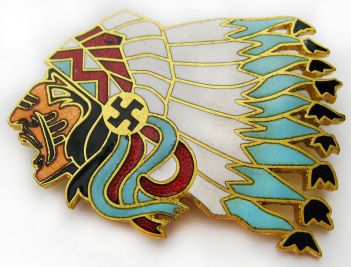
Lafayette_Escadrille_Pin
Squadron Insignia pin

After 1915, American pilots volunteered for multiple “Escadrille” – flight squadrons of the French Air Service, the Aéronautique Militaire.

The March 7, 1918 Harvard Alumni Bulletin would give Norman Prince full credit for persuading the French government to form all-American flying squadrons.

Prince would not live to see the article, in print.

Sergeant Norman Prince caught a landing wheel on a telegraph wire after a bombing run on October 12, 1916, sustaining massive injuries when his plane flipped over and crashed.  He was promoted to sous (2nd) lieutenant on his death bed and awarded the Legion of Honor.  He died three days later, at the age of 29.

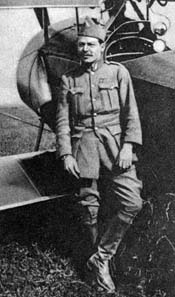
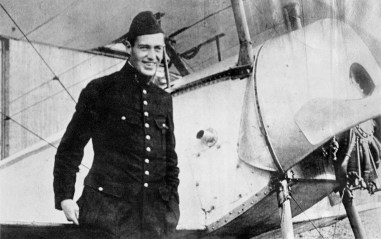
William Thaw II of Pittsburgh was the first pilot to fly up New York’s East River under all four bridges, the first American engaged in aerial combat in the war.

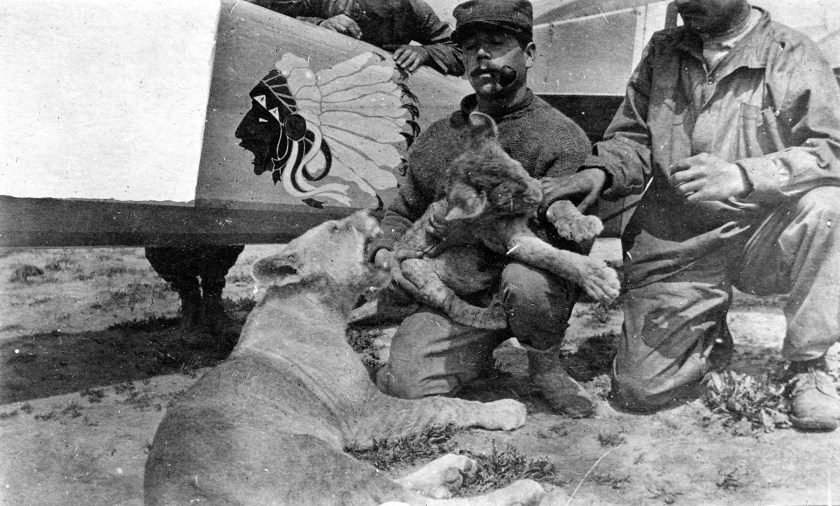
LtCol_William_Thaw_with_lion_cub_mascots_of_Lafayette_Escradrille_c1916
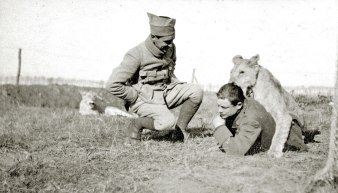
Lt. Col. William Thaw II with lion cub mascots Whiskey and Soda

Thaw pooled his money with three other pilots to purchase a male lion cub, the first of two such mascots kept by the Escadrille.  He bought the lion from a Brazilian dentist for 500 francs and bought a dog ticket, walking the lion onto the train on a leash.

Explanations that this was an “African dog” proved less than persuasive. The pair was thrown off the train.  The escadrille’s new mascot “Whiskey” would have to ride to his new home in a cage, stuck in cargo.

captain_georges_thenault_and_fram_1917 (1)

The unit purchased a female lion, “Soda”, sometime later.  The lions were destined to spend their adult years in a Paris zoo but both remembered from whence they had come.  Both animals recognized William Thaw on a later visit to the zoo, rolling onto their backs in expectation of a good belly rub.

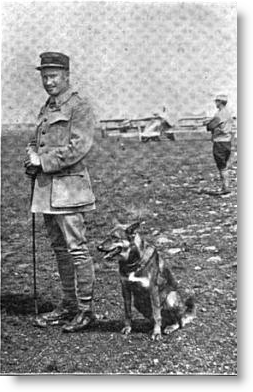
French Lieutenant Colonel Georges Thenault owned a “splendid police dog” named Fram who was the best buddies with Whiskey, though he did learn to keep to himself at dinner time.

Originally authorized on March 21, 1916 as the Escadrille Américaine (Escadrille N.124), American pilots wore French uniforms and flew French aircraft.  Germany was dismayed nevertheless at the existence of such a unit, complaining that the neutral United States appeared to be aligning with France.

Lafayette Escadrille

Escadrille N.124 changed its name in December 1916, adopting that of a French hero of the American Revolution.  Marie-Joseph Paul Yves Roch Gilbert du Motier, Marquis de Lafayette.

Five French officers commanded a core group of 38 American volunteers, supported by all-French mechanics and ground crew.  Rounding out the Escadrille were the unit mascots, the African lions Whiskey and Soda.

This early in aviation history, flying duty was hazardous to say the least.  Planes were flimsy and plagued with mechanical difficulties. Machine guns jammed and other parts failed when they were needed most.  There were countless wounds in addition to fatal injuries. At least one man actually asked to be sent back to the trenches. He felt safer there.

Kiffin Rockwell "In American Escadrille "movie" picture May 1916"
Kiffin Rockwell

The first major action of the Escadrille Américaine took place at the Battle of Verdun on May 13, 1916.

Kiffin Rockwell of Newport Tennessee became the first American to shoot down an enemy aircraft on May 18, 1916. On September 23, Rockwell was engaged with a German Albatross observation aircraft when he received an explosive bullet to the chest. The first American aviator to shoot down an enemy aircraft was killed immediately and crashed between the first and second lines of French trenches, the second American aviator killed in the war to end all wars.

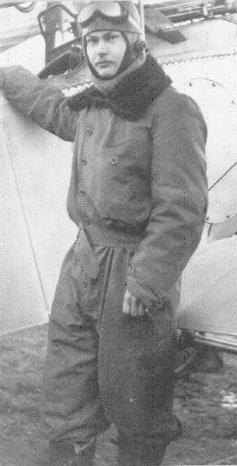
French born American citizen Raoul Lufbery became the squadron’s first Ace with 5 confirmed kills, and went on to be the highest scoring flying ace in the unit with 17 confirmed victories. He was killed on May 19, 1918 when his Nieuport 28 flipped over while he attempted to clear a jam in his machine gun.

The unit sustained its first fatality on June 24, 1916 when Victor Chapman was attacked by German flying ace Leutnant Kurt Wintgens, north of Douaumont.  Chapman was carrying oranges at the time, intended for his buddy Clyde Balsley, who was in hospital recuperating from an earlier incident.

Edmond_Charles_Clinton_Genet_circa_1915-1917
Edmond Genet

Ossining, New York native Edmond Genet was a bit of a celebrity among American expats, as the second-great grandson of Edmond-Charles Genêt, of the Founding-era Citizen Genêt Affair.  Genet sailed for France at the end of January 1915, joining the French Foreign Legion, and finally the Lafayette Escadrille on January 22, 1917.

Genet had left while on leave from the US Navy, and was therefore classified as a deserter. The decision weighed heavily on him.  Edmond Genet was shot down and killed by anti-aircraft artillery on April 17, eleven days after the American declaration of war, officially making him the first American fatality in the War to end all Wars.  The war department sent his family a letter after his death, stating that his service was considered in all respects, honorable.

38 American pilots passed through the Lafayette Escadrille, “the Valiant 38”, eleven of whom were either killed in action or died later as the result of wounds received.  The unit flew for the French Air Service until the US’ entry into the war, when it passed into the 103rd Aero Squadron, American Expeditionary Force.

Raoul Lufbery
Raoul Lufbery

The Lafayette Escadrille is often confused with the much larger Lafayette Flying Corps, and the movie “Flyboys” adds to the confusion.  The Flying Corps was different from the Escadrille, the former coming about as the result of widespread interest in the exploits of the latter.  American volunteers were assigned individually or in groups of two or three to fly in various French Aviation units, but, prior to US entry into the war.  The Lafayette Escadrille was the only one to serve as a single organization.

All told, 267 American volunteers applied to serve in the Lafayette Flying Corps, credited with downing 199 German planes at the cost of 19 wounded, 15 captured, 11 dead of illness or accident, and 51 killed in action.

August 25, 1830 A Scrap of Paper

The story of how a night at the opera led to two world wars.

In 1830, what is now Belgium was part of the United Kingdom of the Netherlands, a fusion of territories brought about in the wake of the Napoleonic Wars once belonging to the Dutch Republic, Austrian Netherlands, and Prince-Bishopric of Liège. A Constitutional Monarchy,  ruled by the first King of the Netherlands, King William I.

la muette

The “Southern Provinces” of King William’s polity were almost all Catholic and mostly French speaking, in contrast with the Dutch speaking, mostly Protestant north. 

Many southern liberals of the time thought King William a despot and tyrant. Meanwhile high levels of industrial unemployment made for widespread unrest among the working classes.

La Muette de Portici (The Mute Girl of Portici) is an opera in five acts by Daniel Auber.  Generally recognized as the earliest of the French Grand Opera, La Muette was first performed at the Paris Opéra on February 29, 1828.   During one performance a riot broke out during a particularly patriotic duet, Amour sacré de la patrie, (Sacred love of Fatherland). 

It was August 25, 1830.

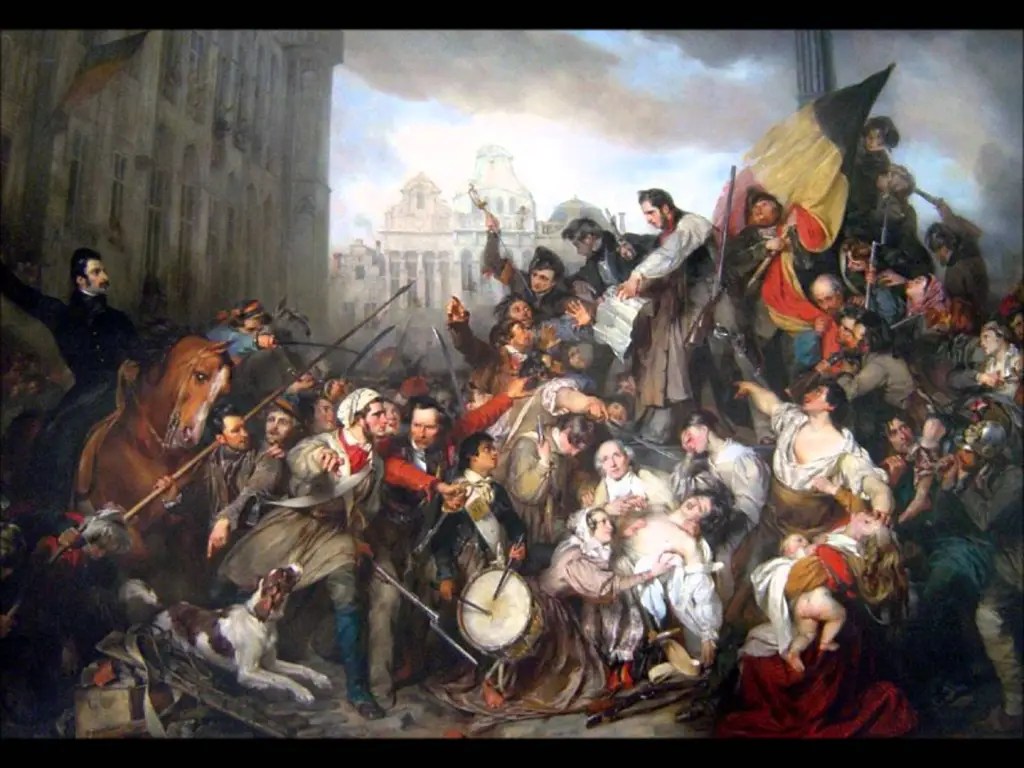
Soon the melee was spilling out onto the street, a full-scale riot spreading across Brussels and igniting other riots as shops were looted, factories occupied and machinery destroyed.

King William committed troops to the southern provinces in an effort to restore order, while radicals asserted control of rioting factions and began talk of secession.  Meanwhile Dutch military units experienced massive desertion of recruits from the southern provinces, and had to pull out.

Leopold_I_of_Belgium
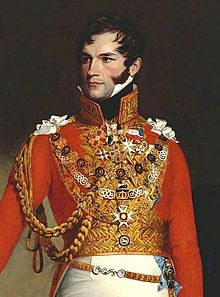
Leopold I, 1st King of the Belgians

The States-General in Brussels voted in favor of secession and declared independence, assembling a National Congress while King William appealed to the Great Powers for help. The resulting 1830 London Conference of major European powers came to recognize Belgian independence. Leopold I was installed as “King of the Belgians”.

King William made one more attempt to reconquer Belgium, in 1831.  France intervened with troops of its own and the “Ten Days’ Campaign” ended in failure.  The European powers signed the “Treaty of London” in 1839, recognizing and guaranteeing Belgium’s independence and neutrality.

By this instrument Great Britain, Austria, France, the German Confederation led by Prussia, Russia and the Netherlands had formally recognized the independent Kingdom of Belgium.

The German Composer Wilhelm Richard Wagner remarked on the events decades later, saying that “[S]eldom has an artistic product stood in closer connection with a world-event”.

In 1914, Germany’s plan in the event of war could be likened to one guy against two in a bar fight.  The plan was to take out the nearer one first (France), before turning to face the slow-moving behemoth, of Imperial Russia.  The only obstacles were the neutral states of Belgium, and Luxembourg.

Believing Great Britain would remain on the sidelines, Kaiser Wilhelm’s Germany declared war on Belgium on August 4, beginning a great sweep through Belgian territory into France. The government of British Prime Minister Herbert Asquith would never honor that “scrap of paper” signed back in 1839.

In this German assumptions were grievously mistaken.  Great Britain declared war within hours of the German invasion.

A regional squabble begun that June with the assassination of an Archduke would plunge the world into war, in August. Two world wars, really, with a 20-year break to grow a new generation, in-between.