August 30, 1776 1776

The astonishing part of this story is it all took place in the midst of a plague vastly more deadly than the COVID-19 pandemic, of our own age.

When George Washington raised his sword under the branches of that ancient elm on Cambridge commons, by that act did the General take command of an “army” equipped with an average of nine rounds, per man.

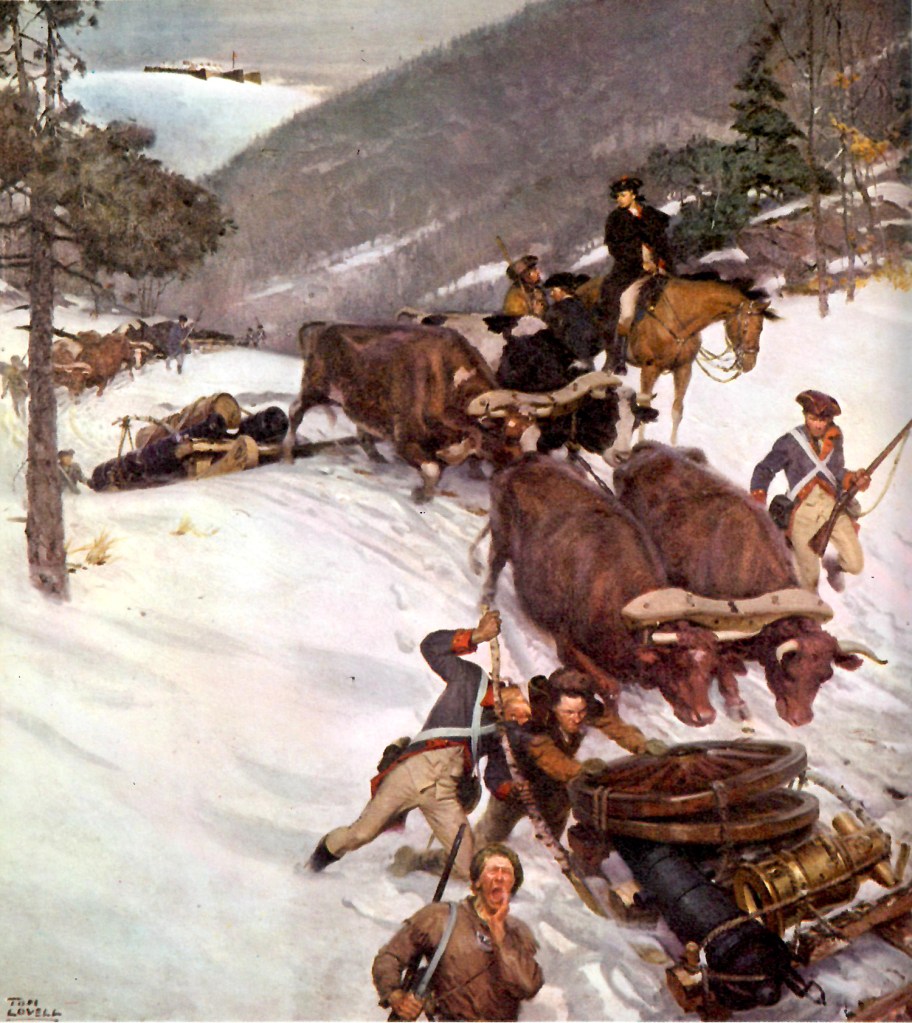
1776 started out well for the cause of American independence, when the twenty-six-year-old bookseller Henry Knox emerged from a six week slog through a New England winter, at the head of a “Noble train of artillery’.   Manhandled all the way from the wilds of upstate New York, the guns of Fort Ticonderoga were wrestled to the top of Dorchester Heights, overlooking the British fleet anchored in Boston Harbor.  General sir William Howe now faced the prospect of another Bunker Hill, a British victory which had come at a cost he could ill afford, to pay again.  
The eleven-month siege of Boston came to an end on March 17 when Howe’s fleet evacuated Boston Harbor and removed, to Nova Scotia.  Three months later, a force of some 400 South Carolina patriots fought a day-long battle with the nine warships of Admiral Sir Peter Parker, before the heavily damaged fleet was forced to withdraw.  The British eventually captured Fort Moultrie and Charleston Harbor with it but, for now, 1776 was shaping up to be a very good year.

The Continental Congress adopted the Declaration of Independence, that July.

Tory and Patriot alike understood the strategic importance of New York, as the center of communication between the upper and lower colonies. Beginning that April, Washington moved his forces from Boston to New York placing his troops along the west end of Long Island, in anticipation of the British return.
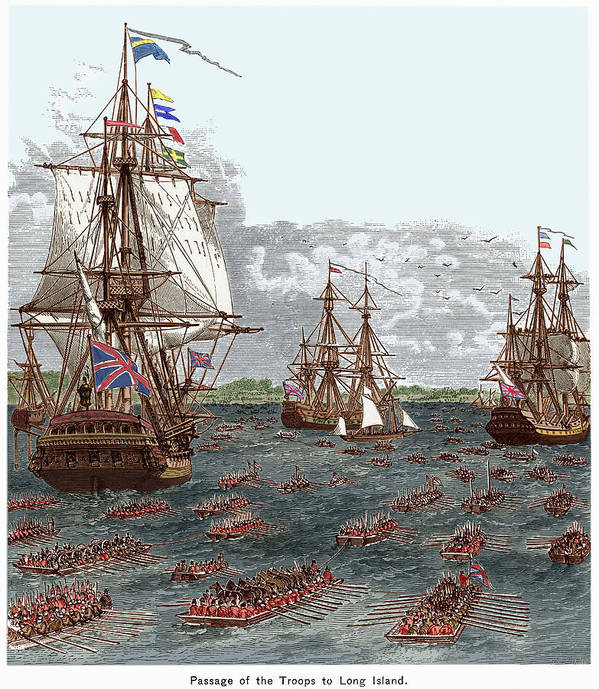
The fleet was not long in coming, the first arrivals dropping anchor by the end of June.  Within the week, 130 ships were anchored off Staten Island under the command of Admiral sir Richard Howe, the General’s brother. 

The Howe brothers attempted to negotiate on July 14 with a letter to General Washington, addressed: “Georg Washington, Esq.” The letter was returned unopened by Washington’s aide Joseph Reed who explained there’s nobody over here, by that address. Again the letter came back addressed to “George Washington, Esq., etc.,” the etc. meaning… “and any other relevant titles.” That letter too came back unopened but this time, with a message. The general would meet with one of Howe’s subordinates. The meeting took place on July 20 when Howe’s representative offered pardon, for the American side. General Washington responded as they had done nothing wrong his side had no need, of any pardons. But thanks anyway.

By August 12 the British force numbered some 400 vessels with 73 warships and a force of 32,000 camped on Staten island.
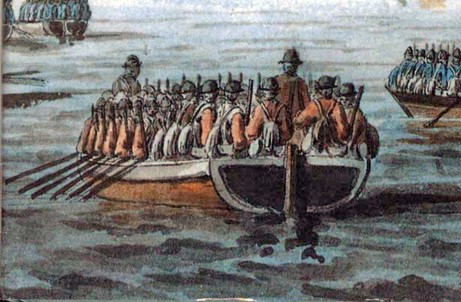
“British troops in the type of flat-bottomed boat used for the invasion of Long Island. Hessians in their blue uniforms are in the two boats that are only partly visible”. H/T Wikipedia

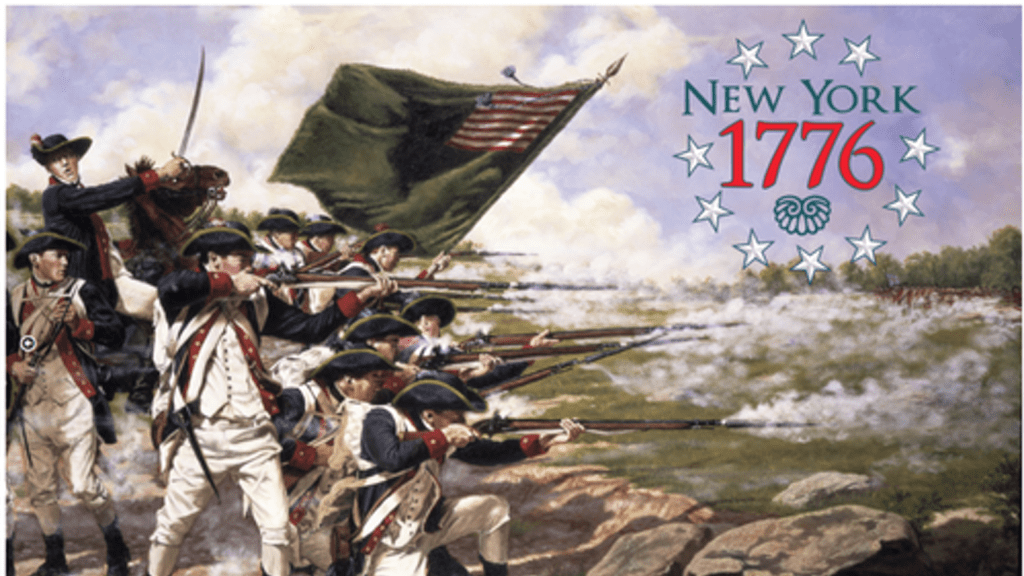
Patriot forces were badly defeated at the Battle of Brooklyn, fought on August 27, 1776. In terms of number of troops deployed and actual combat it was the largest battle, of the Revolution. The British dug in for a siege, confident their adversary was cornered and waiting only to be destroyed at their convenience while the main Patriot army retreated to Brooklyn Heights.
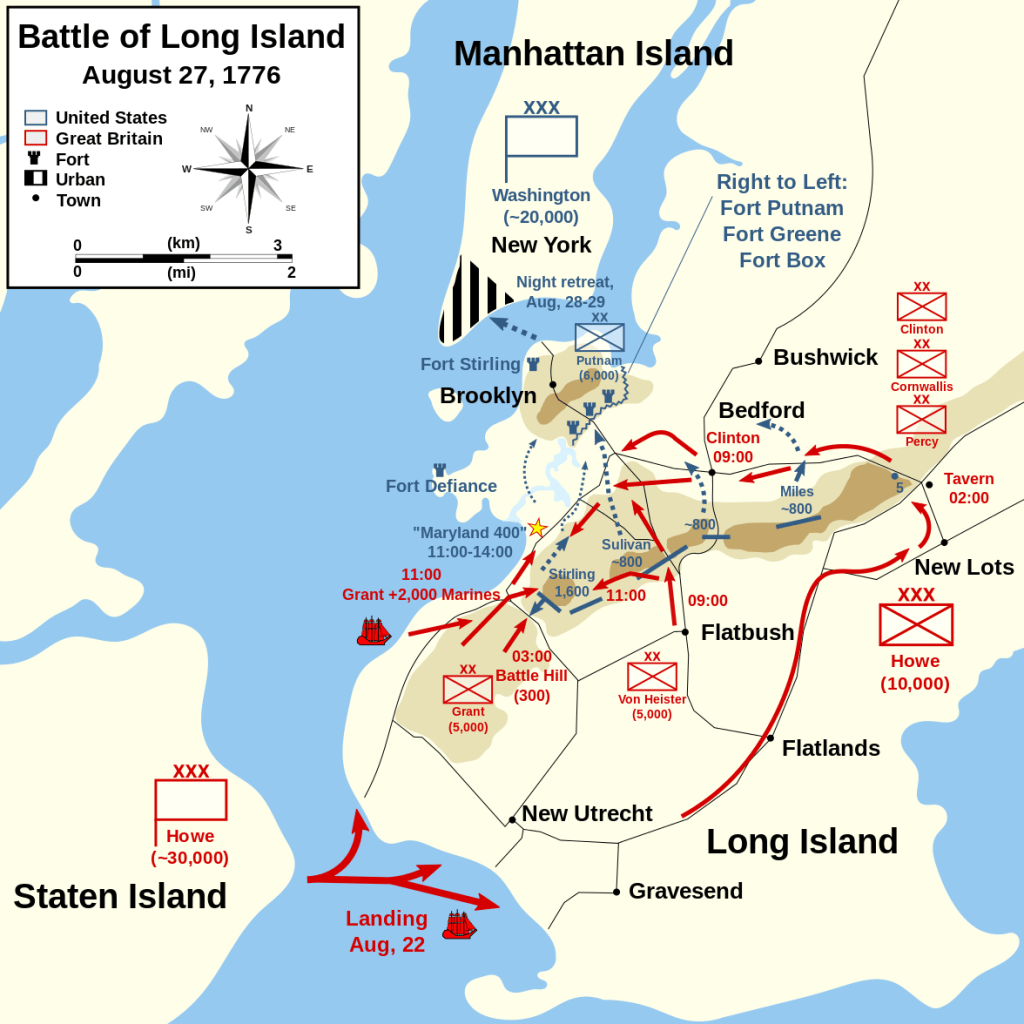
Cornered on land with the British-controlled East River to their backs, it may have been all over for the Patriot cause, but for one of the great tactical feats of all military history.   The surprise was complete for the British side, on waking for the morning of August 30 to discover the 9,000-strong Patriot army, had vanished. The silent evacuation over the night of August 29-30 had averted disaster, a feat made possible only through the nautical skills of the merchants and rum traders, the sailors and the fishermen of Colonel John Glover’s Marblehead Massachusetts militia, the “Amphibious Regiment”.

Following evacuation, the Patriot army found itself isolated on Manhattan island, virtually surrounded. Only the thoroughly disagreeable current conditions of the Throg’s Neck-Hell’s Gate segment of the East River, prevented Admiral Sir Richard Howe from enveloping Washington’s position, altogether.
Desperate for information about the attack he was sure would come Washington dispatched a 22-year old Connecticut schoolteacher named Nathan Hale on September 10, to keep an eye on British movements. Disguised as a Dutch schoolteacher, Hale naïvely placed his trust, where it didn’t belong. He was betrayed in just over a week.

As expected, Howe landed a force at Kip’s Bay on September 15 and the Redcoats quickly occupied the city. Patriots delivered an unexpected check the following day at Harlem Heights against an overconfident force of British light troops. It was to be the only such bright spot for the Americans who were now driven out of New York and into New Jersey and finally, to Pennsylvania.
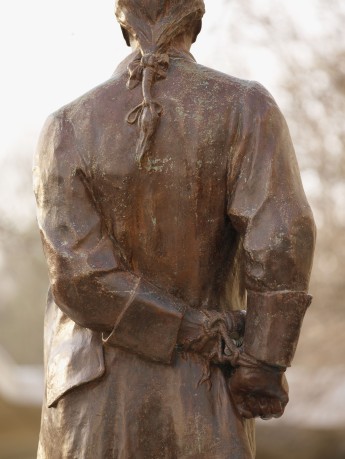
A great fire broke out on the 21st that destroyed as much as a quarter of all the buildings on Manhattan Island. Both sides pointed the finger of blame at the other but the cause, was never determined. Nathan Hale was hanged for a spy the following day with the words, ‘I only regret, that I have but one life to lose for my country‘.

That October, the defeat of General Benedict Arnold’s home-grown “Navy” on the waters near Valcour Island in Vermont, cost the British fleet dearly enough that it had to turn back, buying another year for the Patriot cause.

Reduced to a mere 4,707 fit for duty, Washington faced the decimation of his army by the New Year, with the end of enlistment for fully two-thirds of an already puny force.  With nowhere to go but the offense, Washington crossed the Delaware river in the teeth of a straight-up gale over the night of December 25 and defeated a Hessian garrison at Trenton in a surprise attack on the morning of December 26.

While minor skirmishes by British standards, the January 2-3 American victories at Assunpink Creek and Princeton demonstrated an American willingness, to stand up to the most powerful military of the age.  Cornwallis suffered three defeats in a ten day period and withdrew his forces from the south of New Jersey.  American morale soared as enlistments, came flooding in.

The American war for independence had years to go.  Before it was over, more Americans would die in the fetid holds of British prison ships than in every battle of the Revolution, combined.  Yet, that first year had come and gone and the former colonies, were still in the fight. 

The astonishing part of this story is it all took place in the midst of a plague vastly more deadly than the COVID-19 pandemic, of our own age. Of 2,780,369 counted by the 1770 census* in this country no fewer than 130,000 died in the smallpox pandemic of 1775-1782. That works out to 4,815 per 100,000. Contrast that with a Coronavirus death rate of 194.14 per 100,000 according to Johns Hopkins University a death rate, of less than .2% *This figure does not include Native Americans who were not counted in the US census, until 1860.
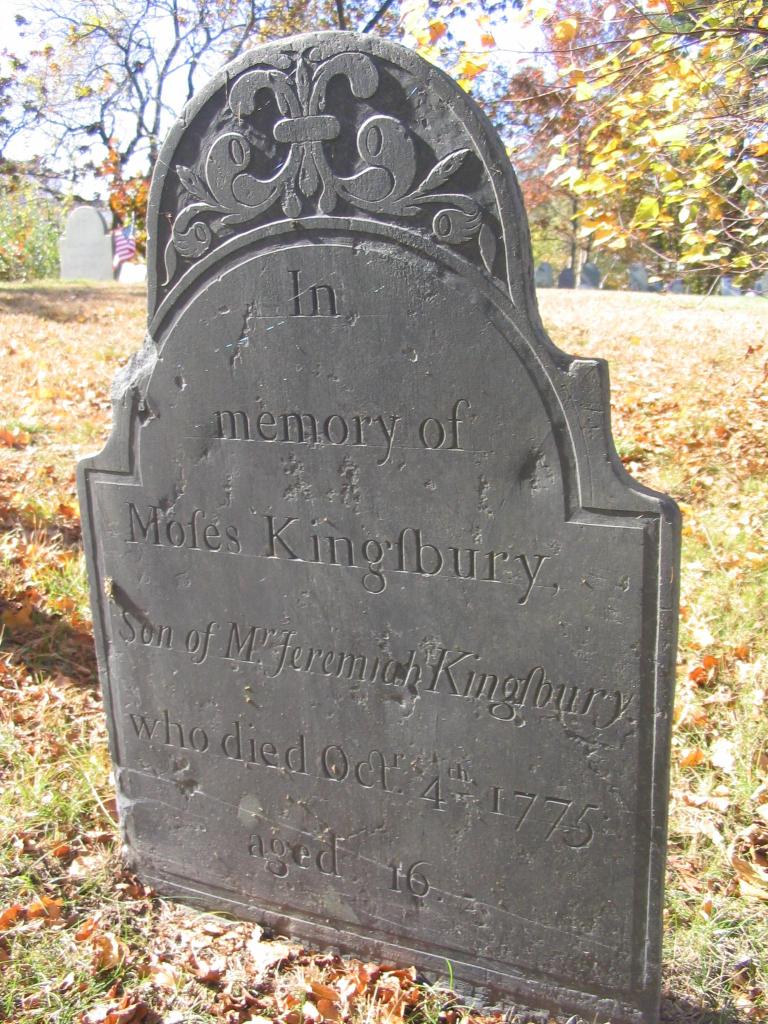
A generation later and an ocean away, Lord Arthur Wellesley described the final defeat of a certain Corsican corporal at a place called Waterloo.  Wellesley might have been talking about the whole year of 1776 in describing that day in 1815, when he said  “It was a damn close run thing”.

Feature image, top of page: Battle of Long Island, by Alonzo Chappel.

August 1, 1086 Day One

There were others with claims to the crown now belonging to Harold Godwinson, among them the new King’s brother Tostig, Earl of Northumbria. Tostig’s animosity for his older brother would alter the course of world history and prove fatal, for them both.

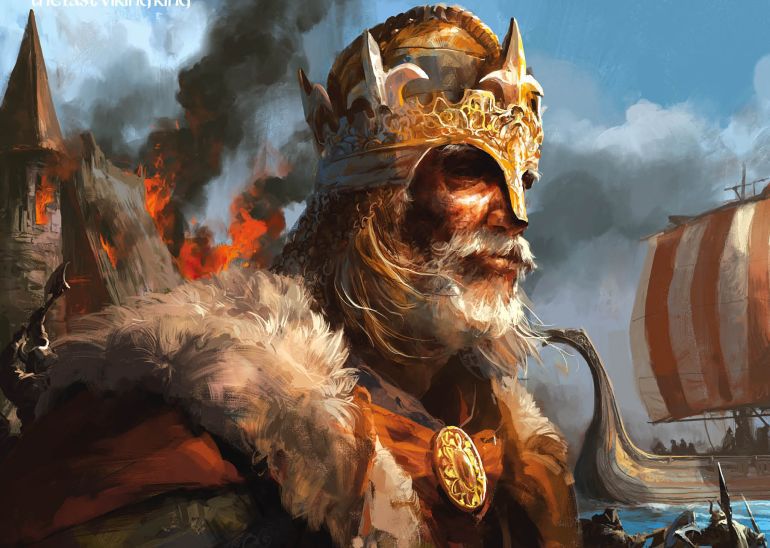
Edward the Confessor, King of England, died after a series of strokes on January 5, 1066, leaving no heir to the throne. Anglo-Saxon Kings didn’t normally pick their own successors, but several believed Edward had done just that.  The king’s death touched off an international succession crisis.  The events of the following months, would change the course of world history.

Edward’s brother-in-law Harold Godwinson was elected King by the Witenagemot, an early version of our own Town Meeting.  There were others with claims of their own.  One of these was Harold’s younger brother Tostig, Earl of Northumbria, whose animosity for his brother would prove fatal for them both.

il_fullxfull.756977332_djs5

After conducting a few inconclusive raids in the spring of that year, Tostig went to a Norman Duke called William “the Bastard”, looking for help. William had openly declared his intention to take the English throne, and had no use for the King’s little brother.  Tostig then went to the King of Norway, King Harald III “Hardrada”, the name variously translated as “stern counsel”, or “hard ruler”.

Hardrada believed that he himself had claim to the English throne, and was dismayed at Godwinson’s succession.  The two sailed for England at the head of a powerful fleet of 300 Viking ships and an army of 10,000 warriors, meeting the northern Earls Edwin and Morcar in battle at Fulford Gate on September 20.

The battle was a comprehensive defeat for the English. When Harald came to Stamford Bridge a week later, it was in expectation of formal capitulation and tribute.

Facts_Harald_Hardrada_Last_Great_Viking_5

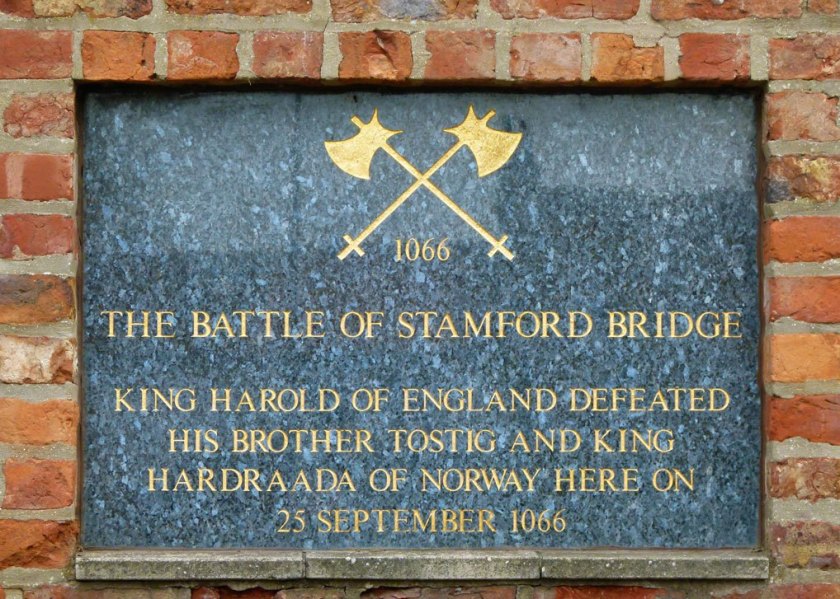
Meanwhile, King Harold stood at the head of an army in the south, anticipating William’s invasion from Normandy. My military friends will appreciate what happened next.  Harold marched his army north, traveling day and night and covering 190 miles in four days, on foot, completely surprising the Viking force waiting at Stamford Bridge. The Vikings must have looked at the horizon and wondered how a peace party could raise that much dust, only to face the “gleam of handsome shields and white coats-of-mail”.

Thinking they were there to accept submission, Harald’s army had left half its number behind to watch the ships.  Worse still, many of Harald’s warriors had removed their heavy armor, and scattered over both sides of the River Derwent.

Battle of Stamford Bridge

The English army charged through the loose ranks of Norwegians, as the rest struggled to form the skjaldborg (shield wall) on the opposite bank.

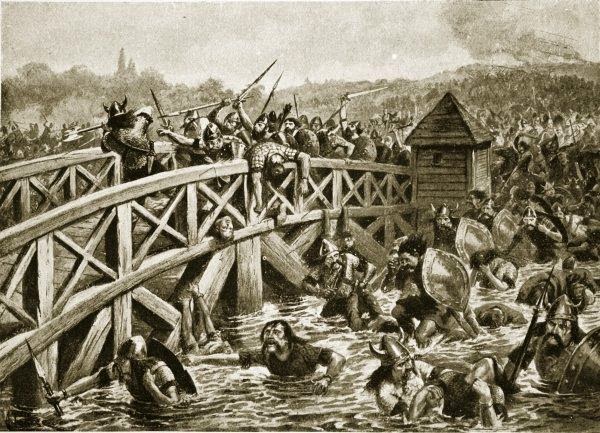
According to the Anglo-Saxon Chronicle, one giant Viking warrior stood alone at the top of Stamford Bridge. Swinging the great two-handed Dane Axe. For a time this single warrior held back the entire English army, crowding onto the narrow choke point.   40 English soldiers lay mangled and dead in heaps around this beast, when an English soldier moved beneath the bridge and speared the Viking warrior, from below.

Facts_Harald_Hardrada_Last_Great_Viking_7

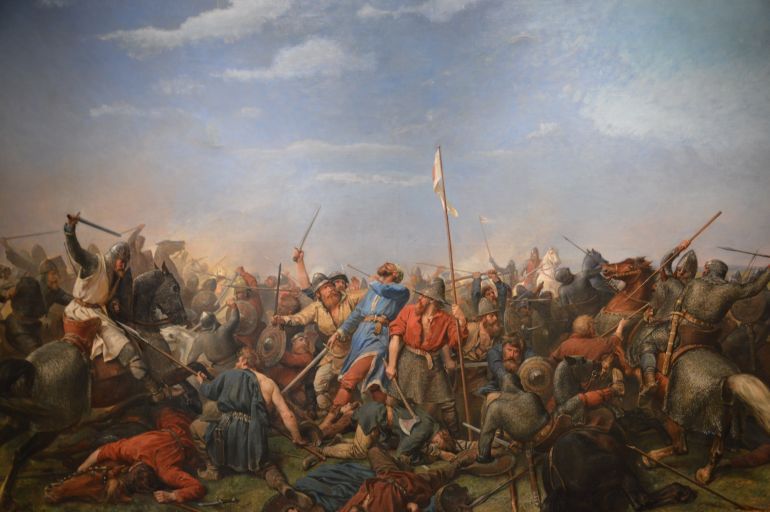
The savagery of the battle can only be imagined. This was before the age of industrialized warfare, when every injury was personally administered with a bladed weapon or heavy club, of some kind. 5,000 of King Harold’s soldiers would be dead before it was over, about a third of his force. Two thirds of King Harald’s Vikings died that day, about 6,000.  In the end, Harald Hardrada invoked the berserkergang (the state of going berserk), and waded into his foe, madly hacking and slashing all about him until an arrow found his throat.

Thus ends the tale of the last ‘Great Viking’.  Harald was dead, as was his ally Tostig. His reward in the words of King Harold, was “Seven feet of English soil, or as much more as he is taller than other men“.

Battle_of_Stamford_Bridge-04

Of 300 ships that had arrived on the 20th, the battered remnants of the Viking army required only 24, to sail away.

Meanwhile, William was in final preparations for his own channel crossing, a voyage many considered unlikely at that late time of year.  The Norman landing Harold had waited for took place three days later, just as his battered army was disbanding and heading home for the Fall harvest.

tumblr_la6h4gVLfh1qe23mao1_500A greatly diminished Anglo Saxon army marched south, meeting the Norman invader in October, 1066.   History changed that day, when King Harold took an arrow to the eye, at a place called Hastings.   The last of the Anglo Saxon Kings, was dead.  William was crowned King of England that December.  Henceforward and forever more, William the Bastard would be known as “William the Conqueror”.

In this age of mechanized warfare, isn’t it strange to think you could have eaten your lunch that day on a neighboring hill, and never heard a thing.

Main rivals to the new King were now gone, but William wouldn’t be secure on his throne for another six years. Lands were confiscated from resisting members of the English elite and from lords who had fought and died in service to Harold.

800px-Norman-conquest-1066.svg
H/T By Amitchell125 at English Wikipedia

Such lands were enfeoffed, a process of the European middle ages through which land was granted in exchange for feudal allegiance, while the King retained ultimate title. Such confiscations led to revolts and further confiscations, as widows and daughters were forced into marriages with Norman barons.

Castles were built at an unprecedented rate, controlling military strongpoints across the land and, in the words of historian Robert Liddiard, “legitmizing a new elite”. Liddiard remarks that “to glance at the urban landscape of Norwich, Durham or Lincoln is to be forcibly reminded of the impact of the Norman invasion.”

7PASTmN

Beginning in 1085, seven or eight panels of commissioners fanned out across the land, taking sworn statements in every shire and village. Elaborate records were compiled of all lands and estates held by the King through his tenants, down to every agricultural plot and fishpond, and its value in pounds.

It was all done for purposes of taxation, particularly to see what was owed during the reign of Edward the Confessor. You can imagine how that went over but, as always, history is written by the victor.

So complete was the Norman conquest that William himself was able to spend three-quarters of his time, defending his interests in France. According to these records, within twenty years, no more than five percent of all lands remained in English hands.

While exact dates are subject to dispute, the major part of the “Great Survey” is traditionally held to have been bound and presented to King William on this day in 1086, in Salisbury.

1200px-Domesday-book-1804x972Late in the 12th century, King’s Treasurer Richard FitzNeal likened the Great Survey to the Book of Judgement, the book of “Domesday” (middle English for “Doomsday”), because its pronouncements were final and inviolate as the Last day of Judgement.
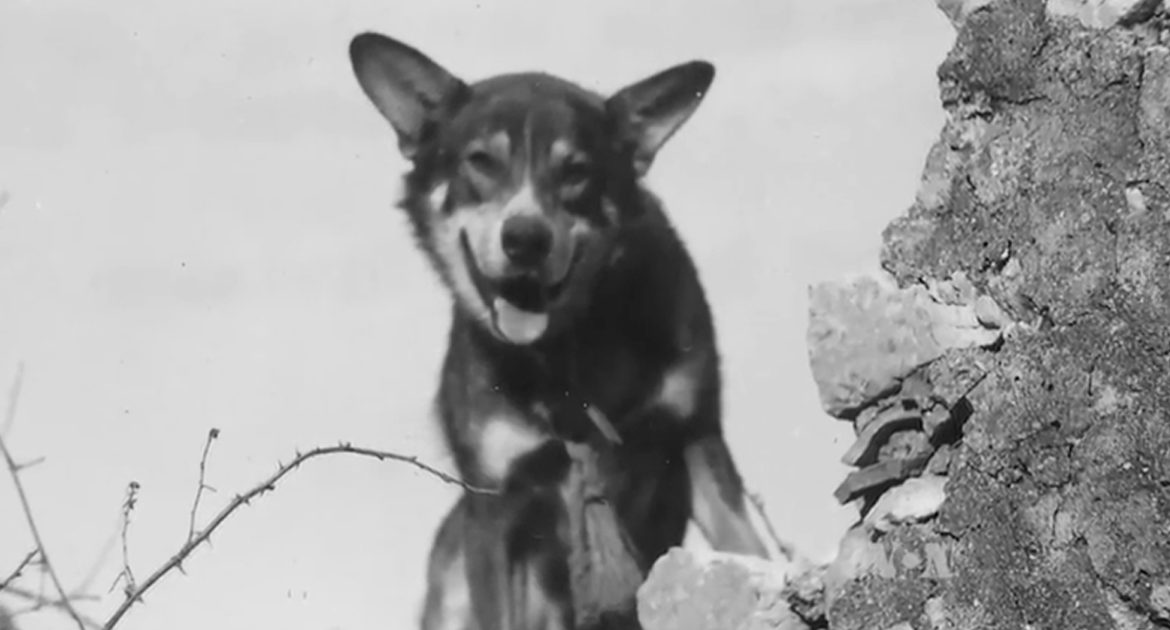
Nothing even remotely similar to the “Domesday Book” would again be attempted, until 1873. For most English towns and villages (most but not all – no Domesday records are known to survive for London or Winchester), the Domesday book stands as the final and dispositive arbiter of lands and titles held, across the British Isles. Day one, the starting point, of English history.

July 9, 1943 The Most Decorated K9, of WW2

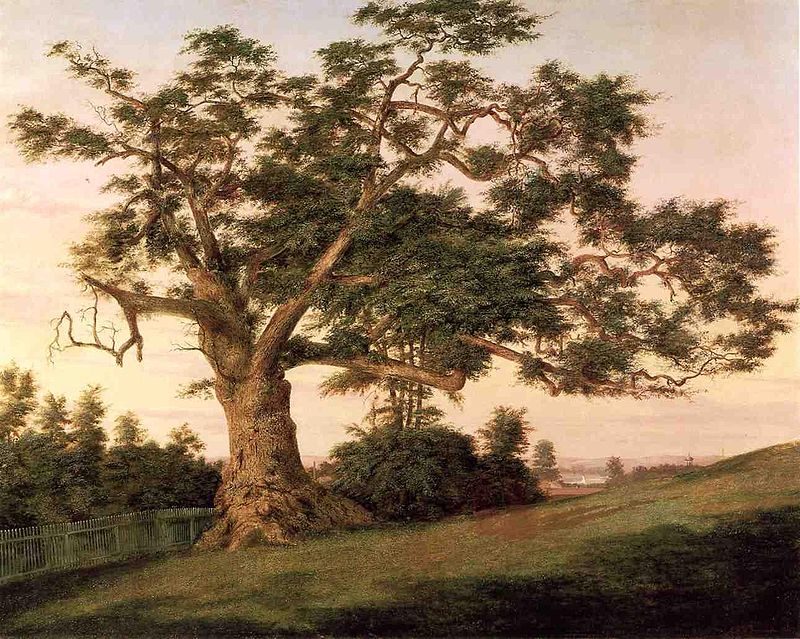
“Chips, a German shepherd, collie, husky mix, was the most famous and decorated sentry dog in World War II, one of 10,425 dogs that saw service in the Quartermaster Corps’ new “K-9 Corps.” Prior to the K-9 Corps, dogs such as Admiral Wags on the carrier Lexington and World War I canine hero Sgt. Stubby were mascots and had no official function in America’s military.” H/T Defense Media Network

By the last year of the “Great War”, French, British and Belgian armed forces employed some 20,000 dogs on the battlefield, the Germans, 30,000. General Headquarters of the American Expeditionary Forces recommended the use of dogs as sentries, messengers and draft animals in the spring of 1918. However, with the exception of a few sled dogs in Alaska, the US was the only country to take part in World War I with virtually no service dogs in its military.

US Armed Forces had an extensive K-9 program during World War II, when private citizens were asked to donate their dogs to the war effort. One such dog was “Chips”, a German Shepherd/Collie/Husky mix who ended up being the most decorated K-9 of WWII.

Chips belonged to Edward Wren of Pleasantville, NY, who “enlisted” his dog in 1942. Chips was trained at the War Dog Training Center, Front Royal Virginia, and served in the 3rd Infantry Division with his handler, Private John Rowell. Chips and his handler took part in North Africa, Italy, France and Germany.  He served as a sentry dog for the Roosevelt-Churchill conference in 1943, and the team was part of the Sicily landings later that year.

The Allied invasion of Sicily was a large scale amphibious and airborne operation, beginning this day in 1943 and lasting through the 17th of August.  Six weeks of land combat followed in an operation code named “Operation Husky”.

During the landing phase, private Rowell and Chips were pinned down by an Italian machine. The dog broke free from his handler, running across the beach and jumping into the pillbox.  Chips attacked the four Italians manning the machine gun, single-handedly forcing their surrender to American troops. The dog sustained a scalp wound and powder burns in the process, demonstrating that they had tried to shoot him during the brawl.  In the end, the score was Chips 4, Italians Zero.   

Platoon commander Captain Edward Parr recommended Chips for the Distinguished Service Cross for “courageous action in single-handedly eliminating a dangerous machine gun nest and causing surrender of its crew.”

He helped to capture ten more later that same day.

Chips was awarded the Distinguished Service Cross, Silver Star, and Purple Heart but his awards, were later revoked.  At that time the army didn’t permit commendations to be given to animals. His unit awarded him a Theater Ribbon with an Arrowhead for the assault landing anyway, along with eight Battle stars.  One for each of his campaigns.

Chips was discharged in December, 1945, and returned home to live out his days with the Wren family in Pleasantville. In 1990, Disney made a TV movie based on his life.  It’s called “Chips, the War Dog”.

June 9, 1772 The Road to Revolution

The customs schooner H.M.S. Gaspée sailed into Narragansett Bay, Rhode Island in early 1772, to aid with customs enforcement and collections. She was chasing the packet boat Hannah through shallow water on the 9th of June, when she ran aground. What followed was one of the earliest acts of rebellion, of the American Revolution.

The Seven Years’ War of 1756-’63 was in many ways a world war, experienced in the American colonies as the French and Indian War.  The cost to the British crown was staggering. Parliament wanted their colonies in America to pay for their share of it. The war had been fought for their benefit after all, had it not?

intolerable-acts

In the 1760s, several measures were taken to collect these revenues. In one 12-month period, Parliament passed the Stamp Act, the Quartering Act, and the Declaratory Act, and deputized the Royal Navy’s Sea Officers to help enforce customs laws in colonial ports.

American colonists hated these measures.  For decades now, the colonies had been left to run their own affairs.  Many of them bristled at the heavy handed measures now being taken by revenue and customs agents. In Rhode Island, the Sugar Act of 1764 was particularly egregious as the distillation of rum from molasses, was a main industry. Rhode Islanders took control of Fort George on Goat Islands and fired several cannon shots at the HMS St. John.  The Royal Navy vessel managed to escape harm as did her aggressors, with the approach of the 21-gun HMS Squirrel.

Ten years later, the first distinctly American flag in history unfurled some 27 miles up the road in in Taunton, Massachusetts. Even now the “Liberty and Union” flag proclaimed the desire for autonomy…and union. Liberty and Union but that first open act of rebellion, was already ten years in the past.

Back in 1769, colonists burned the customs ship H.M.S. Liberty in Newport harbor.  In a few short months, the “Boston Massacre” would unfold before the Custom House, on King Street.

GaspeePtaerial

The customs schooner H.M.S. Gaspée sailed into Narragansett Bay, Rhode Island in early 1772, to aid with customs enforcement and collections. On June 9 she was chasing the packet boat Hannah through shallow water when she ran aground near the modern-day Gaspée Point, near the town of Warwick.

Local Sons of Liberty met that afternoon at Sabin Tavern opposite Fenner’s Wharf, from which the daily packet ship sailed to Newport Harbor. There the co-conspirators concocted a plot. They would set fire to the Gaspée, and spent the evening hours casting bullets for the enterprise.

They rowed out to the ship at dawn the next morning. There was a brief scuffle in which Lieutenant William Dudingston was shot and wounded. The vessel was then looted, and burned to the waterline.

Earlier attacks on British shipping had been dealt with lightly, but the Crown was not going to ignore the destruction of its own military vessels. Treason charges were prepared. Planning commenced to try the perpetrators in England, but the crown was never able to make the case.  Unsurprisingly, it seems that nobody saw anything.

Lexington Reenactors

A few days later, a visiting minister in Boston, John Allen, used the Gaspée incident in a 2nd Baptist Church sermon. His sermon was printed seven times in four colonial cities, one of the most widely read pamphlets in Colonial British America.

The King’s “Tea Act” would lead to the Boston Tea Party the following year.  The blizzard of regulations that came down in 1774, the “Intolerable Acts”, would pave the way to the April Battles at  Lexington & Concord and the conflict at a place called Bunker Hill, that June.

One eighth of all the British officers to die of wounds in the American Revolution fell that day, on a nearby hill owned by Ephraim Breed. The fuse had been lit, to an American Revolution.  This flame was not to be put out, easily.

May 15, 1997 Bombies

If I asked you about the most heavily bombed nation in history, who would you guess. Japan or Germany during World War 2? Iran or Iraq? You might be surprised who it is. It is none of those.

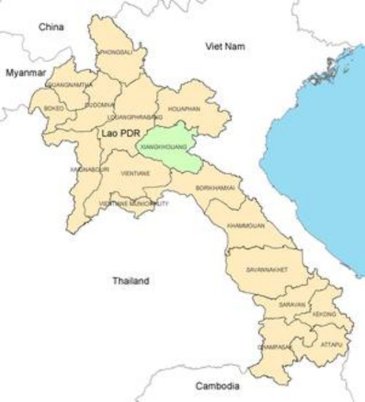
Deep in the heart of the Indochinese peninsula of mainland Southeast Asia lies the Lao People’s Democratic Republic, (LPDR), informally known as Muang Lao or just Laos. To the north of the country lies the Xiangkhouang Plateau, known in French as Plateau du Tran-Ninh, situated between the Luang Prabang mountain range separating Laos from Thailand, and the Annamite Range along the Vietnamese border.

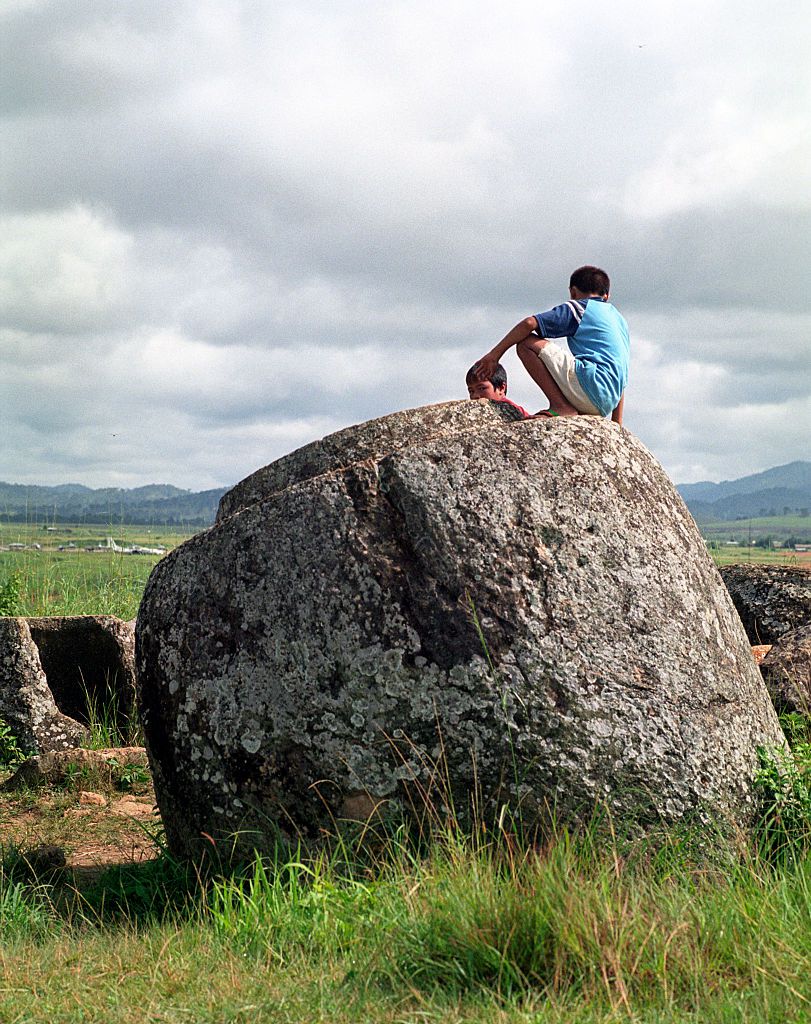
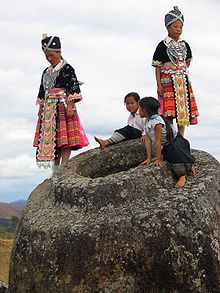
Twenty-five hundred to fifteen-hundred years ago, a now-vanished race of bronze and iron age craftsmen carved stone jars out of solid rock, ranging in size from 3 ft. to 9 ft. or more.  There are thousands of these jars, located at 90 separate sites and containing between one and four hundred specimens each.

GettyImages-543867296-57eb5c1c3df78c690f639463

Most of these jars have carved rims but few have lids, leading researchers to speculate that lids were formed from organic material such as wood or leather.

Lao legend has it that the jars belonged to a race of giants, who chiseled them out of sandstone, granite, conglomerate, limestone and breccia to hold “lau hai”, or rice beer.  More likely they were part of some ancient funerary rite, where the dead and about-to-die were inserted along with personal goods and ornaments such as beads made of glass and carnelian, cowrie shells and bronze bracelets and bells.  There the deceased were “distilled” in a sitting position, later to be removed and cremated, their remains then going through secondary burial.

laosmap

These “Plain of Jars” sites might be some of the oldest burial grounds in the world, but be careful if you go there.  The place is the most dangerous archaeological site, on earth.

With the final French stand at Dien Bien Phu a short five months in the future, France signed the Franco–Lao Treaty of Amity and Association in 1953, establishing Laos as an independent member of the French Union.

The Laotian Civil War broke out that same year between the Communist Pathet Lao and the Royal Lao Government, becoming a “proxy war” where both sides received heavy support from the global Cold War superpowers.

Concerned about a “domino effect” in Southeast Asia, US direct foreign aid to Laos began as early as 1950.  Five years later the country suffered a catastrophic rice crop failure.  The CIA-operated Civil Air Transport (CAT) flew over 200 missions to 25 drop zones, delivering 1,000 tons of emergency food.  By 1959, the CIA “air proprietary” was operating fixed and rotary wing aircraft in Laos, under the renamed “Air America”.

220px-Plainofjars_1

The Geneva Convention of 1954 partitioned Vietnam at the 17th parallel, and guaranteed Laotian neutrality.  North Vietnamese communists had no intention of withdrawing from the country or abandoning their Laotian communist allies, any more than they were going to abandon the drive for military “reunification”, with the south.

Chief of Naval Operations Admiral Arleigh Burke warned the Joint Chiefs of Staff, “If we lose Laos, we will probably lose Thailand and the rest of Southeast Asia. We will have demonstrated to the world that we cannot or will not stand when challenged”.

As the American war ramped up in Vietnam, the CIA fought a “Secret War” in Laos, in support of a growing force of Laotian highland tribesmen called the Hmong, fighting the leftist Pathet Lao and North Vietnamese communists.

Primitive footpaths had existed for centuries along the Laotian border with Vietnam, facilitating trade and travel.  In 1959, Hanoi established the 559th Transportation Group under Colonel Võ Bẩm, improving these trails into a logistical system connecting the Democratic Republic of Vietnam in the north, to the Republic of Vietnam in the south.  At first just a means of infiltrating manpower, this “Hồ Chí Minh trail” through Laos and Cambodia soon morphed into a major logistical supply line.

In the last months of his life, President John F. Kennedy authorized the CIA to increase the size of the Hmong army.  As many as 20,000 Highlanders took arms against far larger communist forces, acting as guerrillas, blowing up NVA supply depots, ambushing trucks and mining roads.  The response was genocidal.  As many as 18,000 – 20,000 Hmong tribesman were hunted down and murdered by Vietnamese and Laotian communists.

Air America helicopter pilot Dick Casterlin wrote to his parents that November, “The war is going great guns now. Don’t be misled [by reports] that I am only carrying rice on my missions as wars aren’t won by rice.”

laos

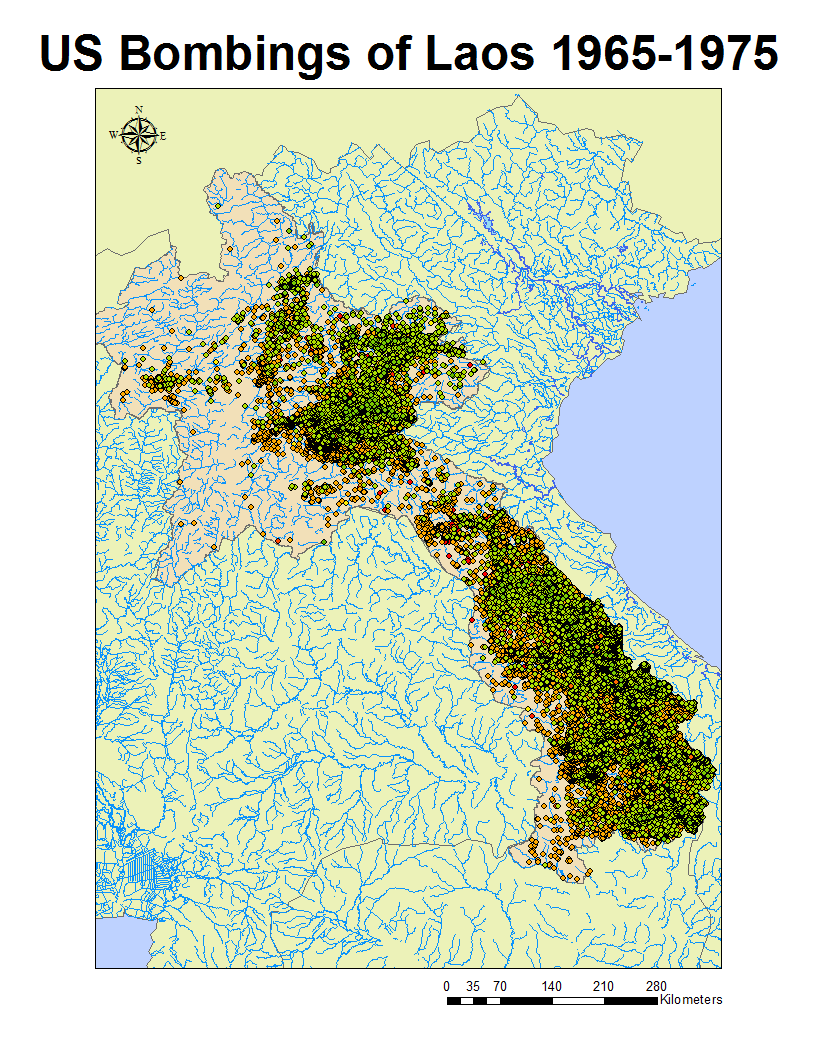
The proxy war in Laos reached a new high in 1964, in what the agency itself calls “the largest paramilitary operations ever undertaken by the CIA.”  In the period 1964-’73, the US flew some 580,344 bombing missions over the Hồ Chí Minh trail and Plain of Jars, dropping an estimated 262 million bombs.  Two million tons, equivalent to a B-52 bomber full every eight minutes, 24 hours a day, for nine years.  More bombs than US Army Air Forces dropped in all of World War 2 making Laos the most heavily bombed country, per capita, in history.

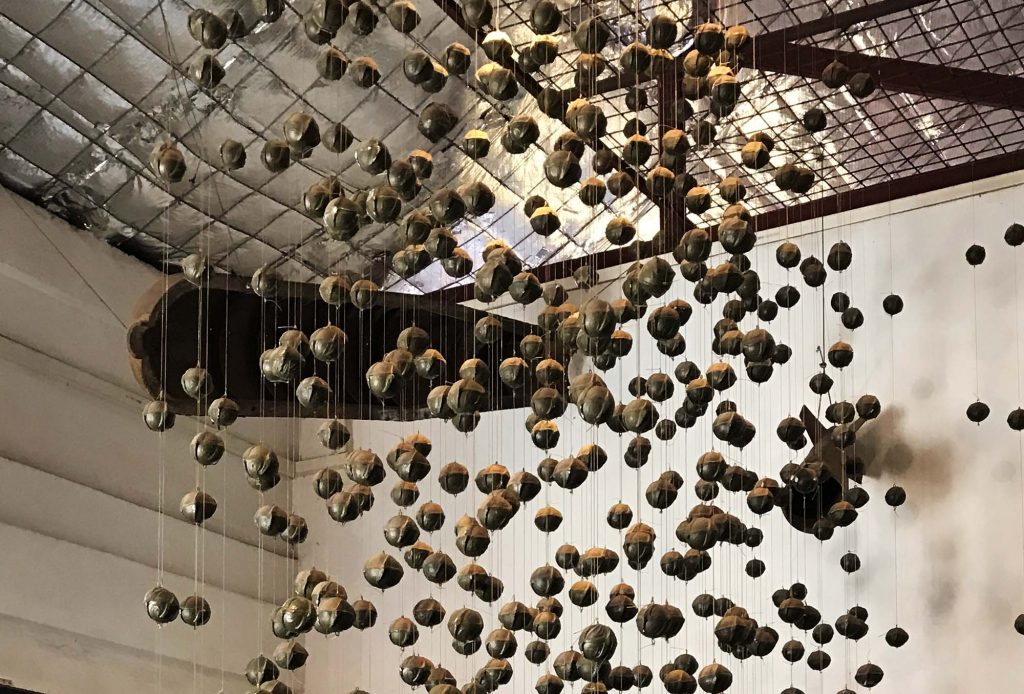
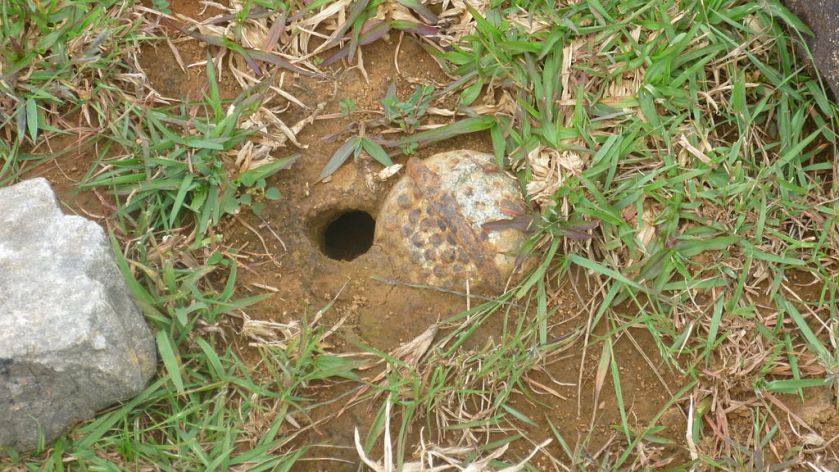
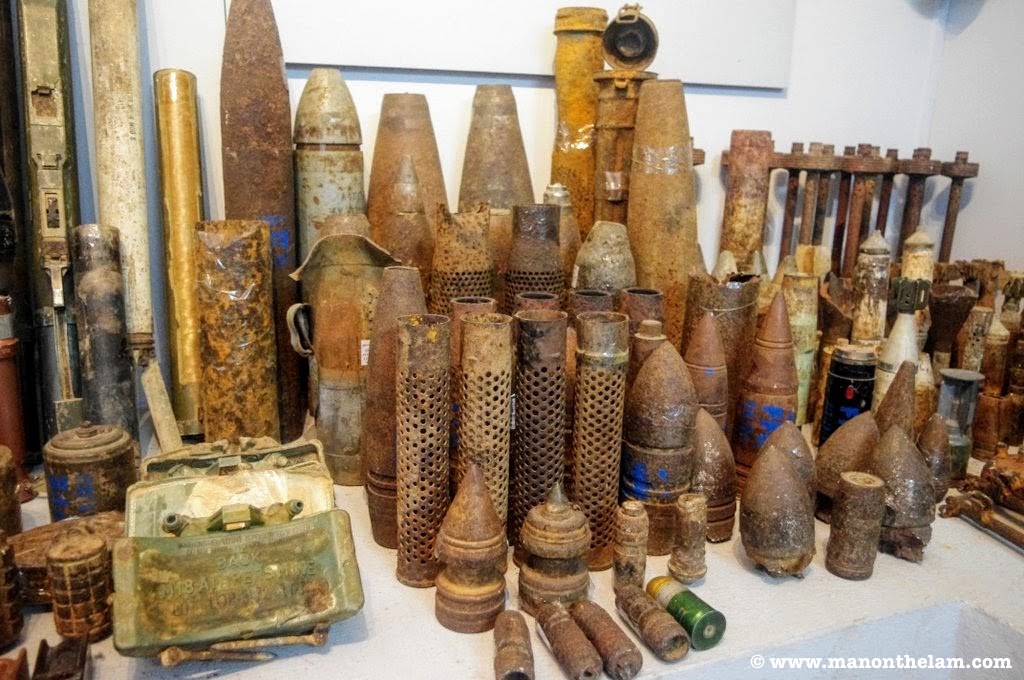
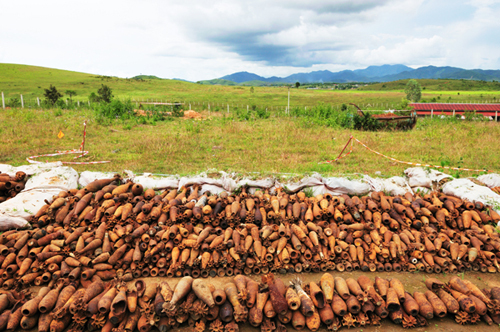
There were all types of bombs from 3,000-pound monsters to smaller “big bombs” weighing hundreds of pounds to “cluster munitions”, canisters designed to open in flight showering the earth with 670 “bomblets” the size of a tennis ball packed with explosives and pellets.  It’s estimated that 30% of these munitions failed to explode. 80 million of them, the locals call them “bombies”, set to go off with the weight of a foot, a wheel or the touch of a garden hoe and every one packing a killing radius, of 30 meters.

1024px-BLU-26_cluster_sub-munition
Unexploded cluster sub-munition, probably a BLU-26 type. Plain of Jars, Laos

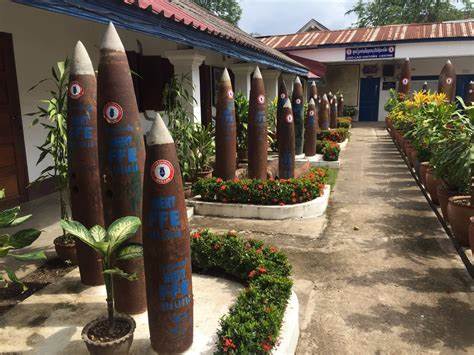
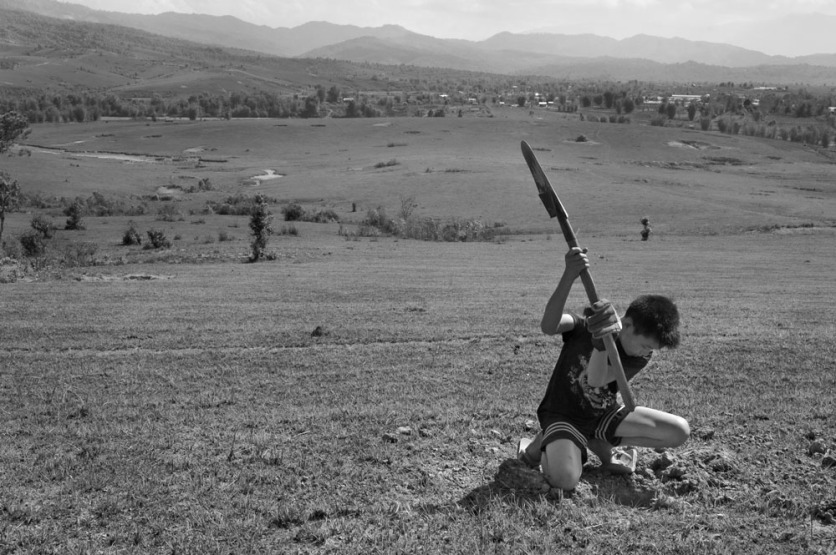
Since the end of the war some 20,000 civilians have been killed or maimed by unexploded ordnance, called “UXO”.  Four in ten of those, are children.

Removal of such vast quantities of UXO is an effort requiring considerable time and money and no small amount of personal risk.  The American Mennonite community became pioneers in the effort in the years following the war, one of the few international Non-Governmental Organizations (NGO’s) trusted by the habitually suspicious communist leadership of the LPDR.

On February 18, 1977, Murray Hiebert, now senior associate of the Southeast Asia Program at the Center for Strategic and International Studies (CSIS) in Washington, D.C.  summed up the situation in a letter to the Mennonite Central Committee, US:  “…a formerly prosperous people still stunned and demoralized by the destruction of their villages, the annihilation of their livestock, the cratering of their fields, and the realization that every stroke of their hoes is potentially fatal.”

Years later, Unesco archaeologists worked to unlock the secrets of the Plain of Jars, working side by side with ordnance removal teams.

In 1996, United States Special Forces began a “train the trainer” program in UXO removal, at the invitation of the LPDR government. Even so, Western Embassy officials in the Laotian capitol of Vientiane believed that, at the current pace, total removal will take “several hundred years”.

On May 14–15, 1997, the Lao Veterans of America and others held a two day series of events honoring the contributions of ethnic Hmong and others to the American war effort, formally dedicating the Laos Memorial, at Arlington National Cemetery. It was a stunning reversal of policy, an acknowledgement of a “secret war”, the existence of which which had been denied, for years.

In 2004, bomb metal fetched 7.5 Pence Sterling, per kilogram.  That’s eleven cents, for just over two pounds.  Unexploded ordnance brought in 50 Pence per kilogram in the communist state, inviting young and old alike to attempt the dismantling of an endless supply of BLU-26 cluster bomblets.  For seventy cents apiece.

Today, Laos is a mostly agricultural economy with rice accounting for 80% of arable land. Other crops include corn, cotton, fruit, mung beans, peanuts, soybeans, sugarcane, sweet potatoes, tobacco, and opium. Increasingly, highland farmers are turning to coffee, a more profitable crop bringing with it the expectation, that the farmer will be able to educate his children.

Profitable yes, but not without risk. The CIA’s “secret war” in Laos has been over for near a half-century. To this day cluster submunitions and other UXO kill and maim dozens, every year.

May 14, 1915 Canary Girls

Munitions workers began to complain of headaches and nausea and skin conditions, like hives. Constant exposure to toxic chemicals turned the hair and skin of these women a brilliant shade of yellow, or orange. Expectant “Canary Girls’ gave birth to bright yellow “Canary Babies”.

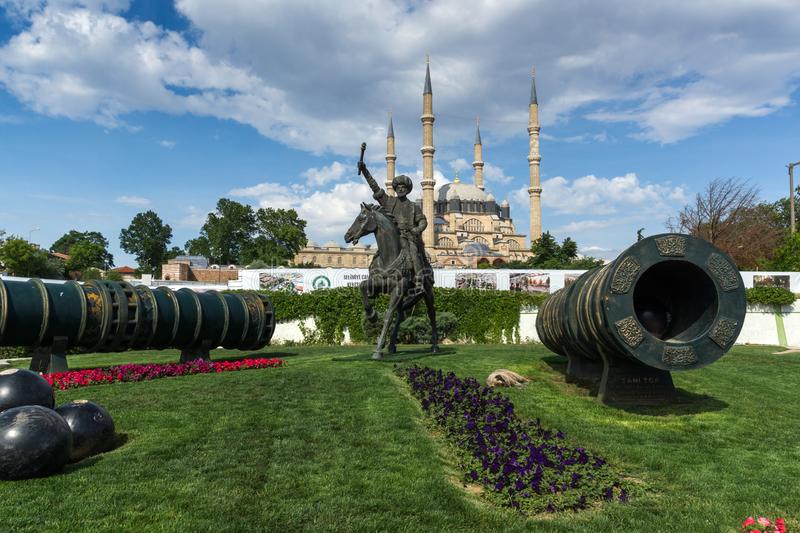
Since the age of antiquity, heavy weapons have tilted the scales of battlefield strategy. The first catapult was developed in Syracuse, in 339 BC. The Roman catapult of the 1st century BC hurled 14-pound stone balls against fixed fortifications. The age of gunpowder brought new and ghastly capabilities to artillery. In 1453, the terrifying siege guns Mehmed II faced the walls of Constantinople, hurling 150-pound missiles from barrels, wide enough to swallow a grown man.

Monument to Ottoman Sultan Mehmed II, Edirne, East Thrace, Turkey

Such weapons were slow to reload and sometimes, unreliable. Mehmed’s monsters took a full three hours to fire. Seven years later, King James II of Scotland was killed when his own gun, exploded.

This experimental three-shot cannon belonging to Henry VIII burst, with predictable results for anyone standing nearby.

By the Napoleonic wars, artillery caused more battlefield casualties than any other weapon system.

At that time such weapons were virtually always, loaded at the muzzle. The first breech loaders came about in the 14th century but it would take another 500 years, before precision manufacturing made such weapons reliable, and plentiful.

Breech loading vastly increased rate-of-fire capabilities. By the end of the 19th century, technological advances brought new and hideous capabilities to what Josef Stalin would come to call, the “God of War’.

Heretofore, the massive recoil of such weapons required a period of time to re-set, re-aim and reload. In the 1890s, French soldier Joseph Albert DePort solved that problem with a damping system enabling the barrel to recoil, leaving the gun in place. Recoilless weapons could now be equipped with shields keeping gun crews as close as possible while smokeless powder meant that gunners could clearly see what they were shooting at.

By World War 1, trained crews serving a French 75 could fire once every two seconds. Massed artillery fired with such horrifying rapidity as to resemble the sound, of drums.

This clip is five minutes long. Imagine finding yourself under “drumfire”, for days on end.

While guns of this type were aimed by lines of sight, howitzers fired missiles in high parabolic trajectories to fall on the heads, of the unlucky.

The great Field Marshall Helmuth von Moltke (the elder) once said, “No battle plan ever survives contact with the enemy”. So it was in the tiny Belgian city of Ypres where the German war of movement met with weapons of the industrial revolution.

A million men were brought to this place, to kill each other. The first Battle for Ypres, there would be others, brought together more firepower than entire wars of an earlier age. The losses are hard to get your head around. The British Expeditionary Force (BEF) alone suffered 56,000 casualties including 8,000 killed, 30,000 maimed and another 18,000 missing, of whom roughly one-third, were dead.

British 18-pounder

The breakdown is harder to get at for the other combatants but, all in, Germany suffered 135,000 casualties, France 85,000 and Belgium, 22,000. The three week struggle for Ypres cost the lives of 75,000 men, enough to fill the Athens Olympic Stadium, in Greece. Soldiers on all sides dug frantically into the ground, to shelter from what Private Ernst Jünger called, the “Storm of Steel”.

First drum fire in the war, in the Champagne, Lasted 75 hours, from Sept. 22 to 25. Was directed against 20 Miles of the German Front. (Photo by Hulton Archive/Getty Images)

The French alone expended 2,155,862 shells during the Anglo-French offensive called the second battle of Artois, fought May 9 through June 18, 1915, a fruitless effort to capitalize on German defenses, weakened by the diversion of troops to the eastern front. The objective, to flatten the German “Bulge” in the Artois-Arras sector.
Immediately to the French left, the British 6th army under Sir John French was to advance on May 9 in support of the French offensive, taking the villages of Aubers, Fromelles and Le Maisnil and the elevation known as Aubers Ridge.

The battle of Aubers was an unmitigated disaster. The man-killing shrapnel rounds so valued by pre-war strategists were as nothing, against fortified German earthworks. No ground was taken, no tactical advantage gained despite British losses, ten times that on the German side.

War correspondent Colonel Charles à Court Repington sent a telegram to The Times, complaining of the lack of high-explosive shells. On May 14 The Times headline read: “Need for shells: British attacks checked: Limited supply the cause: A Lesson From France”. The article placed blame squarely on the government of Herbert Asquith who had stated as recently as April 20, that the army had sufficient ammunition.

“We had not sufficient high explosives to lower the enemy’s parapets to the ground … The want of an unlimited supply of high explosives was a fatal bar to our success”.

The Times, May 14, 1915

For British politics at home, the information fell as a bombshell, precipitating a scandal known as the Shell Crisis of 1915.

Governments were slow at first to understand the prodigious appetites, of this war. Fixed trench lines led to new rail construction capable of providing cataracts of munitions, to front lines. The problem came from a munitions industry, unable to supply such demands.

Men shipped off to the war by the millions leaving jobs vacant and families at home, without income. Women represented a vast pool of untapped labor. Despite social taboos against women working outside the home, wives, sisters and mothers came flooding into the workplace.

By the end of the war some three million women joined the workforce a third of whom, worked in munitions factories.

Ever conscious of husbands, sons and sweethearts at the front, women worked grueling hours under dangerous conditions. “Munitionettes” manufactured cordite propellants and trinitrotoluene (TNT) explosives, hand filling projectiles from individual bullets to giant shells.

At the front, the war was an all-devouring monster consuming men and munitions at rates unimagined, in earlier conflicts. During the first two weeks of the 3rd Battle for Ypres, better known as Passchendaele, British, Australian and Canadian artillery fired 4,283,550 shells at their German adversary.

Munitions workers began to complain of headaches and nausea and skin conditions, like hives. Constant exposure to toxic chemicals turned the hair and skin of these women a brilliant shade of yellow, or orange. Expectant “Canary Girls” gave birth to bright yellow “Canary Babies”.

Nothing could be done and the yellow tended to fade over time but not a very different yellow, caused by toxic jaundice.

The work was well paid but exhausting, often seven days a week. Grueling 14-hour shifts led to girls as young as 14 coming into the workforce, but it wasn’t enough. “History of Yesterday” writes that two women on average died every week from toxic chemicals, and workplace accidents. One 1918 explosion at the National Shell Filling Factory №6 near Chilwell caused the death of 130 women.

The modern reader can scarcely imagine the crushing burdens of these women caring for families at home and ever conscious of sons, brothers and sweethearts, struggling to survive in this all consuming war.

The canary colored hair and skin would fade in time, but not the long term health effects of daily exposure to toxic substances. It didn’t matter. Twenty years later another generation would do it, all over again.

May 12, 1864 A Mighty Oak

Our ancestors were still English colonists when this particular acorn first reached toward the warmth, of the sun. On this day in 1864 that sapling stood in a quiet meadow in Spotsylvania Virginia, itself a mighty oak some 22-inches, in diameter.

Two roads diverged in a wood, and I — I took the one less traveled by, and that has made all the difference.

Robert Frost

According to legend, the infant Temujin was born sometime between 1155 and 1162 with a blood clot clutched in his fist, the size of a knucklebone. Mongol folklore holds such a sign to be prophetic. That one day the child would grow to be a great leader. Today we remember the young boy Temujin as the great and terrible chieftain, Genghis Khan.

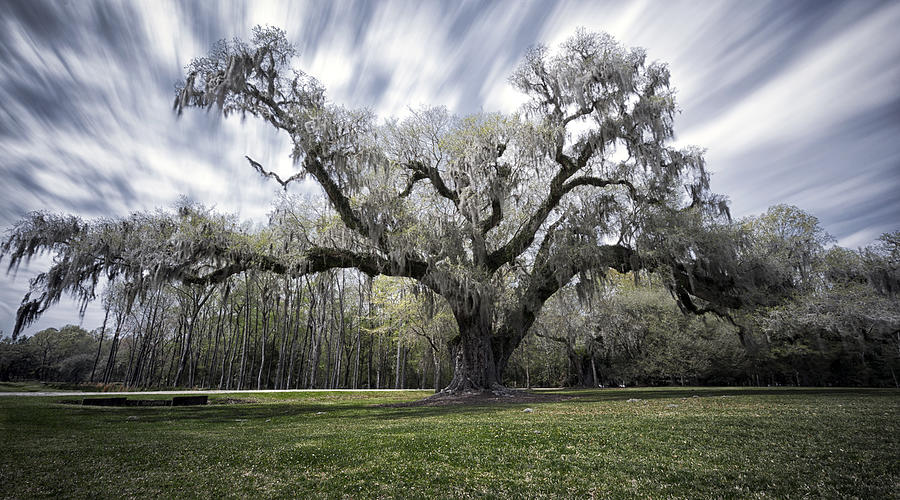
Around that time some 6,500 miles to the west, an acorn sprouted from the soil in a place we now call Wyllys Hyll in Hartford, Connecticut. Through countless summers and frigid winters the sapling grew and transformed to become a mighty oak tree. Dutch explorer Adrian Block described the tree in a log, written in 1614. Twenty years later, local natives spoke with Samuel Wyllys, an early settler who had cleared the ground around it. Tribal elders spoke of this oak and its ceremonial planting, all those centuries before. They pleaded with Wyllys to preserve the great tree.

“It has been the guide of our ancestors for centuries as to the time of planting our corn; when the leaves are the size of a mouse’s ears, then is the time to put the seed into the ground”.

Unknown
Hat Tip to photographer Robert Fawcett for this image, of a mighty oak

In 1662 Governor John Winthrop won from King Charles II a charter, legitimizing the settlements of Connecticut and establishing the colonists’ right, of self-rule. Twenty five years later, King James II wanted the New England and New York colonies integrated under central authority and sought to rescind, the charter. Sir Edmund Andros, hand selected to rule over this “Dominion of New England” marched on Hartford at the head of an armed force to seize the charter.

The next part fades into legend but the story is, that Governor Robert Treat and a group of colonists sat glaring across the table at Andros, and a group of his allies. The charter lay between them, on a table. The debate raged for hours when, somehow, the lights went out. On relighting the candles only moments later King Charles’ charter, was gone. Captain Joseph Wadsworth had snatched up the parchment and stashed it in a hollow, in that great old tree.

Fun Fact: The timber from 2,000 southern live oak trees was harvested in Georgia and used to construct the hulls of USS Constitution and five other US Navy frigates, constructed under the Naval Act of 1794. Today, “Old Ironsides” is the oldest commissioned warship on the planet, still afloat.

Despite all that the politicians folded and Andros made his appointments, but colonists never did vote to submit. With the Spring of 1689 came news of the Glorious Revolution, in England. King James had fled to France and Edmund Andros was arrested. So it is the New England colonies held and kept their independence. The “Charter Oak” depicted at the top of this page remains to this day, a part of our colonial history.

The majestic old tree blew over in a storm in 1856 when firearms manufacturer Samuel Colt sent a marching band to play funeral dirges, over its fallen timbers.

Live Oaks line the entrance to the Wormsloe Plantation, in Savannah, Georgia

From the frigid forests of the north to the beaches of our southern coasts some 90 species of oak tree stand as part of our personal memories, and our American history. The Water Oak shading the Brown Chapel African Methodist Church in Selma Alabama, where Reverend Martin Luther King Jr. delivered his “We Shall Overcome” speech before setting out on a 50-mile march, to Montgomery. The Overcup Oak beside the birthplace of the 16th President of the United States, Abraham Lincoln. As a child, Helen Keller once climbed the branches of a 100-year-old Water Oak.

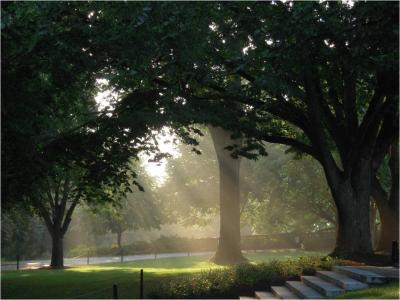
Descendants of these trees and hundreds more stand today at our nation’s most hallowed ground at Arlington, Virginia.

Arlington National Cemetery and Arboreta

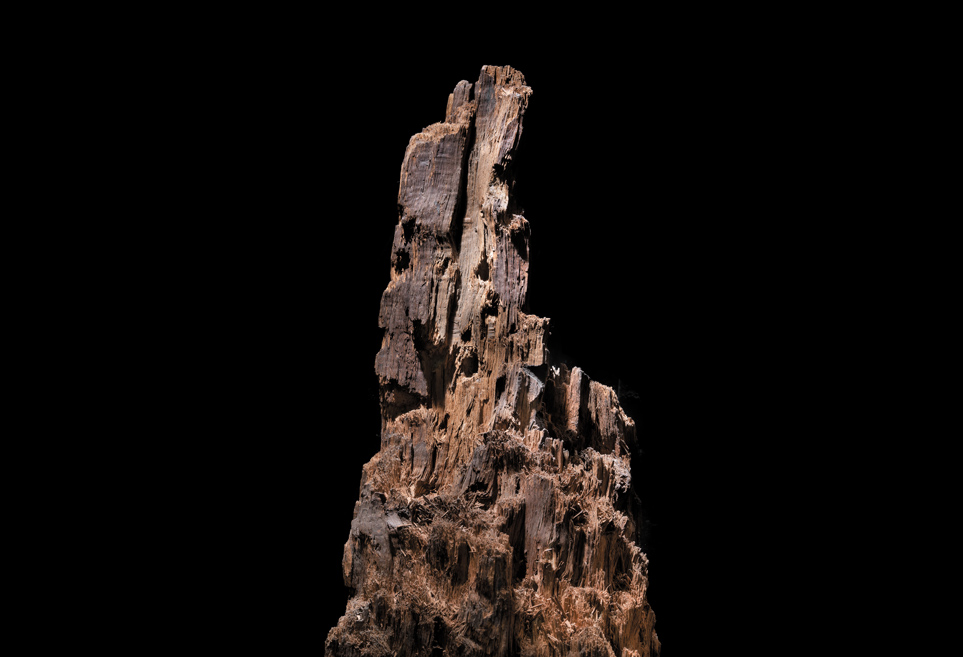
Not far away, the Smithsonian owns another oak or, more accurately, the stump of a tree hewn to the ground, by gunfire.

Our ancestors were still English colonists when this particular acorn first reached toward the warmth, of the sun. On this day in 1864 that sapling stood in a quiet meadow in Spotsylvania Virginia, itself a mighty oak some 22-inches, in diameter.

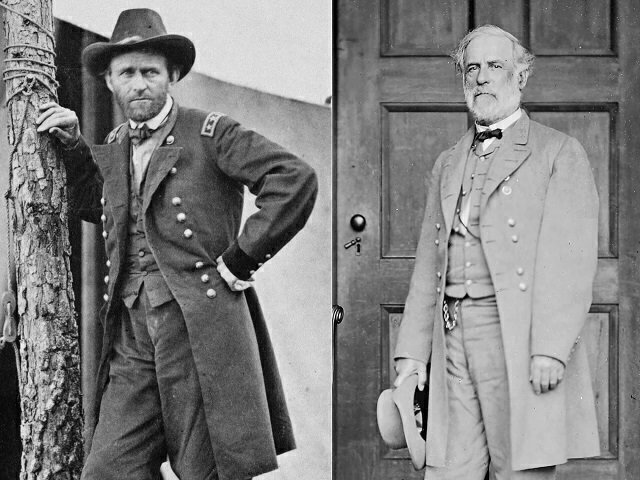
The 16th President of the United States once said of general Ulysses Grant “I need this man. He fights”. A succession of Generals had failed in the eyes of Abraham Lincoln, but not Grant. You knock him down and he’ll dust off, and keep coming at you.

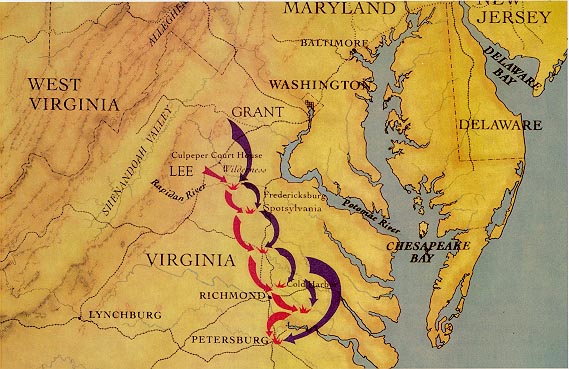
Following a terrible draw at the Battle of the Wilderness, Grant’s army disengaged from that of Robert E. Lee and moved southeast, hoping to draw the Confederates into battle under more favorable conditions. It was a race to the critical crossroads of Spotsylvania Courthouse. Elements of Lee’s forces won the race and began to entrench. Off and on fighting began on May 8 and lasted, through May 21.

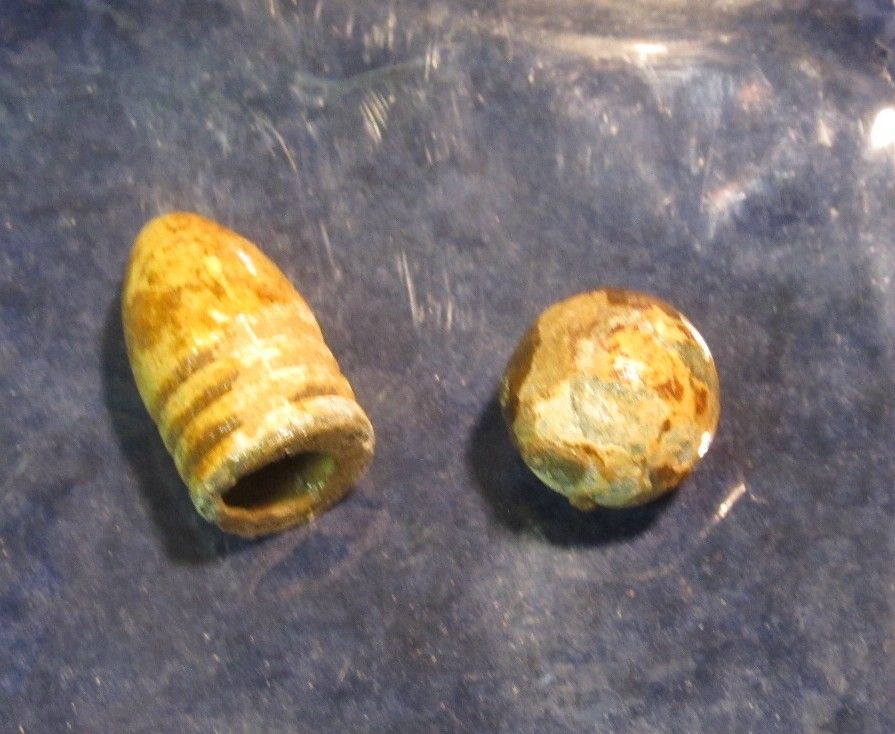
On May 12 some 1,200 Confederate troops waited in that once quiet meadow, sheltered behind an earthwork and timber revetment shaped, like a mule’s shoe. At the center stood that majestic oak. Some 5,000 Union troops assaulted the position from the Army of the Potomac. Some of the most savage and sustained fighting of the Civil War raged on all sides, of that tree. When it was over some twenty hours later that mighty oak, was no more. The tree was felled by small arms fire at a place we remember, as the “Bloody Angle’.

Both sides declared victory at Spotsylvania Courthouse and the war moved on. To places called Yellow Tavern (May 11), Meadow Bridge (May 12), North Anna (May 23–26), and others. By late June, Lee was forced into the nightmare position of defending the Confederate Capital, at Richmond.

Taken together Grant’s “Overland Campaign” carried out over those six bloody weeks in May and June resulted in some of the highest casualties, of the Civil War. Casualties crippling to Federal troops but in the end mortal, to the cause of southern independence.

Overland map, May and June, 1864

The modern mind is left only to contemplate, perhaps over the image of that tree stump. To imagine, what it all sounded like. What it all looked like. What it all smelled like.

That tree stump is all that remains of the apocalypse of May 12, of an oak tree surrounded by the cataclysm of Civil War and carried out inside a meadow, shaped like a mule’s shoe.

H/T Smithsonian, for this image of a once majestic oak tree. Felled, one bullet at a time, near a place called Spotsylvania.

Afterward

Many among us trace our personal ancestry, through the Civil War. For 52nd North Carolina infantry soldier James Tyner, the war came to an end in Spotsylvania Court House.

Tyner was captured and moved to the Federal prison camp in Elmira New York known as “Hellmira”.

There my own twice-great grandfather would spend the rest of the war, or most of it. James Tyner died in captivity on March 13, 1865. General Robert E. Lee surrendered to General Ulysses S. Grant only twenty-seven days later, at a place called Appomattox.

May 10, 1940 And What of the Mouse?

Throughout history and across cultures, having a child with a member of a hostile force is looked upon as a grave betrayal of social values.

Throughout history and across cultures, having a child with a member of a hostile force is looked upon as a grave betrayal of social values.  Often such parents, usually women, are shunned by neighbors and even family.  “War children” may experience even worse subjected to ostracism, bullying, and more.

Much is written of what takes place, when politicians send nations to war. Few take note of the innocents. The proverbial mice wishing only to go about their business while all about them, is chaos.

“When elephants fight, it is the grass that suffers”.

African Proverb

On the Eastern Front of World War 2, combat between Nazi Germany and the Soviet Union rose to proportions of apocalyptic race war, Slav against Teuton, in a paroxysm of mutual extermination that is horrifying, even by the hellish standards of that war.  Four out of every five German soldiers who died in all World War 2, died on the ‘Ostfront’.

While precise numbers are impossible to ascertain, an estimated several hundred thousand to as many as 2 million German females from 8 to 80 were raped by Red Army soldiers. Some, as many as 60 or 70 times according to historian, William Hitchcock.. Austrian women were no different nor even Soviet women, released from work camps. 

“The front-line Russian troops who did the fighting – as a woman, you didn’t have to be afraid of them. They shot every man they saw, even old men and young boys, but they left the women alone. It was the ones who came afterwards, the second echelon, who were the worst. They did all the raping and plundering. They stripped homes of every single possession, right down to the toilets”.

Anonymous German woman, living in Berlin

British military historian Antony Beevor concludes that 1.4 million women were raped in East Prussia, Pomerania and Silesia, alone. Female deaths in connection with such rapes in Germany and the butchered abortion attempts which followed, are estimated at 240,000. 4,148 Red Army soldiers were punished for such atrocities.

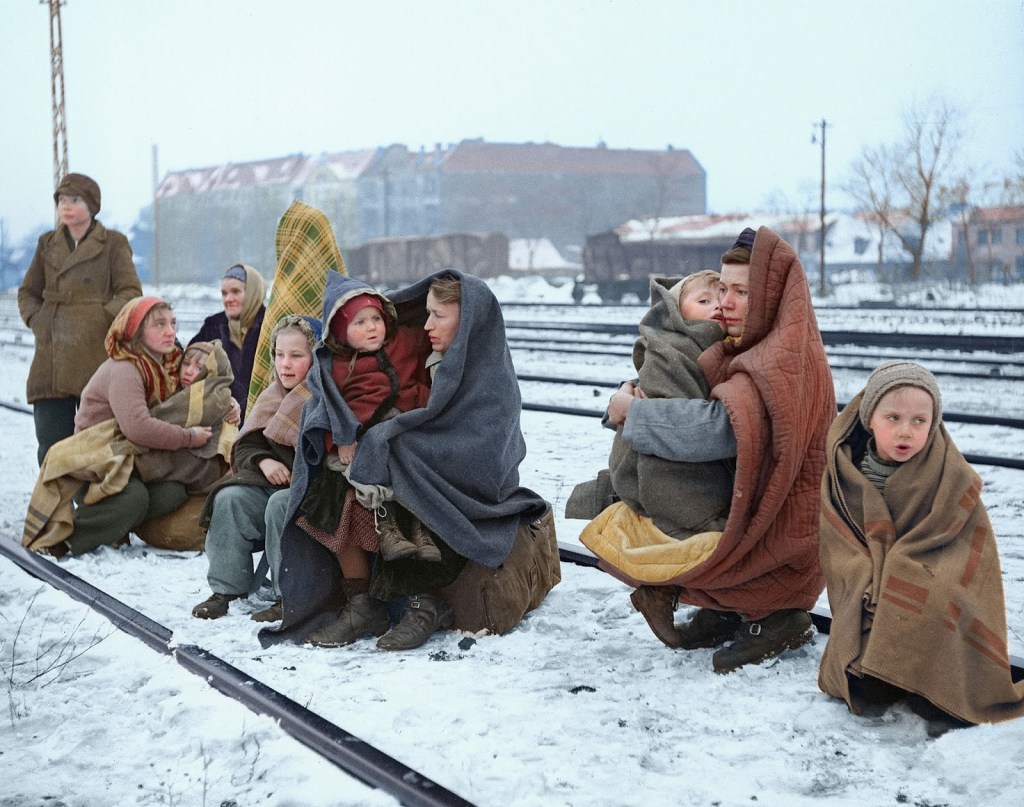
The only survivors of 150 Polish people who walked from Lodz, Poland to Berlin Huddle in blankets, on December 14, 1945. They are waiting by a railway track hoping to be picked up by a British army train and given help. (Fred Ramage—Keystone/Getty Images / Photo colorization by Sanna Dullaway for TIME)

When Yugoslav politician Milovan Djilas complained about rapes in Yugoslavia, Stalin replied that he should “understand it if a soldier who has crossed thousands of kilometres through blood and fire and death has fun with a woman or takes some trifle.”

Small surprise when Stalin’s own Chief of the Secret Police Lavrentiy Beria, was a serial rapist.

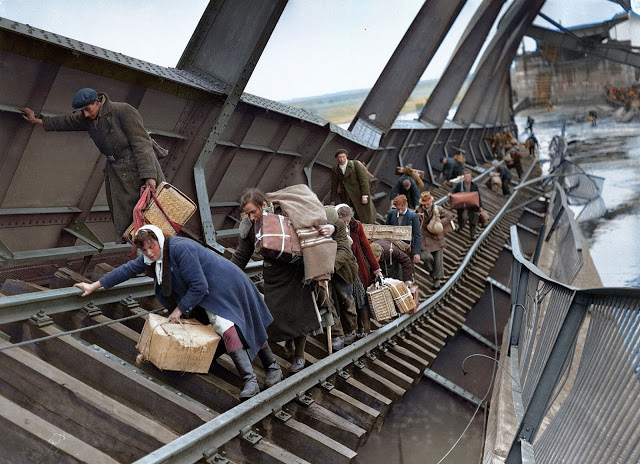
Displaced persons cross a bridge on the River Elbe at Tangermunde, which was blown up by the Germans, to escape the chaos behind German lines caused by the approach of the advancing Russians on May 1, 1945. (Fred Ramage—Keystone/Getty Images / Photo colorization by Sanna Dullaway for TIME)

In his 2007 book Taken by Force: Rape and American GIs in Europe in World War II, Northern Kentucky University sociology and criminology professor J. Robert Lilly reports that 11,040 rapes were carried out by US servicemen.

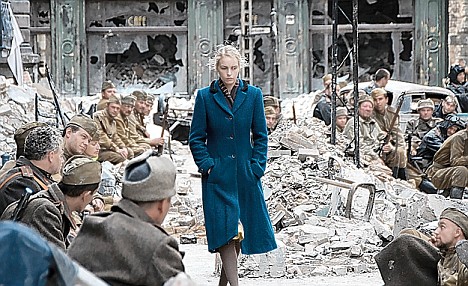
In 1959, journalist Marta Hillers wrote what was then an anonymous memoir of the weeks between April 22 and June, 1945. In it, Hillers describes being gang raped by Red Army soldiers before forming a relationship with a Soviet officer, for her own protection. Marta Hillers died in 2001. Seven years later, her account was retold in the German feature film, Eine Frau in Berlin. (A Woman in Berlin).

German woman walks by Soviet troops in a scene from the 2008 film, A Woman in Berlin

Propaganda banners and posters appeared all over the Soviet-occupation zone and later East Germany, proclaiming the heroism of those who had smashed the Nazi war machine and paved the way to Soviet-German friendship. The plight of tens of thousands of “Russian children”, mostly fatherless, was taboo.

All these decades later, former East German Jan Gregor can still remember the day his mother told him that she was “made pregnant by force”.

An estimated 100,000 “Amerasian” children were born to Asian mothers and U.S. servicemen during WWII, the Korean War, and war in Vietnam. 

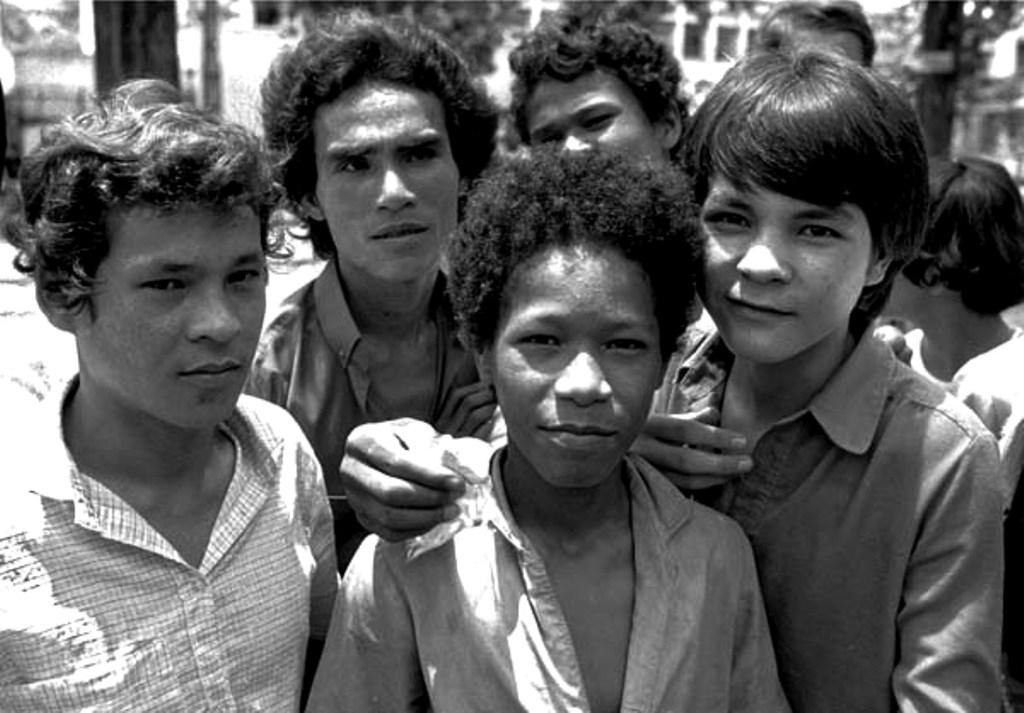
Some 37,000 children were fathered by American soldiers with German and Austrian women in the 10 years following the German surrender. Locals disapproved of such relations, not only because these Americans had recently been their enemies, but also because such children often became “wards of the state” in local economies already impoverished, by war.  The “brown children” of black GIs and German mothers were particularly difficult to adopt out in what was heretofore a racially homogeneous culture.  Many were adopted by American couples and families of African ancestry, back in the States.

Military forces of Nazi Germany invaded the neutral Scandinavian Kingdoms of Denmark and Norway on April 9, 1940.  Denmark fell in a day. Norwegian armed resistance ceased within two months, when civil rule passed to the Reichskommissariat Norwegen (Reich Commissariat of Norway).  The neutral Scandinavian countries remained under Wehrmacht occupation, for the next five years.

Sometimes, relationships formed between German occupying troops and native women.  The racially obsessed Nazi regime was happy to encourage such relations, particularly in Norway, where local women were considered to be of pure, “Aryan” ancestry.  Some such relationships were consensual.  Many were anything but.  Some 10,000 to 12,000 children were born to Norwegian women and German fathers, the most famous being Anni-Frid Synni Lyngstad of the Swedish pop group ABBA, who fled Norway after the war for fear of reprisals.

For nearly a thousand years, the administration of Iceland was all but indistinguishable from that of Denmark and Norway.  The Act of Union established Iceland as a fully sovereign state in 1918, an independent country in a personal union through a common monarch, with the Kingdom of Denmark. 

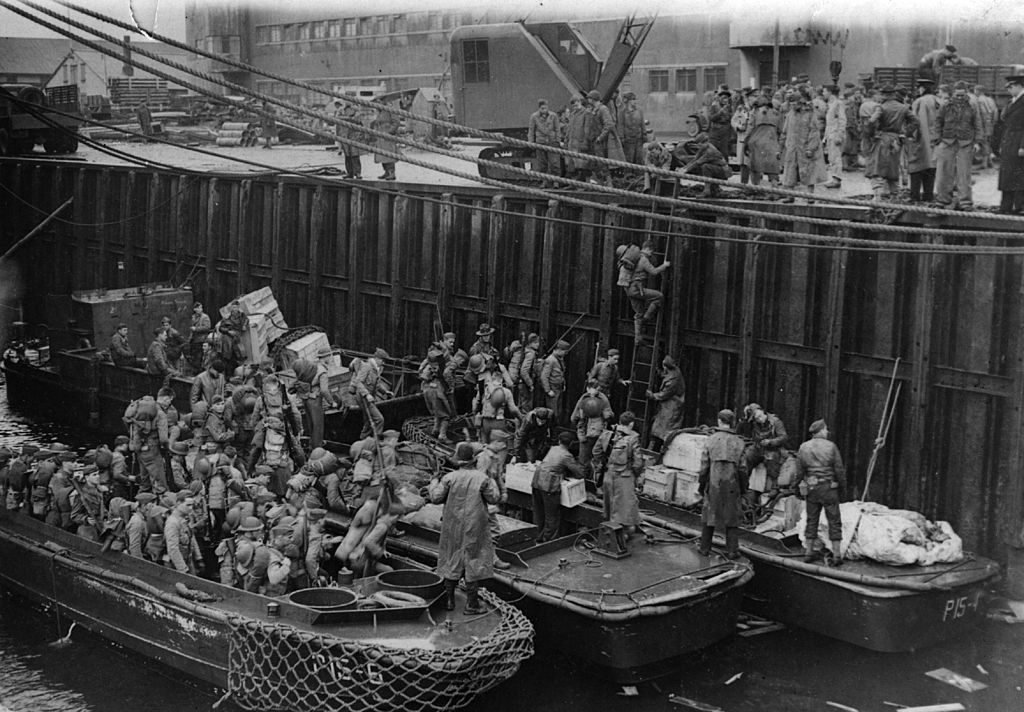
Following the allied withdrawal from Dunkirk, every nation on the European mainland was either neutral, or under Nazi occupation. Alarmed at the possibility of German military presence to their north, British authorities invited the neutral nation Iceland to join the war as “as a belligerent and an ally,” following the collapse of Denmark. That invitation, was rejected.

On this day in 1940, the United Kingdom invaded Iceland, an initial force of 746 British Royal Marines disembarking at the Icelandic capital of Reykjavík. 

The British invasion of Iceland never resembled the “shooting war” in Europe.  The government complained that its neutrality had been “flagrantly violated” and demanded compensation, but principle opposition took the form of hordes of civilians, who crowded in to see what was happening.  Icelandic public opinion was sharply divided at the invasion and subsequent occupation.  Many described it all as the “blessað stríðið“, the “Lovely War”, the building of a roads, hospitals, harbors, airfields and bridges across the nation a boon to the Icelandic economy.  Others resented the occupation, which rose to half the native male population.

Sexual relationships between foreign troops and local women were severely frowned upon. Such women often accused of being traitors, even prostitutes. 

In 1941, the Icelandic Minister of the Judiciary investigated “The Situation”.  Upset that foreign troops were “taking away” women from friends and family, police investigated over 500 women for sexual with soldiers and determined, most had been consensual.  Two facilities opened to house such women in 1942 but both closed, within a year. Two-hundred fifty-five ástandsbörn (‘children of the situation’) were born of such relationships.  332 Icelandic women married foreign soldiers.

It has been said that, when governments make war, it’s the everyday Joe and the Nigel, the Fritz, Pierre and the Ivan down the street, who must do the fighting, the bleeding, and the dying.  It may well be added. It’s usually left to the mice, to pick up the pieces.

May 5, 1945 Changing Sides

On this day in 1945, a motley group of civilians joined forces with American GIs and a handful of Wehrmacht soldiers to fight the fanatics, of the Nazi SS.

According to the CDC, cancer is the second leading cause of death in the United States second only, to heart disease. The #3 leading cancer afflicts the lungs, and bronchi.

In 1878 a scant 1 percent of all malignant tumors occurred in the lungs. Mass production and mass marketing of cigarettes, changed all that. By 1918, that number had increased to one in ten.

The American Cancer Society first published studies confirming the link between lung cancer and smoking nearly a decade after World War 2. British epidemiologist Sir Richard Doll was knighted in 1971 for similar research but the earliest such work, occurred in Nazi Germany.

German physician Fritz Lickint first wrote in 1929 of the connection between smoking, and lung cancer. Ten years later German scientist Franz Müller presented the first epidemiological study linking tobacco use, and cancer.

When Nazis came to power, the new government would tolerate no threat to the health of the Aryan “master race”. Hitler himself quit a two pack a day habit back in 1919. Benito Mussolini quit smoking and drinking, in his 20s. For the fascist states anti-smoking, became a crusade.  By the start of WWII der Führer had a standing offer of a gold watch to anyone among his inner circle, who quit the habit. 

“Brother national socialist, do you know that your Fuhrer is against smoking and thinks that every German is responsible to the whole people for all his deeds and omissions, and does not have the right to damage his body with drugs?”

Adolf Hitler

In 1942, Itter Castle became headquarters for the “German Association for Combating the Dangers of Tobacco”.

Schloss Itter (Itter Castle) in July 1979. Photo by S.J. Morgan.

Itter Castle appeared in the land records of the Austrian Tyrol as early as 1240.  When Germany annexed Austria in 1938, Schloss Itter was first leased and later requisitioned outright by the German government for unspecified “Official use”.

Nazi anti-smoking Propaganda
Nazi anti-tobacco propaganda

By April 1943, Itter became a prison for individuals of value to the Reich.  Among these were the tennis player Jean Borotra and former French Prime Ministers Édouard Daladier and Paul Reynaud.  Former commanders-in-chief Maxime Weygand and Maurice Gamelin were interned in Schloss Itter as was Marie-Agnès Cailliau, the elder sister of Charles de Gaulle. 

A number of Eastern Europeans were likewise imprisoned at Itter, mostly employed in maintenance and other menial work around the castle.

In the early weeks of 1945, the 23rd Tank Battalion of the American 12th Armored Division fought its way across France, through Germany and into the Austrian Tyrol.  27 year-old 1st Lieutenant John “Jack” Lee Jr. was leading the three tank “Company B’, spearheading the drive into Kufstein and on to Munich.  The unit had just fought a pitched battle at a German roadblock before clearing the town.  With lead elements of the 36th Infantry moving in to take possession on May 4, Lee’s unit could finally take a rest.

3 May 45 French and Belgian soldiers as well as civilians shake the hands and greet Yanks entering Innsbruck 824th TD

Back at Itter, the last commander of the Dachau concentration camp, Eduard Weiter, had fled his command and made his way to the safety of Itter Castle.  Weiter was murderedon may 2 by an unnamed SS officer, for insufficient devotion to the cause.  Fearing for his own life, Itter commanding officer Sebastian Wimmer fled the Castle on May 4, followed by his guards.  The now-former prisoners of Schloss Itter were alone for now but the presence of SS units in the area made it imperative. They had to do…something. 

By this time, Wehrmacht Major Josef Gangl and a few of his soldiers had changed sides, joining the Austrian resistance in Wörgl against roving bands of SS fanatics, then in possession of the town.

While his fellow prisoners broke into the weapons room and armed themselves with pistols, rifles, and submachine guns, Zoonimir Cuckovic, AKA “André”, purloined a bicycle and went looking for help.

André’s mad bicycle ride resulted in the one of the strangest rescues in military history. Lieutenant Lee tapped eight volunteers and two tanks, his own “Besotten Jenny” and Lt. Wallace Holbrook’s “Boche Buster.”  Riding atop the two Shermans were six members of the all–black Company D, 17th Armored Infantry Battalion, a couple crews from the 142nd Infantry Regiment and the Wehrmacht’s own Josef Gangl with a Kübelwagen full of German soldiers, bringing up the rear.

Kübelwagen

It was late afternoon as the convoy left for Castle Itter.  Leaving Boche Buster and a few Infantry to guard the largest bridge into town, what remained of the convoy fought its way through its last SS roadblock in the early evening, roaring across the last bridge and lurching to a stop in front of Itter’s gate as night began to fall. 

Inside of Itter prisoners looked on, in dismay.  They had expected a column of American tanks and a heavily armed infantry force.  What they had here, was a single tank with seven Americans, and a truckload of armed Germans.

The castle’s defenders came under attack almost at once, by harrying forces sent to assess their strength and to probe the fortress for weakness.  Lee ordered French prisoners to hide inside but they refused, remaining outside and fighting alongside American and German soldiers.  Frantic calls for reinforcements resulted in two more German soldiers and a teenage Austrian resistance member arriving overnight, but that would be all.

ittercdamage

The Totenkopf, or “Death’s head” units was the SS organization responsible for concentration camp administration for the Third Reich and some of the most fanatical soldiers of WWII.  Even at this late date SS units were putting up fierce resistance across northern Austria.  On the morning of May 5 100 to150 of them, attacked Schloss Itter.   Fighting was furious around the castle, the one Sherman providing machine-gun fire support until being destroyed by a German 88mm gun.  By early afternoon Lee was able to get a desperate plea for reinforcements through to the 142nd Infantry, before being cut off. 

Aware that he’d been unable to give complete information on the enemy’s troop strength and disposition, Lee accepted a gallant offer of assistance from the resident tennis pro, Jean Borotra.

Jean_Borotra

Literally vaulting over the castle wall, the tennis star ran through a gauntlet of SS strongpoints and ambushes to deliver his message, before donning an American uniform to help fight through to the castle’s defenders.  The relief force arrived around 4pm, even as defenders were firing their last ammunition.

100 SS were captured.  Lee later received the Distinguished Service Cross for his actions.  Josef Gangl was killed by a sniper while attempting to move Prime Minister Reynaud, out of harm’s way. 

So ended the first and only battle in which Americans and Germans fought, side by side. Representatives of Nazi Germany signed the unconditional surrender, two days later. Today, there’s a street in Wörgl, which bears the name of Josef Gangl. 

Paul Reynaud didn’t like Jack Lee, remembering the American Lieutenant as “crude in both looks and manners”.  “If Lee is a reflection of America’s policies”, he sniffed, “Europe is in for a hard time”.  How very…French…of him.  All that and he never did get to learn the lyrics, of the Horst Wessel song.

May 3, 1915 Lest we Forget

“We are the Dead. Short days ago
We lived, felt dawn, saw sunset glow,
Loved and were loved, and now we lie
In Flanders fields”. – John McCrae

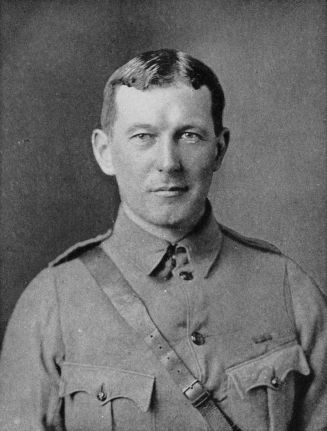
800px-Lieut.-Col._John_McCrae,_M.D.
Dr. John McCrae

John McCrae was a physician and amateur poet from Guelph, Ontario. Following the outbreak of the “Great War” in 1914, he enlisted in the Canadian Expeditionary Force at the age of 41. Based on his age and training, McCrae could have joined the medical corps, but volunteered instead to join a fighting unit as gunner and medical officer.

McCrae had previously served in the Boer War.  This was to be his second tour of duty in the Canadian military.

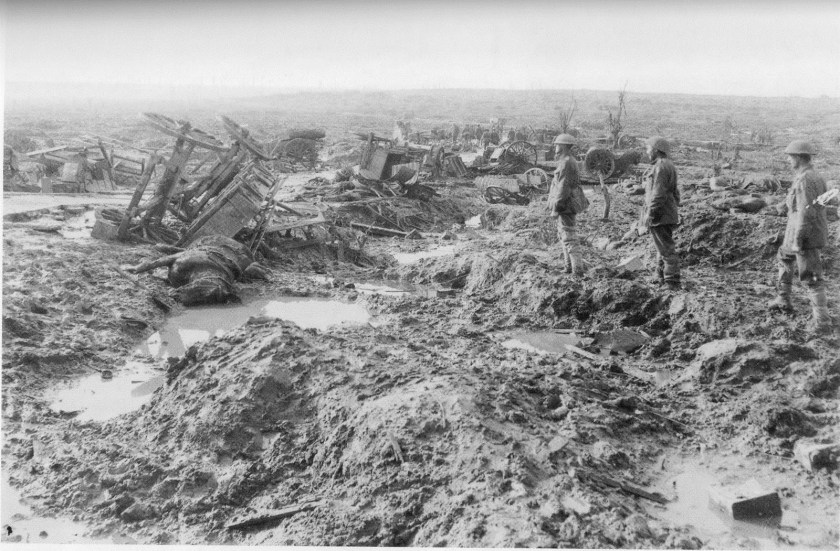
Dr. McCrae fought one of the most horrendous battles of the Great War, the second battle of Ypres, in the Flanders region of Belgium. Imperial Germany launched the first mass chemical attack in history at Ypres, attacking the Canadian position with chlorine gas on April 22, 1915. The Canadian line was broken but quickly reformed in an apocalyptic bloodletting that lasted more than two full weeks.

Dr. McCrae later described the ordeal, in a letter to his mother:

“For seventeen days and seventeen nights”, he wrote, “none of us have had our clothes off, nor our boots even, except occasionally. In all that time while I was awake, gunfire and rifle fire never ceased for sixty seconds … and behind it all was the constant background of the sights of the dead, the wounded, the maimed, and a terrible anxiety lest the line should give way”.

ypres (1)
Stop and imagine for a moment, please, what this looked like, what this smelled like, in color.

On May 3, Dr. McCrae presided over the funeral of friend and fellow soldier Alexis Helmer, who had died in the battle. He performed the burial service himself, when he noted how quickly the red poppies grew on the graves of the fallen. Sitting in the back of a medical field ambulance the following day, just north of Ypres, he composed this verse.  He called the poem, “We Shall Not Sleep”. 

Today we remember John McCrae’s composition as:

In Flanders Fields

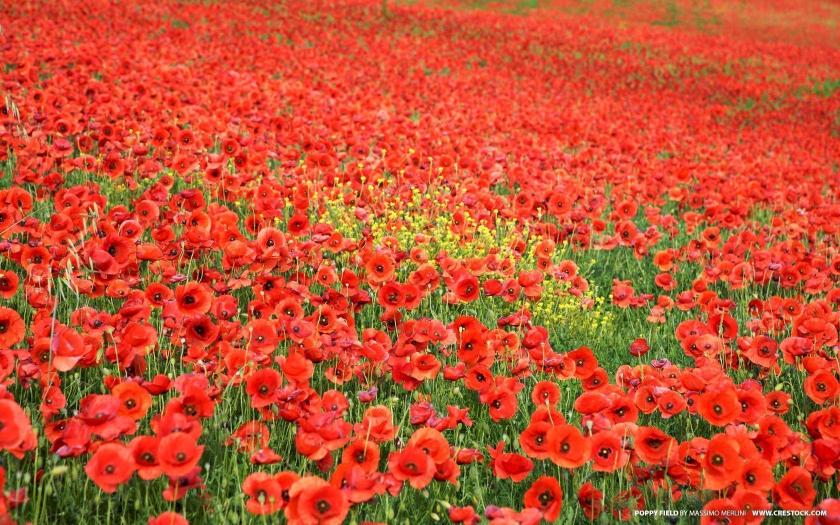
In Flanders fields the poppies blow
Between the crosses, row on row,
That mark our place; and in the sky
The larks, still bravely singing, fly
Scarce heard amid the guns below.

We are the Dead. Short days ago
We lived, felt dawn, saw sunset glow,
Loved and were loved, and now we lie
In Flanders fields.

Take up our quarrel with the foe:
To you from failing hands we throw
The torch; be yours to hold it high.
If ye break faith with us who die
We shall not sleep, though poppies grow
In Flanders fields.

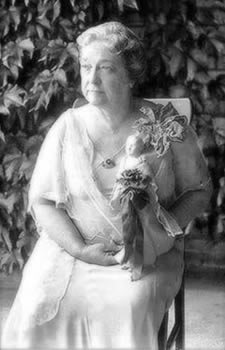
Moina Belle Michael was born August 15, 1869 near Good Hope Georgia, about an hour’s drive east of Atlanta. She began teaching at age fifteen and, over a long career, worked in nearly every part of the peach state’s education system.

In 1918, Michael was working at the YMCA Overseas War Secretaries headquarters, in New York.  Browsing through the November Ladies Home Journal she came across Dr. McCrae’s poem. It was Saturday morning, November 9, 1918.  Two days before the armistice.

49a1160c9141869ce025a820a599ef56--flanders-field-lest-we-forget

John McCrae was in a grave of his own by this time having succumbed to pneumonia, while serving the No. 3 Canadian General Hospital, in Boulogne.  He was buried with full military honors at the Wimereux cemetery where his gravestone lies flat due to the sandy, unstable soil.

Michael had seen McCrae’s poem before but it got to her this time, especially that last part:

  “If ye break faith with us who die
We shall not sleep, though poppies grow
      In Flanders fields”

Moina was so moved she made a personal pledge to “keep the faith”, vowing always to wear a red poppy, in remembrance of the dead. She scribbled down a response, a poem, on the back of a used envelope.  She called it:

We Shall Keep the Faith

Oh! you who sleep in Flanders Fields,
Sleep sweet – to rise anew!
We caught the torch you threw
And holding high, we keep the Faith
With All who died.

We cherish, too, the poppy red
That grows on fields where valor led;
It seems to signal to the skies
That blood of heroes never dies,
But lends a luster to the red
Of the flower that blooms above the dead
In Flanders Fields.

And now the Torch and Poppy Red
We wear in honor of our dead.
Fear not that ye have died for naught;
We’ll teach the lesson that ye wrought
In Flanders Fields.

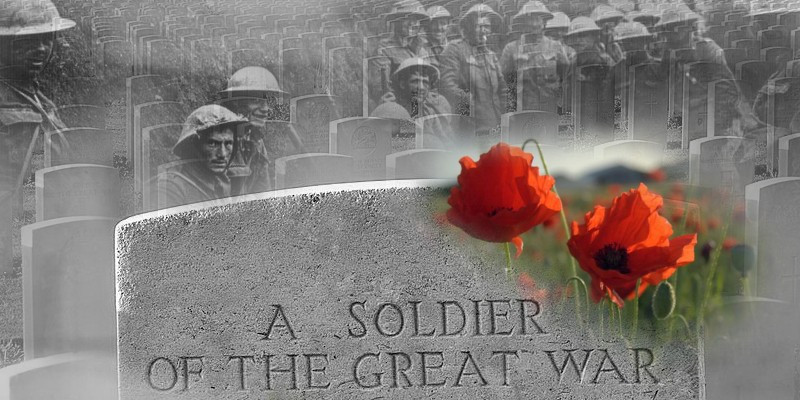
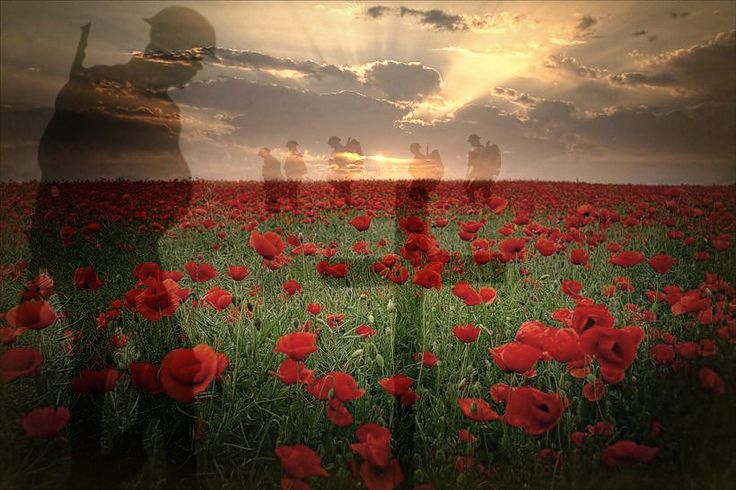
The vivid red flower blooming on the battlefields of Belgium, France and Gallipoli came to symbolize the staggering loss of life brought about by the Great War, the “War to End all Wars”. Before they had numbers, this was a war where the death toll from many single day’s fighting exceeded that of every war of the preceding century, military and civilian, combined.

ubbkvmk (1)

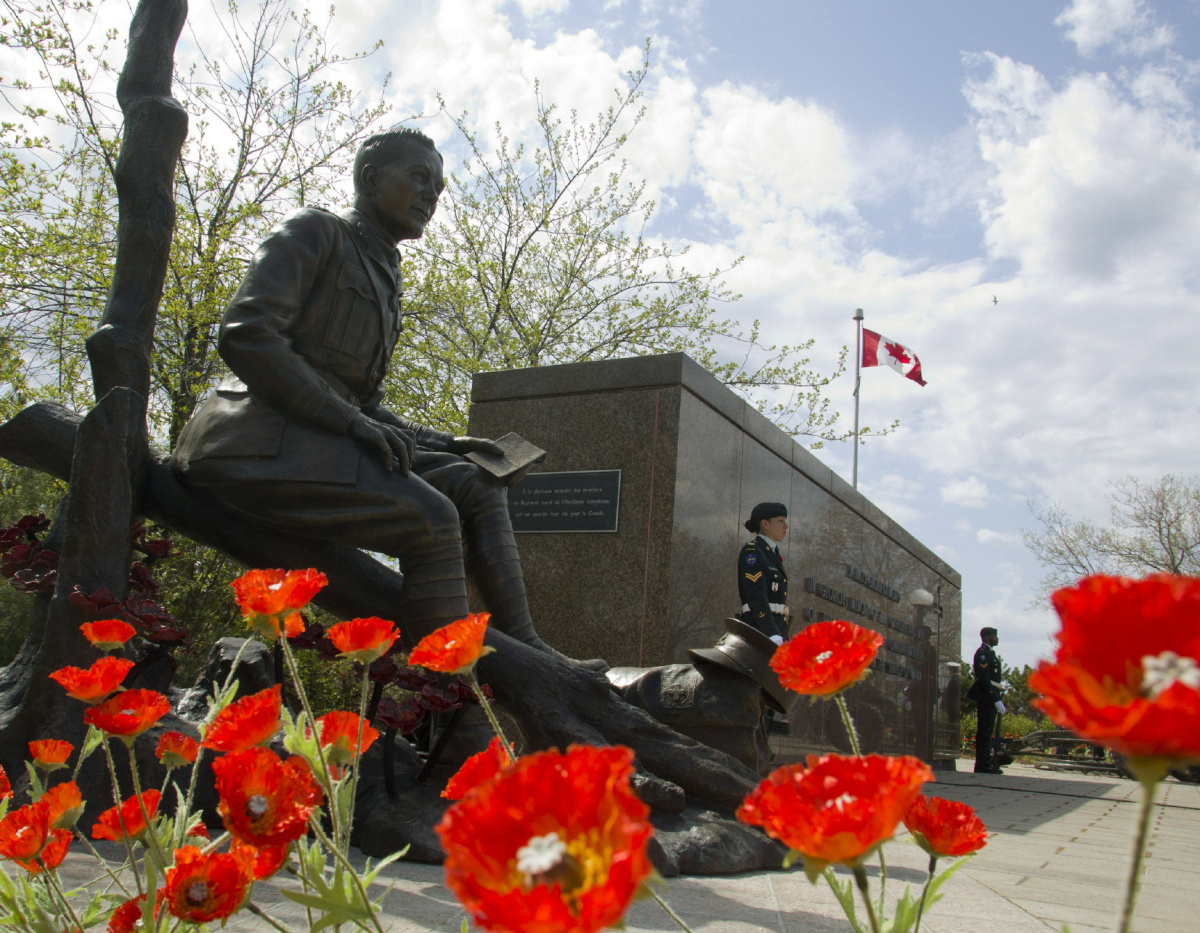
Since that time, the red poppy has become an internationally recognized symbol of remembrance, lest we neglect to remember the lives lost in all wars. I keep one always, pinned to the visor of my car. A reminder that no free citizen of a self-governing Republic should ever forget where we come from. Nor the price paid by our ancestors, to get us to this place.