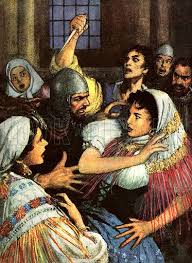
On Easter Monday, March 30, 1282, the Church of the Holy Spirit outside Palermo was just letting out after evening vespers (prayers), when a French soldier thought he’d “inspect” a Sicilian woman for weapons.
Since the early 12th century, the southern Italian peninsula and the island of Sicily were united as the Kingdom of Sicily. Until the invasion of the French King Charles I of Anjou, who ousted Sicilian King Manfred in 1266.
The Anjou King’s rule in Sicily was vicious and repressive, the French King himself absent for long periods. Charles’ Sicilian subjects could not have hated him more.
On Easter Monday, March 30, 1282, the Church of the Holy Spirit outside Palermo was just letting out after evening vespers (prayers), when a French soldier thought he’d “inspect” a Sicilian woman for weapons.
Accounts vary as to what happened, but there’s a good chance he was just looking for a feel, and that’s what he got. The lady’s modesty thusly offended, someone in the crowd avenged her honor, with a knife to the French guard.
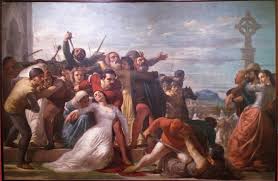
At first merely agitated, this first taste of blood drove the mob to a frenzy. Spreading across the Capital and into the countryside, Sicilians killed every Frenchman they could get their hands on.
Revolutionaries devised a linguistic test, to see who was authentically Sicilian. Native French speakers can’t pronounce the word “ciciri”, even to save themselves. And that’s the way it worked out. God help you if you couldn’t say that word. Over four thousand Frenchmen would die over the next six weeks.
Meanwhile in Spain, Peter III, King of Aragon, Peter I, King of Valencia, and Peter II, Count of Barcelona (they’re all the same guy), had a claim to the Sicilian throne through his wife, Constance.
The Italian physician John of Procida had been a loyal subject of Manfred’s, fleeing to Aragon after the Anjou invasion. John proceeded directly to Sicily where he spent several weeks stirring up Sicilian resentment against the French King. Sicily then appealed to the Spanish King to intervene, while John sailed for Constantinople to procure the help of Michael VIII Palaeologus.
History records what followed as the War of Sicilian Vespers. The Angevins were supported by the Papacy and his Italian supporters (Guelphs), while the Aragonese received help from Sicily itself, the Byzantine Emperor, and the Ghibellines, Italian supporters of the Holy Roman Emperor.
Several players changed sides over the course of the next twenty years. In the end, the son of the Spanish King took the Sicilian crown in 1302, becoming King Frederick II, beginning near 400 years of Spanish rule over the island.
So it was that a French soldier molested an Italian woman, and lost the Kingdom of Sicily, to Spain.
In the end, US public opinion would not sustain what too many saw as an endless war.
Since the late 19th century, the area now known as Laos, Cambodia and Vietnam was governed as a French Colonial territory. “French Indo-China” came to be occupied by the Imperial Japanese after the fall of France, at the onset of WWII. There arose a nationalist-communist army during this period, dedicated to throwing out the Japanese occupier. It called itself the “League for the Independence of Vietnam”, or “Viet Minh”.
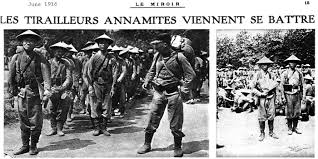
France re-occupied the region following the Japanese defeat ending WWII, but soon faced the same opposition from the army of Ho Chi Minh and Vo Nguyen Giap. What began as a low level rural insurgency, later became a full-scale modern war when Communist China entered the fray in 1949.
The disastrous defeat of French forces at Dien Bien Phu in 1953 led to French withdrawal from Vietnam, the Geneva Convention partitioning the country into the communist “Democratic Republic of Vietnam” in the north, and the State of Vietnam in the south, led by Emperor Bao Dai and Prime Minister Ngo Dinh Diem.
Communist forces of the north continued to terrorize Vietnamese patriots in north and south alike, with aid and support from communist China and the Soviet Union.
The student of history understands that nothing happens in a vacuum. US foreign policy is no exception. International Communism had attempted to assert itself since the Paris Commune rebellion of 1871, and found its first major success with the collapse of czarist Russia in 1917.
US policy makers feared a “domino” effect, and with good cause. The 15 core nations of the Soviet bloc were soon followed by Eastern Europe, as Poland, Bulgaria, Romania, Hungary and Czechoslovakia fell into the Soviet sphere of influence. Germany was partitioned into Communist and free-enterprise spheres after WWII, followed by China, North Korea and on across Southeast Asia.
This is no benign ideology. Current estimates of citizens murdered by Communist ideology in the Soviet Union alone, range from 8 to 61 million during the Stalinist period.
Agree or disagree with policy makers of the time, that’s your business, but they followed a logical thought process. US aid and support for South Vietnam increased as a way to “stem the tide” of international communism, at the same time that French support was pulling back. By the late 50s, the US was sending technical and financial aid in expectation of social and land reform. By 1960, the “National Front for the Liberation of South Vietnam” (“NLF”, or “Viet Cong”) had taken to murdering Diem supported village leaders. JFK responded by sending 1,364 American advisers into South Vietnam, in 1961.
The war in Vietnam pitted as many as 1.8 million allied forces from South Vietnam, the United States, Thailand, Australia, the Philippines, Spain, South Korea and New Zealand, against about a half million from North Vietnam, China, the Soviet Union and North Korea. Begun on November 1, 1955, the conflict lasted 19 years, 5 months and a day. On March 29, 1973, two months after signing the Paris Peace accords, the last US combat troops left South Vietnam as Hanoi freed the remaining POWs held in North Vietnam.
Even then it wasn’t over. Communist forces violated cease-fire agreements before they were signed. Some 7,000 US civilian Department of Defense employees stayed behind to aid South Vietnam in conducting an ongoing and ultimately futile war against communist North Vietnam.
The last, humiliating scenes of the war played themselves out on the roof of the US Embassy in Saigon on April 29 – 30, 1975, as those who could boarded helicopters, while communist forces closed around the South Vietnamese capital.
The “Killing Fields” of Cambodia followed between 1975 – ‘79, when the “Khmer Rouge”, self-described as “The one authentic people capable of building true communism”, murdered or caused the deaths of an estimated 1.4 to 2.2 million of their own people, out of a population of 7 million. All to build the perfect, agrarian, “Worker’s Paradise”.
Imagine feeling so desperate, so fearful of this alien ideology invading your country, that you convert all your worldly possessions and those of your family to a single diamond, bite down on that stone so hard it embedded in your shattered teeth, and fled with your family to open ocean in a small boat. All in the faint and desperate hope, of getting out of that place. That is but one story among more than three million “boat people”. Three million from a combined population of 56 million, fleeing the Communist onslaught in hopes of temporary asylum in other countries in Southeast Asia or China.
They were the Sino-Vietnamese Hoa, and Cambodians fleeing the Khmer Rouge. Ethnic Laotians, Iu Mien, Hmong and other highland peoples of Laos. The 30 or so Degar (Montagnard) tribes in the Central Highlands, so many of whom had been our steadfast allies in the late war. Over 2.5 million of them were resettled, more than half to the United States. The other half went mostly to Canada, Europe and South Pacific nations. A half-million were repatriated, voluntarily or involuntarily. Hundreds of thousands vanished in their attempt to flee.
The humanitarian disaster that was the Indochina refugee crisis was particularly acute between 1979 – ’80, but reverberations continued into the 21st century.
Today, we remember John Ogonowski as Senior Captain on American Airlines flight 11, one of thousands killed by Islamist terrorists, on September 11, 2001. When he wasn’t flying jumbo jets, John Ogonowski was a farmer. For years, John mentored Cambodian farmers on his Dracut, Massachusetts “White Gate Farm“, helping them grow familiar crops, in an unfamiliar climate. Just as those old Yankee farmers had mentored his Polish immigrant ancestors, years before.
There were 57,939 names inscribed on the Vietnam Memorial Wall, the day it opened in 1982. Over the years, the names of military personnel who succumbed to wounds sustained in the war, were added to the wall. As of Memorial Day 2015, there are 58,307.
In the end, US public opinion would not sustain what too many saw as an endless war. We continue to feel the political repercussions, to this day. I was ten at the time of the Tet Offensive in 1968. I remember the way some of my fellow Americans conducted themselves, and came to feel as I do to this day, that anyone who has a problem with our country’s war policy, needs to take it up with a politician. Not with a member of the Armed Services.
In 2017, Senator Pat Toomey (R-PA) and Joe Donnelly (D-IN) co-sponsored a measure to declare March 29 Vietnam Veterans Day, to honor US service members who served in the war in southeast Asia. The measure passed the House of Representatives on March 21 and the Senate on February 3. President Donald Trump signed the measure into law on March 28, designating the following day, March 29, Vietnam Veteran’s Day.
Twenty-one-year-old Peter Knapp spotted the Confederate sharpshooter, behind the iron plate. He raised his rifle, aimed at the peephole, and fired.
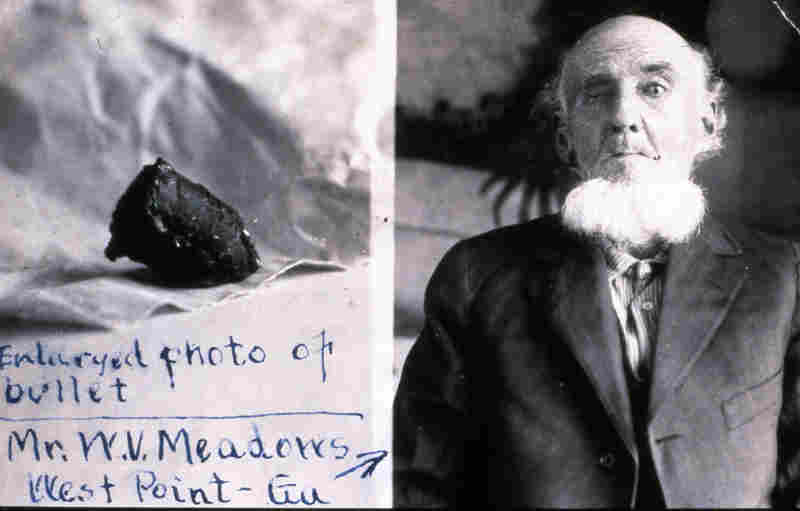
Willis Meadows grasped his throat, as he began to choke. The one-eyed 78-year old couldn’t breathe, as spasms became more violent. Whatever was in there wouldn’t come out. He thought his time had come. That’s when the bullet flew out of his mouth, clattering across the wooden table and onto the kitchen floor. It was March 24, 1921.
Fifty-nine years earlier, nineteen-year-old Willis V. Meadows signed up with his brothers and his cousins, enlisting in Company G of the 37th Alabama Volunteer Infantry.
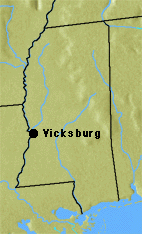
Meadows was assigned to the western front along the Mississippi River. By the following summer, Company G had joined in defending Vicksburg Mississippi, laid siege by the Union army of Major General Ulysses S Grant.
On July 1, Meadows was positioned just outside of town, firing at the oncoming Yankees through a peephole in an iron boiler plate. Three blue-clad soldiers approached from the east, members of Company H of the Fifth Iowa Volunteer Infantry, with orders to take out enemy snipers.
Twenty-one-year-old Peter Knapp spotted the Confederate sharpshooter, behind the iron plate. He raised his rifle, aimed at the peephole, and fired. It was a perfect shot, the one-ounce slug clearing the small hole and striking the sniper in the right eye.
Willis fell over apparently dead, blood streaming out of his eye with the bullet lodged near his brain. The battle moved on. Vicksburg Mississippi fell to the Union army on July 4, 1863. The “Confederate Gibraltar” wouldn’t celebrate another Independence Day, for 80 years.
Meanwhile, Meadows was found and brought to Union physicians. Surgeons probed for the bullet but were unable to find it, and didn’t feel it was safe to operate. Instead, he was put on a POW ship and brought to a Federal hospital. Meadows was later paroled and brought to a Confederate hospital, there to spend the remainder of the war as a patient and sometime nurse’s aide.
Peter Knapp was captured that November at Missionary Ridge, part of the Chattanooga campaign, and spent the rest of the war in a number of Confederate prisons, including the Hell of Andersonville.
Both went back to civil life after the war. Meadows returned to his farm in Lanett, Alabama, just east of the Georgia state line. He would later marry, but the marriage produced no children. Knapp farmed for a time in Michigan before marrying, later moving to Kelso, in Washington state.
Willis Meadows and Peter Knapp might have walked off the page of their time and on to obscurity, but for a circumstance even more unlikely, than a man holding a bullet in his head for fifty-eight years.
Following Meadows’ coughing episode in 1921, “Coughs Up Bullet” was a newspaper story, all over the country. “Ripley’s Believe It or Not” ran the story eleven years later, published around the world in 42 countries and 17 languages. Even Robert Ripley missed the best part.
Peter Knapp read the story, and realized that that had to have been his bullet. He contacted Meadows a few months later, and the two compared notes. Sure enough. The two had met again.
When politicians make war, it is the young men and sometimes the young women, who do the fighting, and the bleeding, and the dying. Now these two old men, former mortal enemies who had tried their level best to kill one another, became friends. The two old warriors spent the rest of their days, exchanging photographs and wishing each other good health.
The Central Point Oregon newspaper editor who heard the story in 1950, had the final word. “Can you beat that for a story?” he asked. “How small this little old world is, after all.”
Afterward
It’s remarkable enough that Peter Knapp survived the brutality of the notorious Andersonville prison camp, an institution described as the “Auschwitz of the Civil War”. The Union POW camp at Elmira New York might be described as the Andersonville of the North. My own thrice-Great Grandfather went to his final rest there, along with his brother.
A passage from Knapp’s journal written in January 1862 expresses the man’s patriotism: ‘May God give wisdom and strength to our rulers that they counsel wisely, so that this government, which has been the wonder of the world, may triumph over its many enemies, crush treason to the earth never to rise again and proving to the world that republican governments are capable of withstanding any storm which may gather on their political horizon.’
Following his death in 1924 at the age of 81, Peter Knapp’s remains were cremated and, for whatever reason, never claimed by his family. The ‘cremains’ of his wife Georgianna joined those of her husband in 1930, and there they sat, unclaimed.
In 2012, Alice Knapp was researching the genealogical records of her deceased husband Steve, when she came upon the story of his ancestor. Stunned to learn that he had never been buried, Ms. Knapp called the Portland crematorium. ‘Yeah, he’s here’. Alice Knapp got the death certificate in Washington. I “called back and said, ‘By the way, is his wife there?’ and they said, ‘Yeah.’ The shock was that he was not ever buried. That was the surprise to me.”
So it was that Peter Knapp of the 5th Iowa Infantry was laid to rest with his wife at the Willamette National Cemetery in Oregon, with full military honors provided by the Oregon National Guard.
A folded American flag was presented to representatives of the Knapp family, ‘on behalf of a grateful nation’. One-hundred and forty-seven years, after the Civil War.
During three months of active operations inside Mexico, American forces killed or captured 292 Villistas, but Pancho Villa evaded capture. Pershing publicly proclaimed the operation a success, but privately complained that Wilson imposed too many restrictions, making it impossible to fulfill the mission.
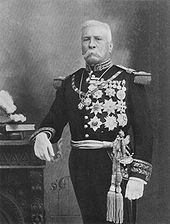
Porfirio Diaz
In thirty-five years as President of Mexico, the administration of José de la Cruz Porfirio Díaz Mori had yet to figure out the question of Presidential succession. At first popular following his seizure of power in the coup of 1876, the Porfirian regime soon began to stagnate. Diaz’ policies benefitted ‘el jefe’ cronies and supporters, the wealthy estate-owning “haciendados”, while leaving rural agricultural “campesinos” unable to make a living.
Following the turn of the century, the aging President expressed support for a return to democracy and an intention to step down from office.
An unlikely opponent stepped forward in the person of UC-Berkeley educated lawyer and wealthy hacienda owner, Francisco Madero. Madero wanted a return to democratic elections, but Diaz would have none of it.
Francisco Madero
Perhaps the octogenarian President expected that his country would beg him to stay, or maybe he changed his mind, but anyone stepping into Diaz’ path, did so at his own risk. Madero fled to the United States, but later returned and faced arrest. Meanwhile, the 80-year old Porfirio Diaz won re-election to an eighth term by a margin that would make Saddam Hussein blush. Voters were outraged by what was clearly a massively corrupt election.
Madero escaped prison and produced the Plan de San Luis Potosí to nullify the elections and overthrow Díaz by force. The table was set for the Mexican Revolution.
Armed conflict ousted Diaz from office the following year, when a free and fair election put Francisco Madero into office. Opposition was quick to form, from both sides of the political spectrum. Conservatives and land owners saw Madero as too weak, his policies too liberal, while former revolutionary fighters and the economically dispossessed, saw him as too conservative. In February 1913, both Madero and his vice president Pino Suárez were run out of office, and murdered by order of military officer, Victoriano Huerta.
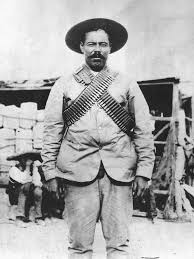
Pancho Villa
Francisco “Pancho” Villa was a Mexican constitutionalist and a Madero supporter. As commander of the División del Norte (Division of the North), Villa fought on behalf of Primer Jefe (“First Chief”) of the Constitutionalist army Venustiano Carranza, but later turned on his erstwhile leader.
American newspaperman and commentator Ambrose Bierce, author of The Devil’s Dictionary and my favorite curmudgeon, joined Pancho Villa’s army in December 1913, as an observer. And then he vanished. Most likely, Bierce faced a firing squad in Chihuahua, but his story remains unknown.
Trouble began between Villistas and the American government when the US declared its support for Villa’s former ally, providing rail transport from Texas to Arizona for 5,000 Carrancista forces.
The Division del Norte was badly defeated by forces loyal to Carranza in July 1915, and again in November. Villa’s army ceased to exist as a military fighting force, reduced to local skirmishes and cross-border raids while foraging the countryside.
A three-way fight broke out on November 26, when Villa’s forces attacked the border town of Nogales, Sonora, and fired across the border at American troops in Nogales, Arizona. On January 11, sixteen American employees of the American Smelting and Refining Company were taken from a train near Santa Isabel Chihuahua, stripped naked, and executed.
In early March, a force of some 1,500 Villistas were camped along the border three miles south of Columbus New Mexico, when Villa sent spies into Camp Columbus (later renamed Camp Furlong). Informed that Camp Columbus’ fighting strength numbered only thirty or so, a force of some 600 crossed the border around midnight on March 8.
Villa divided his force into two columns, launching a two-pronged assault in the early morning darkness of March 9. Townspeople were asleep at first, awakening to the sounds of burning buildings, and shouts of “Viva Villa! Viva Mexico!”
What began as a pre-dawn raid soon erupted into full-scale battle, as residents poured from homes with hunting rifles and shotguns. The Camp Columbus garrison was taken by surprise but recovered quickly, as barefoot soldiers scrambled into position. Four Hotchkiss M1909 machine guns fired 5,000 rounds apiece before the shooting died down, joined by another 30 troopers with M1903 Springfield rifles.
Pancho Villa proclaimed the raid a success, having captured over 300 rifles and shotguns, 80 horses, and 30 mules. Strategically, the raid was a disaster. The Mexicans had lost 90 to 170 dead they could barely afford, out of a raiding force of 484 men. Official American reports indicate 8, 10 or 11 soldiers killed, plus another 7 or 8 civilians, depending on which report you believe.
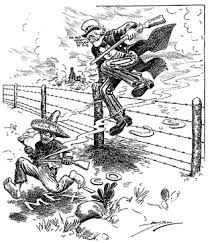
The United States government wasted no time in responding. That same day, the President who would win re-election in eight months on the slogan “He kept us out of war” appointed Newton Diehl Baker, Jr. to fill the previously vacant position of Secretary of War. The following day, Woodrow Wilson ordered General John Pershing to capture Pancho Villa, dead or alive.
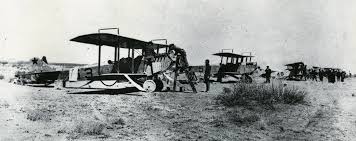
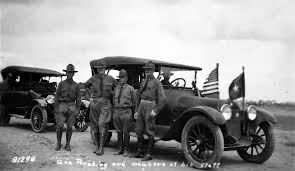
7,000 American troops crossed into Mexico on March 13. It was the first American military expedition to employ mechanized vehicles, including trucks and automobiles to carry supplies and personnel, and Curtiss Jenny aircraft used for reconnaissance.
On March 5, 1913, President William Howard Taft ordered the formation of the 1st Aero squadron, nine aircraft divided into two companies. ‘Aviation’ at that time was not what is, today. Aircraft were highly experimental, many built by the pilots themselves. Crashes were commonplace, and flight lessons all but unheard of. Frequently, general guidelines were given on the ground, and pilots were left to their own devices. One of the early pilots, Captain Benjamin D. Foulois, sent away and received written instruction from Orville Wright, by mail!
The 1st Aero Squadron arrived in New Mexico on March 15, with 8 aircraft, 11 pilots and 82 enlisted men. The first reconnaissance sortie was flown the following day, the first time that American aircraft were used in actual military operations.
Five aircraft departed on the evening of March 19, with orders to report ‘without delay’ to Pershing’s headquarters in Casas Grandes, Mexico. One made it that night, another two straggled in the next morning. One returned to Columbus and 2 others went missing. The problems, it turned out, were insurmountable. 90 HP engines were unable to bring them across 10,000 – 12,000’ mountain peaks, nor could they handle the turbulent winds of mountain passes. Dust storms wrought havoc with engines and, making things worse, the unrelenting heat of the Sonoran Desert de-laminated wooden propellers.
On May 14, a young 2nd Lieutenant in charge of a force of fifteen and three Dodge touring cars got into a running gunfight, while foraging for corn, in Chihuahua. It was the first motorized action in American military history. Three Villistas were killed and strapped to the hoods of the cars and driven back to General Pershing’s headquarters. General Pershing nicknamed that 2nd Lt. “The Bandito”. History remembers his name as George S. Patton.
During three months of active operations inside Mexico, American forces killed or captured 292 Villistas, but Pancho Villa evaded capture. Pershing publicly proclaimed the operation a success, but privately complained that Wilson imposed too many restrictions, making it impossible to fulfill the mission. “Having dashed into Mexico with the intention of eating the Mexicans raw”, Pershing complained, “we turned back at the first repulse and are now sneaking home under cover, like a whipped cur with its tail between its legs.”
Pancho Villa Expedition, “Around the Campfire”
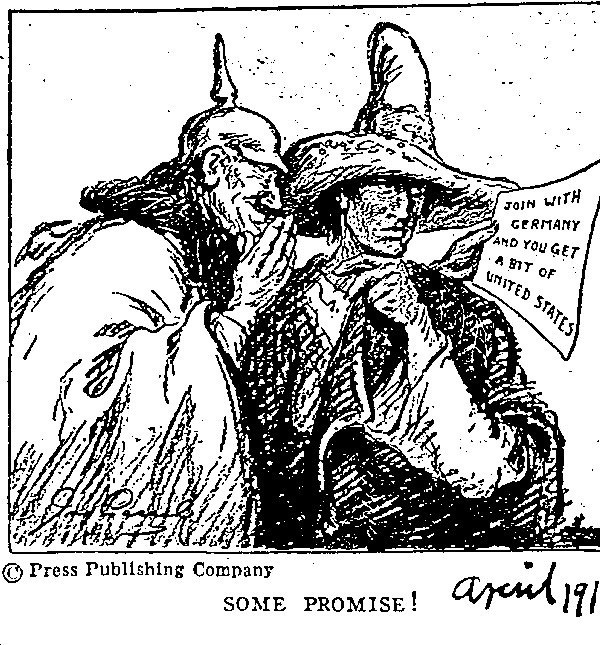
American forces were withdrawn by January 1917, as the European war loomed over American politics. German Foreign Secretary Arthur Zimmermann observed political opposition to American operations inside of Mexico, and concluded that a military alliance was possible between the two countries.
The ‘Zimmermann note‘ proposing such an alliance between Germany and Mexico and promising the “restoration of its former territories of Texas, New Mexico and Arizona“, may be seen as the ‘last straw’ that brought the United States into WW1.
Squanto would mediate between the settlers and the native tribes, teaching the Pilgrims to plant corn: several kernels in a mound, buried with a fish head to enrich the soil. When planted together in a circle, the “three sisters” would support and thrive together, the corn stalks providing poles for the beans, and the squash leaves providing ground cover & holding in moisture, while keeping weeds at bay.
In 1620, the 60-ton Pinnace Speedwell departed Delfshaven, meeting with Mayflower at Southampton, Hampshire. The two vessels set out on August 15, but soon had to turn back as Speedwell was taking on water. Speedwell was abandoned after a second failed attempt, Mayflower setting out alone on September 16, 1620, with an estimated 142 passengers and crew.
66 days at sea brought the “Old Comers” up on the outer reaches of Cape Cod on November 11, near the present-day site of Provincetown Harbor. There, the group stayed long enough to draw up the first written framework of government established in the New World, a “civil body politic” called the Mayflower Compact.
As anyone familiar with the area will understand, a month in that place and time convinced them of its unsuitability. By mid-December the Mayflower had crossed Cape Cod Bay and fetched up at Plimoth Harbor.
Words fail to describe the terrible conditions of that first winter. Over half of these “Pilgrims” died during those first few months, eighty-two in all, of malnutrition, disease, exposure and starvation. It was nearly as awful as the “starving time” of the Jamestown colony of ten years earlier, in which all but 60 of 214 colonists perished.
Massasoit,
The morning of March 16, 1621 dawned fair and clear, warm for the season. The settlers had long heard tales of their new neighbors, and even spotted a few back in November, at the modern-day “First Encounter Beach”, in Eastham. There were wild stories of “cannibals” and “savages”, but none had yet been observed, at anything but a distance. This morning, the newcomers realized that it was they who were being observed.
They were hurriedly arranging defenses when one of the “savages” approached the group, naked as the day he was born but for a leather fringe about his waist, holding a bow and two arrows. Tall and straight with flowing black hair, the man walked straight up and introduced himself, to the astonishment of the group, in English. He said his name was Samoset.
The following account appears in Mourt’s Relation (1622) written primarily by Edward Winslow and William Bradford:
Samoset, “1st Friend” of the Pilgrims
“ Friday the 16th was a fair warm day….We were finishing our work, when a strange looking man, a man which caused us to be surprised becaused he seemed unafraid …. walked into the village. We stopped him. … He spoke to us in English, and was friendly. He said he had learned some English among the Englishmen that came to fish at Monhegan Island, and he gave us their names. He was a man who spoke freely and openly. We questioned him about many things. He was the first Indian we met. He said he was from Morattiggon (modern day Maine) and been 8 months in these parts…He asked for a drink and we gave him strong water and biscuit, and butter, and cheese, and pudding, and a piece of mallard (duck), all which he liked well. He said he had also eaten this food before with the English that had come before where he was from.
He told us the place where we now live was known as Patuxet by the Indians. Four years ago all the Indians who lived there died of a sickness and none were left, so they cannot hurt us, or to say the land where we now live belongs to them. All the afternoon we spent talking with him; we thought he would leave that night, but he did not leave. Then we thought to carry him on shipboard, and he intended to leave, but the wind was high and the water not deep enough so he could not return back that day. We lodged him that night at Stephen Hopkins house, and watched him.
Southern New England tribal range, circa 1600
Samoset was a Sagamore (minor Chief) of the Abenaki tribe of modern-day Maine, visiting at that time with Ousamequin, the Pokanoket Sachem (leader) of the Wôpanâak (Wampanoag) and Massassoit (Great Sachem) of the Wampanoag Confederacy of southeastern Massachusetts and Rhode Island.
This plaque is all that remains of the Pilgrim’s 1620 raid on the Nauset’s corn stash, in modern-day Truro, MA
Samoset warned the newcomers to beware the Nauset, later called “Cape Cod Indians”, a tribal unit of some one-hundred individuals sharing the Massachusett (Natick) language and occupying modern-day Cape Cod and surrounding islands. Small wonder. Long before the large-scale colonization of the New World, European seafarers had kidnapped some twenty Nausets, and sold them into slavery, leaving in their wake diseases with which the native immune system was ill-equipped to deal. It was a Nauset corn cache the Pilgrims themselves had plundered back in November, a stash laid up to take their people through the long, barren winter.
Samoset departed the following day, March 17, but returned on the 22nd with Tisquantum, (Squanto), one of the few surviving Pawtuxet. A man who spoke better English than Samoset himself, Squanto would mediate between the settlers and the native tribes, including Massasoit. Squanto taught the Pilgrims to plant corn: several kernels in a mound, buried with a fish head to enrich the soil. When planted together in a circle, the “three sisters” would support one another and thrive together, the corn stalks acting as poles for the beans, and squash leaves providing ground cover & holding in moisture, while keeping weeds at bay.
The Pawtuxet Squanto taught the Pilgrims what and where to plant, where to fish and how to hunt beaver
The newcomers reciprocated, teaching the natives about their own crops, with the aid of European farming tools.
“Days of Thanksgiving” took place in the New World as early September 8, 1565, when a group of Spaniards lead by explorer Pedro Menéndez de Avilé invited members of the Timucua tribe to a day of Thanksgiving in Saint Augustine, Florida. Yet, the harvest feast of 1621, shared between the Pilgrims and the Pokanokets, is generally considered to be the basis for our own Thanksgiving holiday.
In the following months, the debt of corn was repaid to the Nauset people, who returned the favor by restoring a small boy to the colony, who’d been found lost and wandering in the woods. The Nauset would become Christianized in the following years, turning out to be the European’s greatest allies.
Years later, colonists would go to war against the Wampanoag people and ‘King Philip’, the English name for Metacomet, the son of Massasoit. The Nauset would act as warriors and scouts against the Wampanoag people in King Philip’s War, a conflict which killed some 5,000 New England inhabitants, three quarters of whom were indigenous people.
In terms of the percentage killed of the overall population, King Philip’s War was over twice as costly as the American Civil War, and seven times that of the American Revolution. But that must be a story for another day.
Feature image, top of page: First Encounter Beach, Eastham Massachusetts
If you enjoyed this “Today in History”, please feel free to re-blog, “like” & share on social media, so that others may find and enjoy it as well. Please click the “follow” button on the right, to receive email updates on new articles. Thank you for your interest, in the history we all share.
WWII-era Military Working Dogs (MWDs) served on sentry, scout and patrol missions, in addition to performing messenger and mine-detection work. The keen senses of scout dogs saved countless lives, by alerting to the approach of enemy forces, incoming fire, and hidden booby traps & mines.
The history of dogs in war is as old as history itself. The dogs of King Alyattes of Lydia killed many of his Cimmerian adversaries and routed the rest around 600BC, permanently driving the invader from Asia Minor in the earliest known use of war dogs in battle.
The Molossians of Epirus, descended from King Molossus, grandson of the mighty Achilles according to Greek mythology, used large, powerfully built dogs specifically trained for battle. Today, “molosser” describes a body type more than any specific breed. Modern molossers include the Mastiff, Bernese Mountain Dog, Newfoundland and Saint Bernard.
Ancient Greeks, Romans and Egyptians used dogs as sentries or on patrol. In late antiquity, Xerxes I, the Persian King who faced the Spartan King Leonidas across the pass at Thermopylae, was accompanied by a pack of Indian hounds.
Attila the Hun went to war with a pack of hounds, as did the Spanish Conquistadors of the 1500s.
Only known photo of Sallie
The Staffordshire Bull Terrier Sallie“joined up” in 1861, serving throughout the Civil War with the 11th Pennsylvania Volunteer Infantry. At Cedar Mountain, Antietam, Fredericksburg, Chancellorsville, and Spotsylvania, Sallie’d take her position along with the colors, barking ferociously at the adversary.
Abraham Lincoln spotted Sallie once from a reviewing stand, and tipped his hat.
Sallie was killed at Hatcher’s Run in February, 1865. Several of “her” men laid down their arms and buried her then and there, despite being under Confederate fire.
Dogs performed a variety of roles in WWI, from ratters in the trenches, to sentries, scouts and runners. “Mercy” dogs were trained to seek out the wounded on battlefields, carrying medical supplies with which the stricken could treat themselves.
Patriotic French ambulance‑dog expressing his dislike for the German Army on this propaganda postcard from WW1.Sometimes, these dogs simply provided the comfort of another living soul, so that the gravely wounded should not die alone.
By the end of the “Great War”, France, Great Britain and Belgium had at least 20,000 dogs on the battlefield, Imperial Germany over 30,000. Some sources report that over a million dogs served over the course of the war.
The famous Rin Tin Tin canine movie star of the 1920s was rescued as a puppy, from the bombed out remains of a German Army kennel, in 1917.
WW1 messenger dog
In the spring of 1918, GHQ of the American Expeditionary Force recommended using dogs as sentries, messengers and draft animals, however the war was over before US forces put together any kind of a War Dog program.
America’s first war dog, “Sgt. Stubby”, went “Over There” by accident, serving 18 months on the Western Front before coming home to a well-earned retirement.
On March 13, 1942, the Quartermaster Corps began training dogs for the US Army “K-9 Corps.” In the beginning, the owners of healthy dogs were encouraged to “loan” their dogs to the Quartermaster Corps, where they were trained for service with the Army, Navy, Marine Corps and Coast Guard.
The program initially accepted over 30 breeds of dog, but the list soon narrowed to German Shepherds, Belgian Sheep Dogs, Doberman Pinschers, Collies, Siberian Huskies, Malamutes and Eskimo Dogs.
General George S. Patton Jr’s faithful friend Willie mourns the death of his owner, in 1946
WWII-era Military Working Dogs (MWDs) served on sentry, scout and patrol missions, in addition to performing messenger and mine-detection work. The keen senses of scout dogs saved countless lives, by alerting to the approach of enemy forces, incoming fire, and hidden booby traps & mines.
The most famous MWD of WWII was “Chips“, a German Shepherd/Husky mix assigned to the 3rd Infantry Division in Italy. Trained as a sentry dog, Chips broke away from his handler and attacked an enemy machine gun nest. Wounded in the process, his singed fur demonstrated the point-blank fire with which the enemy fought back. To no avail. Chips single-handedly forced the surrender of the entire gun crew.
Chips
Chips was awarded the Distinguished Service Cross, Silver Star and Purple Heart, the honors later revoked due to an Army policy against the commendation of animals. It makes me wonder if the author of such a policy ever saw service beyond his own desk.
Smoky, the Littlest War Dog
Smoky, the littlest war dog, once ran a communication wire through a small culvert in Lingayen Gulf, Luzon, a task which would have otherwise taken an airstrip out of service for three days, and exposed an entire construction battalion to enemy fire.
Of the 549 dogs who returned from service in WWII, all but four were able to return to civilian life.
Over 500 dogs died on the battlefields of Vietnam, of injuries, illnesses, and combat wounds. 10,000 servicemen served as dog handlers during the war, with an estimated 4,000 Military Working Dogs. 261 handlers paid the ultimate price. K9 units are estimated to have saved over 10,000 human lives.
General George S. Patton Jr’s faithful friend Willie mourns the death of his owner, in 1946
It’s only a guess but, having a handler and a retired MWD in the family, I believe I’m right: hell would freeze before any handler walked away from his dog. The military bureaucracy, is another matter. The vast majority of MWDs were left behind during the Vietnam era. Only about 200 dogs survived the war to be assigned to other bases. The remaining dogs were either euthanized or left behind as “surplus equipment”.
In 2011, a Belgian Malinois named “Cairo” accompanied the Navy SEAL “Neptune Spear” operation that took out Osama bin Laden.
Today there are about 2,500 dogs in active service. Approximately 700 deployed overseas. The American Humane Association estimates that each MWD saves an average 150-200 human lives over the course of its career.
In 2015, Congressman Frank LoBiondo (R-NJ) and Senator Claire McCaskill (D-MO) introduced language in their respective bodies, mandating that MWDs be returned to American soil upon retirement, and that their handlers and/or handlers’ families be given first right of adoption.
LoBiondo’s & McCaskill’s language became law on November 25, when the President signed the 2016 National Defense Authorization Act (NDAA). It’s a small step in recognizing what we owe to those who have stepped up in defense of our nation, both two-legged and four.
If you enjoyed this “Today in History”, please feel free to re-blog, “like” & share on social media, so that others may find and enjoy it as well. Please click the “follow” button on the right, to receive email updates on new articles. Thank you for your interest, in the history we all share.
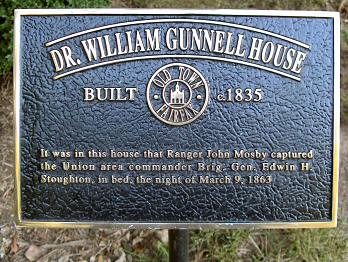
Late on the night of March 8, 1863, a light rain was falling when Mosby’s Rangers formed up for a raid on Fairfax Virginia, known at that time as Fairfax Courthouse.
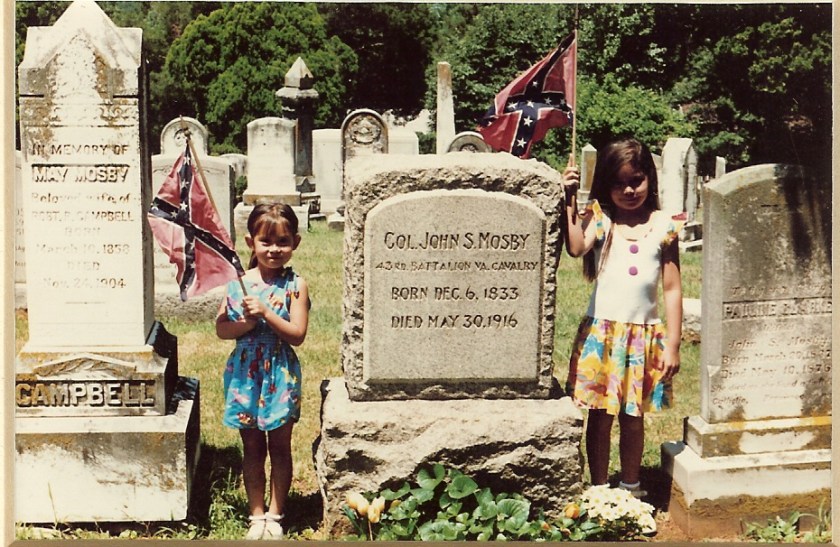
Like fellow Virginian Robert E. Lee, the Howardsville lawyer John Singleton Mosby opposed the destruction of the Union but, when secession came, he stayed with his state. Small and frail as a boy, Mosby was often the target of much larger bullies. Years later in his memoirs, he’d write that he never won a fight. It seems that John Singleton Mosby never backed down from one, either.
Mosby participated in the 1st Battle of Manassas (1st Bull Run) as a member of the Virginia Volunteers Mounted Rifles, later joining James Ewell Brown “J.E.B.” Stuart as a Cavalry Scout. A gifted horseman and natural tactician, information gathered by Mosby aided Stuart in his humiliating ride around McLellan’s Army of the Potomac in June, 1862.
The following year, Stuart authorized Mosby to form and take command of the 43rd Battalion of Virginia Cavalry, a regiment-sized unit operating out of north central Virginia. These “Partisan Rangers”, 1,900 of whom served between January 1863 and April ’65, were under the command of Stuart and Lee and subject to their authority, but were not a traditional army unit. Mosby’s Rangers shared in the spoils of war but had no camp duties, and lived scattered among civilian populations.
Known for lightning raids of the Virginia countryside, Mosby’s 43rd Cavalry would be called together to strike specific targets, dispersing afterward and making themselves next to impossible to run aground. So successful were they that, to this day, parts of Virginia’s Piedmont region are known as “Mosby’s Confederacy”.
Late on the night of March 8, 1863, a light rain was falling when Mosby’s Rangers formed up for a raid on Fairfax Virginia, known at the time as Fairfax Courthouse. Deep in the midst of several thousand Federal soldiers and only fifteen miles from the White House, Union Brigadier General Edwin H. Stoughton was sleeping in his headquarters. Some sources indicate that he was “sleeping it off”. The “Gray Ghost” entered the Union General’s quarters in the small hours of March 9, his rangers quickly overpowering a handful of sleepy guards.
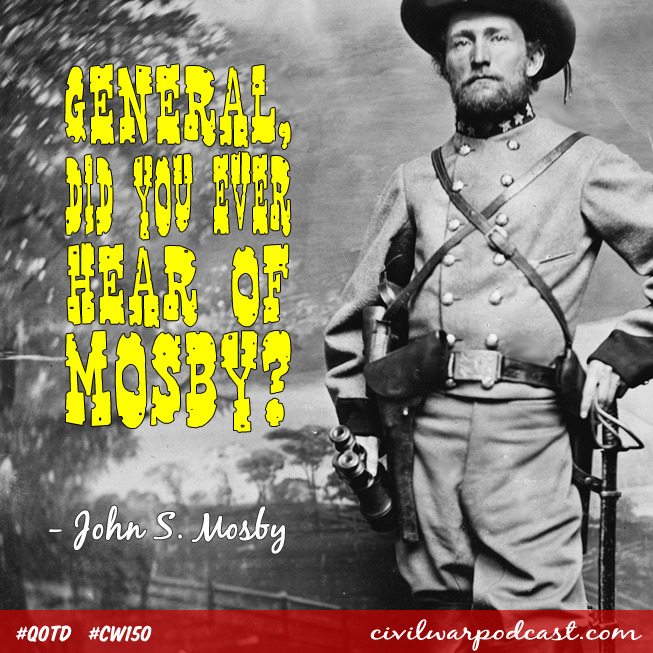
Entering the bed chamber as others went to the stables and gathered horses, Mosby lifted the General’s nightshirt and slapped his bare backside with a sword. General Stoughton sputtered awake, demanding “What is the meaning of this!?” “General, did you ever hear of Mosby“, came the question.
Mosby himself later recalled, “There was no time for ceremony, so I drew up the bedclothes, pulled up the general’s shirt, and gave him a spank on his bare back, and told him to get up”. Stoughton replied, “Yes, have you caught him?” “I AM Mosby,” said the Gray Ghost, “and I have caught You. Stuart’s cavalry has possession of the Courthouse; be quick and dress.”
As prisoners came to the realization that they’d been captured by such a puny force, many melted into the woods, and escaped. In the end, Mosby and his 29 rangers had captured a Union General, two Captains, 30 enlisted men and 58 horses, without firing a shot. On hearing the story the next day, President Lincoln lamented: “I can make another Brigadier in 5 minutes, but I can’t replace those horses”.
If you enjoyed this “Today in History”, please feel free to re-blog, “like” & share on social media, so that others may find and enjoy it as well. Please click the “follow” button on the right, to receive email updates on new articles. Thank you for your interest, in the history we all share.
General Howe was stunned on awakening, to the morning of March 5. The British garrison in Boston and the fleet in harbor, were now under the muzzles of Patriot guns. “The rebels have done more in one night”, he said, “than my whole army would have done in a month.”
Over the night and the following day of April 18-19, 1775, individual British soldiers marched 36 miles or more, on a round-trip expedition from Boston. Following the early morning battles at Lexington and Concord, armed colonial militia from as far away as Worcester swarmed over the column, forcing the regulars into a fighting retreat.
In those days, Boston was a virtual island, connected to the mainland by a narrow “neck” of land. More than 20,000 armed men converged from all over New England in the weeks that followed, gathering in buildings and encampments from Cambridge to Roxbury.
A man who should have gone into history among the top tier of American Founding Fathers, the future turncoat Benedict Arnold, arrived with Connecticut militia to support the siege. Arnold informed the Massachusetts Committee of Safety that Fort Ticonderoga, located along the southern end of Lake Champlain in upstate New York, was bristling with cannon and other military stores. Better yet, the place was lightly defended.
The committee commissioned Arnold a colonel on May 3, authorizing him to raise troops and lead a mission to capture the fort. Seven days later, Colonel Arnold and militia forces from Connecticut and western Massachusetts in conjunction with Ethan Allen and his “Green Mountain Boys” captured the fort, and all its armaments.
Flag flown by George Washington, during the siege of Boston
The Continental Congress created the Army that June, appointing General George Washington to lead it. When General Washington took command of that army in July, it was a force with an average of nine rounds’ shot and powder, per man. The British garrison occupying Boston, was effectively penned up by forces too weak to do anything about it.
The stalemate dragged on for months, when a 25-year-old bookseller came to General Washington with a plan. His name was Henry Knox. Knox proposed a 300-mile, round trip slog into a New England winter, to retrieve the guns of Fort Ticonderoga: brass and iron cannon, howitzers, and mortars. 59 pieces in all. Washington’s advisors derided the idea as hopeless, but the General approved.
Knox set out with a column of men in late November, 1775. For nearly two months, he and his team wrestled 60 tons of cannons and other armaments by boat, animal & man-hauled sledges along roads little better than foot trails. Across two barely frozen rivers, and through the forests and swamps of western Massachusetts, over the Berkshire mountains and on to Cambridge, historian Victor Brooks called it “one of the most stupendous feats of logistics”, of the age.
It must have been a sight that January 24, when Knox returned at the head of that “Noble Train of Artillery”.
Bunker Hill
For British military leadership in Boston, headed by General William Howe, the only option for resupply was by water, via Boston Harbor. Both sides of the siege understood the strategic importance of the twin prominences overlooking the harbor, the hills of Charlestown to the north, and Dorchester heights to the south. It’s why British forces had nearly spent themselves on Farmer Breed’s hillside that June, in an engagement that went into history as the battle of Bunker Hill.
With Howe’s forces in possession of the Charlestown peninsula, Washington had long considered occupying Dorchester Heights, but considered his forces too weak. That changed with the guns of Ticonderoga.
In the first days of March, Washington placed several heavy cannons at Lechmere’s Point and Cobble Hill in Cambridge, and on Lamb’s Dam in Roxbury. The batteries opened fire on the night of March 2, and again on the following night and the night after that. British attention thus diverted, American General John Thomas and a force of some 2,000 made plans to take the heights.
As the ground was frozen and digging impossible, fortifications and cannon placements were fashioned out of heavy 10′ timbers. With the path to the top lined with hay bales to muffle their sounds, pre-built fortifications were manhandled to the top of Dorchester heights over the night of March 4-5, along with the bulk of Knox’ cannons.
Boston as seen from Dorchester heights
General Howe was stunned on awakening, to the morning of March 5. The British garrison in Boston and the fleet in harbor, were now under the muzzles of Patriot guns. “The rebels have done more in one night”, he said, “than my whole army would have done in a month.”
Plans were laid for an immediate assault on the hill, as American reinforcements poured into the position. By day’s end, Howe faced the dismal prospect of another Bunker Hill, this time against a force of 6,000 in possession of heavy artillery.
Engraving depicts the British evacuation of Boston
A heavy snowstorm descended late in the day, interrupting British plans for the assault. A few days later, Howe had thought better of it. Washington received an unsigned note on March 8, informing him that the city would not be put to the torch, if the King’s Regulars were permitted to leave unmolested.
British forces departed Boston by sea on March 17 with about 1,000 civilian loyalists, resulting in a peculiar Massachusetts institution which exists to this day: “Evacuation Day”.
It’s doubtful whether Washington possessed sufficient powder or shot for a sustained campaign, but British forces occupying Boston didn’t know that. The mere presence of those guns moved General Howe to weigh anchor and sail for Nova Scotia. The whole episode may have been one of the greatest head fakes, in all military history.
If you enjoyed this “Today in History”, please feel free to re-blog, “like” & share on social media, so that others may find and enjoy it as well. Please click the “follow” button on the right, to receive email updates on new articles. Thank you for your interest, in the history we all share.
If successful, this would be an endurance mission, one of the longest bombing raids ever attempted, and carried out entirely without fighter escort. The mission was designated “Operation K”, and scheduled for March 4, 1942.
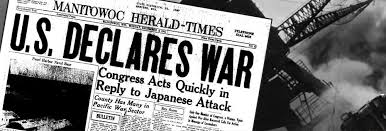
On December 7, 1941, forces of the Imperial Japanese Navy attacked the United States’ Pacific naval Anchorage, at Pearl Harbor. President Franklin Delano Roosevelt addressed a joint session of Congress the following day, requesting a declaration that, since the attack, a state of war had existied between the United States, and Japan. Three days later, Nazi Germany declared war on the United States, reciprocated by an American declaration against Nazi Germany, and their Italian allies. A two-years long conflict in Europe, had become a World War.
In the months that followed, the United States ramped up its war capacity, significantly. Realizing this but having little information, the Imperial Japanese Navy (IJN) determined to visit Pearl Harbor once again, to have a look around.
For the IJN, this was an opportunity to test the new Kawanishi H8K1 “Emily” flying boat, an amphibious bomber designed to carry out long distance bombing raids. So it was that a second, albeit smaller attack was launched against Pearl Harbor.
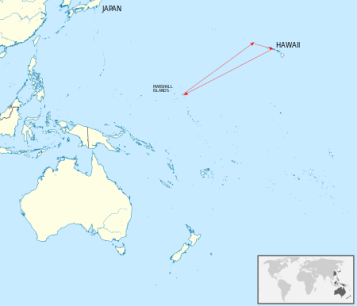
The IJN plan was complex. This, the first Kawanishi H8K1 operation in Japanese military service, involved a small formation of flying boats to be sent to Wotje Atoll in the Marshall Islands, from there to stage the long-range attack. The five flying boats would be loaded with four 550lb bombs apiece and flown to French Frigate Shoals northwest of Oahu, there to rendezvous with three Japanese submarines, waiting to refuel them. Ten miles south of Oahu, the 356’ diesel-powered submarine I-23 was to hold watch over the operation, reporting weather and acting as “lifeguard” in case any aircraft had to ditch in the ocean.
“A Kawanishi H8K1 of the 802nd Kokutai is lifted out of the water onto the decks of the HIJMS Akitsushima, 1942, off Shortland Island”. H/T fly.historicwings.com, for this image
After refueling, the bomber – reconnaissance mission would approach Pearl Harbor and attack the “10-10 dock”, so-called because it was 1,010 feet long and a key naval asset for the US Pacific Fleet.
If successful, this would be an endurance mission, one of the longest bombing raids ever attempted, and carried out entirely without fighter escort. The mission was designated “Operation K”, and scheduled for March 4, 1942.
As it turned out, the raid was a “comedy of errors”, on both sides.
Things began to go wrong, almost from the beginning. I-23 vanished. To this day nobody knows where the submarine went. American forces reported several engagements with possible subs during this time frame. Maybe one of those depth charges did its job. It is equally possible that, unknown to the Imperial Japanese Navy, I-23 was involved in an accident, lost at sea with all hands.
As it was, only two of the new flying boats were ready for the operation, the lead plane (Y-71) flown by Lieutenant Hisao Hashizume, and his “wingman” Ensign Shosuke Sasao flying the second aircraft, Y-72.
The staging and refueling parts of the operation were carried out but, absent weather intelligence from the missing I-23, the two-aircraft bombing formation was ignorant of weather conditions over the target. As it was, a thick cloud cover woud leave the Japanese pilots all but blind.
Captain Joseph J. Rochefort, USN
On the American side, Captain Joseph J. Rochefort, USN, worked in the Combat Intelligence Unit, tasked with intercepting enemy communications and breaking Japanese codes. US code breakers had intercepted and decoded Japanese radio communications prior to the attack of four months earlier, but urgent warnings were ignored by naval authorities at Pearl Harbor.
Once again, Rochefort’s team did its job and urgent warnings were sent to Commander in Chief Pacific (CINCPAC) and to Com-14. Incredibly, these warnings too, fell on deaf ears. Rochefort was incredulous. Years later, he would describe his reaction, at the time “I just threw up my hands and said it might be a good idea to remind everybody concerned that this nation was at war.”
American radar stations on Kauai picked up and tracked the incoming aircraft, but that same cloud cover prevented defenders from spotting them. Curtiss P-40 Warhawk fighters were scrambled to search for the attackers, while Consolidated PBY Catalina flying boats were sent to look for non-existent Japanese aircraft carriers, assumed to have launched the two bombers.
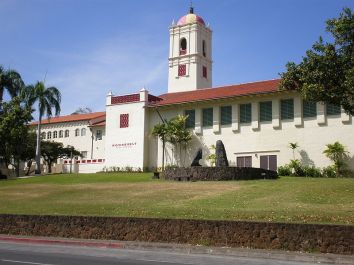
Meanwhile, the two Japanese pilots became confused, and separated. Hashizume dropped his bombs on the side of Mt. Tantalus, about 1,000 ft. from nearby Roosevelt High School. Hashizume’s bombs left craters 6-10 ft deep and 20-30 ft across on the side of the extinct volcano. Sasao is presumed to have dropped his bombs, over the ocean.
President Theodore Roosevelt High School, Honolulu
A Los Angeles radio station reported “considerable damage to Pearl Harbor”, with 30 dead sailors and civilians, and 70 wounded. Japanese military authorities took the broadcast to heart, and considered the operation to have been a great success. Talk about ‘fake news’. As it was, the damage was limited to those craters on Mt. Tantalus, and shattered windows at Roosevelt High.
The United States Army and the US Navy blamed each other for the explosions, each accusing the other of jettisoning munitions over the volcano.
The IJN planned another such armed reconnaissance mission for the 6th or 7th of March, but rescheduled for the 10th because of damage to Hashizume’s aircraft, and the exhaustion of air crew. The second raid was carried out on March 10, but Hashizume was shot down and killed near Midway atoll, by Brewster F2A “Buffalo” fighters.
The results of the second Japanese raid on Pearl Harbor, carried out on March 4, 1942, were limited to four craters on the side of an extinct volcano.
A follow-up to Operation K was scheduled for May 30, but by that time, US military intelligence had gotten wise to the IJN meet-up point. Japanese submarines arriving at French Frigate Shoals found the place mined, and swarming with American warships.
In the end, the Imperial Japanese Navy was unable to observe US Navy activity, or to keep track of American aircraft carriers. Days later, this blindness would have a catastrophic effect on the Japanese war effort, at a place called Midway.
If you enjoyed this “Today in History”, please feel free to re-blog, “like” & share on social media, so that others may find and enjoy it as well. Please click the “follow” button on the right, to receive email updates on new articles. Thank you for your interest, in the history we all share.
The writer and photographer Roger Caras once said “Dogs are not our whole life, but they make our lives whole.”
Years ago, a segment broadcast on National Public Radio’s All Things Considered, told the story of a working shepherd, who worked the hills of 1930s North Dakota. This man, I don’t recall his name, fell ill, and was taken to a local Jesuit hospital.
The man’s business partner and constant companion “Shep”, a sheepdog of unknown breed, befriended a nurse who would feed him a morsel out of the side door.
For 11 days, Shep waited at the hospital, for his master’s return. On the 11th day the man died, his casket taken to the local train station and placed in the cargo hold, to be returned home for burial.
“Greyfriar’s Bobby’
Shep was there throughout, and watched the train chug away with the body of his human. He returned to that hospital door for sustenance, but every time he heard the train whistle, there was a sheepdog waiting at the station.
In those days, there were two trains a day. For five years, Shep returned to the station, every time he heard that whistle. He never missed a train. In time, the dog wasn’t quite as fast as he used to be, his hearing not so good. He was killed while waiting on the tracks, for the man who could never return.
“Greyfriar’s Bobby” was a Skye Terrier in 19th-century Edinburgh, who waited 14 years by the grave of his owner, City Police nightwatchman, John Gray. There he died in 1872 and was buried in the Greyfriars Kirkyard, not far from where he had stood watch. all those years.
Hachikō Statue in Tokyo, Japan
Hachikō, an Akita known to Japanese children as chūken Hachikō (“faithful dog Hachikō”), used to tag along with his owner Hidesaburō Ueno, a professor of agriculture at Tokyo University. Ueno would commute to work and every evening, Hachikō would wait at the Shibuya Station, for the professor’s return. Hidesaburō stopped coming home in May 1925, when a cerebral hemorrhage took him away while delivering a lecture. Every day for nine years, nine months and fifteen days, the golden colored Akita appeared at Shibuya Station, precisely in time for that evening train.
Liam Tasker came from the Scottish town of Kirkcaldy, in the historic county of Fife. Tasker joined the Royal Army in 2001 as a mechanic, but he wanted more. He was transferred to the Royal Army Veterinary Corps six years later, and assigned as a trainer with the 1st Military Working Dog (MWD) Regiment. Tasker was a natural, and rose quickly among the ranks of the group. In 2010, Lance Corporal Tasker was paired with MWD Theo, a twenty-two-month-old English Springer Spaniel serving as a T.E.D.D. (Tactical Explosives Detection Dog) with the British Army.
Liam and Theo
A Military Working Dog is anything but a “disposable” asset. It is a highly trained, specialized soldier who complements and adds to the abilities of his human partner, as that two legged soldier complements those of the dog.
The writer and photographer Roger Caras once said “Dogs are not our whole life, but they make our lives whole.” So it was, with Liam and Theo. The team was posted to Afghanistan, where the two managed to find 14 improvised explosive devices and weapons caches, in five months. “I love my job and working with Theo,” Tasker would say. “He has a great character and never tires…He can’t wait to get out and do his job and will stop at nothing.” Fourteen was a record for that time according to BBC, there is no telling how many lives were saved. The pair proved so successful that their tour was extended, by a month. It was a month too long.
On March 1, 2011, L/Cpl Tasker was killed by a Taliban sniper while on patrol in Helmand Province, and brought back to base by his fellow soldiers. Theo suffered a seizure after returning to base and never recovered. He died that afternoon. It was believed that Theo’s seizure was brought on by the stresses of Tasker’s death, but the autopsy proved inconclusive. Liam’s mother Jane Duffy later said, “I think Theo died of a broken heart, nobody will convince me any different.”
Major Alexander Turner of the 1st Battalion Irish Guards described the pair, saying “He used to joke that Theo was impossible to restrain but I would say the same about Lance Corporal Tasker.” Liam and Theo were returned to Great Britain, arriving first in RAF Lyneham, Wiltshire. Rumors have gone around ever since, that the two were buried together. Tasker’s mother would neither confirm nor deny. She only said, with a sad smile, that “Liam and Theo are where they should be.”
Afterward
On a more upbeat note, and this story needs one, our daughter Carolyn and son-in-law Nate transferred to Savannah in 2013, where Nate deployed to the Wardak province of Afghanistan as a TEDD handler and paired with “MWD Zino”, a four-year-old German Shepherd trained to detect up to 64 explosive compounds.
The team was separated at the end of their tour but reunited months later, a story told on National Public Radio’s “Here & Now” program and produced out of their Boston affiliate, WBUR.
The radio program was broadcast the day of their reunion, in 2014. It’s a great story, if you’re interested in listening to it.


 On Easter Monday, March 30, 1282, the Church of the Holy Spirit outside Palermo was just letting out after evening vespers (prayers), when a French soldier thought he’d “inspect” a Sicilian woman for weapons.
 The Italian physician John of Procida had been a loyal subject of Manfred’s, fleeing to Aragon after the Anjou invasion. John proceeded directly to Sicily where he spent several weeks stirring up Sicilian resentment against the French King. Sicily then appealed to the Spanish King to intervene, while John sailed for Constantinople to procure the help of Michael VIII Palaeologus.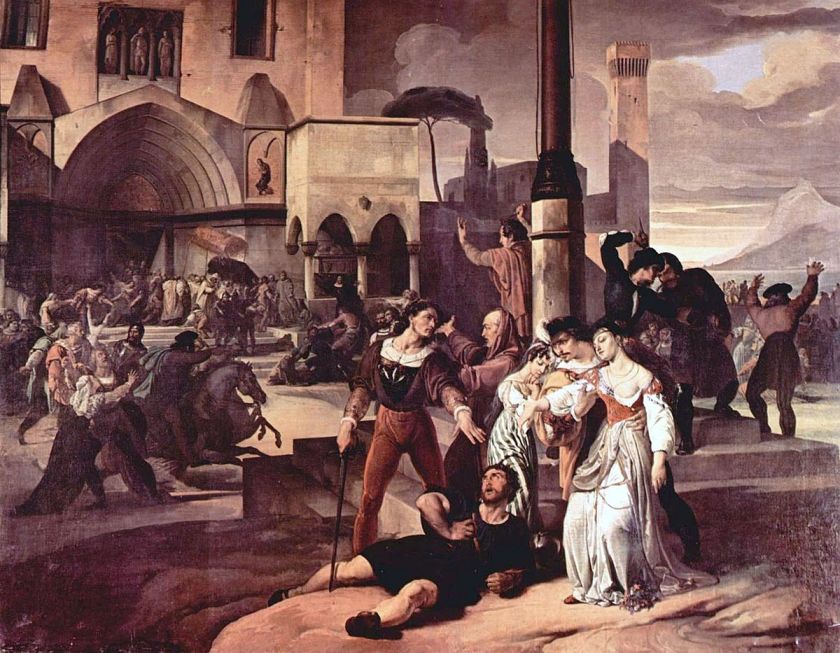


 France re-occupied the region following the Japanese defeat ending WWII, but soon faced the same opposition from the army of Ho Chi Minh and Vo Nguyen Giap. What began as a low level rural insurgency, later became a full-scale modern war when Communist China entered the fray in 1949.
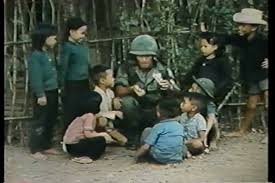 US policy makers feared a “domino” effect, and with good cause. The 15 core nations of the Soviet bloc were soon followed by Eastern Europe, as Poland, Bulgaria, Romania, Hungary and Czechoslovakia fell into the Soviet sphere of influence. Germany was partitioned into Communist and free-enterprise spheres after WWII, followed by China, North Korea and on across Southeast Asia.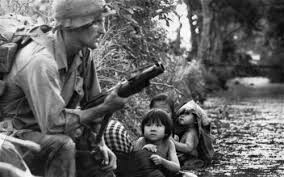
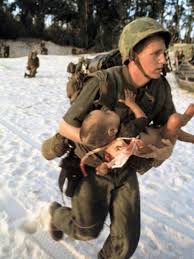 Even then it wasn’t over. Communist forces violated cease-fire agreements before they were signed. Some 7,000 US civilian Department of Defense employees stayed behind to aid South Vietnam in conducting an ongoing and ultimately futile war against communist North Vietnam.
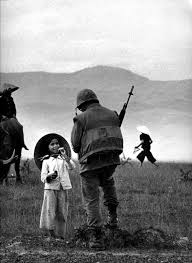 Imagine feeling so desperate, so fearful of this alien ideology invading your country, that you convert all your worldly possessions and those of your family to a single diamond, bite down on that stone so hard it embedded in your shattered teeth, and fled with your family to open ocean in a small boat. All in the faint and desperate hope, of getting out of that place. That is but one story among more than three million “boat people”. Three million from a combined population of 56 million, fleeing the Communist onslaught in hopes of temporary asylum in other countries in Southeast Asia or China.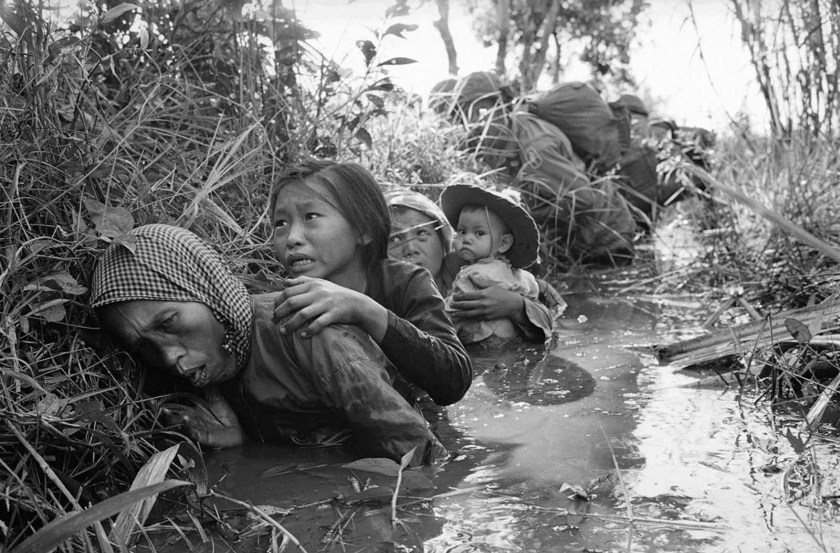


 themselves, and came to feel as I do to this day, that anyone who has a problem with our country’s war policy, needs to take it up with a politician. Not with a member of the Armed Services.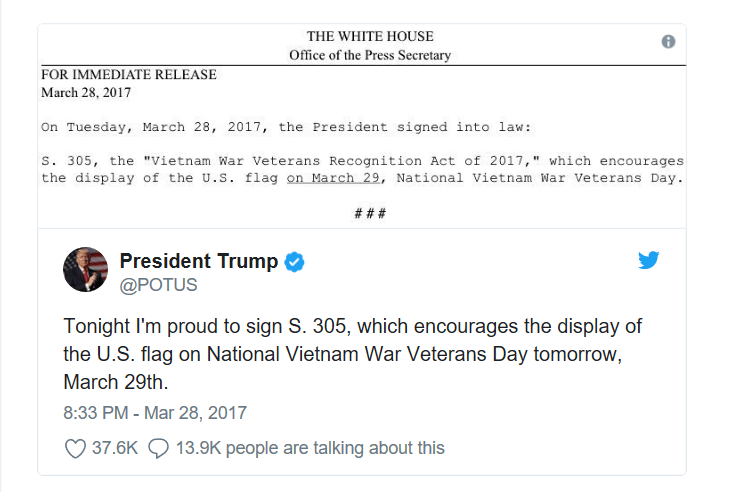

 Fifty-nine years earlier, nineteen-year-old Willis V. Meadows signed up with his brothers and his cousins, enlisting in Company G of the 37th Alabama Volunteer Infantry.
 Willis fell over apparently dead, blood streaming out of his eye with the bullet lodged near his brain. The battle moved on. Vicksburg Mississippi fell to the Union army on July 4, 1863. The “Confederate Gibraltar” wouldn’t celebrate another Independence Day, for 80 years.
 Willis Meadows and Peter Knapp might have walked off the page of their time and on to obscurity, but for a circumstance even more unlikely, than a man holding a bullet in his head for fifty-eight years.
 It’s remarkable enough that Peter Knapp survived the brutality of the notorious Andersonville prison camp, an institution described as the “Auschwitz of the Civil War”. The Union POW camp at Elmira New York might be described as the Andersonville of the North. My own thrice-Great Grandfather went to his final rest there, along with his brother.
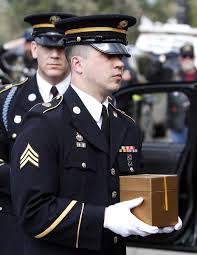 In 2012, Alice Knapp was researching the genealogical records of her deceased husband Steve, when she came upon the story of his ancestor. Stunned to learn that he had never been buried, Ms. Knapp called the Portland crematorium. ‘Yeah, he’s here’. Alice Knapp got the death certificate in Washington. I “called back and said, ‘By the way, is his wife there?’ and they said, ‘Yeah.’ The shock was that he was not ever buried. That was the surprise to me.”


 In early March, a force of some 1,500 Villistas were camped along the border three miles south of Columbus New Mexico, when Villa sent spies into Camp Columbus (later renamed Camp Furlong). Informed that Camp Columbus’ fighting strength numbered only thirty or so, a force of some 600 crossed the border around midnight on March 8.
 The United States government wasted no time in responding. That same day, the President who would win re-election in eight months on the slogan “He kept us out of war” appointed Newton Diehl Baker, Jr. to fill the previously vacant position of Secretary of War. The following day, Woodrow Wilson ordered General John Pershing to capture Pancho Villa, dead or alive.
 The 1st Aero Squadron arrived in New Mexico on March 15, with 8 aircraft, 11 pilots and 82 enlisted men. The first reconnaissance sortie was flown the following day, the first time that American aircraft were used in actual military operations.
 On May 14, a young 2nd Lieutenant in charge of a force of fifteen and three Dodge touring cars got into a running gunfight, while foraging for corn, in Chihuahua. It was the first motorized action in American military history. Three Villistas were killed and strapped to the hoods of the cars and driven back to General Pershing’s headquarters. General Pershing nicknamed that 2nd Lt. “The Bandito”. History remembers his name as George S. Patton.


 In 1620, the 60-ton Pinnace Speedwell departed Delfshaven, meeting with Mayflower at Southampton, Hampshire. The two vessels set out on August 15, but soon had to turn back as Speedwell was taking on water. Speedwell was abandoned after a second failed attempt, Mayflower setting out alone on September 16, 1620, with an estimated 142 passengers and crew.
 As anyone familiar with the area will understand, a month in that place and time convinced them of its unsuitability. By mid-December the Mayflower had crossed Cape Cod Bay and fetched up at Plimoth Harbor.


 Years later, colonists would go to war against the Wampanoag people and ‘King Philip’, the English name for Metacomet, the son of Massasoit. The Nauset would act as warriors and scouts against the Wampanoag people in King Philip’s War, a conflict which killed some 5,000 New England inhabitants, three quarters of whom were indigenous people.


![DOG 19 [1600x1200] (4).jpg.opt897x579o0,0s897x579](https://todayinhistory.blog/wp-content/uploads/2018/03/dog-19-1600x1200-4-opt897x579o00s897x579.jpg?w=840)





 In those days, Boston was a virtual island, connected to the mainland by a narrow “neck” of land. More than 20,000 armed men converged from all over New England in the weeks that followed, gathering in buildings and encampments from Cambridge to Roxbury.


 In the months that followed, the United States ramped up its war capacity, significantly. Realizing this but having little information, the Imperial Japanese Navy (IJN) determined to visit Pearl Harbor once again, to have a look around.




 On March 1, 2011, L/Cpl Tasker was killed by a Taliban sniper while on patrol in Helmand Province, and brought back to base by his fellow soldiers. Theo suffered a seizure after returning to base and never recovered. He died that afternoon. It was believed that Theo’s seizure was brought on by the stresses of Tasker’s death, but the autopsy proved inconclusive. Liam’s mother Jane Duffy later said, “I think Theo died of a broken heart, nobody will convince me any different.”
 On a more upbeat note, and this story needs one, our daughter Carolyn and son-in-law Nate transferred to Savannah in 2013, where Nate deployed to the Wardak province of Afghanistan as a TEDD handler and paired with “MWD Zino”, a four-year-old German Shepherd trained to detect up to 64 explosive compounds.
 Historical Easter Eggs - Today in History
You must be logged in to post a comment.