June 13, 1777 An Indispensable Man

The two men bonded almost immediately, forming a relationship closely resembling that of father and son.  The fatherless young French officer, and the father of his country who went to his grave, childless.

There are a handful of men who were indispensable to the American Revolution, men without whom the war effort would have been doomed to failure.

One, of course is George Washington, who became commander in chief before he had an army, before there was even a country. Washington took command of a rebel army with barely enough powder for nine shots per man, knowing all the while that, if caught, the penalty at that time for high treason was to be drawn, quartered and disemboweled, before the dying eyes of the prisoner so convicted.

La_Fayette_by_Weyler
LaFayette by Weyler

Another Indispensable would have to be Benjamin Franklin, whose diplomatic skills and unassuming charm elevated him to the status of a rock star among the circles of power at Versailles. It was Benjamin Franklin who transformed the French nation from mildly interested spectator to a  crucially important ally.

A third would arguably be Marie-Joseph Paul Yves Roch Gilbert du Motier, better known as the Marquis de Lafayette.

Lafayette was all of nineteen when he arrived in North Island South Carolina on June 13, 1777.

The French King had forbidden him from coming to America, fearing his capture by British agents. Lafayette wanted none of it. His own father, also the Marquis de Lafayette, was killed fighting the British when the boy was only two. The man was going to take part in this contest, if he had to defy his King to do it.

Lafayette disguised himself on departure, and purchased the entire ship’s cargo with his own money, rather than landing in Barbados and thus exposing himself to capture.

Lafayette and Washington_at_Mount_Vernon,_1784

Franklin had written to Washington asking him to take the young man on, in hopes of securing an increase in French aid to the American war effort.

The two men bonded almost immediately, forming a relationship closely resembling that of father and son.  The fatherless young French officer, and the father of his country who went to his grave, childless.

Lafayette wrote home to his wife in 1778, from Valley Forge. “In the place he occupies, he is surrounded by flatterers and secret enemies. He finds in me a trustworthy friend in whom he can confide and who will always tell him the truth. Not a day goes by without his talking to me at length or writing long letters to me. And he is willing to consult me on most interesting points.”

Lafayette served without pay, spending the equivalent of $200,000 of his own money for the salaries and uniforms of staff, aides and junior officers. He participated in several Revolutionary War battles, including Brandywine, Monmouth Courthouse and the final siege at Yorktown.

All the while, Lafayette periodically returned to France to work with Franklin in securing thousands of additional troops and several warships to aid in the war effort.

Lafeyettes wife Marie_Adrienne_FrancoiseLafayette’s wife Adrienne gave birth to their first child on one such visit, a baby boy the couple would name Georges Washington Lafayette.

It was a small force under Lafayette that took a position on Malvern Hill in 1781, hemming in much larger British forces under Lord Cornwallis at the Yorktown peninsula.

The trap was sprung that September with the arrival of the main French and American armies under the Comte de Rochambeau and General George Washington, and the French fleet’s arrival in the Chesapeake under the Comte de Grasse.

Cornwallis surrendered on October 19, 1781, after which Lafayette returned to France.

The Marquis played an important role in his own country’s revolution, becoming a Commander of the French National Guard. When the Bastille was stormed by an angry mob in 1789, Lafayette was handed the key. Lafayette later sent the key to the Bastille to George Washington, as a “token of victory by Liberty over Despotism”. Today that key hangs in the main hallway at Washington’s mansion at Mount Vernon.

img_3767

When the French Marquis died in 1834, President Andrew Jackson ordered that he be accorded the same funeral honors which President John Adams bestowed on George Washington himself, back in 1799. John Quincy Adams delivered the three-hour eulogy in Congress, saying “The name of Lafayette shall stand enrolled upon the annals of our race high on the list of the pure and disinterested benefactors of mankind.”

Lafayette-grave

The Marquis de Lafayette lies under several feet of earth shipped to France from Bunker Hill on the Charlestown peninsula, in obedience to one of his last wishes.  He had always wanted to be buried under American soil.

lafayette

If you enjoyed this “Today in History”, please feel free to re-blog, “like” & share on social media, so that others may find and enjoy it as well. Please click the “follow” button on the right, to receive email updates on new articles.  Thank you for your interest, in the history we all share.

June 11, 1775 The Lexington of the Sea

Called by some the “Lexington of the Sea”, the little-known episode was the first naval battle of the American Revolution, and ended in victory for the Patriot side. 

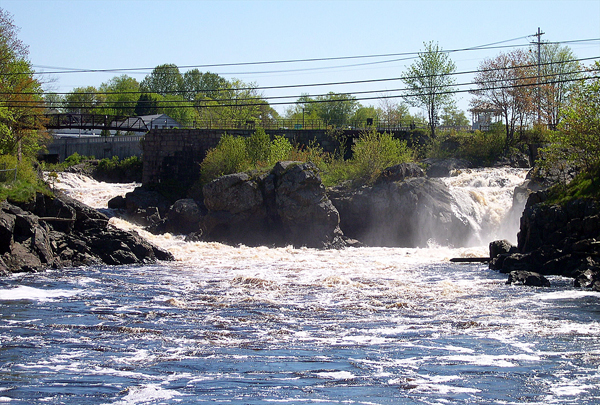
In the Passamaquoddy tongue, “Machias” roughly translates into “bad little falls”, after the river that runs through the place. Five hours and 15 minutes drive-time from Boston, Machias Maine sports a campus for the University of Maine, a municipal airport and, even today, a year-round population barely exceeding 2,000.

BAD LITTLE FALLS KC.JPG
Machias-area residents who discussed downtown revitalization Tuesday evening said the Bad Little falls was the town’s most distinctive element. (KATHERINE CASSIDY PHOTO)

Not necessarily a place where you’d expect the first naval combat of the American Revolution.

In 1775, the modern state of Maine was still part of Massachusetts. Machias itself, a small fishing village on the “Downeast” New England coast, had been a thorn in the British side, since the earliest days of the Revolution.   A local pilot intentionally grounded the coastal patrol schooner HMS Halifax that February, in Machias Bay.  The place also served as a base from which privateers preyed on British merchant shipping.

In April, a British foray from the occupied city of Boston had culminated in the Battle at Lexington Green.  While the King’s troops held the ground in the wake of the early morning skirmish, the decision of the afternoon’s battle at nearby Concord was quite different.  The colonial’s response to the column of “Regulars” was that of a swarming behive, resulting in a Patriot victory and a British retreat under fire, all the way back to Boston.

Siege-of-Boston-1-ABBoston was all but an island in those days, connected to the mainland only be a narrow “neck” of land.  A Patriot force some 20,000 strong took positions in the days and weeks that followed, blocking the city and trapping four regiments of British troops (about 4,000 men) inside of the city.
For General Thomas Gage, in charge of all those troops, the best hope for resupply was by water.

British Royal Navy Admiral Samuel Graves wanted the guns from the wreck of the Halifax, concerned they would otherwise fall into rebel hands.  Gage wanted lumber, with which to build barracks.  So it was that the wealthy merchant and Tory loyalist Ichabod Jones was enlisted to help, blissfully unaware of the dim view in which his activities were held by fellow colonials.

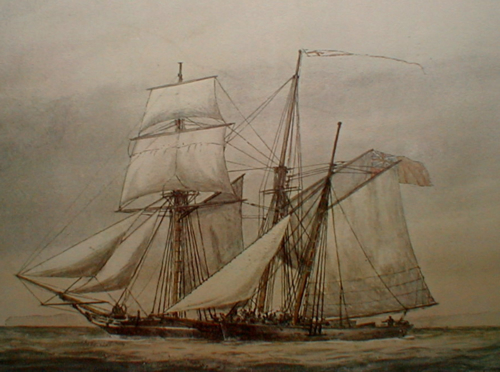
Jones arrived at Machias on June 2 aboard the merchant ships Unity and Polly, under guard of the armed schooner HMS Margaretta, commanded by Midshipman James Moore.  They had come to trade food for lumber but the townspeople were split, and voted against doing business with Jones.  This provoked a threat from the Margaretta, which moved into range to bombard the town.  The action resulted in a second vote and the trade was approved, but Jones’ response was ham-fisted.   The merchant would only do business, with those who had voted with him in the first place.

margaretta
HMS Margaretta

Local militia leader Colonel Benjamin Foster conceived a plan to seize the merchant, and saw his opportunity on June 11, when Jones and Moore were in church.  They almost had the pair too, but Jones saw some twenty men approaching, and fled for the woods.  Moore was able to get back to the Margaretta, but events soon spun out of control.

Colonel Foster and his brother, a man with the delightful name of Wooden Foster, seized the Unity.  A group of thirty began to construct breastworks to serve as protection, while others commandeered the coastal packet Falmouth.   There was gong to be a fight.

machias_meA group of Machias men approached Margaretta from the land and demanded her surrender, but Moore lifted anchor and sailed off in attempt to recover the Polly.  A turn of his stern through a brisk wind resulted in a boom and gaff breaking away from the mainsail, crippling the vessel’s navigability. Unity gave chase followed by Falmouth.
Musket fire was exchanged from both sides and hand grenades were thrown onto the decks of the Unity.   Soon, the Margaretta was boarded from both sides, the fighting hand to hand.

Called by some the “Lexington of the Sea”, the little-known episode was the first naval battle of the American Revolution, and ended in victory for the Patriot side.  Four Royal Navy seamen were killed outright and another ten wounded including Moore himself, who received a musket ball to the chest and died the following day.

Patriot losses amounted to ten killed and another three wounded.

HMS Margaretta served out the remainder of the Revolution as the renamed Machias Liberty.  British payback came on October 18 when Falmouth Massachusetts, the modern-site of Falmouth Maine and not to be confused with either of the modern-day towns of  Falmouth Massachusetts, or Falmouth Maine, was burned to the ground.

British forces attempted a second assault on Machias, with an amphibious landing of 1,000 troops over the 13th – 14th of August, 1777.  The attempt was beaten back by local militia and their Passamaquoddy and Penobscot allies, with both sides claiming victory.  The nearby village of Castine would be occupied in 1779 as would Machias itself during the War of 1812.  On both occasions, captured territories were re-dubbed the Crown Colony of “New Ireland”, a refuge for Loyalists and a base for future military operations.

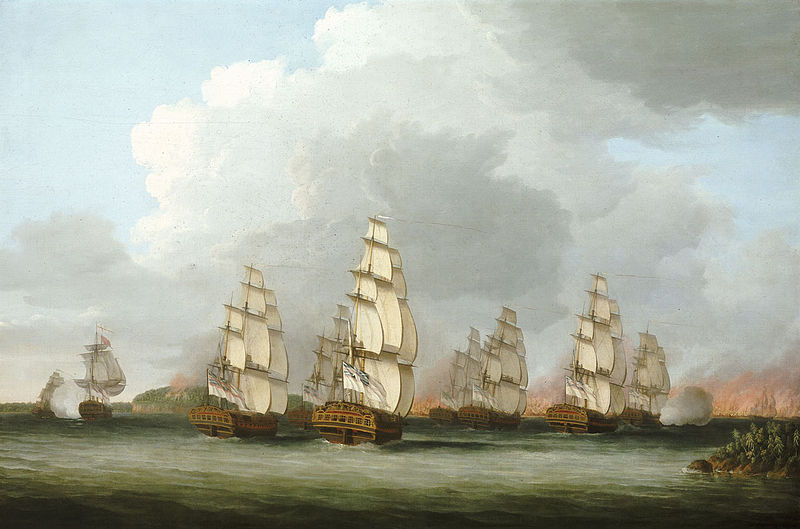
The Crown Colonies of New Ireland survived for four years in the first instance and eight months in the second.  The failed Penobscot expedition of 1779 to retake the colony would result in the most catastrophic defeat suffered by American Naval forces until the Japanese attack on Pearl Harbor 162 years later, but that must be a story for another day.

800px-PenobscotExpeditionBySerres
Britain defending New Ireland from the Penobscot Expedition by Dominic Serres
If you enjoyed this “Today in History”, please feel free to re-blog, “like” & share on social media, so that others may find and enjoy it as well. Please click the “follow” button on the right, to receive email updates on new articles.  Thank you for your interest, in the history we all share.

June 10, 1944 Ghost Village

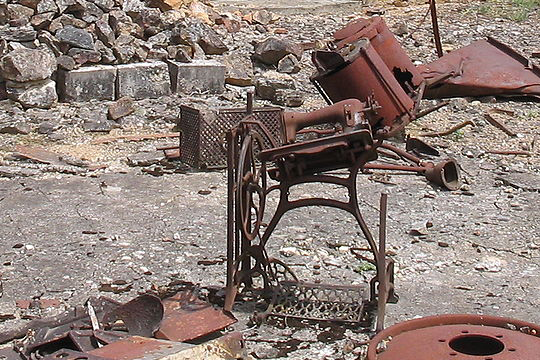
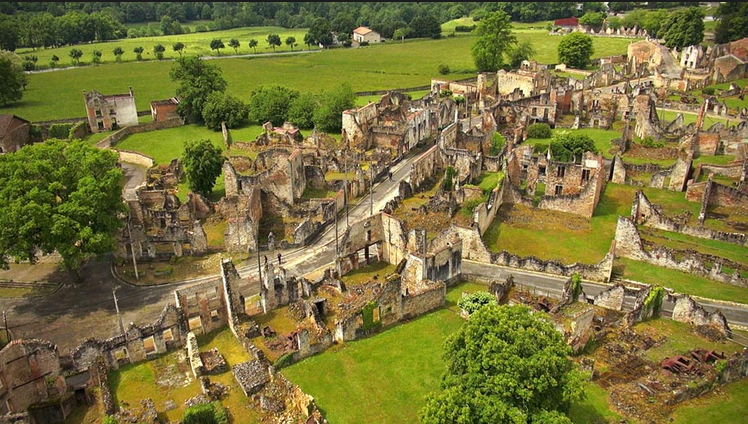
The village stands today as those Nazi soldiers left it, seventy-four years ago today.  It may be the most forlorn place on earth.

On D+4 after the Normandy invasion of WW2, the 2nd Panzer Division of the Waffen SS was passing through the Limousin region, in west-central France.  “Das Reich” had been ordered to help stop the Allied advance, when SS-Sturmbannführer Adolf Diekmann received word that SS officer Helmut Kämpfe was being held by French Resistance forces in the village of Oradour-sur-Vayres.

Oradour-sur-Glane-Hardware

Diekmann’s battalion sealed off the nearby village of Oradour-sur-Glane, seemingly unaware of their own confusion between the two villages.

Everyone in the town was ordered to assemble in the village square, for examination of identity papers. The entire population of the village was there, plus another half-dozen unfortunates, caught riding their bicycles at the wrong place, and the wrong time.

Oradour-sur-Glane-ChurchThe women and children of Oradour-sur-Glane were locked in a village church while German soldiers looted the town.  The men were taken to a half-dozen barns and sheds, where the machine guns were already set up.

The Germans aimed for the legs when they opened fire, intending to inflict as much pain as possible. Five escaped in the confusion before the SS lit the barn on fire. 190 men were burned alive.

Oradour-sur-Glane.jpg 3Nazi soldiers then lit an incendiary device in the church, and gunned down 247 women and 205 children as they tried to escape.
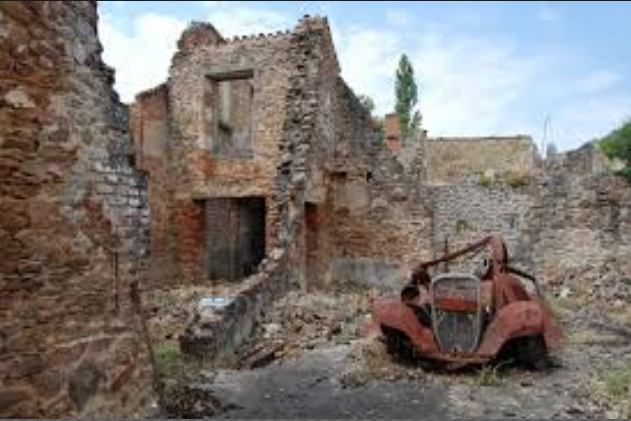
47-year-old Marguerite Rouffanche escaped out a back window, followed by a young woman and child.  All three were shot.  Rouffanche alone escaped alive, crawling to some pea bushes where she hid until next morning.

642 inhabitants of Oradour-sur-Glane, aged one week to 90 years, were shot to death, burned alive or some combination of the two, in a few hours.  The village was then razed to the ground.

Raymond J. Murphy, a 20-year-old American B-17 navigator shot down over France and hidden by the French Resistance, reported seeing a baby who’d been crucified.

After the war, a new village was built on a nearby site.  French President Charles de Gaulle ordered that the “old” village remain as it is;  a monument for all time to criminally insane governing ideologies, and the malignity of collective punishment.

Oradour-sur-Glane.jpg 4

Generals Erwin Rommel and Walter Gleiniger, German commander in Limoges, protested the senseless act of brutality.  Even the SS Regimental commander agreed and began an investigation, but that came to naught.  Within days, Diekmann and most of the men who had carried out the massacre, had been killed in combat.

The ghost village at the old Oradour-sur-Glane stands mute witness to this day, to the savagery committed by black-clad Schutzstaffel units in countless places like the French towns of Tulle, Ascq, Maillé, Robert-Espagne, and Clermont-en-Argonne; the Polish villages of Michniów, Wanaty and Krasowo-Częstki and the city of Warsaw; the Soviet village of Kortelisy; the Lithuanian village of Pirčiupiai; the Czechoslovakian villages of Ležáky and Lidice; the Greek towns of Kalavryta and Distomo; the Dutch town of Putten; the Yugoslavian towns of Kragujevac and Kraljevo and the village of Dražgoše, in what is now Slovenia; the Norwegian village of Telavåg; the Italian villages of Sant’Anna di Stazzema and Marzabotto.

Oradour-sur-Glane.jpg 2

And on.  And on.  And on.

Oradour-sur-Glane-StreetsFrench President Jacques Chirac dedicated a memorial museum in 1999, the “Centre de la mémoire d’Oradour“. The village stands today as those Nazi soldiers left it, seventy-four years ago today.  It may be the most forlorn place on earth.

The story was featured on the 1974 British television series “The World at War”, narrated by Sir Laurence Olivier, who intones these words for the first and final episodes of the program: “Down this road, on Oradour-sur-Glane.jpg 5a summer day in 1944. . . The soldiers came. Nobody lives here now. They stayed only a few hours. When they had gone, the community which had lived for a thousand years. . . was dead. This is Oradour-sur-Glane, in France. The day the soldiers came, the people were gathered together. The men were taken to garages and barns, the women and children were led down this road . . . and they were driven. . . into this church. Here, they heard the firing as their men were shot. Then. . . they were killed too. A few weeks later, many of those who had done the killing were themselves dead, in battle. They never rebuilt Oradour. Its ruins are a memorial. Its martyrdom stands for thousands upon thousands of other martyrdoms in Poland, in Russia, in Burma, in China, in a World at War”.

Oradour-sur-Glane2

June 7, 1942 The Alcan Highway

The project received a new sense of urgency on June 7, when a Japanese force of 1,140 took control of Attu Island, murdering Charles Jones, a ham radio operator and weather reporter from Ohio, and taking his wife Etta prisoner, along with 45 Aleuts. 

Discussions concerning a road to Alaska began as early as 1865, when Western Union contemplated plans to install a telegraph wire from the United States to Siberia. The concept picked up steam with the proliferation of automobiles in the 1920s, but the idea was a hard sell for Canadian authorities. Such a road would necessarily pass through their territory, and the Canadian government believed the project would have little impact, benefiting no more than a few thousand people in the Yukon.

In the days following the surprise attack on Pearl Harbor, Guam and Wake Island fell to Imperial Japanese forces , making it clear that parts of the Pacific coast were vulnerable.

Priorities were changing for both the United States, and Canada.

The Alaska Territory was particularly exposed. Situated only 750 miles from the nearest Japanese base, the Aleutian Island chain had but 12 medium bombers, 20 pursuit planes, and fewer than 22,000 troops in the entire territory, an area four times the size of Texas.

Surviving-AK-blog-1

Colonel Simon Bolivar Buckner Jr., son of the Confederate commander who famously received Ulysses S. Grant’s “Unconditional Surrender” ultimatum at Fort Donelson (“I propose to move immediately, upon your works”), was in charge of the Alaska Defense Command.  Buckner made his made point, succinctly. “If the Japanese come here, I can’t defend Alaska. I don’t have the resources.”

The Army approved construction of the Alaska Highway in February 1942, the project receiving the blessings of Congress and President Roosevelt within the week. Canada agreed to allow the project, provided that the United States pay the full cost, and the roadway and other facilities be turned over to Canadian authorities at the end of the war.

Construction began in March as trains moved hundreds of pieces of construction equipment to Dawson Creek, the last stop on the Northern Alberta Railway. At the other end, 10,670 American troops arrived in Alaska that spring, to begin what their officers called “the biggest and hardest job since the Panama Canal.”

4517139905_887f3c484a_b
Dawson Creek, 1942

In-between lay over 1,500 miles of unmapped, hostile, wilderness.

The project received a new sense of urgency on June 7, when a Japanese force of 1,140 took control of Attu Island, murdering Charles Jones, a ham radio operator and weather reporter from Ohio, and taking his wife Etta prisoner, along with 45 Aleuts.  Adding to the urgency was the fact that the Alaskan winter permits no more than an eight-month construction window.  That period was already well underway.

Construction began at both ends and the middle at once, with nothing but the most rudimentary engineering sketches. A route through the Rocky Mountains had yet to be identified.

06162017_HighwayRadios of the age didn’t work across the Rockies, and the mail was erratic.  The only passenger service available was run by the Yukon Southern airline, a run which locals called the “Yukon Seldom”.  For construction battalions at Dawson Creek, Delta Junction and Whitehorse, it was faster to talk to each other through military officials in Washington, DC.

Moving men to assigned locations was one thing.  Transporting 11,000 pieces of heavy equipment, to say nothing of supplies needed by man and machine, was quite another.

alcan-hwyTent pegs were useless in the permafrost, while the body heat of sleeping soldiers meant waking up in mud. Partially thawed lakes meant that supply planes could use neither pontoon nor ski, as Black flies swarmed the troops by day.  Hungry bears raided camps at night, looking for food.

Engines had to run around the clock, as it was impossible to restart them in the cold. Engineers waded up to their chests building pontoons across freezing lakes, battling mosquitoes in the mud and the moss laden arctic bog. Ground which had been frozen for thousands of years was scraped bare and exposed to sunlight, creating a deadly layer of muddy quicksand in which bulldozers sank in what seemed like stable roadbed.

Alaska Highway Black Soldiers

That October, Refines Sims Jr. of Philadelphia, with the all-black 97th Engineers, was driving a bulldozer 20 miles east of the Alaska-Yukon line when the trees in front of him toppled to the ground. Sims slammed his machine into reverse as a second bulldozer came into view, driven by Kennedy, Texas Private Alfred Jalufka. North had met south, and the two men jumped off their machines, grinning. Their triumphant handshake was photographed by a fellow soldier and published in newspapers across the country, becoming an unintended first step toward desegregating the US military.

24SOLD-popup

A gathering at Soldier’s Summit on November 21, 1942 celebrated “completion” of the route, though the “highway” remained impassable for most vehicles, until 1943.

Alaska-Hwy-historyNPR ran an interview about this story back in the eighties, in which an Inupiaq elder was recounting his memories. He had grown up in a world as it existed for hundreds of years, without so much as an idea of internal combustion. He spoke of the day that he first heard the sound of an engine, and went out to see a giant bulldozer making its way over the permafrost. The bulldozer was being driven by a black operator, probably one of the 97th Engineers Battalion soldiers.  The old man’s comment, as best I can remember it, was a classic. “It turned out”, he said, “that the first white person I ever saw, was a black man”.

REBRANDSD2997_THC_MDRN_3703_HVG_000_2997_60_20160202_00_HD

If you enjoyed this “Today in History”, please feel free to re-blog, “like” & share on social media, so that others may find and enjoy it as well. Please click the “follow” button on the right, to receive email updates on new articles.  Thank you for your interest, in the history we all share.

June 6, 1944 Dress Rehearsal

Unable to wear their lifebelts correctly due to the large backpacks they wore, many men placed them around their waists. That only turned them upside down and that’s how they died, thrashing in the water with their legs above the waves.

The largest amphibious assault in history began seventy-four years ago today, on the northern coast of France.  British and Canadian forces came ashore at beaches code-named Gold, Juno and Sword.  Americans faced light opposition at Utah Beach, while heavy resistance at Omaha Beach resulted in over 2,000 American casualties.

By end of day, some 156,000 Allied troops had successfully stormed the beaches of Normandy.  Within a week that number had risen to 326,000 troops, over 50,000 vehicles and more than 100,000 tons of equipment.

ww2_dday_landing

The first phase of Operation Overlord, code named ‘Neptune’, achieved its stunning success as the result of lessons learned from the largest amphibious training exercise of WW2, the six phases of “Operation Fabius”, itself following the unmitigated disaster of a training exercise that killed more Americans, than the actual landing at Utah beach.

Slapton is a village and civil parish in the River Meadows of Devon County, where the southwest coast of England meets the English Channel.  Archaeological evidence suggests human habitation from at least the bronze age.  The “Domesday Book”, the recorded manuscript of the “Great Survey” of England and Wales completed in 1086 by order of William the Conqueror, names the place as “Sladone”, with a population of 200.

Slapton_Sands
Slapton Sands

In late 1943, the place was home to 750 families, some of whom had never so much as left their village.  Some 3,000 locals were evacuated with their livestock to make way for “Operation Tiger”, a full-scale rehearsal for the landing scheduled for the following spring.

Thousands of US military personnel were moved into the region during the winter of 1943-’44. The area was mined and bounded with barbed wire, and patrolled by sentries.  Secrecy was so tight, that even those in surrounding villages, had no idea of what was happening.

p012721

Exercise Tiger was scheduled to begin on April 22, covering all aspects of the “Force U” landing on Utah beach and culminating in a live-fire beach landing at Slapton Sands at first light on April 27.

Nine large tank landing ships (LSTs) shoved off with 30,000 troops on the evening of the 26th, simulating the overnight channel crossing. Live ammunition was used in the exercise, to harden troops off to the sights, sounds and smells of actual battle. Naval bombardment was to commence 50 minutes before H-Hour, however delays resulted in landing forces coming under direct naval bombardment. An unknown number were killed in this “friendly fire” incident. Fleet rumors put the number as high as 450.

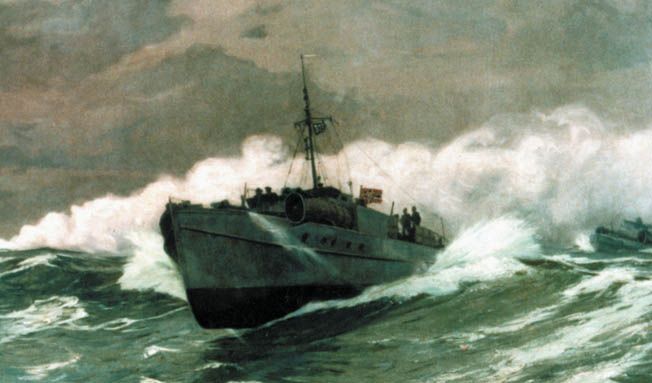
Two Royal Navy Corvettes, HMS Azalea and Scimitar, were to guard the exercise from German “Schnellboots” (what the Allies called “E-Boats”), the fast-attack craft based out of Cherbourg.

aabd944fc8651966c90eed0e7eecbcaa

HMS Scimitar withdrew for repairs following a collision with an LST on the 27th. In the early morning darkness of the following day, the single corvette was leading 8 LSTs carrying vehicles and combat engineers of the 1st Engineer Special Brigade through Lyme Bay, when the convoy was spotted by a nine vessel S-Boat patrol.

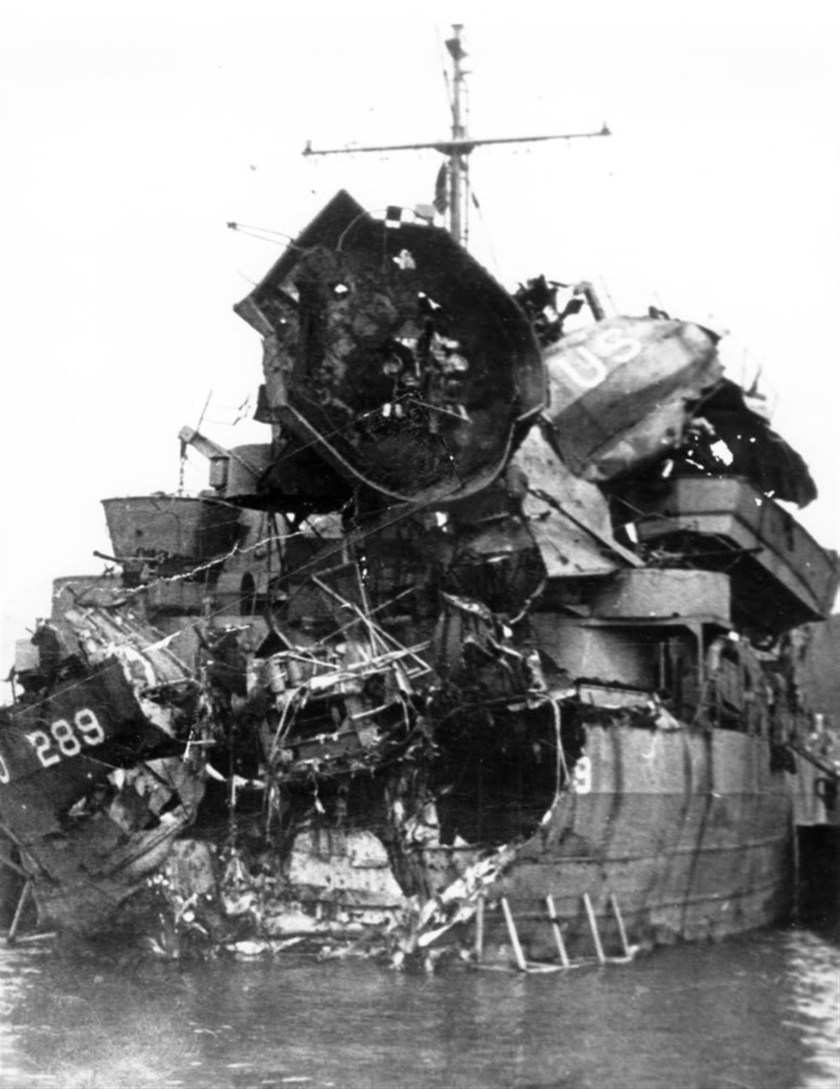
8 LSTs (Landing Ship, Tank) in single-file didn’t have a chance against fast-attack craft capable of 55mph.  LST-531 was torpedoed and sunk in minutes, killing 424 Army and Navy personnel. LST-507 suffered the same fate, with the loss of 202. LST-289 was severely damaged and grounded in flames, with the loss of 123. LST-511 was damaged in yet another friendly fire incident. Unable to wear their lifebelts correctly due to the large backpacks they wore, many men placed them around their waists. That only turned them upside down and that’s how they drowned, thrashing in the water with their legs above the waves. Dale Rodman, who survived the sinking of LST-507, said “The worst memory I have is setting off in the lifeboat away from the sinking ship and watching bodies float by.”

Operation-Tiger-1944
LST (Landing Ship, Tank 289: “Severely damaged by a German E-Boat torpedo attack off Slapton Sands, England, 28 April 1944, during Operation Tiger, the rehearsal for the Normandy invasion”.  H/T ExerciseTiger.org.uk

Survivors were sworn to secrecy due to official embarrassment, and the possibility of revealing the real invasion, scheduled for June.  Ten officers with high level clearance were killed in the incident, but no one knew that for sure until their bodies were recovered.  The D-Day invasion was nearly called off, because any of them could have been captured alive, revealing secrets during German interrogation and torture.

There remains a surprising amount of confusion, concerning the final death toll. Estimates range from 639 to 946, nearly five times the number killed in the actual Utah Beach landing.  Some or all of the personnel from that damaged LST may have been aboard the other 8 on the 28th, and log books went down along with everything else.  Many of the remains were never found.

5d274a9049a6b00623d5672d4b355bdd

The number of dead would surely have been higher, had not Captain John Doyle disobeyed orders and turned his LST-515 around, plucking 134 men from the frigid water.

Today, the Exercise Tiger disaster is mostly forgotten.  Some have charged official cover-up, though information from SHAEF press releases appeared in the August edition of Stars & Stripes.  At least three books describe the event.  It seems more likely that the immediate need for secrecy and subsequent D-Day invasion swallowed the Tiger disaster, whole.  History has a way of doing that.

DSCF0195-1024x768
Exercise Tiger Memorial, Slapton

Some of Slapton’s residents came home to rebuild their lives after the war, but many never returned.  In the early ’70s, Devon resident and civilian Ken Small discovered an artifact of the Tiger exercise, while beachcombing on Slapton Sands.  With little to no help from either the American or British governments, Small purchased rights from the American Government to a submerged Sherman tank from the 70th Tank Battalion. The tank was raised in 1984 with help from local residents and dive shops, and now stands as a memorial to Exercise Tiger.  Not far from the monument to villagers, who never came home.

Slaptonmemorial

A plaque was erected at Arlington National Cemetery in 1995, inscribed with the words “Exercise Tiger Memorial”. A 5,000-pound stern anchor bears silent witness to the disaster in Mexico, Missouri.

In 2012, a granite memorial was erected at Utah Beach, engraved with the words in French and English: “In memory of the 946 American servicemen who died in the night of 27 April 1944 off the coast of Slapton Sands (G.B.) during exercise Tiger the rehearsals for the D-Day landing on Utah Beach“.

In 1988, volunteers from the Army Brotherhood of Tankers repaired, repainted and re-stenciled an M4 Sherman tank, installing a mirror image of the Slapton memorial at Fort Taber Park in the south-coastal working class city of New Bedford, Massachusetts.

New Bedford veteran’s agent Christopher Gomes lost his right leg during the Iraq War, in 2008.  Gomes was succinct that Memorial Day 2016, when he spoke of this difficult chapter in British/American military history.  “People only die”, he said, “when they are forgotten about″.

Left – Memorial Day 2018:  WW2 Navy combat veteran Vincent Riccardi, Exercise Tiger’s oldest survivor, salutes his fallen comrades at Fort Taber Park in New Bedford, Massachusetts. H/T South Coast Today
Right – The M4 Sherman Tank Tank at the Fort Taber – Fort Rodman Military Museum at Fort Taber Park in New Bedford mirrors the one built to the fallen at Slapton Sands, Devon, England.


34668415_2086248128295884_3219656447432327168_n
H/T “Ghosts of time” for this image, Today and Now.


If you enjoyed this “Today in History”, please feel free to re-blog, “like” & share on social media, so that others may find and enjoy it as well. Please click the “follow” button on the right, to receive email updates on new articles.  Thank you for your interest, in the history we all share.

May 31, 1916 The Man who Fixed Faces

It’s been said of the American civil war and could no doubt be said of any number of conflicts, that a generation of women had to accustom themselves to new ideas of male ‘beauty’. 

For many, the mention of ‘cosmetic surgery’ conjures images of vanity.  The never-ending and inevitably fruitless attempt to stave off the years.  Add some here and take it off over there.  But what of the face left smashed and misshapen, burned or blown half off in service to country?

plastic-surgery-lead-1494865707“Plastic” Surgery, the term comes to us from the Greek Plastikos and first used by the 18th century French surgeon Pierre Desault, has been with us longer than you might expect.  Evidence exists of Hindu surgeons performing primitive ‘nose jobs’, as early as BC800-600.  The Renaissance-era surgeon Gaspare Tagliacozzi (1545-1599) developed new methods of reconstruction, using the patient’s own arm skin to replace noses slashed off in swordplay.
large
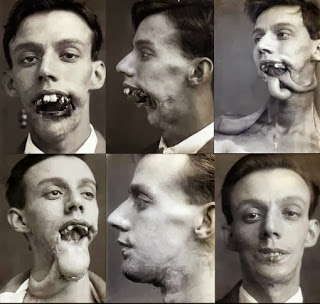
Lt. William M. Spreckley of the Sherwood Foresters was Dr. Gillies’ 132nd patient, admitted to the hospital in January 1917 at the age of 33 with a ‘GSW, Nose”. He was discharged 3½ years later.

A hillside battle at a place called Hastings changed the world in 1066 yet, if you were on the next hillside, you may not have heard a thing.  The industrialized warfare of the 19th and 20th century was vastly different, involving entire populations and inflicting unprecedented levels of destruction on the human form.

It is beyond horrifying what modern warfare can do to the human form

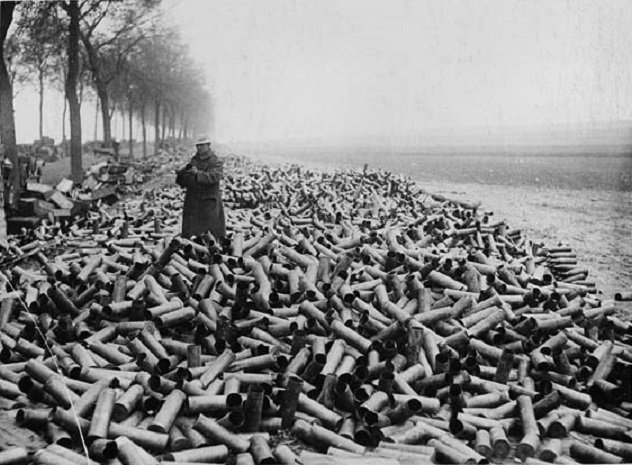
It’s been said of the American civil war and is no doubt true of any number of conflicts, that a generation of women had to accustom themselves to new ideas of male ‘beauty’.  The ‘Great War’ of 1914 – ‘18 was particularly egregious when it came to injuries to the face, neck and arms, as millions of soldiers burrowed into 450-mile-long trench lines to escape what German Private Ernst Jünger described as the “Storm of Steel”.

74407448.3

In the Battle of Verdun, German forces used 1,200 guns firing 2.5 million shells supplied by 1,300 ammunition trains to attack their Allied adversary on the First Day, alone.

For every soldier killed in the Great War, two returned home, maimed. Artillery was especially malevolent, with “drumfire” so rapid as to resemble the rat-a-tat-tat of drums, each blast sending thousands of jagged pieces of metal, shrieking through the air.

Invaliden

For many, severe facial disfigurement was a fate worse than amputation.  Worse than death, even.  To have been grievously wounded in service to country and return home to be treated not as a wounded warrior, but as something hideous.

The untold human misery of having been turned into a monster, misshapen and ugly.  For these men, life often became one of ostracism and loneliness.  The painful stares of friends and strangers alike, repelled by such disfiguration, offtimes lead to alcoholism, divorce and suicide.

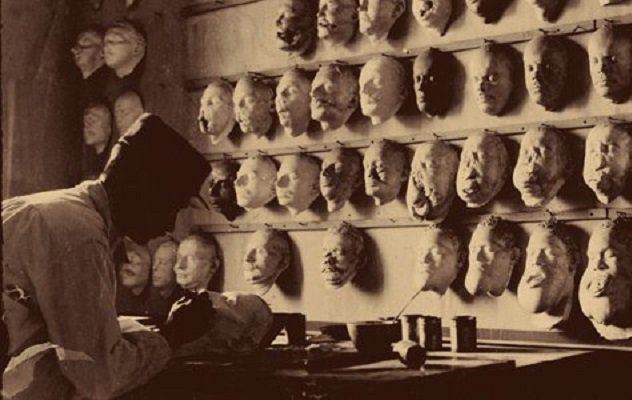
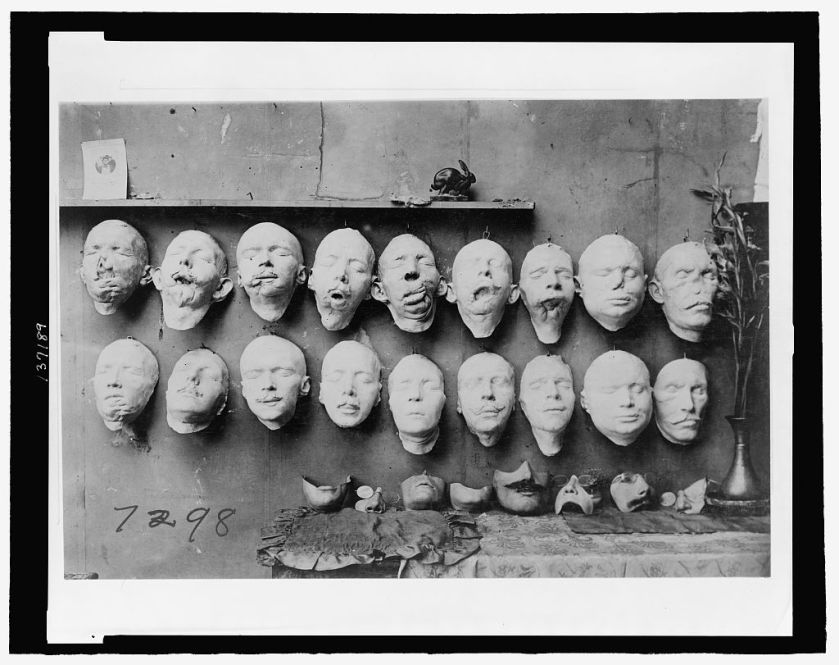
Manchester Massachusetts sculptor Anna Coleman Ladd moved to France in 1917.  Inspired by the work of British artist Francis Derwent Wood and his “tin noses shop”,  Ladd founded the “Studio for Portrait-Masks” of the Red Cross in Toul, to provide cosmetic prosthetics for men disfigured by the war.

world-war-1-face-masks-631.jpg__800x600_q85_cropLadd’s prostheses were uncomfortable to wear, but her services earned her the Légion d’Honneur Croix de Chevalier and the Serbian Order of Saint Sava.
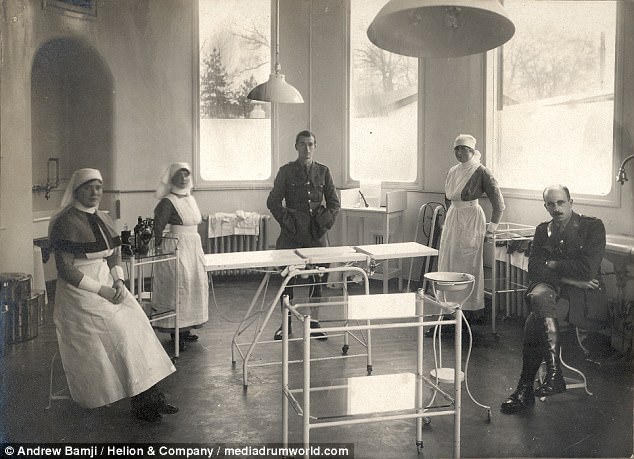
The New Zealand-born otolaryngologist Dr. Harold Gillies was shocked at the human destruction, while working with the French-American dental surgeon Sir August Charles Valadier on new techniques of jaw reconstruction and other maxillofacial procedures.

44B9901E00000578-4920628-image-a-10_1506420240847
The interior of the Plastic Theatre at the Queen’s Hospital.  Dr Gillie is seated, on the right

The sterile medical notation “GSW (gunshot wound) Face” does not begin to prepare the mind for a horror more closely resembling a highway roadkill, than the face of a living man.  I left the worst of such images out of this essay.  They’re easy enough to find on-line, if you’re interested in seeing them.  The medical science is fascinating, but the images are hard to look at.

Dr. Gillies watched the renowned French surgeon Hippolyte Morestin, a man known as “The Father of the Mouths” after multiple breakthroughs in oral surgery, remove a tumor and use the patient’s own jaw-skin, to repair the damage.

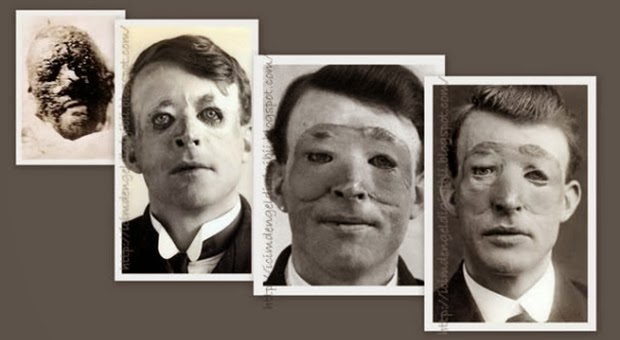
Joseph Pickard, of the 5th Northumberland Fusiliers, before and after Dr. Gillies.  H/T Daily Mail

Gillies understood the importance of the work, and spoke with British Chief Surgeon Sir William Arbuthnot Lane.  The conversation lead to a 1,000-bed facial trauma ward at Queen Mary’s Hospital in Sidcup, Kent, opened in June, 1917.

The largest naval battle of the Great War, the Battle of Jutland, unfolded between May 31 and June 1, 1916, involving 250 ships and some 100,000 men.

The Queen Elizabeth-class battleship HMS Warspite took fifteen direct hits from German heavy shells, at one point having no rudder control and helplessly turning in circles.

ilk-estetik-ameliyat-WalterYeo
Petty Office Walter Yeo

Petty Officer Walter Yeo was manning the guns aboard Warspite and received terrible injuries to his face, including the loss of upper and lower eylids, and extensive blast and burn damage to his nose, cheeks and forehead.

laddfaces06
When all else failed, there were the facial prosthetics.  The masks.

Yeo was admitted to Queen Mary’s hospital the following August, where he was treated by Dr. Gillies and believed to be the first recipient of a full facial graft taken from another part of his own body.

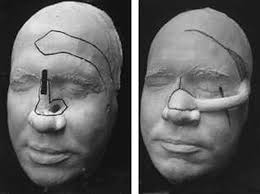
4535390_origDr. Gillies & Co. developed surgical methods in which rib cartilage is first implanted in foreheads, and then swung down to form the foundational structure of a new nose.

At a time before antibiotics, tissue grafts could be as dangerous as the trenches themselves.   “Tubed pedicles” were developed to get around the problem of infection, where living tissue and its blood supply was rolled into tubes and protected by the natural layer of skin.  These tubes of living tissue weren’t pretty to look but were relatively safe from infection.  When the patient was ready, new tissue could be “walked” into place, become whole new facial features.

hdg-display-02

Dr. Harold Gelf Gillies, the Father of modern plastic surgery, performed more than 11,000 such procedures with his colleagues, on over 5,000 individuals.  Work continued well after the war and through the mid-twenties, developing new and important surgical techniques.

Dr. Gillies received a knighthood for his work in 1930 and, during the inter-war years, trained many other Commonwealth physicians on his surgical methods.  Just in time to send the following generation, off to the next war.

If you enjoyed this “Today in History”, please feel free to re-blog, “like” & share on social media, so that others may find and enjoy it as well. Please click the “follow” button on the right, to receive email updates on new articles.  Thank you for your interest, in the history we all share.

May 28, 1919 From SS to Green Beret

So it is that the name of the elite warrior who had served under three flags, a man who once wore the uniform of the Nazi SS, is engraved on that stone in Arlington, along with those of the South Vietnamese warriors with whom he once served.

There is a surprise or two, hidden among the 400,000+ grave sites, at Arlington National Cemetery.  Did you know, for instance, that 4,000 former slaves went to their final rest there?  Arlington is the only cemetery in the world, to hold American servicemen from every war in US history.  Three graves contain the remains of enemy combatants, from WW2.  Among them all there may no greater curiosity, than the grave of a Green Beret, interred with the remains of three South Vietnamese soldiers.  Unless it’s to learn that that same guy, once wore the uniform of the Nazi SS.

280px-Europe_before_Operation_Barbarossa,_1941_(in_German)

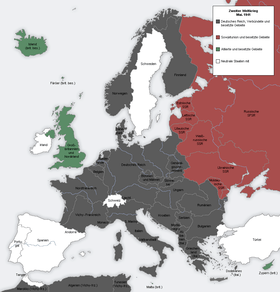
In May 1941, the geopolitical map of the Eurasian continent could be drawn in two colors, the spheres of influence of governments headed by two of the great monsters of the 20th century:  Josef  Stalin’s Soviet Union, and the Nazi Germany of Adolf Hitler.

The Republic of Finland, the 8th largest nation on the European landmass with a population equal to that of Minnesota, suffered military defeat during the “Winter War” of a year earlier, a 105-days long David vs. Goliath contest fought against the Soviet Union.

The two dictators were allies at this time according to the terms of the Molotov-Ribbentrop pact, signed two years earlier.  That state of affairs ceased the following month, with ‘Operation Barbarossa’, Hitler’s surprise attack on his erstwhile ally.

Finland never signed the Tripartite Pact with Nazi Germany and stated that it would fight the Soviets only insofar as to redress territorial losses suffered during the Winter War. Adolf Hitler saw the distinction as irrelevant and regarded the Nordic republic as an ally.  To Hitler, Finland would become just another part of the war on the Eastern Front.  To Finnish patriots, the uneasy alliance with Nazi Germany and the continued struggle with the Soviet Union, would be known as the “Continuation War’.

larry-thorne-with-soldiers
Lauri Törni (center) stands among other soldiers near Lake Tolvajärvi in Russia, date unknown

Lauri Alan Törni was such a patriot, born this day in 1919 in Finland’s Viipuri Province. Törni fought the Soviet Union during the Winter War and the Continuation War, rising to the rank of Captain and earning the Mannerheim Cross, Finland’s equivalent to the British Victoria Cross, or the American Medal of Honor. An elite and highly effective guerrilla fighter, Törni trained with the Nazi SS in Austria. Such a menace was this man to Stalin’s war effort, that the Soviets placed a bounty on his head of three million Finnish marks, equivalent to $650,000. There is no record of such a bounty on any other Finnish soldier.

220px-Torni_lauri
Törni in Waffen-SS uniform, 1941

The Continuation War came to an end in September 1944, but Törni still had scores to settle with the Communists.  He joined forces with a German unit fighting Soviet troops near Schwerin, Germany, and surrendered to British and American forces in the last stages of WW2.

Törni escaped the British POW camp and returned to Finland, only to be arrested on charges of treason for having joined the German army.  There would be a six-year prison sentence and one more escape, before the Presidential pardon in 1948.

Traveling under alias as a Swedish seaman, Törni jumped overboard in the Gulf of Mexico, swimming ashore near Mobile, Alabama and claiming political asylum. He was granted citizenship in 1953 by special act of congress, and adopted the more “Americanized” name of Larry Thorne, joining the United States Army the following year.

thorne1Thorne was soon headed to Special Forces, the elite warrior becoming an instructor of skiing, mountaineering, survival and guerrilla tactics.

Thorne attended airborne school and earned the silver wings of a Green Beret. He went through Officer Candidate School and received his commission as a 1st Lieutenant, rising to the rank of Captain in just three years.

Larry Thorne had a reputation for physical toughness, even amidst such an elite organization as the Green Berets. Now in his mid-forties, he could physically out-perform many men half his age.

images3UCTLQOHAs part of the 10th Special Forces Group, Thorne served in a search-and-rescue capacity in West Germany, earning a reputation for courage in operations to recover bodies and classified documents, following a plane in the Zagros Mountains of Iran.
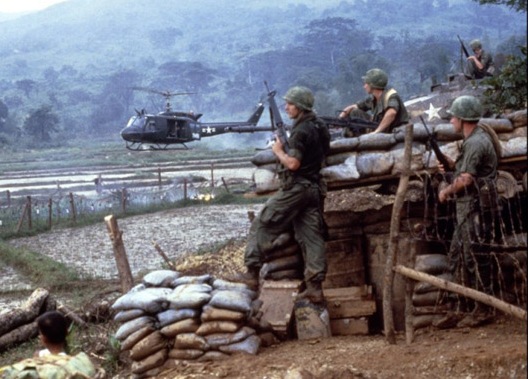
Captain Thorne was sent to Vietnam in 1963, assigned to operate Civilian Irregular Defense Group (CIDG) camps at Châu Lăng and later Tịnh Biên. Thorne earned two Purple Hearts and a Bronze Star for valor during one particularly ferocious attack on Tịnh Biên, an episode author Robin Moore wrote about in his best-selling paperback, The Green Berets.

On October 18, 1965, Larry Thorne was leading a covert mission against a Viet Cong stronghold in Laos when his helicopter crashed, killing all on board.  He was 46.  Captain Thorne was posthumously promoted to the rank of major and awarded the Legion of Merit and Distinguished Flying Cross.  Let the citation tell his story:

thorne5

If the patrol were immediately confronted by a superior force, Major Thorne would land and extricate the patrol under fire. This was done with total disregard for the inherent dangers and with selfless concern for the ground forces. In so doing, he exposed himself to extreme personal danger which ultimately led to his disappearance and the loss of his aircraft. He had, however, guaranteed the safe introduction of the patrol into the area, the successful accomplishment of this mission and had positioned himself to react to any immediate calls for assistance from the patrol“.

The crash site of the Republic of Vietnam Air Force CH-34 helicopter was discovered in 1999.   Thorne’s remains were found, intermingled with those of Lieutenant Bao Tung Nguyen, First Lieutenant The Long Phan, and Sergeant Vam Lanh Bui.  Major Thorne was identified by dental records.

hqdefault (4)

Thorne’s family in Finland said let him be buried in America, because that was the choice that he made.  The four were buried with full military honors in Arlington National Cemetery, the way they had died. Together.

So it is that the name of the elite warrior who had served under three flags, a man who once wore the uniform of the Nazi SS, is engraved on that stone in Arlington, along with those of the South Vietnamese warriors with whom he once served.

If you enjoyed this “Today in History”, please feel free to re-blog, “like” & share on social media, so that others may find and enjoy it as well. Please click the “follow” button on the right, to receive email updates on new articles.  Thank you for your interest, in the history we all share.

May 27, 1940 The Miracle of Dunkirk

By day 9 of the evacuation, 338,226 soldiers had been rescued from the beach.  For those, the “Miracle of Dunkirk” ended on June 4.  For approximately 40,000 British and another 40,000 French soldiers left behind in the confusion, a special kind of hell had just begun. 

The Nazi conquest of Europe began with the Sudetenland in 1938, the border districts of Bohemia, Moravia, and German speaking parts of Czechoslovakia. Within two years, every major power on the European mainland was either neutral, or under Nazi occupation.

319154The island nation of Great Britain alone escaped occupation, but British armed forces were shattered and defenseless in the face of the German war machine.

In May 1940, the British Expeditionary Force (BEF) and what remained of French forces occupied a sliver of land along the English Channel. Field Marshall Gerd von Rundstedt called a halt of the German armored advance on May 24.  Reichsmarschall Hermann Göring urged Hitler to stop the ground assault, and let the Luftwaffe finish the destruction of the adversary. On the other side of the channel, Admiralty officials combed every boatyard for miles, for boats to ferry its people off of the beach.

dunkirk1Hitler ordered his Panzer groups to resume the advance on May 26, while a National Day of Prayer was declared at Westminster Abbey. That night Winston Churchill ordered “Operation Dynamo”. One of the most miraculous evacuations in military history had begun from the beaches of Dunkirk.

The battered remnants of the French 1st Army fought a desperate delaying action against the advancing Germans. They were 40,000 men against seven full divisions, 3 of them armored. They held out until May 31 when, having run out of food and ammunition, the last 35,000 finally surrendered. Meanwhile, a hastily assembled fleet of 933 vessels large and small began to withdraw the broken army from the beaches.

The Evacuation of DunkirkLarger ships were boarded from piers, while thousands waded into the surf and waited in shoulder deep water for smaller vessels. They came from everywhere: merchant marine boats, fishing boats, pleasure craft, lifeboats and tugs. The smallest among them was the 14’7″ fishing boat “Tamzine”, now in the Imperial War Museum.

dunkirk2A thousand copies of navigational charts helped organize shipping in and out of Dunkirk, as buoys were laid around Goodwin Sands to prevent strandings. Abandoned vehicles were driven into the water at low tide, weighted down with sand bags and connected by wooden planks, forming makeshift jetties.

dunkirkevacuation7,669 were evacuated on the first full day of the evacuation, May 27, and none too soon.  The following day, members of the SS Totenkopf Division marched 100 captured members of the 2nd Battalion of the Royal Norfolk Regiment off to a pit, and machine gunned the lot of them.  A group of the 2nd Battalion of the Royal Warwickshire Regiment were captured that same day, herded into a barn and murdered with grenades.

428B34BA00000578-0-image-a-52_1500631364614
Troops wait in the rubble of Dunkirk, for rescue

By day 9 of the evacuation, 338,226 soldiers had been rescued from the beach.  For those, the “Miracle of Dunkirk” ended on June 4.  For approximately 40,000 British and another 40,000 French soldiers left behind in the confusion, a special kind of hell had just begun.

dunkirk troops, 1940Most light equipment and virtually all heavy equipment had to be left behind, just to get what remained of the allied armies out alive. But now, with the United States still the better part of a year away from entering the war, the allies had a military fighting force that would live to fight on.
Winston Churchill delivered a speech that night to the House of Commons, calling the events in France “a colossal military disaster”. “[T]he whole root and core and brain of the British Army”, he said, had been stranded at Dunkirk and seemed about to perish or be captured. In his “We shall fight on the beaches” speech of June 4, Churchill hailed the rescue as a “miracle of deliverance”.

On the home front, thousands of volunteers signed up for the “stay behind” mission, expected to follow. With German invasion all but imminent, their mission was to go underground and disrupt and destabilize the invaders, in any way they could. These were to be the British Resistance, a guerrilla force reportedly vetted by a senior Police Chief so secret that, the man was to be garroted in case of invasion, to prevent membership in the units from being revealed.  Many were issued suicide pills in case of capture yet, thanks to these men and women, Great Britain was the only nation of the WW2 era to have a fully operational resistance, BEFORE occupation.

WW2-Aux_Units-1112x634

Participants in these auxiliaries were not allowed to tell their families what they were doing, or where they were.  They generally passed themselves off as Home Guard, a home defense organisation operated by the British Army.  Bob Millard, who passed away in 2014 at the age of 91, said they were given 3 weeks’ rations.  Even Josephine, Millard’s wife of 67 years, didn’t know a thing about the auxiliaries until their reunion, in 1994. “You just didn’t talk about it, really”, he said. “As far as my family were aware I was still in the Home Guard. It was all very hush hush. After the war, it was water under the bridge”.

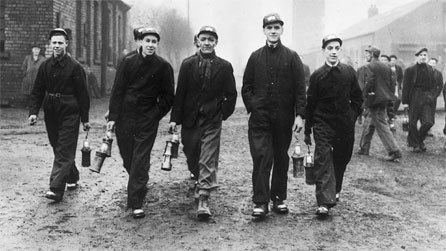
Another under-recognized group from the period are the young men conscripted to serve in the coal mines of the United Kingdom.  One in ten conscripts of the time received not a uniform, but the hard hat and steel-toed boot of the coal miner.  Often maligned as “Conchies” (conscientious objectors) or worse, these were held in service for as long as two years after the war, condemned to live the life of the Troglodyte with no expectation of peacetime jobs being held for them, as for those who served in uniform.

bevin_boys
“Bevin Boys” of WW2

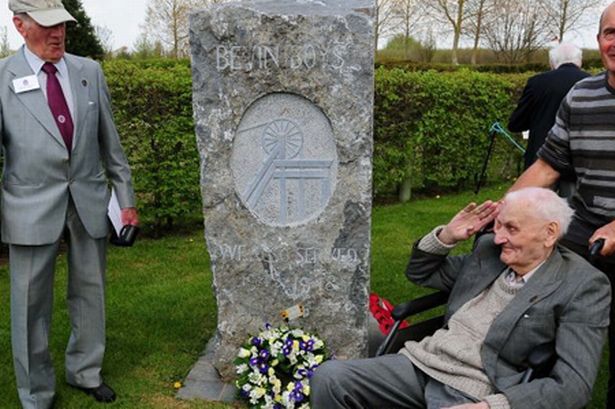
These “Bevin Boys”, so-called after Minister of Labor Ernest Bevin, would wait decades for recognition of their contribution to the war effort, full acceptance coming only as the result of a speech given by Queen Elizabeth II, fifty years after VE Day.

The word “Cenotaph” literally translates as “Empty Tomb”, in Greek. Every year since 1919 and always taking place on the Sunday closest to the 11th day of the 11th month, the Cenotaph at Whitehall is the site of a remembrance service, commemorating British and Commonwealth servicemen and women who died in the conflicts of the 20th century. Since WWII, the march on the Cenotaph includes an ever-decreasing number of Home Guard and the Bevin Boys, without whom the war effort would have ground to a halt.

In 2013, five short years ago, the last surviving auxiliers joined their colleagues, proudly marching past the Cenotaph for the very first time.  Historians from the Coleshill Auxiliary Research Team (CART) had been trying to do this for years.

CART founder Tom Sykes said: “After over 70 years of silence, the veterans of the Auxiliary Units and Special Duties Section, now more than ever, deserve to get the official recognition that has for so long been lacking. ‘They were, in this country’s hour of need, willing to give up everything, families, friends and ultimately their lives in order to give us a fighting chance of surviving“.

visitors-pay-tribute-at-the-bevin-boys-memorial-in-alrewas-745730884
Memorial to wartime ‘Bevin Boys’ unveiled in Staffordshire

May 26, 2018 I Drive your Truck

They are so young and so few, who pick up the tab on behalf of the rest of us.

Jared-C.-Monti-2If you’ve raised a child, you are well acquainted with the triumphs and the terrors of giving those little tykes the sword with which they will conquer their world.
We all have those special dates we mark on the calendar. The birthdays. The anniversaries. For some among us, there are other dates. Moments in time, which very few of us are required to remember. Dates which not one of us wants to recall.

Most of us go about our business, knowing but at the same time forgetting, that we are a nation at war.  There are families among us, who must mark such a date every year. The date when that child was taken from us.

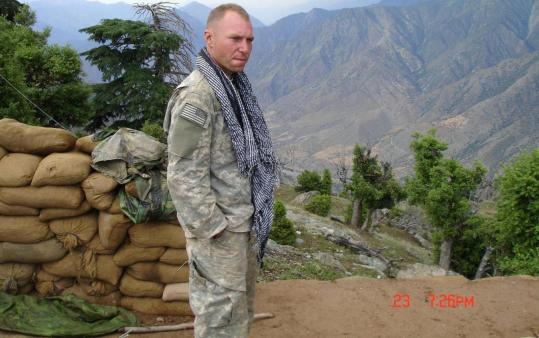
On June 21, 2006, Sergeant Jared Monti’s 16-man patrol was ambushed by a 50-member  force of insurgents, on a high mountain ridge in Afghanistan. Pfc. Brian Bradbury, 22, was mortally wounded early in the fight, and lay on open ground close to the enemy position.

Never a man to leave a fallen comrade behind, twice Sergeant Monti exposed himself to overwhelming fire from three sides, in the attempt to rescue Private Bradbury. A rocket-propelled grenade ended the third such attempt.  Jared Monti was 30.

539w

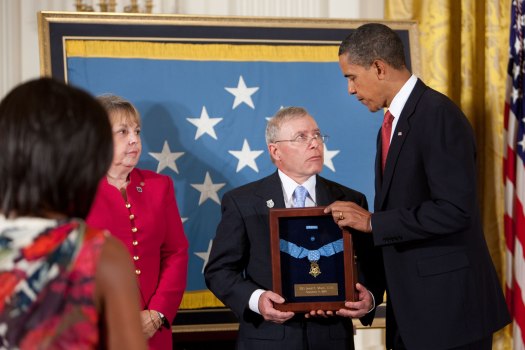
In 2011, Army Sergeant First Class Jared Christopher Monti was awarded the Medal of Honor for the action which took his life. The first Massachusetts soldier so honored, since the war in Vietnam.

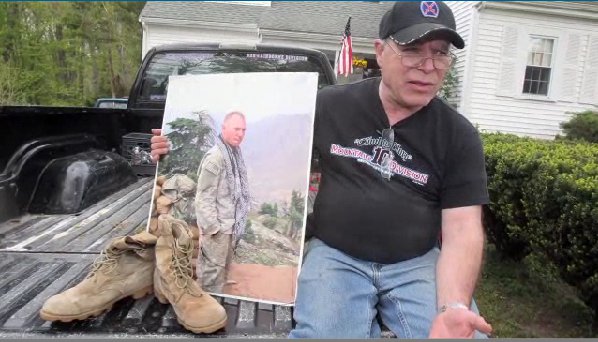
The following year, singer songwriter Lee Brice released “I drive your truck”, a song that went to country music song of the year in 2014. The “I” in the title, though he didn’t know it at the time, is Paul Monti, Jared’s father and a retired science teacher at Stoughton High School, in Massachusetts.

It’s Jared’s truck.

paulmontitruck

Several years ago, Paul was denied permission to place a flag on his son’s grave, at the National Cemetery in Bourne, here on Cape Cod. The authorities don’t like to be left cleaning things up.

Paul took it up the chain of command until he received permission. He could put the flag in, as long as he agreed to take it out a week later.

And that’s what he did. On every grave in the Bourne National Cemetery.

Today, ‘Operation Flags for Vets‘ is a semi-annual event, recurring on Memorial Day and again on Veteran’s day weekends.  Later this morning, upwards of two thousand volunteers can be expected to join with the Monti family to place flags on every one of over 70,000 graves in the Massachusetts National Cemetery.  A week later, they’ll be removed.

There is something that restores and recharges my soul, to be in the company of so many Patriots.

.


Medal of Honor citation

“For conspicuous gallantry and intrepidity at the risk of his life above and beyond the call of duty:

monti-MOH-presentation-to-family
Jared Monti’s Medal of Honor presented to members of his family by the President of the United States, 2011

“Staff Sergeant Jared C. Monti distinguished himself by acts of gallantry and intrepidity above and beyond the call of duty while serving as a team leader with Headquarters and Headquarters troop, 3rd Squadron, 71st Cavalry Regiment, 3rd Brigade Combat Team, 10th Mountain Division, in connection with combat operations against an enemy in Nuristan Province, Afghanistan, on June 21st, 2006. While Staff Sergeant Monti was leading a mission aimed at gathering intelligence and directing fire against the enemy, his 16-man patrol was attacked by as many as 50 enemy fighters. On the verge of being overrun, Staff Sergeant Monti quickly directed his men to set up a defensive position behind a rock formation. He then called for indirect fire support, accurately targeting the rounds upon the enemy who had closed to within 50 meters of his position. While still directing fire, Staff Sergeant Monti personally engaged the enemy with his rifle and a grenade, successfully disrupting an attempt to flank his patrol. Staff Sergeant Monti then realized that one of his soldiers was lying wounding on the open ground between the advancing enemy and the patrol’s position. With complete disregard for his own safety, Staff Sergeant Monti twice attempted to move from behind the cover of the rocks into the face of relentless enemy fire to rescue his fallen comrade. Determined not to leave his soldier, Staff Sergeant Monti made a third attempt to cross open terrain through intense enemy fire. On this final attempt, he was mortally wounded, sacrificing his own life in an effort to save his fellow soldier. Staff Sergeant Monti’s selfless acts of heroism inspired his patrol to fight off the larger enemy force. Staff Sergeant Monti’s immeasurable courage and uncommon valor are in keeping with the highest traditions of military service and reflect great credit upon himself, Headquarters and Headquarters Troop, 3rd Squadron, 71st Calvary Regiment, 3rd Brigade Combat Team, 10th Mountain Division, and the United States Army”.

May 25, 1738  That Other war between the States

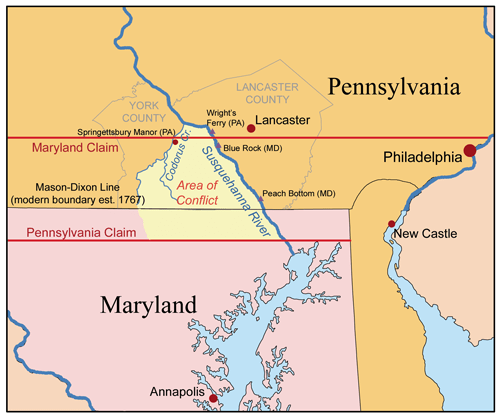
The problem comes about when you realize that 40° north latitude is north of Philadelphia, well into territory controlled by the Maryland colony.

The Pennsylvania Charter of 1681 specifies the southern boundary of the colony to be “A circle drawne at twelve miles distance from New Castle Northward and Westward unto the beginning of the fortieth degree of Northern Latitude, and then by a streight Line Westward“.

The problem comes about when you realize that 40° north latitude is north of Philadelphia, well into territory controlled by the Maryland colony.

cresapwarmap

Maryland insisted on the boundary as drawn by the Charter, while Pennsylvania proposed a boundary near 39°36′, creating a disputed zone of some 28 miles.

In 1726, Quaker minister John Wright began a “ferry” service across the Susquehanna River. Starting as a pair of dugout canoes, “Pennsylvania Dutch” farmers were soon settling the Conejohela Valley on the eastern border between Maryland and Pennsylvania.

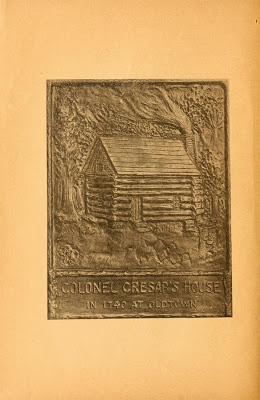
cresap2Business was good.  By 1730, Wright had applied for a ferry license. With Lord Baltimore fearing a loss of control in the area (read – taxes), Maryland resident Thomas Cresap established a second ferry service up the river. Maryland granted Cresap some 500 acres along the west bank, serenely unconcerned that much of the area was already inhabited by Pennsylvania farmers.
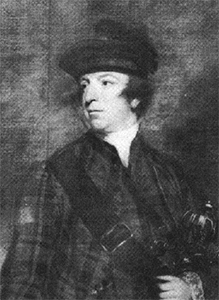
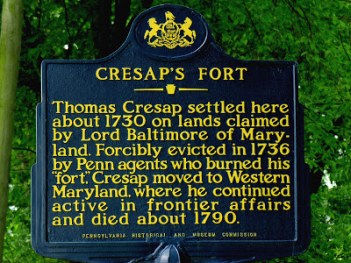
Cresap went to these farmers and began collecting “quit-rents”, (an early form of property tax) for the government in Maryland. Pennsylvania authorities responded by issuing “tickets” to settlers which, while not granting immediate title, amounted to an “IOU” of title under Pennsylvania jurisdiction.

When Cresap and his ferry worker were thrown overboard by two Pennsylvanian farmers, probably over a debt, Cresap took the matter to Pennsylvania authorities for justice. After the magistrate said that he couldn’t expect justice in his court because he was a “liver in Maryland”, Cresap filed charges with Maryland authorities, claiming that, as a Maryland resident, he was no longer bound by Pennsylvania law.

Cresap and his gang members began confiscating York and Lancaster county properties as early as 1734, handing them over to supporters. Maryland militia crossed colonial borders twice in 1736, and Pennsylvania militia were quick to respond.

thomas-cresap
Thomas Cresap

When the Lancaster county Sheriff arrived with a posse to arrest Cresap at his home, Cresap fired through the door, striking and mortally wounding deputy Knowles Daunt. When Daunt died of his wounds, Pennsylvania Governor Patrick Gordon demanded that Maryland arrest Cresap for murder.

Samuel Ogle, Governor of Maryland, responded by naming Cresap a captain of the Maryland militia.

Cresap resumed and expanded his raids, destroying barns and shooting livestock. Sheriff Samuel Smith raised a posse to arrest him in November. When the Pennsylvanians set his cabin on fire, Cresap ran for the river. Grabbing him before he could launch a boat, Cresap shoved one of them overboard, shouting, “Cresap’s getting away!”, whereupon the other deputies proceeded to pound their colleague with oars until one of them discovered the ruse.

Cresap was taken to Lancaster, where he decked the blacksmith who had come to put him in shackles. He was finally subdued and hauled off to Philadelphia in chains, but even then the man was anything but broken. “Damn it”, he said, looking around, “this is one of the prettiest towns in Maryland!”

DSCN8422-1Maryland authorities petitioned George II, King of Great Britain and Ireland, imploring the King to restore order among his subjects. King George’s proclamation of August 18, 1737 instructed the governments of both colonies to cease hostilities. When that failed to stop the fighting, the Crown organized direct negotiations between the two. Peace was signed in London on May 25, 1738, the agreement providing for an exchange of prisoners and a provisional boundary to be drawn fifteen miles south of the southernmost home in Philadelphia, and mandating that neither Maryland nor Pennsylvania “permit or suffer any Tumults Riots or other Outragious Disorders to be committed on the Borders of their respective Provinces.”
So ended the “Conojocular War”, the bloody eight-year conflict between Philadelphia and surrounding area and sometimes referred to as “Cresap’s War”. The matter was settled once and for all, when Penns and Calverts, each descendants of their colonial founders,  hired surveyors Charles Mason and Jeremiah Dixon to establish the modern boundary in 1767. Today, the area in conflict is part of York County, Pennsylvania.

And now you know where that line comes from.

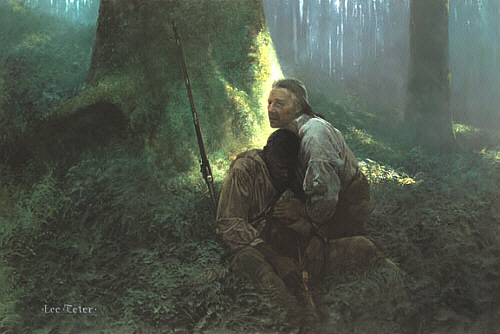
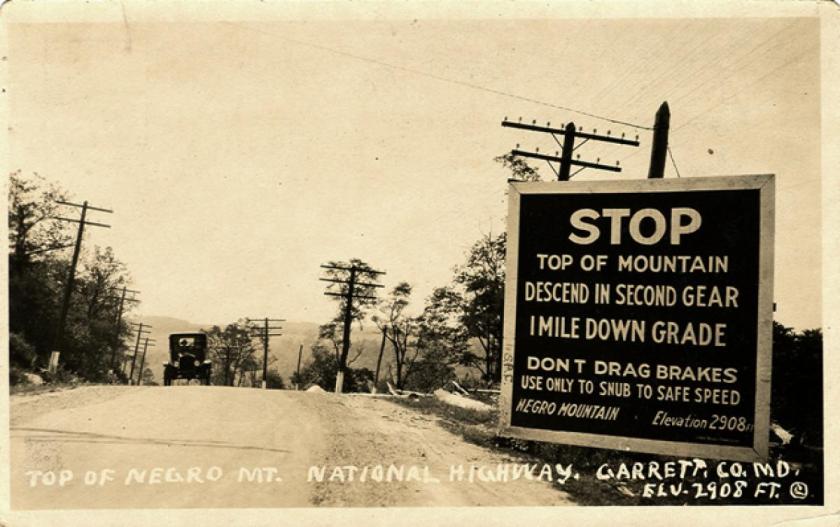
Afterward: During the French & Indian Wars of the 1750s Thomas Cresap and a party of 100 pursued an Indian war band over the present-day Savage Mountain and onto the next. Along with the party marched a free black man, a frontiersman known only as “Nemesis”. A fierce fight ensued on May 28, 1756.  Nemesis, described only as “large and powerfully built”, fought bravely, but lost his life. He was buried on the site, where Cresap named the mountain in his honor. “Negro Mountain”, the long ridge of the Allegheny Mountains stretching from Deep Creek Lake in Maryland, north to the Casselman River in Pennsylvania, stands to this day as his monument. Feature image, top of page, the painting “Shades of Death” by artist Lee Teter, depicts Colonel Thomas Cresap comforting the mortally wounded, heroic frontiersman.

mountain28n-1-web