December 26, 1776 Hell Ships of the Revolution

British and American forces and their allies fought no less than seventy-one major engagements from the April 19, 1775 battles of Lexington and Concord, to the 1783 Battle of Arkansas Post.  The prison ships of the British killed more Americans than every single one of them, combined.

Since the first Geneva Convention of 1864, nations have attempted to codify a system of international law, concerning acceptable limits on the conduct of war.  These laws address a range of considerations including declarations of war, acceptance of surrender and proper treatment of prisoners.

Such discussions are nothing new, the earliest examples dating to the ancient Sanskrit epic Mahābhārata, and to the old testament (Torah) Book of Deuteronomy. The first Caliph, Abu Bakr, laid down ten rules of warfare for his Muslim army, in the 7th century.

In the New World British colony in North America, one of twenty-seven grievances enumerated in the Declaration of Independence was that King George IIIhas endeavoured to bring on the inhabitants of our frontiers the merciless Indian Savages whose known rule of warfare is an undistinguished destruction of all ages, sexes and conditions“.

unknown-8-1489678956-1972The American Revolution was on its last legs in December 1776. The year had started out well for the Patriot cause but turned into a string of disasters, beginning in August. Food, ammunition and equipment were in short supply by December.  Men were deserting as the string of defeats brought morale to a new low.   Most of those who remained, ended enlistments at the end of the year.

General George Washington and a force of 5,000 performed the famous crossing of the Delaware River in the howling blizzard of Christmas day, 1776. The assault on the Hessian garrison at Trenton, was do or die. The cause of Independence needed decisive victory, or it was over. The pass word on that frigid night was “Victory”.  There was only one acceptable response: “Or Death”.

The tactical surprise was complete in the early morning hours of December 26.  Hessian losses were 22 killed, 92 wounded and 918 captured.  Only 400 escaped. The Americans suffered two who had frozen to death in the march on Trenton, and five wounded. It was the colonist’s first major victory of the Revolution.

What to do with all those prisoners was a new problem for Washington, who ordered his troops to treat them with humanity.  “Let them have no reason to complain of our copying the brutal example of the British army in their treatment of our unfortunate brethren who have fallen into their hands.”

Washington’s position on the treatment of prisoners was clear and consistent. On September 14 of the previous year, the General wrote to Colonel Benedict Arnold then in camp in Cambridge Massachusetts: “Should any American soldier be so base and infamous as to injure any [prisoner]…I do most earnestly enjoin you to bring him to such severe and exemplary punishment as the enormity of the crime may require.”

No such consideration was given American prisoners of his Majesty’s government.  King George III personally declared American revolutionaries to be traitors in 1775, denying them prisoner of war status.  Land based detention facilities in British-occupied cities such as New York, Philadelphia and Charleston quickly filled up when the hulks of spent vessels were brought into service as prison ships, little more than waterlogged coffins.

1024px-HMS_Jersey_Prison_Ship_1782_(cropped)
Prison Ship HMS Jersey

Conditions on board these prison ships, were gruesome.  The stifling hold of  HMS Jersey alone held no fewer than 1,000 men in Wallabout Bay, modern-day site of the Brooklyn Navy Yard.

Authorities were loath to execute detainees for “treason” for fear of inciting sympathy.  Prisoners were left instead to wallow in their own filth, starved and tormented by most every disease and parasite, known to modern medicine.   The Connecticut Gazette recounted the experience of one Robert Sheffield in July 1778, one of precious few to escape:

The heat was so intense that [the 300-plus prisoners] were all naked, which also served the well to get rid of vermin, but the sick were eaten up alive. Their sickly countenances, and ghastly looks were truly horrible; some swearing and blaspheming; others crying, praying, and wringing their hands; and stalking about like ghosts; others delirious, raving and storming, all panting for breath; some dead, and corrupting. The air was so foul that at times a lamp could not be kept burning, by reason of which the bodies were not missed until they had been dead ten days. One person alone was admitted on deck at a time, after sunset, which occasioned much filth to run into the hold, and mingle with the bilge water …

Bodies of the dead were tossed overboard, ten or fifteen every day from Jersey, alone.  Thousands of dead fouled the brackish waters of Wallabout Bay, from which water was drawn to boil “soup” for survivors, more like a toxic sludge, sometimes augmented with moldy bread or rancid meat.

Even after Cornwallis’ surrender in 1781, prisoners languished in the holds of Jersey and other Hell ships until the Treaty of Paris formally ended the war, in 1783.

A host of place names enter the popular imagination, when we think of the American Revolution.  Bunker Hill.  Trenton.  SaratogaYorktown.  British and American forces and their allies fought no fewer than seventy-one major engagements from the April 19, 1775 battles of Lexington and Concord, to the 1783 Battle of Arkansas Post.  The prison ships of the British killed more Americans than every one of them, combined.

Thousands of remains washed up on the shores of Brooklyn.  Bones were still being found in 1801, during construction of the Brooklyn Navy Yard.

Prison-Ship-Martyrs-Memorial-Fort-Greene-Park-Brooklyn
Prison Ship Martyrs Memorial Fort Greene Park Brooklyn

Locals collected as many as they could for burial in a local tomb.  The bones were eventually moved to a crypt in Fort Greene Park, a half-mile south of Wallabout Bay.  Today, a 149-foot martyrs memorial topped with an eight-ton bronze brazier marks the location of their Fort Greene crypt.

In eight years, an estimated eleven to twelve thousand men perished of the filth, abuse, neglect and disease of these Hell Ships.  Untold thousands more passed through their stinking holds, and lived to tell the tale.

That such men ever lived, may be counted among the blessings of Liberty.

Brooklyn Parks Commissioner Martin “Marty” Maher is quoted in Smithsonian.com“These were ordinary citizens, fighting for a country that had barely been born. Every man was offered freedom if he would swear to stop fighting. But there’s no record that anyone took up the offer. No prisoner renounced the revolution to gain his freedom. Not one.”

fort-greene-park-brooklyn

If you enjoyed this “Today in History”, please feel free to re-blog, “like” & share on social media, so that others may find and enjoy it as well. Please click the “follow” button on the right, to receive email updates on new articles.  Thank you for your interest, in the history we all share.

December 22, 1944 The Forgotten Angel of Bastogne

The forgotten angel of Bastogne was eighty-six when the knock came on the door of that Belgian nursing home.  It took months for the Scottish historian to coax the story out of her. 

The Battle of the Bulge is a familiar tale: The massive German offensive bursting out of the frozen Ardennes forest on December 16, 1944. The desperate drive to capture the Belgian port of Antwerp, vital to German re-supply efforts.

Battle of the BulgeThe terrain was considered unsuitable for such an attack. The tactical surprise was complete, British and American forces separated and driven back, their positions forming an inward “bulge” on wartime battle maps.

The story of the “Battered Bastards” is likewise, well known. 22,800 Americans, outnumbered five to one in some places and surrounded, in the do-or-die fight to hold the indispensable crossroads, of Bastogne. The German demand to surrender, of December 22. The response from American General Anthony McAuliffe, the one word response, “Nuts”, the American slang, confusing to the German delegation.

The siege of Bastogne would last another four days, the German encirclement at last broken by elements of George S. Patton’s 3rd Army. By the end of January, the last great effort of German arms was spent and driven back behind original lines.

BastogneHistorian Stephen Ambrose wrote “Band of Brothers” nearly fifty years later, a non-fiction account later broadcast as an HBO mini-series, of the same name. The story refers to a black nurse named Anna. There is a brief appearance and then she is gone. No one knew who Anna was, or even if she was real.
Sixty-one years after Bastogne, military historian Martin King was conducting research for a book, Voices of the Bulge.  The knock on the door came in October 2007, in a geriatric home outside of Brussels.

In the months following the Great War, Henri Chiwy (pronounced “SHE-wee”) was a veterinarian, working in the Belgian colony of the Congo Free State. The name of the Congolese woman who bore his child is unrecorded, the name of their baby girl, Augusta Marie.

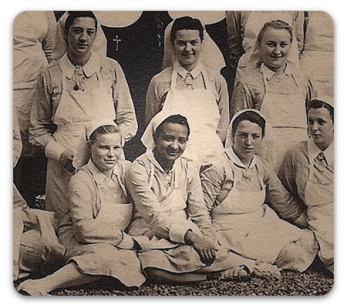
NursesAugusta Chiwy came back to Belgium when she was nine, one of the luckier of thousands born to European fathers, and African mothers. Back to the doctor’s home in Bastogne, a small town of 9,000 where Augusta was loved and cared for by her father and his sister, whom the girl knew as “aunt Caroline”.

Augusta was educated and raised a Catholic. She always wanted to teach but, due to the rancid racial attitudes of that time and place, it would not do to have a black woman teaching white children. She became a nurse instead, on the advice of her father and his brother, a well-known Bastogne physician.

Nursing school was about 100 miles north. Augusta became a qualified nurse in 1943 and returned home the following year for Christmas. She arrived on December 16, the day Adolf Hitler launched his surprise offensive.

Bastogne was soon surrounded, part of one of the fiercest and bloodiest battles, of WW2. Poorly equipped American GIs were outnumbered five to one. These guys didn’t even have winter uniforms.

Bastogne

US Army Doctor Jack Prior was desperate, the abandoned building serving as military aid station, home to some 100 wounded GIs. Thirty of those were seriously wounded. With virtually no medical equipment or medicine and the only other medical officer an Ohio dentist, Dr. Prior badly needed nursing help.

Augusta Chiwy did not hesitate to volunteer, knowing full well that she would be executed, if caught.

2BAF80BC00000578-3211358-image-a-42_1440616862244
Scene from the HBO mini series, “A Band of Brothers”

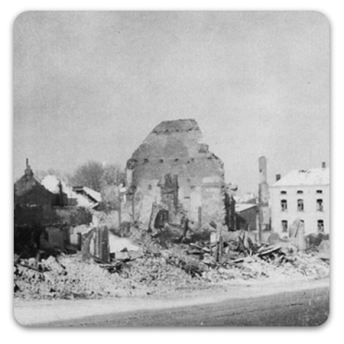
Working conditions were grisly in the weeks that followed. With no surgical instruments and no anesthesia, amputations and other procedures were performed with an army knife, with cognac to dull the patient’s pain. On Christmas eve, a direct hit from a 500-pound bomb hit one hospital building, instantly killing dozens of wounded GIs and the only other nurse, Renée Lemaire.  She would be remembered as “The Angel of Bastogne.”

Bastogne buildingAugusta Chiwy was in a neighboring building at the time. The explosion blew the petite nurse through a wall but, unhurt, she picked herself up and went back to work.  There were grisly injuries and many died due to inadequate medical facilities, but many lived, their families reunited thanks to the tireless work of Dr. Jack Prior, and nurse Augusta Chiwy.

Given the month of hell the pair had been through, Augusta was heartbroken when Dr. Prior had to move out, in January.  The pair exchanged addresses and stayed in touch, writing letters and exchanging small gifts, of candy.  They last saw each other in 2004, when Dr. Prior returned from his home state of Vermont, for the 50th anniversary of the Battle of the Bulge.

Prior, ChiwyAugusta Chiwy suffered symptoms of post-traumatic stress disorder, a condition poorly understood at that time.  She would go long periods without speaking, becoming quiet and withdrawn even years later.  She married a Belgian soldier in 1959 and the couple had two children.  It would be twenty years, before  she resumed her nursing career.  She almost never spoke of her experience in Bastogne.
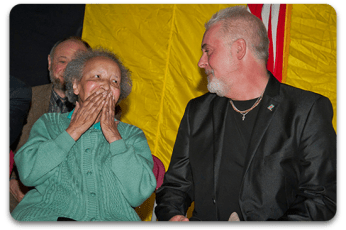
The forgotten angel of Bastogne was eighty-six when the knock came on the door of that Belgian nursing home.  It took months for the Scottish historian to coax the story out of her.

Thanks to King’s efforts, Augusta Chiwy would finally receive the recognition she had earned.

“On June 24, 2011, she was made a Knight in the Order of the Crown by King Chiwy and KingAlbert II of Belgium. Six months later she received the U.S. Army’s Civilian Award for Humanitarian Service. And on March 21, 2014, Augusta was recognized by her hometown as a Bastogne Citizen of Honor”.  http://www.augustachiwy.org

When asked about her heroism, she’d always say the same thing: “I only did what I had to do.”

Augusta Marie Chiwy died peacefully in her sleep at the age of 94, on August 23, 2015. How many lives would have been cut short, will never be known.  But for the selfless and untiring efforts, of the Forgotten Angel of Bastogne.

Hat tip to http://www.augustachiwy.org, for most of the images used in this essay

If you enjoyed this “Today in History”, please feel free to re-blog, “like” & share on social media, so that others may find and enjoy it as well. Please click the “follow” button on the right, to receive email updates on new articles.  Thank you for your interest, in the history we all share.

December 14, 1944 Palawan Massacre

The bones of Americans captured at Bataan and Corregidor and burned alive at Palawan, were discovered soon after liberation.  Most were huddled together where they had died, trying to escape the flames.

The United States was unprepared to fight a World War in 1942, and dedicated itself to beating Adolf Hitler. General Douglas MacArthur abandoned the “Alamo of the Pacific” on March 11 saying “I shall return”, leaving 90,000 American and Filipino troops without food, supplies or support with which to fight off the Japanese offensive.

On April 9, 75,000 surrendered the Bataan peninsula, only to be herded off on a 65-mile, five-day slog into captivity through the heat of the Philippine jungle. Japanese guards were sadistic. They would beat the marchers and bayonet those too weak to walk. Japanese tanks would swerve out of their way to run over anyone who had fallen and was too slow in getting up. Some were burned alive. Already crippled from tropical disease and starving from the long siege of Luzon, some 700 Americans and more than 10,000 Filipinos perished in what came to be known as the Bataan Death March.

Palawan_Massacre_POW_Burial_Site_1945 (1)
Palawan Massacre POW Burial Site, 1945

That August, 346 men were sent 350-miles north to Palawan Island, on the western perimeter of the Sulu sea. The prisoners of “camp 10-A” were expected to build an airfield for their Japanese captors, hauling and crushing coral gravel by hand and pouring concrete, seven days a week.

The daily food ration was nothing more than a handful of wormy Cambodian rice and a thin soup made from boiling camote vines, a type of local sweet potato. Prisoners unable to work had even this thin ration, cut by 30 per cent.

The abuses these men received at the hands of the kempeitai, the Japanese army’s military police and intelligence unit, were unremitting, and savage. Prisoners were beaten with pick handles, kicked and slapped on a daily basis. Anyone who attempted to escape, was summarily executed.

Caught stealing food, six American POWs were tied to coconut trees and whipped with wire and then beaten with a wooden club, 3-inches in diameter. The six were then forced to stand at attention while a guard beat them unconscious, only to be revived to undergo further beatings. One Japanese private named Nishitani broke the left arms of two Americans with an iron bar, for taking green papayas off a tree.

Radioman 1st Class Joseph Barta described the Japanese guards at Palawan, as “the meanest bastards who ever walked the earth”.

Medical care was non-existent. One Marine, Pfc Glen McDole of Des Moines Iowa, was forced to endure an appendectomy with no anesthesia, and no infection fighting drugs.

The war was going badly for the Japanese, by late 1944.  US forces under General Douglas MacArthur landed at Leyte, that October. Morale soared for the 150 American prisoners remaining at Palawan, when a single Consolidated B-24 Liberator bomber sank two enemy ships and damaged several aircraft. More Liberators returned on October 28 and destroyed 60 enemy aircraft on the ground, as treatment of the prisoners grew even worse.

72e6168ba2

By early December, Allied aircraft were a near-constant presence overhead. Deliverance must have seemed imminent to the 150 American prisoners left on Palawan island, but it wasn’t meant to be. On December 14, some fifty to sixty soldiers under the leadership of 1st Lt. Yoshikazu Sato, prisoners called him the Buzzard, doused the remaining prisoners with gasoline and set them on fire. One hundred and thirty-nine were burned to death, or clubbed, or machine gunned as they tried to get away. The sound of screams were punctuated with shouts and laughter, from the guards.

Some closed to hand-to-hand combat with their tormentors and even managed to kill a few, but most never had a chance. Lieutenant Carl Mango of the U.S. Army Medical Corps ran toward the Japanese with his clothes on fire, pleading with them to use some sense. He too, was machine-gunned.

palawan-war-memorial-002
Palawan Massacre Memorial Marker for the American victims of December 14, 1944, Palawan Philippines

Thirty or forty managed to escape the kill zone, only to be hunted down, and murdered. From his hiding place on the beach, Eugene Nielsen of the 59th Coast Artillery observed several begging to be shot in the head, only to be bayoneted in the stomach and left to an agonizing death, by laughing guards. Erving August Evans of Nielsen’s unit stood up and said “All right, you Jap bastards, here I am and don’t miss me“.  He was shot, and his body set alight.

The killing went on until well after dark yet, somehow, some were able to escape detection and managed to swim the 5-mile bay to be picked up by friendly Filipino guerrillas, and taken to U.S. Rangers.   Rufus Smith was badly bitten on the left arm and shoulder by a shark, but manged to reach the other side.  USMC Pfc Donald Martyn reached the opposite side and turned in a direction opposite the others, and was never seen again.Glen McDole, the marine who survived the appendectomy, hid in a garbage dump, and witnessed one marine repeatedly poked with bayonets. Bleeding profusely, the man begged to be shot, only to have first one foot doused with gasoline and set on fire and then the other and finally, a hand. At last, his five or six tormentors tired of this game and he too, was set alight.

One Japanese soldier recorded the atrocity in a diary, later found in the camp:

“December 15–Due to the sudden change of situation, 150 prisoners of war were executed. Although they were prisoners of war, they truly died a pitiful death. The prisoners who worked in the repair shop really worked hard. From today on I will not hear the familiar greeting, ‘Good morning, sergeant major.’ January 9–After a long absence, I visited the motor vehicle repair shop. Today, the shop is a lonely place. The prisoners of war who were assisting in repair work are now just white bones on the beach washed by the waves. Furthermore, there are numerous corpses in the nearby garage and the smell is unbearable. It gives me the creeps”.

BurnedAtBaatan

Eugene Nielsen’s testimony sparked a series of POW rescues by American forces in 1945, including the raid on Cabanatuan of January 30, the surprise attack at Santo Tomas on February 3, 1945, the raid of Bilibid Prison on February 4 and the assault at Los Baños on February 23.  Starving prisoners were so emaciated, that Rangers were able to carry them out, two at a time.

The bones of Americans captured at Bataan and Corregidor and burned alive at Palawan, were discovered soon after.  Most were huddled together where they had died, trying to escape the flames.

Sixteen Japanese soldiers were tried and convicted of the massacre in August 1948 and several sentenced to death.  All were later released, in a general amnesty.

Of 146 enlisted men and four officers held in the Palawan prison camp, eleven survived the massacre of December 14, 1944.   Glen McDole was one of them.  Author Bob Wilbanks wrote a book if you’re interested, a biography really, entitled:  Last Man Out: Glenn McDole, USMC, Survivor of the Palawan Massacre in World War II.

In 1952, 123 of the 139 victims of the Palawan massacre were buried in a common grave.  They came from forty-two states and the Philippines, reverently interred in a mass burial site in Section 85 at the Jefferson Barracks National Cemetery, near St. Louis, Missouri. Today, their graves are visited by those who remember.  And by the deer, grazing among the stones most evenings, as the sun drops out of sight. It is the largest such group burial, at Jefferson Barracks.

0b7a90f8bc535c8d7124061f42913082

How many such massacres were carried out with no one left alive to tell the tale, remains anyone’s guess.

If you enjoyed this “Today in History”, please feel free to re-blog, “like” & share on social media, so that others may find and enjoy it as well. Please click the “follow” button on the right, to receive email updates on new articles.  Thank you for your interest, in the history we all share.

December 13, 1941 Cook’s Assistant

There is no telling, how many lives could have been lost.  But for the actions, of a sixteen-year-old cook’s assistant.

Similar to the Base Exchange system serving American military personnel, the British Navy, Army and Air Force Institutes (NAAFI) is the UK-government organization operating clubs, bars, shops and supermarkets in service to British armed forces, as well as naval canteen services (NCS) aboard Royal Navy ships.

naafiNAAFI personnel serving on ships are assigned to duty stations and wear uniforms, while technically remaining civilians.
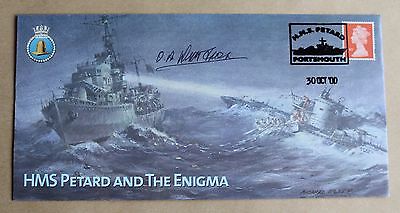
Tommy Brown was fifteen when he lied about his age, enlisting in the NAAFI on this day in 1941 and assigned as canteen assistant to the “P-class” destroyer, HMS Petard.

On October 30, 1942, Petard joined three other destroyers and a squadron of Vickers Wellesley light bombers off the coast of Port Said Egypt, in a 16-hour hunt for the German “Unterseeboot”, U–559.

Hours of depth charge attacks were rewarded when the crippled U-559 came to the surface, the 4-inch guns of HMS Petard, permanently ending the career of the German sub.

The U-559 crew abandoned ship, but not before opening the boat’s seacocks.   Water was pouring into the submarine as Lieutenant Francis Anthony Blair Fasson and Able Seaman Colin Grazier dived into the water and swam to the submarine, with Junior canteen assistant Tommy Brown close behind.

Ww2-Hms-Petard-The-Enigma-2000-Cover

With the submarine sinking fast, Fasson and Grazier made their way into the captain’s cabin.   Finding a set of keys, Fasson opened a drawer, to discover a number of documents, including two sets of code books.

With one hand on the conning ladder and the other clutching those documents, Brown made three trips up and down from the hatch, to Petard’s whaler.

war (1)

With the sub beginning to sink, the canteen assistant called for his shipmates to get out of the boat, but the other two were trapped. Brown himself was dragged under, but managed to kick free and come to the surface.  Colin Grazier and Francis Fasson, did not escape.

The episode brought Brown to the attention of the authorities, ending his posting aboard Petard with the revelation of his true age.  He never was discharged from the NAAFI, and later returned to sea on board the HMS Belfast.

grazier 2

By 1945 he was Leading Seaman Tommy Brown, home on shore leave when fire broke out at the family home in South Shields.  He died while trying to rescue his youngest sister Maureen, and was buried with full military honors in Tynemouth cemetery.

Fasson and Grazier were awarded the George Cross, the second-highest award of the United Kingdom system of military honors.  Since he was a civilian due to his NAAFI employment, Brown was awarded the George medal.

Fasson Memorial

None of the three would ever learn that their actions had helped to end the war.

For German U-boat commanders, the period between the fall of France and the American entry into WW2 was known as “Die Glückliche Zeit” – “The Happy Time” – in the North Sea and North Atlantic.  From July through October 1940 alone, 282 Allied ships were sunk off the northwest approach to Ireland, for a combined loss of 1.5 million tons of merchant shipping.

tmp791791015303315457

Tommy Brown’s Mediterranean episode took place in 1942, in the midst of the “Second Happy Time”, also known among German submarine commanders as the American shooting season. U-boats inflicted massive damage during this period, sinking 609 ships totaling 3.1 million tons with the loss of thousands of lives, against a cost of only 22 U-boats.

According to USMM.org, the United States Merchant marine suffered a higher percentage of fatalities at 3.9%, than any other American service branch during WW2.

enigma2Early versions of the German “Enigma” code were broken as early as 1932, thanks to cryptanalysts of the Polish Cipher Bureau, and French spy Hans Thilo Schmidt.
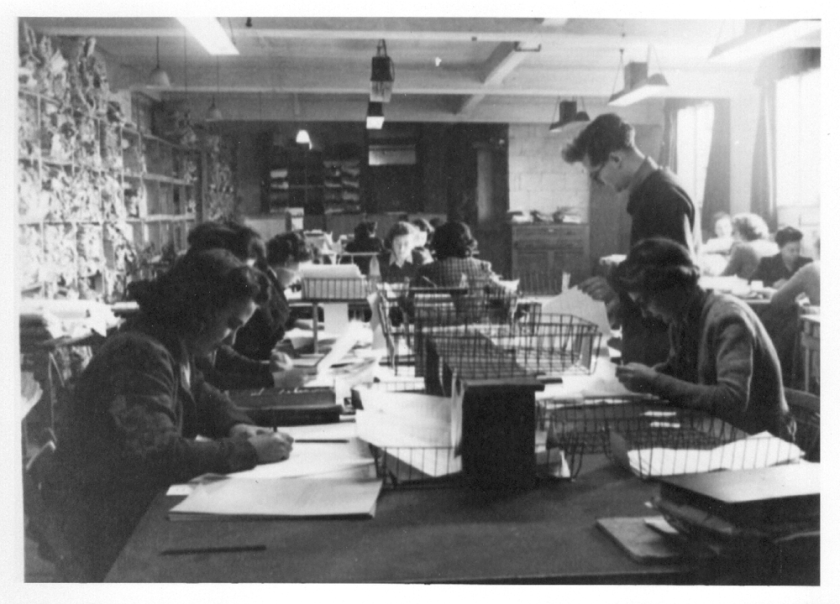
French and British military intelligence were read into Polish decryption techniques in 1939, \methods which were later improved upon by the British code breakers of Bletchley Park.  Vast numbers of messages were intercepted and decoded from Wehrmacht and Luftwaffe sources, shortening the war by at least a year, and possibly two.

The Kriegsmarine was a different story.  Maniacally jealous of security, Admiral Karl Dönitz introduced a third-generation enigma machine (M4) into the submarine service around May 1941, a system so secret that neither Wehrmacht nor Luftwaffe, were aware of its existence.  The system requires identical cipher machines at both ends of the transmission and took a while to put into place, with German subs being spread around the world.

By early 1942, all M4 machines were in place.  On February 2, German submarine communications went dark.  For code breakers at Bletchley Park, the blackout was sudden and complete.  Like the flipping of a switch.  For a period of nine months, Allies had not the foggiest notion of what the German submarine service was up to.  The result was disastrous.

BletchleyThe beginning of the end of darkness came to an end on October 30, when a ship’s cook climbed up that conning ladder.  Code sheets allowed British cryptanalysts to attack the “Triton” key used by the U-boat service.  It would not be long, before the U-boats themselves, were under attack.
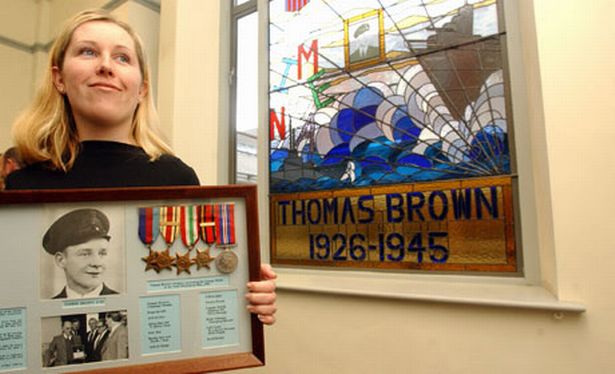
Tommy Brown never knew what was in those documents.  The entire enterprise would remain Top Secret, until years after his death.  Winston Churchill would later write, that the actions of the crew of Petard, were crucial to the outcome of the war.  There is no telling, how many lives could have been lost.  But for the actions, of a sixteen-year-old cook’s assistant.

thomas-brown-sharon-carley-462946894

If you enjoyed this “Today in History”, please feel free to re-blog, “like” & share on social media, so that others may find and enjoy it as well. Please click the “follow” button on the right, to receive email updates on new articles.  Thank you for your interest, in the history we all share.

December 7, 1941 Aftermath

The work was hellishly dangerous down there in the mud and the oil at the bottom of Pearl Harbor.  Several divers lost their lives yet, another day would come and each would descend yet again, into that black water.

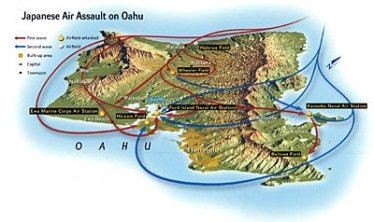
It was literally “out of the blue”, when the first wave of enemy aircraft arrived at 7:48 am local time, December 7, 1941. 353 Imperial Japanese warplanes approached in two waves out of the southeast, fighters, bombers, and torpedo planes.  Across Hickam Field and over the still waters of Pearl Harbor. Tied in place and immobile, the eight vessels moored at “Battleship Row” were easy targets.

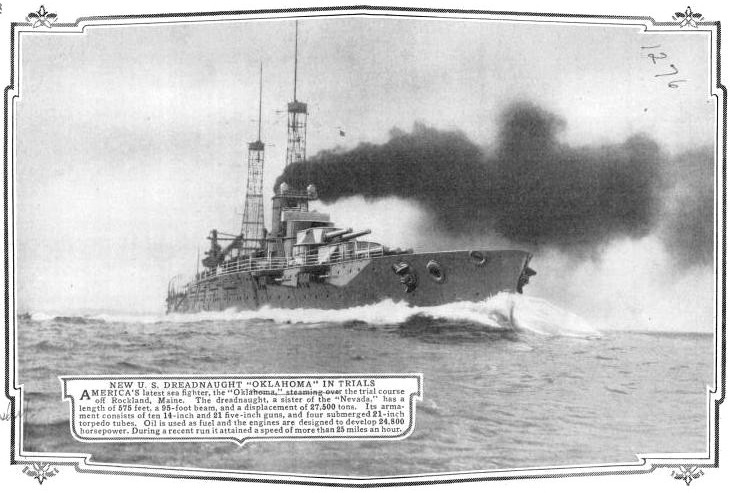
In the center of the Japanese flight path, sailors and Marines aboard the USS Oklahoma fought back furiously. She didn’t have a chance. Holes as wide as 40′ were torn into her side in the first ten minutes of the fight. Eight torpedoes smashed into her port side, each striking higher on the hull as the great Battleship began to roll.

_oahuBilge inspection plates had been removed for a scheduled inspection the following day, making counter-flooding to prevent capsize, impossible. Oklahoma rolled over and died as the ninth torpedo slammed home. Hundreds scrambled out across the rolling hull, jumped overboard into the oil covered, flaming waters of the harbor, or crawled out over mooring lines in the attempt to reach USS Maryland in the next berth.
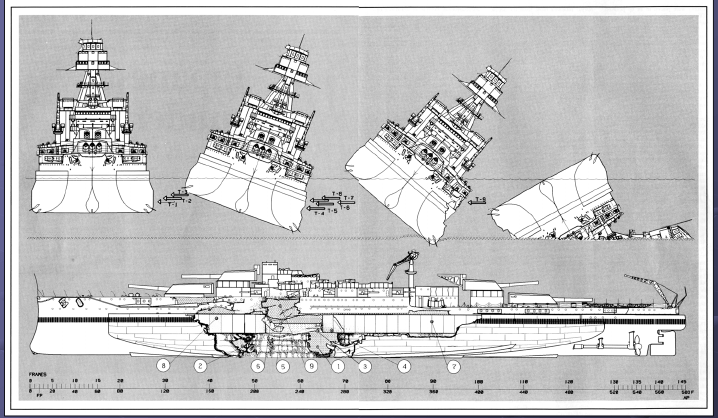
The damage was catastrophic. Once the pride of the Pacific fleet, all eight battleships were damaged, four of them sunk. Nine cruisers, destroyers and other ships were damaged, another two sunk. 347 aircraft were damaged, most caught while still on the ground. 159 of those, were destroyed altogether. 2,403 were dead or destined to die from the attack, another 1,178 wounded.

Nine Japanese torpedoes struck USS Oklahoma’s port side, in the first ten minutes.

HT John F DeVirgilio for this graphic
The last moments of USS Oklahoma.  H/T John F DeVirgilio for this graphic

Frantic around the clock rescue efforts began almost immediately, to get at 461 sailors and Marines trapped within the hull of the Oklahoma. Tapping could be heard as holes were drilled to get at those trapped inside. 32 were delivered from certain death.

14 Marines and 415 sailors aboard Oklahoma lost their lives immediately, or in the days and weeks to come. Bulkhead markings would later reveal that, at least some of the doomed would live for another seventeen days in the black, upside-down hell. The last such mark was drawn by the last survivor on Christmas Eve.

Of the sixteen ships lost or damaged, thirteen would be repaired and returned to service. USS Arizona remains on the bottom, a monument to the event and to the 1,102-honored dead who remain entombed within her hull. USS Utah defied salvage efforts. She too is a registered War Grave, 64 honored dead remaining within her hull, lying at the bottom not far from the Arizona. Repairs were prioritized and USS Oklahoma was beyond repair. She, and her dead, would have to wait.

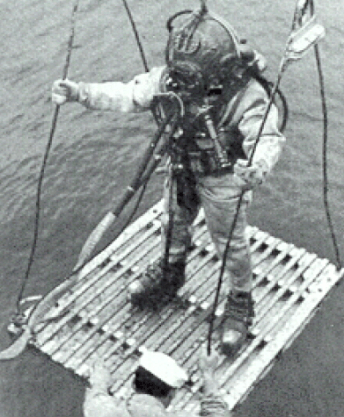
Oklahoma DiverRecovery of the USS Oklahoma was the most complex salvage operation ever attempted, beginning in March, 1943.  With the weight of her hull driving Oklahoma’s superstructure into bottom, salvage divers descended daily to separate the tower, while creating hardpoints from which to attach righting cables.
The work was hellishly dangerous down there in the mud and the oil at the bottom of Pearl Harbor.  Several divers lost their lives yet, another day would come and each would descend yet again, into that black water.

21 giant A-frames were fixed to the hull of the Oklahoma, 3″ cables connecting compound pulleys to 21 electric motors, each capable of pulling 429 tons.

Two pull configurations were used over 74 days, first attached to these massive A-frames, then direct connections once the hull had achieved 70°. In May 1943, the decks once again saw the light of day, for the first time in over two years.

rightng-strategy
USS Oklahoma, righting strategy

Fully righted, the ship was still ten-feet below water. Massive temporary wood and concrete structures called “cofferdams” closed cavernous holes left by torpedoes, so the hull could be pumped out and re-floated. A problem even larger than those torpedo holes were the gaps between hull plates, caused by the initial capsize and righting operations. Divers stuffed kapok into gaps as water was pumped out.

Individual divers spent 2-3 years on the Oklahoma salvage job. Underwater arc welding and hydraulic jet techniques were developed during this period, which remain in use to this day. 1,848 dives were performed for a total of 10,279 man hours under pressure.

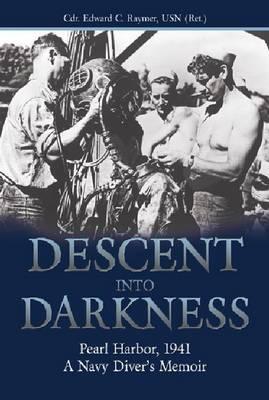
9781591147244CDR Edward Charles Raymer, US Navy Retired, was one of those divers. Raymer tells the story of these men in Descent into Darkness: Pearl Harbor, 1941 – A Navy Diver’s Memoir, if you’re interested in further reading.  Most of them are gone now, including Raymer himself.  They have earned the right to be remembered.

Salvage workers entered the pressurized hull through airlocks wearing masks and protective suits. Bodies were in advanced stages of decomposition by this time and the oil and chemical-soaked interior was toxic to life. Most victims would never be identified.

Twenty 10,000 gallon per minute pumps operated for 11 hours straight, re-floating the battleship on November 3, 1943.

Oklahoma entered dry dock the following month, a total loss to the American war effort. She was stripped of guns and superstructure, sold for scrap on December 5, 1946 to the Moore Drydock Company of Oakland, California.

The battered hulk left Pearl Harbor for the last time in May 1947, destined for the indignity of a scrapyard in San Francisco bay. She would never make it. Taken under tow by the ocean-going tugs Hercules and Monarch, the three vessels entered a storm, 540 miles east of Hawaii. On May 17, disaster struck. Piercing the darkness, Hercules’ spotlight revealed that the former battleship was listing heavily. Naval base at Pearl Harbor instructed them to turn around, when these two giant tugs suddenly found themselves slowing to a stop. Despite her massive engines, Hercules was being dragged astern with no warning, hurtling past Monarch, herself swamped at the stern and being dragged backward at 17mph.

the-tug-boat-hercules-william-havle
Ocean-going tug Hercules, photograph by William Havle

Fortunately for both tugs, skippers Kelly Sprague of Hercules and George Anderson of Monarch had both loosened the cable drums connecting 1,400-foot tow lines to Oklahoma. Monarch’s line played out and detached, but Hercules’ line didn’t do so until the last possible moment. With tow line straight down and sinking fast, Hercules’ cable drum exploded in a shower of sparks directly over Oklahoma’s final resting place, the 409-ton tug bobbing to the surface like the float of a child’s fishing line.

“Okie” had been stabbed in the back, attacked and mortally wounded before she knew her nation was at war.  The causes leading to her final descent, remain uncertain.  Most will tell you, those plates couldn’t hold.  The beating of six years earlier, was just too much.   Those who served on her decks, might tell you she preferred to die at sea.

If you enjoyed this “Today in History”, please feel free to re-blog, “like” & share on social media, so that others may find and enjoy it as well. Please click the “follow” button on the right, to receive email updates on new articles.  Thank you for your interest, in the history we all share.


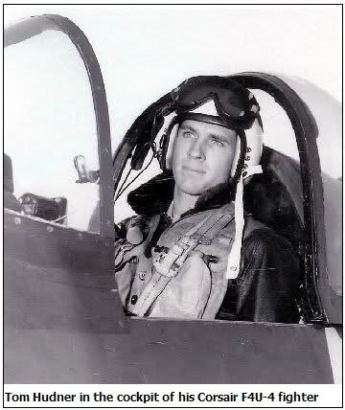
December 4, 1950 Wingmen to the End

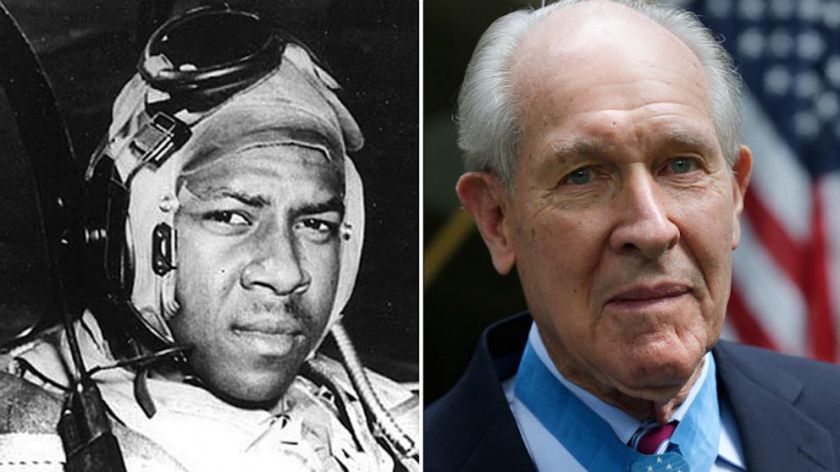
Flying overhead, Hudner could see his wing man below, severely injured, his leg trapped in the crumpled cockpit, struggling to get out of the burning aircraft.

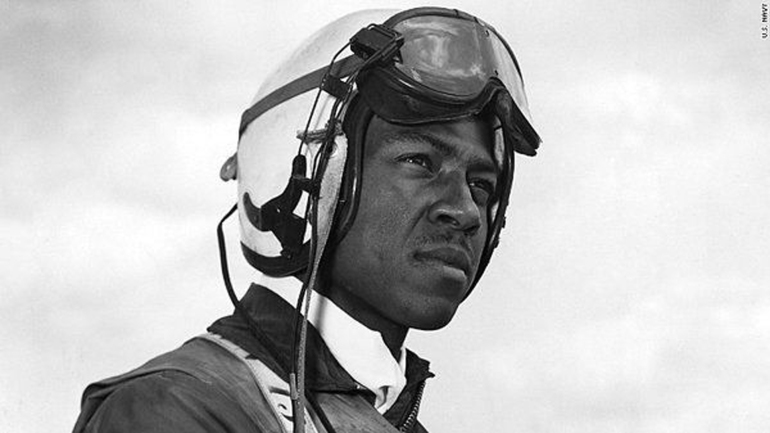
Jesse LeRoy Brown was born in 1926 in Hattiesburg, Mississippi, the son of a schoolteacher and a warehouse worker.   A mixed-race young man of African, Chickasaw and Choctaw ancestry, Jesse grew up in a time of real discrimination.  Brown had all the disadvantages of a black child growing up under depression-era segregation, but his parents kept him on the “straight & narrow”.  Julia and John Brown made sure their kids stuck with their studies.  Such parental devotion would serve them well.

jesse-leroy-brown-2

Thomas Jerome Hudner, Jr. was born in 1924, the son of a successful Irish grocer from Fall River, Massachusetts who went on to attend the prestigious Phillips Academy in Andover, in 1939.

The pair could not have come from more different backgrounds, but both men became  carrier pilots with the United States Navy, and served together during the conflict in Korea.

110kqivOn June 25, 1950, ten divisions of the North Korean People’s Army launched a surprise invasion of their neighbor to the south. The 38,000-man army of the Republic of Korea didn’t have a chance against 89,000 men sweeping down in six columns from the north. Within hours, the shattered remnants of the army of the ROK and its government, were streaming south toward the capital of Seoul.
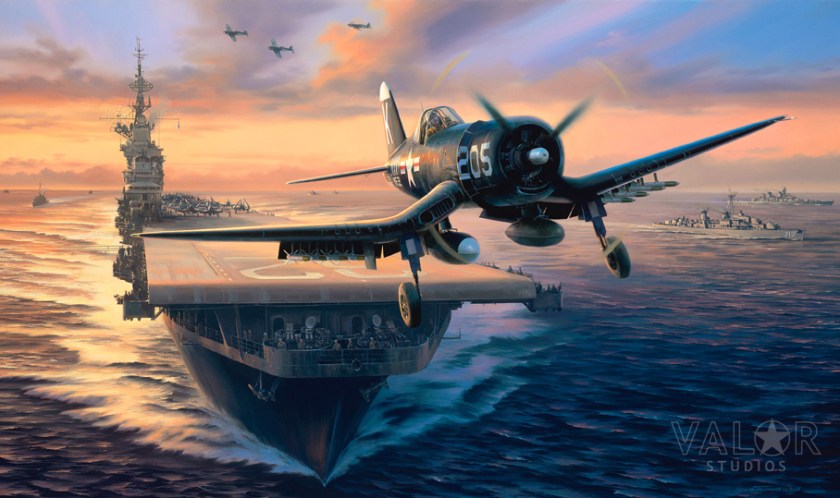
The United Nations security council voted to send troops to the Korean peninsula. In November, the People’s Republic of China entered the conflict in support of their Communist neighbor.

By December, 120,000 troops of the Chinese People’s Volunteer Army (PVA) had all but overrun the 15,000 men of the US X Corps, who found themselves surrounded in the frozen wasteland of the Chosin Reservoir. Dozens of close air support missions were being flown every day to keep the Chinese army at bay.

At 13:38 on December 4, Thomas “Lou” Hudner took off from the carrier USS Leyte, part of a six-aircraft flight with squadron executive officer Lieutenant Commander Dick Cevoli, Lieutenant George Hudson, Lieutenant Junior Grade Bill Koenig, Ensign Ralph McQueen and Hudner’s wingman, Ensign Jesse LeRoy Brown.

painting-off-to-the-chosin
“Off To The Chosin” by Nicolas Trudgian

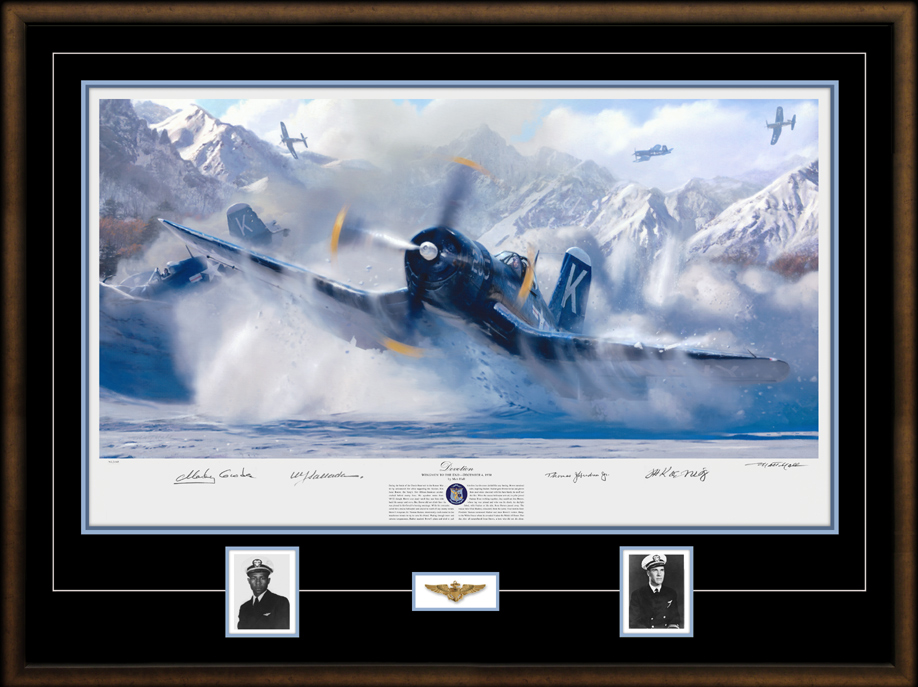
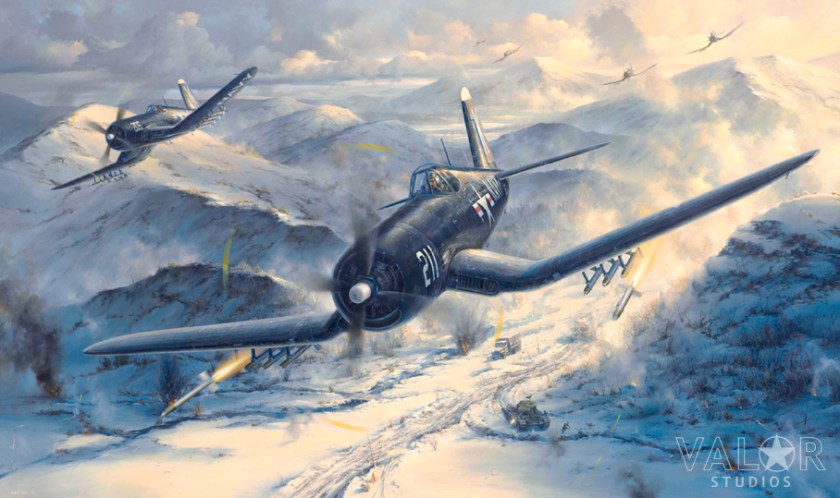
An hour later, Koenig radio’d Brown that his aircraft appeared to be trailing fuel.  Chinese infantry were known to hide in the snow, and ambush incoming aircraft.  It’s likely that Brown was hit by small arms fire, from the ground.  Losing oil pressure with the aircraft all but impossible to control, Brown had no choice but to crash land on a snow covered mountain side. Flying overhead, Hudner could see his wing man below, severely injured, his leg trapped in the crumpled cockpit, struggling to get out of the burning aircraft.

wingmen-to-the-end
“Wingmen to the End” by Gareth Hector Hat tip Adam Makos, author of “Devotion, an epic story of heroism, friendship and sacrifice”, https://www.adammakos.com/devotion-book.html

Hudner did the unthinkable and deliberately crash landed his own aircraft.  Now injured himself, Hudner hobbled across the snow to the aid of his trapped wing man. He scooped snow onto the fire with his bare hands in the 15° cold, burning himself in the process as Brown faded in and out of consciousness. A Marine Corps helicopter landed at 15:00, piloted by Lieutenant Charles Ward.  The two went at the stricken aircraft with an axe for 45 minutes, but could not free the trapped pilot.

The two were considering Jesse’s plea that they amputate his trapped leg with that axe, when the pilot faded away for the last time. Jesse Brown’s last words were “Tell Daisy I love her”.

ap_jesse_brown_thomas_hudner_mi_130725_16x9_992

They had to leave. “Night was coming on” Hudner later explained, “and the helicopter was not equipped to fly in the dark. We’ll come back for you”, he said.  Jesse Brown could no longer hear.

Hudner pleaded the following day to be allowed to go back to the crash site, but his superiors were unwilling to risk further loss of life. Two days later, the site was bombed with napalm, to prevent the aircraft and the body from falling into Chinese or North Korean hands.  Jesse Brown’s body was still stuck in the cockpit though, by this time, his clothes had been removed.

23561321_1671529152912193_50553384345769687_n
H/T Sierra Hotel Aeronautics

American pilots recited the Lord’s prayer, as they watched his body being consumed by the flames.

Jesse LeRoy Brown, the first Black Naval Aviator in American history, became the first to die, sixty-eight years ago, today.  He was awarded the Distinguished Flying Cross and Purple Heart,  posthumously.

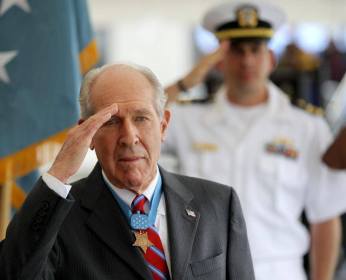
Thomas Hudner was awarded the Medal of Honor for his actions on that frozen mountainside. One of eleven to be so honored following the battle of the Chosin Reservoir, Hudner would remain the only Naval aviator awarded the Medal of Honor, during the entire conflict in Korea.

In July of 2013, Thomas Hudner returned to the North Korean capital of Pyongyang, in fulfillment of a 63-year-old promise.  “We’ll come back for you“.

Political relations with the “Hermit Kingdom” of North Korea were as frigid at that time as the frozen mountains of the Chosin Reservoir, yet Hudner received permission to return to the site. He was 88 at the time. In the end, wretched weather hampered the effort.  North Korean authorities told him to return when the weather was more cooperative.

Recently, American President Donald Trump has worked toward a thaw in relations on the Korean peninsula, in cooperation with South Korean President Moon Jae-in and North Korean Supreme Leader Kim Jong-un. Less than a week ago, a South Korean train crossed the demilitarized zone into North Korea, a move which would have been unheard of, for much of the last seventy years.

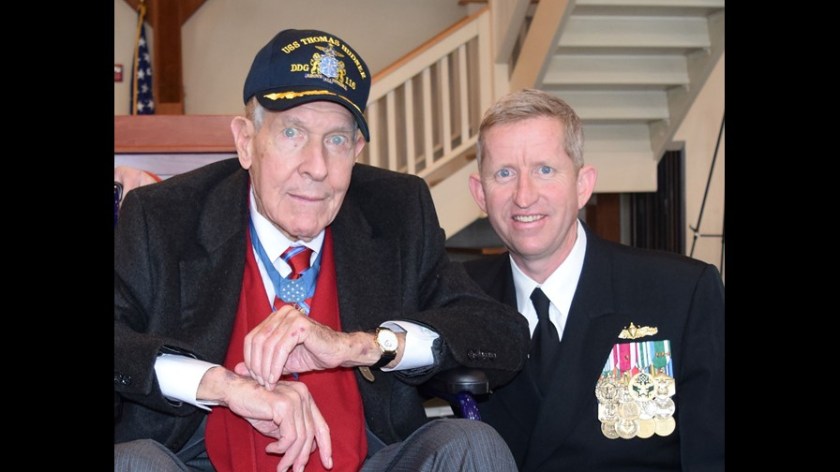
636463693852708011-hudner.scherry.10
“Retired U.S. Navy Capt. Thomas Hudner, left, meets Commander Nathan Scherry following the christening of the USS Thomas Hudner in Bath, Maine, on April 1, 2017. Scherry will command the new guided-missile destroyer”.  H/T, KDSK.com

The future is uncertain, but Korean rapprochement comes too late for Lou Hudner and Jesse Brown.  Thomas Jerome “Lou” Hudner passed away at his home in Concord, Massachusetts, on November 13, 2017, and was buried a with honors, at Arlington National Cemetery.  He was 93.  The remains of Jesse LeRoy Brown were never recovered from that North Korean mountainside.

Three days ago, Hudner’s wife of fifty years Georgea was on-hand to witness the United States Navy commission its newest naval warship in Boston.  The Arleigh Burke-class guided missile destroyer, USS Thomas Hudner.

Afterward – Do you believe in Ghosts?

December 1, 2013 The Sacred Soil of Flanders Fields

I’ve long believed that we can’t be participating citizens of a self-governing Republic, we can’t know where we want our nation to go, if we don’t understand where it’s been.  It’s one of the principle reasons for examining history.  It’s why I think something wonderful happened five years ago, and I don’t think many of us heard about it.

November 11, nineteen short days ago, marked the one-hundred year anniversary of the end of World War One.  Before they had numbers, this was “The Great War”.  The “War to end all Wars”.

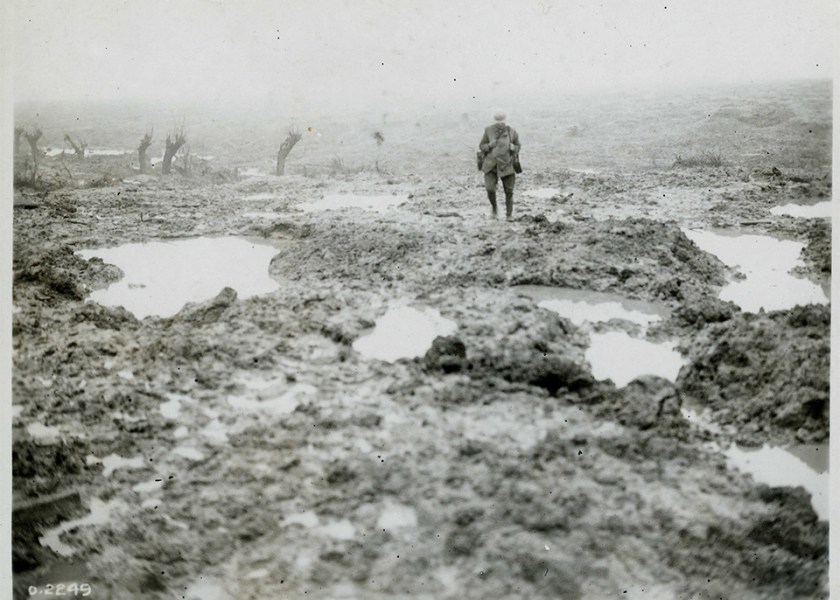
Passchendaele (1)
Passchendaele

There is barely a piece of 20th or 21st century history, which cannot be traced back to it.

International Communism was borne of the Great War, without which there would have been no cold war, no Korean War, no war in Vietnam. The killing fields of Cambodia would have remained mere rice fields.  The spiritual descendants of Chiang Kai-shek’s brand of capitalism would be running all of China, instead of only Taiwan.

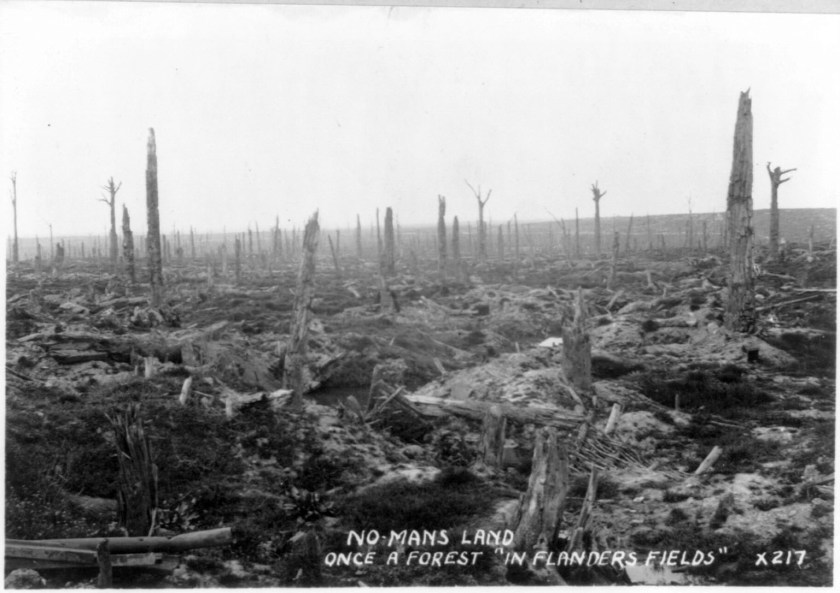
no-mans-land

The current proportions of the Middle East arose from the Great War. While the region’s tribal alliances and religious strife is nothing new, those conditions would have taken a different form, had it not been for those boundaries.

World War II, an apocalypse which left more dead, wounded or missing than any conflict in world history, was little more than the Great War, part II. A Marshall of France, on reading the Versailles Treaty formally ending WWI, said “This isn’t peace. This is a cease-fire that will last for 20 years”.  He was off, by about 36 days.

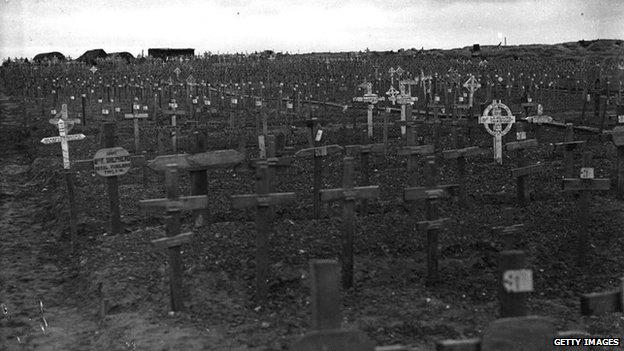
_78081389_resized_3279921_10

I’ve long believed that we can’t be participating citizens of a self-governing Republic, we can’t know where we want our nation to go, if we don’t understand where it’s been.  It’s one of the principle reasons for examining history.  It’s why I think something wonderful happened five years ago, and I don’t think many of us heard about it.

Over the summer of 2013, more than 1,000 British and Belgian schoolchildren visited seventy battlefields of the Great War.  Ypres.  Passchendaele.  Verdun.  The Somme. This was a singular event.  Never before had the Commonwealth War Graves Commission permitted the excavation of these battlefields.

All over Northern France and Belgium, the region known as “Flanders”.  There these children collected samples of the sacred soil of those fields of conflict.

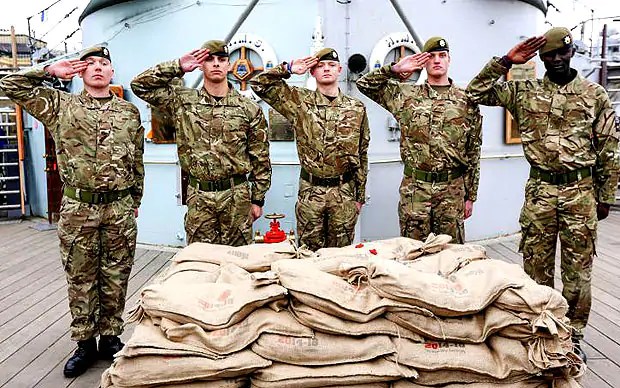
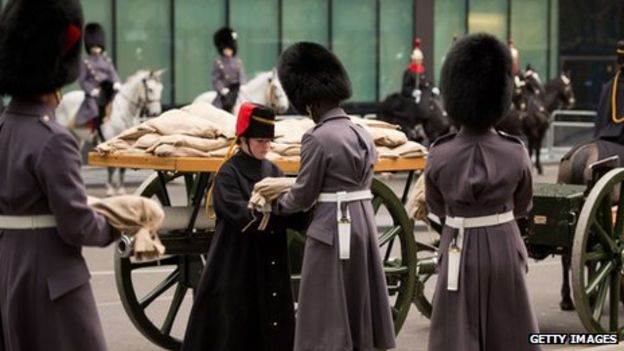
The soil from those battlefields was placed in 70 WWI-style burlap sandbags, each stenciled with a red poppy, where it came from, and the dates.  Those sandbags began their journey with a solemn Armistice Day ceremony at the Menin Gate of Ypres, that memorial to the 56,395 British and Commonwealth soldiers who fought and died on the Ypres salient of the Great War, and whose bodies were never found or identified.

The sacred soil of Flanders Fields transported to London aboard the Belgian Navy frigate Louisa Marie, and installed with great care at Wellington Barracks, the central London home of the Grenadier Guards, Coldstream Guards and Scots Guards.

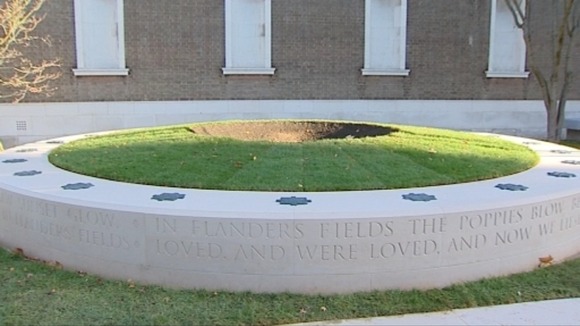
There the soil of the Great War would nourish and support a garden, inscribed with the words of Doctor John McCrae’s famous poem, “In Flanders Fields”.  Ready for the following year, a solemn remembrance of the centenary of the War to end all Wars.

_71447576_soil4_getty

That day, December 1, 2013, was for the Flanders Fields Memorial Garden, the first full day of forever.  I cannot think of anything more fitting than that it was children, our future and posterity, who retrieved the sacred soil of Flanders and installed it in that garden.

It is now for that posterity to keep our history alive, and never to let it fade, into some sepia-toned and forgotten past.

article_img

If you enjoyed this “Today in History”, please feel free to re-blog, “like” & share on social media, so that others may find and enjoy it as well. Please click the “follow” button on the right, to receive email updates on new articles.  Thank you for your interest, in the history we all share.

November 28, 1950 Of Courage, and Candy

Everything had a code name to throw off Chinese anti-aircraft units.  A frantic call went out for 60-mm mortar ammunition, code named “Tootsie Rolls”.  Somebody didn’t read up on the code book, and that’s what they got.  Chocolate candy, by the ton. 

On June 25, 1950, ten divisions of the North Korean People’s Army (KPA) launched a surprise invasion of their neighbor to the south. The 38,000-man army of the Republic of Korea (ROK) didn’t have a chance against 89,000 men sweeping down in six columns from the north. Within hours, the shattered remnants of the Republic of Korea Army and its government were retreating south toward their capital of Seoul.

The UN security council voted to send troops to the Korean peninsula.

73421-004-B86321B0
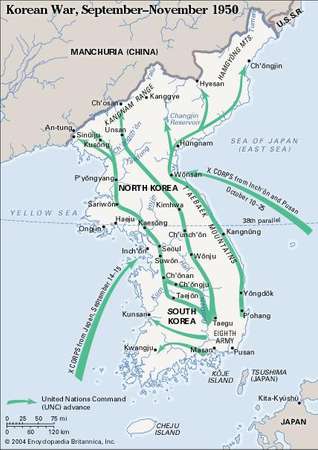
H/T, Encyclopedia Britannica

Poorly prepared and under-strength for what they were about to face, units of the 24th Division United States Army were hastily sent from bases in Japan. It was not until August when General Douglas MacArthur’s forces in theater, designated United Nations Command (UNC), was able to slow and finally stop North Korean forces around the vital southern port city of Pusan.

American forces and ROKA defenders were in danger of being hurled into the sea.  Most of the KPA was committed to doing just that, as plans were hastily drawn up for an amphibious landing on Inch’ŏn, the port outlet for the South Korean capital of Seoul.

With a narrow, labyrinthine channel and a tidal variation of nearly 30-feet, Inch’ŏn was a terrible choice for a major amphibious landing, with no more than a six-hour window permitting use of the beaches.

The Inch’ŏn landing was one of the great operations in military history, recapturing the capital and all but destroying North Korean military operations in the South.  Meanwhile, a storm was building north of the border, in the form of a quarter-million front-line Chinese troops, assembling in Manchuria.

1200px-Chosin

The war seemed all but over in October as UNC forces streamed into the north, the US 8th Army to the west of the impassable Taebaek mountains, the ROK I Corps and US X Corps to the east, reinforced by the US 1st Marine landing at Wonsan.  North and South would be reunited by the end of the year, and everyone would be home by Christmas.  Except, that’s not how things worked out.

By the end of November, 30,000 UN troops were spread along a 400-mile line near the Chosin Reservoir, all but overrun and fighting for their lives against 150,000 Chinese forces of the “People’s Volunteer Army (PVA).

Korea_5
Hat Tip, National Museum of the Marine Corps, Korean War Gallery

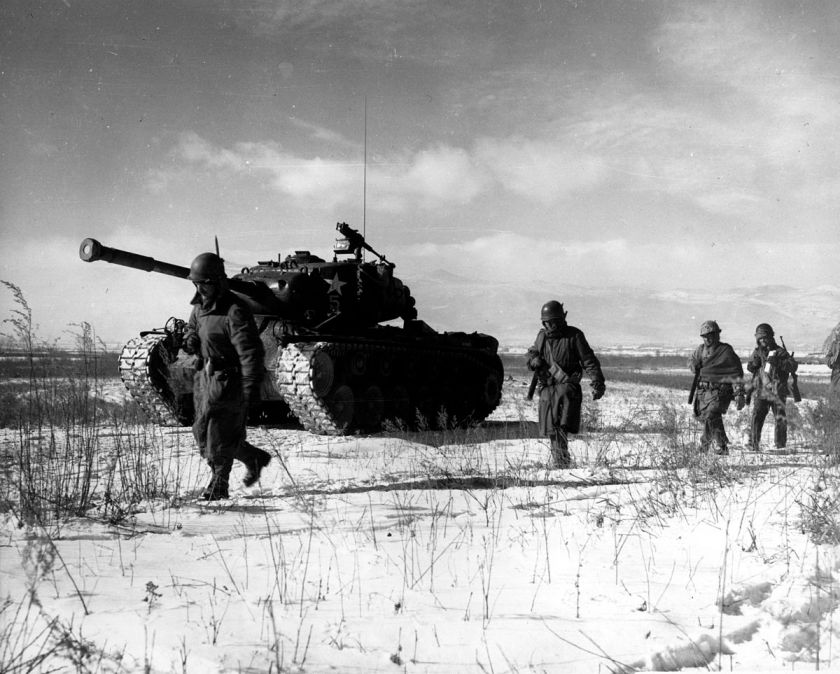
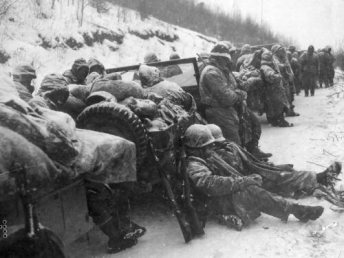
Weather conditions were savage at the “Frozen Chosin”, a Siberian cold front dropping day-time highs to -5° Fahrenheit, with lows exceeding -25°.  Vehicles and radios failed to start in the cold, and medical supplies froze.  Morphine syrettes had to be thawed in the medic’s mouth, prior to use.  Frozen blood plasma was useless.  Just to cut off clothing to deal with a wound, risked frostbite.  Perhaps worst of all, gun lubricants turned to gel and springs froze.  There must be no more demoralizing sound in combat, than the impotent click of a firing pin, too weak to work.

Clifford Meyer remembers: “During November 1950 the First Marine Division with elements of two Regimental combat teams of the U.S. Army, a Detachment of British Commandos and some South Korean Policemen — about 15,000 men — faced the Chinese Communist Army’s ten Divisions totaling 120,000 men. At a mountain reservoir called Chang Jin (we called it “Chosin”) temperatures ranged from minus five degrees below zero in the day to minus twenty-five degrees below zero at night. The ground froze so hard that bulldozers could not dig emplacements for our Artillery. The cold impeded our weapons from firing automatically, slowing down the recoil of our artillery and automatic weapons. The cold numbed our minds, froze our fingers and toes and froze our rations. [We were] seventy-eight miles from the sea, surrounded, supplies cut, facing an enemy whose sole objective was the annihilation of the First Marine Division as a warning to other United Nations troops, and written off as lost by the high command“.

The PVA launched multiple attacks and ambushes over the night of November 27. The “Chosin Few” were all but surrounded by the morning of the twenty-eighth, locked in a fight for their lives.

Over two weeks of bitter combat, fifteen thousand soldiers and Marines fought their way over seventy-eight miles of gravel road, back to the sea. One war correspondent asked 1st Marine General Oliver Prince Smith if they were retreating. “Retreat? Hell”, Smith said, “we are attacking in another direction”.

battle-of-chosin-reservoir

Survival depended on air drops from US Navy Task Force 77 running 230 forays per day providing close-air support, food, medicine & combat supplies, and US Air Force Far East Combat Cargo Command in Japan, airdropping 250-tons of supplies.  Every day.

Everything had a code name to throw off Chinese anti-aircraft units.  A frantic call went out for 60-mm mortar ammunition, code named “Tootsie Rolls”.  Somebody didn’t read up on the code book, and that’s what they got.  Chocolate candy, by the ton.

What at first seemed a screw-up of biblical proportions, soon proved a blessing in disguise.  With no way to build a fire and frozen rations unusable, those Tootsie rolls were all that stood between survival and starvation. 15,000 soldiers and Marines suffered 12,000 casualties before it was over: 3,000 dead, 6,000 wounded and thousands of frostbite cases.

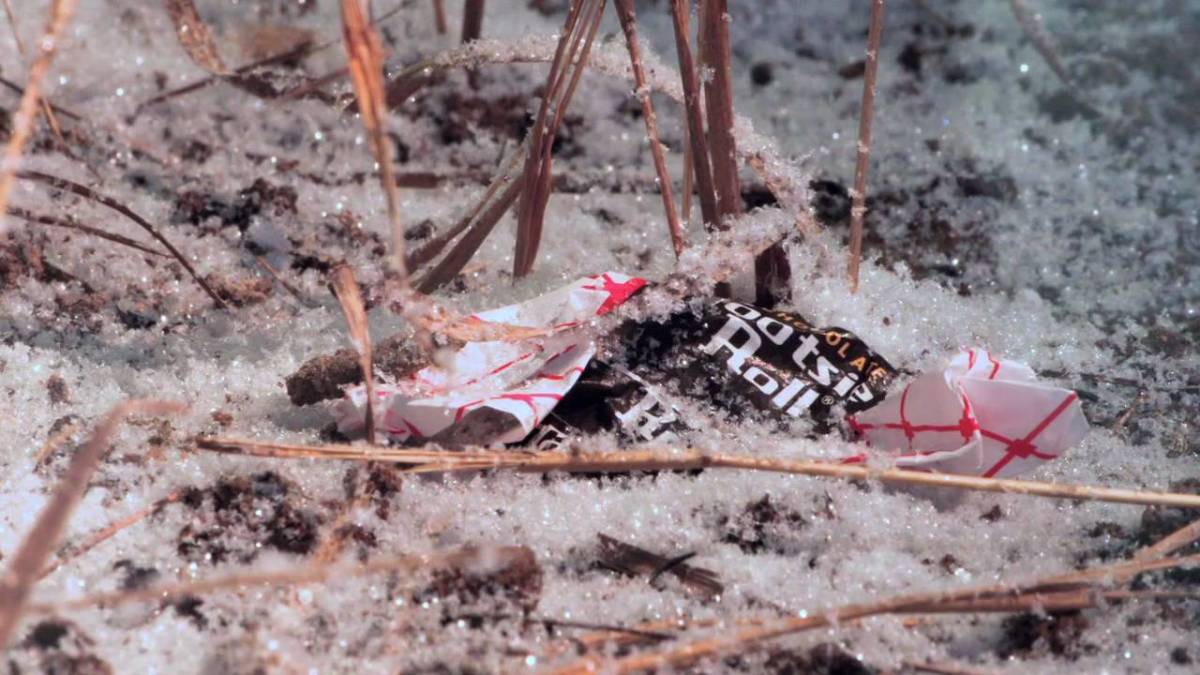
2134504558Untold thousands of Tootsie roll wrappers littered the seventy-eight miles back to the sea.  Most credit their survival to the energy provided by the chocolate candy.  It turns out that frozen tootsie rolls make a swell putty too, useful for patching up busted hoses and vehicles.
The Korean War Gallery at the National Marine Corps Museum in Quantico features a lone Marine, 30-mm machine gun at the ready, marching out of the frozen wastes of the Chosin reservoir.  There’s a paper candy wrapper in the snow at his feet.  Though age has diminished their numbers, the “Chosin Few” still get together, for the occasional reunion.  Tootsie Roll Industries has always sent the candy and continues to do so, to this day.

If you enjoyed this “Today in History”, please feel free to re-blog, “like” & share on social media, so that others may find and enjoy it as well. Please click the “follow” button on the right, to receive email updates on new articles.  Thank you for your interest, in the history we all share.

November 27, 1868 Goat

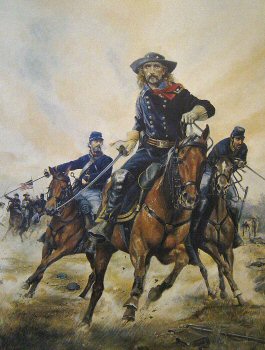
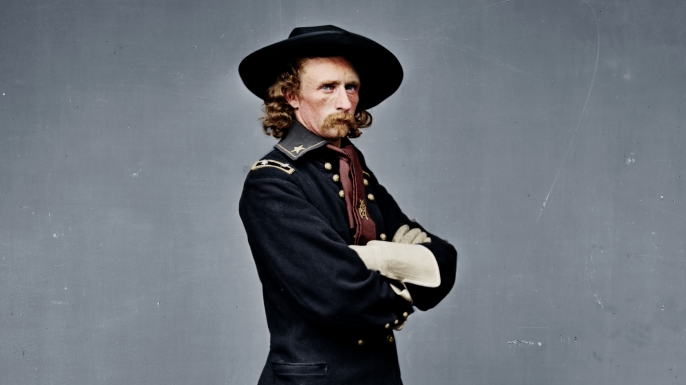
One of the more amusing images to emerge from this terrible chapter in American history is the notion of Custer, cinnamon-oiled hair, trademark red scarf and that broad brimmed sombrero, riding away with Wilmer McClean’s table, strapped to the backside of his horse.

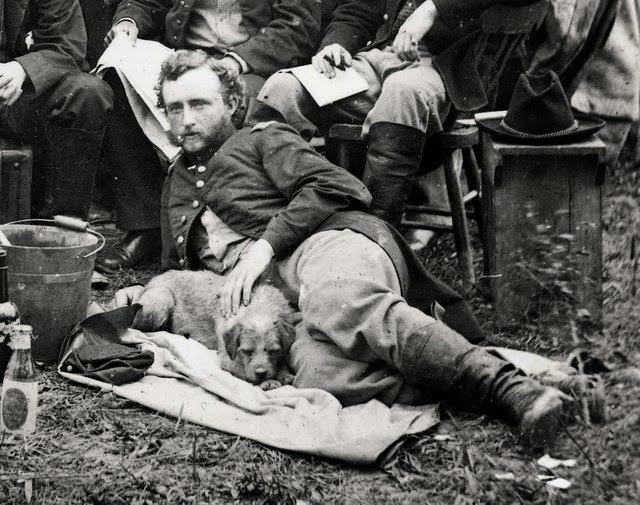
Like Edgar Allen Poe and James Whistler (“Whistler’s Mother”) before him, George Armstrong Custer was a ‘Goat’.  No, that doesn’t mean ‘Greatest of all Time’. This ‘Goat” was dead last in his class, West Point, class of 1861. Like many of his fellow goats, Custer’s contributions to history were vastly out of proportion to a less than brilliant academic record.

At 23, Custer was one of the youngest General officers in the Union army. History.com calls him the youngest, but I believe that to be in error.  That honor goes to Brigadier General Galusha Pennypacker who, at twenty years of age, was the only General Officer in American history too young to vote for the President who appointed him.

anti custer 2

As with another goat, George Pickett, Custer’s contribution at Gettysburg came on the third day.  The Battle of Gettysburg is usually described as a contest of men on foot, that cavalry did not play much of a role. The third day, was different.

For 19th century armies, the cavalry acted as the eyes and ears of battlefield commanders. The superior mobility of men on horse allowed them to report information back on enemy troop strength and movements in a way that would have otherwise been impossible.

For the first two days at Gettysburg, “Marse’ Robert” was out of touch with cavalry commander James Ewell Brown (JEB) Stuart, leaving the General effectively blind. Stuart reappeared at the end of the second day.

dhm1254On the third came Longstreet’s assault, better known as “Pickett’s charge”. 13,000 Confederate soldiers came out of the tree line at Seminary Ridge, 1¼-miles distant from the Federal line.
Prior to pushing off, Lee ordered upwards of 3,400 Confederate horsemen and 13 guns around the Union right, in support of the infantry assault against the Union center.

The “High tide of the Confederacy” is marked at a point on Cemetery Ridge, between the corner of a stone wall and a copse of trees. The farthest the remnants of Pickett’s charge made it, before being broken and driven back.

But, what if Stuart’s cavalry had come crashing into the rear of the Union line? The battle and possibly the Civil War may have ended differently, if not for Custer and his “Wolverines” of the 7th Michigan Cavalry.

Historians write of the 13,000 crossing that field, bayonets flashing and pennants snapping in the breeze. Of equal importance and yet off the main stage, is the drama which played out earlier, at the “east cavalry field”. 700 horsemen collided in furious, point-blank fighting with pistol and cutlass, just as the first Confederate artillery opened against the Union line.

Let the battle be described by one of its participants:

As the two columns approached each other the pace of each increased, when suddenly a crash, like the falling of timber, betokened the crisis. So sudden and violent was the collision that many of the horses were turned end over end and crushed their riders beneath them”.

Stuart sent in reinforcements from all three of his brigades: the 9th and 13th Virginia, the 1st North Carolina, and squadrons of the 2nd Virginia. Custer himself had two horses shot out from under him, before his far smaller force was driven back. The wolverines of the 7th Michigan weren’t alone that day but, of the 254 Union casualties sustained on that part of the battlefield, 219 of them belonged to Custer’s brigade.

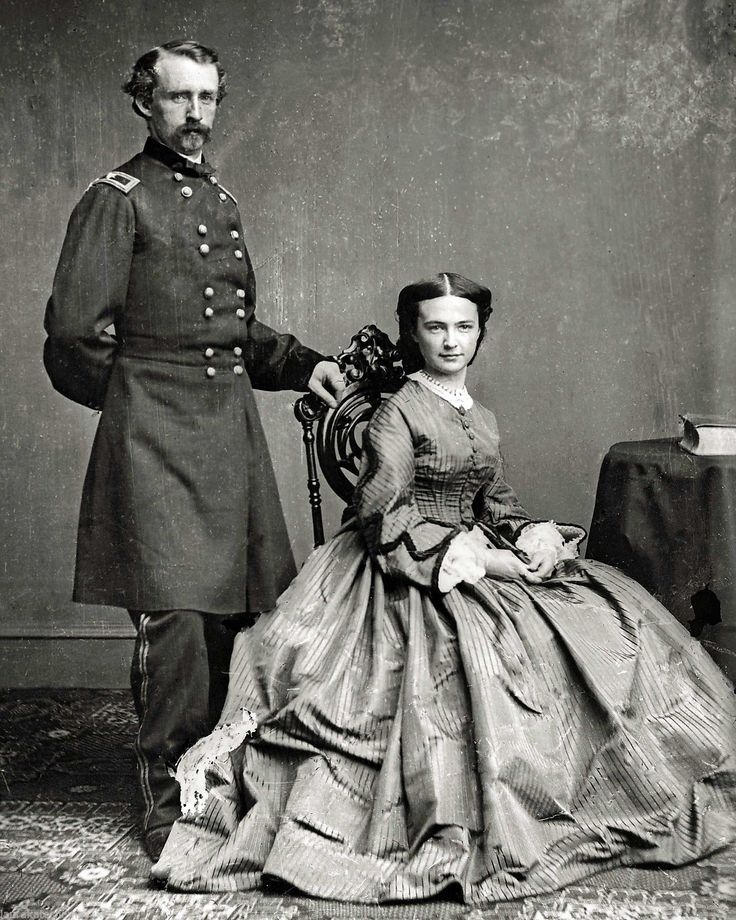
It was Custer’s cavalry who blocked Lee’s forces at Appomattox, and forced the white flag of surrender.  After the final capitulation, Major General Philip Sheridan helped himself to the table, and presented it to Custer as a gift to his wife, Libbie,   “Permit me to say, Madam,” Sheridan wrote, “that there is scarcely an individual in our service who has contributed more to bring about this desirable result than your gallant husband.”

71a448160ce5b203d0998aff0c8bd73c--george-custer-civil-war-photos

One of the more amusing images to emerge from this terrible chapter in American history is the notion of Custer, cinnamon-oiled hair, trademark red scarf and that broad brimmed sombrero, riding away with Wilmer McClean’s table, strapped to the backside of his horse.

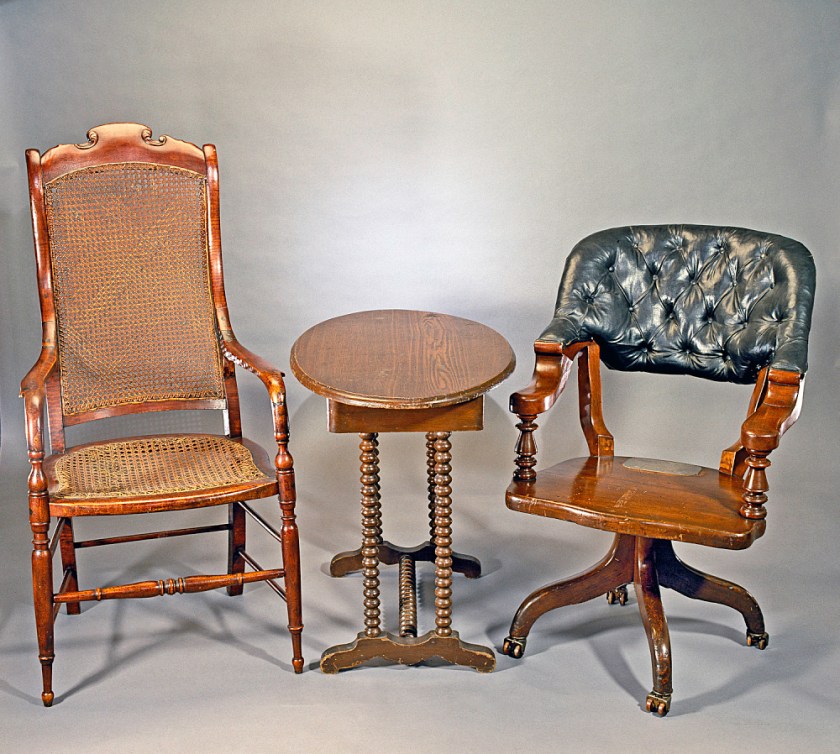
Fun fact:  Custer served the duration of the Civil War, from 1st Bull Run (First Manassas), to Appomattox.  Another man who could say the same was Wilmer McClean, whose Manassas, Virginia home was taken as headquarters, by Confederate General PGT Beauregard.  McLean wanted to get away from it all and moved to the quiet town of Appomattox Courthouse.  It was in his parlor that General Grant met with General Lee, to discuss terms of surrender.  After the war, McClean would famously quip: “The war began in my front yard and ended in my front parlor.”

SIA-95-5515-7
On April 9, 1865, General Ulysses S. Grant sat on the chair to the right and General Robert E. Lee to the left, in the Wilmer McLean home at Appomattox Courthouse, to discuss terms of surrender. This is the table that later rode away, with George Armstrong Custer. H/T Smithsonian Museum

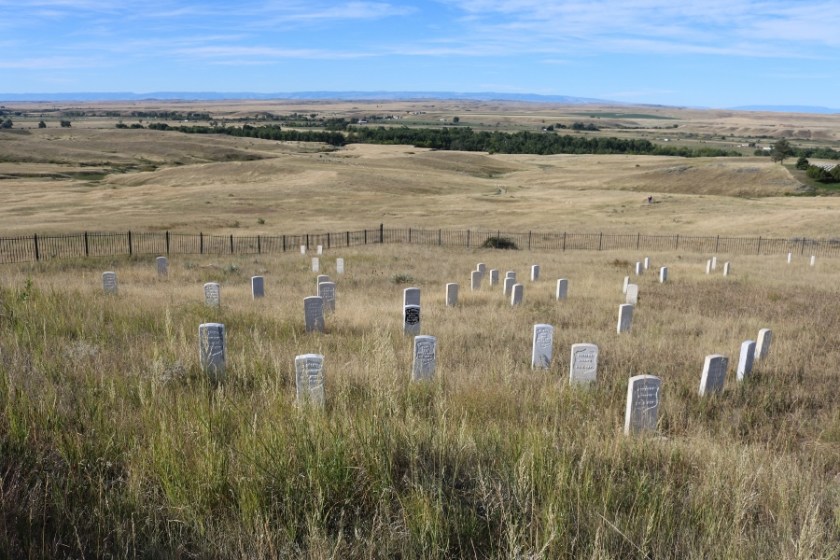
Custer’s later career as Indian fighter would be what he is best known for. On November 27, 1868, now-Lieutenant Colonel George Armstrong Custer led the 7th United States Cavalry on a surprise dawn attack against the Southern Cheyenne village of Peace Chief Black Kettle, in one of a series of battles which would end, for him, eight years later on a hillside, in the eastern Montana territory.

img_9402-last-stand-hill-us-7th-cavalry-900x600
Las Stand Hill

“What if” counterfactual scenarios can be dangerous. We can never know how a story which never happened might have played itself out. Yet I have often wondered how Gettysburg would have turned out, had 3,000 Confederate horsemen crashed into Union lines from the rear as Pickett’s, Pettigrew’s and Trimble’s men hit it from the front.

The Pennsylvania campaign was Robert E. Lee’s gamble that he could make it hurt enough, that the Federals would allow the Confederate States to go their own way.  On that third day at Gettysburg, our history could have taken a very different direction.

If you enjoyed this “Today in History”, please feel free to re-blog, “like” & share on social media, so that others may find and enjoy it as well. Please click the “follow” button on the right, to receive email updates on new articles.  Thank you for your interest, in the history we all share.

November 19, 1864 Lincoln’s Avenger

Women’s groups, tent meetings and Sunday schools clamored to hear from “Lincoln’s avenger”, but his speeches were wandering and incoherent.  Nobody ever clamored to hear the man speak, a second time.  

Thomas Corbett was born in London England in 1832, immigrating with his family to the United States at age 7, and settling in Troy, New York.  There he apprenticed to a hat maker, a profession he would hold off and on for the rest of his life.

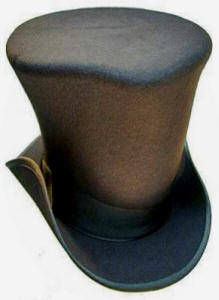
19th century hat makers used an orange colored mercury solution to treat fur, and to make felt in a process called “carroting”.  Mercury attacks the nervous system, causing drooling, hair loss, a lurching gait, difficulty in speaking, “brain fog” and a convulsive shaking called “hatter’s shakes”.

felt-hat
Felt hat

There were plenty of “Mad hatters,” in Lewis Carroll’s time, long before Alice’s Wonderland.  Danbury Connecticut was once the hat making capital of the world, with 56 factories producing five million hats a year.  By the time of the Civil War, mercury poisoning had reduced countless numbers of factory workers, to physical wrecks.  Everybody knew the “Danbury shakes”.

Erethism mercurialis or “Mad hatter’s Disease”, goes a long way to understanding Thomas Corbett.

As a young man, Corbett married.  It nearly broke him to lose his young wife in childbirth.  He moved to Boston and continued to work as a hatter, but heavy drinking left him unable to keep a job for long and eventually, homeless.  One night, Corbett was confronted by a street preacher, who changed his life.

He immediately quit drinking and became fanatically, religious.  He was “the Glory to God man,” growing his hair long to emulate Jesus.  The “local eccentric’ who took up his own street ministry and changed his name to “Boston” after the city of his re-birth.

“God has called on you to preach, my son, about four blocks, that way”.

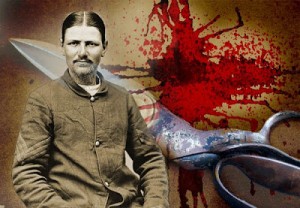
Corbett was propositioned by two prostitutes in 1858, while walking home from a church meeting. Deeply troubled by his own temptation, he returned to his boardinghouse room and took up the Gospel, according to Matthew: “And if thy right eye offend thee, pluck it out and cast it from thee….and there be eunuchs, which have made themselves eunuchs for the kingdom of heaven’s sake“.  He knew what he needed to do.  He castrated himself, with a pair of scissors.  Then he ate dinner and went to a prayer meeting before seeking medical attention.

boston-c-300x208In the first months of the Civil War, Boston Corbett enlisted as a private in the 12th Regiment of the New York state militia. Eccentric behavior quickly got him into trouble. He would carry a bible with him at all times, reading passages aloud and holding unauthorized prayer meetings.  He would argue with superior officers, once reprimanding Colonel Daniel Butterfield for using profane language and using the Lord’s name, in vain. That got him a stay in the guardhouse, where he continued to argue.
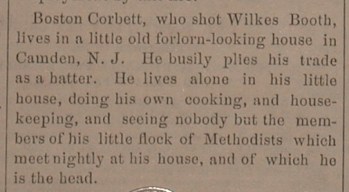
Corbett decided an arbitrary date, on which his enlistment would end.  When that day arrived, he laid down his gun at midnight, and walked away.  That got him court-martialled and sentenced to be shot, but the sentence was reduced. He was discharged in August, 1863, and re-enlisted the same month.

Harper’s Weekly of May 13, 1865 described the annoying habit of adding “er” to his words, as in “O Lord-er, hear-er our prayerer.” His shrill, sharp voice would shout out “Amen,” and “Glory to God,” whenever anything pleased him. He was often thrown in the guard-house, with a knapsack full of bricks as punishment. There he would be, Testament in hand, “preaching temperance, and calling upon his wild companions to “seek the Lord.””

Boston CorbettOn June 24, 1864, fifteen members of Corbett’s company were hemmed in and captured, by Confederate Colonel John Singleton Mosby’s men in Culpeper Virginia.
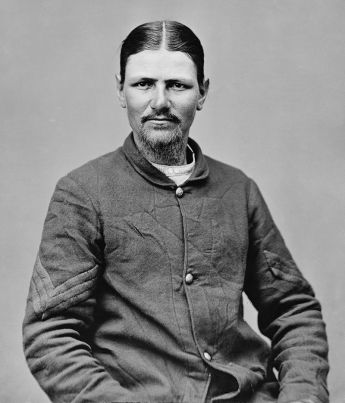
They were sent to the notorious prison camp in Andersonville Georgia, where he escaped once, but the bloodhounds put an end to that.  Only two, ever returned.  Starved and skeletal, his body wracked with scurvy, Boston Corbett was paroled on November 19, 1864.

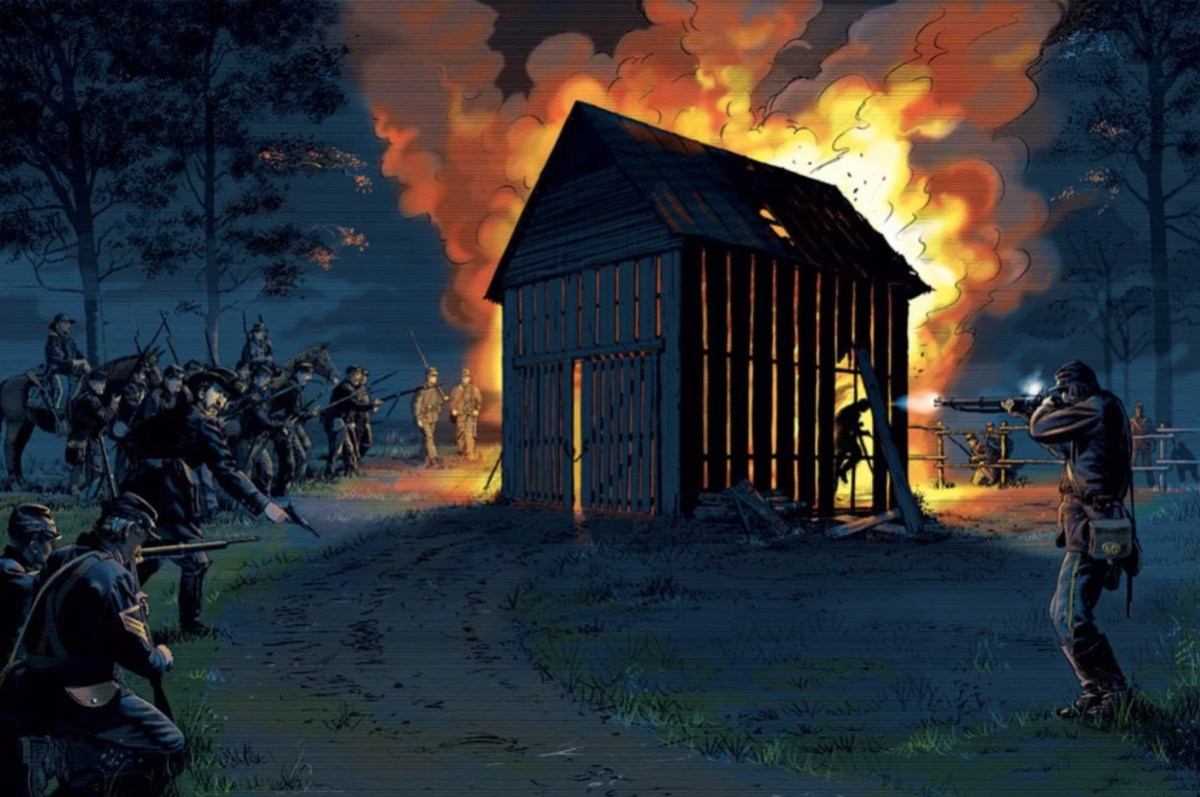
Following the Lincoln assassination, a twelve-day manhunt led to the farm of Richard Henry Garrett near Port Royal, Virginia. The life of John Wilkes Booth came to an end in a burning tobacco barn in the pre-dawn hours of April 26, the bullet fired through a crack in the boards and entering his spine, just below the point where his own bullet had entered the President’s head.

800px-Boston_Corbett_-_Brady-Handy
Thomas “Boston” Corbett

The paralyzed, dying man was dragged from the barn, and onto the porch of the Garrett farmhouse. In his dying moments he asked that his hands be lifted where he could see them.  John Wilkes Booth uttered his last words. “Useless. Useless”.

In his report to Secretary of War Edwin Stanton, Lieutenant Colonel Everton Conger recommended that Sergeant Boston Corbett be punished for disobeying orders that Booth be taken alive, stating that Corbett had fired “without order, pretext or excuse.”

Corbett was treated like a conquering hero, despite Conger’s recommendation.  He returned to making hats after the war, returning first to Boston and then to Danbury and finally, Camden New Jersey.  He could never hold a job for long.  Frequent pauses to pray for co-workers, did little to endear him to supervisors.

Women’s groups, tent meetings and Sunday schools clamored to hear from “Lincoln’s avenger”, but his speeches were wandering and incoherent.  Nobody ever clamored to hear the man speak, a second time.

Corbett became increasingly paranoid over time, convinced that important men in Washington, were out to “get him”.  Hate mail directed to Wilkes Booth’s killer, didn’t help.  At a Blue & Gray reunion in 1878, Corbett pulled a gun on several former soldiers, during an argument over whether Booth still lived.  He was hustled off before he could fire, but this was only one of several such episodes.

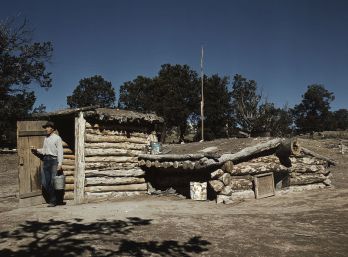
800px-Dugout_home2
Example of a dugout house, this one in New Mexico

He moved to Kansas in 1878 and built a dugout home, and tried his hand at homesteading.  That didn’t work out, either.

Corbett received an invalid’s pension in 1880 and the Grand Army of the Republic made him a doorman to the Kansas state legislature, seven years later.  The man’s mental status was questionable before the war and put beyond dispute in 1887, when he entered the legislative chamber, with two loaded revolvers.  Lawmakers dove for the exits and hid behind garbage cans and doors, as Corbett shot up the Kansas House of Representatives.  Two guns, twelve bullets.  It was a miracle that no one was hit.

The following day, a judge declared Corbett to be out of his mind, and remanded him to the Topeka Asylum for the Insane.  On May 26, 1888, Corbett was marching along a road with other inmates, when he spotted a horse, tied to a post.  Corbett dashed from the line and jumped into the saddle, and rode off into history.

Boston Corbett is believed to have died in the Great Hinckley Fire on September 1, 1894, a conflagration which killed more than 400 and destroyed over 200,000 acres of Minnesota pine forest, but there is no proof.  The fate of the man who shot the man who shot Abraham Lincoln, remains unknown.

If you enjoyed this “Today in History”, please feel free to re-blog, “like” & share on social media, so that others may find and enjoy it as well. Please click the “follow” button on the right, to receive email updates on new articles.  Thank you for your interest, in the history we all share.