

Over the night and the following day of April 18-19, 1775, individual British soldiers marched 36 miles or more, on a round-trip expedition from Boston. Following the early morning battles at Lexington and Concord, armed colonial militia from as far away as Worcester swarmed over the column, forcing the regulars into a fighting retreat.
 In those days, Boston was a virtual island, connected to the mainland by a narrow “neck” of land. More than 20,000 armed men converged from all over New England in the weeks that followed, gathering in buildings and encampments from Cambridge to Roxbury.
A man who should have gone into history among the top tier of American Founding Fathers, the future turncoat Benedict Arnold, arrived with Connecticut militia to support the siege. Arnold informed the Massachusetts Committee of Safety that Fort Ticonderoga, located along the southern end of Lake Champlain in upstate New York, was bristling with cannon and other military stores. Better yet, the place was lightly defended.
The committee commissioned Arnold a colonel on May 3, authorizing him to raise troops and lead a mission to capture the fort. Seven days later, Colonel Arnold and militia forces from Connecticut and western Massachusetts in conjunction with Ethan Allen and his “Green Mountain Boys” captured the fort, and all its armaments.

The Continental Congress created the Army that June, appointing General George Washington to lead it. When General Washington took command of that army in July, it was a force with an average of nine rounds’ shot and powder, per man. The British garrison occupying Boston, was effectively penned up by forces too weak to do anything about it.
The stalemate dragged on for months, when a 25-year-old bookseller came to General Washington with a plan. His name was Henry Knox. Knox proposed a 300-mile, round trip slog into a New England winter, to retrieve the guns of Fort Ticonderoga: brass and iron cannon, howitzers, and mortars. 59 pieces in all. Washington’s advisors derided the idea as hopeless, but the General approved.

Knox set out with a column of men in late November, 1775. For nearly two months, he and his team wrestled 60 tons of cannons and other armaments by boat, animal & man-hauled sledges along roads little better than foot trails. Across two barely frozen rivers, and through the forests and swamps of western Massachusetts, over the Berkshire mountains and on to Cambridge, historian Victor Brooks called it “one of the most stupendous feats of logistics”, of the age.

It must have been a sight that January 24, when Knox returned at the head of that “Noble Train of Artillery”.

For British military leadership in Boston, headed by General William Howe, the only option for resupply was by water, via Boston Harbor. Both sides of the siege understood the strategic importance of the twin prominences overlooking the harbor, the hills of Charlestown to the north, and Dorchester heights to the south. It’s why British forces had nearly spent themselves on Farmer Breed’s hillside that June, in an engagement that went into history as the battle of Bunker Hill.
With Howe’s forces in possession of the Charlestown peninsula, Washington had long considered occupying Dorchester Heights, but considered his forces too weak. That changed with the guns of Ticonderoga.

In the first days of March, Washington placed several heavy cannons at Lechmere’s Point and Cobble Hill in Cambridge, and on Lamb’s Dam in Roxbury. The batteries opened fire on the night of March 2, and again on the following night and the night after that. British attention thus diverted, American General John Thomas and a force of some 2,000 made plans to take the heights.
As the ground was frozen and digging impossible, fortifications and cannon placements were fashioned out of heavy 10′ timbers. With the path to the top lined with hay bales to muffle their sounds, pre-built fortifications were manhandled to the top of Dorchester heights over the night of March 4-5, along with the bulk of Knox’ cannons.

General Howe was stunned on awakening, to the morning of March 5. The British garrison in Boston and the fleet in harbor, were now under the muzzles of Patriot guns. “The rebels have done more in one night”, he said, “than my whole army would have done in a month.”
Plans were laid for an immediate assault on the hill, as American reinforcements poured into the position. By day’s end, Howe faced the dismal prospect of another Bunker Hill, this time against a force of 6,000 in possession of heavy artillery.

A heavy snowstorm descended late in the day, interrupting British plans for the assault. A few days later, Howe had thought better of it. Washington received an unsigned note on March 8, informing him that the city would not be put to the torch, if the King’s Regulars were permitted to leave unmolested.
British forces departed Boston by sea on March 17 with about 1,000 civilian loyalists, resulting in a peculiar Massachusetts institution which exists to this day: “Evacuation Day”.
It’s doubtful whether Washington possessed sufficient powder or shot for a sustained campaign, but British forces occupying Boston didn’t know that. The mere presence of those guns moved General Howe to weigh anchor and sail for Nova Scotia. The whole episode may have been one of the greatest head fakes, in all military history.


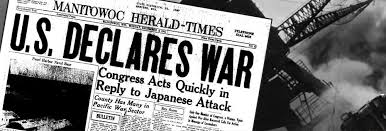
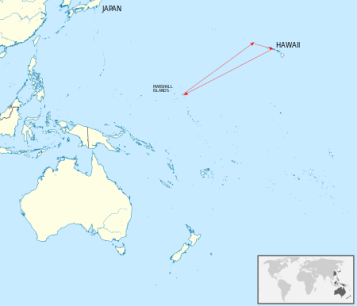 In the months that followed, the United States ramped up its war capacity, significantly. Realizing this but having little information, the Imperial Japanese Navy (IJN) determined to visit Pearl Harbor once again, to have a look around.


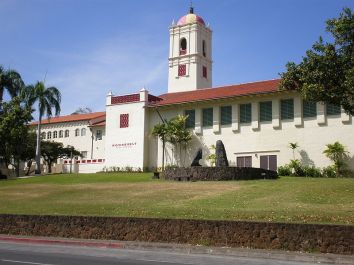


 The signs of the time frequently included horses, indicating that lodgings and stables were available. Many such establishments came to be called after such signs, and names such as “Chestnut Mare” and “White Stallion” were common.
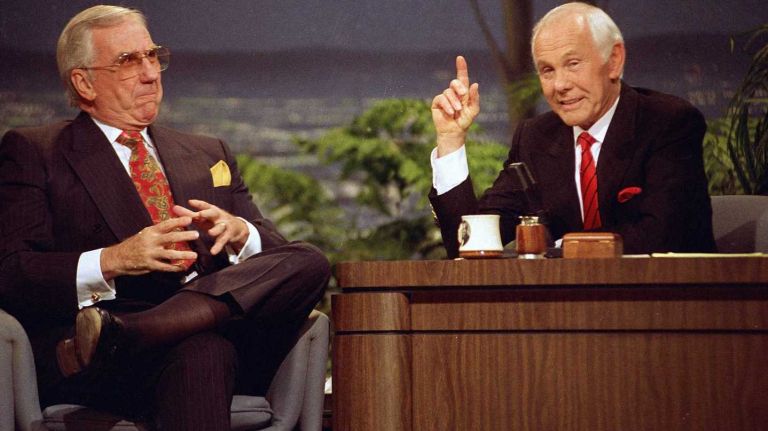


 January 2, the following year. The last cigarette ad in the history of American television was a Virginia Slims ad, broadcast at 11:59p.m., January 1, 1971, on the Tonight Show, Starring Johnny Carson. Smoking on-air became a thing of the past sometime in the mid-80s, but that cigarette box remained on Carson’s desk until his final episode, in 1992. You’ve come a long way, baby.
 Carson began taking Mondays off in 1972, when the show moved from New York to California. There followed a period of rotating guest hosts, including George Carlin and Joan Rivers, who became permanent guest host between 1983 and 1986.
 Jay Leno appeared on the Tonight Show with Johnny Carson for the first time on March 2, 1977. He would frequently guest, and served as permanent host from May 1992 to May 2009.


 On March 1, 2011, L/Cpl Tasker was killed by a Taliban sniper while on patrol in Helmand Province, and brought back to base by his fellow soldiers. Theo suffered a seizure after returning to base and never recovered. He died that afternoon. It was believed that Theo’s seizure was brought on by the stresses of Tasker’s death, but the autopsy proved inconclusive. Liam’s mother Jane Duffy later said, “I think Theo died of a broken heart, nobody will convince me any different.”
 On a more upbeat note, and this story needs one, our daughter Carolyn and son-in-law Nate transferred to Savannah in 2013, where Nate deployed to the Wardak province of Afghanistan as a TEDD handler and paired with “MWD Zino”, a four-year-old German Shepherd trained to detect up to 64 explosive compounds.

 Reitsch began flying gliders in 1932, as the treaty of Versailles prohibited anyone flying “war planes” in Germany. In 1934, she broke the world’s altitude record for women (9,184 feet). In 1936, Reitsch was working on developing dive brakes for gliders, when she was awarded the honorary rank of Flugkapitän, the first woman ever so honored. In 1937 she became a Luftwaffe civilian test pilot. She would hold the position until the end of WW2.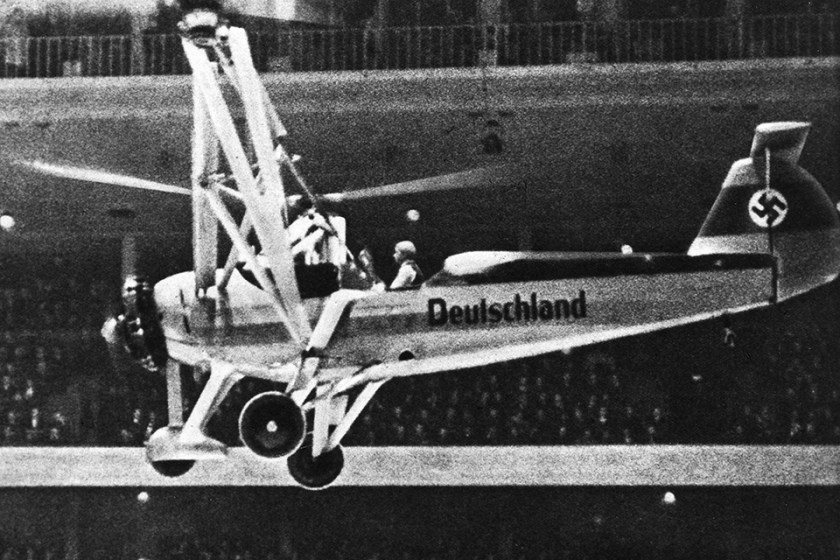
 Doctors did not expect her to live, let alone fly again. She spent five months in hospital, and suffered from debilitating dizzy spells. She put herself on a program of climbing trees and rooftops, to regain her sense of balance. Soon, she was test flying again.
 Hitler was initially put off by the idea, though she finally persuaded him to look into modifying a Messerschmitt Me-328B fighter for the purpose. Reitsch put together a suicide group, becoming the first to take the pledge, though the idea would never take shape. The pledge read, in part: “I hereby voluntarily apply to be enrolled in the suicide group as a pilot of a human glider-bomb. I fully understand that employment in this capacity will entail my own death.”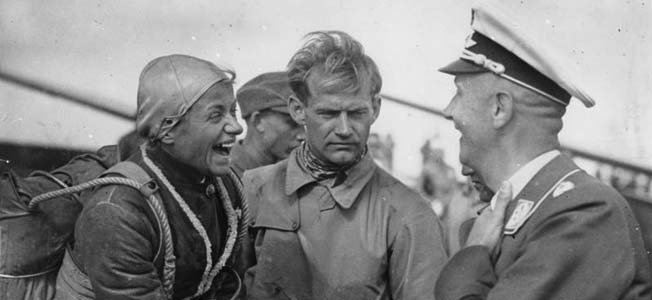
 Toward the end of her life, she was interviewed by the Jewish-American photo-journalist, Ron Laytner. Even then she was defiant: “And what have we now in Germany? A land of bankers and car-makers. Even our great army has gone soft. Soldiers wear beards and question orders. I am not ashamed to say I believed in National Socialism. I still wear the Iron Cross with diamonds Hitler gave me. But today in all Germany you can’t find a single person who voted Adolf Hitler into power … Many Germans feel guilty about the war. But they don’t explain the real guilt we share – that we lost“.

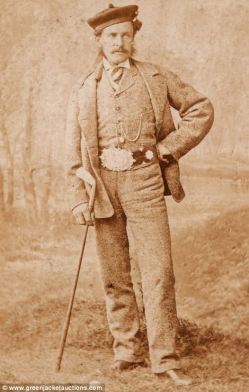


 The Father/Son team tee’d off in match against the brothers Willie and Mungo Park on September 11, 1875. With two holes to go, Young Tom received a telegram with upsetting news. His wife Margaret had gone into a difficult labor. The Morrises finished those last two holes winning the match, and hurried home by ship across the Firth of Forth and up the coast. Too late. Tom Morris Jr. got home to find that his young wife and newborn baby, had died in childbirth.

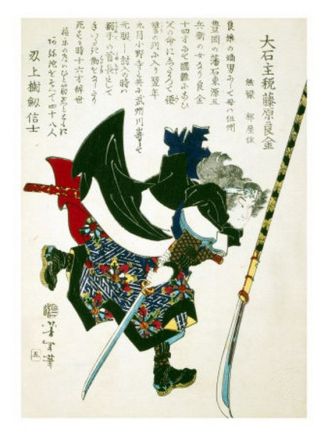 The military and governing structure of the time was based on a rigid and inflexible class system, placing the feudal lords or daimyō at the top, followed by a warrior-caste of samurai, and a lower caste of merchants and artisans. At the bottom of it all stood some 80% of the population, the peasant farmer forbidden to engage in non-agricultural work, and expected to provide the income to make the whole system work.
 In time, these internal Japanese issues and the growing pressure of western encroachment led to the end of the Tokugawa period and the restoration of the Meiji Emperor, in 1868. The divisions would last, well into the 20th century.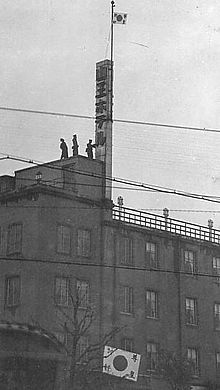
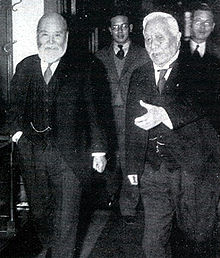


 Far-left anarchists mailed no fewer than 36 dynamite bombs to prominent political and business leaders in April 1919, alone. In June, another nine far more powerful bombs destroyed churches, police stations and businesses.
 To this day there are those who describe the period as the “First Red Scare”, as a way to ridicule the concerns of the era. The criticism seems unfair. The thing about history, is that we know how their story ends. The participants don’t, any more than we know what the future holds for ourselves.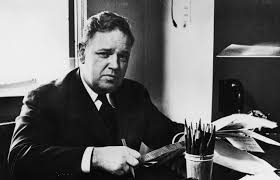
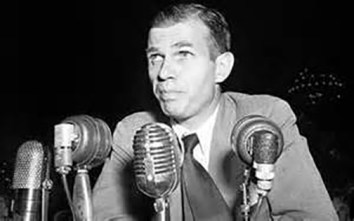
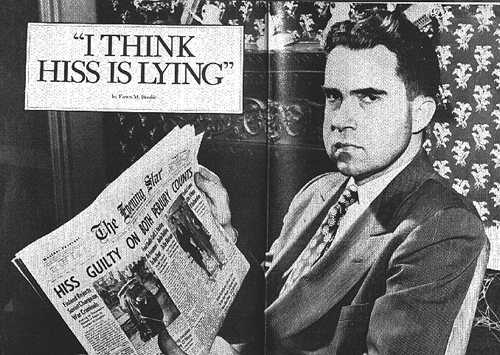
 Before defecting from the Left, Chambers had secreted documents and microfilms, some of which he hid inside a pumpkin at his Maryland farm. The collection was known as the “Pumpkin Papers”, consisting of incriminating documents, written in what appeared to Hiss’ own hand, or typed on his Woodstock no. 230099 typewriter.
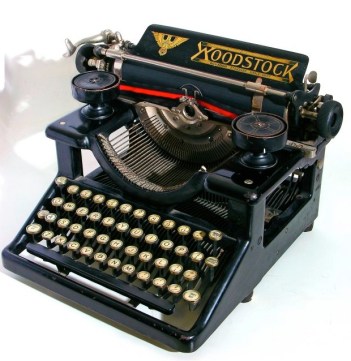 Hiss’ theory never explained why Chambers side needed another typewriter, if they’d had the original long enough to mimic its imperfections with a second.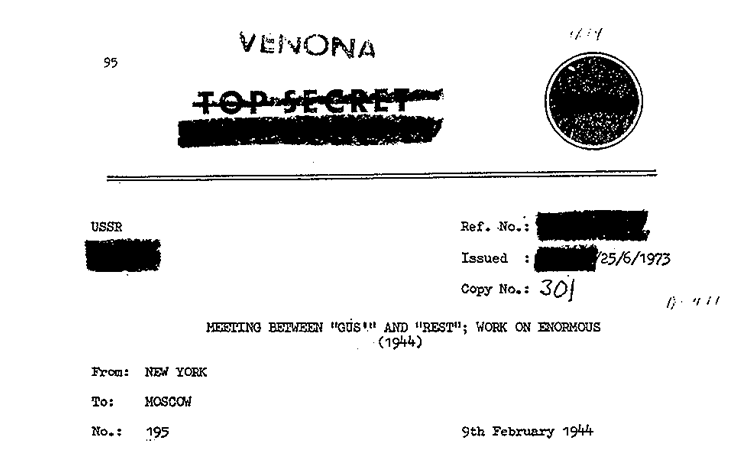


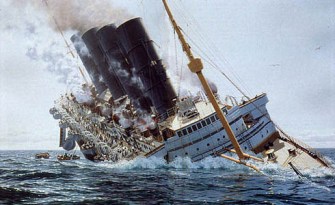 Though Wilson didn’t mention it directly, HMS Lusitania had been torpedoed only three days earlier with the loss of 1,198, 128 of whom were Americans.
 The reaction to the Lusitania sinking was immediate and vehement, portraying the attack as the act of barbarians and huns and demanding a German return to “prize rules”, requiring submarines to surface and search merchantmen while placing crews and passengers in “a place of safety”.
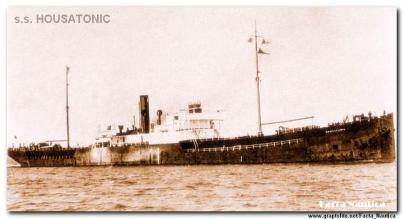 The American cargo vessel SS Housatonic was stopped off the southwest coast of England on February 3, and boarded by German submarine U-53. Captain Thomas Ensor was interviewed by Kapitänleutnant Hans Rose, who explained he was sorry, but Housatonic was “carrying food supplies to the enemy of my country”. She would be destroyed. The American Captain and crew were allowed to launch lifeboats and abandon ship, while German sailors raided the American’s soap supplies. Apparently, WWI-vintage German subs were short on soap.
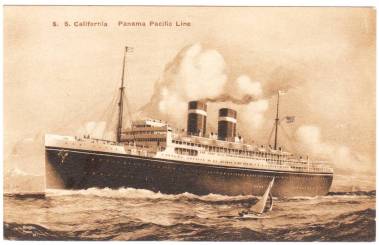 President Woodrow Wilson retaliated, breaking off diplomatic relations with Germany the following day. Three days later, a German U-boat fired two torpedoes at the
 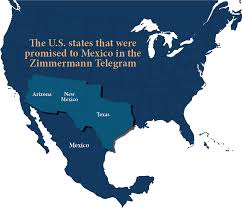 The contents of Zimmermann’s note were published in the American media on March 1. Even then, there was considerable antipathy toward the British side, particularly among Americans of German and Irish ethnicity. “Who says this thing is genuine, anyway”, they might have said. “Maybe it’s a British forgery”.

 Historical Easter Eggs - Today in History
You must be logged in to post a comment.