

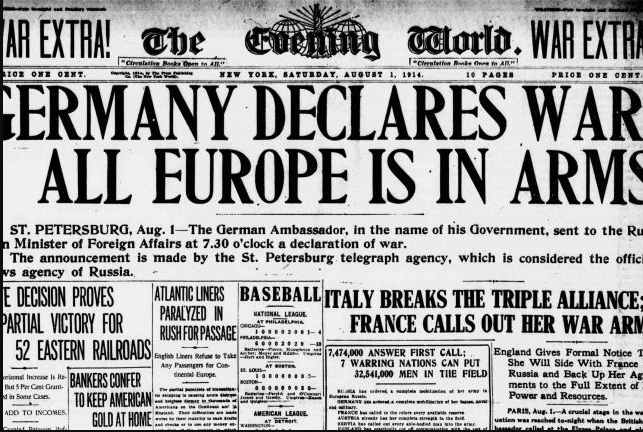
The “War to end all Wars” exploded across the European continent in the summer of 1914, devolving into the stalemate of trench warfare, by October.
The ‘Great War’ became Total War, the following year. 1915 saw the first use of asphyxiating gas, first at Bolimow in Poland, and later (and more famously) near the Belgian village of Ypres. Ottoman deportation of its Armenian minority led to the systematic extermination of an ethnic minority, resulting in the death of ¾ of an estimated 2 million Armenians living in the Empire at that time, and coining the term ‘genocide‘.
Kaiser Wilhelm responded to the Royal Navy’s near-stranglehold of surface shipping with a policy of unrestricted submarine warfare, as the first zeppelin raids were carried out against the British mainland. German forces adopted a defensive strategy on the western front, developing the most sophisticated defensive capabilities of the war and determined to “bleed France white”, while concentrating on the defeat of Czarist Russia.
Russian Czar Nicholas II took personal command that September, following catastrophic losses in Galicia and Poland. Austro-German offensives resulted in 1.4 million Russian casualties by September with another 750,000 captured, spurring a “Great Retreat” of Russian forces in the east, and resulting in political and social unrest which would topple the Imperial government, fewer than two years later. In December, British and ANZAC forces broke off a meaningless stalemate on the Gallipoli peninsula, beginning the evacuation of some 83,000 survivors. The disastrous offensive had produced some 250,000 casualties. The Gallipoli campaign was remembered as a great Ottoman victory, a defining moment in Turkish history. For now, Turkish troops held their fire in the face of the allied withdrawal, happy to see them leave.
A single day’s fighting in the great battles of 1916 could produce more casualties than every European war of the preceding 100 years, civilian and military, combined. Over 16 million were killed and another 20 million wounded, while vast stretches of the Western European countryside were literally torn apart.
1917 saw the resumption of unrestricted submarine warfare, and a German invitation to bring Mexico into the war, against the United States. As expected, these policies brought America into the war on the allied side. The President who won re-election for being ‘too proud to fight’ asked for a congressional declaration of war, that April.
 Massive French losses stemming from the failed Nivelle offensive of that same month (French casualties were fully ten times what was expected) combined with irrational expectations that American forces would materialize on the western front led to massive unrest in the French lines. Fully one-half of all French forces on the western front mutinied. It’s one of the great miracles of WW1 that the German side never knew, else the conflict may have ended, very differently.
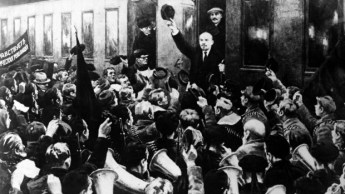
The “sealed train‘ carrying the plague bacillus of communism had already entered the Russian body politic. Nicholas II, Emperor of all Russia, was overthrown and murdered that July, along with his wife, children, servants and a few loyal friends, and their dogs.
This was the situation in July 1917.
 For eighteen months, British miners worked to dig tunnels under Messines Ridge, the German defensive works laid out around the Belgian town of Ypres. Nearly a million pounds of high explosive were placed in some 2,000′ of tunnels, dug 100′ deep. 10,000 German soldiers ceased to exist at 3:10am local time on June 7, in a blast that could be heard as far away, as London.
Buoyed by this success and eager to destroy the German submarine bases on the Belgian coast, General Sir Douglas Haig planned an assault from the British-held Ypres salient, near the village of Passchendaele.

British Prime Minister David Lloyd George opposed the offensive, as did the French Chief of the General Staff, General Ferdinand Foch, both preferring to await the arrival of the American Expeditionary Force (AEF). Historians have argued the wisdom of the move, ever since.
The third Battle of Ypres, also known as the Battle of Passchendaele, began in the early morning hours of July 31, 1917. The next 105 days would be fought under some of the most hideous conditions, of the entire war.
In the ten days leading up to the attack, some 3,000 guns fired an estimated 4½ million shells into German lines, pulverizing whole forests and smashing water control structures in the lowland plains. Several days into the attack, Ypres suffered the heaviest rainfall, in thirty years.
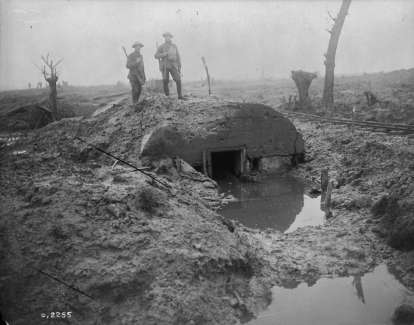
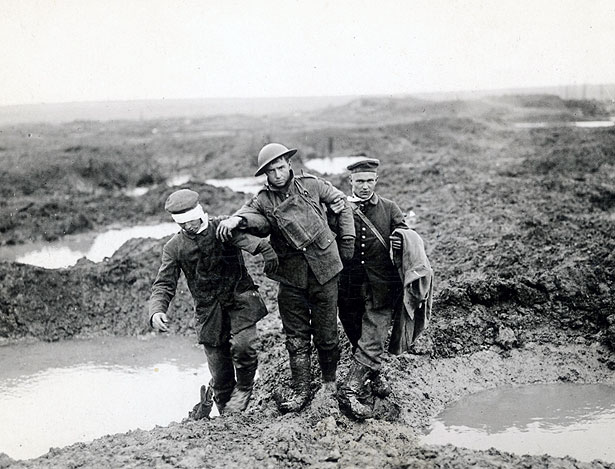
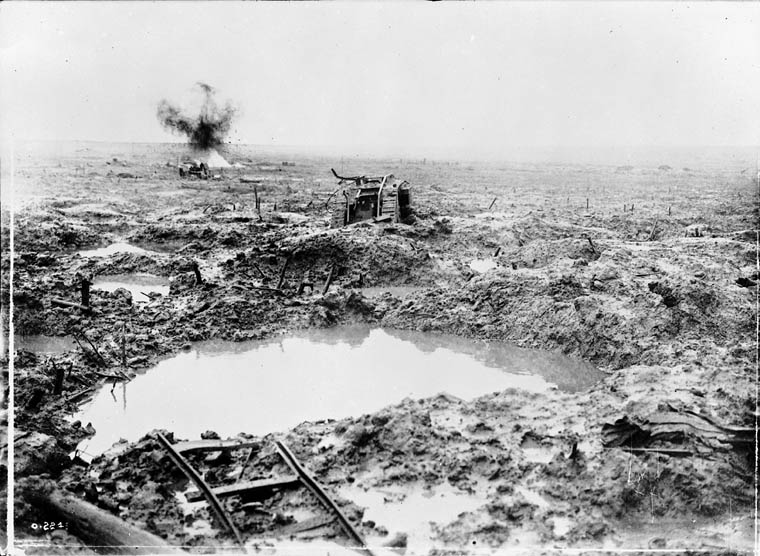
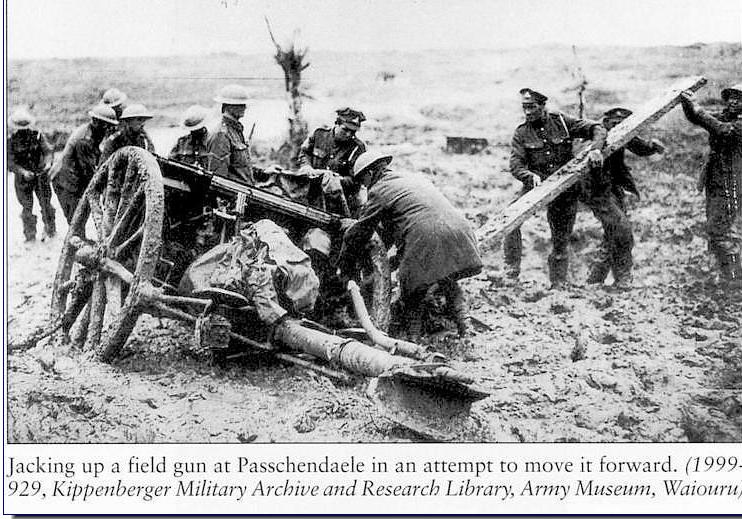
Conditions defy description. Time and again the clay soil, the water, the shattered remnants of once-great forests and the bodies of the slain were churned up and pulverized, by shellfire. You couldn’t call the stuff these people lived and fought in mud – it was more like a thick slime, a clinging, sucking ooze, capable of claiming grown men, even horses and mules. Most of the offensive took place across a broad plain formerly crisscrossed with canals, but now a great, sucking mire in which the only solid ground seemed to be German positions, from which machine guns cut down sodden commonwealth soldiers, as with a scythe.
Soldiers begged for their friends to shoot them, rather than being left to sink in that muck. One sank up to his neck and slowly went stark raving mad, as he died of thirst. British soldier Charles Miles wrote “It was worse when the mud didn’t suck you down; when it yielded under your feet you knew that it was a body you were treading on.”
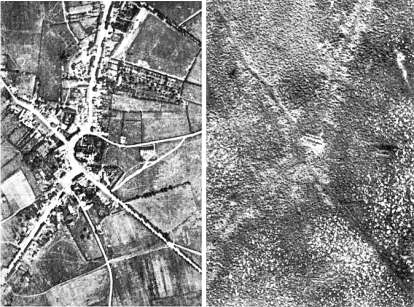
In 105 days of this hell, Commonwealth forces lost 275,000 killed, wounded and missing. The German side another 200,000. 90,000 bodies were never identified. 42,000 were never recovered and remain there, to this day. All for five miles of mud, and a village barely recognizable, after its capture.
Following the battle of Passchendaele, staff officer Sir Launcelot Kiggell is said to have broken down in tears. “Good God”, he said, “Did we really send men to fight in That”?! The soldier turned war poet Siegfried Sassoon reveals the bitterness of the average “Joe Squaddy” whom his government had sent sent to fight and die, at Passchendaele. The story is told in the first person by a dead man, in all the bitterness of which the poet is capable. It’s called:
Memorial Tablet – by Siegfried Sassoon
 “Squire nagged and bullied till I went to fight,
(Under Lord Derby’s Scheme). I died in hell (They called it Passchendaele). My wound was slight,
And I was hobbling back; and then a shell
Burst slick upon the duck-boards: so I fell
Into the bottomless mud, and lost the light.
At sermon-time, while Squire is in his pew,
He gives my gilded name a thoughtful stare;
For, though low down upon the list, I’m there;
‘In proud and glorious memory’…that’s my due.
Two bleeding years I fought in France, for Squire:
I suffered anguish that he’s never guessed.
Once I came home on leave: and then went west…
What greater glory could a man desire?”
If you enjoyed this “Today in History”, please feel free to re-blog, “like” & share on social media, so that others may find and enjoy it as well. Please click the “follow” button on the right, to receive email updates on new articles. Thank you for your interest, in the history we all share.

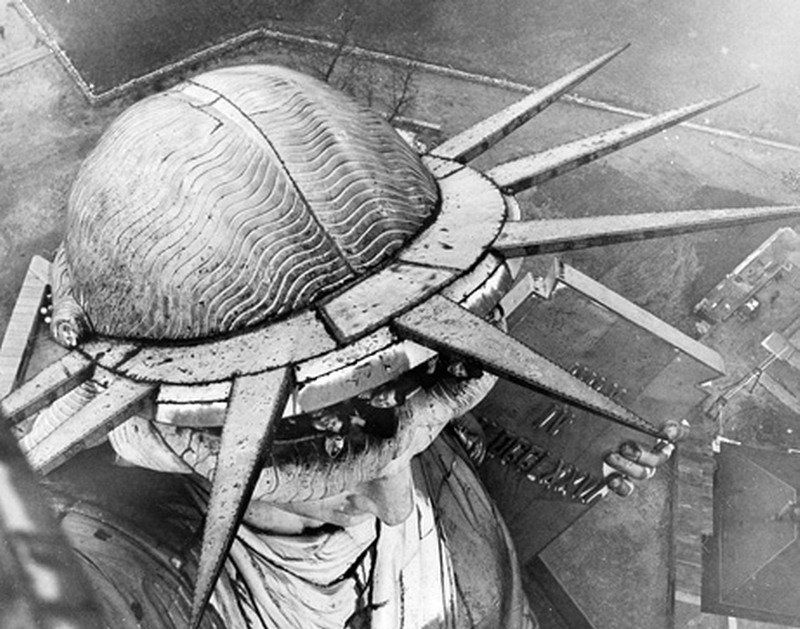
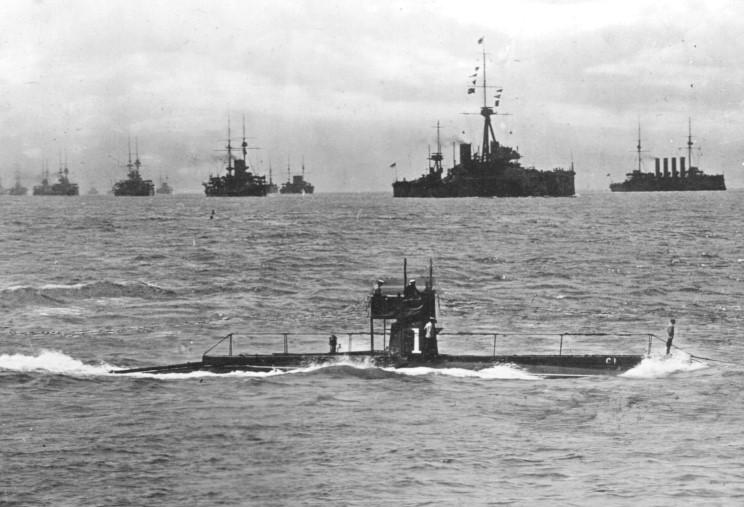 To the Central Powers, such trade had the sole purpose of killing their boys on the battlefields of Europe.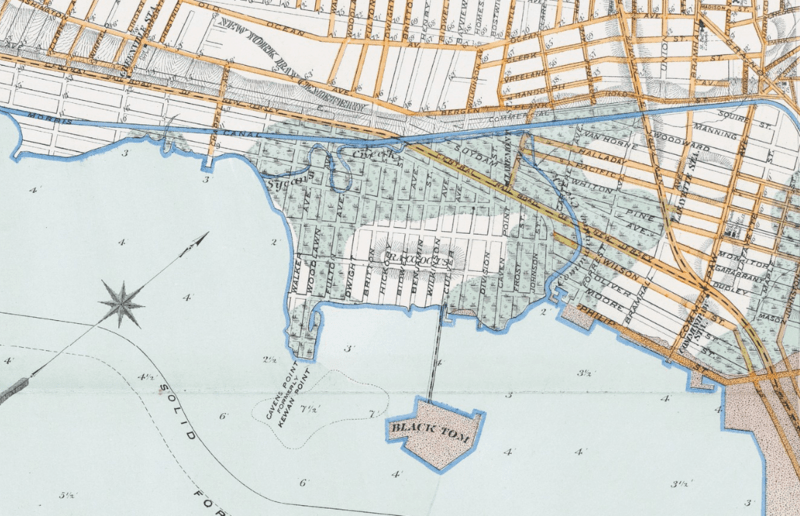
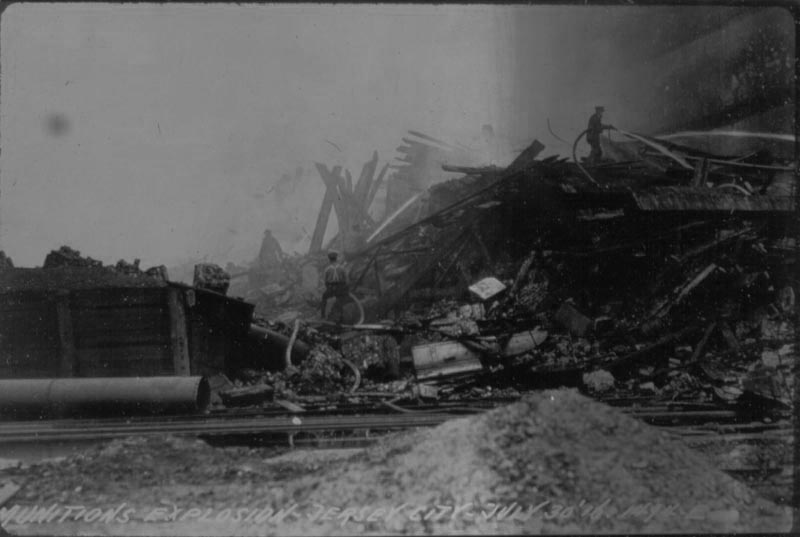
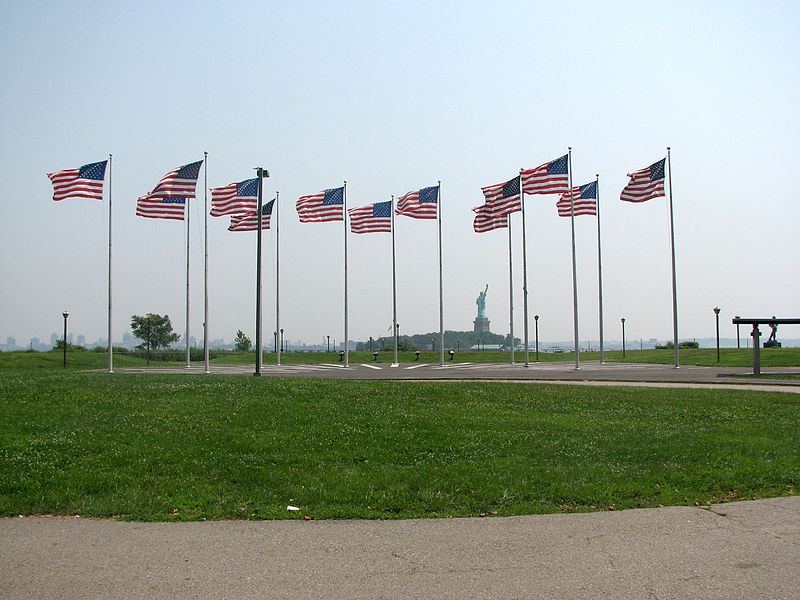
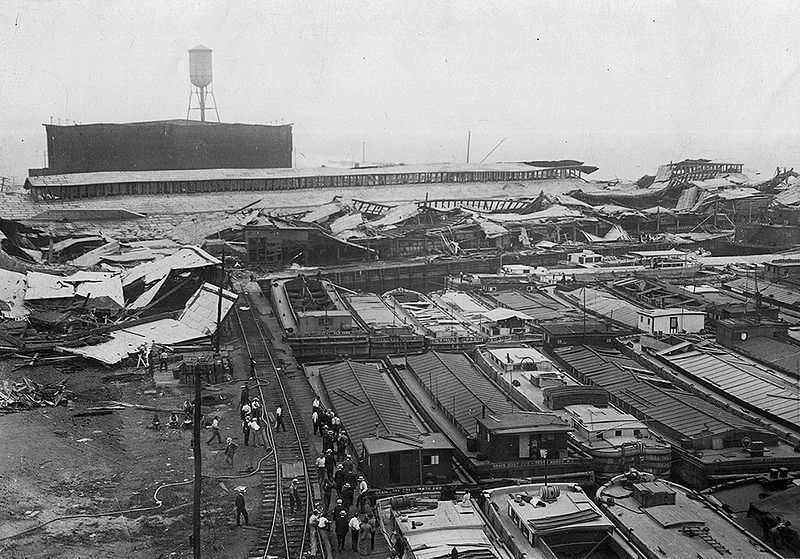 Known fatalities in the explosion included a Jersey City police officer, a Lehigh Valley Railroad Chief of Police, a ten week old infant, and the barge captain.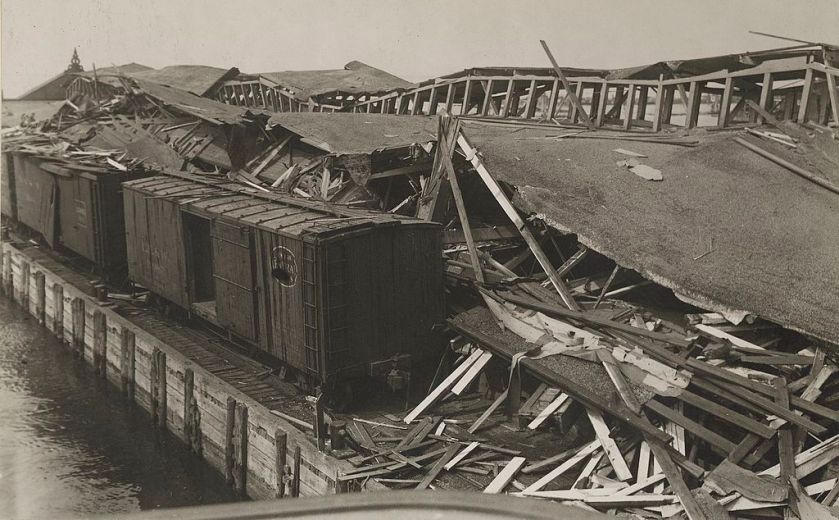

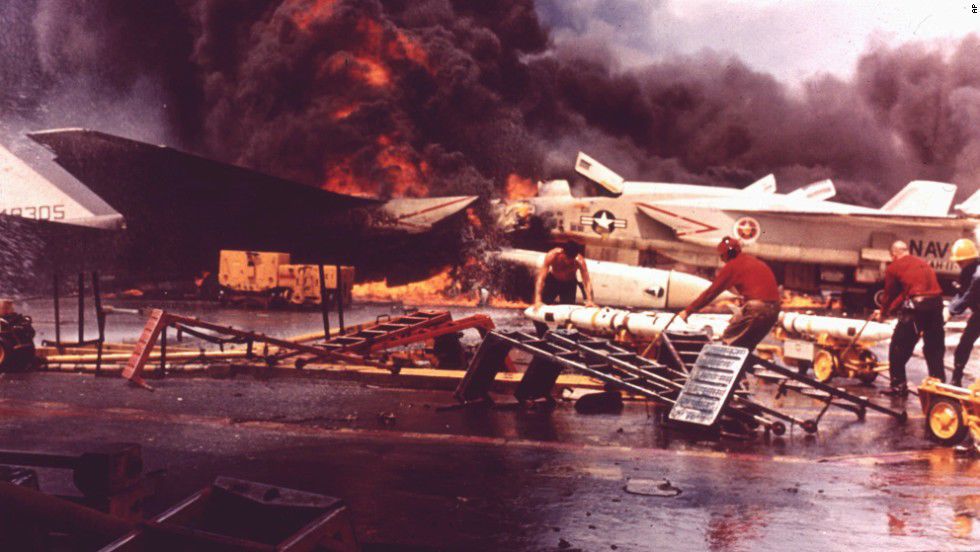
 These older bombs were way past their “sell-by” date, having spent the better part of the last ten years in the heat and humidity of Subic Bay depots. Ordnance officers wanted nothing to do with the Fat Boys, with their rusting shells leaking paraffin, and rotted packaging. Some had production date stamps as early as 1953.
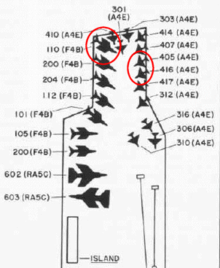 In addition to the bombs, ground attack aircraft were armed with 5″ “Zuni” unguided rockets, carried four at a time in under-wing rocket packs. Known for electrical malfunctions and accidental firing, standard Naval procedure required electrical pigtails to be connected, at the catapult.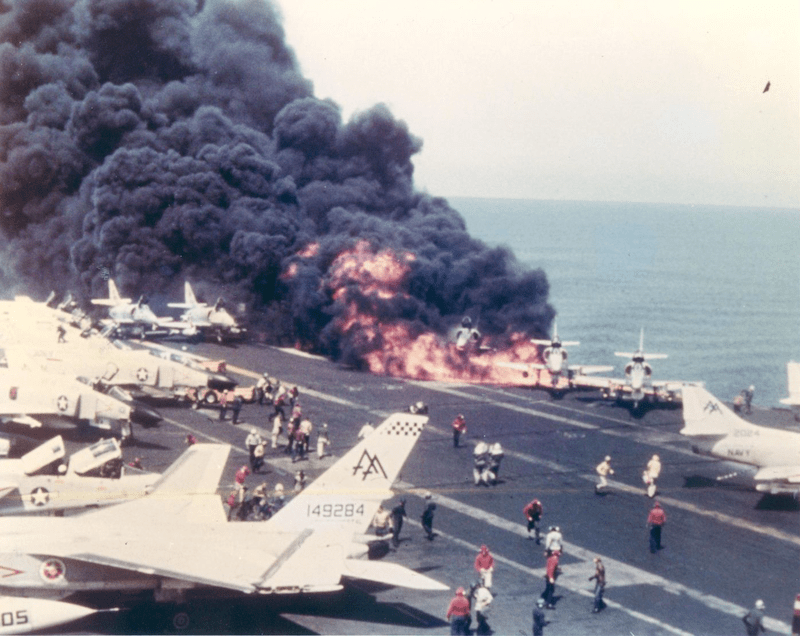




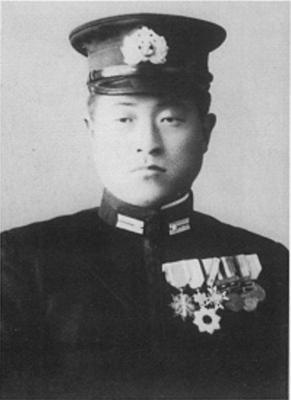
 The Japanese submarine I-58, Captain Mochitsura Hashimoto commanding, fired a spread of six torpedoes at the cruiser, two striking Indianapolis’ starboard bow at fourteen minutes past midnight on Monday, July 30. The damage was massive. Within 12 minutes, the 584-ft, 9,950-ton vessel had rolled over, gone straight up by the stern, and sunk beneath the waves.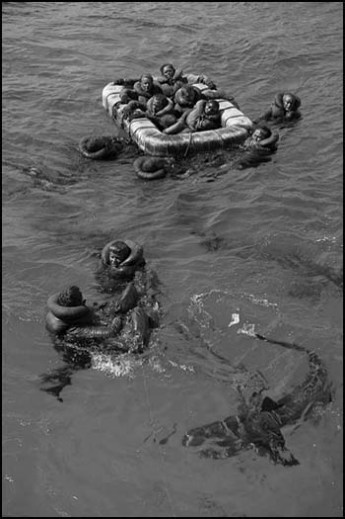
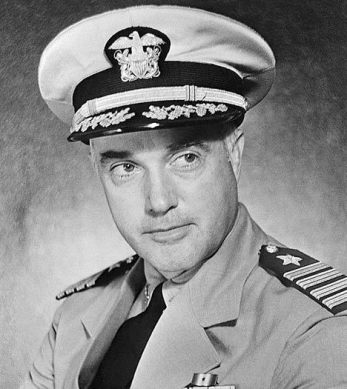
 He couldn’t let it end there. Scott began to attend Indianapolis survivors’ reunions, at their invitation, and helped to gain a commitment in 1997 from then-Representative Joe Scarborough that he would introduce a bill in Congress to exonerate McVay the following year.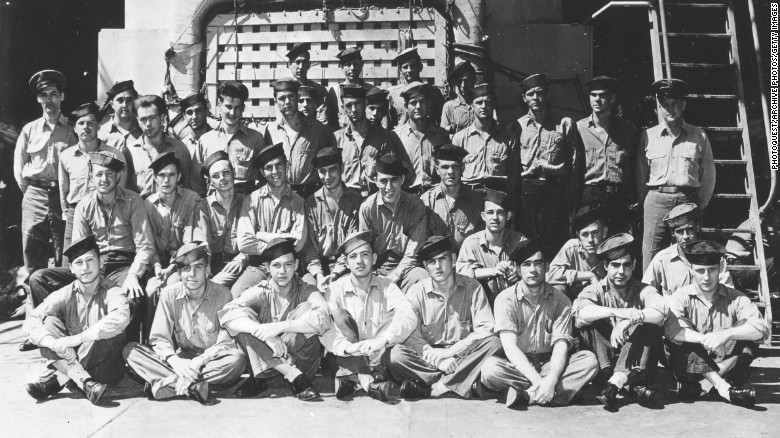


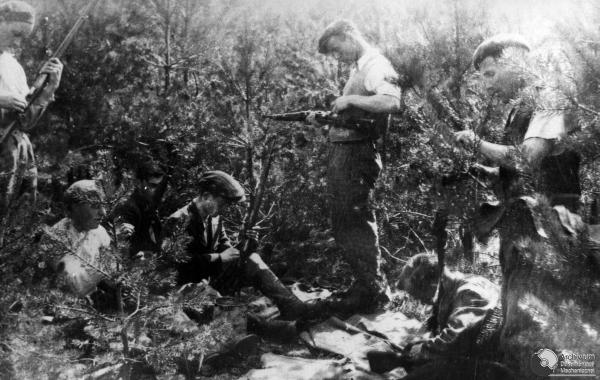

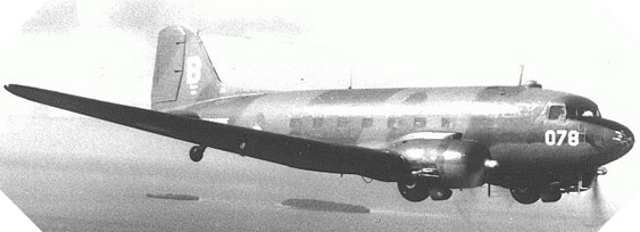 There would be 5 hours of unarmed, unescorted flight through Nazi-controlled air space and an emergency landing with no brakes, before those V2 rocket components finally made it to England.
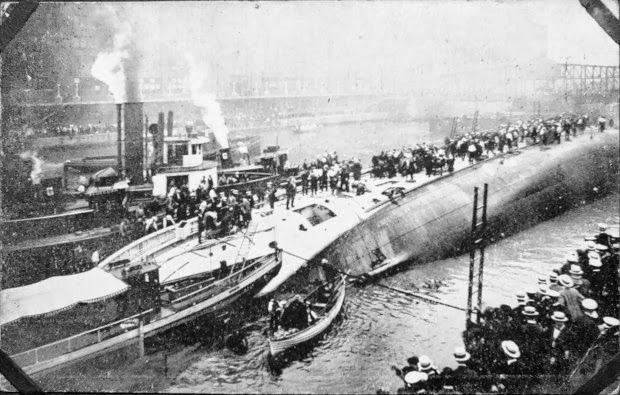
 Following the “unsinkable” Titanic disaster of 1912, thirteen countries including Great Britain and the United States gathered to discuss implementation of life-saving measures at sea, such as radio communications, safety of navigation and ice patrol. Among other measures, the Safety of Life at Sea (SOLAS) treaty signed in January 1914 mandated that sufficient lifeboats be provided for every passenger and crew member on board, and that all on board be instructed on their use.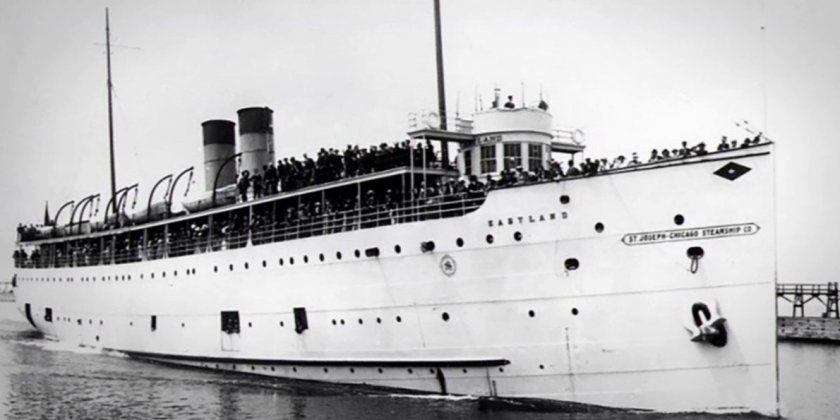


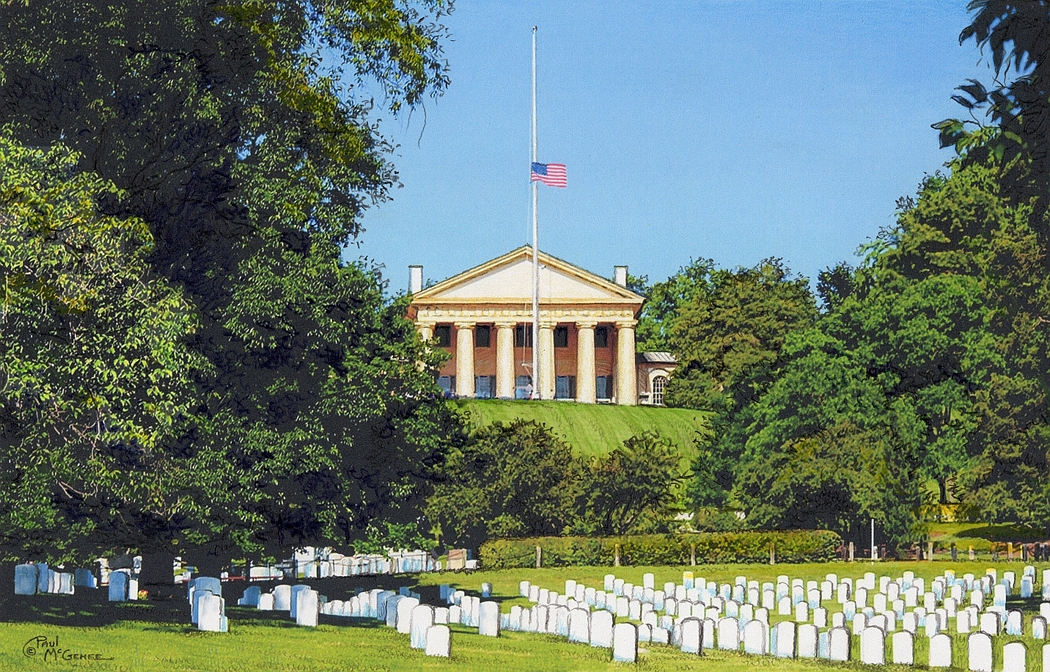
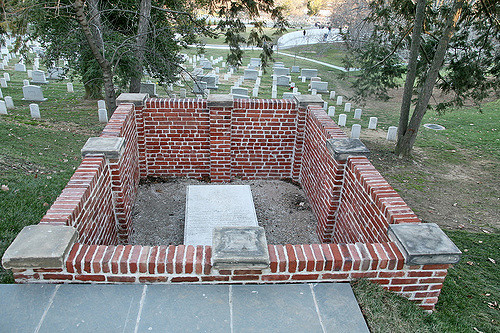
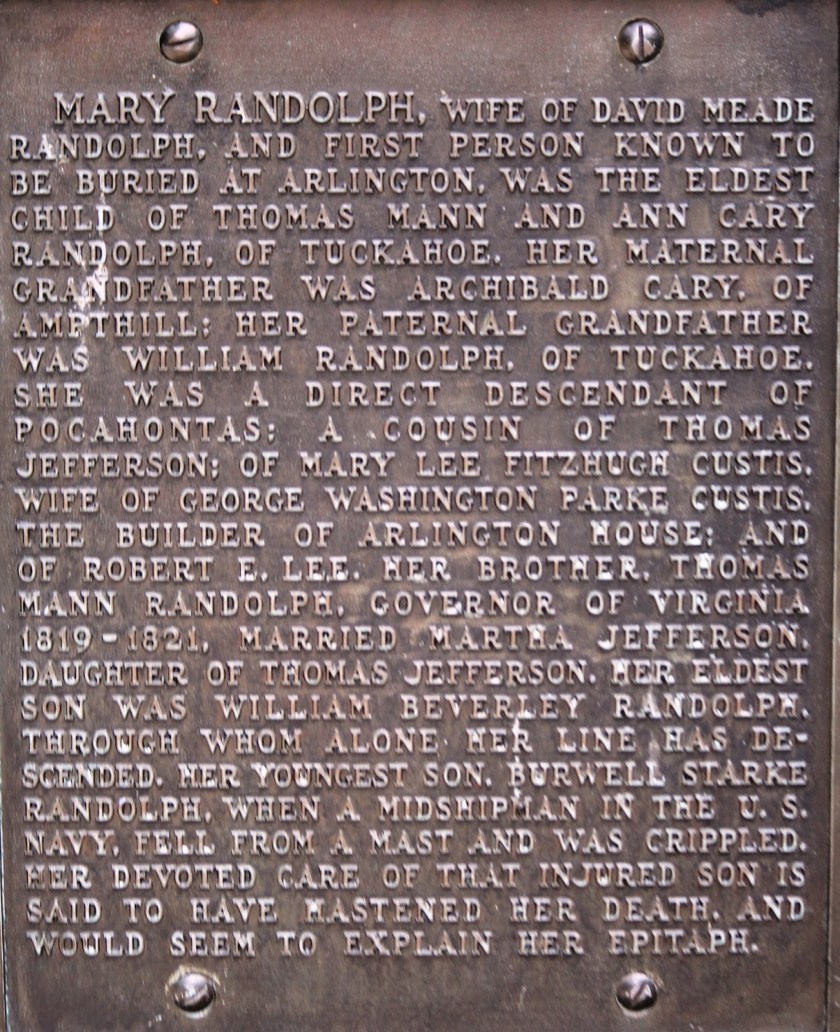
 The last line of the inscription, “a victim to maternal love and duty” refers to her youngest surviving son, Midshipman Burwell Starke Randolph, who suffered a fall from a high mast in 1817, while serving in the Navy. Both of his legs were broken and never healed properly. When Mary passed away in 1828, Randolph remarked that his mother had sacrificed her own life in care of his.
 Mrs. Randolph was an early advocate of the now-common use of herbs, spices and wines in cooking. Her recipe for apple fritters calls for slices of apple marinated in a combination of brandy, white wine, sugar, cinnamon, and lemon rind.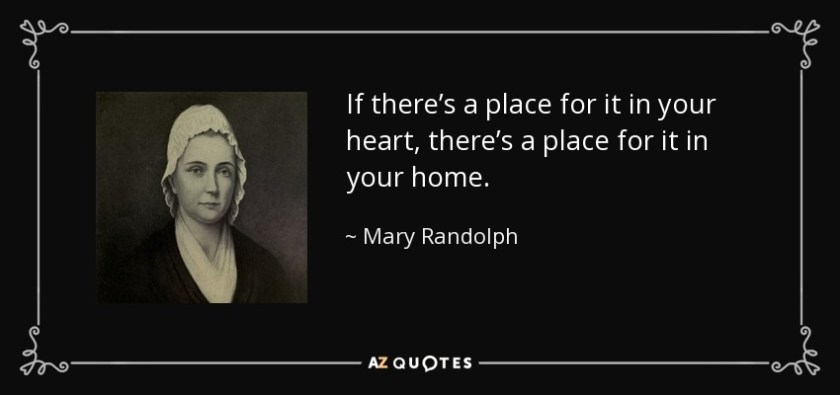


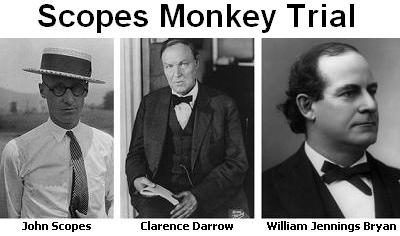 Bryan complained that evolution taught children, that humans were no more than one among 35,000 mammals. He rejected the idea that humans were descended from apes. “Not even from American monkeys, but from old world monkeys”. The ACLU wanted to oppose the Butler Act on grounds that it violated the teacher’s individual rights and academic freedom, but it was Darrow who shaped the case, taking the position that the theistic and the evolutionary views were not mutually exclusive.
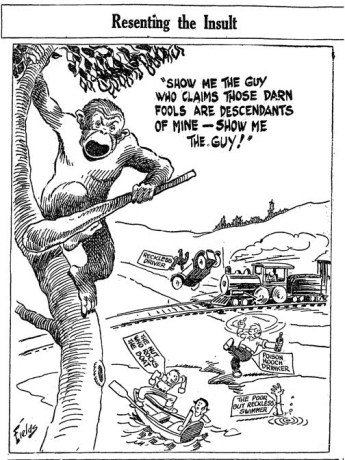 What had begun as a publicity stunt soon became an overwhelming media event. 200 newspaper reporters from all over the country arrived in Dayton, along with two come all the way from London. Twenty-two telegraphers sent out 165,000 words a day over thousands of miles of telegraph wires, hung specifically for the purpose.
 After eight days of trial, the jury took only nine minutes to deliberate, finding Scopes guilty on July 21. The gym teacher was ordered to pay a $100 fine, equivalent to something like $1,300, today. Scopes’ conviction was overturned by the Tennessee Supreme Court, on the basis that state law required fines over $50 to be decided by a jury, and not by the judge presiding.
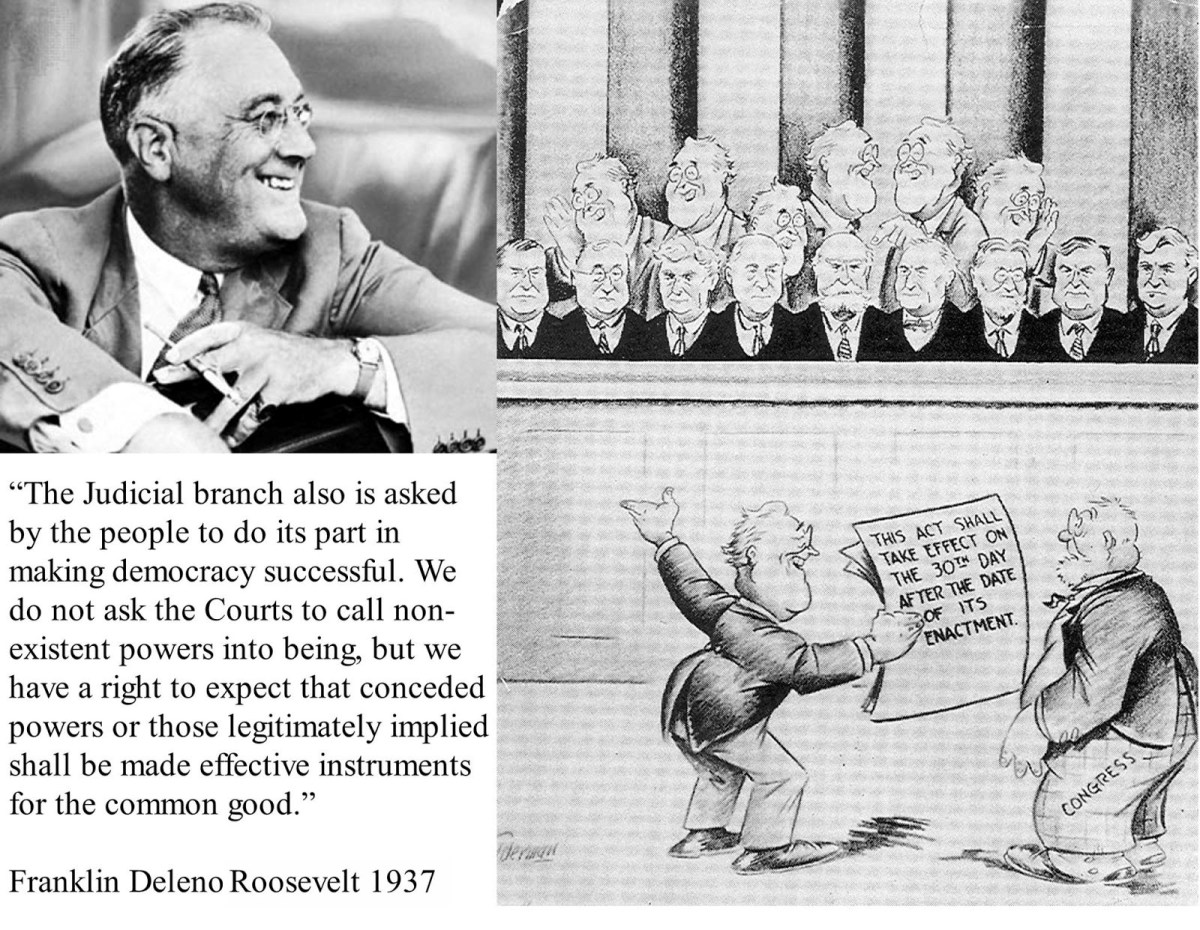
 Article III, Section 1 of the United States Constitution creates the highest court in the land. The relevant clause states that “The judicial power of the United States, shall be vested in one Supreme Court, and in such inferior courts as the Congress may from time to time ordain and establish“. Nowhere does the document specify the number of justices.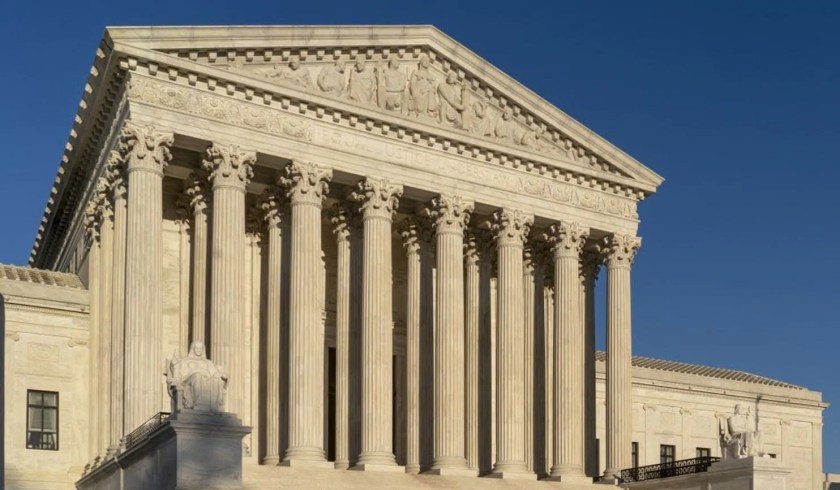


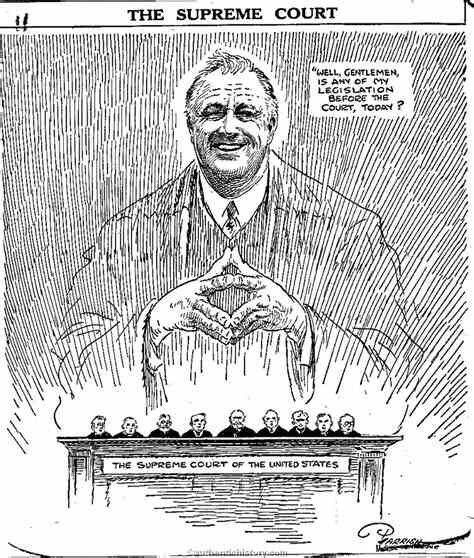
 The full Senate voted on July 22, 1937, to send the bill back to the Senate Judiciary Committee, where provisions for additional justices were stripped from the bill. A modified version passed in August, but Roosevelt’s “Court Packing” scheme was dead.
 Historical Easter Eggs - Today in History
You must be logged in to post a comment.