

From the 7th century BC, the Roman calendar attempted to follow the cycles of the moon. The method often fell out of phase with the change of seasons, requiring the random addition of days. The Pontifices, the Roman body charged with overseeing the calendar, made matters worse. Days were added to extend political terms, and to interfere with elections. Military campaigns were won or lost due to confusion over dates. By the time of Julius Caesar, things needed to change.
When Caesar went to Egypt in 48BC, he was impressed with the way the Egyptians handled the calendar. The Roman statesman hired the Alexandrian astronomer Sosigenes to help straighten things out. The astronomer calculated a proper year to be 365¼ days, more accurately tracking the solar and not the lunar year. “Do like the Egyptians”, he might have said. The new “Julian” calendar went into effect in 46BC. Caesar decreed that 67 days be added that year, moving the New Year’s start from March to January 1.
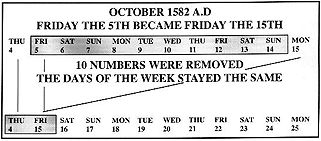
This “Julian” calendar miscalculated the solar year by 11 minutes every year, resulting in a built-in error of 1 day for every 128 years. By the late 16th century, the seasonal equinoxes were ten days out of sync, causing a problem with the holiest days of the Roman church.
In 1579, Pope Gregory XIII commissioned the Jesuit mathematician and astronomer Christopher Clavius, to devise a new calendar to correct this “drift”. The “Gregorian” calendar was adopted on this day in 1582, omitting ten days that October and changing the manner in which “leap” years were calculated.
The Catholic countries of Europe were quick to adopt the Gregorian calendar, Portugal, Spain, pontifical states, but England and her overseas colonies continued to use the Julian calendar. Confusion reigned well into the 18th century. Legal contracts, civic calendars, and the payment of rents and taxes were all complicated by the two calendar system. Military campaigns were won or lost, due to confusion over dates. Sound familiar?
Between 1582 and 1752, many English and colonial records included both the “Old Style” and “New Style” year. The system was known as “double dating” and resulted in date notations such as March 19, 1602/3. Others merely changed dates. Keyword search on “George Washington’s birthday” for instance, and you’ll be informed that the father of our country was born on February 22, 1732. The man was actually born on February 11, 1731 but, no matter. Washington himself recognized the date of his birth to be February 22, 1732, following adoption of the Gregorian Calendar.

Tragically, the exploding heads of historians and genealogists alike are lost, to history..
The “Calendar Act of 1750” set out a two-step process for adoption of the Gregorian calendar. Since the Roman calendar began on March 25, the year 1751 was to have only 282 days so that January 1 could be synchronized with that date. That left 11 days to deal with.
So it was decreed that Wednesday, September 2, 1782, would be followed by Thursday, September 14.
You can read about “calendar riots” around this time, though such stories may be little more than urban myth.
Philip Stanhope, 4th Earl of Chesterfield, was a prime sponsor of the calendar measure. His use of the word “Mobs” was probably a description of the bill’s opponents in Parliament. Even so, some believed their lives were being shortened by those 11 days, while others considered the new calendar to be a “Popish Plot”. The subject was very real campaign issue between Tories and Whigs in the elections of 1754.
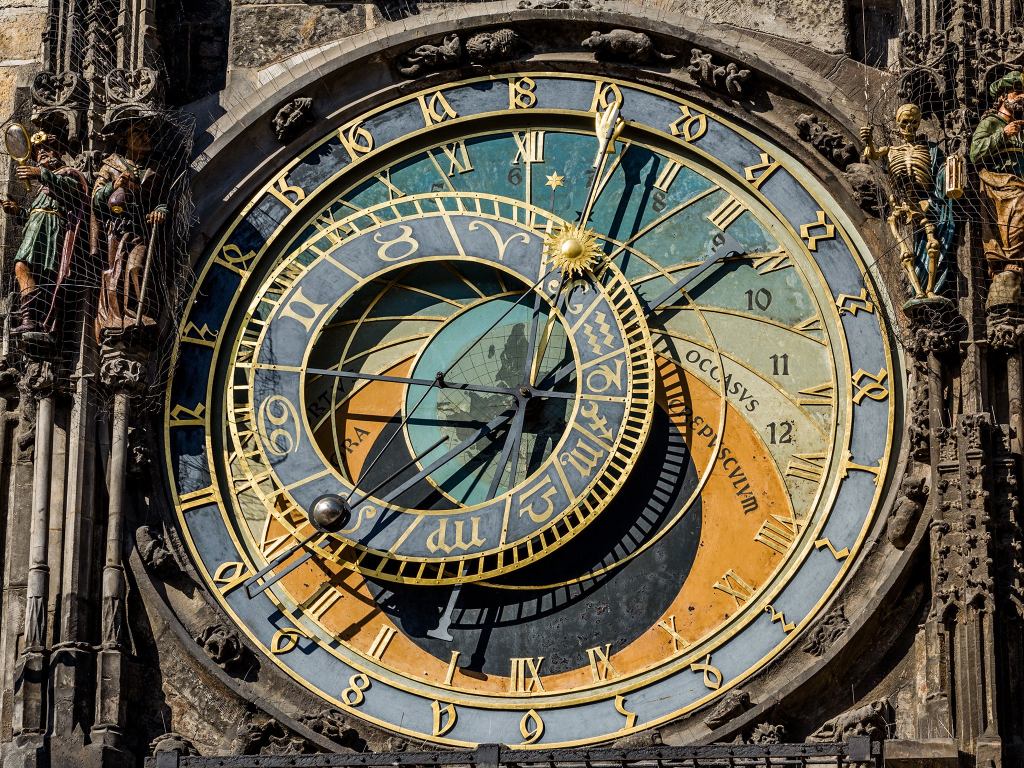
There’s a story of one William Willett, who lived in Endon. Willett bet that he could dance non-stop for 12 days and 12 nights, starting his jig about town the evening of September 2, 1752. He stopped the next morning, and went out to collect his bets.
I am unable to determine how many actually paid up.
Ever mindful of priorities, the British tax year was officially changed in 1753, so as not to “lose” those 11 days of tax revenue. Revolution was still 23 years away in the American colonies, but the reaction “across the pond” could not have been one of unbridled joy.
The last nation to adopt the Gregorian calendar was Turkey, formally doing so in 1927.
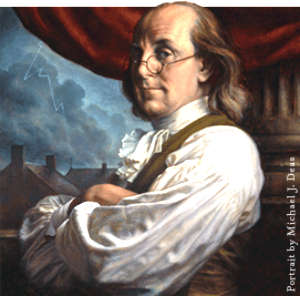
Back in the American colonies, Ben Franklin seems to have liked the idea of those “lost days”. “It is pleasant for an old man to be able to go to bed on September 2″ he wrote, “and not have to get up until September 14.”
Much to the chagrin of Mr. Clavius, the Gregorian calendar still gets out of whack with the solar cycle, by about 26 seconds every year. Clever methods were devised to deal with the discrepancy and several hours have already been added, but we’ll be a full day ahead by the year 4909.
I wonder how Mr. Franklin would feel, to wake up and find that it’s still yesterday.

















 These older bombs were way past their “sell-by” date, having spent the better part of the last ten years in the heat and humidity of Subic Bay depots. Ordnance officers wanted nothing to do with the Fat Boys, with their rusting shells leaking paraffin, and rotted packaging. Some had production date stamps as early as 1953.
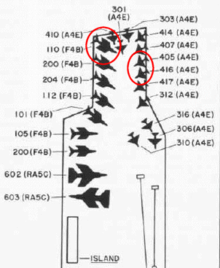 In addition to the bombs, ground attack aircraft were armed with 5″ “Zuni” unguided rockets, carried four at a time in under-wing rocket packs. Known for electrical malfunctions and accidental firing, standard Naval procedure required electrical pigtails to be connected, at the catapult.


 Gary Childs of Paxton Massachusetts, my uncle, was among the hundreds of sailors and marines who fought to bring the fire under control. Gary was below decks when the fire broke out, leaving moments before his quarters were engulfed in flames. Only by that slimmest of margins did any number of sailors aboard the USS Forrestal, escape being #135.


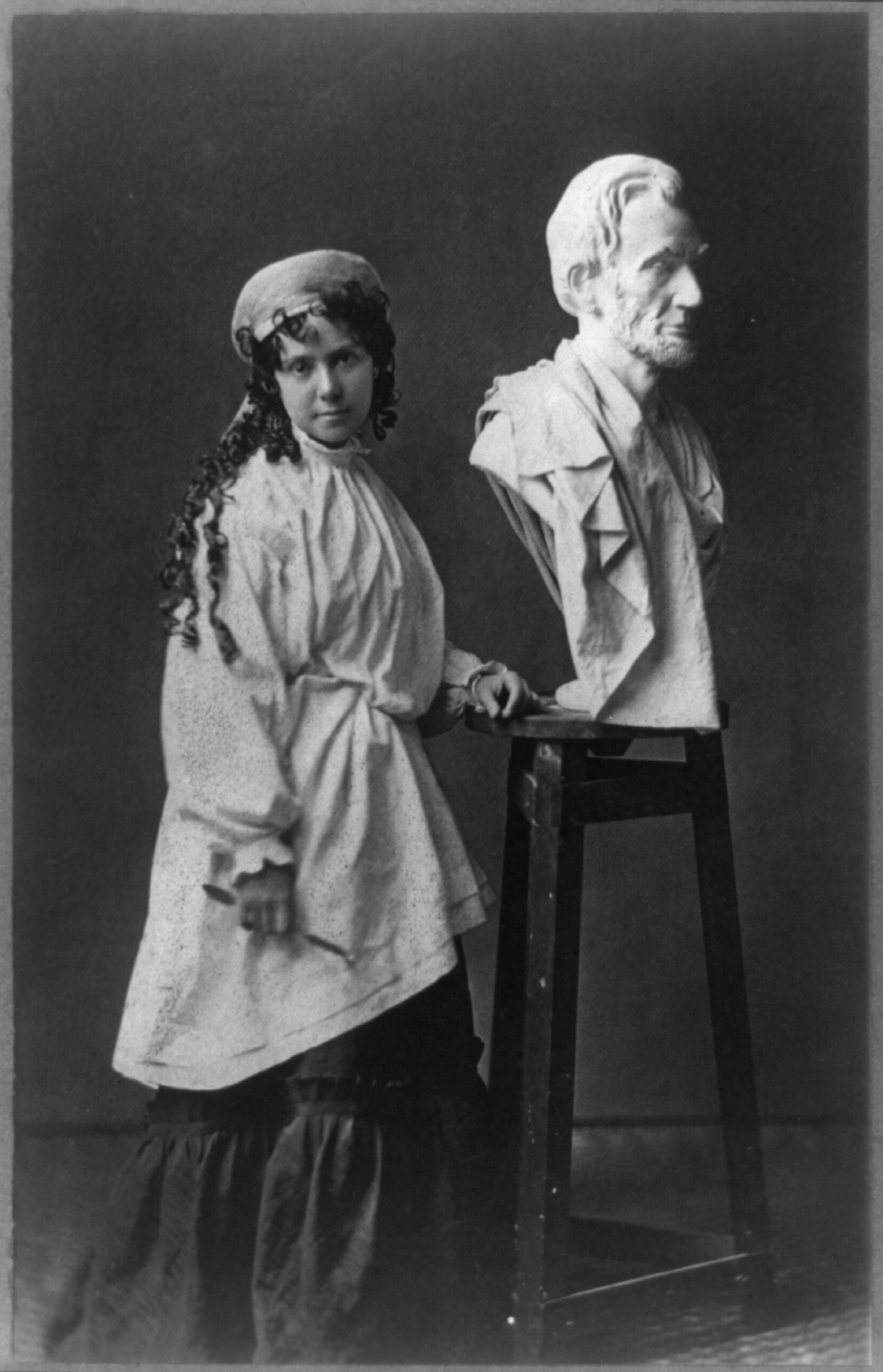
 Then as now, Washington was a “Swamp” and a cesspit for the venal and self-interested. Now grown to an attractive young woman, Vinnie Ream was not without critics. Kansas Senator Edmund Gibson Ross boarded with the Ream family during Johnson’s impeachment trial and cast the one vote absolving the President of “High Crimes and Misdemeanors”.
 One editor had the last word, however, printing Swisshelm’s column under the headline “A Homely Woman’s Opinion of a Pretty One.”




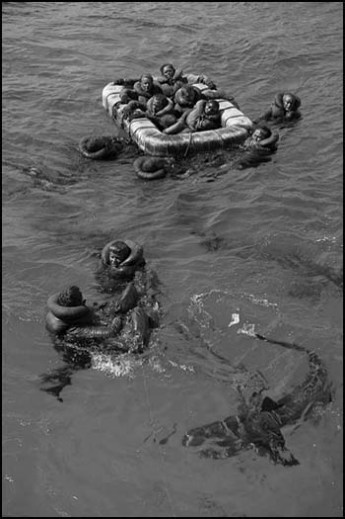






 Boston was a two-team town in 1914, when the American League Red Sox hired 6’2″, 200-pound left handed rookie George Herman “Babe” Ruth from the Baltimore Orioles.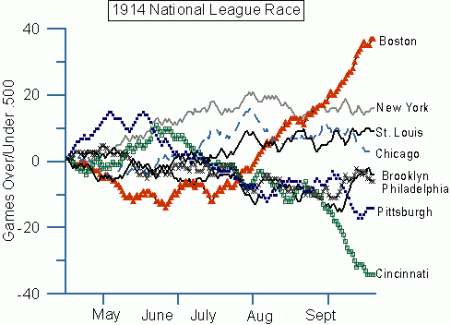
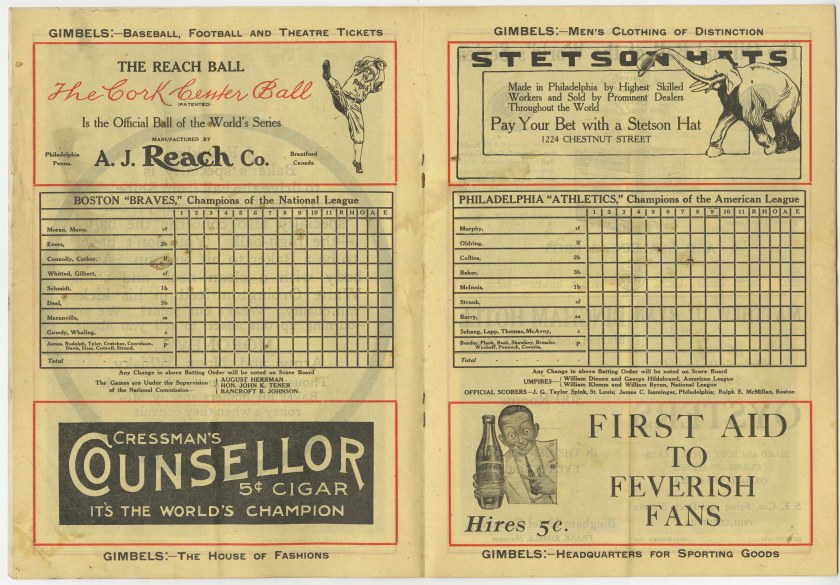
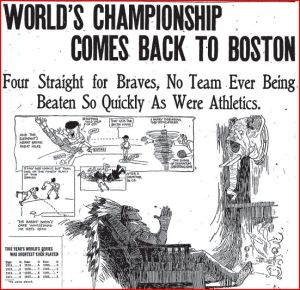
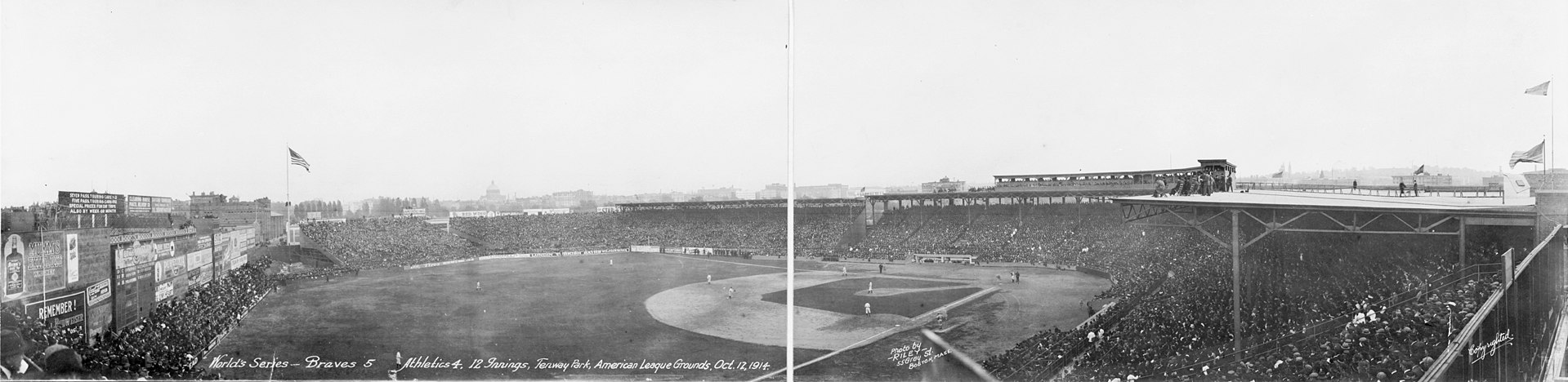
 Today we take team-issued Championship rings for granted, but the practice isn’t believed to have begun until years later. Prior to that and dating well back in the previous century, World Series winners were rewarded with team-issued pins.


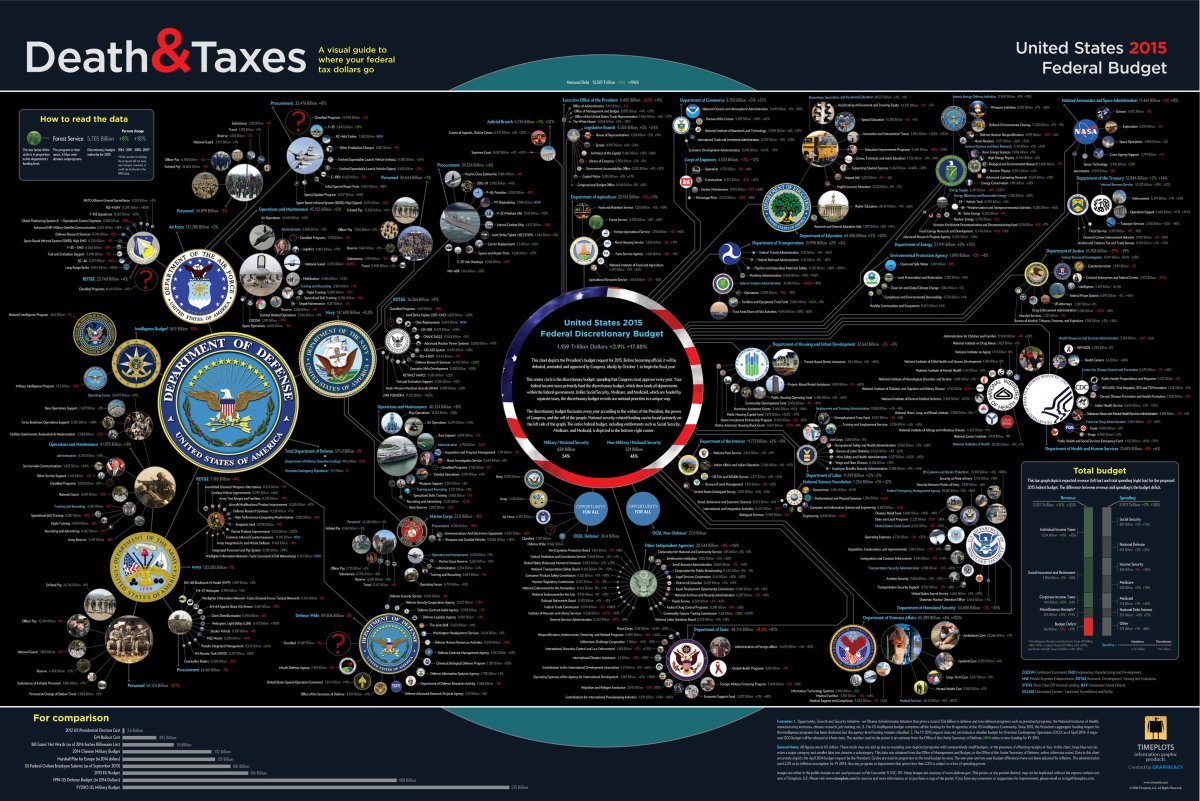
 On December 31, 1695, King William III decreed a 2 shilling tax on each house in the land. Never one to miss an opportunity to “stick-it-to-the-rich”, there was an extra tax on every window over ten, a tax which would last for another 156 years.
 In Holland, they used to tax the frontage of a home, the wider your house the more you paid. If you’ve ever been to Amsterdam, narrow houses rise several stories, with hooks over windows almost as wide as the building itself. These are used to haul furniture up from the outside, since the stairways are too narrow. The narrowest home in Amsterdam can be found at Singel #7, the house itself barely wider than its own front door.
 The Roman Emperor Vespasian who ruled from 69 to 79AD, levied a tax on public toilets. When Vespasian’s son, the future Emperor Titus wrinkled his nose, the old man held a coin under the boy’s nose. “Pecunia non olet”, he said. “Money does not stink”. 2,000 years later, the name remains inseparable from public urinals. In France, the er…pissoir… is called vespasiennes, in Italy vespasiani. If you need to piss in Romania you could go to the vespasiene. History fails to record the inevitable push-back on Vespasian’s toilet tax, but I’m sure that ancient Romans had to look where they walked.
 Environmentalist types in Venice, Italy have been pushing a tax on tourism, claiming the city’s facing “an irreversible environmental catastrophe as the subsequent increase in water transport has caused the level of the lagoon bed to drop over time”. Deputy mayor Sandro Simionato said that “This tax is a new and important opportunity for the city,” explaining that it will “help finance tourism”, among other things. So, the problem borne of too much tourism is going to be fixed by a tax to help finance tourism. I think. Or maybe it’s all just another money grab.
 As of December 2015, state and territory tax rates on cigarettes ranged from 17¢ per pack in Missouri to $4.35 in New York, on top of federal, local, county, municipal and local Boy Scout council taxes (kidding). Philip Morris reports that taxes run 56.6% on average, per pack. Not surprisingly, tax rates make a vast difference in where and how people buy cigarettes. There is a tiny Indian reservation on Long Island, measuring a few miles square and home to a few hundred people. Tax rates are close to zero there, on a pack of butts. Until recent changes in tax law, the tiny reservation was selling 100 million cartons per year.
 Back in 2013, EU politicians were discussing a way of taxing livestock flatulence, as a means of curbing “Global Warming”. At that time there was an Australian ice breaker, making its way to Antarctica to free the Chinese ice breaker that got stuck in the ice trying to free the Russian ship full of environmentalist types. They were all there to view the effects of “Global Warming”, until they got stuck in the ice.


You must be logged in to post a comment.