

Were there a catalog of lies, there may be none more egregious than the false accusation. No matter how he tries, the victim of such a falsehood will never prove a negative.
Wrongful convictions happen for many reasons. Prosecutors hide evidence. Incompetent defense counsel. Mistaken identity and ulterior motives, on the part of witnesses.

Accurate numbers are all but impossible to determine, but we can make an educated guess. A study conducted by Ohio State University surveyed 188 judges, prosecutors, public defenders, sheriffs and police chiefs. The survey found that 75% of respondents believed that more than zero and less than 1 percent of convictions, were unjust. Taking the middle number of .5 percent and a rough estimate of 195,000 convictions per year works out to 9,750 wrongful convictions. Every year. (H/T Housley Law blog for these statistics, which states there have been 1,962 exonerations nationwide, since 1989).
Feel free to make any assumptions you like concerning these numbers but one thing is sure. To assume there are no wrongful convictions is to believe that government does everything right, all of the time.
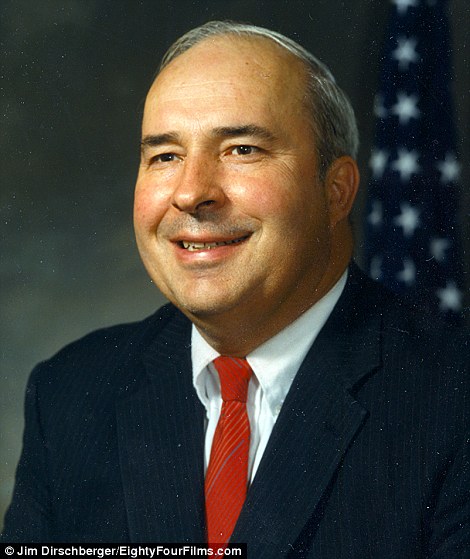
Graduating from Allegheny College in 1961, Robert Budd Dwyer set his sights on elective office. The future looked bright.
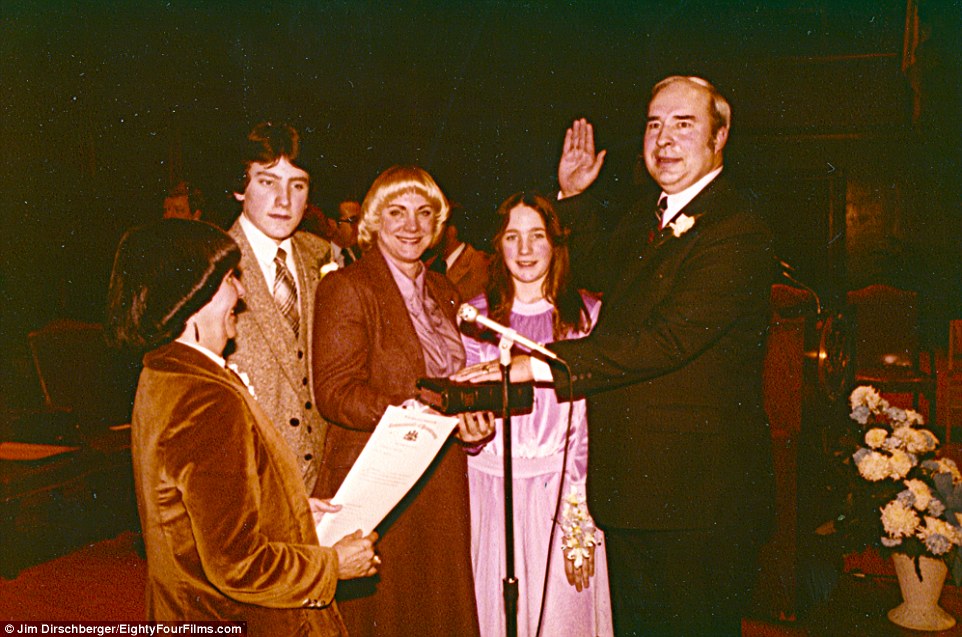
First elected State Rep in 1964, the Pennsylvania Republican ran successfully for state Senate in 1970 and then for state-wide office, elected Treasurer, in 1980.
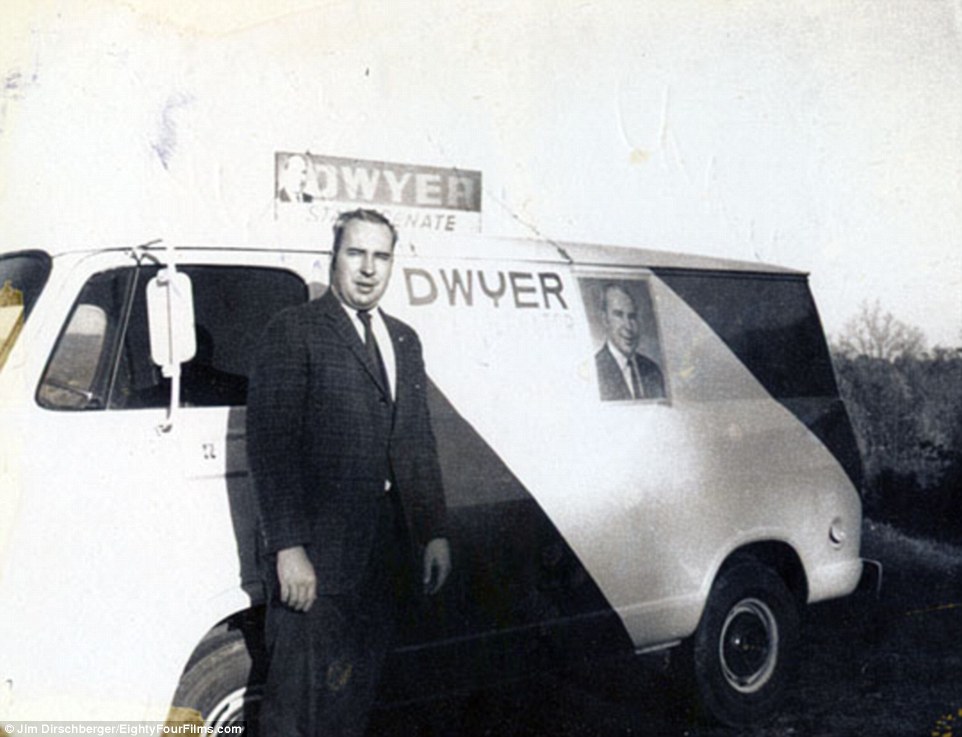
In 1986, Pennsylvania officials discovered that state employees had overpaid millions in FICA taxes, due to errors in state withholding. Several accounting firms bid for the contract to determine, how much compensation was due each employee. The contract was awarded to California based Computer Technology Associates (CTA), owned by Harrisburg native, John Torquato Jr.
Governor Dick Thornburg received an anonymous memo a few weeks later, alleging bribery in the award of the CTA contract. R. Budd Dwyer was named as one of the people receiving kickbacks in the deal along with Republican committee member Bob Asher, and CTA attorney William ‘Bill’ Smith.
Anonymous accusations are such a cowardly tactic.
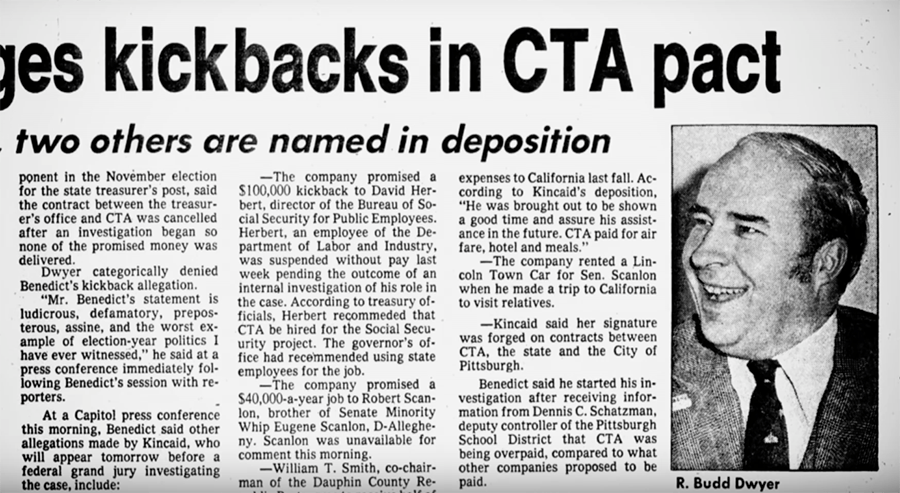
No money ever changed hands. The CTA contract was canceled two months after it was signed. Even so, prosecutors pushed the case for everything it was worth.
Most criminal cases end in plea deals, and not in trials. Smith pleaded guilty to offering Dwyer and Asher $300,000 in bribes and received a reduced sentence. Torquato also pleaded guilty and received a sentence, of 4 years. Adamantly proclaiming his innocence, Budd Dwyer refused a plea deal: a guilty plea on one count and a sentence, of five years. Dwyer was adamant, and demanded a trial. “I absolutely did nothing wrong”.
On December 18, 1986, Budd Dwyer was found guilty. Conspiracy, mail fraud, perjury and interstate transportation in aid of racketeering. Eleven counts.
Judge Malcolm Muir hinted at a sentence, of 55 years. Many believe the man wanted to make an example, of Budd Dwyer. Sentencing was scheduled for January 23, 1987.
On December 15, 1987, Dwyer held a meeting at his home with press secretary James Horshock, and Deputy Treasurer Don Johnson. With a week to go before sentencing, Dwyer wanted to make a statement, to the press.
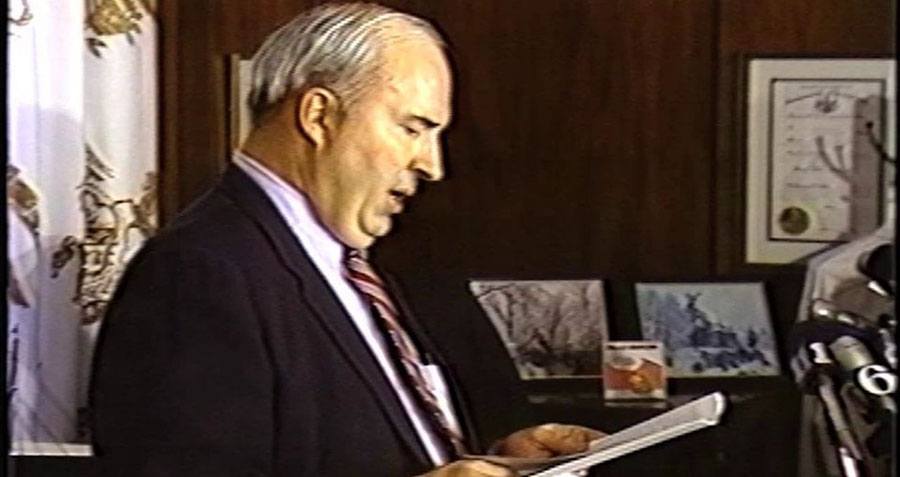
The meeting was scheduled for January 22, the day before sentencing.
In a rambling speech before the press, R. Budd Dwyer proclaimed his innocence. He said how much he’d enjoyed his life with his wife Joanne and the couple’s kids, Rob and Dyan. He reflected on what a bright future it could have been.
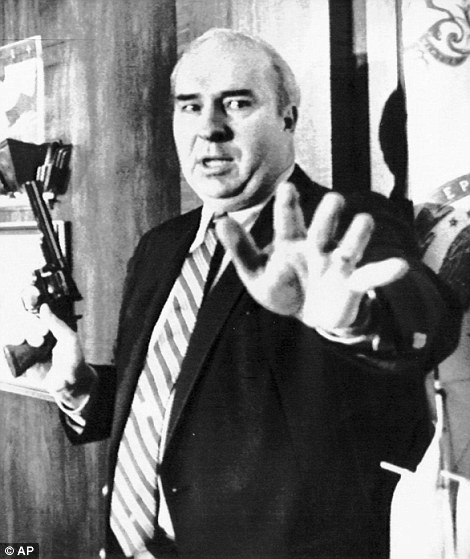
“I am going to die in office” he said, “in an effort to ‘…see if the shame[-ful] facts, spread out in all their shame, will not burn through our civic shamelessness and set fire to American pride.’ Please tell my story on every radio and television station and in every newspaper and magazine in the U.S.
Please leave immediately if you have a weak stomach or mind since I don’t want to cause physical or mental distress.
Joanne, Rob, DeeDee [sic] – I love you! Thank you for making my life so happy. Goodbye to you all on the count of 3. Please make sure that the sacrifice of my life is not in vain.”
Pandemonium broke out as R. Budd Dwyer took out a briefcase, and a .357 magnum pistol. He put the gun in his mouth and blew his brains out.
You can find the video online if you want, it was all on camera. I’m not going to show it.
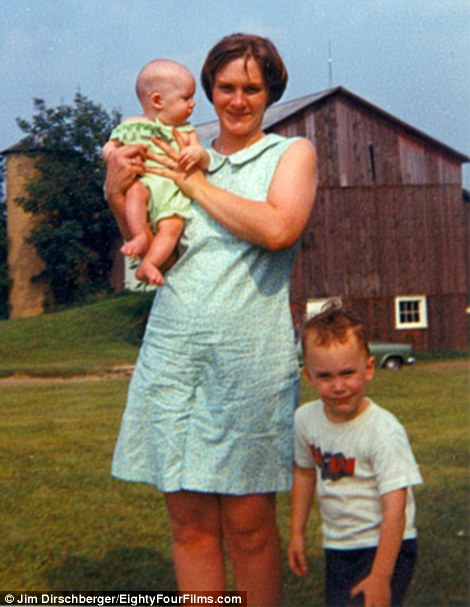
Joanne never for a moment doubted her husband’s innocence but she never forgave herself for failing to notice, how the man was struggling. She took heavily to drink, perhaps to self-medicate and died in 2009, an alcoholic.
Former chair of the Dauphin County Republican Committee Bill Smith has made contradictory statements under oath and expressed regret for lying, and the role it played in Dwyer’s death.
Subsequent court proceedings never did overturn Dwyer’s conviction, but the Treasurer was able to provide for his family. Having died in office, Dwyer’s widow Jo received full survivor’s benefits of $1.28 million.
Dyan “DeeDee”, now a married mother of two, has lived a private life. Rob, now a realtor in Arizona, has been quite public about his own difficulties, in dealing with his father’s suicide. ‘I’d tell anyone thinking about suicide’ he said, ‘that the scars and the emotional toll that it leaves on those left behind, is immense.‘




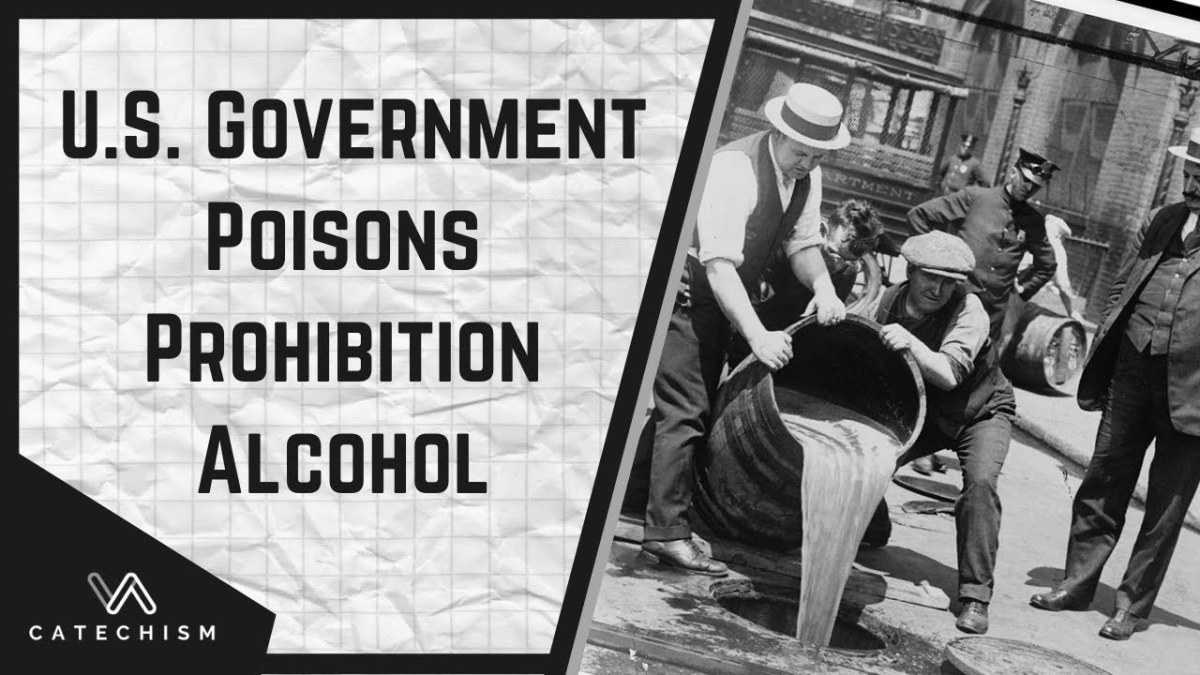
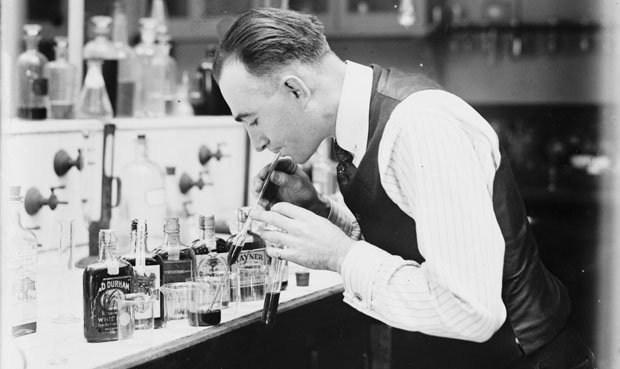
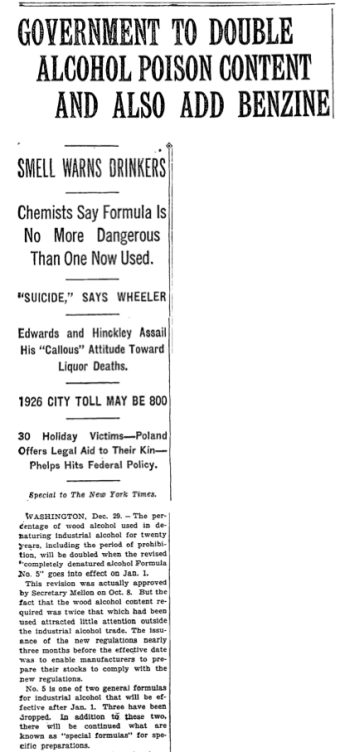
 “Industrial alcohol” such as solvents, polishes and fuels were “denatured” and rendered distasteful by the addition of dyes and chemicals. The problem was, it wasn’t long before bootleggers figured out how to “renature” the stuff.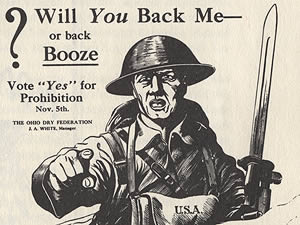



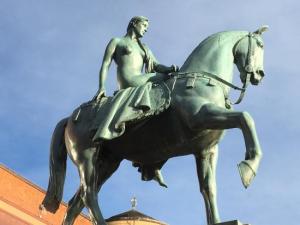

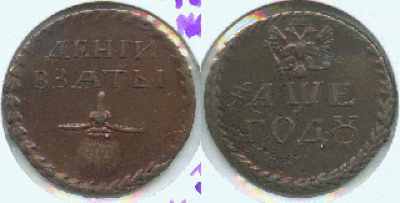







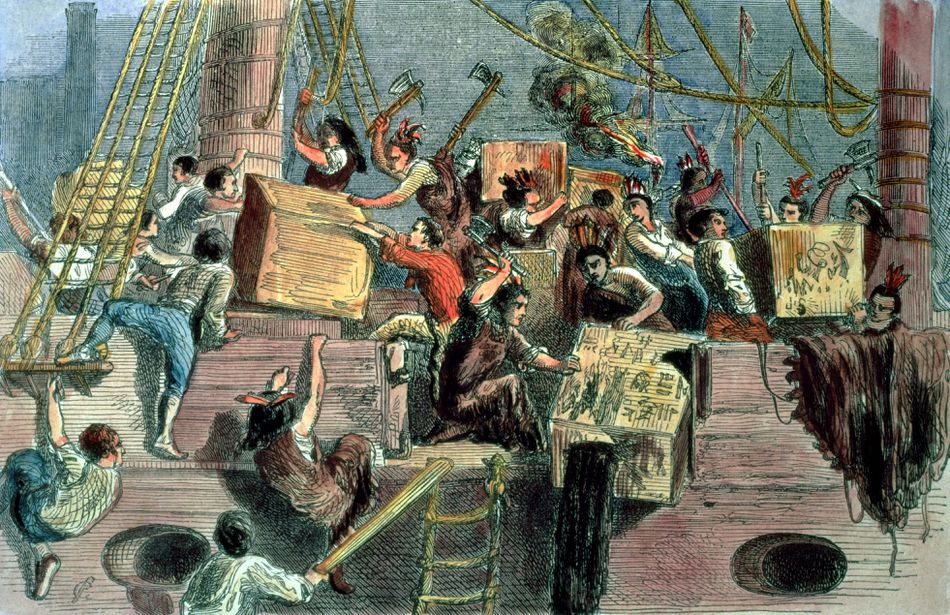




 Even at the Constitutional Convention, delegates expressed concerns about the larger, more populous states holding sway at the expense of the smaller states. The “Connecticut Compromise” solved that problem, creating a bicameral legislature with proportional representation in the lower house (House of Representatives) and equal representation of the states themselves in the upper house (Senate).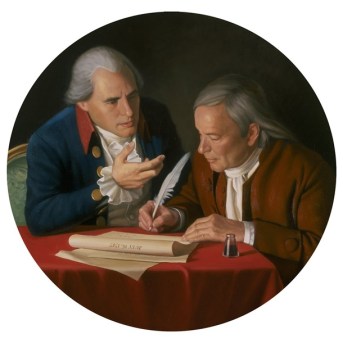







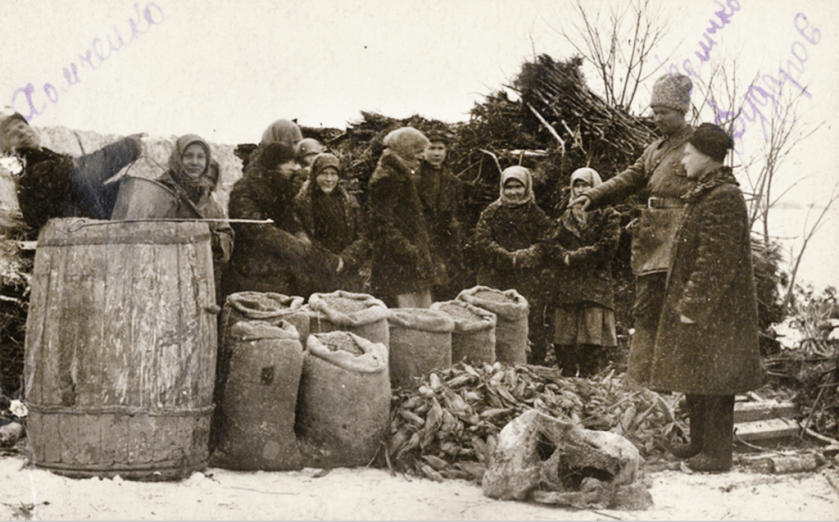 Armed “dekulakization brigades” confiscated land, livestock and other property by force, evicting entire families. Nearly half a million individuals were dragged from their homes in 1930-’31 alone, packed into freight trains and shipped off to remote areas like Siberia and often left without food or shelter. Many of them, especially children, died in transit or soon after arrival.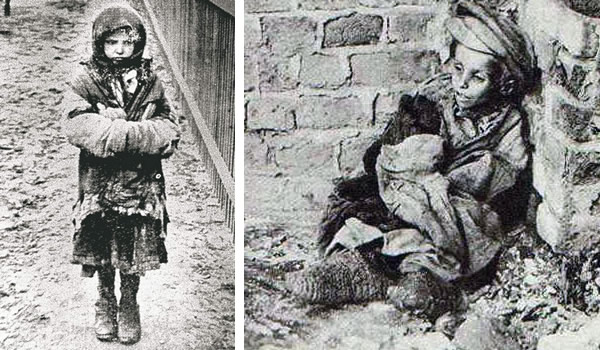
 At the height of the famine, Ukrainians starved to death at a rate of 22,000 per day, almost a third of those, children 10 and under. How many died in total, is anyone’s guess. Estimates range from two million Ukrainian citizens murdered by their own government, to well over ten million.
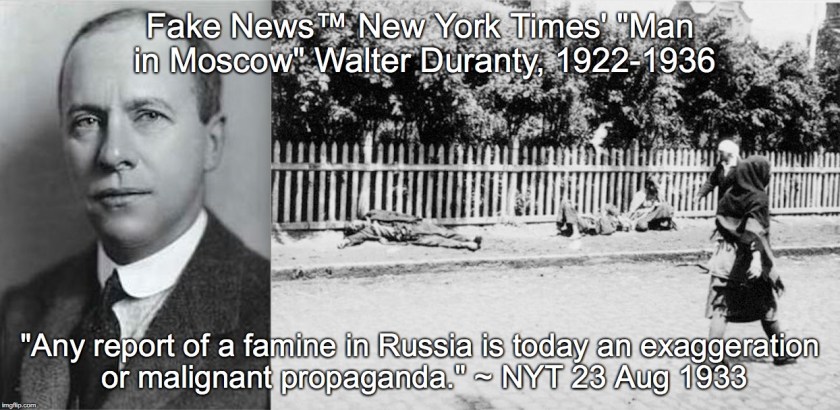 To this day, the New York Times has failed to repudiate Walter Duranty’s Pulitzer.
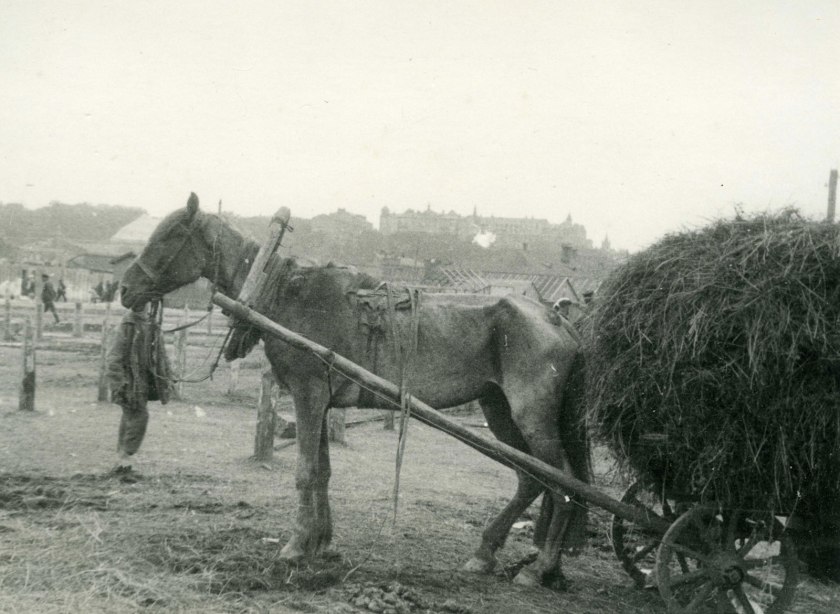 To do so at all was an act of courage. single Jewish woman who’d lost part of a leg in a childhood streetcar accident, traveling to a place where the Russian empire and its successor state had a long and wretched history. Particularly when it came to the treatment of its own Jews.
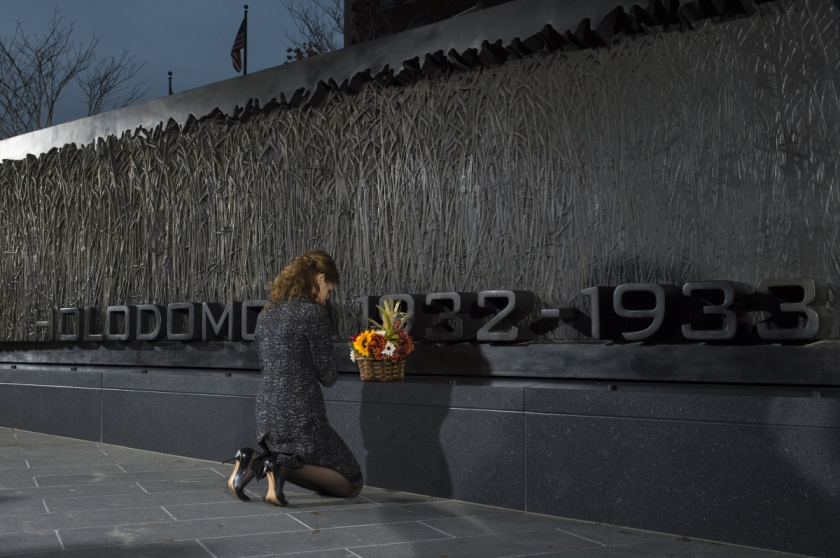 The Holodomor Memorial to Victims of the Ukrainian Famine-Genocide of 1932–1933 was opened in Washington, D.C. on November 7, 2015





 Historical Easter Eggs - Today in History
You must be logged in to post a comment.