
In 1914, Austria-Hungary was a kaleidoscope of fifteen distinct ethnic groups speaking at least that many languages. Ostensibly a constitutional union between the Empire of Austria and the Kingdom of Hungary, the dual monarchy was in fact divided, sometimes sharply, along no fewer than six religious lines.
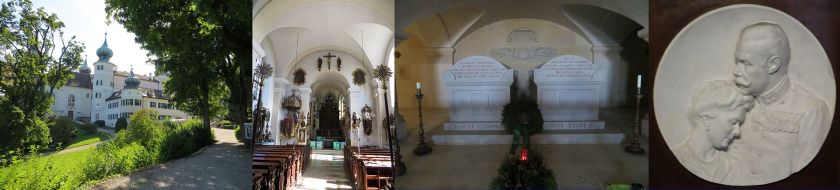
Since the 1889 suicide of his cousin Crown Prince Rudolf, the only son of Emperor Franz Josef, Franz Ferdinand, was the Heir Presumptive to the Austro-Hungarian throne.
Sophie Maria Josephine Albina Chotek von Chotkow und Wognin was a minor noble in the Kingdom of Bohemia, a small figure in a constellation of 19th century European royalty. It’s uncertain when Sophie and Franz first met and fell in love, but their relationship caused a royal scandal. The future Queen of the Habsburg Dynasty was expected to hold suitable rank. Only a Princess of one of Europe’s dynastic families would do, certainly no Bohemian Countess.


Ferdinand wrangled with the Royal Court in Vienna for a year before the couple was permitted to marry, but only under hard and humiliating conditions. Theirs was a “morganatic” marriage. A marriage of unequals.
Three days before the wedding, June 28, 1900, Franz was forced to sign and publicly declare Sophie to be his morganatic wife, never to bear the titles of Empress, Queen or Archduchess. Any children produced by the marriage would neither inherit nor be granted dynastic rights or privileges of any kind. The Imperial family didn’t even show up at the wedding.
In a world where rank was everything, Sophie was never permitted to appear beside her husband in public. She was humiliated at every court function, relegated to last place and made to stand in line behind every Archduchess, Princess and Countess from Vienna to Budapest.
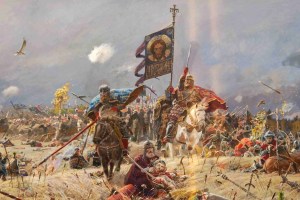 June 28 was significant for another reason. The invading army of Ottoman Sultan Murad I was wiped out on this date in the 1389 Battle of Kosovo, (June 15, ‘old style’), the “Field of Blackbirds”. It was a Pyrrhic victory, as the Balkan defenders were virtually wiped out as well. The Ottomans being far more numerous, the Balkan states soon became vassals of the Ottoman Turks.
The Encyclopedia Britannica describes “Balkanization” as “fragmentation of ethnic groups”. The Balkans form a geographic and political region, including 13 southeastern European nations from Slovenia to Greece. Located at the crossroads of east and west, the region has been subjugated and re-subjugated since the 6th century BC conquests of Persian King Darius the Great. The Balkan wars of 1912-1913 wrested some (but not all) of the area back from Ottoman control, as a newly enlarged Serbia pushed for greater independence and alliance among south Slavic peoples.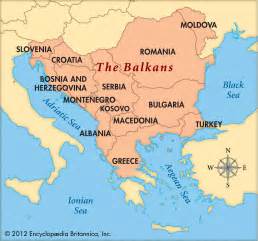
Years earlier, German Chancellor Otto von Bismarck had said the next European war would be started by “Some damn fool thing in the Balkans”. Bismarck got his damn fool thing on June 28, 1914, when future Emperor Franz Ferdinand came to Sarajevo, the capital of the Balkan province of Bosnia-Herzegovina.
Morganatic marriage was unknown in Hungarian law and custom. This trip was a rare opportunity for the couple to openly travel together. A “place in the sun” for Ferdinand’s wife, Sophie.
Ironically, Franz Ferdinand favored a more federalized model for the Empire, with greater autonomy for all its provinces. That wasn’t enough for the radical Serbian nationalists of the “Black Hand”, who inserted seven assassins along the route which the Archduke was scheduled to travel.
They were a carpenter, a printer, a teacher and four students. The oldest was 27. All suffered from tuberculosis, all armed with revolvers, crude bombs, or both, and a cyanide capsule with which to commit suicide if captured.
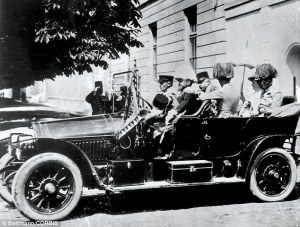 The six car motorcade drove by the first assassin, Muhamed Mehmedbašić, a little after 10am. He froze, allowing the cars to pass unmolested.
Riding along the Appel Quay, the motorcade passed the second assassin, Nedeljko Čabrinović, who threw his bomb at the open car. The driver sped away as the bomb went off under the wheel of the fourth car, wounding two occupants and a dozen spectators. Meanwhile, Čabrinović popped his cyanide pill and jumped into the Miljacka River, expecting to die. The cyanide just made him retch and the river was but a few inches deep, so the would-be assassin was soon in police custody.
The motorcade sped on to a planned reception at City Hall, passing three more assassins, Vasco Cubrilovic, Danilo Ilic and Cvijetko Popovic, none of whom did anything. There followed a sort of dark comedy, when Ferdinand jumped out of the car, incandescent with rage. Addressing Fehim Effendi Curcic, the mayor of Sarajevo, Ferdinand shouted “One comes here to visit and is received with bombs. Mr. Mayor, what do you say? It’s outrageous!” Unaware of what had happened, Mayor Curcic began to read his prepared remarks: “Our hearts are filled with happiness…”
Ferdinand later insisted on visiting the wounded at hospital, though he begged Sophie to stay behind. She wouldn’t have it. The Military Governor of the province, Oskar Potiorek, assured them of safe passage. Sophie would remain by her husband’s side.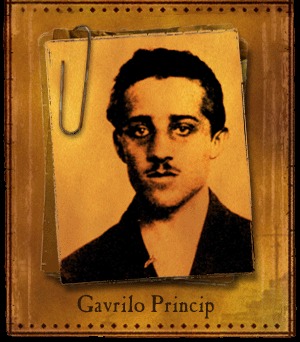
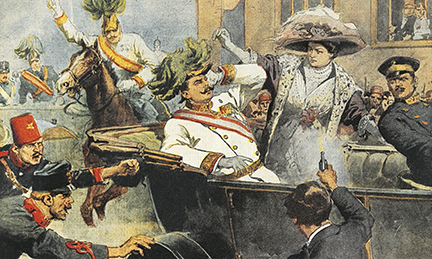
Soon they were off, speeding by the sixth assassin, Trifko Grabez, before he could react. Taking a wrong turn onto Franz Josef Strasse, the chauffeur realized his error and came to a stop before turning around. They were 8’ from the seventh and last assassin, Gavrilo Princip. Princip was in point blank range in two steps, firing once into Sophie’s side and once into the neck of the Archduke.
Archduke Franz Ferdinand’s jugular had been severed by the bullet. “For heaven’s sake, what’s happened to you?” she cried, before slipping to the floor of the car. “Sophie dear, Sophie dear, don’t die. Stay alive for our children.” Asked if he was alright, Franz Ferdinand was already fading away. “Es ist nichts; Es ist nichts…” (It is nothing; it is nothing…). By 11:30, both were dead.
The mad act of a tubercular 19-year led to a series of diplomatic missteps and military mobilizations and counter-mobilizations called the “July Crisis of 1914″, culminating in the “War to End all Wars” that August. There is virtually no part of 20th century history, that would ever be the same.



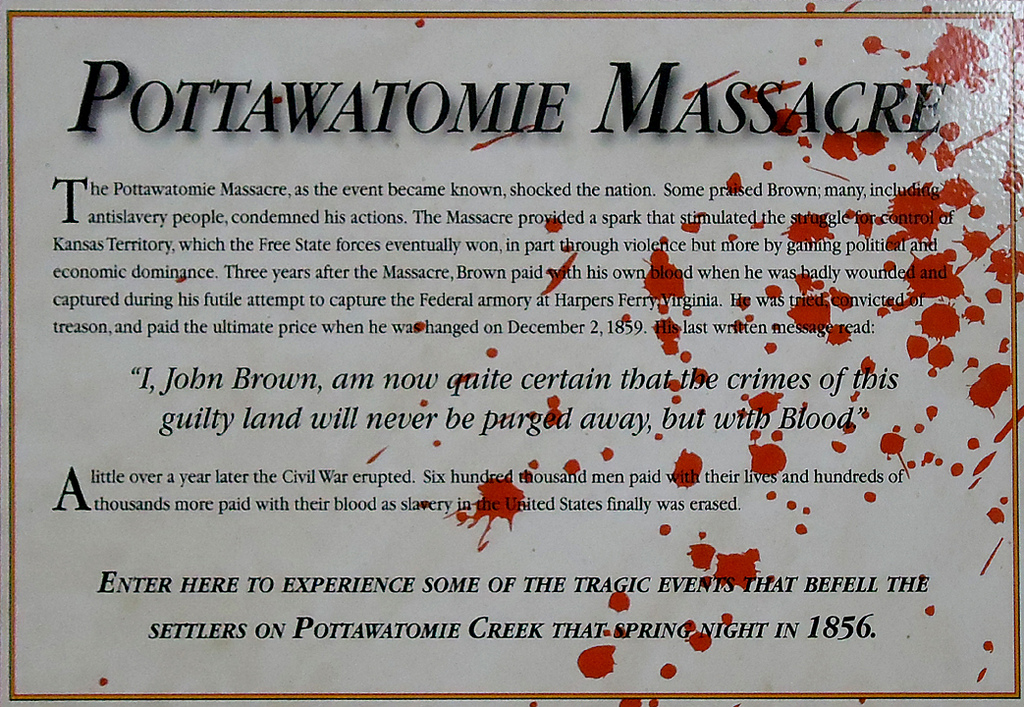
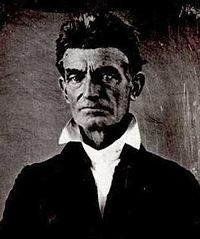
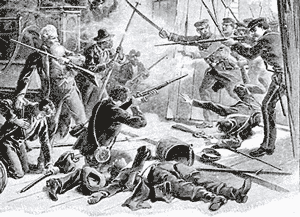 Brown would go on to participate in the Battle of Black Jack and the Battle of Osawatomie in the Kansas Territory. He would be hanged in 1859 after leading a group to the armory in Harper’s Ferry Virginia, in a hare brained scheme to capture the weapons it contained and trigger a slave revolt. The raid was ended by a US Army force under Colonel Robert E. Lee, and a young Army lieutenant named James Ewell Brown (JEB) Stuart.

 Hess was an early and ardent proponent of Nazi ideology. A True Believer. He was at Hitler’s side during the failed revolution of 1923, the “Beer Hall Putsch”. He served time with Hitler in prison, and helped him write his political opus “Mein Kampf” (My Struggle). Hess was appointed to Hitler’s cabinet when the National Socialist German Workers’ Party seized power in 1933, becoming Deputy Führer, #3 after Hermann Göring and Hitler himself. Hess signed many statutes into law, including the Nuremberg Laws of 1935, depriving the Jews of Germany of their rights and property.


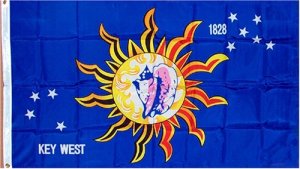


 One minute after declaring his “verbal shot” at the feds, Wardlow “surrendered” to a nearby naval officer, demanding a billion dollars in “foreign aid” in compensation for “the long federal siege.”

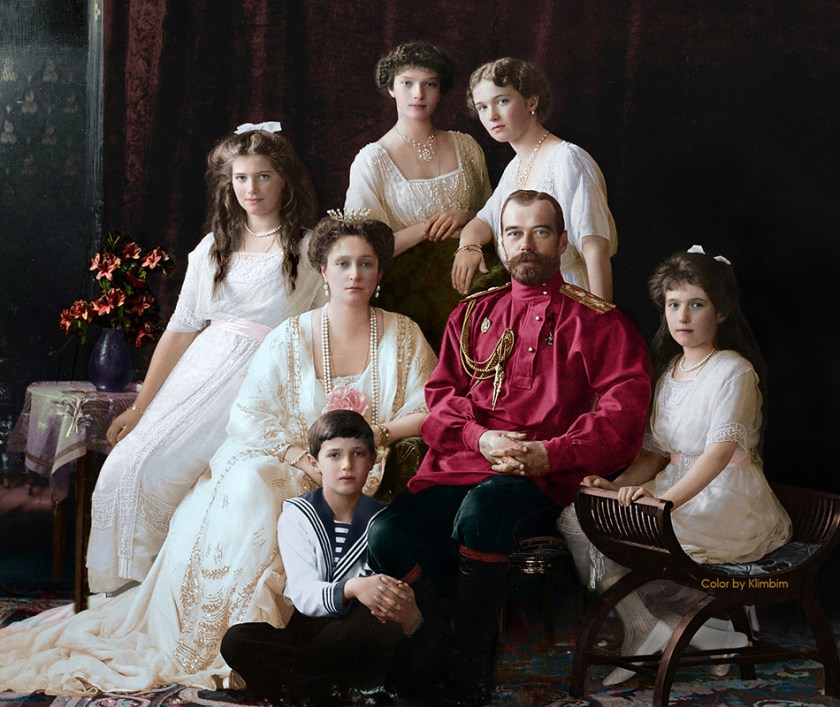
 By 1916 it was generally understood in Germany, that the war effort was “shackled to a corpse”, referring to Germany’s Austro-Hungarian ally. Italy, the third member of the “Triple Alliance”, was little better. On the Triple Entente side, the French countryside was literally torn to pieces, the English economy close to breaking. The Russian Empire, the largest nation on the planet, was on the edge of the precipice.
 the more extreme road. While Reds and Whites both wanted to bring socialism to the Russian people, the Mensheviks argued for predominantly legal methods and trade union work, while Bolsheviks favored armed violence.

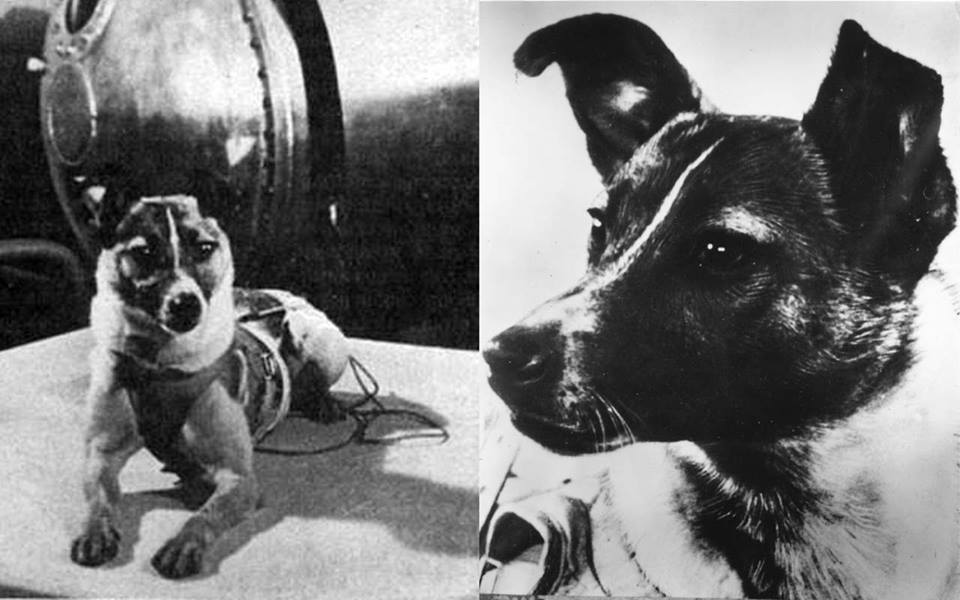

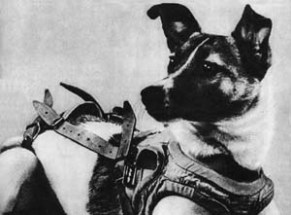
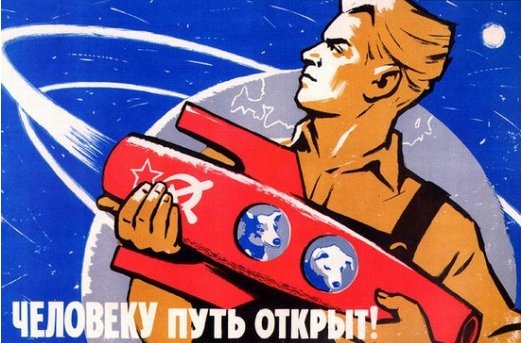
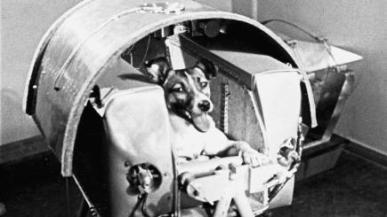 allowed her to stand, sit and lie down. Finally, it was November 3, 1957. Launch day. One of the technicians “kissed her nose and wished her bon voyage, knowing that she would not survive the flight”.
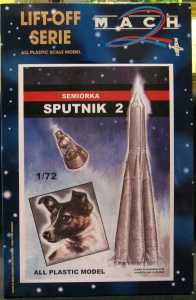 In the beginning, the US News media focused on the politics of the launch. It was all about the “Space Race”, and the Soviet Union running up the score. First had been the unoccupied Sputnik 1, now Sputnik 2 had put the first living creature into space. The more smartass specimens among the American media, called the launch “Muttnik”.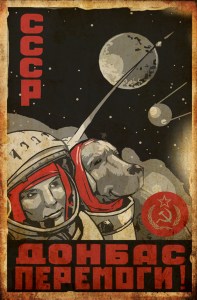
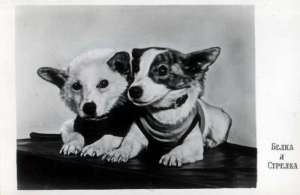 As a dog lover, I feel the need to add a more upbeat postscript, to this thoroughly depressing story.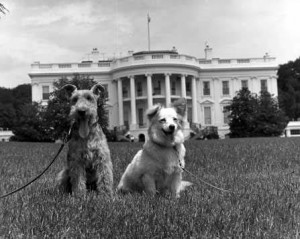



 The Stuart King James had judges riding into the countryside once a year to hear cases, saving many of his subjects the arduous journey to London. The custom carried “across the pond” and, from the earliest days of the American colonies, judges could be found “riding the circuit”.
 In 1937, President Franklin Delano Roosevelt sought to increase the number of justices to 15. Then as now, the court was sharply divided along ideological lines, consisting of a four member conservative majority called the “four horsemen”, three liberals dubbed the “three musketeers” and two “swing votes”.
 There have been fewer justices in Supreme Court history than you might think. The recent passing of Antonin Scalia made way for only number 113.
 “There are some who believe that the president, having won the election, should have complete authority to appoint his nominee, that once you get beyond intellect and personal character, there should be no further question as to whether the judge should be confirmed. I disagree with this view”. The filibuster was joined by Senators Kennedy, Leahy, Durbin, Salazar, and Baucus.
 Senator Schumer once said, “We have three branches of government. We have a house, we have a senate, we have a president.” He got that wrong, but he was part right. We have three co-equal branches in our government, each having specific responsibilities as laid out in the Constitution.
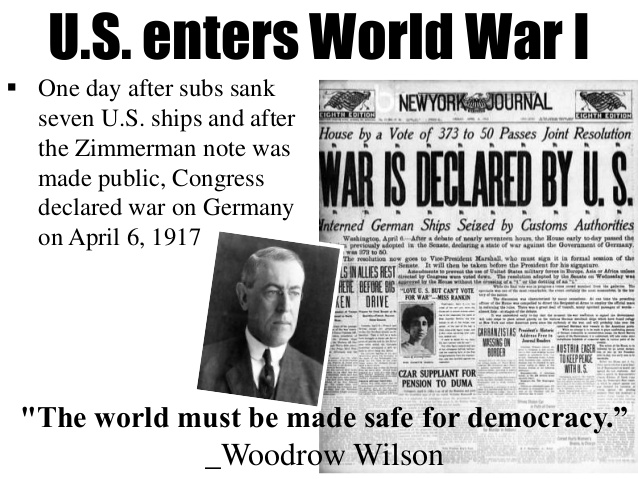
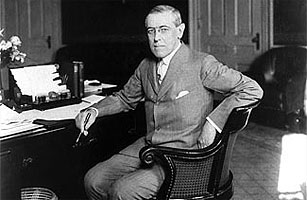 In the early days of WWI, Imperial Germany attempted to comply with standards of maritime warfare, as established by the Hague Conventions of 1899 and 1907.
 The “Zimmermann Telegram” was intercepted and decoded by British intelligence and revealed to the American government on February 24. The contents of the message outraged American public opinion and helped generate support for the United States’ declaration of war.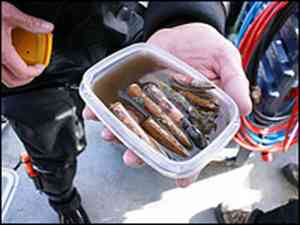

 Historical Easter Eggs - Today in History
You must be logged in to post a comment.