April 1, 1698 Washing the Lions

Pandemonium broke out when hundreds showed up, only to realize they’d been pranked.

Festival of FoolsApril Fools.  The ancient Roman festival of Hilaria, held on March 25, may be a precursor.  The Medieval Feast of Fools, held December 28, is still a day on which pranks are played in Spanish-speaking countries.

In one translation of Chaucer’s Canterbury Tales, “March 32” of 1392 is the day the vain cock Chauntecleer was tricked by a fox. The fox appealed to the rooster’s vanity by insisting he would love to hear Chauntecleer crow, just as his amazing father did.  Standing on tiptoe with neck outstretched and eyes closed. The rooster obliged, with unfortunate, if not unpredictable results.

In 1582, France switched from the Julian calendar to the Gregorian moving New Year to January 1 as specified by the Council of Trent of 1563. Those who didn’t get the news and continued to celebrate New Year in late March/April 1, quickly became the butt of jokes and hoaxes. Paper fish were placed on their backs, as these “poisson d’avril” (April fish) were said to symbolize the young, naive, easily caught fish of Spring.poisson-davril

The Flemish children of Belgium lock their parents or teachers out, letting them in only if they promise to bring treats that evening or the next day.

In 1539, Flemish poet Eduard de Dene wrote of a nobleman who sent his servants on fool’s errands on April 1.

In Scotland, April Fools’ Day is traditionally called Hunt-the-Gowk Day. Although it’s fallen into disuse, a “gowk” is a cuckoo or a foolish person. The prank consists of asking someone to deliver a sealed message requesting some sort of help. The message reads “Dinna laugh, dinna smile. Hunt the gowk another mile”. On reading the message, the recipient will explain that to help, he’ll first need to contact another person, sending the victim to another person with the same message.

In Poland, “Prima Aprilis” is so strong that the anti-Turkish alliance with Leopold I, signed on April 1, 1683, was backdated to March 31.
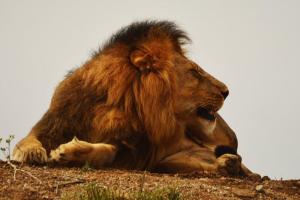
LeoAnimals were kept at the Tower of London since the 13th century, when Emperor Frederic II sent three leopards to King Henry III. In later years, elephants, lions, even a polar bear were added to the collection, the polar bear trained to catch fish in the Thames.

In 1686, John Aubrey referred to the holiday as “Fooles holy day”, the first British reference.

On April 1, 1698, citizens were invited to the Tower of London to see the “Washing of the Lions” in the tower moat. Quite a few were sucked in.  The April 2 edition of Dawks’ News-Letter reported that “Yesterday being the first of April, several persons were sent to the Tower Ditch to see the Lions washed.” The “annual ceremony of washing the lions,” lasted throughout the 18th & 19th centuries, always held on April 1st.

tower-of-london
Tower of London

The prank became quite elaborate by the mid-nineteenth century. Tickets were printed and distributed for the event, specifying that attendees be “Admitted only at the White Gate”, and that “It is requested that no Gratuities will be given to the Wardens on any account.”

In his “Reminiscences of an Old Bohemian”, Gustave Strauss laments his complicity in the hoax in 1848. “These wretched conspirators”, as Straus called his accomplices, “had a great number of order-cards printed, admitting “bearer and friends” to the White Tower, on the 1st day of April, to witness…the famous grand annual ceremony of washing the lions”. Pandemonium broke out when hundreds showed up, only to realize they’d been pranked. “In the midst of the turmoil” Strauss wrote, “some one spotted me to whom I had given an order of admission, and he would have set the whole mob upon me. Knowing of old that discretion is, as a rule, the better part of valour…I had to skedaddle, and keep dark for a time, until the affair had blown over a little”.

spagtreeIn 1957, (you can guess the date), the BBC reported the delightful news that mild winter weather had virtually eradicated the dread spaghetti weevil of Switzerland, and that Swiss farmers were now happily anticipating a bumper crop of spaghetti.  Footage showed smiling Swiss peasants, pulling strands of spaghetti down from trees.  Apparently, an embarrassingly large number of viewers were fooled.  Many called BBC offices, asking how to grow their own spaghetti tree. “Place a piece of spaghetti in a tin of tomato sauce”, callers were told, “and hope for the best.”

The Warby Parker Company website describes a company mission of “offer[ing] designerWarby Barker eyewear at a revolutionary price, while leading the way for socially conscious businesses”.  On April 1, 2012, the company released its new line of eyeglasses for dogs, appropriately called “Warby Barker”.  For only $95, your hipster pooch could be sporting the latest styles in canine eyeware, in irresistible dog treat shades like “Gravy Burst” and “Dusty Bacon.”  There was a monocle option too, for those partial to that Prussian Field Marshall look.  Anyone falling for the gag, got an “April Fools!” message on their on-line shopping cart.

Two days ago, Burger King announced the introduction of their new, Whopper flavored mouthwash, for those who just can’t get enough.  I’m sure it’s true because I read it on-line, but it should be mentioned here. There is no “White Gate” at the Tower of London.  Never was.

Left-Handed Whopper

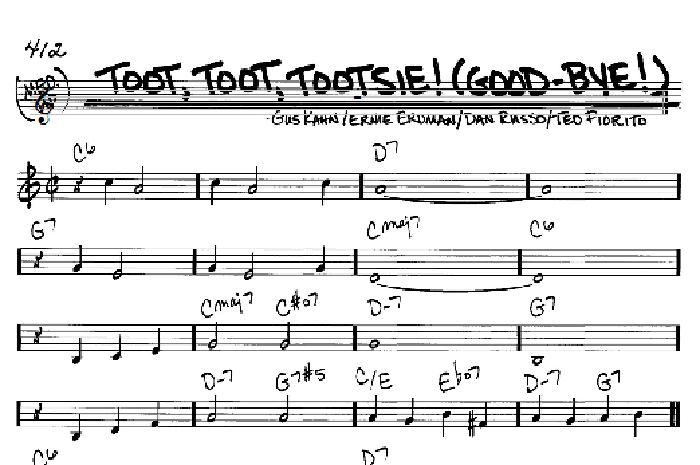
March 31, 2016 Toot Toot Tootsie, Goodbye

I can’t imagine many Allied soldiers ever tried to serenade their Nazi adversaries during World War II. The ones who actually pulled it off must number, precisely, one.

James and Kate Kaminski’s little bundle of joy came into the world on June 26th 1926, in Brooklyn. They named this, their fourth son, Melvin James. James died of tuberculosis at 34, when the boy was only two. A small Jewish kid growing up in a tough Brooklyn neighborhood, Kaminsky learned the value of being able to crack a joke. “Growing up in Williamsburg”, he said, “I learned to clothe it in comedy to spare myself problems—like a punch in the face”.

The boy had a talent for music. He was taught by another kid from Williamsburg, Buddy Rich.  By 14 he was good enough to be playing drums for money.

Melvin Kaminsky, 1Melvin attended a year at Brooklyn College before being drafted into the Army, in WWII. After attending Army Specialized Training at VMI, Corporal Kaminsky joined the 1104th Combat Engineers Battalion, 78th Infantry Division in the European theater.  There, he served through the end of the war. Most of his work was in finding and defusing explosives, though on five occasions his unit had to drop their tools and fight as Infantry.

At one point Kaminsky’s unit gathered along a River. They were so close they could hear Jolson, BlackfaceGerman soldiers singing a beer hall song, from the other side. Kaminsky grabbed a bullhorn and serenaded the Germans back, singing them an old tune that Al Jolson used to perform in black face, “Toot Toot Tootsie, Goodbye”.  Polite applause could be heard from across the river, afterward. I can’t imagine many Allied soldiers ever tried to serenade their Nazi adversaries during World War II.  The ones who actually pulled it off must number, precisely, one.
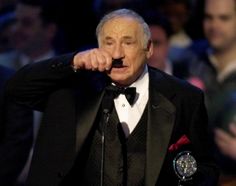
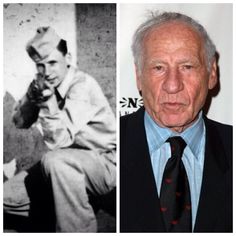
Kaminski went into show business after the war, playing drums and piano in the Borscht Belt resorts and nightclubs of the Catskills. It was around this time that he took his professional name, adopting his mother’s maiden name of Brookman and calling himself “Mel Brooks”.

Brooks started doing stand-up, when the regular comedian at one of the clubs was too sick to perform. By ’49 he was “Tummler”, the master entertainer at Grossinger’s, one of the most famous resorts in the Borscht Belt.  He was making $50 a week writing for his buddy Sid Caesar and his NBC “The Admiral Broadway Review”.Mel Brooks

In 1968, Mel Brooks wrote and produced the satirical comedy film “The Producers”, about a theatrical producer and an accountant who set out to fleece their investors. The scheme was to do a play so bad that it was sure to flop on Broadway, then to abscond to Brazil with their money when the play closed. Problem was, the show turned out to be a hit. The fictional play is a musical, called “Springtime for Hitler”. Even before the age of suffocating PC, I don’t know many guys beside Mel Brooks, who could have gotten away with that one.Melvin Kaminsky, 2

There isn’t one of us who doesn’t know his work. From the 2,000 year old man with “over forty-two thousand children, and not one comes to visit me” to Blazing Saddles’ “Candygram for Mongo” (“Mongo likes candy”).

Brooks has risen to the top of his chosen profession, winning the coveted “EGOT”, an acronym for the entertainment industry’s four major awards, the Emmy, Grammy, Oscar and Tony. Only eleven others have ever risen to this level: Richard Rodgers, Helen Hayes, Rita Moreno, John Gielgud, Audrey Hepburn, Young FrankensteinMarvin Hamlisch, Jonathan Tunick, Mike Nichols, Whoopi Goldberg, Scott Rudin, and Robert Lopez.  As of this date, Brooks only needs another Oscar to be the first “Double EGOT” in history.

Melvin Kaminsky will be 92 in a couple of months. Last year, March 31, 2016, the Averhill Park K-12 School District in upstate New York kicked off a three day production of “Young Frankenstein”.  Let me know if you can think of another 92-year-old guy, who remains that current.  I can’t think of one.

March 27, 1912 Cherry Trees of the Potomac

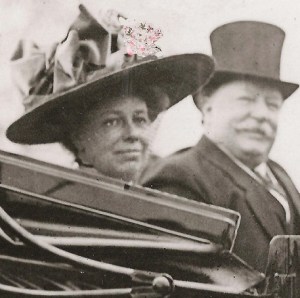
While the future President Taft labored in the Philippines, Helen Herron Taft took up residence in Japan, where she came to appreciate the beauty of the native cherry trees.

Eliza_Ruhamah_Scidmore
Eliza Ruhamah Scidmore

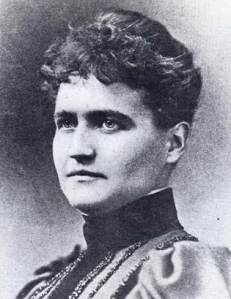
Eliza Scidmore was an American journalist, world traveler, author and socialite.  The first female board member of the National Geographic Society, her brother was a career diplomat, who served 38 years in the Asian Pacific. Frequent visits led to a passionate interest in all things Japanese, most especially the ‘Sakura’, the Japanese blossoming cherry tree, which she called “the most beautiful thing in the world”.

In January 1900, Federal judge William Howard Taft was summoned to Washington, to meet with the President. He hoped it was to discuss a Supreme Court appointment, but it wasn’t meant to be. One day judge Taft would get his wish, becoming the only man in United States history to serve both as President, and as Chief Justice of the Supreme Court. For now, the American war in the Philippines was ongoing. Taft would head up the commission to organize civilian self-government in the island nation.

Helen & William Taft
1st Lady & President Taft

While the future President Taft labored in the Philippines, Helen Herron Taft took up residence in Japan, where she came to appreciate the beauty of the native cherry trees.

Years later the Japanese Consul in New York learned of the First Lady’s interest in the Sakura, and suggested the city of Tokyo make a gift of Cherry trees, to the government of the United States.

For Eliza Scidmore, it was a dream 34 years in the making.  It was she who raised the money to make it happen.

On March 27, 1912, the Viscountess Chinda, wife of the Japanese ambassador to the United States joined First Lady Helen Taft, in planting two Japanese Yoshina cherry trees on the bank of the Potomac River, near the Jefferson memorial. The two were planted in a formal ceremony, the first of 3,020 trees.Jefferson cherry trees

It was the second such effort. 2,000 trees had arrived from Japan two years earlier, in January 1910, but they had fallen prey to disease along their journey. A private Japanese citizen donated the funds to transport a new batch of trees. The 3,020 were taken from the bank of the Arakawa River in the Adachi Ward suburb of Tokyo, to be planted along the Potomac River Basin, East Potomac Park, and the White House grounds.

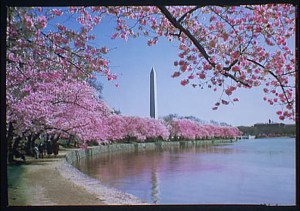
The blossoming trees were overwhelmingly popular with visitors to the Washington Mall. Inpotomac_blossoms 1934 city commissioners sponsored a three-day celebration of the late March blossoming cherry trees, which grew into the annual Cherry Blossom Festival.

During WWII, aerial bombardment laid waste to Tokyo and its surrounding suburbs. After the war, cuttings from the cherry trees of Washington were sent back to Japan, to restore the Tokyo collection.

It’s not clear to me, if the trees along the Arakawa River today are entirely from the Potomac collection, or some combination of American and native stock.  After the conflagration that was the war in the Pacific, I’m not sure it matters. It may even be the whole point.

Cherry Trees along the Arakawa

Cherry Trees along the Arakawa

March 23, 1839 OK

The random and silly teenage fad of the era, went unrecorded. Dad doesn’t mention if the kid was eating goldfish, sagging his toga or doing a Chinese fire drill around the chariot. That particular silliness would wait for another day

Two thousand years before Romulus and Remus founded the Roman Republic, Nomadic bands of hunters and gatherers established the world’s oldest civilization in the fertile valleys of the Tigris and Euphrates Rivers. They called it “Sumeria”.

wri-lit-pre-islam-03-detail100 years ago, “Sumerologists” labored to learn the customs and ways of this ancient civilization. One such team pieced together a stone tablet and, through years of study, managed to decipher the cuneiform words contained thereon.
Turns out it was a father, 5,000 years ago, bitching about his son. The kid won’t work, he’s disrespectful, and he hangs out with the wrong kind of people. If he isn’t borrowing the chariot, all the kid wants to do is drink wine and lie around the house. These kids today.

The random and silly teenage fad of the era went unrecorded. Dad doesn’t mention if the kid was eating goldfish, sagging his toga or doing a Chinese fire drill around the chariot. That particular silliness would wait for another day, but one thing is certain.  The random enthusiasms peculiar (though not exclusive) to youth, are as old as history itself.chinese-fire-drill

In the 1830s, it was a favorite practice in younger, more educated (and probably bored) circles, to intentionally misspell words, and abbreviate them when talking to one another. As always, holding the key to the code meant the difference between being with the “in crowd”, and everyone else. As teenagers today have their own slang based on distortions of common words: “Awks” means that’s awkward, “YOLO” means You Only Live Once, and “BFF”, means Best friends forever, the in-crowd of the 1830s had a whole vocabulary of abbreviations.

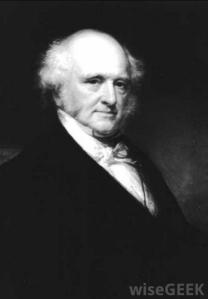
On March 23, 1839, the initials “O.K.” were first published in The Boston Morning Post. This particular abbreviation stood for “Orl Korrekt.”  All correct.  Other popular slang of the era included “KY” for “No use” (“Know Yuse”), “KG” for “No Go” (“Know Go”), and “OW” for all right (“Oll Wright”).martin-van-buren

The expression got a boost in the Presidential election of 1840, during the re-election campaign of democrat Martin van Buren, also known as “Old Kindherhook”, after the village of his birth.

The others dropped from use, probably around the same time that parents figured them out, but OK steadily made its way into the speech of ordinary Americans. I found myself texting it, just the other day.

There’s a lesson in here somewhere, IMHO, for anyone raising a teenager. And for the kid who thinks he/she’s the first in all recorded history, to ever (fill in the blank). LOL.

March 22, 1958 Bocephus

For the media, the business model depends on renting an audience to a sponsor. The “controversy” would be squeezed for all it was worth, but Bocephus would have the last word.

Hank WilliamsRandall Hank Williams was born May 26, 1949 in Shreveport, Louisiana, the son of country singer/songwriter, Hiram King “Hank” Williams. Surprisingly for a guy who could neither read nor notate music and died at the age of 29, the elder Williams has been described as “one of the most significant and influential American singers and songwriters of the 20th century”.
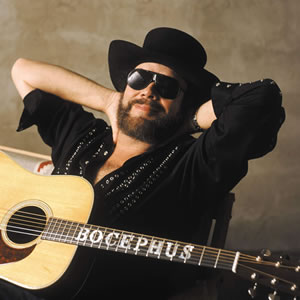
His father called the younger Williams “Bocephus” after the ventriloquist’s dummy used by Grand Ole Opry comedian Rod Brasfield.

A lifelong problem with drugs and alcohol ended the elder Williams’ life, way too early. All that police found in his Cadillac, were empty beer cans and handwritten, unfinished song lyrics.

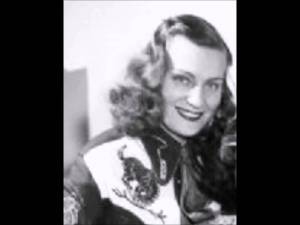
The younger Williams was raised by his mother Audrey, after his father’s untimely death in 1953.  The apple didn’t fall far from the musical tree. Audrey encouraged the boy to copy his father’s dress and musical style. “Hank Williams Jr.” made his stage debut in Swainsboro Georgia, on March 22, 1958, at the age of 8. Audrey Williams

Some of the top musicians, singers and songwriters of the era came to visit the family: Johnny Cash, Fats Domino, Earl Scruggs, and Jerry Lee Lewis, to name a few. They all taught Bocephus a little of their musical instruments, and musical styles.

Bocephus was nearly killed in 1975, while climbing Ajax Peak in Montana. The snow collapsed beneath him, plunging him nearly 500 feet to the rocks below. There were multiple skull and facial fractures. Williams required several reconstructive surgeries, and had to learn to talk, and to sing, all over again. The signature look of beard, sunglasses and cowboy hat have all become part of his brand, but it all began to hide the scars from that mountain climbing accident.

Williams’ work in the 60s and 70s earned him a string of country music hits, but he wanted to be more than a “Hank Williams impersonator”.  A prodigously talented musician in his own right, Williams’ repertoire includes guitar, bass guitar, upright bass, steel guitar, banjo, dobro, piano, keyboards, harmonica, fiddle, and drums.

The country music establishment was slow to accept the new sound, but Hank Williams Jr. would not be denied. Sometimes recording and releasing two albums a year, Williams released 21 albums between 1979 and 1990, all certified “gold” by the Recording Industry Association of America. There were 44 Top Ten singles on the Billboard Country charts, including 10 No. 1 singles over the course of his career. In 1982, Bocephus had nine albums on the Billboard Top Country Albums chart, simultaneously.HLN

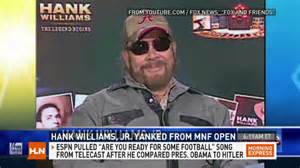
From 1989 to 2011, a version of Bocephus’ song “All My Rowdy Friends Are Coming Over Tonight” opened Monday Night Football broadcasts. In an October 3, 2011 interview with Fox News’ “Fox & Friends”, Williams described a June golf game between President Barack Obama and Speaker John Boehner as “one of the biggest political mistakes ever”.  Asked to explain, Williams said, “Come on. That’d be like Hitler playing golf with Netanyahu … in the shape this country is in?”

Predictably, the media outrage machine came to life – this would not do.  ESPN pulled the song from that night’s football game, the first of the season. Williams described his analogy as “extreme – but it was to make a point…I was simply trying to explain how stupid it seemed to me – how ludicrous that pairing was. They’re polar opposites, and it made no sense. They don’t see eye-to-eye and never will.” No matter. ESPN announced three days later that, after 22 years, Williams and his song were being pulled from all future broadcasts. ABC and the National Football League, were quick to follow suit. hank_jr_001

For the media, the business model depends on renting an audience to a sponsor.  The “controversy” would be squeezed for all it was worth, but Bocephus would have the last word.  He responded with a song, criticizing President Obama, ESPN and Fox & Friends, calling it “Keep the Change”.  As I write this, the song has had over 988,000 views on You Tube. Williams released the track on iTunes and via free download at his website, where it was downloaded over 180,000 times in just two days.

In the words of the song, Bocephus and all his rowdy friends were “outta there”.  A demonstration that, in an age of suffocating and humorless political correctness, even then, “A Country Boy will Survive”.

March 21, 1905 Eugenics

Some 30 states had passed legislation by the height of the eugenics movement, legalizing the involuntary sterilization of individuals considered “unfit” for reproduction. All told, some 60,000 individuals were forcibly sterilized in state-sanctioned procedures.

In 380BC, Plato described a system of state-controlled human breeding in his Socratic dialogue “The Republic”, intended to create a “guardian class” over his ideal society.

In the 19th century, Francis Galton studied the theories of his cousin Charles Darwin on the evolution of species, applying them to a system of selective breeding intended to bring better human beings into the world.  He called it his theory of “Eugenics”.

Eugenics gained worldwide respectability in the early 20th century, when countries from Brazil to Japan adopted policies regarding the involuntary sterilization of certain mental patients.

“Better Babies” competitions sprang up at state fairs across the United States, where babies were measured, weighed, and “judged”, like livestock.  By the 20s, these events evolved into “Fitter Family” competitions.Better babies Certificate

One of the leaders of the eugenics movement was the pacifist and Stanford University professor, David Starr Jordan.  After writing several books on the subject, Jordan became a founding member of the Eugenics Committee of the American Breeders Association.  The upper class of America was being eroded by the lower class, he said.  Careful, selective breeding would be required to preserve the nation’s “upper crust”.

MargaretSanger
Margaret Sanger

Margaret Higgins Sanger believed that birth control should be compulsory for “unfit” women who “recklessly perpetuated their damaged genetic stock by irresponsibly breeding more children in an already overpopulated world.”

An early advocate for birth control, Sanger has her supporters to this day, including former Presidential candidate Hillary Rodham Clinton. “I admire Margaret Sanger enormously”, Clinton said.  “Her courage, her tenacity, her vision…”  Time Magazine points out that “Sanger opened the first birth-control clinic in the United States”, describing her as “An advocate for women’s reproductive rights who was also a vocal eugenics enthusiast…”

Detractors have described Sanger as a “thoroughgoing racist”, citing her own words in What Every Girl Should Know, published in 1910:  “In all fish and reptiles where there is no great brain development, there is also no conscious sexual control. The lower down in the scale of human development we go the less sexual control we find. It is said that the aboriginal Australian, the lowest known species of the human family, just a step higher than the chimpanzee in brain development, has so little sexual control that police authority alone prevents him from obtaining sexual satisfaction on the streets”.

Admire or detest the woman as you prefer, Sanger’s work established organizations that later evolved into the Planned Parenthood Federation of America.

Around the world, eugenics policies took the form of involuntarily terminated pregnancies, compulsory sterilization, euthanasia, and even mass extermination.

Madison Grant, the New York lawyer known for his work in developing the discipline of wildlife management, was a leader in the eugenics movement, once receiving an approving fan letter from none other than Adolf Hitler.Eugenics Propaganda

Public policy and academic types conducted three international eugenics conferences to advance their ideas.  The first such conference was held in Great Britain in 1912, followed by two more in 1921 and again in 1932, both in New York City.  Colleges and universities offered eugenics as an academic discipline, delving into the ethical and public policy considerations of eliminating the “degenerate” and “unfit”.

In Pennsylvania, 270 involuntary sterilizations were performed without benefit of law, between 1892 and 1931.  On March 21, 1905, the Pennsylvania legislature passed “An Act for the Prevention of Idiocy”, requiring that every institution in the state entrusted with the care of “ idiots and imbecile children”, be staffed by at least one skilled surgeon, whose duty it was to perform surgical sterilization.  The bill was vetoed by then-Governor Samuel Pennypacker, only to return in 1911, 1913, 1915, 1917, 1919, and in 1921.

By the height of the movement, some 30 states had passed eugenics legislation, legalizing the involuntary sterilization of individuals considered “unfit” for reproduction. All told, some 60,000 individuals were forcibly sterilized in state-sanctioned procedures.

California forced Charlie Follett to undergo a vasectomy in 1945 at the age of 15, when Follett found himself abandoned by alcoholic parents.   He was only one of some 20,000 Californians forced to undergo such a procedure.

Vermont passed a sterilization law in 1931, aimed at what then-University of Vermont zoology professor Henry Perkins called the “rural degeneracy problem.”  An untold number of “defectives” were forced to undergo involuntary sterilization, including Abenakis and French-Canadian immigrants.VA-Eugenic-Sterilization-Law-Upheld

Indiana passed the first eugenic sterilization law in 1907, but it was legally flawed.  To remedy the situation, the Eugenics Record Office (ERO) of the Carnegie Institution of Washington’s Station for Experimental Evolution crafted a eugenics statute, adopted by the Commonwealth of Virginia as a state statute in 1924.

That September, Superintendent of the ‘Virginia State Colony for Epileptics and Feebleminded’ Dr. Albert Sidney Priddy, filed a petition to sterilize Carrie Buck, an 18-year-old patient at his institution whom he claimed to be “incorrigible”.  A “genetic threat to society”.  Buck’s 52 year old mother had a record of prostitution and immorality, Priddy claimed, and the child to whom Buck gave birth in the institution further proved the point.

Buck’s guardian brought her case to court, arguing that the law violated the equal protection clause of the 14th amendment.  After losing in district court, the case was appealed to the Amherst County Circuit Court, the Virginia Supreme Court, and finally the United States Supreme Court.Carrie-Buck-and-Emma-Buck-1924

Dr. Priddy died along the way, Dr. John Hendren Bell taking his place.  SCOTUS decided the “Buck vs Bell” case on May 2, 1927, ruling in an 8–1 decision that Buck, her mother, and daughter Vivian, were all “feeble-minded” and “promiscuous.”

In the majority ruling, Justice Oliver Wendell Holmes, Jr., wrote:  “”It is better for all the world, if instead of waiting to execute degenerate offspring for crime, or to let them starve for their imbecility, society can prevent those who are manifestly unfit from continuing their kind…. Three generations of imbeciles are enough.”

It was later revealed that Carrie Buck had been raped by a member of the Dobbs family, the foster family who had taken her in and later had her committed.  To save their family “honor”.  No matter.  Buck was compelled to undergo tubal ligation, and later paroled to become a domestic worker with a family in Bland, Virginia.  Buck’s daughter Vivian, was adopted by this same Dobbs family.

HolmesQuoteBuckvBelIn a later examination of Vivian, ERO field worker Dr. Arthur Estabrook pronounced her “feeble minded” saying that she “showed backwardness”, supporting the “three generations” theory expressed in the SCOTUS opinion.

The child died from complications of measles in 1932, after only two years in school.  Dr. Estabrook failed to explain in his report, how she seemed to do well for those two years, nor did he explain how she came to be listed on her school’s honor roll, in April 1931.

March 18, 37 AD Little Boots

Soldiers of the Legions called him “Little Boots”, “Caligula” in Latin, after the little soldier’s boots the boy liked to wear in camp. He’s said to have hated the nickname, but it stuck.

Around the year 14 or 15, the youngest son of the Roman war hero Germanicus found himself growing up around the Legions. As a boy of just two or three, little Gaius Caesar accompanied his father on campaigns in the north of Germania. Centurions were amused to see him dressed in miniature soldier’s uniform, including the boots, the “Caligae”, and the segmented Roman armor – the “lorica segmentata”.

Soldiers of the Legions called him “Little Boots”, “Caligula” in Latin, after the little soldier’s boots the boy liked to wear in camp. He’s said to have hated the nickname, but it stuck.

Vatican_Piazza_San_Pietro_ObeliskOn this day in the year 37, the Roman Senate annulled the will of the Emperor Tiberius, proclaiming 24 year old Caligula, Emperor. After years of purges and treason trials, Caligula’s ascension to the throne was seen as a welcome breath of fresh air. His first two years were relatively peaceful and prosperous.
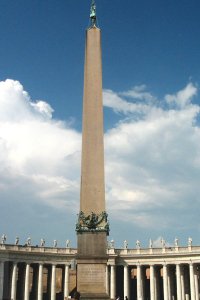
The obelisk at the at St. Peter’s Square was originally erected in Alexandria, in 30-28BC.  Caligula had it brought to Rome and erected in the year 40, where it stands to this day.  The “Piazza San Pietro Obelisk” is the only such obelisk to have survived from Roman times.

Caligula suffered a protracted and severe illness in 39, hovering between life and death for over a month. It may or may not have had anything to do with his subsequent behavior, but the man who emerged from that illness was widely believed to be insane.

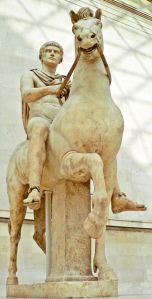
Caligula performed a spectacular stunt by ordering a temporary floating bridge to be built, Caligula, Incitatususing ships as pontoons, stretching for over two miles from the resort of Baiae to the neighboring port of Puteoli. Though he could not swim, he rode his favorite horse, Incitatus, across the bridge, wearing the breastplate of Alexander the Great. The act was in defiance of a prediction by Tiberius’ soothsayer Thrasyllus of Mendes, that Caligula had “no more chance of becoming emperor than of riding a horse across the Bay of Baiae”.
In case you’re wondering, Incitatus was the same horse which Caligula appointed as priest, and planned to make a Consul of Rome, the top official of the Roman government.

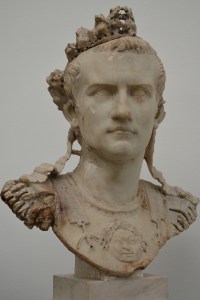
Caligula’s eccentricities became terrifying and erratic. He regularly made senators run alongside his chariot.  He’d order executions on a whim. Caligula once had an entire crowd section at the Roman Games thrown into the arena, to be eaten alive by wild animals. He said he was bored. Caligula

Caligula began to appear in public, dressed as various gods and demigods:  Hercules, Mercury, Venus and Apollo.  He’d refer to himself as a god when meeting with politicians. He built temples for the worship of himself, where the heads of statues were replaced by his own likeness.

Later stories of wanton hedonism, cruelty, and sexual depravity are probably exaggerated, but none seem to be without a grain of truth. Caligula was murdered by his own Praetorian guard in the year 41, after fewer than five years in power.

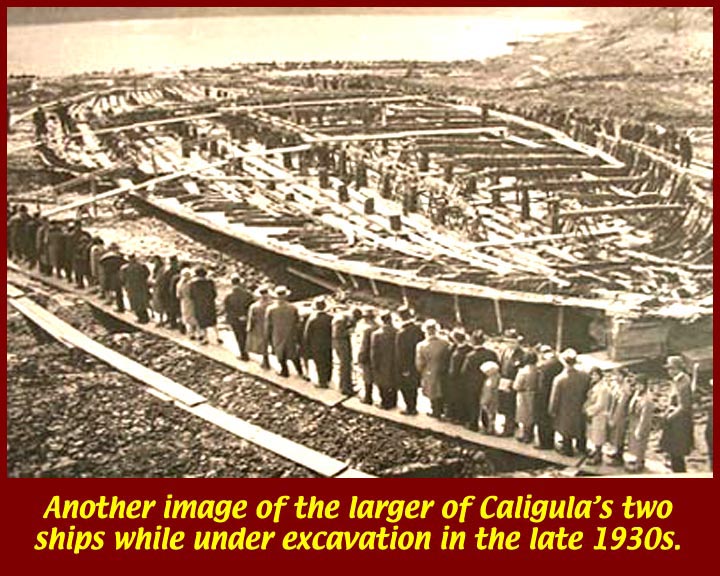
Most historians dismiss the floating bridge story as a myth, since no archaeological evidence has ever surfaced.  Caligula’s two “pleasure barges”, extracted from the bottom of Lake Nemi in the 1920s and 30s, are a different story.   Measuring 230′ and 240′ respectively, their lavish furnishings included marble décor, mosaic floors, statuary and gilded copper roofs.  One wreck carried a lead pipe, bearing the inscription “Property of Gaius Caesar Augustus Germanicus”.  Allied bombing resulted in a fire in 1944, in which both of these archaeological treasures, were lost.Caligula, Pleasure Barges

March 14, 1964 Sparky

Part of the roof had either blown off this joint, or burned off, depending on which version you read. Jack, the owner, tore off the rest of it and kept the insurance money, calling it the “Skyline Lounge”

Jacob Leon Rubenstein was a troubled child, growing up on the west side of Chicago. Marked a juvenile delinquent in his adolescence, Rubenstein was arrested for truancy at age 11, eventually skipping enough school to spend time at the Institute of Juvenile Research.

Barney Google and Spark PlugAs with cartoonist Charles M Shulz, those who knew Jacob Rubenstein called him “Sparky”. Some say the nickname was due to a resemblance to “Sparkplug”, the old nag with the patchwork blanket, from the Snuffy Smith cartoon strip. Rubenstein hated the nickname and was quick to fight anyone who called him that. It may have been that quick temper, that made the name stick.
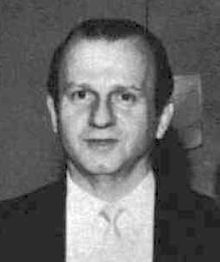
Rubinstein spent the early 40s at racetracks in Chicago and California, until being drafted into the Army Air Forces, in 1943. Honorably discharged in 1946, Rubenstein returned to Chicago, before moving to Dallas the following year.

Rubenstein managed a series of Dallas nightclubs and strip joints, featuring ladies like “Candy Barr” and “Chris Colt and her ’45’s”. Somewhere along the line, he shortened his name to “Ruby”.

Ruby was involved in typical underworld activities, such as gambling, narcotics and Jack Rubyprostitution. There were rumored associations with Mafia boss Santo Trafficante.  The less-than-honest part of the Dallas police force knew that Ruby was always good for free booze, prostitutes, and other favors.   This was one unsavory guy.

Today, you may know Rick Danko, Levon Helm, Garth Hudson and Robbie Robertson as musicians who went on the road with Bob Dylan in 1965, later morphing into “The Band”, and performing such rock & roll standards as “The Night they Drove Old Dixie Down”, “Up on Cripple Creek”, and “The Weight”.

In earlier days, the joints these guys played were so rough, that they performed with blackjacks, hidden in special pockets sewn into their coats. In 1963, they played a week in a Fort Worth nightclub. It was a huge venue, but no one was there that first night, save for two couples, a couple of drunk waiters and a one-armed go-go dancer. The band wasn’t through with their first set before a fight broke out, and someone was tear-gassed. The band played on, coughing and choking, with teargas wafting across the stage, their faces wet with tears.

HawksPart of the roof had either blown off this joint, or burned off, depending on which version you read. Jack, the owner, tore off the rest of it and kept the insurance money, calling it the “Skyline Lounge”. There was no need to pay for security, even without the roof. Jack said “Boys, this building ain’t exactly secure enough for you to leave your musical equipment unattended.” Band members were told they’d best stay overnight, with guns, lest anyone come over the wall to steal their equipment. Problem solved.
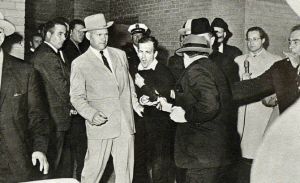
Months later, the country was stunned at the first Presidential assassination in over a half-century. I was 5½ at the time, I remember it to this day. An hour after the shooting, former marine and defector to the Soviet Union Lee Harvey Oswald killed Dallas police officer J.D. Tippit, who had stopped him for questioning. Thirty minutes later, Oswald was arrested in a movie theater.

By Sunday, November 24, Oswald was formally charged with the murders of President John F. Kennedy and Dallas police officer J. D. Tippit.  He was taken to the basement of Dallas police headquarters, where an armored car waited to transport the prisoner to a more secure county jail. The scene was crowded with press and police.

Jack-Ruby-FilesHalf the country watched on live TV, as a man came out of the crowd, firing a single bullet from his .38 into the belly of Lee Harvey Oswald. Four musicians were shocked to realize the shooter was the man they had worked for months earlier, at that burned out dive bar. Jack Ruby.
Oswald was taken unconscious to Parkland Memorial Hospital, the same hospital where John F. Kennedy died, two days earlier. He was dead within two hours.

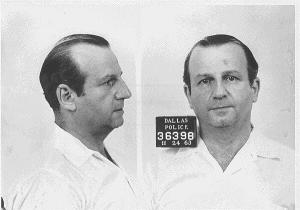
Jack_Ruby_mugshotJack Ruby was sentenced to death in the murder of Lee Harvey Oswald, on March 14, 1964. The Texas Court of Criminal Appeals overturned Ruby’s conviction in October 1966, on the grounds that the trial should have taken place in a different county than that in which his high profile crime had taken place. Ruby died of lung cancer the following January, while awaiting retrial.

The Warren Commission found no evidence linking Jack Ruby’s murder of Lee Harvey Oswald, to any broader conspiracy to assassinate the President.  What became of Jacob Leon “Sparky” Rubenstein’s fine establishment, is unknown to this writer.

March 12, 1894 The Real Thing

Another letter asked for Goizueta’s autograph, since the signature of “one of the dumbest executives in American business history” would probably become valuable in the future.

Europeans long believed that natural mineral waters held medicinal qualities, and favored the beverages over often polluted common drinking water. British chemist Joseph Priestley invented a means of carbonating water in 1772.  Jacob Schweppe’s Geneva, Switzerland company was bottling the stuff by the 1780s. The first soda water manufacturer in the US was Yale University chemist Benjamin Silliman in 1807, though it was Joseph Hawkins of Baltimore who secured the first US patent in 1809.Vintage Soda Foutain

At first sold for their therapeutic value, consumers increasingly bought carbonated beverages for refreshment. By the time of the Civil War, “soft drinks” were flavored with ginger, vanilla, fruits, roots, herbs, and countless other flavorings. The first cola drink appeared in 1881.

Confederate Cavalry officer John Stith Pemberton was wounded by a saber slash across his chest at the Battle of Columbus, Georgia. Like many wounded veterans, he became addicted to the morphine given him to help ease the pain. A chemist in civil life, Pemberton experimented with painkillers to take the place of opiates, landing on a combination of the coca plant and kola nut in 1886. Vicksburg, Mississippi pharmacist Joseph Biedenharn installed bottling equipment in the back of his soda fountain, selling the first bottles of Coca Cola on March 12, 1894.

Coke BottlesThe most famous rivalry in the soft drink business began in the 1930s, when Pepsi offered a 12oz bottle for the same 5¢ as Coca Cola’s six ounces.

The Coca Cola Company’s flagship brand had a 60% share by the end of WWII, but that declined to less than 24% by the early 80s, most of the difference lost to Pepsi and their “Pepsi challenge” blind taste test promotions of the late 70s.

By the 80s, market analysts believed that baby boomers were likely to switch to diet drinks as they aged, and any growth in the full calorie segment was going to come from younger consumers who preferred the sweeter taste of Pepsi.

Roberto Goizueta came on board as Coca Cola Company CEO in 1980, saying that there would beNew coke “no sacred cows” among their products. He meant it. The company launched the top secret “Project Kansas”, to test and perfect the flavor for a new version of Coke. The company’s marketing department fanned out, holding taste tests, surveys, and focus groups.

Early results were favorable, the newer, sweeter mixture overwhelmingly beating both Pepsi and Coke itself. Most tasters said that they would buy the product, but a small minority of 10–12% were angry and alienated at the very thought of it. This small percentage was adamant. They would stop drinking Coke products altogether, and they frequently swayed other members of their focus groups.

The way things turned out, the company should have listened to this group a little more carefully.

New coke taste testOn an April Friday in 1985, Coke let the media know that a major announcement was coming the following Tuesday. Coca Cola officials spent a busy weekend preparing for the re-launch, while Pepsi Executives announced a company-wide holiday, taking out a full page New York Times ad proclaiming that “Pepsi had Won the Cola Wars”.

Skepticism was high on the day of the Big Announcement. Reporters were fed questions by Pepsi officials, and Goizueta fumbled, refusing to state the reason for the change. He certainly wasn’t going to give Pepsi any credit for their performance in taste tests, explaining “[It’s] smoother, uh, uh, rounder yet, uh, yet bolder…a more harmonious flavor”.

The backlash was soon in coming, and closely tracked earlier focus group results. Atlanta based Coca Cola’s southern customers described the change as another surrender to the “Yankees”. Over 400,000 calls and letters came into company headquarters, including one addressed to “Chief Dodo, The Coca-Cola Company”.  Another letter asked for Goizueta’s autograph, since the signature of “one of the dumbest executives in American business history” would probably become valuable in the future. A psychiatrist hired by Coke to listen in on calls, told executives some people sounded as if they were discussing the death of a family member.Time New Coke

Even Max Headroom and his “C-c-c-catch the wave!” couldn’t save the company. Ads for “New Coke” were booed at the Houston Astrodome, while Pepsi ran ads in which a smiling first-time Pepsi drinker said “Now I know why Coke did it!”

Even Fidel Castro weighed in, calling the change a sign of capitalist decadence. Company President Donald Keough realized it was over, on a visit to the Mediterranean Principality of Monaco. A small restaurant owner proudly said that he had “the real thing, it’s a real Coke,” offering Keough’s party a bottle of the old stuff.

And so it was that, in 1985, Coca Cola announced that they’d bring back their 91-year old formula. A reporter asked Keough if the whole thing had been a publicity stunt. Keough’s answer is itself, a classic. “We’re not that dumb,” he said, “and we’re not that smart”.

March 3, 1920 The Craziest Pilot in the Canadian Air Force

Doohan practiced voices and accents ever since he was a kid, and he was good at it. The skills he acquired would serve him well in his later acting career.

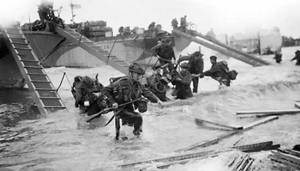
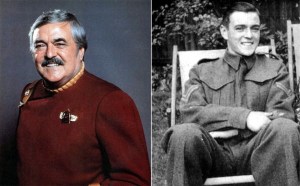
Born March 3, 1920 in Vancouver, British Columbia, James Montgomery “Jimmy” Doohan enrolled in the 102nd Royal Canadian Army Cadet Corps in 1938. By the outbreak of WWII he was commissioned a Lieutenant in the 14th Field Artillery Regiment of the 3rd Canadian Infantry Division.landing

Doohan’s first taste of combat took place on D-Day, on the Normandy beach Canadian landing forces knew as “Juno”. Crossing through a field of anti-tank mines, the Canadian’s luck held.  None of them were heavy enough to set one off.  Leading his men to higher ground, Lieutenant Doohan personally shot two German snipers, before taking up positions for the night.

That night, Doohan had just finished a cigarette and was walking back to his command post.  A nervous sentry opened up on him with a Bren light machine gun, striking him four times in the leg, once in the chest and again on the middle finger of his right hand. The chest shot hit the cigarette case his brother had given him for good luck, and doctors were able to save his life.  Not so much for the finger. That had to be amputated. He would always hide the injury in his later life.

auster

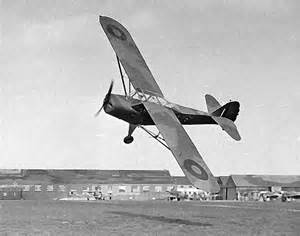
After healing up, Doohan served as courier and artillery spotter, aboard a Taylorcraft Auster Mark IV.  In the spring of 1945, he slalomed his aircraft between telegraph poles, just to prove that it could it be done.  Though the man was never an actual member of the CAF, the stunt forever marked him as “the craziest pilot in the Canadian Air Force”.

Doohan practiced voices and accents ever since he was a kid, and he was good at it. The skills he acquired would serve him well in his later acting career.

He heard a radio drama after the war. Knowing he could do it better, Doohan recorded his voice at a local radio station, winning a two year scholarship to study at the Neighborhood Playhouse in New York and studying with the likes of Leslie Nielsen, Tony Randall, and Richard Boone.

Doohan appeared in over 4,000 radio programs and 450 television shows throughout the forties and fifties. Coincidentally, Doohan played “Timber Tom”, the northern version of Buffalo Bob, in the Canadian production of Howdy Doody. About the same time that a young actor named William Shatner was playing Ranger Bill in the American version. The two would appear together on the 1950s Canadian science fiction series “Space Command”. It wasn’t the last time the two would appear together.

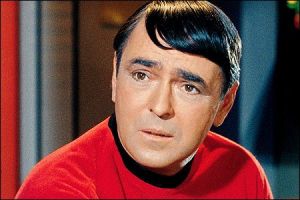
Auditioning before Gene Roddenberry in 1965, Doohan performed several accents. Asked which he preferred, he responded “If you want an engineer, in my experience the best engineers are Scotsmen.” He chose the name “Montgomery Scott”, after his grandfather.

Chief Engineer aboard the Starship Enterprise was supposed to be an occasional role, but Doohan’s character proved irresistible.scotty

Soon he was #3 in command, a regular cast member playing alongside William Shatner (Captain James T. Kirk), Leonard Nimoy (Spock) and DeForest Kelley (Dr. McCoy).  Doohan’s voice talents helped behind the scenes as well.  It was he who helped develop the Klingon and Vulcan languages.

Star Trek was canceled in 1969 due to poor ratings, but returned to broadcast syndication in the 70s.  The series has since become a cult classic. There is hardly a woman, man, puppy boy or girl who isn’t steeped and marinated in the program.

The “Scotty” character was so iconic, that many fans credit him with their interest in the technical fields.  Among them was the engineer-turned-astronaut Neil Armstrong, who personally thanked him in 2004.

doohan-1Doohan’s health declined in his later years. He developed Parkinson’s disease and diabetes, along with fibrosis of the lung, blamed on his exposure to noxious chemicals during WWII. He was experiencing symptoms of Alzheimer’s by 2004, though he was able to attend the ceremony held in his honor after receiving a star on the Hollywood Walk of Fame, that August.

James Montgomery Doohan passed away on July 20, 2005, survived by third wife Wende, their three children, his four adult children from a previous marriage, and several grandchildren and great-grandchildren. His youngest daughter, Sarah, was five at the time of his death.

On April 29, 2007, a SpaceLoft XL rocket lifted off from the Spaceport America launchpad in Las Cruces.  Onboard were the ashes of astronaut Gordon Cooper, and James Montgomery Doohan.  Cooper’s wife Suzan and Wende Doohan pushed the launch button.

In Linlithgow, Scotland, there is a museum, claiming the West Lothian town as the future birthplace of chief engineer Montgomery Scott.  He will be born there, in 2222.

doohan-letter