

Similar to the Base Exchange system serving American military personnel, the British Navy, Army and Air Force Institutes (NAAFI) is the UK-government organization operating clubs, bars, shops and supermarkets in service to British armed forces, as well as naval canteen services (NCS) on board Royal Navy ships.
NAAFI personnel serving on ships are assigned to duty stations and wear uniforms, while technically remaining civilians.
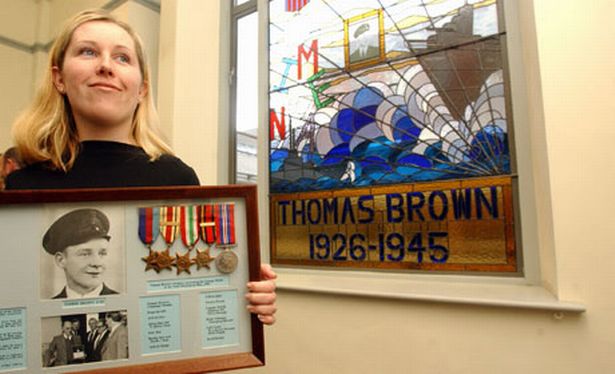
Tommy Brown was fifteen when he lied about his age, enlisting in the NAAFI and assigned as canteen assistant to the “P-class” destroyer, HMS Petard.
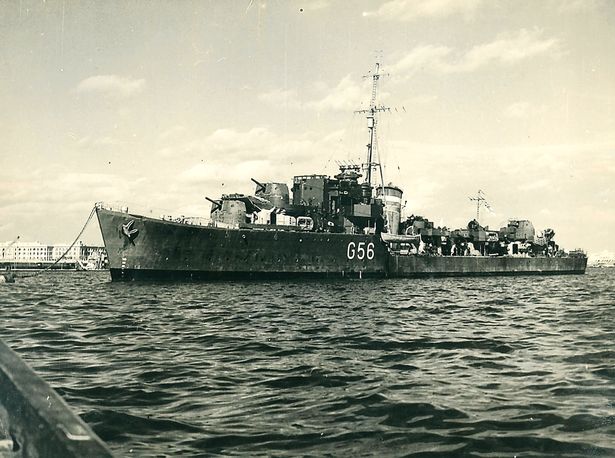
On October 30, 1942, Petard joined three other destroyers and a squadron of Vickers Wellesley light bombers off the coast of Port Said Egypt, in a 16-hour hunt for the German “Unterseeboot”, U–559.
Hours of depth charge attacks were rewarded when the crippled U-559 came to the surface, the 4-inch guns of HMS Petard, permanently ending the career of the German sub.
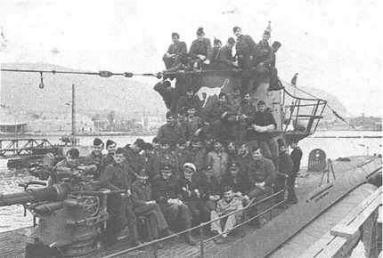
The crew abandoned ship, but not before opening the boat’s seacocks. Water was pouring into the submarine as Lieutenant Francis Anthony Blair Fasson and Able Seaman Colin Grazier dived into the water and swam to the submarine, with junior canteen assistant Tommy Brown close behind.
With U-559 sinking fast, Fasson and Grazier made their way into the captain’s cabin. Finding a set of keys, Fasson opened a drawer, to discover a number of documents, including two sets of code books.
With one hand on the conning ladder and the other clutching those documents, Brown made three trips up and down through the hatch, to Petard’s whaler.

In the final moments, the ship’s cook called for his shipmates to get out of the boat. Brown himself was dragged under, but managed to kick free and come to the surface. Colin Grazier and Francis Fasson, went down with the German sub.
The episode brought Brown to the attention of the authorities, ending his posting aboard Petard when his true age became known. He was not discharged from the NAAFI, and later returned to sea on board the light cruiser, HMS Belfast.
In 1945, now-Leading Seaman Tommy Brown was home on shore leave, when fire broke out at the family home in South Shields. He died while trying to rescue his 4-year-old sister Maureen, and was buried with full military honors in Tynemouth cemetery.
Fasson and Grazier were awarded the George Cross, the second-highest award in the United Kingdom system of honors. Since he was a civilian due to his NAAFI employment, Brown was awarded the George Medal.
 For German U-boat commanders, the period between the fall of France and the American entry into WW2 was known as “Die Glückliche Zeit” – “The Happy Time” – in the North Sea and North Atlantic. From July through October 1940 alone, 282 Allied ships were sunk on the approaches to Ireland, for a combined loss of 1.5 million tons of merchant shipping.
Tommy Brown’s Mediterranean episode took place in 1942, in the midst of the “Second Happy Time”, a period known among German submarine commanders as the “American shooting season”. U-boats inflicted massive damage during this period, sinking 609 ships totaling 3.1 million tons with the loss of thousands of lives, against a cost of only 22 U-boats.
USMM.org reports that the United States Merchant Marine service suffered a higher percentage of fatalities at 3.9%, than any American service branch in WW2.
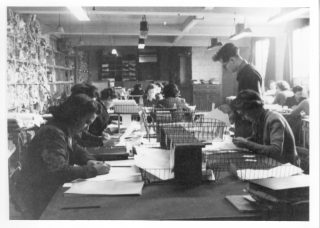 Early versions of the German “Enigma” code were broken as early as 1932, thanks to cryptanalysts of the Polish Cipher Bureau, and French spy Hans Thilo Schmidt. French and British military intelligence were read into Polish decryption techniques in 1939, these methods later improved upon by the British code breakers of Bletchley Park.
Vast numbers of messages were intercepted and decoded from Wehrmacht and Luftwaffe sources through the Allied intelligence project “Ultra”, shortening the war by at least a year, and possibly two.
The Kriegsmarine was a different story. Maniacally concerned with security, Admiral Karl Dönitz introduced a third-generation enigma machine (M4) into the submarine service around May 1941, a system so secret that neither Wehrmacht nor Luftwaffe, were aware of its existence.
The system requires identical cipher machines at both ends of the transmission and took a while to put into place, with German subs being spread around the world.
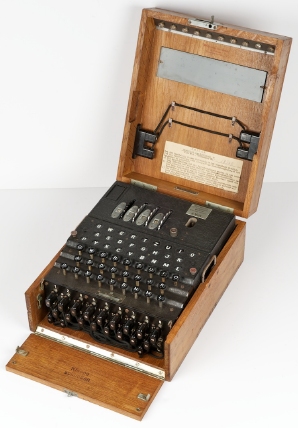 All M4 machines were distributed by early 1942. On February 2, German submarine communications went dark. For code breakers at Bletchley Park, the blackout was sudden and complete. For a period of nine months, Allies had not the slightest idea of what the German submarine service was up to. The result was catastrophic.
U-559 documents were rushed back to England, arriving at Bletchley Park on November 24, allowing cryptanalysts to attack the “Triton” key used within the U-boat service. It would not be long, before the U-boats themselves were under attack.
The M4 code was broken by December 13, when the first of a steady stream of intercepts arrived at the Admiralty Operational Intelligence Office, giving the positions of 12 U-boats.
The UK Guardian newspaper wrote: “The naval historian Ralph Erskine thinks that, without the (M4) breakthrough, the Normandy invasion would have been delayed by at least a year, and that between 500,000 and 750,000 tons of allied shipping were saved in December 1942 and January 1943 alone”.
Tommy Brown never knew what was in those documents. The entire enterprise would remain Top Secret, until decades after he died.
Winston Churchill later wrote, that the actions of the crew of HMS Petard were “crucial to the outcome of the war”.
Untold numbers of lives that could have been lost. But for the actions, of a sixteen-year-old ship’s cook.


 For Imperial Japan, Yamamoto’s worst nightmare would prove correct. In terms of GDP, the Tokyo government had attacked an adversary, nearly six times its own size. The Japanese economy reached its high point in 1942 and declined steadily throughout the war years, while that of the United States exploded at a rate unseen in human history.


 Lieutenant Commander Joseph O’Callahan, a Jesuit priest from Boston and former Holy Cross track star was a Chaplain aboard the Franklin. O’Callahan was everywhere, hurling bombs overboard and administering last rites, shouting encouragement and fighting fires. Father O’Callahan would be the only Chaplain of WW2, to be awarded the Medal of Honor.

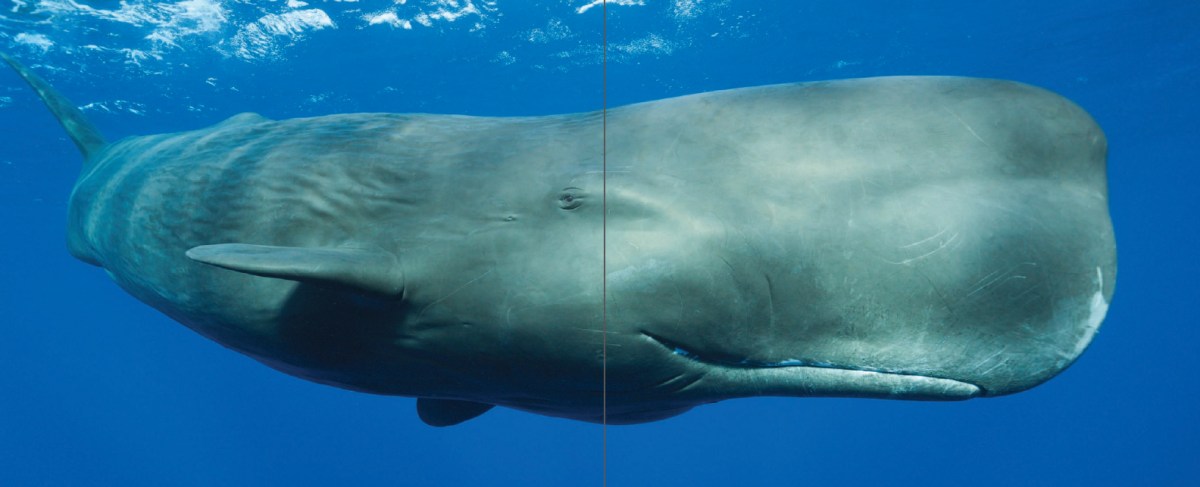
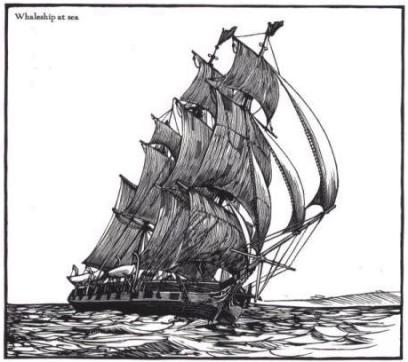 Essex sailed down the coast of South America, rounding the Horn and entering the Pacific Ocean. They heard that the whaling grounds near Chile and Peru were exhausted, so they sailed for the “offshore grounds”, almost 2,000 miles from the nearest land.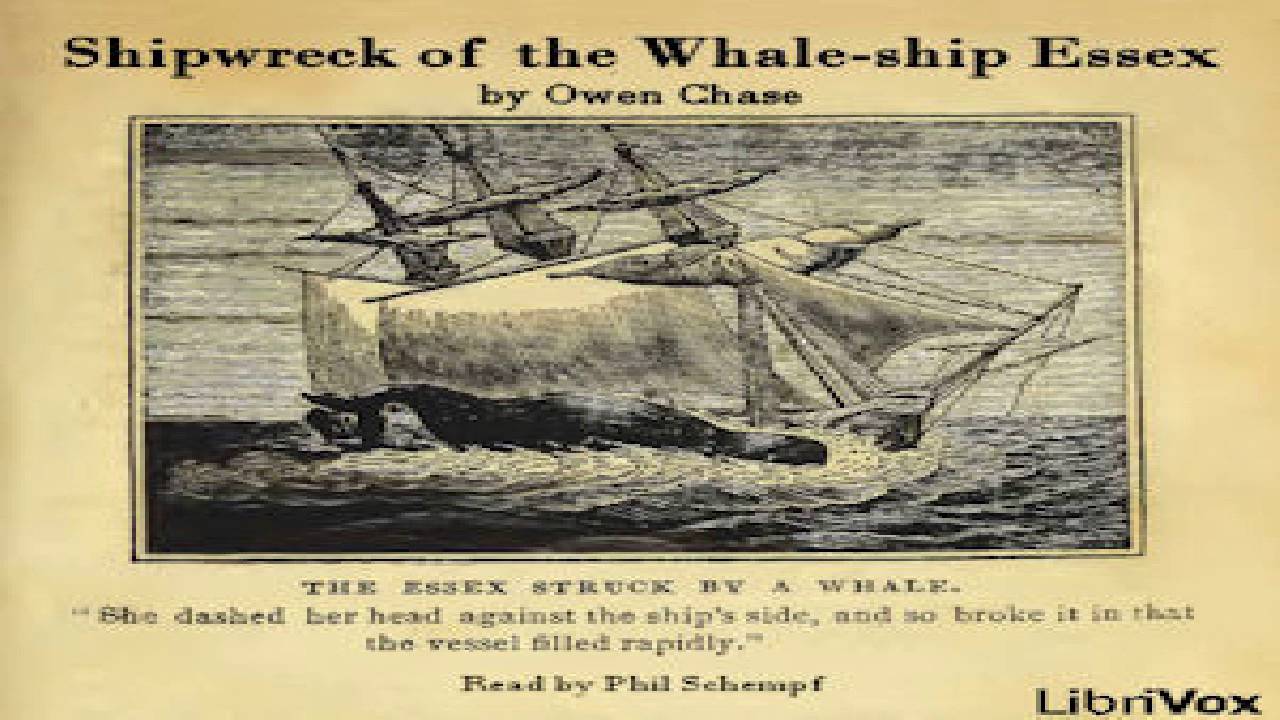
 Captain George Pollard’s boat was the first to make it back, and he stared in disbelief. “My God, Mr. Chase, what is the matter?” he asked. “We have been stove by a whale” came the reply.
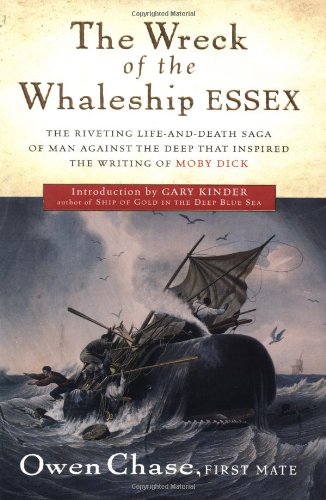 They never knew that this was Henderson Island, only 104 miles from Pitcairn Island, where survivors from the 1789 Mutiny on HMS Bounty had managed to survive for the past 36 years.

 Barbary pirates were a problem for Mediterranean shipping, and throughout parts of the Atlantic. Predominantly North African Muslims with the occasional outcast European, the Barbary pirates operated with the blessing of the Ottoman Empire, the Barbary Coast states of Algiers, Tunis & Tripoli, and the independent Sultanate of Morocco. The Barbary Corsairs had long since stripped the shorelines of Spain and Italy in search of loot and Christian slaves.
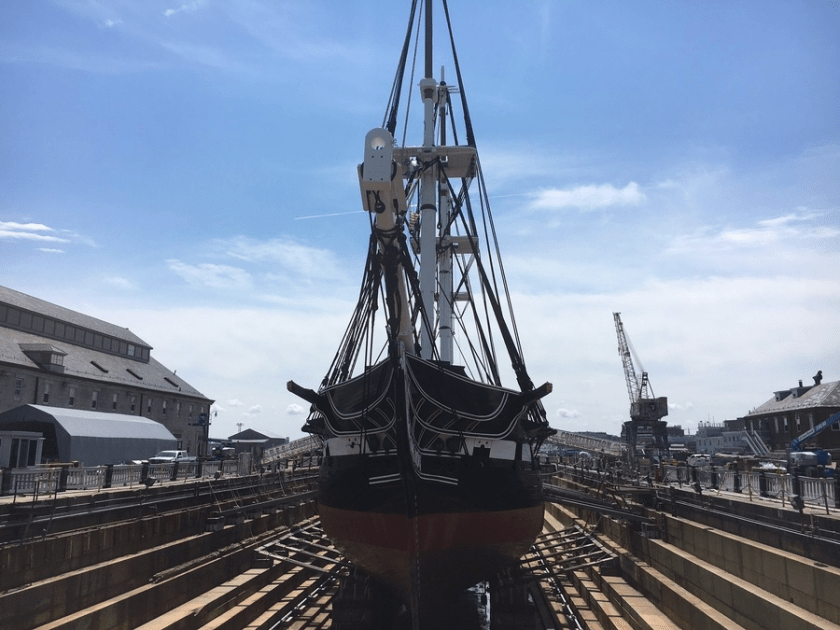
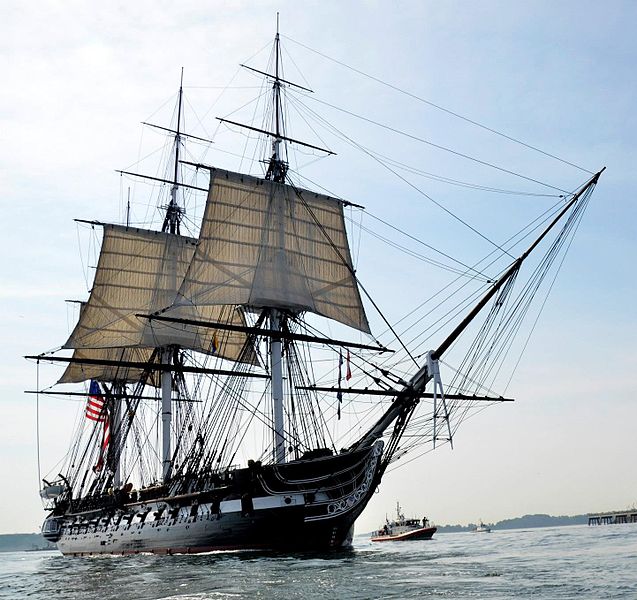 Constitution’s first duties involved the “quasi-war” with France, but this was not the France which helped us win our independence. France had been swallowed up in a revolution of its own by this time. Leftists calling themselves “Jacobins” had long since sent their Bourbon King and his Queen Consort to the guillotine. Marie-Joseph Paul Yves Roch Gilbert du Motier,
  Two months after the War of 1812 broke out in June, Constitution faced off with the 38 gun HMS Guerriere, about 400 miles off the coast of Halifax. Watching Guerriere’s shots bounce off Constitution’s 21” thick oak hull, an American sailor exclaimed “Huzzah! her sides are made of iron!” Guerriere was reduced to an unsalvageable hulk in twenty minutes, and the nickname “Old Ironsides” was born.

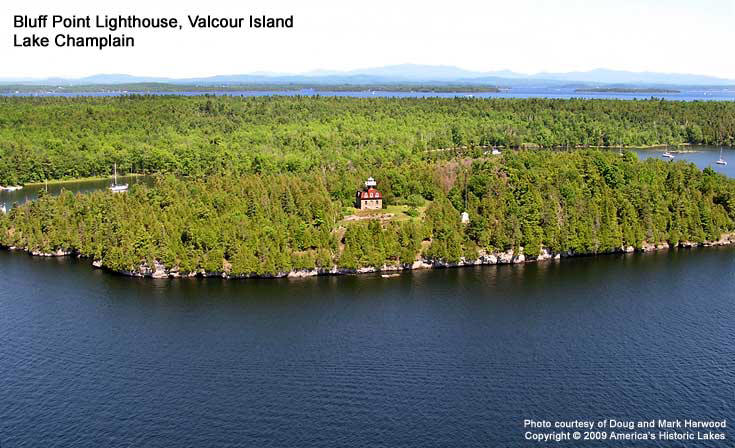
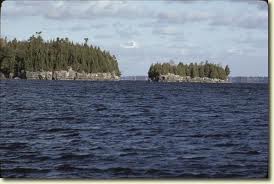
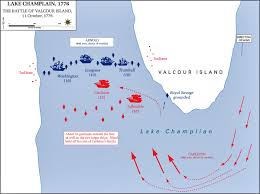 Sailing south on the 11th under favorable winds, some of the British ships had already passed the American position behind Valcour island, before realizing they were there. Some of the British warships were able to turn and give battle, but the largest ones were unable to turn into the wind.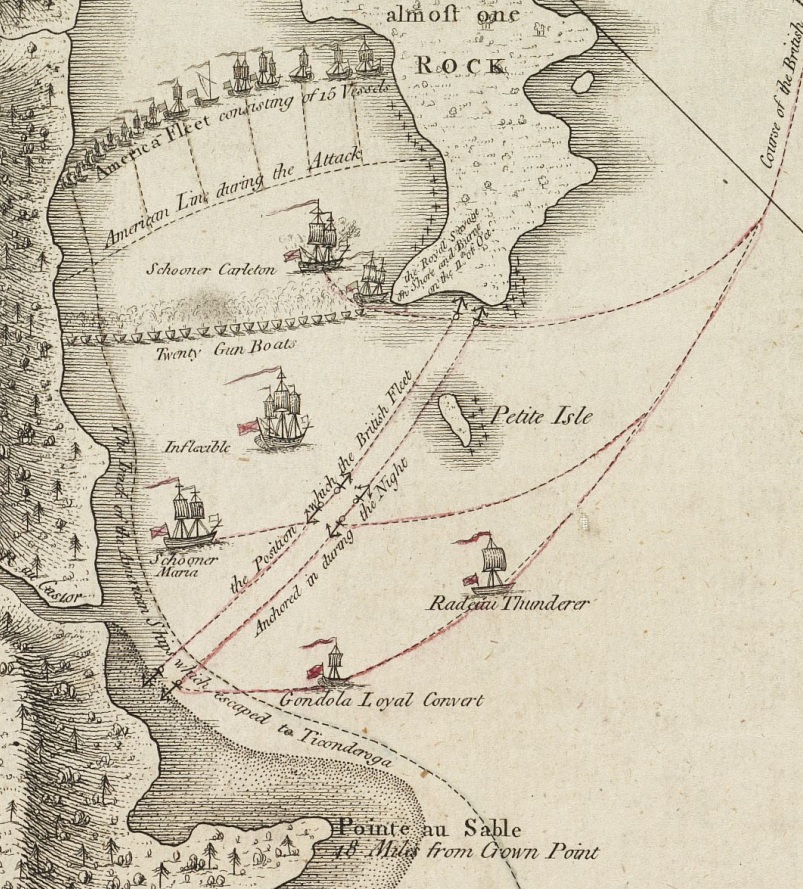
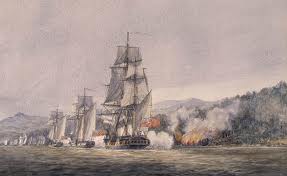 On the third day, the last four gunboats and Benedict Arnold’s flagship Congress were run aground in Ferris Bay on the Vermont side, following a 2½-hour running gun battle. Today, the small harbor is called Arnold’s Bay.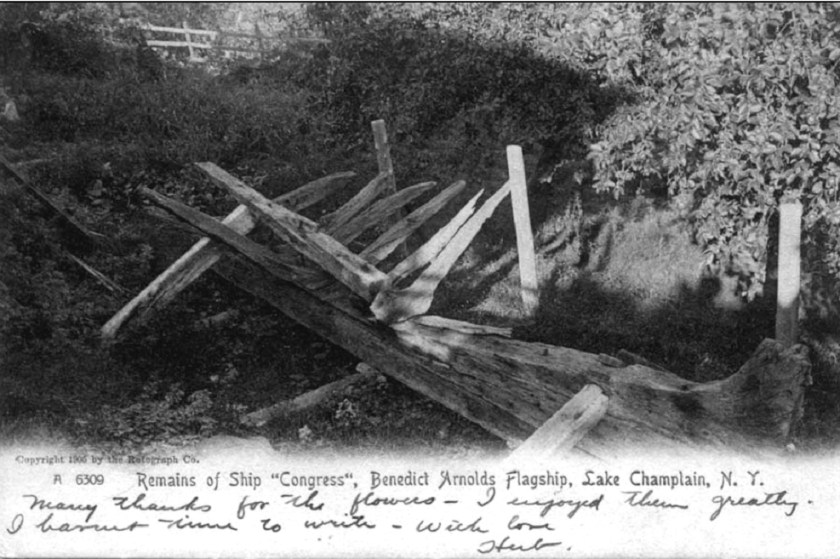


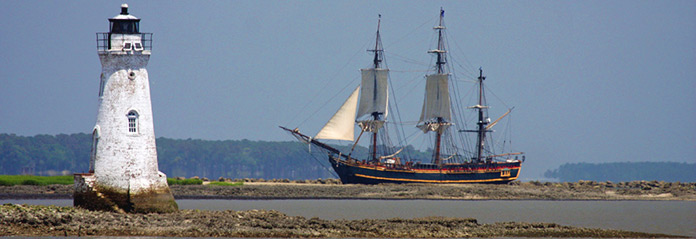



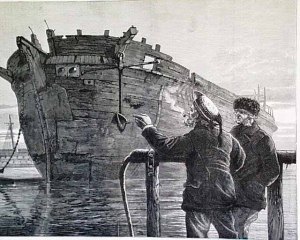
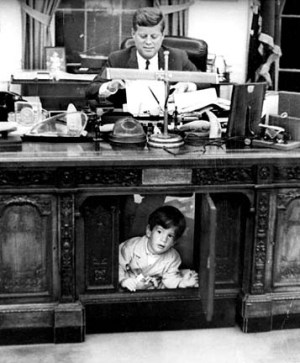
 HMS Resolute was a Barque rigged merchant ship, purchased by the English government in 1850 as the Ptarmigan, and refitted for Arctic exploration. Re-named Resolute, the vessel became part of a five ship squadron leaving England in April 1852, sailing into the Canadian arctic in search of the Franklin expedition, which had disappeared into the ice pack in 1845.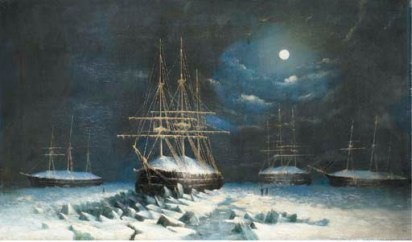


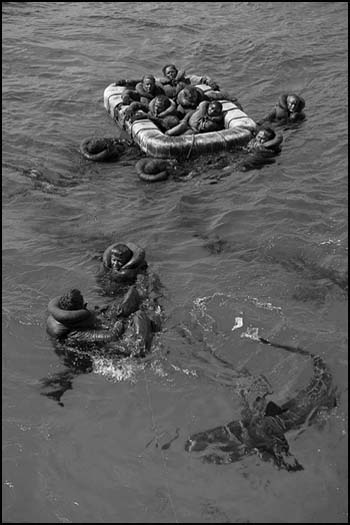
 Indianapolis made her delivery on July 26, arriving at Guam two days later and then heading for Leyte to take part in the planned invasion of Japan. She was expected to arrive on the 31st.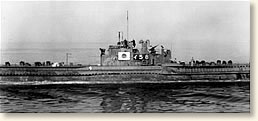



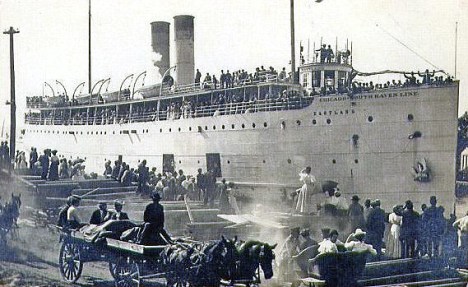
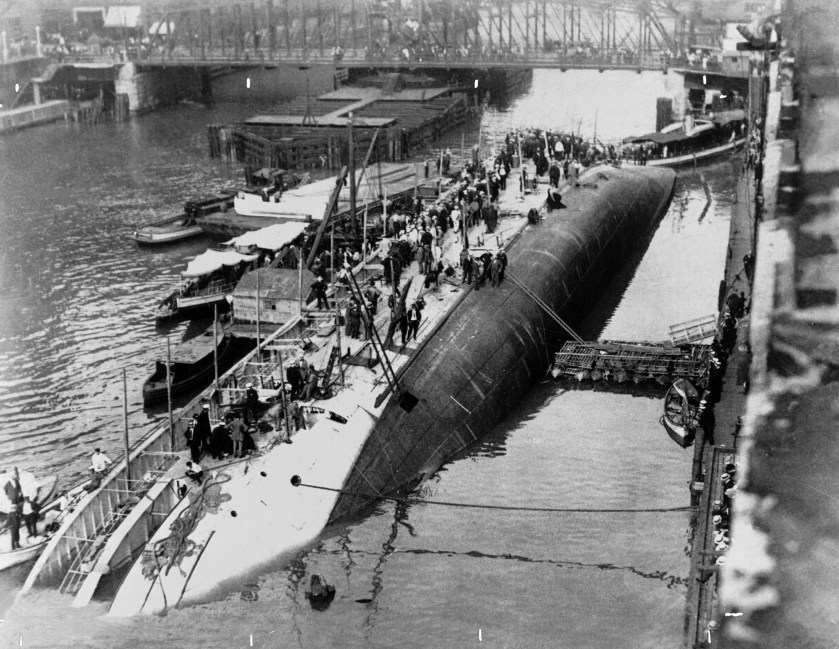
 Temporary morgues were set up in area buildings for the identification of the dead; including what is now the sound stage for The Oprah Winfrey Show, Harpo Studios, and the location of the Chicago Hard Rock Cafe.
 Historical Easter Eggs - Today in History
You must be logged in to post a comment.