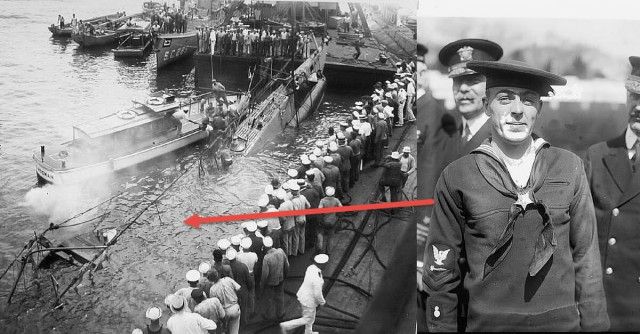
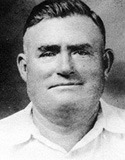
December 5, 1941 Henry Breault

It is a searing act of imagination, merely to contemplate those 17 days. Trapped and disoriented inside that black, upside down hell, waiting and desperately hoping for a rescue that would come, too late. A searing act, merely of the imagination. What would it be to enter such a place, as an act of free will.

December 5, 1941 was a Friday. The conflict destined to be known as World War 2 was still, “over there”. The United States was neutral, and at peace. The aircraft carrier USS Lexington and five heavy cruisers leave the US Pacific naval anchorage at Pearl Harbor, unaware that only yesterday, Emperor Hirohito approved the attack to be carried out, in two days.

It was literally “out of the blue”, when the first wave of enemy aircraft arrived at 7:48 local time, December 7, 1941. 353 Imperial Japanese warplanes approached in two waves out of the southeast, fighters, bombers, and torpedo planes, across Hickam Air Field and over the waters of Pearl Harbor. Tied in place and immobile, the eight vessels moored at “Battleship Row” were easy targets.

In the center of the Japanese flight path, sailors and Marines aboard the USS Oklahoma fought back furiously. She didn’t have a chance. Holes as wide as 40-feet were torn into the hull in the first ten minutes. Eight torpedoes crashed into her port side, each striking higher up as the Battleship slowly rolled over.

Bilge inspection plates had been removed for a scheduled inspection that Monday, making counter-flooding to prevent capsize, impossible. Oklahoma rolled over and died as the ninth torpedo slammed home. Hundreds scrambled out across the rolling hull, jumping overboard into the oil covered, flaming waters of the harbor, or crawling out on mooring lines in the attempt to reach USS Maryland in the next berth.
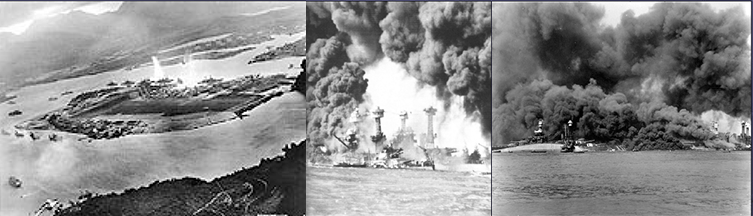
Nine Japanese torpedoes struck Oklahoma’s port side, in the first ten minutes.

The damage was catastrophic. Once the pride of the Pacific fleet, all eight battleships were damaged, four sunk. Nine cruisers, destroyers and other ships were damaged and another two sunk. 347 aircraft were damaged, most while still on the ground. 159 of those were destroyed altogether. 2,403 were dead or destined to die from the attack, another 1,178 wounded.

Frantic around the clock rescue efforts began almost immediately, to get at 461 sailors and Marines trapped within the hull of the Oklahoma. Tapping could be heard as holes were drilled to get to those trapped inside. 32 of them were delivered from certain death. 14 Marines and 415 sailors lost their lives on board Oklahoma, either immediately, or in the days and weeks to come. Bulkhead markings would later reveal that, at least some of the doomed would live for another seventeen days in the black, upside-down hulk of that ship. The last such mark was drawn by the last survivor on Christmas Eve.

It is a searing act of imagination, merely to contemplate those 17 days. Trapped and disoriented inside that black, upside down hell, waiting and desperately hoping for a rescue that would come, too late.

A searing act, merely of the imagination. What would it be to enter such a place, as an act of free will.

Let’s rewind. To 1914.

Early attempts had failed, to build a sea-level canal across the 50-mile isthmus of Panama. It was decided instead, the canal would be comprised of a system of locks. The giant crane barges Ajax and Hercules were ordered in 1913, to handle the locks and other large parts, in building the canal. The two cranes arrived in Cristóbal, Colón, Panama on December 7, 1914.

Ajax crane barge at work in the canal zone, 1914

Much of the world was at war at this time while the United States, remained neutral. Henry Breault was born to be a sailor and at sixteen, enlisted in the British Royal Navy. For four years, the Connecticut-born Vermonter served under the White Ensign. When his four-year tour ended in 1921, he joined the US Navy.

In 1923, now-torpedoman First Class Henry Breault was assigned to the O-Class submarine USS O-5 (SS-66). On October 28, O-5 under the command of Lieutenant Harrison Avery was leading a column of submarines across Limon Bay, toward the canal entrance.

The steamship SS Abangarez, owned by the United Fruit Company, was underway and headed for dock 6, at Cristobal. There were navigational errors and miscommunications and, at about 0630, Abangarez collided with the submarine, tearing a ten-foot opening on her starboard side.
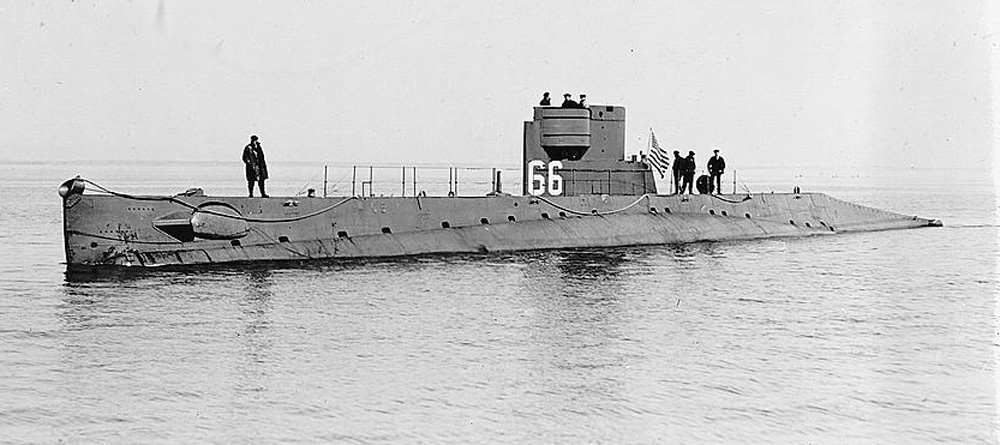
USS O-5

The main ballast tank was breached. O-5 was doomed. As the submarine rolled sharply to port and then to starboard, Avery gave the order to abandon ship. Breault was a few short steps to safety when he realized. Chief Electrician’s Mate Lawrence T. Brown was still below, sleeping. As the bow was going under, Breault shut the deck hatch over his head, and went below.

Brown was awake by this time, but unaware of the order to abandon ship. The pair headed aft toward the control hatch, but it was too late. With the dying sub rapidly filling with water, Breault and Brown made their way to the torpedo room, and dogged the main hatch. Seconds later the battery shorted, and exploded. The two men were trapped under 42-feet of water with no food, no water and only a single flashlight, to pierce the stale air of that tiny, pitch black compartment. It was all over, in about a minute.

Salvage efforts were underway almost immediately, from nearby submarine base, Coco Solo. By 10:00, divers were on the bottom, examining the wreck. Divers hammered on the hull starting aft and working forward, in a search for survivors. On reaching the torpedo room they were answered, by hammer blows from the inside. Somebody’s still alive in that thing.

There were no means of rescue in those days, save for physically lifting the submarine with pontoons, or crane. There were no pontoons within 2,000 miles but the giant crane barges Ajax and Hercules were in the canal zone, working to clear a landslide from Gaillard Cut. (Now known as the Culebra cut).
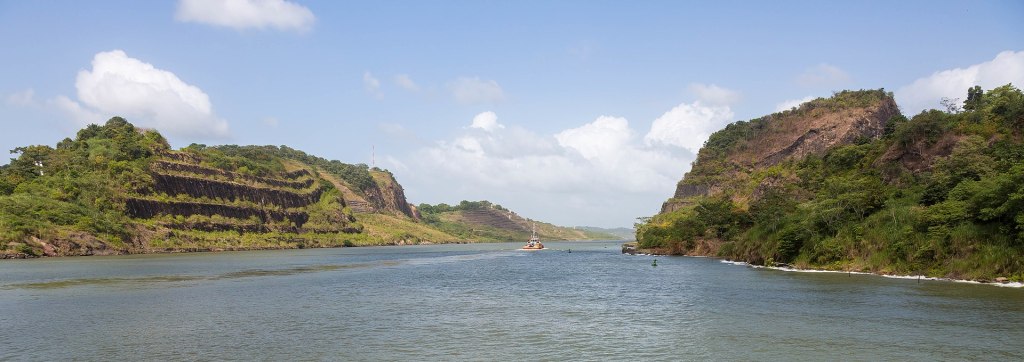
“The Culebra Cut. An artificial valley along the Pacific Ocean to Gatun Lake (ahead) and eventually the Caribbean Sea.. Water level here is 85 feet above sea level…Contractor’s Hill is on the left and Gold Hill is on the right.” H/T Wikipedia

A simple excavation now became a frantic effort to clear enough debris for Ajax, to squeeze itself through the cut.
Divers worked around the clock to dig a tunnel under the sub, through which to snake a cable. Sheppard J. Shreaves, supervisor of the Panama Canal’s salvage crew and himself a qualified diver, explained: “The O-5 lay upright in several feet of soft, oozing mud, and I began water jetting a trench under the bow. Sluicing through the ooze was easy; too easy, for it could cave in and bury me. … Swirling black mud engulfed me, I worked solely by feel and instinct. I had to be careful that I didn’t dredge too much from under the bow for fear the O-5 would crush down on me.”

Ajax arrived around midnight and by early morning the tunnel had been dug, the cables run and attached to Ajax’ hook. Cables strained as the lift began and then…disaster. The cable snapped.

Inside, the headaches were terrific from the pressure and the stale air but all around them, they could hear it. The scraping sounds that meant, rescue was on the way.

Sheppard Shreaves and his team of exhausted divers were now in their suits for nearly 24 hours, working to snake a second set of cables under the bow. Again the strain, as Ajax brought up the slack. Again…disaster. The second set of cables, snapped.

Midnight was approaching on the 29th when the third attempt began, this time with buoyancy added, by blowing air into the flooded engine room. O-5 broke the surface just after midnight. For the first time in 31 hours, two men were able to take in a breath of fresh air. The pair were rushed to the base at Coco Solo for medical examination, and to decompress.

Henry Breault presented the Medal of Honor by President Calvin Coolidge.

Henry Breault received the Medal of honor for what he did that day. Sheppard Shreaves received the Congressional Life Saving Medal, personally presented by Henry Breault and Lawrence Brown along with a gold engraved watch, a gift from the grateful submariners, of Coco Solo.

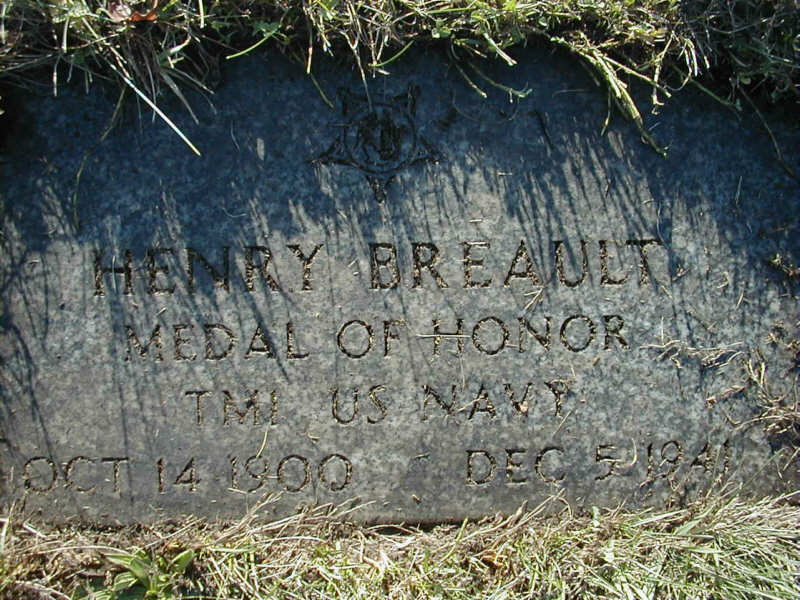
Henry Breault served 20 years with the US Navy and later became ill, with a heart condition. He passed away on this day in 1941 at the age of 41, and went to his rest in St. Mary’s cemetery, in Putnam Connecticut. To this day the man remains the only enlisted submariner in history, to receive the Medal of Honor.
December 3, 1586 A Food Fit for Peasants, and Livestock

Among other virtues, the potato provides more caloric energy per acre of cultivation than either maize or grain and, being below ground, is likely to survive calamities that would flatten other crops. Taters quickly became staple foods in northern and eastern Europe, while in other areas remaining the food of peasants and livestock.

In time of plenty, it is an act of conscious will to imagine the process of starvation. Not the hunger of the mind nor even the body but that sustained state of deprivation which brings with it, the slow and agonizing end of life.

The first phase. The body turns inward converting glycogen stored in the liver, into fuel. Glucose. The process lasts only a few hours and then comes the breakdown of fats, and proteins.

The second phase can last for weeks as the liver metabolizes fatty acids into ketone bodies, used for energy. Proteins not essential for survival, are consumed.

These first two phases take place, even during moderate periods of dieting and fasting. The third phase begins only after prolonged periods of starvation. The body’s fat reserves are now depleted. Muscle tissue is consumed, for fuel. Cell function degenerates as the sufferer becomes withdrawn, listless, increasingly vulnerable to disease and infection. Some experience distended liver and massive edema seen particularly in children…the swollen belly, the cruel and superficial illusion that such youngsters are in fact, well fed. Few die directly from starvation but rather collapse of organ function or cardiac arrhythmia brought about by severe imbalance. Or opportunistic infection, afflicting a body no longer able to defend itself.

The process is over in as little as three weeks or as long as seventy days.

“Marasmus, a form of protein-energy malnutrition occurring chiefly among very young children in developing countries, particularly under famine conditions, in which a mother’s milk supply is greatly reduced. Marasmus results from the inadequate intake of both protein and calories; persons with a similar type of protein-energy malnutrition, kwashiorkor, do not obtain enough protein but still consume a moderate number of calories”. H/T Britannica

Massive hunger events are as old as recorded history, when our early ancestors first abandoned hunter-gatherer lifestyles to build agricultural settlements. Scientists believe the 100-year drought beginning in 2200BC may well have collapsed the old order from Egypt to the Akkadian Empire in Mesopotamia to the Indus Valley and the Indian sub-continent. Evidence of an intense and sustained period of aridity may be found from Andean glacier ice to Italian cave flowstone to the Kilimanjaro ice sheet.

The final collapse of the Roman Empire in Italy brought about by the sack of Rome in 476, led to a sustained period of plague and famine. The population of Rome itself fell by some 90 percent.

The next 800 years saw no fewer than 40 worldwide starvation events. The Great Famine of 1315-’17 killed 7.5 million in Europe alone, at a time when worldwide population is estimated, at 450 million.

Enter, the lowly spud.

The Inca of Peru appear to have been the first to cultivate potatoes, around 8,000BC.

Wild potatoes contain toxins to defend themselves against fungi and bacteria, toxins unaffected by the heat of cooking.  In the Andes, mountain people learned to imitate the wild guanaco and vicuña, licking clay before eating the poisonous plants. In this manner, toxins pass harmlessly through the digestive tract. Mountain people dunk wild potatoes in “gravy” made of clay and water, accompanied with coarse salt. Eventually, growers developed less toxic tubers, though the poisonous varieties are still favored for their frost resistance.  Clay dust is sold in Peruvian and Bolivian markets, to this day.

Spanish Conquistadors arriving in Peru in 1532 eventually brought potatoes home to Spain.  The first written mention of the tuber comes from a delivery receipt dated November 28, 1567, between the Grand Canaries and Antwerp.

The English expedition destined to end in the Lost Colony of Roanoke began in 1585, financed by Sir Walter Raleigh and led by Sir Ralph Lane. On board was the Oxford trained mathematician and astronomer Sir Thomas Herriot who returned to the British Isles this day in 1586, with Columbian potatoes.

Among other virtues, the potato provides more caloric energy per acre of cultivation than either maize or grain and, being below ground, is likely to survive calamities that would flatten other crops.  Taters quickly became staple foods in northern and eastern Europe, while in other areas remaining the food of peasants and livestock.

French army pharmacist Antoine-Augustin Parmentier was captured by Prussians during the seven years war, learning in captivity to appreciate the gustatorial delights of the potato.  Primarily used as hog feed in his native country, Parmentier was determined to bring respectability to the lowly tuber.  It must have been a tough sell. Many believed that potatoes caused leprosy. 

The Paris Faculty of Medicine declared potatoes edible in 1772, thanks largely to Parmentier’s efforts.  He would host dinners featuring multiple potato dishes, inviting such luminaries as Benjamin Franklin and Antoine Lavoisier.  Franklin was enormously popular among the French nobility.  Before long King Louis XVI himself, was wearing the purple potato flower in his lapel.  Marie Antoinette wore them in her hair.

Sir Walter Raleigh introduced potatoes to Ireland in 1589.  The crop occupied one third of arable land in Ireland within two generations, due to landless laborers renting tiny plots from landowners interested only in raising cattle or producing grain for market. An acre of potatoes and the milk of a single cow was enough to sustain a family.  Even poor families could grow enough surplus to feed a pig which could then be sold, for cash.

Calamity struck in 1845 in the form of a blight so horrific, that US military authorities once considered stockpiling the stuff as a biological weapon.  Seemingly overnight, Ireland’s staple food crop, tragically based on but a single strain, collapsed into a black, stinking ooze.  The seven years’ “an Gorta Mór”, “the Great Hunger”, killed over a million Irish and reduced the population by 20-25% through death and emigration. 

Today, many see the effects of the absentee landlord system and the penal codes as a form of genocide.  At the time, already strained relations with England were broken, giving rise to Irish republicanism and leading to Irish independence in the following century.

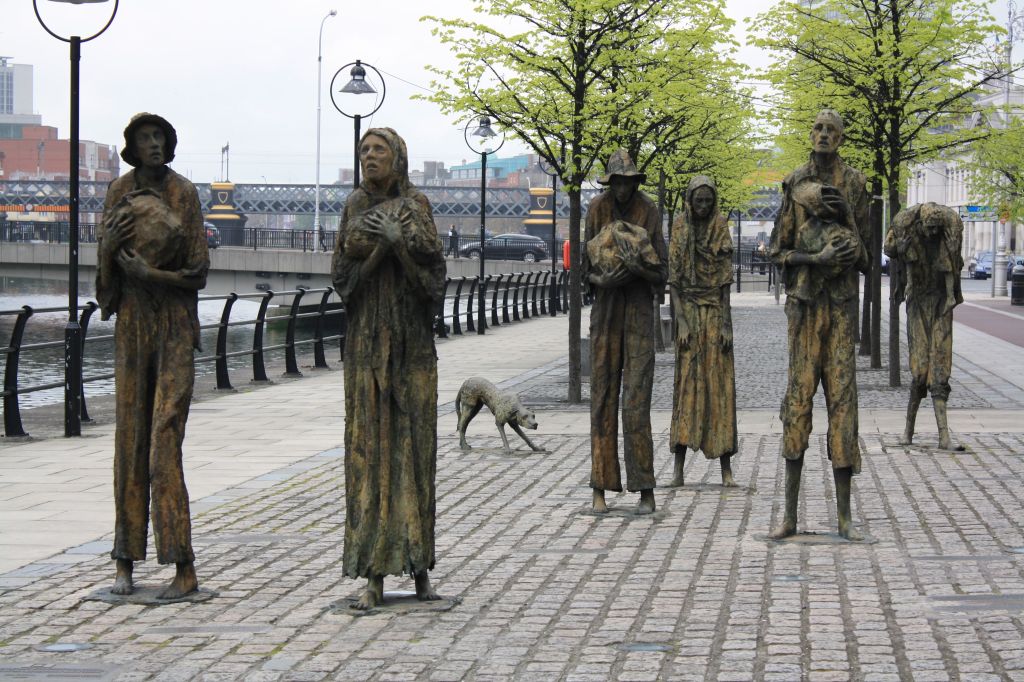
Dublin Memorial remembers the Irish potato famine of 1845

Until Nazis tore the thing down, there was a statue of Sir Francis Drake in Offenburg, Germany, giving him credit for introducing the potato. The explorer’s right hand rested on the hilt of his sword, his left gripping a potato plant. The inscription read “Sir Francis Drake, disseminator of the potato in Europe in the Year of Our Lord 1586. Millions of people who cultivate the earth bless his immortal memory”.

Not until the “Green Revolution” of Norman Borlaug, could cereal grains even compete. Today, potatoes are the 5th largest crop on the planet following rice, wheat, maize and sugar cane.  Almost 5,000 varieties are preserved in the International Potato Center, in Peru.

Scientists have created genetically modified potatoes to ward off pests.  The “New Leaf”, approved in 1995, incorporated a bacterial gene rendering the plant resistant to the Colorado potato beetle, an “international superpest” so voracious that some give the critter credit for creating the modern pesticide industry. 

Other varieties were genetically modified to resist phytophthora infestans, the cause of the Irish potato famine.  Seeming to prefer insecticides and anti-fungal sprays, “food activists” decry such varieties as “Frankenfoods”.  Each time, the improved variety has been hounded out of business.

In 2014, the J.R. Simplot Company received approval for their “Innate” potato.  Rather than “transgenic” gene splicing, the introduction of genome sequences from unrelated species, the innate variety uses a “silencing” technique on the tuber’s own genes, to resist the bruising and browning that results in 400 million pounds of waste and a cost to consumers of $90 million.

The Innate potato produces less acrylamide, a known carcinogen produced by normal potatoes in the high heat of fryers.  Approved for human consumption in 2015, the Innate might actually be the first genetically modified variety to succeed in the marketplace. McDonald’s, possibly the largest potato user on the planet, announced that “McDonald’s USA does not source GMO potatoes, nor do we have current plans to change our sourcing practices.”

In October 2018, the “Non-GMO Project” classified the J.R. Simplot product as “High-Risk”. You can never underestimate the power of hysterical people in large groups.

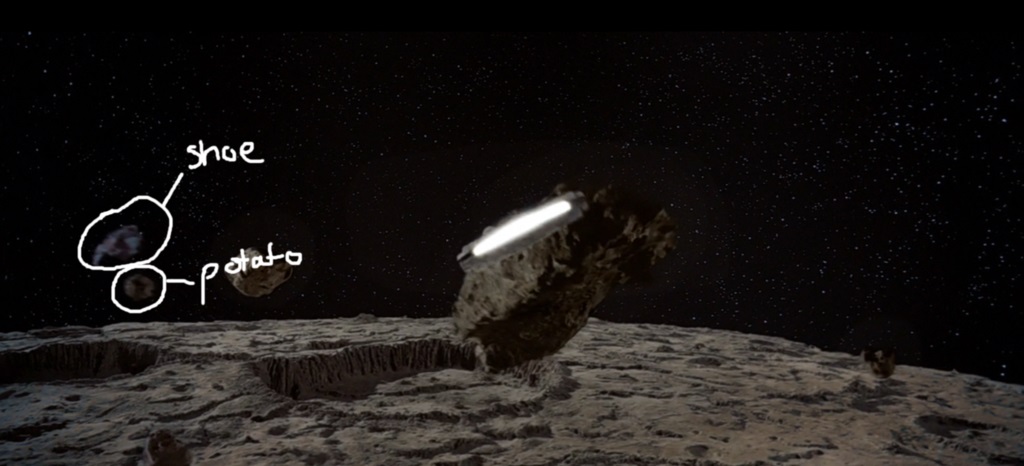
Fun fact: Some of the “asteroids” filmed in Star Wars Episode V The Empire Strikes Back were, in fact, potatoes.

November 24, 1917 Anarchy

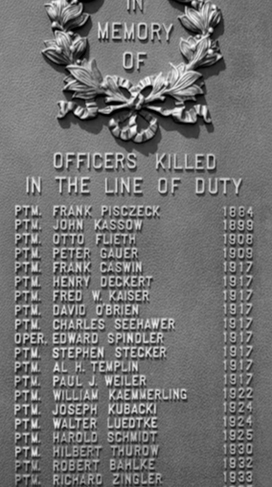
The 1917 incident accounted for the largest single-incident loss of life in the history of United States law enforcement, a record which would stand until September 11, 2001.


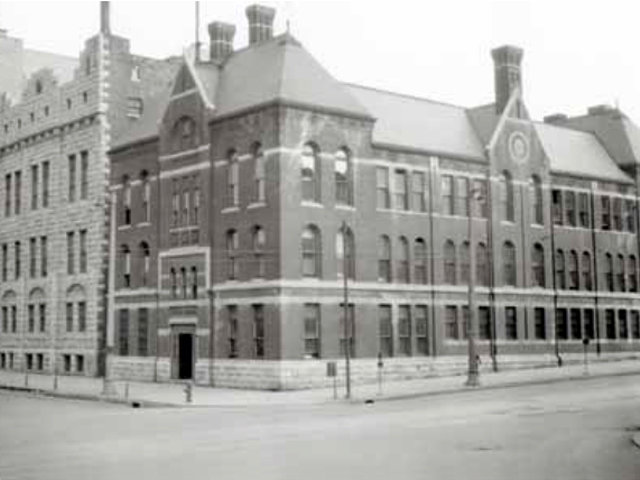
On the morning of November 24, 1917, 10-year-old Josie Spicciatti found a package in a narrow passage next to St. Anne’s Italian Evangelical Church in Milwaukee. She was the daughter of the cleaning lady, and apparently recognized it as a bomb.  She brought it into the church anyway, and went to work.

Only that afternoon did she go looking for Maude Richter, a social worker at the church. At about 4:00, Maude dragged the 20-pound bomb into the church basement, banging it on the steps all the way down. She later told a reporter, “I saw the vial, which contained a brown fluid” (it was sulfuric acid), “and took it out. In the hole, where it had been placed, was a yellow substance like powder.”

1917-police-station-bomb-anniversary_fullsize_story1

She then decided that things should be left as they’d been found, so she carefully reassembled the device and called Sam Mazzone, the janitor, to take the bomb to the police station. Mazzone explained to Desk Sergeant Henry Deckert that the bomb may be linked to a near riot which had erupted several months earlier, killing two parishioners and wounding 5, including two police officers.

mpdmemorialvertical

Policemen on duty were told there was a bomb in the station, but it seems that few took it seriously. Captain of Detectives John Sullivan remarked “It looked like a big dinner pail and innocent enough.”

Sergeant Deckert took the bomb into the office of Lieutenant Robert Flood, saying, “Look at the new kind of bomb I’ve got.” “Get that thing out of here”, said Flood. “Don’t fool around with anything like that!” Deckert then brought the bomb into the squad assembly room, where a group of detectives gathered to examine the device.

That’s when the thing went off.

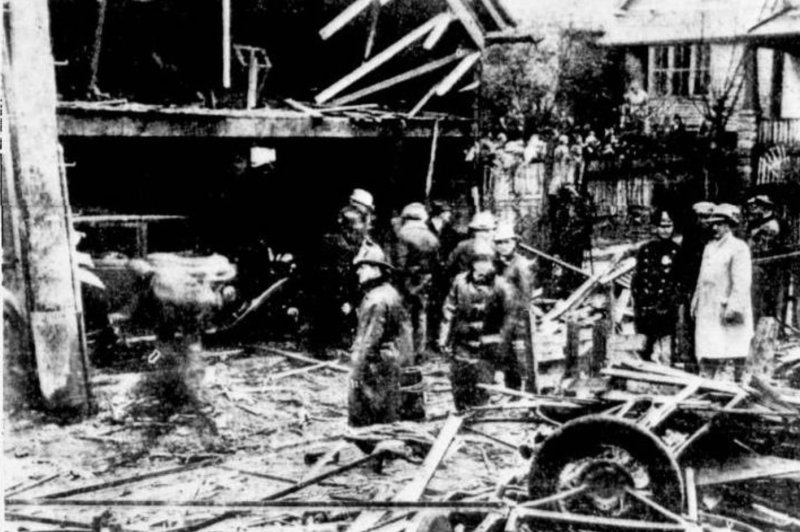
Eight officers were killed in a fraction of a second as was Catherine Walker, who had come to the station to file a complaint against her boyfriend. Operator Edward Spindler was working the switchboard on the second floor. Shrapnel blasted through the floor, entering his body at the waist and exiting through his head, killing him instantly.

One detective’s wedding band was blown from his finger. A shoe hung from the ceiling. A hat hung on a shard of glass.  One detective’s watch was found, face up on a windowsill, the hands had stopped at 7:33PM. Sergeant Deckert’s body was never found. He was identified only by the stripe of his uniform trousers leg.

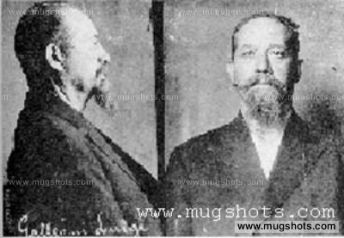
Luigi_Galleani_mugshot.400x800
Luigi Galleani

A group led by Italian Anarcho-Communist Luigi Galleani was suspected of placing the bomb, though no one was ever charged with the crime.

Many years later, interviews with surviving members of the anarchist organization indicated that Mario Buda, chief bomb maker for the Galleanists, may have constructed the Milwaukee device. The bomb had been intended for the small Italian church and its outspoken and patriotic pastor, Reverend August Giuliani.

The Milwaukee police station bombing accounted for the largest single-incident loss of life in the history of United States law enforcement, a record which would stand until September 11, 2001.

November 23, 1932 Holodomor

Warm and well fed with Russian mistress comfortably ensconced in Moscow, French wife hidden away on the Riviera, the British born New York Times Times reporter-turned international playboy opined, “You can’t make an omelet without breaking eggs.”

In 1928, Soviet Dictator Josef Stalin introduced a program of agricultural collectivization in Ukraine, the “Bread Basket” of the Soviet Union, forcing family farmers off their land and into state-owned collective farms.

Ukrainian “kulaks”, peasant farmers successful enough to hire labor or own farm machinery, refused to join the collectives, regarding such as a return to the serfdom of earlier centuries. Stalin claimed that these factory collectives would not only feed industrial workers in the cities, but would also provide a surplus to be sold abroad, raising money to further his industrialization plans.

Holodomor_Novo-Krasne_Odessa_11_1932.pngArmed “dekulakization brigades” confiscated land, livestock and other property by force, evicting entire families. Nearly half a million individuals were dragged from their homes in 1930-’31 alone, packed into freight trains and shipped off to remote areas like Siberia and often left without food or shelter.  Many of them, especially children, died in transit or soon after arrival.
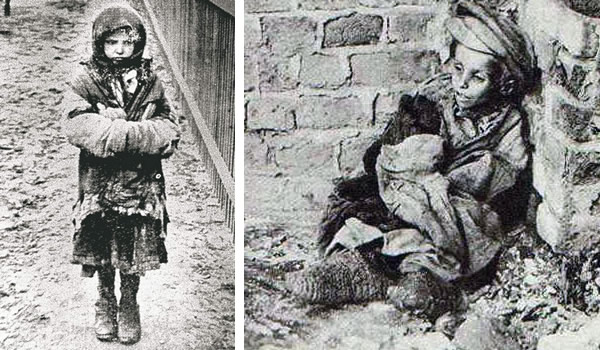

Resistance continued, which the Soviet government could not abide. Ukraine’s production quotas were sharply increased in 1932-’33, making it impossible for farmers to meet assignments and feed themselves, at the same time. Starvation became widespread, as the Soviet government decreed that any person, even a child, would be arrested for taking as little as a few stalks of wheat from the fields in which they worked.

pic_giant_110913_D-2

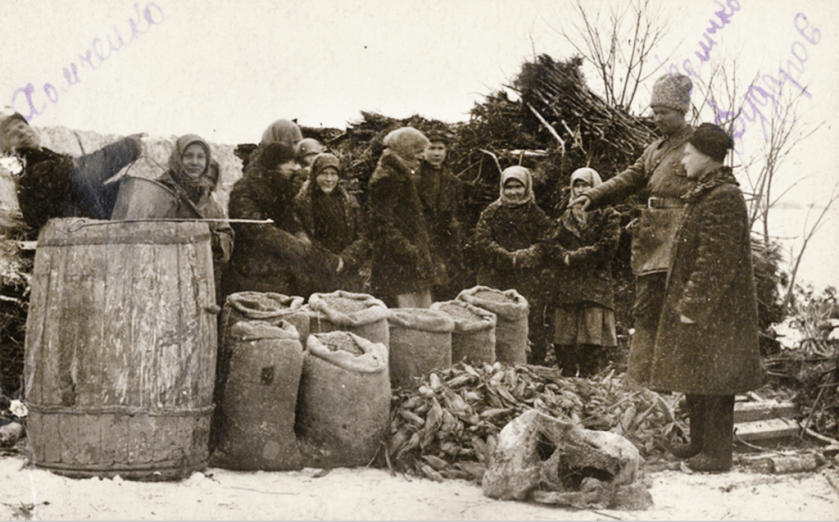
Military blockades were erected around villages preventing the transportation of food, while brigades of young activists from other regions were brought in to sweep through villages and confiscate hidden grain.

Eventually all food was confiscated from farmers’ homes, as Stalin determined to “teach a lesson through famine” to the Ukrainian rural population.

no-nb_blds_01867-beskåret-1200x1278.jpgAt the height of the famine, Ukrainians starved to death at a rate of 22,000 per day, almost a third of those, children 10 and under. How many died in total, is anyone’s guess. Estimates range from two million Ukrainian citizens murdered by their own government, to well over ten million.

Millions of tons of grain were exported during this time, more than enough to save every man, woman and child.

Holodomor, children.png

2,500 people were arrested and convicted during this time, for eating the flesh of their neighbors. The problem was so widespread that the Soviet government put up signs reminding survivors: “To eat your own children is a barbarian act.”

Stalin denied to the world there was any famine in Ukraine, a position supported by the likes of Louis Fischer reporting for “The Nation”, and Walter Duranty of the New York Times. Duranty went on to win the Pulitzer Prize for his “coverage”, with comments like “any report of a famine in Russia is today an exaggeration or malignant propaganda”. Such stories were “mostly bunk,” according to the New York Times.

Warm and well fed with Russian mistress comfortably ensconced in Moscow, French wife hidden away on the Riviera, the British born New York Times Times reporter-turned international playboy opined, “You can’t make an omelet without breaking eggs.”

1um1ow.jpgTo this day, the New York Times has failed to repudiate Walter Duranty’s Pulitzer.
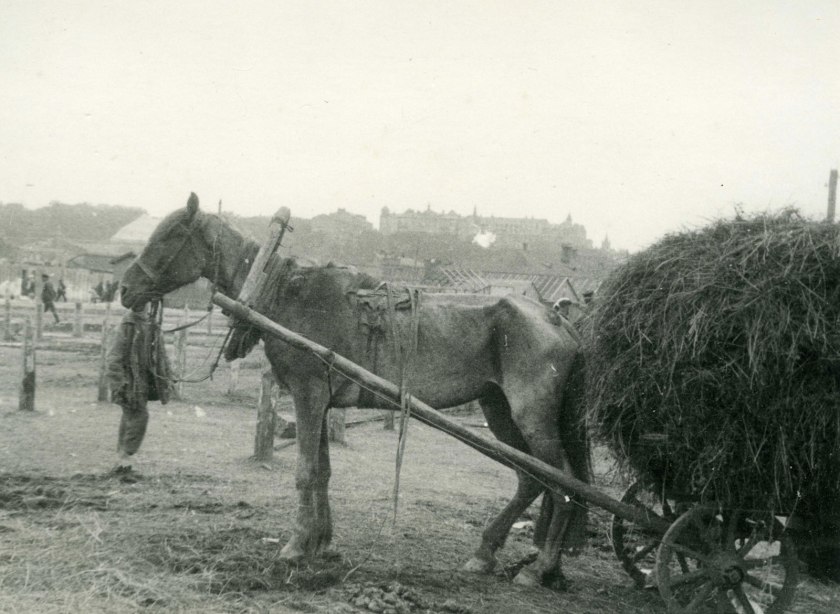
Like many on the international Left, Canadian journalist Rhea Clyman had great expectations of the “worker’s paradise” built by the Communist state, where no one was unemployed, everyone was “equal”, and Everyman had what he needed.

Unlike most, Clyman went to the Soviet Union to see for herself.

Holodomor-Great-Famine-Ukraine-emaciated-horse-1932-1933-Alexander-Wienerberger-photographer.jpgTo do so at all was an act of courage.  single Jewish woman who’d lost part of a leg in a childhood streetcar accident, traveling to a place where the Russian empire and its successor state had a long and wretched history.  Particularly when it came to the treatment of its own Jews.
Virtually all of the international press preferred the comfortable confines of Moscow, cosseted in a world of Soviet propaganda and ignorant of the world as it was.

Duranty’s idea of “bon voyage” was the cynical offer, to write her obituary.

RheaClyman6.jpg
Rhea Clyman

In four years, Clyman not only learned the language, but set out on a 5,000-mile odyssey to discover the Soviet countryside, as it really was.

It is through this “Special Correspondent in Russia of The Toronto Evening Telegram, London Daily Express, and Other Newspapers“, that we know much about the government’s extermination of its own citizens in Ukraine.

To read what Clyman wrote about abandoned villages, is haunting.  The moment of discovery:  “They wanted something of me, but I could not make out what it was. At last someone went off for a little crippled lad of fourteen, and when he came hobbling up, the mystery was explained. This was the Village of Isoomka, the lad told me. I was from Moscow, yes; we were a delegation studying conditions in the Ukraine, yes. Well, they wanted me to take a petition back to the Kremlin, from this village and the one I had just been in. “Tell the Kremlin we are starving; we have no bread!”

A tall, bearded peasant was spokesman. His two sons and the rest of the men and women nodded approval at every word. The little crippled boy stood with his right hand on his crutch, translating everything he said into Russian for me, word by word.  “We are good, hard-working peasants, loyal Soviet citizens, but the village Soviet has taken our land from us. We are in the collective farm, but we do not get any grain. Everything, land, cows and horses, have been taken from us, and we have nothing to eat. Our children were eating grass in the spring….” 

I must have looked unbelieving at this, for a tall, gaunt woman started to take the children’s clothes off. She undressed them one by one, prodded their sagging bellies, pointed to their spindly legs, ran her hand up and down their tortured, mis-shapen, twisted little bodies to make me understand that this was real famine. I shut my eyes, I could not bear to look at all this horror. “Yes,” the woman insisted, and the boy repeated, “they were down on all fours like animals, eating grass. There was nothing else for them.”  What have you to eat now?” I asked them, still keeping my eyes averted from those tortured bodies. “Are all the villages round here the same? Who gets the grain?”” – Rhea Clyman, Toronto Telegram, 16 May 1933

22,000 of these poor people starved to death, every day. Pitifully, many yet believed the government in Moscow was going to help. If only comrade Stalin knew…

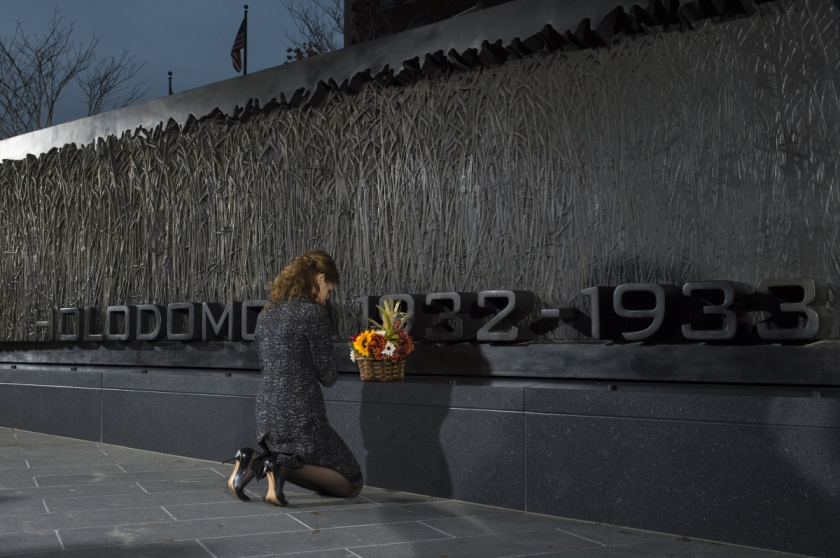
holodomor-1.jpgThe Holodomor Memorial to Victims of the Ukrainian Famine-Genocide of 1932–1933 was opened in Washington, D.C. on November 7, 2015

Today, the province of Alberta is home to about 300,000 Canadians of Ukrainian Heritage. Alberta Premier Rachel Notley once explained “Holodomor is a combination of two Ukrainian words: Holod, meaning hunger, and moryty, meaning a slow, cruel death. That is exactly what Ukrainians suffered during this deliberate starvation of an entire people“.

Ukrainians around the world recognize November 23 as Holodomor Memorial Day, commemorated by a simple statue in Kiev. A barefoot little girl, gaunt and hollow eyed, clutches a few stalks of wheat.

Holodomor memorial. The Holodomor/????????? was a man-made famine in the Ukrainian SSR between 1932 and 1933. During the famine, 2.4 – 7.5 millions of Ukrainians died of starvation.

Here in the United States, you could line up 100 randomly selected adults. I don’t believe that five could tell you what Holodomor even means. We are a self-governing Republic. All 100 should be well acquainted with the term.

November 21, 1916 Unsinkable

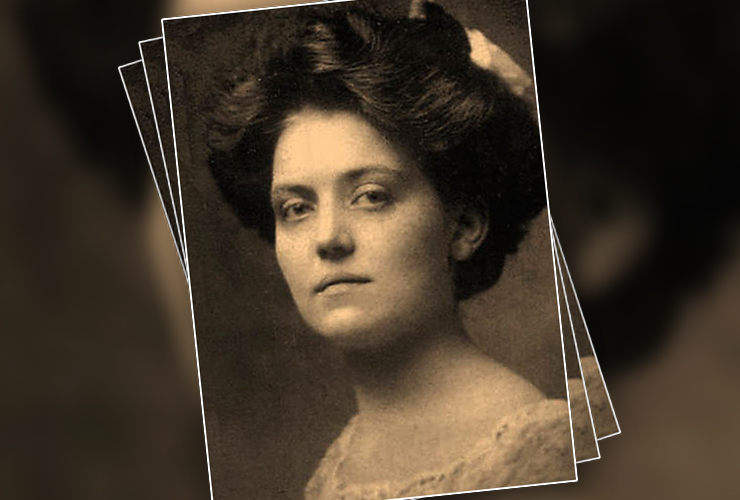
There was denial aplenty that night, from the well dressed passengers filing onto the decks. Violet Jessop counted the lighted portholes as the small boat creaked ever downward. One row, then two: every abandoned stateroom a tableau. Three, and four: feathered hats on dressers, scattered jewels, sparkling abandoned, on table tops. Five and then six: each lighted circle revealing a snapshot, a last glimpse, soon to slip out of sight.

The maiden voyage of the largest ship afloat left the port of Southampton, England on April 10, 1912, carrying 2,224 passengers and crew. An accident was narrowly averted only minutes later, as Titanic passed the moored liners SS City of New York and Oceanic.

The smaller ships lifted in the bow wave formed by Titanic’s passing, then dropped into the trough. New York’s mooring cables snapped, swinging her about, stern-first. Collision was averted by a bare 4-feet as the panicked crew of the tugboat Vulcan struggled to bring New York under tow.

Edward Smith

By the evening of the 14th, Titanic was 400 miles off the coast of Newfoundland, conditions clear, calm and cold. There were warnings of drifting ice from other ships in the area, but it was generally believed that ice posed little danger to large vessels at this time. 

Captain Edward Smith opined that he “[couldn’t] imagine any condition which would cause a ship to founder. Modern shipbuilding has gone beyond that.”

Lookout Frederick Fleet alerted the bridge of an iceberg dead ahead at 11:40pm. First Officer William Murdoch ordered the engines put in reverse, veering the ship to the left. Lookouts were relieved, thinking that collision was averted. Below the surface, the starboard side ground into the iceberg, opening a gash the length of a football field.

Violet_jessop_titanic

The ship was built to survive flooding in four watertight compartments. The iceberg had opened five. As Titanic began to lower at the bow, it soon became clear. The great ship was doomed.

Those aboard were poorly prepared for such an emergency. The vessel was built for 64 wooden lifeboats, enough for 4,000, but the White Star Liner carried only 16 wooden lifeboats and four collapsibles.

Regulations then in effect required enough room for 990 people. Titanic carried enough to accommodate 1,178.

As it was there was room for over half of those on board, provided that each boat was filled to capacity. So strictly did Royal Navy officer Charles Lightoller adhere to the “women and children first” directive, that evacuation took the form of women and children, only. Many boats were launched, half-full. The first lifeboat in the water, rated at 65 passengers, launched with 28 aboard.

Lightoller himself survived, only by clinging to the bottom of an overturned raft.

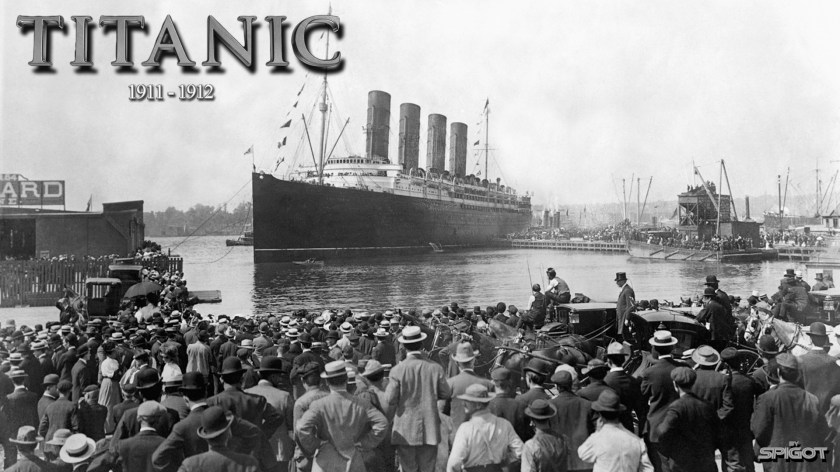
titanic-01-wallpaper

Violet Jessop was among those first to leave. A man tossed her a bundle with the words, “ look after this, will you?“. It was a baby.

As ship’s nurse, Jessop was there to look after the comfort of the White Star Line passengers. Now, this small boat full of disoriented women was being lowered into the cold and darkness of night, while all aboard the great vessel was light, and comfort, and warmth.

Denial is a funny thing, that psychological defense mechanism described by Sigmund Freud, in which a person rejects a plain fact too uncomfortable to contemplate. There was denial aplenty that night, from the well dressed passengers filing onto the decks. Violet Jessop counted the lighted portholes as the small boat creaked ever downward. One row, then two: every abandoned stateroom a tableau. Three, and four: feathered hats on dressers, scattered jewels, sparkling abandoned, on table tops. Five and then six: each lighted circle revealing a snapshot, a last glimpse, soon to slip out of sight.

Floating on the still, frigid waters of the north Atlantic, Jessop must have wondered about Captain Smith. This was not their first cruise together. This wasn’t even their first shipwreck.

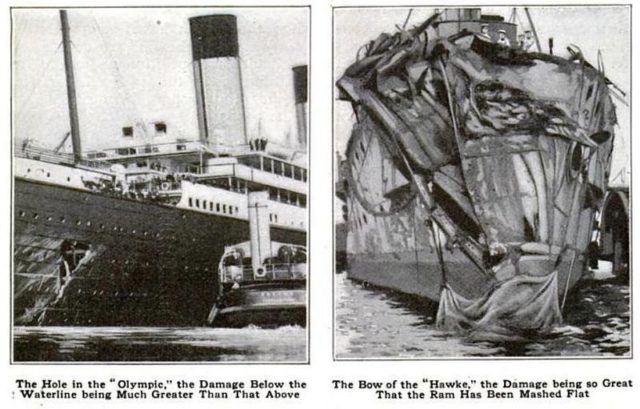
The White Star Line’s RMS Olympic set sail for New York seven months earlier with Captain Edward Smith, commanding. Violet Jessop was on duty as the Royal Navy cruiser HMS Hawke performed mechanical tests, on a course parallel to the trans-Atlantic liner. Something went wrong and the tiller froze, swinging the bow of the Edgar-class cruiser toward the liner. Hydrodynamic forces took over and the two ships collided, just after noon. The hull of the cruiser was smashed, two great gashes carved into the side of Olympic. One was below the water line.

Two compartments flooded, but the watertight doors did their job. Olympic limped back to Southampton for repairs. Captain Smith and Violet Jessop moved on to the maiden voyage of her sister ship, the unsinkable RMS Titanic.

197-640x409

Denial turned to horror that frigid April night in 1912, when six rows of lights became five and then four, and Titanic began to rise by the stern.  RMS Carpathia arrived on the scene around 4am in response to distress calls, and diverted to New York with survivors.  Four days later, a crowd of 40,000 awaited the arrival of 705 survivors , in spite of a cold, driving rain.  It would take four full days to compile and release the list of casualties.

Violet Jessop survived that night.  Captain Smith, did not.

Back in 1907, Director General of the White Star Line J. Bruce Ismay planned a series of three sister ships, to compete with the Cunard lines’ Mauritania, and Lusitania. What these lacked in speed would be made up in size, and luxurious comfort. The three vessels were to be named OlympicTitanic and Gigantic.

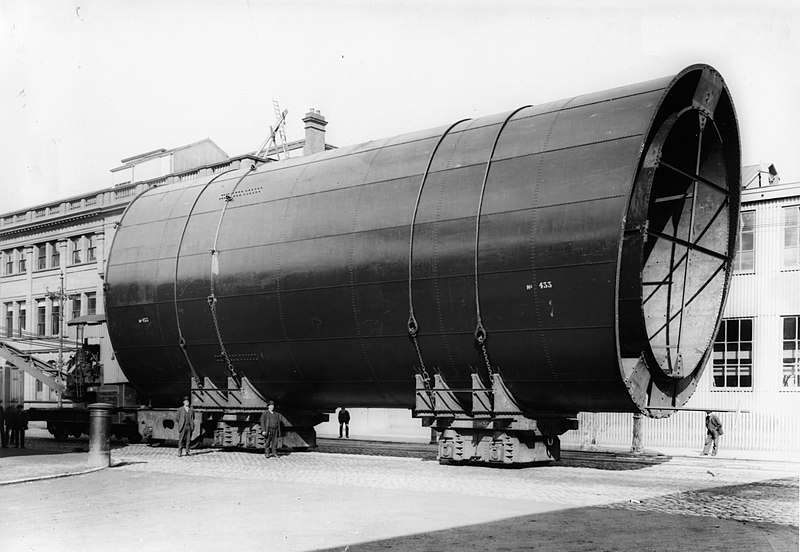
800px-Britannic_Funnel_in_transport
One of Britannic’s funnels, in transit to the ship

That last name was quietly changed following the Titanic disaster and, on December 12, 1915, the newly christened Britannic was ready for service.

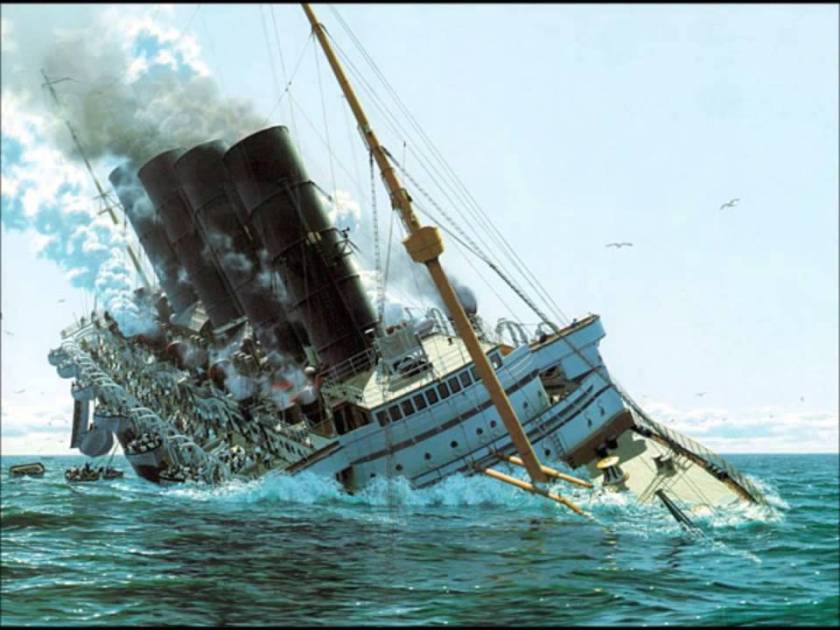
Two years later, the world was at war. Nurse Jessop was working aboard HMHS (His Majesty’s Hospital Ship) Britannic. On November 21, 1916, HMHS Britannic was on station near Kea in the Aegean Sea when she was struck by a German mine, or torpedo. Violet Jessop calmly made her way to her cabin, She’d been here, before. There she collected a ring, a clock and a prayer book, and even helped another nurse collect her composure.

maxresdefault

After the Carpathia rescue, Jessop complained to friends and family that she missed her toothbrush. Her wisecracking brother Patrick had quipped next time you wreck, “look after your toothbrush”.

This time, she didn’t forget her toothbrush.

Britannic should have survived even with five watertight compartments filled, but nurses defied orders and opened the windows, to ventilate the wards.   In fifty-five minutes, HMHS Britannic replaced her sister ship Titanic, as the largest vessel on the bottom of the sea.

Fortunately, daytime hours combined with warmer weather and more numerous lifeboats, to lessen the cost in lives.  1,035 were safely evacuated from the sinking vessel, keeping the death toll in the Britannic wreck, to thirty.

Violet Jessop survived three of the most famous shipwrecks of her age, and never tired of working at sea. She returned to work as stewardess aboard RMS Olympic after the war, before retiring to private life and passing away, in 1971.

John Maxtone-Graham, editor of “Titanic Survivor”, the story of Jessop’s life, remembers one last story about “Miss Unsinkable”. Fifty-nine years after the wreck, the phone rang late one night, during a violent thunderstorm. A woman’s voice at the other end asked “Is this the Violet Jessop who was a stewardess on the Titanic and rescued a baby?” “Yes” came the reply, “who is this?” The woman laughed: “I was that baby.”

November 20, 1820 Call me Ishmael

Never in the history of the whale fishery had a whale been known to attack a ship unprovoked. What was happening now was unmistakable.


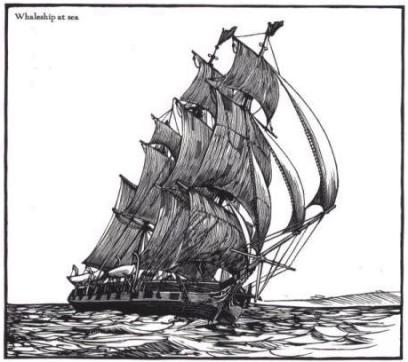
The whaleship Essex set sail from Nantucket in August 1819, the month Herman Melville was born.  The 21-man crew expected to spend 2-3 years hunting sperm whales, filling the ship’s hold with oil before returning to split the profits of the voyage.

Whaleship at sea

Essex sailed down the coast of South America, rounding the Horn and entering the Pacific Ocean.  There they heard that the whaling grounds near Chile and Peru were exhausted so they sailed for the “offshore grounds”, almost 2,000 miles from the nearest land.

That’s exactly where they were there on November 20, 1820, with two of Essex’ three boats out hunting whales.  The lookout spotted a huge bull sperm whale, behaving oddly, lying motionless on the surface with his head facing the ship. He was a large animal, much larger than most, estimated at 85 feet long and 80 tons.  In moments, he began to move. Picking up speed it soon became clear, this beast was charging the ship.   

The powerful tail churned the water to froth as the great beast closed the distance, striking the port side so hard, it shook the ship.

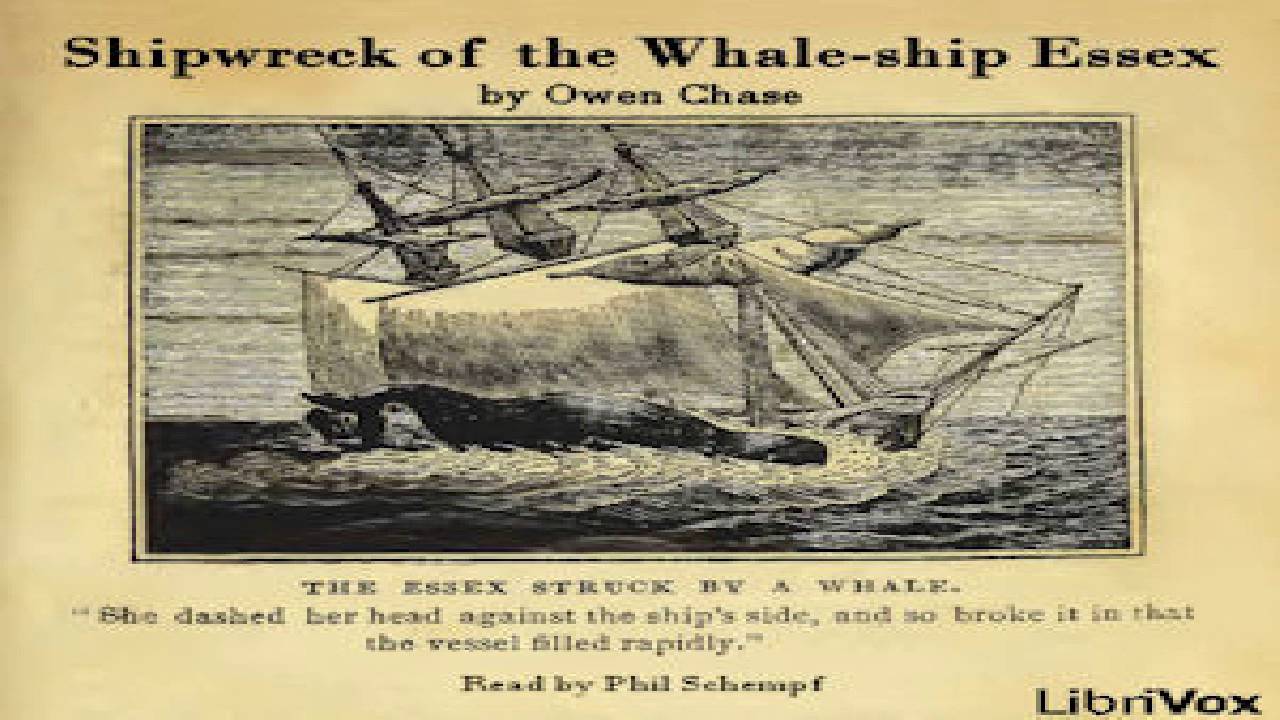
Wreck of the whale ship Essex

Never in the history of the whale fishery had a whale been known to attack a ship unprovoked. What was happening now was unmistakable.

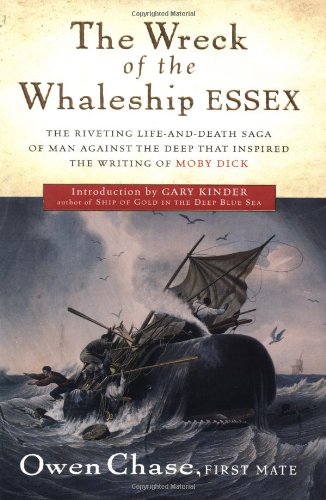
The huge animal seemed dazed at first by the impact, floating to the surface and resting near the ship’s side.  He then turned and swam away for several hundred yards before turning to resume the attack.  He came in at the great speed of 24 knots according to First Mate Owen Chase, ramming the port bow and driving the stern into the water.  Oak planking cracked and splintered as the whale worked his tail up and down, driving the 238-ton vessel backward.  Essex had already started to go down when the whale broke off his attack, diving below the surface, never to return.

Essex_photo

Captain George Pollard’s boat was the first to make it back. Staring in disbelief, Pollard asked “My God, Mr. Chase, what is the matter?” The first mate replied:   “We have been stove by a whale”.

The whale ship Essex was dying. No force on earth could save her. The crew divided into groups of seven and boarded the three boats.  It wasn’t long before Essex sank out of sight. 21 men now alone, stranded in 28-foot open boats, about as far from land as it was mathematically possible to be.

The whalers believed that cannibals inhabited the Marquesa islands, 1,200 miles to the west. So they headed south, parallel to the coast of South America.  Before the ordeal was over, they themselves were destined to become the cannibals.

With good winds, they might reach the coast of Chile in 56 days.  There were enough rations to last 60 provided they were distributed at starvation levels, but much of it turned out to be ruined, by salt water.  There was a brief reprieve in December, when the three small boats landed on a small island in the Pitcairn chain.  There they were able to get their fill of birds, eggs, crabs, and peppergrass. Within a week the island was stripped clean.  The men decided to move on save for three who refused to get back in the boats and were left behind.

Essex

None of them knew it but this was Henderson Island, only 104 miles from Pitcairn Island where survivors from the 1789 Mutiny on HMS Bounty had managed to survive for the past 36 years.

After two months at sea, the boats had long separated from one another.  Starving men were beginning to die and the survivors came to an unthinkable conclusion.  They would have to eat their own dead.

When those were gone, the survivors drew lots to see who would die, that the others might live.  Captain Pollard’s 17-year-old cousin Owen Coffin, whom he had sworn to protect, drew the black spot.   Pollard protested, offering to take his place, but the boy declined. “No”, he said, “I like my lot as well as any other.”  Again, lots were drawn to see who would be Coffin’s executioner.  Owen’s friend, Charles Ramsdell, drew the black spot.

On February 18, the British whaleship Indian spotted a boat containing Owen Chase, Benjamin Lawrence and Thomas Nickerson.  It was 90 days sink Essex sank out of sight.  Five days later, the Nantucket whaleship Dauphin pulled alongside another boat, to find Captain Pollard and Charles Ramsdell inside.  The pair was so far gone they didn’t even notice at first, gnawing on the bones of their comrades.

The three left on Henderson Island were later rescued.  The third whaleboat was found beached on a Pacific island several years later, with four skeletons on board.

The Essex was the first ship recorded to have been sunk by a whale, though she would not be the last.  The Pusie Hall was attacked in 1835. The Lydia and the Two Generals were both attacked by whales a year later. The Pocahontas and the Ann Alexander were sunk by whales in 1850 and 1851.

31 years after the Essex’ sinking a sailor turned novelist published his sixth work, beginning with these words: “Call me Ishmael”.

May 23, 1928 Wreck of the Airship Italia

The little fox terrier Titina would accompany Captain Nobile on his every mission. This time she resisted, with everything a little dog could muster.  Maybe it was a premonition, and maybe not.  For the first time Nobile ignored the little dog’s behavior and picked her up, to bring her on board.

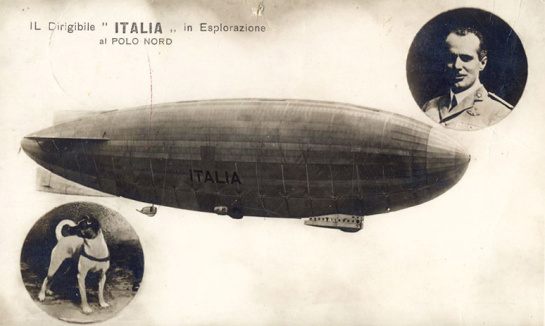
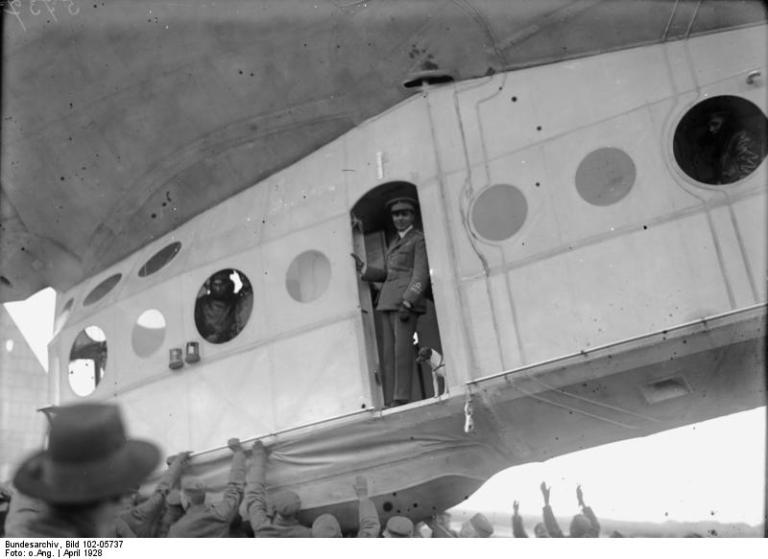
The semi-rigid airship Italia departed from Milan on April 15, 1928, headed for the Arctic.  Italia carried some 17,000 pounds of fuel and supplies, a crew of 13, two journalists, three scientists and an expedition mascot.

A favorite of the rising Fascist party in Italy, Captain Umberto Nobile was never far from his beloved dog, a little Fox Terrier he called Titina.

Before each mission, Nobile would pay close attention to the mood and demeanor of the terrier.  Some said even more so, than to that of his men.

Titina would accompany Nobile on his every mission but this time she resisted, with everything a little dog could muster.  Maybe it was a premonition, and maybe not.  For the first time Nobile ignored the little dog’s behavior and picked her up, to bring her on board.ItaliaTwo years earlier, the Norge (“NOR-gay”) had demonstrated that such an airship, could reach the north pole.  This time they were coming back, for further exploration.
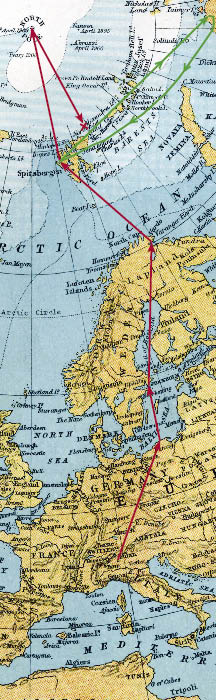
italia mapThe first of five planned sorties began on May 11, before turning back only eight hours later in near-blizzard conditions.  The second trip took place in virtually perfect weather conditions with unlimited visibility.  The craft covered 4,000 km (2,500 miles), setting the stage for the third and final trip.
At 04:28 on May 23, 1928, the airship Italia departed on her final voyage.

Strong tailwinds aided the passage as Italia traveled north along the Greenland coast, arriving at the north pole only 19 hours after departing Spitzbergen.

Though wind conditions prevented scientists from descending onto the ice sheet, the midnight arrival was itself, a victory.  Nobile dropped an Italian flag at the pole and a cross, personally given him by the Pope.  Jubilant radio messages were sent as the triumphant crew polished off a bottle of cognac, in celebration.

Trouble began almost immediately, as the tailwinds that brought them to the pole were now strong headwinds heading south to King’s Bay. Fuel consumption was doubled as the airship struggled to make headway.  After 24 hours, they were only halfway back.

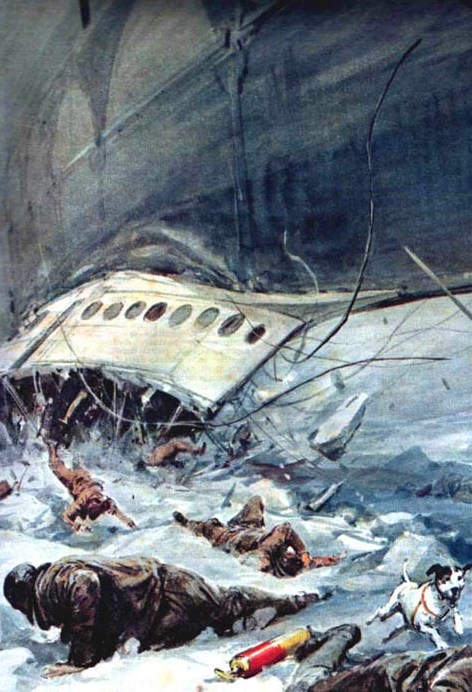
A cascade of events took place on the morning of the 25th, causing Italia to be tail-heavy and falling at a rate of two feet per second. Captain Nobile ordered Chief technician Natale Cecion to dump ballast chain, but the steep deck angle complicated the task. Seconds later, the airship hit the jagged ice below, smashing the control cabin and spilling ten crew members and a Fox Terrier, onto the ice.

“The wide 50-meter-long red strip of aniline paint that had seeped from the spherical containers the airship’s crew used for measuring altitude resembled a bloodstained trail left by an injured beast”. – Czechoslovakian physicist, Frantisek Behounek

With a broken leg and feeling as though his intestines were damaged beyond repair, Captain Nobile thought to himself, at least he wouldn’t have to witness the prolonged death agonies, of his comrades.  Senior Cecione likewise suffered a broken leg.  Engine operator Vincenzo Pomella was already dead.

Now relieved of the gondola’s weight, the envelope of the ship began to rise with a gaping tear where the control cabin used to be.

What followed was a pure act of selfless heroism, a remarkable display of calm under the most extreme sort of pressure. As the airship italia-crashfloated away, Chief Engineer Ettore Arduino threw everything he could get his hands on, down to the men on the ice. These were supplies intended for the descent to the pole, but they were now the only thing that stood between life and death.

Arduino himself and the rest of the crew drifted away with the now helpless airship.

Ten men and a dog were stranded on the drifting ice pack.

Those who were able to  do so immediately set about, searching for supplies.  They scavenged across the ice and found a radio, and jury-rigged a mast from crash debris.  A tent was set up and dyed a bright red, using that same aniline paint.

A colt revolver was found along with a box of cartridges.  Five days later, Swedish meteorologist Finn Malmgren would use it to kill a polar bear, adding considerably to their food supplies.

The aftermath of the Italia disaster is a story in itself, a rescue unfolding over nearly two months and involving six countries, 18 vessels, 21 aircraft and 1,500 men.  Many would-be rescuers became stranded themselves or vanished into the arctic, never to be seen again.  Rescue operations were brought to a halt with seventeen dead, between Italia’s crew and her rescuers.

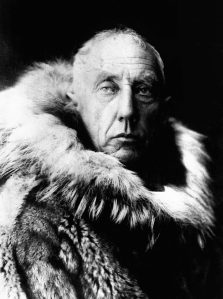
Roald Amundsen
Raould Amundsen

The famous polar explorer Raould Amundsen, the man who first reached the pole in 1926, disappeared on June 18 while on a rescue mission with Norwegian pilot Leif Dietrichson, French pilot René Guilbaud, and a three-man French crew.

The American woman Bess Magids, engaged to be married to Amundsen, was already on the way to Norway, for the wedding that would never take place.

Rescue expeditions were launched from Denmark, Finland, France, Italy, Norway, Soviet Russia, Sweden and the United States.

Forty-nine days would come and go, before the last of the crash survivors and stranded would-be rescuers, would be found.  The red tent was relocated several times to avoid getting wet, on the shrinking ice pack

Umberto Nobile was a subject of scorn, for allowing himself to be rescued before his men.  And for bringing Titina, thus elevating the life of the dog over the lives of his men.   Titina herself was sick with scurvy when rescued from the ice and went to a dentist, to have several teeth removed.  Rumor has it that Nobile had them replaced, with gold teeth.

The fate of the journalist, the three mechanics and the scientist who drifted away on the Airship Italia remains a mystery, to this day.

March 11, 1958 The Day the US, Nuked Itself

This particular nuke was unarmed that day but three tons of conventional explosives can ruin your whole day.   The weapon scored a direct hit on a playhouse built for the Gregg children, the explosion leaving a crater 70-feet wide and 35-feet deep and destroying the Gregg home, the farmhouse, workshop and several outbuildings.  Buildings within a five-mile radius were damaged, including a local church.

If you’re ever in South Carolina, stop and enjoy the historical delights of the Pee Dee region. About a half-hour from Pedro’s “South of the Border”, there you will find the “All-American City” of Florence, according to the National Civic League of 1965. With a population of about 38,000, Florence describes itself as a regional center for business, medicine, culture and finance.

Oh.  And the Federal Government dropped a Nuke on the place. Sixty-two years ago, today.

maxresdefault (29)To anyone under the age of 40, the Cold War must seem a strange and incomprehensible time.  Those of us who lived through it, feel the same way.

The Air Force Boeing Stratojet bomber left Hunter Air Force Base in Savannah, on a routine flight to Africa via the United Kingdom.  Just in case thermonuclear war was to break out with the Soviet Union, the B47 carried a 10-foot 8-inch, 7,600-pound, Mark 4, atomic bomb.

The Atlantic Coastline Railroad conductor, WWII veteran & former paratrooper Walter Gregg Sr. was in the workshop next to his home in the Mars Bluff neighborhood of Florence, South Carolina while his wife, Ethel Mae “Effie” Gregg, was inside, sewing. The Gregg sisters Helen and Frances, ages 6 and 9, were playing in the woods with their nine-year-old cousin Ella Davies as the B47 Stratojet bomber lumbered overhead.b47-7aAt 15,000-feet, a warning light came on in the cockpit, indicating the load wasn’t properly secured.   Not wanting a thing like that rattling around in the back, Captain Earl E. Koehler sent navigator Bruce M. Kulka, to investigate.  Kulka slipped and grabbed out for something, to steady himself.  That “something” just happened to be, the emergency release.

Bomb bay doors alone are woefully inadequate to hold back a 4-ton bomb. The thing came free and began a 15,000-foot descent, straight into the Gregg’s back yard.

PUEBBB3QPFAQPDWDVU5VCLXD2A
This hole 50 feet wide and 20 feet deep was made after an Air Force nuclear weapon accidentally fell from a B-47 and exploded in Florence, South Carolina, March 12, 1958. The home of Walter Gregg (background) was almost destroyed. Several members of his family were treated for injuries. (AP Photo) H/T Military Times

The Mark 4 atom bomb employs an IFI (in-flight insertion) safety, whereby composite uranium and plutonium fissile pits are inserted into the bomb core, thus arming the weapon. When deployed, a 6,000-pound. conventional explosion super-compresses the fissile core, beginning a nuclear chain reaction. In the first millisecond, (one millionth of a second), plasma expands to a size of several meters as temperatures rise into the tens of millions of degrees, Celsius. Thermal electromagnetic “Black-body” radiation in the X-Ray spectrum is absorbed into the surrounding air, producing a fireball. The kinetic energy imparted by the reaction produces an initial explosive force of about 7,500 miles, per second.

This particular nuke was unarmed that day but three tons of conventional explosives can ruin your whole day.   The weapon scored a direct hit on a playhouse built for the Gregg children, the explosion leaving a crater 70-feet wide and 35-feet deep and destroying the Gregg home, the farmhouse, workshop and several outbuildings.  Buildings within a five-mile radius were damaged, including a local church.  Effie gashed her head when the walls blew in but miraculously, no one was killed except for a couple chickens.  Not even the cat.

screen_shot_2016-05-11_at_60319_pmThree years later, a B-52 Stratofortress carrying two Mark 39 thermonuclear bombs broke up in the air over Goldsboro, North Carolina. Five crew members ejected from the aircraft at 9,000-feet and landed safely, another ejected but did not survive the landing. Two others died in the crash.
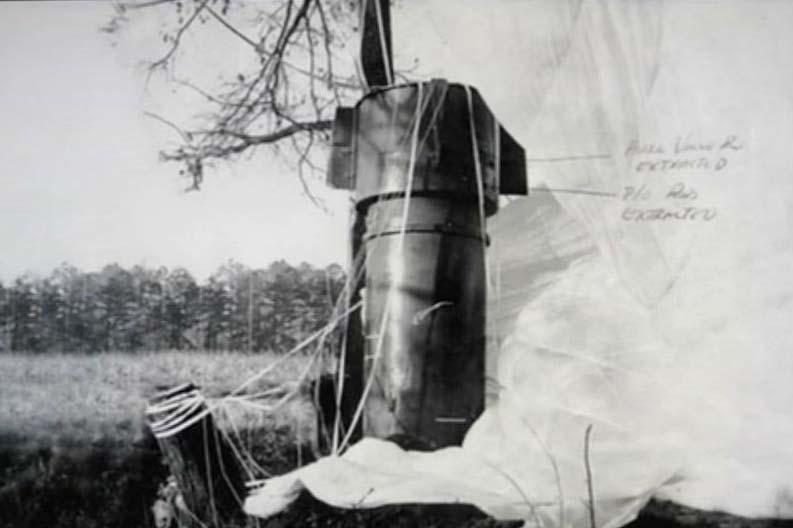
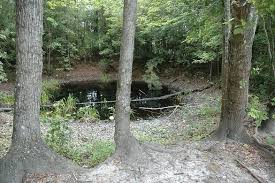
In this incident, both weapons were fully nuclear-enabled.  A single switch out of four, is all that prevented at least one of the things, from going off.

goldsboro_bomb_0
One Mk 39 nuclear weapon from the Goldsboro incident remained largely intact, with parachute still attached. The second plunged into a muddy field at about 700mph, and disintegrated.

Walter Gregg described the Mars Bluff incident in 2001, in director Peter Kuran’s documentary “Nuclear 911”. “It just came like a bolt of lightning”, he said. “Boom! And it was all over. The concussion …caved the roof in.” Left with little but the clothes on their backs, the Greggs eventually sued the Federal Government.

The family was awarded $36,000 by the United States Air force.  It wasn’t enough to rebuild the house let alone, replace their possessions.  Walter Gregg resented it, for the rest of his life.

download - 2020-03-11T083015.786Over the years, members of the flight crew stopped by to apologize for the episode.

The land remains in private hands but it’s federally protected, so it can’t be developed.   They even made a path back in 2008 and installed a few signs,  but those were mostly stolen by college kids.

You can check it out for yourself if you want to amuse the locals.  They’ll know what you’re doing as soon as you drive through the neighborhood, the second time.  Crater Rd/4776 Lucius Circle, Mars Bluff, SC (Hat tip roadsideamerica.com)

A month before the Mars Bluff incident, a hydrogen bomb was accidentally dropped in the ocean, off Tybee Island, Georgia.  Incidents involving the loss or accidental detonation of nuclear weapons are called “Broken Arrows“.  There have been 32 such incidents, since 1950.  As of this date, six atomic weapons remain unaccounted for, including that one off the Georgia coast.

Feature image top of page;  “C. B. Gregg looks at the bomb damaged home of his brother Walter Gregg who was injured after an Air Force bomb hit about 100 yards away on March 12, 1958, in Florence, S.C. (AP Photo) H/T Military Times

December 19, 1986 The Lost Dogs of Chernobyl

The devastating Chernobyl Prayer tells the story of: “dogs howling, trying to get on the buses. Mongrels, Alsatians. The soldiers were pushing them out again, kicking them. They ran after the buses for ages.” Heartbroken families pinned notes to their doors: “Don’t kill our Zhulka. She’s a good dog.”

It all began as a test.  A carefully planned series of events, intending to simulate a station blackout at the Chernobyl Nuclear Power Plant, in the Soviet Socialist Republic of Ukraine.

This most titanic of disasters, began with a series of small mishaps. Safety systems intentionally turned off.  Inexperienced reactor operators, failing to follow checklists. Inherent design flaws in the reactor itself.

t_1554313914803_name_rpod_Chernobyl_Social.jpg

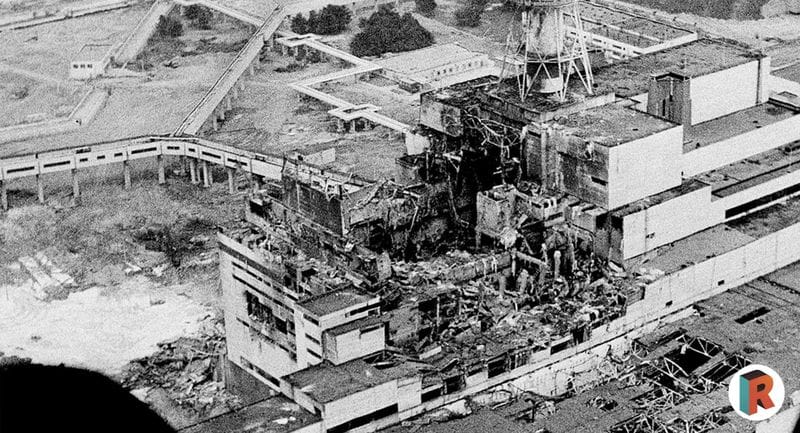
On the night of April 25-26, 1986, a nuclear chain reaction expanded beyond control, flashing water to super-heated steam.  Violent explosions shattered reactor and building alike as reactor #4 belched massive amounts of nuclear material into the atmosphere.  For the next nine days, intense updrafts created by the open-air graphite fire spewed vast quantities of radiation into the air, raining radioactive  particles over large swaths of the western USSR and Europe.  Some 60 percent of the stuff came down in the Republic of Belarus.

It was the most disastrous nuclear power plant accident in history and yet, this was 1986.  The Soviet government didn’t tell its own people for days, what was going on.  In the West, the first alert came not from the USSR, but from Sweden.

images (56).jpgAn estimated 4,000 to 93,000 died in the aftermath of the accident, many of whom, were children.
The death toll could have been higher but for heroic self-sacrifice, by first responders.  Anatoli Zakharov, a fireman stationed in Chernobyl since 1980, replied to remarks that firefighters believed this to be an ordinary electrical fire:

Of course we knew! If we’d followed regulations, we would never have gone near the reactor. But it was a moral obligation – our duty. We were like kamikaze“.

Work began within three weeks on the design and construction of a concrete sarcophagus, large enough to contain 200 tons of radioactive corium, 30 tons of contaminated dust and 16 tons of uranium and plutonium, trapped inside the twisted wreckage. It was the largest civil engineering project in history involving no fewer than a quarter-million construction workers, every one of whom received a lifetime maximum dose of radiation.  By this day in December, work was substantially complete.

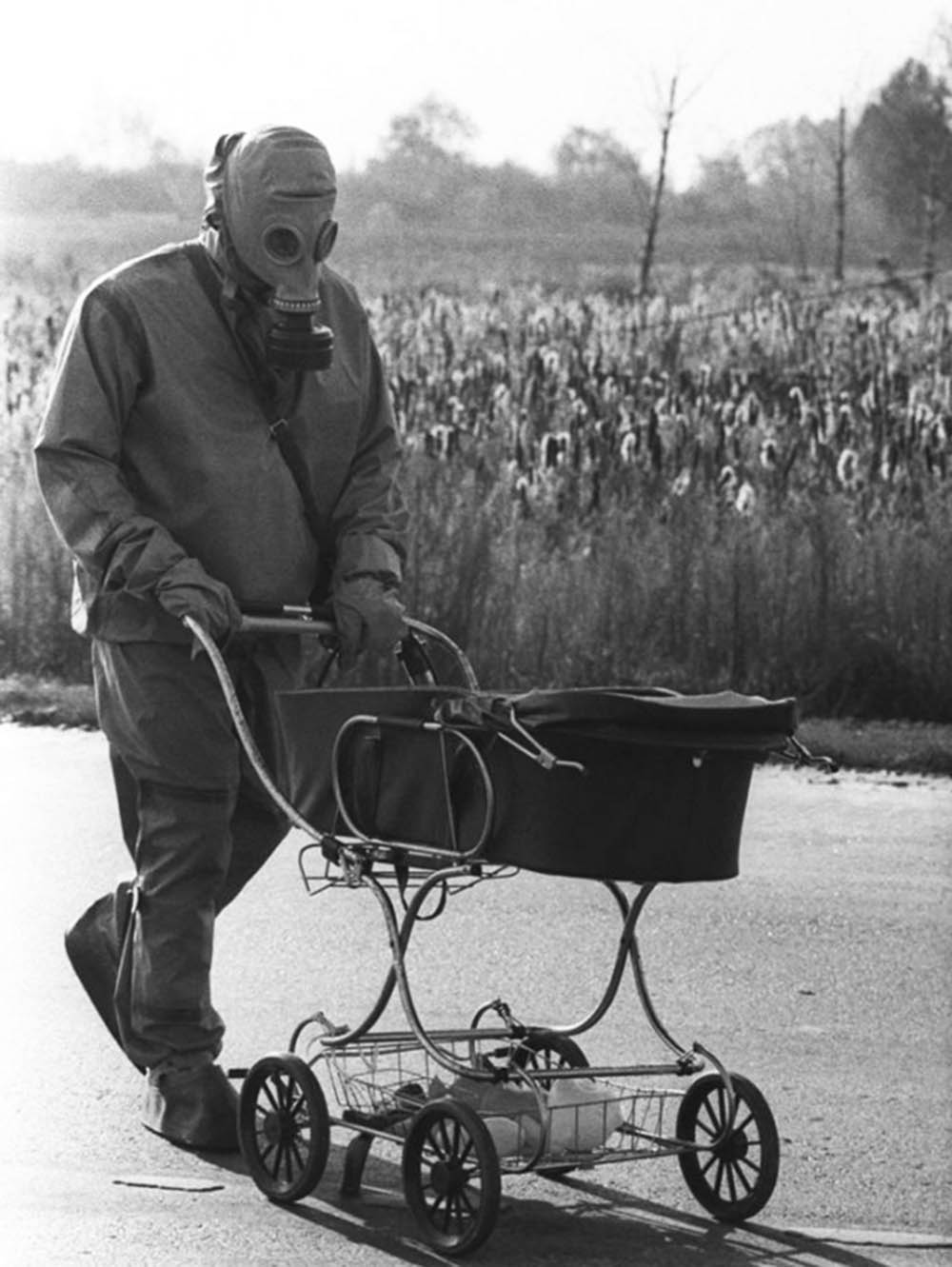
A Chernobyl liquidator pushes a baby in a carriage who was found during the cleanup of the Chernobyl nuclear accident, 1986.jpgOfficials of the top-down Soviet state first downplayed the disaster.  Asked by one Ukrainian official, “How are the people?“, acting minister of Internal Affairs Vasyl Durdynets replied there was nothing to be concerned about: “Some are celebrating a wedding, others are gardening, and others are fishing in the Pripyat River.

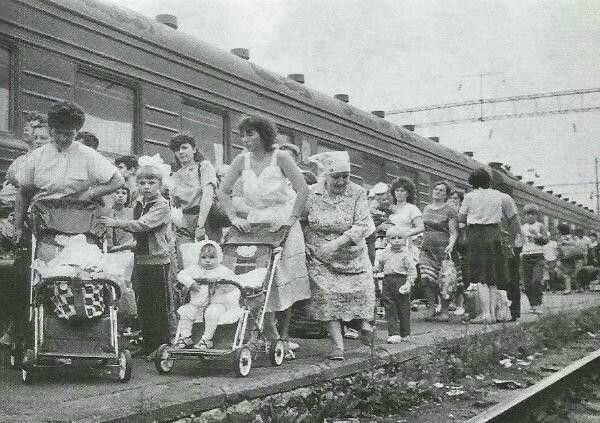
As the scale of the disaster became evident, civilians were at first ordered to shelter in place.  A 10-kilometer exclusion zone was enacted within the first 36 hours, resulting in the hurried evacuation of some 49,000.  The exclusion zone was tripled to 30-km within a week, leading to the evacuation of another 68,000.

Before it was over some 350,000 were moved away, never to return.

c3a6c209f69a1fe061fc35ef7d9e4e09.jpgThe chaos of these forced evacuations, can scarcely be imagined.  Confused adults.  Crying children.  Howling dogs.  Shouting soldiers, barking orders and herding now-homeless civilians onto waiting trains and vehicles by the tens of thousands.  Dogs and cats, beloved companion animals and lifelong family members, were abandoned to fend for themselves.
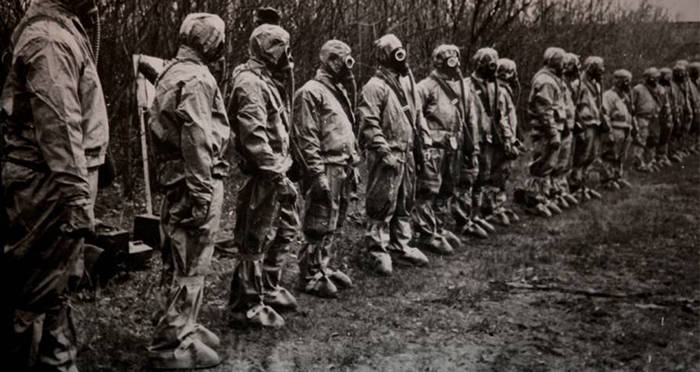
The government didn’t bother to explain.   There would be no return.

chernobyl-cleanup-crew.jpgThere were countless and heartbreaking scenes of final abandonment, of mewling cats, and whimpering dogs.  Belorussian writer Svetlana Alexievich compiled hundreds of interviews into a single monologue, an oral history of the forgotten.  The devastating Chernobyl Prayer tells the story of: “dogs howling, trying to get on the buses. Mongrels, Alsatians. The soldiers were pushing them out again, kicking them. They ran after the buses for ages.” 0720-dogsfront.jpgThere was no mercy.  Squads of soldiers were sent to shoot the animals, left behind.   Heartbroken families pinned notes to their doors: “Don’t kill our Zhulka.  She’s a good dog.”  Most of these abandoned pets, were shot.  Some escaped notice, and survived.
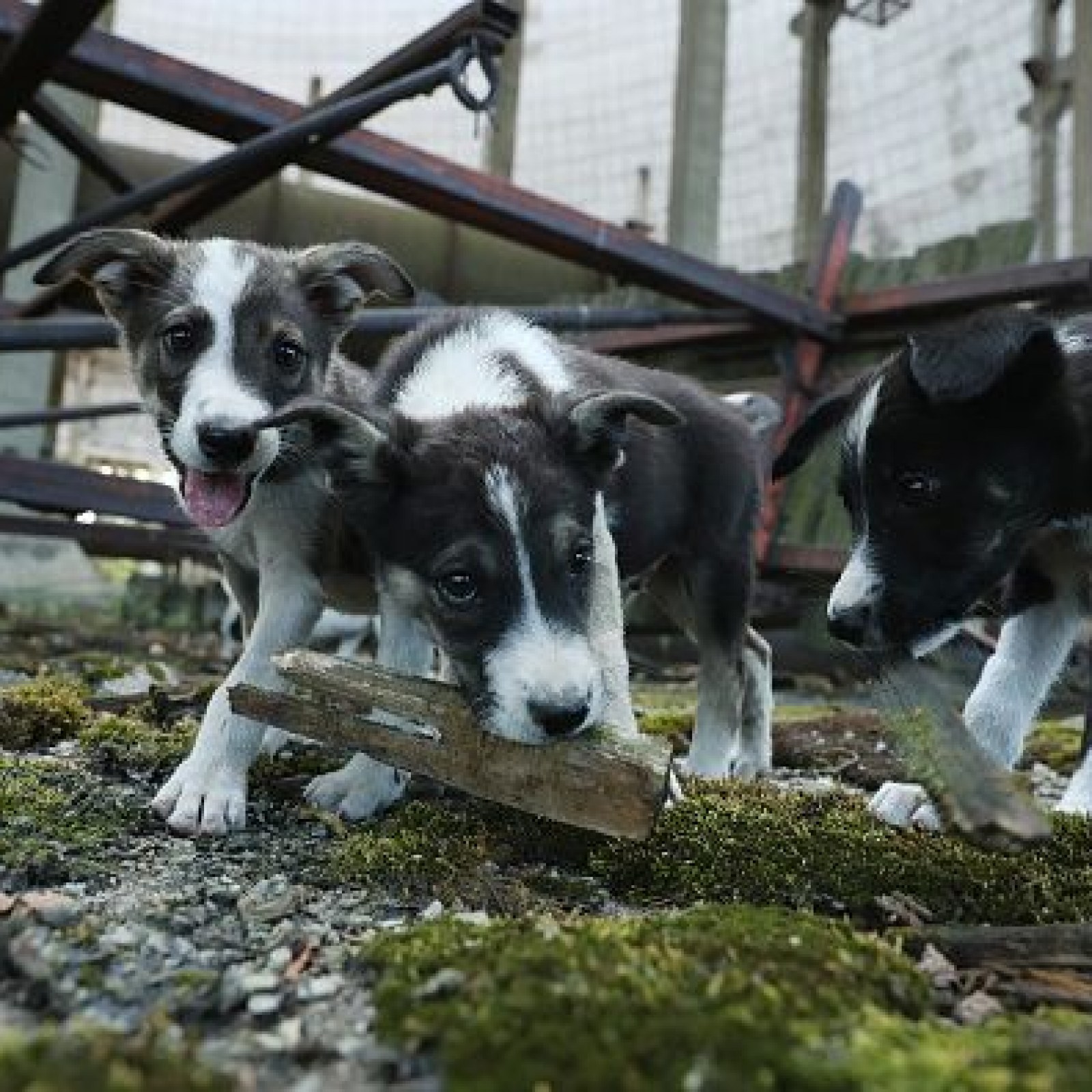

vegan-plant-based-news-dogs-livekindly-Cropped-1-1-1068x601 (1).jpgLater on, plant management hired someone, to kill the 1,000 or so dogs still remaining.  The story is, the worker refused.

1424 (1)Today, untold numbers of stray dogs live in the towns of Chernobyl, Pripyat and surrounding villages.  Descendants of those left behind, back in 1986.  Ill equipped to survive in the wild and driven from forests by wolves and other predators, they forage as best they can among abandoned streets and buildings, of the 1,000-mile exclusion zone.  For some,  radiation can be found in their fur.  Few live beyond the age of six but, all is not bleak.

chernobyl-dogs-2Since September 2017, a partnership between the SPCA International and the US-based 501(c)(3) non-profit CleanFutures.org has worked to provide for the veterinary needs of these defenseless creatures.  Over 450 animals have been tested for radiation exposure, given medical care, vaccinations and spayed or neutered, to bring populations within manageable limits.  Most are released back to the “wild”.

ynimas0uSome have been successfully decontaminated and socialized for human interaction.  In 2018, the first batch became available for adoption into homes in Ukraine and North America, some forty puppies and dogs.

 

To this day, hundreds of dogs eke out a living, in the exclusion zone.  The work of rescue is ongoing.  A joint press release from the two organizations gives much-needed hope:  “This unprecedented event marks an important partnership with the Ukrainian government, which has been reluctant in the past 32 years to allow anything to be removed from the nuclear exclusion zone.”

Dogs of Chernobyl.jpgBelieve it or not there are visitors to the area.  People actually go on tours of the region but they’re strictly warned.  No matter how adorable, do not pet, cuddle nor even touch any puppy or dog who has not been through rigorous decontamination.

For those lucky few the search for good homes goes on, for the lost dogs of Chernobyl.2016_Chernobyl-NB-1-4.jpg

November 26, 1703 Into the Maelstrom

It’s hard to count the cost of such a cataclysm, when everyone who ever knew you, is gone.  Estimates of fatalities range from 8,000 to 15,000 killed.

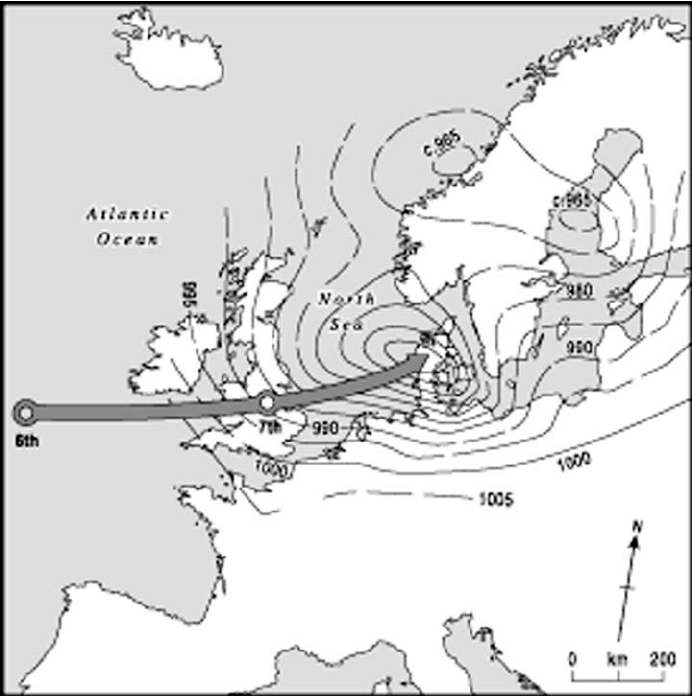
The storm came in from the southwest on Wednesday evening, November 24, and stayed until December 2. On Friday the 26th, barometers read as low as 950 millibars in some areas, a reading so low as not to have been seen in living memory. Before it was over, the southern part of Great Britain had suffered one of the most destructive storms, in history.

In a time before meteorological science, such an event was understood to be the wrath of God.  And what a wrathful God, he was.  Any storm worthy of the name “Hurricane”- any storm, we’re not talking Katrina or Andrew here – expends the energy equivalent to 200 times the electrical generating capacity, of the entire planet.  We’re talking about 10,000 Hiroshimas here, usually spread out over time and place.  Not this one.  This one was concentrated, compacted into the heavily populated south of England, a place where the gray and feeble first light of dawn broke across the land, and “nobody could believe the hundredth part they saw“.

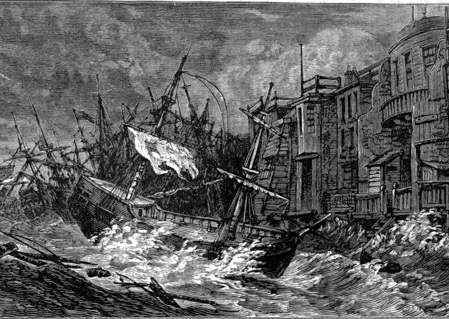
A155403.jpgBeginning in early November, a series of gales drove hundreds of ships up the Thames estuary, is search of shelter.  The “Perfect Hurricane” of 1703 arrived on November 24 (Old Style) and remained until December 2 with the worst of the storm on November 26-27.
Queen Anne sought shelter in the cellars of St. James’ Palace, while the lead roof blew off of Westminster Abbey.  More than 2,000 chimneys were toppled to the ground in London alone as were another 17,000, trees. In the Thames, 700 vessels of all sizes piled up like children’s toys.  Ship’s officers struggled to record an event, entirely outside of living memory.

“It was so severe, none of these poor captains had ever experienced it before, so they didn’t have any yardsticks to base the description on,” says Wheeler, who studied Royal Navy logbooks at length. “One gave up and just wrote ‘a most violent storm’ and left it at that, for sheer want of anything more he could say.”

At the Cathedral City at Wells, Bishop Richard Kidder was asleep with his wife next to him, when a toppling chimney killed them both in their bed.

A third of British Naval power was destroyed during this storm, the entire Channel squadron, gone.  Ships were driven as much as 15 miles inland, more than 1,500 sailors drowned.  Many vessels simply disappeared. Others washed up on the faraway shores of Denmark, and Norway.

Synoptic-summary-of-The-Great-Storm-of-December-1703-in-England-after-Lamb-and.pngThe most miraculous tale of survival was that of Thomas Atkins, a sailor aboard the HMS Mary. As Mary broke apart, Atkins watched as Rear Admiral Beaumont climbed aboard a piece of her quarter deck, only to be washed away.  Atkins himself was lifted high on a wave and deposited on the decks of another ship, the HMS Stirling Castle.  He was soon in the water again as Stirling Castle broke up and sank, only to thrown by yet another wave, this time landing in a small boat. Atkins alone survived the maelstrom, of the 269 men aboard HMS Mary.
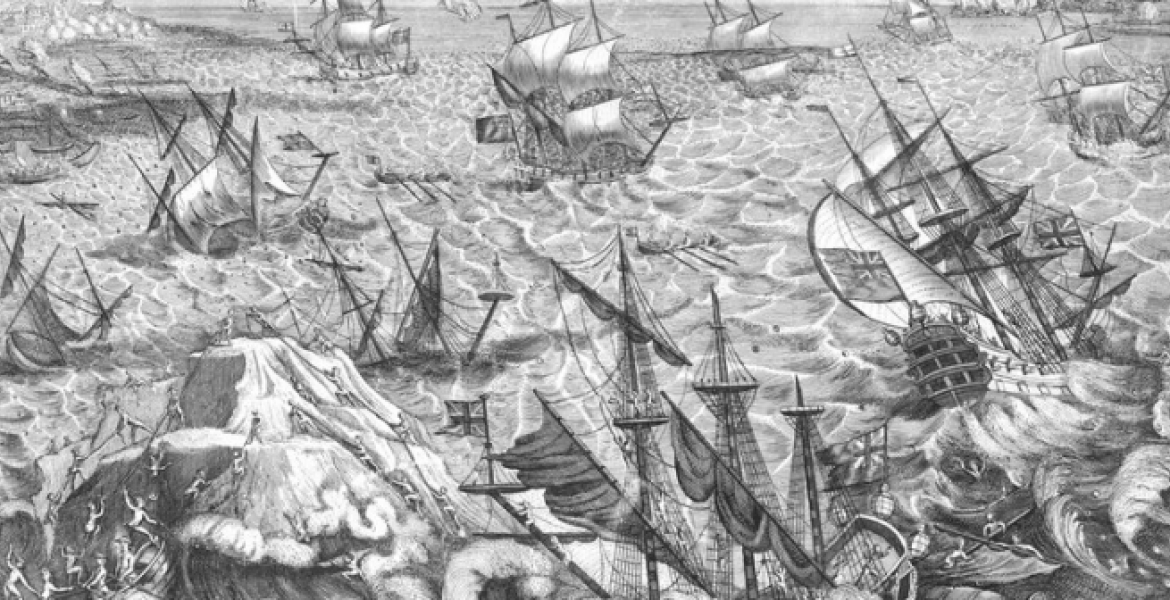

Hundreds found themselves stranded on Goodwin Sands, a ten mile long sand bar, six miles off the coast of Kent. In a race against the incoming tide, a man named Thomas Powell organized the rescue of some 200.  More could have been saved, had the good citizens onshore stopped looting shipwrecks long enough to lend a hand.

Great_Storm_1703_Goodwin_Sands_engraving
An engraving of the age depicts the disaster, on Goodwin Sands.

With “Robinson Crusoe” still sixteen years in the future, the famous author Daniel Defoe was at this time, but a minor poet and pamphleteer.  The writer was freshly out of prison in 1703, having served a sentence for criticizing the religious predilections, of High Church Anglicans. Hearing the collapse of brick chimneys, the Defoes and their six children sought refuge in their gardens but were soon driven inside, to “trust the will of Providence”. “Whatever the danger was within doors”, he said, “”twas worse without; the bricks, tiles, and stones, from the tops of the houses, flew with such force, and so thick in the streets, that no one thought fit to venture out, tho’ their houses were near demolish’d within.”

The 75,000 words which followed are recognized by many as the first work of modern journalism, forming Daniel Defoe’s first book length work, “The Storm”.

great-storm-1703-700x396
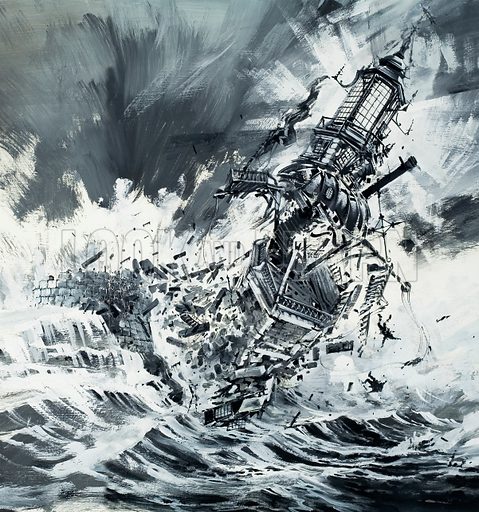
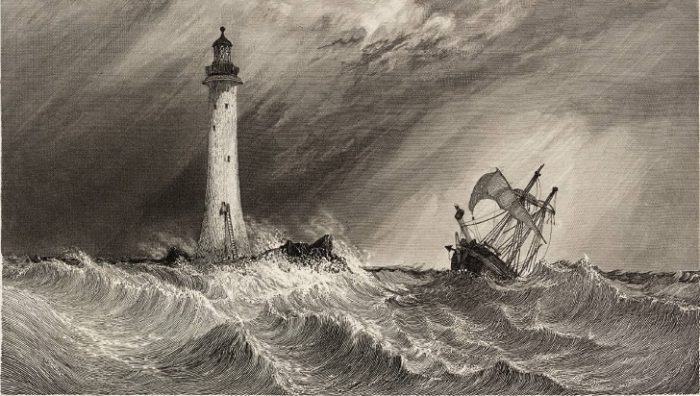
English engineer Henry Winstanley constructed the first Eddystone Lighthouse. He died with his creation in 1703, caught out while making repairs, by the cataclysm of 1703

Storms of great severity are not unheard of in southern England. In 1362, part of the Norwich Cathedral spire was blown down.  Severe gales were recorded in 1897, 1908 and 1943. The gales of 1953 and 1987 left more damage than any storm of the last century. At the time, the storm of 1703 was seen as the Wrath of God, visited upon Great Britain for the “crying sins of this nation”. The storm would remain the subject of sermons for the next 150 years.

It’s hard to count the cost of such a cataclysm, when everyone who ever knew you, is gone.  Estimates of fatalities range from 8,000 to 15,000 killed. The Reaper’s true account, is impossible to know.

p04vjxws.jpg