

During the colonial period, joint-stock companies were established by European powers to carry out foreign trade and exploration, to colonize distant lands and conduct military operations against foreign adversaries.
Such organizations may have been chartered for a single voyage or for an extended period of time, and were much more than what we currently associate with the word “company”. In their day these organizations could raise their own armies, enforce the law up to and including trial and execution of accused wrong doers, and largely functioned outside the control of the governments which formed them.
The Vereenigde Oostindische Compagnie (VOC), better known as the Dutch East India Company, founded in 1602, was the world’s first formally listed public company, an early multi-national corporation paving the way to the corporate-led globalization of the early modern period.

On October 27, 1628, a Dutch East India Co. merchant fleet departed the Dutch West Indies bound for the south Pacific Moluccan Islands to trade for spices. Among these vessels was the 650-ton ship Batavia, embarked on her maiden voyage.
On board were enormous stockpiles of gold and silver coinage and a complement of 341 passengers and crew, including men, women and children.
Among ship’s officers were the bankrupt pharmacist Onderkoopman (junior merchant) Jeronimus Cornelisz, in flight from the Netherlands due to his heretical religous beliefs, and skipper Ariaen Jacobsz. While underway, the two conceived a plan to mutiny, and start a new life somewhere else. All that specie in the hold would have given the pair a very nice start.
A small group of men were recruited and a plot was hatched to molest a ranking female member of the passenger list. The plotters hoped to provoke a harsh act of discipline against the crew, which could then be used to recruit more men to the mutineers. Lucretia Jans was assaulted as planned but, for whatever reason, Opperkoopman (senior merchant) Francisco Pelsaert never made any arrests.
 Perhaps the man was ill at the time but, be that as it may, the die was cast. The conspirators now needed only the right set of circumstances, to put their plans in motion.
Jacobsz deliberately steered the ship off course and away from the rest of the fleet. He got his ‘right set of circumstances’ on the morning of June 4, 1629, when Batavia struck a reef off the west coast of Australia.
Forty people drowned before the rest could be gotten safely to shore, swimming or transferred to nearby islands in the ship’s longboat and yawl.
With no source of fresh drinking water, the situation was dire. A group comprising Captain Jacobsz, Francisco Pelsaert, several senior officers and crew members plus a few passengers set out in a 30-foot longboat. The group performed one of the great feats of open boat navigation in all history, arriving after 33 days at the port of Batavia in modern-day Jakarta, Indonesia.
Boatswain Jan Evertsz was arrested and executed for negligence in the wreck of the Batavia, his role in the conspiracy never suspected.
Pelsaert was immediately given command of the Sardam by Batavia’s Governor General, Jan Coen.
Pelsaert’s rescue arrived three months after the original shipwreck, to discover a horror for the ages.
Left alone in charge of the survivors, Cornelisz and several co-conspirators took control of all the weapons and food supplies, then carried out plans to eliminate potential opposition.
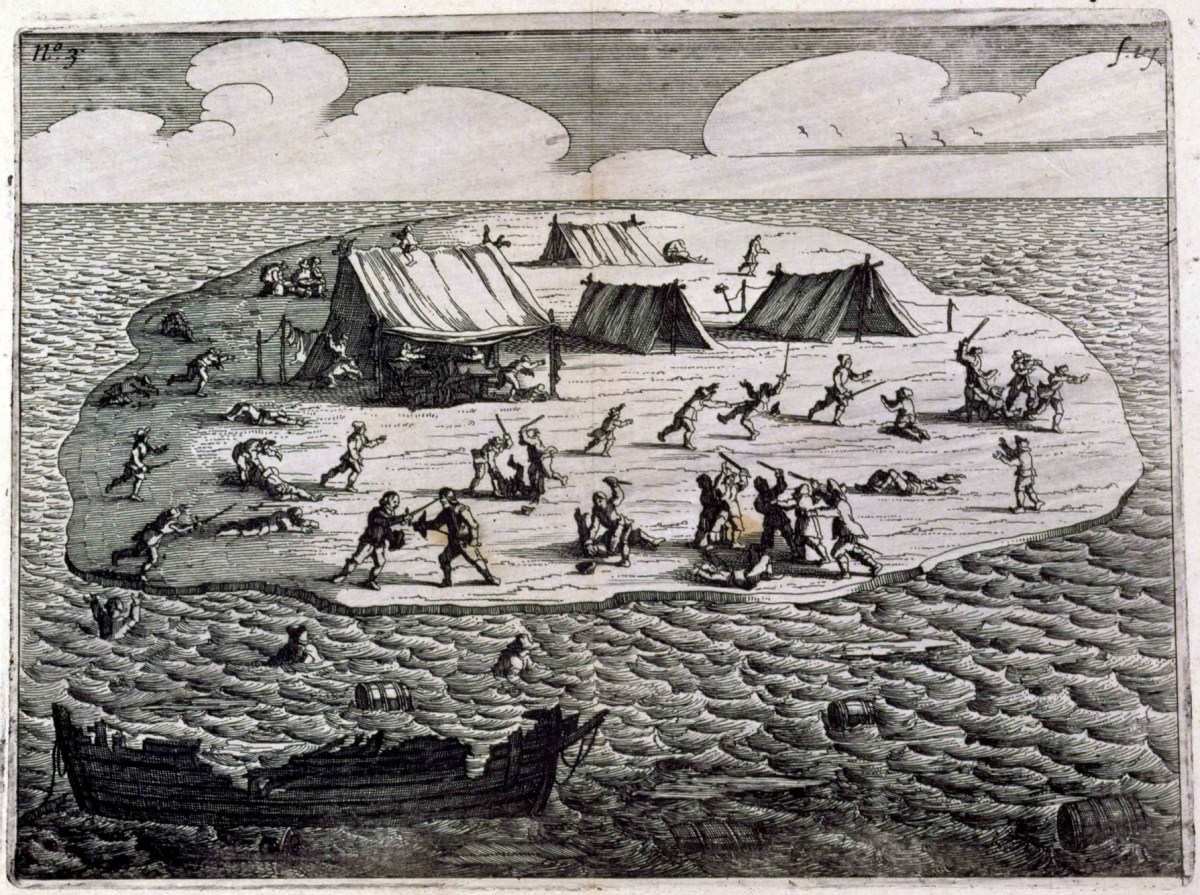
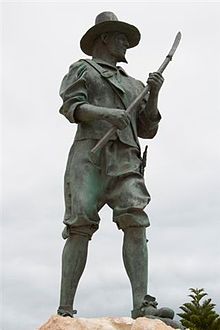
A group of soldiers led by Wiebbe Hayes was tricked into being moved to West Wallabi Island, under the false pretense of looking for water. Convinced there was none, Cornelisz abandoned the group on the island to die. The psychopath and his dedicated band of followers, was now free to murder the rest at their leisure .
Author Mike Dash writes in Batavia’s Graveyard: The True Story of the Mad Heretic Who Led History’s Bloodiest Mutiny: “With a dedicated band of murderous young men, Cornelisz began to systematically kill anyone he believed would be a problem to his reign of terror, or a burden on their limited resources. The mutineers became intoxicated with killing, and no one could stop them. They needed only the smallest of excuses to drown, bash, strangle or stab to death any of their victims, including women and children”.
Like some prototype Charles Manson, Cornelisz left the actual killing to others, though he did attempt to poison one infant who was later strangled. No fewer than 110 men, women and children were murdered during this period. Those women left alive were confined to ‘rape tents’.
Meanwhile, Wiebbe Hayes and his soldiers found water and, unaware of the butchery taking place on Beacon island, began to send smoke signals, according to a prearranged plan. The group would only learn of the ongoing massacre from survivors, who escaped to swim for their lives.
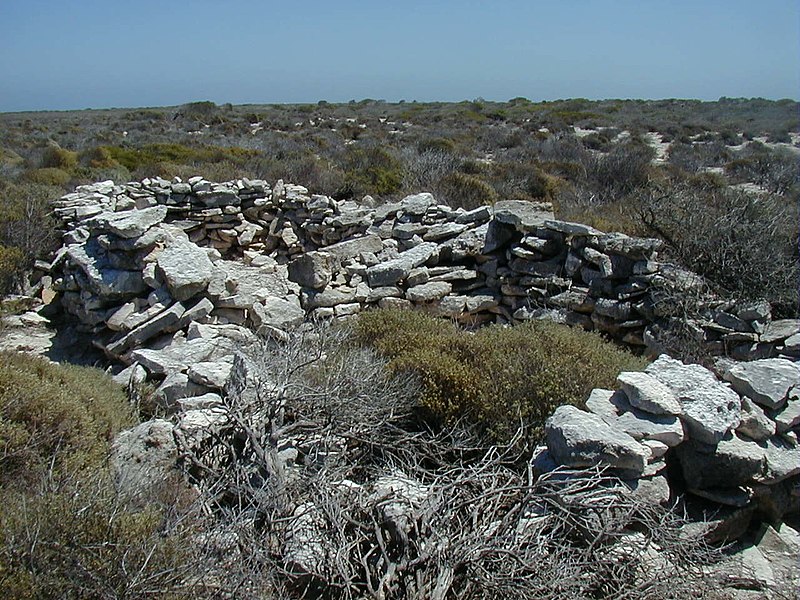
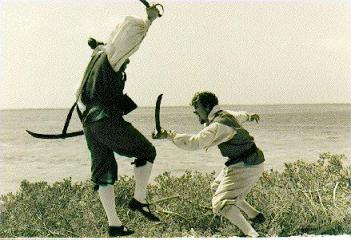
With their own supplies dwindling, Cornelisz & Co. assaulted the soldiers on West Wallabi Island, now in possession of crude handmade weapons and manning makeshift fortifications. Pitched battles ensued, pitting muskets against sticks and spears. The bad guys almost won too, but the better trained and (by this time) better fed soldiers, prevailed.
Pelsaert’s arrival triggered a furious race between Cornelisz’s men and the soldiers. Fortunately for all, Hayes won the race. A brief but furious battle ensued before Cornelisz and his company were captured. After a brief trial, Cornelisz and the worst of the conspirators were brought to Seal Island, their hands chopped off, and hanged.
Two judged only to be minor players were brought to the Australian mainland and marooned, never to be seen again.
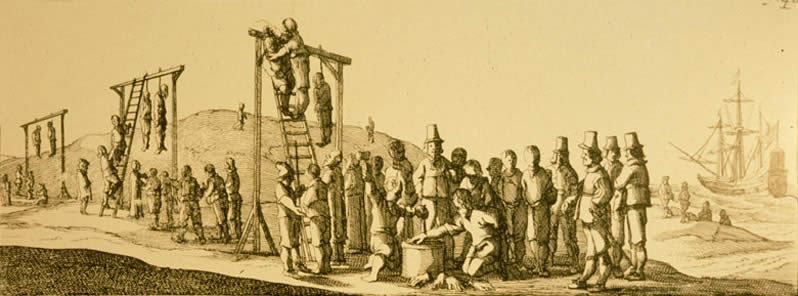
The remaining conspirators were brought back to Batavia and tried. Five of them were hanged. Jacop Pietersz, second-in-command, was broken on the wheel, a hideous remnant of medieval justice and the worst form of execution available, at that time. Captain Jacobsz resisted days of torture and never did confess. What became of him is unknown.
Francisco Pelsaert was judged partly responsible for the disaster, due to his failure to exercise command. Senior Merchant Pelsaert’s assets were confiscated. He would die penniless in less than a year, a broken man.
The exact number of those buried in mass graves on Beacon Island, is unknown. Of the 341 who departed the West Indies that day in 1628, 68 lived to tell the tale. Archaeologists labor an land and at sea but, three centuries later, the Wallabi Islands are jealous of their secrets



 It was customary that gifts be given to the guests of such a celebration. There were commemorative scarves and ornately decorated porcelain cups, bearing the ciphers of Nicholas and Alexandra opposite the double-headed symbol of the Imperial dynasty, the Romanov eagle.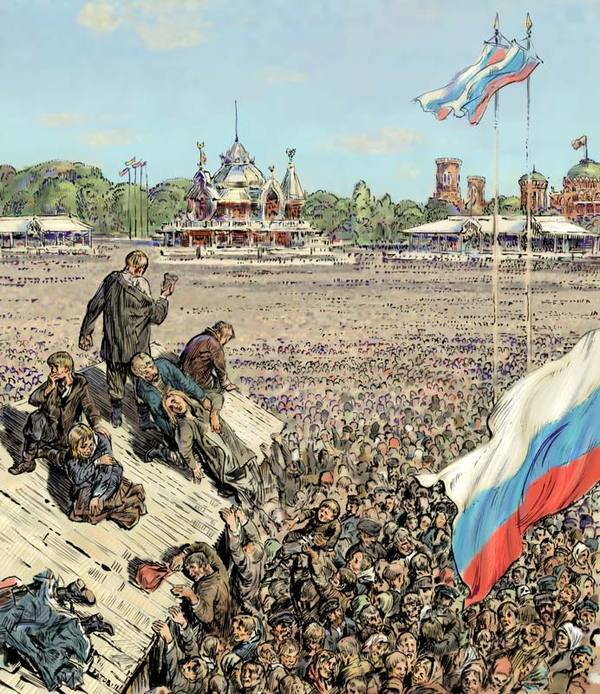
 podium was pocked and lined with trenches and pits.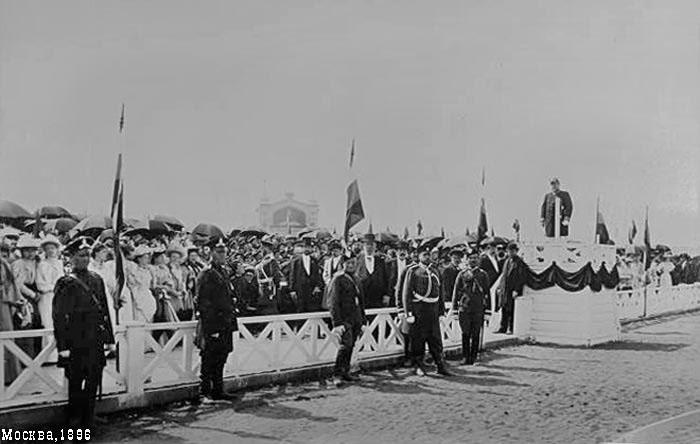



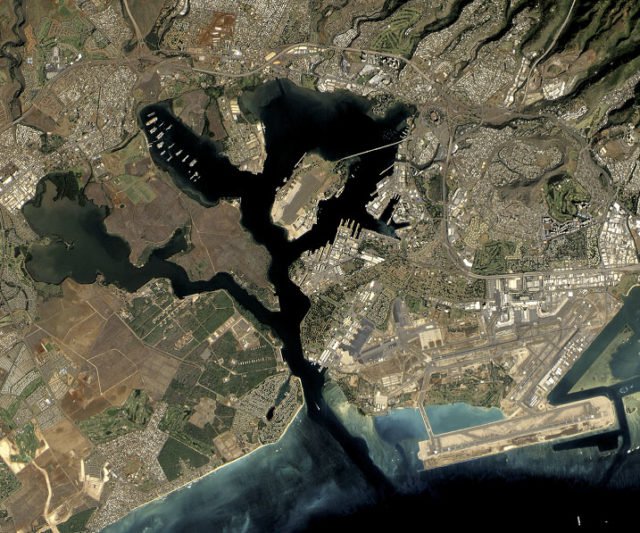

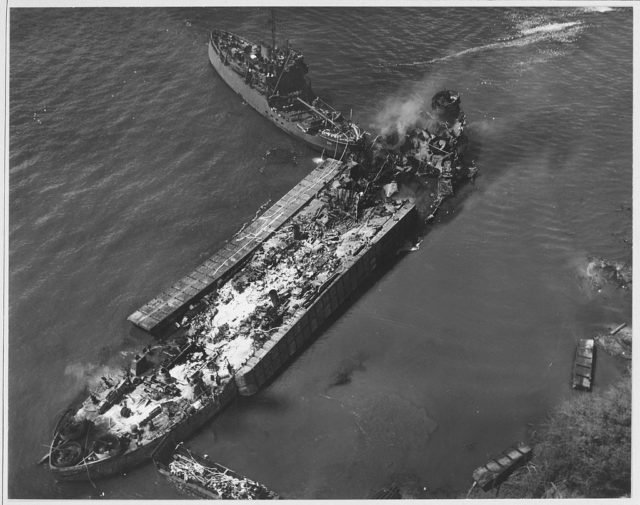

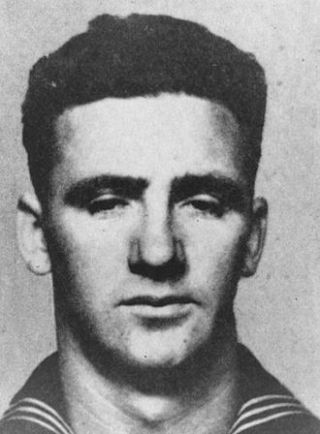
 “…Venturing still farther under the buried hulk, he held tenaciously to his purpose, reaching a place immediately above the other man just as another cave-in occurred and a heavy piece of steel pinned him crosswise over his shipmate in a position which protected the man beneath from further injury while placing the full brunt of terrific pressure on himself. Although he succumbed in agony 18 hours after he had gone to the aid of his fellow divers, Hammerberg, by his cool judgment, unfaltering professional skill and consistent disregard of all personal danger in the face of tremendous odds, had contributed effectively to the saving of his 2 comrades…”.

 In the early 1330s, a deadly plague broke out on the steppes of Mongolia. The gram-negative bacterium Yersinia Pestis preyed heavily on rodents, the fleas from which would transmit the disease to people, the infection then rapidly spreading to others.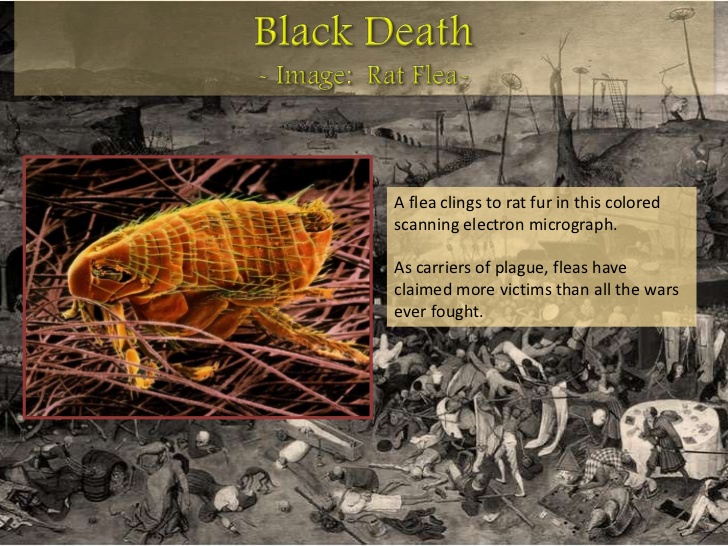
 The Black death of 1346-’53 was a catastrophe unparalleled in human history, but it was by no means the last such outbreak. The Third Pandemic began in China in 1855, spreading to Hong Kong and on to British India. In China and India alone the disease killed 12 million people. It then spread to parts of Africa, Europe, Australia, and South America.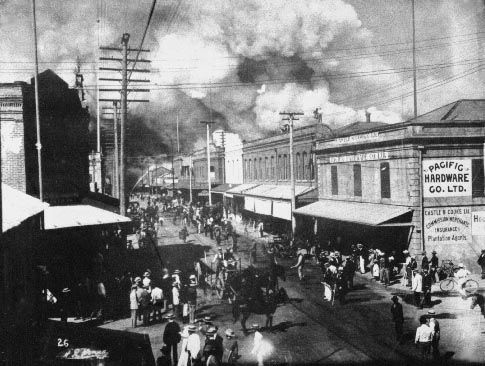
 The body of an elderly Chinese man was discovered in a Chinatown basement. An autopsy found the man to have died of plague. There were more than 18,000 Chinese and another 2,000 Japanese living in the 14-block Chinatown section of the city. Many called for a quarantine of Chinatown, but Chinese citizens objected, as did then-Governor Henry Gage, who tried to sweep the whole outbreak under the carpet. Business interests likewise objected to the quarantine. Except for the Hearst Newspapers, not much was heard about it.
 San Francisco was hit by a massive earthquake on April 18, 1906, followed by a great fire. Thousands of San Franciscans were crowded into refugee camps with an even higher number of rats. For the first time, the disease now jumped the boundaries of Chinatown.









 Those who could escape scrambled onto the deck, injured, disoriented, many still in their underwear as they emerged into the cold and darkness.
 Dorchester was listing hard to starboard and taking on water fast, with only 20 minutes to live. Port side lifeboats were inoperable due to the ship’s angle. Men jumped across the void into those on the starboard side, overcrowding them to the point of capsize. Only two of fourteen lifeboats launched successfully.
 Rushing back to the scene, coast guard cutters found themselves in a sea of bobbing red lights, the water-activated emergency strobe lights of individual life jackets. Most marked the location of corpses. Of the 904 on board, the Coast Guard plucked 230 from the water, alive.
 John 15:13 says “Greater love hath no man than this, that a man lay down his life for his friends”. Rabbi Goode did not call out for a Jew when he gave away his only hope for survival, Father Washington did not ask for a Catholic. Neither minister Fox nor Poling asked for a Protestant. Each gave his life jacket to the nearest man.


 STS-1, the first mission of the “Space Shuttle” program launched aboard “Columbia” from the Kennedy Space Center on Merritt Island, Florida. It was April 12, 1981, the 20th anniversary of the first human spaceflight, aboard the Russian Vostok 1. This was the first and, to-date only, manned maiden test flight of a new spacecraft system, in the US space program.
 STS-107 launched from the Kennedy Space Center aboard the Space Shuttle Columbia on January 16, 2003. Eighty seconds after launch, a piece of insulating foam the size of a briefcase broke away from the external fuel tank, striking the leading edge of Columbia’s left wing and leaving a hole in the carbon composite tiles.

 Payload Specialist Colonel Ilan Ramon, born Ilan Wolferman, was an Israeli fighter pilot, the first Israeli astronaut to join the NASA space program.


 Once considered mythical but for the old sailor’s stories and the damage inflicted on ships themselves, the first scientific measurement of a rogue wave occurred in the North sea in 1984, when a 36′ wave was measured off the Gorm oil platform, in a relatively placid sea.

 In 1909, the 500-ft. cargo liner SS Waratah disappeared off Durban South Africa, with 211 passengers and crew.



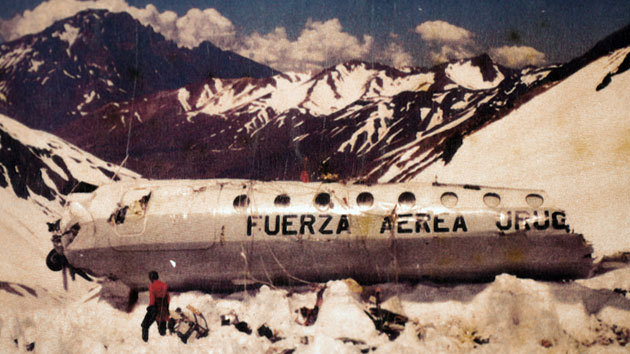
 Stranded and alone in the high Andes, meager supplies soon gave out. A few chocolate bars, assorted snacks and several bottles of wine. It was gone within days, as the survivors scoured the wreckage for crumbs. They ate leather from suitcases, tore apart seats hoping to find straw, finding nothing but inedible foam. Nothing grew at this altitude. There were no animals. There was nothing in that desolate place but metal, glass, ice and rock. And the frozen bodies of the dead.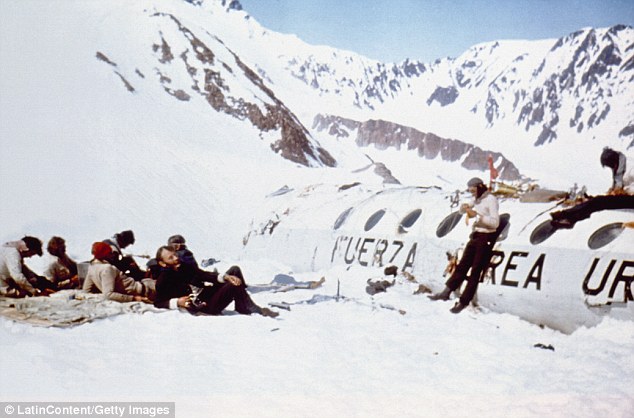
 The Juan Valdez of the coffee commercials is an “Arriero”, a man who transports goods using pack animals. Parrado and Canessa had hiked for almost two weeks when they were building a fire by a river, and spotted such a man on the other side. Sergio Catalán probably didn’t believe his eyes at first, but he shouted across the river. “Tomorrow”.
 Historical Easter Eggs - Today in History
You must be logged in to post a comment.