December 13, 1942 Ship’s Cook

Untold numbers of lives that could have been lost.  But for the actions, of a sixteen-year-old ship’s cook.

Similar to the Base Exchange system serving American military personnel, the British Navy, Army and Air Force Institutes (NAAFI) is the UK-government organization operating clubs, bars, shops and supermarkets in service to British armed forces, as well as naval canteen services (NCS) on board Royal Navy ships.

NAAFI personnel serving on ships are assigned to duty stations and wear uniforms, while technically remaining civilians.

Tommy Brown was fifteen when he lied about his age, enlisting in the NAAFI and assigned as canteen assistant to the “P-class” destroyer, HMS Petard.
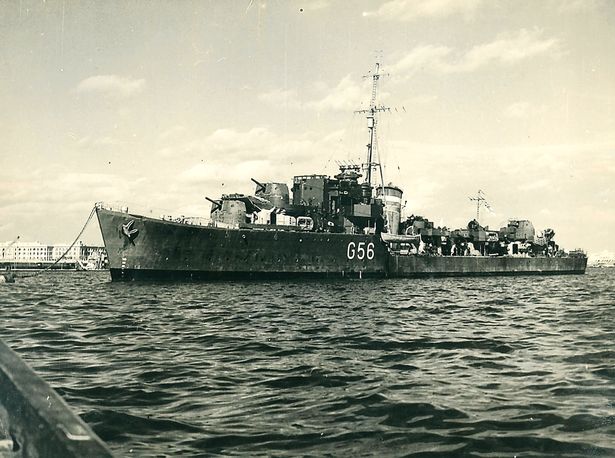
HMSPETARD
HMS Petard

On October 30, 1942, Petard joined three other destroyers and a squadron of Vickers Wellesley light bombers off the coast of Port Said Egypt, in a 16-hour hunt for the German “Unterseeboot”, U–559.

Hours of depth charge attacks were rewarded when the crippled U-559 came to the surface, the 4-inch guns of HMS Petard, permanently ending the career of the German sub.
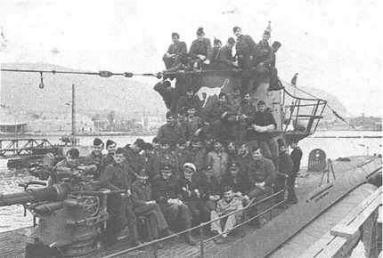
U-559
U-559

The crew abandoned ship, but not before opening the boat’s seacocks.   Water was pouring into the submarine as Lieutenant Francis Anthony Blair Fasson and Able Seaman Colin Grazier dived into the water and swam to the submarine, with junior canteen assistant Tommy Brown close behind.

With U-559 sinking fast, Fasson and Grazier made their way into the captain’s cabin.   Finding a set of keys, Fasson opened a drawer, to discover a number of documents, including two sets of code books.

With one hand on the conning ladder and the other clutching those documents, Brown made three trips up and down through the hatch, to Petard’s whaler.

300px-U-185
U-185 sinking, after American depth charging

In the final moments, the ship’s cook called for his shipmates to get out of the boat. Brown himself was dragged under, but managed to kick free and come to the surface.  Colin Grazier and Francis Fasson, went down with the German sub.

The episode brought Brown to the attention of the authorities, ending his posting aboard Petard when his true age became known.  He was not discharged from the NAAFI, and later returned to sea on board the light cruiser, HMS Belfast.

In 1945, now-Leading Seaman Tommy Brown was home on shore leave, when fire broke out at the family home in South Shields.  He died while trying to rescue his 4-year-old sister Maureen, and was buried with full military honors in Tynemouth cemetery.

Fasson and Grazier were awarded the George Cross, the second-highest award in the United Kingdom system of honors.  Since he was a civilian due to his NAAFI employment, Brown was awarded the George Medal.

355b2-442_doenitz_paukenschlagFor German U-boat commanders, the period between the fall of France and the American entry into WW2 was known as “Die Glückliche Zeit” – “The Happy Time” – in the North Sea and North Atlantic.  From July through October 1940 alone, 282 Allied ships were sunk on the approaches to Ireland, for a combined loss of 1.5 million tons of merchant shipping.

Tommy Brown’s Mediterranean episode took place in 1942, in the midst of the “Second Happy Time”, a period known among German submarine commanders as the “American shooting season”. U-boats inflicted massive damage during this period, sinking 609 ships totaling 3.1 million tons with the loss of thousands of lives, against a cost of only 22 U-boats.

USMM.org reports that the United States Merchant Marine service suffered a higher percentage of fatalities at 3.9%, than any American service branch in WW2.
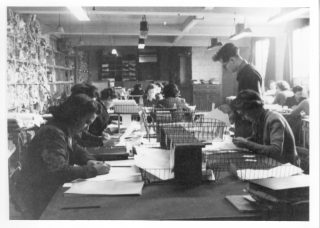
Bletchley ParkEarly versions of the German “Enigma” code were broken as early as 1932, thanks to cryptanalysts of the Polish Cipher Bureau, and French spy Hans Thilo Schmidt.  French and British military intelligence were read into Polish decryption techniques in 1939, these methods later improved upon by the British code breakers of Bletchley Park.

Vast numbers of messages were intercepted and decoded from Wehrmacht and Luftwaffe sources through the Allied intelligence project “Ultra”, shortening the war by at least a year, and possibly two.

The Kriegsmarine was a different story.  Maniacally concerned with security, Admiral Karl Dönitz introduced a third-generation enigma machine (M4) into the submarine service around May 1941, a system so secret that neither Wehrmacht nor Luftwaffe, were aware of its existence.

The system requires identical cipher machines at both ends of the transmission and took a while to put into place, with German subs being spread around the world.
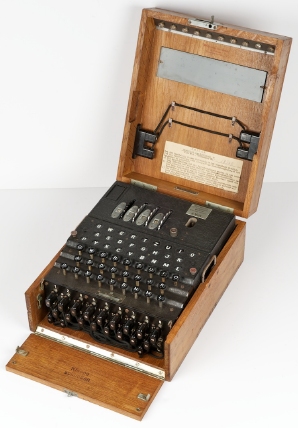
M4All M4 machines were distributed by early 1942.  On February 2, German submarine communications went dark.  For code breakers at Bletchley Park, the blackout was sudden and complete.  For a period of nine months, Allies had not the slightest idea of what the German submarine service was up to.  The result was catastrophic.

U-559 documents were rushed back to England, arriving at Bletchley Park on November 24, allowing cryptanalysts to attack the “Triton” key used within the U-boat service.  It would not be long, before the U-boats themselves were under attack.

The M4 code was broken by December 13, when the first of a steady stream of intercepts arrived at the Admiralty Operational Intelligence Office, giving the positions of 12 U-boats.

The UK Guardian newspaper wrote: “The naval historian Ralph Erskine thinks that, without the (M4) breakthrough, the Normandy invasion would have been delayed by at least a year, and that between 500,000 and 750,000 tons of allied shipping were saved in December 1942 and January 1943 alone”.

Tommy Brown never knew what was in those documents.  The entire enterprise would remain Top Secret, until decades after he died.

Winston Churchill later wrote, that the actions of the crew of HMS Petard were “crucial to the outcome of the war”.

Untold numbers of lives that could have been lost.  But for the actions, of a sixteen-year-old ship’s cook.
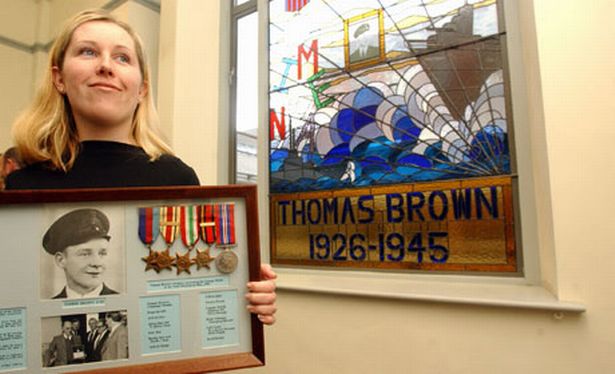
thomas-brown-sharon-carley-462946894

If you enjoyed this “Today in History”, please feel free to re-blog, “like” & share on social media, so that others may find and enjoy the same. Please click the “follow” button on the right, to receive email updates on new articles.  Thank you for your interest, in the history we all share.

December 1, 2013 Sacred Soil

ICYMI – I can’t think of anything more fitting than that it was children, our future and posterity, who retrieved the sacred soil of Flanders and installed it at that garden. It is now for that posterity to keep our history alive, and to never let it fade, into some sepia-toned and forgotten past.

November 11, nineteen short days ago, marked the 99-year anniversary of the end of World War One.

Before they had numbers, this was “The Great War”.  The “War to end all Wars”.

There is barely a piece of 20th or 21st century history, which cannot be traced back to it.

International Communism was borne of the Great War, without which there would have been no cold war, no Korean War, no war in Vietnam. The killing fields of Cambodia would have remained mere rice fields.  The spiritual descendants of Chiang Kai-shek’s brand of capitalism would be running all of China, instead of only Taiwan.

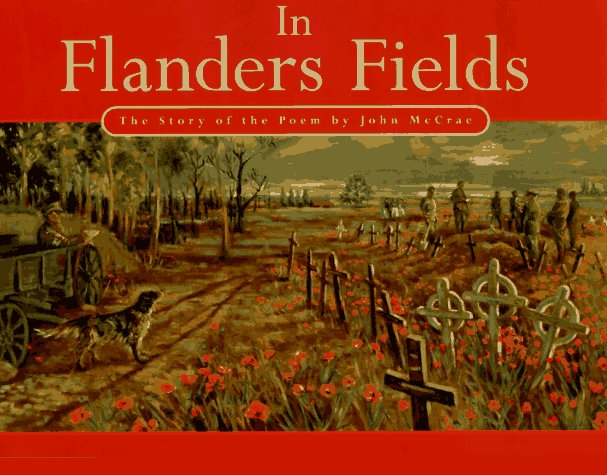
In Flanders Fields

The current boundaries of the Middle East arose from the Great War. While the region’s tribal alliances and religious strife is nothing new, those conditions would have taken a very different form, had it not been for those boundaries.

World War II, a conflagration which left more dead, wounded or missing than any conflict in world history (WWI is only #5), was little more than the Great War, part II. A Marshall of France, on looking at the Versailles Treaty formally ending WWI, said “This isn’t peace. This is a cease-fire that will last for 20 years”. He was off, by something like 36 days.

I’ve long believed that we can’t be participating citizens of a self-governing Republic, we can’t know where we want our country to go, if we don’t understand where it’s been.  It’s one of the principle reasons for examining history.  It’s why I think something wonderful happened four years ago, and I don’t think many of us heard about it.

In the summer of 2013, over 1,000 British and Belgian schoolchildren visited 70 battlefields of the Great War.  Ypres.  Passchendaele.  Verdun.  The Somme.  All over Northern France and Belgium, the region known as “Flanders”.  There these children collected samples of the sacred soil of those fields of conflict.

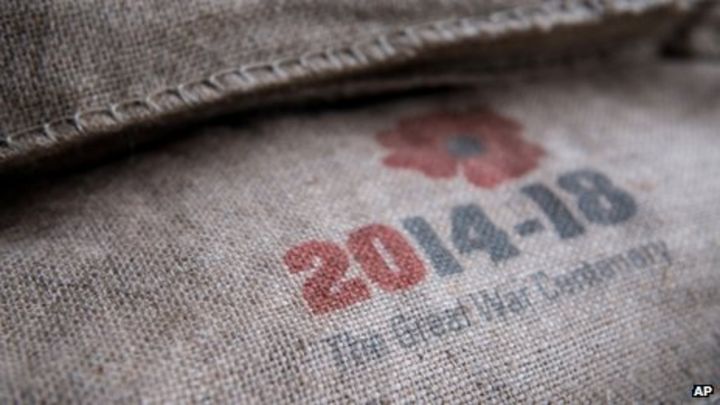
_77985394_020167620-1

The soil from those battlefields was placed in seventy WWI-style burlap sandbags, each stenciled with a red poppy, where it came from, and the dates.  Those sandbags were transported to London, and installed with great care at Wellington Barracks, the central London home of the Grenadier Guards, Coldstream Guards and Scots Guards.

There the soil of the Great War will nourish and support a garden.  Ready for the following year, a solemn remembrance of the centenary of that war.

That day, December 1, 2013, was for the Flanders Fields Memorial Garden, the first full day of forever.

I can’t think of anything more fitting than that it was children, our future and posterity, who retrieved the sacred soil of Flanders and installed it at that garden. It is now for that posterity to keep our history alive, and never to let it fade, into some sepia-toned and forgotten past.


If you enjoyed this “Today in History”, please feel free to re-blog, “like” & share on social media, so that others may find and enjoy the same. Please click the “follow” button on the right, to receive email updates on new articles.

Thank you for your interest, in the history we all share.

November 5, 1605 The Gunpowder Plot

So it is that today, November 5th, is “Guy Fawkes Day”. People all over England will “remember, remember, the 5th of November, gunpowder, treason and plot.” Effigies of Guy Fawkes will be burned throughout the land.

The Tudor King Henry VIII began to take control of the English church in 1533, barely 16 years after Martin Luther is said to have nailed his 95 theses to the church door. The Protestant Reformation was barely underway, and both sides would come to regard the other as heretical.

Henry fell out with Pope Clement VII over the latter’s refusal to grant him an annulment from Catherine of Aragon. By 1540, the break between the Church of England and the Church of Rome was complete.

henryviiiEnglish Catholics became increasingly marginalized for the remainder of Henry’s reign, and that of his daughter, Elizabeth I, who died in 1603 without issue. There were several assassination attempts against Protestant rulers in Europe and England, including a failed plot to poison Elizabeth I, and the assassination of French King Henry III, who was stabbed to death by a Catholic fanatic in 1589.
King James VI of Scotland succeeded the “Virgin Queen” in 1603, to the great disappointment of English Catholics. The moderates among them favored James’ and Elizabeth’s cousin Arbella Stuart, a woman thought to have Catholic sympathies. More radical Catholics looked to the infant daughter of Phillip II of Spain, the Infanta Isabella.

There had already been at least two plots to remove the King from office, when James discovered that his wife, Queen Anne, had secretly received a rosary from the Pope. James responded by denouncing the Catholic Church, ordering Jesuit and all other Catholic priests to leave the country. He re-imposed “recusancy fees”, which had earlier been implemented by Elizabeth. The sum of these fines soon rose to £5,000 a year, equivalent to well over £10 million today.

Among those who believed that ‘faith did not need to be kept with heretics’, regicide seemed the only way out.

The “Gunpowder Plot”, also known as the “Jesuit Treason”, was inspired by Robert Catesby, a man of “ancient, historic and distinguished lineage”.

Catesby, along with about a dozen others, planned to blow up the House of Lords on November 5, 1605, killing King James along with several relatives and members of his Privy Council. This would lead, they thought, to a popular revolt in the Midlands, ending in the installation of James’ 9-year-old daughter, Princess Elizabeth, as the Catholic head of state.

gfawkesGuy Fawkes, who had 10 years of military experience fighting for the King of Spain in the Netherlands, was put in charge of the explosives.
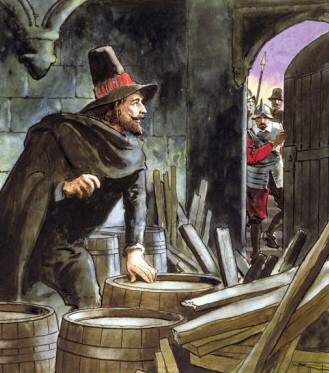
At least 36 barrels of powder were installed in a room under the House of Lords, when a letter came to light warning of the plot. Two separate searches on the evening of the 4th revealed the gunpowder barrels, hidden under piles of sticks and coal. Guy Fawkes was discovered nearby, carrying slow matches and touchwood.

Fawkes endured several days of torture, increasing in severity, until finally being “broken” on the rack. In January, all but two of the 13 conspirators were hanged, drawn and quartered for their treason. Those two, who had died in their attempt to flee, were dug up and decapitated. Fawkes, though weakened by torture and weeks of confinement in the tower of London, managed to jump off the scaffold and break his neck, sparing himself the ordeal of being cut down and dismembered while still alive.

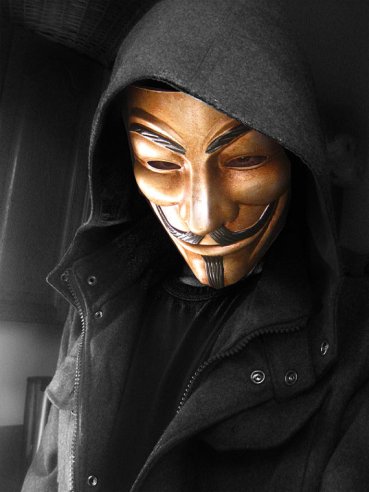
Guy Fawkes MaskSo it is that today, November 5th, is “Guy Fawkes Day”. People all over England will “remember, remember, the 5th of November, gunpowder, treason and plot.” Effigies of Guy Fawkes will be burned throughout the land.

A stylized version of the “Guy Fawkes Mask” came to be in the 1980s, with a comic book series and its later film adaptation, “V for Victory”. The story depicts a vigilante effort to destroy an authoritarian government in a dystopian future Great Britain.

Since that time, groups ranging from the hacker/activist group Anonymous to Occupy, even radical Libertarians have used the Guy Fawkes mask. A symbol of protest against what they see as out of control, tyrannical government, political and banking institutions.

October 25, 1854   Charge of the Light Brigade

Shattered remnants of the Light Brigade actually managed to overrun the Russian guns, but had no means of holding them. They milled about for a time, and then back they came, blown and bleeding horses carrying mangled men back through another gauntlet of fire.

1854 was the second year of the Crimean war, pitting an alliance including Great Britain, France, and the Ottoman Empire against the Russian armies of Czar Nicholas I.

The Battle of Balaclava opened shortly after 5:00am on this day in 1854, when a squadron of Russian Cossack Cavalry advanced under cover of darkness. The Cossacks were followed by a host of Uhlans, their Polish light cavalry allies, against several dug-in positions occupied by Ottoman Turks. The Turks fought stubbornly, sustaining 25% casualties before finally being forced to withdraw.

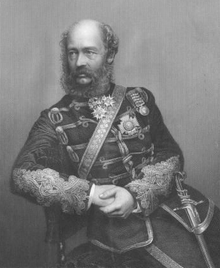
George_Bingham,_3rd_Earl_of_Lucan
Lucan

For a time, the Russian advance was held only by the red coated 93rd Highland Regiment, a desperate defense recorded in history as the Thin Red Line. Finally, the Russians were driven back by the British Heavy Brigade, led by George Bingham, 3rd Earl of Lucan, a man otherwise known to history for the brutality inflicted on tenants in Mayo, during the Irish potato famine.

The light cavalry of the age consisted of lightly armed and armored troops mounted on small, fast horses, usually wielding cutlass or spear. They’re a raiding force, good at reconnaissance, screening, and skirmishing. The “Heavies”, on the other hand, are mounted on huge, powerful chargers, both rider and horse heavily armored. They are the shock force of the army.

Cardigan
Cardigan

Lucan’s subordinate was James Brudenell, 7th Earl of Cardigan, in command of the Light Brigade.  There could not have been two worse field commanders. Though possessed of physical courage, both were prideful, mean spirited and petty men. What’s more, they were brothers-in-law, and thoroughly hated one another.

Field Marshal Fitzroy James Henry Somerset, 1st Baron Raglan, was in overall command of the allied armies.  Raglan occupied a high spot where he could see the battle unfold before him, but didn’t seem to realize that his subordinates below couldn’t see what he could see. Spotting a small Russian detachment trying to get away with captured cannon, Raglan issued an order to Lucan, in overall command of his Cavalry. “Lord Raglan wishes the Cavalry to advance rapidly to the front, follow the enemy, and try to prevent the enemy carrying away the guns.” As Staff Officer Louis Nolan left to deliver the message, Raglan shouted “Tell Lord Lucan the cavalry is to attack immediately“.

raglan
Raglan

The Light Brigade was well suited to such a task, but the men below had no idea what Raglan meant by such a poorly worded order. The only guns they could see were dug in Russian artillery a mile away, at the other end of the valley. When Nolan brought the order, Lucan demanded to know what guns. With a contemptuous sweep of his arm, Nolan pointed down the valley.   “There, sir, are your guns“.

The order which then came down from Lucan to Cardigan called for a suicide mission, even for heavy cavalry. The “Lights” were being ordered to ride a mile down an open valley, with enemy cannon and riflemen lining both sides, into the muzzles of dug in, well sighted, heavy artillery.

Nose to nose and glaring, neither man blinked in the contest of wills. In the end, Cardigan did as ordered.  674 horsemen of the Light Brigade mounted up, drew their swords, and rode into the valley of death.

Louis Nolan should have gone back to Raglan, but rode out instead, in front of the Light Brigade.  He was almost certainly trying to redirect the charge and could have saved the day, but it wasn’t meant to be.  Louis Nolan, the only man in position to change history that day, was the first casualty of the raid.

Private James Wightman of the 17th Lancers, describes Nolan’s last moments.  “I saw the shell explode of which a fragment struck him. From his raised sword-hand dropped the sword. The arm remained upraised and rigid, but all the other limbs so curled in on the contorted trunk as by a spasm, that we wondered how for the moment the huddled form kept the saddle. The weird shriek and the awful face haunt me now to this day, the first horror of that ride of horrors“.

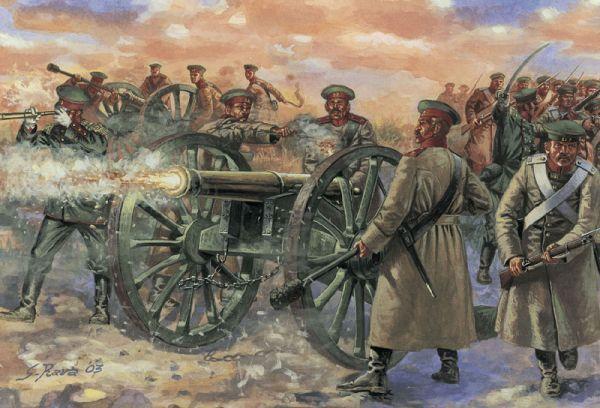
Crimean-War-Russian-Artillery-Battery
Russian Artillery Battery of the Crimean War

Raglan must have looked on in horror at the scene unfolding below.   Instead of turning right and climbing the Causeway slopes, almost 700 horsemen first walked, then trotted and finally charged, straight down the valley, into the Russian guns.  Captain Thomas Hutton of the 4th Light Dragoons said “A child might have seen the trap that was laid for us.  Every private dragoon did“.

Charge, Russian Perspective
Charge of the Light Brigade, from the Russian perspective.

It took the Lights a full seven minutes to get to the Russian guns.  Cannon fire tore great gaps out of their lines the whole time, first from the sides and then from the front.   Shattered remnants of the Light Brigade actually managed to overrun the Russian guns, but had no means of holding them. They milled about for a time, and then back they came, blown and bleeding horses carrying mangled men back through another gauntlet of fire.

Louis Nolan
Captain Nolan’s horse carried his dead body all the way down, and all the way back.

When it was over, 110 were dead, 130 wounded, and 58 missing or captured. 40% losses in an action which had lasted 20 minutes.  Captain Nolan’s horse carried his dead body all the way down, and all the way back.

Cardigan and Lucan pointed the finger of blame at each other, for the rest of their lives.  Both laid blame for the disaster on Nolan, but he wasn’t there to defend himself.

Today, the Battle of Balaclava is mostly forgotten, but for a stanza in the Alfred Lord Tennyson poem, The Charge of the Light Brigade.

“‘Forward, the Light Brigade!’

Was there a man dismay’d?

Not tho’ the soldiers knew

Some one had blunder’d:

Theirs not to make reply,

Theirs not to reason why,

Theirs but to do and die:

Into the valley of Death Rode the six hundred”.

Aftermath-of-the-Charge-of-the-Light-Brigade
Aftermath

The Crimean War itself may be remembered as a waste of blood and treasure, for all it accomplished. But for the efforts of one woman, who all-but invented the modern profession of nursing. The soldiers knew her as “The Lady with the Lamp”, for her late night rounds, taking care of the wounded.

History remembers this “Ministering Angel”, as Florence Nightingale.

October 17, 1814  London Beer Flood

Nine people lost their lives altogether, including one man who died of alcohol poisoning, apparently leading a heroic one-man effort to drink the entire flood.

On April 1, 1785, the Times of London reported:  “There is a cask now building at Messrs. Meux & Co.’s brewery…the size of which exceeds all credibility, being designed to hold 20,000 barrels of porter; the whole expense attending the same will be upwards of £10,000”.

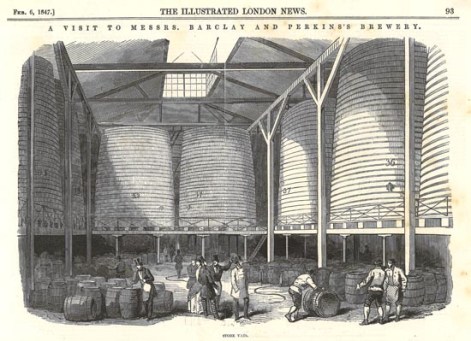
05-the-great-vats-barclay-perkins-1847-550The Meux’s Brewery Co Ltd, established in 1764, was a London brewery owned by Sir Henry Meux. What the Times article was describing was a 22′ high monstrosity, held together by 29 iron hoops.
When completed, this would be one of several such vats, each designed to hold 3,500 barrels of brown porter ale.

The brewery was located in the crowded slum of St. Giles, where many homes contained several people to the room.

the-rookery-1800

On October 17, 1814, storehouse clerk George Crick noticed one of those 700-pound iron hoops had slipped off a cask.   This happened two or three times a year, and Crick thought little of it, writing a note to another employee, to fix the problem.

It was a bad decision.

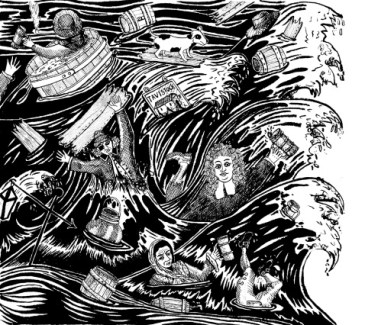
The explosive release of all that hot, fermenting liquid could be heard five miles away, causing a chain reaction as the other vats went down like exploding dominoes.

londonbeerflood323,000 imperial gallons of beer smashed through the brewery’s 25′ high brick walls, gushing into the streets, homes and businesses of St. Giles. The torrent smashed two houses and the nearby Tavistock Arms pub on Great Russell Street, where a 14-year-old barmaid named Eleanor Cooper was buried under the rubble.
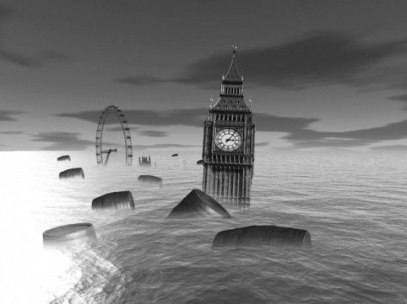
One brewery worker was able to save his brother from drowning in the flood, but others weren’t so lucky.

Mary Mulvey and her 3-year-old son Thomas were drowned, while Hannah Banfield and Sarah Bates, ages 4 and 3, were swept away in the flood.  Both died of their injuries.  Nine people lost their lives altogether, including one man who died of alcohol poisoning, apparently leading a heroic one-man effort to drink the entire flood.

As the torrent subsided, hundreds of people came outside carrying pots, pans, and kettles – whatever they had on hand to scoop up some of it.  Some just bent low and lapped at the dirty, warm beer as it washed through the streets.  Meanwhile, several injured were taken to the nearby Middlesex Hospital, where a near-riot broke out as other patients demanded to know why they weren’t getting some of it, too.

london-beer-floodIn the days that followed, the crushing poverty of the slum led some to exhibit the corpses of their family members, charging a fee for anyone who wanted to come in and see.  In one house, too many people crowded in and the floor collapsed, plunging them all into a cellar full of beer.

The stink lasted for months, as the Meux Brewery Company was taken to court over the accident.  Judge and jury ruled that the flood was an ‘Act of God’ and the deaths were just a ‘casualty’, leaving no one responsible.  Meux & Co. survived, though the financial loss was made worse by the fact that they had already paid tax on the beer. The company successfully applied to Parliament for a refund, and continued to brew beer on the same site.

The brewery was closed in 1921 and demolished the following year.  Since 2012, a local tavern called the “Holborn Whippet” marks the event with its own vat of porter, brewed specially for this day. Cheers.

October 1, 1918 Lawrence of Arabia

Lawrence tried to convince his superiors that Arab independence was in their own best interest, but found himself undermined by the Sykes-Picot agreement, negotiated in secret between French and British authorities with the backing of the Russian government, back in May 1916.

In 1879, 18-year-old Sarah Lawrence arrived at Killua Castle in Tremadog, Wales, the estate of Sir Thomas Chapman and his wife, Edith.  Sarah had come to work as governess for their four daughters, but would soon become more than a mere employee.

The affair between the Victorian Aristocrat and the domestic servant produced a son, born in secret in 1885.  When the scandal was discovered, Chapman left his wife and moved his new mistress to England.  Edith never did grant a divorce, so the couple adopted Sarah’s last name and pretended to be husband and wife.  The couple’s second of five children, Thomas Edward Lawrence, learned the true identity of his parents only after his father’s death in 1919.

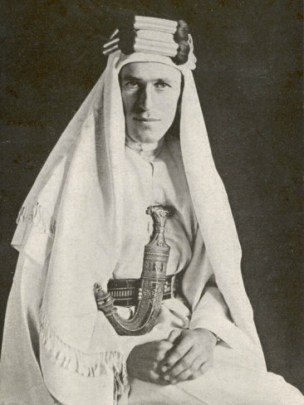
TE LawrenceTE, as Lawrence preferred to be called, was reading books and newspapers by the age of four.  He first went to the Middle East as an archaeology student in 1909, walking 1,100 miles across Syria, Palestine, and parts of Turkey, surveying the castles of the Crusaders for his thesis.  During this time he was shot at, robbed and severely beaten.  Despite all of it, TE Lawrence developed an affinity for the Middle East and its people, which would last a lifetime.
In 1914, the British government sent Lawrence on an expedition across the Sinai Peninsula and Negev desert.  Ostensibly an archaeological expedition, this was in reality a secret military survey, of lands then controlled by the Ottoman Turks.

Lawrence joined the Army after WWI broke out that August, taking a desk job as an intelligence officer in Cairo.

You may picture the man as 6’3” Peter O’Toole, especially if you’ve seen the movie.  In reality, Lawrence was always self-conscious about his 5’5” stature.  It irritated him to have a safe desk job, while millions were dying on the front.  The guilt must have become overwhelming when two of his younger brothers were killed in 1915.

TE Lawrence
T.E. Lawrence and the Arab Revolt, of 1916 – 1918

The Ottoman Empire was in decline at this time, the “Sick Man of Europe”, though still one of the Great Powers.  The Hashemite Kingdom of the Arabs had long chafed under Ottoman rule, particularly following the “Young Turk” coup of 1908, when secular, Turkish nationalism replaced the formerly pan-Islamic unity of the Caliphate.

Seeing his chance to break away and unify the Arab Lands and trusting in the honor of British officials who promised support, Sharif Hussein bin Ali, Emir of Mecca and King of the Arabs, saw his chance and launched the Arab Revolt against the Ottoman Empire, in 1916.

Despite having zero military training, Lawrence took to the field at the outbreak of hostilities.

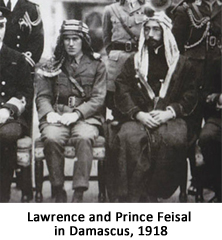
Lawrence and FeisalDressing himself in the flowing Arab Thawb, Lawrence joined the forces of Ali’s son, Feisal.
In theory, the Hejaz Railway could take you from the Ottoman capital at Constantinople to the Arab city of Medina, some 1,800 miles distant, without your feet ever touching the ground. In reality, the rail line was a ripe target for attackers. By his own count, TE Lawrence “scientifically” destroyed 79 bridges, a method of his own perfection by which bridges were destroyed but left standing, requiring Turkish workmen to dismantle the wreckage before repairs could begin.

Lawrence was captured in 1916, subjected to beatings, torture, and homosexual rape by the Governor of Daraa, Hajim Bey, a man he described as an “ardent pederast”.

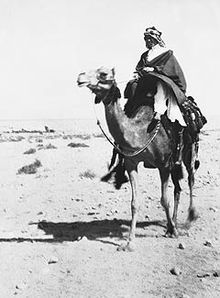
Lawrence at Aqaba
Lawrence at Aqaba, 1917

Lawrence escaped, though shattered by the experience, joining the desert guerilla war against the Turk.  He would take risks that he would not order on his followers, spying behind enemy lines, leading camel charges, blowing up trains and enduring the hardships of the desert.  Lawrence would suffer dozens of bullet and shrapnel wounds, in raids that tied up thousands of Ottoman troops and undermined their German ally.

By the summer of 1918, there was a price on his head.  One officer wrote “Though a price of £15,000 has been put on his head by the Turks, no Arab has, as yet, attempted to betray him. The Sharif of Mecca [King of the Hedjaz] has given him the status of one of his sons, and he is just the finely tempered steel that supports the whole structure of our influence in Arabia“.

2,000 years after the Apostle Paul’s dramatic conversion on the Road to Damascus, “Lawrence of Arabia” entered the defeated city on October 1, 1918.  Like many, Lawrence saw Damascus as the future capital of a united Arab state.  Lawrence tried to convince his superiors that Arab independence was in their own best interest, but found himself undermined by the Sykes-Picot agreement, negotiated in secret between French and British authorities with the backing of the Russian government, back in May 1916.

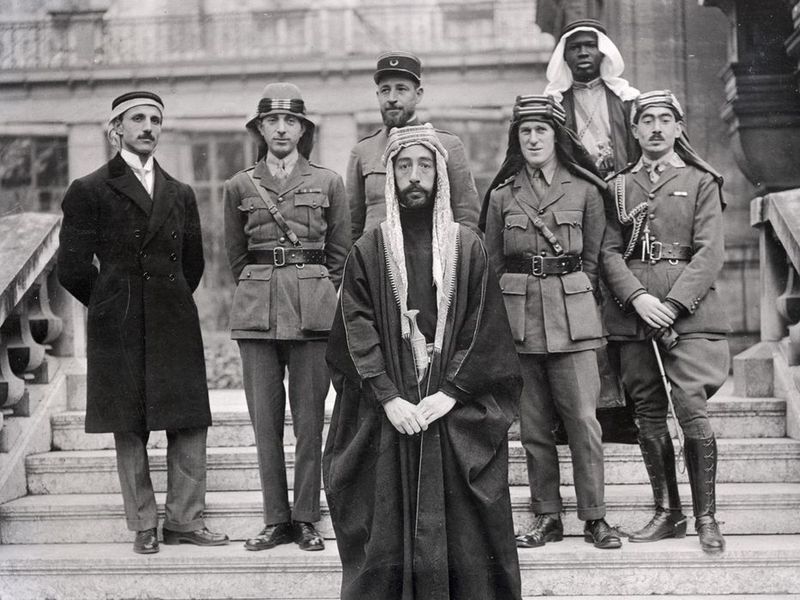
FeisalPartyAtVersaillesCopy
Feisal party at Versailles Conference. Left to right: Rustum Haidar, Nuri as-Said, Prince Faisal (front), Captain Pisani (rear), T. E. Lawrence, Faisal’s slave (name unknown), Captain Hassan Khadri. H/T Wikimedia Commons

Lawrence was furious, believing that what had been won by Arab arms, should remain in Arab hands.  Interrupting the praise of his own exploits at a war cabinet meeting, Lawrence snapped ‘Let’s get to business. You people don’t understand yet the hole you have put us all into.’  He refused a knighthood personally given him by King George V, thinking instead that he’d been summoned to discuss Arab borders.

Lawrence_in_Arabia, 1919
Lawrence of Arabia, 1919

In the end, the pan-Arab kingdom of the Hashemites was never meant to be.  The Middle East was carved into zones of English and French influence, and Lawrence never did come to terms with the betrayal.

Today, Lawrence of Arabia is the subject of three major motion pictures, and at least 70 biographies.  A prolific writer himself, author  of countless letters and at least twelve major works, Lawrence seems to have disliked the fame which had come his way.  “To have news value”, he would say, “is to have a tin can tied to one’s tail”.  TE Lawrence would go on to serve under a series of assumed names, his latest being TE Shaw, possibly a nod to his close friend, the Irish playwright and noted polemicist, George Bernard Shaw.

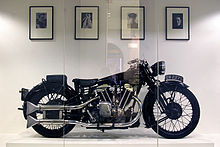
Brough_Superior_of_T.E._Lawrence
The Brough Superior motorcycle, T. E. Lawrence’s eighth, was awaiting delivery when he died. It is at the Imperial War Museum.

An avid motorcyclist, Lawrence would ride 500-700 miles a day, once even racing a Sopwith Camel biplane.  He owned several Brough (rhymes with rough) motorcycles, the last a Brough Superior SS100.  This thing came with a certificate, guaranteeing that it would do 0-100 within ¼ mile.

There is a roadside memorial in Dorset, marking the spot where TE Lawrence went over the handlebars, trying to avoid two boys on bicycles.  He was forty-six.  Mourners at his funeral would include Winston and Clementine Churchill, novelist EM Forster, and his last surviving brother, Arnold.

LawrenceTo most of us, the desert is an inscrutable place, as is the mind, culture and history of the Middle East.  Few westerners would ever get to know this part of the world like TE Lawrence.
Lawrence taught us a bit about all of it, when he said “Men have looked upon the desert as barren land, the free holding of whoever chose; but in fact each hill and valley in it had a man who was its acknowledged owner and would quickly assert the right of his family or clan to it, against aggression”.


September 25, 1066 Stamford Bridge

Of 300 ships which had arrived on the 20th, the battered remnants of the Viking army needed only 24 to sail away.

Edward the Confessor, King of England, went into a coma in late 1065, having expressed no clear preference for a successor.  Edward died on January 5, 1066, after briefly regaining consciousness and commending his wife and kingdom to the “protection” of Harold, son of Godwin, the powerful Earl of Essex.

Anglo-Saxon Kings didn’t ordinarily pick their own successors, but their wishes carried import.  Nobles of the Witenagemot, the early Anglo-Saxon predecessor to the modern parliament, appear to have been in Westminster to observe the Feast of the Epiphany.  Convening the following day, the council elected Harold Godwinson, crowning him King Harold II.

For some, Harold’s quick ascension was a matter of administrative convenience and happenstance.  Others saw it as evidence of conspiracy.  A usurpation of the throne.  Edward’s death touched off a succession crisis that would change world history.

Harold’s younger brother Tostig, Earl of Northumbria, believed he had his own claim to the throne. His animosity for his brother would prove fatal for them both.  After conducting inconclusive raids that spring, Tostig went to a Norman Duke called William “the Bastard”, looking for support. William had his own claim to the English throne, and had openly declared his intention to take it.  The Norman Duke had no use for King Harold’s little brother, so Tostig sought the assistance of the King of Norway, King Harald “Hardraada”, the name translating, literally, as “hard ruler”.

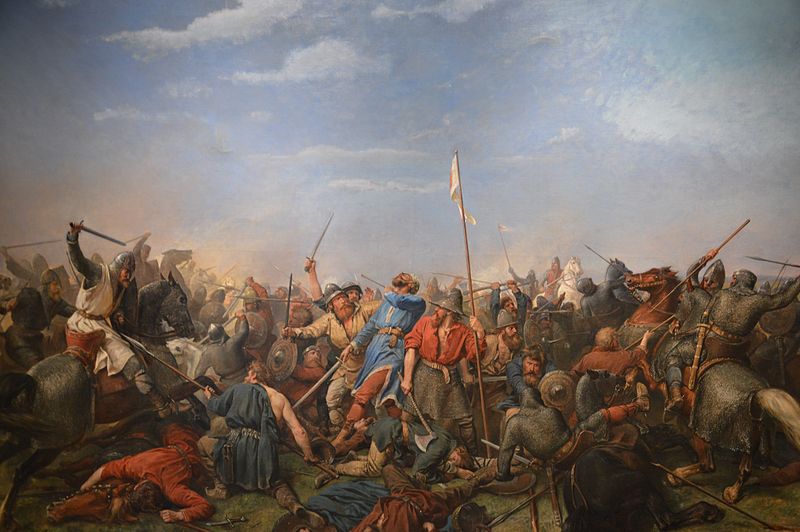
Battles of 1066Tostig sailed for England with King Harald and a mighty army of 10,000 Viking warriors, meeting the northern Earls Edwin and Morcar in battle at Fulford Gate, on September 20.
The encounter was a comprehensive defeat for the English side.  When Harald came to Stamford Bridge five days later, he expected only formal capitulation and tribute.

Meanwhile, King Harold was at the head of an army in the south, anticipating William’s invasion from Normandy. My military friends will appreciate what happened next; Harold marched his army north, traveling day and night, covering 185 miles in four days, on foot, completely surprising the Viking army waiting at Stamford Bridge.

The Vikings must have looked at the horizon and wondered how a peace party could raise that much dust, only to learn that they faced a new army.

Believing they were there to accept submission, Harald’s army had left half its number behind to watch the ships, along with their armor.

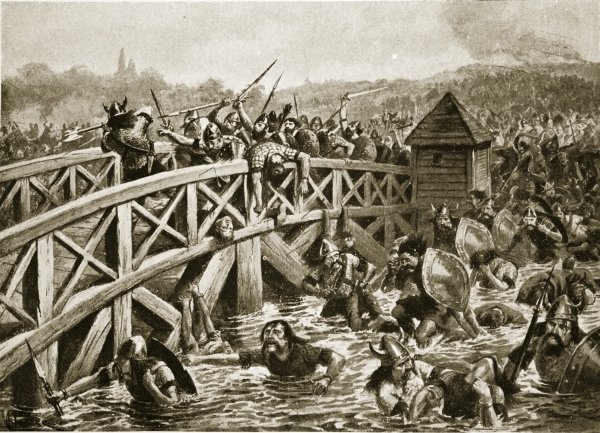
Stamford Bridge

During the height of the following battle, one giant Viking warrior, a Berserker, stood alone at the top of Stamford Bridge. Swinging the great two-handed Dane Axe, this giant of a man had slain something like 40 English warriors, lying dead in heaps around him, when one of Harold’s soldiers floated himself under the bridge, spearing the Viking warrior from below.

The savagery of the battle can only be imagined. Before the age of industrialized warfare, every injury was personally administered with a bladed or crushing weapon of some kind. 5,000 of King Harold’s soldiers would be dead before it was over, about a third of his force. Two thirds of King Harald’s Vikings died that day, about 6,000, including Harald himself and his ally Tostig. So many died in that small area that 50 years later, the site was said to have turned white with the sun bleached bones of the slain.

Of some 300 ships arriving on the 20th, the battered remnants of Harald’s Viking army needed only 24, to sail away.

Stamford Bridge is often described as the end of the Viking invasions of England, but that isn’t quite so. There would be others, but none so powerful as this.

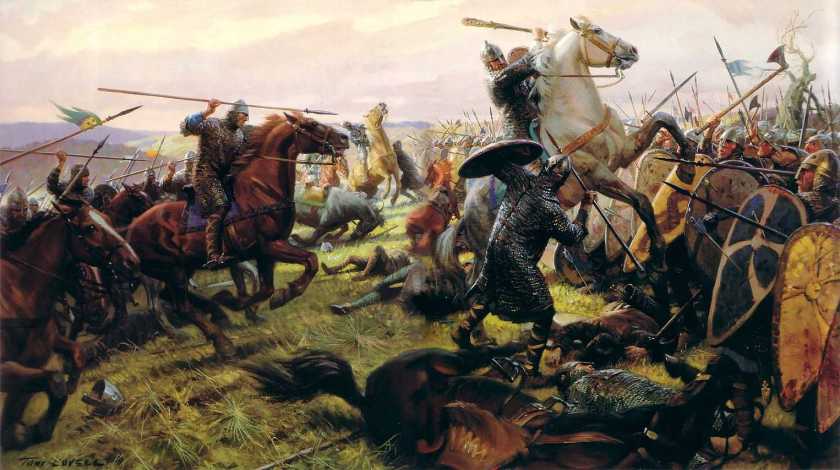
The Norman landing King Harold had been waiting for took place three days later at Pevensey Harbor, just as his battered army was disbanding and heading home for the Fall harvest.  The Anglo Saxon army would march south again, meeting the Norman invader on October 14 at a place called “Hastings”. King Harold II took an arrow in the eye that day, thus becoming the last of the Anglo Saxon Kings.

lovellhastingsstitched
Battle of Hastings, by Tom Lovell

Thenceforward and forever, William the Bastard would be known as William “The Conqueror”.

September 17, 1940 Battle of Britain

Prime Minister Winston Churchill captured the spirit of the period, as only he could. “Never in the field of human conflict was so much owed by so many to so few”. – Winston Churchill

When the allies invaded Europe in 1944, they had to land on the beach in order to get a foothold. At that point, they controlled none of the European continent. The Nazi war machine had been so successful, that a map of Europe at that time could have been drawn in only two colors. One for the occasional neutral nation, the other for Nazi controlled or occupied territory.

dunkirk2
Allied evacuation of Dunkirk, May 1940

Your eyes would have to cross the English Channel on that map to find a third color, that of Great Britain, which in June of 1940 stood defiant and alone in the face of the Nazi war machine.

Rooftop Observer

In his “Finest Hour” speech of June 18, Prime Minister Winston Churchill said “What General Weygand has called the Battle of France is over. I expect that the Battle of Britain is about to begin“.

In Germany, street decorations were being prepared for the victory parades which were sure to come, as Hitler considered plans for his surprise attack on his ally to the East, the Soviet Union. After Great Britain and her allies had been hurled from the beaches of Dunkirk, Hitler seemed to feel he had little to do but “mop up”.

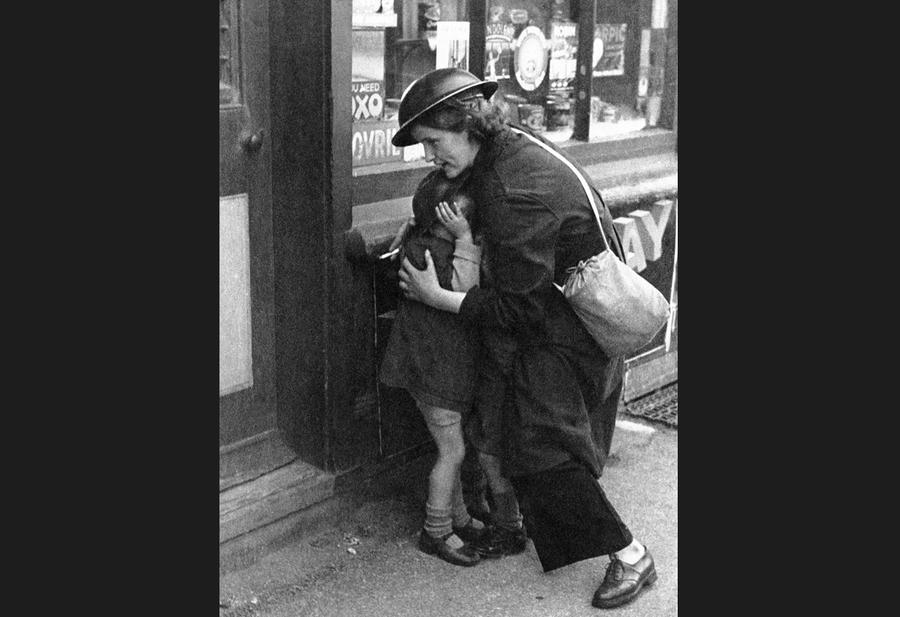
Battle of britain, children evacuatedGermany needed air supremacy before “Operation Sea Lion”, the amphibious invasion of England, could begin. Luftwaffe commander Hermann Göring said he would have it in four days.

Military planners of the 1930s believed that “The Bomber will always get through”, and Luftwaffe strategy was based on that assumption. Air Chief Marshal Sir H.C.T. “Stuffy” Dowding, leader of RAF Fighter Command, had other ideas. Dangerously low on aircraft and the pilots to fly them, the “Dowding System” employed a complex network of detection, command, and control to run the battle. The RAF hadn’t the faintest prayer of defending their entire coast, but Dowding’s system allowed them to dispatch individual squadrons to intercept each German air raid.

Battle of Britain, cleaning up
THE BATTLE OF BRITAIN 1940 (HU 104718) Workmen carry part of the bullet-riddled fuselage of a Dornier Do 17, alongside the wreckage of other crashed German aircraft at a scrapyard in Britain, August 1940. Copyright: © IWM. Original Source: http://www.iwm.org.uk/collections/item/object/205227877

The “Channel battles” beginning on July 10 were followed by a month of Luftwaffe attacks on English air fields. Losses were catastrophic for the RAF, but worse for the Luftwaffe. On only one day during this period, September 1, did the Germans succeed in destroying more aircraft than they lost.

German tactics changed on September 7. For almost two months, Luftwaffe attacks concentrated on cities and towns.

battleofbritain2

The Imperial War Museum online library (http://www.iwm.org.uk/collections/search?query=battle+of+britain&items_per_page=10) overflows with images of every day English life, set against a backdrop of catastrophic destruction. Children climbing over piles of rubble on their way to school. A milk man on his rounds, picking his way through shattered streets.  Adults browsing through stacks of library books, the ceilings open to the sky, great beams and rubble littering the aisles between the stacks.

23,002 English civilians died in the raids.  Another 32,138 were injured.

Battle of Britain, score
BATTLE OF BRITAIN (HU 810) A newspaper seller in the street watching a dog-fight during the Battle of Britain. Copyright: © IWM. Original Source: http://www.iwm.org.uk/collections/item/object/205226579

Interestingly, the most successful RAF squadrons to fight in the Battle of Britain weren’t British at all, but Polish.

battle of britain, kidsCzechoslovakia fell to the Nazis on the Ides of March, 1939, Czech armed forces having been ordered to offer no resistance. Some 4,000 Czech soldiers and airmen managed to get out, most escaping to neighboring Poland.

Tales of Polish courage in the face of the Nazi invasion of September 1 are magnificent bordering on reckless, replete with images of Polish horse cavalry riding out to meet German tanks. Little Poland never had a chance, particularly when the Soviet Union piled on two weeks later. Poland capitulated in a month, but the German victory was more costly than expected. Much more.  It’s estimated that the Wehrmacht expended twice as much ammunition defeating Poland as they did France the following Spring.  A country with a third larger population.

Battle of Britain, where from

The combined fighting forces of the two nations wound up in France in accordance with the Franco-Polish Military Alliance of 1921, thence to Great Britain following the French capitulation of June, 1940.

Battle of Britain, MilkmanBritish military authorities were slow to recognize the flying skills of the Polskie Siły Powietrzne (Polish Air Forces), the first fighter squadrons only seeing action in the third phase of the Battle of Britain. Despite the late start, Polish flying skills proved superior to those of less-experienced Commonwealth pilots. The 303rd Polish fighter squadron became the most successful RAF fighter unit of the period, its most prolific flying ace being Czech Sergeant Josef František.  He was killed in action in the last phase of the Battle of Britain, the day after his 26th birthday.

145 Polish aircrew served with the RAF during this period, making up the largest non-British contribution to the Battle of Britain.  The smallest is a two-way tie at one each, between Barbados and Jamaica.

Polish_airforce_memorial,_St_Clements
Polish Air Force memorial, St Clement Danes, London

In the end, Great Britain could not be defeated. German resources greatly outnumbered those of the English, but the ratio was reversed when it came to losses. The two nations were at a stalemate and none but a Pyrrhic victory was possible for either. Hitler indefinitely postponed Operation Sea Lion on September 17. By the end of October, the air raids had come to an end.

In the end, the Battle of Britain remains a story we remain free to tell, in English.  Prime Minister Winston Churchill captured the spirit of the period, as only he could.

“Never in the field of human conflict was so much owed by so many to so few”.


September 16, 1906 Mad Jack

Of all the hundreds of amphibious landings carried out in WW2, no other soldier ever stepped off a landing craft with bow and arrow and Scottish broadsword. Usually, while playing bagpipes.

A child was born on this day in 1906.  He was John Malcolm Thorpe Fleming Churchill, the first son and grandson of British civil servants in the Ceylon Civil Service.  The family lived in Hong Kong at the time, returning to England in 1917.  “Jack” graduated from the Royal Military College at Sandhurst, serving in Burma with the Manchester Regiment, before leaving the military, ten years later.

Churchill worked as a newspaper editor for a time in Nairobi Kenya, along with an occasional career as male model, and a couple appearances in motion pictures.  From there he might have faded into obscurity, unlike his fellow Englishman of no relation, with the same last name.  Then came World War II, where John Churchill would earn the name, “Mad Jack”.

It was around this time that Churchill learned to play bagpipes, a bit of an eccentricity for an Englishman of his era.  Mad Jack was nothing if not eccentric.  He also taught himself to shoot a bow and arrow, becoming quite good at it.  Good enough to represent his country in the world archery championship in Oslo, in 1939.

Jack-Churchill

Churchill resumed his military commission and rejoined the Manchester Regiment later that year, when Germany invaded Poland.  Part of the British Expeditionary force to France in 1940, Churchill signaled an ambush on a German unit, by taking its Feldwebel (staff sergeant) out with a broadhead arrow.  No one could have been more surprised than that German NCO, whose dying thought must have been “How did I get an arrow in my chest?”

The unfortunate German is, to my knowledge, the only combatant in all of WWII, to be felled by an English longbow.

Not long after, allied military forces were hurled from the beaches of Europe.  The only way back in, was via those same beaches.  We’ve all seen the D-Day style waterborne assault:  invading forces pouring out of Higgins Boats and charging up the beaches.  Amphibious landings were carried out from the earliest days of WWII, from Norway to North Africa, from the Indian Ocean to Italy.  In all those landings, there’s likely no other soldier who stepped off a Higgins Boat, with a bow and arrows.

On December 27, 1941, #3 Commando raided the German garrison at Vågsøy, Norway. As the ramp dropped on the first landing craft, out jumped Mad Jack Churchill playing “March of the Cameron Men” on the bagpipes, before throwing a grenade and charging into battle.  Mad Jack made several such landings, usually while playing his bagpipes, a Scottish broadsword at his belt.

Jack-Churchill-Speaks-During-a-Landing-Exercise
“Mad Jack” Churchill, speaking at a landing exercise

Churchill was attached to that sword, a basket hilted “Claybeg”, a slightly smaller version of the Scottish Claymore.  He said “Any officer who goes into action without his sword is improperly dressed.” Mad Jack could be seen at the Catania (Sicily) and Salerno landings of 1943, trademark broadsword at his belt, bagpipes under an arm and an English longbow and arrows, around his neck.

Churchill lost the sword in confused, hand to hand fighting around the town of Piegoletti, for which he received the Distinguished Service Order.  Almost single-handed but for a corporal named Ruffell, Churchill captured 42 Germans including a mortar squad.   “I always bring my prisoners back with their weapons”, he explained.  “It weighs them down. I just took their rifle bolts out and put them in a sack, which one of the prisoners carried. [They] also carried the mortar and all the bombs they could carry and also pulled a farm cart with five wounded in it….I maintain that, as long as you tell a German loudly and clearly what to do, if you are senior to him he will cry ‘Jawohl’ and get on with it enthusiastically and efficiently whatever the … situation. That’s why they make such marvelous soldiers…”  It looked, he said, like “an image from the Napoleonic Wars.

Churchill later trudged back to town, to collect his sword.  He encountered an American squad along the way, who seemed to have lost themselves and were headed toward German lines.  When the NCO refused to turn around, Churchill informed him that he was going to be on his way, and he “wouldn’t come back for a bloody third time”.

07_Hugh-4-bows-1
Archery historian Hugh Soar, pictured with four of “Mad Jack’s” English longbows

Mad Jack’s luck ran out in 1944 on the German-held, Yugoslavian island of Brac.  He was leading a Commando raid at the time, in coordination with Josip Broz Tito’s Partisans.  Only Churchill and six others managed to reach the top of hill 622, when a mortar shell killed or wounded everyone but Churchill himself.  He was knocked unconscious by a grenade and captured.

He’d been playing “Will Ye No Come Back Again?” on his pipes.

Hitler’s infamous ‘Commando Order” had long since taken effect, and Churchill and his surviving men escaped immediate execution at the hands of the Gestapo, thanks to the decency of one Wehrmacht Captain Thuener. “You are a soldier“, he said, “as I am. I refuse to allow these civilian butchers to deal with you. I shall say nothing of having received this order.” Churchill was able to pay Thuener back for his kindness after the war, keeping him out of the merciless hands of the Red Army.

Churchill was flown to Berlin and interrogated on suspicion that he might be related to the more famous Churchill, before being sent off to Sachsenhausen concentration camp in Oranienburg, Germany.  There, Mad Jack and Royal Air Force officer Bertram James escaped that September, slipping under the wire and crawling through an abandoned drain, walking all the way to the Baltic coast. They almost made it, too, but the pair was captured near the coastal city of Rostock, just a few miles from the coast.

churchill2Mad Jack was sent off to Burma, following the defeat of Nazi Germany.  He was disappointed by the swift end to the war brought about by the American bombings at Hiroshima and Nagasaki, saying “If it wasn’t for those damn Yanks, we could have kept the war going another 10 years!”

As a Seaforth Highlander, Mad Jack was posted to the British Mandate in Palestine, in 1948. He was one of the first to the scene of the ambush and massacre of the Haddassah medical convoy that April, banging on a bus and offering evacuation in an armored personnel carrier. His offer was refused in the mistaken belief that Hadassah was mounting an organized rescue.

No such rescue ever arrived. Churchill and a team of 12 British Light Infantry were left to shoot it out with some 250 Arab insurgents, armed with everything from blunderbusses and old flintlocks, to Sten and Bren guns. Seventy-eight Jewish doctors, nurses, students, patients, faculty members and Haganah fighters were killed along with one British soldier. Dozens were burned beyond recognition and buried in mass graves. Churchill later coordinated the evacuation of some 700 Jewish patients and medical personnel from the Hadassah hospital at Hebrew University, in Jerusalem.

Churchill served as an instructor at the land-air warfare school in Australia, where he became passionately devoted to surfing.  Returning to England upon his retirement, he became the first to surf the 5′ tidal surge up the River Severn, on a board of his own design.

Tidal Bore
Surfing the Tidal Bore, up the Severn River

Mad Jack Churchill remained an eccentric, even in his later years.   He loved sailing radio-controlled model warships on the Thames, and little seemed to bring him more joy than to horrify fellow train passengers, opening the window and hurling his briefcase into the darkness.

No one ever suspected that he threw it into the garden of his own back yard.  It saved him the trouble of carrying it home from the station.

He scribbled a couplet once on a postcard, and mailed it to a friend.  The face of the card bore the regimental colors.

On the back, Mad Jack Churchill had written these words.

“No Prince or Lord has tomb so proud / As he whose flag becomes his shroud.”

He may have been talking about himself.


September 2, 1192 Sultan and Crusader

In time, the Crusader and the Sultan came to hold a degree of respect for one another.   Legend has it that, at one point in the fighting around Jaffa, Saladin even sent Richard a fresh horse, after one was killed beneath him.

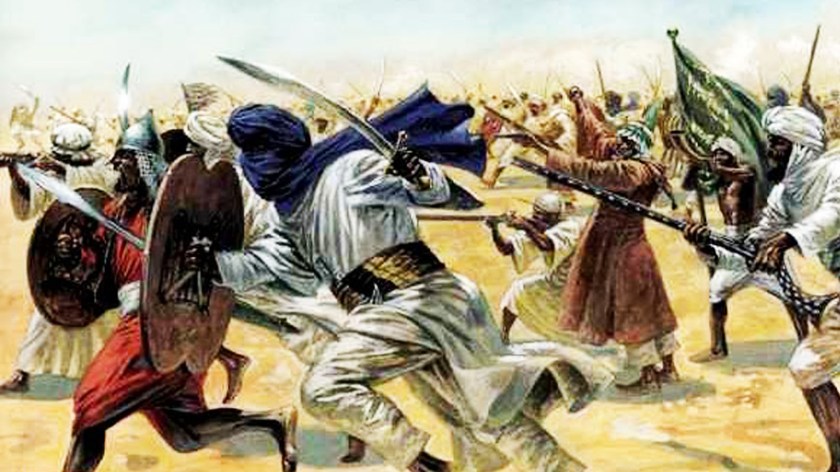
The Islamic Conquests began in the 7th century on the Arabian Peninsula.  In the first 100 years of its existence, Islam established the largest pre-modern empire up to that time, stretching from the borders of China in the east, through India and Central Asia, the Middle East, North Africa, Egypt, Sicily to the Iberian Peninsula (Spain), in the west.

The Sasanid Empire in what is now Iran ceased to exist under the Muslim conquest, as did much of Byzantium, seat of the Roman Empire in the east. Europe itself narrowly escaped subjugation when Charles “The Hammer” Martel defeated the army of Abdul Rahman al Qafiqi at Poitiers (Tours) in October, 732.

Estimates suggest that the Caliphate was over 5 million square miles, larger than any modern-day state with the sole exception of the Russian Federation.

Muslim Conquests, 632-750

The First of the Christian Crusades was launched by Pope Urban II on November 27, 1095, in response to an appeal from Byzantine Emperor Alexios I Komnenos, who was requesting help in Constantinople against the invading Seljuq Turks.

Such a request wasn’t new, the Reconquista in Spain had not yet reached the mid-point of its 781-year effort to overthrow Muslim rule, and European knights traveled to Spain on a regular basis to assist in the effort.

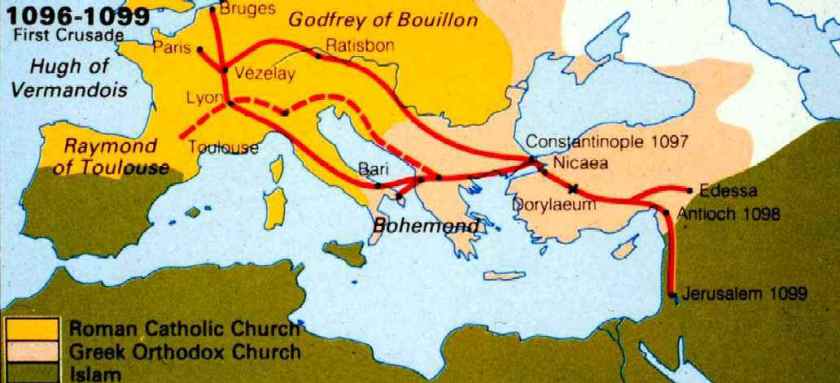
Once in Anatolia (modern day Turkey), the ancillary goal of freeing Jerusalem itself and the Holy Land soon became the principal objective, as Jerusalem had by then been under Islamic rule for 461 years.  Jerusalem was recaptured on July 15, 1099, following a siege of six weeks.

first_crusade_route_map
Route Map of the First Crusade

The County of Edessa was the first Crusader state to be created, and the first to go, falling in 1144 and leading to the second crusade. Mostly notable for its failures, the one major success of the second crusade was when it stopped on the way to the Holy Land, helping a much smaller Portuguese army overthrow Muslim rule in Lisbon. Two kings then marched two separate armies across Europe into Anatolia, only to be soundly defeated by the Turks.

Saladin
Saladin

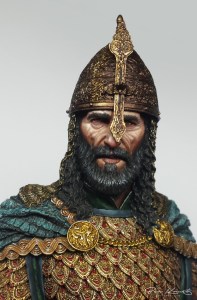
A Kurdish leader arose to become Sultan at this time, founding a dynasty which would last for eighty-nine years. His name was Salāḥ ad-Dīn Yūsuf ibn Ayyūb, better known as Saladin, a Sunni Muslim who rose to greatness in a Shi’ite world.

No less a figure than Dante Alighieri counted Saladin a “virtuous pagan,” in the ranks of Hector, Aeneas, and Caesar.

While Christian leaders in the Middle East fell to squabbling among themselves, Saladin united Syria, Egypt, Mesopotamia, Yemen and parts of North Africa. Saladin’s annihilation of a crusader army at Hattin on July 4, 1187 opened the way to the recapture of every Crusader state but one.  Jerusalem itself fell on October 2.

Pope Urban III is said to have collapsed and died, on hearing the news.

King Henry II of England and King Philip II of France were at war at the time, but ended that and began preparations for a third crusade with the exhortations of Pope Henry VIII. An extremely unpopular tax of 10% on all revenues and movable goods was imposed by the Church, and enforced under pains of imprisonment or excommunication. This “Saladin Tithe” raised 100,000 marks of silver, about 800,000 ounces.

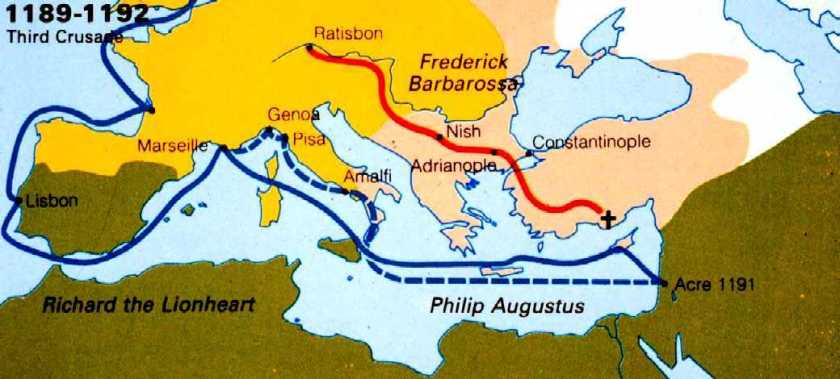
third_crusade_route_map
Route Map of the Third Crusade

The aging Holy Roman Emperor, Frederick I “Barbarossa” (Red Beard), was the first to go, taking up the cross at Mainz Cathedral in March, 1188.  Emperor Frederick drowned crossing the Saleph River in Asia Minor in June 1190, after which most of his army of 100,000 returned to Germany.

Henry II of England died in the meantime, leaving his son Richard I “Coeur de Lion”(Lion-heart) to lead the crusade with Philip in the summer of 1190.

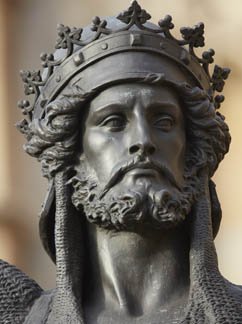
Loewenherz_LondonPortraet
Richard I, “Lion-heart”

Richard took time to conquer Sicily on the way to the Holy Lands, where King Tancred I was holding Richard’s sister Queen Joan, prisoner.  He reached Cyprus that May, there pausing long enough to marry Berengaria of Navarre, thus alienating his alliance with the French King, who considered Richard to be betrothed to his own half-sister, Alys.

Richard landed near Acre in June 1191 to find the city under Muslim occupation, and under siege by the forces of Guy de Lusignan, himself held under siege by the armies of Saladin.

Richard became ill at one point during the battle for Acre, it’s said that he picked off guards on the city walls with a crossbow, as he was being carried off on a stretcher.

The fall of Acre led to a number of meetings between Richard and Saladin’s brother Al-Adil, from which nothing resulted.  The Crusaders lost all patience by August, believing Saladin to be dragging his feet, and decapitated 2,700 Muslim prisoners in view of Saladin’s army.  This number included women and children.  Saladin responded by murdering every Christian captive, under his control.

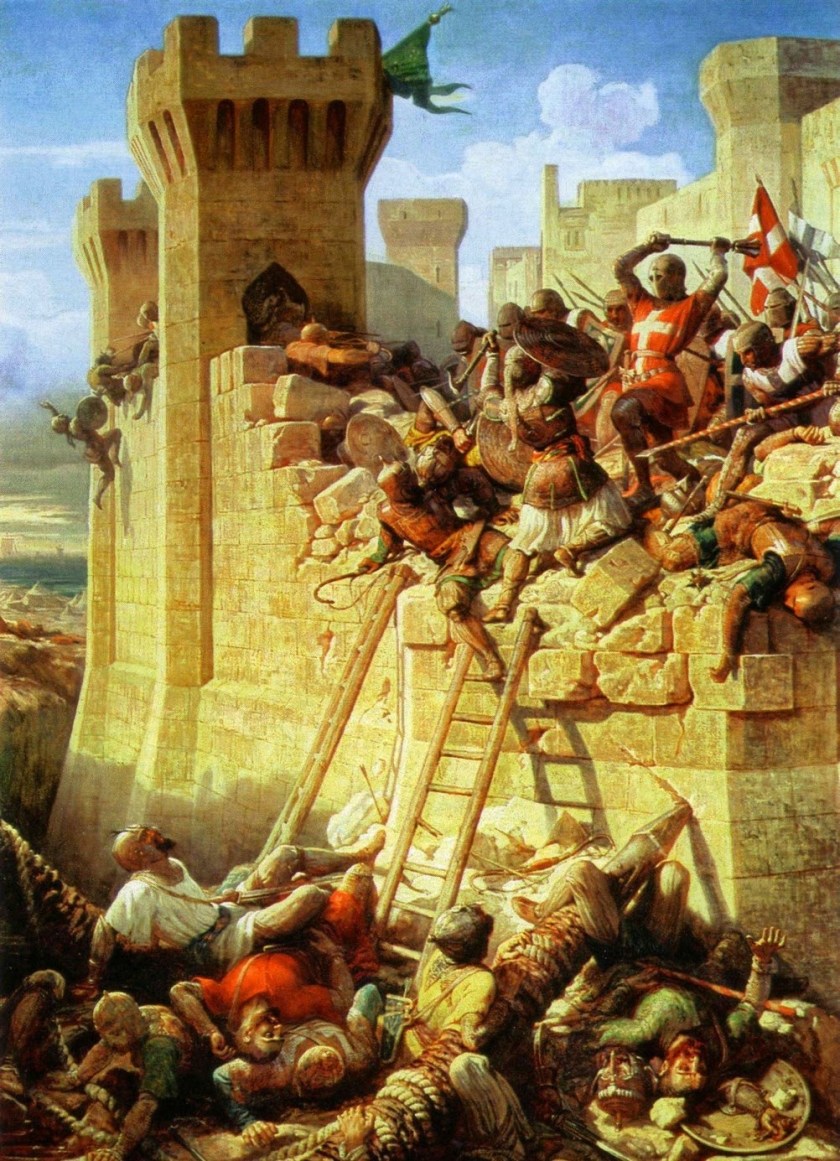
Dominique-Louis-FeÌ-reÌ-ol Papety - The Siege of Acre ca_ 1840
The Siege of Acre, by Dominique-Louis-FeÌ-reÌ-ol Papety – ca 1840

Richard took the strategically important city of Jaffa, control over which was necessary if the Crusaders were to hold the coast and retake Jerusalem. The Crusader victory at Arsuf would prove Richard’s personal courage and skill as a commander, at the same time putting a dent in Saladin’s reputation as the invincible warrior King.

Two times Crusader armies came within sight of Jerusalem, never suspecting that, within the city, “Saracen” morale was so low that the city may have been theirs for the taking.  Meanwhile, the Crusader side fell to bickering, with half wanting to push on to Jerusalem, the other wanting to attack Saladin’s base of power, in Egypt.

In time, the Crusader and the Sultan came to hold a degree of respect for one another.   Legend has it that, at one point in the fighting around Jaffa, Saladin even sent Richard a fresh horse, after one was killed beneath him. The pair even discussed marrying Joan off to Saladin’s brother, Al-Adil, with themselves becoming co-rulers in Jerusalem. The plan might’ve worked, too, until the Roman Church got wind and threatened excommunication if Richard carried it out.

I have not been able to learn what Joan herself thought of the match.

crusade, 3

Time finally ran out for Richard and Saladin, both. The Christian army was decimated by disease.  Fierce quarrels between German, English and French contingents threatened to break up the Crusader army.   Richard himself was gravely ill, near despair of ever regaining his health.  On top of that, his own little brother John was plotting against him, with the connivance of the French King Philip. Richard Lion-heart no longer had the strength to challenge Saladin for Jerusalem.

Saladin, for his part, had serious morale problems, after repeated defeats at the hands of the Crusaders.

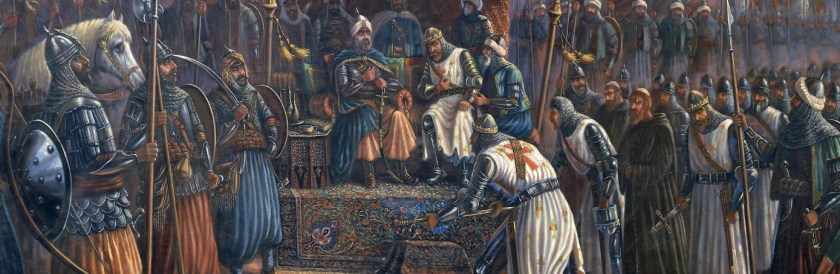
With Saladin’s brother Saif adDin acting as intermediary, the King and the Sultan concluded the Treaty of Jaffa on this day in 1192.  The fortifications at Ascalon were to be dismantled, in exchange for which Christians would continue to hold the coast from Jaffa to Tyre. Jerusalem would remain in Muslim hands, while unarmed Christian pilgrims and traders would be guaranteed free passage to visit the Holy Sepulcher of the Lord in peace, without the exaction of any tribute or tax.  Further, Christian traders were permitted the possession objects for sale throughout the land, thus permitting such traders right of free commerce.

Crusades

Sultan Salāḥ ad-Dīn Yūsuf ibn Ayyūb died of a fever the following March, and was buried in the garden outside the Umayyad Mosque in Damascus, Syria.  Saladin’s kingdom and the Crusader states would remain at peace, for a period of three years.

Seven centuries later, German Emperor Wilhelm II donated a new marble sarcophagus, to the tomb of the Sultan who had reclaimed Jerusalem from the Crusaders.

Foul weather drove King Richard I ashore near Venice, where he was captured by Duke Leopold of Austria and handed over to German Emperor Henry VI and held for ransom. This time, the tithe would be 25%, raising about 1.2 million ounces of silver, and forever answering any questions as to what might constitute a “King’s Ransom”.

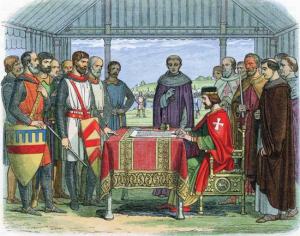
Magna Carta
King John signing the Magna Carta, June 15, 1215

A bolt from a crossbow left Richard Coeur de Lion mortally wounded on April 6, 1199, while besieging the castle of Châlus, in central France. He was 41.

Richard was destined to be succeeded by his brother John, after all.  John became such an unpopular King that his Nobles and their French and Scots allies forced him to sign the “Great Charter of the Liberties”, the Magna Carta, at a place called Runnymede.

Nearly 600 years later, the document would influence early government in the thirteen American colonies, and the formation of our own Constitutional Republic.  But that must be a story for another day.