December 24, 1814 I’ll have the Miss Piggott Special

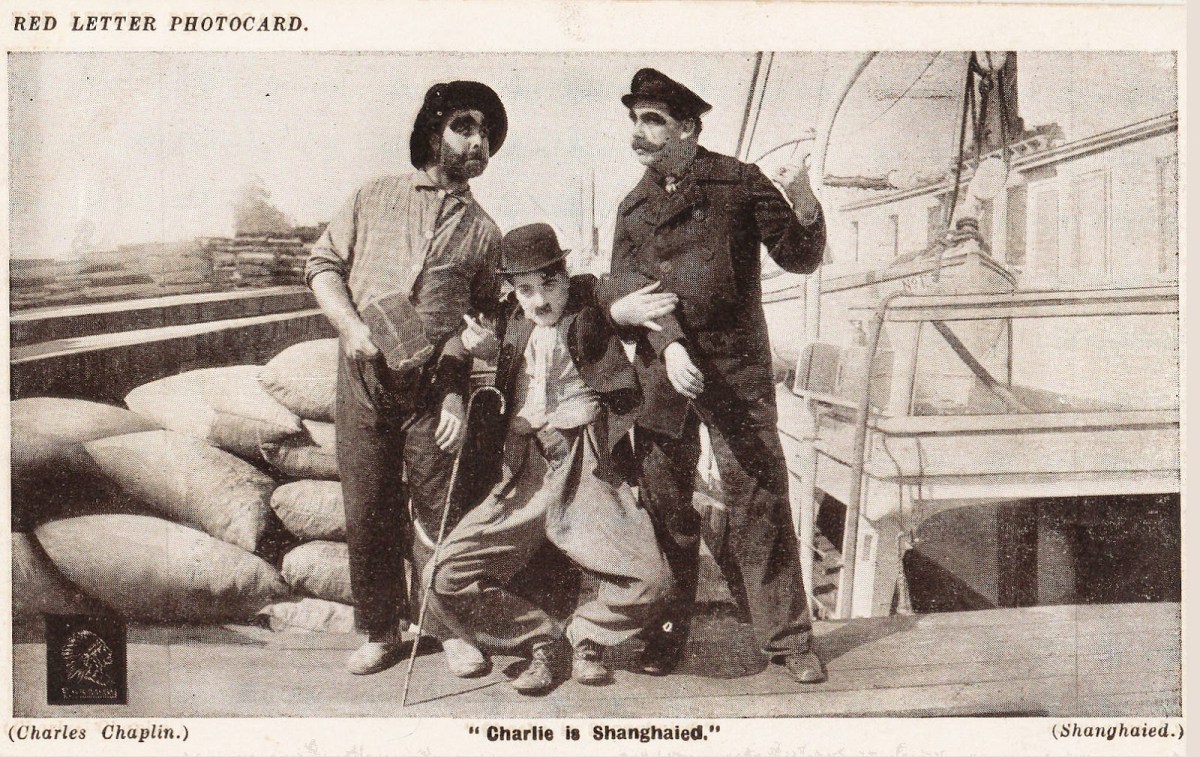
Golden nuggets were plentiful during the Gold Rush era and sailors, were not. Infamous “crimps” like James “Shanghai” Kelly were happy to help, with both problems.

In modern times, governments have employed various strategies to meet the personnel needs of national armed services. Recruiting methods range from voluntary to compulsory service, and even a lottery or other form of draft, in times of national emergency.

During the age of sail, vast numbers of skilled and unskilled seamen alike, were required to meet the needs of naval vessels at sea. Governments resorted to more straightforward methods of meeting manpower requirements, namely, kidnapping.

Such involuntary service or “impressment”, was first made legal during Elizabethan times, but the practice dates back to the 13th century.

impressment-of-american-sailors-granger

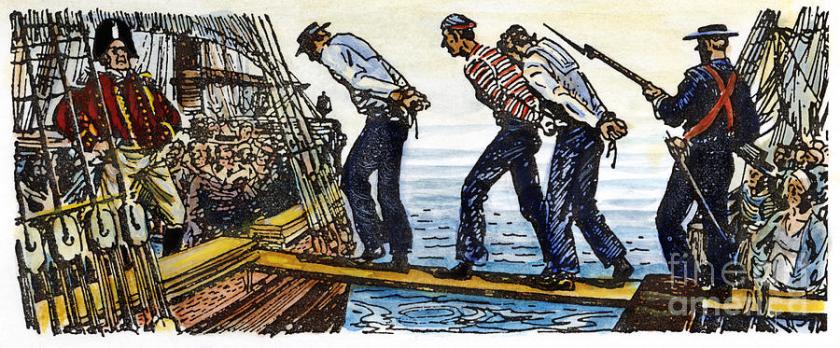
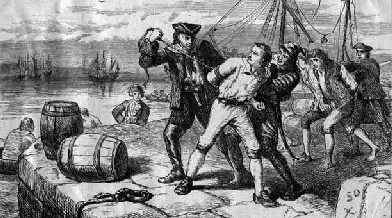
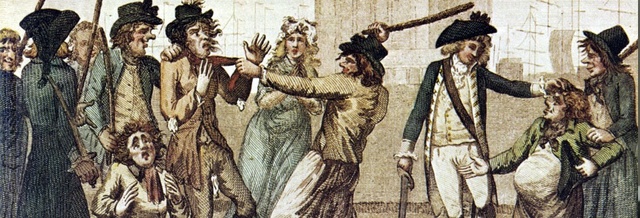
“Press gangs” would patrol waterfronts looking for vagrants, raiding taverns and even pouncing on unsuspecting victims in their beds. Prints from the time show armed gangs barging into weddings and hauling away the groom. I can’t imagine the bride was too pleased but, good news. In 1835 the practice was limited to a single impressment per man with a maximum term of impressment, of five years.

Such “pressing” often took place at sea, where armed gangs would board merchant ships and take what they needed, sometimes leaving victims without sufficient hands to take them safely back to port.

Such methods were essential to the strength of the British Navy, particularly during the Napoleonic wars. American merchant vessels were often targets. The British Navy impressed over 15,000 American sailors alone, between 1793 and 1812.

impress

The American public was outraged and there were calls for war in 1807, when HMS Leopard overtook the USS Chesapeake, kidnapping three American-born sailors and one British deserter, leaving another three dead and 18 wounded.

This time, American retaliation took the form of an embargo. Five years later, continued impressment of American seamen would be a casus belli for the war of 1812, a conflict ended with the Treaty of Ghent signed this day, in 1814.

Crimping 1

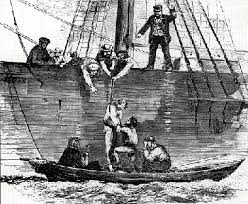
Outside of the British Royal Navy, the practice of kidnapping men to serve as shipboard labor was known as “crimping”. Low wages combined with the gold rushes of the 19th century left the waterfront painfully short of manpower, skilled and unskilled. “Boarding Masters” had the job of putting together ship’s crews, and were paid for each recruit. There was strong incentive to produce as many able bodies, as possible. Unwilling men were “shanghaied” by means of trickery, intimidation or violence, most often rendered unconscious and delivered to waiting ships, for a fee.

Crimps made $9,500 or more per year in the 1890s, equivalent to over a quarter-million, today. The practice flourished in British port cities like London and Liverpool, and in the west coast cities of San Francisco, Portland, Astoria and Seattle. You also didn’t want to be caught out alone and drunk, in east coast port cities like New York, Boston, Philadelphia or Baltimore.

Today the area from North Beach to Jackson Square in San Francisco, is ‘Frisco’s’ Chinatown. During the Gold Rush era this was the infamous Barbary Coast, a raucous red-light district of taverns and whorehouses where fewer left, than than ever came in.

Golden nuggets were plentiful during the Gold Rush era and sailors, were not. Happy to help with both problems James “Shanghai” Kelly kept several bars and a boarding house on the Barbary Coast. This character once shanghai’d 100 guys, in a single evening.

In the early 1870s, Kelly rented the paddleboat Goliath and widely publicized a free booze cruise, to celebrate his birthday. Bartenders drugged unwitting revelers with opium-laced whiskey, and then offloaded them to waiting ships. Shanghai Kelly’s biggest concern was returning after such a public event, with an empty boat. His luck held, when another paddle wheel steamer, the Yankee Blade, struck a rock and began to sink. Goliath rescued everyone on board, and continued the party. Nobody back at the waterfront, noticed a thing.

The Laurel & Hardy short film “Live Ghost” (1934) is about the practice, of crimping

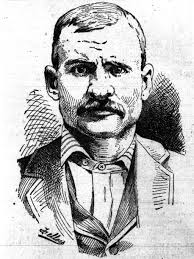
Joseph “Bunko” Kelley was another infamous crimp, also working out of the San Francisco waterfront. The “King of Crimps”, Kelley once set a record rounding up 50 guys in three hours. The Bunko name stuck, when Kelley delivered one crewman for $50, who turned out to be a cigar store Indian. In 1893, Kelley delivered 22 guys who had mistakenly consumed embalming fluid, from a local mortuary. He sold them all for $52 apiece though most of them were dead, a fact to which the ship’s captain only became wise, after returning to sea.

Crimping 3, Bunko Kelley
James “Bunko” Kelley

The “Shanghai tunnels” of Portland run through the Old Town/Chinatown section to the main business district, connecting the basements of hotels and taverns to the waterfront at the Willamette River. The tunnels themselves are real enough, though their history is shrouded in mystery. Originally constructed to move goods from the Willamette waterfront to basement storage areas, the number of unconscious bodies hustled down the dark chambers of the Portland Underground”, remains unknown. There are those who will tell you, the practice continued well into the WW2 period.

State and federal legislatures passed measures to curb the practice after the Civil War, but crimping didn’t go away easily. In their heyday, the owners of sailor’s boarding houses had endless supplies of manpower, fanning out across polling places to “vote early and often”.

crimping 2

San Francisco political bosses William T. Higgins, (R) and Chris “Blind Boss” Buckley (D) were both notable crimps, and well positioned to look after their political interests. Notorious crimps such as Joseph “Frenchy” Franklin and George Lewis were elected to the California state legislature. There was no better spot from which to ensure that no legislation would interfere with such a lucrative trade.

A brief list of infamous crimps includes Andy “Shanghai Canuck” Maloney of Vancouver, Anna Gomes of San Francisco, New Bedford’s own “Shanghai Joe” and Tom Codd the “Shanghai Prince”. William “Billy” Gohl, the “Ghoul of Grays Harbor” of Aberdeen Washington, also happened to be, a serial killer.

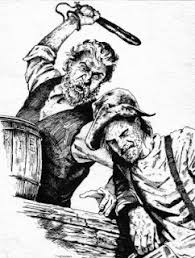
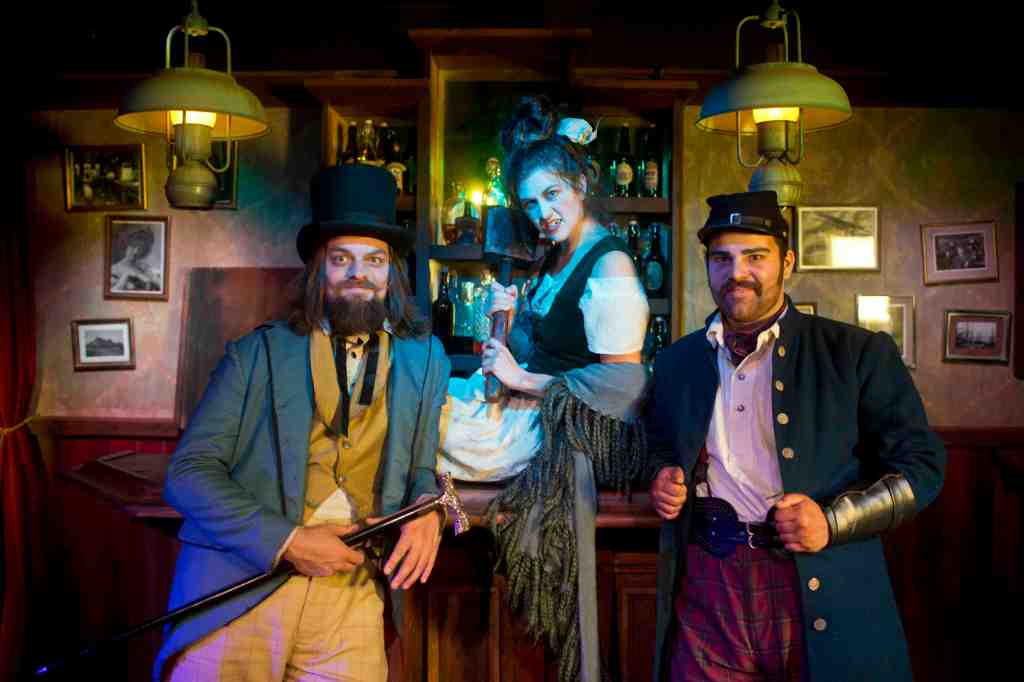
In the 1860s and 70s, one “Miss Piggott” operated a saloon and boarding house, in San Francisco. This “ferocious old harridan” would maneuver unsuspecting guests over a trap door and serve them her “Miss Piggott Special,” a potion consisting of equal parts brandy, whiskey and gin laced with either laudanum, or opium. One knock on the head with her “bung starter”, a wooden mallet used to open whiskey kegs, and she’d pull the lever and down they would fall to the waiting mattress, below.

(From left) Colonel Jack Gamble, Miss Piggott and Sam Roberts of the San Francisco Dungeon in San Francisco, Calif., on Wednesday June 18, 2014. (photo by Beck Diefenbach / Madam Tussauds)

Imagine the hangover the next morning, to wake up and find you’re now at sea, bound for somewhere in the far east. Regulars knew about the trap door and avoided that thing at all costs, knowing that anyone going over there, was “fair game”.

Widespread adoption of steam power in the late 19th and early 20th centuries did as much to curb shanghaiing as did any legislative effort. Without acres of canvas to furl and unfurl, the need for unskilled labor was greatly diminished. The “Seaman’s Act of 1915”, sometimes called the “magna carta of sailor’s rights,” ended the practice for good.

You might want to do yourself a favor, though, if you’re ever at Miss Piggott’s place. Look out for that trap door.

December 11, 1919 Monument, to a Bug

It was hardly coincidental that the thing was installed outside of Fleming’s General Store, but hey. This was a guy who let guinea hens loose inside his store and offered a discount, to anyone who could catch one. Roscoe Fleming had style.

Few machines have changed the course of history, like Eli Whitney’s cotton gin.

The long, hot summers of the southeastern United States have always been ideal for growing cotton, but there was a time when the stuff was extremely expensive to produce.  Cotton comes out wet from the boll, the protective capsule requiring about ten man hours just to remove the seeds to produce a pound of cotton.

By comparison, a cotton gin can process about a thousand pounds a day, at comparatively little expense.

slide_10

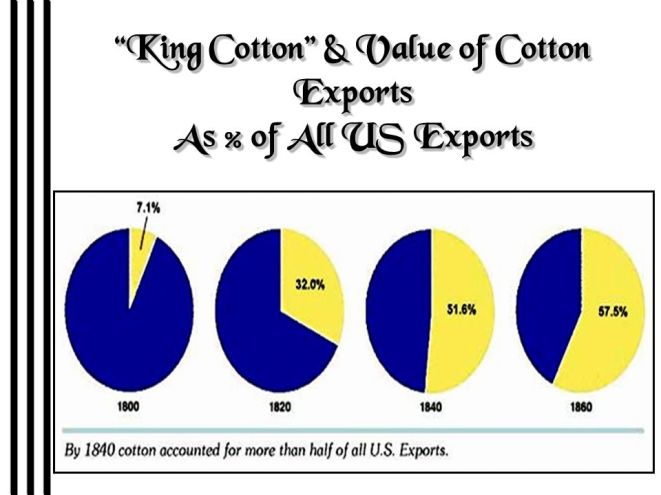
In 1792, the year that Whitney invented his machine, the southeastern United States exported 138,000 pounds a year to Europe and to the northern states.  Two years later, that number had risen to 1,600,000 pounds.  By the time of the Civil War, Britain alone was importing ¾ of the 800 million pounds it consumed every, from the American south.

Enterprise, Alabama got its start when John Henry Carmichael first settled there, in 1881.  Within a few years the Alabama Midland Railway came to Enterprise.  By the turn of the century the place was a major cotton growing hub.

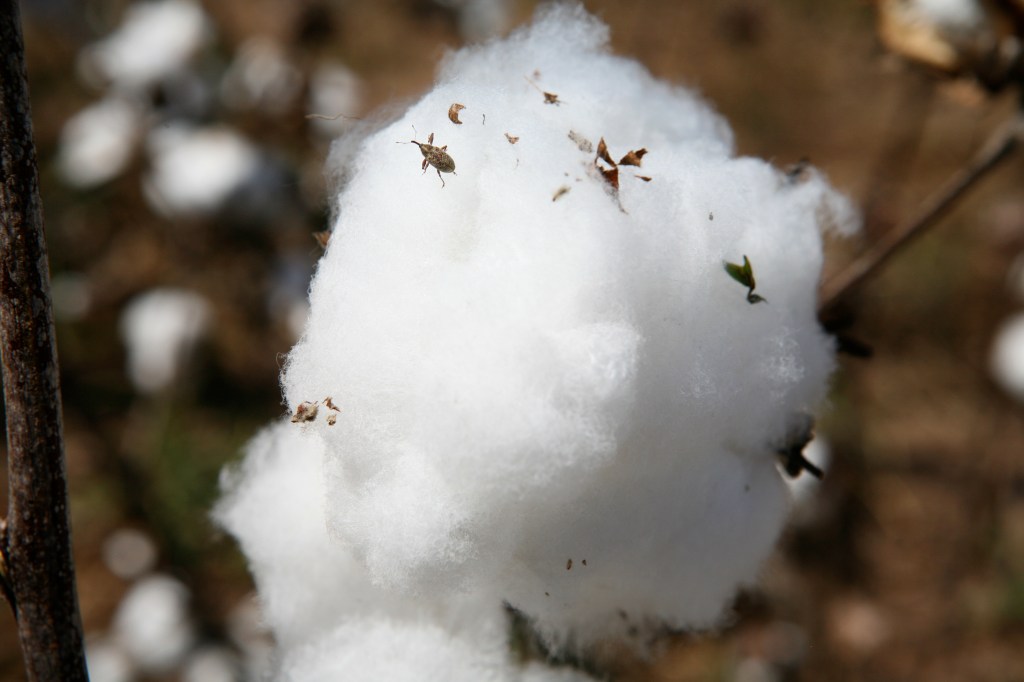
Anthonomus grandis, the Boll Weevil, is a small beetle, about the size of the nail on your little finger. Indigenous to Mexico, the beetle crossed the Rio Grande near Brownsville, sometime around 1892.  The insect spread rapidly, producing eight to ten generations in a single growing season and preying mainly on the young cotton boll.

weevil in a ball of cotton

The insect is capable of destroying entire cotton crops and did just that in 1915, the year the insect reached Enterprise and most of Coffee County.  Facing economic ruin, local farmers were forced to diversify their crops, just to recoup the losses caused by this wretched insect.

Within two years, Enterprise became one of the leading peanut producers in the nation.  Not only had farmers been able to stave of disaster, but they were already becoming prosperous as a result of the thriving new crop base.

Town fathers decided to build a monument, their “herald of prosperity”, to the boll weevil.  The bug that had almost ruined them.

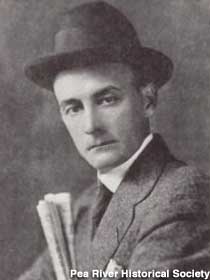
Roscoe Owen “Bon” Fleming

The idea was the brainstorm of one Roscoe Owen “Bon” Fleming, a man roadsideamerica.com describes as a “businessman, city councilman, and rogue promoter of the town of Enterprise”.

It was hardly coincidental that the thing was installed outside of Fleming’s General Store, but hey. This was a guy who let guinea hens loose inside his store and offered a discount, to anyone who could catch one. Roscoe Fleming had style.

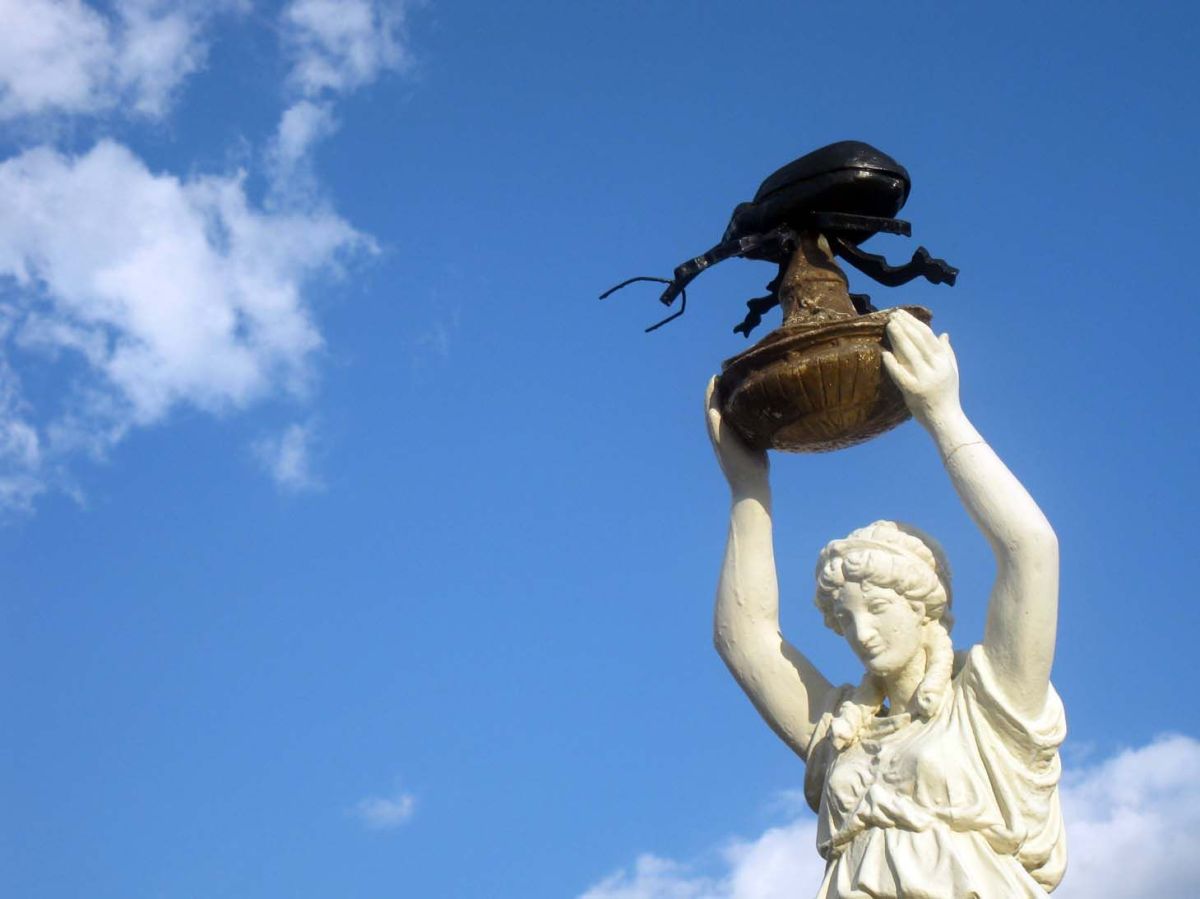
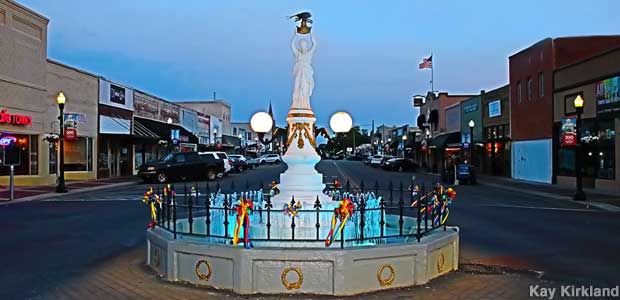
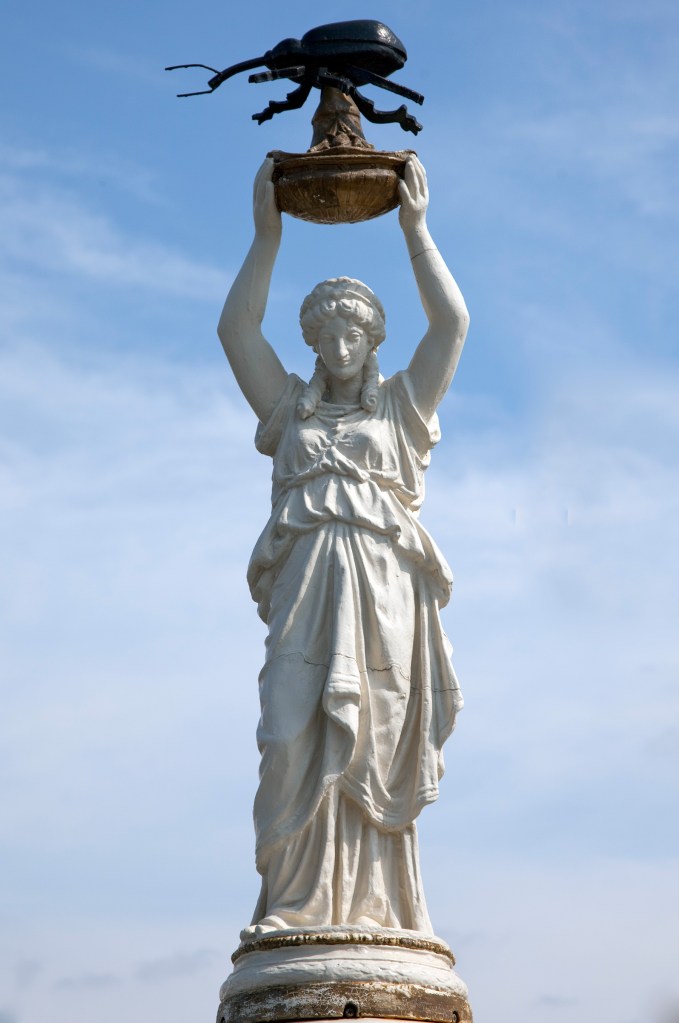
Designed in Italy (or maybe not), the monument depicts a female figure in a flowing gown, arms stretched high over her head and holding in her hands, a trophy. Maybe the whole thing came from the Bama Iron Works 90 miles down the road, who knows. There’s nothing like a good story.

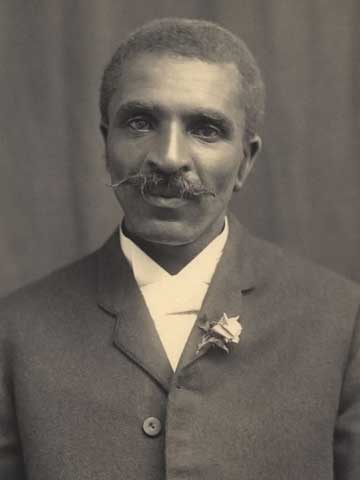
George Washington Carver

Critics railed against the $1,800 cost of the project, half of which came out of Fleming’s own pocket. The punditry also took aim at the subject of the monument. Why would you have a statue of a boll weevil in segregated Alabama when you could honor George Washington Carver, the African American agronomist who championed the peanut, in the first place?

Bon Fleming was not insensitive to such criticism and invited Carver to be the principal speaker, at the unveiling. It wasn’t meant to be. Rain washed out the tracks into town and Carver never made it.

So it is, a monument to a bug was dedicated on December 11, 1919 at the intersection of College and Main Street, in the heart of the business district, of Enterprise Alabama.

Now, you can’t have a boll weevil monument without a boll weevil, right?  Thirty years later one Luther Baker added a bug to the top of the trophy.  A big one, about the size of a Bassett hound. At the base of the memorial appears this inscription: 

“In profound appreciation of the Boll Weevil and what it has done as the herald of prosperity this monument was erected by the citizens of Enterprise, Coffee County, Alabama.”

The original has been vandalized so many times it was moved it to a protected facility and a replica, put in its place.  So it is you can drive down the Main Street of Enterprise Alabama, and there you will find a monument…to a bug.

December 8, 1941 The Game that Never Was

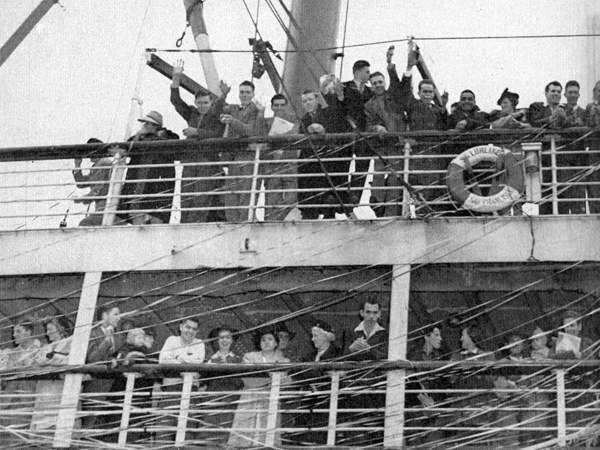
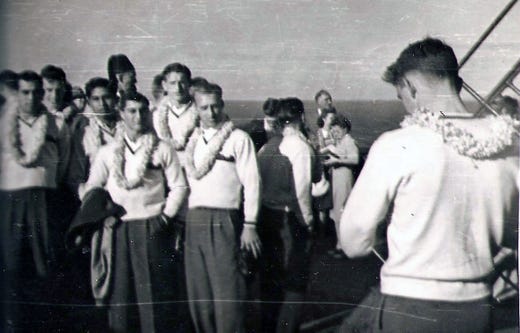
The two teams departed November 27 aboard the SS Lurline along with an entourage of fans, dignitaries and coaching staff. An outing like that was once in a lifetime. An unforgettable trip and so it was, only not for the reason any of them expected.

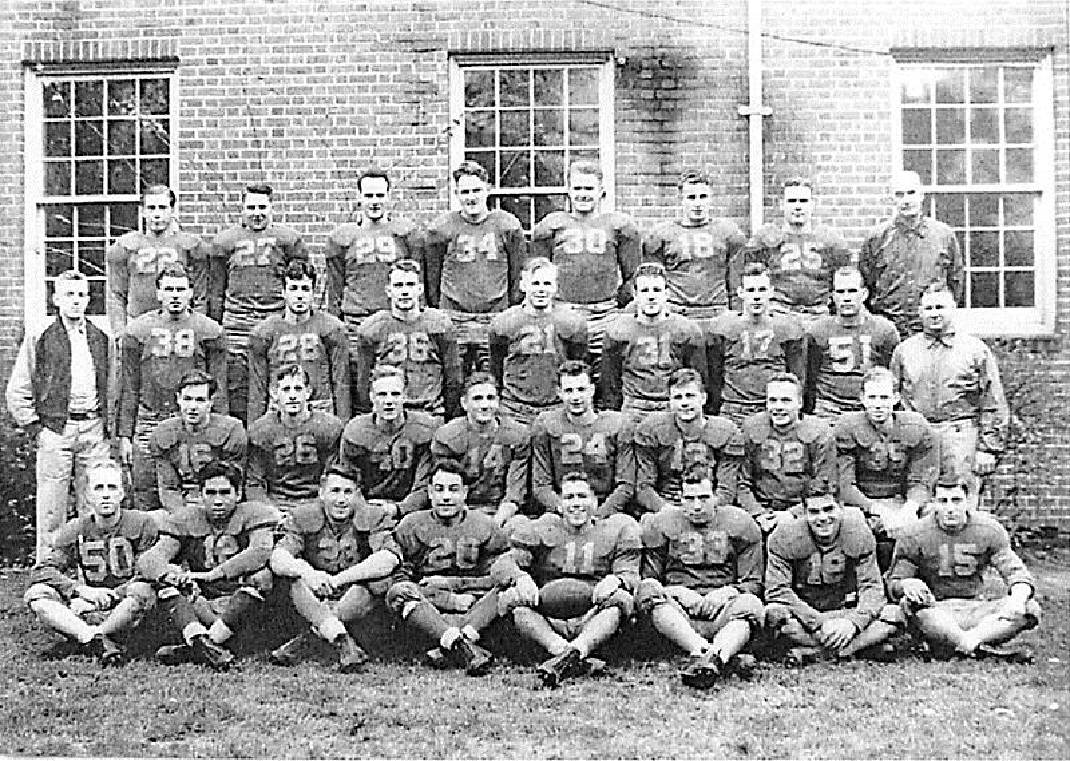
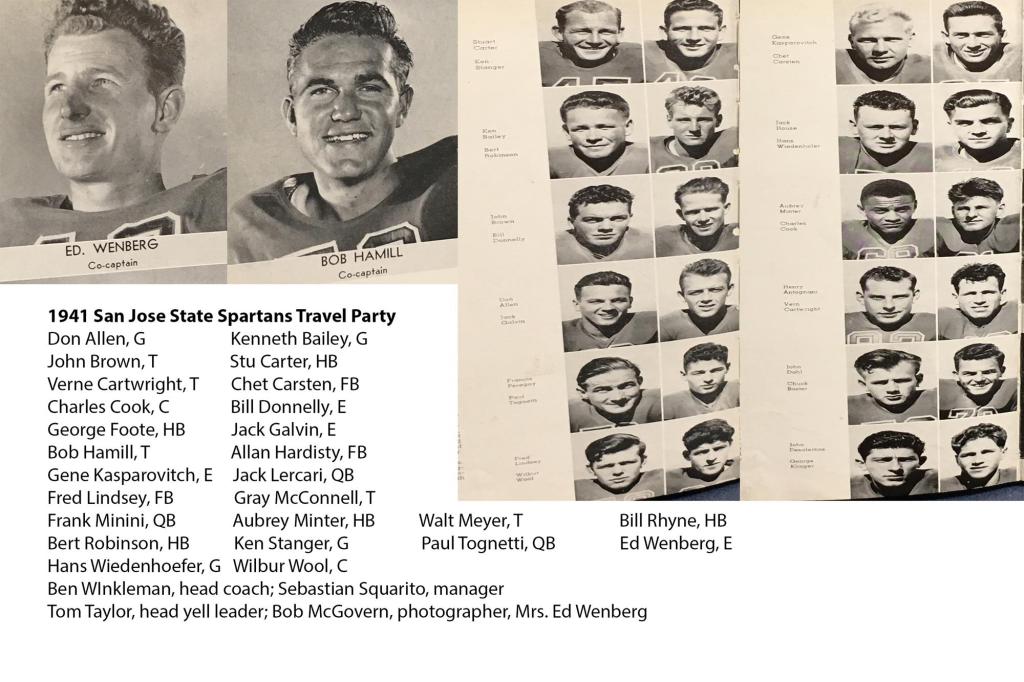
In December 1941, the San Jose Spartans and the Willamette Bearcats of Oregon, went on the road. They were college kids, enjoying a few days in paradise and a chance to play, the game they loved. What could be better than that?

The two teams departed November 27 aboard the SS Lurline along with an entourage of fans, dignitaries and coaching staff. The Rainbow Warriors of Hawaii defeated Willamette 20-6 on Saturday, December 6. The Warriors were scheduled to play San Jose State on December 13, followed by a Spartans- Bearcats matchup, on December 16.

An outing like that was once in a lifetime. An unforgettable trip and so it was, only not for the reason any of them expected.

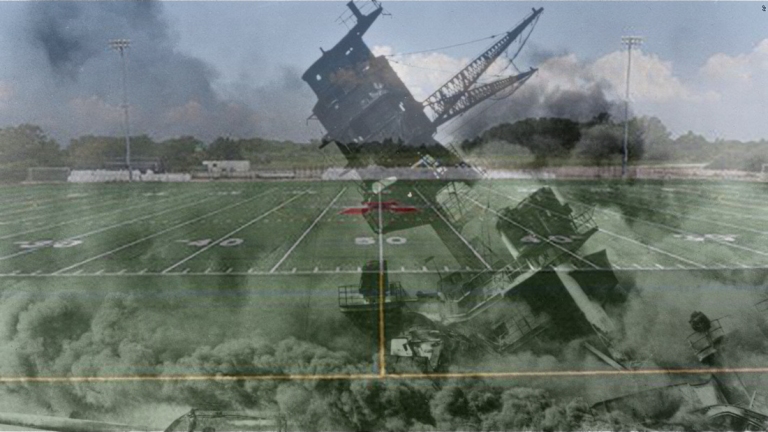
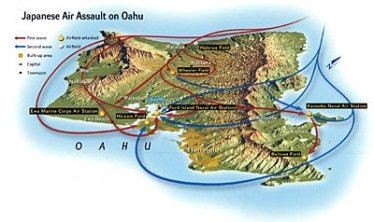
On December 7, 1941 a great sucker punch came out of the southeast. 353 Imperial Japanese warplanes attacked Hickam Air Field and the US Pacific Naval anchorage at Pearl Harbor, lying at peace in the early morning sunshine of a quiet Sunday morning. The sneak attack carried out 80 years ago yesterday destroyed more American lives than any foreign enemy attack on American soil, until the Islamist terrorist attack of September 11, 2001.

The President of the United States addressed a joint session of Congress on December 8, requesting a declaration of war against the Empire of Japan.

Back on the mainland, the families of players now stranded in Hawaii, received no word. There were no communications. None could know with certainty, that brothers and sons were alive or dead. Hawaii was locked down, under Martial Law.

Meanwhile, the visiting teams were mobilized to perform wartime duties. San Jose state players were sent to work with Federal authorities and Honolulu police to round up Japanese, Italian and German citizens, and to enforce wartime blackout orders. Willamette players were assigned World War 1-vintage Springfield rifles and tin hats, and ordered to string barbed wire on the beaches.

If you’ve heard of Punahou High School it probably involves the school’s most famous alumnus, the former US President Barack Obama. 80 years ago today all hell, was about to break loose at Punahou high.

United States Army Corps of Engineers troops began to appear at the Punahou gates at 1:00am, on December 8. By 5:00am, Dole Hall Cafeteria Manager Nina “Peggy” Brown was ordered to prepare breakfast, for 750 men. For the next ten days Willamette players stood 24-hour guard, around the school.

Many players had never so much as handled a gun. Now in the darkness every shadow carried the menace, of an enemy soldier. Wild gunfire would break out at the sound of a stealthy invader which turned out to be nothing, but a falling coconut. Shirley McKay Hadley was a Willamette student in 1941 accompanied by her father, then serving as state Senator. She joked it all, many years later, “They were lucky they didn’t shoot each other.”

Female members of the entourage were assigned nursing duties. Spartan Guard Ken Stranger delivered a baby, on December 7.

On December 19, players received two-hours notice. It was time to go. The civilian liner SS President Coolidge had been commandeered to transport gravely wounded service members. This would be the kids’ ride home complete with Naval escort, a defense against Japanese submarine attack.

Seven San Jose players stayed behind and joined the Honolulu police force , for which each was paid $166 a month. Willamette coach Roy “Spec” Keene refused to let any of his players stay behind as none had been able to speak with their parents, first.

Nearly every member of both squads went on to fight for the nation. Willamette Guard Kenneth Bailey was killed over Bari Italy in 1943 and awarded the Purple Heart, posthumously.

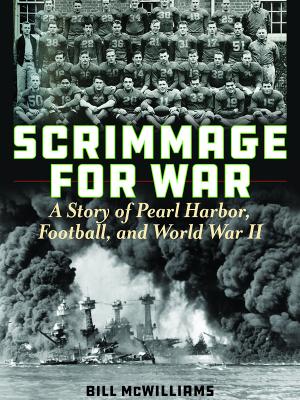
Bill McWilliams served 27 years in the United States Air Force, as a fighter bomber pilot. He’s written a book about 12 of these guys who went on to fight the conflict, of the “Greatest Generation”.
The book came out in 2019 and it’s still in print, if you’re interested. It looks like one hell of a story.

Andy Rogers played for the Willamette squad and went on to serve for the duration of the war, with the 3rd division of the United States Marine Corps. Mr. Rogers is 98 today and lives in Napa Valley, California. The only living member of either traveling squad who would have played that day, in the game that never was.

December 7, 1941 USS Oklahoma

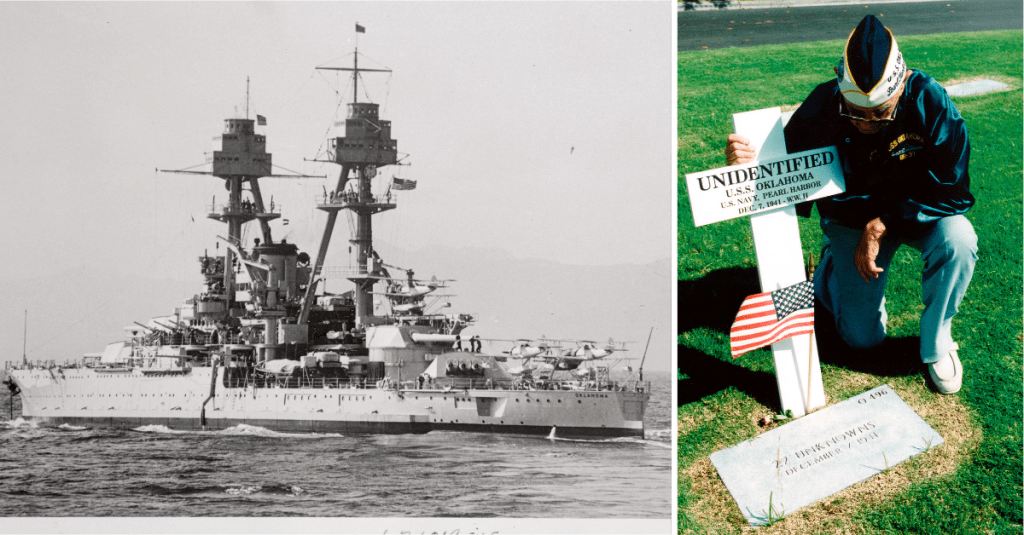
14 Marines and 415 sailors aboard Oklahoma lost their lives immediately, or in the days and weeks to come. Bulkhead markings would later reveal that, at least some of the doomed would live for another seventeen days in the black, upside-down hell. The last mark was drawn by the last survivor, on Christmas Eve.


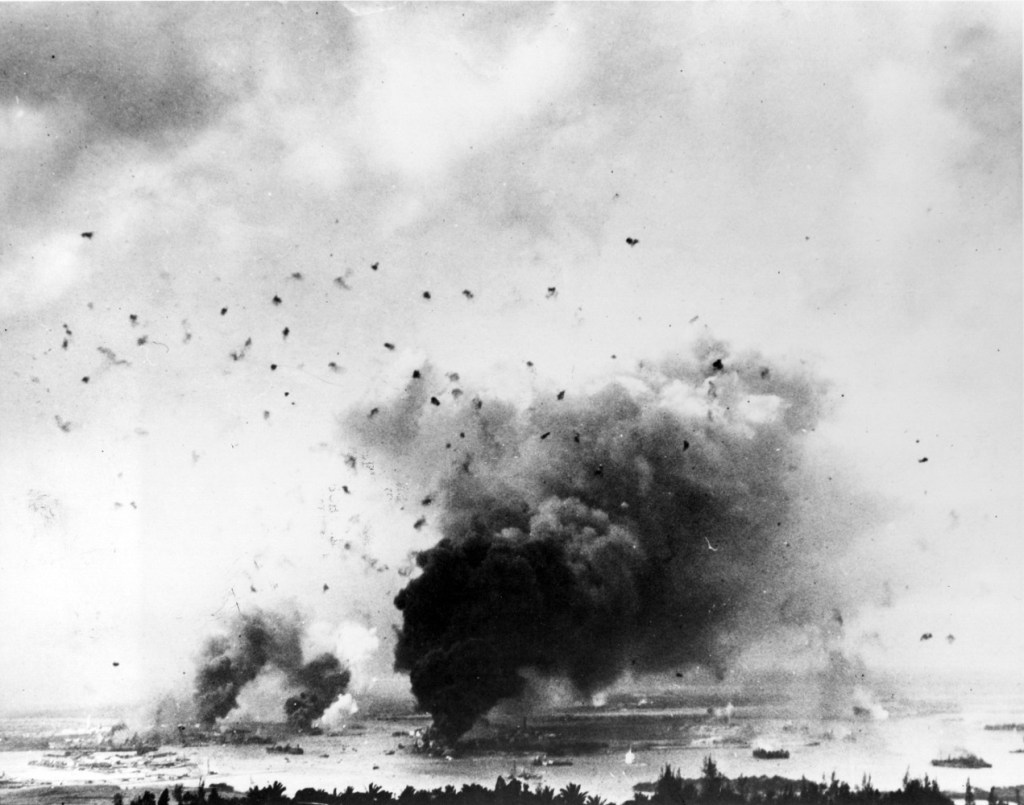
It was literally “out of the blue” when the first wave of enemy aircraft arrived at 7:48 am local time, December 7, 1941. 353 Imperial Japanese warplanes approached in two waves out of the southeast, fighters, bombers, and torpedo aircraft.  Across Hickam Field and over the still waters of Pearl Harbor. Tied in place and immobile, the eight vessels moored at “Battleship Row” were easy targets.

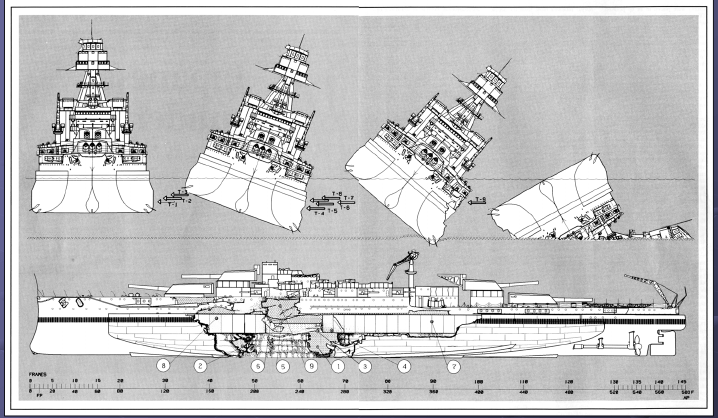
In the center of the Japanese flight path, sailors and Marines aboard the USS Oklahoma fought back furiously, as holes as wide as 40-feet were torn into her side. Eight torpedoes smashed into her port side, each striking higher on the hull as the great Battleship began to roll.

She never had a chance.

_oahu

Bilge plates had been removed for a scheduled inspection the following day, making counter-flooding to prevent capsize, impossible. The ninth torpedo slammed home even as Oklahoma rolled over, and died. Hundreds scrambled out across the rolling hull, jumped overboard into the oil covered, flaming waters of the harbor, or crawled out over mooring lines in the attempt to reach USS Maryland, tied in the next berth.

The damage was catastrophic. Once the pride of the Pacific fleet, all eight battleships were damaged. Four of them sunk. Nine cruisers, destroyers and other craft were damaged, another two sunk. 347 aircraft were damaged, most caught while still on the ground. 159 of those, were destroyed. 2,403 were dead or destined to die from the attack, another 1,178 wounded.

Nine Japanese torpedoes struck USS Oklahoma’s port side, in the first ten minutes.

HT John F DeVirgilio for this graphic
The last moments of USS Oklahoma.  H/T John F DeVirgilio for this graphic

Frantic around the clock rescue efforts began almost immediately, to get at 461 sailors and Marines trapped within the hull of the Oklahoma. Tapping could be heard as holes were drilled to get at those trapped inside. Thirty-two were delivered from certain death.

14 Marines and 415 sailors aboard Oklahoma lost their lives immediately, or in the days and weeks to come. Bulkhead markings would later reveal that, at least some of the doomed would live for another seventeen days in the black, upside-down hell. The last mark was drawn by the last survivor, on Christmas Eve.

Of sixteen ships lost or damaged, thirteen were destined to be repaired, and returned to service. USS Arizona remains on the bottom to this day, a monument to the event and to the 1,102-honored dead who remain entombed within her hull. USS Utah defied salvage efforts. She too is a registered War Grave, 64 honored dead remaining within her hull, lying at the bottom not far from the Arizona.

Of necessity, such repairs were prioritized. For the time being, USS Oklahoma was beyond help. She, and her dead, would have to wait.

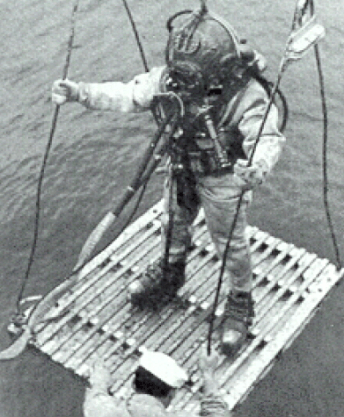
Oklahoma Diver

Recovery of the USS Oklahoma was the most complex salvage operation ever attempted, beginning in March, 1943.  With the weight of her hull driving Oklahoma’s superstructure into bottom, salvage divers descended daily to separate the tower, while creating hardpoints from which to attach righting cables.

The work was hellishly dangerous down there in the mud and the oil at the bottom of Pearl Harbor.  Several divers lost their lives and yet, another day would come and each would descend yet again, into that black water.

21 giant A-frames were fixed to the hull of USS Oklahoma, 3-inch cables connecting compound pulleys to 21 electric motors, each capable of pulling 429 tons.

Two pull configurations were used over 74 days, first attached to these massive A-frames, then direct connections once the hull had achieved 70°. In May 1943, her decks once again saw the light of day, for the first time in over two years.

rightng-strategy
USS Oklahoma, righting strategy

Fully righted, the ship was still ten-feet below water. Massive temporary wood and concrete structures called “cofferdams” closed cavernous holes left by torpedoes, so the hull could be pumped out and re-floated. A problem even larger than those torpedo holes were the gaps between hull plates, caused by the initial capsize and righting operations. Divers stuffed kapok into gaps as water was pumped out.

Individual divers spent 2-3 years on the Oklahoma salvage job. Underwater arc welding and hydraulic jet techniques were developed during this period, which remain in use to this day. 1,848 dives were performed for a total of 10,279 man hours under pressure.

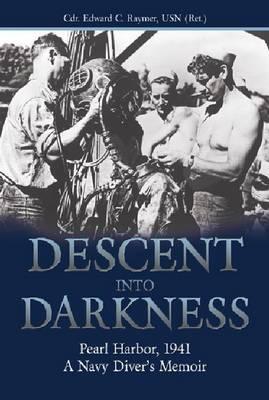
9781591147244

CDR Edward Charles Raymer, US Navy Retired, was one of those divers. Raymer tells the story of those men in Descent into Darkness: Pearl Harbor, 1941 – A Navy Diver’s Memoir, if you’re interested in further reading.  Most of those men are gone now, including Raymer himself.  They have earned the right to be remembered.

Ken Hartle died in January 2017 in an Escondido, California Alzheimer’s and dementia center. He was 103, possibly the oldest of those divers. Before the age of SCUBA, Hartle and his fellow divers worked in heavy canvas suits and brass helmets weighing together, over 200 pounds. He regularly risked death, towing away unexploded bombs and torpedoes. He suffered the bends and nearly lost his life one day, when an anchor chain exploded into flying shards of metal. The part he’d never talk about even after all those years, was the hardest part. ‘Bringing up our boys’.

Salvage workers entered the pressurized hull through airlocks wearing masks and protective suits. Bodies were in advanced stages of decomposition by this time and the oil and chemical-soaked interior was toxic to life. Most victims would never be identified.

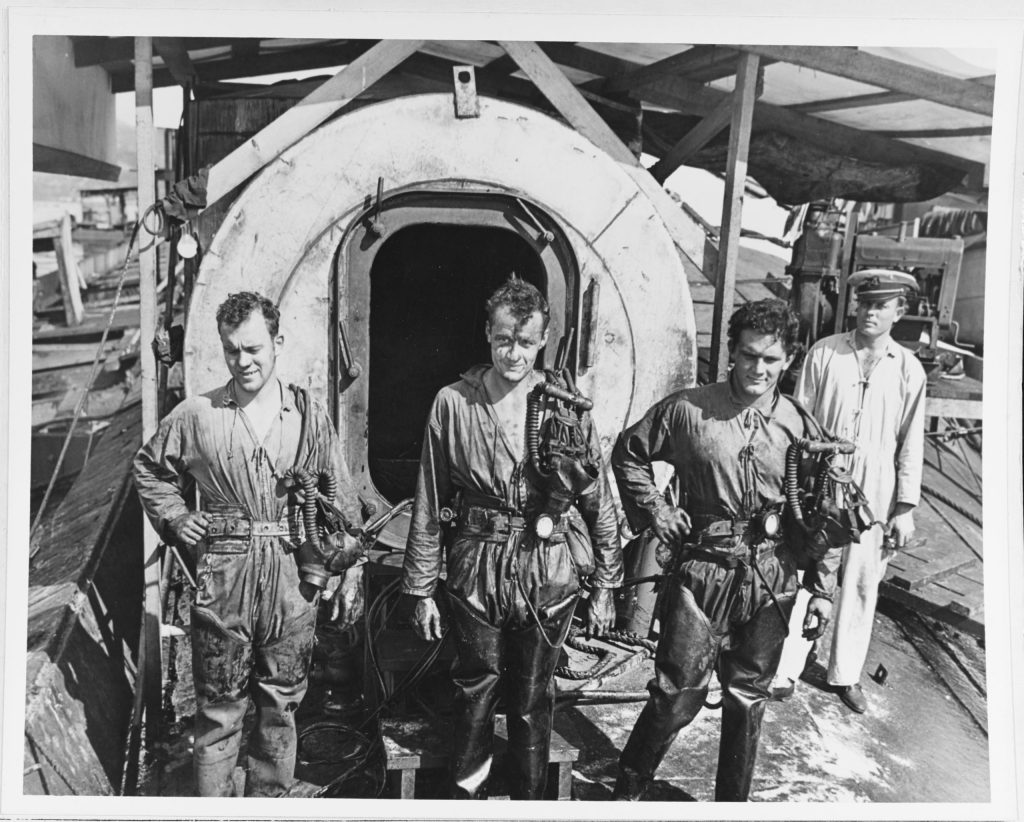
Divers standing in front of a decompression chamber, while they were working to salvage ships sunk in the 7 December 1941 Japanese air raid on Pearl Harbor. Note warrant officer standing at right. Official U.S. Navy Photograph, from the collections of the Naval History and Heritage Command.

Twenty 10,000 gallon per minute pumps operated for 11 hours straight, re-floating the battleship on November 3, 1943.

Oklahoma entered dry dock the following month, a total loss to the American war effort. She was stripped of guns and superstructure, sold for scrap on December 5, 1946 to the Moore Drydock Company of Oakland, California.

The battered hulk left Pearl Harbor for the last time in May 1947, destined for the indignity of a scrapyard in San Francisco bay. She would never make it.

Taken under tow by the ocean-going tugs Hercules and Monarch, the three vessels entered a storm, 540 miles east of Hawaii. On May 17, disaster struck. Piercing the darkness, Hercules’ spotlight revealed the former battleship to be listing, heavily. Naval base at Pearl Harbor instructed them to turn around, when these two giant tugs suddenly found themselves slowing, to a stop. Despite her massive engines, Hercules began to move backward. She was being dragged astern with no warning, hurtling past Monarch, herself swamped at the stern and being dragged backward at 17 mph.

the-tug-boat-hercules-william-havle
Ocean-going tug Hercules, photograph by William Havle

Fortunately for both tugs, skippers Kelly Sprague of Hercules and George Anderson of Monarch had both loosened the cable drums connecting 1,400-foot tow lines, to Oklahoma. Monarch’s line played out and detached. Hercules’ line didn’t do so until the last possible moment. With tow line straight down and sinking fast, Hercules’ cable drum exploded in a shower of sparks directly over Oklahoma’s final resting place, the 409-ton tug bobbing to the surface like the float on a child’s fishing line.

Postcard image of USS Oklahoma (BB-37) from the service of AMM2c Durrell Wade“. H/T nationalww2museum.org

“Okie” was stabbed in the back, attacked and mortally wounded even before she knew she was at war.  The causes leading to her final descent, remain uncertain.  Most will tell you, her plates couldn’t hold.  The beating of six years earlier, was just too much.   Those who served on her decks, might tell you differently. Maybe she just preferred, to die at sea.

Afterward

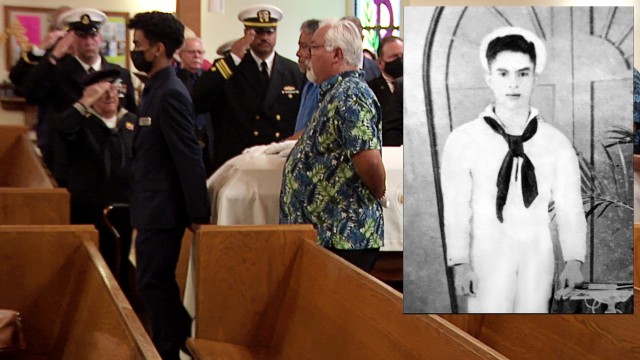
Jesus Garcia of Guam died at age 21 on December 7, 1941, a sailor serving aboard the USS Oklahoma. William Eugene Blanchard of Tignall Georgia, was 24.

In 1947, “Okie’s” honored dead were disinterred. Dental records and dog tags were used to identify thirty-five. The other 391 including Blanchard and Garcia were reburied in 61 caskets, in Hawaii’s National Military Cemetery of the Pacific. Their names were known, only to God.

Nearly sixty years later, scientific advances in DNA analysis made further identifications, possible. Veteran Ray Emory was serving aboard the USS Honolulu on that day in 1941 and persuaded the D.o.D., to make the attempt.

Exhumations began in 2015. Mitochondrial DNA was enough for many identifications, but not all. Mitochondrial DNA comes from the maternal side. Shared ancestral lines means that sometimes, that’s not enough. One DNA sequence matched 25 victims.

Further DNA was collected from paternal lines, combining with the mitochondrial to identify many of Oklahoma’s dead. William Blanchard was laid to rest with full military honors on June 7, 2021 in Elizabeth City, North Carolina.

As I write this it is December 7, 2021. 80 years after the fact some ninety percent of those who gave their lives on board USS Oklahoma once again, have their names.

Jesus Garcia went to his final rest in San Diego on October 6, 2021. Gilbert Nadeau, 95, was the only WW2 veteran able to attend.

November 19, 1864 The Man who Shot the Man who Shot, Abraham Lincoln

Erethism mercurialis or “Mad hatter’s Disease” goes a long way toward an understanding, of Thomas Corbett.

Thomas Corbett was born in London England in 1832, emigrating with his family at age 7 and settling in Troy, New York. There he apprenticed to a hat maker, a profession he would hold off and on for the rest of his life.

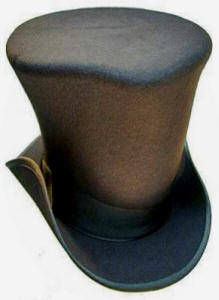
19th century hat makers used an orange colored mercury solution to make felt from the fur of small animals, in a process called “carroting”.  Mercury attacks the nervous system causing drooling, hair loss, a lurching gait, difficulty in speaking, “brain fog” and a convulsive shaking called “hatter’s shakes”.

felt-hat
Felt hat

There were plenty of “Mad hatters,” in Lewis Carroll’s time, long before Alice’s Wonderland.  Danbury Connecticut was once the hat making capital of the world, with 56 factories producing five million hats a year.  By the time of the Civil War, mercury poisoning had reduced countless numbers of factory workers, to physical wrecks.  Everybody knew the “Danbury shakes”.

Erethism mercurialis or “Mad hatter’s Disease” goes a long way toward an understanding, of Thomas Corbett.

Corbett married early in life.  It nearly broke him to lose his young wife in childbirth.  He moved to Boston and continued to work as a hatter, but heavy drinking left him unable to keep a job for long and eventually, homeless.  Corbett was confronted by a street preacher one night and the event, changed his life.

He immediately quit drinking and became fanatically, religious.  He was “the Glory to God man,” growing his hair long to emulate Jesus.  The “local eccentric” who took up his own street ministry and changed his name to “Boston” after the city of his own re-birth.

“God has called on you to preach, my son, about four blocks, that way”.

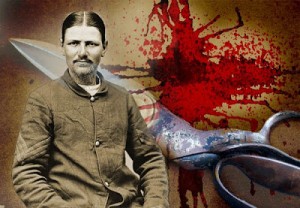
Corbett was propositioned by two prostitutes in 1858, while walking home from a church meeting. Deeply troubled by his own temptation, he returned to his boardinghouse room and took up the Gospel, according to Matthew: “And if thy right eye offend thee, pluck it out and cast it from thee….and there be eunuchs, which have made themselves eunuchs for the kingdom of heaven’s sake“.  He knew what he needed to do.  He emasculated himself, with a pair of scissors.  Then he ate dinner and he went to a prayer meeting, before seeking medical attention.

boston-c-300x208

In the early months of the Civil War, Boston Corbett enlisted as a private in the 12th Regiment of the New York state militia. Eccentric behavior quickly got him into trouble. He would carry a bible with him at all times, reading passages aloud and holding unauthorized prayer meetings.  He would argue with superior officers, once reprimanding Colonel Daniel Butterfield for using profane language and using the Lord’s name, in vain. That got the man a stay in the guardhouse, where he continued to argue.

Corbett decided an arbitrary date, on which his enlistment would end.  When that day arrived, he laid down his gun at midnight, and walked away.  That got him court-martialled and sentenced to be shot, but the sentence was reduced. He was discharged in August, 1863, and re-enlisted the same month.

Harper’s Weekly of May 13, 1865 described the annoying habit of adding “er” to his words, as in “O Lord-er, hear-er our prayerer.” His shrill, sharp voice would shout out “Amen,” and “Glory to God,” whenever anything pleased him. He was often thrown in the guard-house, with a knapsack full of bricks as punishment. There he would be, Testament in hand, “preaching temperance, and calling upon his wild companions to “seek the Lord.””

Boston Corbett

On June 24, 1864, fifteen members of Corbett’s company were hemmed in and captured, by Confederate Colonel John Singleton Mosby’s men in Culpeper Virginia.

They were sent to the notorious prison camp in Andersonville Georgia, where he escaped once, but the bloodhounds put an end to that.  Only two, ever returned.  Starving, skeletal, his body wracked with scurvy, Boston Corbett was paroled on November 19, 1864.

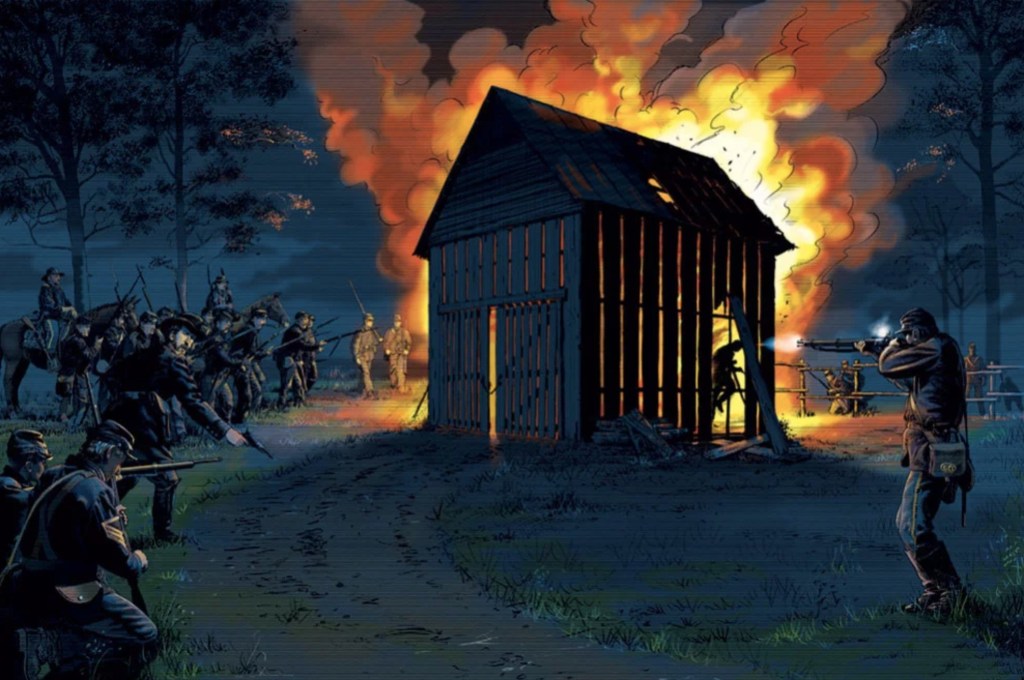
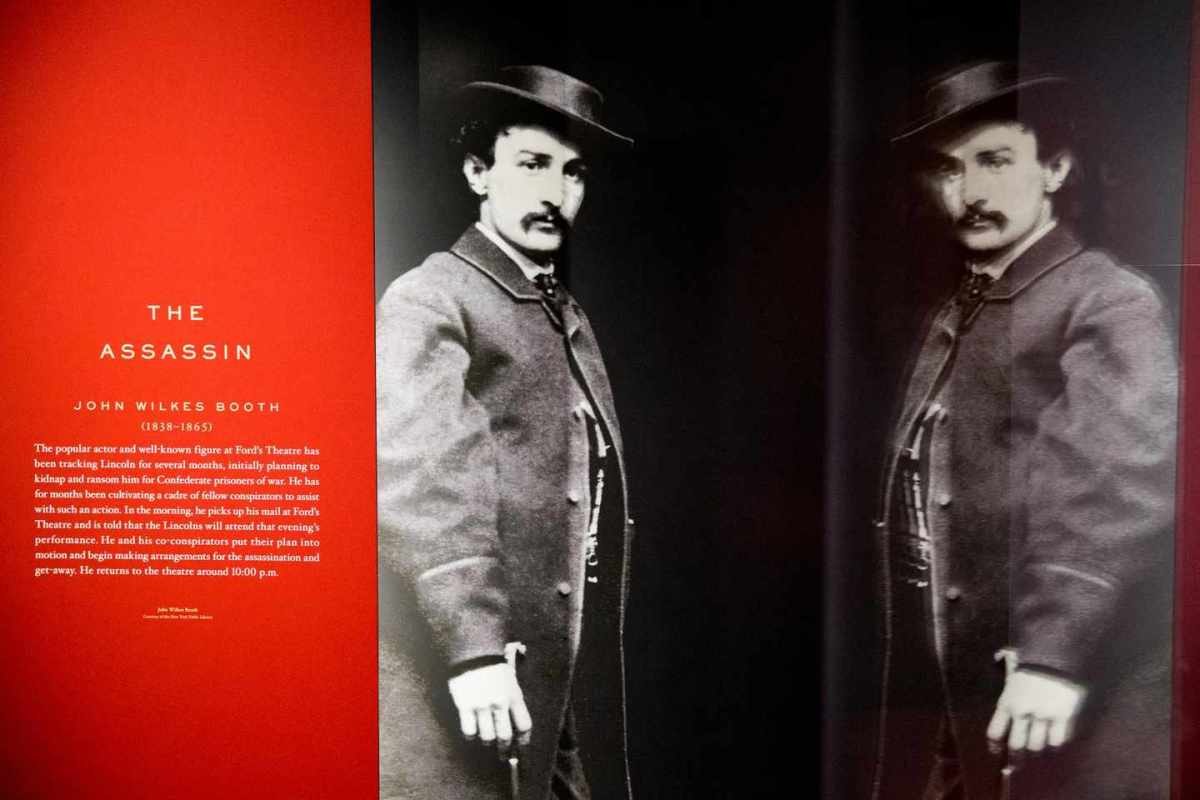
Following the Lincoln assassination, a twelve-day manhunt led to the farm of Richard Henry Garrett near Port Royal, Virginia. The life of John Wilkes Booth came to an end in a burning tobacco barn in the pre-dawn hours of April 26, the bullet fired through a crack in the boards and entering his spine, just below the point where his own bullet had entered the President’s head.

A bullet from the gun, of Boston Corbett.

The paralyzed, dying man was dragged from the barn and onto the porch of the Garrett farmhouse. In his dying moments, Lincoln’s assassin asked that his hands be lifted where he could see them.  John Wilkes Booth gazed at those hands as he uttered his last words. “Useless. Useless”.

In his report to Secretary of War Edwin Stanton, Lieutenant Colonel Everton Conger recommended that Sergeant Boston Corbett be punished for disobeying orders that Booth be taken alive, stating that Corbett had fired “without order, pretext or excuse.”

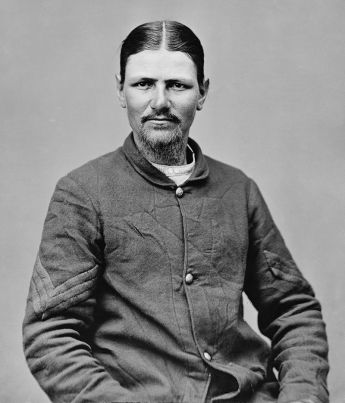
800px-Boston_Corbett_-_Brady-Handy
Thomas “Boston” Corbett

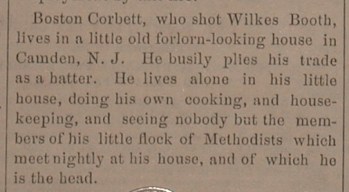
Despite Conger’s recommendation, Corbett was treated like a conquering hero.  He returned to making hats after the war, returning first to Boston and then to Danbury and finally, Camden New Jersey.  He could never hold a job for long.  Frequent pauses to pray for co-workers did little to endear him, to supervisors.

Women’s groups, tent meetings and Sunday schools clamored to hear from “Lincoln’s avenger”, but his speeches were wandering and incoherent.  Nobody ever asked to hear the man speak, a second time.

Corbett became increasingly paranoid, convinced that important men in Washington were out to “get him”.  Hate mail directed to Wilkes Booth’s killer, didn’t help.  At a Blue & Gray reunion in 1878, Corbett pulled a gun on several former soldiers during an argument, over whether Booth still lived.  He was hustled off before he could fire, but this was only one of several such episodes.

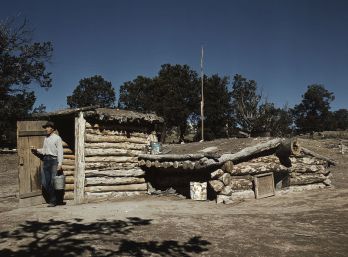
800px-Dugout_home2
Example of a dugout house, this one in New Mexico

He moved to Kansas in 1878 and built a dugout home, and tried his hand at homesteading.  That didn’t work out, either.

Corbett received an invalid’s pension in 1880. The Grand Army of the Republic appointed him a doorman to the Kansas state legislature, seven years later.  The man’s mental status was questionable even before the war and beyond dispute in 1887 when he entered the legislative chamber, with two loaded revolvers.  Lawmakers dove for the exits and hid behind garbage cans and doors, as Corbett shot up the Kansas House of Representatives.  Two guns, twelve bullets.  It was a miracle no one was hit.

The following day, a judge declared Corbett to be out of his mind and remanded him to the Topeka Asylum, for the Insane.  On May 26, 1888, Corbett was marching along a road with other inmates when he spotted a horse, tied to a post.  Corbett dashed from the line and jumped into the saddle, and rode into history.

Corbett is believed to have died in the Great Hinckley Fire on September 1, 1894, a conflagration which killed more than 400 and destroyed over 200,000 acres of Minnesota pine forest, but there is no proof.  Several men stepped forward in the years that followed claiming, to be Boston Corbett. A Dallas man claimed to be Boston Corbett while an Oklahoma patent medicine salesman, filed for the man’s pension benefits. The first was committed to an insane asylum the second, to prison.

In 1958, Boy Scout Troop 31 from Concordia Kansas erected a small memorial beside a dug hole in which Boston Corbett, had once lived. What became of the man who shot the man who shot Abraham Lincoln, is a mystery.

October 31, 1883 A Presidential Ghost Story

A Presidential ghost story for your Halloween enjoyment. But there are no such things as ghosts…Right?

Permit me a moment, for a Presidential ghost story. A true tale shared for your Halloween enjoyment, a narrative to reach out to that icy spot at the back of your neck. The one that makes you ask yourself…was that a ghost? But we are civilized women and men, are we not? We know there are no such things as ghosts…Right?

Albany, New York businessman Jared Rathbone passed away in 1845, leaving a considerable fortune to his widow Pauline, and their four children.

New York Supreme Court Justice Ira Harris, himself a widower, joined his household with hers when the couple were married, in 1848.  His four were added to hers making eight, a regular 19th-century “Brady Bunch.”

Pauline’s son Henry and Ira’s daughter Clara became close friends and later, more.  Much more.  They were step-siblings, yes, but there was no “blood” between them.  Such a relationship seems not to have been so ‘odd’ back then as it may seem, today.

With the incoming Lincoln administration, Ira Harris was elected to the United States Senate, replacing Senator William H. Seward who’d been picked to serve in the new administration.

By the time of the War between the States Clara Harris and Henry Rathbone were engaged, to be married.

udvwxyoa

Rathbone served for the duration of the war in the Union army, becoming Captain in the 12th Infantry Regiment and participating in the battles at Antietam, and Fredericksburg.  By the end of the war he’d attained the rank, of Major.

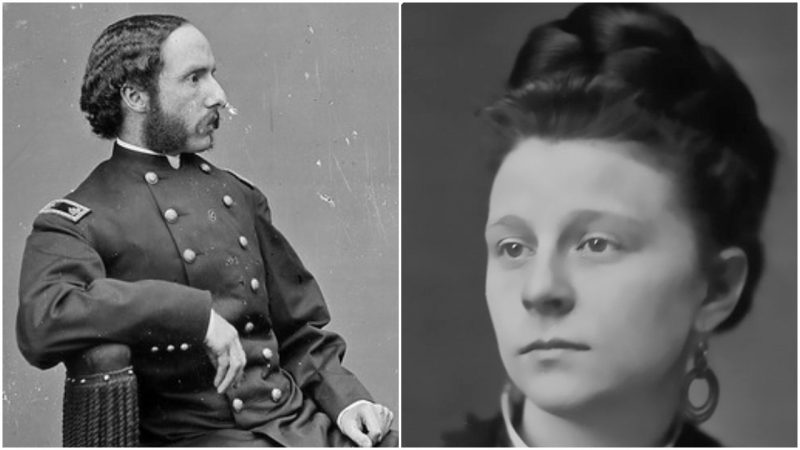
Meanwhile, Senator Harris’ daughter Clara formed a friendship with the First Lady of the United States, Mary Todd Lincoln.

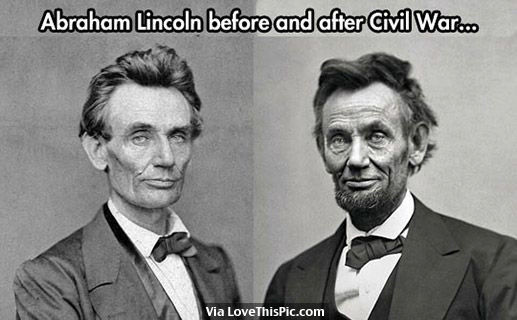
If a picture is worth a thousand words, before and after photographs tell of the burdens, borne by the chief executive of a nation at war with itself. Making matters worse, by war’s end the Lincolns had lost two of their four boys, in childhood. The war was all but over in April 1865. A night out must have seemed like a welcome break. An evening at the theater. A play, the three-act farce by English playwright Tom Taylor. “Our American Cousin”.197030-Abraham-Lincoln-Before-And-After-Civil-War

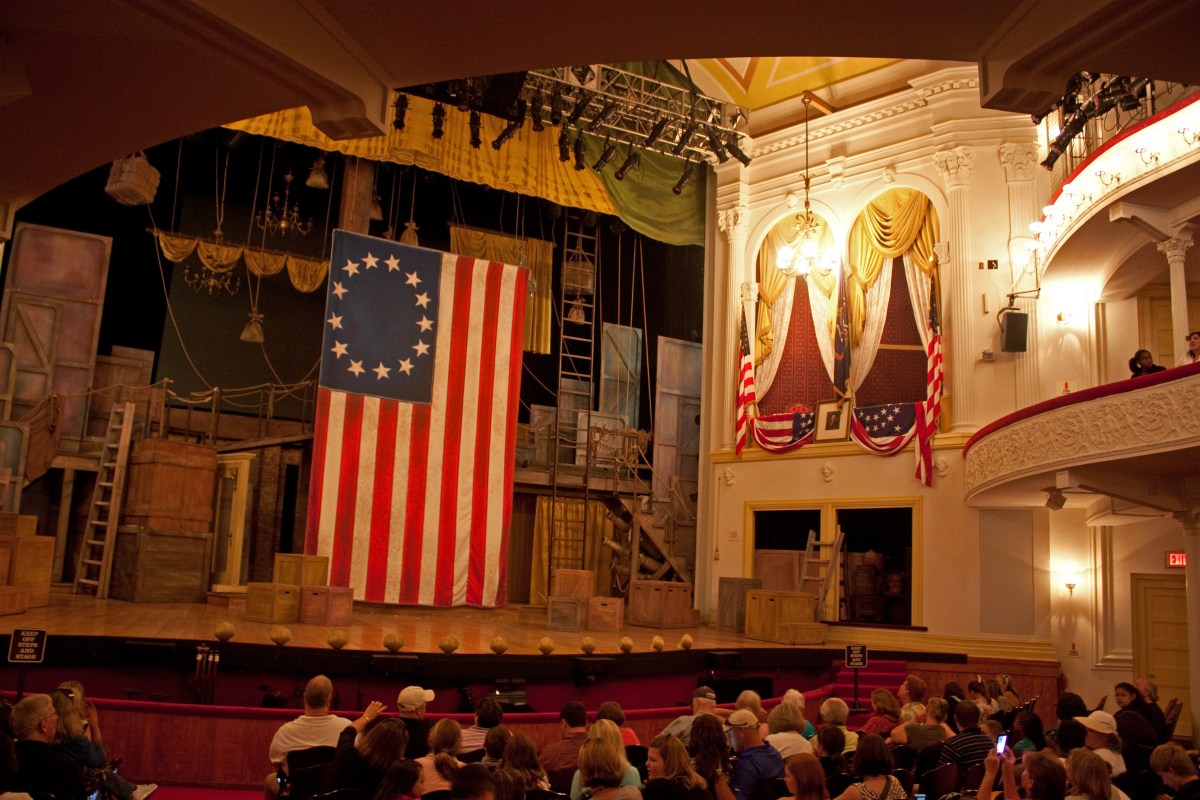
The Lincoln’s companions for the evening were to be General Grant and his wife, Julia, but the General had other plans.  It was probably convenient, because the ladies didn’t get along.  Mary suggested her neighbor Clara Harris, of whom she was quite fond.  And besides, didn’t her fiancée cut a dashing figure, in his blue uniform.

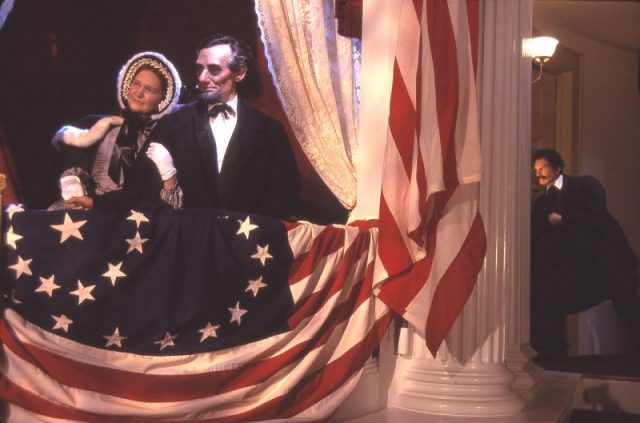
The story of that night is familiar. The assassin creeping up from behind. The bullet to the head. The Major lunging for the killer but…too late.

John Wilkes Booth was himself one of the great performers of his day, with the actor’s impeccable sense of timing. The assassin had chosen his moment, carefully. Raucous laughter and applause could be expected to follow the line “Don’t know the manners of good society, eh? Well, I guess I know enough to turn you inside out, old gal — you sockdolagizing old man-trap!

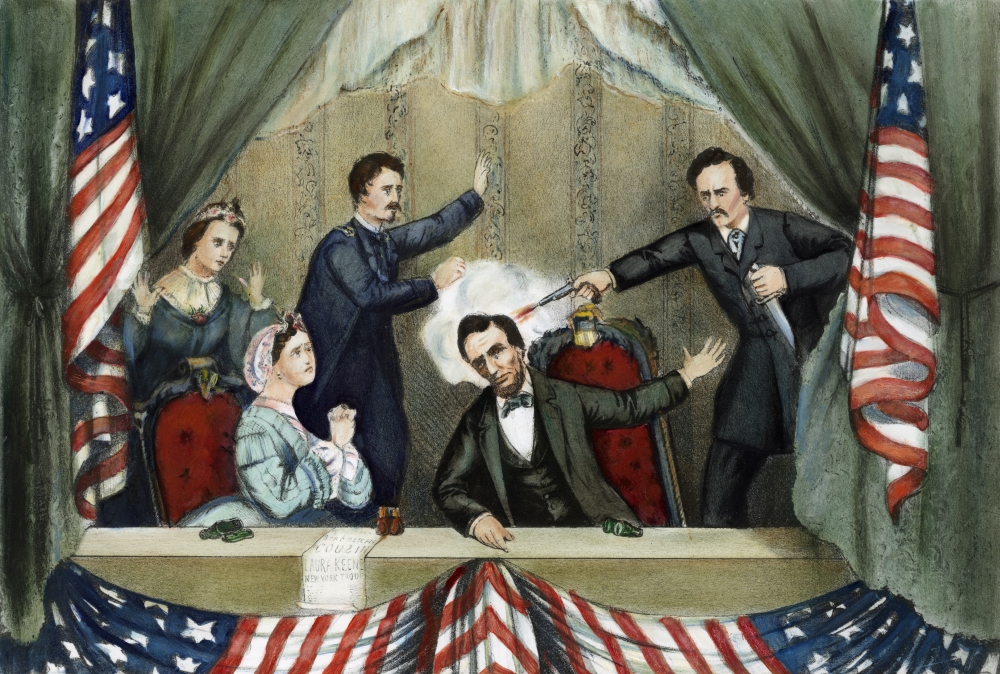
LINCOLN: ASSASSINATION, 1865. The assassination of Abraham Lincoln by John Wilkes Booth at Ford’s Theatre, Washington D.C., 14 April 1865. Lithograph, 1865.

The bullet was fired at point-blank range, entering the President’s skull behind the left ear and coming to rest, behind the right eye.  Rathbone sprang to the attack but the assassin was ready, the dagger slashing the major nearly bone-deep, from shoulder to elbow.  Rathbone made one last lunge, knocking Booth off balance as he leapt from the bunting to the stage, below.  Witnesses remembered the cry “Sic Semper Tyrannis”.  Thus always, to tyrants.  And then, he was gone.

In the President’s box, all was chaos. The first lady was inconsolable, sobbing, apoplectic, shrieking like a wildcat. Rathbone was losing blood at a prodigious rate, a major artery severed in the fight.

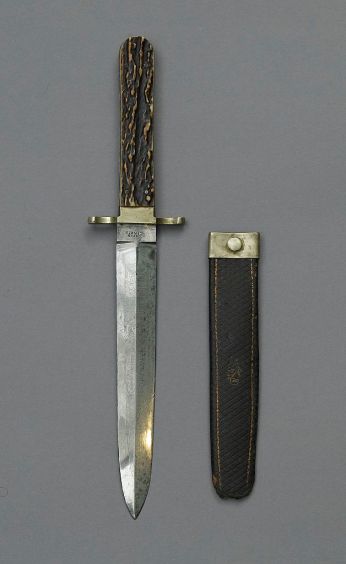
John_Wilkes_Booth_dagger
John Wilkes Booth dagger, used to attack Henry Rathbone

Clara’s new dress was drenched in the blood of her fiancée, her face splashed and clothing soaked through layers of petticoats to the skin, beneath.  The small group was taken across the street to the Peterson house, the President laid out on a bed.  Henry Rathbone faded in and out of consciousness due to loss of blood, raving in his delirium how he should have caught the assassin, his head on Clara’s lap, her handkerchief stuffed into the void where the bicep, used to be.

She didn’t even have time to wash her blood-spattered face. Mary Lincoln would just begin to calm down when she’d turn and see Clara and fall apart, wailing “My husband’s blood!”.

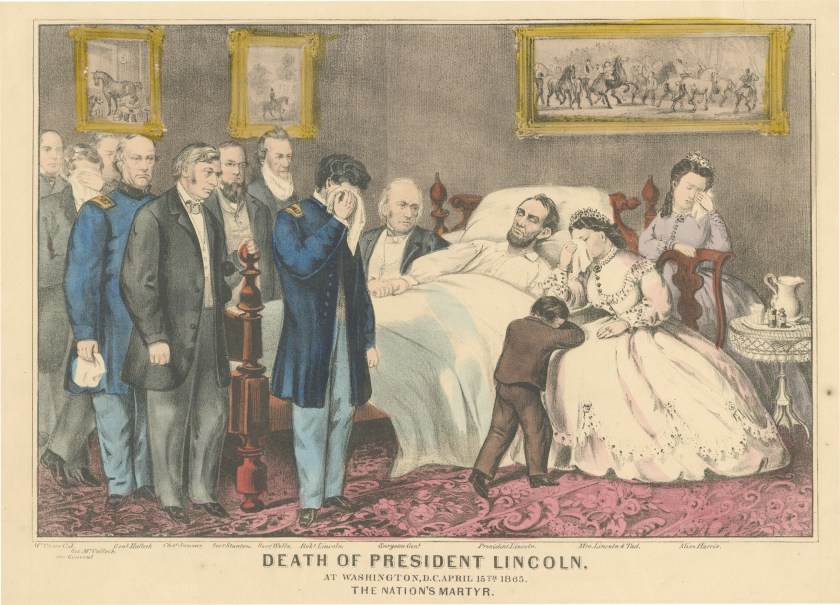
It was the Major’s blood, but, no matter. Perception is reality, isn’t it? The death vigil lasted this way, for nine hours. The 16th President of the United States passed away at 7:22 the following morning, April 15, 1865.

Lincolns-Death

Major Rathbone would heal in time, but he never came to terms with his failure to protect the President.  He was tormented, distraught with guilt, unable to understand what he could have done differently, but, What!? Surely there must have been…Something.

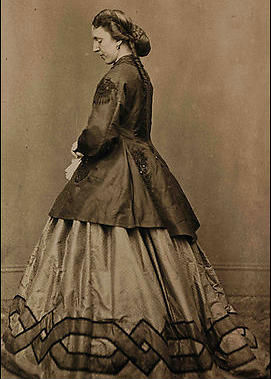
Clara Harris couldn’t bring herself to wash that dress, nor even to burn it.  She hung it in a guest room closet, blood and all, in the family’s vacation home in New York.

What demons afflicted the mind of Henry Rathbone can only be guessed at, as a mental illness which had no name, crept into his soul.  He was possessed with that night.  Was I not quick enough?  Or brave enough?  Or Strong enough?  It was MY fault.  A Better Man would have taken that bullet.  Or Stopped that man.  No he wouldn’t…yes he would…but…I…what, the, hell, is WRONG WITH ME???!!!

clara-harris
The dress

Washington DC was saturated with All Things Lincoln in April 1866, and Clara fled to the family home in Albany, to get away.  There in that closet hung the bloody dress.  On the anniversary of the assassination she heard laughter, she knew she did, coming down the hall.  Abraham Lincoln’s laughter.

Others reported the same thing in the following years.  The sound of laughter.  A single gun shot.  

But there are no such things as ghosts…Right?

Major Rathbone and Clara Harris were married in July 1867 and the couple had three children, Henry rising to the rank of brevet Colonel, in 1870.  That was the year he resigned from the army but work remained hard to come by, due to increasing mental instability.

Rathbone convinced himself that Clara was unfaithful, that she planned to take the kids away.   He would fly into rages with little or no provocation. She considered divorce but couldn’t bear the thought, nor the stigma.

Clara went so far as to have the closet bricked up with that dress inside, like Edgar Allen Poe’s Montresor bricked up Fortunato.  That changed, precisely, nothing.  The family traveled to Europe and back in search of a cure, but Rathbone’s condition only worsened.

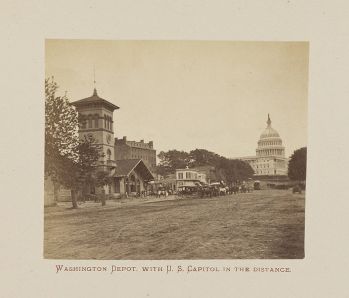
Vault_ag1982_0119x_085_1_opt
US Capitol as it looked, in 1872

Despite all this or possibly because of it, President Chester A. Arthur appointed Rathbone US Consul to the Province of Hannover in Germany, in 1882.

“Trick or Treating” had yet to take hold by this time, back in the United States.  For most, October 31, 1883 passed pleasantly enough:  Fall festivals, children bobbing for apples, young women consulting mirrors or tossing nuts into fires, to see whom they would marry.  Not so, Henry Rathbone.  He had Monsters in his head.

Two months later, December 23, Henry Rathbone shot his wife, and stabbed himself, in the chest.  Six times.  He lived.  She died.

He said he was defending his wife, against an attacker.

The three children, Henry Riggs, Gerald Lawrence and Clara Pauline went to live with relatives. Henry Reed Rathbone was convicted of their mother’s murder and committed to an asylum for the criminally insane in Hildesheim, Germany, there to spend the next twenty-eight years.

Henry Reed Rathbone died on August 14, 1911 and was buried, next to Clara.

In 1922, Henry Riggs Rathbone was elected to the United States House of Representatives.  Twelve years before he had unbricked his mother’s closet and burned the hated dress, the dress that had stolen his childhood, murdered his mother, and cursed his father.  

But there are no such things as ghosts…Right?

loudoncottagetoday
“The modern day home where Union Army Officer Henry Rathbone and Clara Harris resided”. Hat tip, HISTORIAN’S OFFICE, TOWN OF COLONIE.

Afterward

Burial customs are different in Germany, than in the United States.  Grave plots are generally leased for a period of 20 to 30 years, with an option to renew.  In 1952, officials with the city cemetery at Hanover/Engesohde looked over visitation records and determined there was no further interest, in Clara Harris or Henry Rathbone.  The couple was exhumed and their remains burned, and disposed of.  Like neither one of them had ever lived.

But there are no such things as ghosts.

Right?

October 27, 1810 The Bonnie Blue Flag, of West Florida

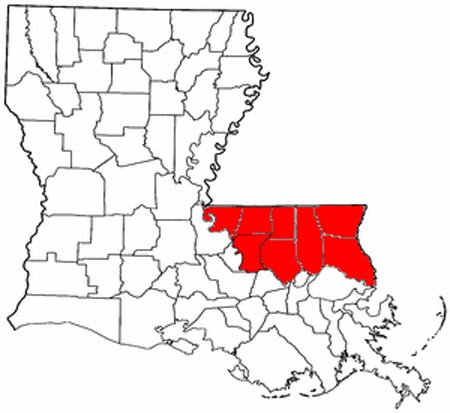
To this day, eight parishes in East Louisiana (“Counties” to the rest of us), are called the “Florida Parishes”.

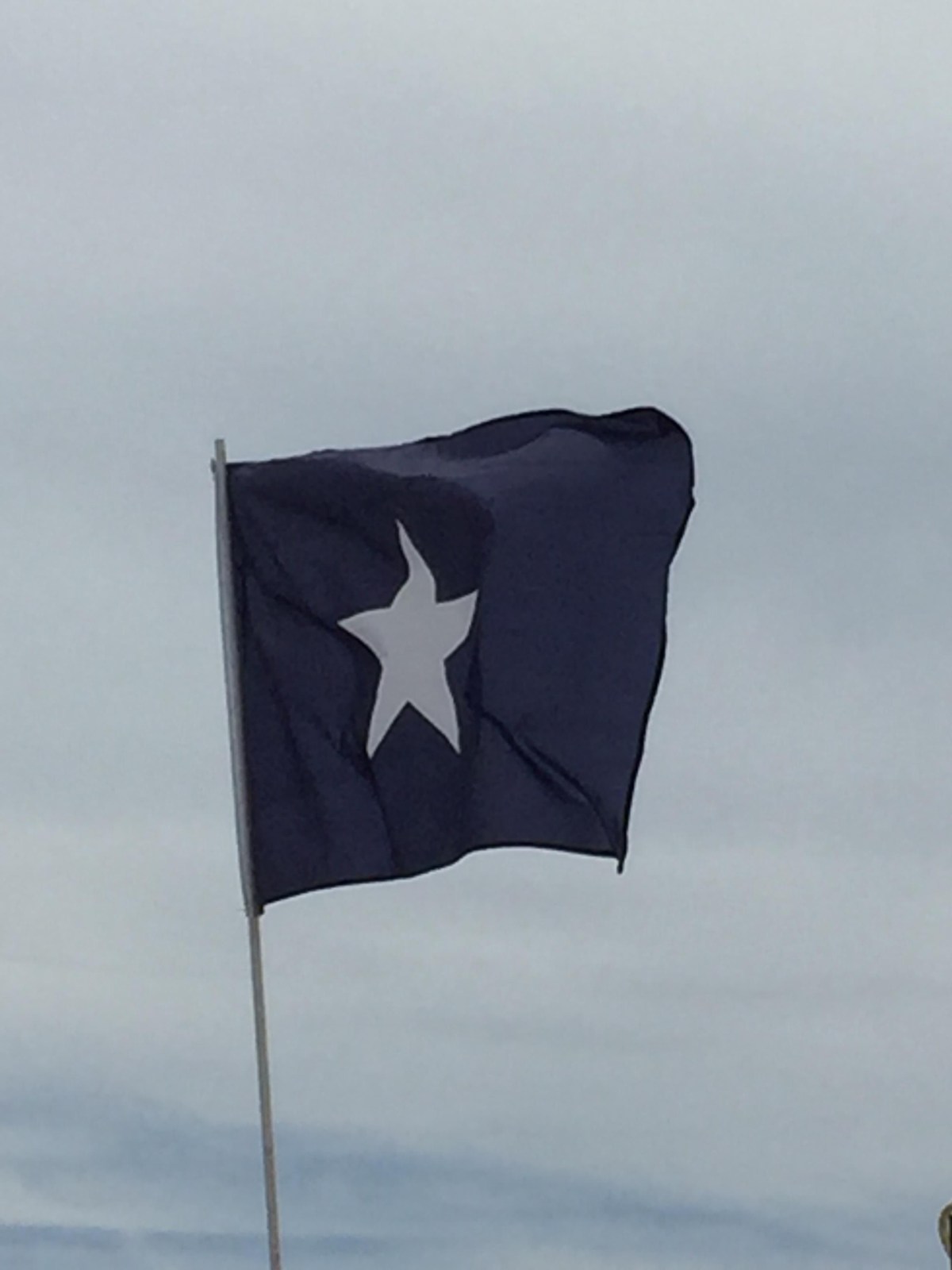
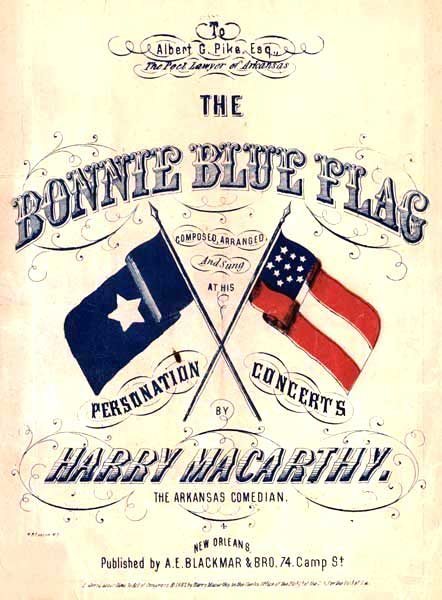
This is a story of Independence, of Revolution. Of overthrowing a Spanish-speaking government and creating an Independent Republic in the American South. About a banner bearing a symbol recognizable to this day, depicting a single, five-pointed white star on a blue field. The Bonnie Blue Flag of the original, Lone Star Republic.

The Republic of West Florida.

Wait…What?

Spanish colonization of the Americas began when the Crown of Castille, Ferdinand and Isabella, sent an Italian explorer this way in 1492.

Motivated by the promotion of trade and of the Catholic faith throughout indigenous populations, the Spanish Empire expanded across South and Central America and much of North America including the Caribbean, Florida and a strip running through modern day Mexico to the Pacific Southwest.

image

The French first came to America in 1524, colonizing vast expanses from Quebec to Green Bay in the north, Baton Rouge to Biloxi in the south. They sought wealth, territory and a route to the Pacific Ocean. What they got was endless conflict.

Following the French and Indian War in 1762, Louis XV signed the secret Treaty of Fountainebleu with King Carlos III, ceding “la Louisiane” to Spain.

The Treaty of Paris was signed the following year, ending the Seven Years War in Europe. There lies the crux of the problem. French colonists poured into Louisiana, wanting no part of the Brits. They wouldn’t learn until 1764 they had placed themselves under Spanish rule.

Rebellion was immediate and ongoing. Colonists expelled their first Spanish governor Alejandro O’Reilly (I love that name) in the Rebellion of 1768, and had to be put down by force.

The American colonies were soon convulsed in Revolution, after which both East and West Florida reverted to Spanish control. European Colonial Powers would have their turn ten years later, with the French Revolution and the rise of the Napoleonic Empire. Spain would cede much of the Louisiana Territory back to France during this period, but not all of it.

spnfla

President Jefferson purchased 828,000 square miles from the French in 1803, doubling the size of the United States, but the exact borders remained, unclear.

Spain claimed title to what they called “West Florida, a territory bounded by the Perdido River in the east, the modern border of Florida and Alabama, south of the 31st parallel, and running west to the Mississippi River.

What followed may be the shortest Revolution in history. Revolutionary War veteran Philemon Thomas led fifty “Americanos” through the early morning darkness of September 23, 1810, through the open gate of Fort San Carlos in Baton Rouge, while another 25 men on horseback rode through a hole in the fort’s wall. Soldados fired their muskets, and Thomas’ men responded with a single volley, killing or wounding five Spaniards.

Bonnie Blue Flag

That was about it. Surviving soldados fled, as the flag of the new Republic was unfurled over the fort: a dark blue field with a single white star. The whole thing was over, in about a minute.

Americanos had revolted back in 1804 without success. This time they would make it stick. Sort of.

The constitution of the Republic of West Florida was patterned on that of the United States, with government divided into three branches, Executive, Legislative and Judiciary.

The first and only Governor was Fulwar Skipwith, whose inaugural address seemed to make room for Union with the United States. “[T] he blood which flows in our veins”, he said, “like the tributary streams which form and sustain the father of rivers, encircling our delightful country, will return if not impeded, to the heart of our parent country”.

Skipwith’s overtures seemed to have been met with a yawn by the Madison administration, soon the new Republic was launching a raid, unsuccessfully, against the Spanish garrison at Mobile.

The Republic soon became accustomed to its newfound independence, a state of affairs President James Madison had no intention of recognizing.

President Madison proclaimed the territory annexed on October 27, 1810, and made part of the Territory of Orleans. William Claiborne, military governor of the Orleans Territory, was sent to take possession.

FloridaParishes
Florida Parishes of East Louisiana

Governor Skipwith proclaimed himself ready to “die in defense of the Lone Star flag,” though his stance softened considerably when military forces entered the capital of St. Francisville on December 6 and Baton Rouge, four days later.

Florida itself, along with the eastern expanses of West Florida, reverted to United States control with the Onís-Adams Treaty of 1819.

To this day, eight parishes in East Louisiana (“Counties” to the rest of us), are called the “Florida Parishes”.

The taking stood on questionable legal grounds, but it was complete on December 10, when the legislature voted to accept annexation and dissolve the Republic. Twenty-Six years later to the day, the Republic of Texas adopted the “Burnet” or “Bonnie Blue” Flag, all but indistinguishable from that of the original Lone Star Republic.

October 26, 1918 Code Talkers

The history of the Navajo code talkers of World War 2 is well known but by no means, unique.  Indigenous Americans of other nations served as code talkers during WW2 including Assiniboine, Lakota and Meskwaki soldiers serving in the Pacific, North African, and European theaters of the war.

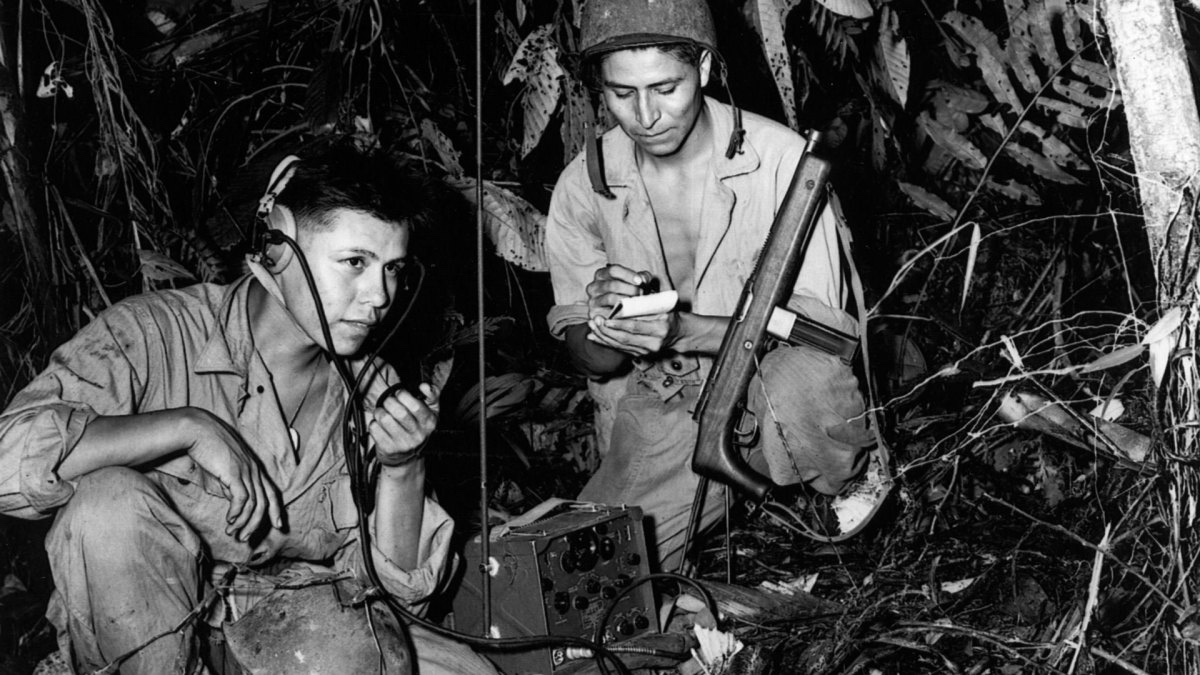
During the twentieth century, the United States and others specially recruited bilingual speakers of obscure languages, applying those skills in secret communications based on those languages.  Among these, the story of the Navajo “Code Talkers” are probably best known.   Theirs was a language with no alphabet or symbols, a language with such complex syntax and tonal qualities as to be unintelligible to the non-speaker. The military code based on such a language proved unbreakable in WWII. Japanese code breakers never got close.

The United States Marine Corps recruited some 400-500 Navajo speakers who served in all six Marine divisions in the Pacific theater.  Guadalcanal, Tarawa, Peleliu, Iwo Jima:  Navajo code talkers took part in every assault conducted by the United States Marine Corps from 1942, to ‘45.

160907143620-navajo-code-talkers-3-exlarge-169.jpgThe history of the Navajo code talkers of WWII is well known but by no means, unique.  Indigenous Americans of other nations served as code talkers during WW2 including Assiniboine, Lakota and Meskwaki soldiers who did service in the Pacific, North African, and European theaters of the war.

Fourteen Comanche soldiers took part in the Normandy landings.  As with the Navajo, these soldiers substituted phrases when their own language lacked a proper term.  Thus, “tank” became “turtle”.  “Bombers” became “pregnant airplanes”.  Adolf Hitler was “Crazy White Man”.
The information is contradictory, but Basque may also have been used, in areas where no native speakers were believed to be present.  Native Cree speakers served with Canadian Armed Services, though oaths of secrecy have all but blotted their contributions, from the pages of history.

The first documented use of military codes based on native American languages took place during the Second Battle of the Somme in September 1918, employing on the language skills of a number of Cherokee troops.

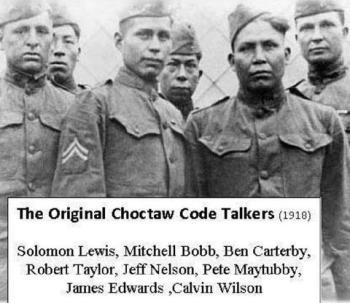
The government of Choctaw nation will tell you otherwise, contending that Theirs was the first native language, used in this way.  Late in 1917, Colonel Alfred Wainwright Bloor was serving in France with the 142nd Infantry Regiment. They were a Texas outfit, constituted in May of that year and including a number of Oklahoma Choctaws.

The Allies had already learned the hard way that their German adversaries spoke excellent English, and had already intercepted and broken several English-based codes. Colonel Bloor heard two of his Choctaw soldiers talking to each other, and realized he didn’t have the foggiest notion of what they were saying. If he didn’t understand their conversation, the Germans wouldn’t have a clue.

ChoctawCoders
Choctaw soldiers in training in World War I for coded radio and telephone transmissions

The first test under combat conditions took place on October 26, 1918, as two companies of the 2nd Battalion performed a “delicate” withdrawal from Chufilly to Chardeny, in the Champagne sector. One captured German officer later confirmed the Choctaw code to have been a complete success. We were “completely confused by the Indian language”, he said, “and gained no benefit whatsoever” from wiretaps.

Choctaw soldiers were embedded within multiple companies of infantry. Messages were transmitted via telephone, radio and by runner, many of whom were themselves native Americans.

As in the next war, Choctaw would improvise when their language lacked the proper word or phrase. When describing artillery, they used the words for “big gun”. Machine guns were “little gun shoot fast”.
Choctaw code talkers

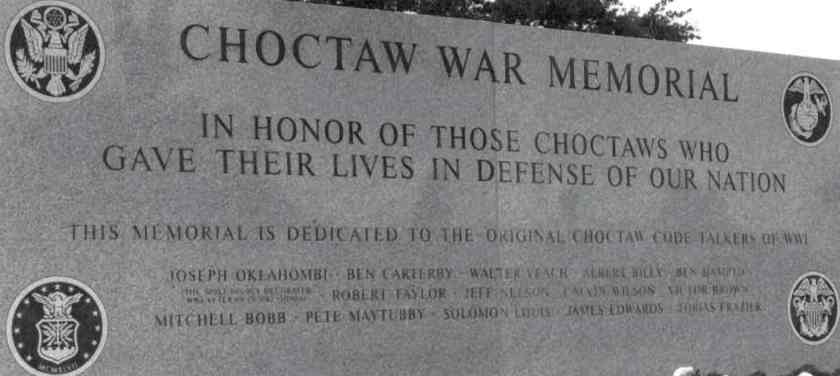
The Choctaw themselves didn’t use the term “Code Talker”, that phrase wouldn’t come about, until WWII. At least one member of the group, Tobias W. Frazier, simply described what they did as, “talking on the radio”.  Of the 19 who served in WWI, 18 were native Choctaw from southeast Oklahoma. The last was a native Chickasaw. The youngest was Benjamin Franklin Colbert, Jr., the son of Benjamin Colbert Sr., one of Teddy Roosevelt’s “Rough Riders” of the Spanish American War. Born September 15, 1900 in the Durant Indian Territory, he was all of sixteen, the day he enlisted.

Another was Choctaw Joseph Oklahombi, whose name translates as “man killer” in the Choctaw language. Six days before Sergeant York’s famous capture of 132 Germans in the Argonne Forest, Joseph Oklahombi charged a strongly held German position, single-handed. Let Private Oklahombi‘s Croix de Guerre citation, personally awarded him by Marshall Petain, tell his story:

“Under a violent barrage, [Pvt. Oklahombi] dashed to the attack of an enemy position, covering about 210 yards through barbed-wire entanglements. He rushed on machine-gun nests, capturing 171 prisoners. He stormed a strongly held position containing more than 50 machine guns, and a number of trench mortars. Turned the captured guns on the enemy, and held the position for four days, in spite of a constant barrage of large projectiles and of gas shells. Crossed no man’s land many times to get information concerning the enemy, and to assist his wounded comrades”.

Unconfirmed eyewitness accounts report that 250 Germans occupied the position, and that Oklahombi killed 79 of them before their comrades decided it was wiser to surrender. Some guys are just not to be trifled with.

choctawwarmemorial

October 19, 1778 The Road to Independence

Over the course of the Revolution, the Patriot cause received aid from sources both sought after and providential.

On July 4, 1776, the Continental Congress declared a break from Great Britain. The former colonies were to be a free and independent nation. That same day and an ocean away, a business was formed to aid in the pursuit. An enterprise formed between the French House of Bourbon, and Spain.

first_salute

The Rodrigue Hortalez Trading Company was a ruse, a fictitious outfit organized by the French playwright, politician and spy, Pierre-Augustin Caron de Beaumarchais.

In May of 1776, Beaumarchais obtained one million livres from France and the same amount from Spain, weeks before the committee of five put pen to paper, to compose the Declaration of Independence. In addition to all that money there were muskets, cannon, gunpowder, bombs, mortars, tents and enough clothing for 30,000 men, traveling from French ports to the “neutral” Netherlands Antilles island of St. Eustatius.

The delivery could not have been more timely. When General Washington took command on July 3, 1775 the Continental Army faced the most formidable military on the planet with enough powder for something like nine rounds per man.

Here’s a great trivia question for you…what foreign government first openly recognized the fledgling nation? It was little St. Eustatius who first acknowledged American Independence, firing the traditional “First Salute” on November 16 of that year, an overt recognition that an independent nation state in the form of the brig Andrew Doria, had entered its harbor.

Hortalez & Co. was one of four channels of Spanish aid. New Orleans Governor Luis de Unzaga began providing covert aid to the American rebels in 1776, expanding the following year under his successor, Bernardo de Gálvez y Madrid, Count of Gálvez.  

It is he for whom Galveston Texas, bears that name.

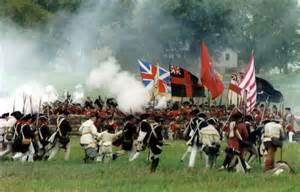
saratoga-reenactment

Meanwhile, the Spanish port at Havana was opened to the Americans under Most Favored Nation status, and further Spanish aid flowed in from the Gardoqui family trading company in Bilbao whose Patriarch, Don Diego de Gardoqui, would become Spain’s first Ambassador to the United States. According to the Ambassador, the House of Gardoqui alone supplied the American patriots with 215 bronze cannon, 30,000 muskets, 30,000 bayonets, 51,314 musket balls, 300,000 pounds of powder, 12,868 grenades, 30,000 uniforms, and 4,000 field tents. The Spanish Prime Minister, José Moñino y Redondo, Count of Floridablanca wrote in March 1777, “the fate of the colonies interests us very much, and we shall do for them everything that circumstances permit”.

The American Victory at Saratoga in October 1777 opened the door to more overt aid from the French, thanks largely to the tireless diplomacy of Benjamin Franklin and the Marquis du Lafayette. Representatives of the French and American governments signed the Treaties of Alliance and Amity and Commerce on February 6, 1778.

The “Southern Strategy” of 1778-80 cost the British army and its Hessian allies more casualties from disease, than from Patriot bullets. About 1,200 Hessian soldiers were killed in combat over the course of the war. By contrast, 6,354 more died of disease and 5,500 deserted, later settling in the fledgling United States.

In February 1781, General Washington sent Lafayette south at the head of a handpicked force of 1,200 New England and New Jersey troops, and 1,200 French allies.  Washington himself lead an army he himself described as “not strong enough even to be beaten”.

5,500 French Army troops led by the Comte de Rochambeau landed in Rhode Island that summer, linking up with General Washington’s Patriot army. Meanwhile, Lafayette harassed and shadowed Cornwallis’ much larger force as it moved north through North Carolina and east toward the Chesapeake Bay.

Cornwallis was looking for a deep water port from which to link up with his ships. It was at this time that Lafayette received help from a slave named James, on the New Kent Armistead Farm. James pretended to serve Cornwallis in Yorktown while sending valuable military information to Lafayette and Washington, who was now moving south through New Jersey with Rochambeau. The man would later legally change his name to James Lafayette.

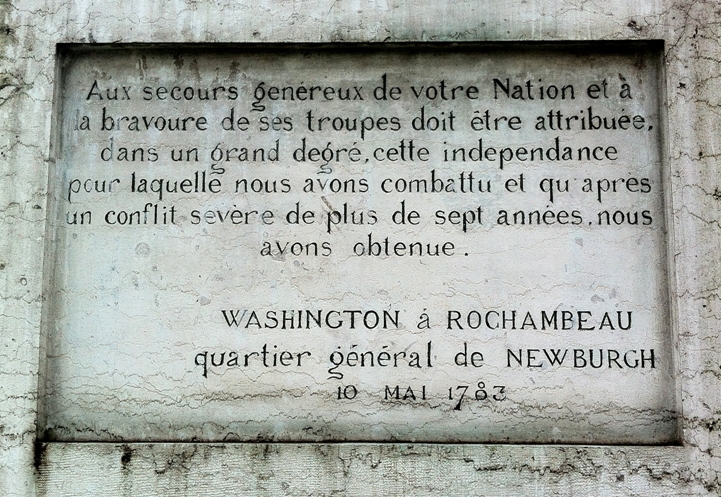
rochambeau-plaque
“To the generous help of your Nation and to the bravery of its troops must be attributed in a great degree to that independence for which we have fought, and which after a severe conflict of more than five years have been obtained”.

Meanwhile, Rear Admiral Francois Joseph Paul, the Comte de Grasse, was in Santo Domingo, meeting with the representative of Spain’s King Carlos III, Francisco Saavedra de Sangronis. De Grasse had planned to leave several warships in Santo Domingo, now capital of the Dominican Republic, to protect the French merchant fleet. Saavedra promised assistance from the Spanish navy, enabling de Grasse to sail north with all of his warships. He needed those ships.  The crucial Naval battle of the Revolution took place on September 5 when de Grasse defeated the British fleet of Rear Admiral Sir Thomas Graves cutting Cornwallis off, from the sea.

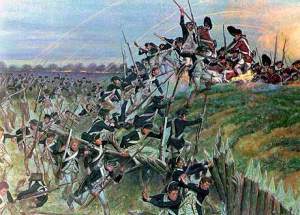
yorktown

French Admiral de Barras arrived from Newport a few days later, carrying vital siege equipment, while de Grasse himself carried 500,000 silver pesos from Havana to help with the payroll and siege costs at the final Battle of Yorktown.

If there was ever a “window of opportunity”, the siege of Yorktown was it. Fully ½ of Cornwallis’ troops were sick with Malaria during the siege, a disease to which the Americans had built some degree of immunity. Most of the French were newly arrived, and thus had yet to encounter the disease’ one-month gestation.

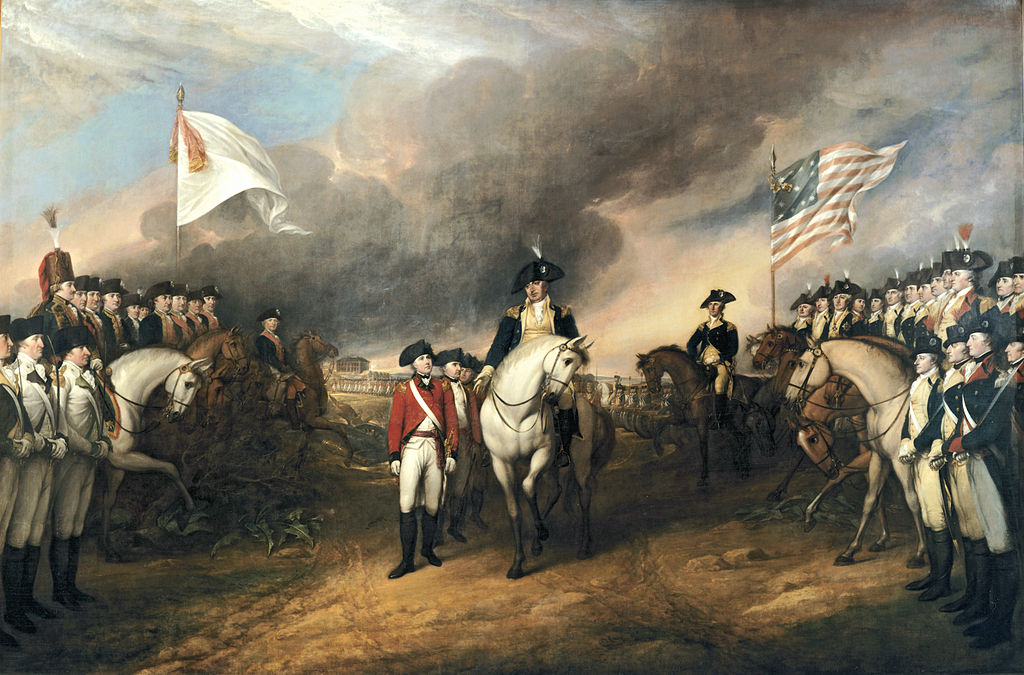
Now out of options, General Cornwallis surrendered on October 19, 1781, the day his relief force finally sailed out of New York Harbor.

Over the course of the Revolution, the Patriot cause received aid from sources both sought after and providential. Ben Franklin, John Jay and John Adams would negotiate through two more years and four British governments before it was done. The Treaty of Paris was at last signed on September 3, 1783. The American war for Independence, had come to an end.

October 12, 1994 Fort Mosé

Long before the famous “underground railroad”, the first such track pointed not north, but south, to St. Augustine.

From the earliest years of the “new world” period, every economy from Canada to Argentina was, to varying degrees, involved with slavery. Spanish and Portuguese settlers brought the first African slaves to the Americas in 1501, establishing the new world’s first international slave port in Santo Domingo, modern capital city of the Dominican Republic.

Hundreds of thousands of Africans entered the Americas through the sister ports of Veracruz, Mexico, and Portobelo, Panama, “products” of the “Asiento” system wherein the contractor (asientista) was awarded a monopoly in the slave trade to Spanish colonies in exchange for royalties, paid to the crown.

The first such contractor was a Genoese company which agreed to supply 1,000 slaves over an 8-year period, beginning in 1517. A German company entered into such a contract eight years later with a pledge of 4,000.

2_1_transatlantic_route

By 1590, as many as 1.1 million Africans had come through the port of Cartagena, Colombia, sorted and surnamed under the “casta de nación” classification system.

In the American colonies, 17th century attitudes toward race appear to have been more fluid than they would later become. The first black Africans, 19 of them, came to the Virginia Colony in 1619 not as slaves, but as indentured servants. Their passage, involuntary as it was, was paid for by a term of indenture, a sort of ‘temporary slavery’, usually lasting seven years.

John Punch ran away from his term of indenture along with two Europeans, in 1640. The trio was captured in Maryland and sentenced to extended terms of indenture. Alone among the three, Punch was punished with indenture for life, effectively making him the first African ‘slave’ in the American colonies.

Meanwhile, black Africans both enslaved and free had arrived in the north American colonies, for nearly a hundred years.

ex black conquistadors

Juan Garrido moved from the west coast of Africa to Lisbon, Portugal, possibly as a slave, or perhaps the son of an African King, sent for a Christian education. Be that as it may, Garrido came to the new world a free man in 1513, with Juan Ponce de León. A black Conquistador who spent thirty years with the conquest, “pacifying” indigenous peoples and searching for gold, and the mythical fountain of youth.

He was not alone. Other black Africans entered Spanish society as free men, and joining the conquest as soldiers. Some did so in exchange for freedom, some for land, official jobs, or public pensions.  Ponce was fatally injured by a native arrow in 1521.  Garrido went on to marry and settle in Mexico city, where he is credited with the first commercial cultivation of wheat, in the new world.

Twenty years before the “Lost” English colonists first landed at Roanoke, Pedro Menendez de Aviles founded St. Augustine, in the Spanish colony of Florida. Aviles’ colonial expedition included many black Africans, both free men and slaves, who remained a part of St. Augustine society, from that time forward. The first recorded birth in the New World of an American child of African descent took place in 1606 according to St. Augustine Catholic parish records, a year before the English settlement, at Jamestown.

The Spanish government in Florida began to offer asylum to slaves from British colonies as early as 1687, when eight men, two women and a three year old nursing child arrived there, seeking refuge. It probably wasn’t as altruistic as it sounds, given the history. The primary interest seems to have been disrupting the English agricultural economy, to the north.

The Florida governor required only that such runaways convert to Catholicism, and then he put the men to work for wages.

In 1693, King Charles of Spain officially proclaimed that runaways would find freedom in Florida, provided they would convert to Catholicism and perform four years of service to the Crown. Spain had effectively created a maroon colony (from the Spanish word cimarrón, meaning “fugitive, runaway”, literally “living on mountaintops”), forming a front-line defense against English attack, from the north.

Gracia Real de Santa Teresa de Mosé (pronounced “Moh-say”), was a military fortification two miles north of St. Augustine, established by Colonial Governor Manuel de Montiano, in 1738. Spanish militia would place incoming freedom seekers into military service at the fort, under the leadership of an African Creole man known as Francisco Menendez.

Fort Mosé was the first legally sanctioned free black settlement, in what would become the United States.

eb76f39e542e716e3434c497bc320e05

Long before the famous “underground railroad”, the first such track pointed not north, but south, to St. Augustine. Word of the settlement reached into Georgia and South Carolina to the north, attracting escaping slaves. It was probably the “final straw” that set off the unsuccessful 1739 slave insurrection known as the Stono Rebellion, in which several dozen runaway slaves attempted to reach Spanish Florida.

In the early phase of the War of Jenkins Ear, Fort Mosé was abandoned and occupied by General James Oglethorpe, colonial governor of Georgia, along with a force of British colonial rangers, Scottish Highlanders, enslaved black auxiliaries and native Creek and Uchise allies.

FortMose002-big-pic

The British garrison was caught by surprise in the pre-dawn hours of June 16, 1740 and all but annihilated, by a force of Spanish soldiers, free black militia and native Yamasee allies.  The coquina fortification was destroyed in the process, and would not be rebuilt until 1752.

In June of this year, Florida Living History, Inc. and the Fort Mosé Historical Society presented the latest in a series of re-enactments, celebrating the 277th anniversary of the “Bloody Battle of Fort Mosé “.  The site has seen several archaeological excavations in recent years, and is considered the “premier site on the Florida Black Heritage Trail.”  Fort Mosé was officially designated an Historic State Park on October 12, 1994.

1st-Saturday-malita
“1st Saturday militia”, H/T Fort Mosé Historical Society