

Discussions of a road to Alaska began as early as 1865, when Western Union contemplated plans to install a telegraph wire from the United States to Siberia. The idea picked up steam with the proliferation of automobiles in the 1920s, but it was a hard sell for Canadian authorities. Such a road would necessarily have to pass through their territory, but the Canadian government felt the project would have little impact, benefiting no more than a few thousand people in the Yukon.
Guam and Wake Island fell to the Japanese in the days following the attack on Pearl Harbor, making it clear that parts of the Pacific coast were vulnerable, and changing priorities for both the United States and Canada.
 The Alaska Territory was particularly vulnerable. The Aleutian Island chain was only 750 miles from the nearest Japanese base, and there were only 12 medium bombers, 20 pursuit planes, and fewer than 22,000 troops in the entire territory. An area four times the size of Texas.
Colonel Simon Bolivar Buckner Jr., the officer in charge of the Alaska Defense Command, made the point succinctly. “If the Japanese come here, I can’t defend Alaska. I don’t have the resources.”
The US Army approved construction of the Alaska Highway in February, the project receiving the blessing of the Congress and President Roosevelt within the week. Canada agreed to allow the project, provided that the US pay the full cost, and that the roadway and all facilities be turned over to Canadian authorities at the end of the war.
Construction began on March 9 as trains moved hundreds of pieces of construction  equipment to Dawson Creek, the last stop on the Northern Alberta Railway. At the other end, 10,670 American troops arrived in Alaska that spring, to begin what their officers called “the biggest and hardest job since the Panama Canal.”
In between lay over 1,500 miles of unmapped, inhospitable wilderness.
The project got a real sense of urgency in June, when Japanese forces landed on the islands of Kiska and Attu, in the Aleutian chain. Adding to the urgency was the fact that there is no more than an eight month construction window, before the return of the deadly Alaskan winter. Construction began at both ends and the middle at once, with nothing but the most rudimentary engineering sketches.
 A route through the Rockies hadn’t even been identified yet.
Radios didn’t work across the mountains and there were only erratic mail and passenger runs on the Yukon Southern airline, what the locals called the “Yukon Seldom”. It was faster for construction battalions at Dawson Creek, Delta Junction and Whitehorse to talk to each other through military officials in Washington, DC.
Moving men to their assigned locations was one thing. Moving 11,000 pieces of construction equipment, to say nothing of the supplies needed by man and machine, was another.
Tent pegs were useless in the permafrost, but the body heat of sleeping soldiers meant they woke up in mud.
Partially thawed lakes meant that supply planes could use neither pontoon nor ski, as Black flies swarmed the troops by day, and bears raided camps by night, looking for food.
Engines had to run around the clock, because it was impossible to restart them in the cold.
Engineers waded up to their chests as they built pontoons across freezing lakes, battling mosquitoes in the mud and the moss laden arctic bog. Ground which had been frozen for thousands of years was scraped bare and exposed to sunlight, creating a deadly layer of muddy quicksand in which bulldozers wallowed in what otherwise seemed like stable roadbed.
 On October 25, Refines Sims Jr. of Philadelphia, with the all-black 97th Engineers was driving a bulldozer 20 miles east of the Alaska-Yukon line, when the trees in front of him toppled to the ground. He slammed his machine into reverse as a second bulldozer came into view, driven by Kennedy Texas Private Alfred Jalufka. North had met south, and the two men jumped off their machines, grinning. Their triumphant handshake was photographed by a fellow soldier and published in newspapers across the country, becoming an unintended first step toward desegregating the US military.
They celebrated the route’s completion at Soldier’s Summit on November 21, 1942, though the “highway” remained unusable by most vehicles until 1943.
I remember hearing an interview about this story, back in the eighties. An Inuit elder was recounting his memories about growing up in a world as it had existed for a thousand years, without so much as an idea of internal combustion. He spoke of the day when he first heard the sound of an engine, and went out to see a giant bulldozer making its way over the permafrost. The bulldozer was being driven by a black soldier, probably one of the 97th Engineers Battalion soldiers. “It turned out”, he said, “that the first white person I ever saw, was a black man”.


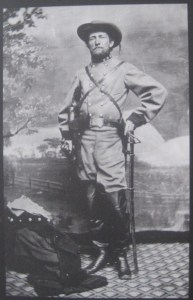 Mosby participated in the 1st Battle of Manassas (1st Bull Run) as a member of the Virginia Volunteers Mounted Rifles, later joining James Ewell Brown “Jeb” Stuart as a Cavalry Scout. A natural horseman and gifted tactician, information gathered by Mosby aided Stuart in his humiliating ride around McLellan’s Army of the Potomac in June, 1862.
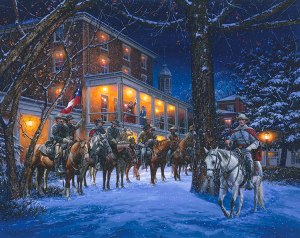 Courthouse, Virginia. Union Brigadier General Edwin H. Stoughton was sleeping in his headquarters there, some sources say he was “sleeping it off”. The Gray Ghost entered the Union General’s headquarters in the small hours of March 9, his rangers quickly overpowering a handful of sleepy guards.


 In one of the earliest known debt issues in history, Prime Minister Henry Pelham converted the entire national debt into consolidated annuities known as “consols”, in 1752. Consols paid interest like regular bonds, with no requirement that the government ever repay the face value. 18th century British debt soared as high as 74.6%, and never dropped below 55%.
 On March 5, wigmaker’s apprentice Edward Garrick taunted British Captain-Lieutenant John Goldfinch, claiming he had not paid a bill owed to his master. The officer had paid the bill and ignored the insult, but Private Hugh White, on guard outside the State House on King Street, said the boy should be more respectful, striking him with his musket. Garrick’s companion Bartholomew Broaders argued with White, as an angry crowd began to gather.

 Twelve of the original thirteen states ratified these “Articles of Confederation” by February, 1779. Maryland would hold out for another two years, over land claims west of the Ohio River. In 1781, seven months before Cornwallis’ surrender at Yorktown, the 2nd Continental Congress formally ratified the Articles of Confederation. The young nation’s first governing document.
 Philadelphia’s Pennsylvania State House. The building is now known as Independence Hall, the same place where the Declaration of Independence and the Articles of Confederation were drafted.
 The Constitution was signed by 38 of the 41 delegates on September 17, 1787. As dictated by Article VII, the document would not become binding until it was ratified by nine of the 13 states.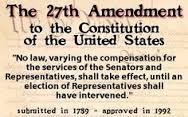

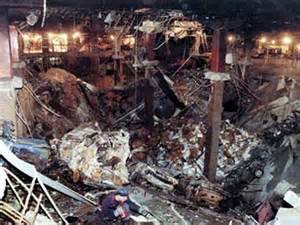
 The plan was to attack the north tower of the World Trade Center in Manhattan, toppling it into the south tower and taking them both down.
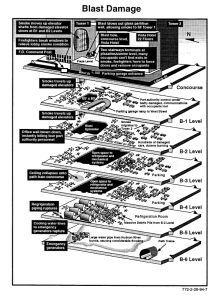 The terrorist device exploded at 12:17:37, hurling super-heated gasses from the blast center at thirteen times the speed of sound. Estimated pressure reached 150,000 psi, equivalent to the weight of 10 bull elephants.


 over the international tableau of the time, there appeared great cause for concern. The largest nation on the planet had just fallen to communism, in 1917.
 Hiss flatly denied Chambers’ charges, filing suit that December for defamation of character. Chambers doubled down in his 1948 deposition, claiming that Hiss was not only a communist sympathizer, he was also a spy.
 Historians John Earl Haynes and Harvey Klehr report that the Venona transcripts tied 349 Americans to Soviet intelligence, though fewer than half have ever been identified. The Office of Strategic Services alone, precursor to the CIA, housed between fifteen and twenty Soviet spies.
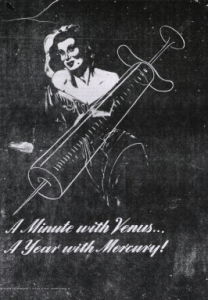 Spalding, Provost Marshal of Nashville, to get rid of them. Though a Catholic, “Old Rosy’s” objection wasn’t based on moral grounds. He was afraid of disease. 8.2% of all Union soldiers were afflicted with syphilis or gonorrhea in 1862, over half the battle casualty rate of 17.5% Venereal disease was a major problem, and the only available treatments at the time involved mercury. Without getting into details, that could take a man out for weeks. Advanced cases were nothing short of grotesque.

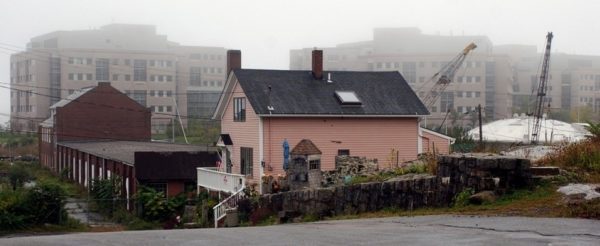
 For newly divorced paramedic Susette Kelo, the house overlooking the Fort Trumbull waterfront was the home of her dreams. Long abandoned and overgrown with vines, the little Victorian cottage needed a lot of work, but where else would she ever find a waterfront view at this asking price? It was 1997, about the same time that Connecticut and New London politicians resurrected the long-dormant New London Development Corporation (NLDC), charging it with developing a plan to revitalize the New London waterfront.
 harassment of the reluctant ones, including late-night phone calls, waste dumped on property, and tenants locked out of apartments during cold winter weather.
 District Court, with Susette Kelo lead plaintiff, “split the baby”, ruling that 11 out of 15 takings were illegal and unconstitutional. At that point it wasn’t good enough for the seven homeowners. They had been through too much. All of them would stay, or they would all go.
 In the end, most of the homes were destroyed or relocated. State and city governments spent $78 million and bulldozed 70 acres. The 3,169 new jobs and the $1.2 million in new tax revenue anticipated from the waterfront project, never materialized. Pfizer backed out of the project and moved away, taking 1,500 existing jobs with them. Just about the time when existing tax breaks were set to expire, raising the company’s tax bill by 400%.

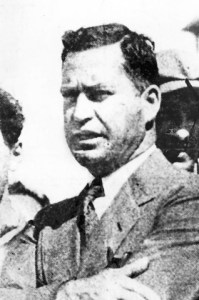 and joined a law firm. Operating dog tracks in Chicago, Boston and Miami, O’Hare made a considerable fortune working for Owen Smith, the high commissioner for the International Greyhound Racing Association, who patented the mechanical rabbit used in dog racing. EJ and Selma Anna (Lauth) O’Hare had three children between 1914 and 1924, – Edward (“Butch”), Patricia, and Marilyn.
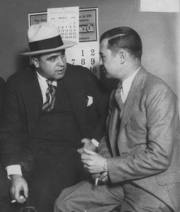 EJ and Selma divorced in 1927. He left St. Louis for good, moving to Chicago while Butch attended WMA. It was there that the elder O’Hare met Al Capone, later earning his second fortune working as the gangster’s business manager and lawyer.
 eligible for early release in 1939 due to syphilitic dementia. On November 8 of that year, EJ left his office at Sportsman’s Park racetrack in Cicero in his black ’39 Lincoln Zephyr. Two shotgun wielding gunmen pulled alongside, firing a volley of big game slugs and killing O’Hare, instantly. No arrest was ever made.
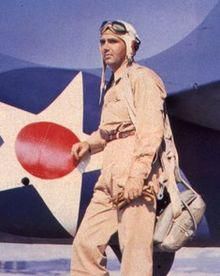 It was February 20, 1942, when Butch O’Hare became the first American flying Ace of WWII. The carrier Lexington was discovered by Japanese reconnaissance aircraft, 450 miles outside of Rabaul. Six Grumman F4F Wildcat fighters and Lexington’s anti-aircraft guns were engaged with an incoming formation of nine Japanese bombers, when nine more bombers were reported incoming.
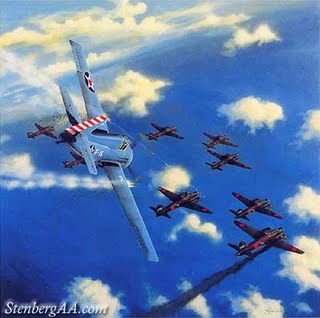 34 seconds. What followed was so close to the Lexington, that pilots could hear the carrier’s AA guns. Full throttle and diving from the high side, O’Hare fired short, accurate bursts, the outermost bomber’s right-hand engine literally jumping from its mount. Ducking to the other side and smashing the port engine on another “Betty”, O’Hare’s Wildcat attacked one bomber after another, single handedly taking out five bombers with an average of only 60 rounds apiece.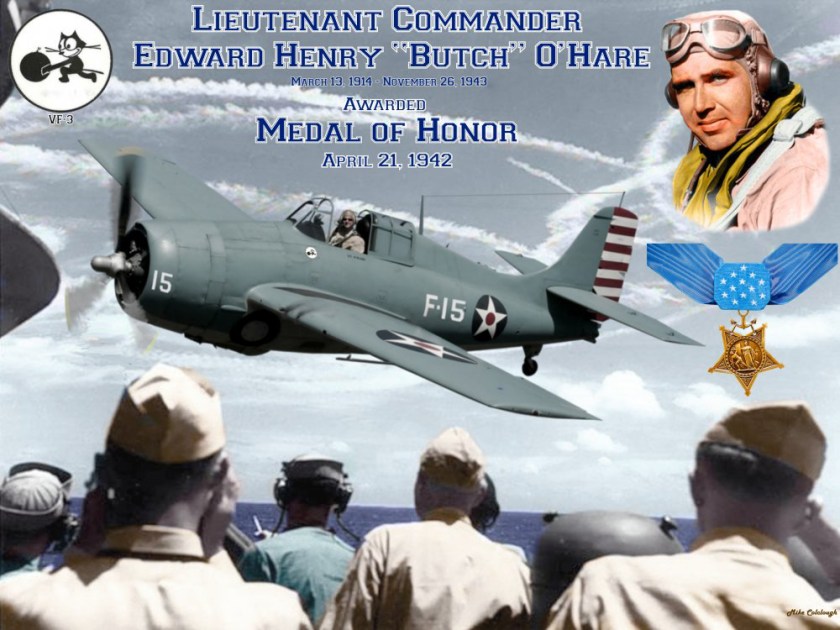

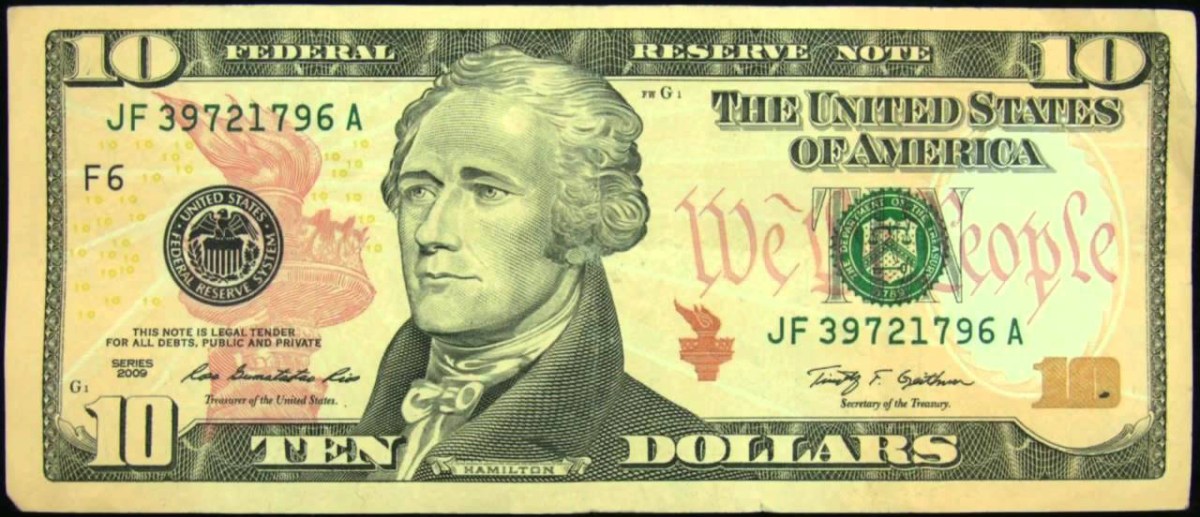

 Burr blamed Hamilton for his defeat, challenging him to a duel over comments made during the election. Dueling was illegal at this time but enforcement was comparatively lax in New Jersey. The pair rowed across the Hudson River with their “seconds”, meeting at the waterfront town of Weehawken, New Jersey. It was July 11, 1804. Hamilton “threw away” his shot, firing into the air. Aaron Burr shot to kill.

 Historical Easter Eggs - Today in History
You must be logged in to post a comment.