

Except for the Naval Air Station at Boca Chica and Coast Guard installations in Key West, Marathon and Islamorada, most of the economic activity in the Florida Keys, comes from tourism. It’s no wonder that, when the federal government shuts down the only road into the Keys, the locals are going to get cranky.
In April 1982, the Mariel boatlift was a mere two years in the past, and very much in the public memory.
 The United States still had a border in those days, which the Federal government attempted to enforce.
On April 18, Border Patrol set up a roadblock in front of Skeeter’s Last Chance Saloon in Florida City, shutting down US Route 1, the only road in and out of the Florida Keys. Originally intended to intercept illegals entering the country, the roadblock soon morphed into a hunt for illegal drugs, as well.
Cars waited for hours, in lines stretching 19 miles. Predictably, the attitude of Federal officials was one of towering indifference. Not so local business owners. Robert Kerstein wrote in his Key West on the Edge — Inventing the Conch Republic, “No one in Key West doubted that drugs were trafficked widely in the Keys by road and by boat. But tourism’s boosters had little tolerance for interruptions to their business.”
Dennis Wardlow, then-Mayor of Key West, contacted the chief of police, the Monroe County sheriff, his State Representative and then-Governor Bob Graham, demanding the roadblock’s removal. With none of the above having any knowledge of the barrier and lacking the authority to pull it down, Wardlow contacted INS directly. When the Border Patrol told him it was “none of his business,” the Mayor’s response could best be summed up in the words of Bugs Bunny: “Of course you know, this means war!”
 Suffering a blizzard of hotel cancellations, this “attack on Key West’s sovereignty” could not stand. On April 22, Mayor Wardlow, local attorney & pilot David Horan and Old Town Trolley Tours operator Ed Swift flew to Miami seeking legal remedy. When District Court Judge C. Clyde Atkins failed to issue an injunction, the Key West delegation took to the courthouse steps.
“What are you going to do, Mr. Mayor”, asked the assembled media. Swift leaned over and whispered into the Mayor’s ear, “Tell them we are going to go home and secede!” “We are going to go home and secede!”, said Wardlow, and that’s what they did.

Over the next 24 hours, secessionist co-conspirators worked feverishly to form a new government, filling cabinet positions such as “Secretary of Underwater Affairs” and “Minister of Nutrition”.
 On April 23, with federal agents on scene to monitor the proceedings, a crowd gathered before the old customs building. Mayor Wardlow and a gaggle of allies mounted the back of a flatbed truck, to read the proclamation of secession. “We serve notice on the government in Washington”, he started, “to remove the roadblock or get ready to put up a permanent border to a new foreign land. We as a people, may have suffered in the past, but we have no intention of suffering in the future at the hands of fools and bureaucrats“.
With that, Mayor Wardlow declared “war” on the United States. The “Great Battle of the Conch Republic” broke out in the harbor, when the Schooner Western Union commanded by Captain John Kraus, attacked the Coast Guard Cutter Diligence with water balloons, Conch fritters and toilet paper. Diligence fought back with water hoses, as the new “Prime Minister” broke a stale loaf of Cuban bread over the head of a man dressed in a Navy uniform.

Pandemonium broke out as others launched stale bread and conch fritters at federal agents, Navy sailors and Coast Guard personnel. One minute after declaring his “verbal shot” at the Federal government, Mayor Wardlow surrendered to a nearby Naval officer, demanding a billion dollars in “foreign aid” in compensation for “the long federal siege.”
Apparently, that’s what it takes to get the attention of a Federal government bureaucrat. The roadblock lifted. The restaurants, stores and hotels of the Keys soon filled with tourists and, once again, there was happiness upon the land. Key West never got its “foreign aid”, but “secesh” leaders never received so much as a letter, saying they couldn’t leave the Union, either.
 So it is that the micro-nation of Key West celebrates its independence, every April 23. The “Conch Republic’ issues its own passports, selling T-shirts and bumper stickers with the slogan “We seceded where others failed”.
And if the Federal government ever comes back to mess with the sovereign nation of Key West, it had better be prepared to deal with the Conch Republic’s very own “Special Forces”, the motto for which is “Sanctus Merda”. “Holy Shit”.
Tip of the hat to
“Conch Republic Military Forces, The Official Site of the Conch Republic Military”
for the “Conch Battle Hymn of the Republic”. Lyrics by First Sea Lord, Admiral Finbar Gittelman, October 14, 2012 © Finbar Gittelman
Mine eyes have seen the glory of the sunshine and the sea
Right here upon our islands, where we love to live so free
But in April 1982, the peace was not to be
And we went rolling on
CHORUS
Glory glory Conch Republic
Glory glory Conch Republic
Glory glory Conch Republic
From Key to shining Key
They were setting up a check point, tween the mainland and the Keys
They had put a US Border, where it shouldn’t ‘oughta’ be
So that’s when we seceded, and declared our sovereignty
And the fun had just begun
(CHORUS)
We went forth into the harbor and a cutter we did spy
And we sailed up along side her and we took her by surprise
We hoisted up our battle flag, so proudly and so high
And we went sailing on
(CHORUS)
The water and Conch fritters and the Cuban bread did fly
Our bombers, they were raining toilet paper from the sky
Our cannons they did thunder to proclaim our victory
And we fought bravely on
(CHORUS)
We have faced the silly forces of misguided zealotry
We have stood up to their foolishness for all the world to see
And we’ve showed the other nations what America can be From
Key to shining Key
(CHORUS)


 Following four months of training, Richtofen began his flying career as an observer, taking photographs of Russian troop positions on the eastern front.
 Ever aware of his own celebrity, von Richtofen took to painting the wings of his aircraft a brilliant shade of red, after the colors of his old Uhlan regiment. It was only later that he had the whole thing painted. Friend and foe alike knew him as “the Red Knight”, “the Red Devil”, or “’Le Petit Rouge’” and finally, the name that stuck: “the Red Baron”.


 The RAF credited Canadian Pilot Captain Roy Brown with shooting Richthofen down, but the angle of the wound suggests that the bullet was fired from the ground. A 2003 PBS documentary demonstrated that Sergeant Cedric Popkin was the person most likely to have killed him, while a 2002 Discovery Channel documentary suggests that it was Gunner W. J. “Snowy” Evans, a Lewis machine gunner with the 53rd Battery, 14th Field Artillery Brigade, Royal Australian Artillery. Just who killed the Red Baron, may never be known with absolute certainty.


 Later discovered by Faustulus, the boys were reared by the shepherd and his wife. Much later, the twins became leaders of a band of young shepherd warriors. On learning their true identity, the twins attacked Alba Longa, killed King Amulius, and restored their grandfather to the throne.


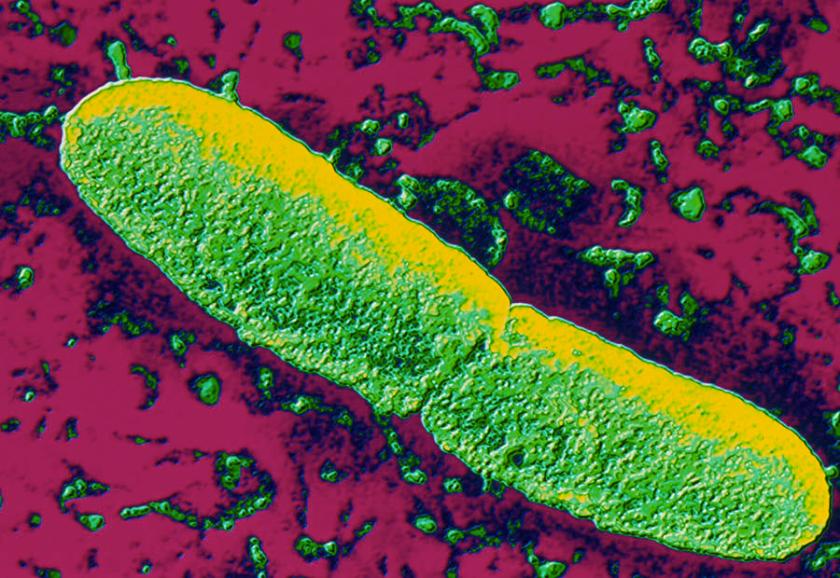
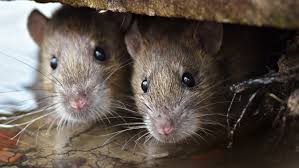 In the early 1330s, a deadly plague broke out on the steppes of Mongolia. The gram-negative bacterium Yersinia Pestis preyed heavily on rodents, the fleas from which would transmit the disease to people, the infection then rapidly spreading to others.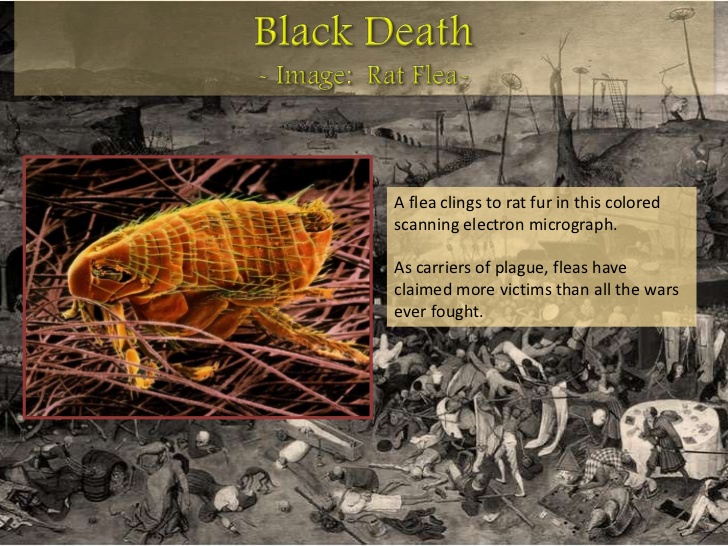
 The Black death of 1346-’53 was a catastrophe unparalleled in human history, but it was by no means the last such outbreak. The Third Pandemic began in China in 1855, spreading to Hong Kong and on to British India. In China and India alone the disease killed 12 million people. It then spread to parts of Africa, Europe, Australia, and South America.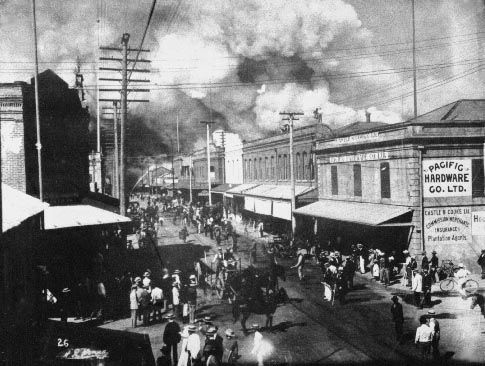
 The body of an elderly Chinese man was discovered in a Chinatown basement. An autopsy found the man to have died of plague. There were more than 18,000 Chinese and another 2,000 Japanese living in the 14-block Chinatown section of the city. Many called for a quarantine of Chinatown, but Chinese citizens objected, as did then-Governor Henry Gage, who tried to sweep the whole outbreak under the carpet. Business interests likewise objected to the quarantine. Except for the Hearst Newspapers, not much was heard about it.
 San Francisco was hit by a massive earthquake on April 18, 1906, followed by a great fire. Thousands of San Franciscans were crowded into refugee camps with an even higher number of rats. For the first time, the disease now jumped the boundaries of Chinatown.










 Finally, even John D. Rockefeller, Jr., a lifelong teetotaler who contributed $350,000 to the Anti-Saloon League, had to announce his support for repeal.
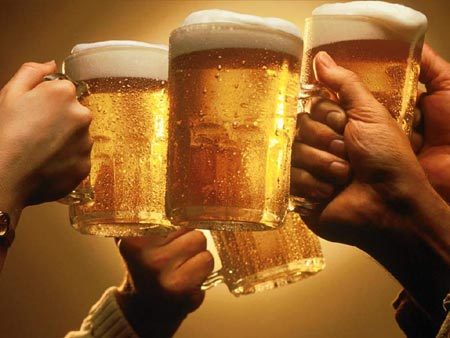 The night before Roosevelt’s law went into effect, April 6, 1933, beer lovers lined up at the doors of their favorite public houses, waiting for their first legal beer in thirteen years. A million and a half barrels of the stuff were consumed the following day, a date remembered today as “National Beer Day”.


You must be logged in to post a comment.