

With apologies to A. Lincoln, “It is altogether fitting and proper” that the first use of the insanity defense in an American courtroom, was for the murder of a District Attorney, by a member of the United States Congress.
In case you think your own member of congress is a piece of work, he or she probably has nothing on Tammany Hall’s own, Daniel “Devil Dan” Edgar Sickles. Sickles carried on an “indiscreet affair” for years, with well-known prostitute Fanny White. No fan of Victorian era propriety, Sickles loved nothing more than to introduce her to scandalized breakfast guests. As a member of the New York assembly in 1847, Sickles earned a censure from the opposition Whig party, for bringing White into the assembly chamber.
He almost certainly arranged the mortgage on White’s brothel, using the name of his friend and future father-in-law Antonio Bagioli. Sickles married Teresa Bagioli in 1852 when he was 33 and she 15 and pregnant, much to the chagrin of both families. Fanny White was so angry she followed him to a hotel room, where she attacked him with a riding whip.
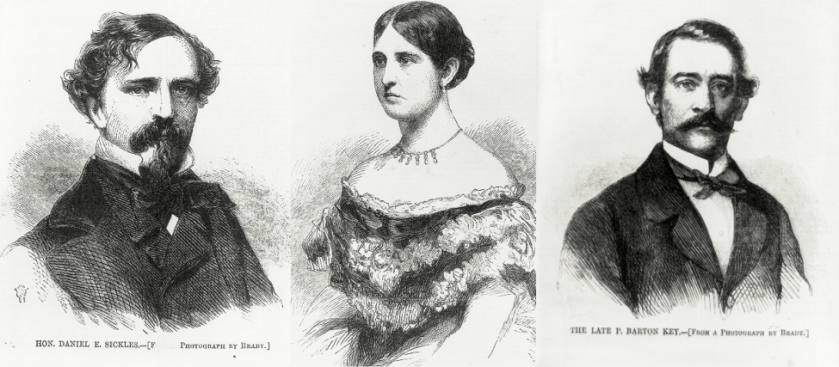
As personal secretary for the Ambassador to the Court of St. James and future US President James Buchanan, Sickles left his pregnant wife behind, bringing Fanny White instead. Meeting Queen Victoria herself at Buckingham palace, Sickles introduced the prostitute as “Miss Bennett”, using the name of the hated editor of the New York Herald, James Gordon Bennett, Sr. Queen Victoria never got wise to the ruse, but Bennett was furious at the use of his name.
 Carrying on with a known prostitute was one thing, but the Mrs. having an affair with a United States District Attorney, was quite another.
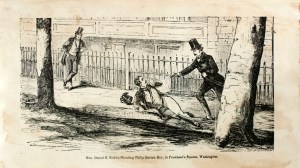
After Teresa’s confession of her adultery with the US Attorney for the Washington District, Congressman Sickles shot and killed him in Lafayette Park, across from the White House. He was Philip Barton Key, son of Francis Scott Key, author of “The Star-Spangled Banner”.
Sickles immediately surrendered and went on trial for premeditated murder. He obtained the services of future Secretary of War Edwin M. Stanton. By the time the defense was at rest, Washington newspapers were praising Sickles for “saving all the ladies of Washington from this rogue named Key”.
He was acquitted on April 26, 1859, in the first use of the temporary insanity defense in US legal history. I’d always thought that stuff like this only happened in the age of social media, but apparently not. Supporters and detractors alike seemed more upset with Sickles’public reconciliation with his wife, than with the original charges.
As a “War Democrat”, a Democrat in favor of the civil war, Sickles became an important political ally to Republican President Lincoln, receiving a commission as Brigadier General despite having no previous military experience.
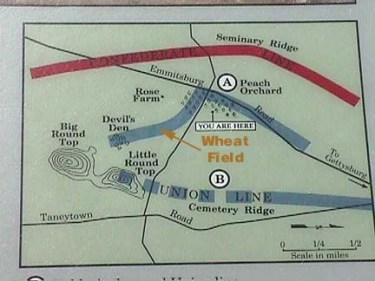
At the Battle of Gettysburg, Sickles defied orders on the second day. Ordered to anchor the Union left at the base of Little Round Top, Sickles insubordinately moved his 3rd corps a mile out front, taking a position in a peach orchard.
Virtually alone, III Corps was shattered in the Confederate assault. Sickles himself lost a leg to a cannon ball, watching the destruction from the sidelines, while propped up on one elbow and smoking a cigar.
The footrace to the undefended crest of Little Round Top and the savage hand to hand fighting which followed, were very possibly all that saved the Union army that day.
 Sickles donated his leg to the newly founded Army Medical Museum in Washington, DC, along with a visiting card marked, “With the compliments of Major General D.E.S.” He visited his leg for several years thereafter, on the anniversary of the amputation.
Sickles was awarded the medal of honor despite his insubordination, and continued his service through the end of the war, though he was disgusted that he never received another battlefield command.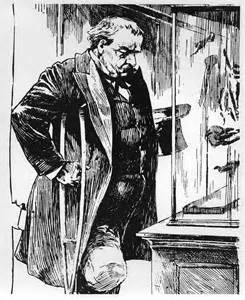
Sickles commanded several military districts during Reconstruction, and served as U.S. Minister to Spain, reputedly carrying on with none other than the deposed Queen Isabella II. Eventually returning to the US Congress, Sickles made important legislative contributions to the preservation of the Battlefield at Gettysburg.
Dan Sickles is one of only two Union Corps commanders not represented by his own statue at Gettysburg. One had been planned for him, but Sickles himself “reappropriated” the funds. He was once asked where his monument was. Devil Dan Sickles replied, “The whole park is my monument.”

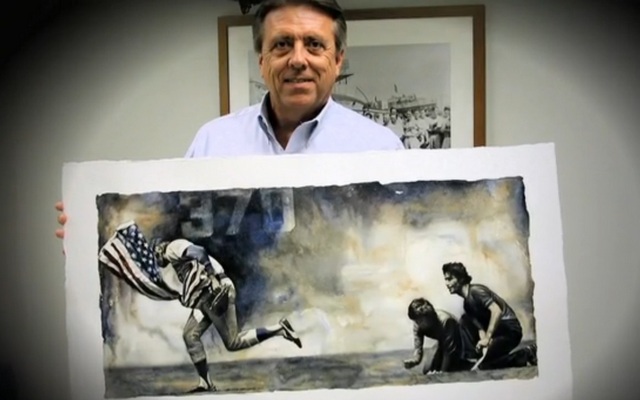

 Rick Monday had served a tour in the Marine Corp Reserve, in fulfillment of his ROTC obligation after leaving Arizona State. “If you’re going to burn the flag”, he said, “don’t do it around me. I’ve been to too many veterans’ hospitals and seen too many broken bodies of guys who tried to protect it.”


 On learning that Jennings wasn’t going to fly, Holly said “Well, I hope your old bus freezes up.” Jennings replied “Well, I hope your plane crashes.” It was just a good ribbing between friends, but the comment would haunt Jennings for the rest of his life.


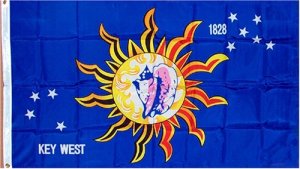


 One minute after declaring his “verbal shot” at the feds, Wardlow “surrendered” to a nearby naval officer, demanding a billion dollars in “foreign aid” in compensation for “the long federal siege.”


 Richthofen chased the rookie Canadian pilot Wilfred “Wop” May behind the lines on April 21, 1918, when he found himself under attack. With a squadron of Sopwith Camels firing from above and anti-aircraft gunners on the ground, he was shot once through the chest with a .303 round, managing to land in a beet field before dying several minutes later. He was still wearing his pajamas, under his flight suit.


 According to legend, Romulus and Remus were the sons of Rhea Silvia, the daughter of King Numitor of Alba Longa, a mythical city located in the Alban Hills southeast of what would become Rome. Numitor was deposed by his younger brother Amulius, who forced Rhea to become a vestal virgin so that she would not give birth to rival claimants to his title. However, Rhea was already pregnant by the war god Mars, and destined to give birth to Romulus and Remus.


 Founded by Byzas, son of the Greek King Nisos circa 657BC, the earliest days of Byzantium are clouded by legend. Located on the easternmost peninsula where Europe becomes Asia, the city is surrounded on three sides, by water.
 21-year-old Mehmed II began the final siege of Constantinople on April 6, 1453. Commanding 120,000 attackers with an estimated 126 ships, Ottoman forces faced 7,000 to 12,000 Christian defenders with 26 ships, defending almost 3½ miles of land wall and another 9 miles of sea wall facing the Sea of Marmara and the Golden Horn.
 Mehmed placed his cannon into positions facing the wall. The largest, the monster “Basilica” was 27′ long, weighed 18 tons, and required a team of 60 oxen and 400 men to move it. It had a diameter of 30″, large enough for a grown man to crawl inside. Its 150lb powder charge was capable of hurling a half-ton stone ball a distance of over a mile. While the weapon did catastrophic damage to the city walls, it took over three hours to reset after firing, and frantic efforts by the defenders were able to repair much of the damage between shots.
 Serbian Sappers dug tunnels under the city, intending to undermine and blow out the walls, but Christian counter-miners broke into the tunnels and attacked them with swords, axes and Greek fire, an early form of napalm.
 These were the cannon fodder, their purpose to wear down the defenders in preparation for attacks by professional soldiers, the Bashi-Bazouks. Then came the Janissaries, Christian slave warriors raised from childhood to be the elite of the Ottoman army, Attackers stormed the walls by the tens of thousands, while Ottoman ships pounded the city from the harbor.


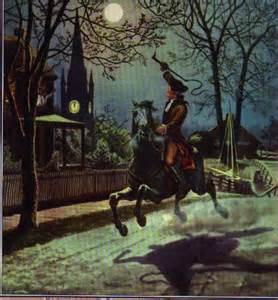 Boston Patriots had been preparing for such an event. Sexton Robert John Newman and Captain John Pulling carried two lanterns to the steeple of the Old North church, signaling that the Regulars were crossing the Charles River to Cambridge. Dr. Joseph Warren ordered Paul Revere and Samuel Dawes to ride out and warn surrounding villages and towns, the two soon joined by a third rider, Samuel Prescott. It was Prescott alone who would make it as far as Concord, though hundreds of riders would fan out across the countryside before the night was through.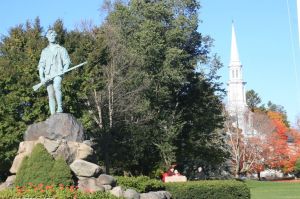
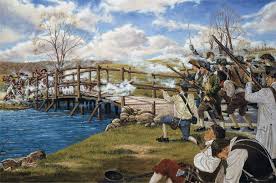 Some British soldiers marched 35 miles over those two days, their final retreat coming under increasing attack from militia members firing from behind stone walls, buildings and trees. One taking up such a firing position was Samuel Whittemore of Menotomy Village, now Arlington Massachusetts. At 80 he was the oldest known combatant of the Revolution.


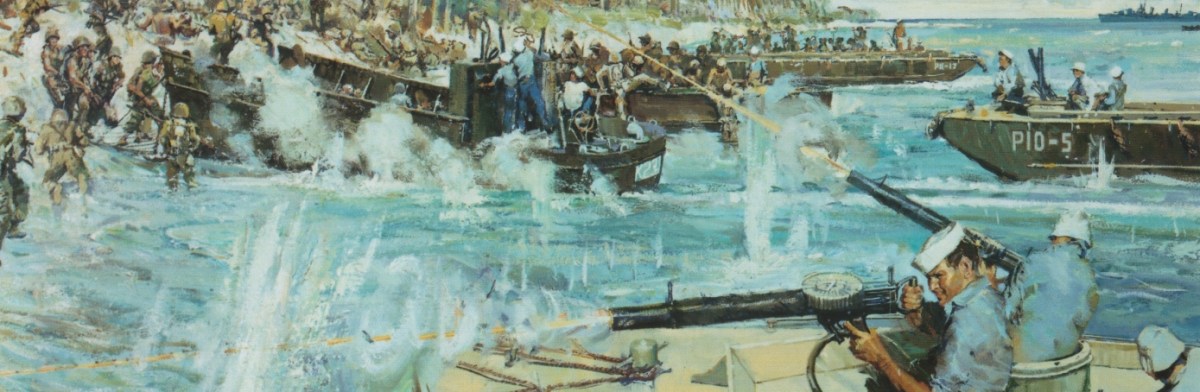
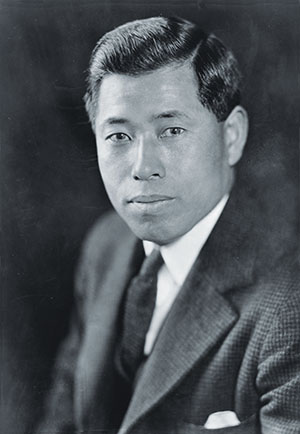 Isoroku Takano was born in Niigata, the son of a middle-ranked samurai of the Nagaoka Domain. His first name “Isoroku”, translating as “56”, refers to his father’s age at the birth of his son. At this time, it was common practice that samurai families without sons would “adopt” suitable young men, in order to carry on the family name, rank, and the income that came with it. The young man so adopted would carry the family name. So it was that Isoroku Takano became Isoroku Yamamoto in 1916, at the age of 32.
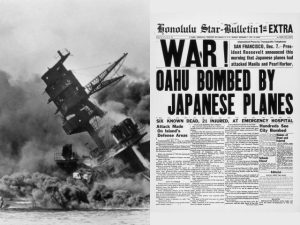 Many believed that Yamamoto’s career was finished when his old adversary Hideki Tōjō ascended to the Prime Ministership in 1941. Yet there was none better to run the combined fleet. When the pro-war faction took control of the Japanese government, he bowed to the will of his superiors. It was Isoroku Yamamoto who was tasked with planning the attack on Pearl Harbor.
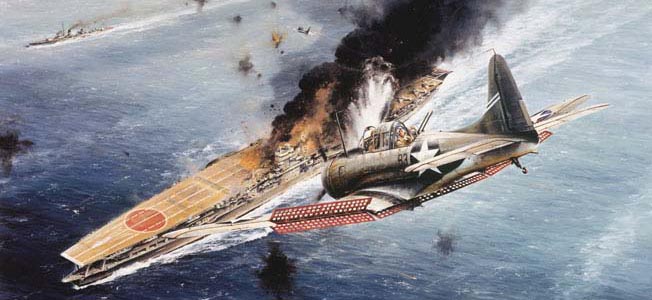 American carrier based Torpedo bombers were slaughtered in their attack, with 36 out of 42 shot down. Yet Japanese defenses had been caught off-guard, their carriers busy rearming and refueling planes when American dive-bombers arrived.
 Midway was a disaster for the Imperial Japanese navy. The carriers Akagi, Kaga, Soryu and Hiryu, the entire strength of the task force, went to the bottom. The Japanese also lost the heavy cruiser Mikuma, along with 344 aircraft and 5,000 sailors. Much has been made of the loss of Japanese aircrews at Midway, but two-thirds of them survived. The greater long term disaster, may have been the loss of all those trained aircraft mechanics and ground crew who went down with their carriers.
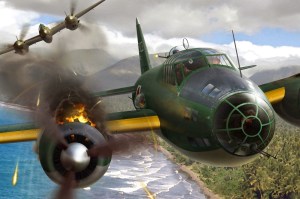 tour throughout the South Pacific. US naval intelligence intercepted and decoded his schedule. The order for “Operation Vengeance” went down the chain of command from President Roosevelt to Secretary of the Navy Frank Knox to Naval Operations Admiral Ernest King to Admiral Chester Nimitz at Pearl Harbor. Sixteen Lockheed P-38 Lightnings, the only fighters capable of the ranges involved, were dispatched from Guadalcanal on April 17 with the order: “Get Yamamoto”.
 intercepted over Rabaul on April 18, 1943. Knowing only that his target was “an important high value officer”, 1st Lieutenant Rex Barber opened up on the first Japanese transport until smoke billowed from its left engine. Yamamoto’s body was found in the wreckage the following day with a .50 caliber bullet wound in his shoulder, another in his head. He was dead before he hit the ground.

 Historical Easter Eggs - Today in History
You must be logged in to post a comment.