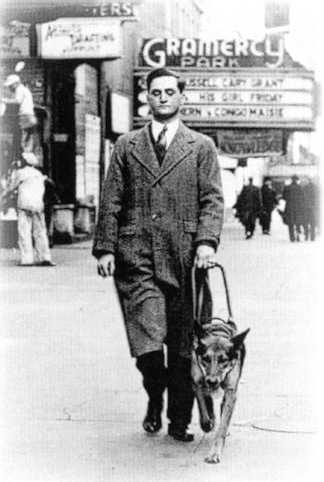
Man and dog stepped off the ship in 1928 to a throng of reporters. There were flash bulbs, shouted questions and the din of traffic and honking horns that can only be New York City. Buddy never wavered. At the end of that first day, Dorothy Eustis received a single word telegram: “Success”.
Morris Frank lost the use of an eye in a childhood accident. He lost his vision altogether in a boxing mishap, at the age of 16. Frank hired a boy to guide him around but the young man was easily bored and sometimes wandered off, leaving Frank to fend for himself.
German specialists were working at this time on the use of Alsatians (German Shepherds) to act as guide dogs for WWI veterans blinded by mustard gas. An American breeder living in Switzerland, Dorothy Harrison Eustis, wrote an article about the work in a 1927 issue of the Saturday Evening Post. When Frank’s father read him the article, he wrote to Eustis pleading that she train a dog for himself. “Is what you say really true? If so, I want one of those dogs! And I am not alone. Thousands of blind like me abhor being dependent on others. Help me and I will help them. Train me and I will bring back my dog and show people here how a blind man can be absolutely on his own. We can then set up an instruction center in this country to give all those here who want it a chance at a new life.”
Dorothy Eustis called Frank in February 1928 and asked if he was willing to come to Switzerland. The response left little doubt: “Mrs. Eustis, to get my independence back, I’d go to hell”. She accepted the challenge and trained two dogs, leaving it to Frank to decide which was the more suitable. Morris came to Switzerland to work with the dogs, both female German Shepherds. He chose one named “Kiss” but, feeling that no 20-year-old man should have a dog named Kiss, he called her “Buddy”.
Man and dog stepped off the ship in 1928 to a throng of reporters. There were flash bulbs, shouted questions and the din of traffic and honking horns that can only be New York City. Buddy never wavered. At the end of that first day, Dorothy Eustis received a single word telegram: “Success”. Morris Frank was set on a path that would become his life’s mission: to get seeing eye dogs accepted all over the country.
Frank and Eustis established the first guide dog training school in the US in Nashville, on January 29, 1929. Frank was true to his word, becoming a tireless advocate of public accessibility for the blind and their guide dogs. In 1928, he was routinely told that Buddy couldn’t ride in the passenger compartment. Within seven years, all railroads in the United States adopted policies allowing guide dogs to remain with their owners while onboard. By 1956, every state in the Union had passed laws guaranteeing access to public spaces for blind people and their dogs.
Frank told a New York Times interviewer in 1936 that he had probably logged 50,000 miles with Buddy, by foot, train, subway, bus, and boat. He was constantly meeting with people, including two presidents and over 300 ophthalmologists, demonstrating the life-changing qualities of owning a guide dog.
Sadly, no dog is given the span of a human lifetime. Buddy’s health was failing in the end, but the team had one more hurdle to cross. One more barrier to break. Frank wanted to fly in a commercial aircraft with his guide dog. The pair did so on this day in 1938, flying from Chicago to Newark. Buddy passed the time curled up at Frank’s feet. United Air Lines was the first to adopt the policy, granting “all Seeing Eye dogs the privilege of riding with their masters in the cabins of any of our regularly scheduled planes.”
Buddy was all business during the day, but, to the end of her life, she liked to end her work day with a roll on the floor with Mr. Frank. Buddy died seven days after that plane trip, but she had made her mark. By this time there were 250 seeing eye dogs working across the country, and their number was growing fast. Buddy’s replacement was also called Buddy, as was every seeing eye dog Frank would ever own until he passed away, in 1980.
Four decades and more since Morris Frank left this earth, his dream lives on. Today there are an estimated 10,000 seeing eye dogs currently at work, in the United States.
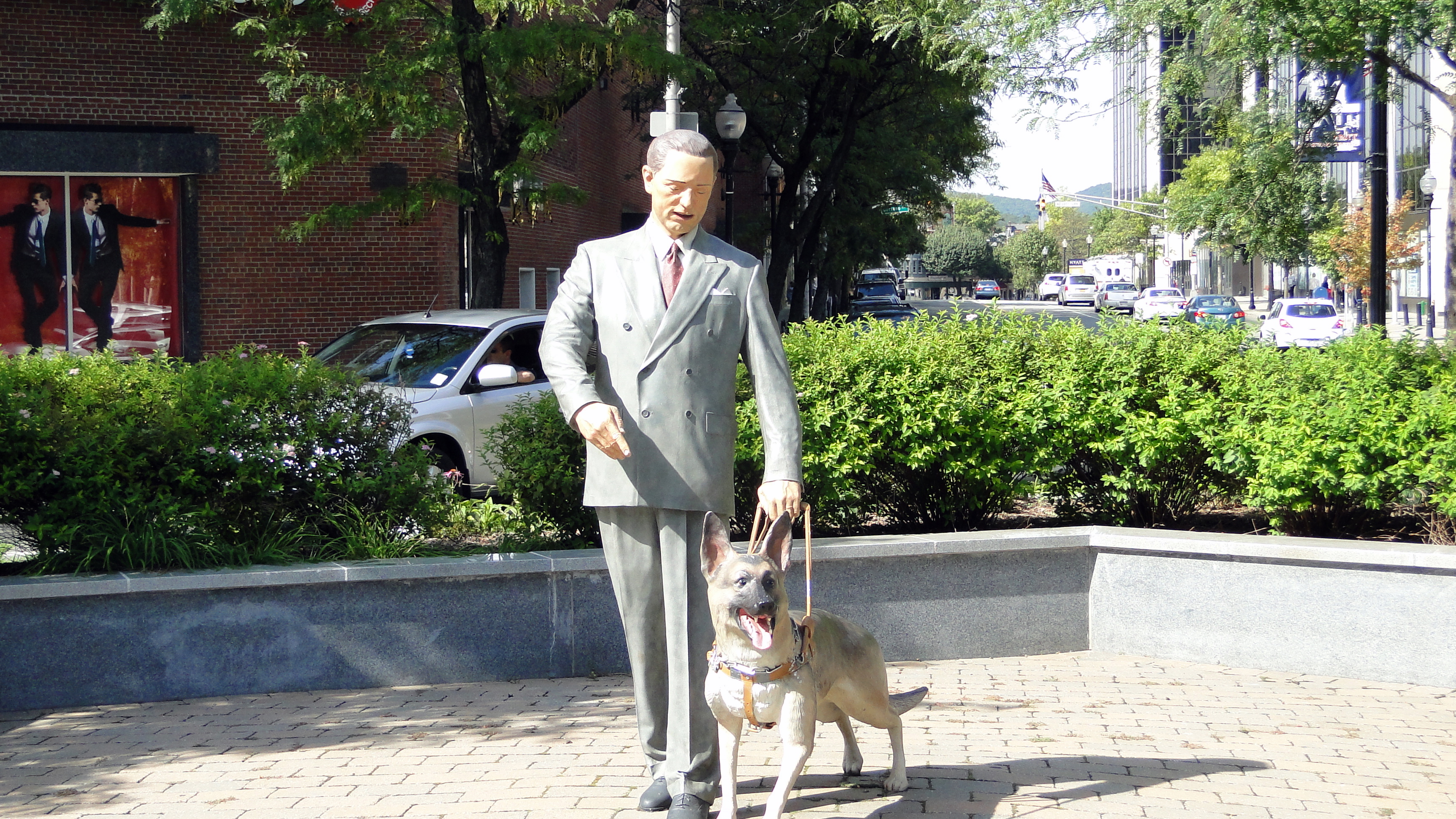
The trompe l’oeil painted bronze statue “The Way to Independence” was unveiled on April 29, 2005, on Morristown Green, Morristown NJ. Artist John Seward Johnson, II
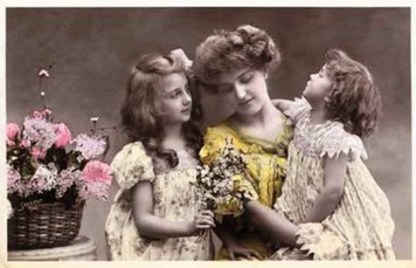
To my Mom and all the beautiful mothers out there, Happy Mother’s Day. This is your day. May it be the first, of many more.
The earliest discernible Mother’s day comes to us from 1200-700BC, descending from the Phrygian rituals of modern day Turkey and Armenia. “Cybele” was the great Phrygian goddess of nature, mother of the Gods, of humanity, and of all the beasts of the natural world, her cult spreading throughout Eastern Greece with colonists from Asia Minor.
Much of ancient Greece looked to the Minoan Goddess Rhea, daughter of the Earth Goddess Gaia and the Sky God Uranus, mother of the Gods of Olympus. Over time the two became closely associated with the Roman Magna Mater, each developing her own following and worshipped through the period of the Roman Empire.
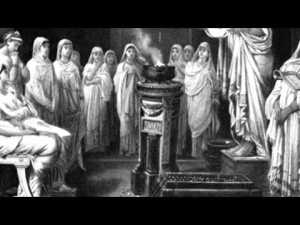
In ancient Rome, women partook of a festival strictly forbidden to Roman men. So unyielding was this line of demarcation that only women were permitted even to know the name of the deity. For everyone else she was simply the “Good Goddess”. The Bona Dea.
Fun Fact: All Rome was aghast when Publius Clodius Pulcher dressed like a woman and sneaked into the Bona Dea, bent on seducing the wife of Julius Caesar. How that was supposed to work remains unclear but ol’ Pulcher was found out, and hurled from the premises. Unjust though it was Caesar divorced Pompeia nevertheless, saying that “Caesar’s wife must be beyond reproach”.
In the sixteenth century, it became popular for Protestants and Catholics alike to return to their “mother church” whether that be the church in which they were baptized, the local parish church, or the nearest cathedral. Anyone who did so was said to have gone “a-mothering”. Domestic servants were given the day off and this “Mothering Sunday”, the 4th Sunday in Lent, was often the only time when whole families could get together. Children would gather wild flowers along the way to give to their mothers or to leave, in the church. Over time the day became more secular, but the tradition of gift giving, continued.
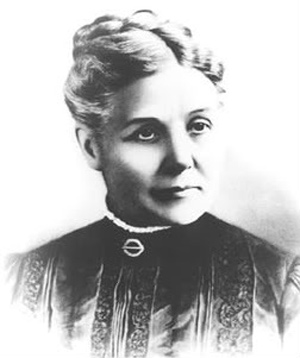
Ann Maria Reeves Jarvis
Ann Maria Reeves Jarvis was a social activist in mid-19th century western Virginia. Pregnant with her sixth child in 1858, she and other women formed “Mothers’ Day Work Clubs”, to combat the health and sanitary conditions leading at that time to catastrophic levels, of infant mortality. Jarvis herself gave birth between eleven and thirteen times in one seventeen year period. Only four of those children lived to adulthood.
Jarvis had no patience for the sectional differences that brought the nation to Civil War, or led her own locality to secede and form the state, of West Virginia. She rejected a measure to divide the Methodist church into northern and southern branches. She was willing help Union and Confederate soldier alike, if she could. It was she alone who offered a prayer when others refused for Thornsbury Bailey Brown, the first Union soldier killed in the vicinity.
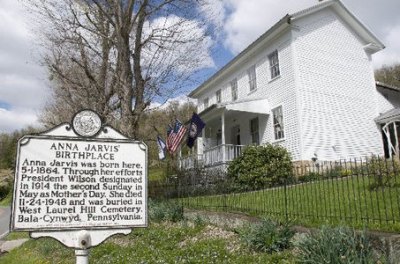
Anna Jarvis
Following Jarvis’ death in 1905, her daughter Anna conceived of Mother’s Day as a way to honor her legacy and to pay respect for the sacrifices all mothers make, on behalf of their children.
Obtaining financial backing from Philadelphia department store owner John Wanamaker, Anna Jarvis organized the first official Mother’s Day celebration at a Methodist church in Grafton, West Virginia. That same day, thousands attended the first Mother’s Day event at Wanamaker’s store in Philadelphia.
Anna Jarvis resolved that Mother’s Day be added to the national calendar and a massive letter writing campaign ensued. On May 9, 1914, President Woodrow Wilson signed a measure declaring the second Sunday of May, Mother’s Day.
Anna Jarvis believed Mother’s Day to be a time of personal celebration, a time when families would gather to love and honor their mother.
In the early days she had worked with the floral industry to help raise the profile of Mother’s Day. By 1920 she had come to resent what she saw as over-commercialization, of the day. Greeting cards seemed a pale substitute for the hand written personal notes she envisioned. Jarvis protested a Philadelphia candy maker’s convention in 1923 deriding confectioners, florists and even charities as “profiteers”. Carnations had become symbolic of Mother’s Day by this time and Jarvis resented that they were being sold at fundraisers. She even protested at a meeting of the American War Mothers in 1925 where women were selling carnations, and got herself arrested for disturbing the peace.
Soon she was launching an endless series of lawsuits against those she felt had used the “Mother’s Day” name in vain.
During the last years of her life, Anna Jarvis lobbied the government to take her creation off of the calendar, gathering signatures door-to-door to get the holiday rescinded. The effort was obviously unsuccessful. The mother of mother’s day died childless in a sanitarium in 1948, her personal fortune squandered on legal fees.
Today some variation of Mother’s Day is observed from the Arab world to the United Kingdom. In the United States, Mother’s Day is one of the most commercially successful days of the year for flower and greeting card sales, and the biggest day of the year for long-distance phone calls. Church attendance is the third highest of the year behind only Christmas, and Easter. Many churchgoers celebrate the day with carnations: colored if the mother is still living and white, if she has passed on.
To my Mom and all the beautiful mothers out there, Happy Mother’s Day. This is your day. May it be the first, of many more.
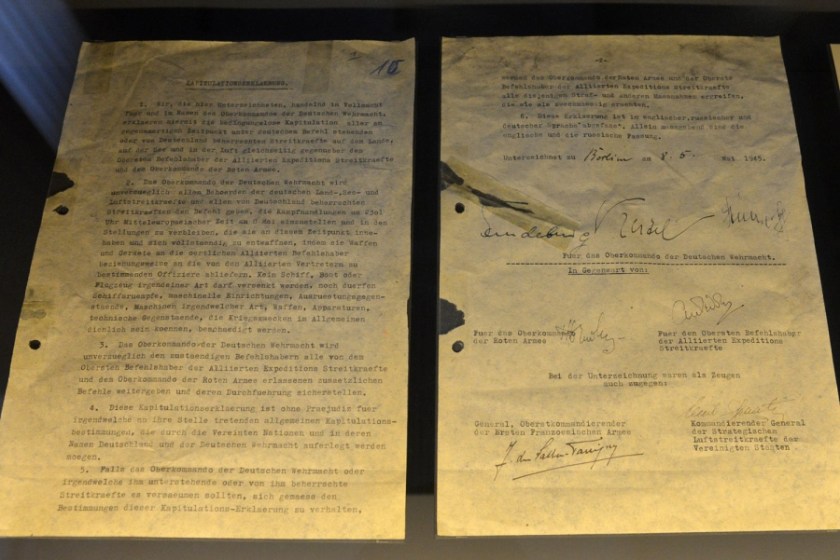
General Alfred Jodl came to Reims to sign the document including the phrase “All forces under German control to cease active operations at 2301 hours Central European time on 8 May 1945“.
Beginning on May 5, reporters from AP, Life magazine, and others began to sleep on the floor of Eisenhower’s red brick schoolhouse headquarters, for fear of stepping out and missing the moment. Adolf Hitler was dead by his own hand, the life of the German tyrant extinguished on April 30.
General Alfred Jodl came to Reims to sign the document including the phrase “All forces under German control to cease active operations at 2301 hours Central European time on 8 May 1945“.
The signing of the instruments of surrender ending the most destructive war in history took place on Monday, May 7, at 2:41am, local time. In Europe, World War II had come to an end.The German government announced the end of hostilities right away to its own people, but most of the Allied governments, remained silent. It was nearly midnight the following day when Field Marshal Wilhelm Keitel signed a second instrument of surrender, in the Berlin headquarters of Soviet General Georgy Zhukov.
Soviet Premier Josef Stalin had his own ideas about how he wanted to handle the matter while the rest of the world, waited.
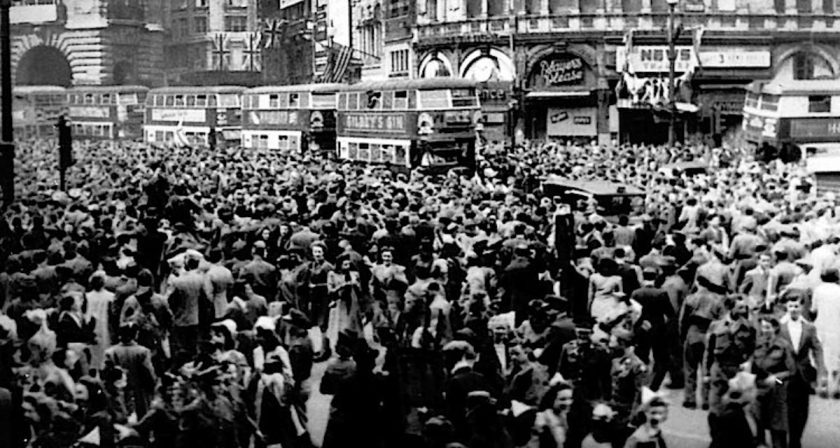
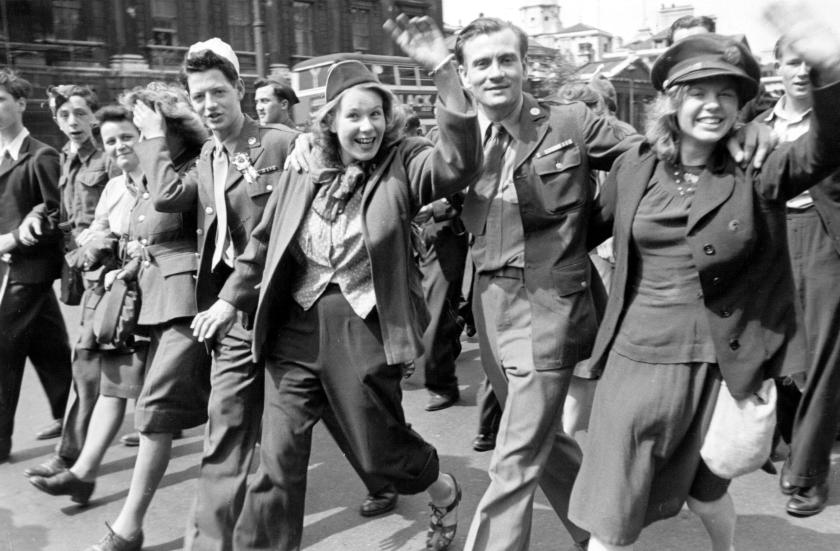
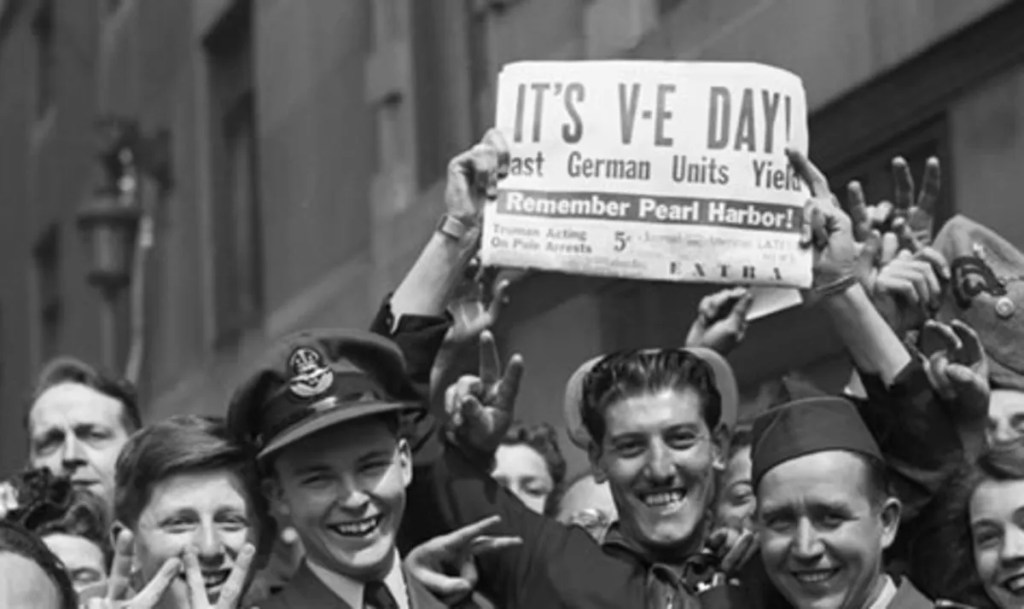
In England, May 7 dragged on with no public statement. Large crowds gathered outside of Buckingham Palace shouting “We want the King”. Bell ringers throughout the British Isles remained on silent standby, waiting for the announcement. The British Home Office issued a circular, instructing Britons how they could celebrate: “Bonfires will be allowed, but the government trusts that only material with no salvage value will be used.” And still, the world waited.
Prime Minister Winston Churchill finally lost patience in the early evening, saying he wasn’t going to give Stalin the satisfaction of holding up what everyone already knew. The Ministry of Information made this short announcement at 7:40pm: “In accordance with arrangements between the three great powers, tomorrow, Tuesday, will be treated as Victory in Europe Day and will be regarded as a holiday”.
The news was greeted with reserve in the United States, where the first thought was that of the Pacific. Even now, many months of savage combat lay ahead. President Harry Truman broadcast his own address to the nation at 9:00am on May 8, thanking President Roosevelt and wishing he’d been there to share the moment.
Franklin Delano Roosevelt had died on April 12 in Warm Springs, Georgia. President Truman’s speech begins: “This is a solemn but a glorious hour. I only wish that Franklin D. Roosevelt had lived to witness this day. General Eisenhower informs me that the forces of Germany have surrendered to the United Nations. The flags of freedom fly over all Europe. For this victory, we join in offering our thanks to the Providence which has guided and sustained us through the dark days of adversity”.
So it is that most of the world celebrates May 8 as Victory in Europe, “VE Day”, the day of formal cessation of all hostilities, by Nazi Germany. And yet in some sectors, the fighting continued.
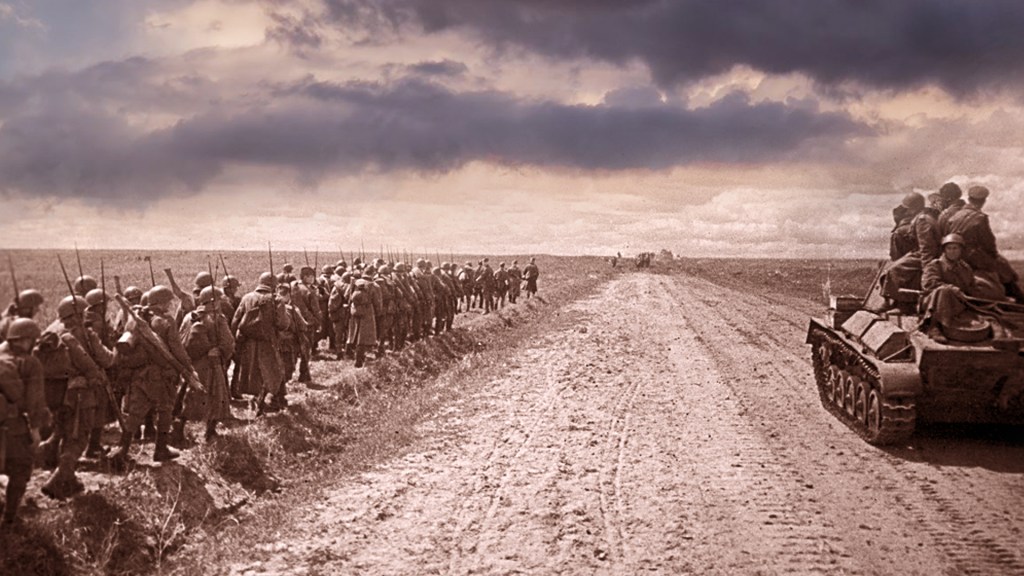
German military operations officially ceased on May 8, a day celebrated as VE Day in in the United States, Great Britain, Western Europe and Australia. VE Day occurs on May 9 in the former Soviet territories, and New Zealand.
Even so isolated pockets of resistance continued to surrender day through May 14-15. The “Georgian uprising” of some 400 German troops and 800 allied Georgian soldiers under German officers continued until May 20 on the Dutch island of Texel (pronounced “Tessel).
The last major battle in Europe concluded on May 25 between the Yugoslav Army and Croatian Armed Forces. One contingent of German soldiers lost radio communications in Spitsbergen in the Norwegian archipelago and surrendered to a group of seal hunters, on September 4. Two days after the formal surrender of Imperial Japan and the end of war, in the Pacific.
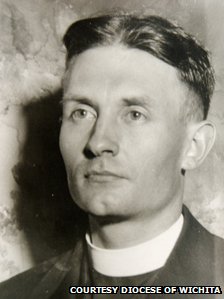
Father Kapaun once lost his Mass kit to enemy fire. He earned a Bronze Star by running through intense enemy fire to rescue a wounded soldier. This was no rear-echelon ministry.
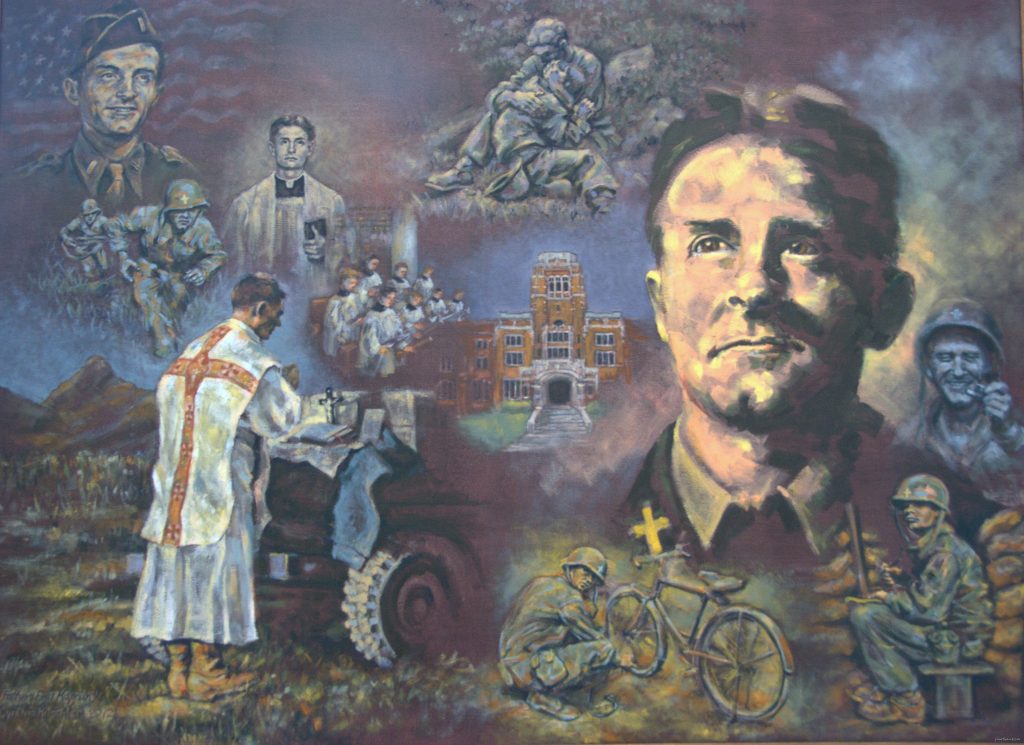
Emil Joseph Kapaun was the son of Czech immigrants, a farm kid who grew up in 1920s Kansas. Graduating from Pilsen High, class of 1930, he spent much of the 30s in theological seminary, becoming an ordained priest of the Roman Catholic faith on June 9, 1940.
Kapaun served as military chaplain toward the end of WWII, before leaving the army in 1946 and rejoining, in 1948.
Father Kapaun was ordered to Korea a month after the North invaded the South, joining the 8th Cavalry Regiment of the 1st Cavalry Division, out of Fort Bliss.
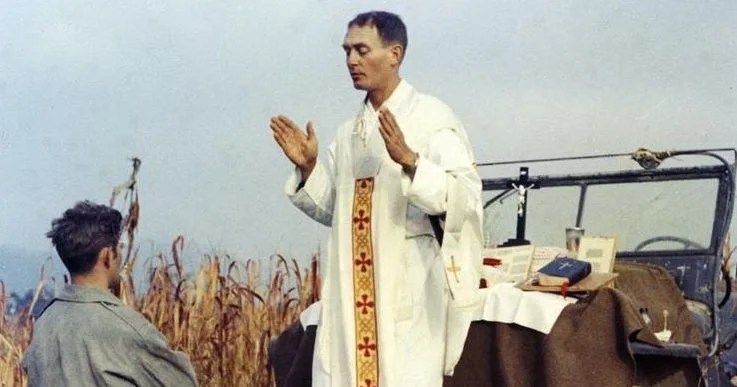
Kapaun’s unit entered combat at the Pusan perimeter, moving steadily northward through the summer and fall of 1950. He would minister to the dead and dying performing baptisms, hearing first confessions, offering Holy Communion and celebrating Mass from an improvised altar set up on the hood of a jeep.
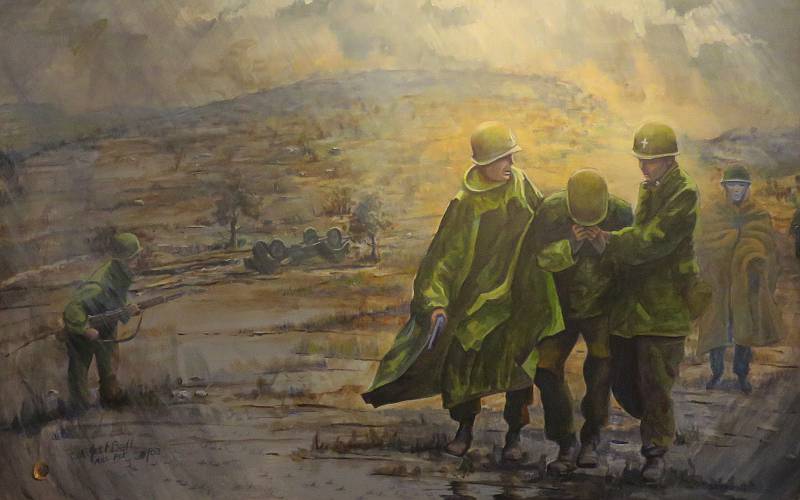
Father Kapaun once lost his Mass kit to enemy fire. He earned a Bronze Star in September that year, when he ran through intense enemy fire to rescue a wounded soldier. This was no rear-echelon ministry.
A single regiment was attacked by the 39th Chinese Corps on November 1, and completely overrun the following day. For the 8th Cav., the battle of Unsan was one of the most devastating defeats of the Korean War. Father Kapaun was ordered to evade, an order he defied. He was performing last rites for a dying soldier, when he was seized by Chinese communist forces.
Prisoners were force marched 87 miles to a Communist POW camp near Pyoktong, in North Korea. Conditions in the camp were gruesome. 1st Lt. Michael Dowe was among the prisoners, it’s through him that we know much of what happened there. Dowe later described Father Kapaun trading his watch for a blanket, only to cut it up to fashion socks for the feet of fellow prisoners.
Father Kapaun would risk his life, sneaking into the fields around the prison compound to look for something to eat. He would always bring it back to the communal pot.
Chinese Communist guards would taunt him during daily indoctrination sessions, “Where is your god now?” Before and after these sessions he would move through the camp, ministering to Catholic and non-Catholic alike. Kapaun would slip in behind every work detail, cleaning latrines while other prisoners argued over who’d get the job. He’d wash the filthy laundry of those made weak and incontinent with dysentery.
Starving, suffering from a blood clot in his leg and a severe eye infection, Father Kapaun led Easter services in April, 1951. A short time later, he was incapacitated. Chinese guards carried him off to a “hospital” – a fetid, stinking part of the camp known to prisoners as the “Death House”, from which few ever returned. “If I don’t come back”, he said, “tell my Bishop that I died a happy death.”
In the end, Father Kapaun was too weak to lift the plate holding the meager ration the guards had left for him. United States Army records report that Fr. Kapaun died of pneumonia on May 6, 1951.
His fellow prisoners will tell you that he died on the 23rd, of malnutrition and starvation. He was only 35.
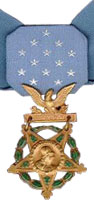
Scores of men credit their survival to Chaplain Kapaun. In 2013, President Barack Obama presented Kapaun’s family with the Medal of Honor, posthumously, for his heroism at Unsan. The New York Times reported that April, “The chaplain “calmly walked through withering enemy fire” and hand-to-hand combat to provide medical aid, comforting words or the last rites of the Roman Catholic Church to the wounded, the citation said. When he saw a Chinese soldier about to execute a wounded comrade, Sgt. First Class Herbert A. Miller, he rushed to push the gun away. Mr. Miller, now 88, was at the White House for the ceremony with other veterans, former prisoners of war and members of the Kapaun family”.
Pope John Paul II named Father Kapaun a “Servant of God” in 1993, the first step toward Roman Catholic Sainthood. On November 9, 2015, the Catholic Diocese of Wichita submitted a 1,066 page report on the life of Chaplain Kapaun, to the Roman Curia at the Vatican. A team of six historians reviewed the case for beatification and delivered a unanimous decision on June 21, 2016, approving the petition.
In January 2022 it was announced, that the Vatican is considering a declaration of martyrdom for the Catholic faith. If granted it’s an important step on Father Emil Kapaun’s continuing road, to canonization.
Only once during all of World War 2 did death result from enemy action, in the 48 contiguous United States. That of a Sunday School class out for a picnic, on May 5, 1945.
Following the 1883 eruption of the Krakatoa volcano, weather watchers described an eastbound, upper atmospheric air current described as the “equatorial smoke stream”.
In the 1920s, Japanese meteorologist Wasaburo Oishi tracked these upper level winds using pilot balloons from a site, near Mount Fuji. Oishi published his findings in Esperanto, dooming his work to international obscurity. Inside Japan there were those who took note, filing away this new-found knowledge of what we now call the “Jet Stream”.
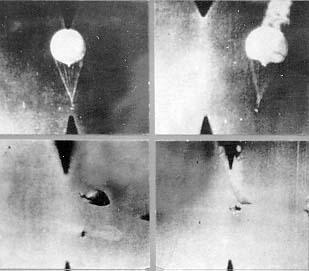
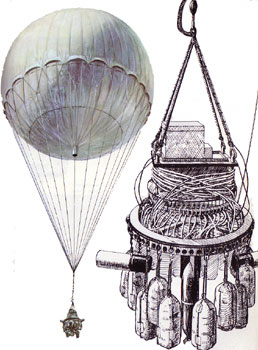
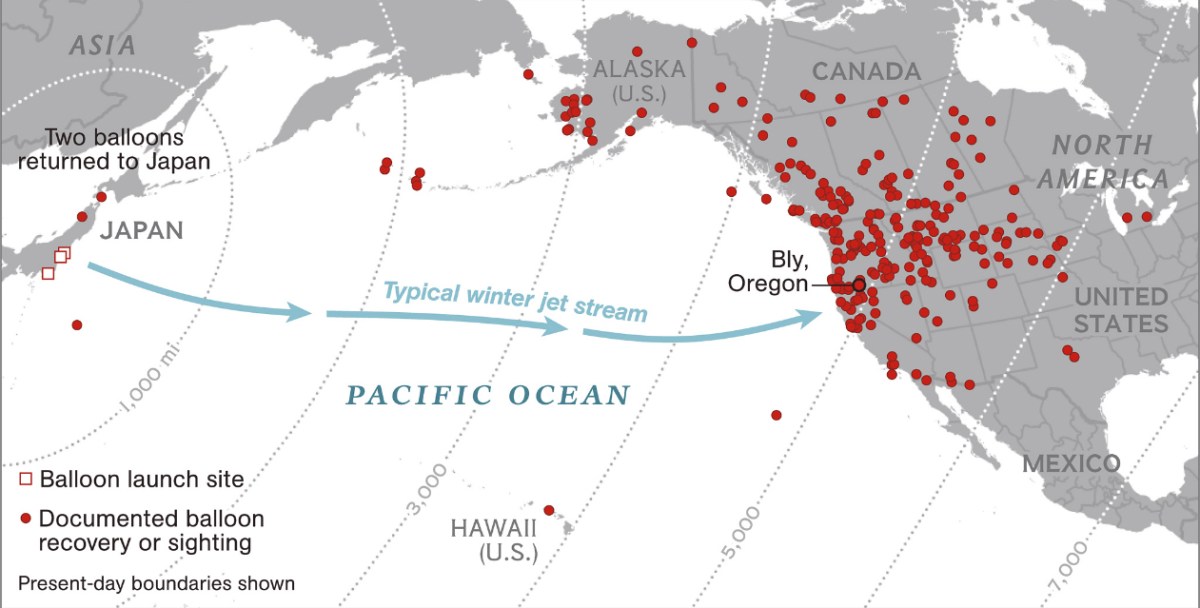
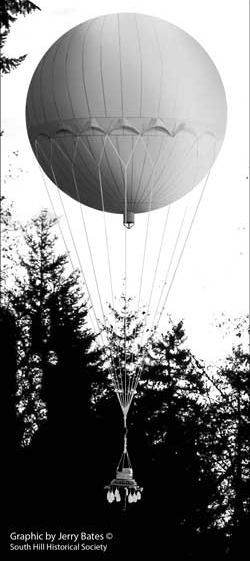
During the latter half of WWII, Japanese military thinkers conceived a fūsen bakudan or “fire balloon”, a hydrogen filled balloon device designed to ride the jet stream using sand ballast and a valve system, to navigate its way to the North American continent.
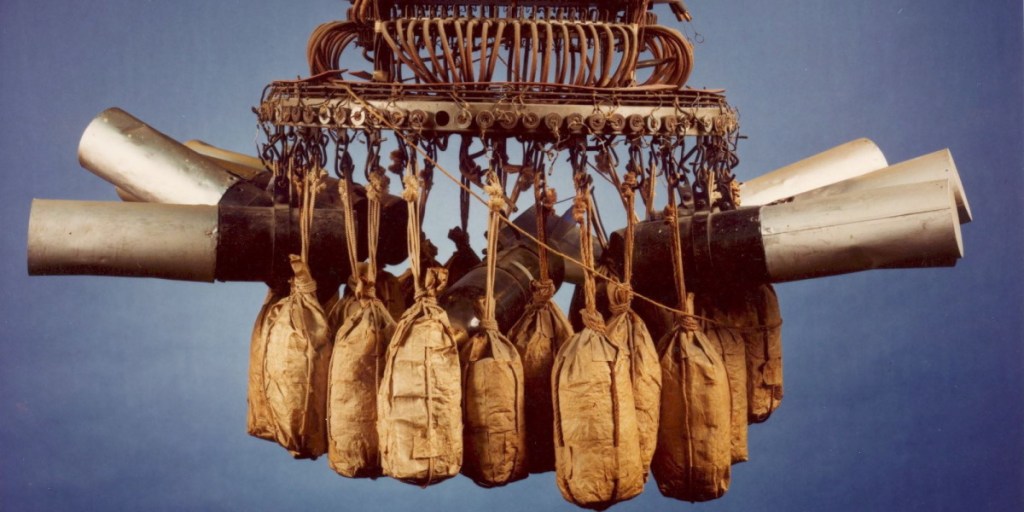
With sandbags, explosives, and the device which made the thing work, the total payload was about a thousand pounds at liftoff. The first such device was released on November 3, 1944, beginning the crossing to the west coast of North America.
Between late 1944 and April 1945 some 9,300 such balloons were released, with military payloads.
Today, inter-continental ballistic missiles are an everyday if frightening reality, of our time. Such a long range attack was unheard of during World war 2 and would not be duplicated until the Falklands War, in 1982.
In 1945, intercontinental weapons existed only in the realm of science fiction. As these devices began to appear, American speculation ran wild. Authorities theorized that they originated with submarine-based beach assaults, German POW camps, even the internment camps into which the Roosevelt administration herded Japanese Americans.
These “washi” paper balloons flew at high altitude and surprisingly quickly, completing the Pacific crossing in only three days. Balloons came down from Alaska to Northern Mexico and as far east, as Detroit.
A P-38 Lightning fighter shot one down near Santa Rosa, California, while Yerington, Nevada cowboys cut one up to make hay tarps. Pieces of balloon were found in the streets of Los Angeles. A prospector near Elko Nevada delivered one to local authorities, on the back of a donkey.
Among US units assigned to fight fire balloons was the 555th Parachute Infantry Battalion, which suffered one fatality and 22 injuries fighting fires.
One of the last balloons came down on March 10 near Hanford Washington, shorting out power lines supplying electricity for Manhattan Project nuclear reactor cooling pumps. The war in the Pacific could have ended very differently had not backup safety devices restored power, almost immediately.
Colonel Sigmund Poole, head of the U.S. Geological Survey military geology unit, asked, “Where’d the damned sand come from?” Microscopic analysis of sand ballast identified diatoms and other microscopic sea life. This and the mineral content of the sand itself proved to be definitive. The stuff could only have come from the home islands of Japan, more specifically, one or two beaches on the island of Honshu.
American authorities were alarmed. Anti-personnel and incendiary bombs were relatively low grade threats. Not so the biological weapons Japanese military authorities were known to be developing at the infamous Unit 731, in northern China.
284 of these weapons are known to have completed the Pacific crossing to the United States, Mexico and Canada. Experts estimate as many as 1,000 may have made the crossing. Sightings were reported in seventeen US states. Pilots were ordered to shoot them down on sight, but many escaped detection, altogether.
In an effort to deny valuable intelligence to their Japanese adversary, US military and government authorities did everything they could to keep these “Fire Bombs” out of the media. Even while such secrecy put Americans at risk.
Japanese Authorities reported that the bombs were hitting key targets. Thousands were dead or injured they insisted, and American morale was low.
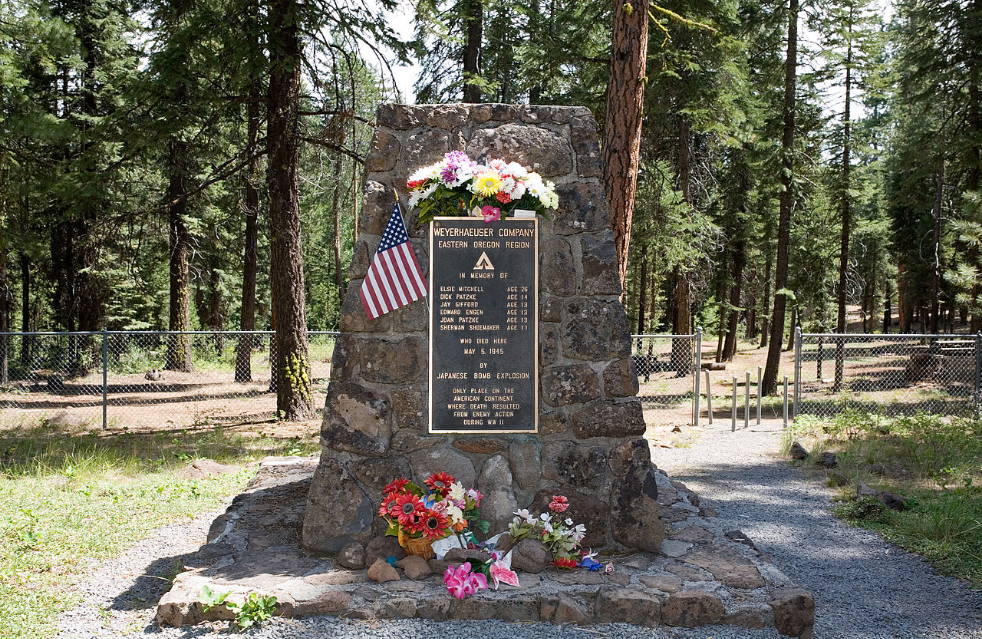
On the morning of May 5, 1945, Pastor Archie Mitchell and his wife Elsie took a Sunday school class of five on a picnic to a forest area near Bly, Oregon. As Pastor Mitchell parked the car, Elsie and the kids came upon a large balloon with a strange looking device, attached. There was no way they could have known, what they had found was a Japanese weapon of war. The device exploded killing all six, instantly.
Several such devices exploded, igniting wildfires in the forests of California, Oregon and Washington, but the site near Bly is the only one known to have resulted in American casualties.
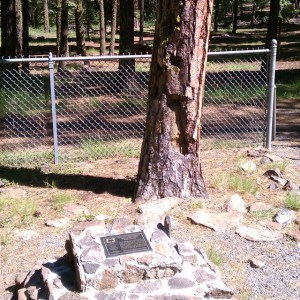
Today there is a small picnic area located in the Fremont-Winema National Forest in Lake County, Oregon. It’s maintained by the US Forest Service, memorialized as the Mitchell Recreation Area and listed on the National Register of Historic Places. A small stone marker points the way to a shrapnel scarred tree.
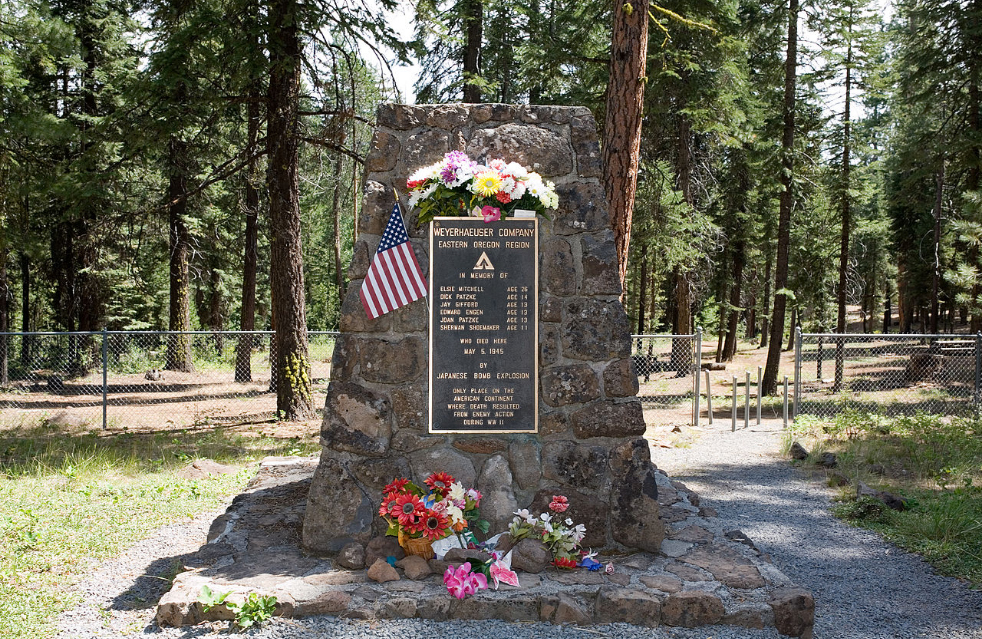
A second monument bears the words cast in bronze: The “only place on the American continent where death resulted from enemy action during World War II”. There are six names above those words, those of five children and their teacher: Elsie Mitchell, age 26, Edward Engen, 13, Jay Gifford, 13, Joan Patzke, 13, Dick Patzke, 14 and Sherman Shoemaker, age 11.
Elsie Mitchell was pregnant at the time of her death. Her unborn child was the 7th albeit nameless victim, of one of the most bizarre weapon systems of WW2.
Virtually anything that can be opened or closed, stepped on or moved in any way can be rigged to mutilate or kill, the unwary. Fiendish imagination alone, limits the possibilities.
In the Spanish language, the word “Bobo” translates as “stupid…daft…naive”. The slang form “bubie” describes a dummy. A dunce. The word came into English sometime around 1590 and spelled “booby”, meaning a slow or stupid person.
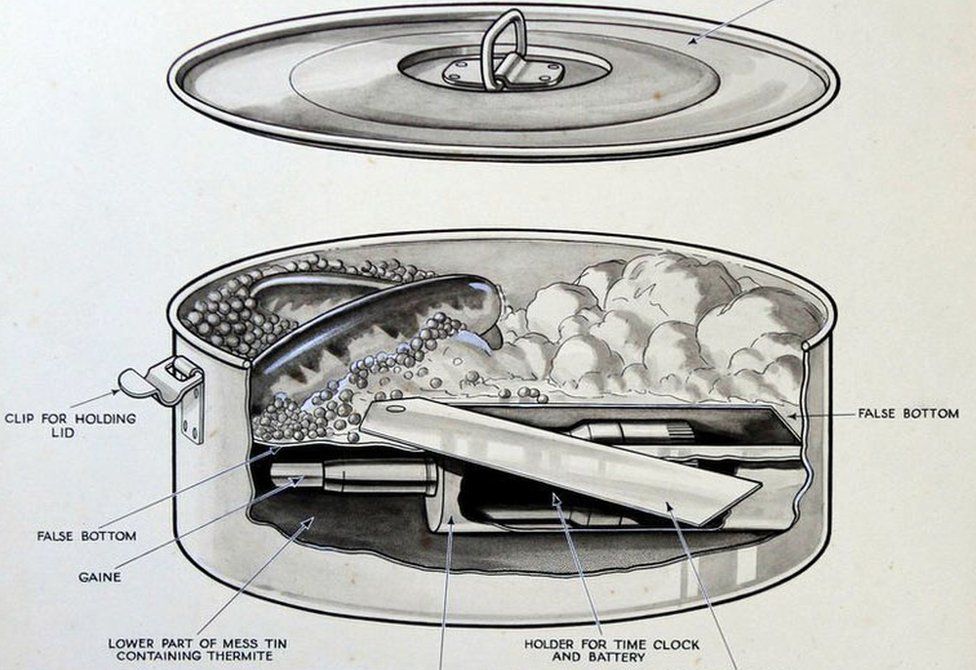
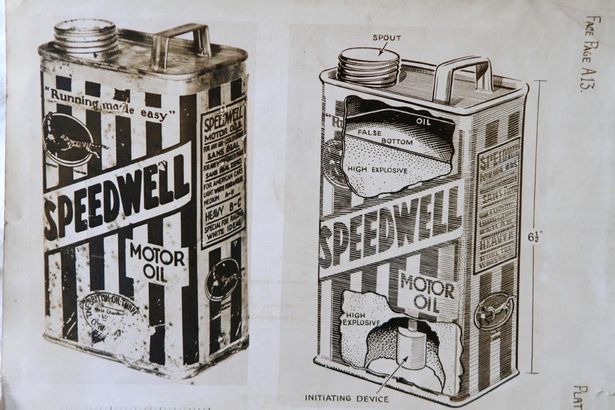
In a military context, a booby trap is designed to kill or maim the person who activates a trigger. Like the common mess tin at the top of this page, modified to mangle or kill the unsuspecting soldier. During the war in Vietnam, Bamboo pit vipers known as “three step snakes” (because that’s all you get) were tucked into backpacks, bamboo sticks or simply hung by their tails, a living trap for the unwary GI.
Punji stakes were often smeared with human excrement result in hideous infection for the unsuspecting GI
The soldier who goes to lower that VC flag might pull the halyard rope may hear distant snickering in the jungle…just before the fragmentation grenade goes off. Often, the first of his comrades running to the aid of his now shattered body hits the trip wire, setting off a secondary and far larger explosive.
Not to be outdone, the operation code-named “Project Eldest Son” involved CIA and American Green Berets sabotaging rifle and machine gun rounds, in such a way as to blow off the face the careless Vietcong shooter.
German forces were masters of the booby trap in the waning days of WW1 and WW2. A thin piece of fishing line connected the swing of a door with a hidden grenade, by your feet. A flushing toilet explodes and kills or maims everyone in the building. The wine bottle over in the corner may be perfectly harmless, but the chair you move over to get it, blows you to bits.
Virtually anything that can be opened or closed, stepped on or moved in any way can be rigged to mutilate or kill, the unwary. Fiendish imagination alone, limits the possibilities. Would the “Joe Squaddy” entering the room care if that painting on the wall was askew? Very possibly not but an “officer and a gentleman” may be moved to straighten the thing out at the cost of his hands, or maybe his life.
Exploding Peas, illustration by Laurence Fish
In the strange and malignant world of Adolf Hitler, the German and British people had much in common. Are we not all “Anglo-Saxons”? The two peoples need not make war the man believed, except for their wretched man, Winston Churchill.
Prime Minister Winston Churchill was a true leader of world-historical proportion during the darkest days, of the war. Taking the man out just might cripple one of Hitler’s most potent adversaries.
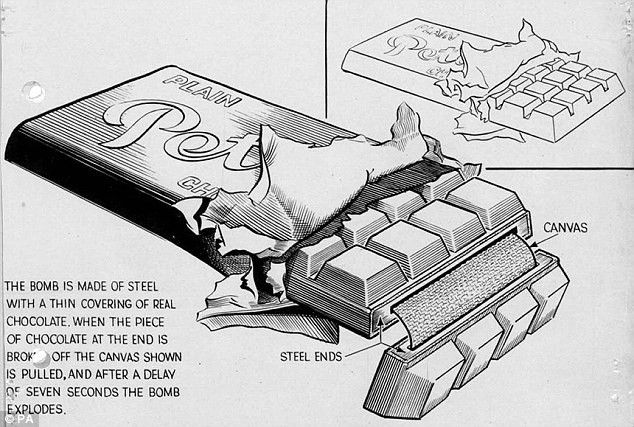
In 1943, Hitler’s bomb makers concocted an explosive coated in a thin layer of chocolate and wrapped in expensive black & gold foil labeled “Peter’s Chocolate”. When you break a piece off of this thing, you might wonder in the last nanoseconds of your life. What the hell is this canvas doing in a chocolate bar?
Churchill was known to have a sweet tooth and so it was, that Nazi Germany planned to kill the British Prime Minister. A booby trapped chocolate bar placed in a war cabinet meeting room.
We rarely hear about the work of the spy or the saboteur in times of war. They are the heroes who work behind enemy lines, with little to protect them but their own guts and cleverness. Their work is performed out of sight, yet there were times when the lives of millions hung in the balance, and they never even knew it.
The lives of millions, or perhaps only one. German saboteurs were discovered operating inside the UK, the information sent to British Intelligence.
Lord Victor Rothschild was a trained biologist in peace and member of the Rothschild banking family. During WW2, British Intelligence recruited him to work for MI5, heading up a three-member explosives and counter-sabotage unit. Rothschild immediately grasped the importance of the information and the need to illustrate Nazi devices to communicate, with other intelligence officers.
We live in an age when computers are commonplace but that wasn’t the case, in 1943. ENIAC, the first electronic computer wouldn’t come around yet, for another two years. Photoshop was definitely out of the picture and yet, high quality illustrations were needed and quickly, and they had to come from a trusted source. Donald Fish, one of Rothschild’s two colleagues, had just the man. His son.
On this day in 1943, Lord Rothschild typed a letter to illustrator, Laurence Fish. The letter, marked “secret”, begins: “Dear Fish, I wonder if you could do a drawing for me of an explosive slab of chocolate…”
The letter went on to describe the mechanism and included a crude sketch, requesting the artist bring the thing, to life.
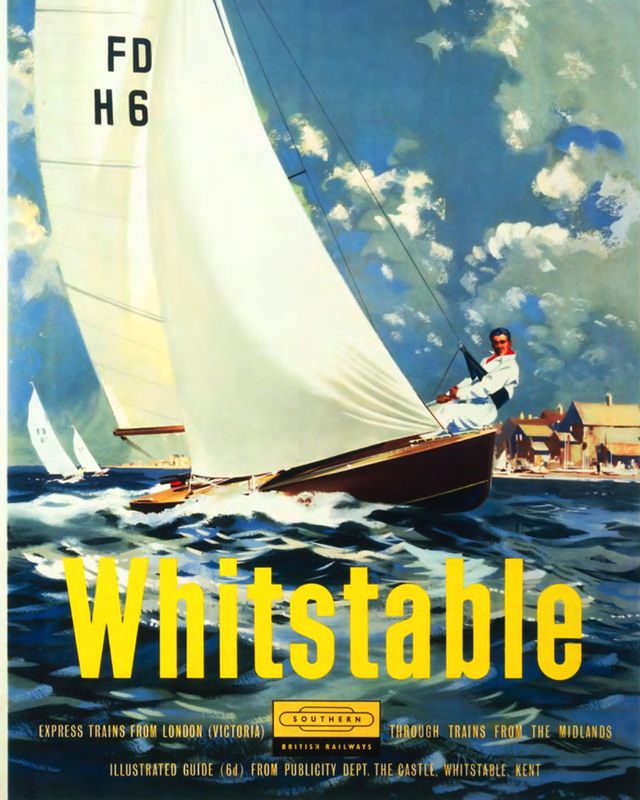
Laurence Fish would one day become a commercial artist and illustrator, best remembered for his travel posters of the 1950s and ’60s. He always signed his work, “Laurence”.
From the pen and ink technical drawings of the war years to the brightly colored travel posters of his post-war career, Laurence Fish was a gifted and versatile artist.
In 1943 that was all for some time in an unknown future, a time when dozens of wartime drawings were quietly left in a drawer and forgotten, for seventy years. For now a world had a war to win and Laurence Fish, played a part.
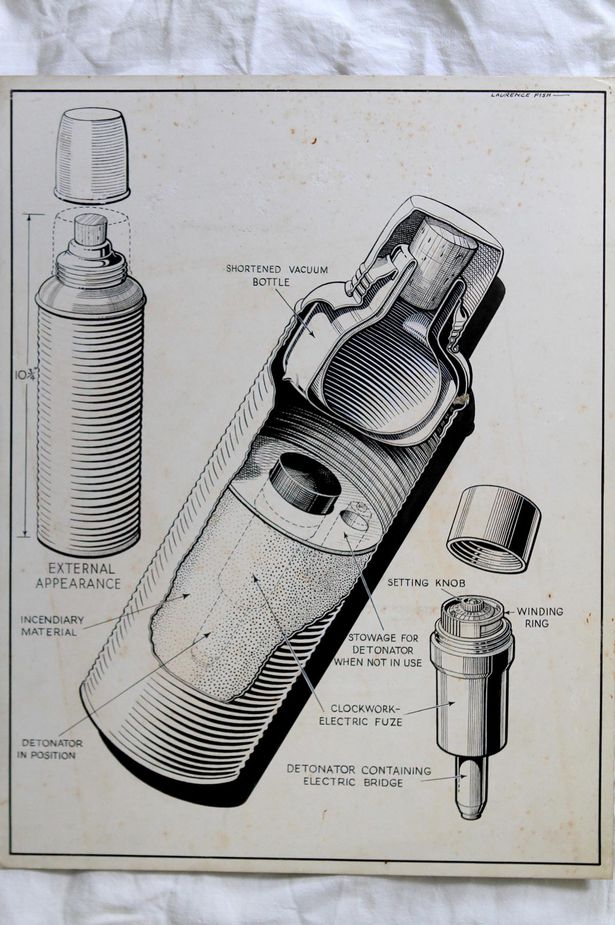
Hitler’s bomb makers devised all manner of havoc, from booby trapped mess tins to time-delay fuses meant to destroy shipping, at sea. In 2015, members of the Rothschild family were cleaning out the house, and discovered a trove of Fish’s work.
The artist is gone now and his name all but forgotten but his work, lives on. Fish’s illustrations are now in the hands of his widow Jean, an archivist and former journalist living in Winchcombe, Gloucestershire. Thanks to her we can see this forgotten piece of history in her husband’s work, last shown in an exhibitionlast year over the weekend of September 18 – 19.
And a good thing it is. The man has earned the right to be remembered.
“Oh! you who sleep in Flanders Fields,
Sleep sweet – to rise anew!
We caught the torch you threw
And holding high, we keep the Faith
With All who died.”. – Moina Michael
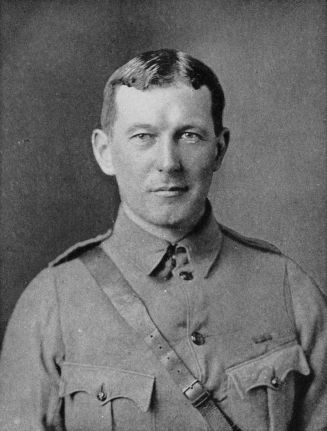
Dr. John McCrae
John McCrae was a physician and amateur poet from Guelph, Ontario. Following the outbreak of the “Great War” in 1914, he enlisted in the Canadian Expeditionary Force at the age of 41.
Based on his age and training, Dr. McCrae could have joined the medical corps, but volunteered instead to join a fighting unit as gunner and medical officer.
McCrae had previously served in the Boer War. This was to be his second tour of duty in the Canadian military.
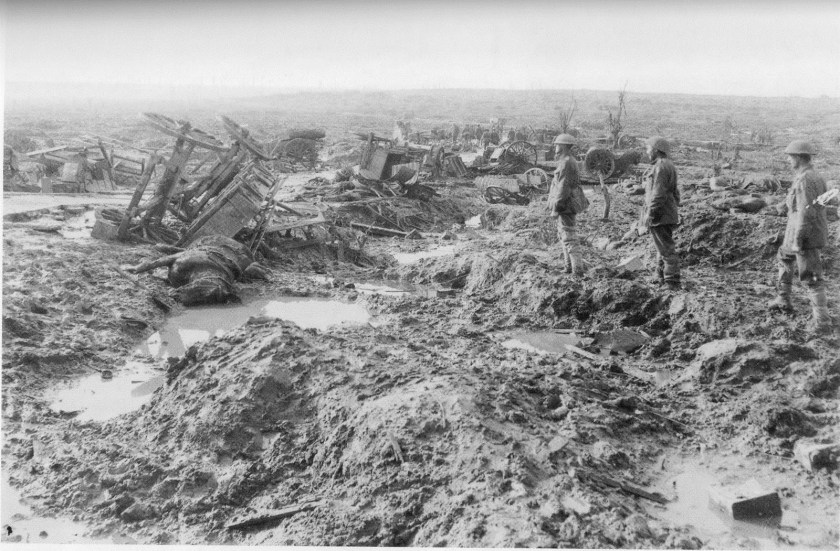
Dr. McCrae fought in one of the most horrendous battles of the Great War, the second battle of Ypres, in the Flanders region of Belgium. Imperial Germany launched the first mass chemical attack in history at Ypres, attacking the Canadian position with chlorine gas on April 22, 1915. The Canadian line was broken but quickly reformed in an apocalyptic bloodletting lasting more than two full weeks.
Dr. McCrae later described the ordeal, in a letter to his mother:
“For seventeen days and seventeen nights”, he wrote, “none of us have had our clothes off, nor our boots even, except occasionally. In all that time while I was awake, gunfire and rifle fire never ceased for sixty seconds … and behind it all was the constant background of the sights of the dead, the wounded, the maimed, and a terrible anxiety lest the line should give way”.
Stop and imagine for a moment please, what this looked like, what this horror smelled like, in color.
Dr. McCrae presided over the funeral of friend on May 3, fellow soldier Alexis Helmer, who had died in the battle. McCrae performed the burial service himself when he noted how quickly the red poppies grew on the graves of the fallen. Sitting in the back of a medical field ambulance just north of Ypres, he composed this poem, the following day. He called the verse, “We Shall Not Sleep”.
Today we remember Dr. McCrae’s work as:
In Flanders Fields
In Flanders fields the poppies blow Between the crosses, row on row, That mark our place; and in the sky The larks, still bravely singing, fly Scarce heard amid the guns below.
We are the Dead. Short days ago We lived, felt dawn, saw sunset glow, Loved and were loved, and now we lie In Flanders fields.
Take up our quarrel with the foe: To you from failing hands we throw The torch; be yours to hold it high. If ye break faith with us who die We shall not sleep, though poppies grow In Flanders fields.
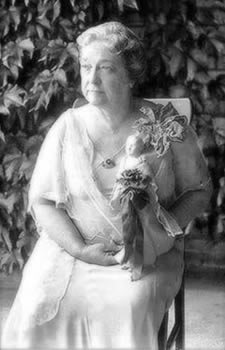
Moina Michael
Moina Belle Michael was born August 15, 1869 near Good Hope Georgia, about an hour’s drive east of Atlanta. She began teaching at age fifteen. Over a long career Michael worked in nearly every part of the Peach State’s education system.
In 1918 she was working at the YMCA Overseas War Secretaries headquarters, in New York. Browsing through the November Ladies Home Journal Moina came across Dr. McCrae’s poem. It was Saturday morning, November 9, 1918.
Two days before the armistice.
John McCrae lay in his own grave by this time, having succumbed to pneumonia while serving in the No. 3 Canadian General Hospital, in Boulogne. He was buried with full military honors at the Wimereux cemetery where his gravestone lies flat, due to the sandy, unstable soil.
Michael had seen McCrae’s poem before but it got to her this time, especially that last part:
“If ye break faith with us who die We shall not sleep, though poppies grow In Flanders fields”
Moina was so moved she made a personal pledge to “keep the faith”, vowing always to wear a red poppy, in honor of the dead. She scribbled a response, an ode to an act of remembrance on the back, of a used envelope. She called it:
We Shall Keep the Faith
Oh! you who sleep in Flanders Fields, Sleep sweet – to rise anew! We caught the torch you threw And holding high, we keep the Faith With All who died.
We cherish, too, the poppy red That grows on fields where valor led; It seems to signal to the skies That blood of heroes never dies, But lends a luster to the red Of the flower that blooms above the dead In Flanders Fields.
And now the Torch and Poppy Red We wear in honor of our dead. Fear not that ye have died for naught; We’ll teach the lesson that ye wrought In Flanders Fields.
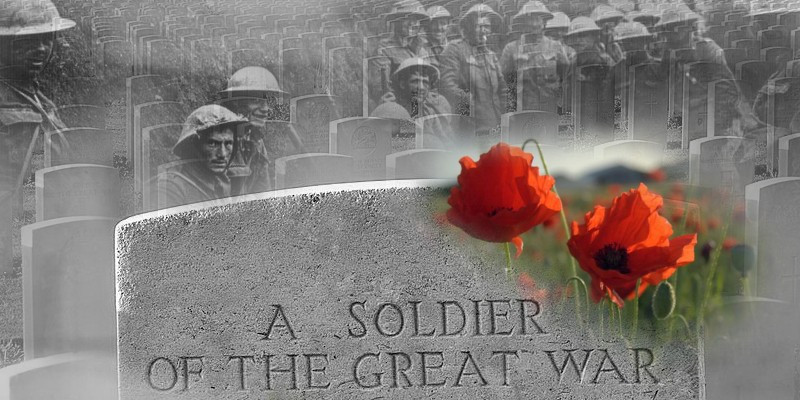
The vivid red flower blooming on the battlefields of Belgium, France and Gallipoli came to symbolize the staggering loss of life brought about by the Great War, the “War to End all Wars”. Before they had numbers, this was a war where the death toll from many single day’s fighting exceeded that of every war of the preceding century, military and civilian, combined.
A century and more has come and gone since the events, told in this story. The red poppy is now an internationally recognized symbol of remembrance, lest we neglect to remember the lives lost in All wars. I keep one always, pinned to the visor of my car. It’s a reminder of where we come from, the prices paid to bring us to this place and to always keep the faith, with those who have come before.
Driving that train,
high on cocaine.
Casey Jones you better,
watch your speed.
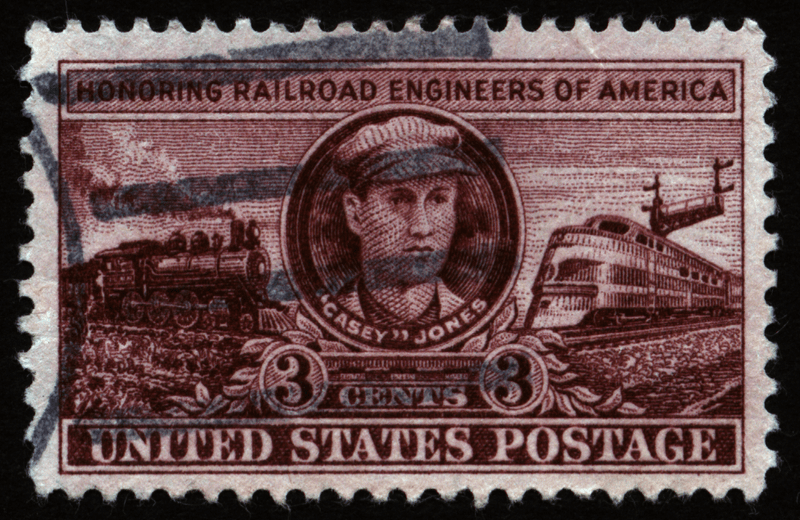
It’s a nice rhyme but the cocaine part is a lie, told and retold across generations, of popular culture. For most of us it’s all we will ever know of a hero, called Casey Jones.
Acts of heroism have a way of popping up in the most unexpected places. Ordinary people rising to the occasion, in the most extraordinary of circumstances.
Temar Boggs and Chris Garcia were two teenage boys who chased down a kidnapper – on their bicycles no less – to free a little girl. Eight-months pregnant mother-to-be Lauren Prezioso dove into an Australian undertow to save two boys, being swept out to sea. Six-year-old Bridger Walker threw himself in the path of a vicious dog to take the mauling directed at his little sister, only seconds earlier.
This is one of those stories.
Jonathon Luther Jones lived near Cayce Kentucky as a boy, and the nickname stuck. For reasons which remain unclear he preferred to spell it, “Casey”.
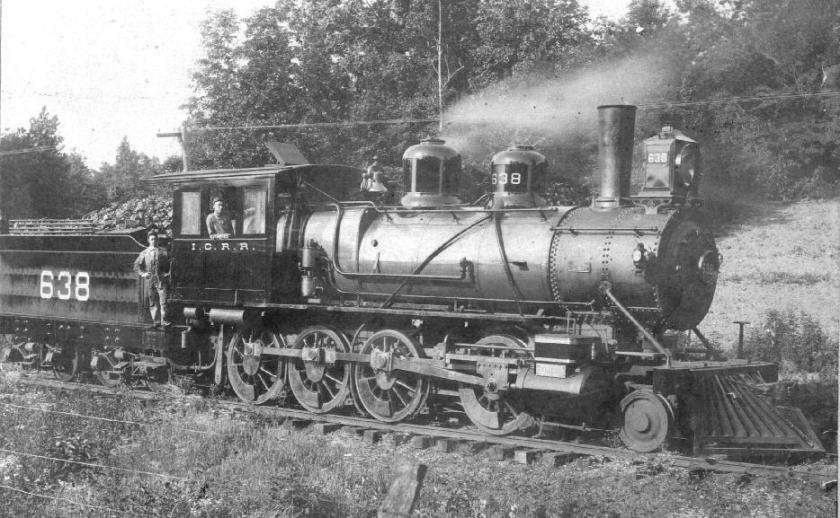
Casey Jones was a train man, working on the I.C.R.R. The Illinois Central Railroad.
An example of the man’s character comes to us from 1895, when Jones was thirty-two. Outside Michigan City Mississippi, a group of children darted across the tracks, fewer than sixty yards from a speeding train. Most made it across except one little girl, who froze in terror before the oncoming locomotive.
With fellow engineer Bob Stevenson hauling back on the emergency brakes and buying precious extra seconds, Jones ran across the running boards and inched his way down the pilot, better known as the “cow catcher”.
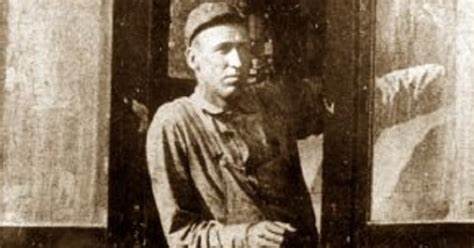
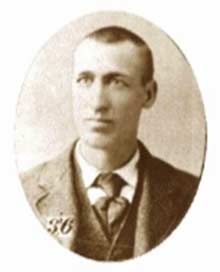
Jonathon Luther “Casey” Jones
He was no trick rider. No circus acrobat. Casey Jones worked on the railroad and yet, bracing himself with his legs, Jones reached out and scooped up the terrified little girl, at the last possible fraction of a second.
On this occasion, the man had every hope and expectation of remaining alive. Five years later Casey Jones’ last act of heroism came in the face of certain, and violent death.
Casey Jones went to work for the Mobile & Ohio Railroad where he performed well, receiving first a promotion to brakeman, and then to fireman. He met Mary Joanna (“Janie”) Brady around this time, whose father owned the boarding house, where Jones lived. The pair fell in love and married on November 11, 1886, buying a house in Jackson Alabama where the couple raised their three children. By all accounts the man was sober and devoted to his work, a dedicated family man.
Several crews from the Illinois Central Railroad (IC) were down with yellow fever in the summer of 1887. Fireman Jones went to work for the IC the following year, firing a freight run between Jackson, Tennessee, and Water Valley, Mississippi.
Casey Jones had a knack for these complex and powerful machines. He was good at what he did and an aggressive risk taker. Ambitious for advancement, Jones was issued nine citations for rules infractions over the course of his career, resulting in 145 days’ suspension. He was well liked by fellow railroaders but widely regarded, as just this side of reckless.
Jones achieved his lifelong goal of becoming an engineer in 1891. He was well known, for being on time. Jones insisted he’d never “fall down” and get behind schedule. People learned to set their watches by his train whistle, knowing he would always “get her there on the advertised” (time).
Jones moved his family to Memphis in 1900, transferring to the “cannonball run” between Chicago and New Orleans. The run was a four train passenger relay, advertising the fastest travel times in the history of the American railroad. Experienced engineers were worried about the ambitious schedule and some even quit. Jones saw the new itinerary as an opportunity for advancement.
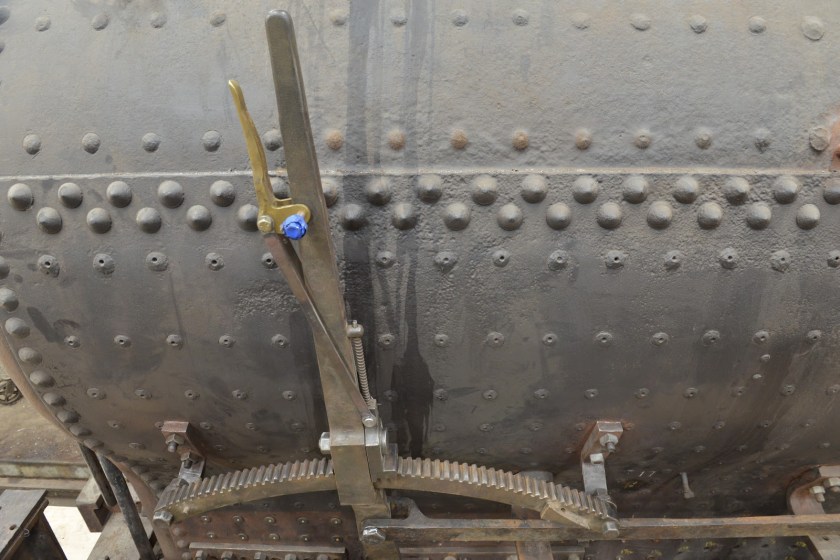
How a steam locomotive, works
On this day in 1900, Engine #382 departed Memphis at 12:05am, ninety-five minutes behind schedule due to the late arrival of the first leg, of the relay. The Memphis to Canton, Mississippi run was 190 miles long and normally took 4 hours, 50 minutes at an average speed of 39 MPH. 95 minutes was a lot of time to make up but #382 was a fast engine and traveling “light” that night, with only six cars.
Fireman Simeon “Sim” T. Webb
Fireman Simeon Taylor “Sim” Webb was one of the best. He would have to be. This would be a record breaking run.
Jones hit the Johnson bar, throttling #382 up to 80 MPH despite sharp turns and visibility reduced, by fog. There were two stops for water and a brief halt on a side track, to let another engine through. Despite all that, #382 made up most of those 95 minutes by the 155-mile mark. On leaving the side track in Goodman, Mississippi, Jones was only five minutes behind the advertised arrival, of 4:05am.
Jones was well acquainted with those last 25 miles into Vaughn Mississippi. There were few turns and the engineer throttled his engine up to breakneck speed. He was thrilled with his time, saying “Sim, the old girl’s got her dancing slippers on tonight!”
Unknown to both men there was a problem, up ahead. Three trains were in the station at Vaughn with a combined length of ten cars longer, than the main siding. Rail yard workers performed a “saw by” maneuver, backing #83 onto the main line and switching overlapping cars onto the “house track”. Then there was that problem with an air hose. Four cars remained stranded on the main line.
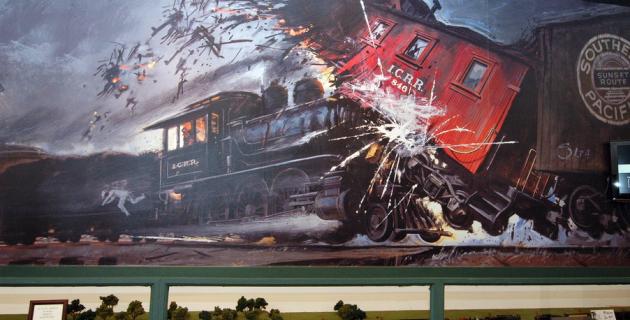
#382 sped through the final curve at 75MPH, only two minutes behind schedule. Clinging to the side board, Sim Webb was the first to see the red lights, of the caboose. “Oh my Lord”, he yelled, “there’s something on the main line!”
Jones didn’t have a prayer of stopping in time. He was moving too fast. He reversed throttle and slammed the air brakes into emergency stop, screaming “Jump Sim, jump!” Sim Webb jumped clear with only 300 feet to go as the piercing shriek of the engine’s whistle, split the air.
Jones could have jumped. Having ordered Webb to do so demonstrated, the man understood the situation. Casey Jones stayed on the train as “Ole 382” plowed through the red wooden caboose and three freight cars, before leaving the track.
By the moment of impact, Jones frantic efforts had slowed the engine down to 35 miles per hour. Untold numbers of passengers were saved from serious injury, or death. As the pieces came to a stop Jones himself, was the only fatality. His watch was stopped at 3:52am, only two minutes behind schedule.
Adam Hauser of the New Orleans Times-Democrat was a passenger in a sleeper car, at the time of the wreck: “The passengers did not suffer” he said, “and there was no panic. I was jarred a little in my bunk, but when fairly awake the train was stopped and everything was still. Engineer Jones did a wonderful as well as a heroic piece of work, at the cost of his life”.
Legend has it that, when Jones’ body was removed his dead hands still clutched the whistle cord, and the brake.
Since that day Casey Jones has achieved mythological status, alongside the likes of Pecos Bill and Paul Bunyan. “The Ballad of Casey Jones” was recorded by Mississippi John Hurt, Johnny Cash and the Grateful Dead, among others.
Jones’ son Charles was 12 at the time of his father’s death at age 37. Jones’ daughter Helen, was 10. The youngest, John Lloyd (“Casey Junior”) was 4. Janie received two life insurance payments totaling $3,000 as Casey was “Double Heading” at that time, as a member of two unions. Casey Jones widow would receive no other compensation. The Railroad Retirement Fund wouldn’t come about, for another 37 years.
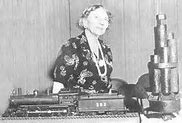
Mary Joanna “Janie” Brady Jones lived another 58 years and never had so much as a thought, of remarrying. The idea that the hero she married was intoxicated at the time of the accident was a thorn in her side, for the rest of her life. What’s more there were allegations that she herself, was an unfaithful wife. According to one version of the song she told her heartbroken children to stop crying. They had “another papa on the Salt Lake Line.”
One particularly snotty article in Time Magazine informed the reader the “Widow Jones” … “looks well and buxom,” in a piece that couldn’t so much as get Jones’ engine number right. To their credit, Time Magazine itself criticized their tone, in 2015. 57 years after Janie died, at the age of 92.
Janie Jones lived another 58 years. She wore black every day, for the rest of her life.
A Trivial Matter
In 1907, brakeman Jesus Garcia stuck to the controls to drive a flaming train away from the small mining town of Nacozari, in the Mexican state of Sonora. The train was carrying dynamite, and blew up, Killing Garcia. His quick actions had saved the town where Jesus Garcia is remembered as a hero, to this day.
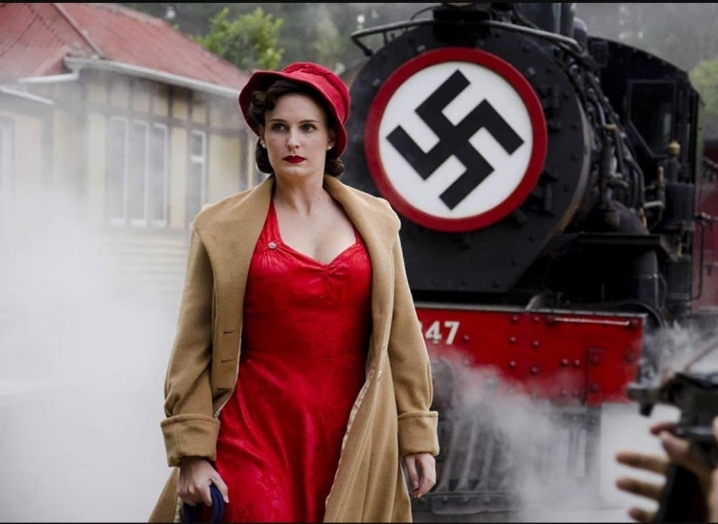
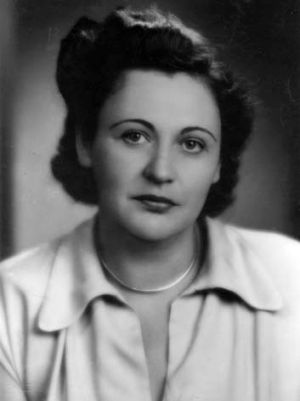
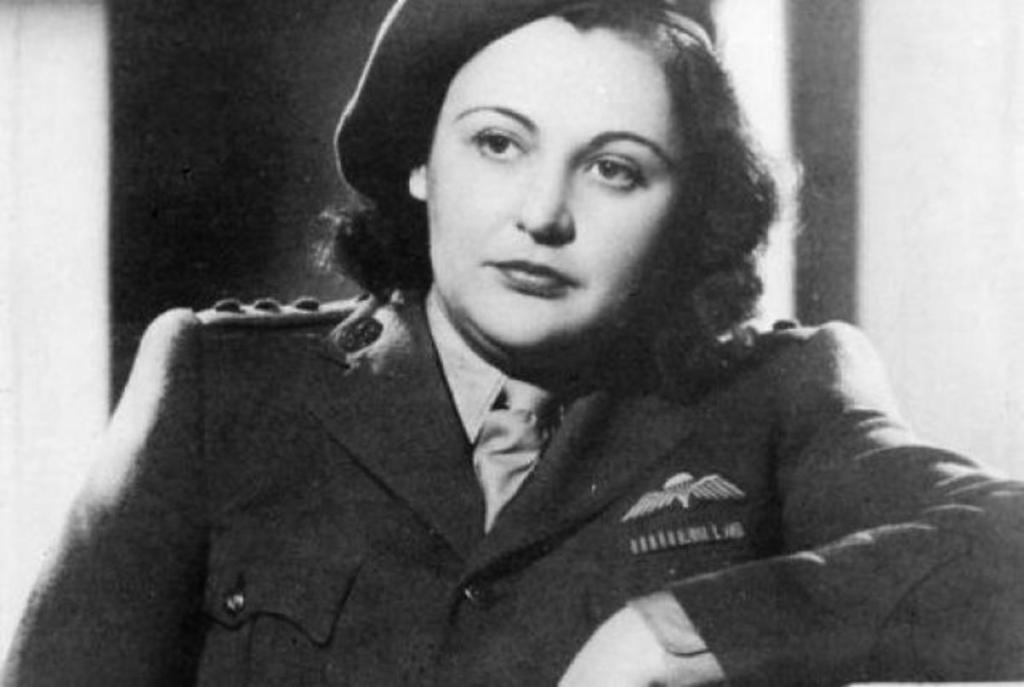
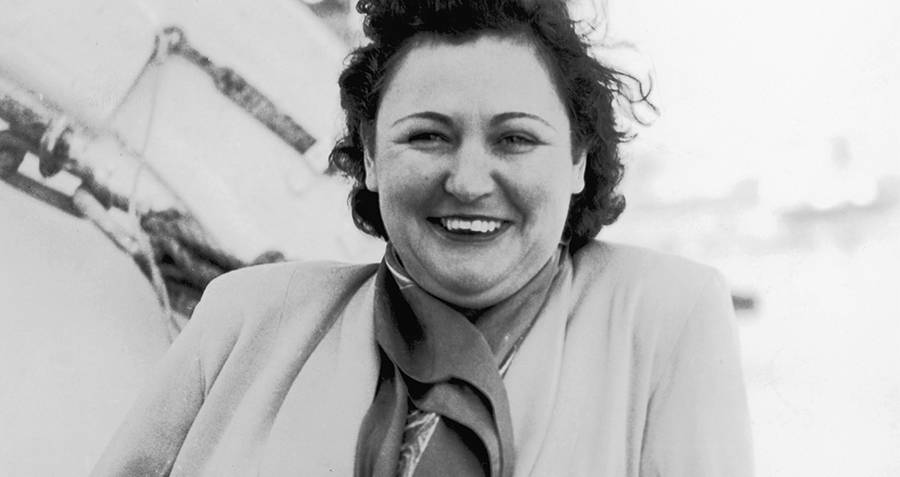
To WW2-era British Special Operations she was Hélène. To the Maquis she was Andrée. Her New York Times obituary called her “The socialite who killed a Nazi, with her bare hands”. To the Gestapo who wanted her dead, she was the “White Mouse.”
It was March 1944 in occupied France, when the French Resistance leader Henri Tardivat found her, dangling from a tree. Her name was Nancy Wake, and she had just jumped from a B24 bomber, with a pocketful of classified documents. Tardivat couldn’t help himself. “I hope that all the trees in France bear such beautiful fruit this year”. “Don’t give me that French shit” she snapped, as she cut herself out of the tree.
Nancy Wake was not a woman to be trifled with.
Nancy Grace Augusta Wake was born in New Zealand and moved to Australia as a young girl. She later moved to Paris where she met her future husband, the wealthy French industrialist, Henri Fiocca.
As a freelance journalist, a Parisian newspaper sent Wake to Vienna in 1933 to interview a German politician, by the name of Adolf Hitler. There she witnessed firsthand the wretched treatment meted out to Austrian Jews by followers of the future dictator. She vowed she would oppose this man, by any means necessary.
She would get her chance in 1940 when the German Blitzkrieg tore through Belgium, the Netherlands and France.
The couple had the means to leave but chose to stay in France, to help the Maquis. The French Resistance. For two years, Nancy and her husband Henri worked to hide downed allied flyers and get them out, of Nazi occupied France.
With the Gestapo reading their mail and staking out the Fiocca home the writing was on the wall. Nancy fled while Henri remained in Paris, to continue the couples work with the resistance.
Henri would be captured and tortured before execution, to reveal the whereabouts of his wife. Nancy would not learn until after the war, the man never gave up her whereabouts.
The British SOE called her by the code name, Hélène. To the Maquis she was Andrée. It was during her flight from France that Wake earned the name which would stick, given by the Gestapo who wanted her dead. “White Mouse,” they called her, for her ability to hide in plain sight and to disappear, without a trace. “A little powder and a little drink on the way” she later explained “and I’d pass their (German) posts and wink and say, ‘Do you want to search me? God”, she said, “what a flirtatious little bastard I was.”
Once picked up on a train outside of Toulouse she spun a wild tale about being the mistress, of one of the guards. She pleaded with her captors that her husband could never know. Astonishingly, they let her go.
Wake eventually escaped occupied France moving first through the Pyrenees into Spain and then, to England. There she joined the British Special Operatives Executive (SOE). The training was intense: infiltration/exfiltration techniques, tradecraft, weapons, even hand-to-hand combat. Her trainers called her as competent, as the men in her class.
On April 29, 1944, Wake parachuted into the Auvergne-Rhône-Alpes region of occupied France, part of a three-person team sent to support three Maquis organizations, operating in the region. She participated in a major combat operation pitting resistance members against the German wehrmacht. It was a major defeat for the Marquee. She later said she bicycled 500 km to bring a situation report, to her SOE handlers.
One day she found herself on an SOE team, on the inside of a German munitions factory. An SS guard nearly gave up the whole operation when he arrived, to investigate. Wake killed the man, with her bare hands. “They’d taught this judo-chop stuff” she later explained, “with the flat of the hand at SOE, and I practiced away at it. But this was the only time I used it – whack – and it killed him all right. I was really surprised.”
SOE official historian M. R. D. Foot said “her irrepressible, infectious, high spirits were a joy to everyone who worked with her”. Henri Tardivat may have given her the ultimate compliment, after the war. “She is the most feminine woman I know, until the fighting starts” he recalled. “Then, she is like five men.”
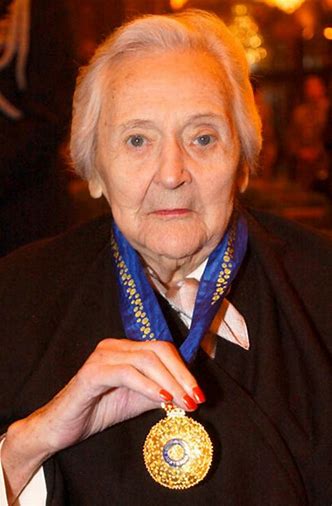
She was the most decorated woman of World War 2, awarded the George Medal by Great Britain, the United States Medal of Freedom, the Médaille de la Résistance by her adopted home nation, and three times, the Croix de Guerre.
After the war
She worked for a time with the intelligence department at the British Air Ministry and dabbled in politics, after the war. She remarried, the union with RAF officer John Forward lasting 40 years until his death but producing, no children.
The White Mouse died of a chest infection on August 7, 2011, after a brief hospitalization. She was 98. Her New York Times obituary called her “The socialite who killed a Nazi, with her bare hands”.
She sold her medals along the way, because she needed the money. “There was no point in keeping them,” she said. “I’ll probably go to hell and they’d melt anyway.”
The loss of his German ally led in no small part to “Gentleman Johnny” Burgoyne’s defeat, at Saratoga. Stark served with distinction for the remainder of the war and, like Cincinnatus before him, returned home to his farm.
The Roman Republic of antiquity operated on the basis of separation of powers with checks and balances, and a strong aversion to the concentration of authority. Except in times of national emergency, no single individual was allowed to wield absolute power over his fellow citizens.
The retired patrician and military leader Lucius Quinctius Cincinnatus was called from his farm in 458BC to assume the mantle of Dictator and, despite his old age again, twenty years later. With the crisis averted, Cincinnatus relinquished all power and the perks which came with it, and returned to his plow.
The man’s name remains symbolic, from that day to this. A synonym for outstanding leadership, selfless service and civic virtue.
Of all the General officers who fought for American Independence, there is but one true Cincinnatus. A man who risked his life in the cause of Liberty, and truly retired from public life.
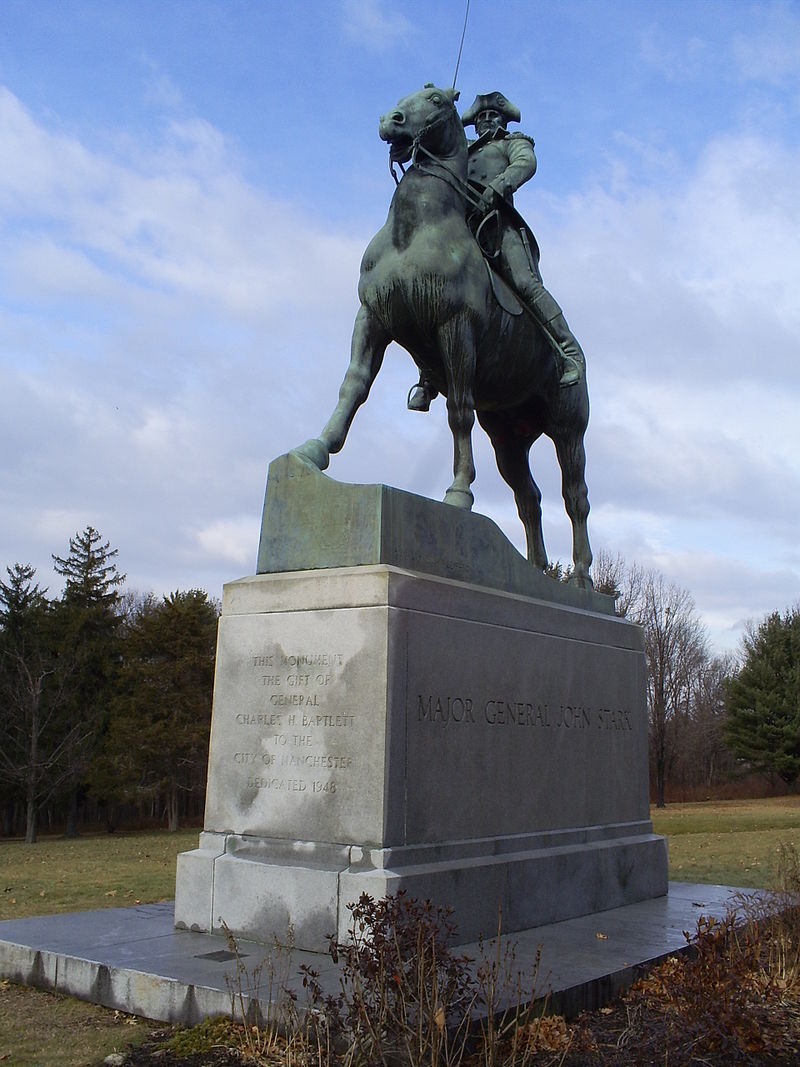
Outside of his native New Hampshire, few remember the name of John Stark. Born August 28, 1728 in Londonderry (modern day Derry), the family moved up the road when the boy was eight, to Derryfield. Today we know it as Manchester.
On April 28, 1752, 23-year-old John Stark was out trapping and fishing with his brother William, and a couple of buddies. The small group was set upon by a much larger party of Abenaki warriors. David Stinson was killed in the struggle, as John was able to warn his brother away. William escaped, in a canoe.
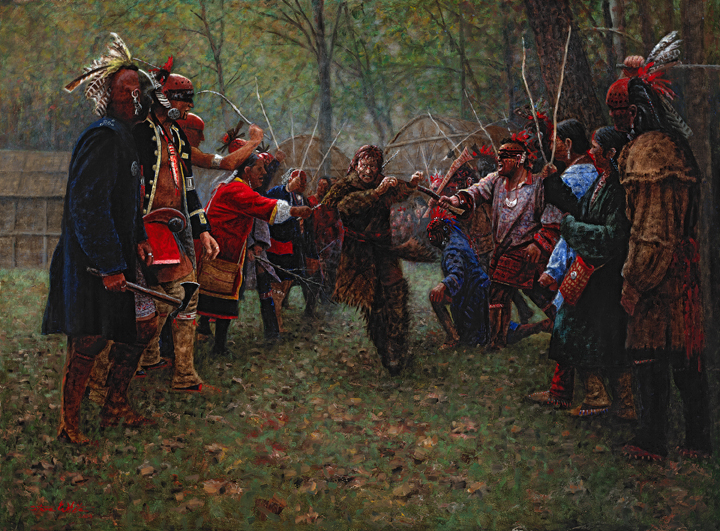
John was captured along with Amos Eastman. 267 years ago today, the hostages were heading north, all the way to Quebec, where the pair were subjected to a ritual torture known as “running the gauntlet”.
Frontiersman Simon Kenton, running the gauntlet
In the eastern woodlands of the United States and southern Quebec and Ontario, captives in the colonial and pre-European era often faced death by ritual torture at the hands of indigenous peoples. The process could last, for days. In running the gauntlet, the condemned is forced between two opposing rows where warriors strike out with clubs, whips and bladed weapons.
Eastman barely got out alive, but Stark wasn’t playing by the same rules. He hit the first man at a dead run, wrenching the man’s club from his grasp and striking out, at both lines. The scene was pandemonium, as the tormented captive gave as good as he got. To the chief of the Abenaki, it may have been the funniest thing, ever. He was so amused, he adopted the pair into the tribe. Eastman and Stark lived as tribal members for the rest of that year and into the following Spring, when a Massachusetts Bay agent bought their freedom. Sixty Spanish dollars for Amos and $103, for John Stark.
Seven years later during the French & Indian War, Rogers’ Rangers were ordered to attack the Abenaki village with John Stark, second in command. Stark refused to accompany the attacking force out of respect for his Indian foster family, returning instead to Derryfield and his wife Molly, whom he had married the year before.
John Stark returned to military service in 1775 following the Battles of Lexington and Concord, accepting a Colonelcy with the 1st Regiment of the New Hampshire militia.
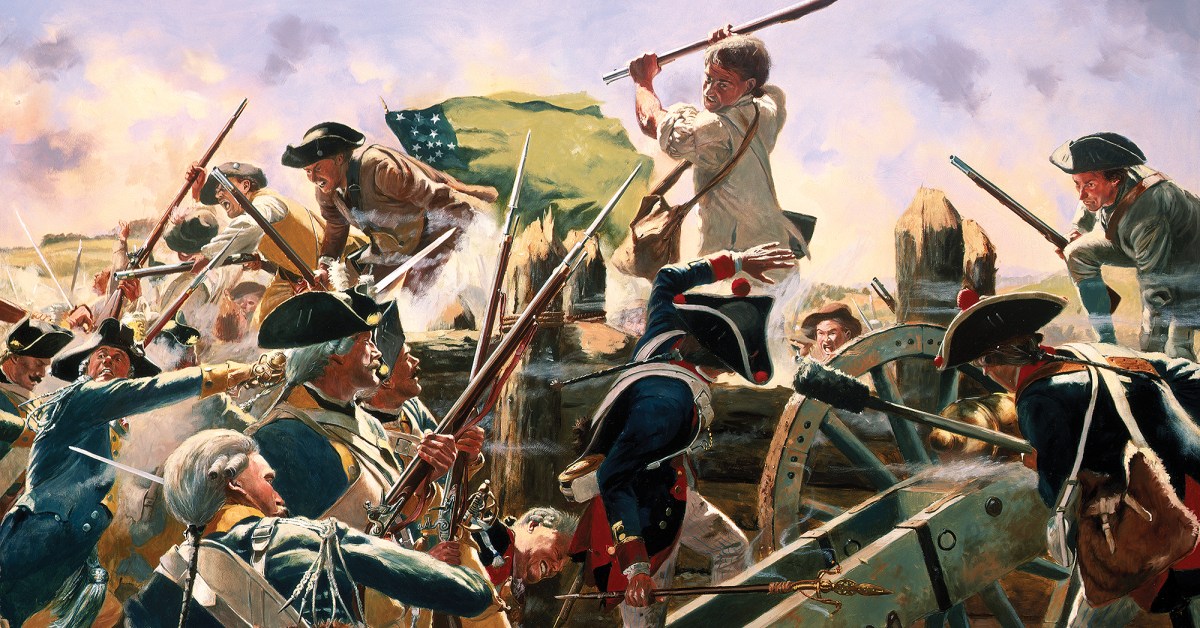
During the early phase of the Battle of Bunker Hill, American Colonel William Prescott knew he was outgunned and outnumbered, and sent out a desperate call for reinforcements. The British warship HMS Lively was raining accurate fire down on Charlestown Neck, the narrow causeway linking the city with the rebel positions. Several companies were milling about just out of range, when Stark ordered them to step aside. Colonel Stark and his New Hampshire men then calmly marched to Prescott’s position on Breed’s Hill, without a single casualty.
Stark and his men formed the left flank of the rebel position, leading down to the beach at Mystic River. The Battle of Bunker Hill was a British victory, in that they held the ground, when it was over. It was a costly win which could scarcely be repeated. At the place in the line held by John Stark’s New Hampshire men, British dead were piled up like cord wood.
John Stark’s service record reads like a timeline of the American Revolution. The doomed invasion of Canada in the Spring of 1776. The famous crossing of the Delaware and the victorious battles at Trenton, and Princeton New Jersey. Lieutenant Colonel Friedrich Baum and his Brunswick mercenaries ran into a buzz saw in Bennington Vermont, in the form of Seth Warner’s Green Mountain Boys and John Stark, rallying his New Hampshire militia with the cry, “There are your enemies, the Red Coats and the Tories. They are ours, or this night Molly Stark sleeps a widow!” When it was over, Stark reported 14 dead and 42 wounded. Of Lt. Col. Baum’s 374 professional soldiers, only nine walked away.
Battle of Bennington
The loss of his German ally led in no small part to “Gentleman Johnny” Burgoyne’s defeat, at Saratoga. Stark served with distinction for the remainder of the war and, like Cincinnatus before him, returned home to his farm.
In 1809, a group of Bennington veterans gathered for a reunion. Stark was 81 at this time and not well enough to travel. Instead, he wrote his comrades a letter, closing with these words:
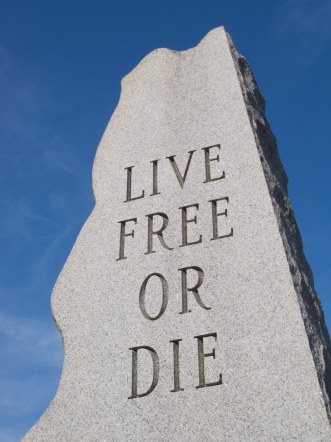
“Live free or die: Death is not the worst of evils.”
The name of the American Cincinnatus is all but forgotten today but his words live on, imprinted on every license plate, in the state of New Hampshire. “Live Free or Die”.
A Trivial Matter
Neither George Washington nor Samuel Adams liked political parties, believing that such “factions” would splinter the Congress and divide the nation.































 Historical Easter Eggs - Today in History
You must be logged in to post a comment.