

The historical life of St. Nicholas is shrouded in legend. Born in modern-day Turkey on March 15, AD270, Nicholas was the only child of affluent parents, both of whom died in a plague leaving young Nicholas a very wealthy orphan.

Nicholas was raised in the Christian faith and became an early bishop in the Greek church.
One of many stories concerning the bishop’s generosity involves a destitute father, unable to raise a dowry sufficient to marry his three daughters off. On two nights in a row, Nicholas crept up to the man’s window and dropped a small sack of gold coins.
On the third night, the man stayed up to learn the identity of his secret benefactor, only to be asked to keep the name, secret.
Saint Nicholas died on December 6 in the year 343. He was entombed in a marble cathedral dedicated to his name, in the Roman town of Myra.
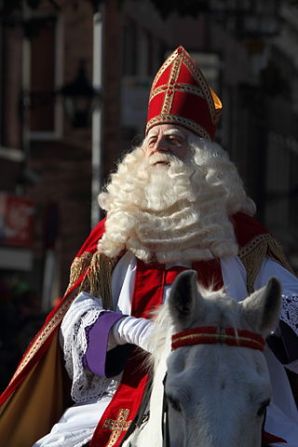
Nicholas is remembered as the patron saint of whole nations and cities such as Amsterdam and Moscow, revered among the early Christian saints and remembered for a legendary habit of secret gift-giving.
Some ideas take hold in the popular imagination, while others fade into obscurity. The “Three Daughters” episode made it into nearly every artistic medium available at that time, from frescoes to carvings and windows, even theatrical performances.
The Patron Saint not only of sailors but of ships and their cargoes, the seas were the internet of the day and the story of St. Nick spread from the Balkans to Holland, from England to Crete.
In time, the Feast of St. Nicholas took hold around December 6. Children and other marginal groups such as old women and slaves could receive gifts, but only by demanding them. Secret gift giving appeared sometime around the year 1200.
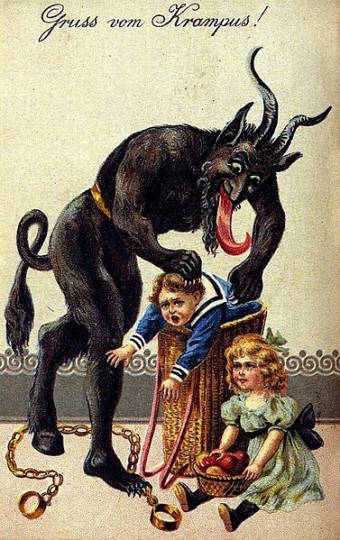 On the European continent, legends of St. Nicholas combined with Pagan traditions and developed in quirky directions, including an evil doppelgänger who accompanies St. Nick on his rounds.
As early as the 11th century, the Krampus may be expected to snatch up bad little tykes in parts of Germany, Austria and the Alpine villages of northern Italy, never to be seen again.
In eastern Europe, the witch Frau Perchta “The Disemboweller” was said to place pieces of silver in the shoes of children and servants who’d been good and worked hard over the year. Those who’d been naughty or lazy would be slit open and their organs replaced, with pebbles and straw.
Yikes.
In French-speaking regions, Père Fouettard (Father Whipper) accompanies Père Noël on gift-giving rounds, dispensing beatings and/or lumps of coal to naughty boys & girls.
In some German speaking regions, a malevolent Schmutzli accompanies Samichlaus, carrying a twig broom with which to spank wicked children.
Never mind Santa Claus. The Schmutzli is watching.

In the 13th century, the “Little Ice Age” of led to a proliferation of chimneys. Windows and doors were common objects, often the things of thieves and vagabonds. The chimney was different, a direct pathway to the warm heart of the home. So it was St. Nick made his first gift-giving appearance via the chimney in a three daughters fresco, painted sometime in 1392, in Serbia.

St. Nicholas was beginning to be seen as part of the family outside of the Church, which is probably why he survived what came next. Saints reigned in the Christian world until the 16th century, when the Protestant reformation rejected such “idolatry” as a corruption of Christianity.
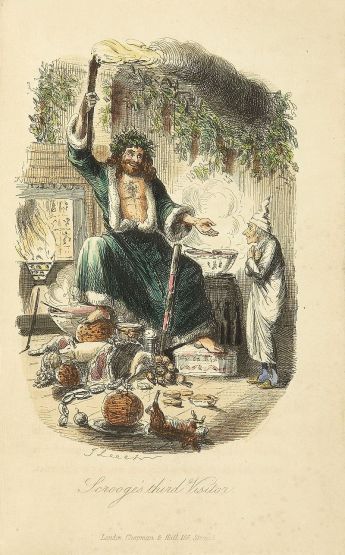
Whatever you called him: Sinterklaos, Saint-Nikloi or Zinniklos, St. Nick went away entirely in England and Scotland during the time of Henry VIII, giving way to the spirit of Christmas cheer in the person of one Father Christmas. England would no longer keep the feast of the Saint on December 6. The celebration moved to December 25, to coincide with Christmas itself.
Protestants adopted as gift bringer the Baby Jesus or Christkindl, later morphing into Kris Kringle.
Puritan arrivals to New England rejected Christmas and everything with it, as “un-Christian”. In 1644, Massachusetts levied a fine of five shillings, on anyone observing the holiday.
Sinterklaas survived the iconoclasm of the Reformation in places like Holland, transferring to the 17th century settlement of New Amsterdam: what we now know as the new world port city of New York.
Sinterklass blended with Father Christmas to create a distinctly American Santeclaus, which began to take hold in the 19th century.
The Christmas “celebrations” of the period looked more like Mardi Gras than what we know today. Drunk and rowdy gangs wandered the streets of New York, Philadelphia and the cities of the northeast, something between a noisy mob and a marching band. Men fired guns into the air and banged or blew on anything that would make noise. Mobs would beat up the unfortunate, and break into the homes of the “upper classes”, demanding food and liquor.
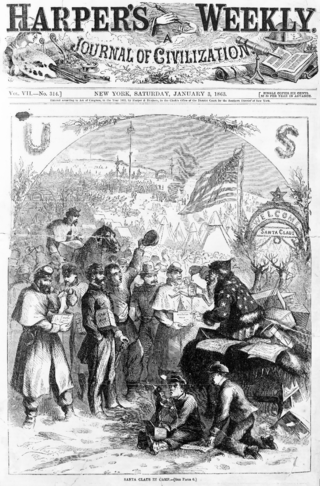
New York philanthropist John Pintard, the man responsible for the holidays celebrating the fourth of July and George Washington’s birthday, popularized an image first set forth by Washington Irving, in his satirical story A History of New York from the Beginning of the World to the End of the Dutch Dynasty, by Diedrich Knickerbocker, depicting St. Nicholas bringing gifts to good little boys and girls, and switches with which to tan the hides of bad kids.
The unknown genius who published and illustrated A Children’s Friend in 1821, first depicted “Santa Claus” not as a Catholic bishop, but as a non-sectarian adult in a fur lined robe, complete with a sleigh inexplicably powered by a single reindeer, coming in through the chimney not on December 6, but on Christmas eve.
An anonymous poem believed to have been written on December 24, 1822 and later attributed to Clement Clarke Moore, began with the words: “T’was the night before Christmas, and all through the house“…
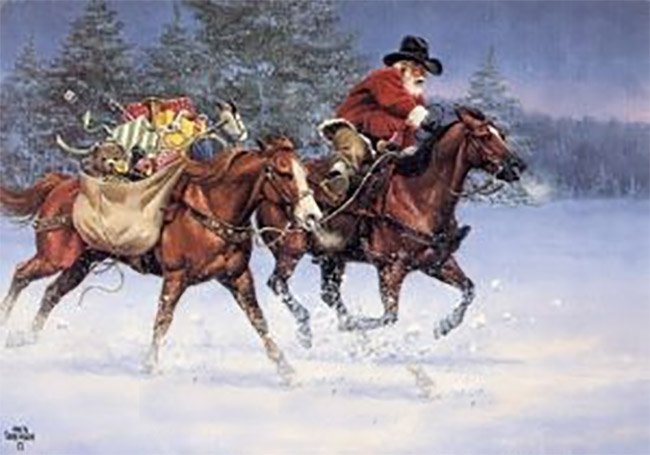
“A Visit From St. Nicholas“, better known by its first line, gave us the first description of the modern Santa Claus. It was a tool for domesticating the occasion, agreeable to law enforcement for calming the rowdy streets, to manufacturers and retailers for selling goods, to the church to make way for a family friendly day of worship and to parents, for the control of unruly children.
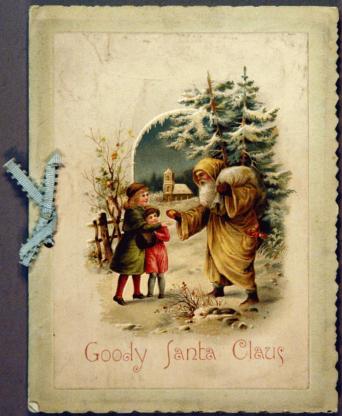
The “Right Jolly old Elf” took his modern form thanks to the pen of illustrator and editorial cartoonist Thomas Nast, creator of the Democratic donkey and the Republican elephant and scourge of the Tammany Hall political machine which had swindled New York city, out of millions.
The idea of a Mrs. Claus seems to come from a poem by Katharine Lee Bates of the Cape Cod Curmudgeon’s own town of Falmouth, Massachusetts.
Today, the author is best known for her 1895 poem “Pikes Peak”, later set to music and widely known as “America the Beautiful”.
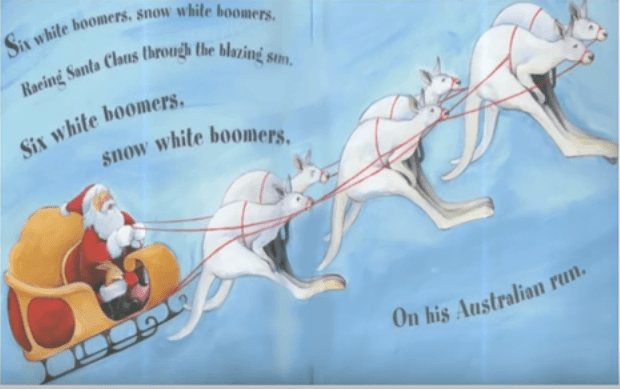
Tonight, NASA may be expected to track Santa and his sleigh drawn by eight reindeer, though none are any longer, all that tiny. Santa Claus will appear around the planet. Regional variations include Santa’s arriving on a surfboard in Hawaii. In Australia, he’s pulled by six white kangaroos. In Cajun country, Papa Noël arrives in a pirogue, drawn by eight alligators.
Santa Claus is the most powerful cultural idea, ever conceived. This year, Christmas sales are expected to exceed one Trillion dollars. Not too bad for a 2,000-year old saint, best remembered for gift giving with no expectation of anything in return.
Merry Christmas.
Fun fact: Today, the port city of Bari on the Adriatic coast of Italy is remembered for the WW2-era mustard gas accident, which spawned the discovery of modern chemotherapy drugs. A thousand years earlier, city fathers feared growing Muslim influence over the tomb of Saint Nicholas, and went to retrieve his remains. Find him, they did. Saint Nicholas’ large bones were removed and brought back as holy relics to Bari where they remain, to this day. Smaller fragments were removed during the 1st Crusade, brought back to Venice or enshrined in basilica from Moscow to Normandy.
The teeth and small bones of the real St. Nicholas are enshrined in over a dozen churches from Russia to France and the Palestinian territories. Some of these cherished relics were believed to reside in St. Nicholas Orthodox Church, in New York City, destroyed in the terrorist attacks of September 11, 2001 and never recovered.

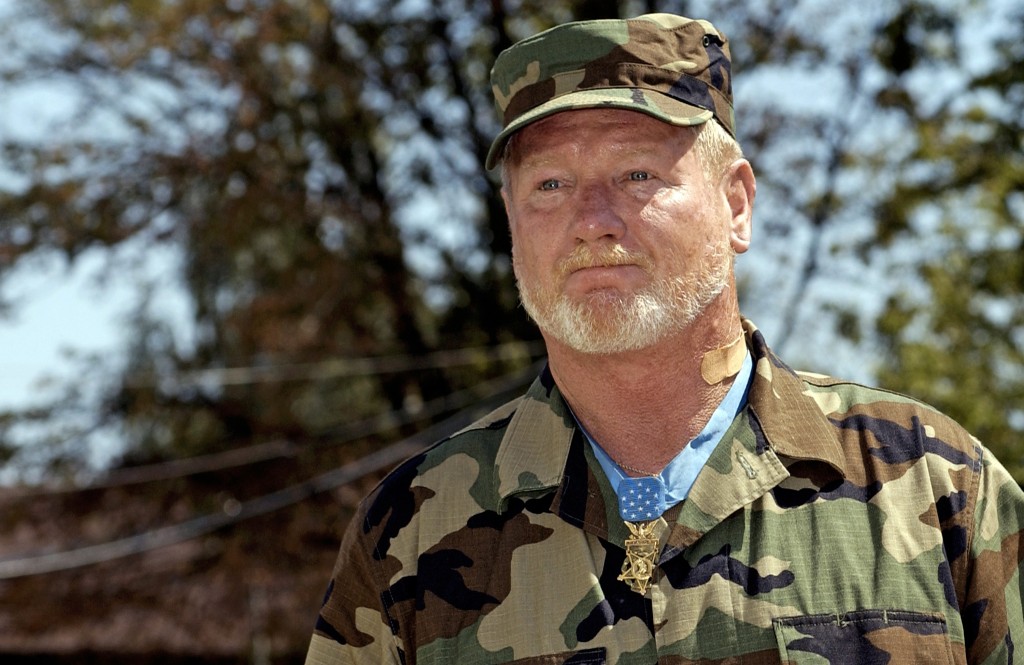
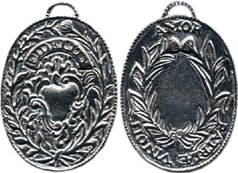
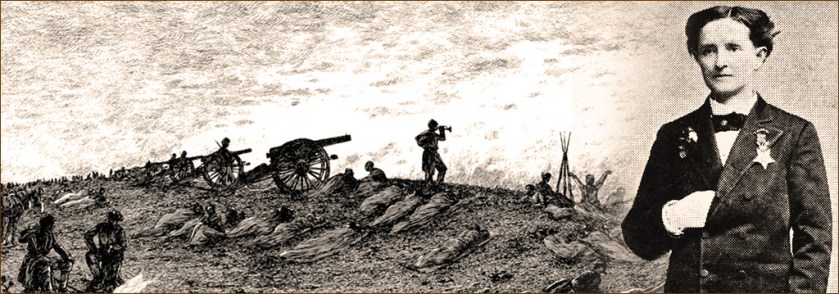
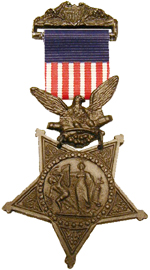 In the early days of the Civil War, General-in-chief of the army Winfield Scott argued against such an award, claiming it to be “too European”.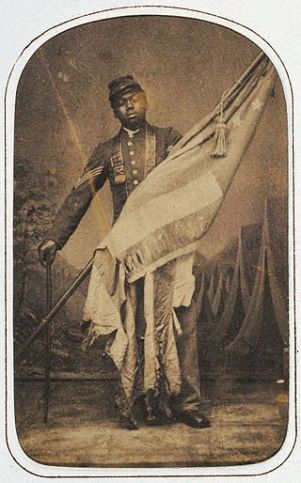
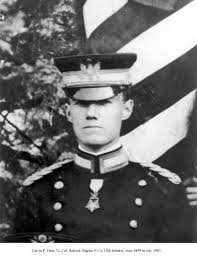
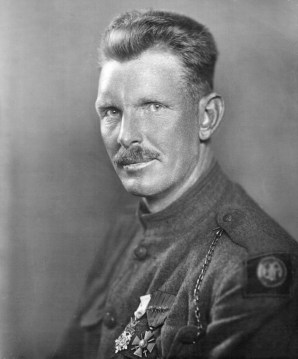 On October 8, 1918, Tennessee native Corporal Alvin Cullum York of the 82nd Division lead a group of seventeen against a numerically superior German force, dug in at Chatel-Chehery, France.
 Kingston Texas 2nd Lieutenant
 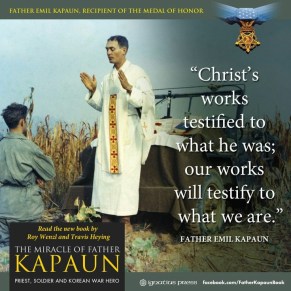 Chaplain Emil Kapaun, the “
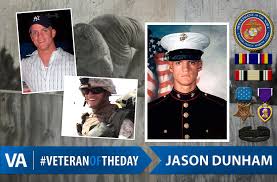 Corporal Jason Lee Dunham of Scio New York deliberately threw himself on an Iraqi grenade on April 14, 2004, saving the lives of fellow Marines at the sacrifice of his own life.
 The youngest Medal of Honor recipient was 11-year old drummer boy, Willie Johnston.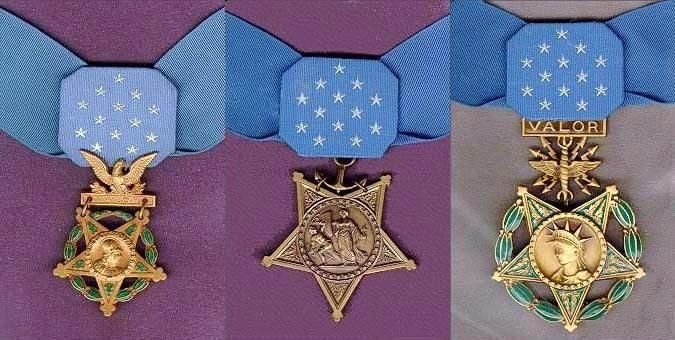


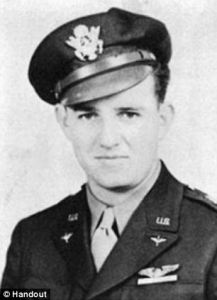
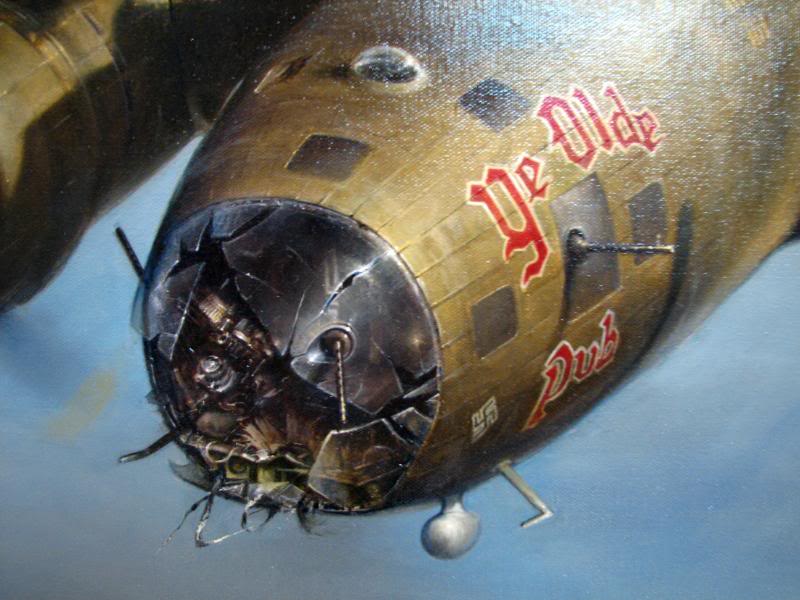 The battered aircraft was completely alone and struggling to maintain altitude. The American pilot was well inside German air space when he looked to his left and saw his worst nightmare. Three feet from his wing tip was the sleek gray shape of a German fighter, the pilot so close that the two men were looking into each other’s eyes. Brown’s co-pilot, Spencer “Pinky” Luke said “My God, this is a nightmare.” “He’s going to destroy us,” was Brown’s reply. This had been his first mission. He was sure it was about to be his last.
 The German had to do something. Nazi leadership would surely shoot him for treason if he was seen this close without completing the kill. One of the American crew was making his way to a gun turret as the German made his decision. Stigler saluted his adversary, motioned with his hand for the stricken B17 to continue, and peeled away.
 Over 40 years later, the German pilot was living in Vancouver, Canada. Brown took out an ad in a fighter pilots’ newsletter, explaining that he was searching for the man ‘who saved my life on December 20, 1943.’ Stigler saw the ad, and the two met for the first time in 1987. “It was like meeting a family member”, Brown said of that first meeting. “Like a brother you haven’t seen for 40 years”.
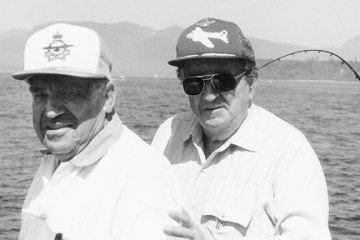 The two former enemies passed the last two decades of their lives as close friends and occasional fishing buddies.


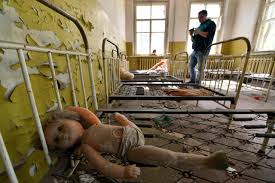 An estimated 4,000 to 93,000 died in the aftermath of the accident, many of whom, were children.
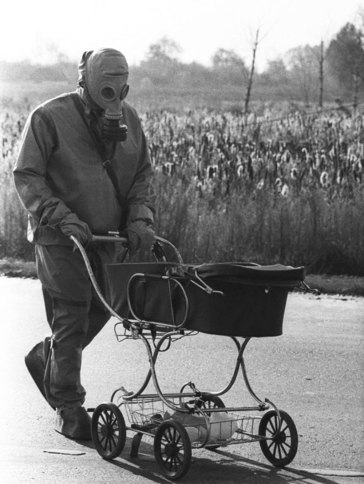 Officials of the top-down Soviet state first downplayed the disaster. Asked by one Ukrainian official, “How are the people?“, acting minister of Internal Affairs Vasyl Durdynets replied there was nothing to be concerned about: “Some are celebrating a wedding, others are gardening, and others are fishing in the Pripyat River.”
 The chaos of these forced evacuations, can scarcely be imagined. Confused adults. Crying children. Howling dogs. Shouting soldiers, barking orders and herding now-homeless civilians onto waiting trains and vehicles by the tens of thousands. Dogs and cats, beloved companion animals and lifelong family members, were abandoned to fend for themselves.
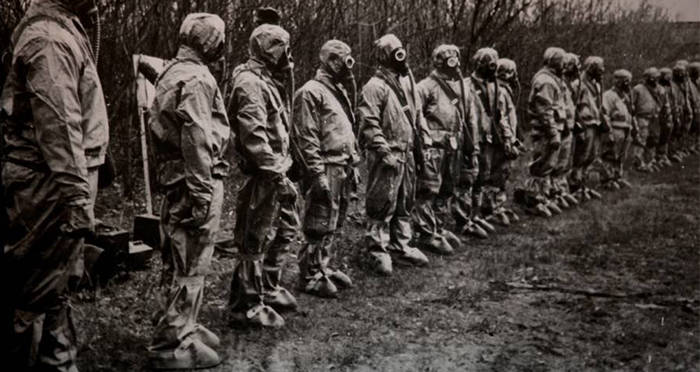 There were countless and heartbreaking scenes of final abandonment, of mewling cats, and whimpering dogs. Belorussian writer Svetlana Alexievich compiled hundreds of interviews into a single monologue, an oral history of the forgotten. The devastating Chernobyl Prayer tells the story of: “dogs howling, trying to get on the buses. Mongrels, Alsatians. The soldiers were pushing them out again, kicking them. They ran after the buses for ages.”
  There was no mercy. Squads of soldiers were sent to shoot the animals, left behind. Heartbroken families pinned notes to their doors: “Don’t kill our Zhulka. She’s a good dog.” Most of these abandoned pets, were shot. Some escaped notice, and survived.
 Later on, plant management hired someone, to kill the 1,000 or so dogs still remaining. The story is, the worker refused.
 Today, untold numbers of stray dogs live in the towns of Chernobyl, Pripyat and surrounding villages. Descendants of those left behind, back in 1986. Ill equipped to survive in the wild and driven from forests by wolves and other predators, they forage as best they can among abandoned streets and buildings, of the 1,000-mile exclusion zone. For some, radiation can be found in their fur. Few live beyond the age of six but, all is not bleak.
 Since September 2017, a partnership between the SPCA International and the US-based 501(c)(3) non-profit
  Some have been successfully decontaminated and socialized for human interaction. In 2018, the first batch became available for adoption into homes in Ukraine and North America, some forty puppies and dogs.
 Believe it or not there are visitors to the area. People actually go on tours of the region but they’re strictly warned. No matter how adorable, do not pet, cuddle nor even touch any puppy or dog who has not been through rigorous decontamination.

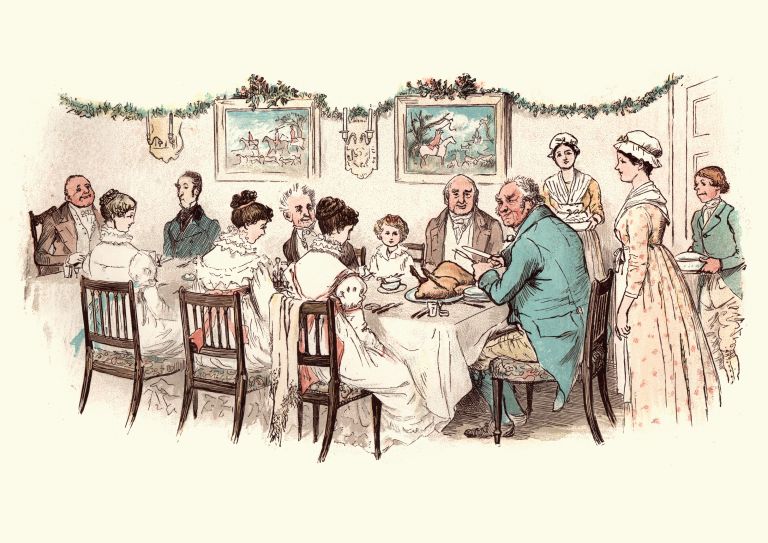 Wait…What?

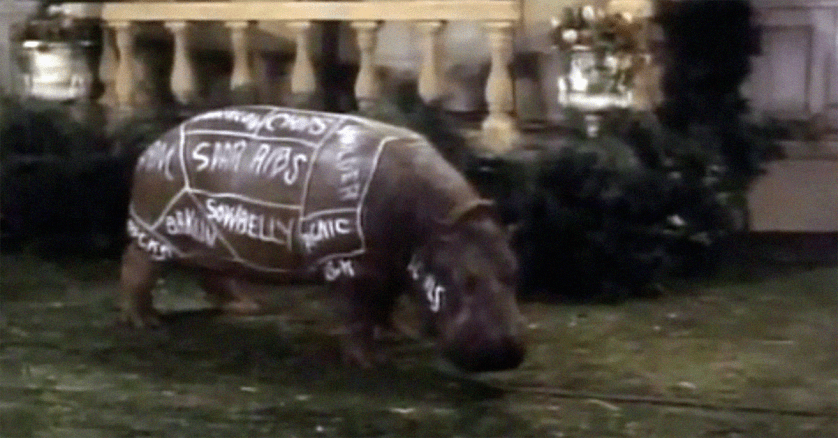
 Be that at it as it may, the animal is a voracious herbivore, spending daylight hours at the bottom of rivers & lakes, happily munching on vegetation.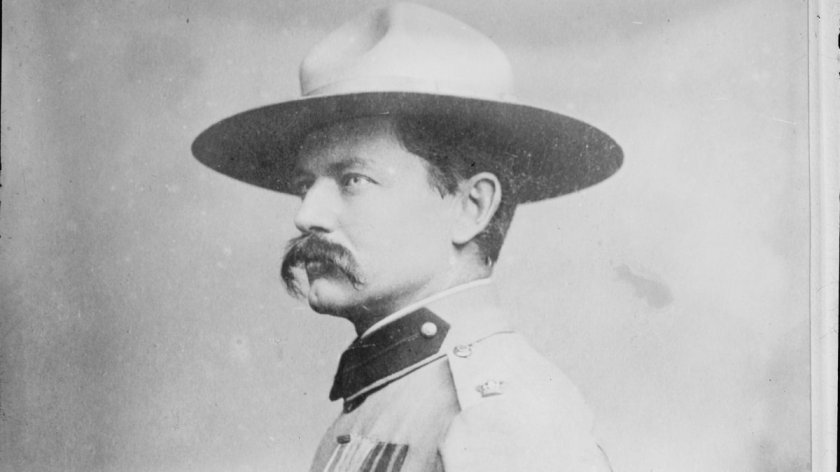
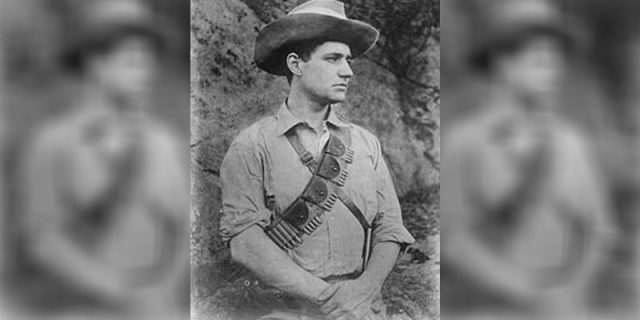
 That golden future of Lippincott’s hippo herds roam only in the meadows and bayous of the imagination. Who knows, it may be for the best. I don’t know if any of us could see each other across the table. Not with a roast hippopotamus.


 Historical Easter Eggs - Today in History
You must be logged in to post a comment.