

At different times and places, a white feather has carried different meanings. For those inclined toward New-Age, the presence of a white feather is proof that Guardian Angels are near. For the Viet Cong and NVA Regulars who were his prey, the “Lông Trắng” (“White Feather”) symbolized the deadliest menace of the American war effort in Vietnam, USMC Scout Sniper Carlos Hathcock, who wore one in his bush hat. Following the Battle of Crécy in 1346, Edward of Woodstock, Prince of Wales, plucked three white ostrich feathers from the dead body of the blind King John of Bohemia. To this day, those feathers appear in the coat of arms, of the prince of Wales.
The Edward and John who faced one another over the field at Crécy, could be described in many ways. Cowardice is not one of them. For the men of the WW1 generation, a white feather represented precisely that.
In August 1914, seventy-three year old British Admiral Charles Cooper Penrose-Fitzgerald organized a group of thirty women, to give out white feathers to men not in uniform. The point was clear enough. To gin up enough manpower, to feed the needs of a war so large as to gobble up a generation, and spit out the pieces.
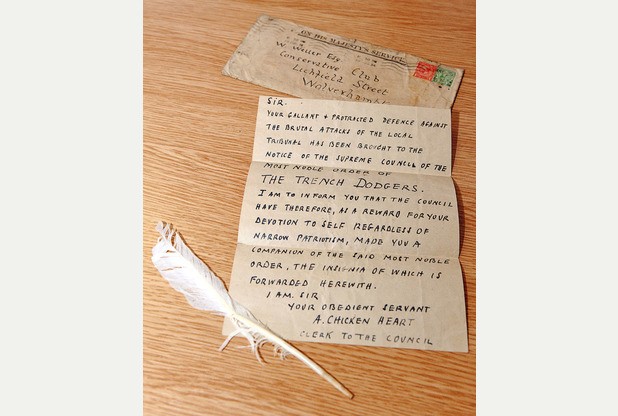
Lord Horatio Kitchener supported the measure, saying “The women could play a great part in the emergency by using their influence with their husbands and sons to take their proper share in the country’s defence, and every girl who had a sweetheart should tell men that she would not walk out with him again until he had done his part in licking the Germans.”
The Guardian newspaper chimed in, breathlessly reporting on the activities of the “Order of the White Feather“, hoping that the gesture “would shame every young slacker” into enlisting.

In theory, such an “award” was intended to inspire the dilatory to fulfill his duty to King and country. In practice, such presentations were often mean-spirited and out of line. Sometimes, grotesquely so.
The movement spread across Great Britain and the Commonwealth nations and across Europe, encouraged by suffragettes such as Emmeline Pankhurst and her daughter Christabel, and feminist writers Mary Augusta Ward, founding President of the Women’s National Anti-Suffrage League, and British-Hungarian novelist and playwright, Emma Orczy.
Distributors of the white feather were almost exclusively female, who frequently misjudged their targets. Stories abound of men on leave, wounded, or in reserved occupations being handed one of the odious symbols.
 Seaman George Samson received a white feather on the same day he was awarded the British Commonwealth’s highest military award for gallantry in combat, equivalent to the American Medal of Honor: the Victoria Cross.
Gangs of “feather girls” took to the streets, looking for military-age men out of uniform. Frederick Broome was fifteen years old, when “accosted by four girls who gave me three white feathers.”
The writer Compton Mackenzie, himself a serving soldier, complained that these “idiotic young women were using white feathers to get rid of boyfriends of whom they were tired“.
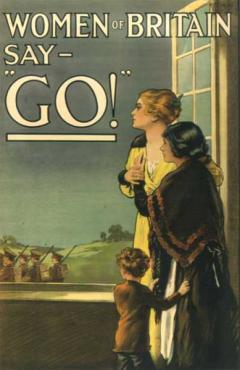 James Lovegrove was sixteen when he received his first white feather: “On my way to work one morning a group of women surrounded me. They started shouting and yelling at me, calling me all sorts of names for not being a soldier! Do you know what they did? They struck a white feather in my coat, meaning I was a coward. Oh, I did feel dreadful, so ashamed.” Lovegrove went straight to the recruiting office, who tried to send him home for being too young and too small: “You see, I was five foot six inches and only about eight and a half stone. This time he made me out to be about six feet tall and twelve stone, at least, that is what he wrote down. All lies of course – but I was in!”.
James Cutmore attempted to volunteer for the British Army in 1914, but was rejected for being near-sighted. By 1916, the war in Europe was consuming men at a rate unprecedented in history. Governments weren’t nearly so picky. A woman gave Cutmore a white feather as he walked home from work. Humiliated, he enlisted the following day. In the 1980s, Cutmore’s grandchild wrote “By that time, they cared nothing for [near-sightedness]. They just wanted a body to stop a shell, which Rifleman James Cutmore duly did in February 1918, dying of his wounds on March 28. My mother was nine, and never got over it. In her last years, in the 1980s, her once fine brain so crippled by dementia that she could not remember the names of her children, she could still remember his dreadful, lingering, useless death. She could still talk of his last leave, when he was so shell-shocked he could hardly speak and my grandmother ironed his uniform every day in the vain hope of killing the lice.”
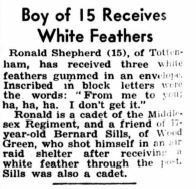 Some of these people were not to be put off. One man was confronted by an angry woman in a London park, who demanded to know why he wasn’t in uniform. “Because I’m German“, he said. She gave him a feather anyway.
Some men had no patience for such nonsense. Private Ernest Atkins was one. Atkins was riding in a train car, when the woman seated behind him presented him with a white feather. Striking her across the face with his pay book, Atkins promised “Certainly I’ll take your feather back to the boys at Passchendaele. I’m in civvies because people think my uniform might be lousy, but if I had it on I wouldn’t be half as lousy as you.”
 Private Norman Demuth was discharged from the British Army, after being wounded in 1916. A woman on a bus handed Demuth a feather, saying “Here’s a gift for a brave soldier.” Demuth was cooler than I might have been, under the circumstances: “Thank you very much – I wanted one of those.” He used the feather to clean his pipe, handing it back to her with the comment, “You know we didn’t get these in the trenches.”
Inevitably, the white feather became a problem, when civilian government employees began to receive the hated symbol. Home Secretary Reginald McKenna issued lapel badges to employees in state industries, reading “King and Country”, proving that they too, were serving the war effort. Veterans who’d been discharged for wounds or illness were likewise issued such a badge, that they not be accosted in the street.
So it was that the laborer from the small town in Germany was sent to kill the greengrocer from St. Albans, spurred on by their women and the whole sorry mess driven by the politicians who would make war. The white feather campaign was briefly revived during WW2, but never caught on to anything approaching the same degree as the first.
The English poet, writer and soldier Siegfried Loraine Sassoon, CBE, MC, was decorated for bravery on the Western Front. Sassoon would become one of the leading poets of WW1. Let him have the final word.
“If I were fierce, and bald, and short of breath,
I’d live with scarlet majors at the Base,
And speed glum heroes up the line to death…
And when the war is done and youth stone dead,
I’d toddle safely home and die – in bed.”
Siegfried Sassoon


 Years later, the Japanese Consul in New York learned of the First Lady’s interest in the Sakura, and suggested the city of Tokyo make a gift of Cherry trees, to the government of the United States.
 It was the second such effort. 2,000 trees had arrived from Japan two years earlier, in January 1910, but they had fallen prey to disease along their journey. A private Japanese citizen donated the funds to transport a new batch of trees. The 3,020 were taken from the bank of the Arakawa River in the Adachi Ward suburb of Tokyo, to be planted along the Potomac River Basin, East Potomac Park, and the White House grounds.

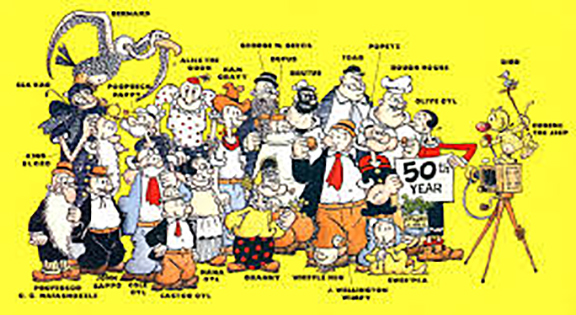
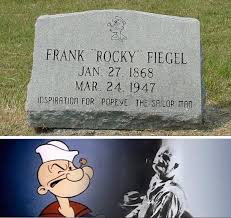 The strip was around for ten years or so, when Olive & co. decided to recruit a sailor to get them to the casino on Dice Island. Approaching a rough looking character on the docks, “Popeye’s” first line was “Ja think I was a cowboy? He was supposed to be an extra, but he became so popular he soon developed into the center of the strip.
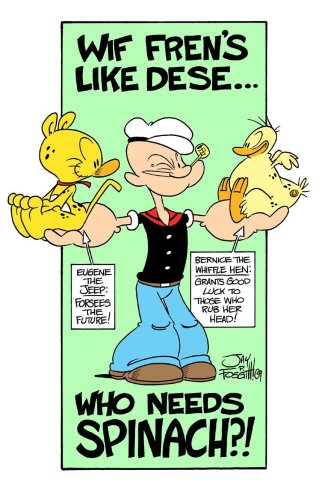 Before spinach, Popeye gained his superhuman strength patting the head of a magical “whiffle hen” named “Bernice”.
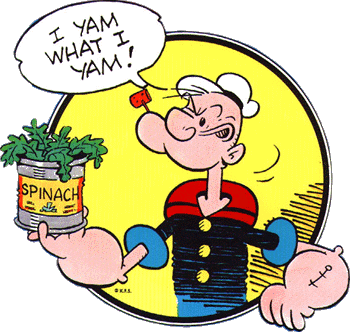 Popeye’s pet “Eugene the Jeep” first appeared in a 1936 strip called “Wha’s a Jeep?”. Eugene was sort of magical dog who could go anywhere. Five years later, military contractors worked to develop the iconic off-road vehicle of WWII. Like Popeye’s pet Eugene, the General Purpose GP (“Jeep”) could go anywhere. Eventually, the name stuck.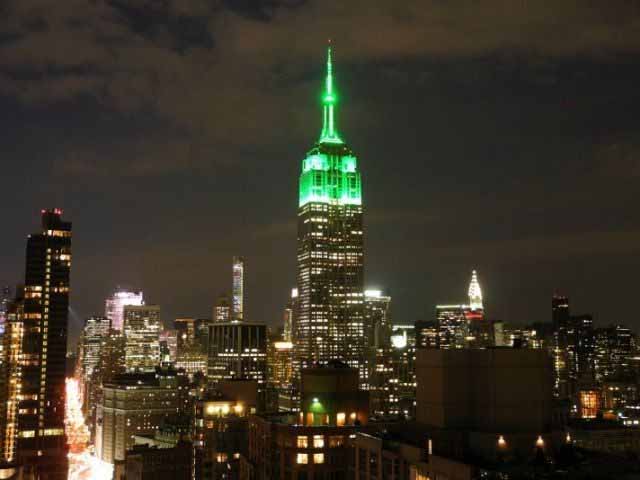



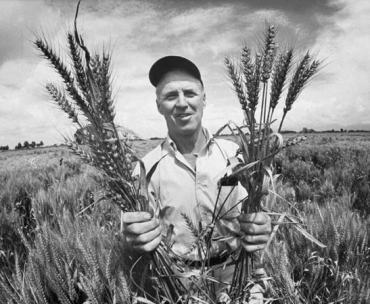 Between 1939 and ’41, Mexican farmers suffered major crop failures, due to stem rust. In July 1944, Borlaug declined an offer to double his salary, traveling instead to Mexico City, heading a new program focusing on soil development, maize and wheat production, and plant pathology.
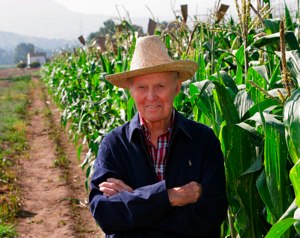 The Indian subcontinent experienced minor famine and starvation at this time, limited only by the US shipping 1/5th of its wheat production into the region in 1966 – ’67. Despite resistance from Indian and Pakistani bureaucracies, Borlaug imported 550 tons of seeds.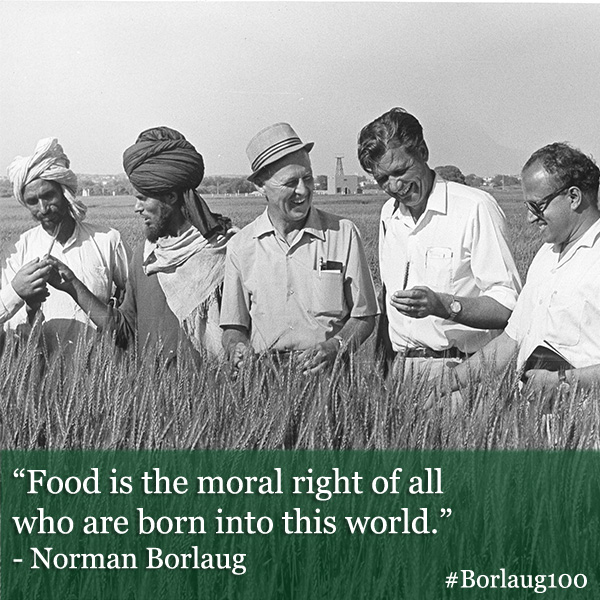
 According to former Director General of the International Water Management Institute David Seckler, “The environmental community in the 1980s went crazy pressuring the donor countries and the big foundations not to support ideas like inorganic fertilizers for Africa.” The Rockefeller and Ford foundations withdrew funding, along with the World Bank.

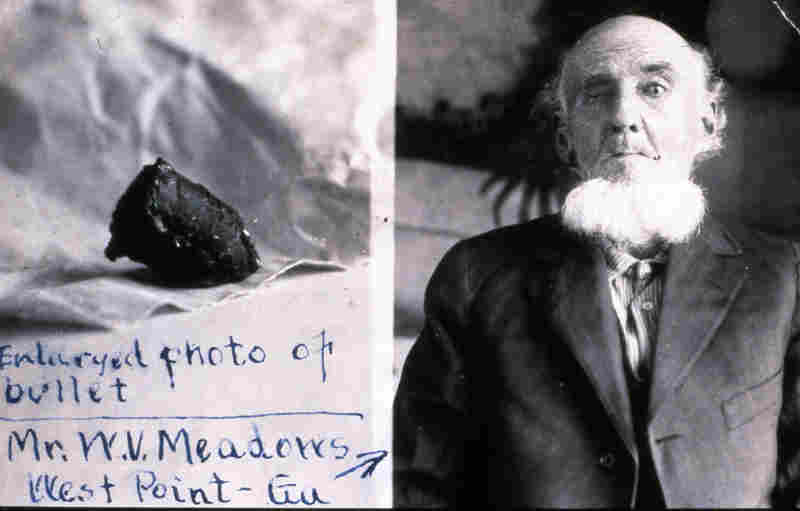
 Fifty-nine years earlier, nineteen-year-old Willis V. Meadows signed up with his brothers and his cousins, enlisting in Company G of the 37th Alabama Volunteer Infantry.
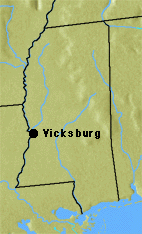 Willis fell over apparently dead, blood streaming out of his eye with the bullet lodged near his brain. The battle moved on. Vicksburg Mississippi fell to the Union army on July 4, 1863. The “Confederate Gibraltar” wouldn’t celebrate another Independence Day, for 80 years.
 Willis Meadows and Peter Knapp might have walked off the page of their time and on to obscurity, but for a circumstance even more unlikely, than a man holding a bullet in his head for fifty-eight years.
 It’s remarkable enough that Peter Knapp survived the brutality of the notorious Andersonville prison camp, an institution described as the “Auschwitz of the Civil War”. The Union POW camp at Elmira New York might be described as the Andersonville of the North. My own thrice-Great Grandfather went to his final rest there, along with his brother.
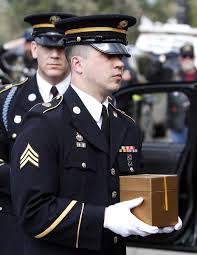 In 2012, Alice Knapp was researching the genealogical records of her deceased husband Steve, when she came upon the story of his ancestor. Stunned to learn that he had never been buried, Ms. Knapp called the Portland crematorium. ‘Yeah, he’s here’. Alice Knapp got the death certificate in Washington. I “called back and said, ‘By the way, is his wife there?’ and they said, ‘Yeah.’ The shock was that he was not ever buried. That was the surprise to me.”

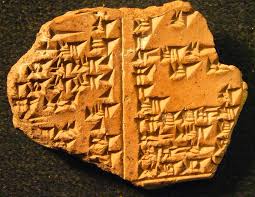 100 years ago, “Sumerologists” labored to learn the customs and the ways of this ancient civilization. One such team pieced together a stone tablet and, through painstaking years of study, managed to decipher the cuneiform words contained thereon.
 The in-crowd of the 1830s had a vocabulary all their own. On March 23, 1839, the initials “O.K.” were first published in The Boston Morning Post. This particular term stood for “Orl Korrekt.” All correct. Other popular slang of the era included “KY” for “No use” (“Know Yuse”), “KG” for “No Go” (“Know Go”), and “OW” for all right (“Oll Wright”).


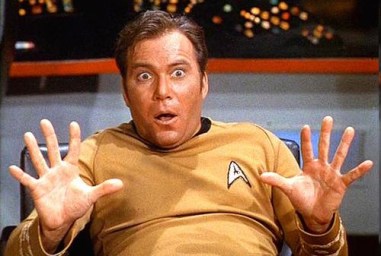 Riverside’s official slogan was changed from “Where the best begins” to “Where the Trek begins,” the annual “River Fest” summer festival, became “Trek Fest”.
 In case you ever wondered what the “T” stands for – its “Tiberius”.
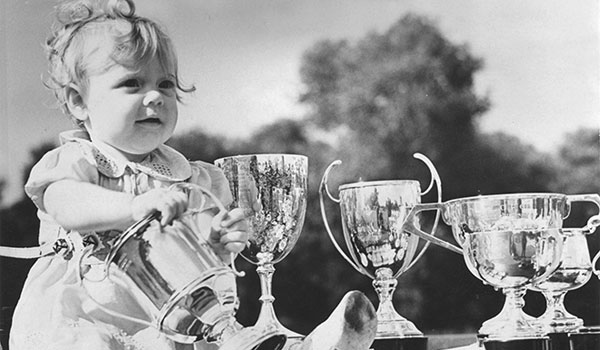
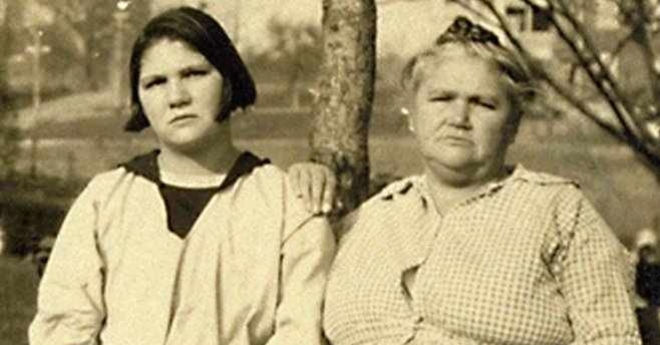
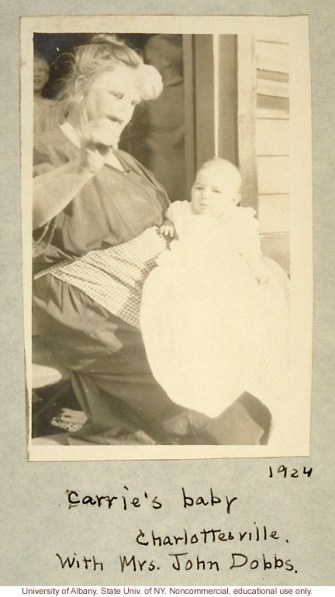
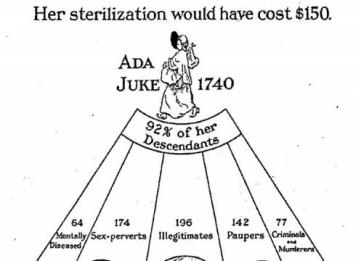 In the 19th century, Francis Galton studied the theories of his cousin Charles Darwin on the evolution of species, applying them to a system of selective breeding intended to bring “better” human beings into the world. He called it his theory of “Eugenics”.
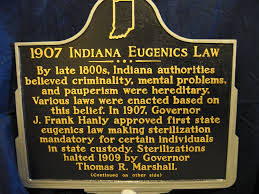 “Better Babies” competitions sprang up at state fairs across the United States, where babies were measured, weighed, and “judged”. Like livestock. By the 20s, these events had evolved into “Fitter Family” competitions.
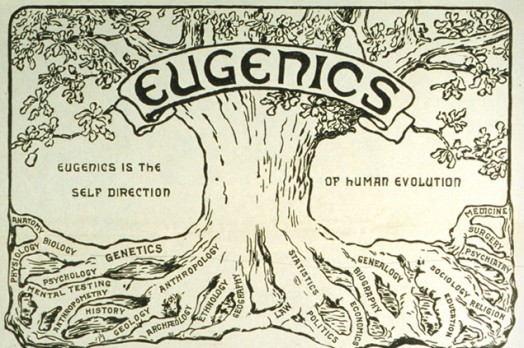
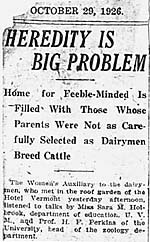 The 1912 conference was followed by two more in 1921 and 1932, both held in New York City. Colleges and universities delved into eugenics as academic discipline, with courses exploring the ethical and public policy considerations of eliminating the “degenerate” and “unfit”.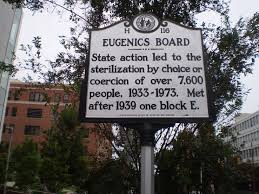

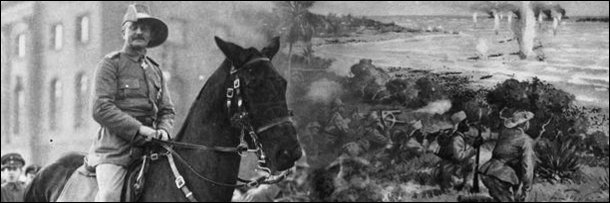
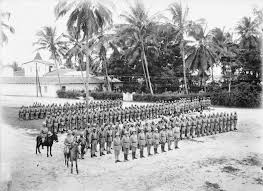
 Stationed in Deutsch-Ostafrika (German East Africa) and knowing that his sector would be little more than a side show to the greater war effort, Lettow-Vorbeck determined to tie up as many of his adversaries as possible.
 To his adversaries, disease and parasites were often more dangerous than enemy action. In July 1916, Allied non-battle casualties ran 31 to 1, compared with battle casualties.
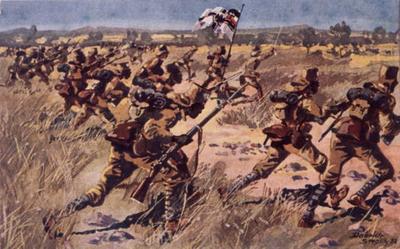 At one point in the
 Such a blunt refusal was guaranteed to bring unwanted attention from the Nazi regime. Vorbeck’s home and office were searched, his person subject to constant harassment and surveillance. By the end of WWII, the Lion of Africa was destitute. Both of his sons were killed serving in the Wehrmacht, his home in Bremen destroyed by Allied bombs.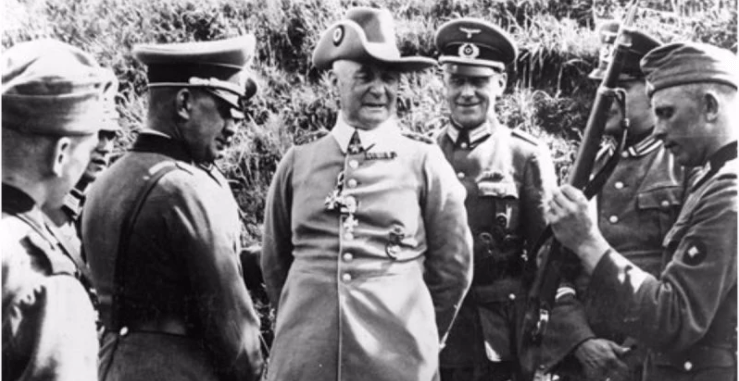


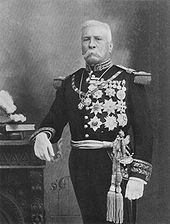

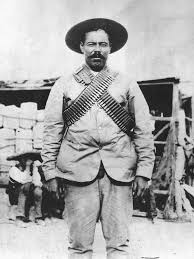
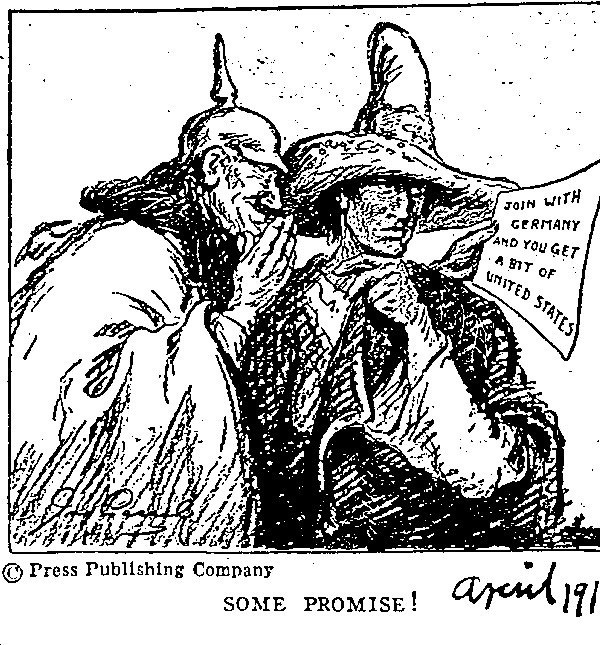
 In early March, a force of some 1,500 Villistas were camped along the border three miles south of Columbus New Mexico, when Villa sent spies into Camp Columbus (later renamed Camp Furlong). Informed that Camp Columbus’ fighting strength numbered only thirty or so, a force of some 600 crossed the border around midnight on March 8.
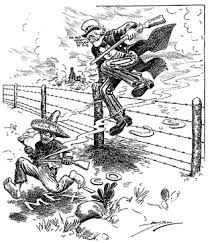 The United States government wasted no time in responding. That same day, the President who would win re-election in eight months on the slogan “He kept us out of war” appointed Newton Diehl Baker, Jr. to fill the previously vacant position of Secretary of War. The following day, Woodrow Wilson ordered General John Pershing to capture Pancho Villa, dead or alive.
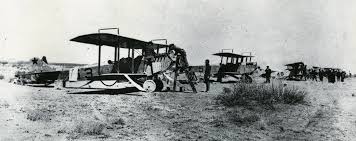 The 1st Aero Squadron arrived in New Mexico on March 15, with 8 aircraft, 11 pilots and 82 enlisted men. The first reconnaissance sortie was flown the following day, the first time that American aircraft were used in actual military operations.
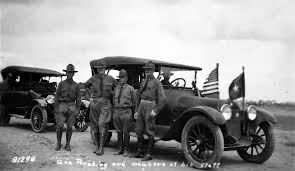 On May 14, a young 2nd Lieutenant in charge of a force of fifteen and three Dodge touring cars got into a running gunfight, while foraging for corn, in Chihuahua. It was the first motorized action in American military history. Three Villistas were killed and strapped to the hoods of the cars and driven back to General Pershing’s headquarters. General Pershing nicknamed that 2nd Lt. “The Bandito”. History remembers his name as George S. Patton.

 Historical Easter Eggs - Today in History
You must be logged in to post a comment.