

A story comes to us from the Revolution, of a battle near Boonesborough, Kentucky. A British officer dared to poke his head out from behind a tree. A split-second later he was dead, a lead ball in his head. It was a near-miraculous shot for the day, nearly 250-yards distant from the shooter. The man with the rifle was Daniel Boone. The weapon was his famous Kentucky long rife.
It was a good thing that the man could shoot that weapon, because it took about a minute to load, aim and fire. The smooth-bore weapons of the age were a little quicker. A skilled shooter could could get off 3 rounds per minute, but aimed fire was all but impossible at any kind of distance.

Military tactics on land evolved toward massed firepower. When large groups of men fired at one another, something was going to get hit. Defending yourself at sea, was another matter.
Long before the revolt in Great Britain’s American colony, European navies abandoned oar-powered vessels in favor of sailing ships carrying tons of powerful cannon. Not so the corsairs of the North African coast.

The “Barbary pirates” of the Ottoman provinces of Algeria, Tunisia & Tripolitania and the independent sultanate of Morocco favored small, fast galleys, powered by combinations of sail and oar and carrying a hundred or more fighting men armed with flintlock, axe and cutlass.
Barbary navies never formed battle fleets, and would flee at the sight of European frigates. These people were looking for lightly armed merchantmen. They came to take hostages for the Arab slave markets.
The Arab slave trade was never racialized in the way of trans-Atlantic, chattel slavery. Black Africans and white Europeans alike, were fair game. Some historians assert that as many as 17 million entered the Arab slave markets, from Western Asia, North Africa, the Horn of Africa, Southeast Africa and Europe.
It was the enslaved mercenary armies of the Ayyubid dynasty of Egypt and Syria, the Mamālīk (singular Mamlūk), who expelled the last Christian armies from the Levant in 1302, ending the era of the Crusades. For five-hundred years, elite slave armies called “Janissaries” formed the bulwark of Ottoman power from southeastern Europe to western Asia and north Africa.
Ohio State University history Professor Robert Davis estimates that Barbary corsairs captured as many as 1 – 1¼ million Europeans between the 16th and 19th centuries alone, kidnapped from seaside villages along the Mediterranean coast, England, and as far away as the Netherlands, Ireland and Iceland. Some 700 Americans were held in conditions of slavery in North Africa, between the period of the American Revolution and the War of 1812.
The lightly armed merchant vessel of the 18th century was ill equipped to oppose the swarming attack of a hundred or more pirates. Enter history’s first machine gun.

James Puckle (1667–1724) was a British inventor, barrister and author. The Puckle Gun, also called the “defence gun”, was a tripod-mounted, single-barreled flintlock fitted with a revolving cylinder. At a time when a trained shooter could load and fire no more than three times per minute, James Puckle’s weapon was capable of nine.
The Puckle gun was intended for naval use, to prevent the boarding of ships at sea. There were two variations, the first intended for use against Christian adversaries. This one fired round balls. The second version was considered to be the more lethal of the two and fired square bullets, intended for use against Muslim Turks. According to the patent, square bullets would persuade the Turks of the “benefits of Christian civilization”. The weapon could also fire shot, with each discharge containing up to sixteen musket balls.
Among investors, there was little interest in the Puckle Gun, and the weapon never gained wide acceptance. Before the era of mass production, gunsmiths had trouble reliably producing its small, complicated parts. One newspaper quipped that the gun “only wounded those who hold shares therein”.
In time, humankind would become much more adept at killing itself. Dr. Richard Gatling invented his multi-barrel, crank fired “Gatling Gun” in 1861, writing that his creation would reduce the size of armies and so reduce the number of deaths by combat and disease. With a rate of fire of up to 900 rounds per minute in the .30 caliber model, Gatling’s gun was popular from the Great Railroad Strike of 1877 to the Anglo-Zulu war of two years later, and the “Rough Riders” assault up San Juan Hill.
American-British inventor Hiram Maxim invented the first true “machine gun” in 1884, by harnessing the weapon’s recoil. The Hiram gun was a favorite of colonial wars from 1886–1914, and variants entered the trenches of WW1.
It would take about a hot minute with the search engine of your choice, to realize that the practice of Muslim slavery, primarily (though not exclusively) at the expense of black Africans, continues to this day.


 The camels arrived on May 14, 1856, and set out for the newly established Camp Verde in West Texas, with elements of the US Cavalry and seven handlers.


 A few months later, a Salt River rancher named Cyrus Hamblin spotted the animal while rounding up cows. It was a camel, and Hamblin saw that it had something that looked like the skeleton of a man tied to its back. Nobody believed his story, but a group of prospectors fired on the animal several weeks later. Though their shots missed, they saw the animal bolt and run, and a human skull with some parts of flesh and hair still attached fell to the ground.


 In 1866, the Quartermaster ordered the remains of 2,111 unknown Civil War dead to be exhumed and placed inside a vault in the Lees’ rose garden.


 At the height of its depravity, the Khmere Rouge smashed the heads of infants and children against Chankiri (Killing) Trees so that they “wouldn’t grow up and take revenge for their parents’ deaths”. Soldiers laughed as they carried out these grim executions. Failure to do so would have shown sympathy, making the killer him/herself, a target.
 On May 12, the American flagged container ship SS Mayaguez passed the coast of Cambodia bound for Sattahip, in southwest Thailand. At 2:18pm, two fast patrol craft of the Khmere Rouge approached the vessel, firing machine guns and then rocket-propelled grenades across its bows.
 The cargo vessel was being towed to Kompong Som on the Cambodian mainland, as word of the incident reached the White House. A government made to look weak and indecisive by what President Ford himself called the “humiliating withdrawal” of only days earlier, could ill afford another drawn-out hostage drama, similar to that of the USS Pueblo. Massive force would be brought to bear against the Khmere Rouge, and time was of the essence.
 Expecting only light resistance, US forces were met with savage force on May 15, from a heavily armed contingent of some 150-200 Khmere Rouge. Three of the nine helicopters participating in the operation were shot down, and another four too heavily heavily damaged to continue
 The cost of the Mayaguez Incident, officially the last battle of the Vietnam war, was heavy. Eighteen Marines, Airmen and Navy corpsmen were killed or missing in the assault and evacuation of Kho-Tang Island. Another twenty-three were killed in a helicopter crash. The last of 230 Marines would not get out until well after dark.




 Following liberation, French women were beaten and humiliated in the streets, their heads shaved, for being “collaborators” with their German occupiers.
 Sixty-five years later, Jan Gregor of the East German state of Brandenburg, can still remember the day his mother told him that she’d been “made pregnant by force”. He was five, at the time.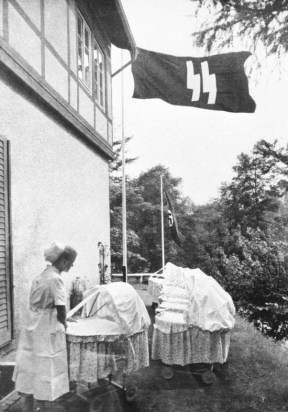

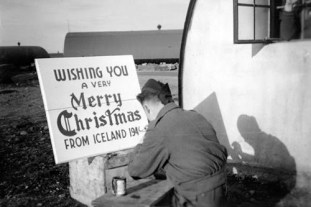 Icelandic public opinion was sharply divided at the invasion and subsequent occupation. Some described this as the “blessað stríðið”, the “Lovely War”, and celebrated the building of roads, hospitals, harbors, airfields and bridges as a boon to the local economy. Many resented the occupation, which in some years equaled 50% of the native male population.




 A group of hunters used to meet at the Westminster Hotel at Irving Place & 16th Street, “to drink and lie about their shooting accomplishments”. The Westminster Kennel Club was formed when the group first decided to hold a dog show.
 1,201 dogs arrived for that first show, in an event so popular that the originally planned three days morphed into four. The Westminster Kennel Club donated all proceeds from the fourth day to the ASPCA, for the creation of a home for stray and disabled dogs. The organization remains supportive of animal charities, to this day.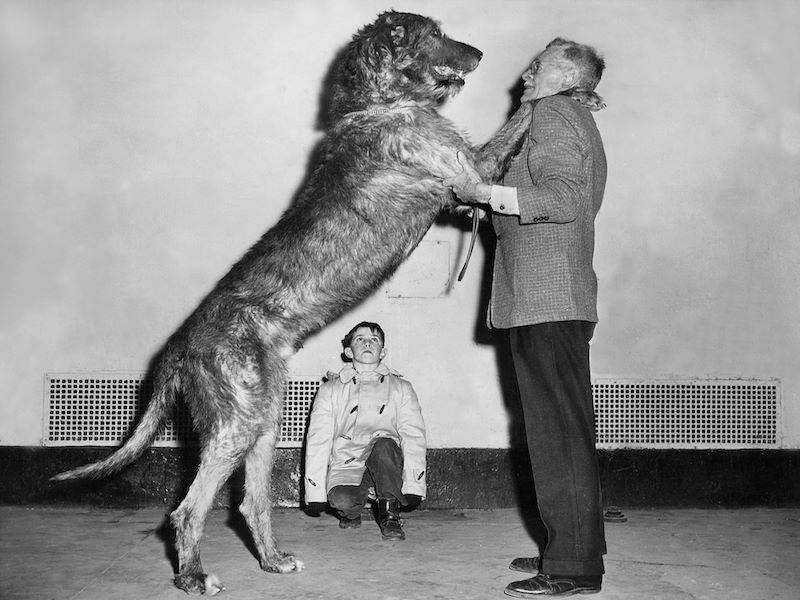

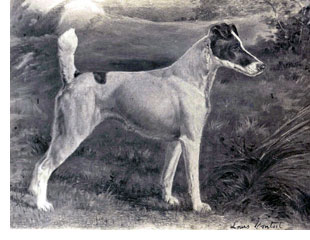

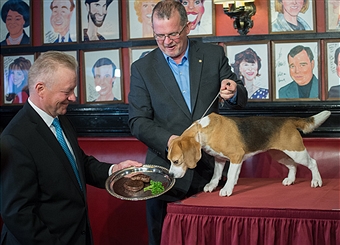 Since the late 1960s, winner of the Westminster Best in Show has celebrated at Sardi’s, a popular mid-town eatery in the theater district and birthplace of the Tony award.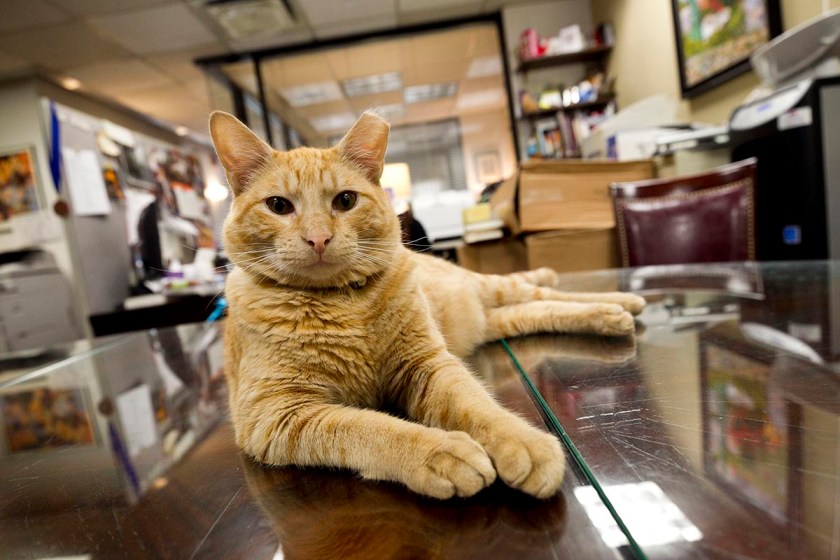


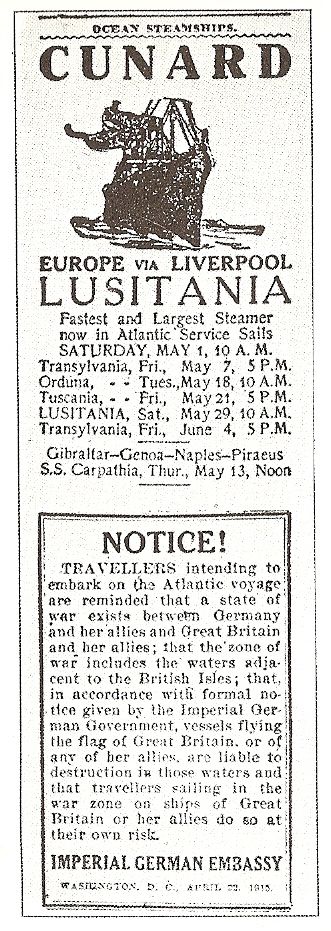 Germany adopted a policy of unrestricted submarine warfare on February 18, 1915. The German embassy took out ads in American newspapers, warning that ships sailing into the war zone, did so at their own risk. That didn’t seem to bother anyone as they boarded RMS Lusitania.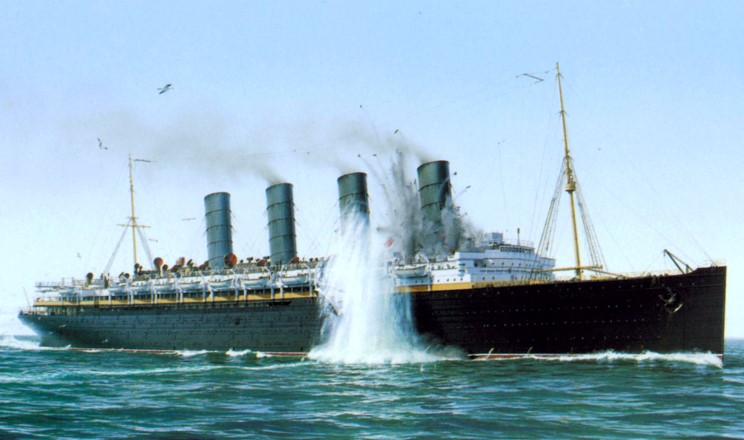
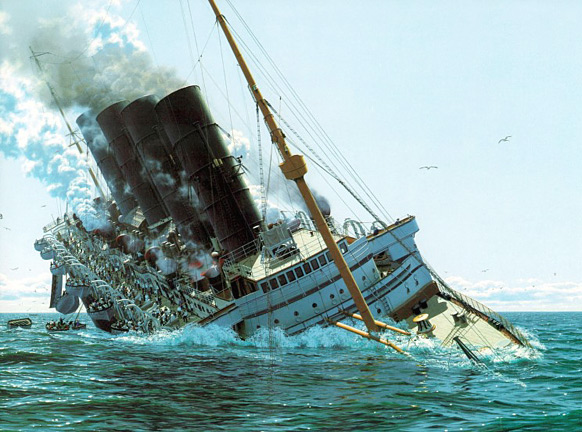
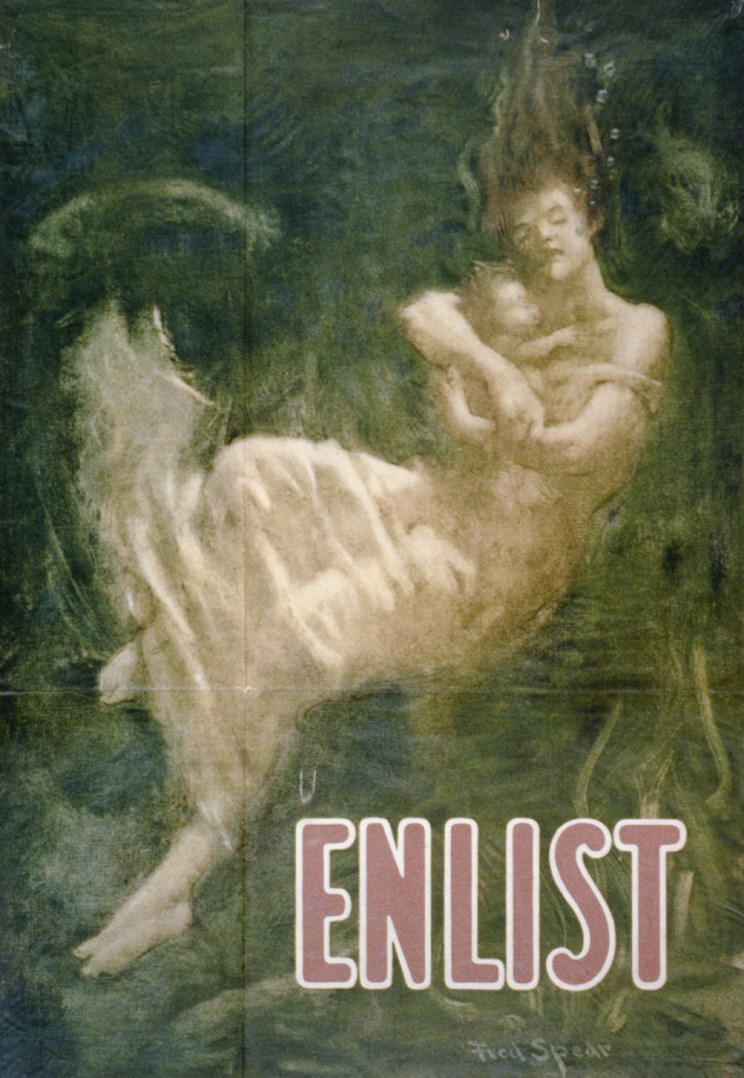
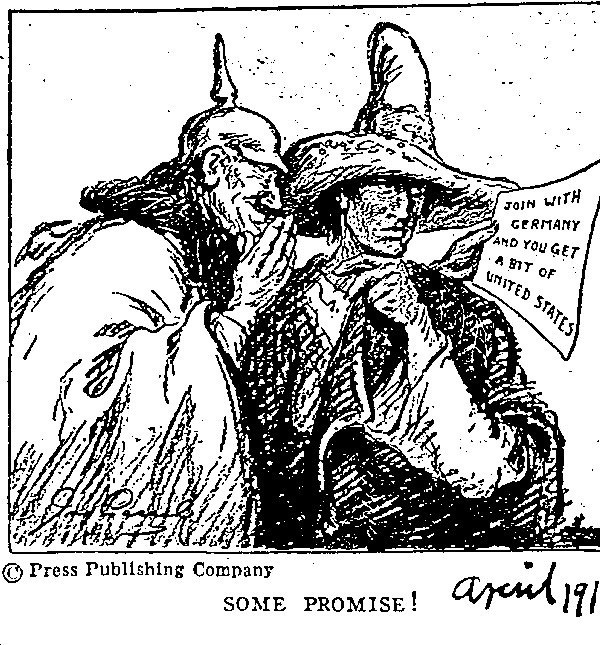 Unrestricted submarine warfare was resumed the same month. In February a German U-boat fired two torpedoes at the SS California off the Irish coast, killing 43 of her 205 passengers and crew. President Wilson asked for a declaration of war in a speech to a joint session of Congress on April 2. From the text of the speech, it seems the Germans were right. It was the resumption of unrestricted submarine warfare which provoked the United States to enter the war against Germany, which it did when Congress declared war on April 6.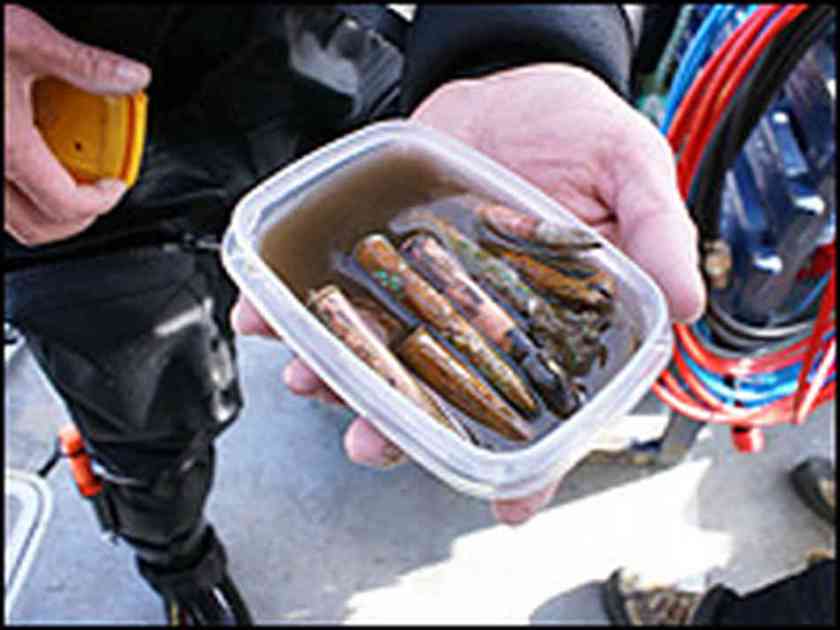

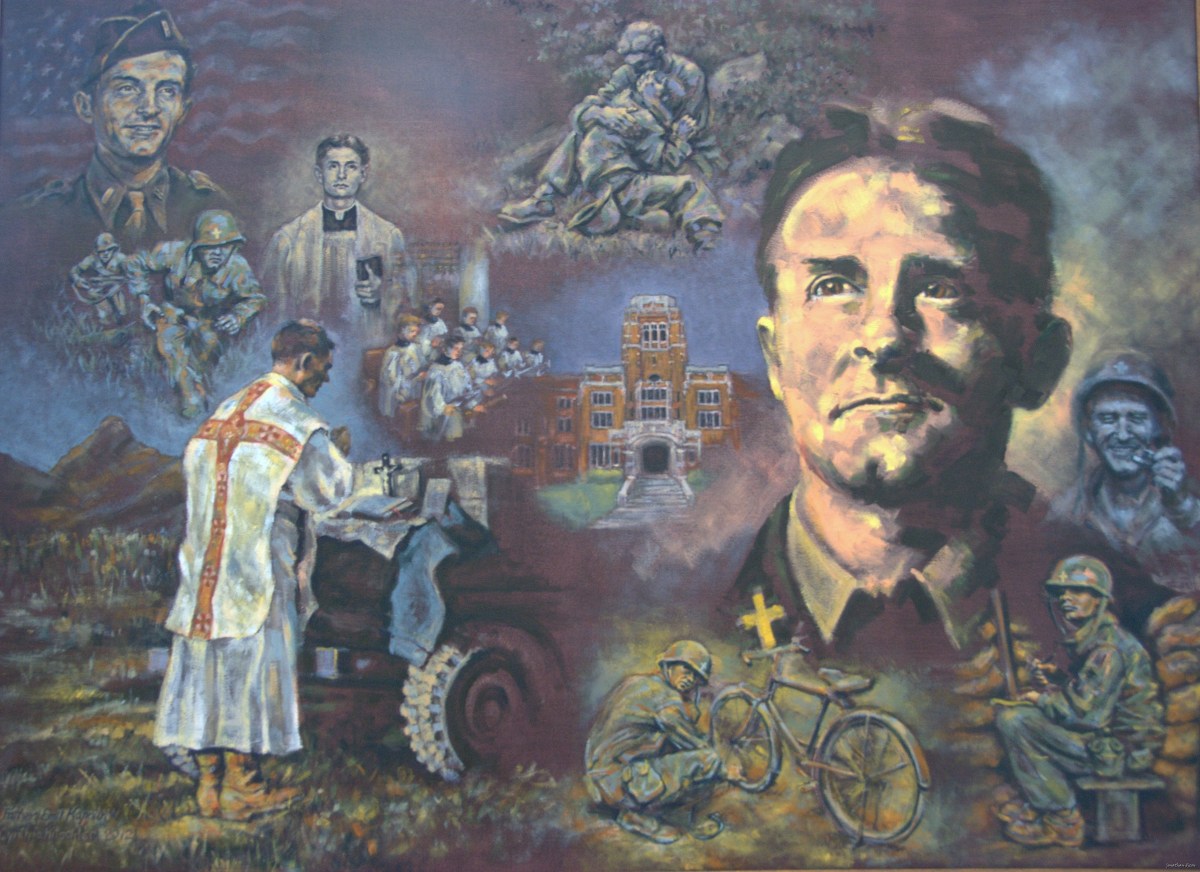
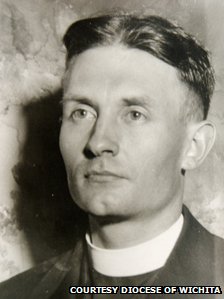 Kapaun served as military chaplain toward the end of WWII, before leaving the army in 1946, and rejoining in 1948.
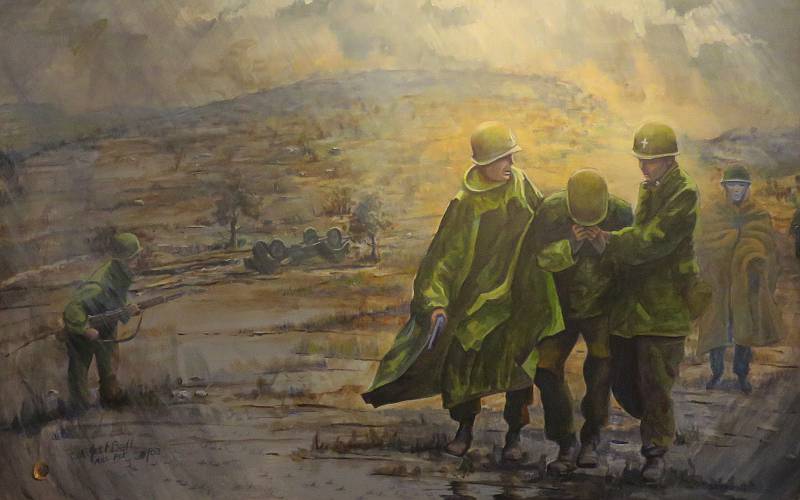
 Starving, suffering from a blood clot in his leg and a severe eye infection, Father Kapaun led Easter services in April, 1951. He was incapacitated a short time later. Chinese guards carried him off to a “hospital” – a fetid, stinking part of the camp known to prisoners as the “Death House”, from which few ever returned. “If I don’t come back”, he said, “tell my Bishop that I died a happy death.”
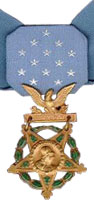 Pope John Paul II named Father Kapaun a “Servant of God” in 1993, the first step toward Roman Catholic Sainthood. On November 9, 2015, the Catholic Diocese of Wichita submitted a 1,066 page report on the life of Chaplain Kapaun, to the Roman Curia at the Vatican. A team of six historians reviewed the case for beatification. On June 21, 2016, the committee unanimously approved the petition. At the time I write this, Father Emil Joseph Kapaun’s supporters continue working to have him declared a Saint of the Roman Catholic Church, for his lifesaving ministrations at Pyoktong.
 Historical Easter Eggs - Today in History
You must be logged in to post a comment.