July 28, 1914 Four Horsemen of the Apocalypse

Few could imagine a war in which a single day’s fighting, could produce casualties equal to that of every war of the preceding 100 years, combined. 

In 1869, Germany had yet to come into its own as an independent nation. Forty-five years later, she was one of the Great Powers, of Europe.

Great Powers, 1914

Alarmed by the aggressive growth of her historic adversary, the French government had by that time increased compulsory military service from two years to three, in an effort to offset the advantage conferred by a German population of some 70 million, contrasted with a French population of 40 million.

Joseph Caillaux was a left wing politician, once Prime Minister of France and, by 1913, a cabinet minister under the more conservative administration of French President Raymond Poincare.

Never too discreet with his personal conduct, Caillaux paraded through public life with a succession of women, who were not Mrs Caillaux. One of them was Henriette Raynouard.  By 1911, Madame Raynouard had become the second Mrs Caillaux.

A relative pacifist, many on the French right considered Caillaux to be too “soft” on Germany. One of them was Gaston Calmette, editor of the leading right-wing newspaper Le Figaro, who regularly excoriated the politician.

On March 16, 1914, Madame Caillaux took a taxi to the offices of Le Figaro. She waited for a full hour to see the paper’s editor, before walking into his office and shooting him at his desk. Four out of six rounds hit their mark.  Gaston Calmette was dead before the night was through.
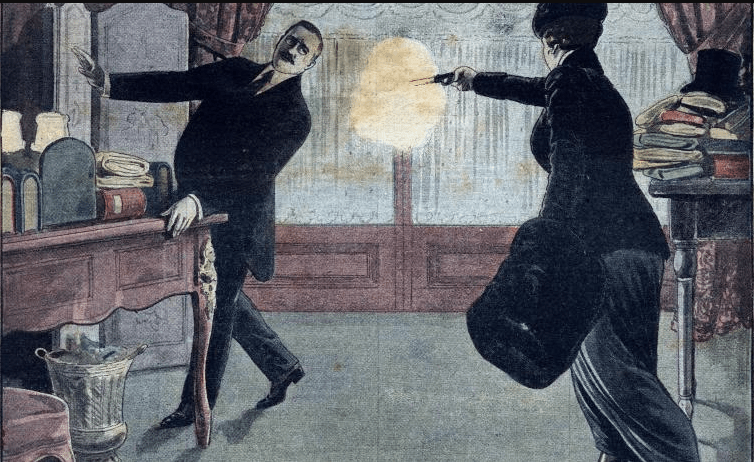
Cailloux Affair

It was the crime of the century.  This one had everything: Left vs. Right, the fall of the powerful, and all the salacious details anyone could ever ask for. It was the OJ trial, version 1.0, and the French public was transfixed.

The British public was similarly distracted, by the latest in a series of Irish Home Rule crises.

The Austro-Hungarian Empire, a sprawling amalgamation of 17 nations, 20 Parliamentary groups and 27 political parties, desperately needed to bring the Balkan peninsula into line, following the June 28 assassination of the heir apparent to the dual monarchy. That individual Serbians were complicit in the assassination is beyond doubt, but so many government records of the era have disappeared that, it’s impossible to determine official Serbian complicity. Nevertheless, Serbia had to be brought to heel.
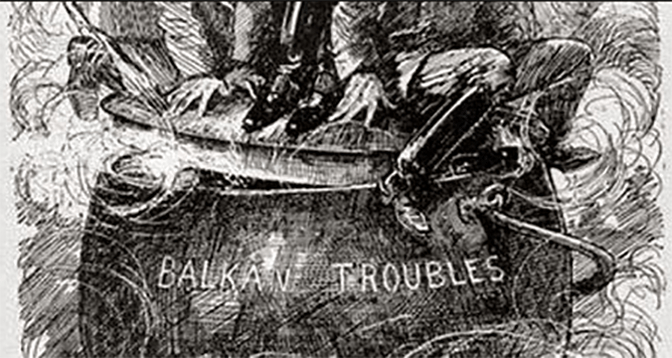
Balkan Troubles

Having given Austria his personal assurance of support in the event of war with Serbia, even if Russia entered in support of her Slavic ally, Kaiser Wilhelm of Germany left on a summer cruise in the Norwegian fjords. The Kaiser’s being out of touch for those critical days in July has been called the most expensive maritime disaster in naval history.

The Austro-Hungarian Empire delivered a deliberately unacceptable ultimatum to Serbia on the 23rd, little more that a bald pretext for war.  Czar Nicholas wired Vienna as late as the 27th proposing an international conference concerning Serbia, but to no avail. Austria responded that same day.  It was too late for such a proposal.

The Austro-Hungarian Empire declared war on Serbia the following day, the day on which Madame Caillaux was acquitted of the murder of Gaston Calmette, on the grounds of being a “crime of passion”.

As expected, Russia mobilized in support of Serbia.  For her part, Imperial Germany feared little more than a two-front war, with the “Russian Steamroller” to the east, and the French Republic to the west.  Germany invaded neutral Belgium in pursuit of the one-two punch strategy by which she sought first to defeat France, before turning to face the far larger Russian adversary.
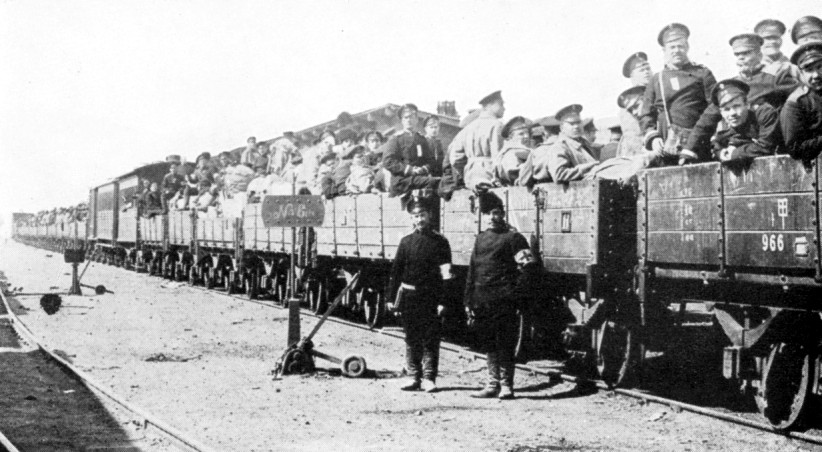
russ-mob

On August 3, British Foreign Secretary Sir Edward Grey announced before Parliament, his government’s intention to defend Belgian neutrality, a treaty obligation German diplomats had dismissed as a “scrap of paper”.

Pre-planned timetables took over – France alone would have 3,781,000 military men under orders before the middle of August, arriving at the western front on 7,000 trains arriving as often as every eight minutes.
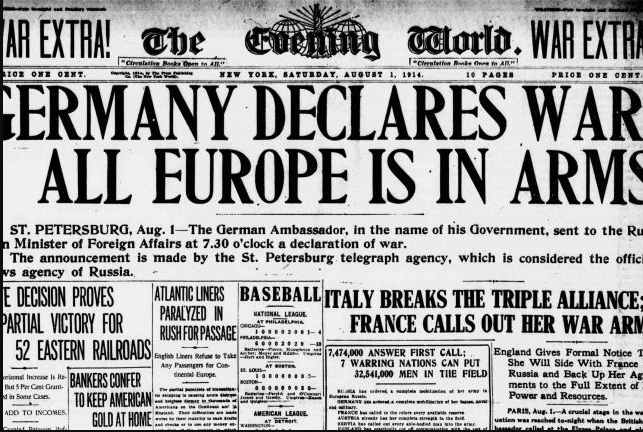
Declaration

This time there would be no “Phoney War”, no “Sitzkreig”, as some wags were wont to call the early days of WWII.   Few could imagine a cataclysm to rock a century and beyond, a war in which a single day’s fighting could produce casualties equal to that of every war of the preceding 100 years, combined.  Fewer still understood on this date, one-hundred and four years ago, today.  The four horsemen of the Apocalypse, were only days away.
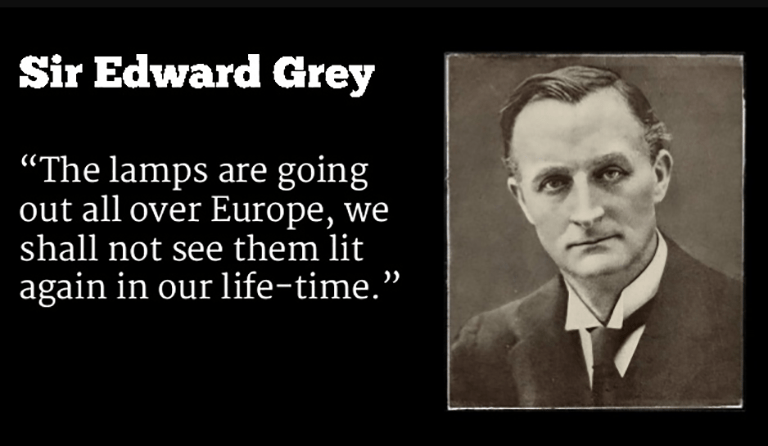
Sir Edward Grey

If you enjoyed this “Today in History”, please feel free to re-blog, “like” & share on social media, so that others may find and enjoy it as well. Please click the “follow” button on the right, to receive email updates on new articles.  Thank you for your interest, in the history we all share.

May 31, 1916 The Man who Fixed Faces

It’s been said of the American civil war and could no doubt be said of any number of conflicts, that a generation of women had to accustom themselves to new ideas of male ‘beauty’. 

For many, the mention of ‘cosmetic surgery’ conjures images of vanity.  The never-ending and inevitably fruitless attempt to stave off the years.  Add some here and take it off over there.  But what of the face left smashed and misshapen, burned or blown half off in service to country?

plastic-surgery-lead-1494865707“Plastic” Surgery, the term comes to us from the Greek Plastikos and first used by the 18th century French surgeon Pierre Desault, has been with us longer than you might expect.  Evidence exists of Hindu surgeons performing primitive ‘nose jobs’, as early as BC800-600.  The Renaissance-era surgeon Gaspare Tagliacozzi (1545-1599) developed new methods of reconstruction, using the patient’s own arm skin to replace noses slashed off in swordplay.
large
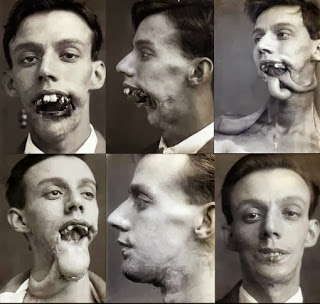
Lt. William M. Spreckley of the Sherwood Foresters was Dr. Gillies’ 132nd patient, admitted to the hospital in January 1917 at the age of 33 with a ‘GSW, Nose”. He was discharged 3½ years later.

A hillside battle at a place called Hastings changed the world in 1066 yet, if you were on the next hillside, you may not have heard a thing.  The industrialized warfare of the 19th and 20th century was vastly different, involving entire populations and inflicting unprecedented levels of destruction on the human form.

It is beyond horrifying what modern warfare can do to the human form

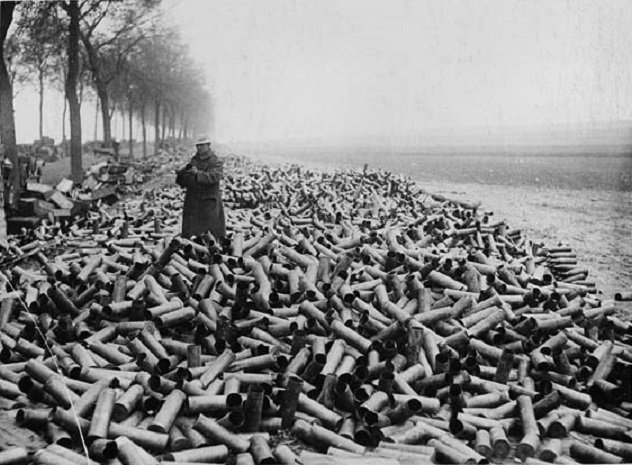
It’s been said of the American civil war and is no doubt true of any number of conflicts, that a generation of women had to accustom themselves to new ideas of male ‘beauty’.  The ‘Great War’ of 1914 – ‘18 was particularly egregious when it came to injuries to the face, neck and arms, as millions of soldiers burrowed into 450-mile-long trench lines to escape what German Private Ernst Jünger described as the “Storm of Steel”.

74407448.3

In the Battle of Verdun, German forces used 1,200 guns firing 2.5 million shells supplied by 1,300 ammunition trains to attack their Allied adversary on the First Day, alone.

For every soldier killed in the Great War, two returned home, maimed. Artillery was especially malevolent, with “drumfire” so rapid as to resemble the rat-a-tat-tat of drums, each blast sending thousands of jagged pieces of metal, shrieking through the air.

Invaliden

For many, severe facial disfigurement was a fate worse than amputation.  Worse than death, even.  To have been grievously wounded in service to country and return home to be treated not as a wounded warrior, but as something hideous.

The untold human misery of having been turned into a monster, misshapen and ugly.  For these men, life often became one of ostracism and loneliness.  The painful stares of friends and strangers alike, repelled by such disfiguration, offtimes lead to alcoholism, divorce and suicide.

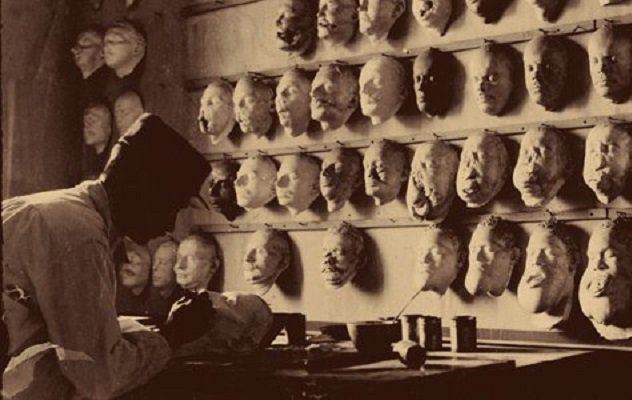
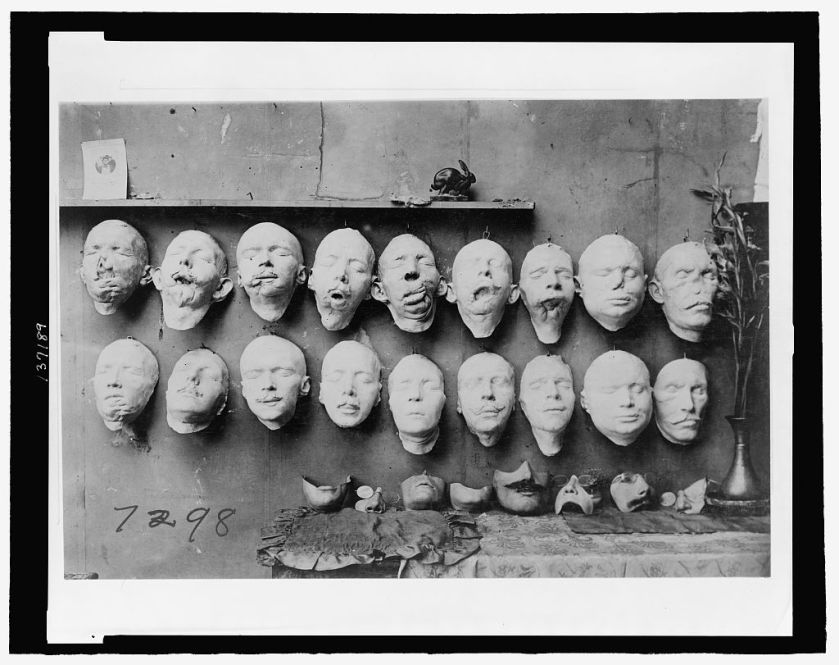
Manchester Massachusetts sculptor Anna Coleman Ladd moved to France in 1917.  Inspired by the work of British artist Francis Derwent Wood and his “tin noses shop”,  Ladd founded the “Studio for Portrait-Masks” of the Red Cross in Toul, to provide cosmetic prosthetics for men disfigured by the war.

world-war-1-face-masks-631.jpg__800x600_q85_cropLadd’s prostheses were uncomfortable to wear, but her services earned her the Légion d’Honneur Croix de Chevalier and the Serbian Order of Saint Sava.
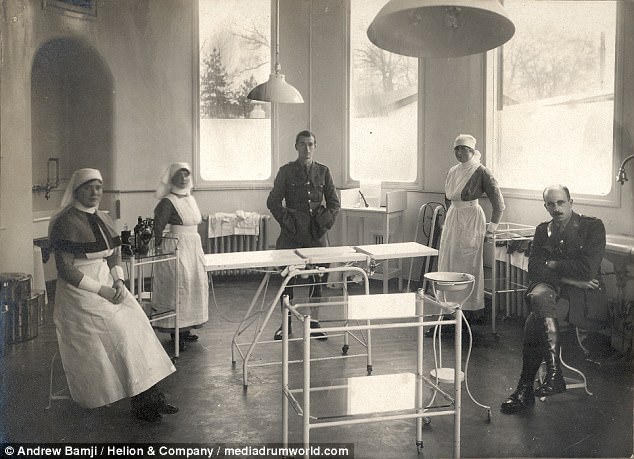
The New Zealand-born otolaryngologist Dr. Harold Gillies was shocked at the human destruction, while working with the French-American dental surgeon Sir August Charles Valadier on new techniques of jaw reconstruction and other maxillofacial procedures.

44B9901E00000578-4920628-image-a-10_1506420240847
The interior of the Plastic Theatre at the Queen’s Hospital.  Dr Gillie is seated, on the right

The sterile medical notation “GSW (gunshot wound) Face” does not begin to prepare the mind for a horror more closely resembling a highway roadkill, than the face of a living man.  I left the worst of such images out of this essay.  They’re easy enough to find on-line, if you’re interested in seeing them.  The medical science is fascinating, but the images are hard to look at.

Dr. Gillies watched the renowned French surgeon Hippolyte Morestin, a man known as “The Father of the Mouths” after multiple breakthroughs in oral surgery, remove a tumor and use the patient’s own jaw-skin, to repair the damage.

Joseph Pickard, of the 5th Northumberland Fusiliers, before and after Dr. Gillies.  H/T Daily Mail

Gillies understood the importance of the work, and spoke with British Chief Surgeon Sir William Arbuthnot Lane.  The conversation lead to a 1,000-bed facial trauma ward at Queen Mary’s Hospital in Sidcup, Kent, opened in June, 1917.

The largest naval battle of the Great War, the Battle of Jutland, unfolded between May 31 and June 1, 1916, involving 250 ships and some 100,000 men.

The Queen Elizabeth-class battleship HMS Warspite took fifteen direct hits from German heavy shells, at one point having no rudder control and helplessly turning in circles.

ilk-estetik-ameliyat-WalterYeo
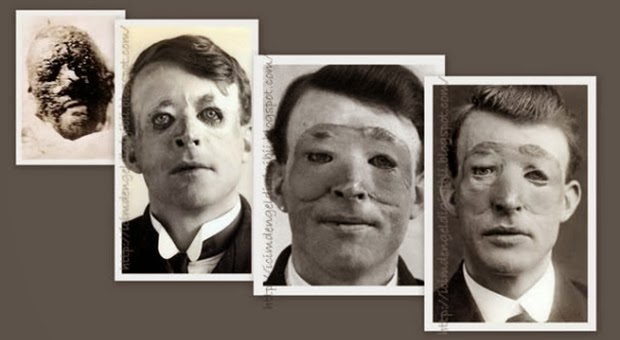
Petty Office Walter Yeo

Petty Officer Walter Yeo was manning the guns aboard Warspite and received terrible injuries to his face, including the loss of upper and lower eylids, and extensive blast and burn damage to his nose, cheeks and forehead.

laddfaces06
When all else failed, there were the facial prosthetics.  The masks.

Yeo was admitted to Queen Mary’s hospital the following August, where he was treated by Dr. Gillies and believed to be the first recipient of a full facial graft taken from another part of his own body.

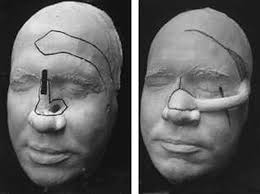
4535390_origDr. Gillies & Co. developed surgical methods in which rib cartilage is first implanted in foreheads, and then swung down to form the foundational structure of a new nose.

At a time before antibiotics, tissue grafts could be as dangerous as the trenches themselves.   “Tubed pedicles” were developed to get around the problem of infection, where living tissue and its blood supply was rolled into tubes and protected by the natural layer of skin.  These tubes of living tissue weren’t pretty to look but were relatively safe from infection.  When the patient was ready, new tissue could be “walked” into place, become whole new facial features.

hdg-display-02

Dr. Harold Gelf Gillies, the Father of modern plastic surgery, performed more than 11,000 such procedures with his colleagues, on over 5,000 individuals.  Work continued well after the war and through the mid-twenties, developing new and important surgical techniques.

Dr. Gillies received a knighthood for his work in 1930 and, during the inter-war years, trained many other Commonwealth physicians on his surgical methods.  Just in time to send the following generation, off to the next war.

If you enjoyed this “Today in History”, please feel free to re-blog, “like” & share on social media, so that others may find and enjoy it as well. Please click the “follow” button on the right, to receive email updates on new articles.  Thank you for your interest, in the history we all share.

May 29, 1932 A Debt Unpaid

Then-Major Dwight D. Eisenhower was one of MacArthur’s aides at the time. Eisenhower believed that it was wrong for the Army’s highest ranking officer to lead an action against fellow war veterans. “I told that dumb son-of-a-bitch not to go down there”, he said.

In 1924, the United States Congress passed the “World War Adjusted Compensation Act”, promising cash bonuses to veterans of the “Great War” in which the nation had been involved between 1917 and ’18.

chi-bonus30railroad-201303123,662,374 military service certificates were issued to qualifying veterans, bearing a face value equal to $1 per day of domestic service and $1.25 a day for overseas service, plus interest. Total face value of these certificates was $3.638 billion, equivalent to $43.7 billion in today’s dollars and coming to full maturity in 1945.

bonus-marchers 1932The Great Depression was two years old in 1932, and thousands of veterans had been out of work since the beginning. Certificate holders could borrow up to 50% of the face value of their service certificates, but direct funds remained unavailable for another 13 years.

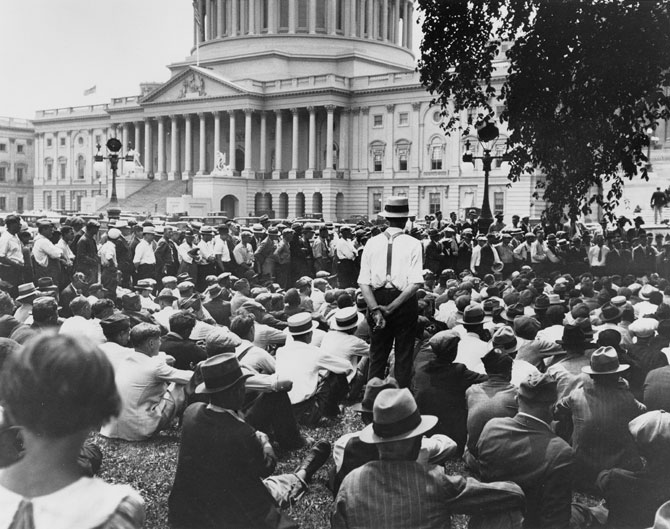
On May 29, WWI veterans began to arrive in Washington to press their case for immediate cash redemption, setting up encampments between the Capitol and the Lincoln Memorial, and around Washington DC.  Former Army sergeant Walter W. Waters led the group, which called itself the “Bonus Expeditionary Force” after the AEF of the late war.  True to form, the Media insultingly dubbed them the “Bonus Army”.

bonus-army-veterans-from-chattanooga-parade-past-white-house-in-a-truck-may-18-1932This had happened before. Hundreds of Pennsylvania veterans of the Revolution had marched on Washington in 1783, after the Continental Army was disbanded without pay.
On that occasion the Congress fled to Princeton New Jersey, and the Army was called up to expel war veterans from the Capitol. Washington, DC was later excluded from the restrictions of the Posse Comitatus Act of 1878, making it the only part of the United States where the military may be used for domestic police activity.

17,000 veterans and their families, 43,000 all told, gathered in and around Washington.  Men, women and children living in tents or in make-shift shelters built out of old lumber, packing boxes and scrap tin scavenged from nearby junkyards.

bonus-marchers_1932_eplaza_dome_lts

The House passed a bill to redress the situation, which went to the Senate for a vote on June 17, a day one newspaper described as “the tensest day in the capital since the war.” 10,000 marchers crowding the Capitol grounds responded with stunned silence when they got the news. The Senate had voted it down, 62 to 18. “Sing America and go back to your billets”, said Waters, and so they did. Marchers would hold a silent vigil in front of the Capitol until July 17, the day that Congress adjourned.

global-economic-crisis-bonus-marchers-in-washington-dc-1932-e01jc6Marchers and their families were in their camps on July 28 when Attorney General William Mitchell ordered them evicted. Two policemen became trapped on the second floor of a building when they drew their revolvers and shot two veterans, William Hushka and Eric Carlson, both of whom died of their injuries.

image062 (1)President Herbert Hoover ordered the Army under General Douglas MacArthur to evict the Bonus Army from Washington. 500 Cavalry formed up on Pennsylvania Avenue at 4:45pm, supported by 500 Infantry, 800 police and six battle tanks under the command of then-Major George S. Patton. Civil Service employees came out to watch as bonus marchers cheered, thinking that the Army had gathered in their support.

And then the Cavalry was ordered to charge. The infantry followed with tear gas and fixed bayonets, entering the camps and evicting men, women and children alike.

Bonus_marchers_05510_2004_001_aBonus marchers fled to their largest encampment across the Anacostia River, when President Hoover ordered the assault stopped. Feeling that the Bonus March was an attempt to overthrow the government, General MacArthur ignored the President and ordered a new attack, the army routing 10,000 and leaving their camps in flames. 1,017 were injured and 135 arrested.

The wife of one veteran miscarried. 12-week old Bernard Myers died after being caught in the gas attack. A government investigation later claimed he died of inflammation of the small intestine, but a hospital employee said the tear gas “didn’t do it any good.”

bonus-armyThen-Major Dwight D. Eisenhower was one of MacArthur’s aides at the time. Eisenhower believed that it was wrong for the Army’s highest ranking officer to lead an action against fellow war veterans. “I told that dumb son-of-a-bitch not to go down there”, he said.

bonus-army-fire-1800The bonus march debacle doomed any chance that Hoover had of being re-elected. Franklin D. Roosevelt opposed the veterans’ bonus demands during the election, but was able to negotiate a solution when veterans organized a second demonstration in 1933. Roosevelt’s wife Eleanor was instrumental in these negotiations, leading one veteran to quip: “Hoover sent the army.  Roosevelt sent his wife”.

If you enjoyed this “Today in History”, please feel free to re-blog, “like” & share on social media, so that others may find and enjoy it as well. Please click the “follow” button on the right, to receive email updates on new articles.  Thank you for your interest, in the history we all share.

May 7, 1915 Lusitania

American public opinion was outraged at the loss of life in a war in which the United States was neutral. Imperial Germany, for her part, maintained that Lusitania was illegally transporting munitions intended to kill German boys on European battlefields.

By Spring of 1915, WWI had already devolved into the slugfest of trench warfare that would bleed nation states white and destroy empires. Imperial Germany had held off of unrestricted submarine warfare, believing the tactic would bring the United States into the war against them. Yet this war could not be won on the battlefield alone. They had to make it a war on commerce, to choke of their adversary’s lifeline. Besides, the German view was that ostensibly peaceful shipping was being used to ferry war supplies to the allies, which were going on to kill Germans on the battlefield.

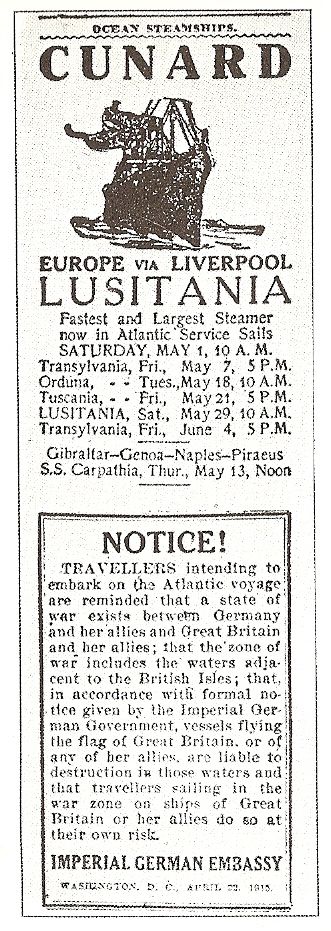
Lusitania warningGermany adopted a policy of unrestricted submarine warfare on February 18, 1915. The German embassy took out ads in American newspapers, warning that ships sailing into the war zone, did so at their own risk. That didn’t seem to bother anyone as they boarded RMS Lusitania.
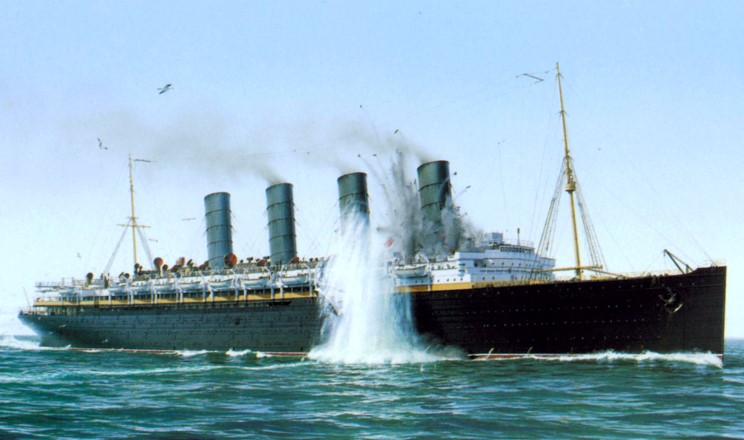
Lusitania was the largest and fastest ship afloat when she was christened in 1904. They called her the “Greyhound of the Seas”, in 1915 she could still outrun almost anything big enough to pose a threat. Lusitania left New York for her 202nd trans-Atlantic crossing on May 1, 1915, carrying 1,959 passengers and crew, 159 of whom were Americans.

All ships heading for Great Britain at this time were instructed to travel at full speed in zigzag patterns, and to be on the lookout for U-boats, but fog forced Captain William Turner to slow down as Lusitania rounded the south coast of Ireland on May 7.

The German U-boat U-20 commanded by Captain Walther Schwieger had targeted Lusitania by early afternoon.  At 1:40pm the U-boat fired a single torpedo. The weapon struck Lusitania on her starboard side. Some believe a second explosion was caused by the ignition of ammunition hidden in the cargo hold, others say that coal dust had ignited. Whatever the cause, there is near universal agreement that a second explosion rocked the ship. The damage from this second explosion was catastrophic.

13_lusitania

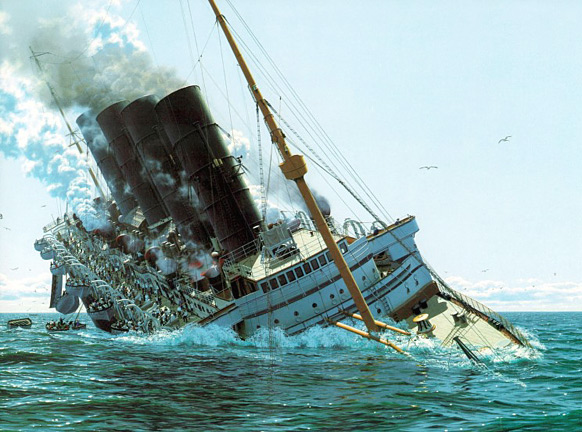
Lusitania quickly began to list, and sank in 18 minutes. There had been enough lifeboats for all the passengers, but the severe list prevented most of them from being launched. Of the 1,959 people on board, 1,198 died, including 128 Americans. 100 of the Americans, were children.

lusitania-sinking-color

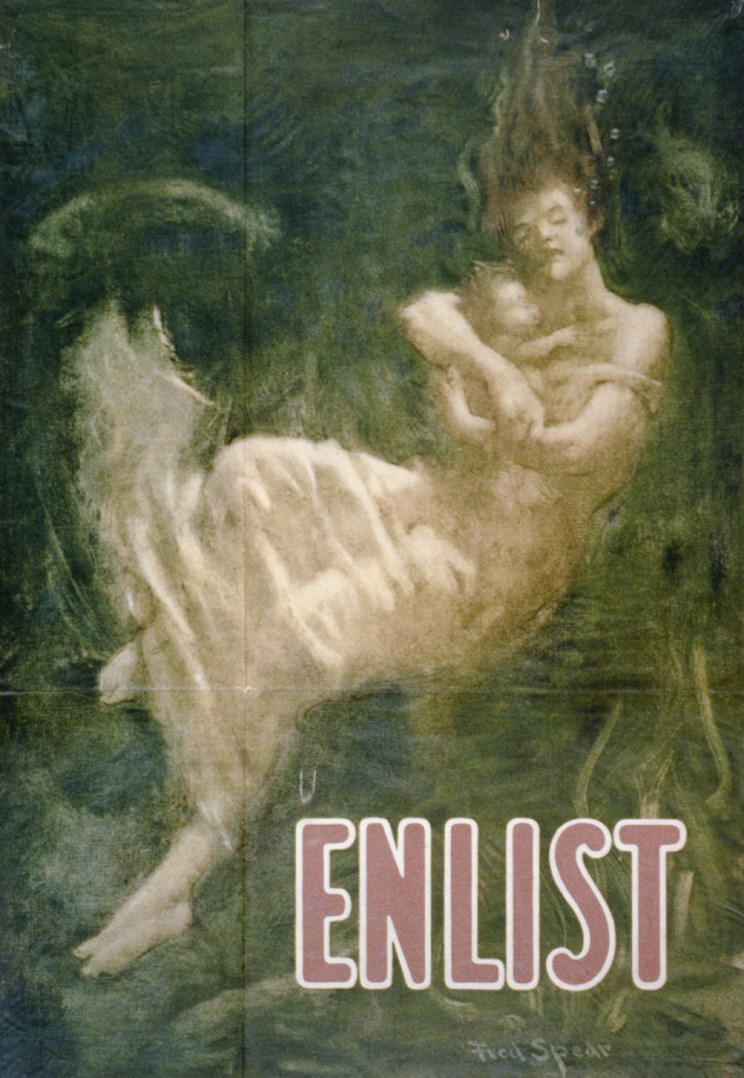
American public opinion was outraged at the loss of life in a war in which the United States was neutral. Imperial Germany, for her part, maintained that Lusitania was illegally transporting munitions intended to kill German boys on European battlefields. Furthermore, the embassy pointed out that ads had been taken out in the New York Times and other newspapers, specifically warning that the liner was subject to attack.

poster_4

In what’s been called his “too proud to fight” speech three days later, President Woodrow Wilson said “The example of America must be the example not merely of peace because it will not fight, but of peace because peace is the healing and elevating influence of the world and strife is not. There is such a thing as a man being so right it does not need to convince others by force that it is right”.

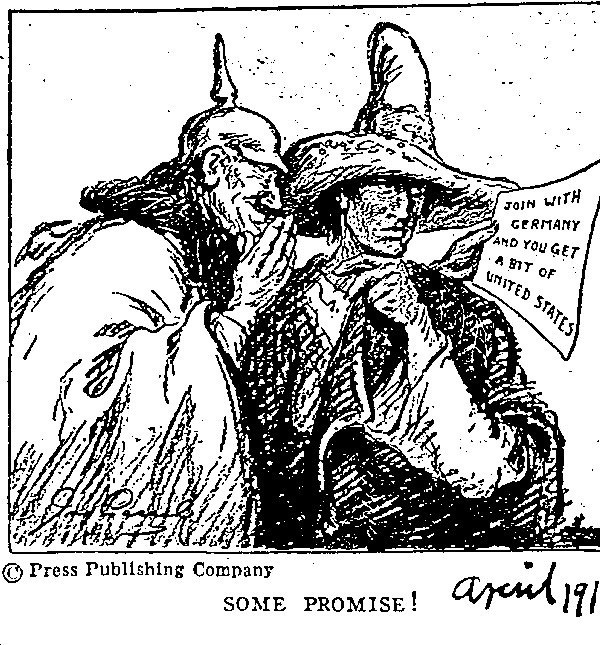
Unrestricted submarine warfare was suspended for a time, and American entry into WWI was averted. The final provocation to war came in January 1917, when the “Zimmermann Telegram” came to light. A communication from the German Foreign Minister to his ambassador in Mexico, the Zimmerman telegram proposed a military alliance between Germany and Mexico in the event of war with the United States, in exchange for “an understanding on our part that Mexico is to reconquer the lost territory in Texas, New Mexico, and Arizona”.

Zimmerman noteUnrestricted submarine warfare was resumed the same month. In February a German U-boat fired two torpedoes at the SS California off the Irish coast, killing 43 of her 205 passengers and crew. President Wilson asked for a declaration of war in a speech to a joint session of Congress on April 2. From the text of the speech, it seems the Germans were right. It was the resumption of unrestricted submarine warfare which provoked the United States to enter the war against Germany, which it did when Congress declared war on April 6.
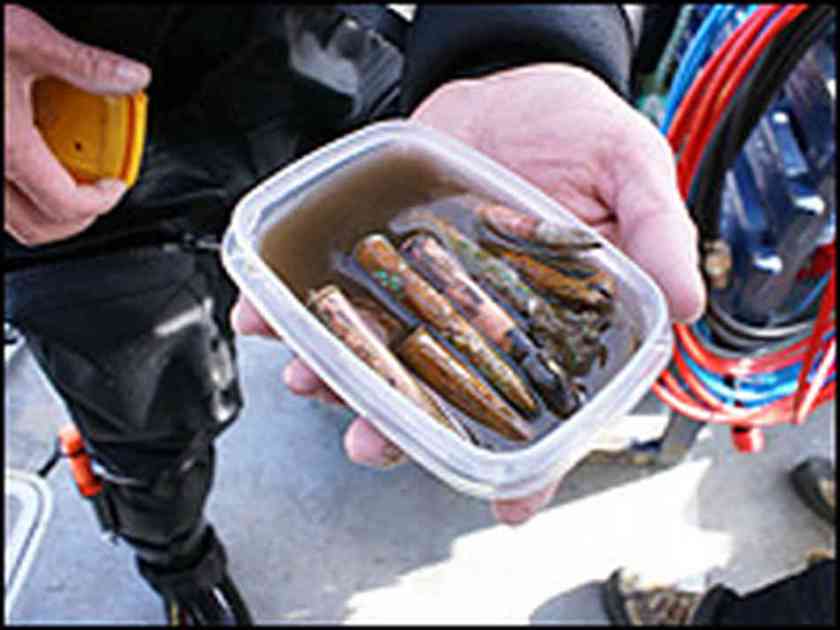
The German view that Lusitania carried contraband ammunition was vindicated as well, but at the time that was far into their future. Decades later, formerly secret British papers revealed the presence of contraband ammunition in the holds of the passenger liner. Divers explored the wreck in 2008, located under 300′ of water off the Head of Kinsale. On board, they found four million US made Remington .303 bullets, stored in unrefrigerated compartments in crates marked “butter”, “lobster” and “eggs”.

Lusitania, ammunition

A personal postscript to this story:  On several occasions, my folks hired an elderly Irish woman to babysit my brothers and me when we were kids, back in the ’60s.   As a little girl, Mrs. Crozier was living in Kinsale, back in 1915. Like the rest of her village, she ran out to the cliffs that morning to watch the great liner sink.  It was only nine miles off the coast and could be seen, clearly.  She must have thought I was a strange kid, but I couldn’t get enough of that story.

If you enjoyed this “Today in History”, please feel free to re-blog, “like” & share on social media, so that others may find and enjoy it as well. Please click the “follow” button on the right, to receive email updates on new articles.  Thank you for your interest, in the history we all share.

April 29, 1915  The Wipers Times

My favorite among the classified ads has to be the “Flammenwerfer” (Flame Thrower). “Guaranteed absolutely harmless.”  “Instructive – Amusing”.

As chief of the Imperial German general staff from 1891-1905, German Field Marshal Alfred von Schlieffen devised the strategic roadmap by which Germany prosecuted the first world war. The “Schlieffen Plan” could be likened to a bar fight, where a fighter (Germany) had to take out one guy fast (France), before turning and facing his larger and somewhat slower buddy (Imperial Russia).

Schlieffen_Plan_fr.svg

Of infinite importance to Schlieffen’s plan was the westward sweep through France, rolling that nation’s ground forces into a ball on a timetable before his armies could turn east to face the “Russian Steamroller”. “When you march into France”, Schlieffen had said, “let the last man on the right brush the Channel with his sleeve.”

Ypres SalientField Marshall Helmuth von Moltke once said “No battle plan ever survives contact with the enemy”.  So it was in the tiny Belgian city where German plans met with ruin, on the road to Dunkirk. Native Dutch speakers called the place Leper.  Today we know it as Ypres (Ee-pres), since battle maps of the time were drawn up in French. To the Tommys of the British Expeditionary Force, the place was “Wipers”.

What had hitherto been a war of movement ground to a halt in the apocalyptic fighting around Ypres, in October-November, 1914. The scale of the casualties are hard to get your head around.  Over four years, several hundred thousand sons of Germany, Great Britain and France were killed in the battles for the Ypres Salient – a battlefield only 24 kilometers, square.  100 military burial grounds or more, contain their mortal remains.

YpresThe second Battle for Ypres began with a new and terrifying weapon on April 22, 1915. German troops placed 5,730 gas cylinders weighing 90 pounds apiece, along a four-mile front. Allied troops must have looked on in wonder, as that vast yellow-green carpet crept toward their lines.

Chlorine gas forms hypochlorous acid when combined with water, destroying the moist tissues of the lungs and eyes. Heavier than air, the stuff slithered along the ground and poured into trenches, forcing troops out into heavy German fire. 6,000 casualties were sustained in the gas attack alone, opening a four mile gap in the allied line. Thousands retched and coughed out their last breath, as others tossed their equipment and ran in terror.

After the war, German losses were estimated at 34,933 between April 21 and May 30.  BEF casualties numbered 59,275. The French recorded about 18,000 on April 22 alone, and another 3,973 by April 29. All told, 2nd Ypres cost allied forces 87,223 killed, wounded or missing.

The third Battle of Ypres would begin in July of 1917, lasting almost until the end of the war. 3rd Ypres would result in 570,000 losses on all sides, but in early 1916, that was all part of some unknown and terrible future.

It’s hard to imagine anything remotely humorous coming out of the horrors of this place, but such became possible in the early months of 1916.

Optimism advert

First established in 1881, the “Sherwood Foresters” were line infantry Regiments (Nottinghamshire and Derbyshire Regiments) of the British Army, at this time stationed at the front lines of the Ypres salient.  The unit came across a printing press.  Corporal George Turner, who’d been a printer in civil life, got the thing going. The Forresters began a trench magazine, a PDF of which may be downloaded HERE.  The first edition of the Wipers Times published on February 12, 1916.  The paper included poems and reflections, news, “adverts” and the blackest of humor.

Written for fellow soldiers, some of the in-jokes are so obscure that their meaning is lost to the modern reader. Others are clearly understandable, even 102 years later.

The_Wipers_Times,_issue_cover_March_1916_Wellcome_L0031562

Richly typeset advertisements for “Music Hall Extravaganzas” included “Tickling Fritz” by the P.B.I. (Poor Bloody Infantry) Film Co. of the United Kingdom and Canada, advising the enthusiast to “Book Early”. There were Real Estate ads for property in no-man’s land. “BUILD THAT HOUSE ON HILL 60. BRIGHT-BREEZY-&-INVIGORATING. COMMANDS AN EXCELLENT VIEW OF HISTORIC TOWN OF YPRES”. Another one read “FOR SALE, THE SALIENT ESTATE – COMPLETE IN EVERY DETAIL! UNDERGROUND RESIDENCES READY FOR HABITATION. Splendid Motoring Estate! Shooting Perfect !! Fishing Good!!!”

Old Masters

There were advertisements for barbed wire cutters with built-in umbrellas, for the most discerning of gentlemen.

There were news features, this one of a bungled trench raid: “”…They climbed into the trench and surprised the sentry, but unfortunately the revolver which was held to his head missed fire. Attempts were made to throttle him quietly, but he succeeded in raising the alarm, and had to be killed.” editor’s note, “This we consider real bad luck for the sentry after the previous heroic efforts to keep him alive””.

There were weather reports, laying odds on the forecast. “5 to 1 Mist, 11 to 2 East Wind or Frost, 8 to 1 Chlorine”. My favorite among the classifieds has got to be the “Flammenwerfer” (Flame Thrower). “Guaranteed absolutely harmless.”  “Instructive – Amusing”.

Miss Minnie WerferUnits of all sizes, from individual companies to army corps, lightened the load of the “War to end all Wars”, with some kind of unit journal.

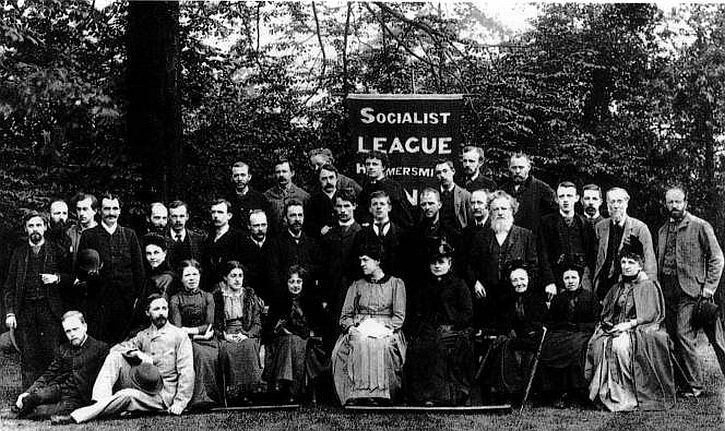
Some officers were not amused by the underground paper, and thought its publication should be banned. Others believed that it kept some semblance of morale in the trenches. One pointed out that “humour is what distinguishes us from barbarism.”

The Wipers Times ran through the end of the war, with the exception of the “Operation Michael” period, the last gasp German Western Front offensive of 1918. The final edition, titled “The Better Times”, was published in December 1918, just short of two months after the armistice.   The banner headline on that final edition read “Xmas, Peace and Final Number.”

Better Times Headline

If you enjoyed this “Today in History”, please feel free to re-blog, “like” & share on social media, so that others may find and enjoy it as well. Please click the “follow” button on the right, to receive email updates on new articles.  Thank you for your interest, in the history we all share.

April 13, 1917 A Sealed Train

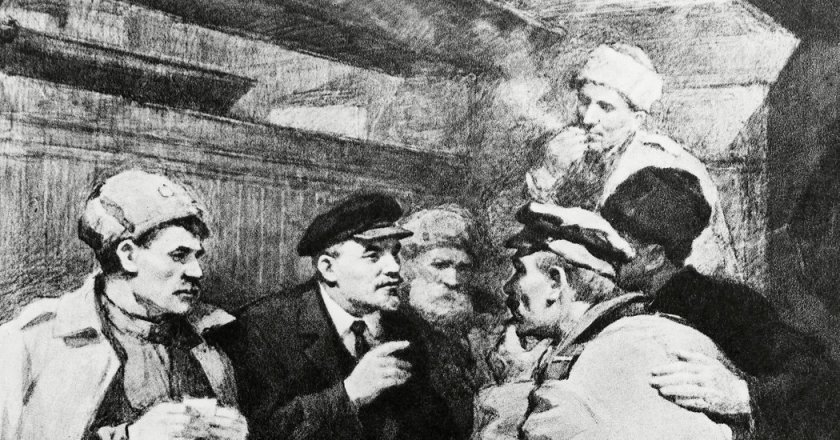
Not far from food riots of his own and loathe to unleash such a bacterium against his own homeland, a “Sealed Train” carrying Vladimir Ilyich Lenin and 31 dissidents departed from exile in Switzerland on April 9, complements of the Kaiser.  

The “War to End all Wars” entered its third year in 1917, seeming as though it would go on forever. Neither side seemed able to gain strategic advantage on the front. The great battles of 1916 seemed only yesterday, in which any single day’s fighting produced more casualties than every European war of the preceding 100 years, combined. At home, the social fabric of the combatant nations was unraveling.

download (54)
Vladimir Ilyich Ulyanov

By 1916 it was generally understood in Germany, that the war effort was “shackled to a corpse”, referring to Germany’s Austro-Hungarian ally. Italy, the third member of the “Triple Alliance”, was little better. On the Triple Entente side, the French countryside was literally torn to pieces, the English economy close to collapse. The Russian Empire, the largest nation on the planet, was on the edge of the precipice.

With the American declaration of war in April 1917, both sides understood that the balance was about to shift. For Kaiser Wilhelm’s Germany, it was time to throw a knockout punch, before the US arrived in force.

Imperial Russia had seen the first of what would be two revolutions back in February, when food riots led to the overthrow and exile of the Imperial family.  Full scale civil war broke out in 1918, resulting in the Bolshevik murder of the Czar and Czarina, together with their children, servants and dogs.

00leninV5
Lenin makes his way to the sealed train which would take him out of exile. April 13, 1917.

In the midst of this chaos, the Kaiser calculated that all he had to do was “kick the door in”, the Russian Republic would collapse, and they would be out of the war. He was right.

Following the overthrow of the Romanov dynasty, the more moderate Menshevik “Whites” vowed to continue the war effort. The split which had begun with the failed revolution of 1905 was more pronounced by this time with the more radical Bolsheviks (“Reds”) taking the more extreme road. While Reds and Whites both wanted to bring socialism to the Russian people, the Mensheviks argued for predominantly legal methods and trade union activism, while Bolsheviks favored armed violence.

In a small town in the northeast of Sweden, there is a train station.  A bronze plaque on a blue tile wall, proclaims: “Here Lenin passed through Haparanda on April 15, 1917, on his way from exile in Switzerland to Petrograd in Russia”.

11Rubenstein-facebookJumbo

Lenin was in exile at this time, and Imperial Germany was at war with Russia.  British historian Edward Crankshaw writes, the German government saw “in this obscure fanatic one more bacillus to let loose in tottering and exhausted Russia to spread infection”.

Not far from food riots of his own and loathe to unleash such a bacterium against his own homeland, a “Sealed Train” carrying Vladimir Ilyich Lenin and 31 dissidents departed from exile in Switzerland on April 9, complements of the Kaiser.  Leaving Zurich Station amid the jeers and the insults of 100 or so assembled Russians shouting “Spies!” “Traitors!” “Pigs!” “Provocateurs!”  Lenin turned to a friend.  “Either we’ll be swinging from the gallows in three months, or we shall be in power.”

Sealed Train

North through Germany and across the Baltic Sea, the group traveled the length of Sweden, crossing at the border village of Haparanda into Russian-Occupied Finland.  The group arrived at Finlandsky Vokzal (Finland Station) in Petrograd on the evening of April 16, 1917. Like the handful of termites that brought down the mighty oak, that small faction inserted into the picture that April, would help to radicalize the population, and consolidate power on the Bolshevik’s side.

By October, Russia would experience its second revolution in a year.  The Kaiser’s Germany could breathe easier. The “Russian Steamroller”, was out of the war. Chief of the General Staff Paul von Hindenburg and his deputy Erich Ludendorff could move their divisions westward, in time to face the arrival of the AEF.

mar2017_g99_leninsodyssey

Since the end of the Soviet era, Russian historians have come to believe that Vladimir Ilyich (Ulyanov) Lenin personally ordered the murder of the czar and his family, and that the Lenin era was every bit as bloody, as that of his successor Josef Stalin.

Lenin called for “Mass Terror” during the civil war of 1918, resulting in executions in the tens of thousands.  Historian Alexander Margolis had the last word on the subject, if not the understatement of the century:  “If they had arrested Lenin at the Finland Station, it would have saved everyone a lot of trouble”.

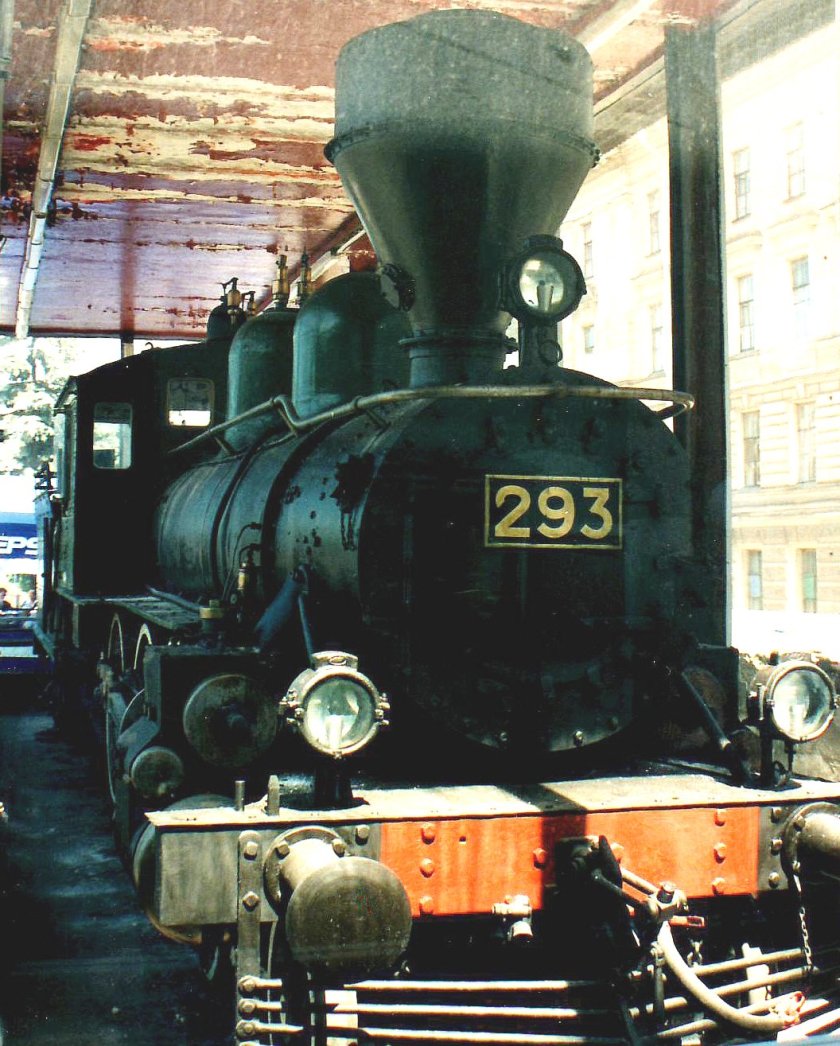
Sealed Train Locomotive
The locomotive which carried the ideological infection of Communism. from exile in Switzerland, to the Imperial Russian heartland
If you enjoyed this “Today in History”, please feel free to re-blog, “like” & share on social media, so that others may find and enjoy it as well. Please click the “follow” button on the right, to receive email updates on new articles.  Thank you for your interest, in the history we all share.

April 4, 1926 Sergeant Stubby

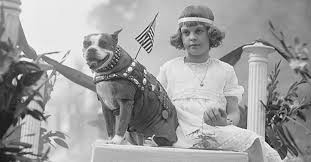
America’s first war dog, “Stubby”, got there by accident, and served 18 months ‘over there’, participating in seventeen battles on the Western Front.
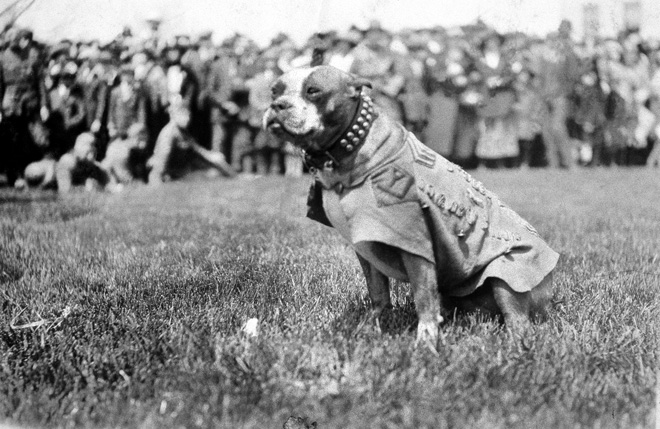
By the last year of WW1, the French, British and Belgians had at least 20,000 dogs on the battlefield, the Germans 30,000. General Headquarters of the American Expeditionary Forces recommended the use of dogs as sentries, messengers and draft animals in the spring of 1918. However, with the exception of a few sled dogs in Alaska, the US was the only country to take part in World War I with virtually no service dogs in its military.

sgt_stubby_7America’s first war dog, “Stubby”, got there by accident, and served 18 months ‘over there’, participating in seventeen battles on the Western Front.

Stubby looked like a terrier of some kind, similar to a pit bull.  Nobody knows anything more about him.  He showed up a stray one day, at Yale Field in New Haven Connecticut, where a group of soldiers were training. The dog hung around as the men drilled.  One soldier, Corporal Robert Conroy, began to take care of him. when Conroy’s outfit shipped out in 1917, Stubby was hidden on board.

Stubby saved his regiment from surprise mustard gas attacks, located and comforted the wounded, and even once caught a German spy by the seat of his pants. The Hun, who’d been sneaking around behind allied lines at the time, was mapping trenches for artillery bombardment.  The Bosch was found spinning in circles with a large, muscular terrier affixed to his behind.   He was easily disarmed, but it took a considerable amount of coaxing before Stubby could be persuaded to let go of that German’s rear end.

sgt_stubby_5Stubby saw his first action at Chemin des Dames. Since the boom of artillery fire didn’t faze him, he learned to follow the example of ducking when the big ones came close. It became a great game to see who could hit the dugout, first.  After a few days, the guys were watching him for a signal. Stubby was always the first to hear incoming fire.  We can only guess how many lives were spared by his early warning.
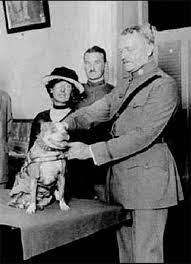
images (47)After the Armistice, Stubby returned home a nationally acclaimed hero, eventually received by both Presidents Harding and Coolidge. Even General John “Black Jack” Pershing, who commanded the AEF during the war, presented Stubby with a gold medal made by the Humane Society, declaring him to be a “hero of the highest caliber.”
Stubby toured the country by invitation and probably led more parades than any dog in American history:  he was promoted to honorary Sergeant by the Legion, becoming the highest ranking dog to ever serve in the Army.

Old age finally caught up with the small warrior on April 4th, 1926, as he took ill and died in his master’s arms.

Sergeant Stubby and a few of his contemporaries were instrumental in inspiring the creation of the US K-9 Corps, just in time for World War ll.


If you enjoyed this “Today in History”, please feel free to re-blog, “like” & share on social media, so that others may find and enjoy it as well. Please click the “follow” button on the right, to receive email updates on new articles.  Thank you for your interest, in the history we all share.

April 2, 1917 Known but to God

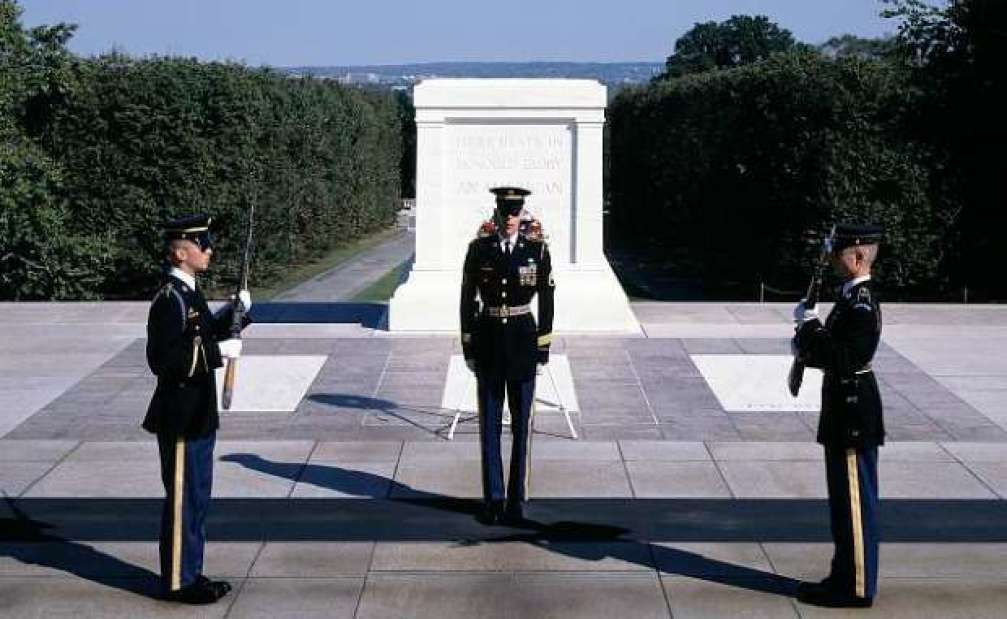
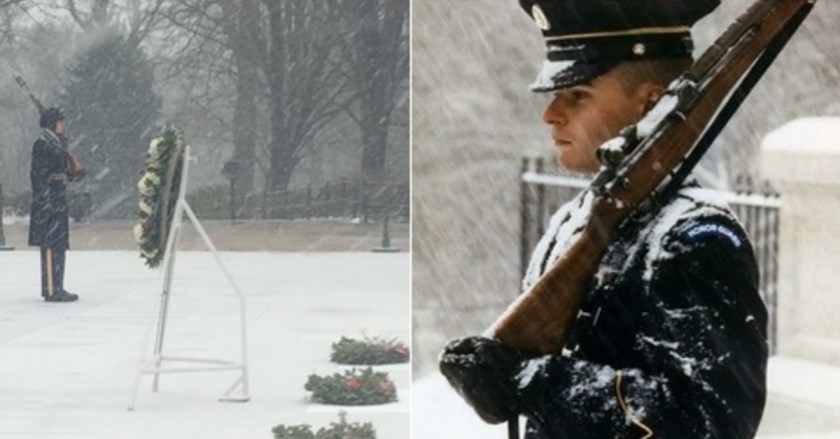
The Tomb of the Unknown Soldier has been under 24/7 guard since 1937, heedless of hurricanes, howling blizzards and bone-chilling cold. Guards come from the 3rd Infantry Regiment, “The Old Guard”. Established in 1784, the Old Guard is the oldest active infantry unit in the United States military.

Many years ago, Prussian Chancellor Otto von Bismarck said “If a general war begins, it will be because of some damn fool thing in the Balkans”.

On June 28, 1914, a tubercular 19 year old leveled his revolver in Sarajevo, and murdered the heir-apparent to the Austro-Hungarian throne, Archduke Franz Ferdinand, and his wife, Sophie.

What followed should have been at worst a regional conflict between Austria-Hungary and Serbia, as the two settled issues going well beyond the scope of this essay. Instead, mutually entangling national alliances were invoked, as mobilization timetables moved vast armies according to predetermined schedules.

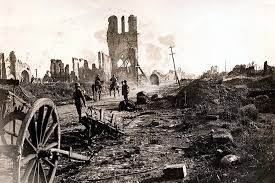
download (44)The coming cataclysm would lay waste to a generation, and to a continent.
The catastrophe of WW1 could have been averted as late as the last day of July. By the first of August, mutual distrust had gone past the point of no return. By the time it was over, 18 million were dead or vanished and presumed dead, and another 23 million, maimed.

The United States entered the conflict on April 2, 1917, leading to casualties of its own numbering 321,467.

The idea of honoring the unknown dead of the “War to End Wars” originated in Europe. A British Commonwealth soldier was the first to be so honored, laid to rest in Westminster Abbey on Armistice day, November 11, 1920.

wwi

In 1921, the United States followed Great Britain and France in honoring its unknown dead. One unidentified soldier was selected each from the Aisne-Marne, Meuse-Argonne, Somme and St. Mihiel American cemeteries, and carefully examined in case there be any clues to their identities. The remains were transported to the Hotel de Villes, where wounded combat veteran and recipient of the Distinguished Service Medal Sergeant Edward F. Younger, had the honor of performing the final selection.

May-301930.1
Edward F Younger recreates his selection of the Unknown

Passing between two lines of French and American officials, Younger entered the room. Slowly, he circled the four caskets three times, finally stopping at the third one from the left.  There Sgt. Younger placed a spray of white roses, drew himself to attention, and saluted.

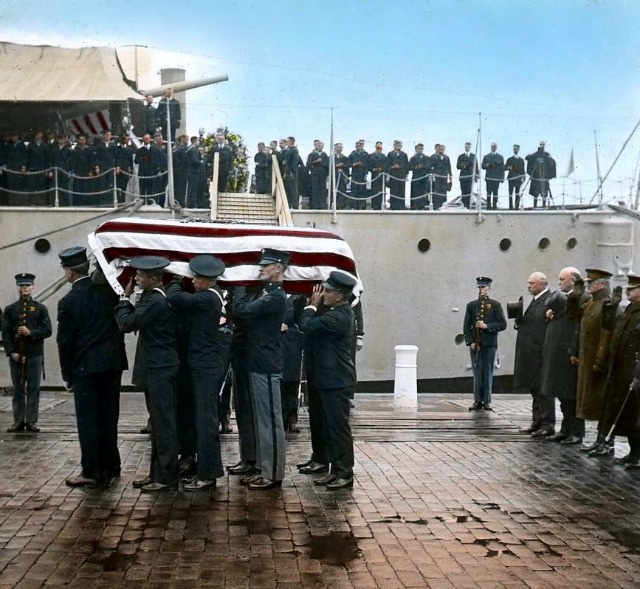
With flags at half-mast and its stern decked with flowers, the cruiser USS Olympia received the precious cargo and returned to the United States, arriving in the Navy Yard in Washington DC on November 9, 1921. There the flag draped casket was solemnly transferred to the United States Army, and placed under guard of honor on the same catafalque which had borne the bodies of three slain Presidents: Abraham Lincoln, James Garfield, and William McKinley.

funeral-13-300x225On November 11, Armistice Day, the casket was removed from the Rotunda of the Capitol and escorted under military guard to the amphitheater at Arlington National Cemetery. In a simple ceremony, President Warren G. Harding bestowed on this unknown soldier the Medal of Honor, and the Distinguished Service Cross.
Special representatives of foreign nations then bestowed, each in their turn, their nation’s highest military decoration: the Croix de Guerre of Belgium, the English Victoria Cross, le Medaille Militaire & Croix de Guerre of France, the Italian Gold Medal for Bravery, the Romanian Virtutes Militara, the Czechoslavak War Cross, and the Polish Virtuti Militari.

With three salvos of artillery, the rendering of Taps and the National Salute, the ceremony was brought to a close and the 12 ton marble cap placed over the tomb of the unknown. On the west facing side there is an inscription:

Here Rests In

Honored Glory

An American Soldier

Known But To God

Two years later, a civilian guard was placed on the tomb of the unknown.  A permanent Military guard would take its place in 1926.

The Tomb of the Unknown Soldier has been under 24/7 guard since 1937, heedless of hurricanes, howling blizzards and bone-chilling cold. Guards come from the 3rd Infantry Regiment, “The Old Guard”. Established in 1784, the Old Guard is the oldest active infantry unit in the United States military.

Every movement of the guard is a series of “twenty-ones”, in deference to the 21-gun salute:

Tombguard.org explains: “The Sentinel does not execute an about face, rather they stop on the 21st step, then turn and face the Tomb for 21 seconds. They then turn to face back down the mat, change the weapon to the outside shoulder, mentally count off 21 seconds, then step off for another 21 step walk down the mat. They face the Tomb at each end of the 21 step walk for 21 seconds. The Sentinel then repeats this over and over until the Guard Change ceremony begins“.

unknown-soldier1

In 1919, both AEF commander General John Pershing and Allied supreme commander Ferdinand Foch of France had been adamantly against the treaty at Versailles. Germany had been defeated, they argued, but not Beaten. The failure to defeat Imperial Germany on German soil the pair believed, would once again lead the three nations to war.  Meanwhile in Germany, the “Stab in the Back” fiction destined to become Nazi party mythology, was already taking shape.

On reading the treaty, Foch said “This isn’t a peace. It’s a cease-fire for 20 years!”

He was wrong.  By 36 days.


If you enjoyed this “Today in History”, please feel free to re-blog, “like” & share on social media, so that others may find and enjoy it as well. Please click the “follow” button on the right, to receive email updates on new articles.  Thank you for your interest, in the history we all share.

March 19, 1916  Pancho Villa Expedition

During three months of active operations inside Mexico, American forces killed or captured 292 Villistas, but Pancho Villa evaded capture.  Pershing publicly proclaimed the operation a success, but privately complained that Wilson imposed too many restrictions, making it impossible to fulfill the mission.

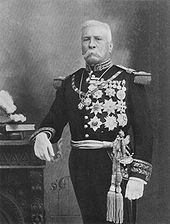
170px-Porfirio_Diaz_in_uniform
Porfirio Diaz

In thirty-five years as President of Mexico, the administration of José de la Cruz Porfirio Díaz Mori had yet to figure out the question of Presidential succession.  At first popular following his seizure of power in the coup of 1876, the Porfirian regime soon began to stagnate.  Diaz’ policies benefitted ‘el jefe’ cronies and supporters, the wealthy estate-owning “haciendados”, while leaving rural agricultural “campesinos” unable to make a living.

Following the turn of the century, the aging President expressed support for a return to democracy and an intention to step down from office.

An unlikely opponent stepped forward in the person of UC-Berkeley educated lawyer and wealthy hacienda owner, Francisco Madero.  Madero wanted a return to democratic elections, but Diaz would have none of it.

madero
Francisco Madero

Perhaps the octogenarian President expected that his country would beg him to stay, or maybe he changed his mind, but anyone stepping into Diaz’ path, did so at his own risk.  Madero fled to the United States, but later returned and faced arrest.  Meanwhile, the 80-year old Porfirio Diaz won re-election to an eighth term by a margin that would make Saddam Hussein blush.  Voters were outraged by what was clearly a massively corrupt election.

Madero escaped prison and produced the Plan de San Luis Potosí to nullify the elections and overthrow Díaz by force.  The table was set for the Mexican Revolution.

Armed conflict ousted Diaz from office the following year, when a free and fair election put Francisco Madero into office.  Opposition was quick to form, from both sides of the political spectrum.  Conservatives and land owners saw Madero as too weak, his policies too liberal, while former revolutionary fighters and the economically dispossessed, saw him as too conservative.  In February 1913, both Madero and his vice president Pino Suárez were run out of office, and murdered by order of military officer, Victoriano Huerta.

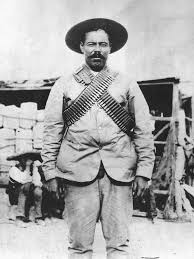
images (33)
Pancho Villa

Francisco “Pancho” Villa was a Mexican constitutionalist and a Madero supporter.  As commander of the División del Norte (Division of the North), Villa fought on behalf of Primer Jefe (“First Chief”) of the Constitutionalist army Venustiano Carranza, but later turned on his erstwhile leader.

American newspaperman and commentator Ambrose Bierce, author of The Devil’s Dictionary and my favorite curmudgeon, joined Pancho Villa’s army in December 1913, as an observer.  And then he vanished.  Most likely, Bierce faced a firing squad in Chihuahua, but his story remains unknown.

Trouble began between Villistas and the American government when the US declared its support for Villa’s former ally, providing rail transport from Texas to Arizona for 5,000 Carrancista forces.

The Division del Norte was badly defeated by forces loyal to Carranza in July 1915, and again in November.  Villa’s army ceased to exist as a military fighting force, reduced to local skirmishes and cross-border raids while foraging the countryside.

A three-way fight broke out on November 26, when Villa’s forces attacked the border town of Nogales, Sonora, and fired across the border at American troops in Nogales, Arizona.  On January 11, sixteen American employees of the American Smelting and Refining Company were taken from a train near Santa Isabel Chihuahua, stripped naked, and executed.

310px-ColumbusIn early March, a force of some 1,500 Villistas were camped along the border three miles south of Columbus New Mexico, when Villa sent spies into Camp Columbus (later renamed Camp Furlong).  Informed that Camp Columbus’ fighting strength numbered only thirty or so, a force of some 600 crossed the border around midnight on March 8.
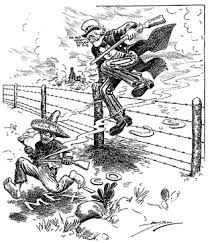
Villa divided his force into two columns, launching a two-pronged assault in the early morning darkness of March 9.  Townspeople were asleep at first, awakening to the sounds of burning buildings, and shouts of “Viva Villa! Viva Mexico!”

What began as a pre-dawn raid soon erupted into full-scale battle, as residents poured from homes with hunting rifles and shotguns.  The Camp Columbus garrison was taken by surprise but recovered quickly, as barefoot soldiers scrambled into position. Four Hotchkiss M1909 machine guns fired 5,000 rounds apiece before the shooting died down, joined by another 30 troopers with M1903 Springfield rifles.

Pancho Villa proclaimed the raid a success, having captured over 300 rifles and shotguns, 80 horses, and 30 mules.  Strategically, the raid was a disaster.  The Mexicans had lost 90 to 170 dead they could barely afford, out of a raiding force of 484 men. Official American reports indicate 8, 10 or 11 soldiers killed, plus another 7 or 8 civilians, depending on which report you believe.

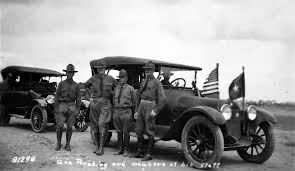
download (20)The United States government wasted no time in responding. That same day, the President who would win re-election in eight months on the slogan “He kept us out of war” appointed Newton Diehl Baker, Jr. to fill the previously vacant position of Secretary of War. The following day, Woodrow Wilson ordered General John Pershing to capture Pancho Villa, dead or alive.
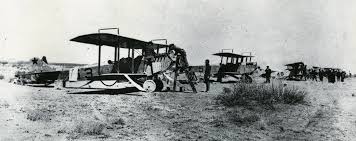
7,000 American troops crossed into Mexico on March 13.  It was the first American military expedition to employ mechanized vehicles, including trucks and automobiles to carry supplies and personnel, and Curtiss Jenny aircraft used for reconnaissance.

On March 5, 1913, President William Howard Taft ordered the formation of the 1st Aero squadron, nine aircraft divided into two companies.  ‘Aviation’ at that time was not what is, today.  Aircraft were highly experimental, many built by the pilots themselves.  Crashes were commonplace, and flight lessons all but unheard of.  Frequently, general guidelines were given on the ground, and pilots were left to their own devices.  One of the early pilots, Captain Benjamin D. Foulois, sent away and received written instruction from Orville Wright, by mail!

download (21)The 1st Aero Squadron arrived in New Mexico on March 15, with 8 aircraft, 11 pilots and 82 enlisted men.  The first reconnaissance sortie was flown the following day, the first time that American aircraft were used in actual military operations.
Five aircraft departed on the evening of March 19, with orders to report ‘without delay’ to Pershing’s headquarters in Casas Grandes, Mexico.  One made it that night, another two straggled in the next morning. One returned to Columbus and 2 others went missing. The problems, it turned out, were insurmountable.  90 HP engines were unable to bring them across 10,000 – 12,000’ mountain peaks, nor could they handle the turbulent winds of mountain passes. Dust storms wrought havoc with engines and, making things worse, the unrelenting heat of the Sonoran Desert de-laminated wooden propellers.

download (22)On May 14, a young 2nd Lieutenant in charge of a force of fifteen and three Dodge touring cars got into a running gunfight, while foraging for corn, in Chihuahua.  It was the first motorized action in American military history.  Three Villistas were killed and strapped to the hoods of the cars and driven back to General Pershing’s headquarters.  General Pershing nicknamed that 2nd Lt. “The Bandito”.  History remembers his name as George S. Patton.

During three months of active operations inside Mexico, American forces killed or captured 292 Villistas, but Pancho Villa evaded capture.  Pershing publicly proclaimed the operation a success, but privately complained that Wilson imposed too many restrictions, making it impossible to fulfill the mission.  “Having dashed into Mexico with the intention of eating the Mexicans raw”, Pershing complained, “we turned back at the first repulse and are now sneaking home under cover, like a whipped cur with its tail between its legs.”

WAR & CONFLICT BOOKERA:  MEXICAN PUNITIVE EXPEDITION
Pancho Villa Expedition, “Around the Campfire”

American forces were withdrawn by January 1917, as the European war loomed over American politics.   German Foreign Secretary Arthur Zimmermann observed political opposition to American operations inside of Mexico, and concluded that a military alliance was possible between the two countries.

The ‘Zimmermann note‘ proposing such an alliance between Germany and Mexico and promising the “restoration of its former territories of Texas, New Mexico and Arizona“, may be seen as the ‘last straw’ that brought the United States into WW1.

Zimmerman note

March 16, 1914 A Crime of Passion

Think of the OJ trial, only in this case, the killer was a former First Lady. This one had everything: Left vs. Right, the fall of the powerful, and all the salacious detail anyone could ask for.  French public and media alike were riveted by the Caillaux affair, disinterested and unheeding of the European crisis barreling down on them, like the four horsemen of the apocalypse.

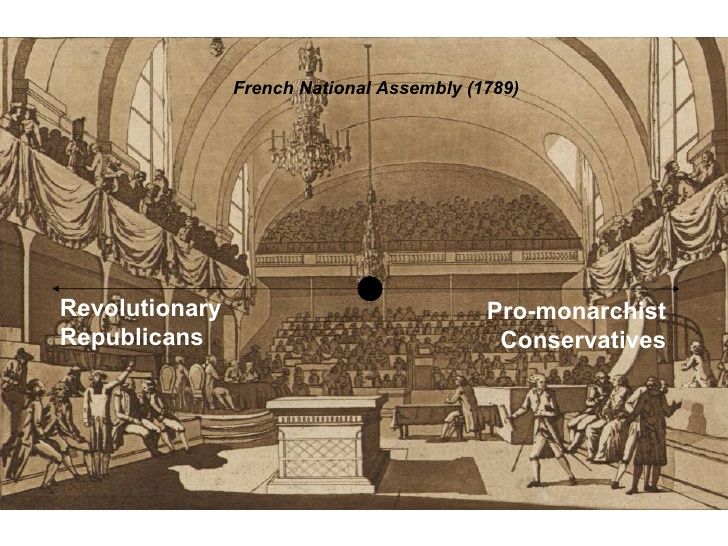
We hear a lot in election years, about “Left” and “Right”.  “Liberal” and “Conservative”.

The terms have been with us a long time, originating in the early days of the French Revolution. In those days, National Assembly members supportive of the Monarchy sat on the President’s right.  Those favoring the Revolution, on the left. The right side of the seating arrangement began to thin out and disappeared altogether during the “Reign of Terror”, but re-formed with the restoration of the Monarchy, in 1814-1815. U5dtXeDhuSgqBYsRegyPZecZPy5MGQf_1680x8400By that time it wasn’t just the “Party of Order” on the right and the “Party of Movement” on the left. Now, the terms began to describe nuances in political philosophy, as well.

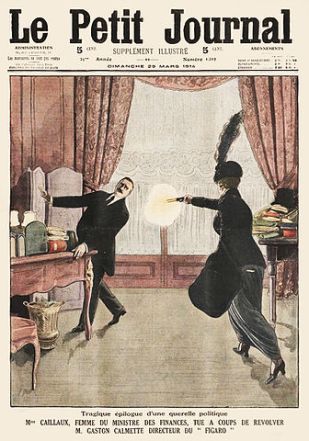
200 years later, philosophical differences between the Left and Right of the period, would be recognizable to political observers today.

joseph-caillaux
Joseph Cailloux

Joseph Cailloux (rhymes with “bayou”) was a left-wing politician, appointed Prime Minister of France in 1911. The man was indiscreet in his love life, even for a French politician. Back in 1907, Cailloux had paraded about with a succession of mistresses, finally carrying on with one Henriette Raynouard, while both were married to other people. By 1911, both were divorced.  That October, Henriette Raynouard became the second Mrs. Cailloux.

The political right considered Cailloux to be far too accommodating with Germany, with whom many felt war to be all but inevitable. While serving under the administration of President Raymond Poincare in 1913, Cailloux became a vocal opponent of a bill to increase the length of mandatory military service from two years to three, intended to offset the French population disadvantage conferred by France’s 40 million, compared with 70 million Germans.

220px-Caillix_5332813205_482fc13b62_o
Madame Cailloux

Gaston Calmette, editor of the leading conservative newspaper Le Figaro, threatened to publicize love letters between the former Prime Minister and his second wife, written while both were still married for the first time.

Henriette Cailloux was not amused.

On March 16, 1914, Madame Cailloux took a taxi to the offices of Le Figaro. After being shown into Calmette’s office, the pair spoke briefly, before Henriette withdrew the Browning .32 automatic.  Cailloux fired six rounds at the editor. Two missed, but four were more than enough to do the job. Gaston Calmette was dead within six hours.

German Chancellor Otto von Bismarck once said the next great European war would begin with “some damn fool thing in the Balkans”.  No one realized it at the time, but Bismarck got his damn fool thing on June 28, when a Serbian Nationalist assassinated the heir apparent to the Austro-Hungarian throne, the Archduke Franz Ferdinand.

Henriette_Caillaux (1)The July Crisis of 1914 was a series of diplomatic maneuverings, culminating in the ultimatum from Austria-Hungary to the Kingdom of Serbia. Vienna, with tacit support from Berlin, made plans to punish Serbia for her role in the assassination, while Russia mobilized armies in support of her Slavic ally.
There is a common but mistaken notion that Imperial Germany “started” World War I, but it isn’t so.  Kaiser Wilhelm was a famous “saber rattler”, but actually going to war with the other major European powers, was another matter.

It was Germany’s weaker ally Austria-Hungary which, having received vague assurances of German support, pursued a policy of unreasoning belligerence against  Serbia.

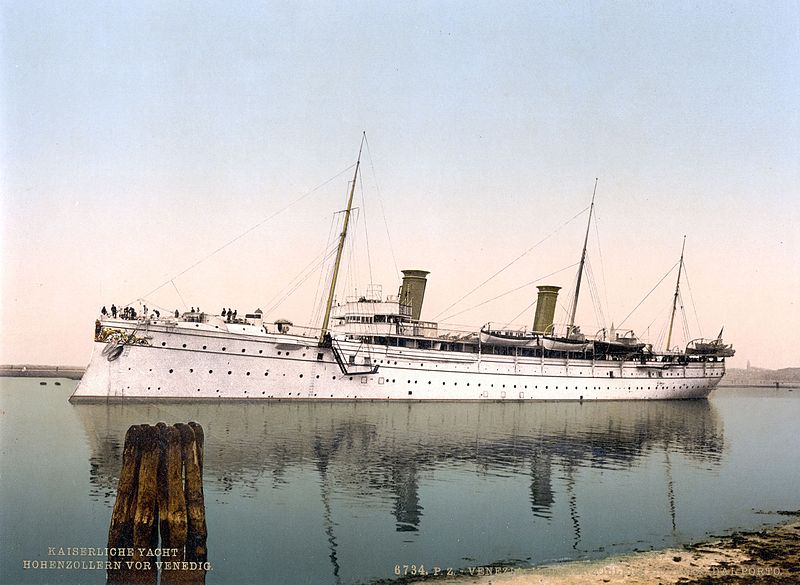
German Foreign Minister Gottlieb von Jagow was away on honeymoon, during key periods of the July crisis.  The Kaiser himself was out of touch, cruising the Norwegian fjords.  That cruise has been called the most expensive maritime disaster, in history.

On being informed of the decision to mobilize, the Kaiser told his General Staff “Gentlemen, you will regret this.”

Hohenzollern,_leaving_the_harbor,_Venice,_Italy-LCCN2001701060
SMY Hohenzollern II, which Emperor Wilhelm II used on annual extended Nordlandfahrt cruises to Norway. All told, he spent four years living on board.

Meanwhile, England and France looked the other way.  In Great Britain, officialdom was focused on yet another home rule crisis concerning Ireland, while all of France was distracted by the “Trial of the Century”.

Madame Caillaux’s trial for the murder of Gaston Calmette began on July 20.  Think of the OJ trial, only in this case, the killer was a former First Lady. This one had everything: Left vs. Right, the fall of the powerful, and all the salacious detail anyone could ask for.  French public and media alike were riveted by the Caillaux affair, disinterested and unheeding of the European crisis barreling down on them, like the four horsemen of the apocalypse.

The trial ended in acquittal on July 28, the jury ruling the murder to have been a “crime passionnel”.  A crime of passion. That same day, Austria-Hungary declared war on Serbia.

542375879In the days that followed, the Czar would begin the mobilization of men and machines which would place Imperial Russia on a war footing. Kaiser Wilhelm’s Germany invaded Belgium, in pursuit of the one-two punch strategy by which it sought first to defeat France, before turning to face the “Russian Steamroller”. England declared war in support of a 75-year-old commitment to protect Belgian neutrality, a treaty obligation German diplomats had dismissed as a “scrap of paper”.
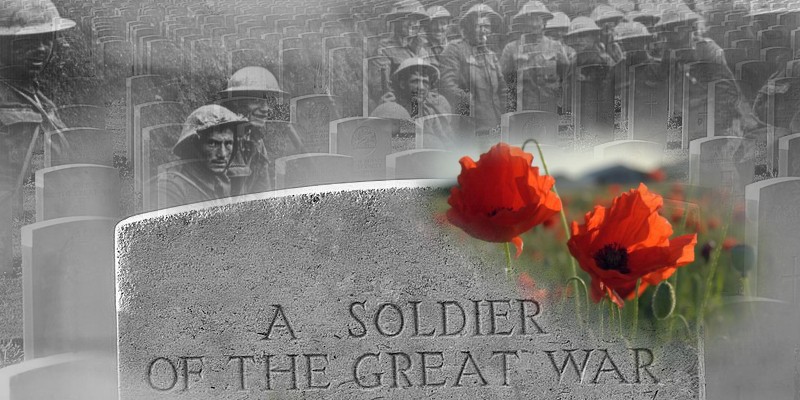
An event which could have resulted in little more that a policing action in the Balkans, was about to explode into the “War to End All Wars”.  Edward Grey, 1st Viscount Grey of Fallodon said “The lamps are going out all over Europe: we shall not see them lit again in our life-time.” Eleven million military service members and seven million civilians who were alive in July 1914, would not live to see the other side.

A-Soldier-of-the-Great-War-800-x-400_2-800x400

If you enjoyed this “Today in History”, please feel free to re-blog, “like” & share on social media, so that others may find and enjoy it as well. Please click the “follow” button on the right, to receive email updates on new articles.  Thank you for your interest, in the history we all share.